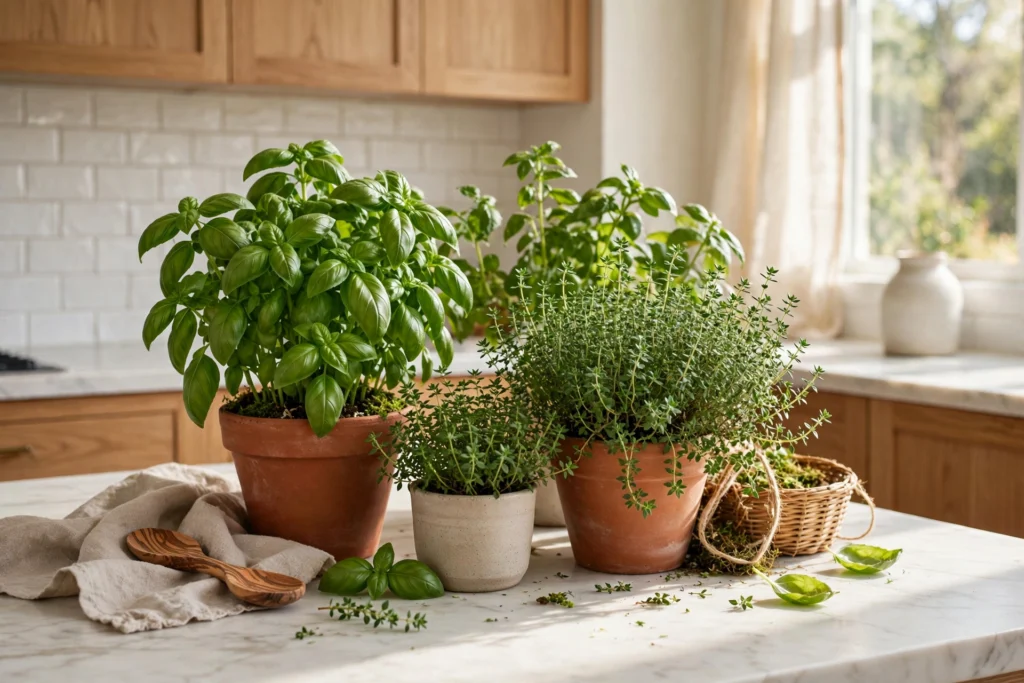

A kitchen herb garden is the rare decor idea that smells as good as it looks, and these kitchen herb garden ideas prove that fresh flavor and style can share the same sunny sill. Snipping fresh basil over pasta or rubbing mint leaves between your fingers turns an ordinary weeknight dinner into something special, and a row of green pots softens hard countertops better than any gadget. These kitchen herb garden ideas work in real kitchens of every size — no greenhouse, no garden beds, no green thumb required — just a little light, a few containers, and herbs that earn their keep in your cooking. Whether you want easy kitchen herb garden ideas for a small apartment or a full countertop display, these kitchen herb garden ideas will give you a starting point below.
The secret to kitchen herb garden ideas that thrive and look styled rather than scruffy is planning your garden like decor. Choose containers that match your kitchen’s palette, give every plant the light it needs, and keep watering simple enough that you will actually do it. These kitchen herb garden ideas start with just three or four herbs you cook with often, and add more once the routine feels easy. These styled, clutter-free countertops prove that functional greenery can look intentional, and the kitchen herb garden ideas below will help you build a garden that feeds your kitchen and beautifies it at the same time.
1. Start With a Sunny Windowsill
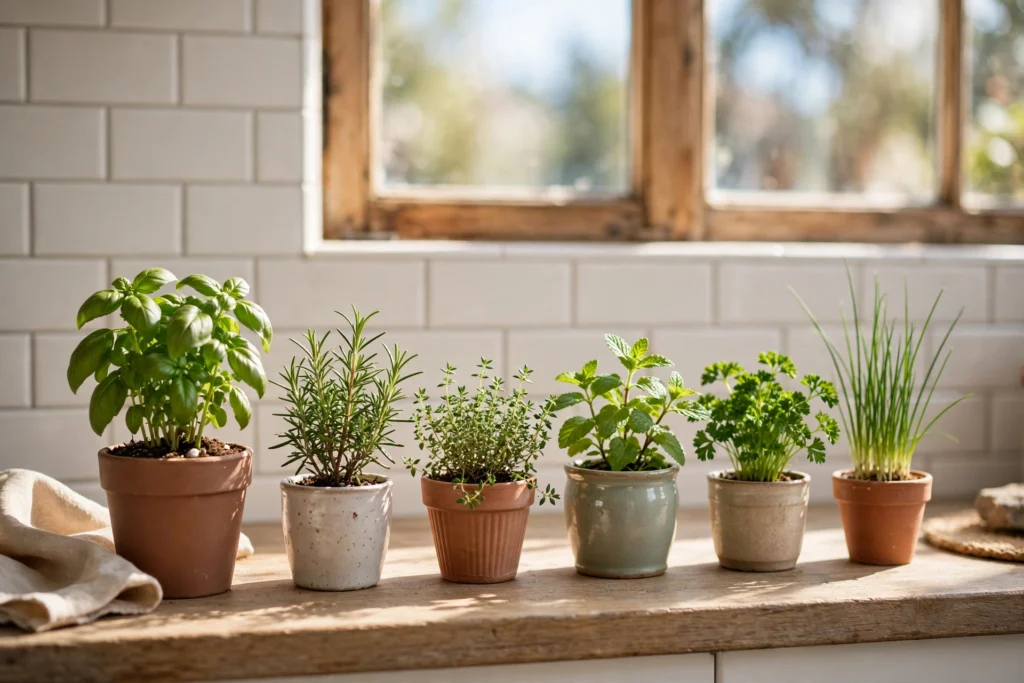
The kitchen windowsill is the classic starting point for a reason: most culinary herbs need four to six hours of bright light daily, and a south- or west-facing window delivers it for free. Line up three or four small pots of basil, chives, and parsley on a narrow tray to catch drips and keep the sill tidy. Rotate each pot a quarter turn every week so the plants grow evenly instead of leaning toward the glass. In winter, move pots back an inch from the glass at night to protect roots from cold drafts. A windowsill garden costs almost nothing to start, puts greenery exactly where you prep food, and gives you instant feedback on which herbs you reach for most.
2. Mason Jar and Tin-Can Planters
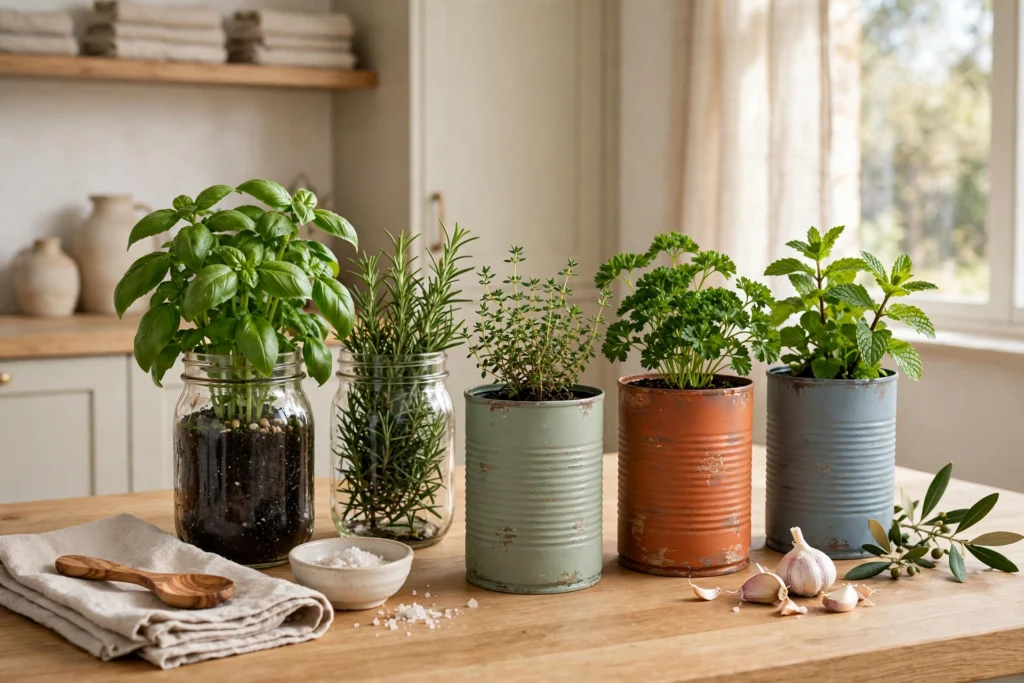
Mason jars and cleaned tin cans make charming, nearly free herb planters with farmhouse or rustic kitchens. Since jars have no drainage, add a one-inch layer of small pebbles or activated charcoal at the bottom before the potting soil to keep roots from sitting in water. Tin cans need drainage holes punched in the base and a saucer underneath — paint them in your kitchen’s accent color or wrap them with twine for a finished look. Mint and chives are forgiving choices for drainage-light containers since they tolerate occasional dampness. Cluster three jars of graduated heights on a tray for a styled vignette, and stick to herbs you water carefully rather than generously.
3. Tiered Herb Stands
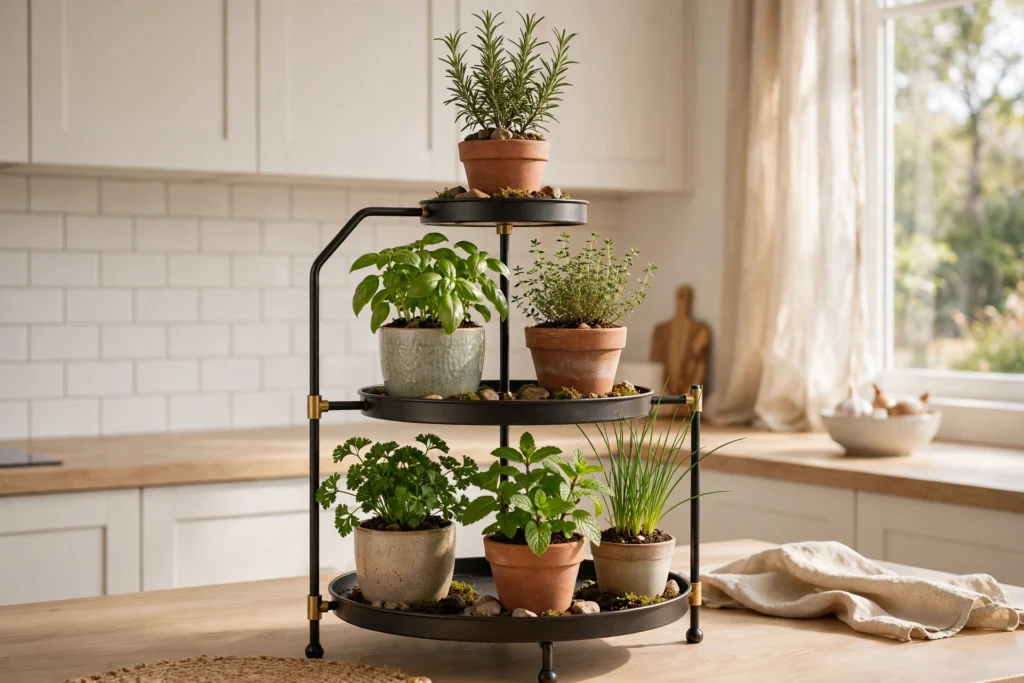
A tiered stand turns a small patch of counter into a lush mini garden by growing upward instead of outward. Two- or three-tier metal or wooden stands hold six to nine pots in a single footprint, keeping everything within snipping distance of your cutting board. Put sun-lovers like basil and rosemary on the top tier and shade-tolerant parsley and mint lower down. Make sure each tier gets enough light by placing the stand near a window and rotating tiers occasionally if one side lags. Tiered stands also corral watering mess: water top-down and let the catch trays below do their job. They look abundant and intentional, like a tiny edible display shelf.
4. Wall-Mounted Rail Gardens
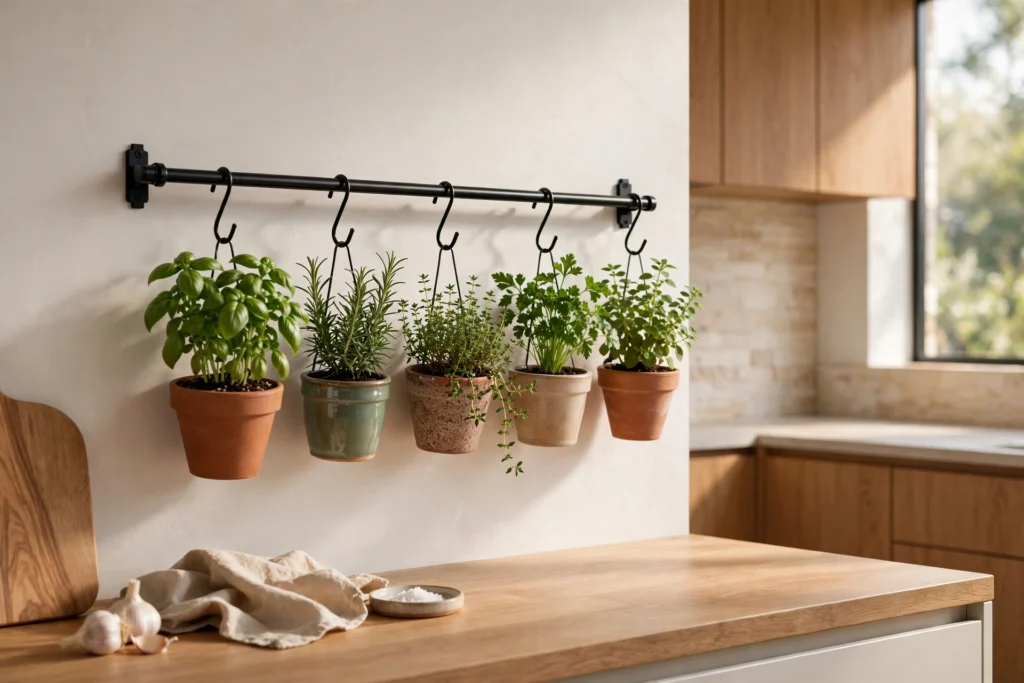
When counter space is precious, take the garden up the wall. A stainless or wooden rail with S-hooks and hanging pots — the kind sold for kitchen utensils — doubles as a vertical herb garden that keeps plants off your work surface entirely. Use lightweight pots or metal cups so the rail stays balanced, and hang them where the wall gets decent light. Basil, thyme, and trailing herbs like oregano look especially good spilling over the pot edges. Keep a small watering can under the sink and check soil weekly, since wall pots dry out faster than counter pots. A rail garden reads as purposeful decor and leaves your entire counter free for cooking.
5. Hanging Herb Planters
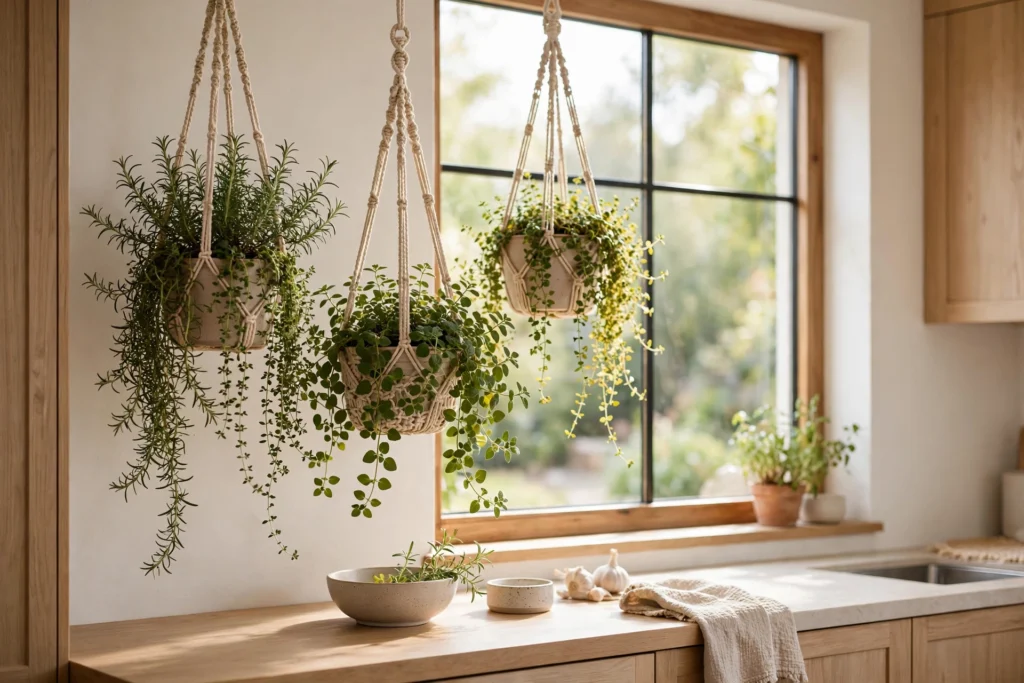
Hanging planters pull your herb garden into the air, adding greenery at eye level where it doubles as living decoration. Macramé hangers, ceramic hanging pots, or even a reclaimed wood beam with hooks all work — just anchor them into a ceiling joist or solid bracket so the weight is safe. Trailing varieties like creeping thyme, trailing rosemary, and mint cascade beautifully from hanging pots. Hang them near a bright window but out of the main cooking traffic zone so you are not ducking around plants. Water with a long-spout can and empty drip trays promptly. Hanging herbs soften tall blank walls and bring the garden feel into kitchens with almost no spare surfaces.
6. Countertop Hydroponic Gardens
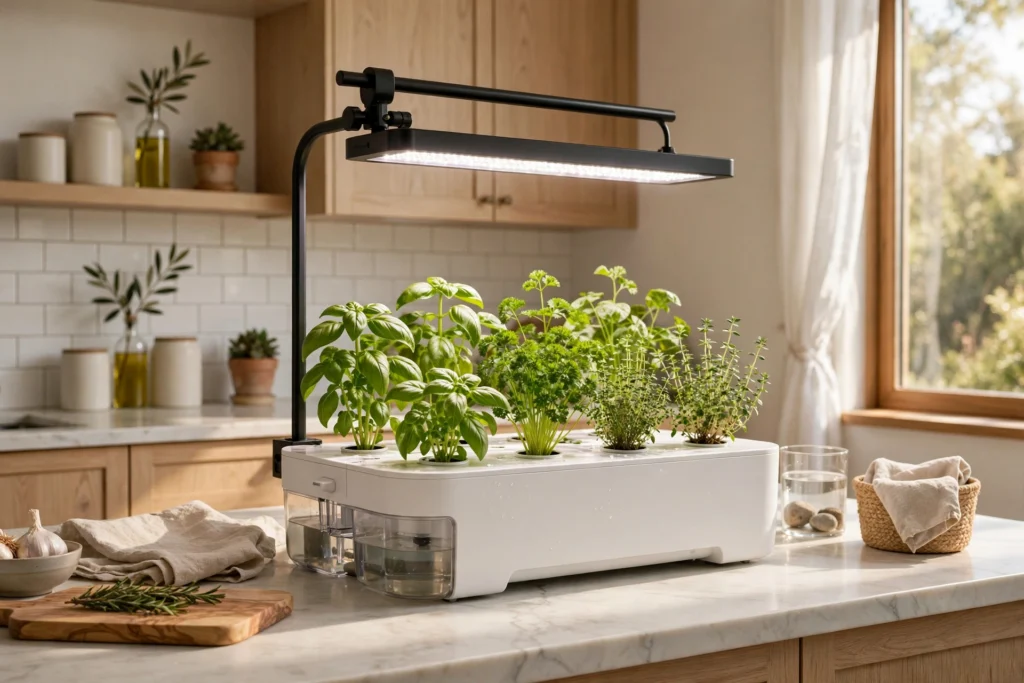
A countertop hydroponic kit is the fastest way to grow lush herbs with almost zero mess and very little guesswork. These compact units hold six to nine pods in water, with a built-in grow light on a timer and a pump that oxygenates the roots — you just add water and liquid nutrients every couple of weeks. Basil, dill, mint, and cilantro grow visibly faster hydroponically than in soil, which makes these kits satisfying for beginners. Keep the unit a few inches from the backsplash for cord access and wipe the light hood monthly for full brightness. The soft glow even doubles as evening ambiance. For a fully traditional setup, soil pots are cheaper, but hydroponics wins on speed, cleanliness, and consistency.
7. Repurposed Vintage Containers
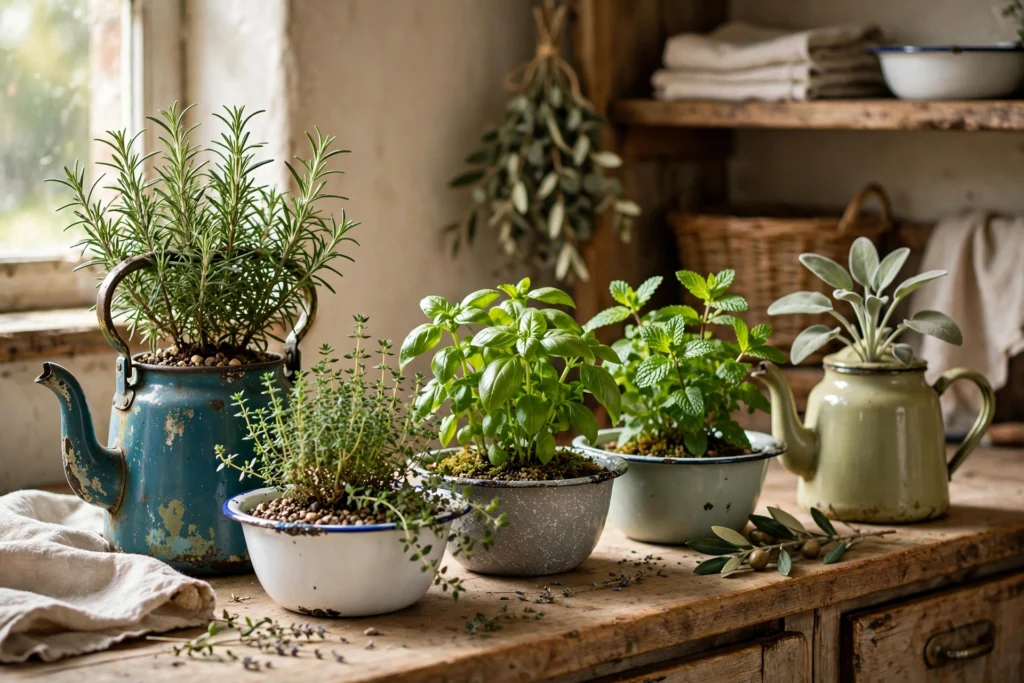
Old teapots, enamelware bowls, wooden crates, and galvanized buckets give your herb garden instant character that new pots cannot match. The rule is simple: if it holds soil and you can add drainage, it can be a planter. Drill holes in metal and ceramic containers, or nest a plastic nursery pot inside a vintage vessel that cannot be pierced so you can lift it out for watering. Wooden crates work beautifully lined with a plastic tray and planted with several herbs in one arrangement. Rosemary and thyme suit vintage containers especially well since their woody stems echo the aged look. One or two repurposed pieces keep the kitchen feeling collected, not cluttered — edit ruthlessly so it stays stylish.
8. Label Your Herbs With Style
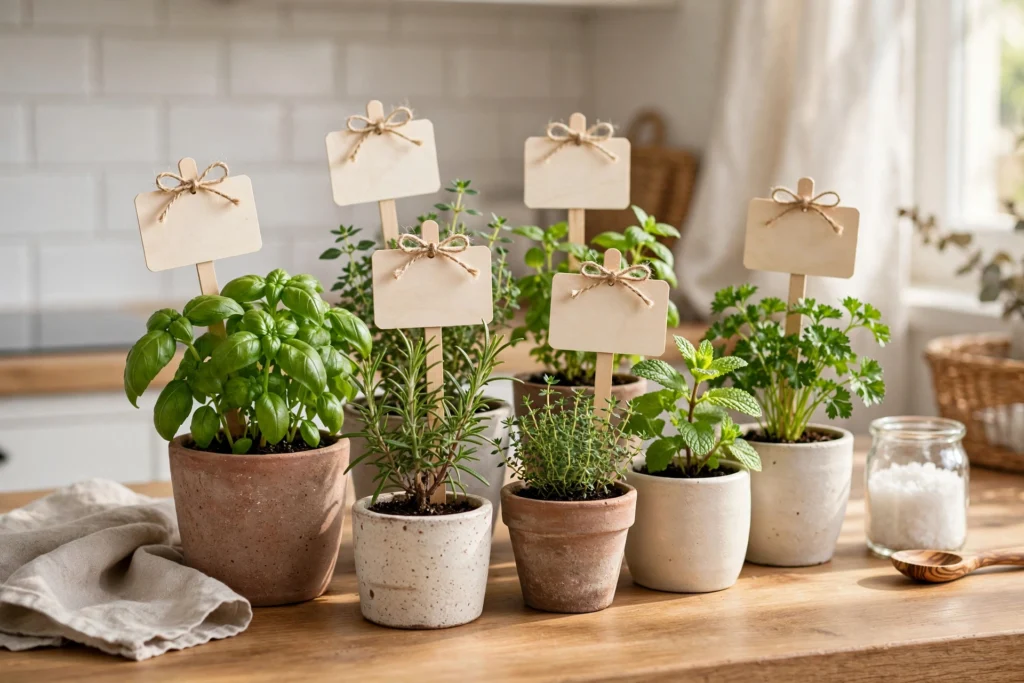
Labels turn a jumble of green pots into a curated garden, and they save you from chewing a mystery leaf. Chalkboard stakes, mini wooden picks stamped with herb names, engraved copper tags, or simple kraft-paper labels tied with twine all look intentional. Use a paint pen or permanent marker so watering does not smear the ink. Labeling matters most with lookalike seedlings — young cilantro and parsley are famously hard to tell apart — and it helps guests snip the right herb without asking. Match your label style to your kitchen: copper for modern, chalkboard for farmhouse, kraft paper for rustic. It is a ten-minute project that makes the whole garden look finished.
9. Grow the Big Five Culinary Herbs
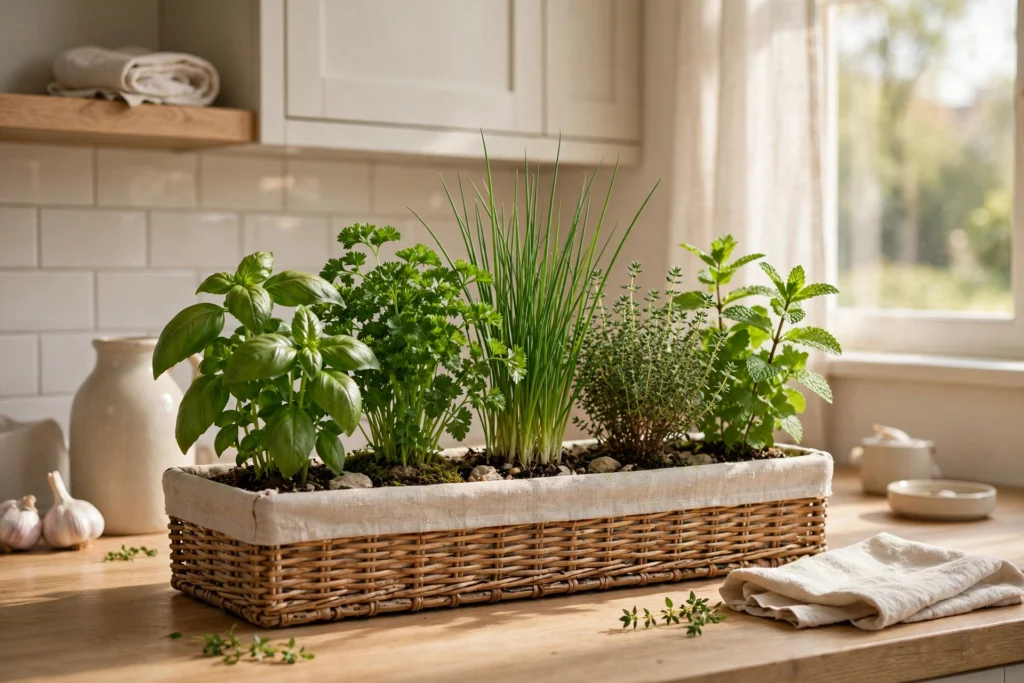
If you are overwhelmed by choice, start with the five workhorses: basil, parsley, chives, thyme, and mint. Basil anchors summer cooking, parsley goes in nearly everything, chives add gentle onion flavor to eggs and potatoes, thyme seasons roasts and soups, and mint stars in teas and desserts. All five are culinary herbs with forgiving growing habits, so beginners can succeed with basic light and consistent watering. Plant mint in its own pot — it is a vigorous spreader that will bully its neighbors. Basil wants the sunniest spot and the most water of the five, while thyme prefers to dry out between drinks. Master these five first and your garden will be genuinely useful from day one.
10. Self-Watering Planters for Travelers
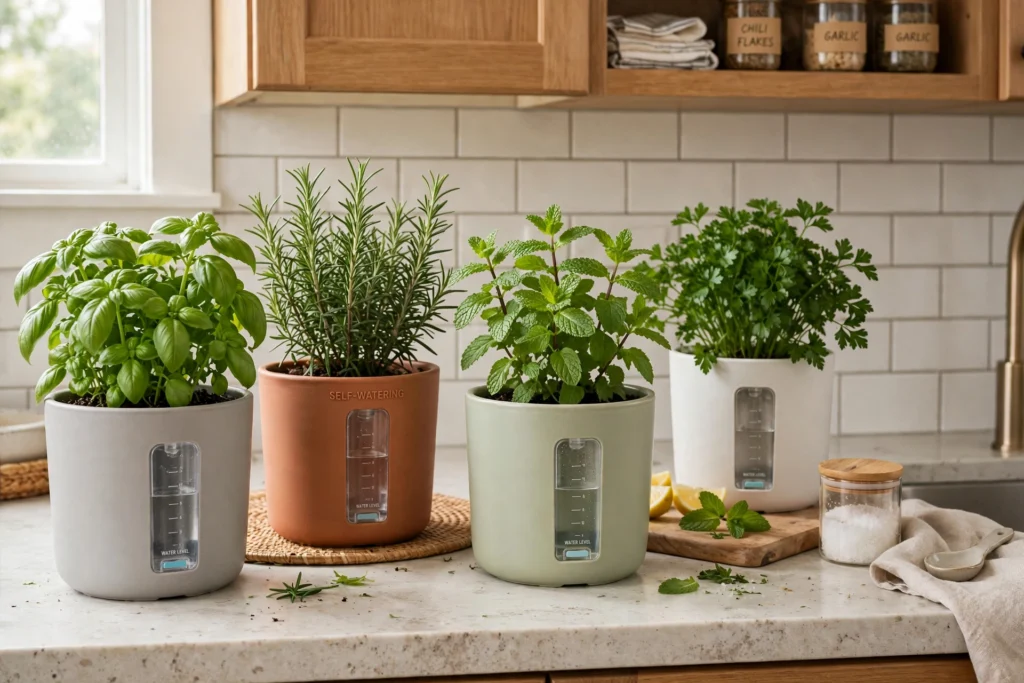
Love fresh herbs but travel often or forget to water? Self-watering planters solve the most common cause of dead kitchen herbs. A reservoir at the base wicks moisture up to the roots through a porous insert, so one filling can keep herbs happy for one to three weeks depending on the plant and season. They are ideal for thirsty basil and parsley, though Mediterranean herbs like thyme and rosemary still prefer a standard pot that dries out. When you buy a starter plant, check the roots and upsize it into a self-watering pot right away rather than waiting. Pair them with herb-growing guidance from Bonnie Plants when you want variety-specific watering tips for new plants.
11. Herb Garden on Open Shelving
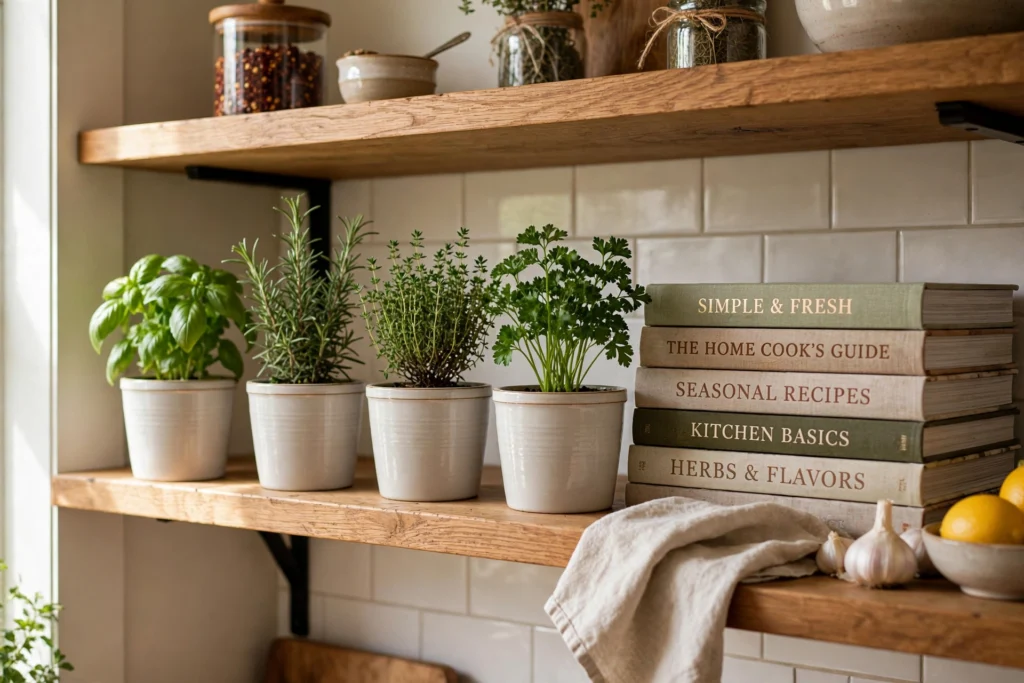
Open kitchen shelves make a natural stage for a herb garden that is equal parts decor and pantry. Dedicate one shelf near a window to a row of matching pots, mixing in a small stack of cookbooks, a ceramic pitcher, or a cutting board to keep it styled rather than purely utilitarian. These styled open kitchen shelves show how greenery elevates a shelf from storage to display. Use pots in one color family — white ceramic, terracotta, or matte black — so the plants provide the variety instead of the containers. Keep the heaviest pots on lower shelves and the herbs you snip daily at arm’s reach. Shelf gardens need good ambient light, so choose this spot only if the shelf sits within a few feet of a bright window.
12. Under-Cabinet Grow Lights
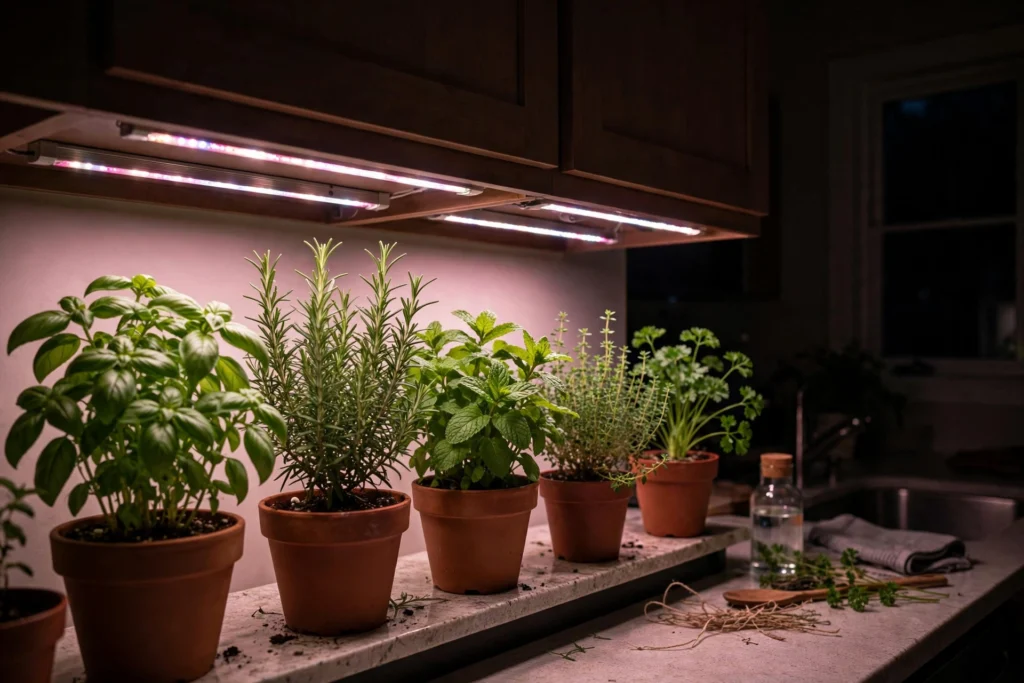
No sunny window? Under-cabinet LED grow lights bring the sun to the counter. Slim full-spectrum LED bars mounted beneath upper cabinets wash the counter below in plant-friendly light for twelve to sixteen hours a day on a timer. Position pots of basil, cilantro, and lettuce directly under the light, six to twelve inches below the bulbs, for the best growth. Modern LED grow lights sip electricity and run cool, so they are safe under wood cabinets. The bonus is aesthetic: at night the lit counter glows softly, making your herb row look like a deliberate design feature. Choose lights labeled full-spectrum or daylight so the herbs look natural, not purple. This setup makes year-round growing possible in north-facing or basement kitchens.
13. Seasonal Herb Rotations
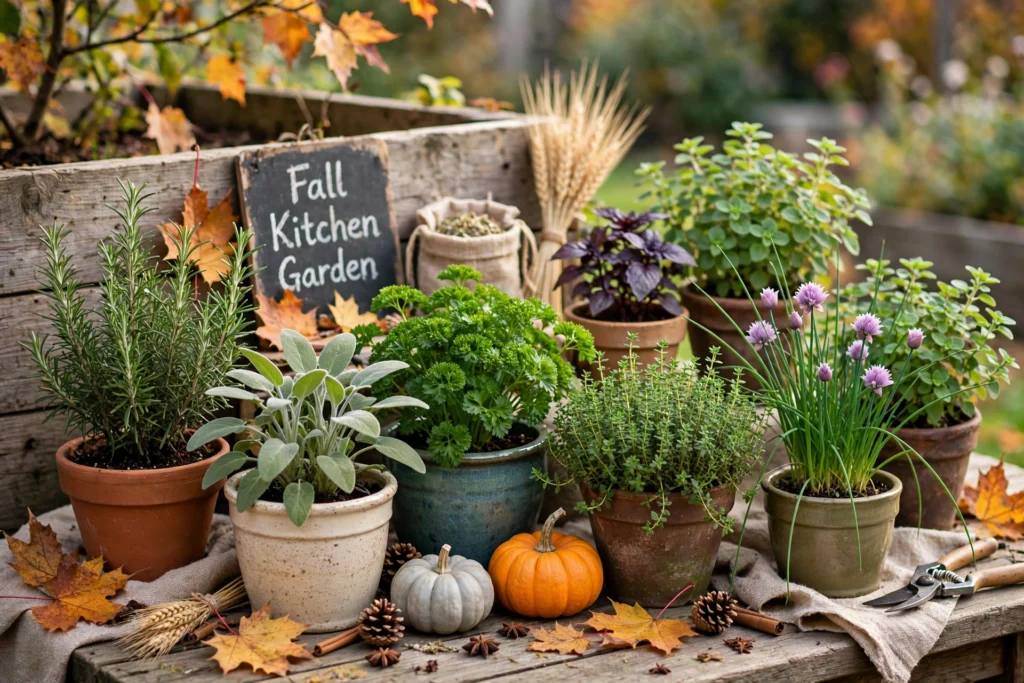
Smart kitchen gardeners rotate herbs with the seasons to keep the garden productive all year. In spring, start tender basil, cilantro, and dill that thrive in lengthening days; in summer, add heat-lovers like lemongrass and let basil run at full production. Come fall, swap spent summer annuals for cool-season parsley, chives, and cilantro, which tolerate lower light and cooler rooms. Winter is for hardy perennials like thyme, oregano, and rosemary, boosted by a grow light if your windows dim. Rotating means you are always growing what wants to grow, which cuts frustration and keeps the garden looking lush instead of leggy. Keep a small notebook of what thrived each season so next year’s lineup is even better.
14. Drying and Preserving Stations
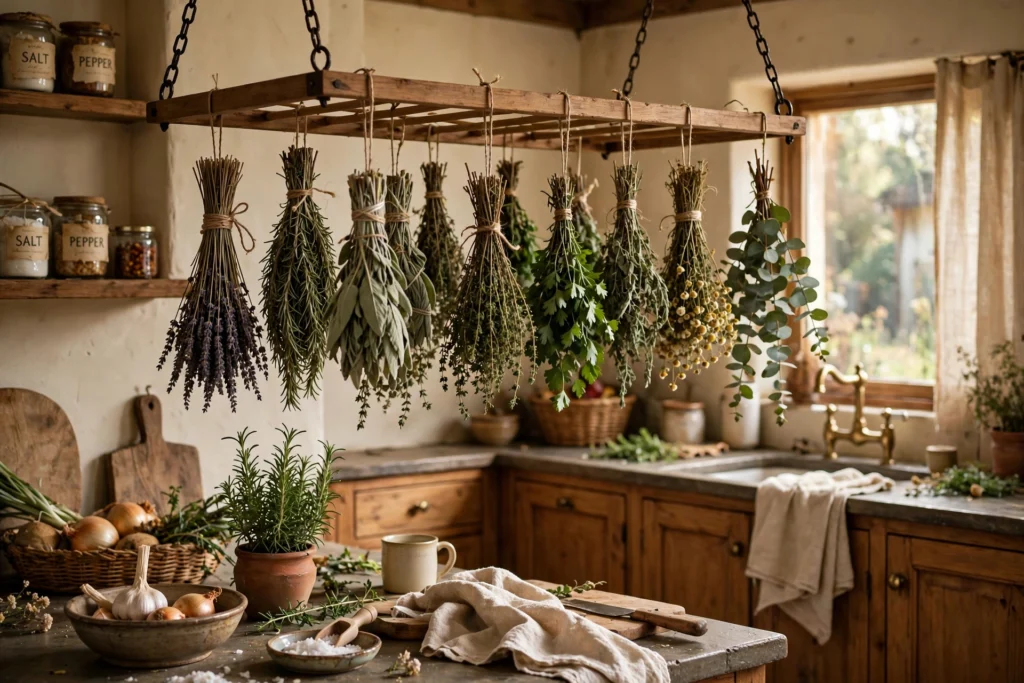
A bumper harvest deserves a plan, and a drying station turns surplus herbs into winter flavor. Bundle stems of thyme, oregano, rosemary, and sage with twine and hang them upside down from a rack or cupboard hook in a warm, airy spot away from the stove’s steam. Basil and mint preserve better frozen: chop them into ice-cube trays with olive oil or water for instant flavor cubes. Label and date everything, since dried herbs all start looking alike in jars. A small wooden drying rack on the wall doubles as rustic decor while it works. Preserving stretches your garden’s value across the whole year and makes a lovely, practical display during harvest season.
15. Keeping Herbs Thriving Year-Round
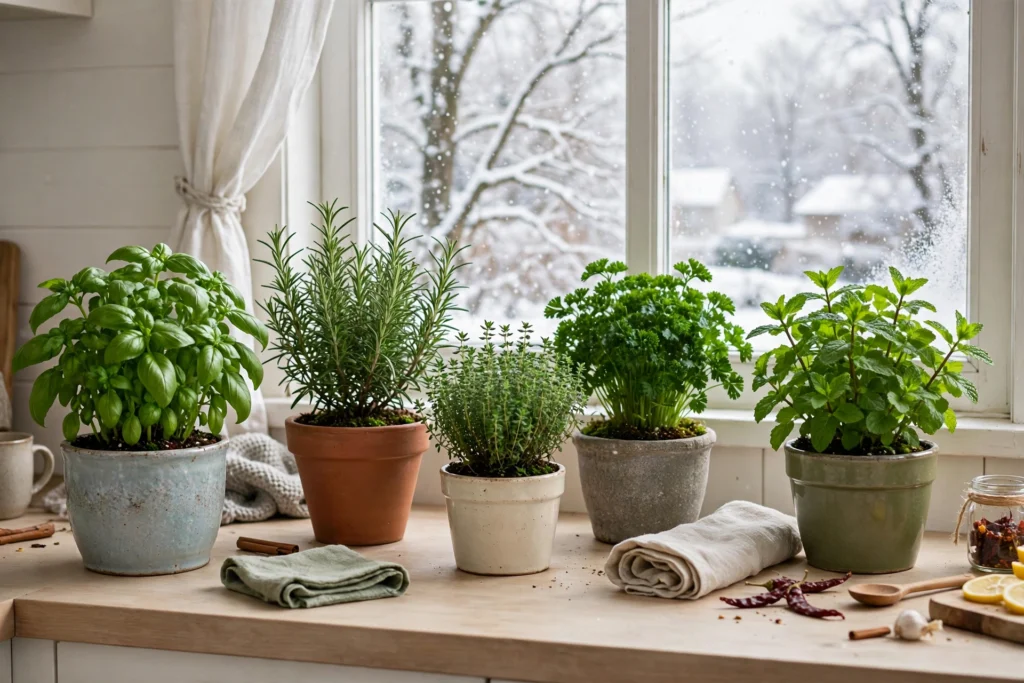
Long-term success comes down to four habits: light, water, feeding, and pruning. Give herbs as much bright light as you can — supplement with a grow light from October through March — and water when the top inch of soil feels dry rather than on a fixed schedule. Feed potted herbs with a half-strength liquid fertilizer every two to four weeks in the growing season, since frequent watering leaches nutrients from containers. Pinch basil and mint regularly to keep them bushy instead of leggy, and never harvest more than a third of a plant at once. Repot into fresh soil once a year. With these simple rhythms, a kitchen herb garden becomes a permanent, self-renewing part of your kitchen.
Keep Exploring
A thriving herb garden makes the whole kitchen feel alive — the color, the scent, the habit of reaching for something fresh. Pick the one or two ideas that fit your light and your cooking style, then grow your collection as the habit sticks. And if farmhouse character is your thing, these charming farmhouse kitchen sinks pair beautifully with a rustic herb-garden corner for a kitchen that feels warm, gathered, and completely your own.





[…] above the counter or beside a window. Thrifted frames spray-painted one color keep the cost down. Kitchen herb garden ideas for fresh flavor and style show how to pair the real plants with the printed […]
[…] drawer insert, while a 60-jar collection needs a dedicated pull-out. And if you grow your own, our kitchen herb garden ideas for fresh flavor and style pair beautifully with a well-organized dried-spice station […]