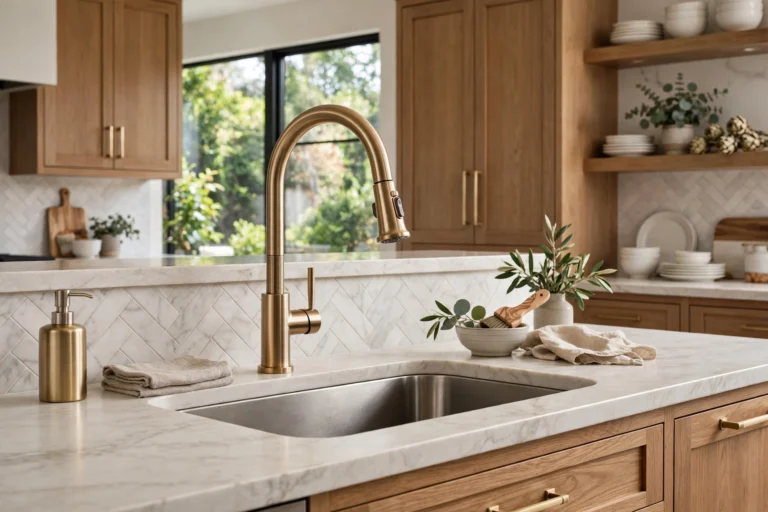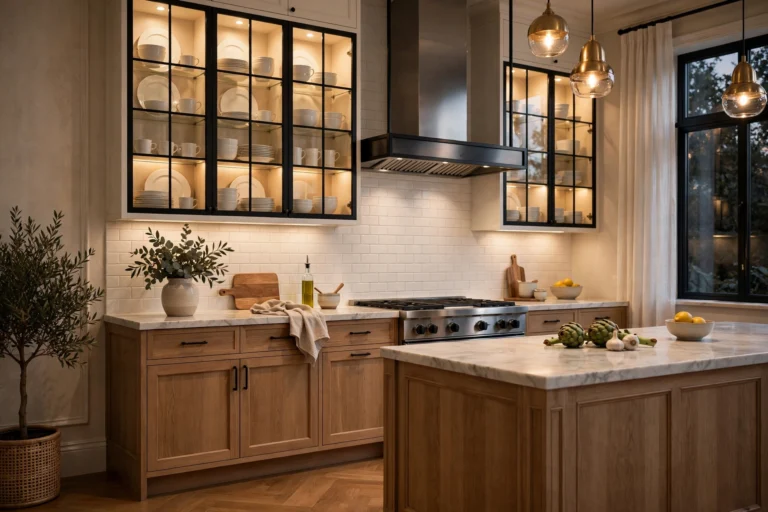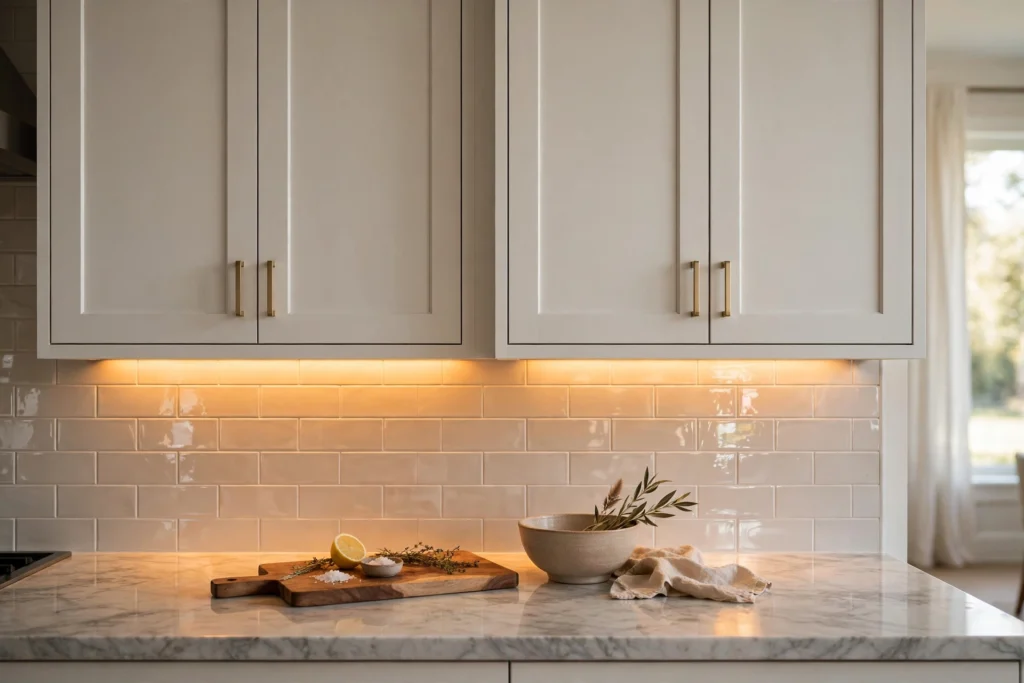

Few upgrades transform a kitchen as dramatically — and affordably — as good under-cabinet lighting. That dim, shadowy strip between your upper cabinets and the countertop is where most of the real kitchen work happens: chopping, reading recipes, measuring, and cleaning. These kitchen under cabinet lighting ideas add brightness exactly where you need it, eliminate the shadows your body casts under wall cabinets, and give the whole kitchen a warm, high-end glow after dark. Think of under-cabinet lights as the hardworking middle layer of your lighting plan — our kitchen pendant lighting ideas cover the overhead style statement, while the ideas below handle the light you actually cook by.
The beauty of this project is how scalable it is. A single adhesive LED strip can be installed in ten minutes for the cost of a takeout dinner, while a fully hardwired, dimmable, motion-activated system gives you a kitchen that feels custom-designed. Whatever your budget and skill level, there is an option below that fits — and your counters will never look flat and shadowy again.
1. LED Strip Lights for Seamless Glow
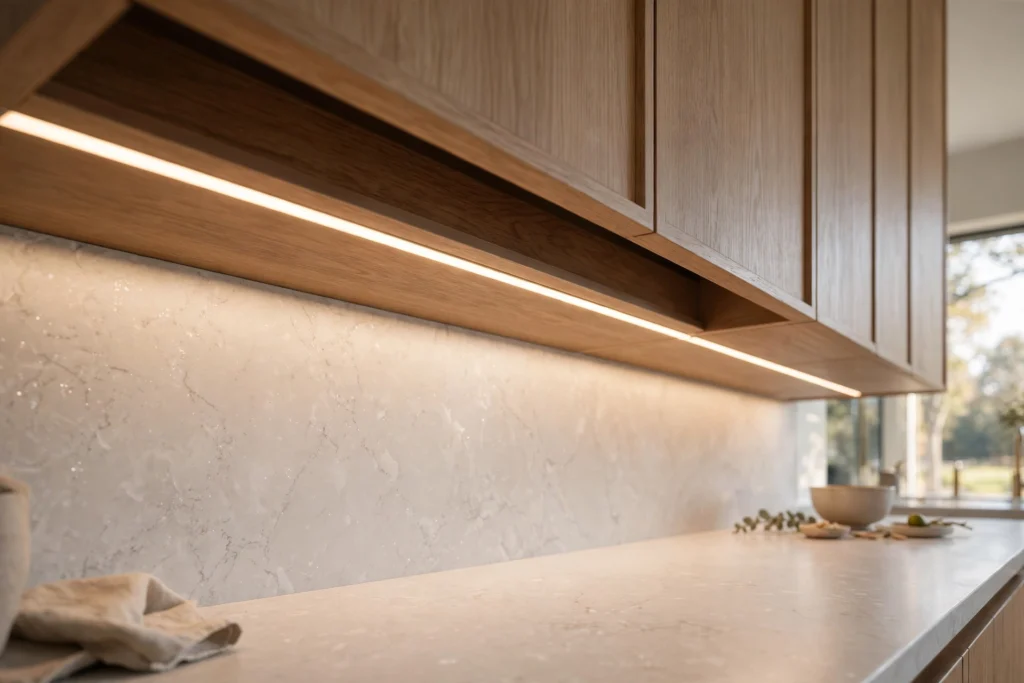
Flexible LED strip lights are the most popular under-cabinet option for a reason: one continuous ribbon of light means no hot spots, no gaps, and a clean, seamless glow across the entire counter run. They are slim enough to hide behind the small lip at the front edge of most upper cabinets, so the source disappears and all you see is the effect. Look for strips with at least 60 LEDs per meter for even coverage, and mount them toward the front of the cabinet bottom rather than against the wall — this pushes light across the full depth of the counter instead of pooling it at the backsplash. Many quality strips come with an aluminum channel and diffuser, which protects the LEDs and softens the light beautifully.
2. Puck Lights for Focused Pools
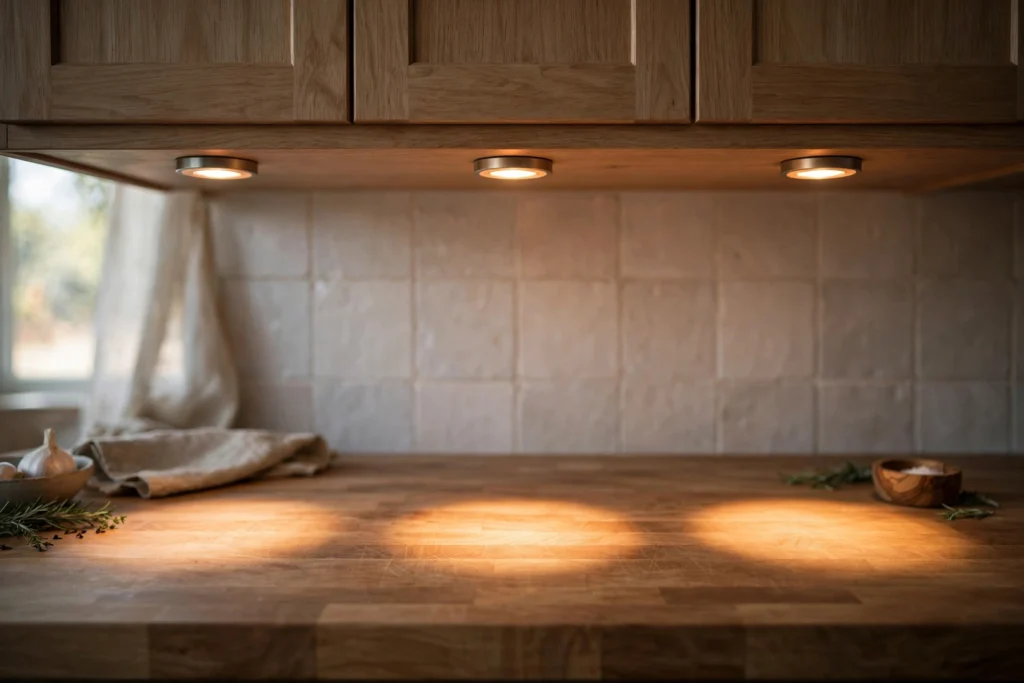
Puck lights are small, round, disc-shaped fixtures that mount individually under each cabinet, creating defined pools of light rather than one continuous wash. They are perfect if you want to highlight specific zones — the coffee station, a knife block, a decorative cutting board — or if your cabinet layout has breaks and odd widths where a strip would be awkward. Surface-mounted pucks install with a couple of screws, while recessed models sit nearly flush for a cleaner look. The trade-off is coverage: because they are point sources, you need to space them correctly (roughly one per 8 to 12 inches of cabinet) or you will see bright spots and dark gaps. Use a frosted lens cover to soften the pool of each puck and cut down on glare.
3. Linear Bar Fixtures
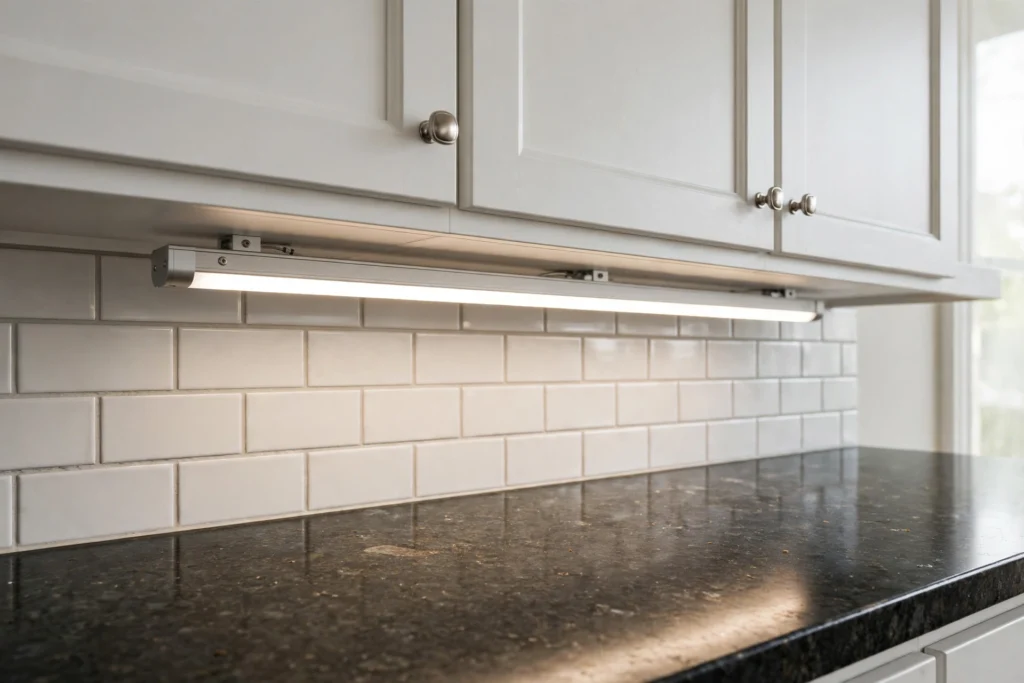
Linear bar fixtures are rigid, slim light bars that bridge the gap between strips and pucks — easier to install than a custom strip run, but more uniform than individual pucks. They come in fixed lengths (typically 6, 12, 18, and 24 inches), so you can match a bar to each cabinet section for a neat, modular layout. Most are linkable, meaning one power cord can daisy-chain several bars together, which keeps wiring tidy and minimizes outlets needed. When comparing options, look at under-cabinet fixtures from Kichler to see the range of slim-profile designs, finishes, and linkable lengths available. Choose a finish — white, bronze, or brushed nickel — that blends with your cabinet hardware so the fixture virtually disappears when switched off.
4. Warm vs Cool Color Temperature
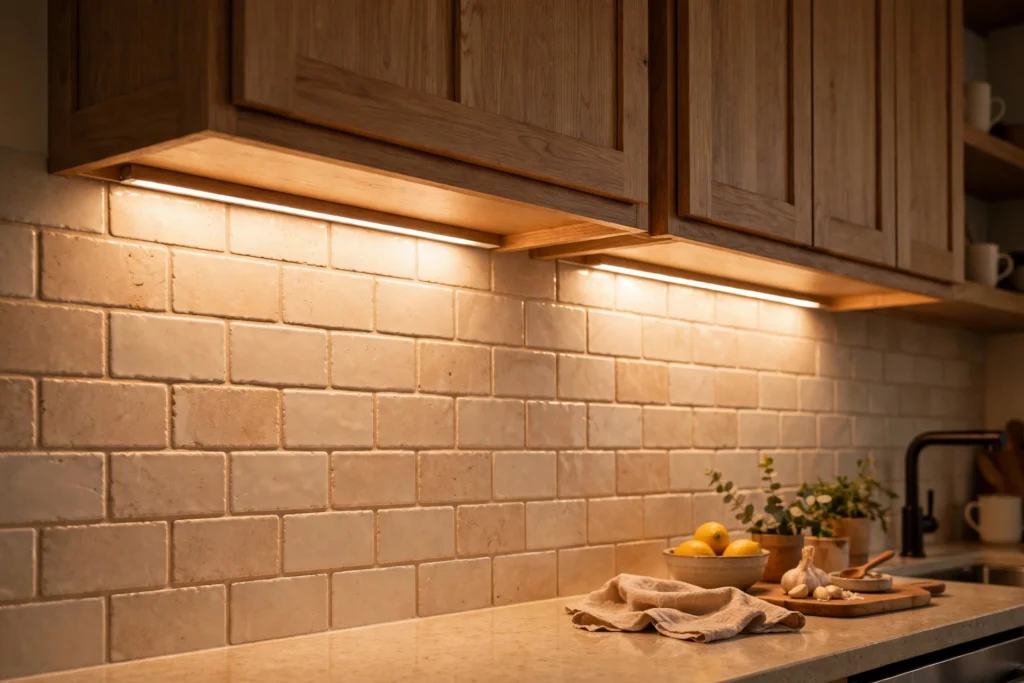
Color temperature, measured in Kelvin, is the single biggest factor in whether your under-cabinet lighting feels cozy or clinical. Warm white (around 2700K to 3000K) mimics traditional incandescent light, flatters wood cabinets and stone counters, and makes food look appetizing — it is the safe default for most kitchens. Cool white (4000K to 5000K) reads crisp and daylight-like, which some cooks prefer for detailed prep work, but it can make warm-toned cabinetry look washed out and slightly gray. Whichever you choose, match every fixture in the kitchen to the same temperature so your under-cabinet glow does not clash with your ceiling or pendant lights. Learning how light fixtures are rated helps you decode the specs, and many quality LEDs let you switch between temperatures until you find the one that flatters your particular finishes.
5. Hardwired vs Plug-In vs Battery
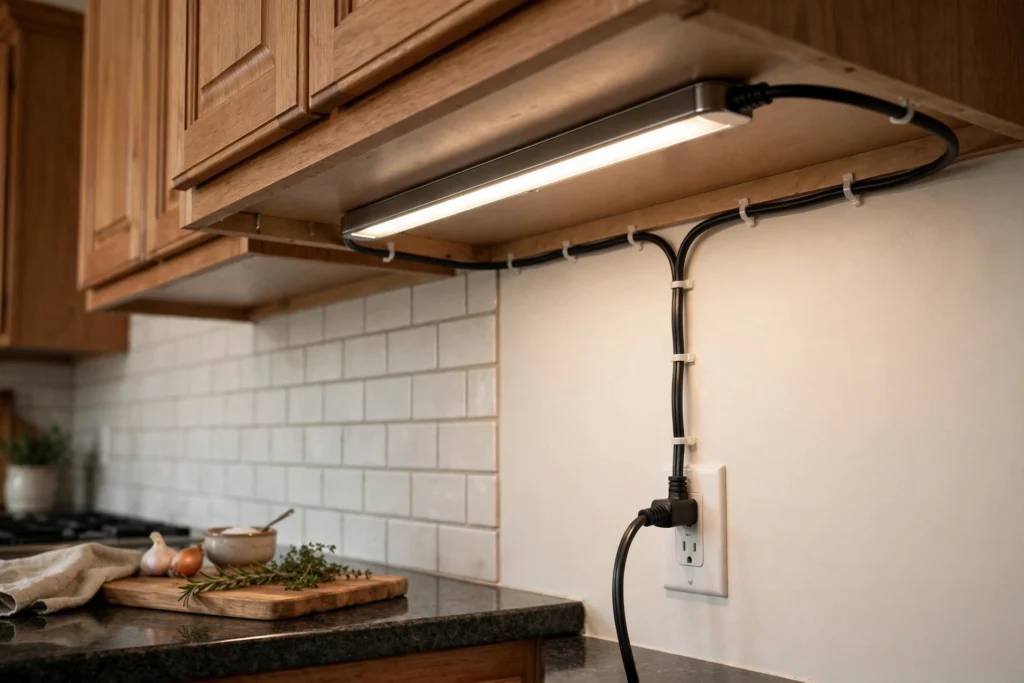
How your under-cabinet lights get power changes the cost, the look, and whether you need an electrician. Hardwired fixtures connect directly to your home’s wiring — often on a dedicated wall switch — giving the cleanest result with no visible cords, but they usually require an electrician and work best during a remodel. Plug-in lights simply plug into an outlet, which makes them the friendliest DIY option; you can hide the cord with a cord channel or route it behind the backsplash for a tidy finish. Battery-powered pucks and strips need no wiring at all and stick up with adhesive in minutes, but you will be recharging or replacing batteries regularly — fine for a rarely used bar corner, annoying for your main prep zone. Pick the power source to match how hard each lighting zone will work.
6. Motion-Sensor Activation
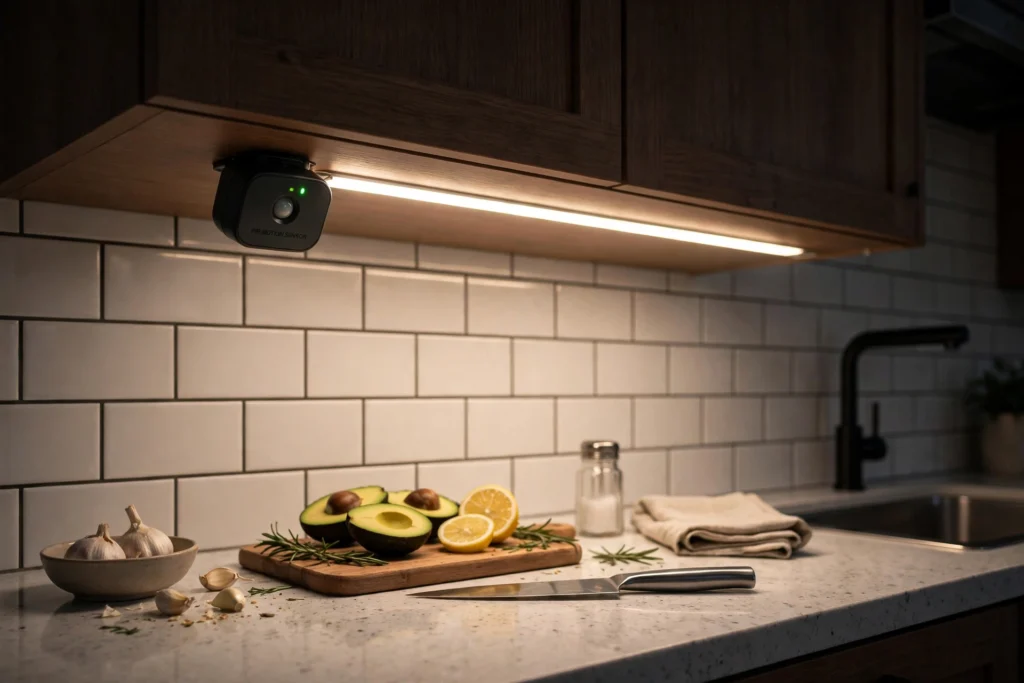
Motion-sensor under-cabinet lights turn on automatically as you walk up to the counter — no switch, no phone, no fumbling with wet hands. This is pure kitchen magic for late-night water runs, early-morning coffee routines, and moments when your hands are covered in flour or chicken juice. Many sensor-equipped bars and strips offer adjustable sensitivity and an auto-off timer so the light does not burn all night, and some can be set to a dim “night mode” that glows softly instead of going full brightness after dark. If you rent or want a zero-commitment test, battery-powered motion pucks give you the experience in minutes. Once you live with lights that greet you, a plain switch starts to feel like a step backward.
7. Dimmable Controls
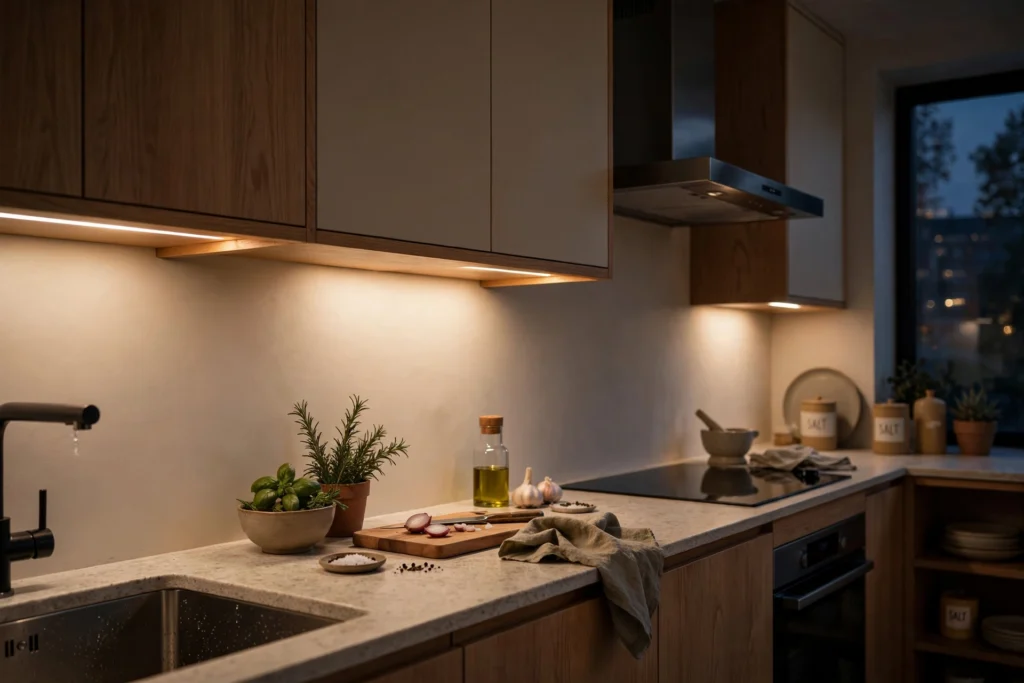
A dimmer is what turns under-cabinet lighting from a simple work light into a mood-setting design feature. Full brightness for chopping onions and cleaning up; a low, warm glow for dessert, a glass of wine, or that post-dinner kitchen linger. Not every LED fixture dims, so check the product specs before buying — and make sure the dimmer switch itself is LED-rated, since old incandescent dimmers can make LEDs flicker or buzz. Wireless dimmer remotes are a renter-friendly favorite: a small wall-mounted puck you stick anywhere, no wiring required. For hardwired systems, a proper in-wall LED dimmer on the lighting circuit gives the smoothest control. Dimming also extends the life of your LEDs, so it quietly saves money while setting the scene.
8. Lighting to Show Off the Backsplash
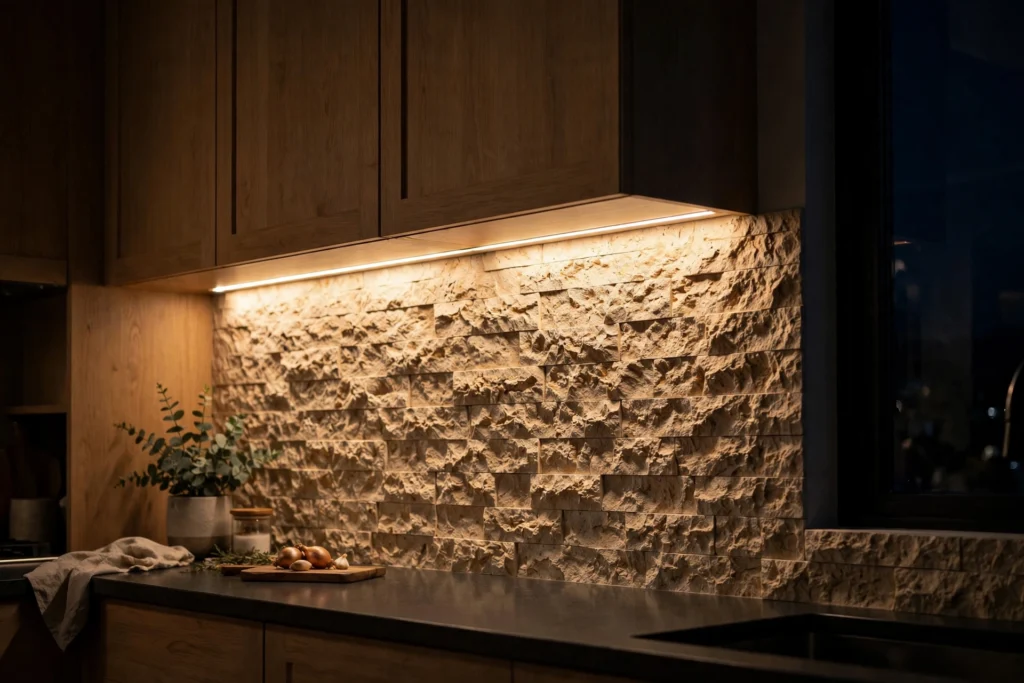
Under-cabinet lighting does double duty as display lighting for your backsplash, washing it in light and making every texture and color variation pop. This matters most with materials that have depth — handmade zellige tiles, textured stone, glass mosaic, or a bold patterned tile all look dramatically better under a warm grazing light than under flat ceiling light. Mount the fixtures close to the front lip of the cabinets so the light rakes across the backsplash surface at a low angle, which emphasizes texture and grout lines beautifully. Pairing the right light with a stunning kitchen backsplash turns an ordinary cooking wall into the focal point of the room, especially in the evening when the rest of the kitchen goes dim. If your backsplash has metallic or reflective accents, a slightly warmer temperature makes them glow rather than glare.
9. Lighting Inside Glass-Front Cabinets
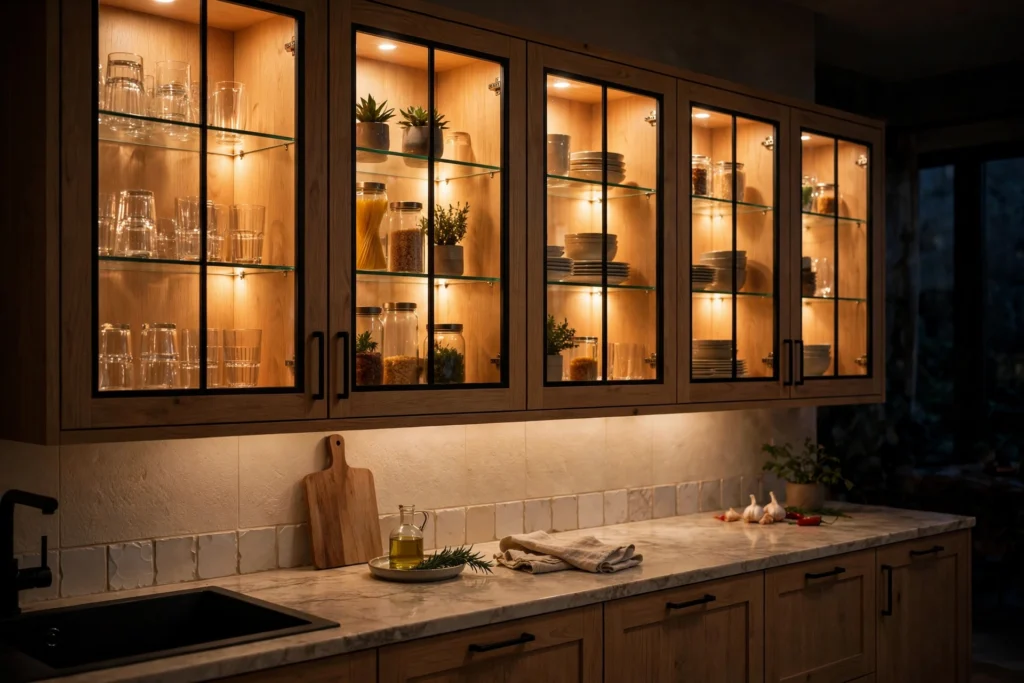
If you have glass-front cabinets, do not stop at the underside — lighting the interior turns your dishware into the decor. Small low-voltage puck lights or short LED strips mounted at the top or sides of the cabinet interior wash your glasses and dishes in a soft glow, making everyday items look like a curated display. This works best with simple, consistent dishware; a jumble of mismatched mugs under bright light looks cluttered, not curated. Interior lights also make it genuinely easier to find what you need without leaving cabinet doors open. Tie them to the same dimmer or smart scene as your under-cabinet lights so the whole wall glows as one, or put glass cabinets on a separate switch for evening entertaining when you want sparkle without full task brightness.
10. Toe-Kick Lighting
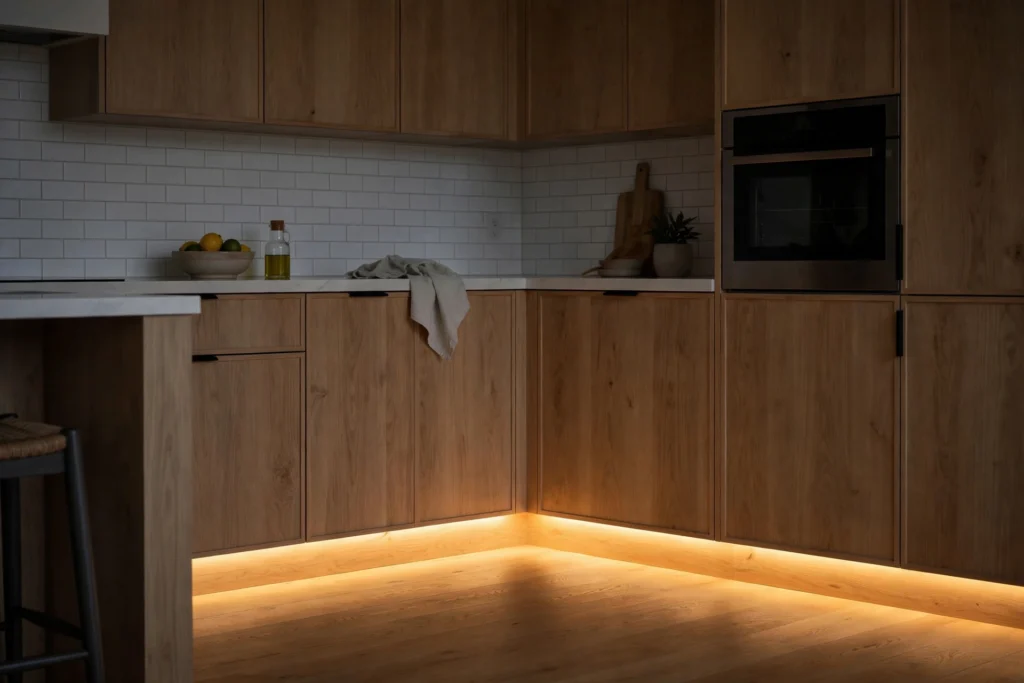
Toe-kick lighting runs a low strip of light along the recessed base of your lower cabinets, just above the floor, and it changes the entire feeling of the kitchen after dark. Instead of heavy cabinet boxes meeting the floor in a dark void, you get a soft floating effect that makes the room feel lighter and more modern. It is also genuinely practical: a dim toe-kick glow is the perfect nighttime path light for kitchen trips, bright enough to navigate by without shocking your eyes awake. Use a warm, low-output strip and keep it subtle — this is ambient light, not task light. Many homeowners wire toe-kick strips to a motion sensor or smart plug so they only run in the evening, and the effect pairs beautifully with dimmed under-cabinet lights for a fully layered nighttime kitchen.
11. Under-Shelf Lighting on Open Shelves
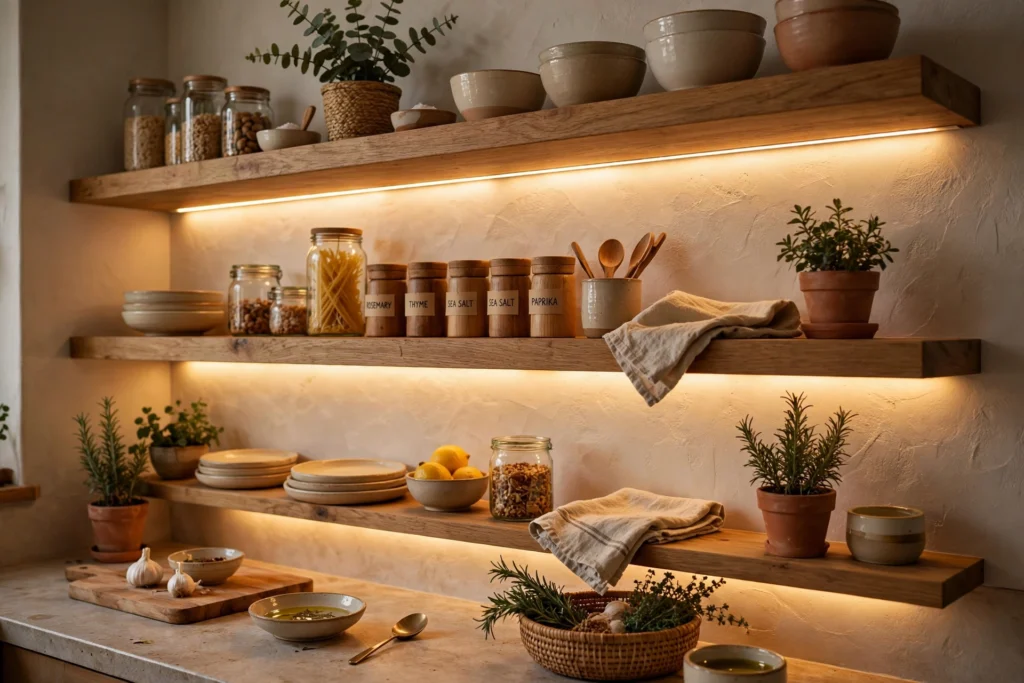
Open shelves are a design statement, but their undersides create the same shadowing problem as closed cabinets — and they also hide whatever sits below them in gloom. Slim LED strips mounted under each shelf beam wash the shelf below (and the counter at the bottom of the run) in light, turning your open shelving into a lit display. Because open shelves have no cabinet bottom to hide the strip behind, choose the slimmest possible profile and a matching finish, or recess the strip into a shallow channel routed into the shelf. The warm light flatters ceramics, cookbooks, and plants alike, and it makes the styled shelf look intentional and gallery-like rather than just storage. Keep styling simple on lit shelves: light draws the eye, so a few beautiful pieces beat a crowded row every time.
12. Task Lighting for Food Prep
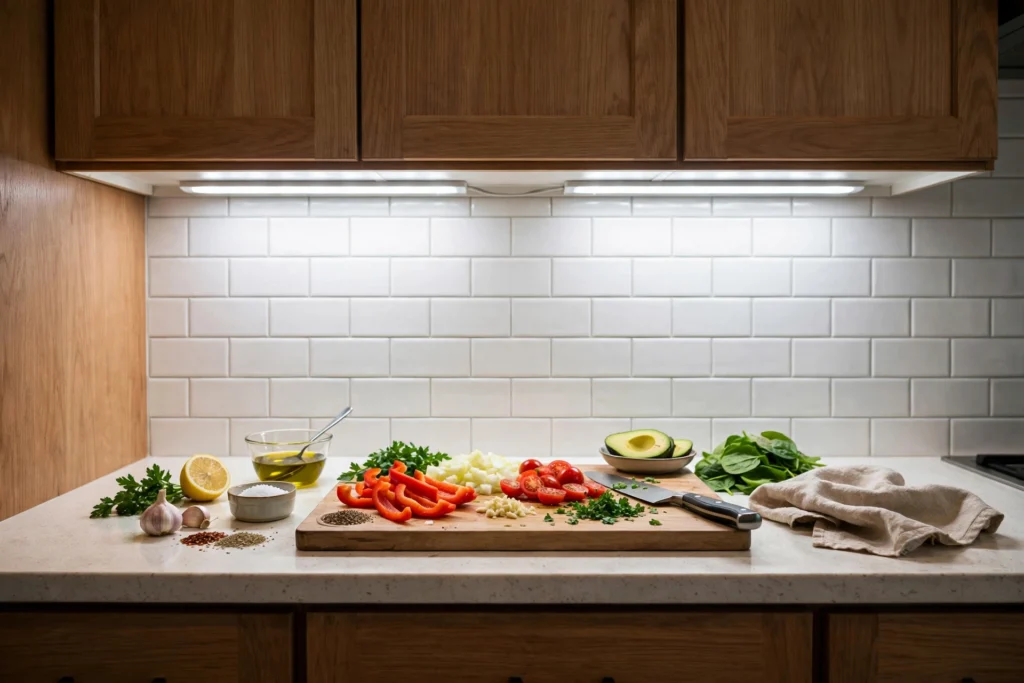
Strip away the decor language for a moment: under-cabinet lighting exists so you can see what you are cutting. Good task lighting delivers even, shadow-free brightness across the full counter depth, with enough output — roughly 500 lumens per foot for serious prep zones — to read small print on packages and spot a misplaced ingredient. Position fixtures toward the front edge of the cabinet so light falls where your hands work, not just against the backsplash behind you. Neutral to warm white (3000K to 3500K) keeps food colors true, which matters when you are checking whether meat is browned or vegetables are vibrant. Understanding how fixture ratings are defined helps you compare lumen output and beam spread like a pro, so your prep zone gets light that works as hard as you do.
13. Accent Lighting for Evening Mood
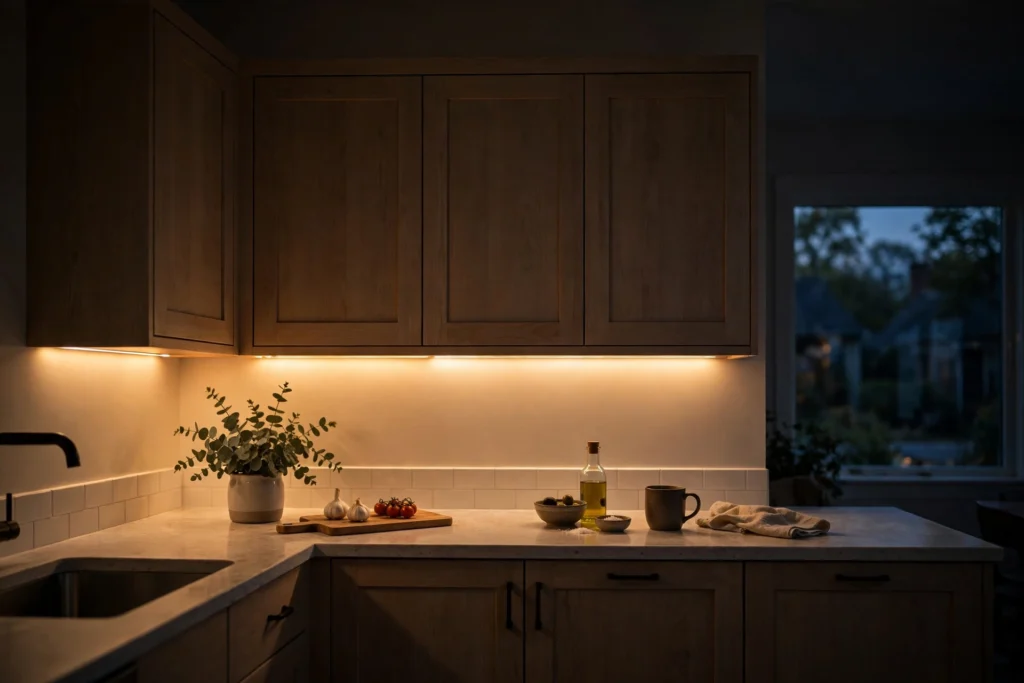
In the evening, under-cabinet lights earn their design stripes as pure accent lighting. With the main ceiling lights off and the under-cabinet layer dimmed low and warm, the kitchen glows like a candlelit room — countertops gleam, the backsplash shimmers, and the space feels calm and inviting rather than clinical. This is the layer that makes open-plan kitchens feel cozy after dinner and turns late-evening kitchen time into something you actually enjoy. If your fixtures support color temperature tuning, drop to the warmest setting (around 2200K to 2700K) for evenings; warmer light signals relaxation the way bright cool light signals work. Layer in a dimmed toe-kick strip and you get a full evening scene from two simple, affordable lighting layers.
14. Smart Lighting Scenes
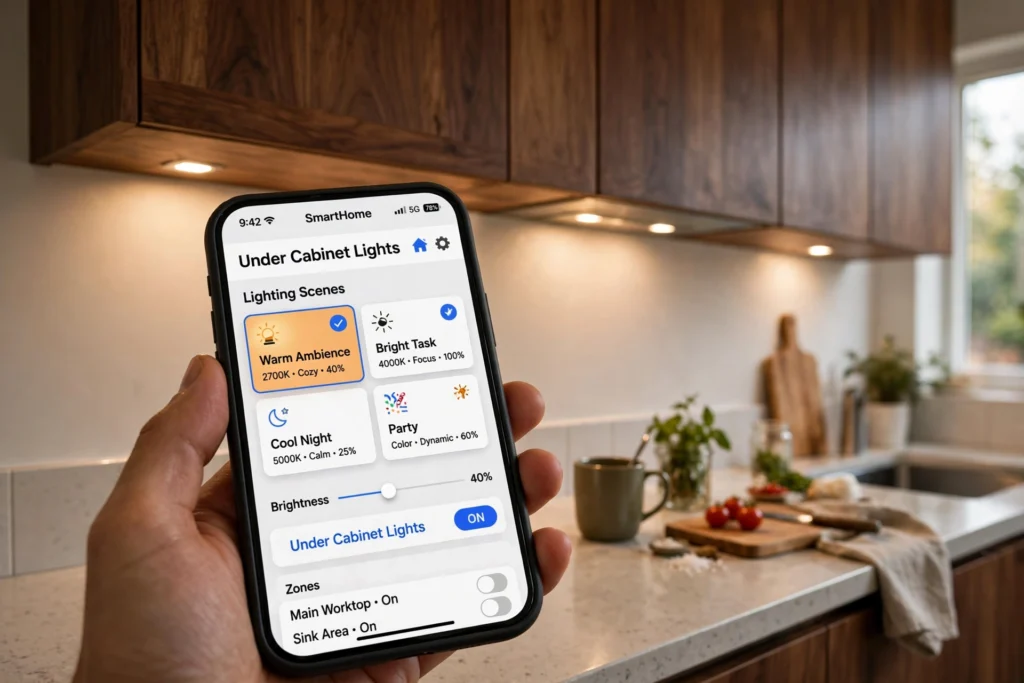
Smart under-cabinet lighting lets you program scenes — one tap for “Cooking” (bright and neutral), “Dinner Party” (warm and dimmed), “Night” (soft glow only) — instead of fiddling with multiple switches. Many LED strips and bars now ship with Wi-Fi or work with Zigbee and Matter hubs, pairing with voice assistants and wall-mounted smart dimmers. Start simple: a single smart plug on a plug-in strip plus a phone app gives you scheduling and remote control for under the cost of dinner out. Look for fixtures designed to integrate cleanly with the popular smart-home ecosystems rather than one-off proprietary apps. The real win is automation — lights that brighten when you start cooking at 6 p.m. and fade to a night glow at 10 p.m. — which makes the kitchen feel thoughtfully designed without you ever touching a switch.
15. Installation and Safety Tips
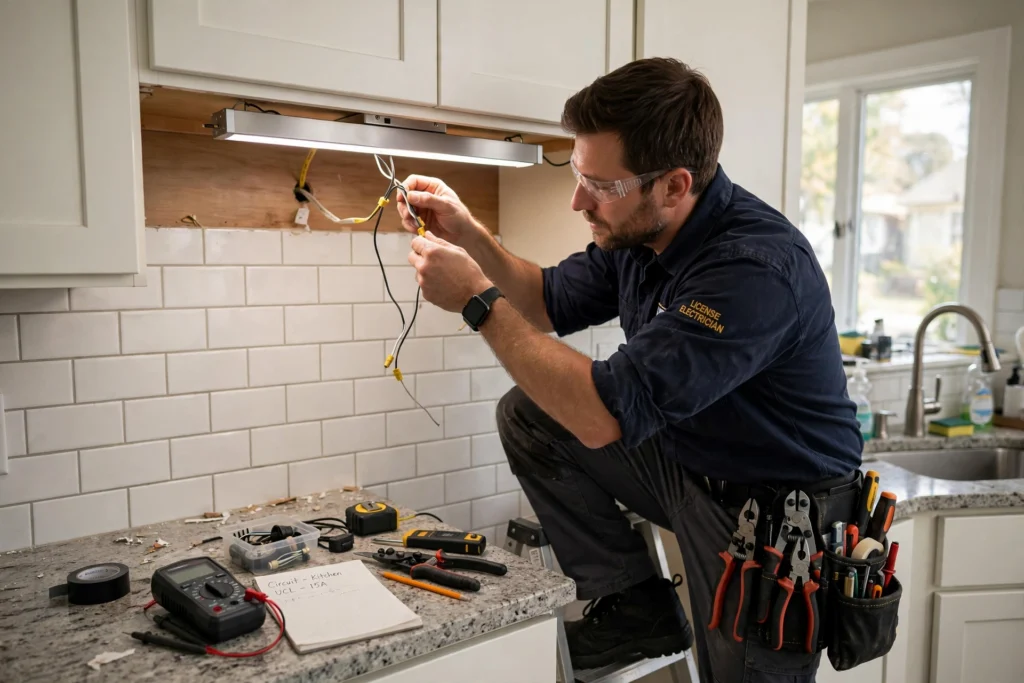
A great lighting plan still needs a safe, tidy installation. For hardwired fixtures, hire a licensed electrician — kitchen circuits, GFCI protection, and junction boxes hidden inside cabinets are not DIY territory in most homes. If you are going plug-in, keep cords and transformers off the countertop and out of the splash zone; mount power supplies under the cabinet or inside a nearby base cabinet, and never drape cords across the cooktop or sink. Low-voltage LED systems (12V or 24V) are the safest for DIY because they generate little heat, but give drivers and transformers ventilation space rather than burying them in insulation. Finally, check that fixtures are rated for damp locations if they sit near the sink or cooktop, secure every strip or bar so it cannot fall into a hot pan, and test the full layout at night before finalizing placement — darkness reveals uneven spots that daylight hides.
Frequently Asked Questions
What is the best color temperature for kitchen under cabinet lighting?
Warm white around 2700K to 3000K suits most kitchens — it flatters wood cabinets, stone counters, and food. Choose 3500K to 4000K if you want a crisper look for detailed prep work, and keep every fixture in the kitchen on the same temperature so layers blend seamlessly.
Are LED strips or puck lights better under cabinets?
LED strips give the most even, seamless coverage and are best for long counter runs. Puck lights create defined pools of light and suit cabinet sections of varying widths or targeted zones like a coffee bar. For a main prep area, strips usually win; for accent zones, pucks shine.
Can I install under cabinet lighting myself?
Yes — plug-in and battery-powered fixtures are straightforward DIY projects that need no electrical work, and many mount with screws or adhesive in under an hour. Hardwired installations on a wall switch should be done by a licensed electrician, especially in kitchens with GFCI requirements.
How bright should under cabinet lights be?
Aim for even coverage of around 500 lumens per foot across prep zones, positioned toward the front edge of the cabinet so light falls where your hands work. Dimming controls let you drop to a soft accent glow in the evening, so brightness is adjustable to the moment.
Do under cabinet lights use a lot of electricity?
No — modern LED under-cabinet fixtures typically use just a few watts per foot, far less than the old halogen pucks they replaced. Running them for hours a day costs only pennies, and dimming them in the evening reduces consumption further while extending LED life.
Keep Exploring
Under-cabinet lighting is the quiet workhorse of kitchen design — invisible when done right, impossible to miss once you have lived with it. Start with the zones where you prep and read most, then layer in accent touches like toe-kick strips and lit glass cabinets as the budget allows. The evening glow alone is worth the project.
Want the counters themselves to stay as clean as the lighting makes them look? Our appliance garage ideas that hide the clutter tuck small appliances behind lift-up or pocket doors, so the newly lit counter stays a clear, beautiful workspace day and night.