The humble bread box is having a moment — and for good reason. It keeps bread fresher than a plastic bag, hides the clutter of half-eaten loaves, and adds a warm, finished look to the counter. These kitchen bread box ideas cover every style and budget, from classic bamboo roll-tops to retro enamel showpieces, plus smart ways to use one beyond bread. The right box does three jobs at once: it regulates humidity so crusts stay crisp, it frees a cabinet, and it makes the counter look styled instead of scattered.
Bread’s two enemies are air and trapped moisture — too much air stales it, too little breeds mold. A good bread box balances both with gentle ventilation, which is why the material and design matter as much as the look.
1. Choose a Classic Bamboo Roll-Top
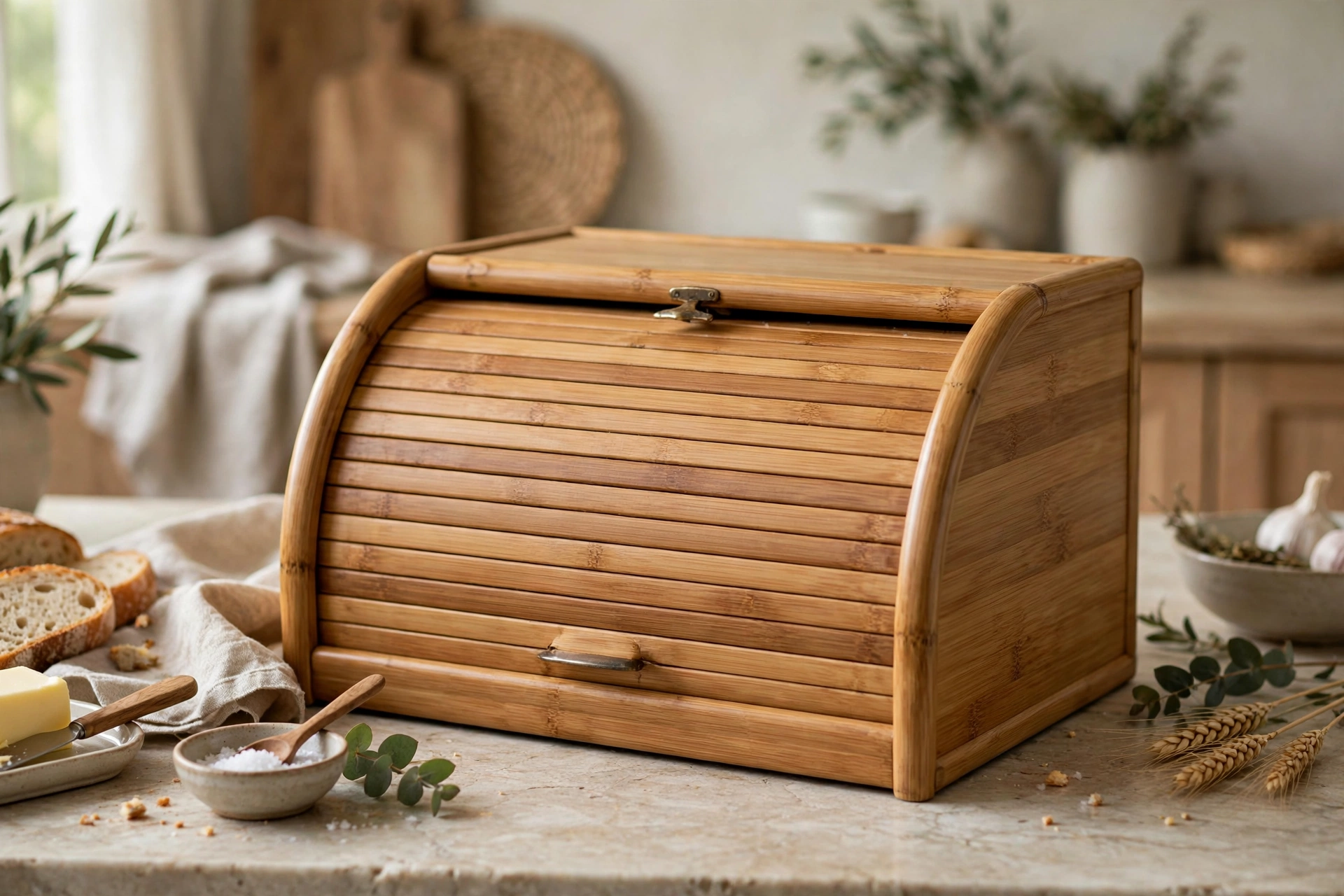
The bamboo roll-top is the bread box icon: warm wood, a lid that slides instead of swinging, and natural ventilation that keeps crusts crisp. Bamboo resists moisture and needs only occasional oiling to stay beautiful. The roll-top saves counter space since nothing swings out over your prep area. This style suits farmhouse, Scandinavian, and transitional kitchens equally. Size it to your baking habits — a standard box holds one large loaf plus rolls, while extra-large versions swallow two loaves and a bag of bagels. It is the safest first pick on this list.
2. Go Retro With Enamel Steel
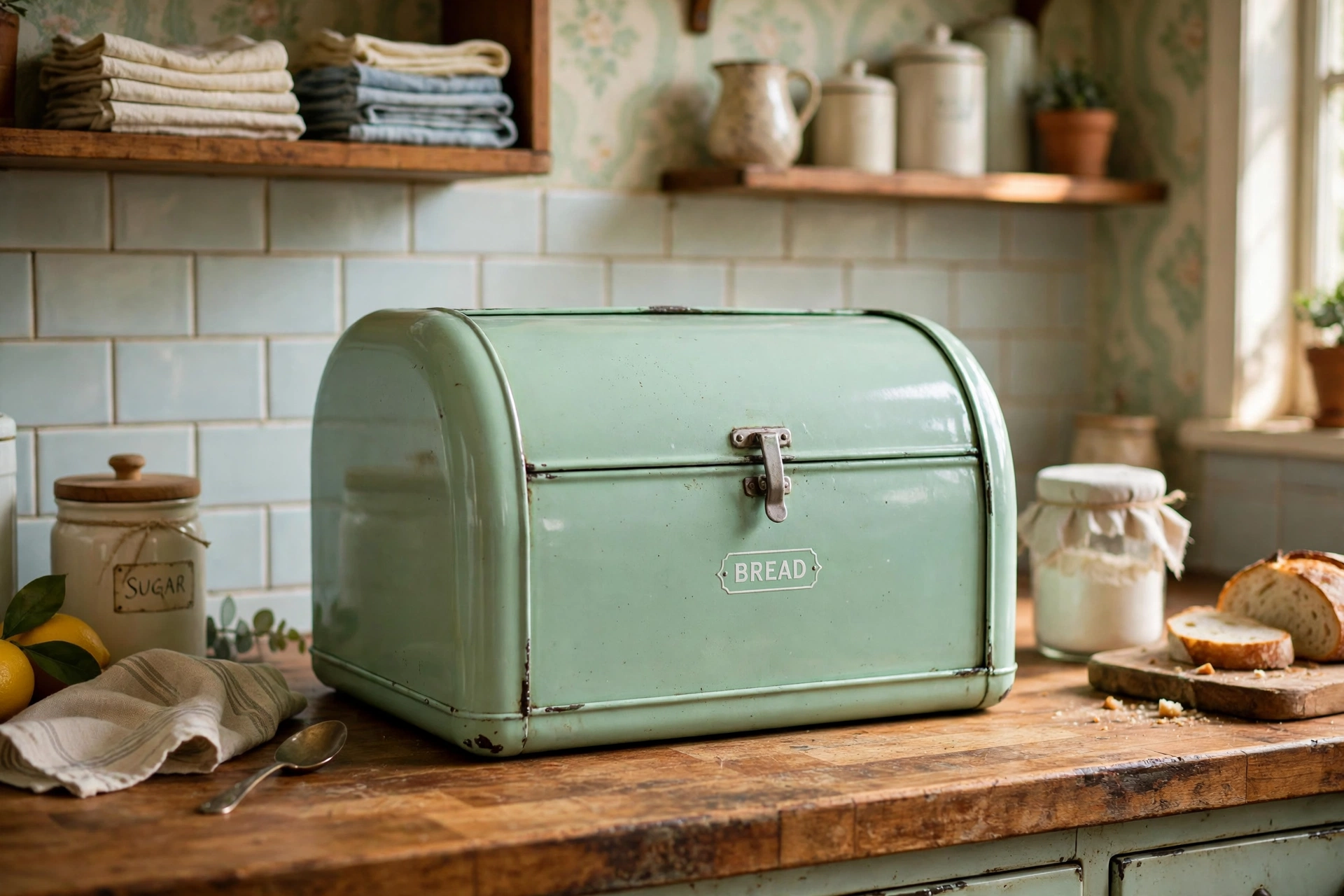
A glossy enamel bread box in cream, mint, or cherry red brings instant vintage charm. The steel body wipes clean in seconds, the enamel resists stains, and the colors make the counter feel cheerful. Pair it with matching canisters for a coordinated retro vignette. Enamel can chip if knocked, so place it where it won’t take hits from heavy pots. This is the bread box for kitchens that lean playful — it reads as decor first, storage second, and guests always comment on it. For more ways to build a cohesive baking corner around it, these kitchen baking station ideas for passionate bakers show how one statement piece anchors a whole zone.
3. Try a Double-Decker Design
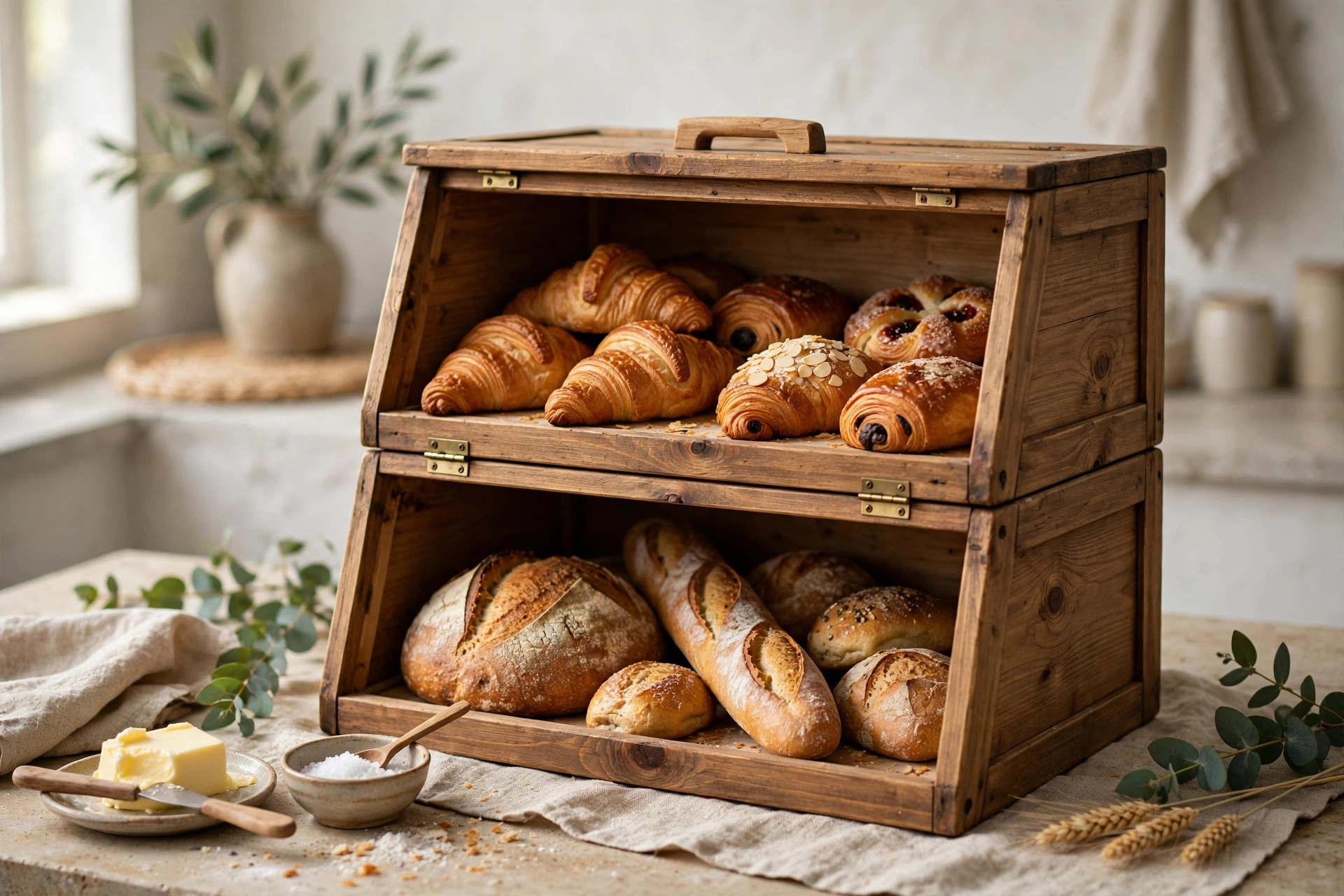
Batch bakers need more room. A two-tier bread box stacks storage vertically — loaves below, rolls and pastries above — in the footprint of a single box. Look for models with a middle shelf that lifts out for cleaning. The vertical format suits narrow counters beside the fridge or stove. Keep heavier loaves on the bottom for stability. If you bake sourdough weekly or buy in bulk, this is the most practical of these kitchen bread box ideas: double the capacity, same counter space, and everything visible at a glance.
4. Pick a Box With a Cutting Board Lid

The smartest bread boxes multitask. A box whose lid doubles as a cutting board — bamboo lids especially — gives you a bread station in one object: store the loaf inside, slice on top, sweep crumbs back in. It eliminates the separate board that used to clutter the counter. Look for a lid with a juice groove if you also slice fruit on it. Wipe the board side after each use and oil it monthly like any wooden board. This is the top recommendation for small kitchens, where every object must earn its footprint twice over.
5. Style a Corner Bread Station

Tuck the bread box into a dead corner and build a station around it: the box, a small cutting board leaning behind it, a jar of jam, a butter dish. The corner becomes a breakfast hub — toast, slice, spread, done. A corner placement keeps the main counter clear while making the box easy to reach. Add a small plant or a framed print above to finish the vignette. This works especially well in L-shaped kitchens where one corner always collects random items; the bread station gives that corner a job.
6. Match It to Your Cabinets
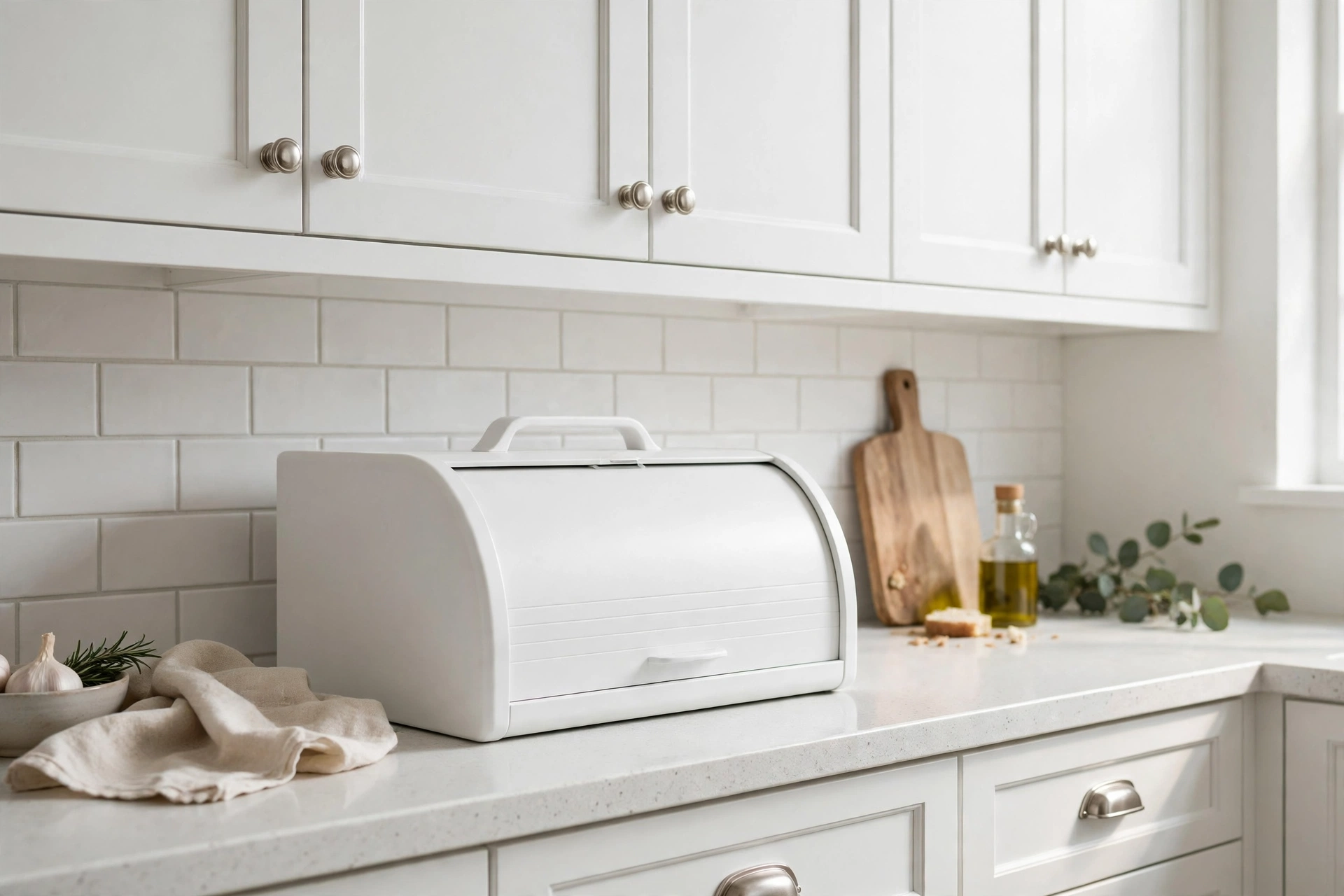
For a seamless look, choose a bread box in your cabinet color — white, sage, navy, black. The box blends into the kitchen’s palette instead of interrupting it, reading as a deliberate design choice rather than an appliance. Matte finishes match modern cabinetry; satin or gloss suits traditional. This is the minimalist’s bread box strategy: storage that disappears. If the exact shade is hard to find, a close neutral in the same undertone still looks intentional. Apartment Therapy’s take on using bread boxes as design objects shows how the right box elevates a whole surface, not just the bread inside.
7. Use It for More Than Bread
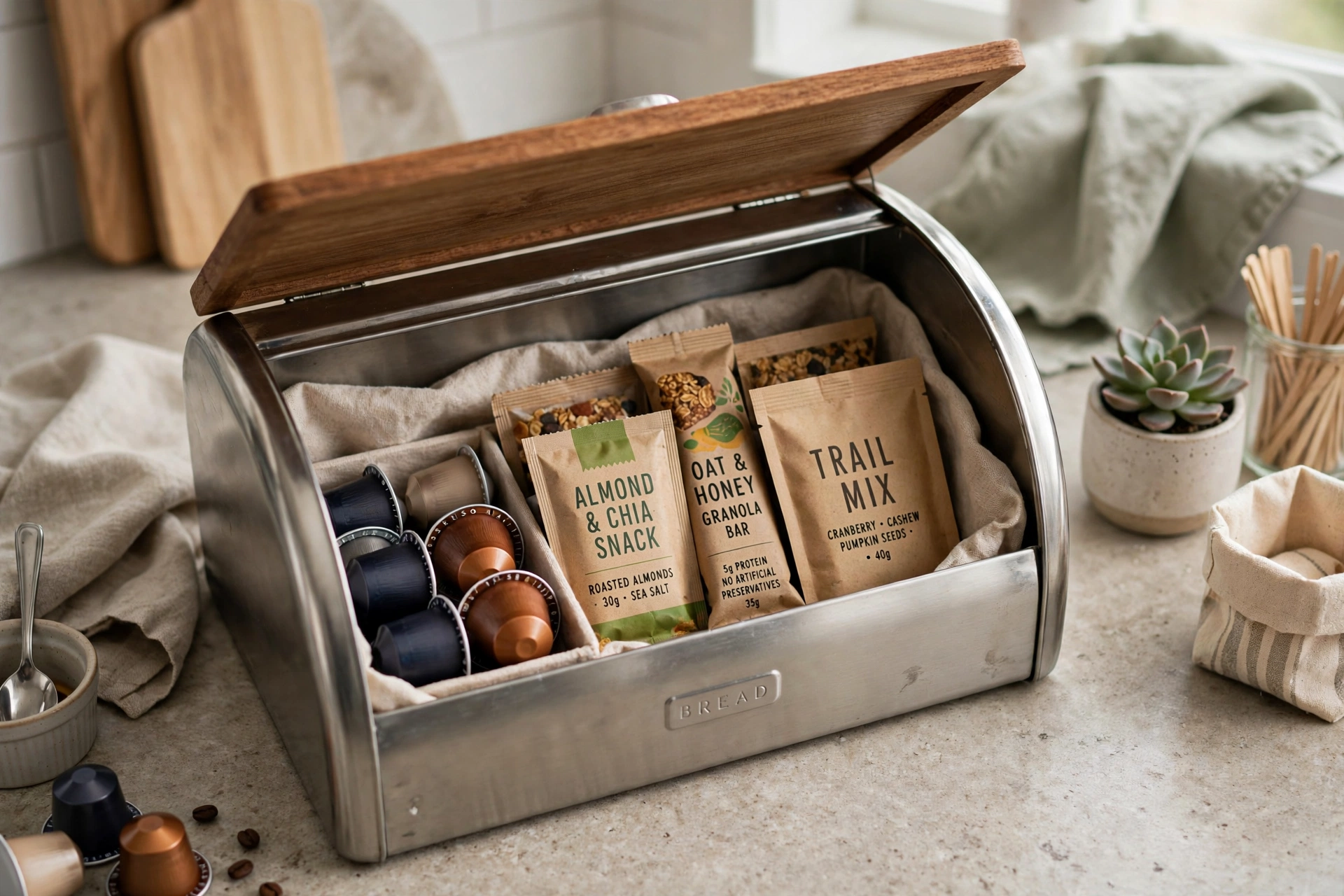
The best bread box trick: stop limiting it to bread. Use one for coffee pods and tea bags, another for snack bars and packets, a third for vitamins. The lidded box hides visual clutter that open baskets can’t, and the uniform shape looks tidy on open shelves too. Label the front discreetly if you run multiple boxes. This is how a single bread box becomes a whole organization system — buy two or three in the same style and your pantry shelves and counters suddenly look curated. The humidity control that keeps bread fresh also keeps crackers crisp.
8. Choose Ceramic for Sourdough
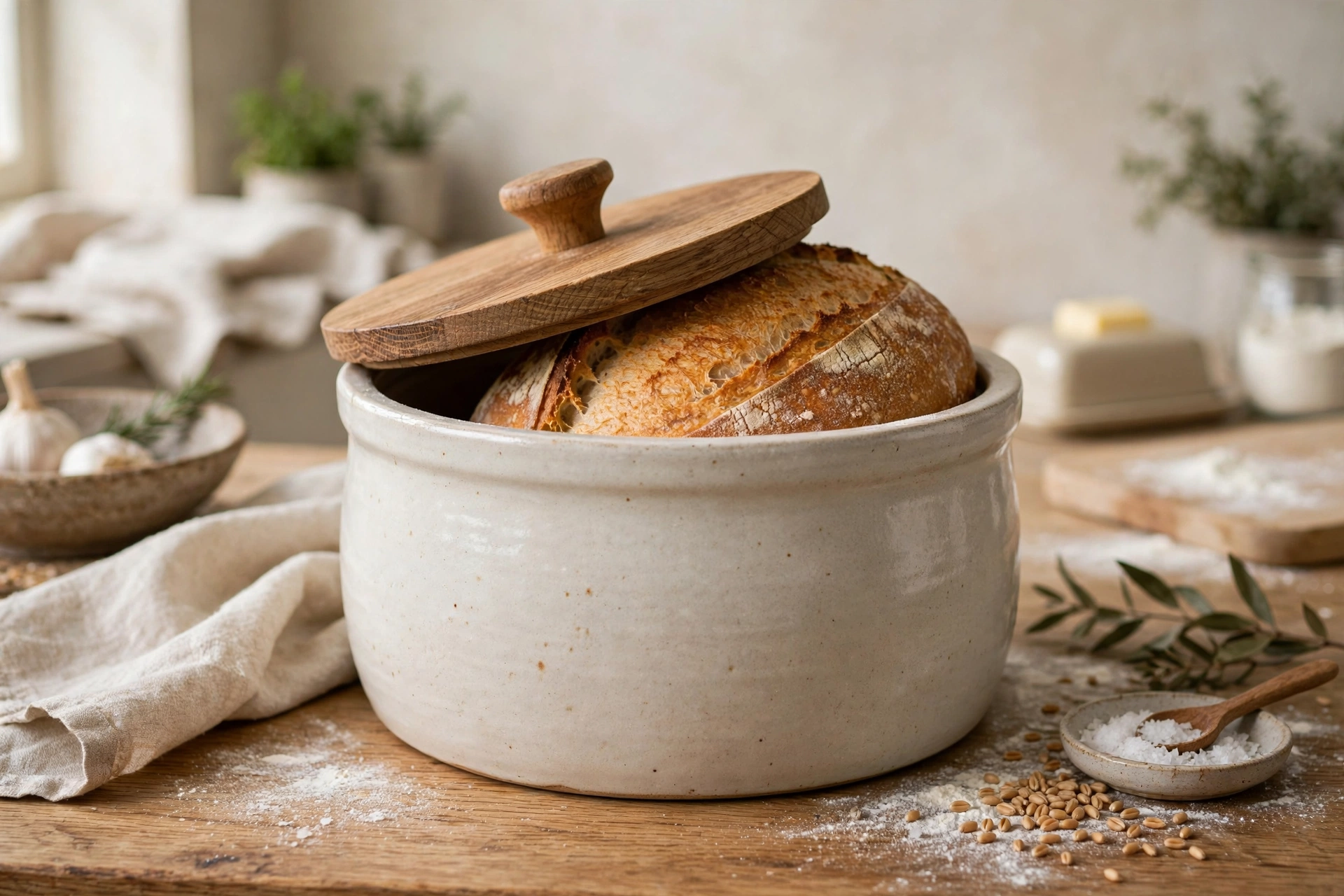
Serious sourdough bakers swear by ceramic bread boxes or bread crocks. The porous ceramic regulates humidity passively — absorbing excess moisture, releasing it when the air dries — which keeps a crusty loaf crisp for days. Look for a crock with a wooden lid for the classic look. Ceramic is heavier and more fragile than wood or steel, so give it a permanent spot. Hand-wash only. If your weekend bake deserves better than a plastic bag, this is the upgrade that actually changes results, not just looks.
9. Go Sleek and Modern in Stainless
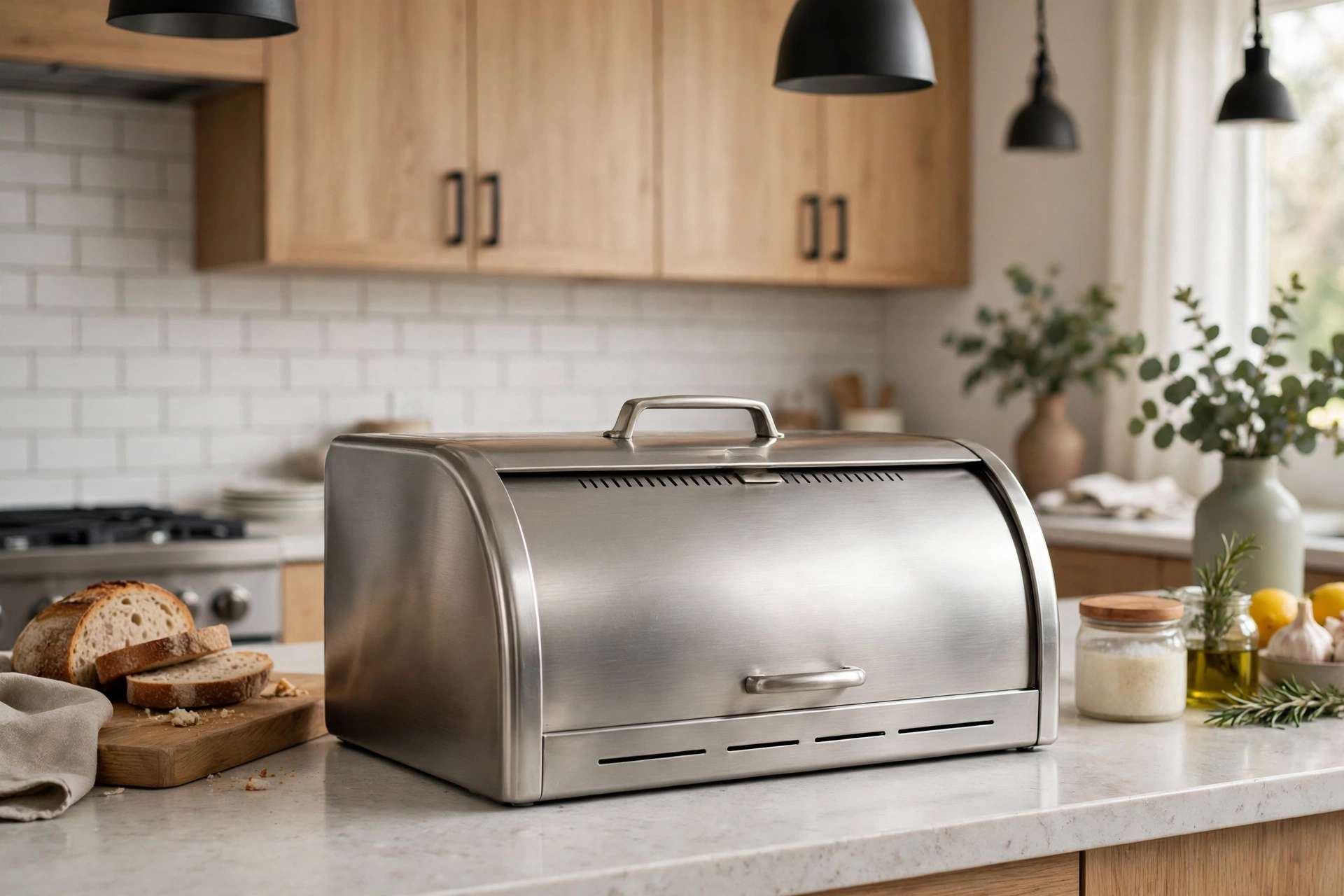
A brushed stainless bread box suits contemporary kitchens: clean lines, fingerprint-resistant finishes, and a cool metallic note that echoes the appliances. Roll-top or fall-front lids keep the profile compact. Stainless shows fewer crumbs than dark finishes and wipes down effortlessly. Pair it with other stainless accessories — a paper towel holder, canisters — for a coordinated modern counter. This is the bread box for kitchens where everything else is already sleek; it continues the story instead of introducing a rustic detour.
10. Hide It in an Appliance Garage

If your counters must stay clear, the bread box can live inside an appliance garage or a dedicated cabinet shelf. You get the freshness benefits and the hidden-loaf tidiness without any counter footprint. Choose a box sized to your garage’s opening and keep the door easy to open one-handed — you’ll reach for bread constantly. This is the stealth option: all function, zero visual noise. For inspiration on concealed kitchen storage done right, these butler’s pantry ideas for a functional luxury space treat hidden storage as a design feature in its own right.
11. Add Ventilation the Right Way

Whatever box you choose, ventilation is the technical detail that matters. Bread needs slight airflow: too sealed and moisture breeds mold, too open and it stales in a day. Wood and bamboo breathe naturally; metal and plastic boxes need vent holes or a slightly loose-fitting lid. Some boxes include adjustable vents — open them wider in humid climates, narrower in dry ones. Never store warm bread in a sealed box; let loaves cool completely first or condensation will soggy the crust. Allrecipes’ guide to bread storage containers breaks down how different materials handle this balance if you want to geek out on the details.
12. Style the Top as a Display Shelf

A flat-topped bread box is bonus counter real estate. Style it with a small trailing plant, a candle, or a stack of pretty linen napkins. Keep the display light — one or two items — so you can still open a roll-top or lift the lid easily. This is why flat tops beat domed ones for small kitchens: the box gives back the space it takes. Change the topper seasonally with the rest of your counter styling. The rule: if you have to move three things to get bread, the display is too much.
13. Size It to Your Real Habits

The most common bread box mistake is buying for the fantasy — the giant farmhouse box when you buy one baguette a week. An oversized box wastes counter and traps stale air; an undersized one means loaves live on the counter anyway. Audit your bread for two weeks: how many loaves, what shapes, rolls or bagels too? Then buy for that reality plus a little room. A snug-but-sufficient box keeps air circulation right and the counter proportional. Honest sizing is the unglamorous secret behind every one of these kitchen bread box ideas working in real life.
14. Keep It Clean and Crumb-Free

A bread box needs maintenance: empty it weekly, shake out crumbs, wipe the interior with a dry cloth, and air it out for an hour. Crumbs left in a warm box go stale and then moldy, defeating the whole purpose. Line the bottom with a washable cloth or parchment for easy crumb capture. Every few months, wipe wood boxes with a barely damp cloth and re-oil bamboo. A clean box keeps bread genuinely fresher — this five-minute weekly habit is the difference between a bread box that works and one that’s just furniture.
15. Coordinate With Canister Sets

The finished look: a bread box that matches your canister set. Many brands sell coordinated lines — same wood, same enamel color, same steel finish — so the counter reads as one designed collection. Group the bread box with flour, sugar, and coffee canisters in a loose cluster, varying heights for visual interest. This is the easiest way to make a counter look styled: repetition of material and color does the work. Even budget lines offer matching sets now, so the curated look doesn’t require a designer budget.
Frequently Asked Questions
Do bread boxes actually keep bread fresh?
Yes, when used correctly. A bread box balances airflow and humidity — enough ventilation to prevent mold, enough enclosure to slow staling. Bread typically stays fresh 3 to 5 days in a box versus 1 to 2 in an open bag. Wood and bamboo breathe naturally; metal boxes need vent holes. Always let bread cool completely before boxing it.
What is the best material for a bread box?
Bamboo and wood are the best all-rounders: naturally ventilated, attractive, and low-maintenance. Ceramic excels for crusty sourdough thanks to passive humidity regulation. Stainless steel suits modern kitchens and wipes clean easily. Avoid airtight plastic, which traps moisture and encourages mold.
What size bread box should I buy?
Size it to your actual habits: one standard loaf plus rolls needs a medium box; two loaves or weekly sourdough bakes need large or double-decker. Measure your counter spot first, and remember the lid mechanism — roll-tops need no swing clearance, while hinged lids need space behind. A snug fit beats an oversized box.
Can you store things other than bread in a bread box?
Absolutely. Bread boxes make excellent organizers for coffee pods, tea, snack bars, vitamins, and crackers — anything you want hidden but handy. The humidity control that preserves bread also keeps crackers and cookies crisp. Use multiple matching boxes with discreet labels for a whole organization system.
How do you clean a bread box?
Empty it weekly, shake out crumbs, and wipe the interior with a dry cloth. Air it out for an hour to release moisture. Line the bottom with parchment for easy crumb capture. Wipe wood with a barely damp cloth and re-oil bamboo occasionally; hand-wash ceramic. Never soak a wooden box.
Keep Exploring
A bread box is one of those rare kitchen buys that is practical, beautiful, and genuinely useful every single day. Pick the material that suits your baking, size it honestly, keep it clean, and let it anchor your counter. Whether yours is a bamboo roll-top or a retro enamel showpiece, it will earn its spot.
To build the full coordinated look, extend the same material story across your counter. These kitchen countertop decor ideas for a clutter-free styled look show how matching finishes and ruthless editing turn a working counter into a styled one — with the bread box as the star.