
A butler’s pantry is one of those rare upgrades that feels both indulgent and intensely practical — a behind-the-scenes zone where the mess of real life stays hidden while your main kitchen stays camera-ready. If you’re exploring butler’s pantry ideas for your own remodel, the goal is simple: combine hardworking storage and prep space with finishes that make the room feel like a luxury retreat.
The best designs balance function and beauty — floor-to-ceiling cabinetry, a second sink, moody paint, jewel-box tile, a dedicated coffee station. Below are fifteen ideas covering layout, storage, lighting, and finishing touches for a space that feels polished and quietly luxurious.
1. Floor-to-Ceiling Storage That Maximizes Every Inch
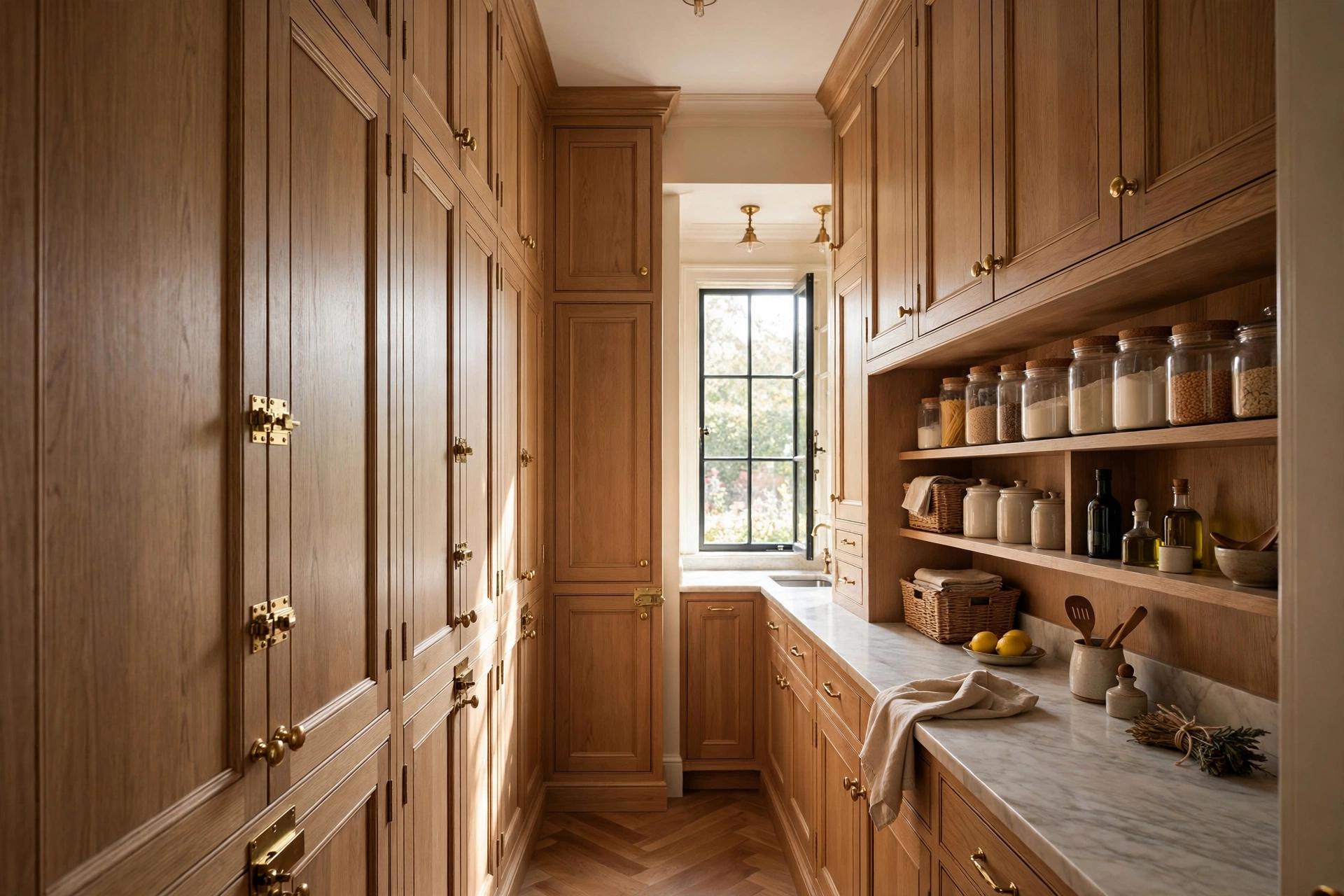
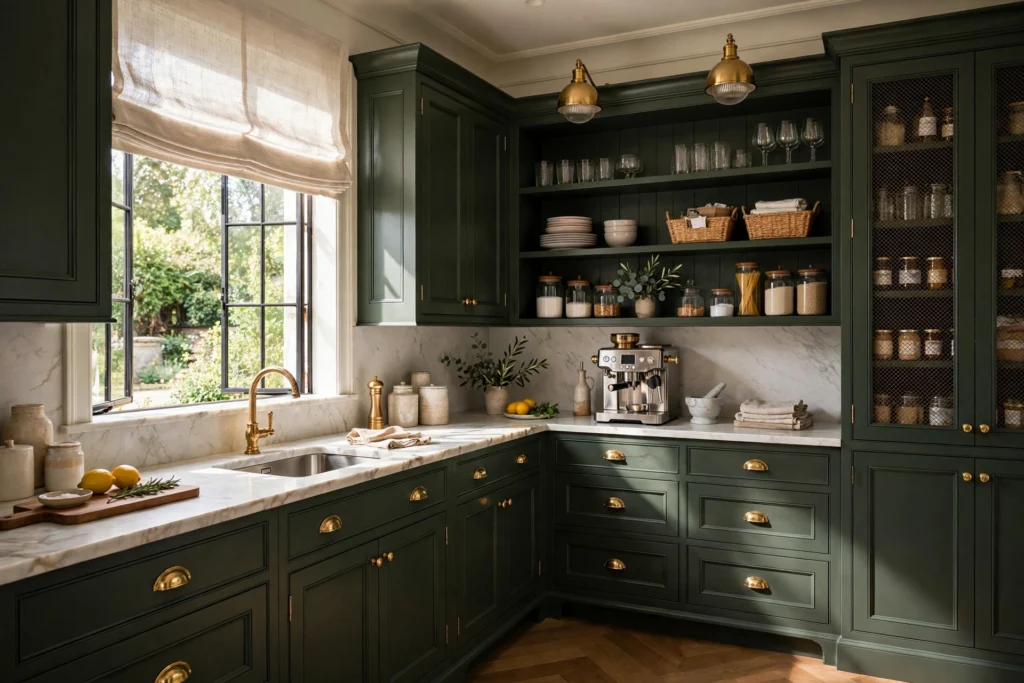
Tall cabinetry is the backbone of any functional butler’s pantry, turning every square foot of wall into usable storage for serveware, small appliances, and entertaining essentials. Run the uppers to the ceiling, and mix deep lower drawers with adjustable shelves above so everything from stockpots to platters has a home. Compact footprints benefit from the same principles as smart small-pantry planning (smallPantry design ideas that maximize every inch) — pull-outs, dividers, and vertical zones that keep even the tallest shelves accessible. Finish with crown molding so the cabinetry reads as built-in furniture.
2. A Second Sink to Hide the Mess
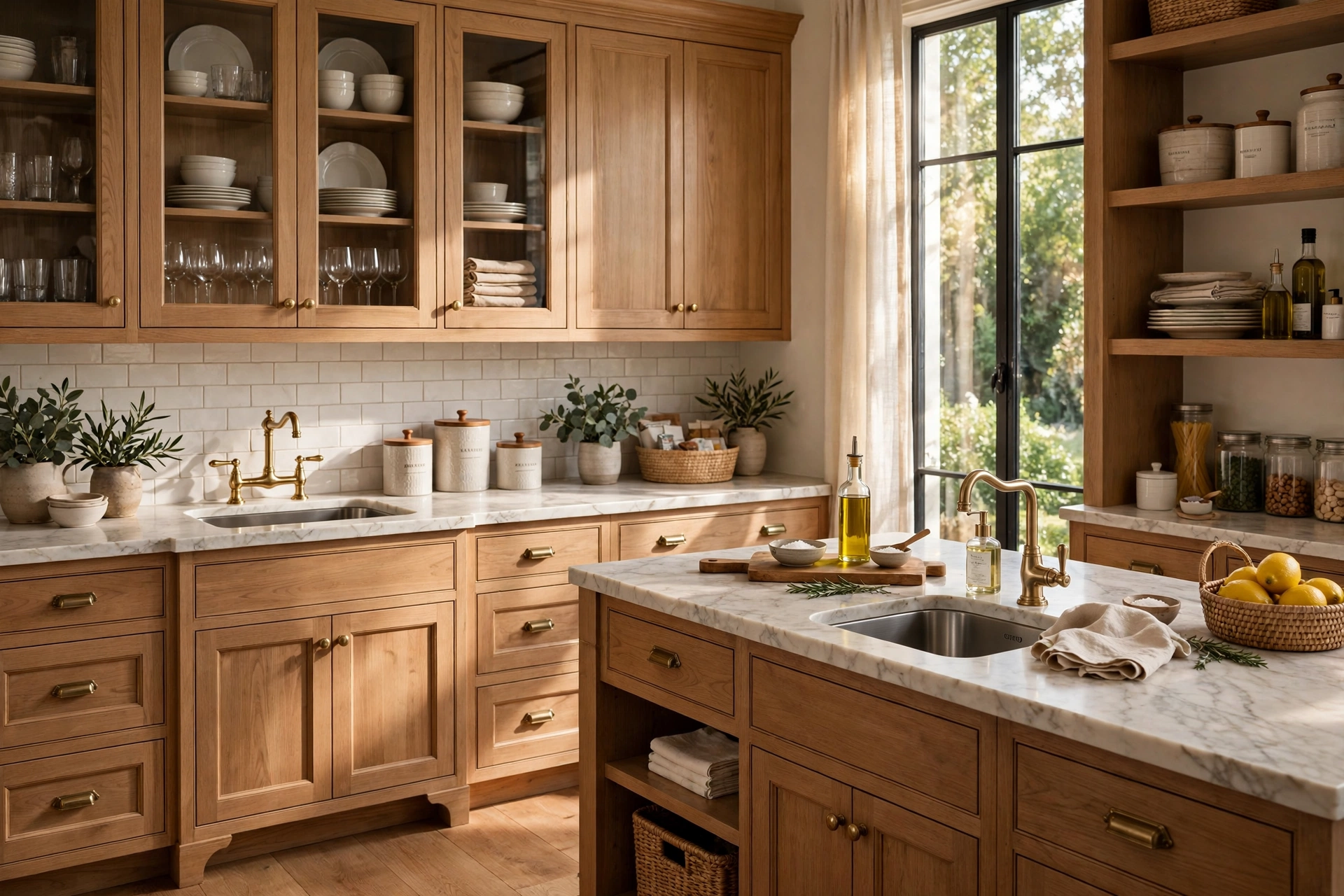
A second sink is what separates a true butler’s pantry from a simple storage closet, giving you a dedicated spot to rinse glassware, fill carafes, and soak serving dishes without cluttering the main kitchen. Choose a deep single-basin bar sink that can swallow a stockpot, paired with a compact high-arc faucet that looks as good as it works. If you entertain often, add a dishwasher drawer beneath the counter so dirty dishes never make the trip back to the main sink. Position the sink under a window or beneath flattering sconces so the washing zone feels intentional rather than like an afterthought.
3. Moody Dark Cabinetry for Luxe Drama
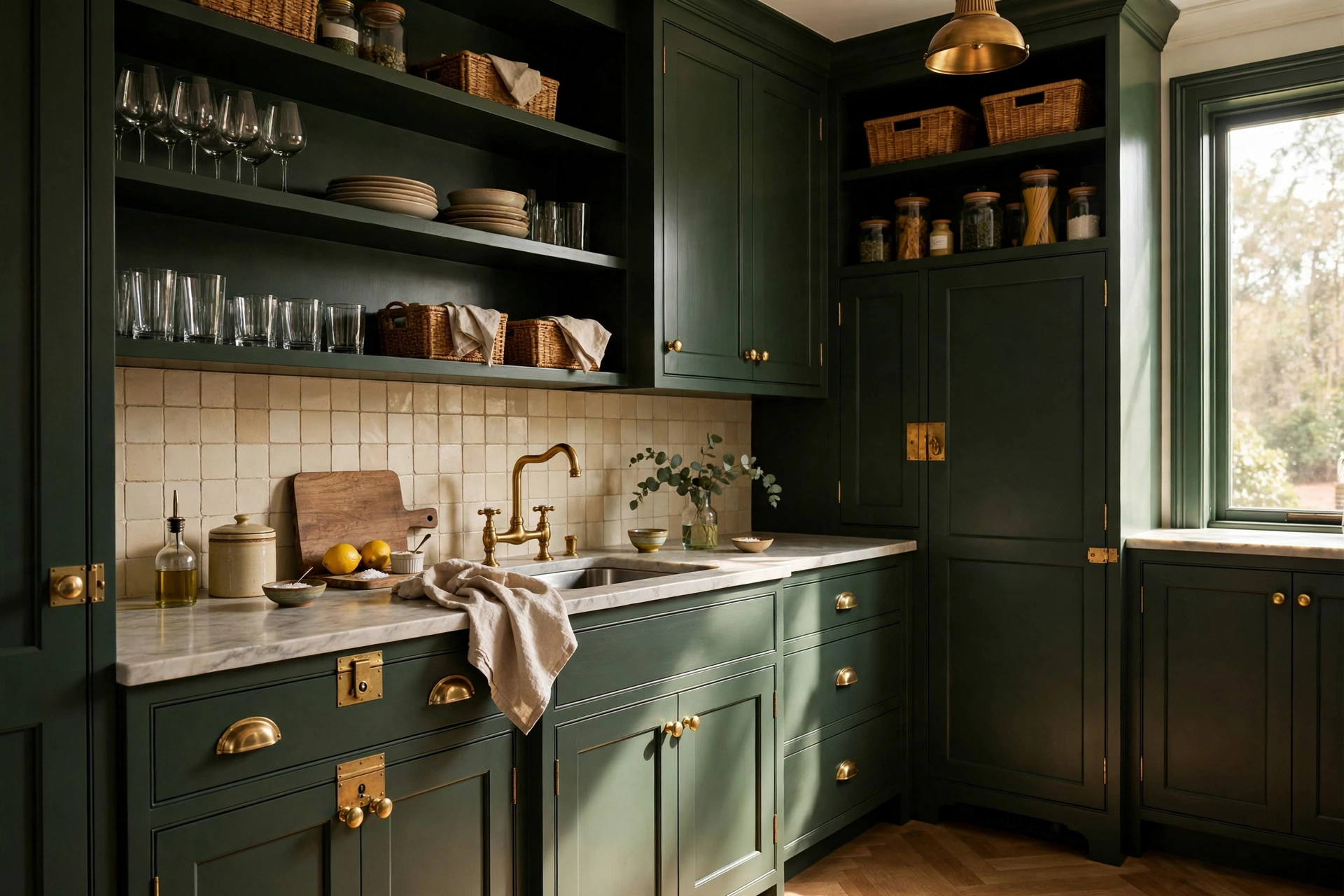
Deep, saturated cabinet colors — forest green, ink navy, charcoal, or espresso — instantly give a butler’s pantry the feel of a private jewel-box retreat tucked just off the kitchen. Dark cabinetry hides fingerprints better than white and creates striking contrast with a bright main kitchen when the doors between them stand open. Keep the mood intentional by layering warm under-cabinet lighting, a light stone counter, and brass hardware that glows against the dark paint. Even a narrow passage feels curated in a rich, confident color with furniture-quality detailing.
4. Glass-Front Cabinets to Show Off Dishware
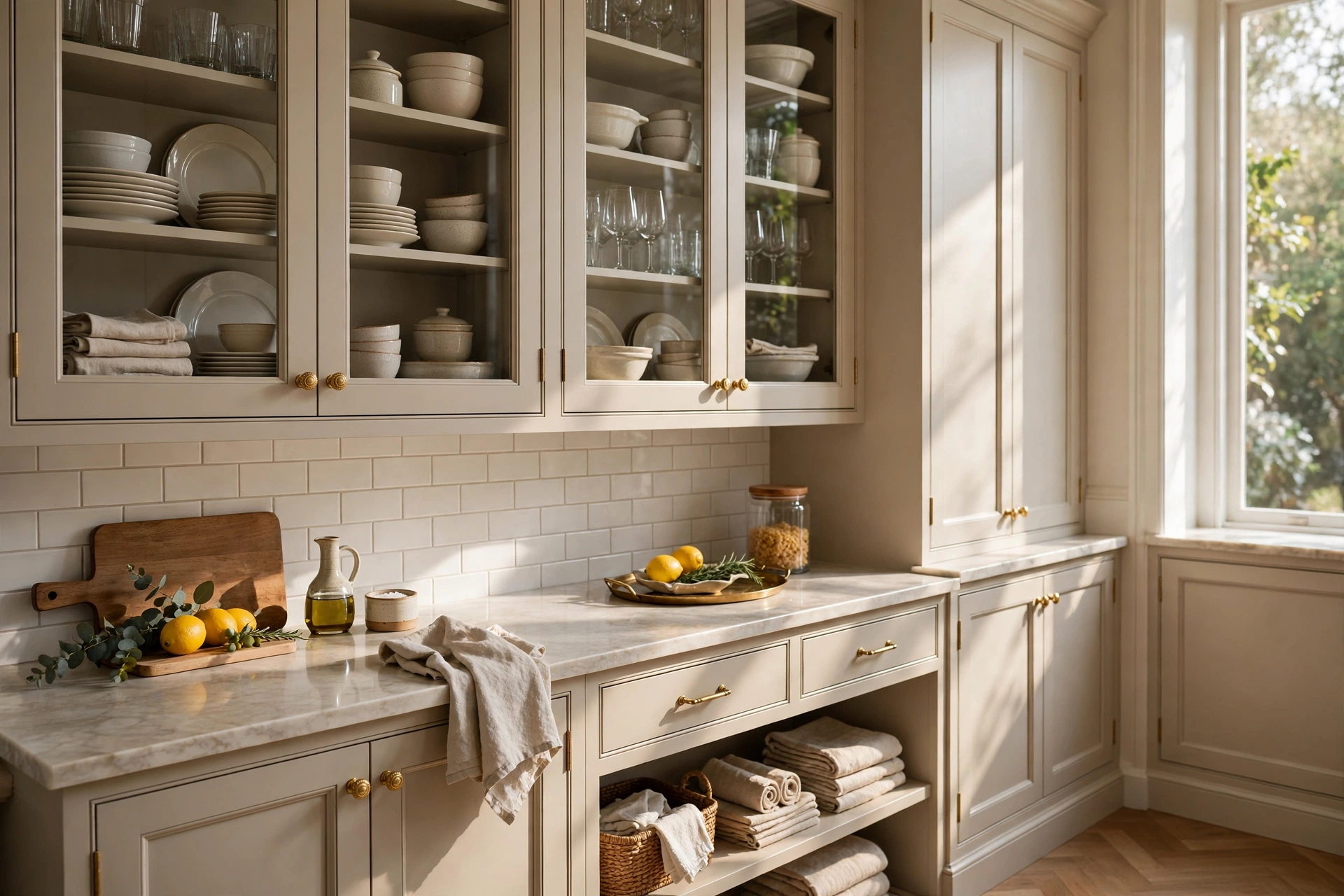
Glass-front uppers turn everyday storage into a display moment, letting your prettiest dishware and glassware become part of the room’s decor. Frosted or seeded glass softens the view for a forgiving look, while clear glass with interior lighting creates a jewel-like glow that makes the pantry feel larger. Style the shelves with breathing room — stacked white plates, lined-up colored tumblers, a few deliberately sparse shelves — so the display reads curated rather than crammed. Glass fronts keep everything protected from dust while showing it off, and they make finding what you need effortless.
5. A Coffee Bar Station for Slow Mornings
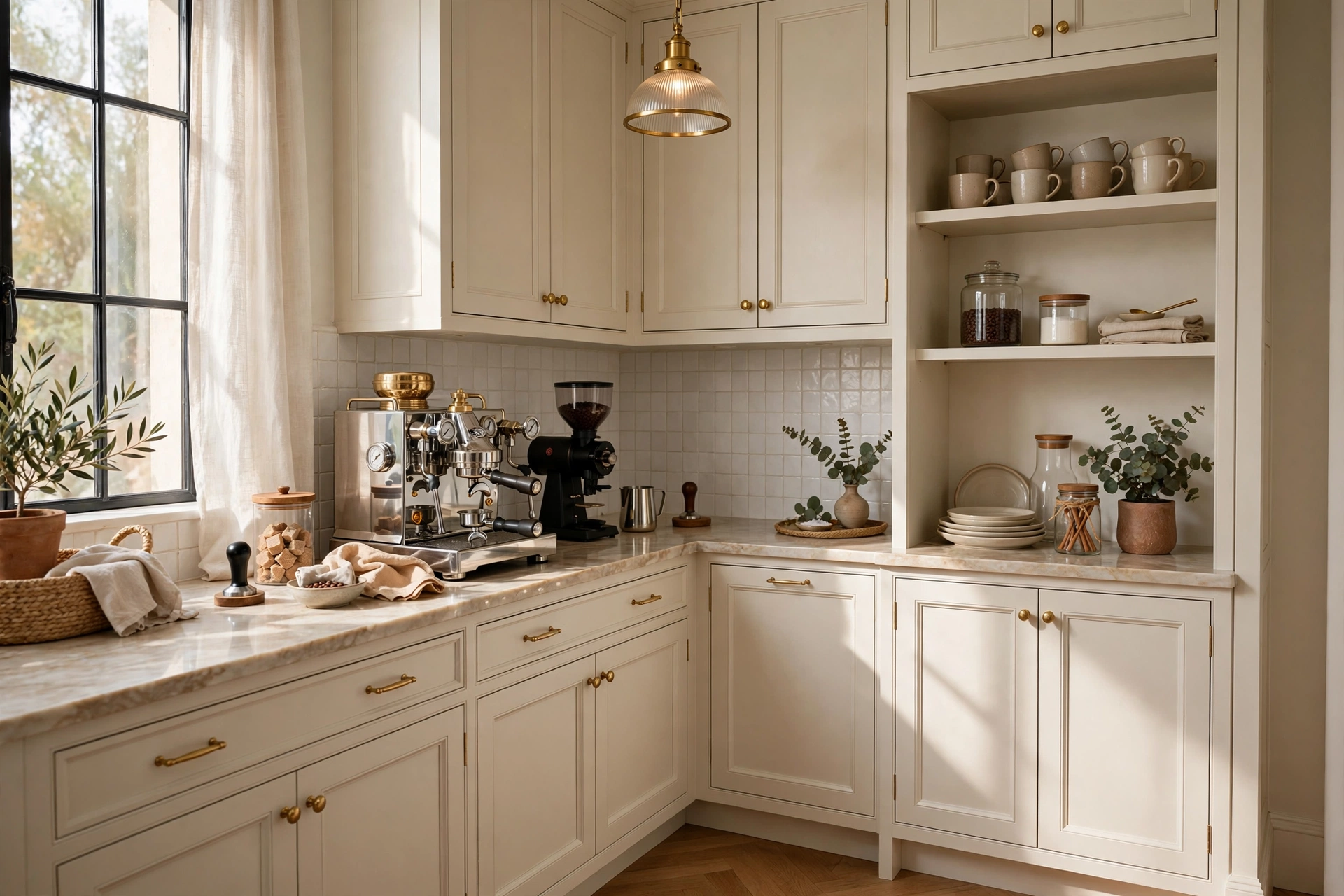
Dedicate one stretch of counter to a coffee bar and your butler’s pantry becomes the hardest-working corner of the house before 8 a.m. Make room for the espresso machine, grinder, and kettle, then add mugs on hooks, a small drawer for pods and filters, and a tray to corral syrups. A slim under-counter fridge drawer can hold milk and cold brew so the whole ritual happens in one spot. Because the mess of grounds and drips stays behind pantry doors, the main kitchen stays pristine — and guests can serve themselves undisturbed.
6. Wine Storage and a Beverage Fridge
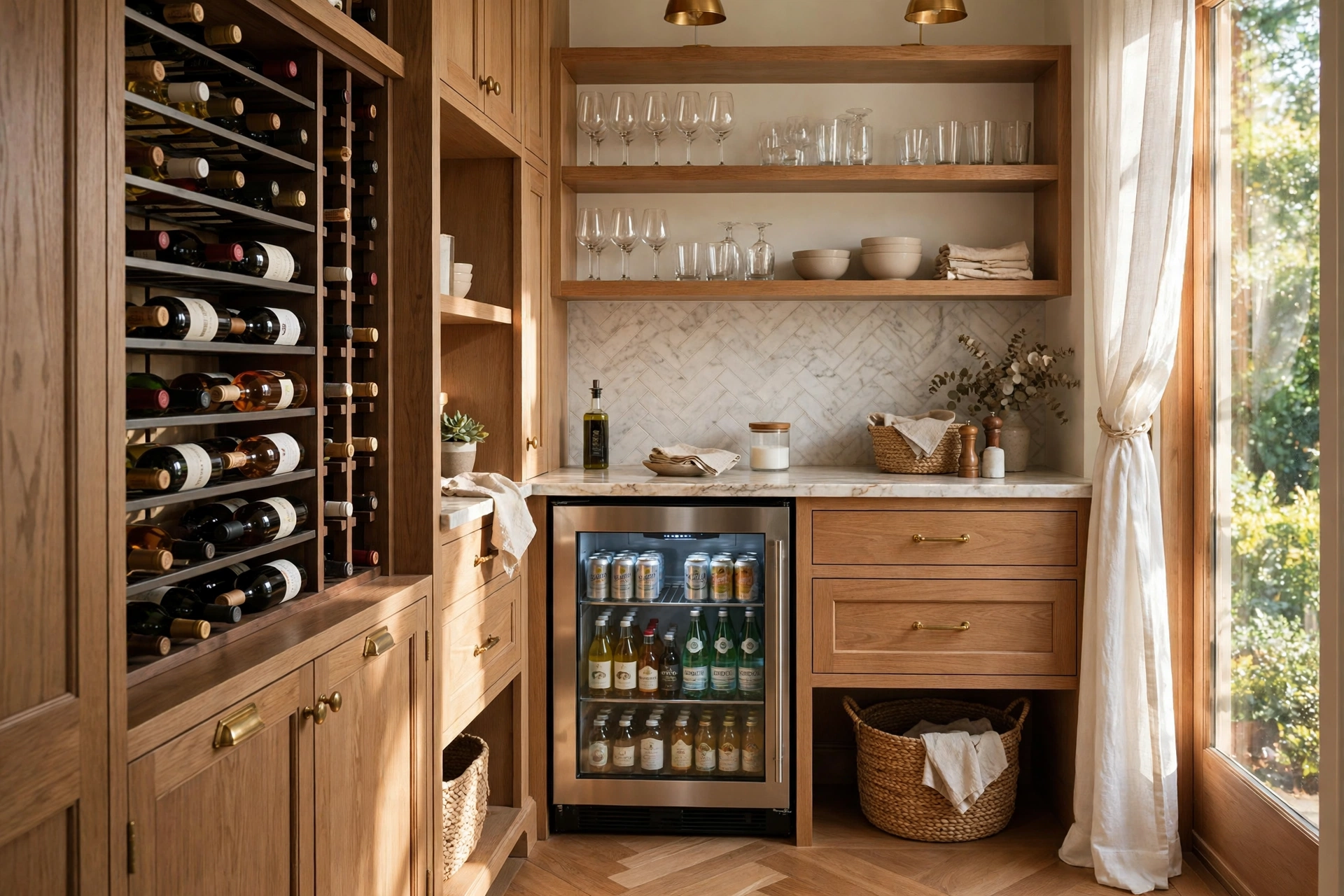
Built-in wine storage elevates a butler’s pantry from useful to genuinely luxurious, especially when designed around how you actually entertain. A lattice rack holds everyday bottles at arm’s reach, while a temperature-controlled column protects the special ones; pair them with a beverage fridge for mixers and sparkling water so guests can grab a drink without opening your main refrigerator. Even a single 24-inch beverage center flanked by a floating shelf for glassware changes how the pantry functions. Finish with stemware racks under an upper cabinet and a counter spot for decanting.
7. Open Shelving for Everyday Essentials
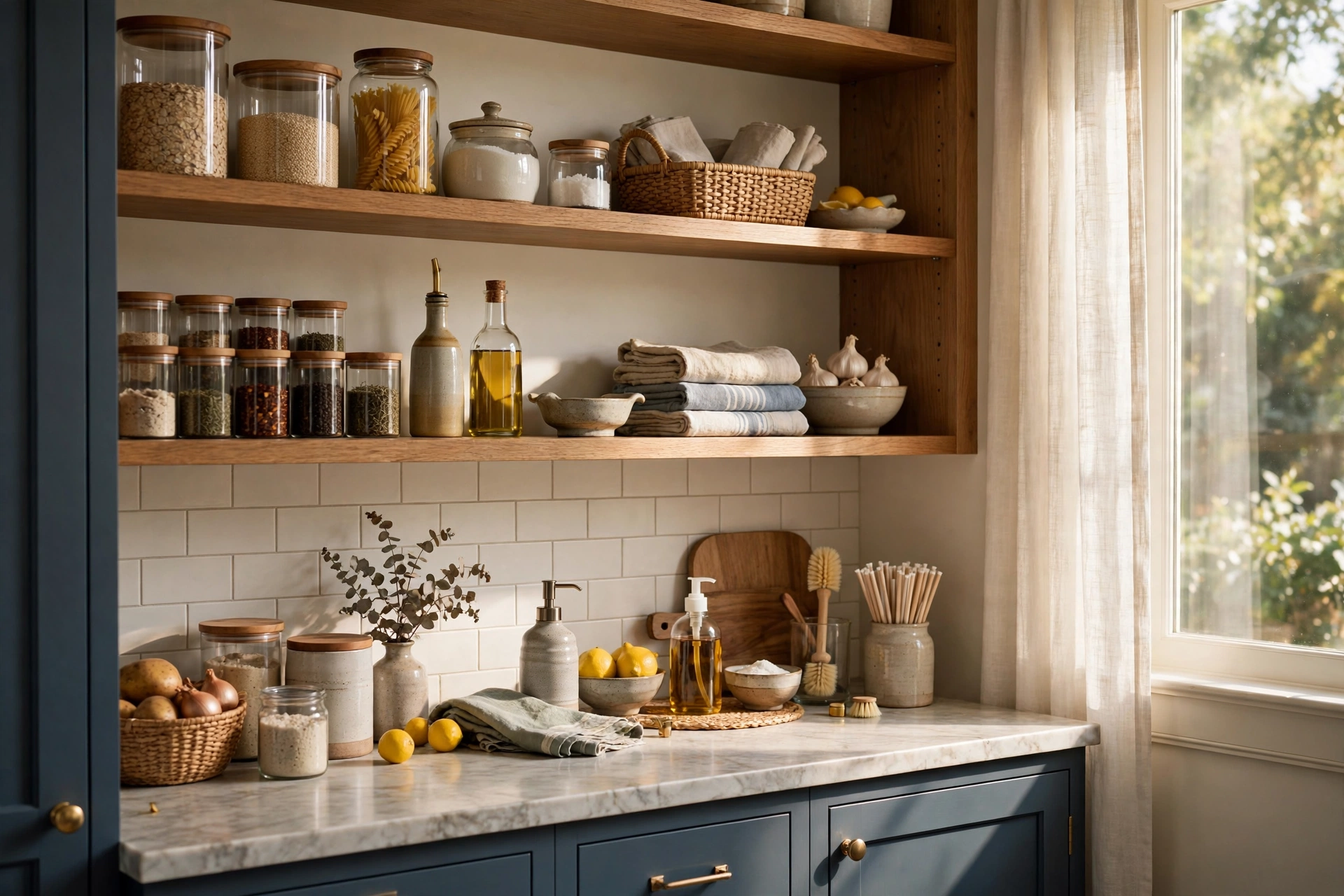
Open shelving keeps your most-used items — olive oils, spices, canisters, everyday bowls — visible and within reach, which is exactly what a working pantry should do. The key to keeping it styled is consistency: decant dry goods into matching canisters, group items by category, and leave negative space between clusters so the eye can rest. Shelves with everyday essentials can look as intentional as a curated display (openKitchen shelving ideas that look styled not cluttered) when you repeat materials and colors. Reserve open shelves for daily items and keep overflow behind closed doors.
8. Bold Backsplash Tile as a Jewel-Box Moment
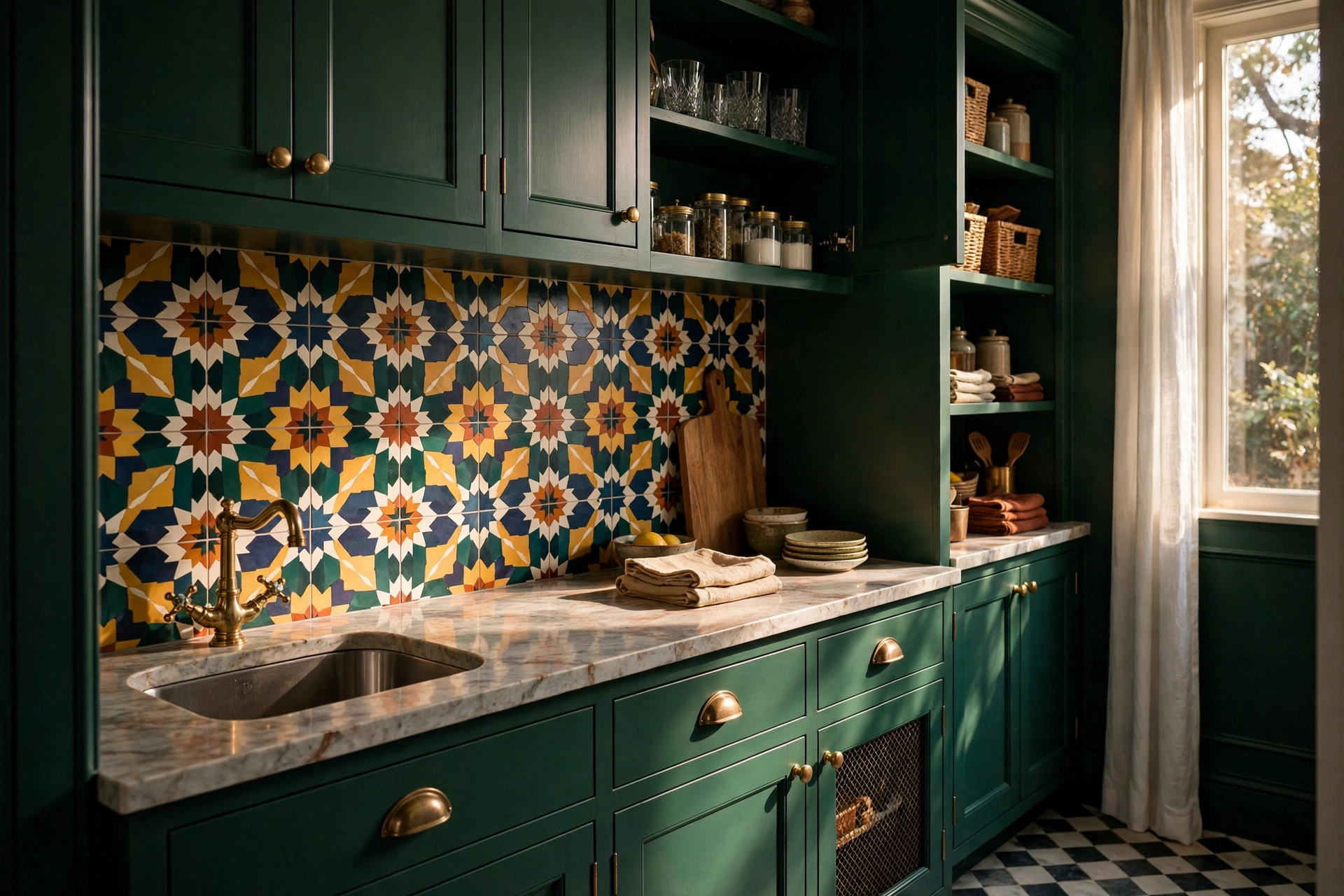
A compact, enclosed pantry is the perfect place for a design risk you might hesitate to use across a whole kitchen — bold, patterned backsplash tile that turns the room into a jewel box. Consider encaustic-look cement tile, hand-glazed zellige in a saturated color, or a graphic black-and-white pattern that energizes the walls between counters and uppers. Tile the full wall behind open shelving or run the pattern to the ceiling behind the sink for maximum impact. The small square footage keeps costs manageable even with premium handmade tile, making this one of the highest-impact upgrades for the money.
9. Pocket Doors to Close Off the Clutter
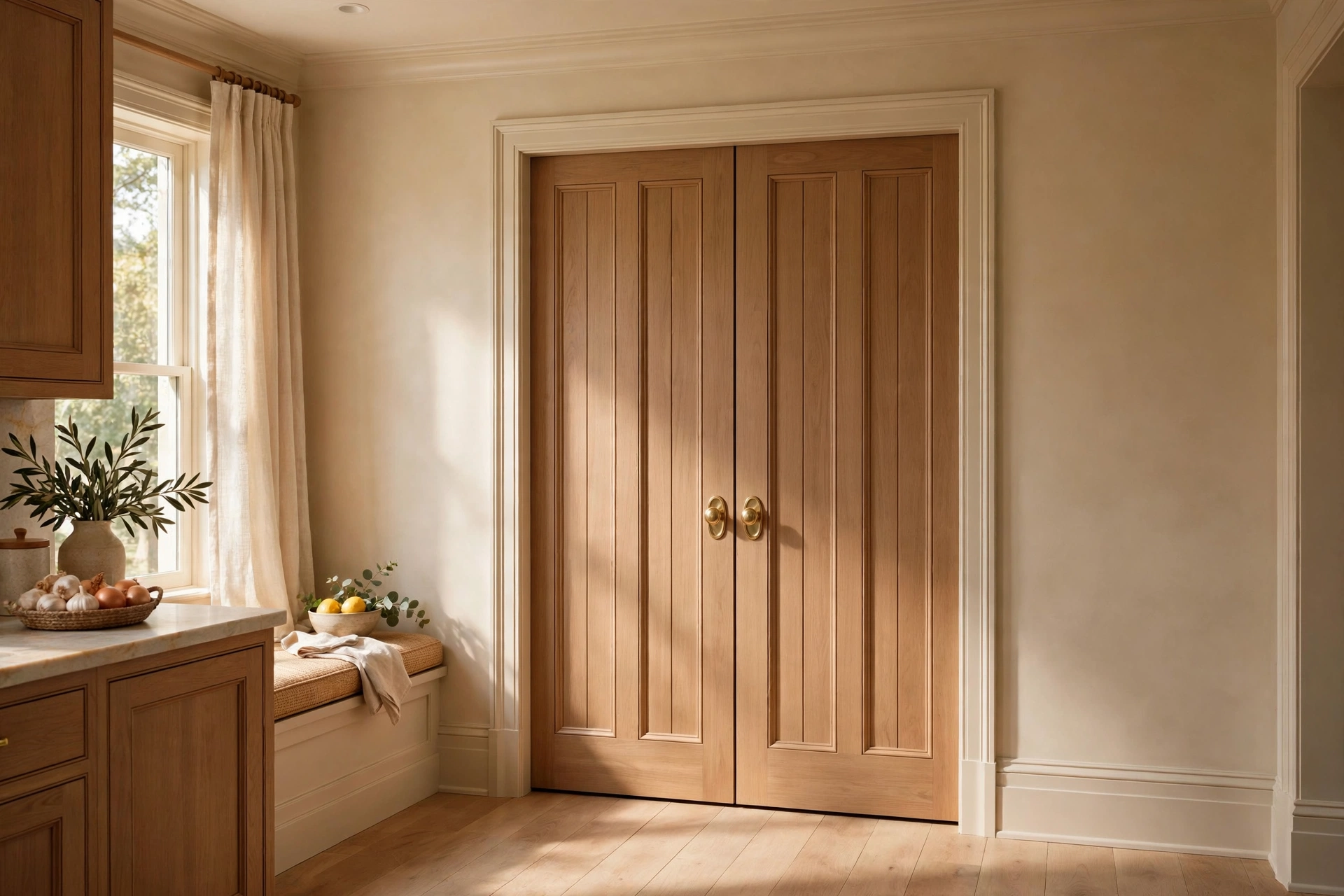
Pocket doors are the butler’s pantry’s best friend: slide them shut and the mess of meal prep and dirty dishes disappears in a second, leaving your main kitchen looking effortlessly composed. Because they vanish into the wall, pocket doors need zero swing clearance — a major win in tight layouts where a swinging door would collide with an island. Choose doors with presence, like shaker panels matching your cabinetry or reeded glass that admits light while obscuring clutter. For wider openings, a pair of pocket doors lets you close off one side during prep and the whole room when guests arrive.
10. Task Lighting That Makes Prep a Pleasure
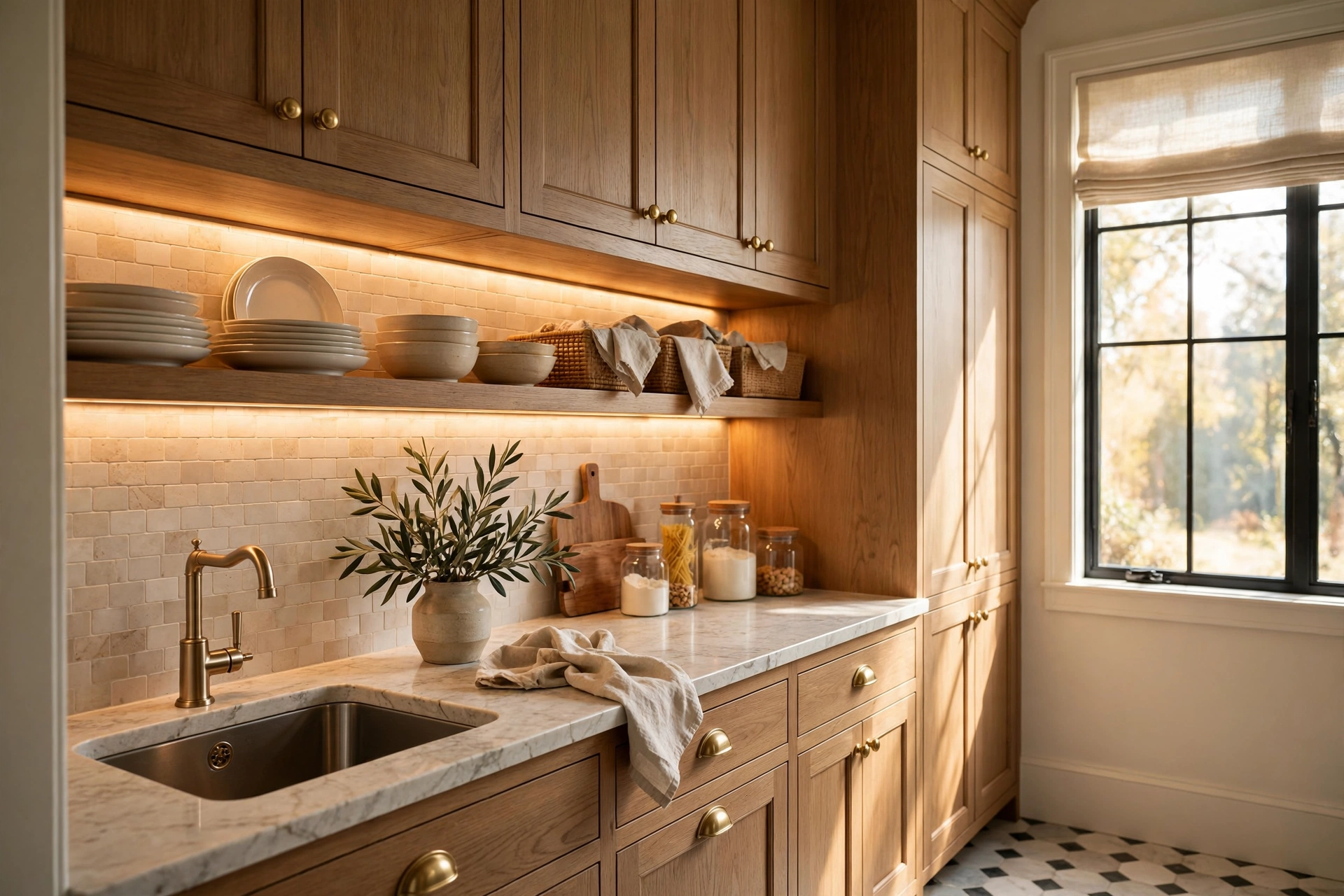
Great task lighting transforms a butler’s pantry from a dim back room into a place you enjoy working, starting with warm under-cabinet strips that eliminate counter shadows. Add sconces over open shelving or small pendants above the sink run to give the room a finished, decorated feel. Put everything on dimmers so you can drop the lights low when the pantry becomes a bar zone after dinner. With no window, layer recessed spots for general glow, under-cabinet strips for work zones, and one decorative fixture for personality.
11. Marble Counters for a High-End Feel
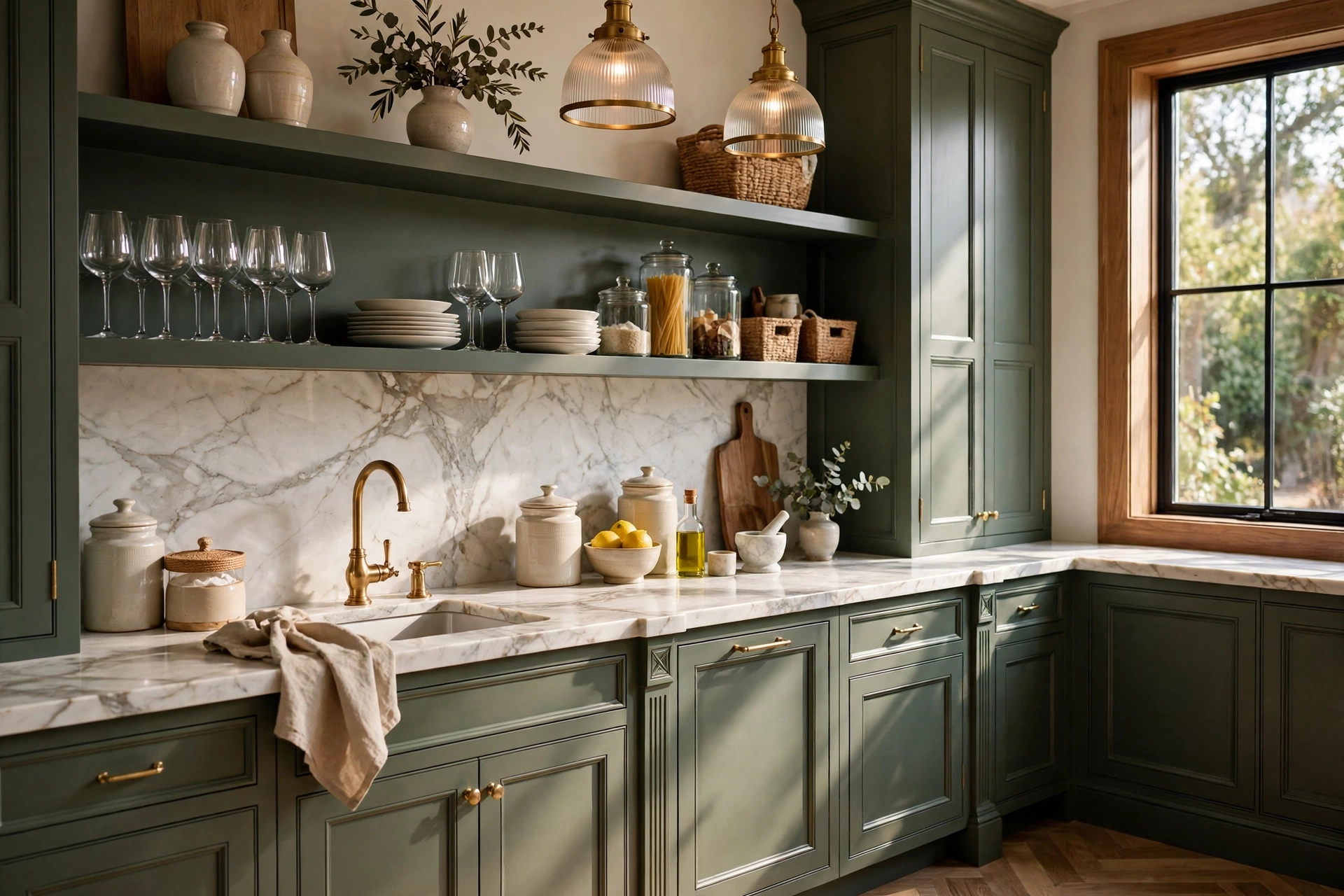
Nothing says luxury quite like real marble, and a butler’s pantry is an ideal place to use it — the smaller counter runs let you splurge on a dramatic slab without surfacing an entire kitchen. Choose bold veining like Calacatta, or moody Nero Marquina against dark cabinetry, and let a waterfall edge or thick mitered profile do the talking. Since the pantry is a secondary work zone, you can accept marble’s patina as character rather than stressing over every etch. Seal it well, keep a tray under the coffee and bar areas, and the stone will develop the soft, lived-in elegance of European kitchens.
12. Appliance Garages to Tame Counter Chaos
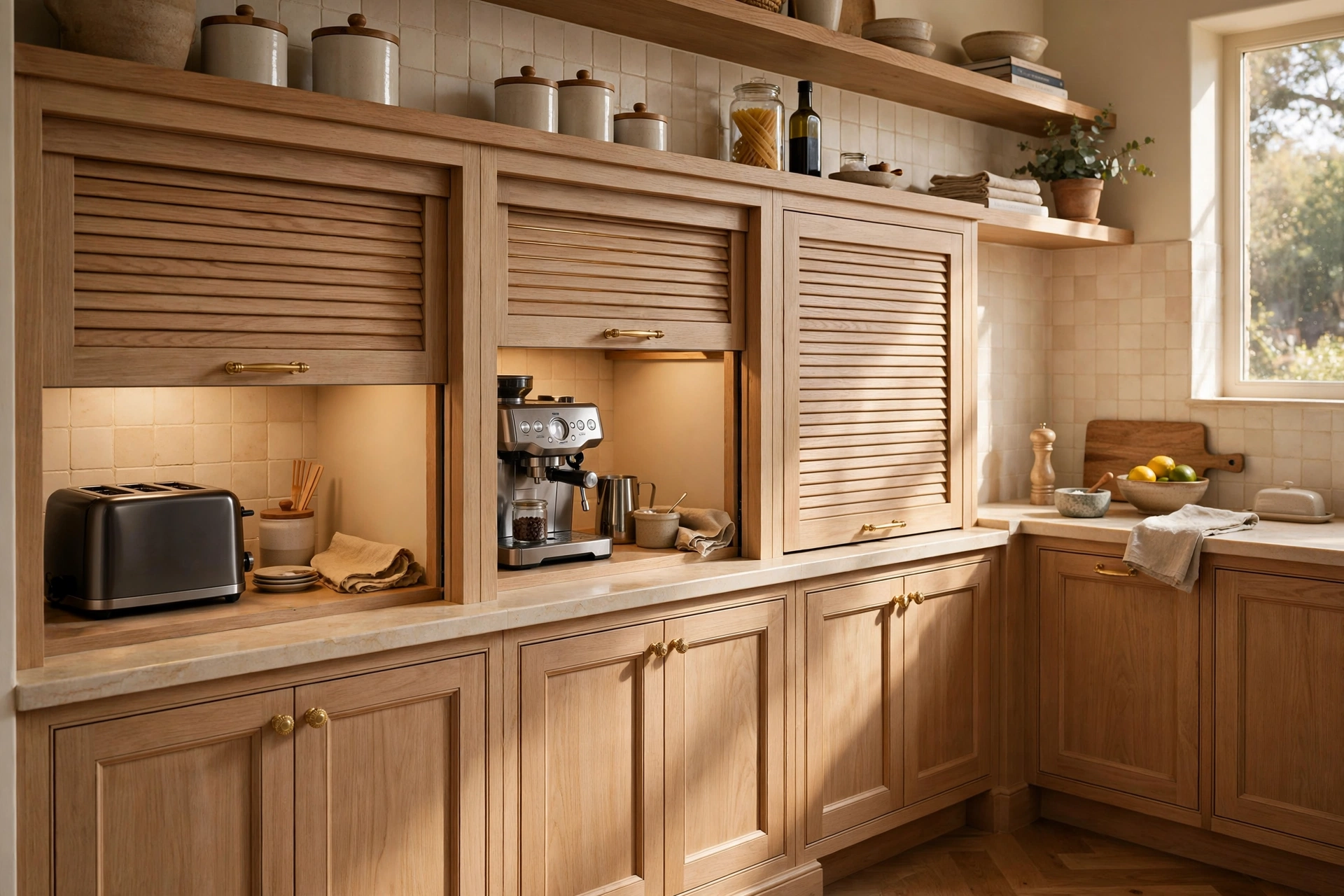
Appliance garages — cabinet compartments with lift-up or pocketing doors — hide the toaster, stand mixer, and blender behind closed fronts so counters stay clear and calm. Dedicate one tall garage to the big, awkward appliances you use weekly but never want on display, and wire an outlet inside so the mixer lives plugged in and ready. Tambour-style roll-up doors save space in tight pantries, while doors that fold back flush give a cleaner look. Line the interior with a wipeable surface and add a small motion-sensor light. Clear counters are the fastest route to a pantry that feels luxurious.
13. A Rolling Ladder for High Shelves
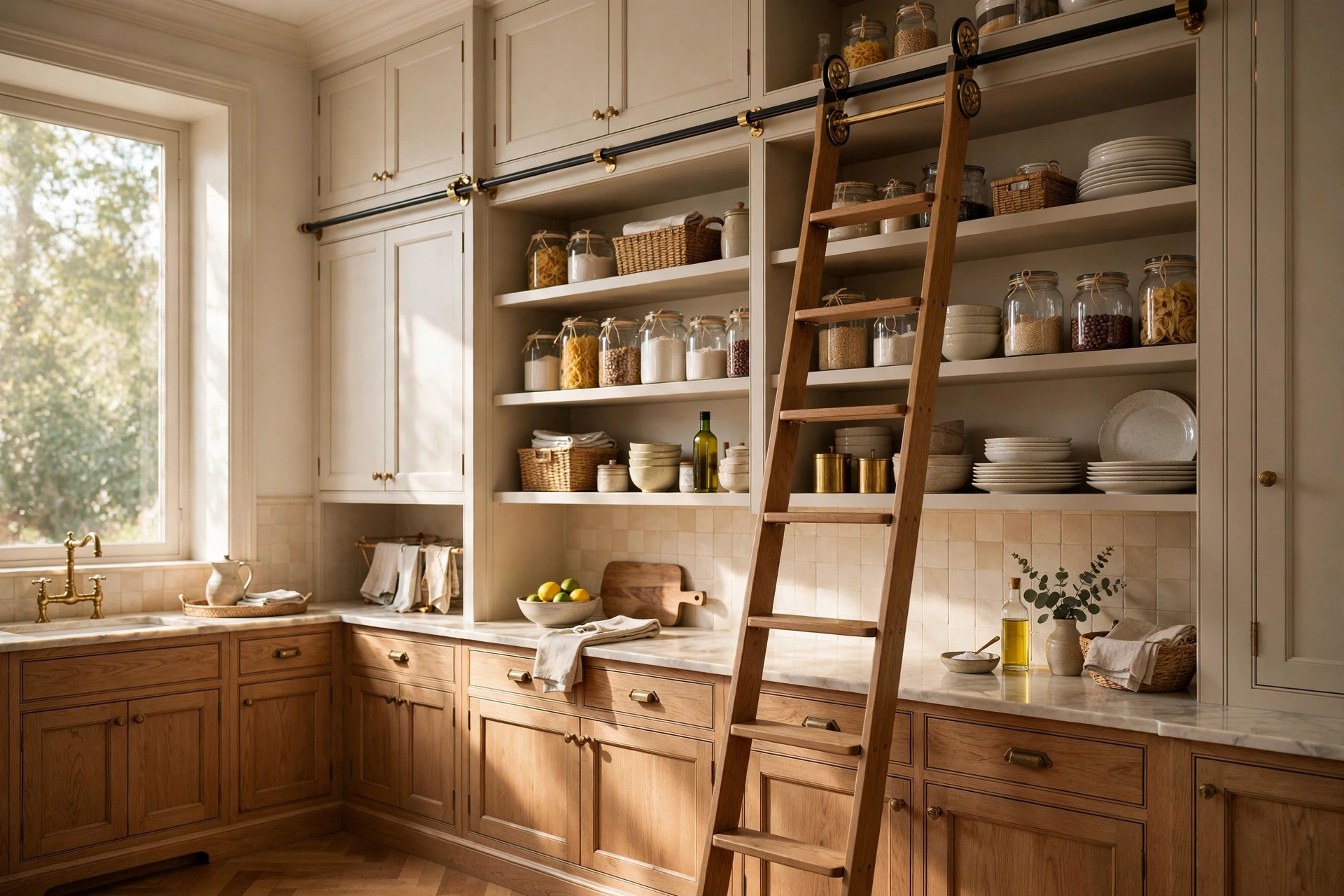
A rolling library ladder is equal parts practical and theatrical — it makes glorious floor-to-ceiling shelves genuinely usable while adding old-world charm that instantly elevates the room. Mount a brass or matte-black rail along the uppers and choose a ladder in wood or metal that complements your hardware. Even in a narrow pantry, a slim ladder hooking onto the rail gives safe access to top shelves where seasonal serveware lives. It’s also a design statement guests remember. Just ensure the ladder locks and the rail anchors into studs or solid blocking so it’s as safe as it is beautiful.
14. Contrasting Finishes for Designer Depth
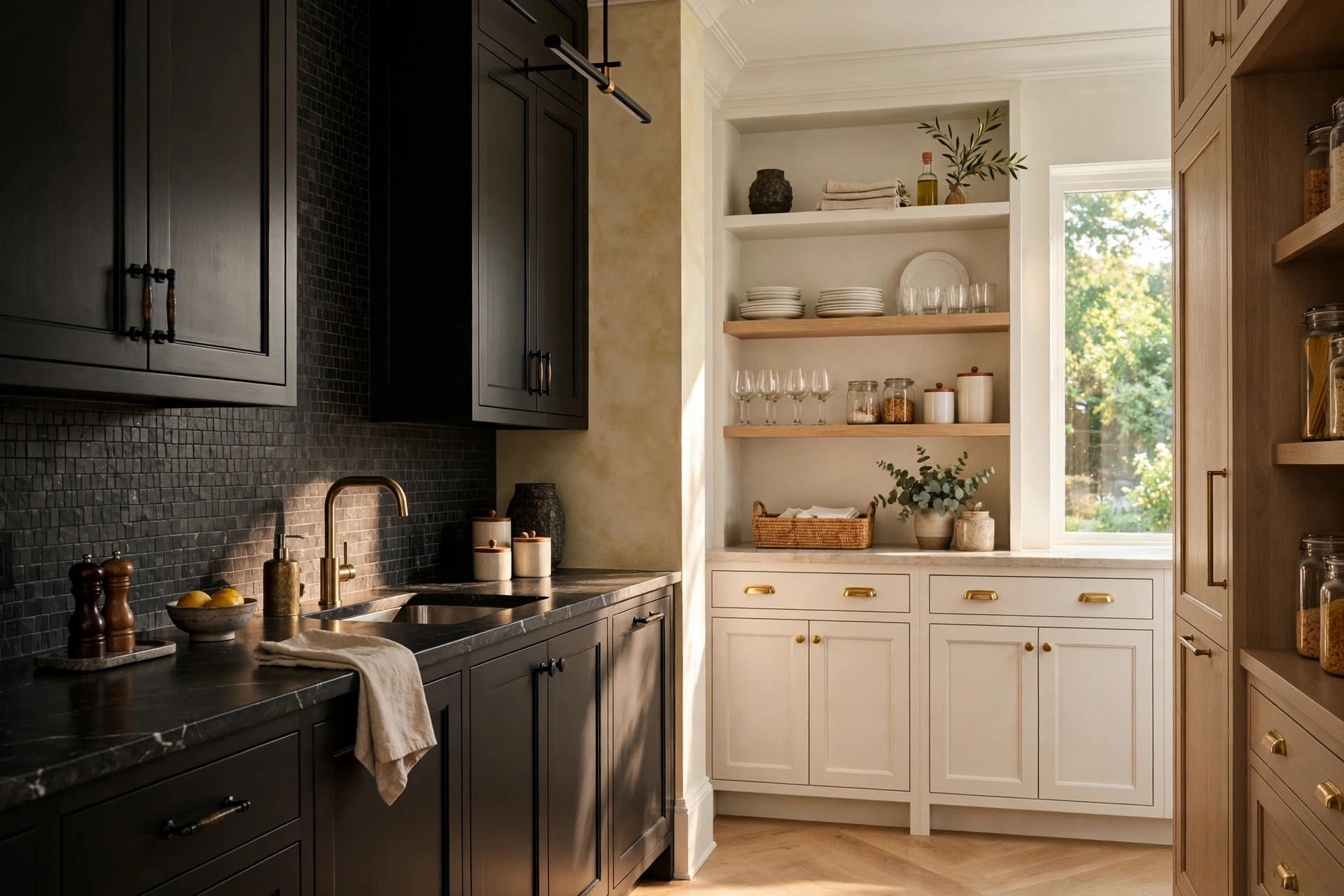
Designer-level pantries rarely commit to a single finish — they layer contrasting materials for depth and personality. Try dark lower cabinets with light uppers, or pair painted cabinetry with warm oak open shelves. Mix metals deliberately: unlacquered brass faucets with matte-black pulls, or polished nickel lighting against bronze hinges. Even the countertop can contrast — butcher block on the coffee station against marble on the main run. The trick is restraint: pick two or three finishes and repeat each at least twice so the mix feels intentional. Contrast keeps a small, single-purpose room from feeling flat or builder-grade.
15. Carry Your Kitchen Palette Through
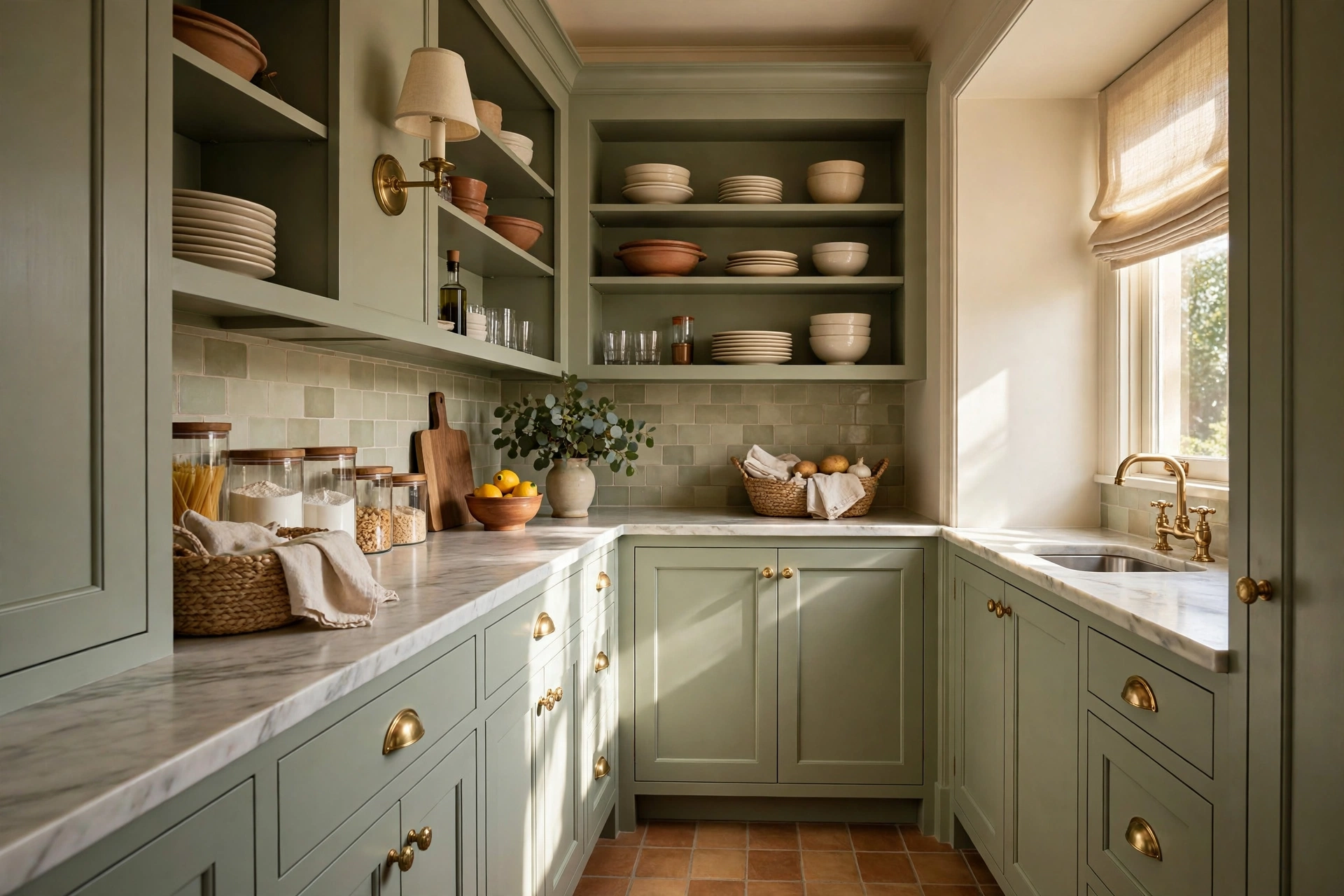
The most polished butler’s pantries feel like a natural extension of the kitchen, and the easiest way to achieve that is to carry your kitchen’s palette through. Repeat the cabinet color, hardware finish, or countertop stone in a lighter or darker variation so the two spaces rhyme without matching exactly. If your kitchen is bright and airy, let the pantry be its moodier sibling in the same undertone family — connected, yet each room keeps its character. Run the flooring straight through with no threshold break, and echo one decorative detail, like the same sconce style, to tie it all together.
Frequently Asked Questions
What is a butler’s pantry used for?
A butler’s pantry is a secondary space between the kitchen and dining room used for staging meals, storing serveware and linens, and hiding the mess of cooking and cleanup. It typically holds extra dishware, glassware, and small appliances. Think of it as a backstage area: food gets plated here, drinks get mixed here, and dirty dishes wait here — so your main kitchen stays polished.
How much space do you need for a butler’s pantry?
You can create a functional butler’s pantry in as little as 25 to 40 square feet — roughly a generous walk-in closet — with counter and storage along one or two walls. A more comfortable layout runs 50 to 80 square feet, allowing a U-shaped counter, a second sink, and room for two people to work. Even a wide hallway or underused nook can convert. The non-negotiables are a counter run, accessible storage, and good lighting; everything else scales to the footprint.
Is a butler’s pantry worth it?
For avid entertainers and busy households, a butler’s pantry is absolutely worth it: it keeps the main kitchen presentable during gatherings, adds serious storage and prep space, and is a genuine selling point buyers notice. The investment pays off most when the pantry includes a second sink or dishwasher and sits on the natural workflow between kitchen and dining room. If you rarely host and storage is already ample, the budget may work harder elsewhere — but even a compact version adds daily convenience.
What is the difference between a pantry and a butler’s pantry?
A standard pantry is primarily for food storage — dry goods, canned items, and bulk supplies on shelves. A butler’s pantry, sometimes called a scullery in traditional homes, goes further: it’s a working staging area with countertops, often a sink, and storage for serveware, linens, and small appliances used for entertaining (aTraditional scullery explained in detail). In short, a pantry stores food while a butler’s pantry supports cooking, serving, and cleanup. Many modern homes blend the two into one hardworking room.
How do I make a small butler’s pantry feel luxurious?
Start with lighting — warm under-cabinet strips and one beautiful fixture do more for perceived luxury than square footage. Then invest in finishes: a dramatic paint color, a bold backsplash, real stone counters, and quality hardware make a compact pantry feel like a jewel box. Keep counters clear with appliance garages and style one open shelf with glassware. Compact kitchen layouts (kitchenDesign ideas for small spaces) Pantry cabinet inspiration shows how far thoughtful cabinetry can go.
Keep Exploring
A butler’s pantry rewards thoughtful layering: start with the hardworking bones — storage, sink, lighting — then add the finishes that make it yours. Let your daily routines guide every decision.
Planning a kitchen refresh too? Browse our kitchen decor guides for storage strategies. Your dream pantry — organized, elegant, and ready for anything — is closer than you think.