
Kitchen command center ideas turn the busiest wall in the house into the family’s mission control. A command center is a dedicated zone — usually a wall or cabinet section in or near the kitchen — that gathers the whole household’s logistics in one place: the family calendar, incoming mail, keys, school papers, a charging station, and the ever-growing to-do list. Instead of permission slips on the fridge and bills on the counter, everything has a home.
The key difference between a command center and a simple drop zone is scope: a drop zone catches keys and bags at the door, while a command center actively manages the family’s information flow. The fifteen ideas below build a complete hub, with the sizing, placement, and organization systems that keep it working long after the novelty wears off.
1. The Classic Wall Grid: Calendar, Mail, Keys
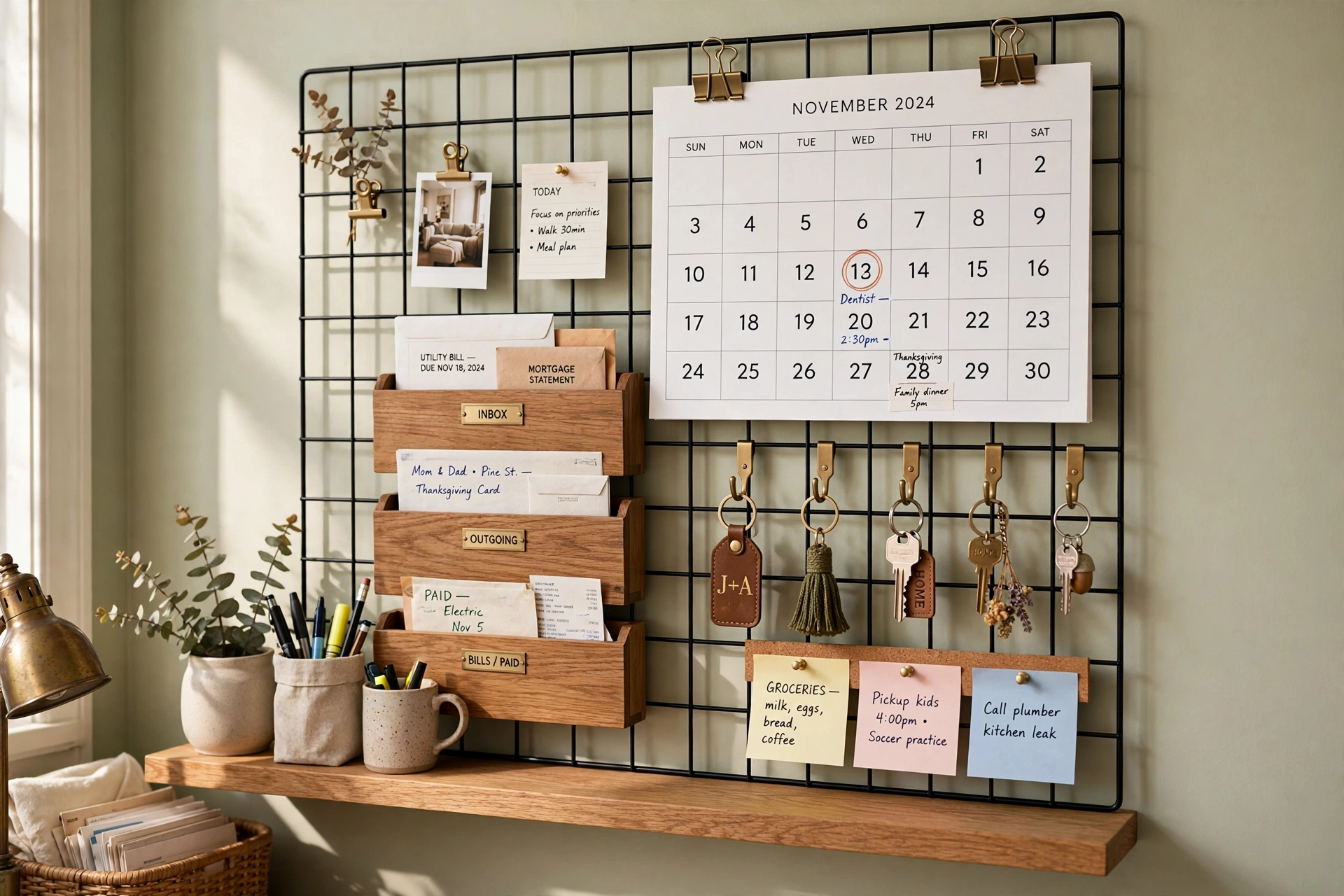
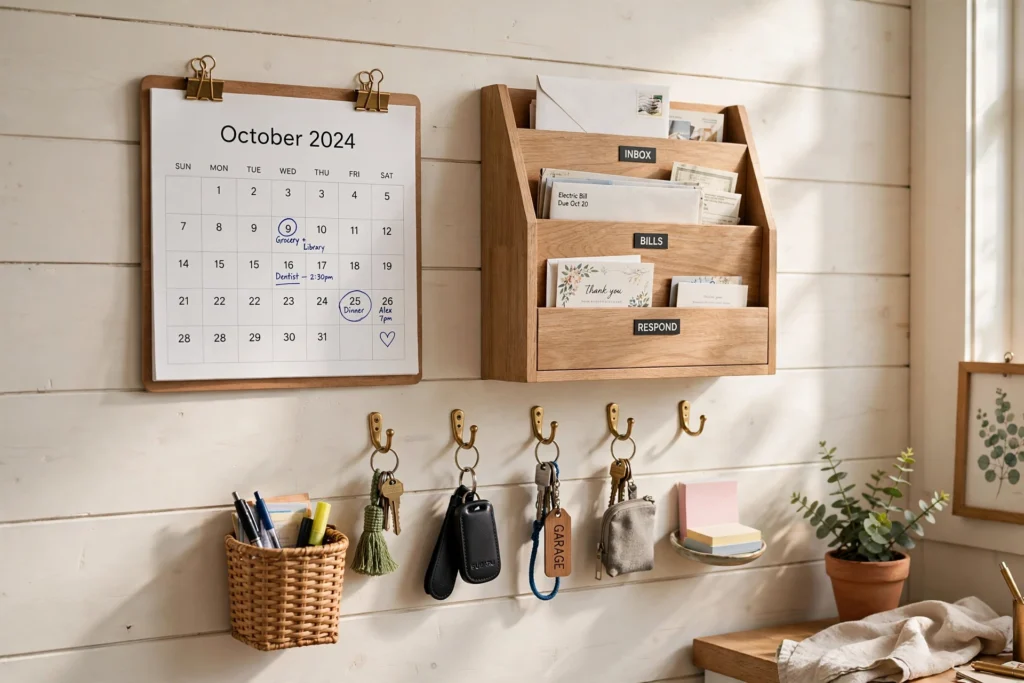
The classic command center is a wall grid with three zones: a large monthly calendar at eye level, a mail sorter below it, and key hooks along the bottom or side. Dedicate a wall section about thirty-six inches wide by forty-eight inches tall — enough room for each zone to breathe. Mount the calendar center at roughly sixty inches from the floor so adults read it comfortably.
Use a dry-erase or chalkboard calendar so the month resets easily, and give each family member a color of marker. The mail sorter gets three labeled slots: action, file, and recycle. This tried-and-true layout works because it mirrors how families actually process information: see the schedule, handle the paper, grab the keys. Home blogger Laura’s step-by-step command center guide walks through a similar wall-grid build with kraft-paper layout planning before you drill a single hole (Homemade Lovely’s command center guide).
2. Chalkboard Wall Command Center
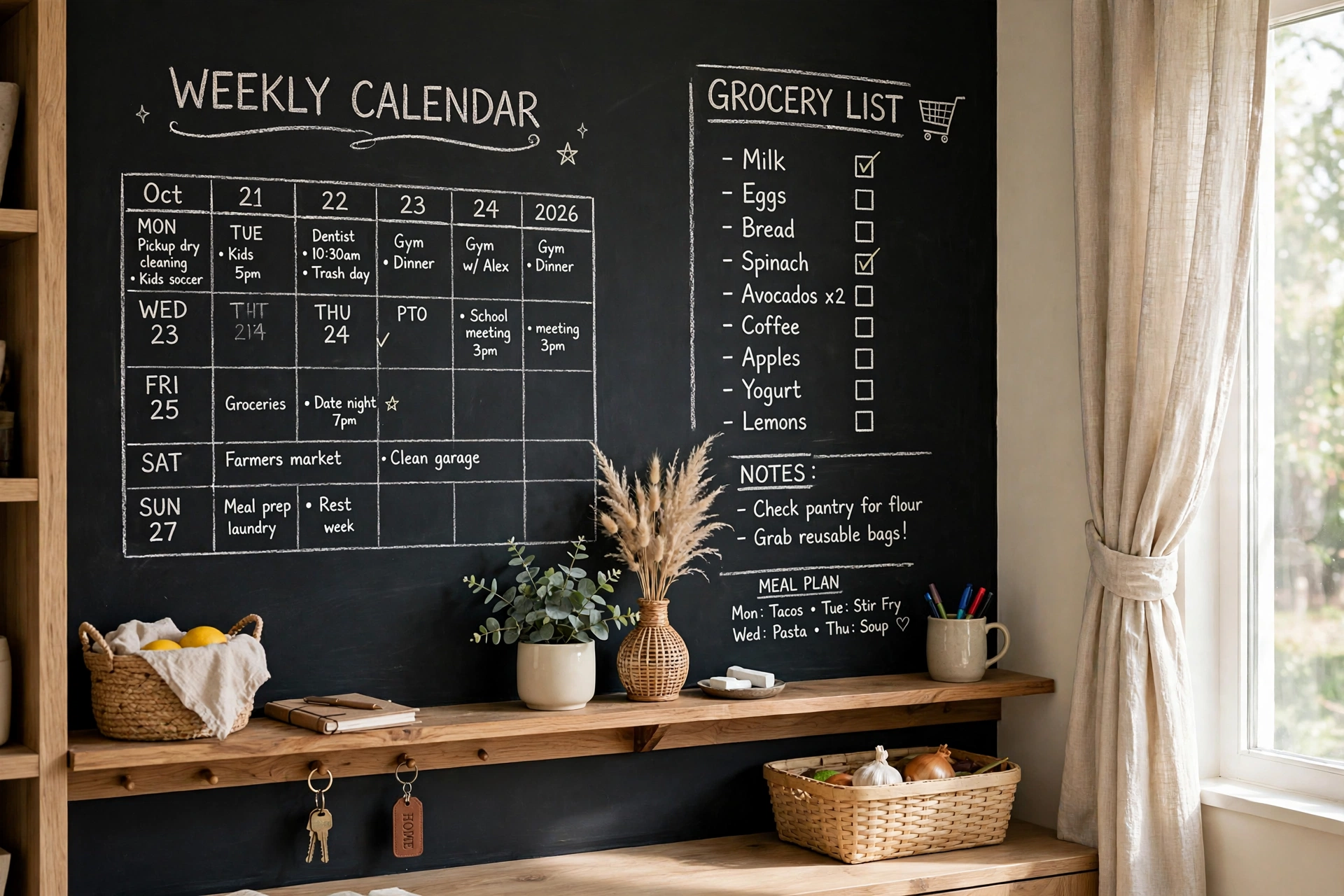
Paint an entire wall section with chalkboard paint and you get the most flexible command center of all — the whole surface is writable. Apply two to three coats of chalkboard paint over a primed wall, let it cure for three days, then condition it by rubbing chalk over the full surface and wiping clean. A four-by-six-foot section gives a family of four plenty of room.
Divide the wall into zones with painted borders or washi tape: a weekly calendar grid, a menu planner, a running grocery list, and a notes corner. Chalkboard walls are wonderfully forgiving — erase and redraw as routines change. Keep a small tray or magnetic strip nearby for chalk and erasers so supplies never wander.
3. Pegboard Command Center
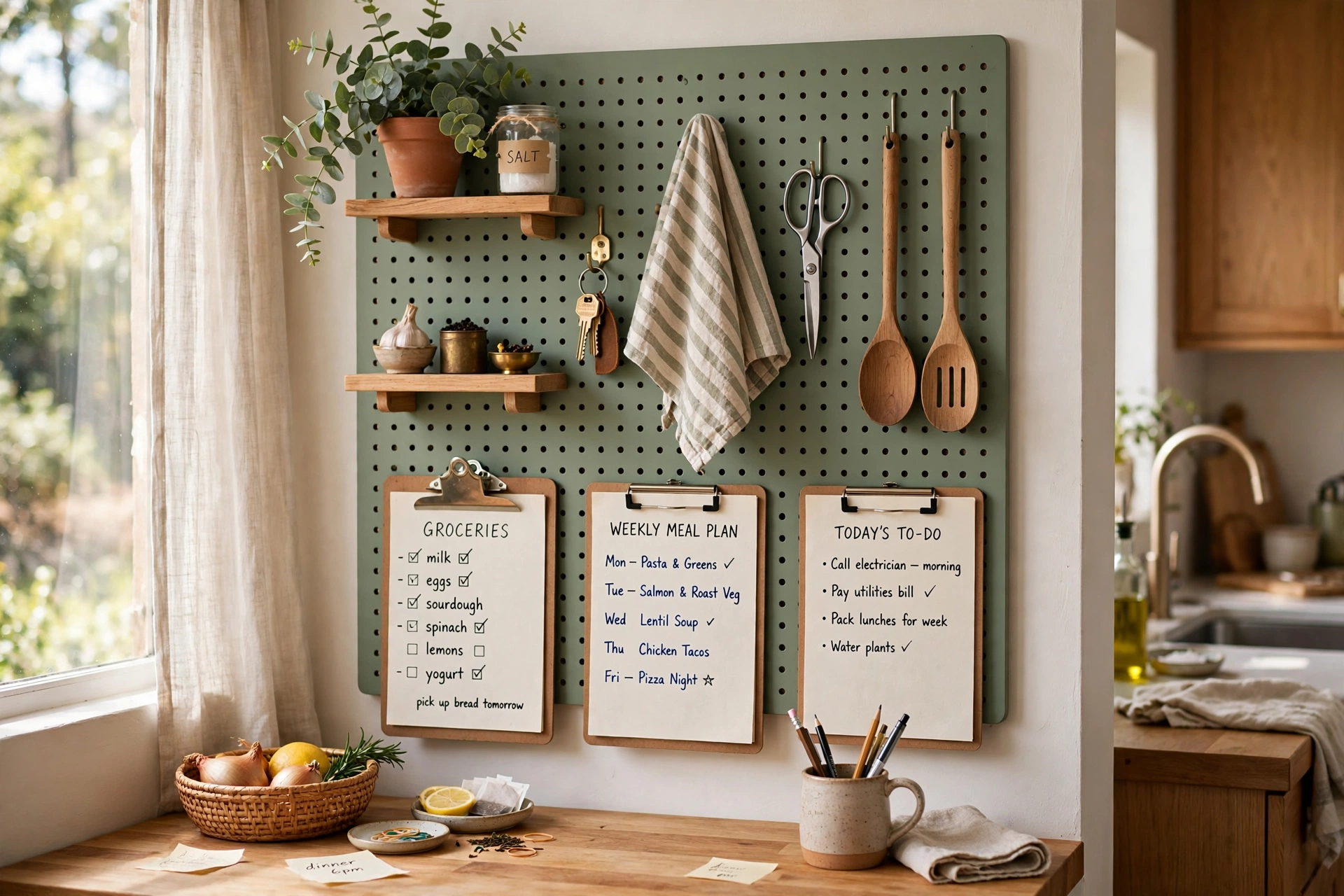
A pegboard panel turns the command center into a reconfigurable system. Mount a four-by-four-foot pegboard on French cleats (so it can come down for painting), then load it with hooks, small shelves, cups, and clipboards. The beauty is adjustability: move a hook in seconds when the family’s needs change.
Paint the pegboard a soft color that suits the kitchen — sage green, warm white, or charcoal — and use it to hold the calendar clipboard, mail pockets, key hooks, and a charging cable organizer. Pegboard holes are spaced one inch apart on standard boards, so accessories are widely available. For more on pegboard organization beyond the kitchen, see our home office pegboard ideas (https://gallaxyindoors.com/home-office-pegboard-ideas-for-organized-workspaces/).
4. Built-In Cabinet Command Center
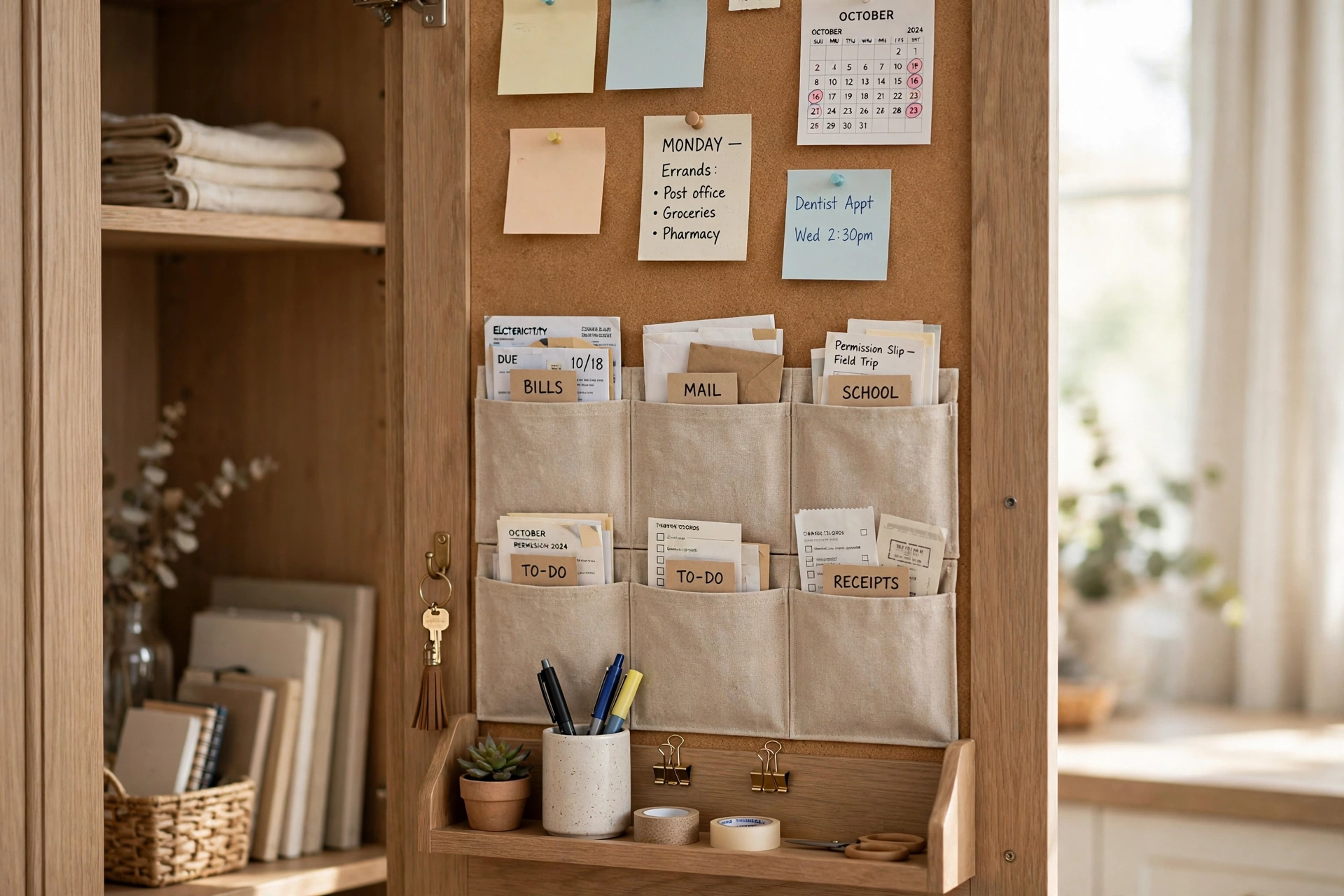
If wall space is scarce, convert the inside of a tall cabinet or pantry door into a command center. Line the door interior with a cork or magnetic board cut to fit, add slim pockets for mail, and mount a small whiteboard for the weekly menu. Cabinet depth of at least three inches keeps everything clear of the shelves when the door closes.
This hidden approach is perfect for families who want the function without the visual clutter — close the door and the command center disappears. It is also ideal for renters: mount everything with removable adhesive strips instead of screws. The trade-off is visibility; this works best for families who already check a shared digital calendar and just need a paper-handling station.
5. Charging Station Hub
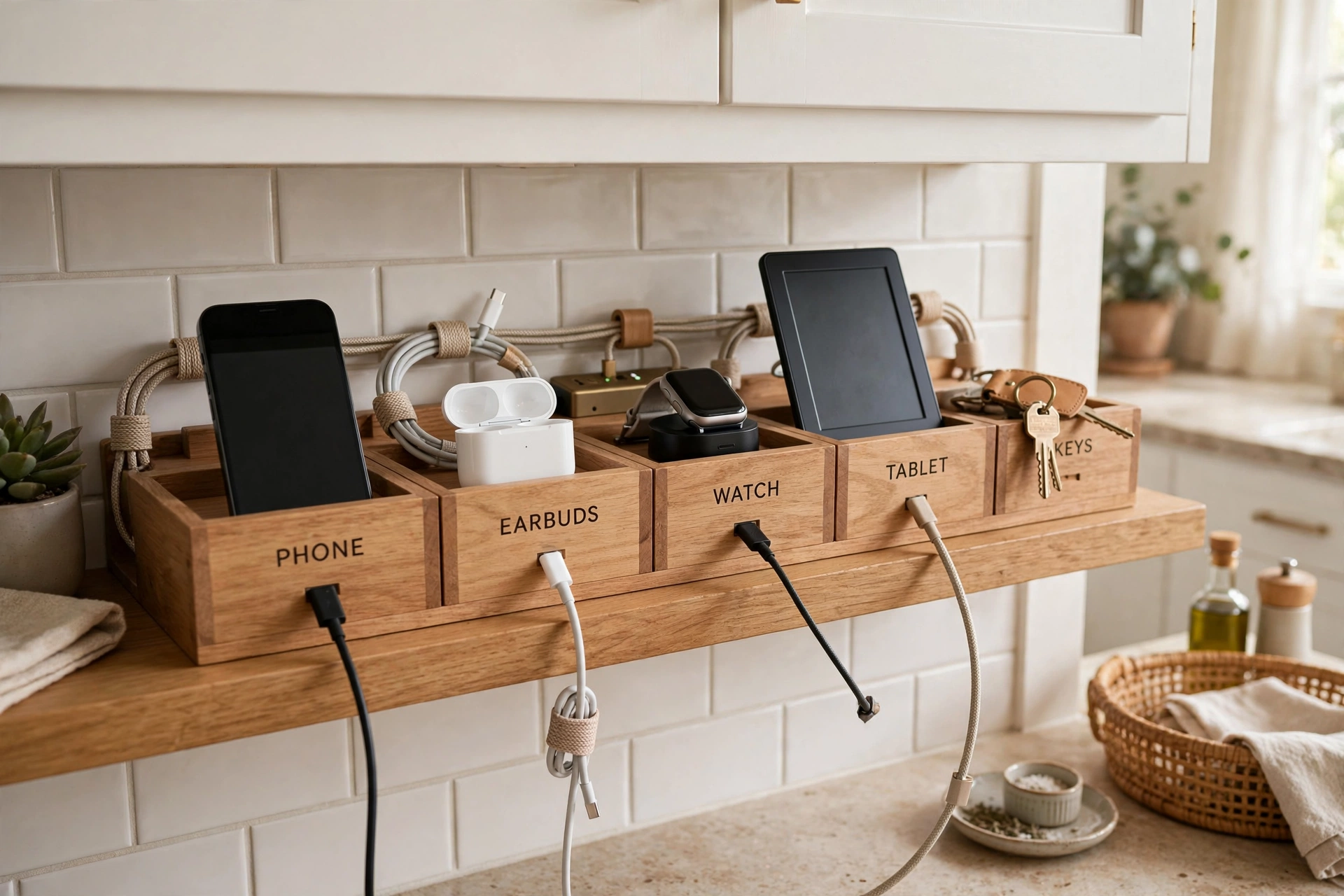
A command center without a charging plan just moves the cable tangle from the counter to the wall. Dedicate one zone — a shelf, a drawer with a power strip, or a wall-mounted organizer — to charging, with one labeled spot per family member. A six-outlet power strip with USB ports handles most families; run cables through a cord channel or a lidded box to keep them tidy.
Add a small whiteboard or label above the station with a simple rule: devices charge here, not in bedrooms. For a drawer conversion, drill a one-and-a-half-inch cable hole in the back of the drawer and mount the power strip inside. Angie Holden’s family command center essentials list includes a charging station alongside the mail sorter and key basket as the three non-negotiables (The Country Chic Cottage’s command center essentials).
6. Per-Person Cubbies or File Slots
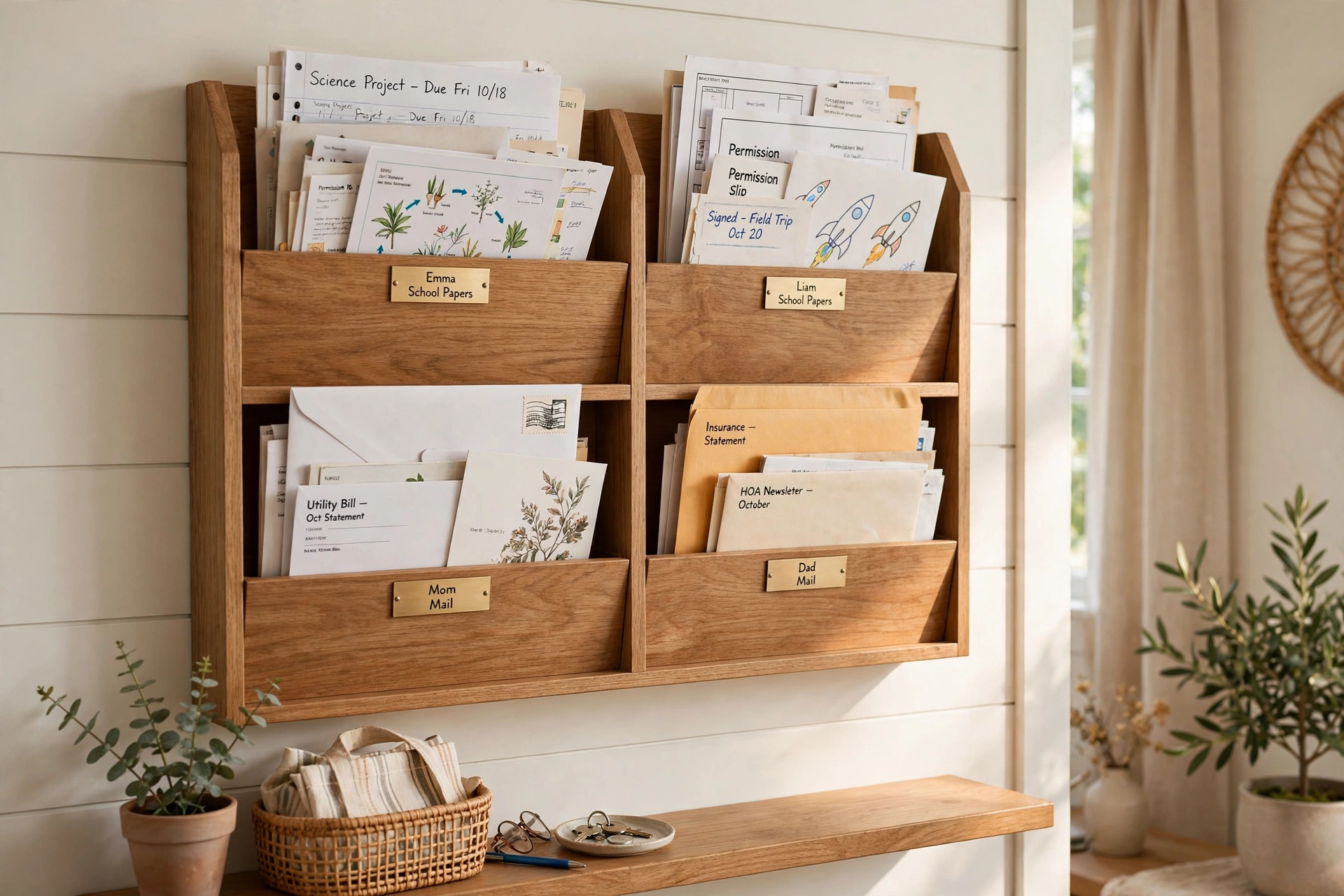
Give every family member their own labeled cubby, file slot, or wall pocket, and paper stops getting lost. A four-slot wall organizer — one slot per person — handles school forms, invitations, and personal mail. Label each slot with a name plate or a chalkboard tag so there is no ambiguity about whose paper is whose.
Set a weekly routine: everyone clears their own slot on Sunday evening. Papers that need action move to a central “action” tray; everything else gets filed or recycled. This single habit does more for household organization than any product. For small kitchens, vertical wall pockets take up only about twelve inches of wall width for a family of four.
7. Family Calendar Wall with Color Coding
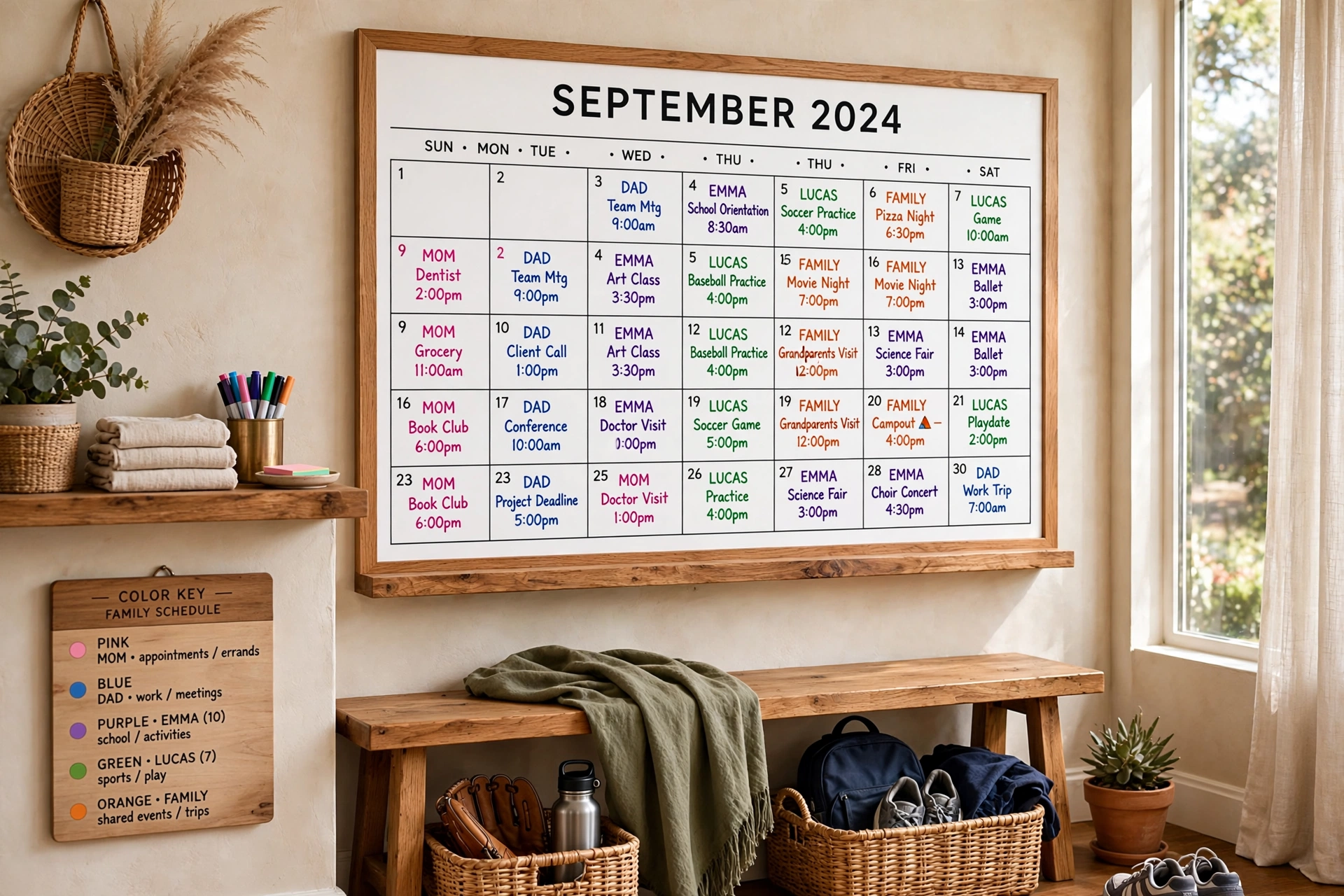
The calendar is the heart of the command center, and color coding is what makes a shared calendar readable at a glance. Assign each family member a marker color and write every event in the owner’s color. A twenty-four-by-thirty-six-inch monthly dry-erase calendar is the minimum useful size for a busy family — smaller boards force cramped writing that nobody can read from across the room.
Photograph the calendar at the start of each month as a backup, and sync the big events (appointments, travel, deadlines) to a shared phone calendar too. The wall calendar is for visibility; the phone calendar is for reminders. Together they cover both. Mount the calendar where the family naturally gathers — visible from the breakfast table is ideal.
8. Menu Planning and Grocery List Board
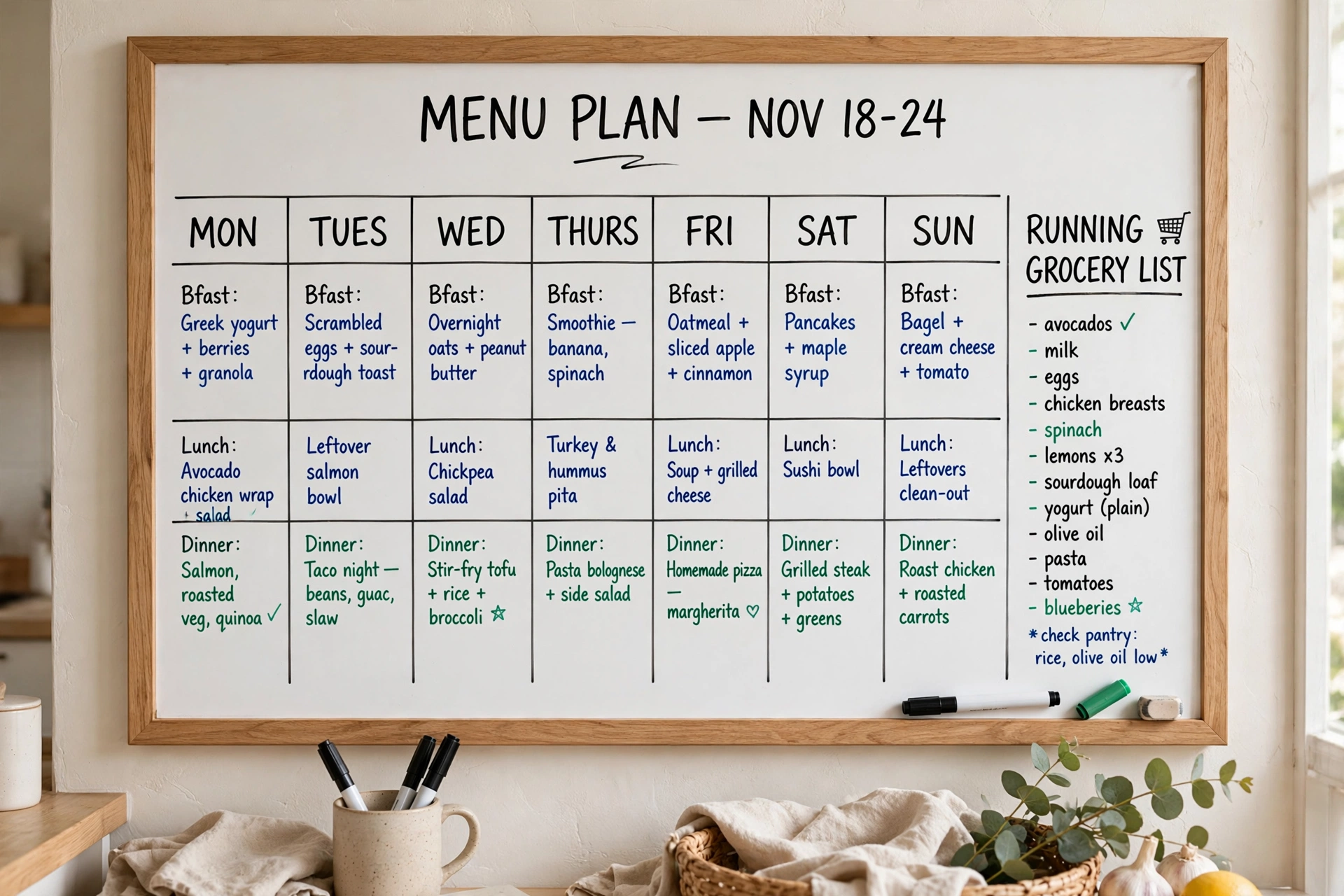
A dedicated menu-planning board ends the nightly “what’s for dinner” debate. Divide a whiteboard or chalkboard into seven columns (or five, for weeknights only) and fill it in during a Sunday planning session. Below the menu grid, keep a running grocery list section — family members add items as they notice them running low.
Use a two-column list format: one column for the weekly shop, one for “buy when you see it” staples. Magnetic notepads on the fridge handle overflow when the board fills up. Families who plan menus consistently report fewer impulse grocery trips and less food waste — the board pays for itself within a month. Pair this with a small recipe binder or a tablet stand nearby for the week’s recipes.
9. Bulletin Board for School Papers and Art
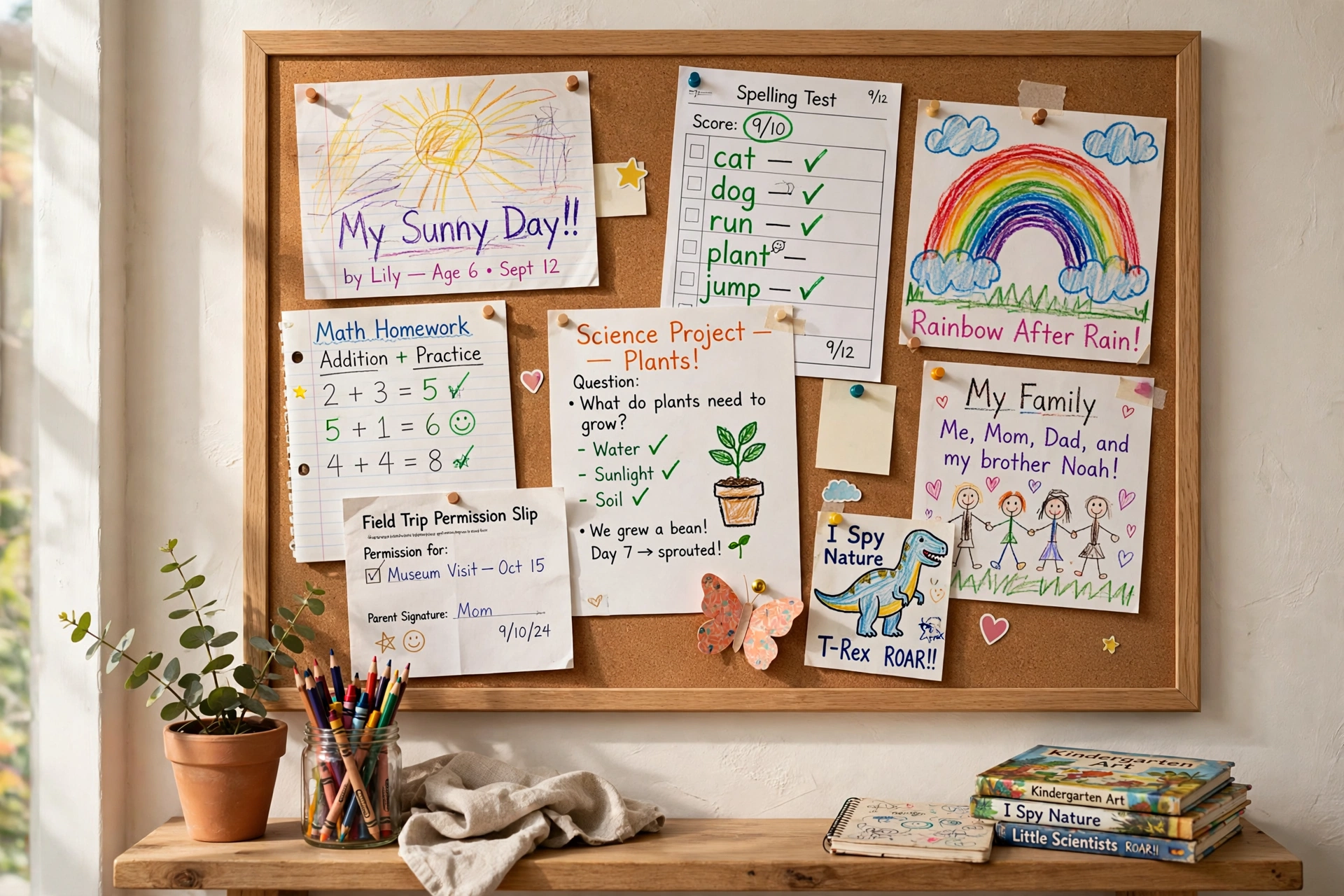
Kids generate a remarkable volume of paper, and a bulletin board gives it a dignified home between the backpack and the recycling bin. A twenty-four-by-thirty-six-inch cork or fabric-covered board holds the current week’s permission slips, spelling lists, and prized artwork. Rotate the display monthly — photograph the art worth keeping, recycle the rest.
Frame the board to match the kitchen so it reads as decor: a simple wood frame elevates cork from office supply to intentional design. Pin items with colorful pushpins or small clips, and leave a “do not remove” corner for the truly important papers (field trip forms, report cards). This board keeps the fridge front clear while still celebrating the kids’ work.
10. Command Center in the Pantry Door
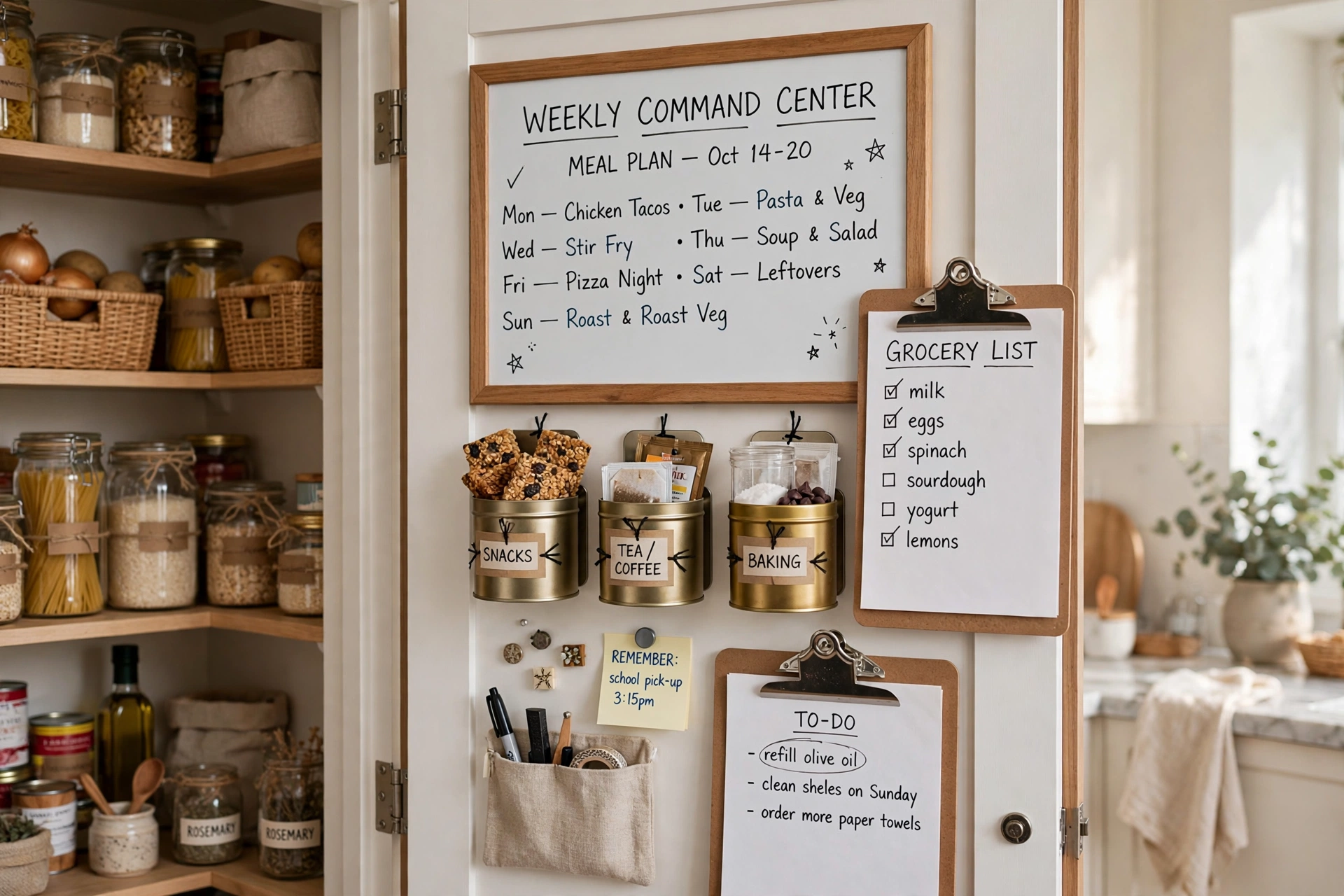
The inside of a pantry door is prime command-center real estate that most families ignore. A full-length pantry door fits a surprising amount: a narrow whiteboard for the grocery list at eye level, magnetic spice-style tins for pens and scissors, clipboards for the menu and calendar, and hooks at the bottom for aprons or reusable bags.
Because the door closes, everything stays hidden — ideal for open-plan kitchens where a wall of organization would dominate the room. Use over-the-door hooks and magnetic mounts to avoid drilling into the door. The one rule: keep it slim. Anything deeper than two inches risks hitting the pantry shelves when the door swings shut.
11. Homework Station Corner
For families with school-age kids, fold a homework zone into the command center. A small desk or a counter-height ledge with two stools, a desk lamp, and a supply caddy gives kids a supervised spot to work while dinner cooks. Add a wall-mounted file sorter for each child’s folders and a clock they can actually read.
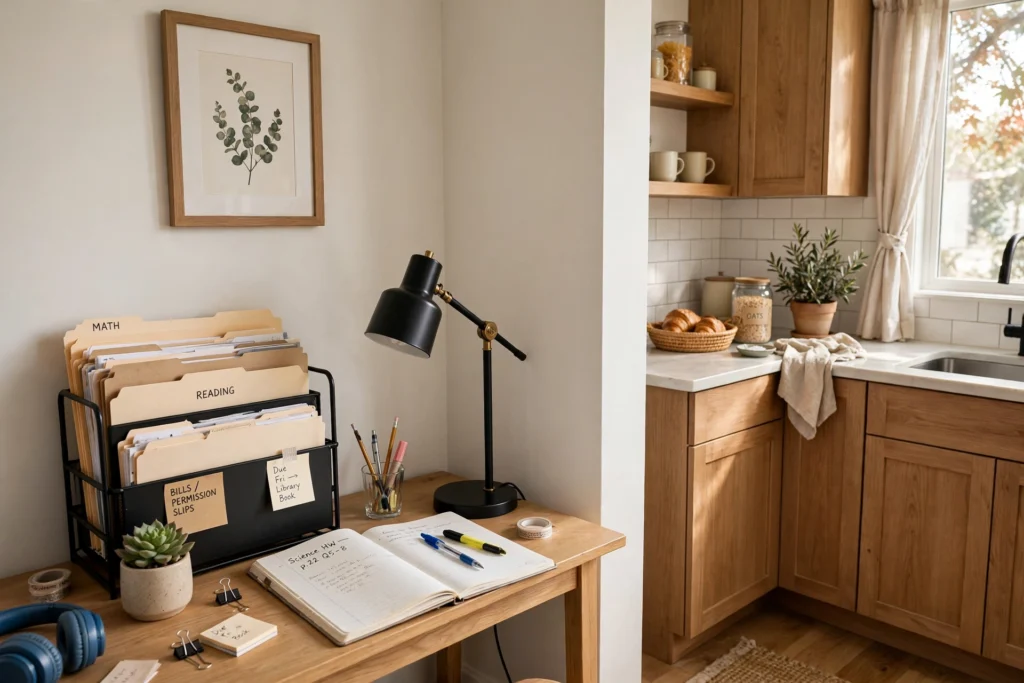
after-school routine (https://gallaxyindoors.com/entryway-closet-organization-ideas-for-a-clutter-free-entry/).
12. Digital Display Command Center
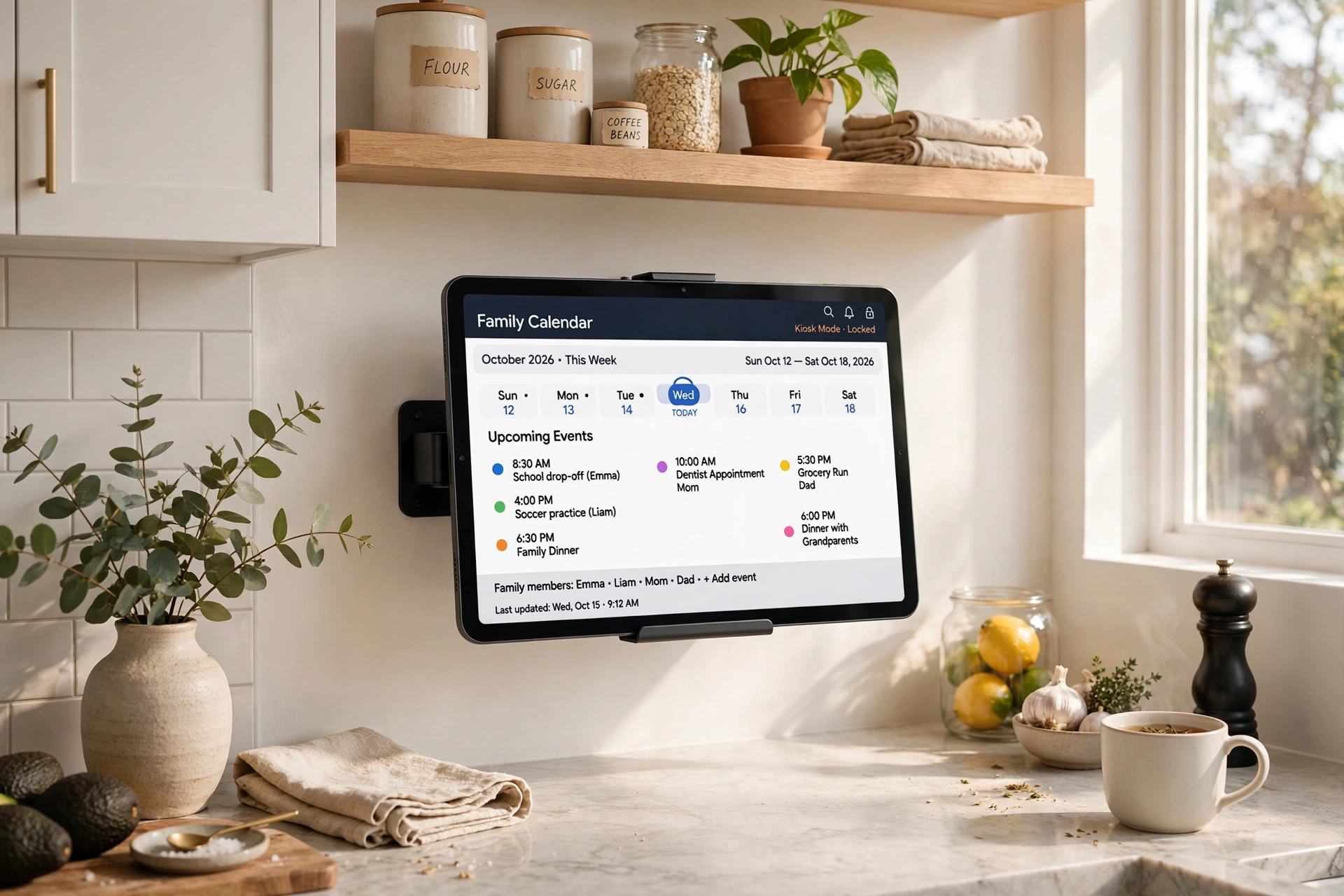
A wall-mounted tablet running the family calendar brings the command center into the digital age. Mount an older tablet in a slim frame or a dedicated wall mount near the kitchen, set it to a shared calendar app in kiosk mode, and the schedule is always current — no erasing, no rewriting. A ten-inch screen is readable from about six feet away.
Keep one analog element alongside it — a small whiteboard for quick notes — because some things are faster to scribble than to type. Run the tablet on a smart plug schedule so the screen sleeps overnight. This hybrid approach suits tech-comfortable families who still want the glanceable, always-on presence of a wall hub.
13. Rolling Cart Command Center
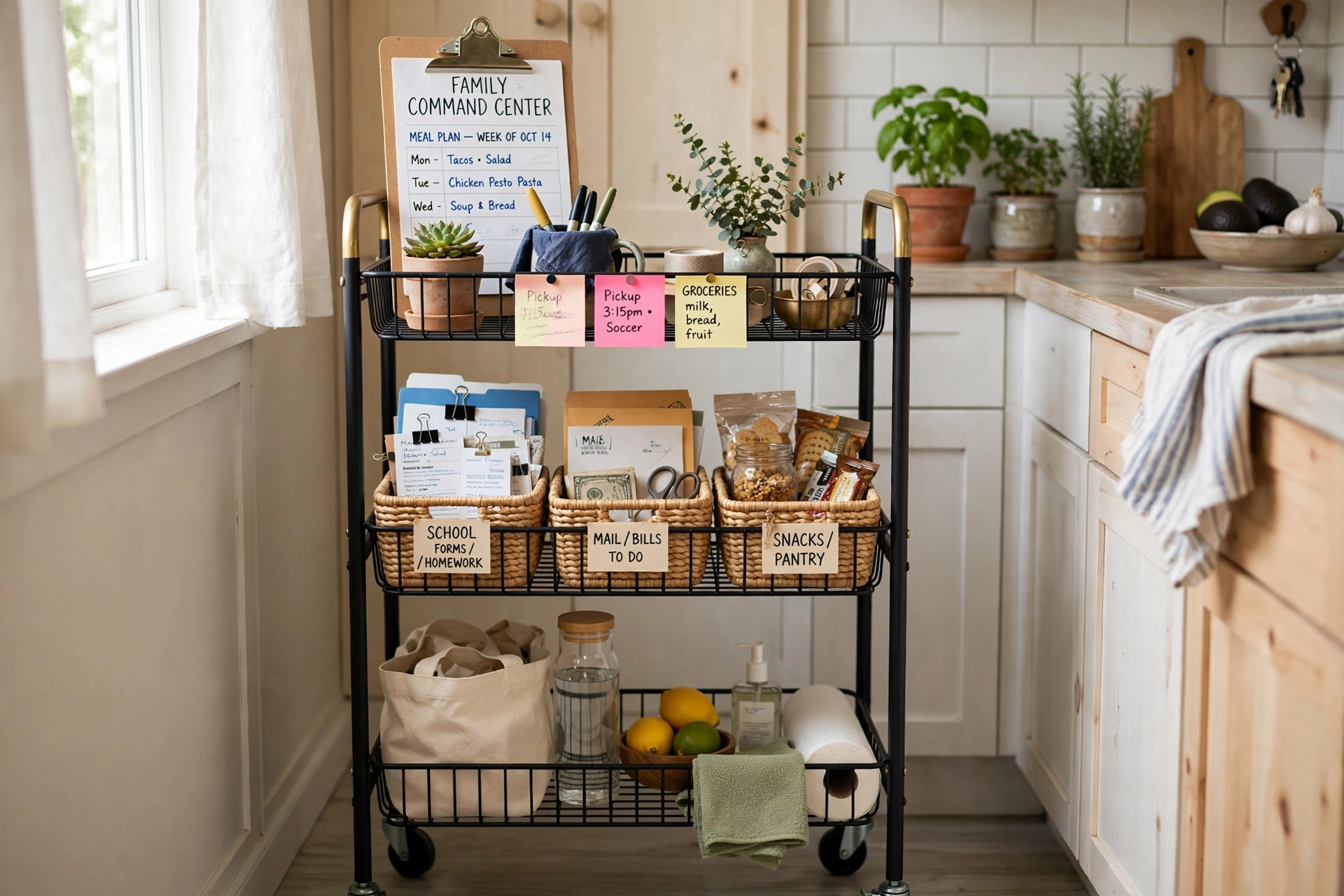
A three-tier rolling cart (the classic craft-cart style) makes a portable command center for small kitchens or renters. Load the top tier with the calendar and a notepad, the middle with mail sorters and the charging station, and the bottom with supplies and files. Wheel it to wherever the family gathers — kitchen by day, living room for homework hour.
Label each tier so the system survives being moved. The cart’s footprint is about eighteen by twenty-four inches, so it tucks into a corner or closet when guests come over. This is the lowest-commitment way to test whether a command center suits your family’s habits before mounting anything permanent.
14. Command Center with a Message Center for Two Households
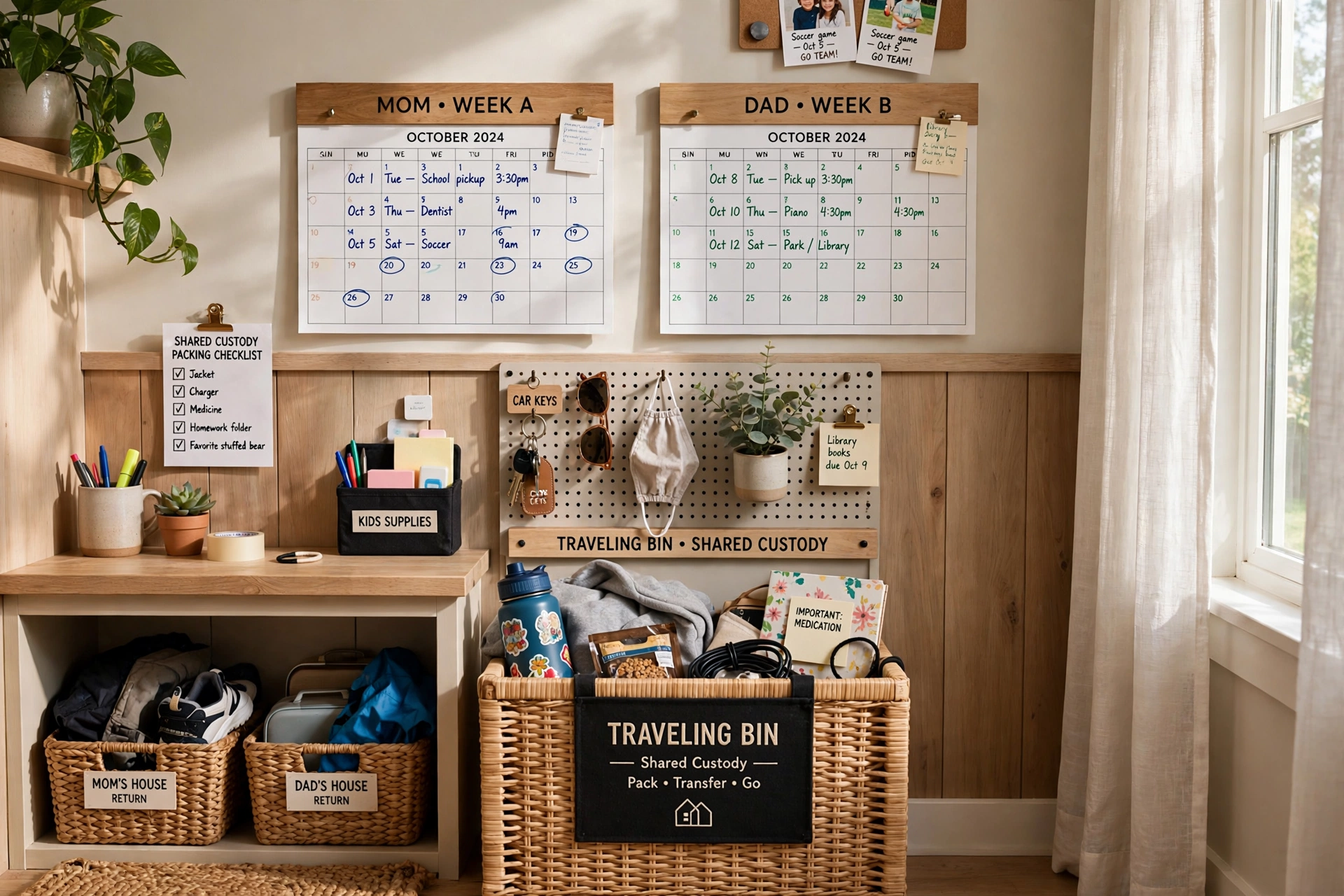
Blended families, shared-custody schedules, and multi-generational homes need a command center that tracks two households. Add a second calendar (or a split calendar with two color systems), a “goes to the other house” bin for items that travel with the kids, and a shared notes section for handoffs between caregivers.
Label everything clearly and keep the traveling bin packed the night before transitions. A small whiteboard for messages between adults — “dentist forms signed, in the blue folder” — prevents the game of telephone. This version of the command center is less about decor and more about reducing friction, and families who need it swear by it.
15. Styled Command Center That Looks Like Decor
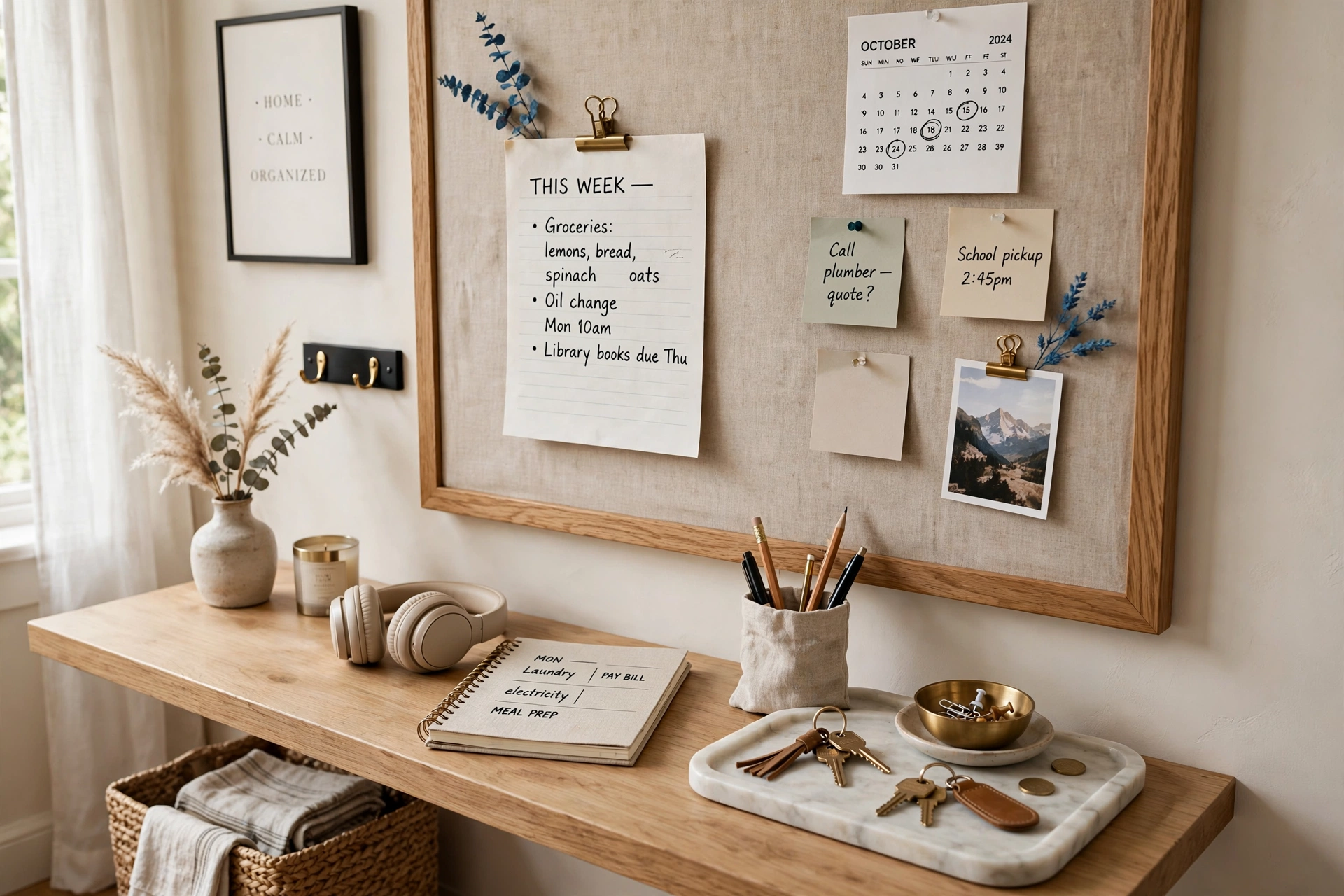
A command center does not have to look utilitarian. Choose a cohesive palette — say, warm wood, black metal, and cream — and select organizers that could pass as decor: a framed linen bulletin board, leather-handled wall pockets, a marble tray for keys, a small vase of eucalyptus on the shelf. When every piece is beautiful, the wall reads as intentional design.
The trick is editing: limit the visible paper to the current week, file the rest immediately, and treat the command center like a styled shelf that happens to work hard. Our countertop styling guide has the same philosophy applied to kitchen surfaces — beauty and function are not opposites (https://gallaxyindoors.com/kitchen-countertop-decor-ideas-for-a-clutter-free-styled-look/).
Frequently Asked Questions
What should be in a kitchen command center?
The essentials are a family calendar, a mail/paper sorter, key hooks, and a charging station — these four solve the most common household chaos. Strong additions include a bulletin board for school papers, a menu-planning and grocery list board, and per-person cubbies. Start with the four essentials and add components only when you feel a specific pain point, rather than building everything at once.
Where is the best place for a family command center?
The best spot is wherever your family already passes through most — the kitchen wall near the garage or back door is ideal because it sits on the natural path in and out of the house. It should be visible from where the family gathers (near the breakfast table is perfect) so the calendar gets checked without a special trip. Avoid tucking it in a hallway nobody lingers in.
How do you keep a command center from becoming cluttered?
Build in a weekly reset: every Sunday, clear each person’s slot, file or recycle old papers, and update the calendar for the week ahead. Limit visible paper to the current week — older items get filed in a drawer or box nearby. And follow the one-in-one-out rule for the bulletin board: when something new goes up, something old comes down.
What is the difference between a command center and a drop zone?
A drop zone is a landing spot by the door for keys, bags, and shoes — it catches things as you arrive. A command center is an information hub that manages the family’s schedule, mail, and logistics — it organizes what happens next. Many homes benefit from both: a small drop zone at the entry and a full command center in the kitchen. They serve different moments of the day.
Can you make a command center in a small kitchen?
Absolutely — go vertical and hidden. Use the inside of a pantry or cabinet door, a slim rolling cart that tucks away, or a single narrow wall strip with stacked components (calendar on top, mail pockets below, hooks at the bottom). A family of four can run a complete command center in about twelve inches of wall width if every component is wall-mounted and labeled.
Keep Exploring
A kitchen command center is really a promise: that the family’s logistics have a home, and the home has a system. Start with the calendar and the mail sorter, add pieces as real needs appear, and do the Sunday reset. Within a month, the morning scramble gets noticeably calmer — and that is worth more than any decor trend.