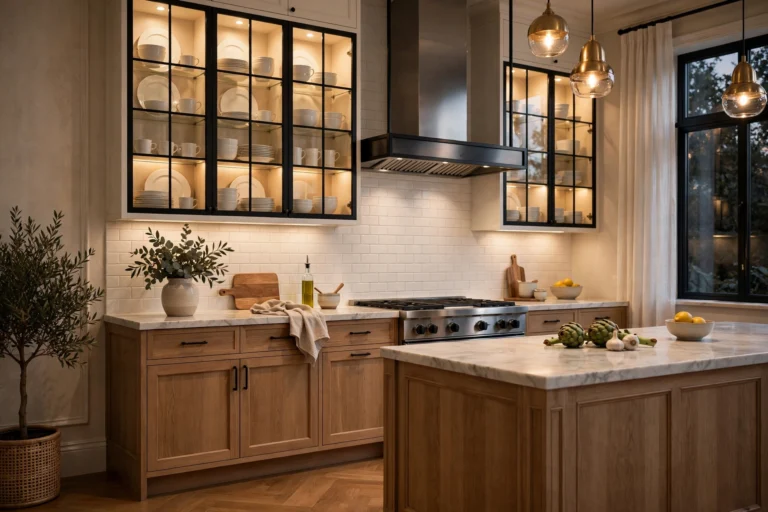

If you’re exploring kitchen cabinet hardware ideas, swapping out your cabinet hardware is the fastest, most affordable way to give a kitchen a whole new personality. For less than the cost of a weekend getaway, you can take cabinets from dated to designer with just pulls, knobs, and a screwdriver. These kitchen cabinet hardware ideas cover every style and budget — from warm brass pulls to sleek matte black knobs — so you can find the perfect jewelry for your kitchen. Think of hardware as the finishing touch that pulls your whole design together, much like bold two-tone cabinet looks rely on the right accents to make the contrast sing.
Before you buy, take a few minutes to plan. Note your cabinet door style, measure the existing hole spacing (center to center), and decide whether you want to keep the current configuration or fill and re-drill for a new look. Consistency is your friend: one finish throughout the kitchen looks calm and intentional, while two finishes — say, knobs on uppers and pulls on lowers — can add curated depth. With that groundwork done, here are 15 kitchen cabinet hardware ideas to transform your cabinets.
1. Brushed Brass Pulls
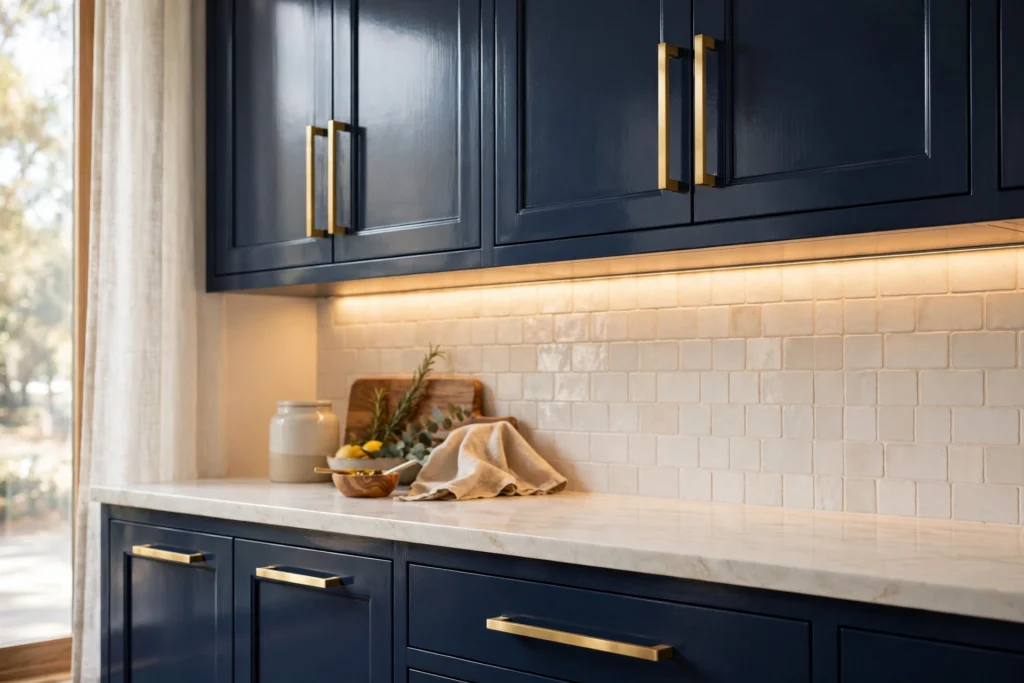
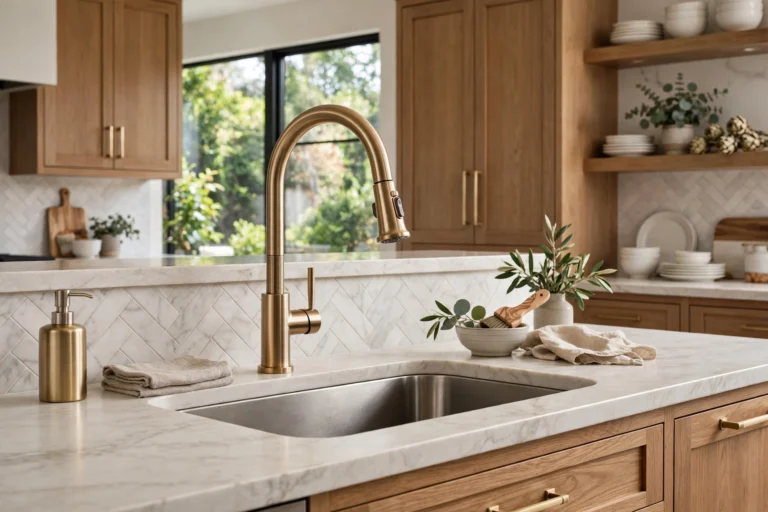
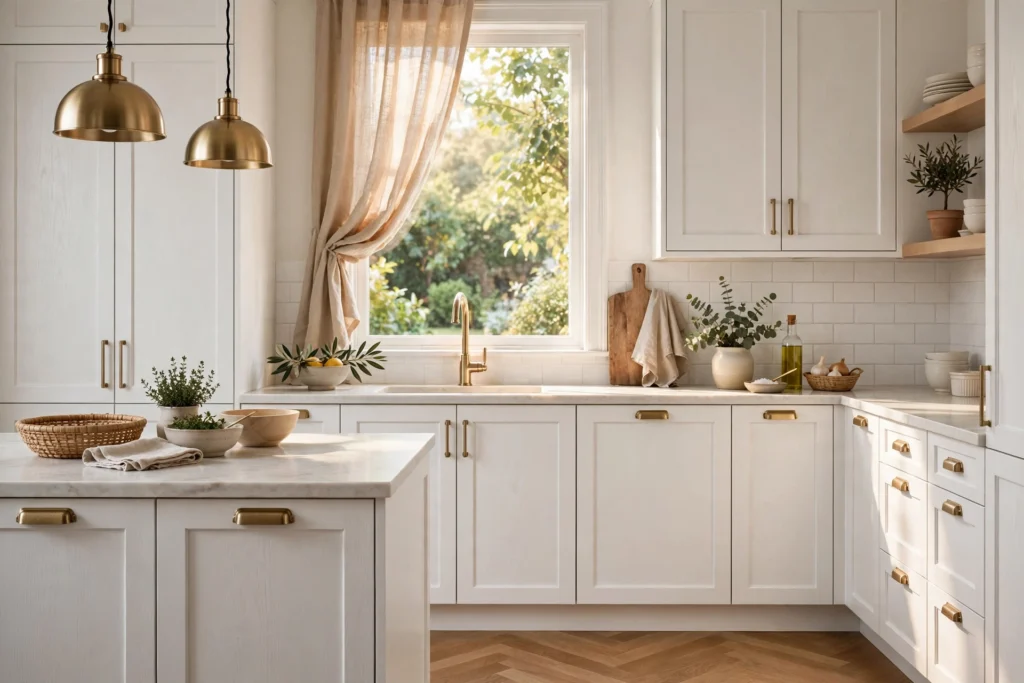
Nothing warms up a kitchen quite like brushed brass. Unlike shiny polished gold tones, brushed brass has a soft, muted sheen that feels elegant rather than flashy, and it pairs beautifully with both white shaker cabinets and deep navy or forest-green doors. These pulls catch the light gently, adding a jewelry-like glow to your cabinetry without overwhelming the room. For a cohesive look, match them with a brass faucet or brass light fixtures — repeating the finish two or three times is the secret to making it look intentional rather than random. Brushed brass has been popular for years because it sits comfortably between traditional and modern, and it ages gracefully, developing a subtle patina that many homeowners love. If you are curious how pulls and knobs evolved alongside cabinet styles through history, this overview is a fascinating read.
2. Matte Black Knobs
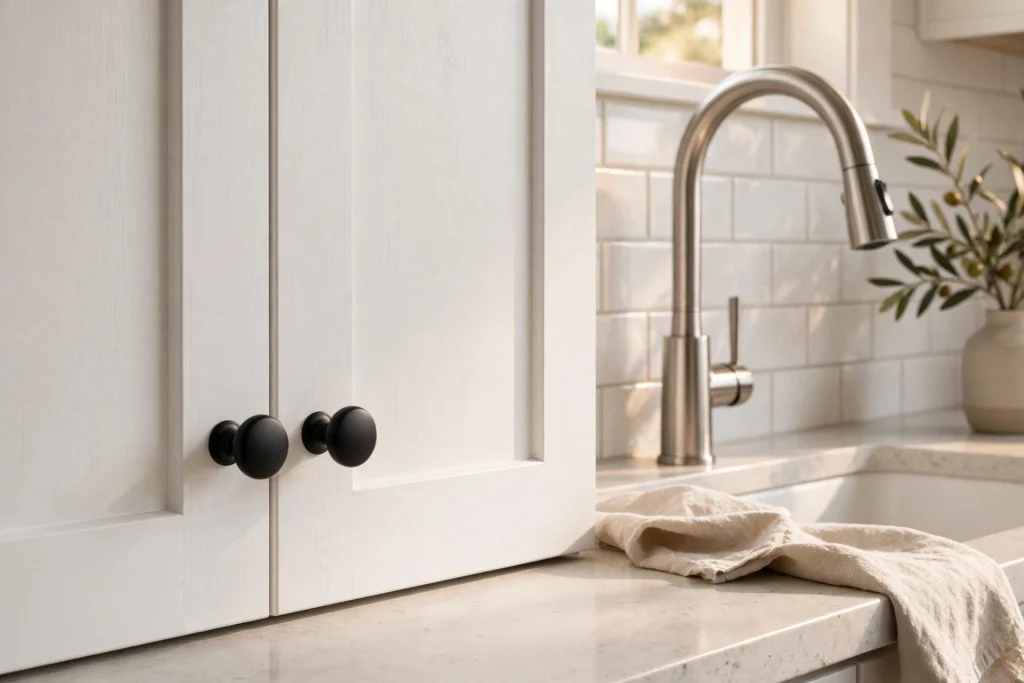
Matte black hardware is the quiet achiever of kitchen design: it adds crisp contrast and modern edge to almost any cabinet color. On white or light-gray cabinets, black knobs read as bold punctuation marks that define the cabinetry’s lines. On dark cabinets, they blend in for a seamless, architectural feel. The matte finish is especially practical — it resists visible fingerprints far better than polished black or chrome, which matters on the knobs you grab a dozen times a day. Matte black also plays well with other finishes, so it is the safest choice if your faucet or appliances are stainless steel and you want hardware that stands apart rather than trying to match. Choose solid-feeling knobs with a little heft; cheap-feeling hardware is immediately noticeable every time you open a door.
3. Polished Nickel Pulls
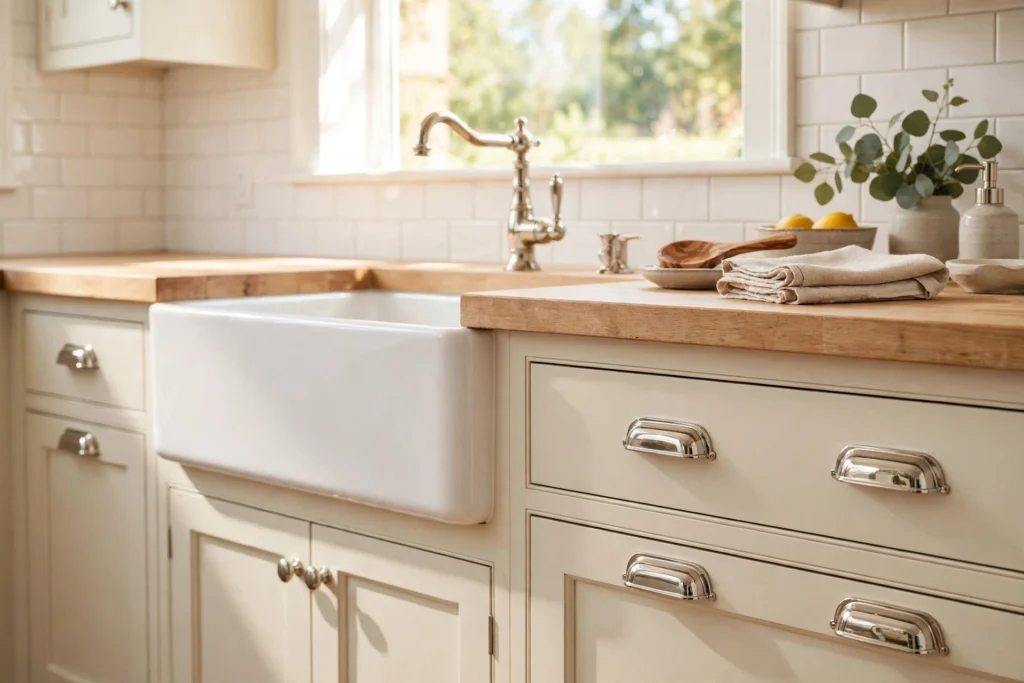
Polished nickel offers the bright, reflective glamour of chrome but with a warmer, softer undertone that many designers prefer. It feels timeless and slightly luxurious, working in both classic kitchens and transitional spaces that mix old and new. Polished nickel pulls look stunning against white, cream, and pale-blue cabinets, where their shine creates a crisp, jewelry-box effect. The main tradeoff is maintenance: polished finishes show fingerprints and water spots more readily, so plan to wipe them down weekly with a soft cloth if your kitchen sees heavy use. Pair polished nickel pulls with a matching faucet for a high-end coordinated look, or let them be the single shiny accent in an otherwise matte kitchen — either approach feels deliberate and polished.
4. Leather Pulls
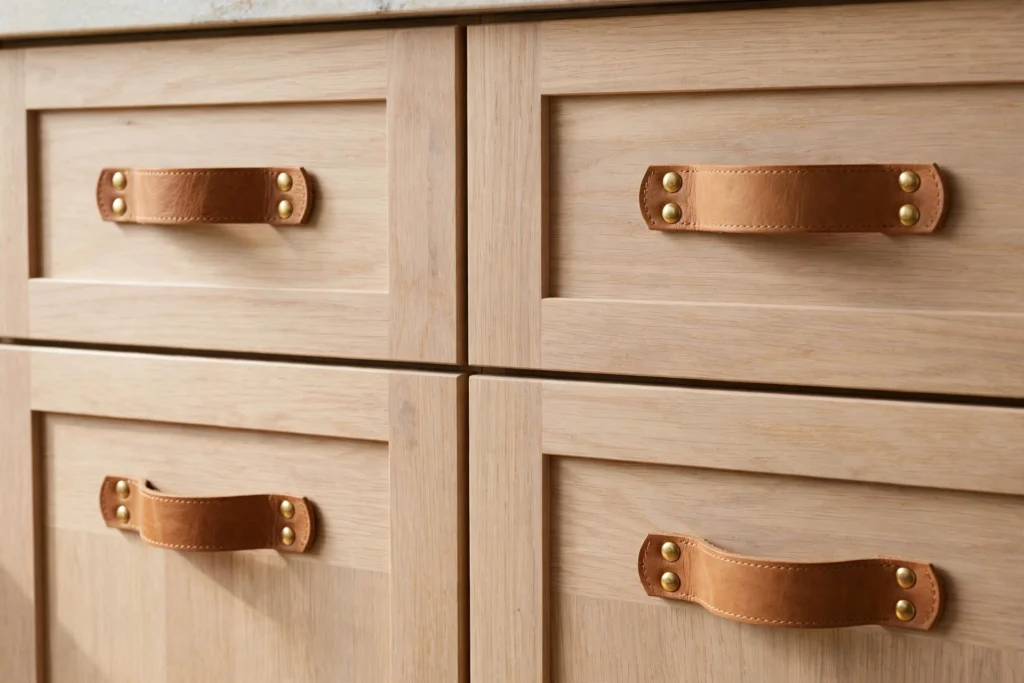
Leather pulls bring a warm, tactile, almost Scandinavian softness to kitchen cabinets that metal simply cannot match. Usually made from a folded strap of leather secured with metal studs, they add an organic, crafted feel that works beautifully in rustic, boho, and minimalist kitchens. Cognac and tan leathers look rich against white or light-wood cabinets, while darker brown or black leather suits moody green and charcoal cabinetry. Leather softens with age and use, developing a character that metal hardware never will. They are easy to install — most attach with a single screw through each end — and they are a comfortable grip for drawers. Keep them away from the sink and stove, though, since heat and constant moisture can dry the leather out over time.
5. Cup Pulls for Farmhouse Charm
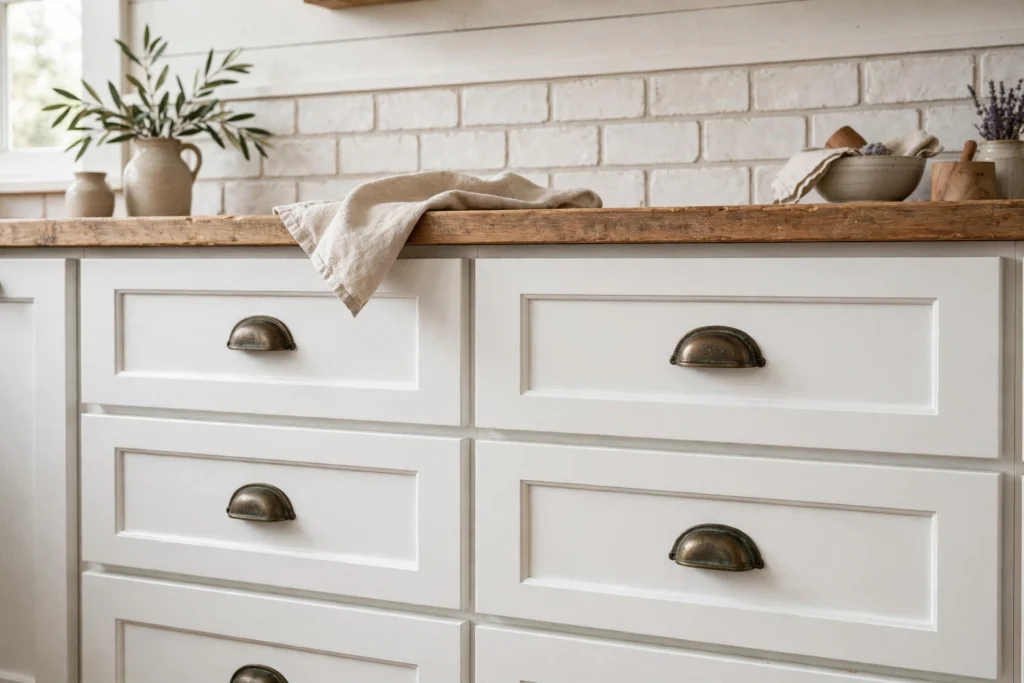
Cup pulls, also called bin pulls, are the classic farmhouse and cottage choice, and they bring instant vintage character to any kitchen. Their half-moon shape cups your fingers naturally, making them comfortable for wide drawers where a knob would feel awkward. Traditionally finished in oil-rubbed bronze, aged brass, or matte black, cup pulls look right at home on shaker cabinets and beadboard doors. They do require two screws each, so installation takes a little longer, but the payoff is a kitchen that feels collected and storied. Mix cup pulls on lower drawers with simple round knobs on upper doors for a layered look that designers love. If your kitchen leans modern farmhouse, this is the single fastest hardware swap to nail the aesthetic.
6. Bar Pulls in Mixed Lengths
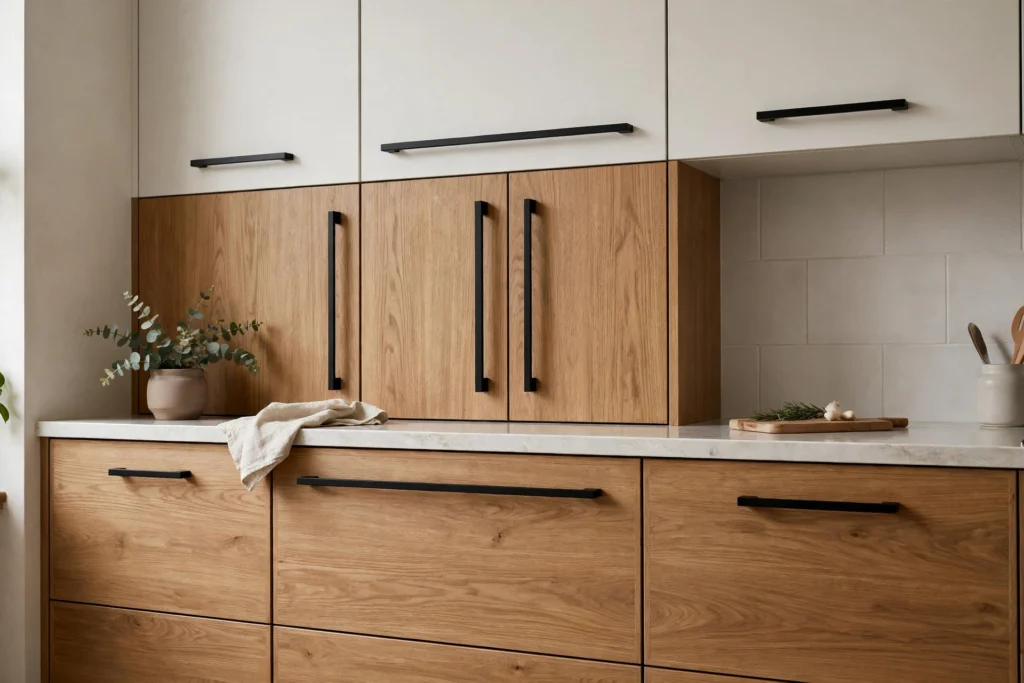
Bar pulls are the go-to for contemporary kitchens, and using them in mixed lengths across your cabinetry creates a custom, designer look. The rule of thumb: longer pulls on wider drawers, shorter pulls on narrow drawers and doors. A 128mm pull on standard doors paired with 192mm or 256mm pulls on wide pot drawers keeps proportions balanced and pleasing. This scaled approach makes the kitchen feel tailored rather than one-size-fits-all. Bar pulls come in every finish from matte black to champagne bronze, so they adapt to any style. When shopping, look for hollow versus solid construction — solid pulls feel more substantial in hand and tend to last longer. Mixed lengths cost no more than uniform ones, yet the visual difference is striking.
7. Crystal and Glass Knobs
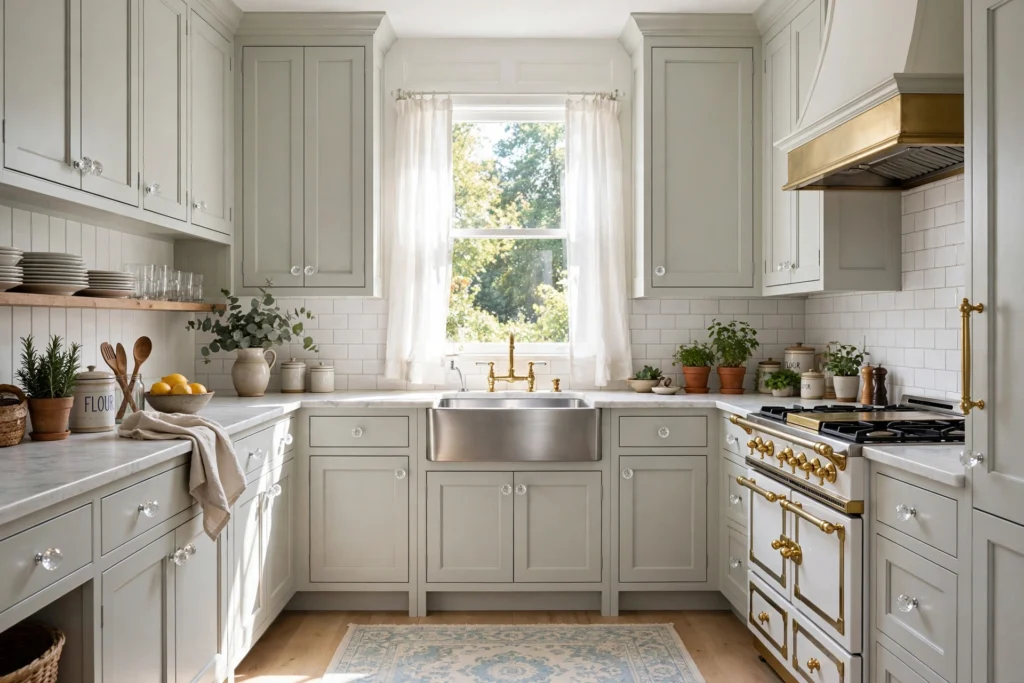
For a touch of vintage glamour or feminine charm, crystal and glass knobs are hard to beat. They sparkle in natural light and add a jewelry-like sparkle to traditional and transitional kitchens. Clear crystal knobs look stunning on painted cabinets in soft shades — pale gray, blush, or sage — while colored glass knobs in cobalt or amber can be a playful accent in eclectic kitchens. Quality matters here: look for faceted glass with real depth rather than flat plastic imitations, which read as cheap up close. Glass knobs are easy to clean and surprisingly durable, though they can loosen over time, so check the set screws annually. Use them sparingly — on an island or a hutch — if you want the sparkle to feel special rather than overwhelming.
8. Wooden Knobs
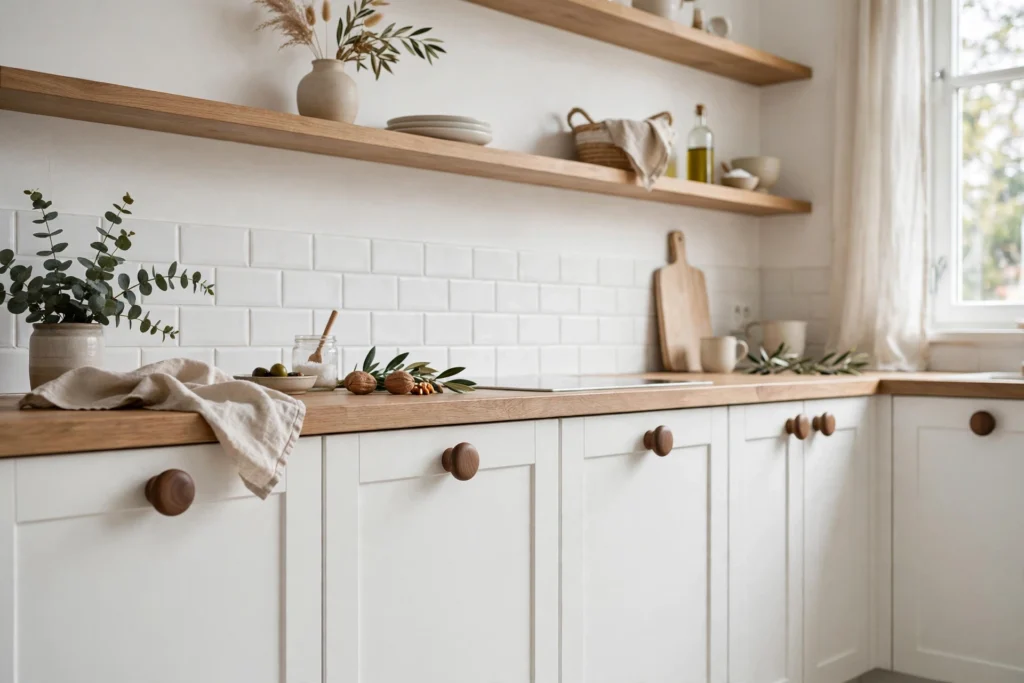
Wooden knobs bring natural warmth and an artisanal feel to kitchen cabinets, especially in Scandinavian, rustic, and mid-century modern kitchens. Available in everything from pale maple to rich walnut, they can match your cabinetry for a seamless look or contrast it for visual interest — walnut knobs on white cabinets is a particularly chic combination. Wood knobs feel warm to the touch, which is a small daily pleasure in a cold kitchen morning, and they are lightweight enough for delicate upper cabinets. Look for smooth, well-sealed finishes that resist moisture, and consider the grain: straight, subtle grain suits modern kitchens while knotty, figured wood leans rustic. They are also one of the most affordable hardware options, making them perfect for big kitchens with dozens of doors.
9. Backplates for Extra Detail
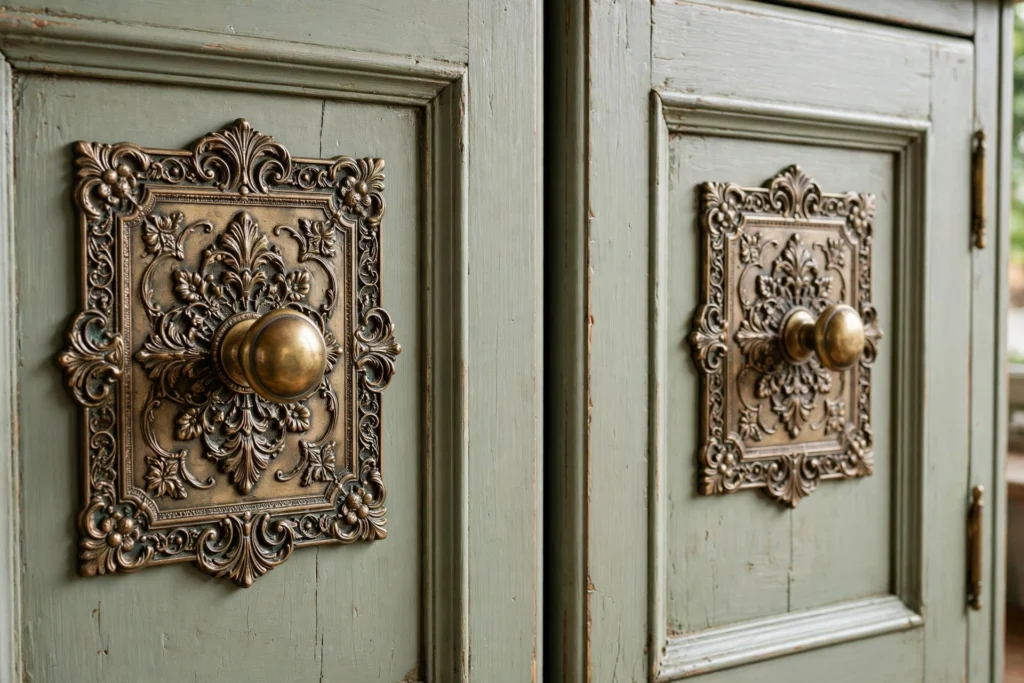
Backplates — the decorative plates that sit behind a knob or pull — add a layer of detail that elevates even simple hardware. They come in shapes from classic rectangular and oval to ornate Victorian patterns, and they instantly make standard knobs look custom and considered. Backplates are also practical: they protect the cabinet finish from the wear and oils of daily use around the knob, which is why you often see them on antique furniture that has survived a century of handling. They work best on traditional, farmhouse, and vintage-style cabinets where the extra ornament feels at home. When installing, center the backplate carefully and tighten just enough — over-tightening can crack the plate or dent the door. Pair them with simple knobs to let the plate be the star.
10. Mixing Knobs and Pulls
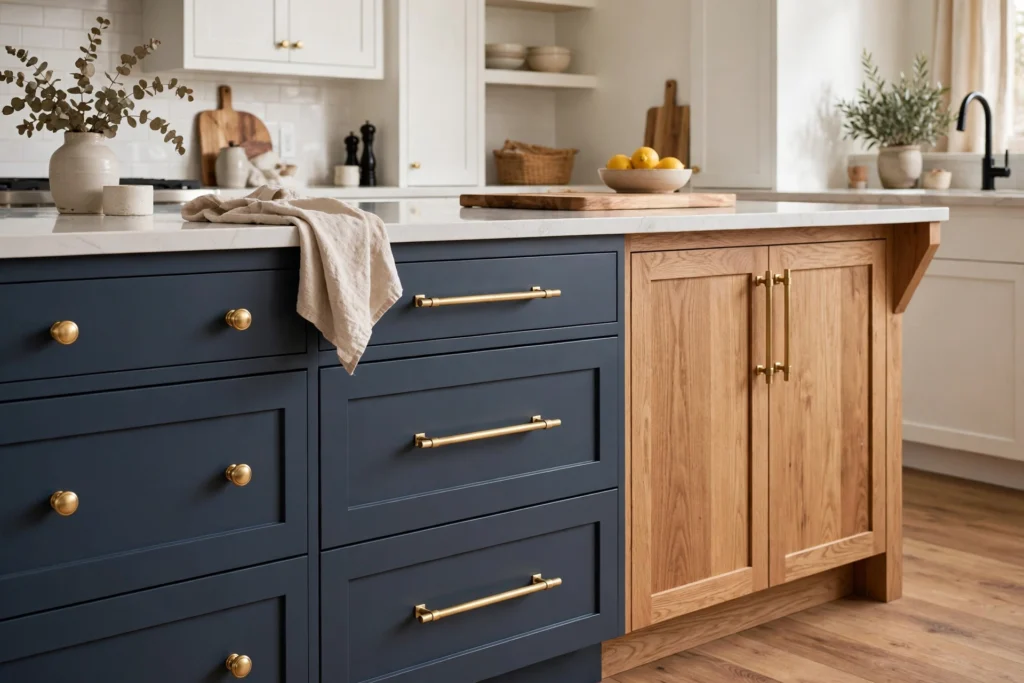
One of the easiest ways to make a kitchen look professionally designed is to mix knobs and pulls instead of using one style everywhere. The classic formula is knobs on doors and pulls on drawers — it follows function, since pulls give better leverage on wide, heavy drawers. Keep the finish identical across both styles so the mix feels cohesive rather than chaotic, and stick to one design family (both modern, both traditional) for the same reason. Some designers go further, using one finish on the perimeter cabinets and a contrasting finish on the island for a collected, unfitted look. The key is restraint: two styles, one or two finishes, applied with a clear pattern. Done well, mixed hardware adds depth and intention that a single style cannot match.
11. Hardware Sizing Rules
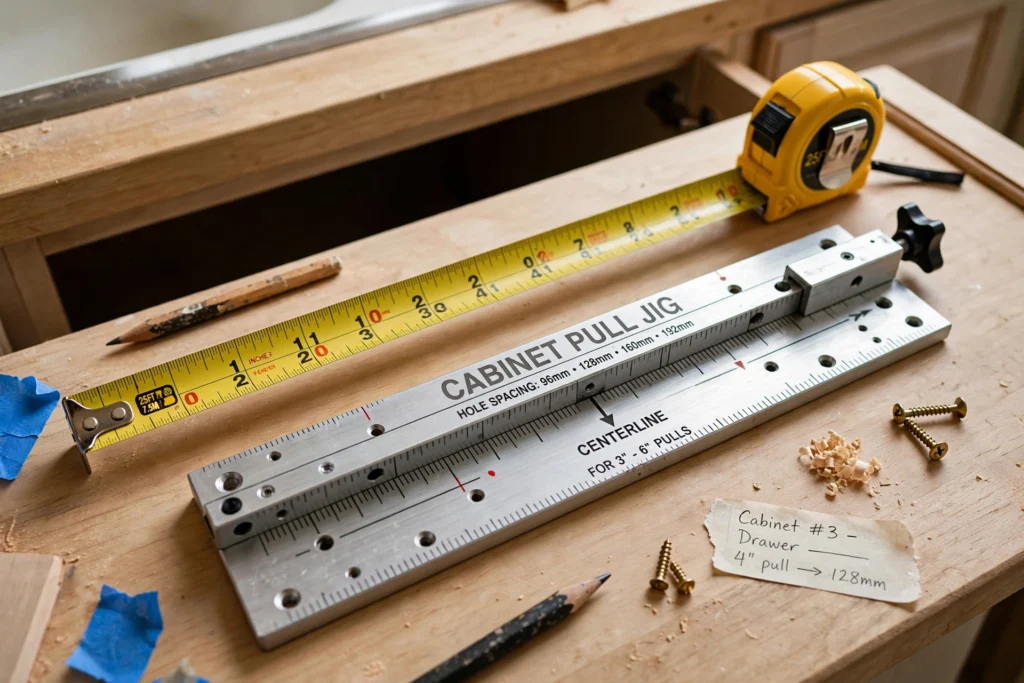
Getting the scale right is what separates amateur hardware installs from professional-looking ones. For pulls, a good rule is that the pull should be roughly one-third the width of the drawer or door it sits on — a 24-inch drawer deserves a 7 to 8-inch pull, while a narrow 12-inch drawer looks best with a 3 to 4-inch pull. Knobs are more forgiving: a 1 to 1.25-inch diameter suits most standard doors, with slightly larger 1.5-inch knobs for oversized or tall pantry doors. Placement matters too — pulls typically sit centered horizontally and about 2.5 to 3 inches from the top or bottom edge of the door, depending on whether it is an upper or lower cabinet. Use painter’s tape to mock up positions before drilling; seeing the layout on the actual cabinets prevents the most common sizing regrets. For tricky spots like lazy Susans and angled doors, these corner cabinet solutions show how thoughtful hardware placement solves awkward layouts.
12. Finishes That Hide Fingerprints
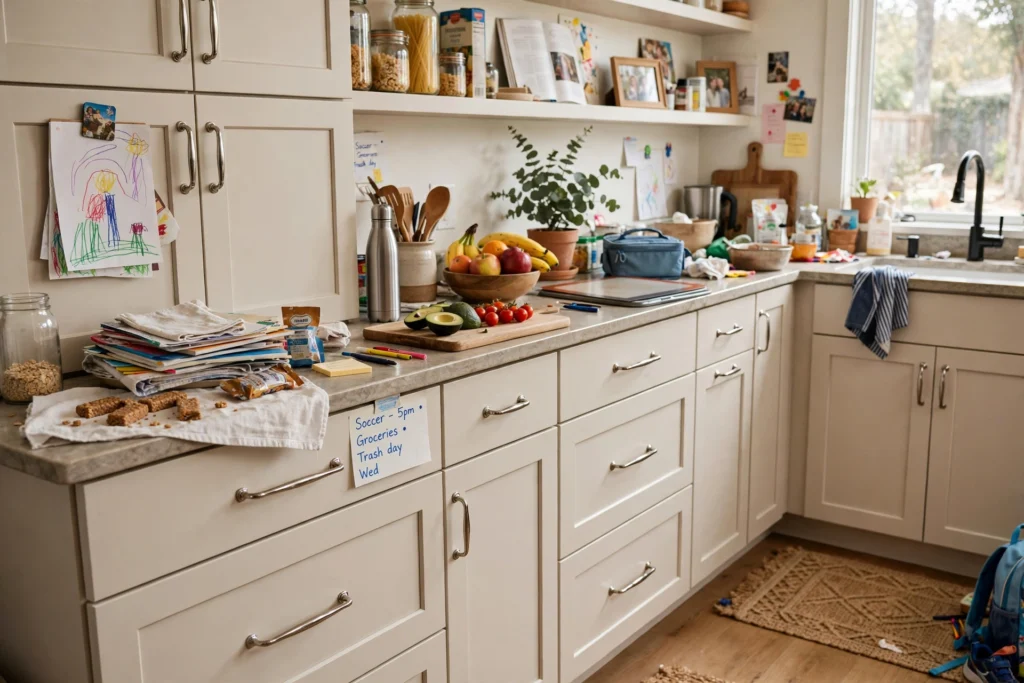
If your kitchen is the family command center, choose hardware finishes that forgive daily touching. Brushed and satin finishes — brushed nickel, satin brass, brushed bronze — scatter light instead of reflecting it, so fingerprints and smudges blend into the texture. Matte black is another strong performer, hiding prints far better than polished black or chrome. The worst offenders for visible smudges are high-polish finishes: polished chrome, polished nickel, and polished brass all act like tiny mirrors. Oil-rubbed bronze sits in the middle — its dark, varied patina camouflages marks well, though the finish can wear on high-touch edges over time. If you love a polished look anyway, keep a microfiber cloth in a nearby drawer and give the pulls a weekly wipe; thirty seconds of maintenance keeps shiny hardware looking showroom-fresh.
13. Budget Hardware Upgrades
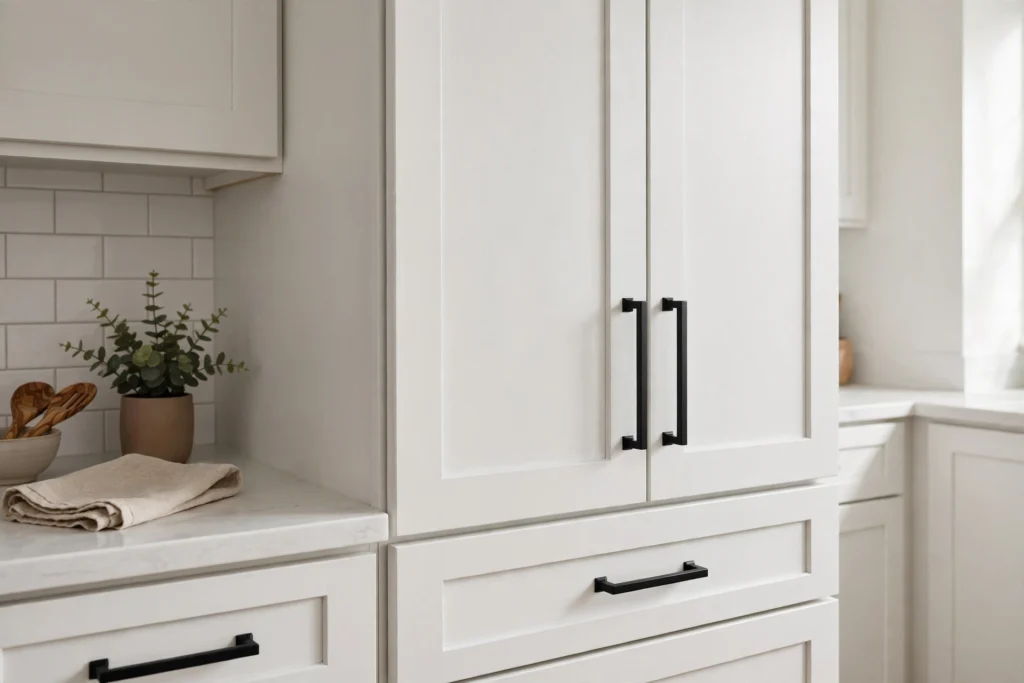
You do not need a designer budget to get designer-looking hardware. Big-box stores and online marketplaces sell solid, stylish pulls and knobs for just a few dollars each — in a kitchen with 30 pieces of hardware, the difference between $3 and $15 per piece is hundreds of dollars. Focus your spending where hands land most: invest in quality pulls for the wide drawers you open constantly, and use budget-friendly knobs on uppers you touch less. Another trick is to buy unlacquered brass or simple matte black styles, which look expensive in any price tier because the finish does the talking. Spray-painting existing hardware is the ultimate budget move — a $8 can of metallic spray paint plus clear topcoat can transform dated pulls convincingly, though the finish will not survive as long as factory coating. For pieces worth investing in, solid hardware from Rejuvenation is built to last decades rather than years.
14. Installing Hardware Yourself
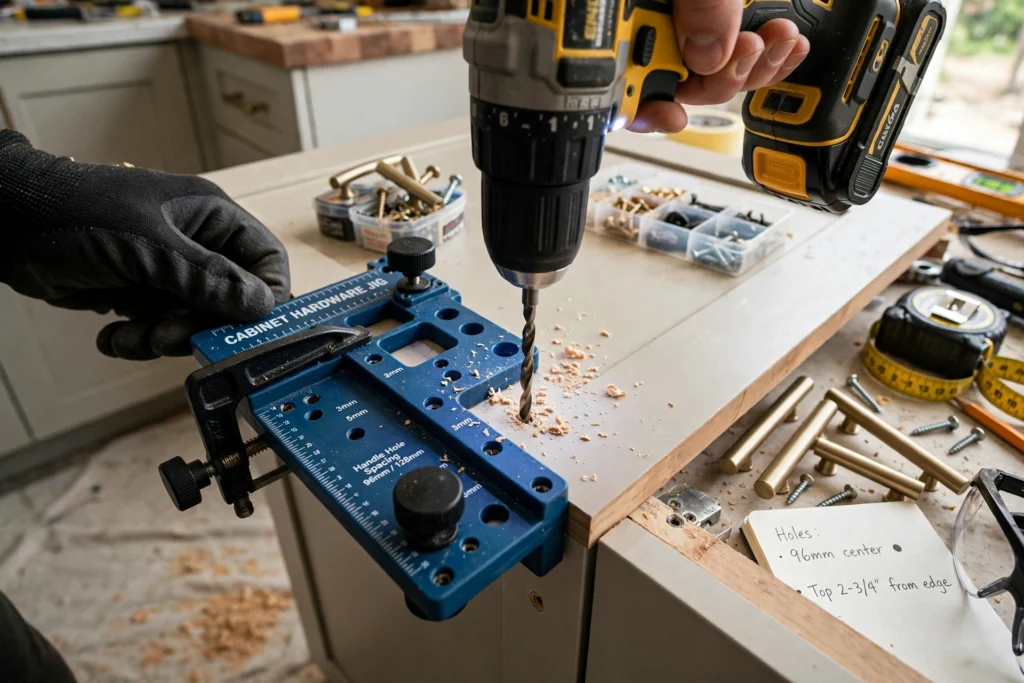
Installing cabinet hardware is one of the most satisfying DIY projects because the transformation is instant and the skill level is beginner-friendly. You will need a drill or driver, a tape measure, painter’s tape, and a cabinet hardware jig — the jig is the secret weapon that guarantees perfectly aligned holes every time. Mark your positions with the jig, drill pilot holes slightly smaller than your screws, and work from the back of the door to avoid splintering the front face. Always test on a hidden door first to confirm your measurements. The most common mistake is drilling freehand, which produces the slightly-off-center holes that make a kitchen look amateur. If your new hardware has different hole spacing than the old, fill old holes with wood filler, sand smooth, and touch up with matching paint before drilling fresh holes. Take your time with the first few pieces; once the rhythm clicks, the rest goes quickly.
15. When to Splurge vs Save
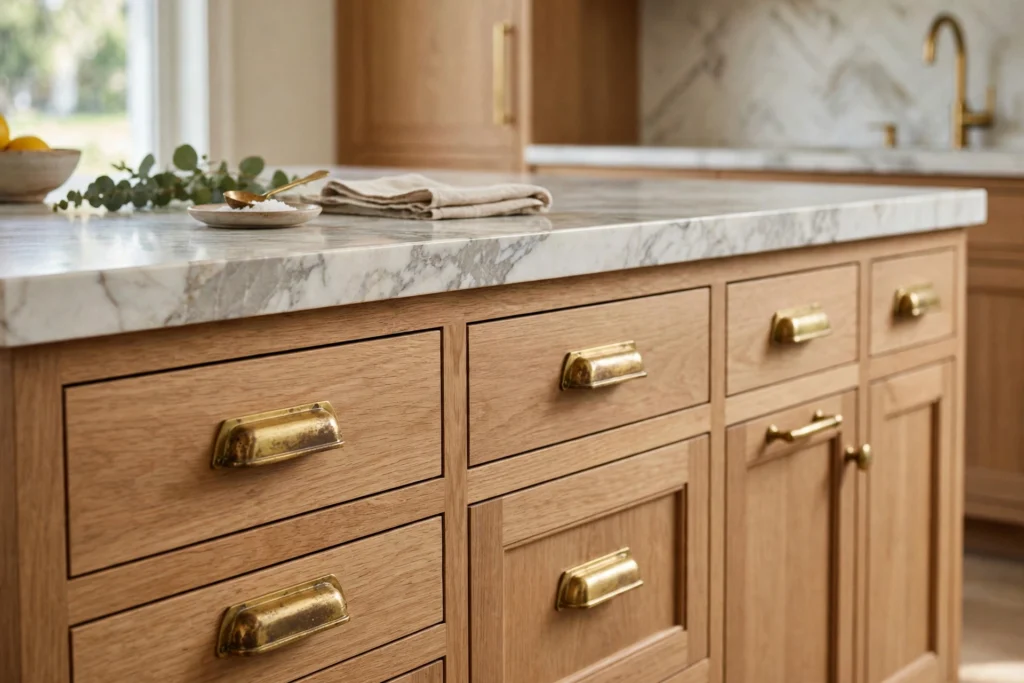
Knowing where to spend and where to save is the smartest hardware strategy. Splurge on the pieces you touch constantly — wide drawer pulls, the knobs on the trash pull-out, the handles on daily-use uppers — because quality mechanisms and solid construction pay off in daily feel and longevity. Splurge too on statement pieces: the oversized pulls on a kitchen island or a row of unlacquered brass knobs on glass-front uppers deserve investment because they are focal points. Save on the hardware nobody touches or notices: the knobs inside a pantry, pulls on rarely opened upper cabinets, and any piece hidden behind open shelving styling. A mixed budget approach — premium pulls on the island and drawers, affordable knobs elsewhere — delivers 90 percent of the luxury look for a fraction of the cost. And remember that even the finest hardware looks wrong at the wrong scale, so finalize your sizing before you finalize your spending.
Keep Exploring
New hardware works hardest when the rest of the kitchen supports it — the cabinet color, the lighting, the surfaces around it. Once your pulls and knobs are in place, step back and look at the bigger picture: the right supporting details make fresh hardware look like part of a full renovation. For the next layer of impact, these statement backsplash ideas show how a bold backsplash can turn updated cabinets into a true showpiece kitchen.