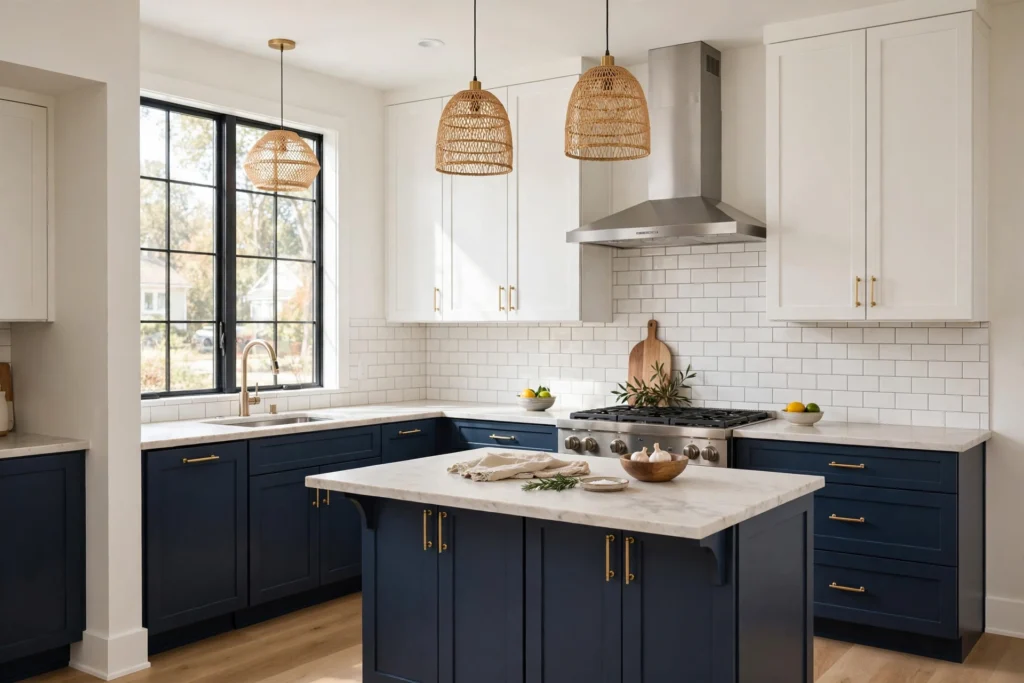

Two-tone kitchen cabinets are the easiest way to make a kitchen look custom-designed: one color grounds the room while another lifts it, creating depth that all-white or all-wood kitchens simply cannot match. These two tone kitchen cabinets ideas cover classic pairings, bold island colors, and subtle tone-on-tone looks — plus the pairing rules that keep every combination feeling intentional.
The most reliable formula is dark below, light above: deeper tones on base cabinets anchor the room, while lighter uppers keep it airy. Kitchen ideas with blue cabinets are a great companion read before you commit to a two-tone scheme.
1. Pair White Uppers With Navy Lowers
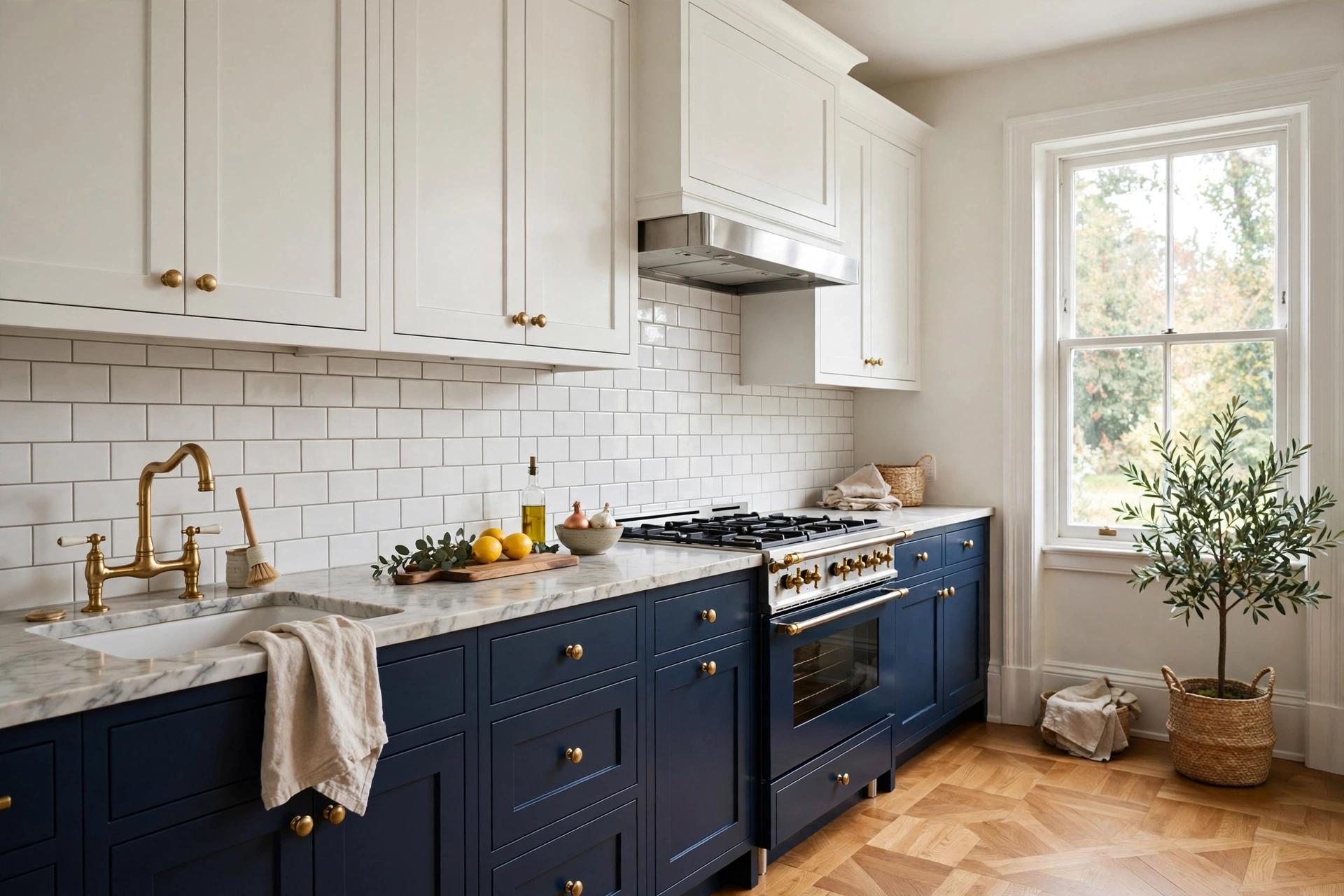
White upper cabinets and navy blue base cabinets are the undisputed classic of two-tone kitchens — crisp, timeless, and endlessly adaptable. The navy grounds the room like a great pair of jeans, while white uppers bounce light and keep small kitchens feeling open. Add brushed brass hardware and a white or marble-look countertop to complete the coastal-meets-traditional look. This pairing works in every kitchen style from farmhouse to transitional, which is why designers return to it again and again.
2. Make the Island the Only Color
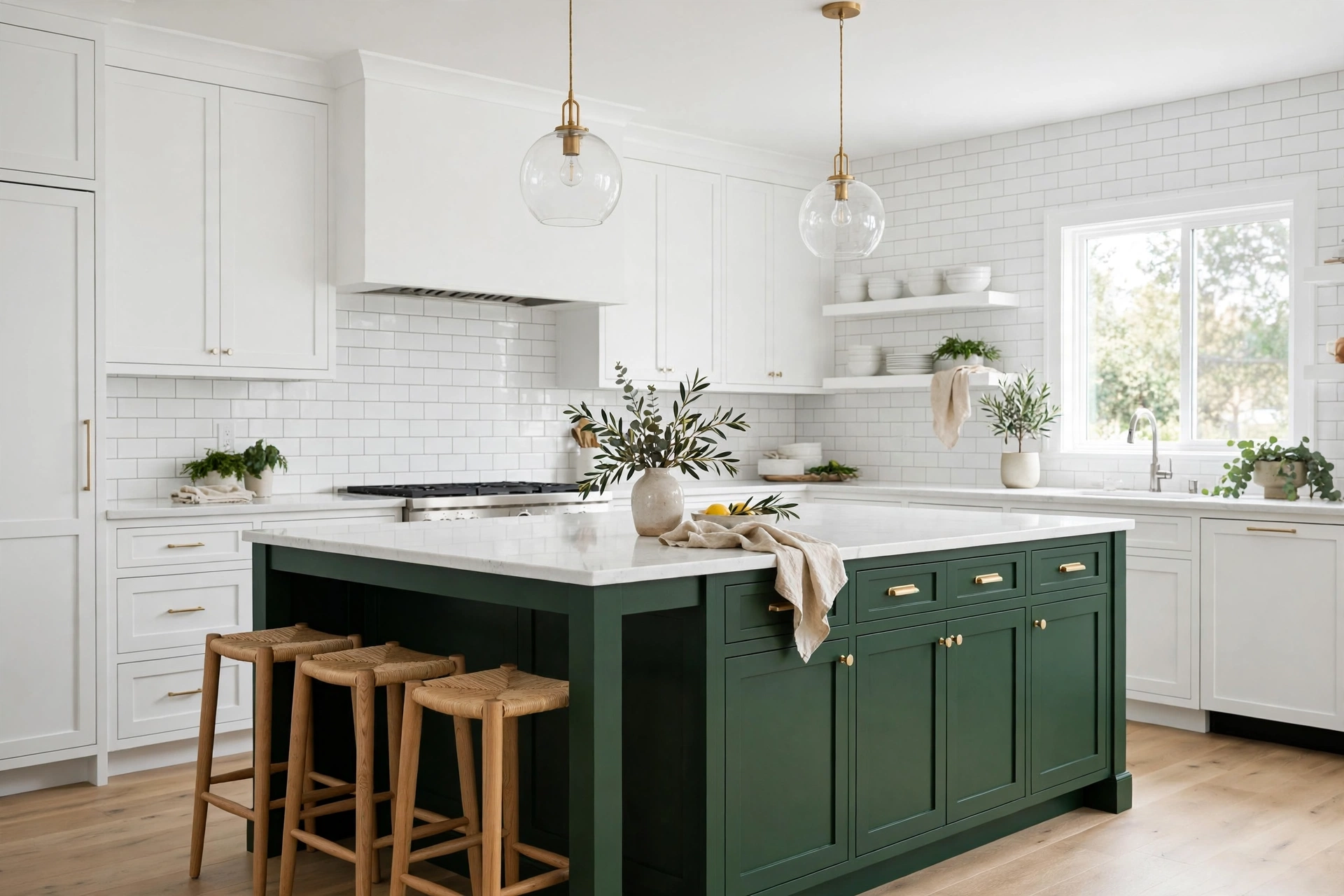
Not ready to commit to two-tone everywhere? Paint just the island a bold color — deep green, navy, black, or even terracotta — and keep every perimeter cabinet white or wood. The island becomes the kitchen’s exclamation point without overwhelming the room, and repainting one island later is a weekend project if your taste changes. This is the lowest-risk entry into two-tone design and the easiest to reverse. Choose a color with enough saturation to read clearly against the neutrals around it.
3. Mix Natural Wood With White Paint
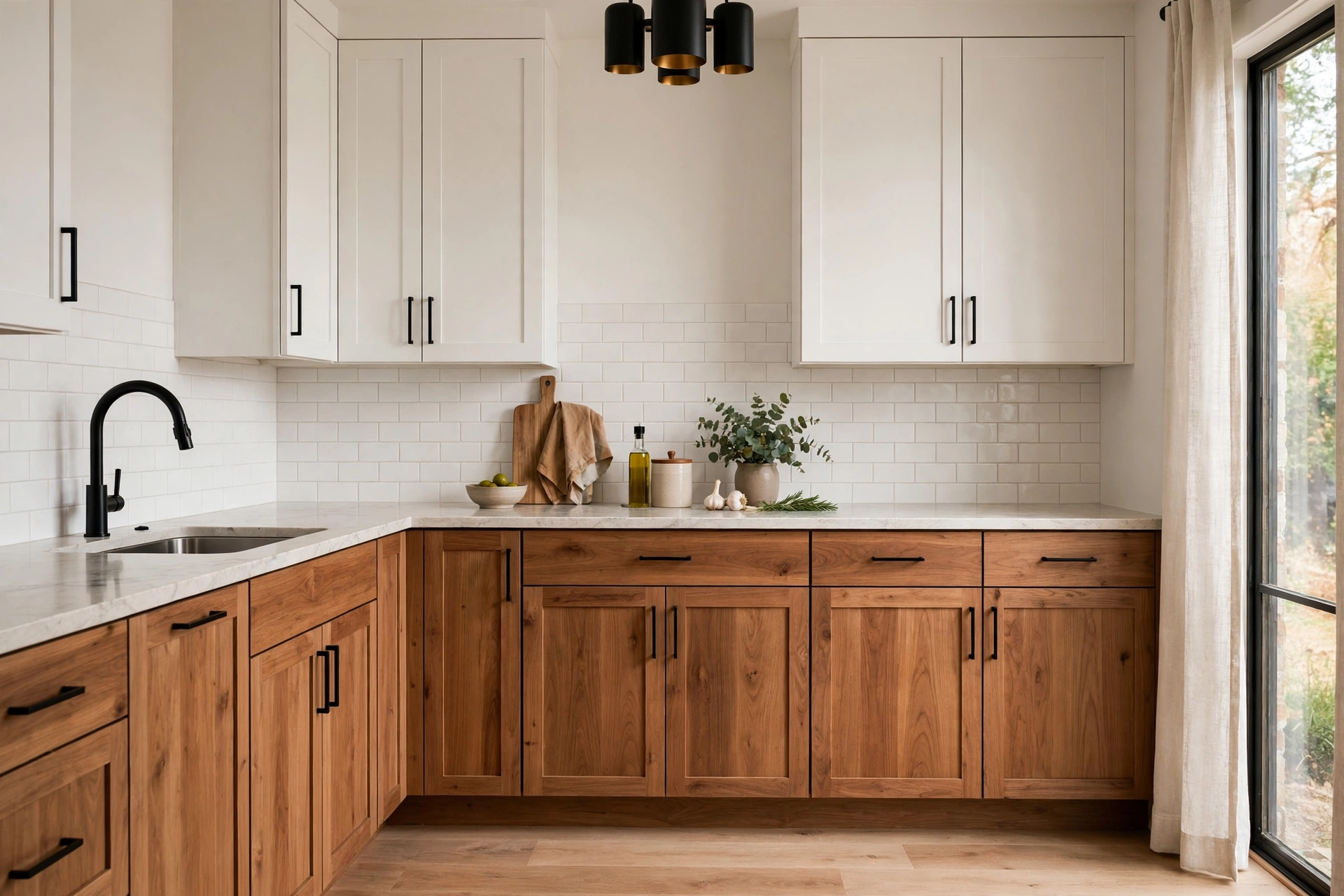
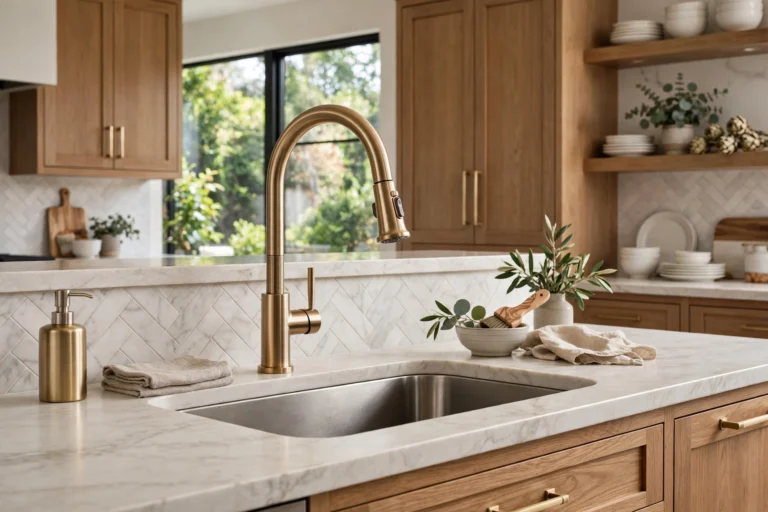
Warm wood lower cabinets paired with white uppers deliver two-tone contrast through texture as well as color. The wood — white oak, walnut, or warm pine — adds organic richness that painted cabinets cannot, while white uppers keep the look fresh and current. This combination suits Scandinavian, Japandi, and modern organic kitchens beautifully. Finish the wood in a matte sealant that shows the grain, and echo it in open shelves or a butcher-block island top for a cohesive, layered result.
4. Ground the Room With a Black Island
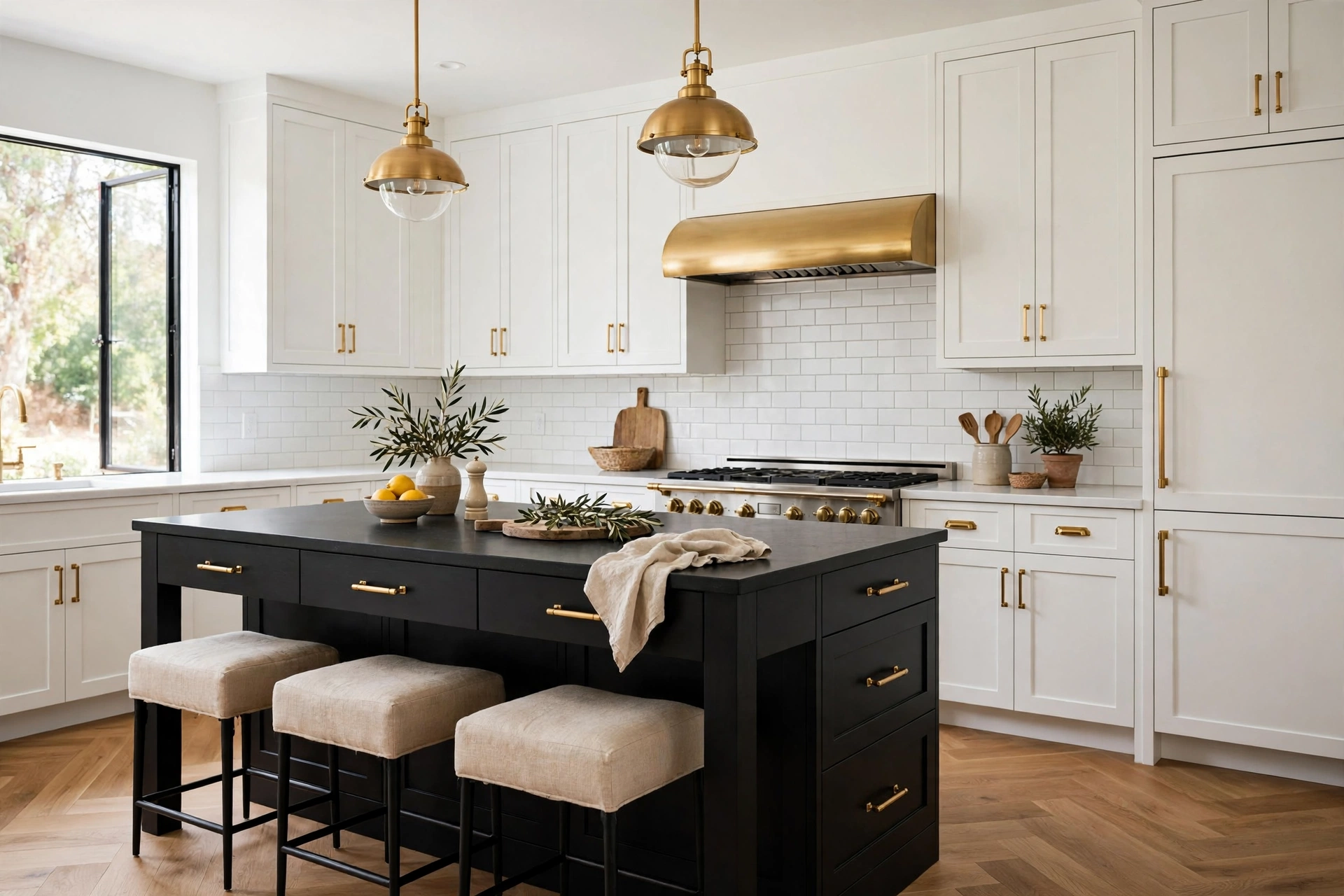
A black island surrounded by white perimeter cabinets is drama done right: the dark mass anchors the room’s center while white cabinetry keeps the walls light. Black reads as neutral, so it pairs with any countertop — marble-look quartz for classic elegance, butcher block for warmth, concrete for industrial edge. Keep the island’s hardware in brass or matte black to match, and add two or three pendants above to spotlight your statement piece. In open plans, a black island also helps the kitchen hold its own against the living area.
5. Try Gray Uppers With Deep Green Lowers
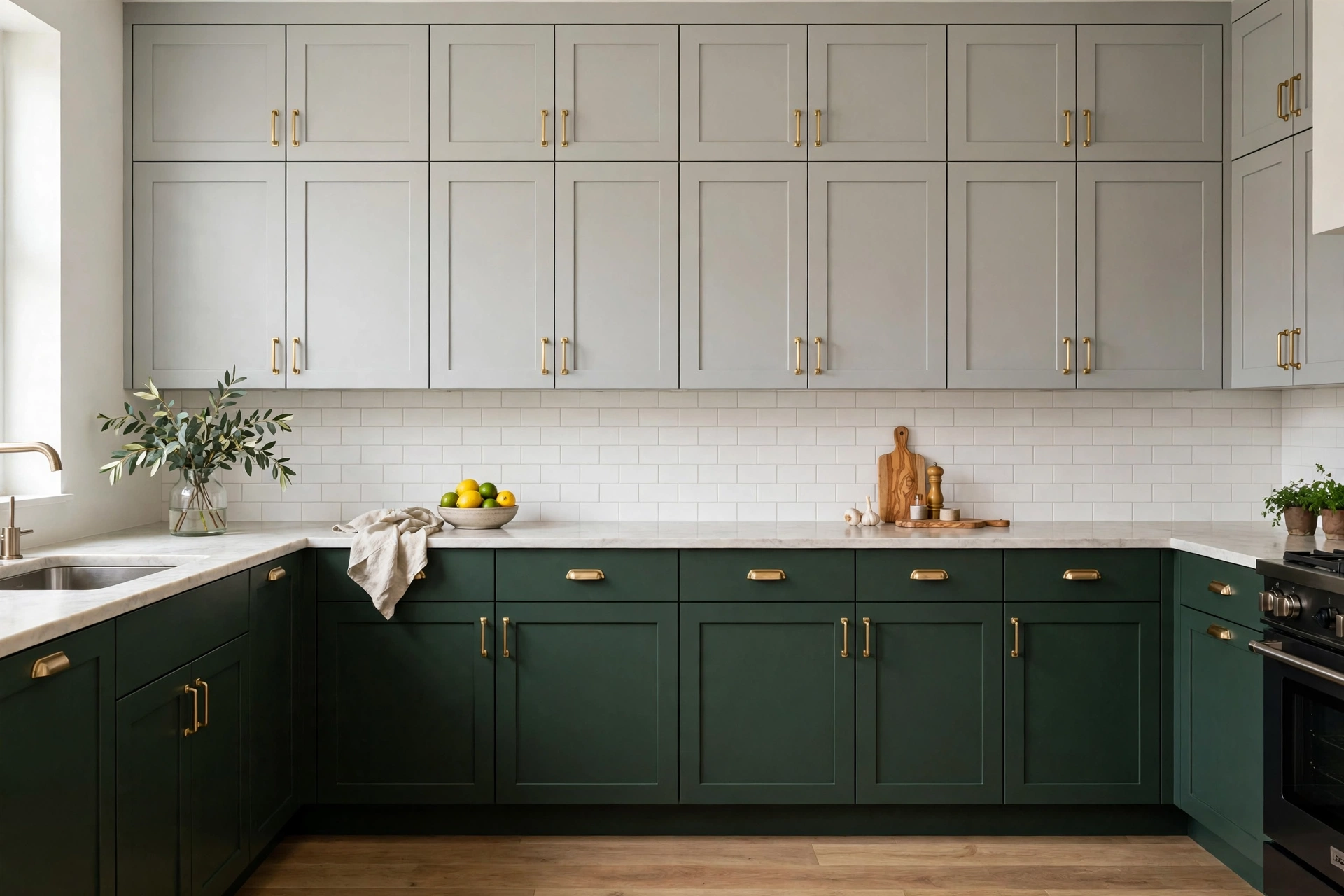
Soft warm gray uppers over deep forest or sage green base cabinets create a sophisticated, nature-inspired two-tone scheme. The gray keeps things neutral and light-reflective up high, while the green adds the depth and personality that all-gray kitchens lack. This pairing loves brass hardware, marble-look counters, and plenty of natural light. It suits traditional, transitional, and English-country kitchens especially well. If full green lowers feel bold, try the green on the island only and keep all perimeter cabinets gray.
6. Break It Up With Open Shelving
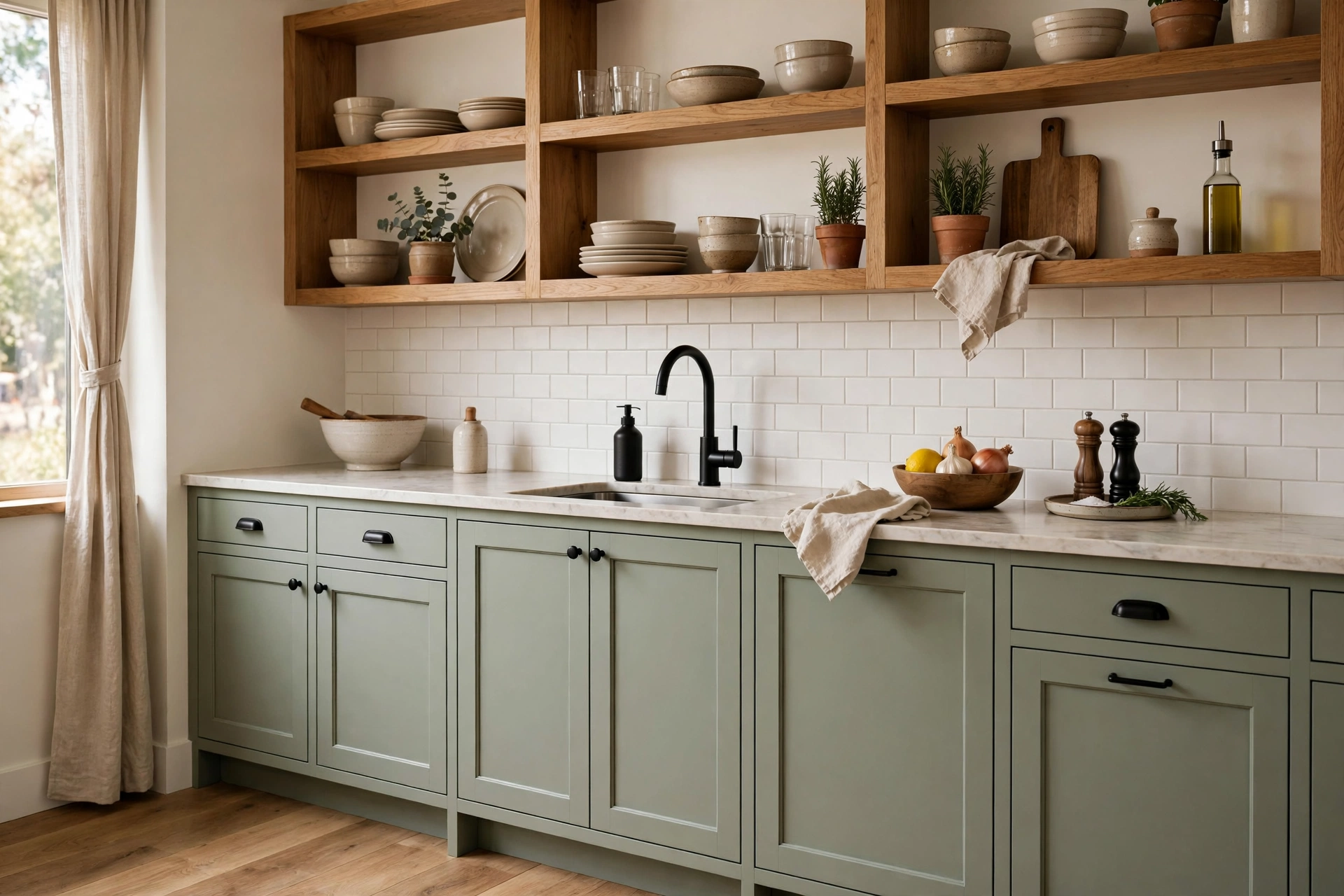
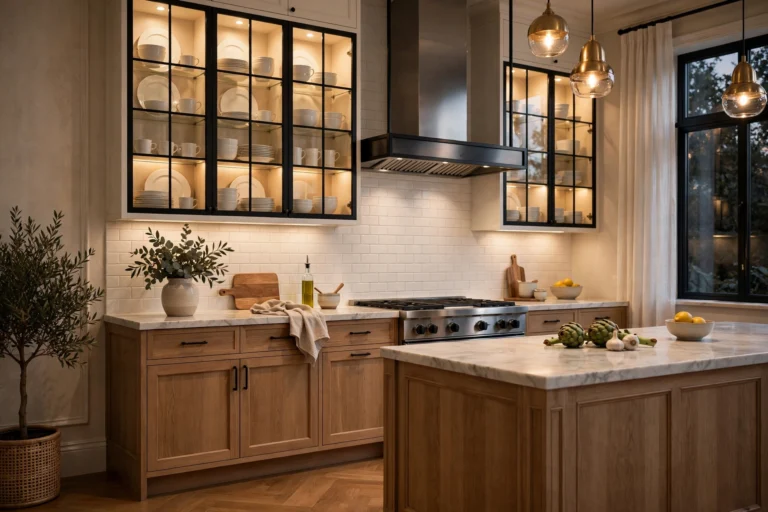
Replace some upper cabinets with open wood shelving and you get a de facto two-tone kitchen: painted lowers, natural wood uppers (or rather, no uppers at all). The open shelves lighten the room visually, give you display space for beautiful dishes, and cost less than cabinetry. This works best on one wall or one section — keep closed uppers elsewhere for the storage you actually need. Style the shelves with restraint: everyday dishes, a few plants, matching canisters. The wood-against-paint contrast reads as two-tone without a second paint color.
7. Play With Soft Pastel Pairings
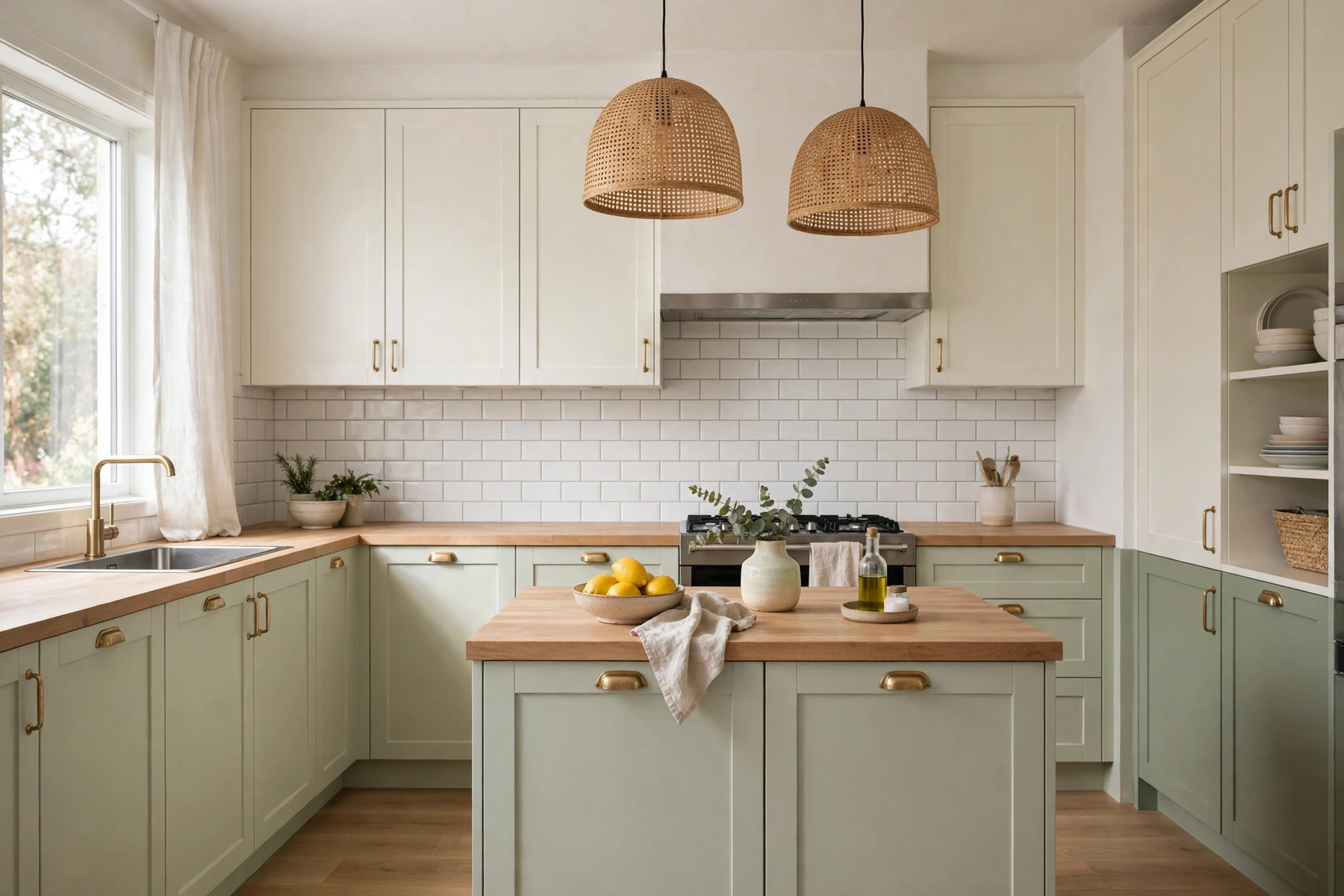
Two-tone does not have to mean dark and dramatic. Pair soft pastels — pale sage with creamy white, powder blue with warm gray, blush with natural wood — for a gentle, romantic take on contrast. Pastel two-tone suits cottage, vintage, and French country kitchens, where the softness feels right at home. Keep countertops light and hardware delicate (polished nickel or small brass knobs) so nothing overpowers the subtle palette. This approach also photographs beautifully in kitchens with limited natural light, where pastels glow.
8. Let a Bold Island Carry a Neutral Kitchen
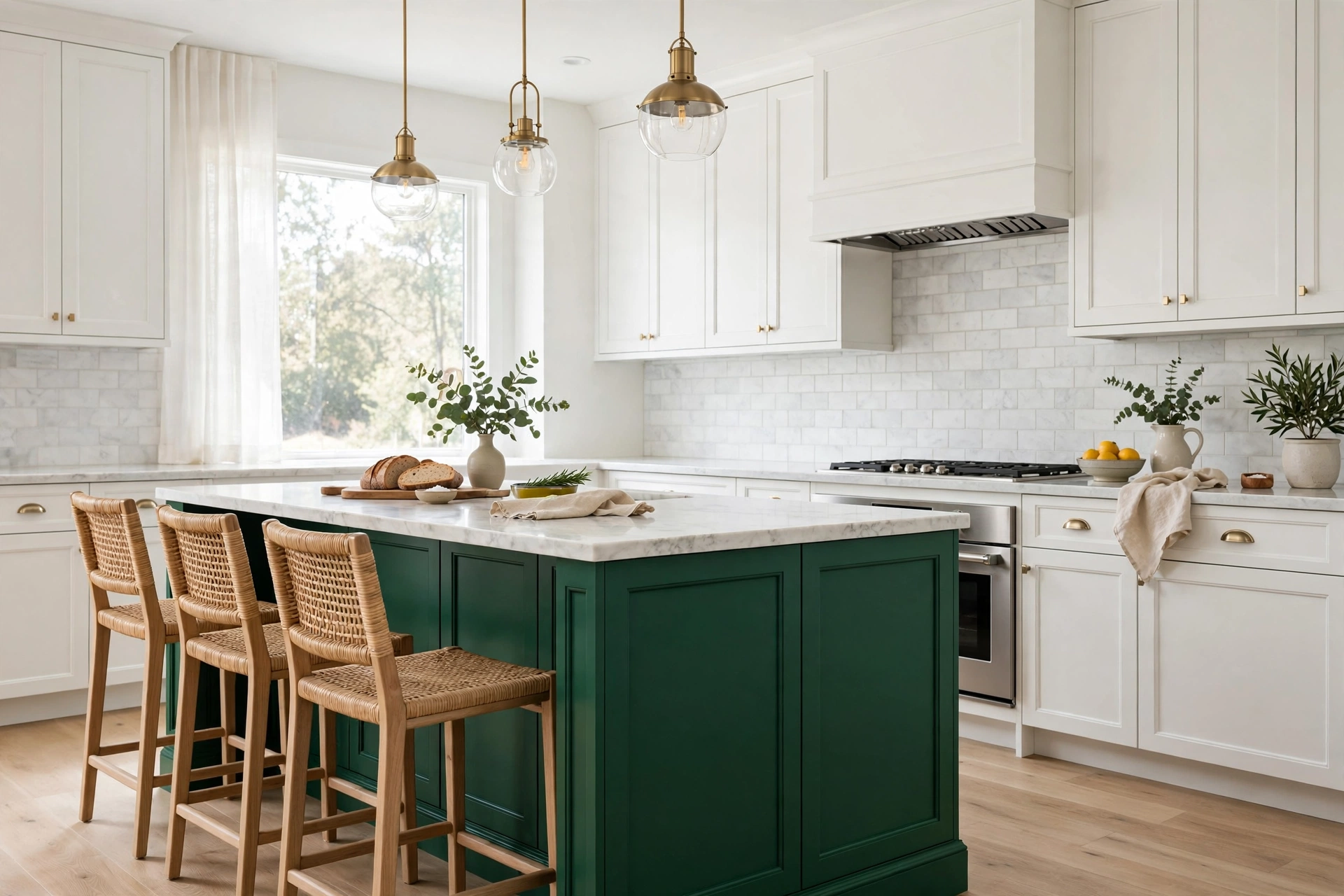
Take idea 2 further: in an otherwise completely neutral kitchen — white cabinets, gray counters, stainless appliances — paint the island an unapologetically bold color like emerald, cobalt, or burnt orange. The contrast is thrilling precisely because everything else is quiet. This is the two-tone equivalent of a red lip with a neutral outfit. Keep the island’s countertop simple (butcher block or honed black) so the color stays the star, and repeat the island color in small doses — bar stools, a rug, artwork — to make it feel woven in.
9. Split the Room: One Color Per Wall
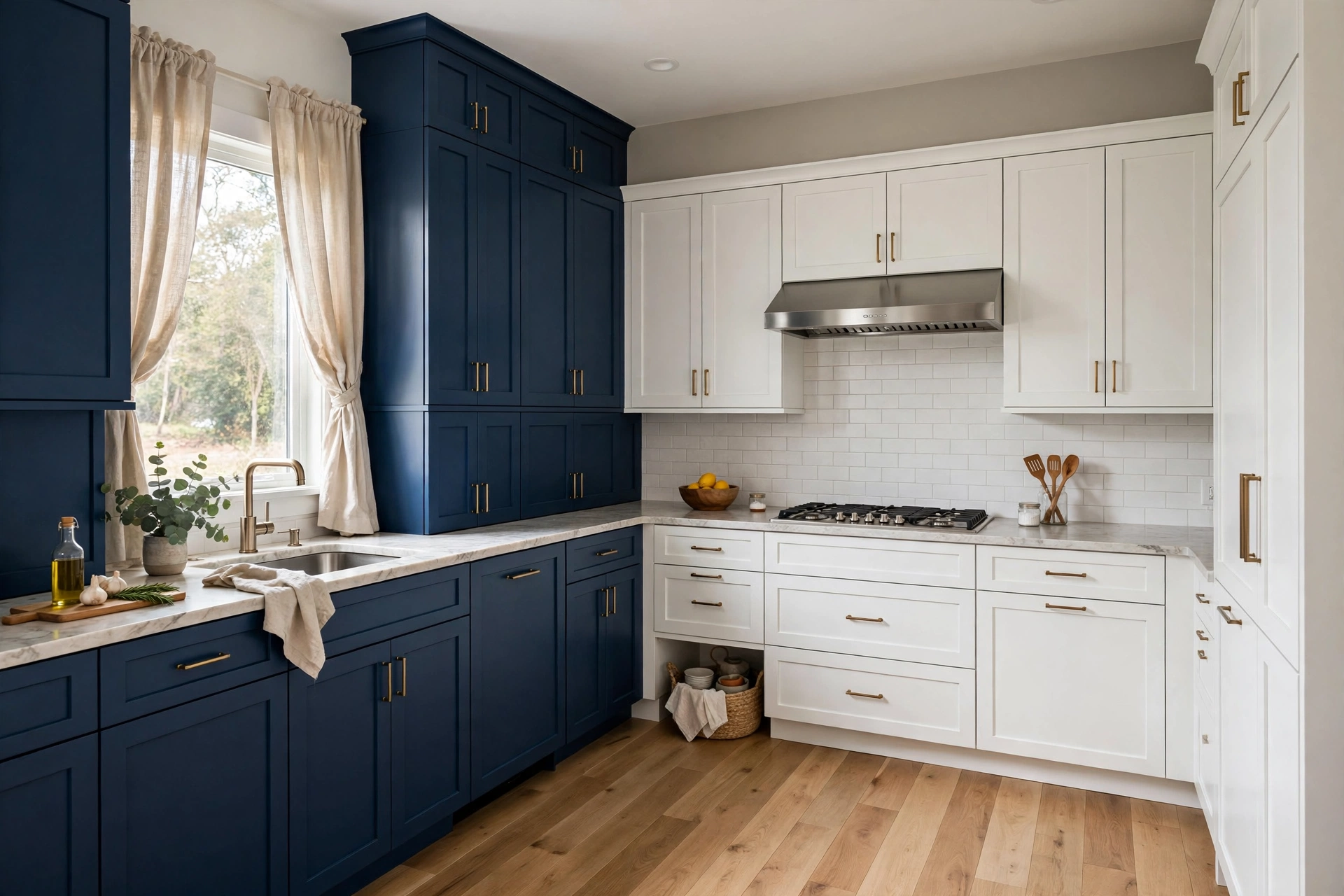
In L-shaped or galley kitchens, painting each wall’s cabinetry a different color creates striking two-tone definition. Try deep blue on one run and warm white on the other, or sage on the range wall and cream everywhere else. The corner where colors meet becomes a natural focal point — consider a statement range hood or open shelving there to celebrate it. Keep floors, counters, and backsplash neutral so the two colors have room to breathe. This bold move works best in kitchens with clear sightlines where both colors are visible at once.
10. Surprise With Painted Cabinet Interiors
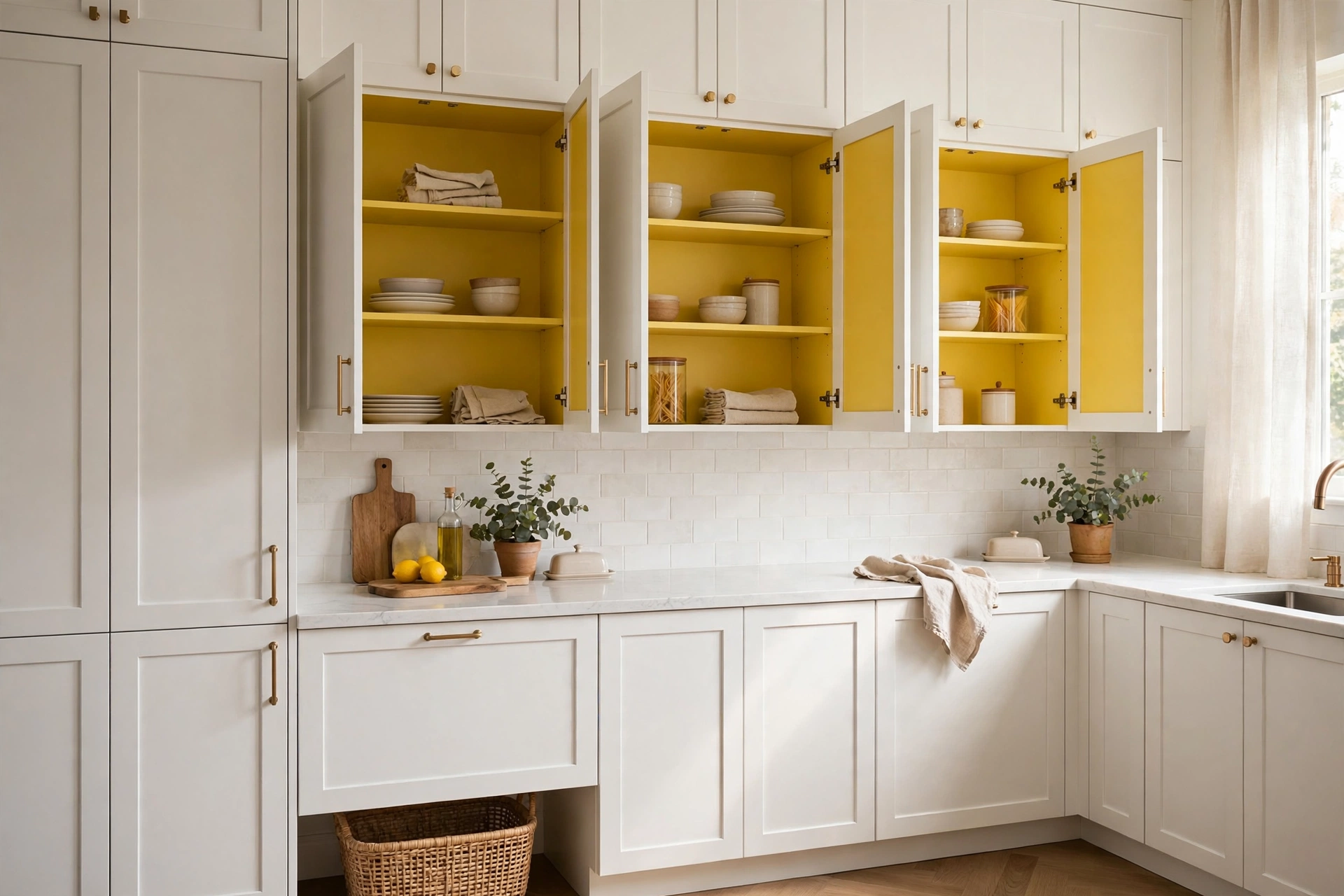
Here is the subtlest of these two tone kitchen cabinets ideas: keep every cabinet exterior white or neutral, but paint the interiors a joyful color — sunny yellow, teal, coral. Every time you open a door, you get a delightful pop of color that guests never expect. This is perfect for commitment-phobes: the kitchen reads classic and neutral 95% of the time. Use it on glass-front cabinets for constant visibility, or on all base cabinets for a private daily delight. It is also a fantastic weekend DIY since interiors need less perfect prep than exteriors.
11. Warm Up With Terracotta and Cream
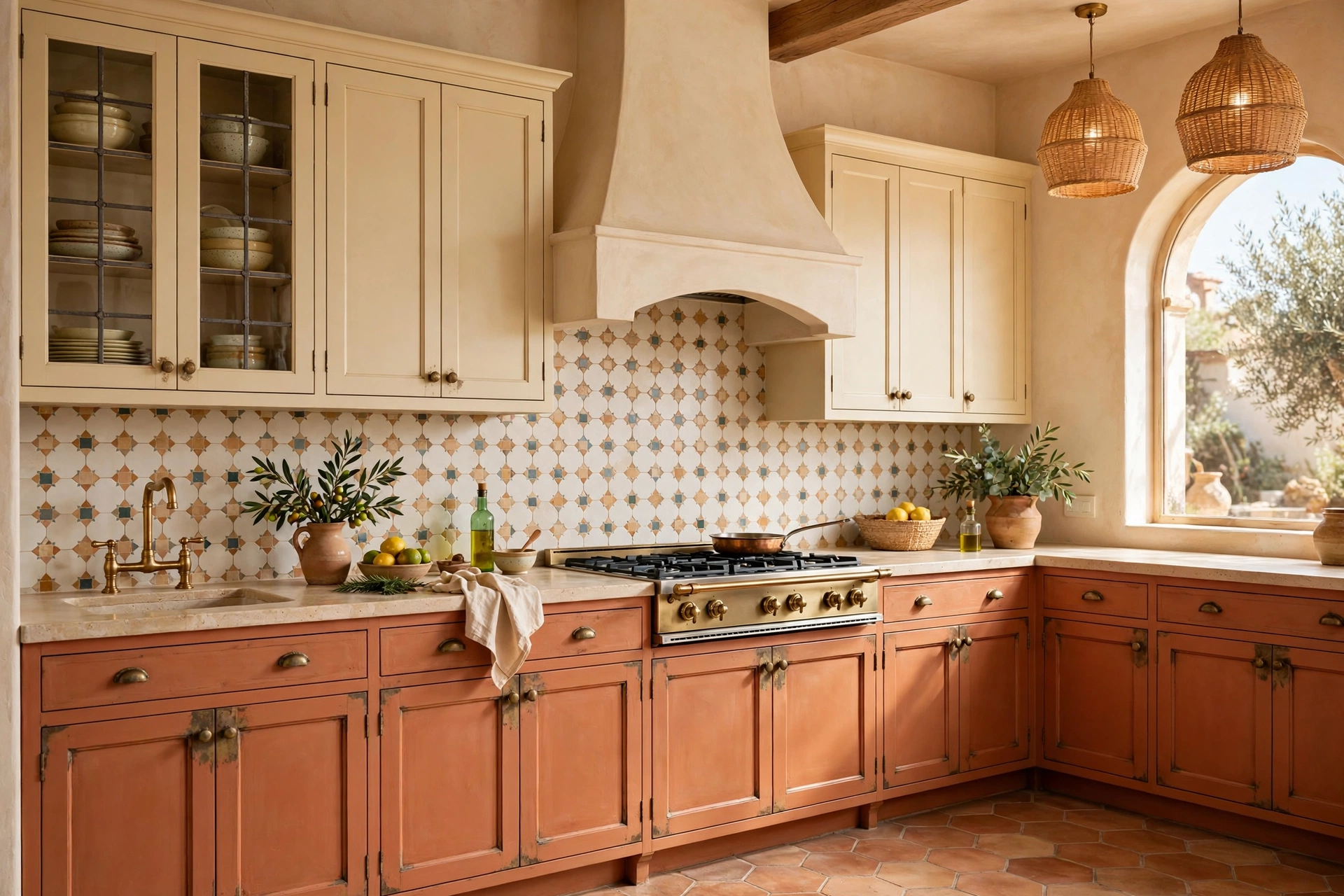
Terracotta lower cabinets with creamy white uppers bring Mediterranean and Southwestern warmth to the kitchen. Terracotta’s earthy orange-brown feels both rustic and current, pairing beautifully with handmade-look tile, wood beams, and black hardware. Keep the cream warm-toned (not blue-white) so the two colors harmonize. This combination loves natural materials — stone counters, woven pendants, clay pottery on open shelves. It is a distinctive choice that stands apart from the navy-and-white crowd while remaining completely livable.
12. Pair Dusty Blue With Butcher Block
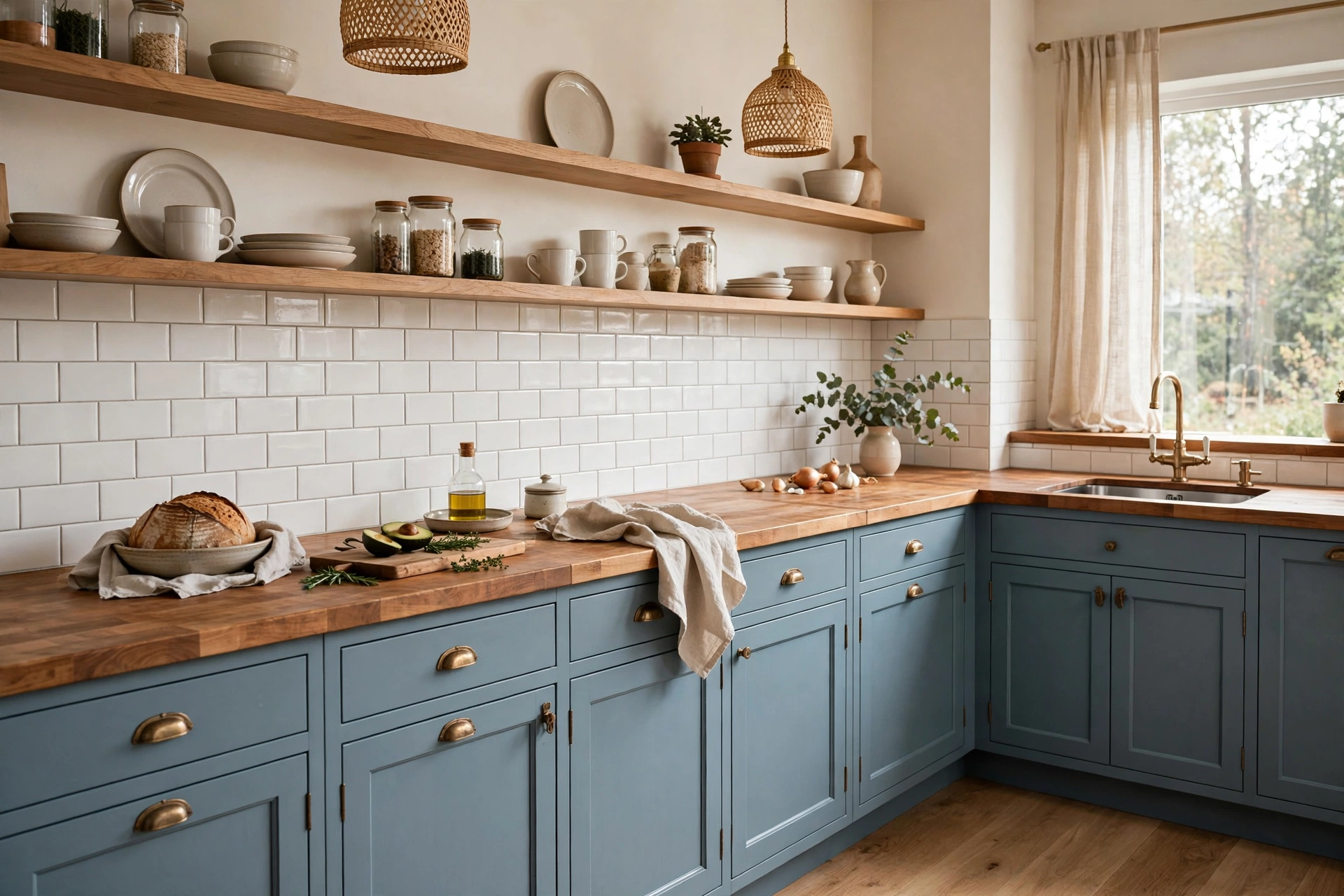
Dusty blue base cabinets, white uppers, and warm butcher-block counters form a trio that feels collected over time rather than decorated all at once. The blue is soft enough for small kitchens yet colorful enough to banish blandness; the wood counters add the warmth that keeps blue from feeling cold. Add oil-rubbed bronze or matte black hardware for a craftsman touch. This palette suits farmhouse, cottage, and transitional kitchens and ages gracefully — dusty blue never screams trendy, so it will not date.
13. Paint the Pantry Wall a Second Color
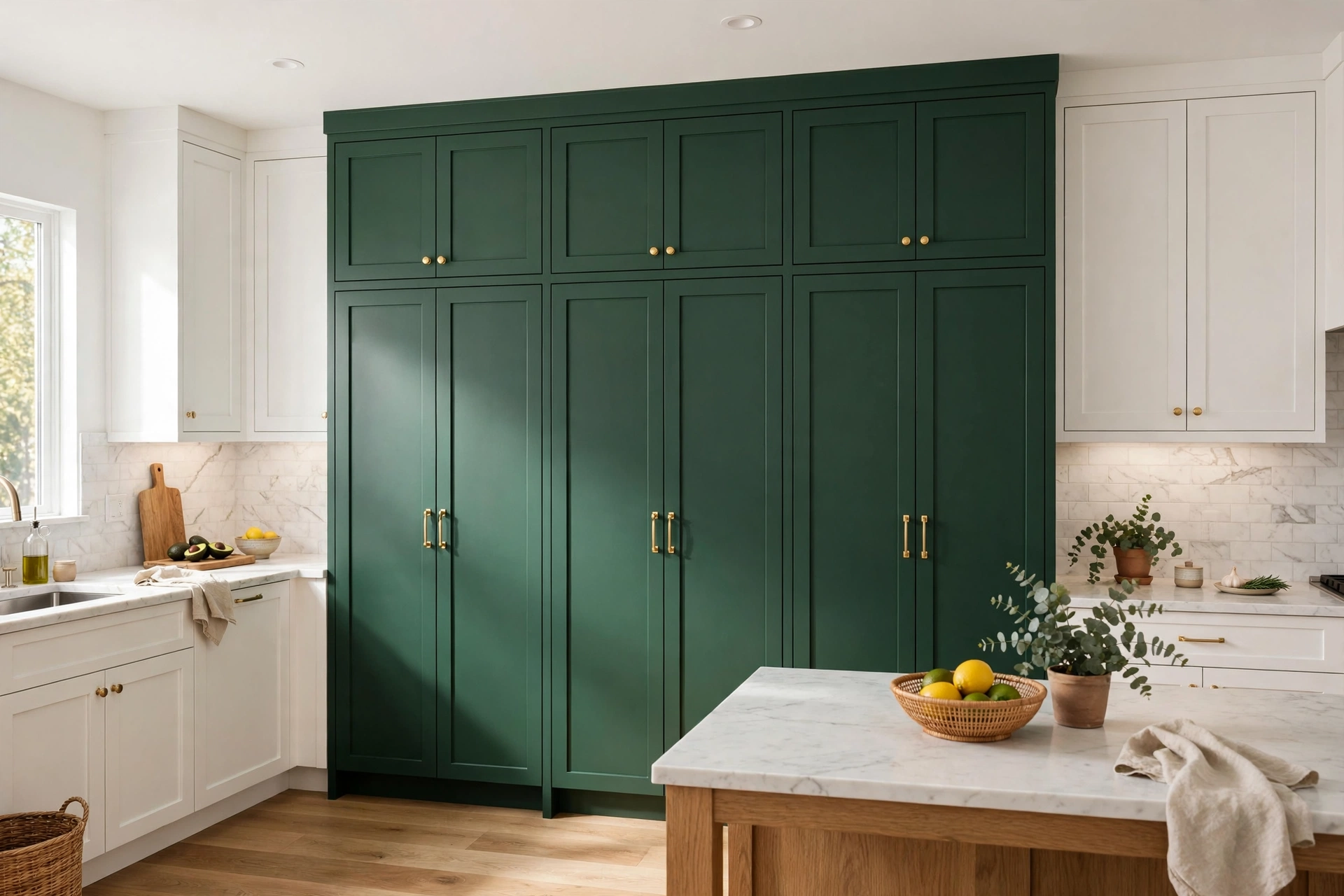
If your kitchen has a tall pantry wall or a bank of floor-to-ceiling cabinets, paint just that wall a contrasting color — deep green, charcoal, or navy — while keeping all other cabinetry white. The pantry wall becomes an architectural feature, like an accent wall in cabinet form. This is especially effective in open-plan kitchens, where the colored pantry wall reads as furniture from the living area. Keep the pantry hardware consistent with the rest of the kitchen so the two zones feel related, and style the top with nothing — let the color speak.
14. Go Tone-on-Tone With Two Shades of One Color
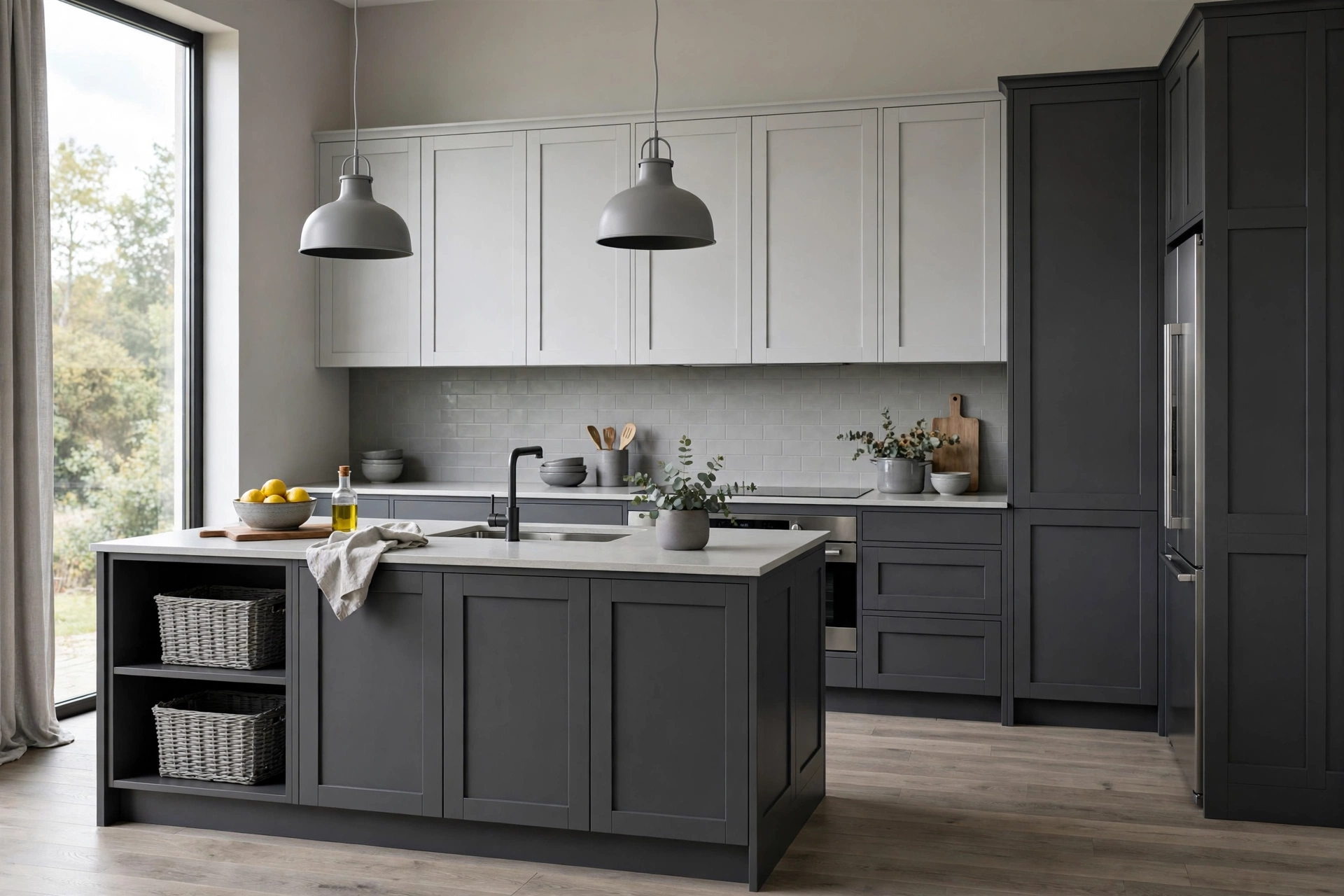
Two-tone does not require two different colors: pair two shades of the same hue — light gray uppers with charcoal lowers, pale sage with deep forest — for contrast with built-in harmony. Tone-on-tone schemes feel sophisticated and calm, and they eliminate the risk of clashing undertones that trips up bolder pairings. This approach suits modern and minimalist kitchens where the goal is depth without busyness. Vary the sheen slightly too (matte lowers, satin uppers) for an extra layer of subtle difference.
15. Make Two-Tone Work in a Small Kitchen
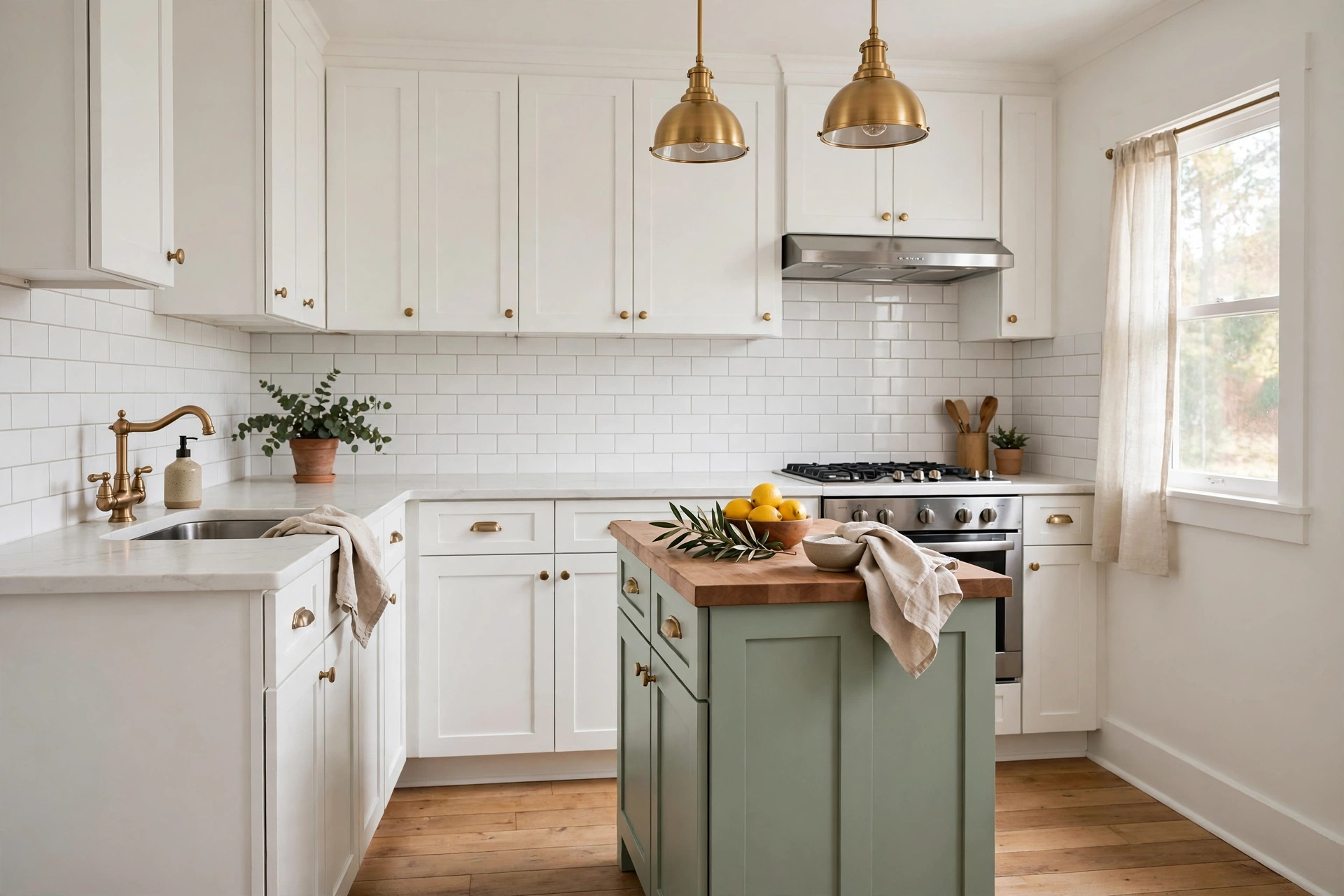
Small kitchens can absolutely go two-tone — just keep the darker color low and contained. Paint only the base cabinets (or just the island) in your deeper tone and keep uppers, walls, and ceiling bright white to preserve the sense of space. Avoid splitting colors at eye level, which can chop a small room in half visually. A sage green island in an all-white galley, or navy lowers under white uppers in a compact L-shape, adds all the personality of two-tone without any of the visual weight. Sage green kitchen ideas — sage is the small kitchen’s best friend.
Frequently Asked Questions
Are two-tone kitchen cabinets still in style?
Yes — two-tone cabinets have moved from trend to established design classic. Designers continue to specify them because they add depth and custom character that single-color kitchens lack. The key to longevity is choosing timeless pairings (white with navy, wood with white, gray with green) rather than ultra-trendy combos, and keeping the darker tone grounded on lowers or the island.
Which cabinets should be the darker color?
Almost always the base cabinets or the island. Dark colors visually recede and ground a room, so they belong low; light colors reflect light and belong high, on uppers and walls. The one exception is a tall pantry wall treated as an accent feature, where a dark color works beautifully. Never put the dark color on uppers with light lowers — it makes the room feel top-heavy and smaller.
Does two-tone work in small kitchens?
Absolutely, with one rule: keep the dark tone low and limited. Dark base cabinets with white uppers, or a single colored island in an all-white kitchen, adds personality without shrinking the space. Avoid dark uppers, dark walls, and splitting colors at eye level in compact rooms. Light-reflective uppers and ceilings do the heavy lifting for spaciousness while the darker lowers add character.
How do I choose two cabinet colors that go together?
Start with one color you love, then choose its partner from the same undertone family (warm with warm, cool with cool). The safest pairings combine a neutral (white, cream, gray, wood) with one saturated color (navy, forest green, black). Test large swatches on the actual cabinets and view them in morning and evening light before committing. When in doubt, white plus one color never fails.
Can I just repaint my island for a two-tone look?
Yes — repainting only the island is the easiest, cheapest path to a two-tone kitchen and a perfect weekend project. Clean and degrease thoroughly, sand lightly, prime with a bonding primer, and apply two coats of cabinet-grade enamel paint in satin or semi-gloss. Remove doors and hardware for the neatest finish. If you love the result, you can extend the color to more cabinets later.
Keep Exploring
Two-tone cabinets succeed on one principle: contrast with intention. Pick your anchor color, keep it low, choose a partner from the same undertone family, and tie everything together with consistent hardware and counters. Follow that, and even the boldest pairing looks like it was always meant to be.
White kitchen ideas Spruce's two-tone cabinet gallery Their painted cabinet ideas for professional pairings.





[…] kitchen. Think of hardware as the finishing touch that pulls your whole design together, much like bold two-tone cabinet looks rely on the right accents to make the contrast […]