
Glass front cabinets are the happy medium every kitchen designer reaches for: all the airy, display-friendly charm of open shelving, none of the dust and grease that make open shelves a maintenance chore. Behind glass, your prettiest dishes, glassware, and ceramics become part of the room’s decor — a curated exhibition that changes the whole feel of the kitchen. These glass front kitchen cabinet ideas cover every glass type, frame style, and styling trick, so your cabinets show off the good stuff and hide the rest.
A quick orientation helps. A cupboard evolved from open display shelves into enclosed furniture, and glass-front cabinets are the modern return to that display instinct — enclosed enough to stay clean, open enough to show off. The golden rule of glass fronts: whatever is inside becomes decor, so only put glass on cabinets whose contents you are proud of. Everyday mismatched mugs and cereal boxes belong behind solid doors. Plan which cabinets go glass before you order, and style the interiors as carefully as the exteriors.
1. Choose Classic Clear Glass Uppers
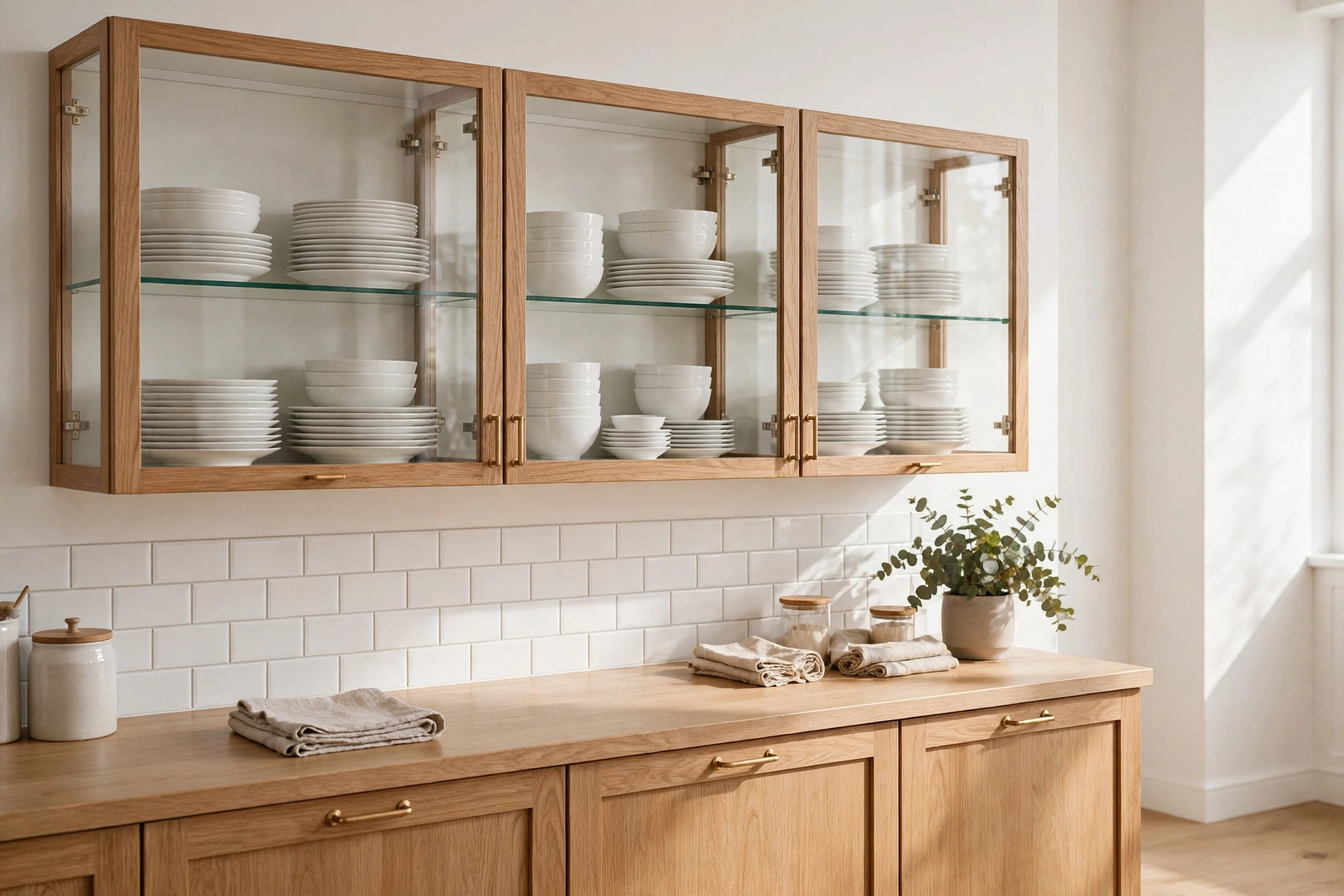
Clear glass on upper cabinets is the timeless choice. It makes a kitchen feel larger and lighter by breaking up long runs of solid doors, and it puts your everyday dishes on display where they are easy to grab. The catch is honesty: clear glass shows everything, so commit to keeping the interiors tidy. Stick to one or two colors of dishware — all white, or white plus one accent — for a calm, collected look. Clear glass suits every style from farmhouse to contemporary, which is why it remains the most popular glass choice decades after it first appeared.
2. Try Reeded Glass for Soft Privacy
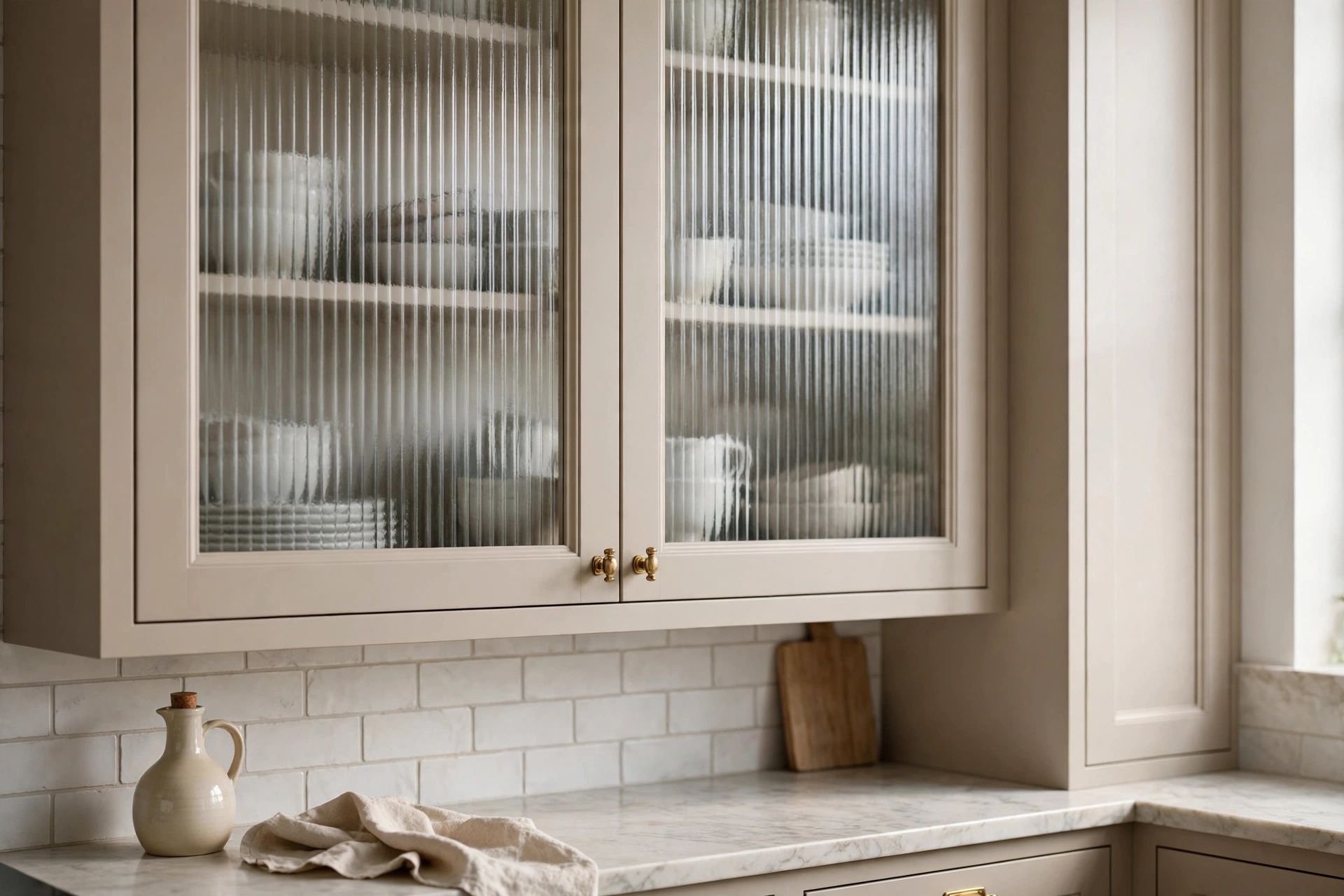
Reeded glass — with its vertical fluted texture — is the designer favorite of the moment, and for good reason. It lets light through and hints at what is inside while blurring the details, so slightly imperfect stacks still look intentional. The texture adds a crafted, furniture-like quality that flat glass cannot match, and it hides fingerprints far better than clear panes. Reeded glass suits transitional, Japandi, and modern traditional kitchens especially well. Pair it with slim brass or black frames for a tailored look, and keep the interior styling simple — the glass itself is already doing visual work.
3. Go Traditional with Mullion Grids
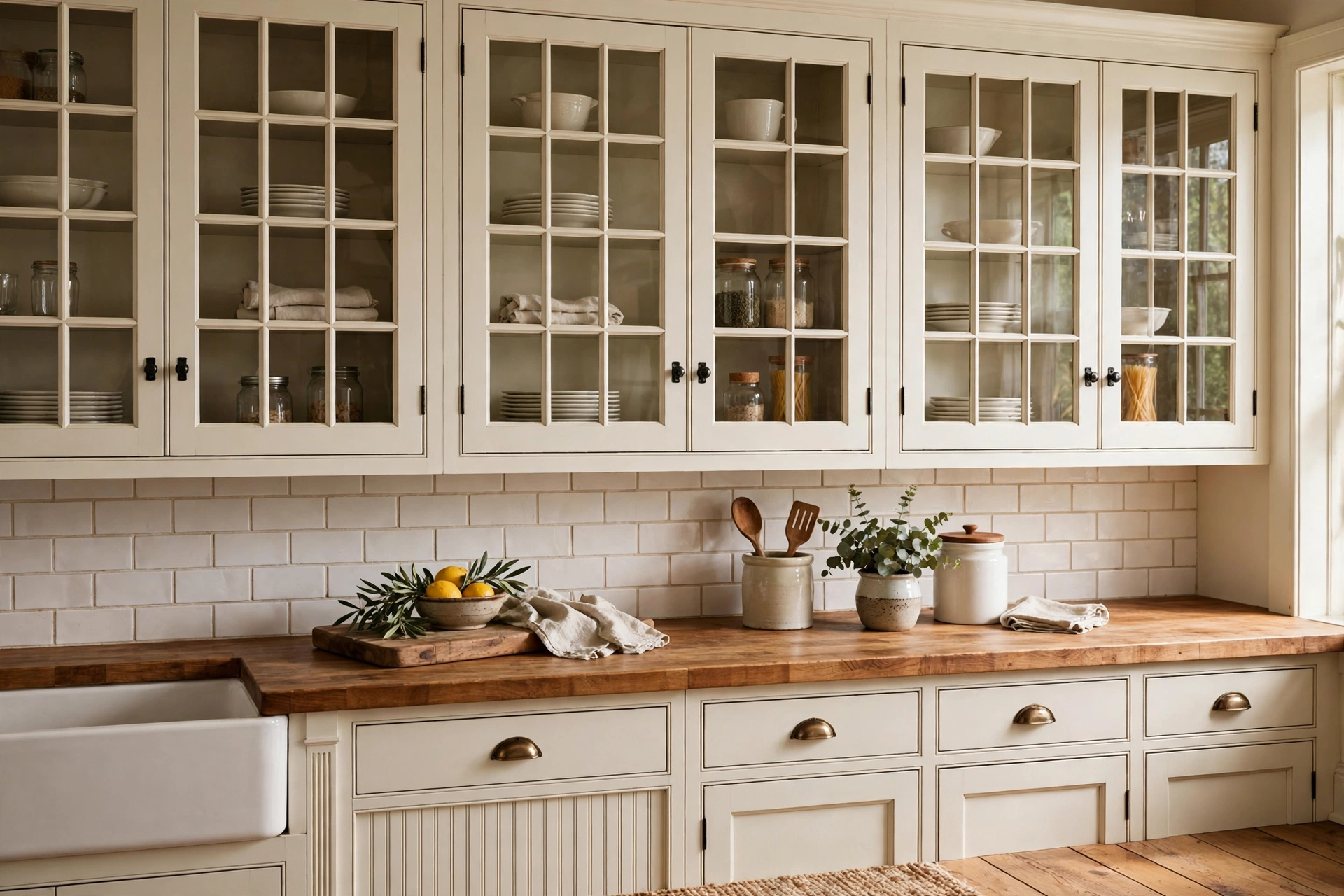
Mullions — the thin wood grids dividing a glass door into panes — bring instant traditional character. A mullion door reads like fine furniture, echoing classic hutches and china cabinets, and it breaks large glass expanses into a pleasing rhythm. This style anchors traditional, farmhouse, and cottage kitchens beautifully. The trade-off is cleaning: every mullion edge collects dust, so budget a few extra minutes when you wipe down. Keep the grid pattern simple — too many tiny panes looks fussy — and let the dishes inside be the stars.
4. Light the Interiors for Drama
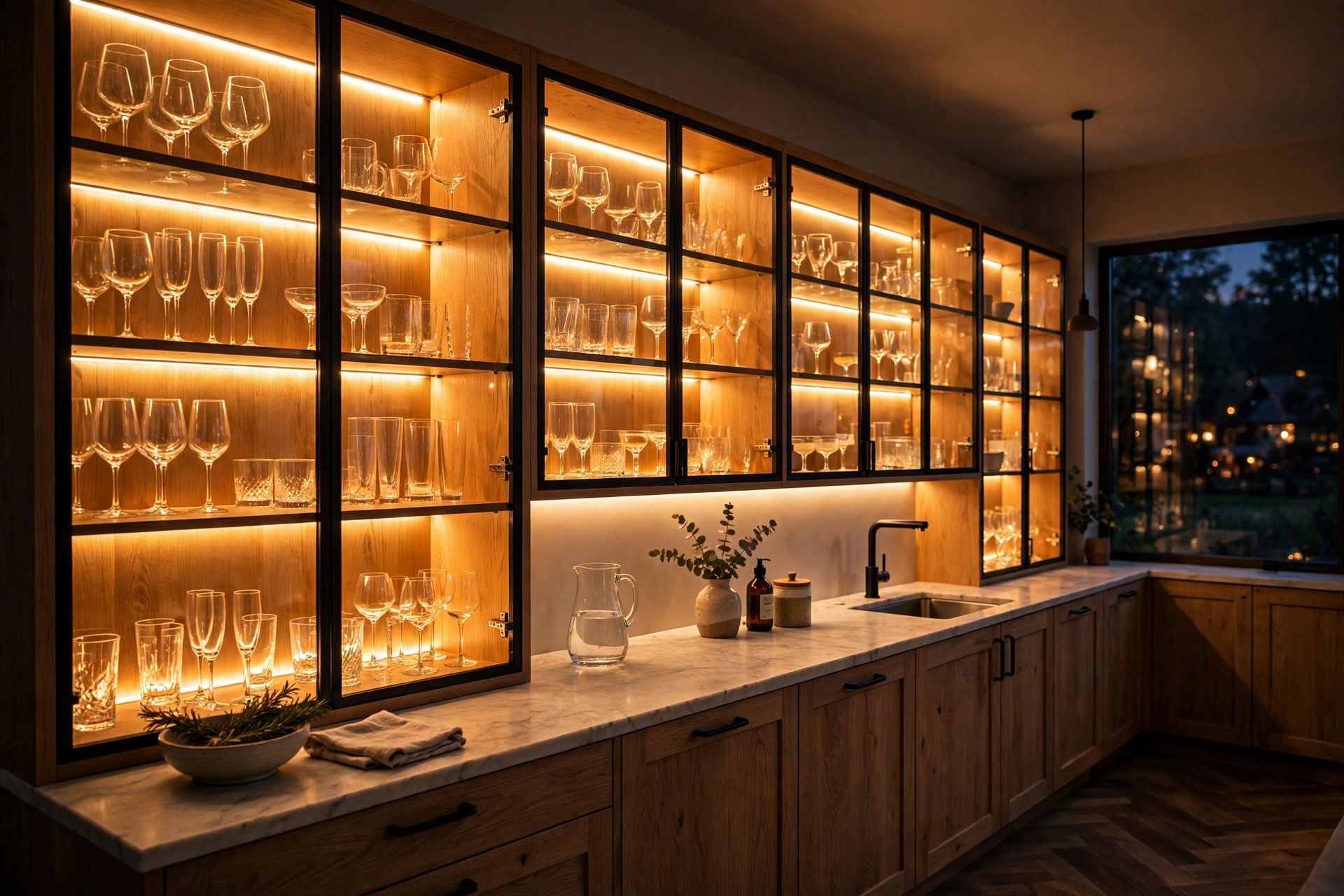
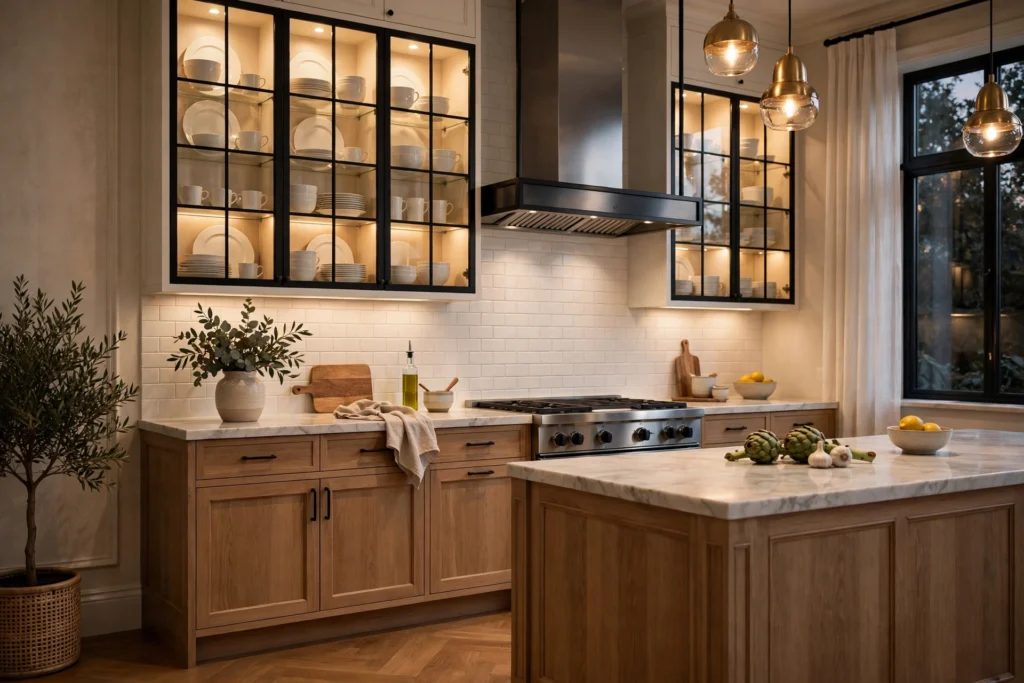
Interior cabinet lighting transforms glass fronts from nice to breathtaking. A warm LED strip or puck light at the top of each glass cabinet makes dishes glow like a museum display and adds a layer of ambient light the whole kitchen benefits from after dark. Hardwired lights with a wall switch are the gold standard; battery puck lights work for retrofits but need regular battery swaps. Choose 2700K warm white — cool white makes dishes look clinical. Lighting also forgives styling sins: even simple white dishes look deliberate under a warm glow.
5. Limit Glass to One Feature Wall
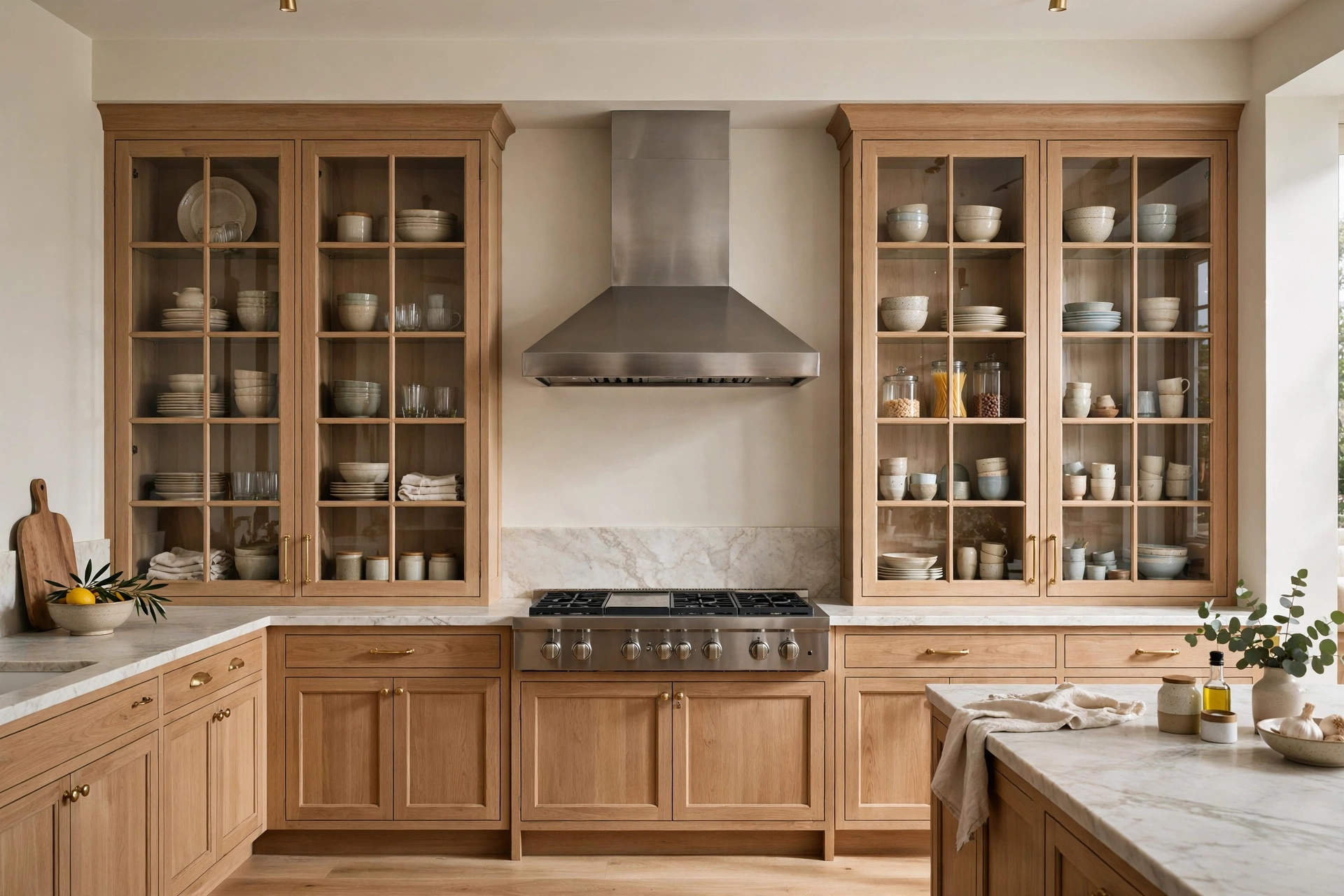
You do not need glass everywhere. One wall or one bank of glass-front uppers — flanking the range hood, framing a window, or lining the coffee station — gives you the display moment without the maintenance burden of a whole glass kitchen. This restraint also makes the glass cabinets feel special rather than standard. The remaining solid cabinets hold the everyday clutter invisibly. Designers call this the jewelry approach: a little glass in the right place outshines glass everywhere. It also keeps the budget in check, since glass doors cost more than solid ones.
6. Style with a Limited Color Palette
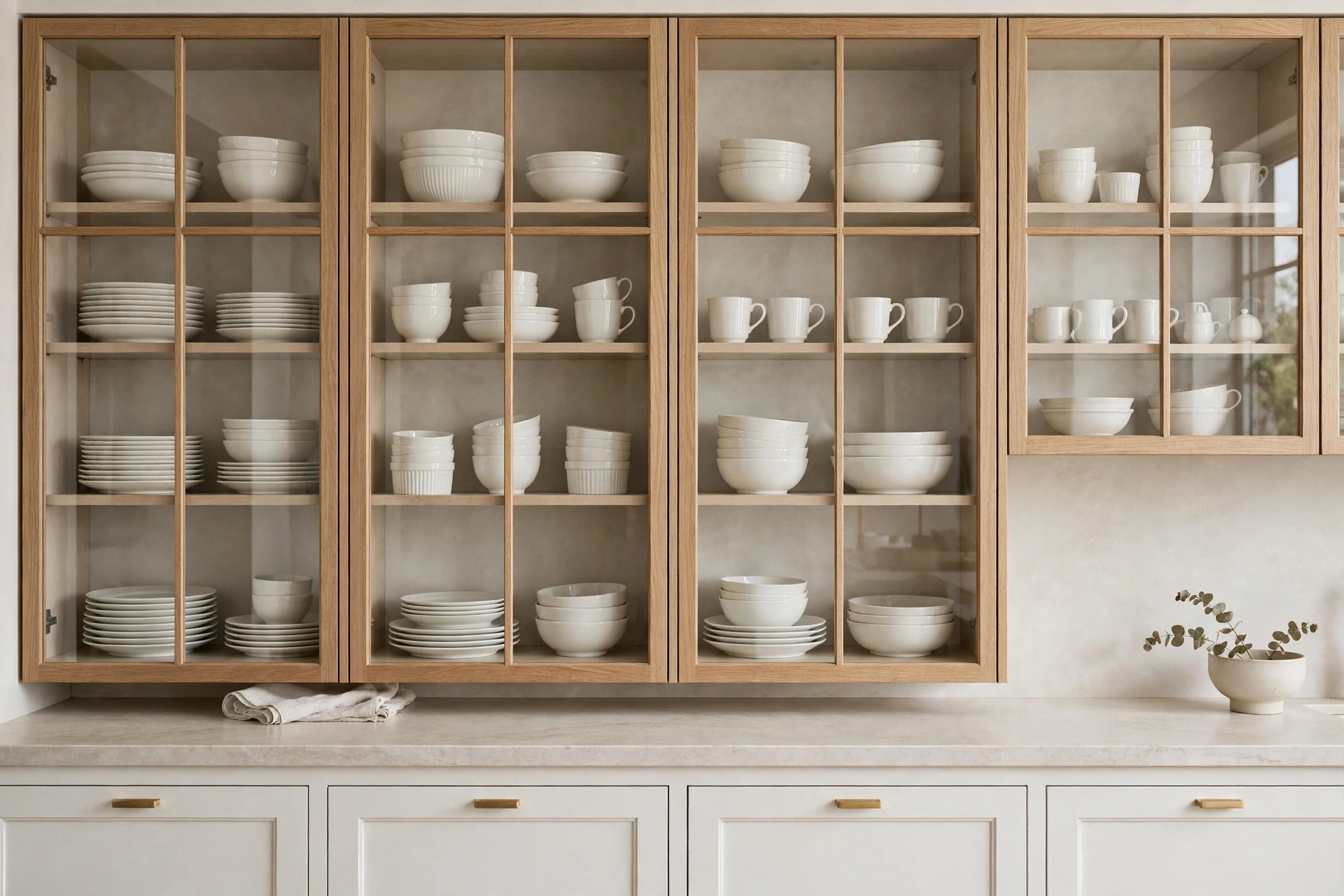
The secret to beautiful glass cabinets is editing what goes inside. Choose a tight color story — all white stoneware, white plus natural wood, or a single accent color — and the cabinet reads as curated. Mixed, multicolored contents behind glass look chaotic no matter how neatly stacked. This does not mean buying all new dishes: group what you have by color and dedicate the glass cabinets to the prettiest, most cohesive set. Our open kitchen shelving ideas that look styled not cluttered use the same color-discipline principles, since glass fronts and open shelves share the same styling rules.
7. Use Frosted Glass for Forgiving Display
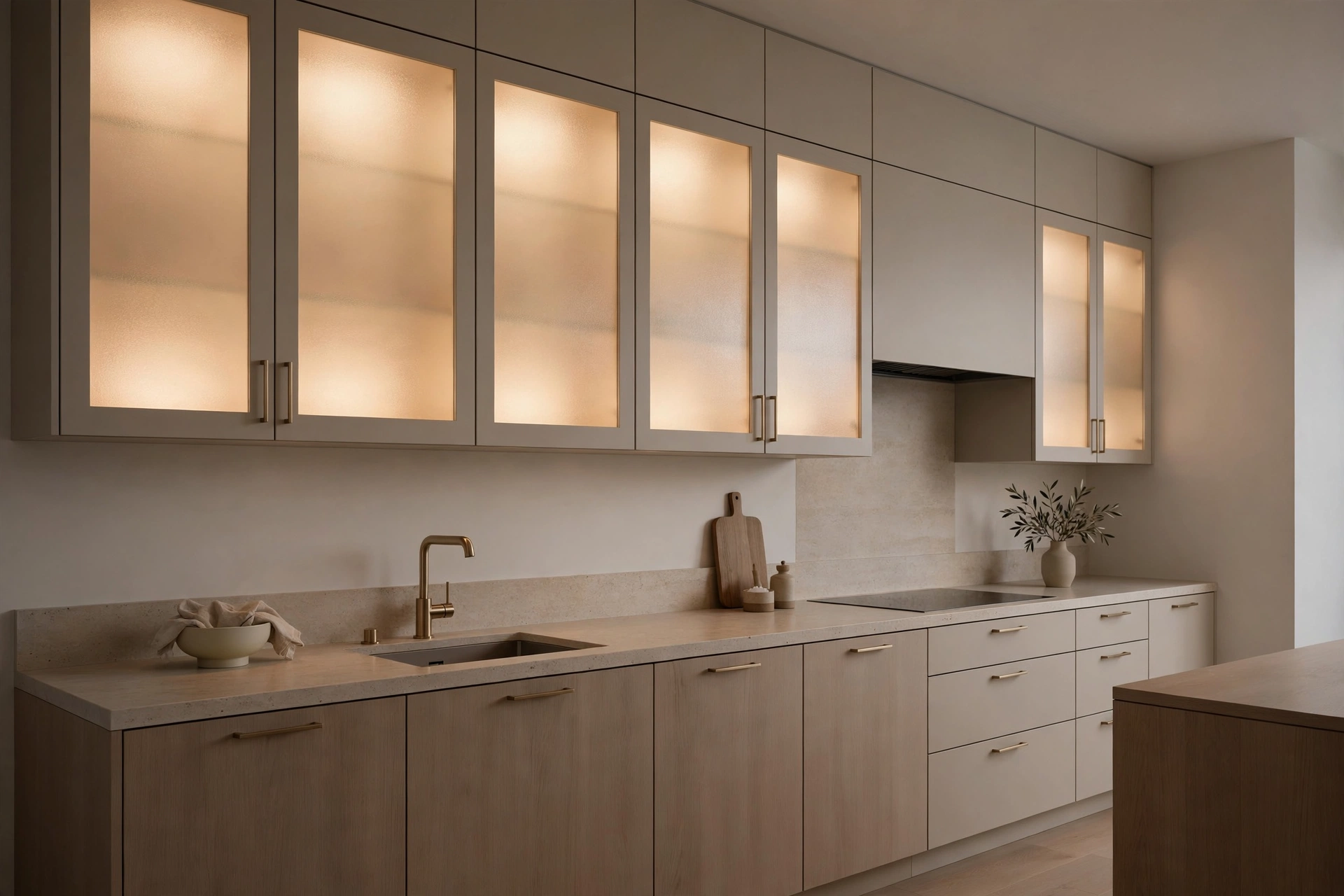
Frosted or etched glass offers the light, airy feel of glass with total forgiveness for what is behind it. The soft diffusion hides mismatched contents while still glowing beautifully with interior lighting — it is the best choice for cabinets that hold everyday items you do not want to style. Frosted glass suits modern and minimalist kitchens, where its soft matte surface complements slab doors and quiet palettes. It also works brilliantly on pantry doors and appliance garages, giving you the glass look in hardworking zones without the styling pressure.
8. Frame Glass in Black Metal for Contrast
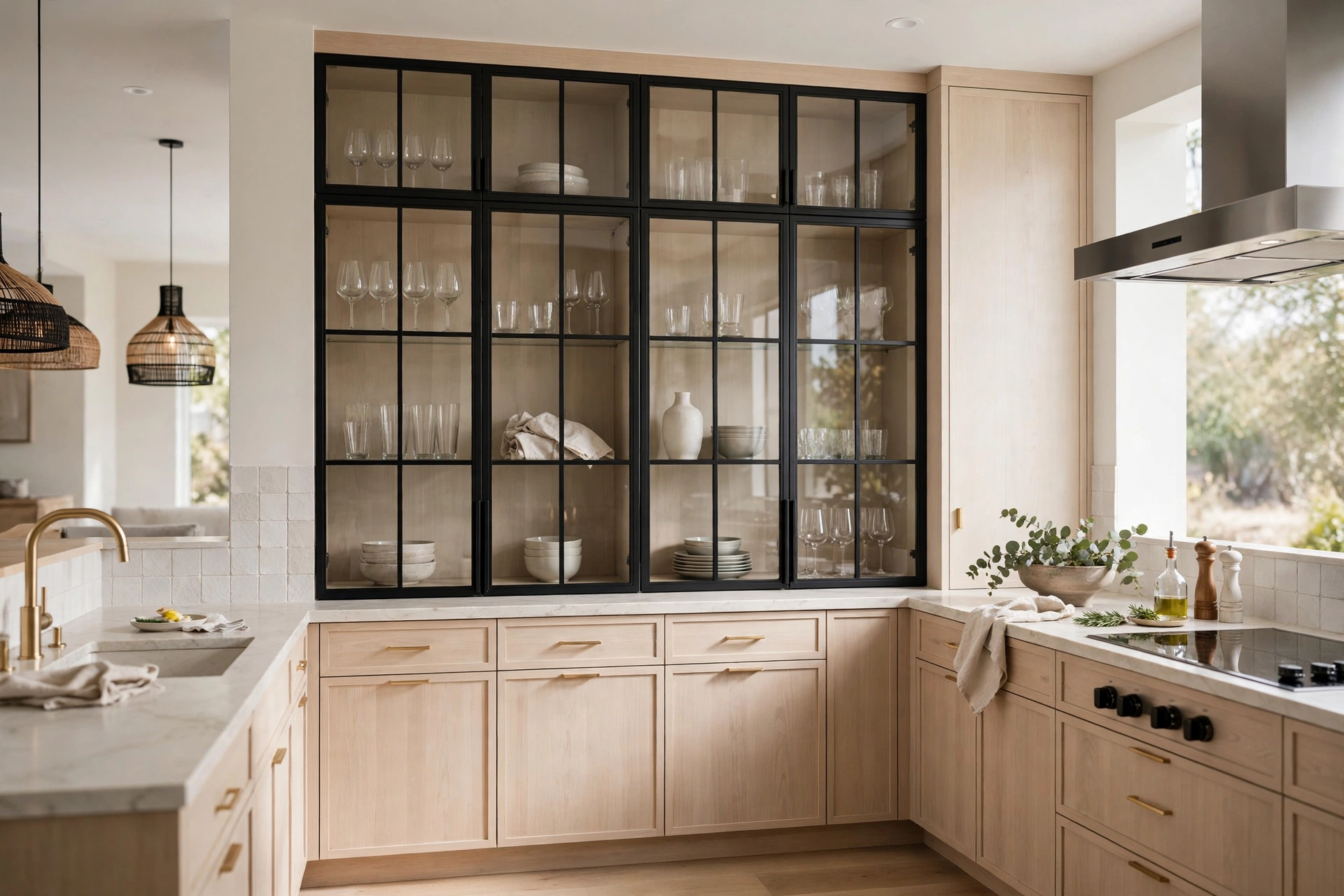
Black-framed glass doors — thin metal frames around clear or reeded panes — bring an industrial-chic edge that works in modern, transitional, and even farmhouse kitchens. The dark frame outlines each cabinet like a picture frame, adding definition and contrast against light cabinetry. This look echoes steel factory windows and pairs beautifully with black hardware, faucets, and light fixtures. Keep the frames slim; chunky black frames can feel heavy on small uppers. The style also photographs exceptionally well, which matters if you love sharing your kitchen.
9. Mix Glass and Solid Doors Strategically
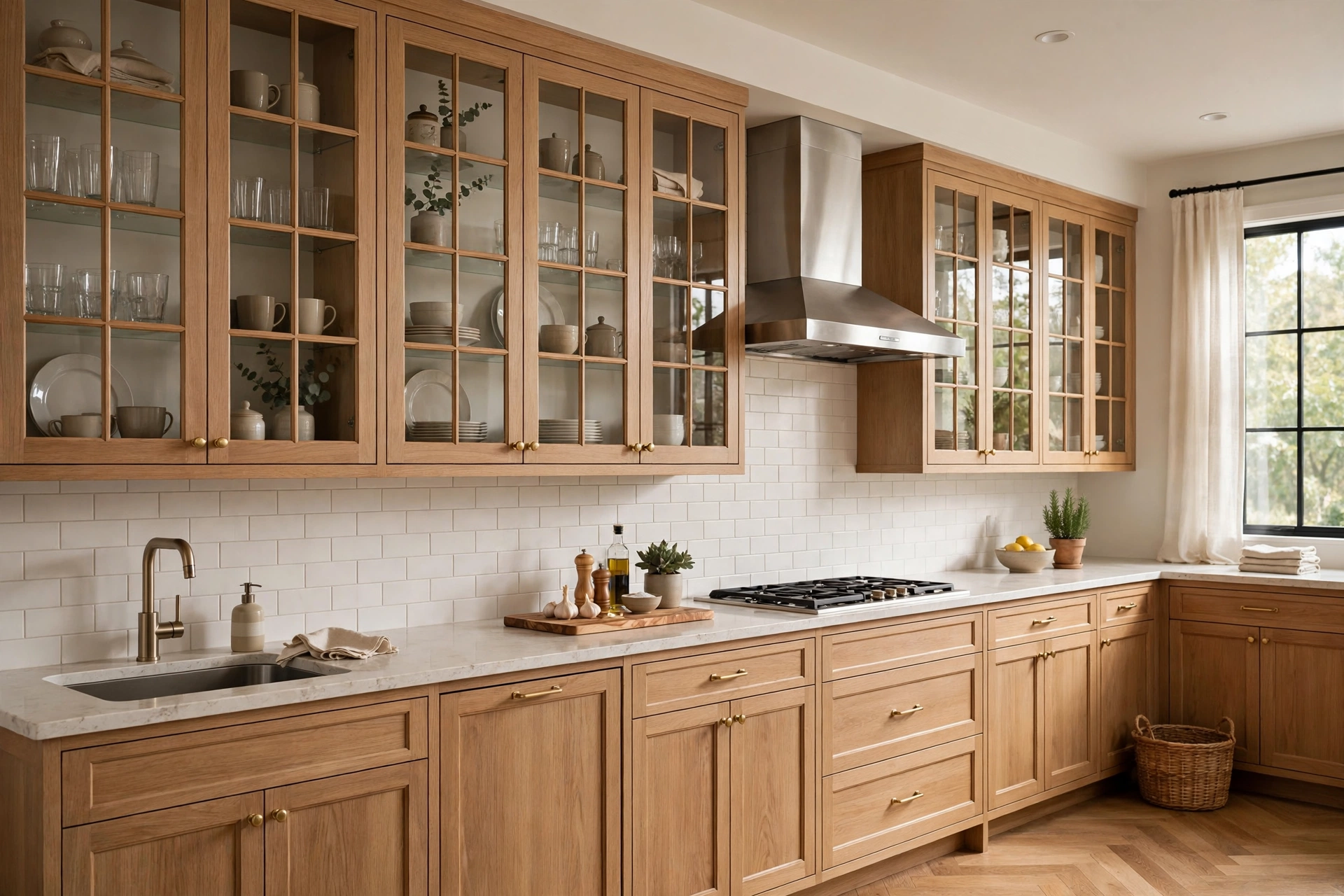
The most livable kitchens mix door types with intent: glass where you display, solid where you stash. A common formula is glass uppers flanking the range (display), solid uppers over the fridge and microwave (hiding), and glass on a dedicated bar or coffee cabinet (showcase). Walk through your daily routine and assign each cabinet a job before finalizing the mix. This strategy also helps resale — buyers love the look of glass but appreciate that most storage stays hidden. Mark your cabinet plan with G and S during design so the mix is deliberate, not accidental.
10. Add Glass to a Butler’s Pantry or Bar
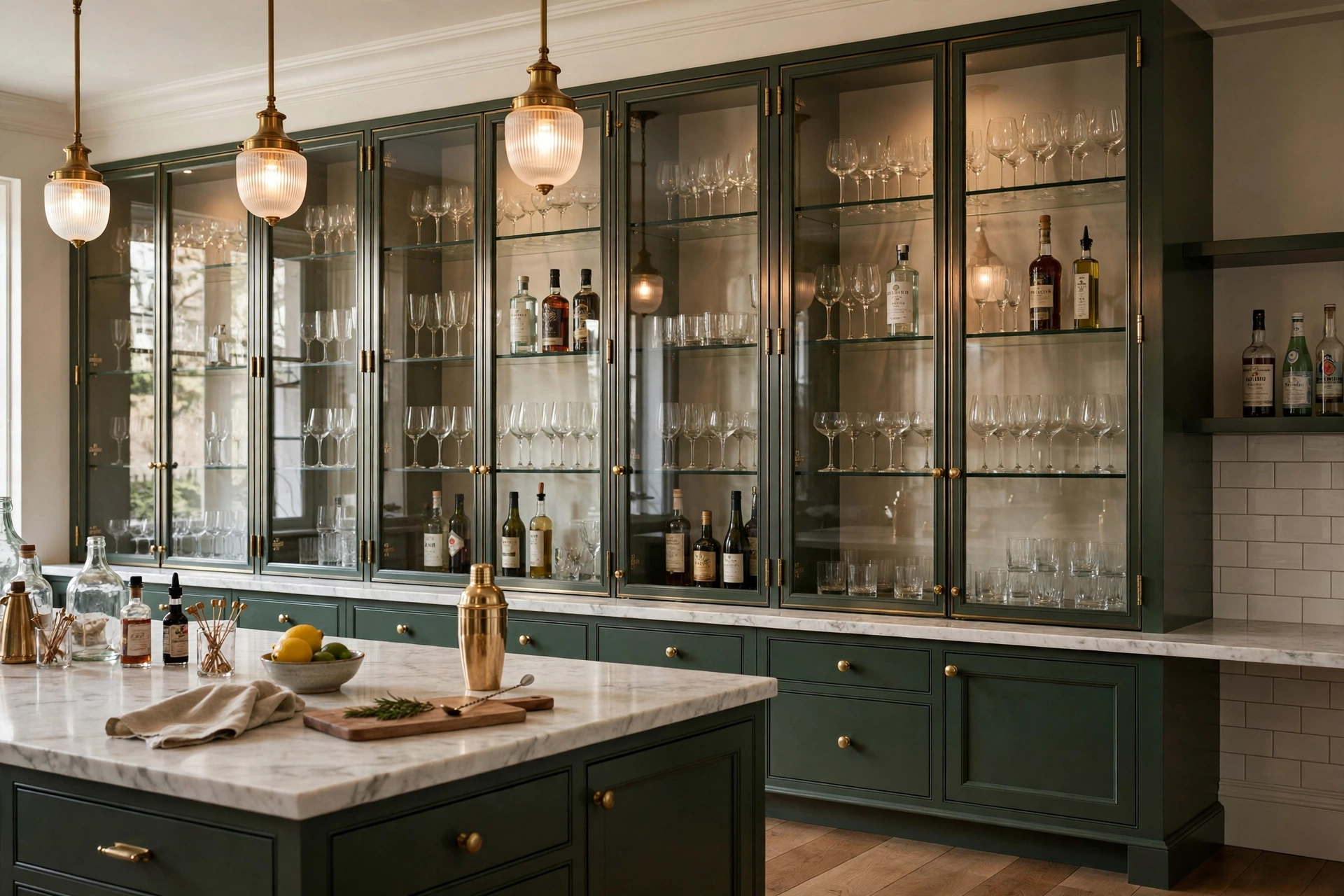
If a full glass kitchen feels like too much, give the treatment to a butler’s pantry, bar nook, or coffee station instead. These secondary zones are made for display — glassware, bottles, and serving pieces are naturally photogenic — and glass doors here create a jewel-box moment without committing the main kitchen. Back the interior with a contrasting paint color or wallpaper for extra drama; deep green or navy behind glassware looks spectacular. This is also a smart retrofit: converting one existing cabinet bank to glass costs far less than a whole-kitchen door swap.
11. Coordinate Hardware with the Frame
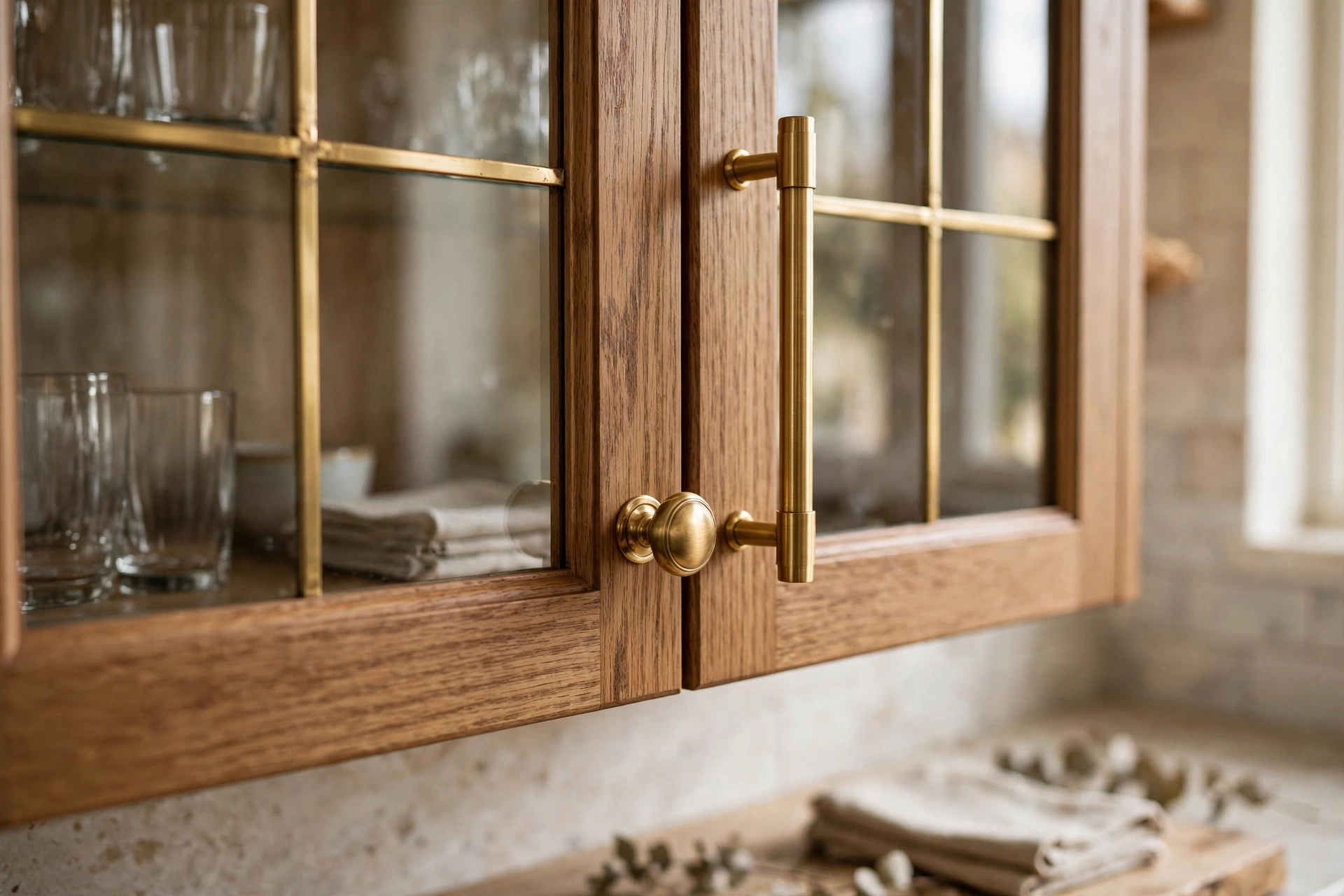
Hardware is the jewelry on glass doors, so choose it with care. Knobs and pulls should echo the frame finish — brass pulls on brass-framed glass, black on black — for a cohesive look. Because glass doors are lighter visually than solid doors, slightly more delicate hardware suits them; chunky pulls can overwhelm a slim glass frame. Consider latches or cremone bolts on tall glass pantry doors for a furniture-like, old-world feel. Our kitchen cabinet hardware ideas for a stylish refresh cover finish families in depth if you are coordinating a whole kitchen’s worth of pulls and knobs.
12. Use Leaded or Textured Glass for Character
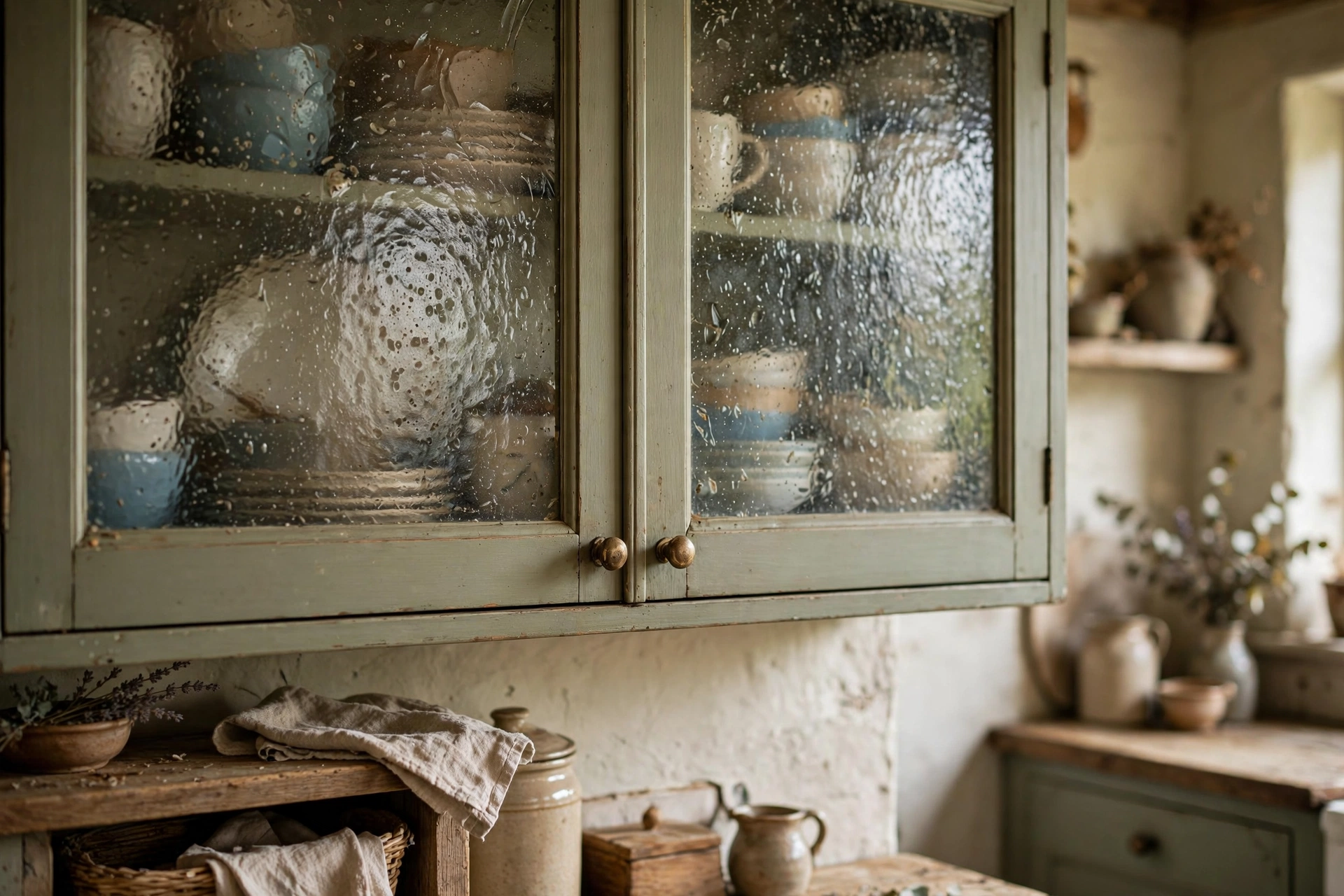
Leaded glass, seeded glass, and other textured panes bring old-world character that flat glass cannot. Seeded glass — with its tiny bubbles — evokes antique windows and suits farmhouse, cottage, and vintage kitchens; it also blurs contents gently like reeded glass. Leaded glass with a simple diamond or grid pattern adds craftsmanship to traditional kitchens. These specialty glasses cost more than clear, so use them as accents: a single hutch-style cabinet or the doors flanking the range. The texture becomes a feature in itself, so keep the interior styling quiet and let the glass shine.
13. Keep Interiors as Clean as Exteriors
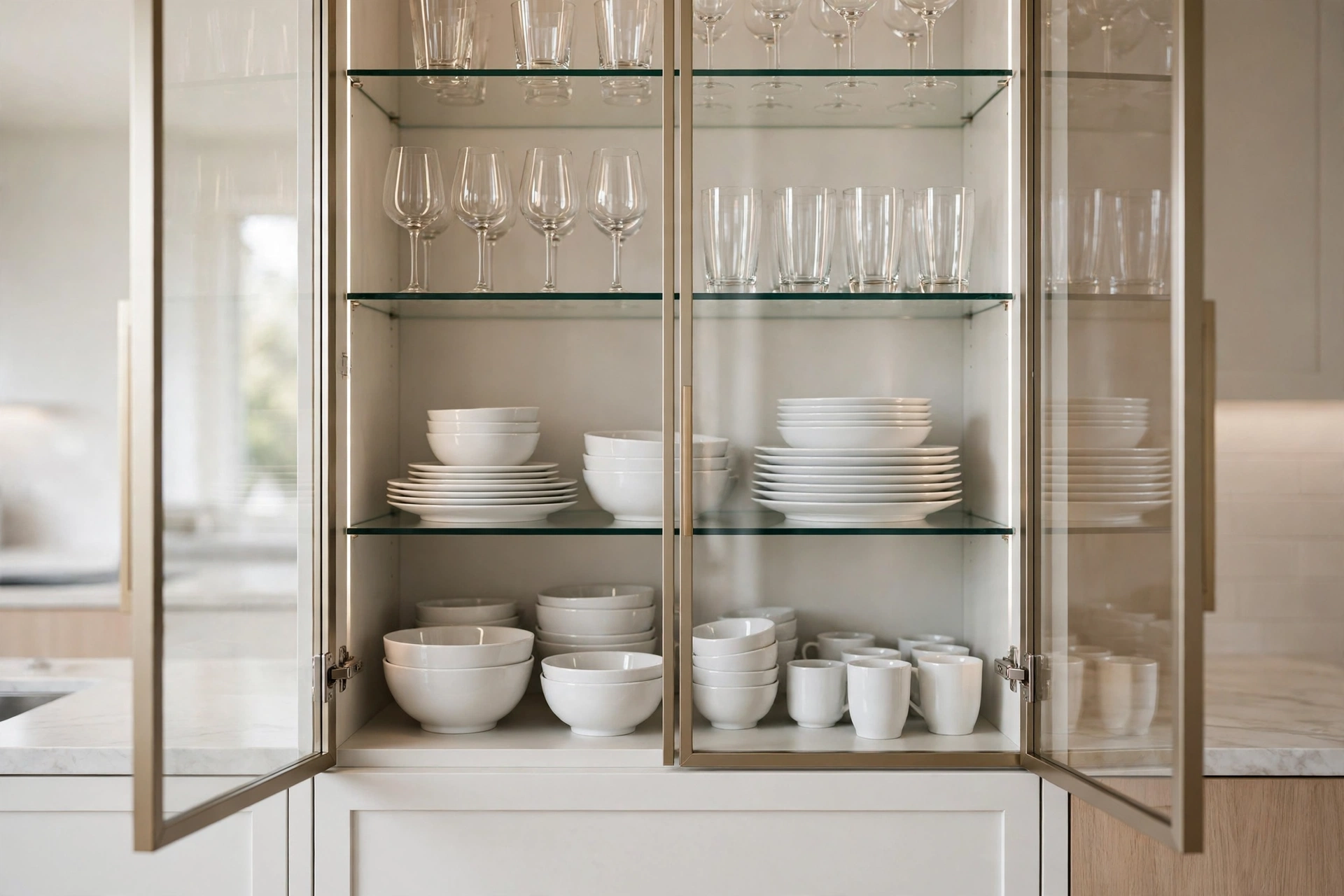
Glass fronts double your cleaning surface — inside and out. Fingerprints show on both sides of the pane, and dusty dishes are visible to everyone. Build a simple routine: wipe the glass inside and out monthly with a microfiber cloth and glass cleaner, and dust the displayed items when you do. Store infrequently used pieces elsewhere; glass cabinets should hold things you touch often enough to stay dust-free naturally. Tempered glass is the safety standard for cabinet doors — confirm it with your cabinetmaker, since tempered glass crumbles into safe pebbles rather than sharp shards if it ever breaks.
14. Try Two-Tone Cabinets with Glass Uppers
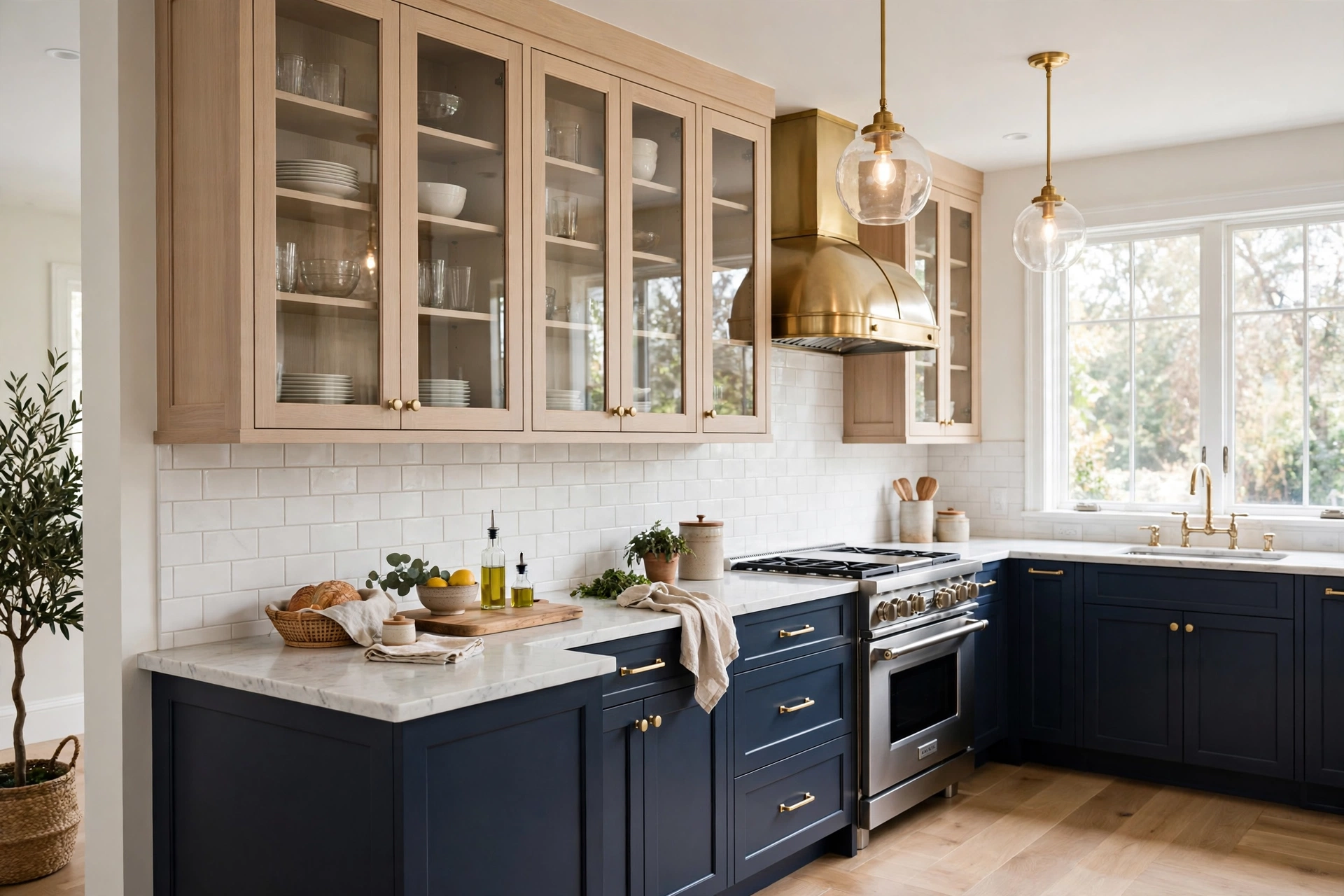
Two-tone cabinetry plus glass uppers is a designer power move. Paint the base cabinets a deep, moody color — navy, forest green, charcoal — keep the uppers light, and add glass fronts to the uppers so the whole wall feels airy despite the dark bases. The glass prevents the dark lowers from feeling heavy, and the color contrast makes the displayed dishes pop. Our two-tone kitchen cabinet ideas for bold contrast show color pairings that work with this formula. A 2026 industry roundup of cabinet door trends at homestratosphere.com notes that glass-front uppers are replacing open shelving as the way to display dishes while keeping dust out — confirming this combination is right on trend.
15. Style Seasonally Without Redoing Everything
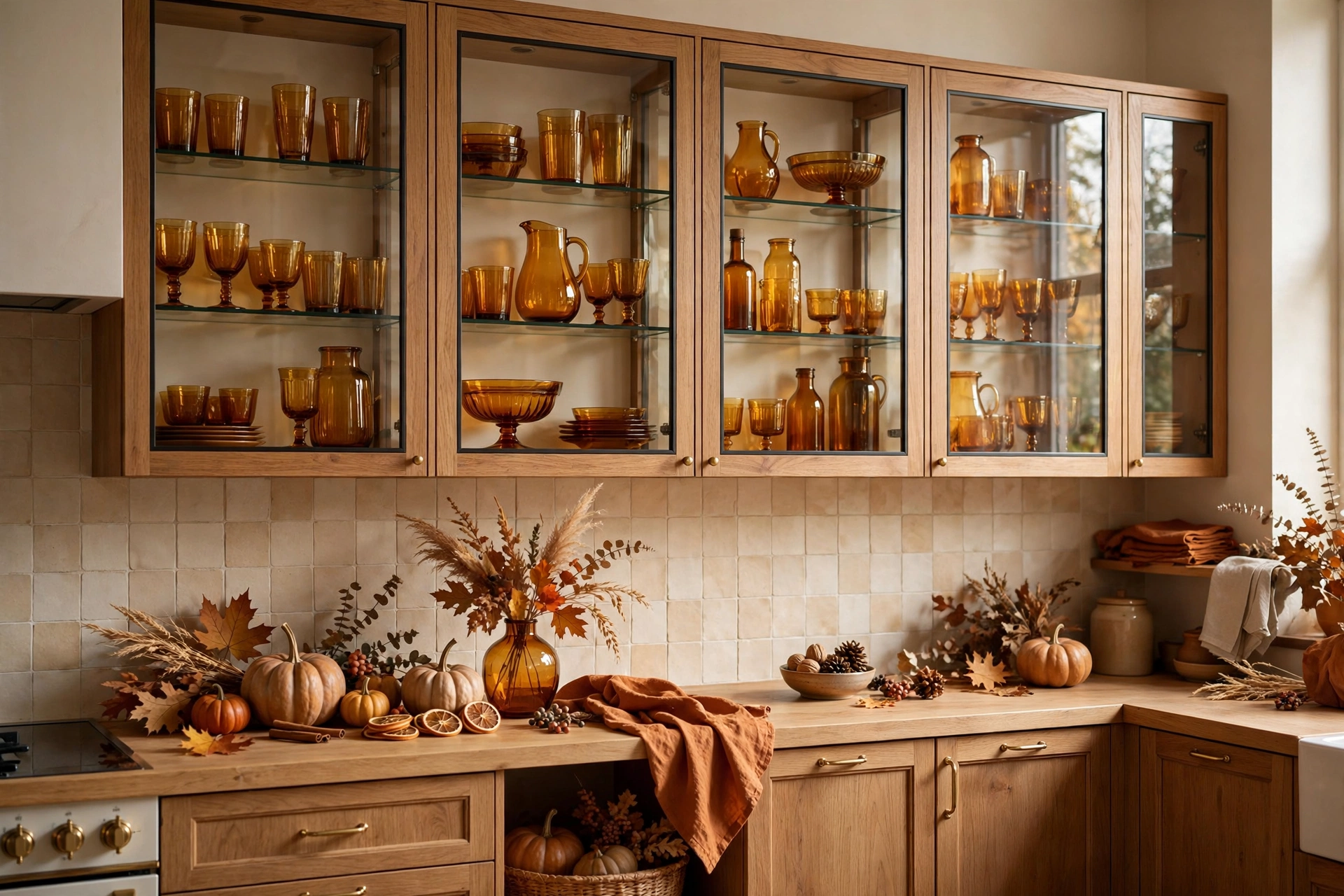
Glass cabinets make seasonal decorating effortless. Swap a few displayed pieces — autumnal amber glassware in fall, fresh white and green in spring, festive red accents in December — and the whole kitchen feels seasonal without touching the decor. Because the change happens behind glass, it looks intentional and stays dust-free. Keep a small bin of seasonal display pieces in the pantry so the swap takes ten minutes. This is the quiet superpower of glass fronts: your cabinets become a rotating exhibition, and the kitchen never looks the same two seasons in a row.
FAQ
Are glass front cabinets hard to keep clean?
They need more attention than solid doors — fingerprints show on both sides of the glass, and the contents are always visible. A monthly wipe inside and out with microfiber keeps them pristine. Choosing textured glass (reeded, seeded, frosted) dramatically reduces visible fingerprints and dust, making maintenance much easier than clear glass.
What should I put in glass front kitchen cabinets?
Your prettiest, most cohesive dishware: matching dinnerware sets, glassware, white serving pieces, or a single-color collection. Avoid mismatched mugs, plastic containers, and food packaging — anything chaotic-looking belongs behind solid doors. Group items by color and leave breathing room between stacks for a curated look.
Do glass cabinet doors cost more than solid doors?
Yes, typically 20 to 50 percent more per door, depending on the glass type and frame construction. Specialty glass (reeded, seeded, leaded) costs more than clear. Interior lighting adds further cost but is worth it for the display effect. Many homeowners limit glass to a feature bank of cabinets to get the look while controlling the budget.
Can I convert existing cabinet doors to glass fronts?
Often, yes. A cabinetmaker or glass shop can replace the center panel of a framed door with glass — this works best on five-piece doors with a removable panel. Slab doors cannot be converted this way. Alternatively, order replacement glass-front doors in your existing door style and finish, which is simpler than a full cabinet replacement.
Is tempered glass required for kitchen cabinet doors?
Building codes generally require tempered (safety) glass for cabinet doors, and any reputable cabinetmaker uses it as standard. Tempered glass is four to five times stronger than regular glass and breaks into small, dull pebbles rather than sharp shards. Always confirm tempered glass is specified in your order — never accept annealed glass for doors.
Keep Exploring
Glass front cabinets turn storage into storytelling — every dish, glass, and bowl you love becomes part of the room. Start with one bank of uppers, light them warmly, and curate what goes inside with a disciplined color palette. The result is a kitchen that feels personal and collected rather than merely functional. And once you see your grandmother’s china glowing behind lit glass, you will wonder why every cabinet is not a display case. Keep refining the details around them, and the whole kitchen rises to meet the standard your glass cabinets set.