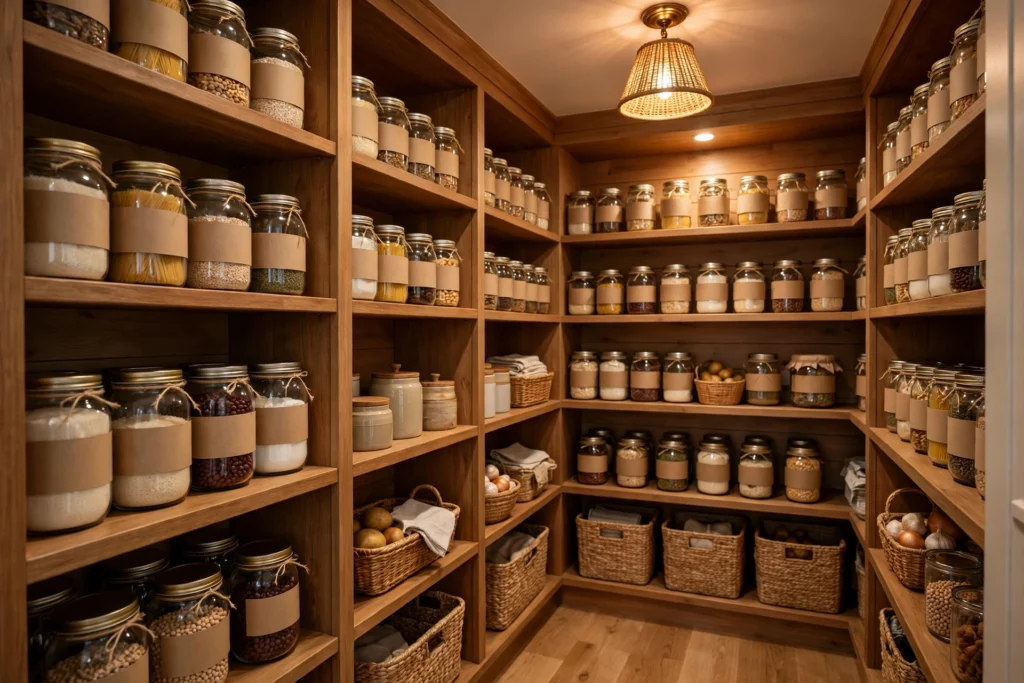

A well-designed pantry changes the way your whole kitchen works. These walk-in pantry ideas blend smart storage with beautiful styling, so every shelf, bin, and jar earns its place. Instead of digging through cluttered cabinets, you step into a calm, organized room where everything is visible and easy to grab.
Whether you have a spacious spare room or a narrow nook beside the fridge, the right combination of shelving, lighting, and organization turns a chaotic stockpile into one of your favorite spots in the house. Here are fifteen practical ideas for a pantry that is as functional as it is lovely.
1. Floor-to-Ceiling Adjustable Shelving
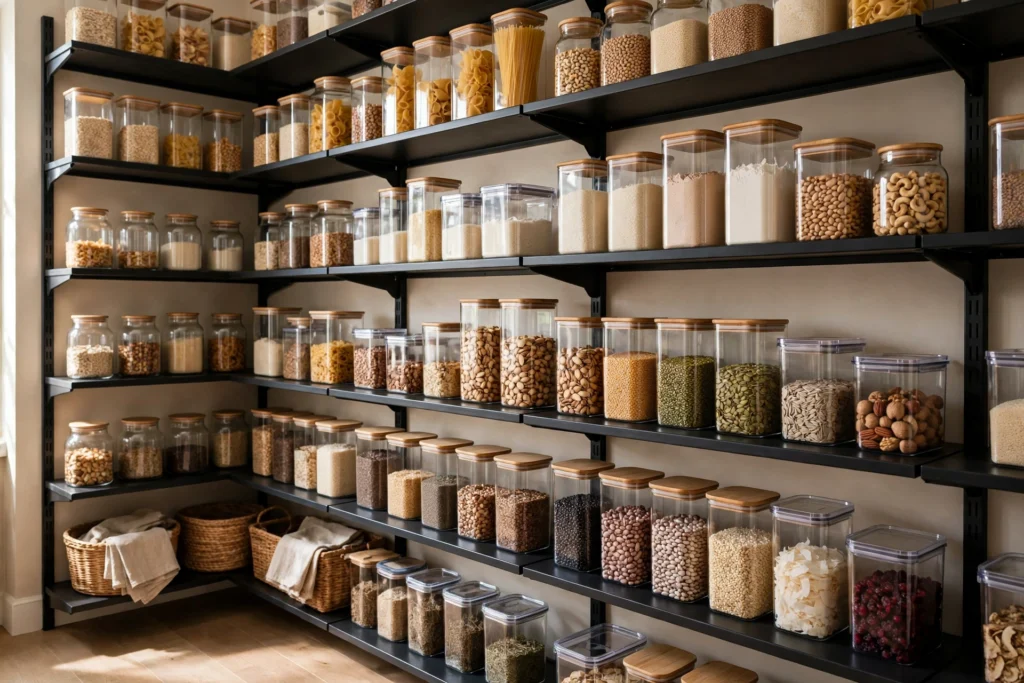
The most impactful upgrade in any pantry is shelving that goes all the way up. Adjustable shelves let you customize heights for tall cereal boxes, short cans, and bulky bulk-buy items, so no vertical inch goes to waste. Choose sturdy shelves rated for heavy loads, and keep the deepest shelves at counter height where access is easiest.
Reserve the top shelf for rarely used items like holiday platters and backup supplies, with a slim step stool stored inside to reach them. Paint shelves to match your kitchen cabinetry for a built-in look — even small details like cabinet hardware ideas on nearby doors pull the whole space together.
2. Layered Lighting for Every Shelf

Pantries often sit in windowless corners, so lighting matters more here than anywhere else in the kitchen. Start with a bright overhead fixture, then add LED strip lights under each shelf to eliminate the dark shadows that swallow small items. Motion-sensor switches are a smart touch because your hands are usually full when you walk in.
Warm white bulbs around 3000K keep the space inviting and make food colors look appetizing. Well-lit shelves also help you spot expiring items before they go to waste.
3. Sliding Barn or Pocket Door

A walk-in pantry deserves an entrance that works as hard as the room itself. Sliding barn doors save swing space in tight kitchens and add instant character with rustic hardware and wide wood planks. A pocket door is even sleeker, disappearing completely into the wall when open.
Both beat a standard hinged door when square footage is tight, since you never leave clearance for a door swing. Frosted-glass barn doors are another smart pick — they borrow light from the kitchen while hiding shelf clutter behind a soft blur. Match the hardware finish to your kitchen faucet and drawer pulls so the entry feels intentional.
4. Galley-Style Layout for Small Pantries

You do not need a huge room to enjoy these walk-in pantry ideas. A narrow galley layout with shelves on both sides turns an awkward closet into a surprisingly roomy pantry. Keep shelves 12 to 14 inches deep so you can move comfortably, and put the most-used items at eye level on the easier-to-reach side.
Use one wall for shallower spice and can storage and the other for deeper bins and bulk goods. A slim rolling cart parked at the far end adds extra capacity. This compact footprint suits apartments and smaller homes — pair it with broader small-space kitchen ideas and a tiny room can hold an amazing amount.
5. Labeled Bins and Baskets
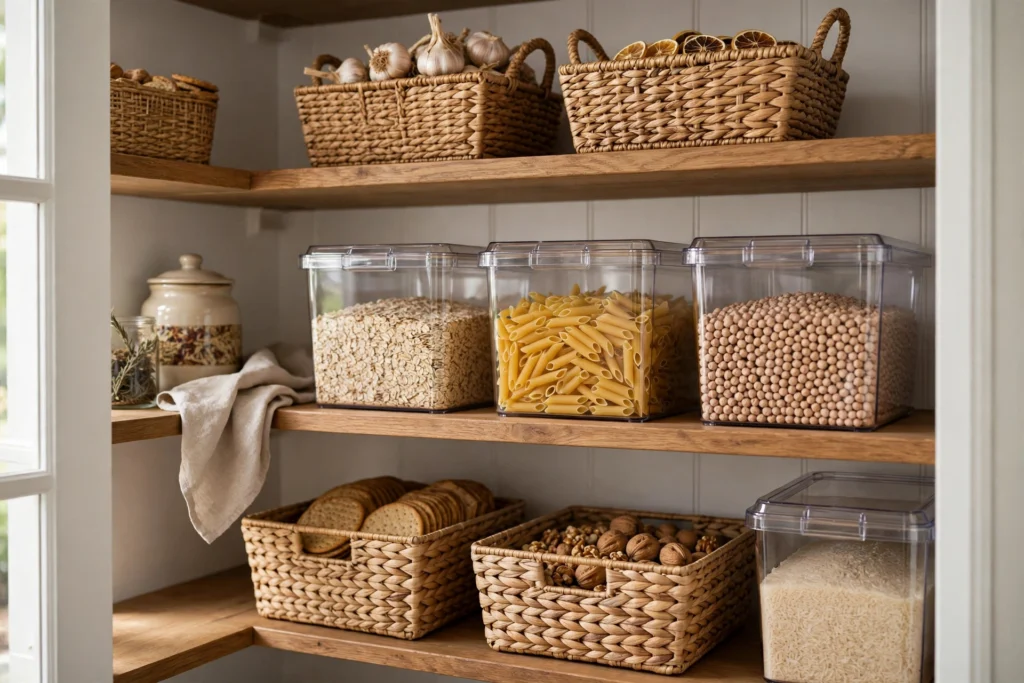
Labels are the secret weapon of every organized pantry. Clear bins for snacks, woven baskets for produce, and stackable containers for dry goods all work beautifully — but only if everyone knows where things go. A label maker, chalk labels, or printed tags turns pretty shelves into a system that actually stays tidy.
Group items by category rather than size: breakfast foods together, baking supplies together, snacks together. Corral small packets into bins so they stop sliding behind larger items. When every bin has a home and a name, putting groceries away takes minutes, and restocking becomes almost automatic.
6. Built-In Countertop Prep Zone

Even a short stretch of countertop inside your pantry creates a bonus work surface the kitchen never had. Use it for unpacking groceries, portioning bulk buys into containers, or staging ingredients before a big cooking session. A 24-inch-deep counter at standard kitchen height feels natural and keeps heavy items like the stand mixer off your main counters.
Underneath, install deep drawers or open cubbies for produce that prefers dark storage. The kitchen stays calmer when messy prep happens behind the pantry door. If plumbing allows, a small sink here is the ultimate luxury for washing produce without crossing the kitchen.
7. Pull-Out Drawers for Deep Shelves

Deep pantry shelves are notorious for swallowing items at the back, where cans and jars expire forgotten. Pull-out drawers and sliding baskets solve the problem by bringing the entire shelf to you. Full-extension slides rated for at least 75 pounds handle canned goods, bottles, and small appliances with ease.
Use shallow pull-outs for cans and spice jars so nothing hides behind another row, and deeper drawers for snacks and baking supplies. Wire baskets suit produce that needs airflow. Retrofitting fixed shelves with slide-out inserts is one of the cheapest high-impact upgrades you can make, instantly doubling the usable space on every shelf.
8. Dedicated Spice Wall

Spices multiply faster than any other pantry category, so give them a wall of their own. Tiered risers on a single shelf let you see every label at a glance, while a narrow dedicated shelf keeps bottles off the main storage zones. Decant into uniform glass jars for a look that is both beautiful and practical.
Arrange alphabetically or by cuisine so you grab what you need without scanning the whole row. Keep everyday cooking spices at eye level and specialty baking spices a shelf higher. A spice wall also frees valuable cabinet space in the main kitchen, which matters most in smaller homes.
9. Coffee and Beverage Station

Turn one pantry zone into a dedicated coffee and drink station to free your kitchen counters. A small stretch of shelving holds the coffee maker, kettle, mugs, and beans, while a nearby bin corrals teas, sweeteners, and filters. Morning routines feel calmer when everything lives in one spot.
Extend the idea to a full beverage center with a mini fridge for sparkling water and juice, plus glassware on an upper shelf. It keeps guests out of your cooking zone when they want a refill. For inspiration on taking this concept further, browse these butler’s pantry luxury ideas — many translate perfectly to a walk-in layout.
10. U-Shaped Layout for Maximum Storage

If your pantry is roughly square, a U-shaped layout wraps shelving around three walls and delivers the most storage per square foot. The back wall becomes the deep-storage zone for bulk buys and appliances, while the side walls hold everyday items within easy reach of the door.
Leave at least 36 inches of clearance in the middle so two people can work side by side. The pantry has a long history as a dedicated food-storage room, evolving from medieval bread rooms into today’s high-functioning walk-ins. Anchor the center with a slim island or rolling cart if space allows.
11. Open Shelving with Styled Displays

A walk-in pantry does not have to look purely utilitarian. Treat one section of open shelving like a display: stack white ceramic canisters, line up wooden cutting boards, lean a couple of cookbooks against the wall, and tuck in a small trailing plant. The result feels like a boutique shop rather than a storage closet.
Keep styled zones on the shelves nearest the door where they make the biggest impression, and let deeper storage stay purely functional. Matching containers in glass, ceramic, or matte stoneware create visual calm even when contents vary. This styling layer is what separates an ordinary pantry from one that makes guests ask for a tour.
12. Appliance Garage
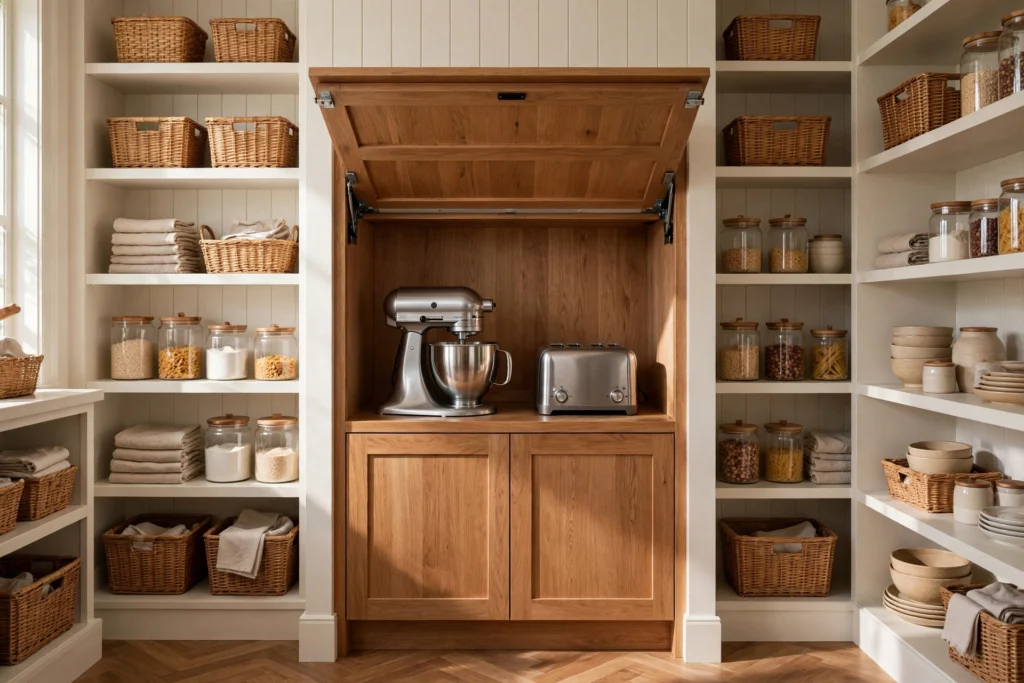
Bulky small appliances — the stand mixer, food processor, air fryer, and blender — eat counter space and collect dust in hard-to-reach cabinets. Give them a home in the pantry instead. A dedicated shelf section with a power outlet keeps them plugged in, hidden, and ready to roll out when needed.
Position the appliance zone near the pantry entrance so heavy items travel the shortest distance. Lift-up or tambour doors hide everything in seconds when guests arrive. Measure your tallest appliance before building shelves so the mixer fits with its head raised. Reclaiming that counter space is often the most noticeable benefit of the whole project.
13. Chalkboard Paint Accent Wall

A chalkboard paint wall turns your pantry into a working command center. Use it for the weekly meal plan, a running grocery list, or expiration-date reminders the whole family can see.
Frame the chalkboard section with trim for a finished look, or paint an entire wall for maximum writable space. Chalk markers keep writing crisp and easy to read. Wipe it clean each week and start fresh — the ritual itself becomes part of staying organized, and it beats paper lists stuck to the fridge every time.
14. Ventilation for Lasting Freshness

Pantries store a lot of food in a small enclosed space, so airflow matters. Without ventilation, heat and humidity build up and shorten the life of produce, spices, and dry goods. A small louvered vent, a transom window above the door, or even a gap under the door keeps air circulating and the room fresh.
If your pantry shares an exterior wall, a small operable window is ideal — daylight plus ventilation on demand. Avoid placing the pantry against the oven or dishwasher wall, where radiant heat warms the shelves. In humid climates, moisture-absorbing packets protect flour, sugar, and spices from clumping.
15. Decorative Finishes: Wallpaper and Color

The final layer of great walk-in pantry ideas is pure personality. Bold wallpaper on the back wall, a cheerful paint color on the shelves, or a patterned runner rug turns a storage room into a space you love walking into. Because the room is small, you can afford a daring print that might overwhelm a full kitchen.
Peel-and-stick wallpaper is perfect here — it suits the low-traffic environment and is easy to change later. Paint the ceiling a soft contrast color for a designer touch, and add a small framed print for charm. These finishes cost little but deliver the biggest smile every time you open the door.
Frequently Asked Questions
How deep should walk-in pantry shelves be?
Twelve to sixteen inches is the sweet spot for most pantry shelves. Twelve-inch shelves keep cans and jars in a single visible row so nothing hides at the back, while sixteen inches suits cereal boxes and bulk containers. Avoid going deeper than eighteen inches unless you use pull-out drawers, since items in the back expire forgotten. Vary depths by zone: shallow for spices and cans, deeper for appliances.
What is the best lighting for a walk-in pantry?
Layered lighting works best: a bright overhead fixture plus LED strip lights under each shelf to remove shadows. Warm white bulbs around 3000K keep the space inviting and make food look appetizing. Motion-sensor switches are ideal since your hands are usually full of groceries. In a windowless pantry, aim for task-level brightness so you can easily read labels and check expiration dates.
How do you organize a small walk-in pantry?
Group items into categories — breakfast, baking, snacks, canned goods — and give each a dedicated zone. Use clear labeled bins so everyone knows where things belong, with everyday items at eye level and lesser-used supplies up high. A galley layout with shelves on both walls maximizes narrow spaces. Declutter first: toss expired items before buying a single container, then build zones around what remains.
What is the ideal size for a walk-in pantry?
A comfortable walk-in pantry starts around 5 by 5 feet, fitting shelving on two walls with room to turn. A 5 by 8 foot space allows a U-shaped layout with generous storage, while anything narrower than 4 feet works better as a reach-in pantry. Plan for at least 30 to 36 inches of clear walkway in front of shelves. Even a small pantry holds far more than standard cabinets when shelves run floor to ceiling.
Should a walk-in pantry have a door?
Yes, a door is highly recommended. It hides visual clutter from the kitchen, keeps cooking heat and humidity out, and lets you control lighting separately. Sliding barn doors and pocket doors are popular because they save swing space. If you skip the door, commit to keeping the pantry styled and tidy since it stays visible — open entries work best where the pantry reads as a design feature.
Keep Exploring
A walk-in pantry is one of those rare projects that pays you back every single day — faster meal prep, less food waste, and a calmer kitchen. Start with the ideas that solve your biggest frustration, whether that is dark shelves, wasted vertical space, or a door that blocks traffic. Small changes like labels, lighting, and pull-outs deliver outsized results, so even a weekend refresh can transform the room. Enjoy every organized inch of your new pantry.