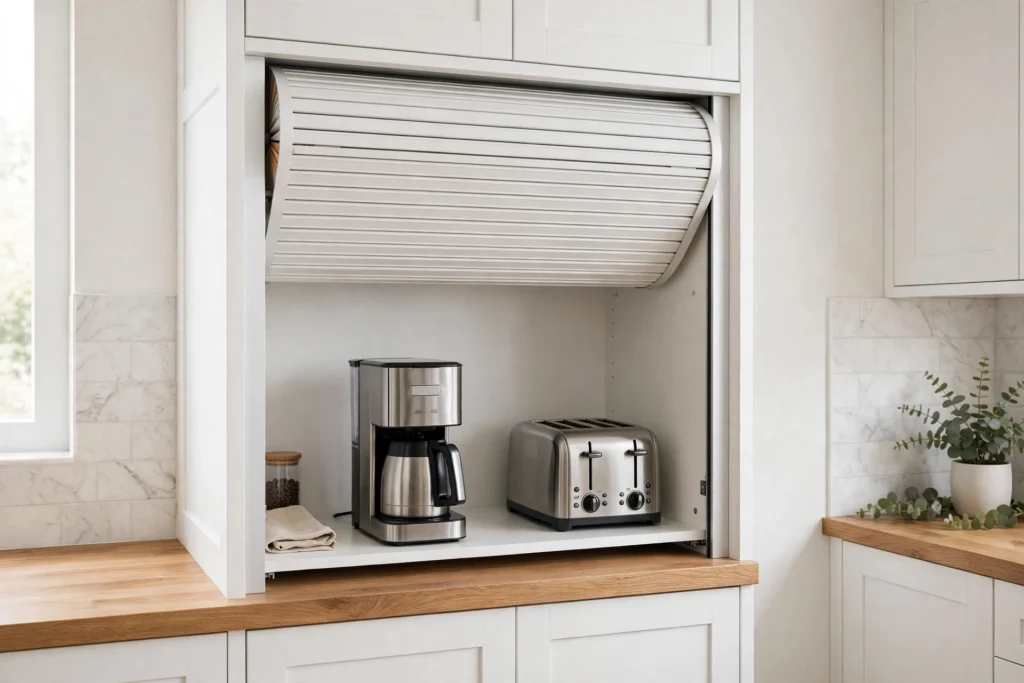

Small appliances are the fastest way to turn a beautiful kitchen into a cluttered one. Toasters, coffee makers, blenders, and stand mixers earn their keep, but they do not need to live on display. Kitchen appliance garage ideas solve this beautifully: a dedicated cabinet nook that keeps everything plugged in and within reach, then closes away in seconds.
From classic tambour doors to corner designs and pull-up mixer shelves, these 15 kitchen appliance garage ideas fit every layout and budget. If you are working with limited square footage, pair them with smart kitchen design ideas for small spaces to make every inch work harder while keeping counters beautifully clear.
1. The Classic Tambour-Door Garage
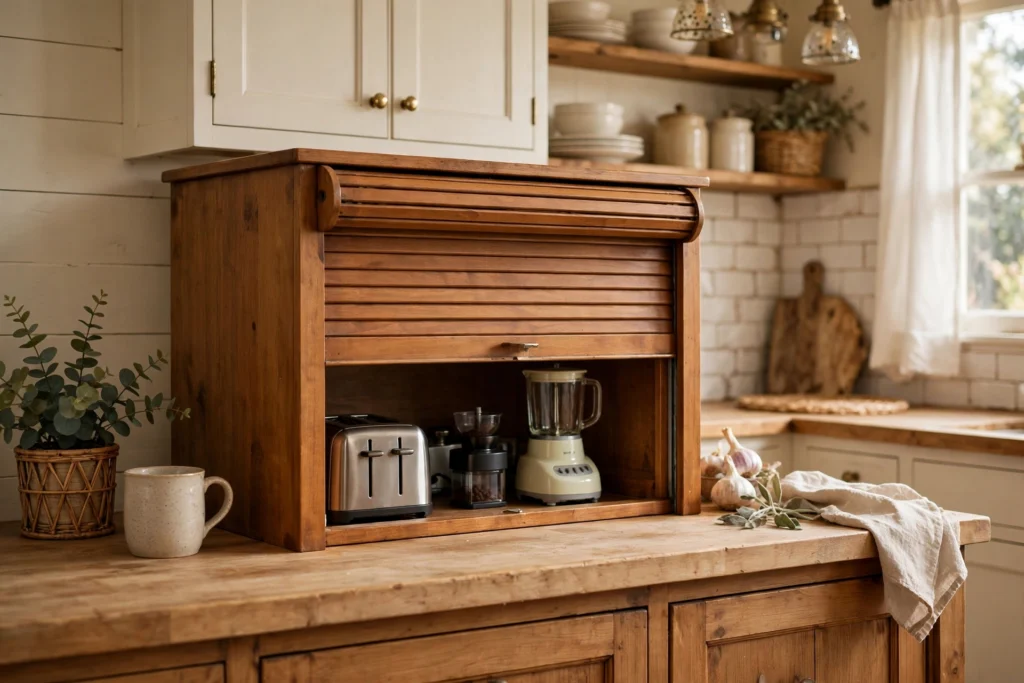
The tambour door — the roll-up style borrowed from old rolltop desks — is the original appliance garage and still the most space-efficient. The door slides up and disappears into the cabinet, so it never swings out and blocks the walkway or bumps into open shelving above. Modern tambour kits come in finishes that match standard cabinetry, from painted shaker to warm wood tones. Measure your tallest appliance first, then size the garage so the door clears it with an inch to spare. This timeless design works in any kitchen style and keeps daily appliances one smooth motion away.
2. Match the Garage to Your Cabinetry
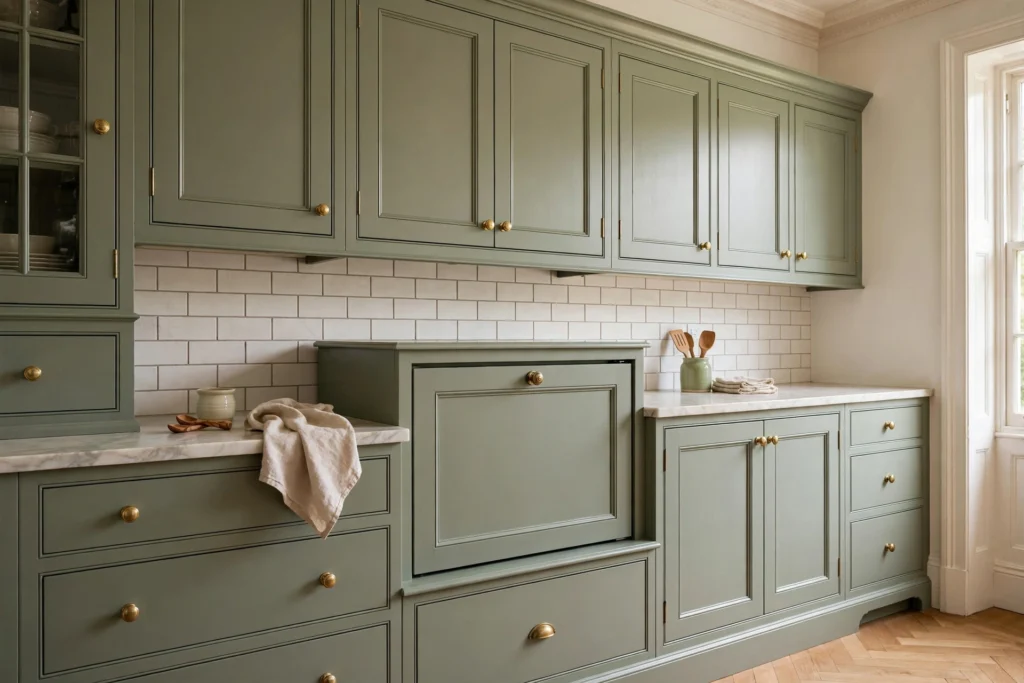
The most elegant appliance garages are the ones you barely notice. Order the garage cabinet in the same door style, wood species, and finish as the rest of your kitchen so it reads as just another cabinet. Carry the same hardware across the garage doors for a seamless run of cabinetry along the counter. When closed, the garage disappears into the design; when open, it reveals a fully functional station. This approach works especially well in traditional and transitional kitchens where visual continuity matters, and it protects resale value by looking like an original, intentional part of the kitchen.
3. Tuck a Garage Into the Corner
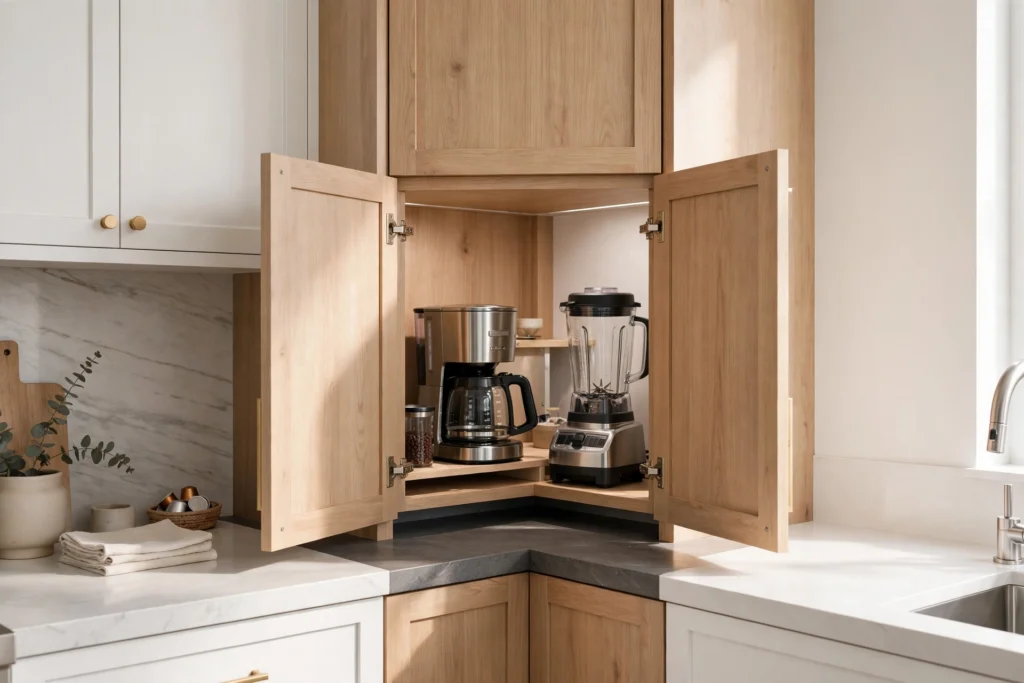
Corner counters are prime real estate for an appliance garage because the deep, awkward space is otherwise hard to use well. A corner garage with a hinged or bifold door turns dead space into a roomy hideaway for a coffee maker, toaster, and blender together. Angle the interior shelving to follow the corner so appliances sit stable and cords route neatly to one outlet. Since corner garages hold more than straight runs, they suit households with several daily-use appliances. HGTV’s small-kitchen roundup specifically recommends an appliance garage to keep bulky appliances out of sight between uses.
4. Try Pull-Up Pocket Doors
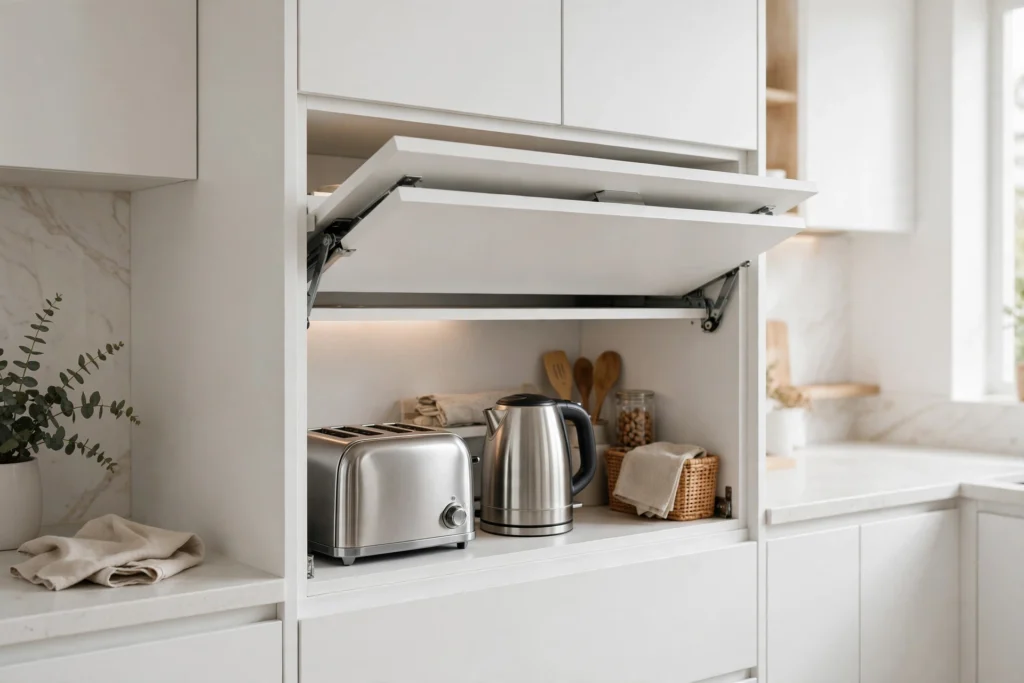
Pocket doors that lift up and slide back into the cabinet sides give you full, unobstructed access while you work — then vanish completely. Unlike hinged doors that stay open and jut into your space, pocket doors disappear, which is ideal for busy morning routines when the coffee station stays open for an hour. Look for soft-close hardware so the doors glide quietly, and choose a door front that matches your uppers. This mechanism costs more than a simple tambour but delivers the cleanest look and the most comfortable daily experience.
5. Build In Outlets for Plug-and-Play Use
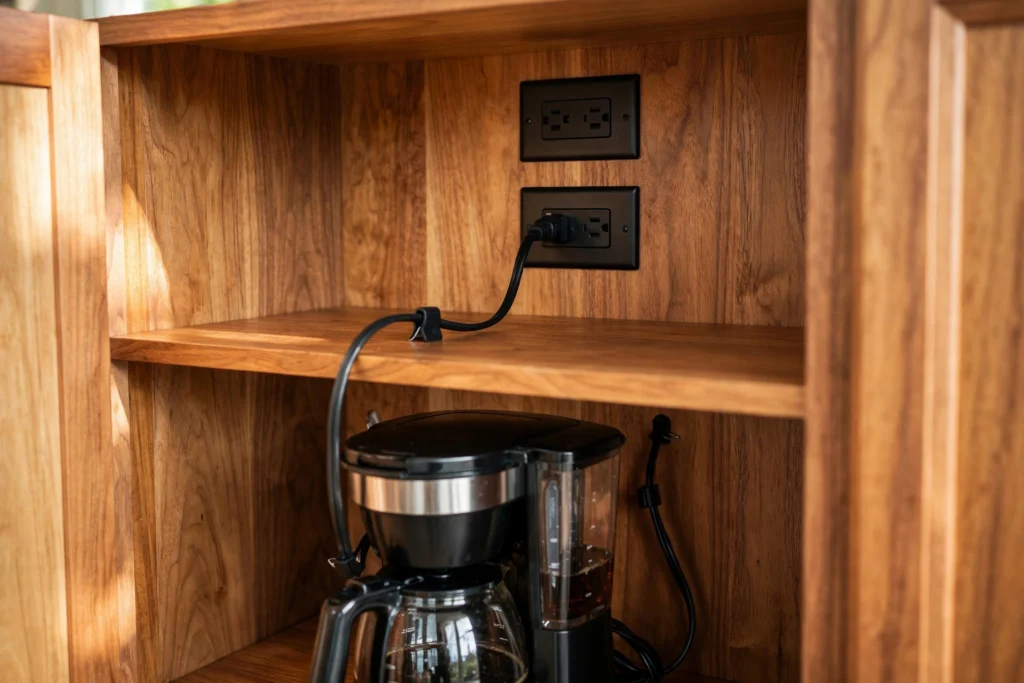
An appliance garage only earns its name if you can use appliances without dragging them out. Have an electrician install one or two outlets inside the garage so the coffee maker, toaster, or charging station stays plugged in permanently. Add a small power strip with surge protection if you run several devices, and keep cords coiled with short wraps to avoid tangles. Interior outlets also let you close the door with everything still connected, which is the whole point. Check local electrical codes, since some areas require specific clearances or GFCI protection inside cabinetry.
6. Design a Dedicated Coffee Station Garage
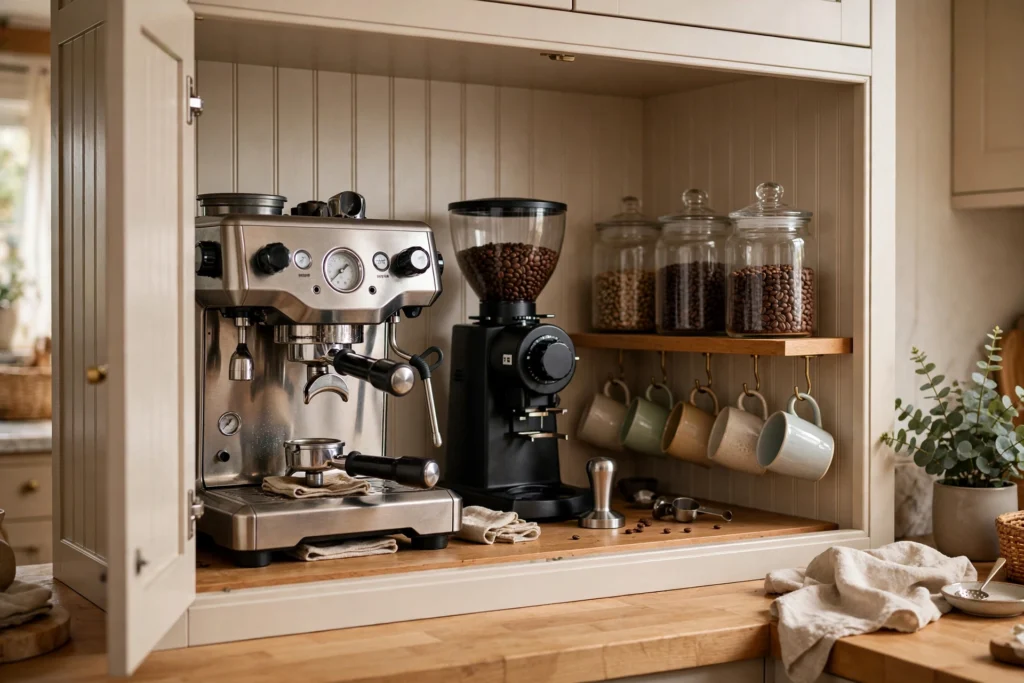
Coffee lovers can dedicate an entire garage to the morning ritual. Fit the espresso machine or drip brewer, a grinder, mugs on hooks or a small rack, and canisters of beans and sugar into one wide garage. Line the interior with easy-wipe material like beadboard or tile so coffee splashes clean up fast. A pull-out shelf at counter height makes filling and cleaning the machine easier on your back. Close the doors after breakfast and the kitchen instantly looks calm again — no scattered mugs, no drips, no visual noise before you have even finished your first cup.
7. Slide a Garage Under Existing Wall Cabinets
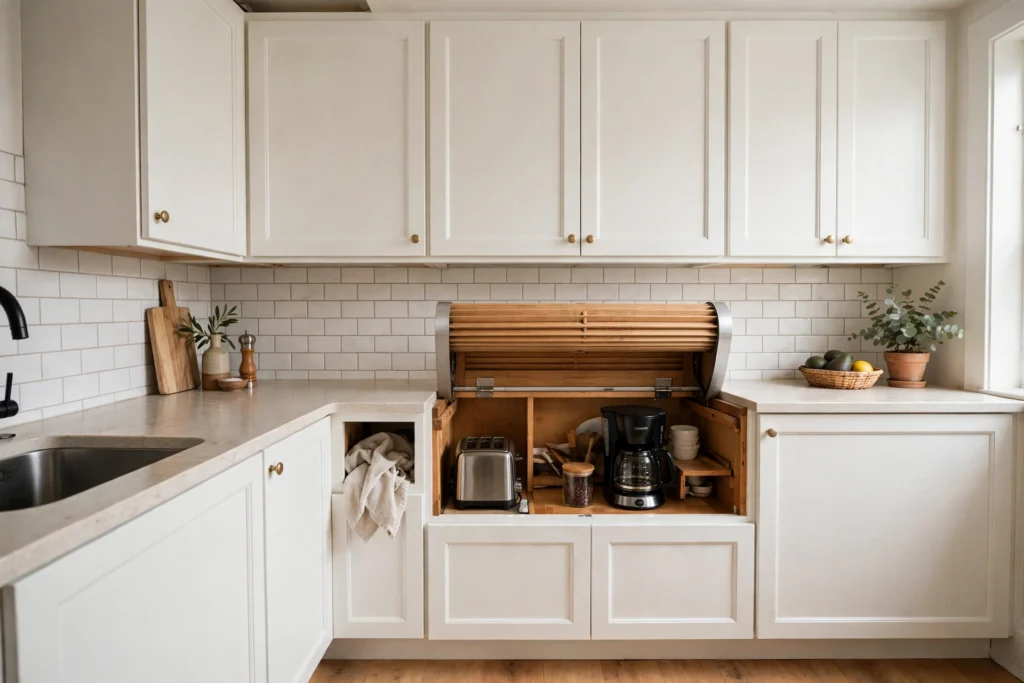
You do not always need new cabinetry: a garage can slot into the open counter space beneath existing wall cabinets. Measure the gap between counter and cabinet bottom, then have a cabinetmaker build a shallow box with tambour or hinged doors to fit precisely. This retrofit works best where you have at least 18 inches of clearance and a stretch of unused counter. Match the wood tone to your existing cabinets, or paint it an accent color for a furniture-like look. It is one of the most budget-friendly ways to add a garage without touching the rest of the kitchen.
8. Combine the Garage With a Pantry Wall
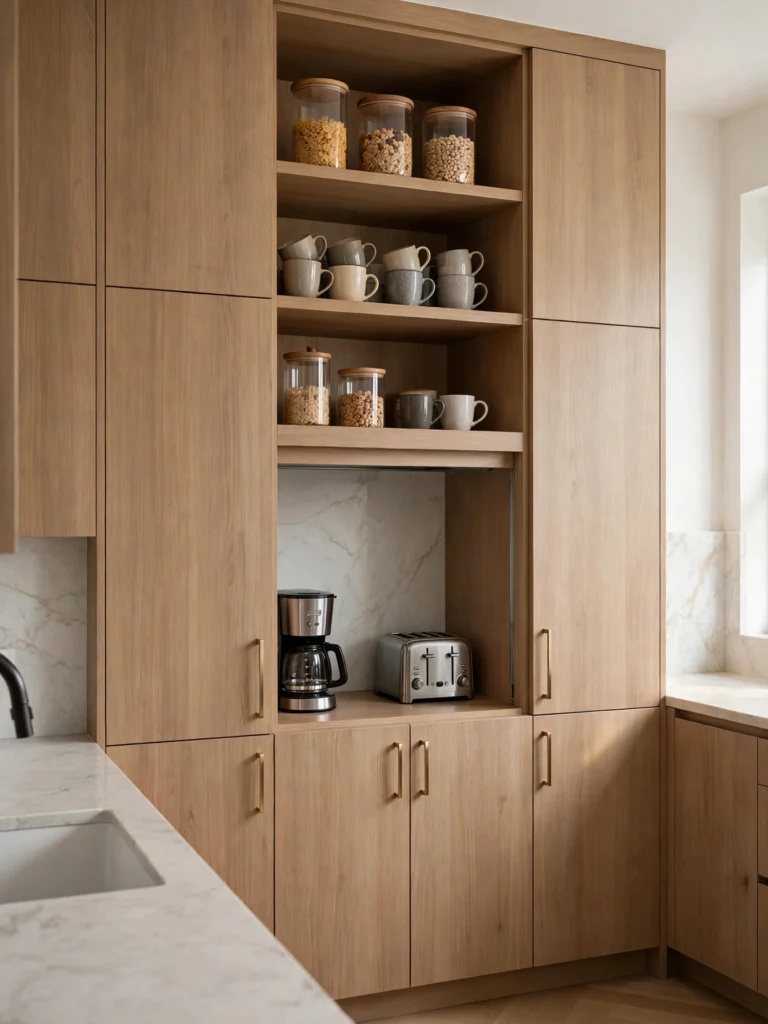
In kitchens with a tall pantry wall, carving one section into an appliance garage creates a full breakfast station. Keep the lower section as the garage with outlets and a pull-out shelf, and use the cabinets above for cereals, mugs, and linens. This consolidation keeps all morning activity in one zone, which speeds up busy routines and contains mess. Style the interior back panel with beadboard or a contrasting paint color so opening the doors feels like a little reveal. The pantry-wall garage is especially smart in galley kitchens where counter space is precious.
9. Add a Lift-Up Mixer Shelf
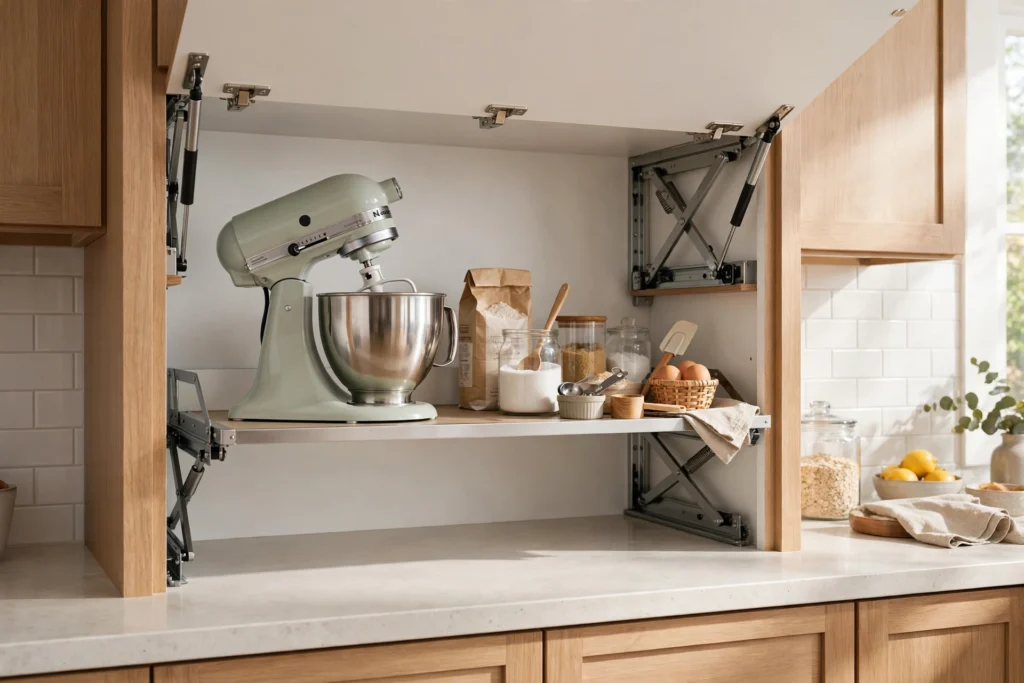
Stand mixers are heavy, and lifting one from a low cabinet every time you bake is a workout nobody asked for. A lift-up shelf inside the garage solves it: the spring-loaded platform raises the mixer to counter height with a gentle pull, then folds back down and closes away. Size the garage tall enough for the mixer with its head tilted up, plus a few inches of clearance. Keep attachments in a small bin on the shelf beside it so everything travels together. This single upgrade makes baking dramatically more convenient and is worth prioritizing if you bake weekly.
10. Light the Inside of the Garage
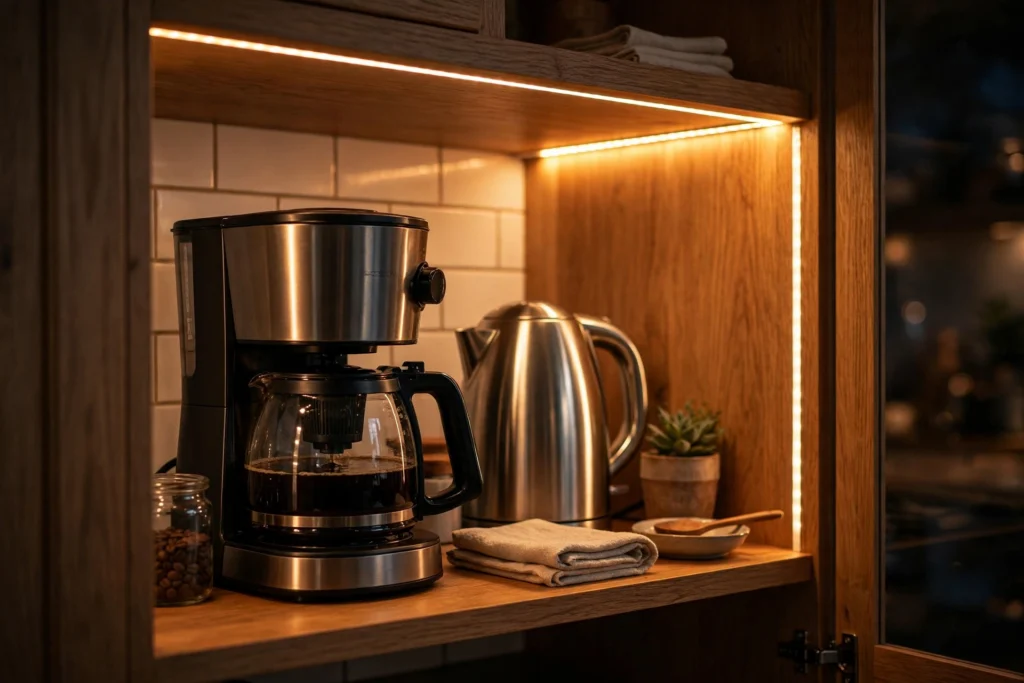
A dark garage interior makes appliances hard to see and the whole thing feel like a cave. Add a slim LED strip or a battery-powered puck light under the garage’s top panel, ideally on a motion sensor or a door-activated switch so it turns on when you open up. Warm white light around 3000K flatters wood tones and makes morning coffee prep genuinely pleasant. Lighting also improves safety, since you can see hot surfaces and water levels clearly. It is a small detail with an outsized effect, echoing the calm, intentional feel of a minimalist kitchen designed for a calm, clutter-free space.
11. Choose a Stainless Roll-Down Garage
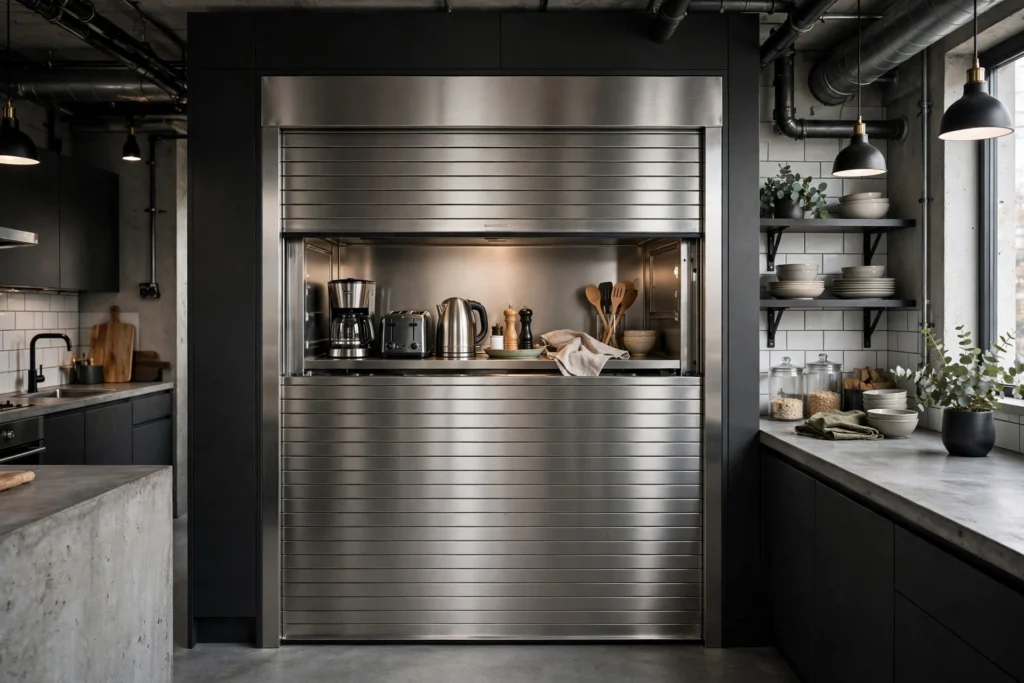
For modern and industrial kitchens, a stainless steel roll-down door brings a sleek, commercial-kitchen edge. The metal door wipes clean, resists heat from toasters and coffee machines, and pairs naturally with stainless appliances and range hoods. Installation kits are widely available for standard cabinet widths, making this a realistic weekend project for handy homeowners. The roll-down action needs only vertical clearance, so it fits under low-hanging cabinets where hinged doors would collide. Keep the steel brushed rather than mirrored to hide fingerprints from daily use.
12. Place the Garage Near the Breakfast Zone
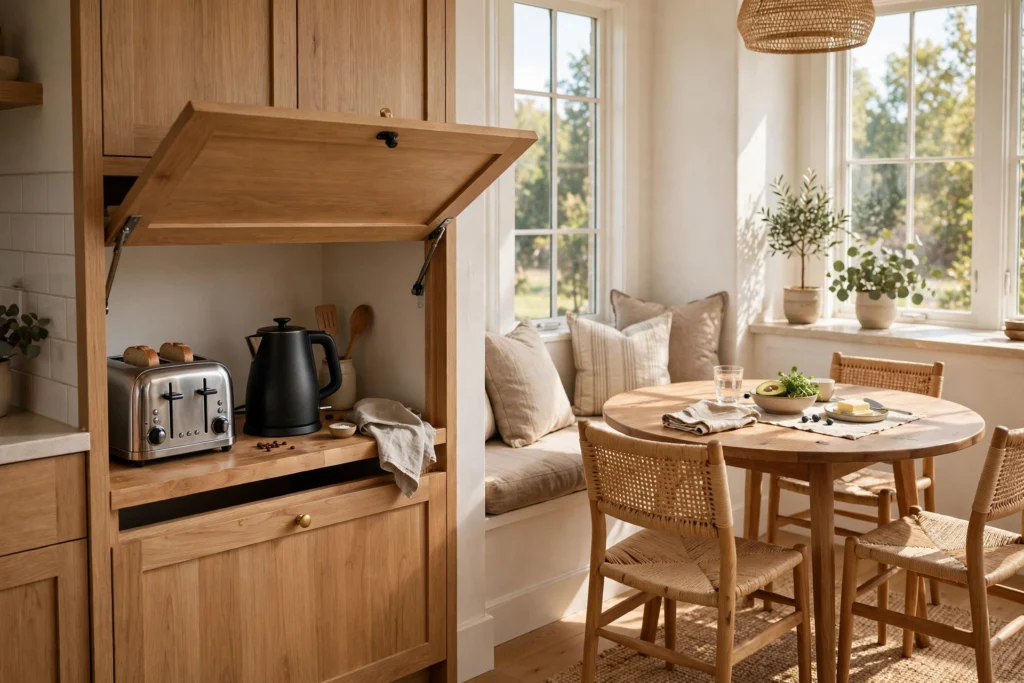
Location matters as much as design: position the garage where its appliances actually get used. A coffee and toaster garage belongs near the breakfast table or the end of the island, not across the kitchen by the range. Mapping appliance zones — coffee near seating, mixer near the baking counter, blender near the fridge — cuts daily steps and keeps traffic out of the cooking triangle. If you are planning a remodel, sketch your morning routine first and place the garage on that path. The best appliance garage is the one you never have to walk across the kitchen to reach.
13. Ventilate for Heat-Producing Appliances
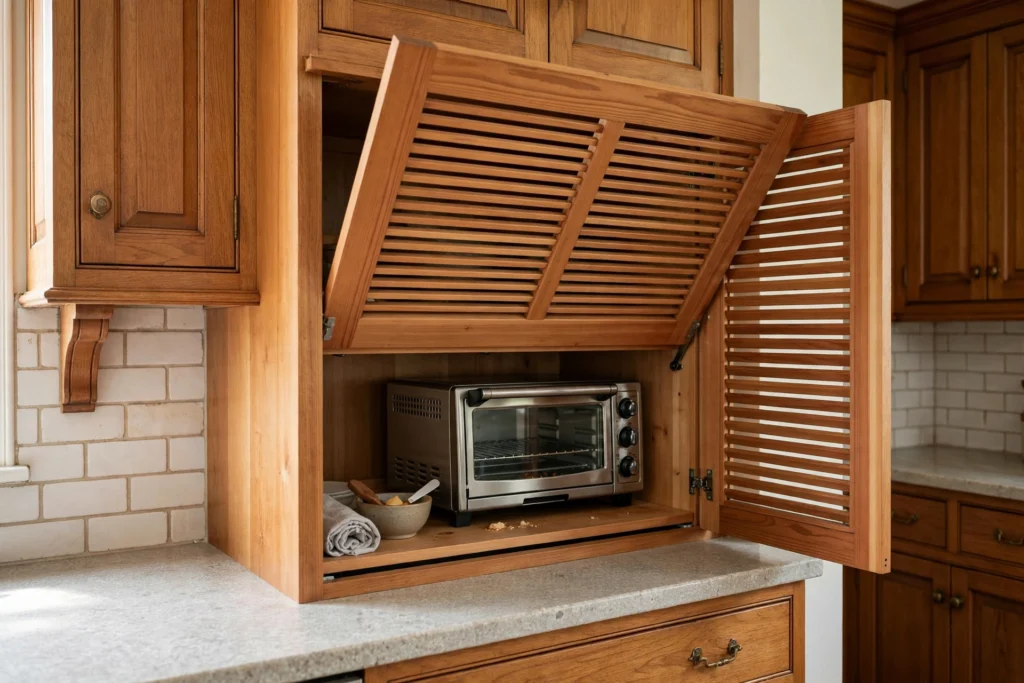
Toasters, toaster ovens, and coffee machines generate heat, so a closed wooden box needs airflow. Leave a vent gap at the back of the garage, choose a door style with slatted or mesh panels, or simply make it a habit to leave the door open while heat-producing appliances run. Some homeowners install a small heat-resistant mat under the toaster for extra protection. Never run a toaster oven in a fully sealed cabinet — heat buildup can damage finishes and create a safety risk. A ventilated garage keeps appliances hidden without compromising the safety of your cabinetry.
14. Double the Garage as a Charging Station
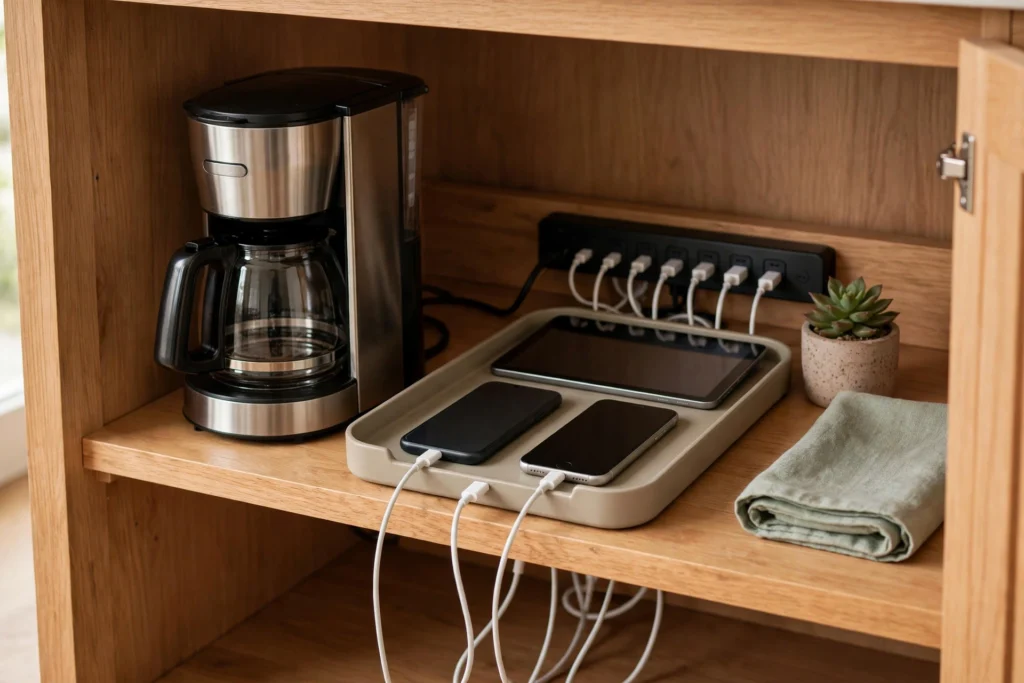
Once the garage has interior outlets, add a device-charging zone: a small tray or dock for phones, tablets, and earbuds keeps tech off the counters too. Run a multi-port USB charger from the interior outlet and coil cables with short ties so the station stays tidy. This is especially handy in kitchens that double as homework or command centers — devices charge out of sight instead of sprawling across the island. Just keep the charging tray away from the coffee machine’s splash zone, and the garage becomes the single hardest-working hidden corner in your kitchen.
15. Style the Top of the Garage
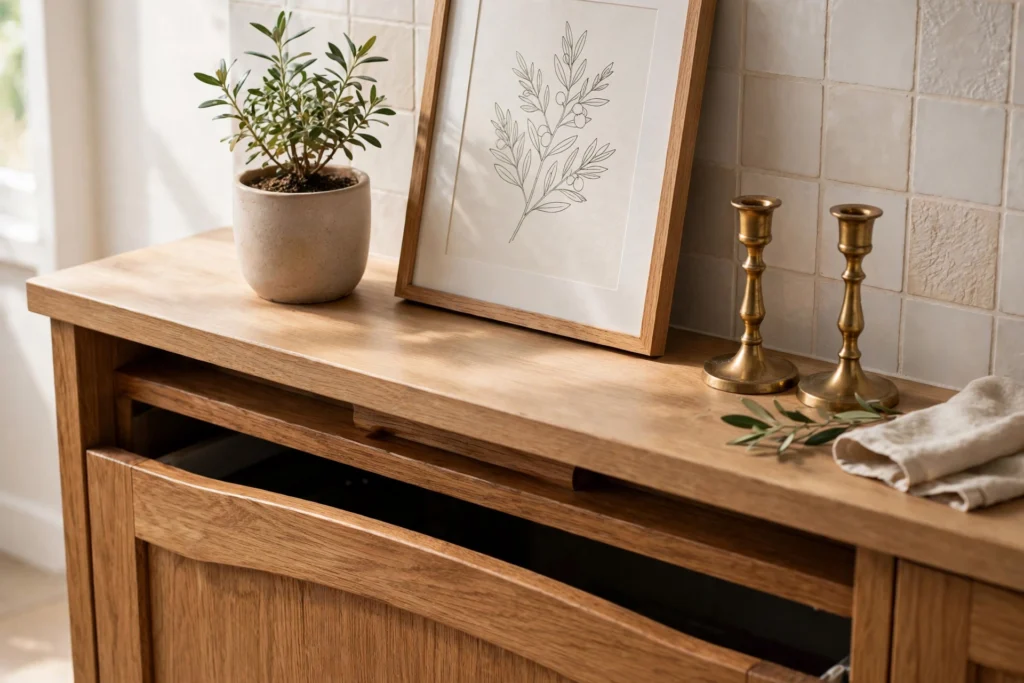
The cabinet top above a countertop-height garage is bonus display space — treat it like a shelf. A small plant, a piece of art leaned against the wall, or a pair of candlesticks turns the garage into a styled furniture moment rather than a utilitarian box. Keep the display low and simple so it does not fight with the wall cabinets above, and choose items that tolerate a little kitchen humidity. This finishing touch is what separates a basic storage cabinet from a considered design feature, proving that even the most functional pieces deserve a little styling attention.
Frequently Asked Questions
What is a kitchen appliance garage?
An appliance garage is a countertop-level cabinet with a closing door — tambour, hinged, pocket, or roll-down — that hides small appliances like toasters, coffee makers, and mixers while keeping them plugged in and ready to use. It bridges the gap between upper cabinets and the counter, turning dead counter space into concealed storage. The concept keeps kitchens looking tidy without sacrificing the convenience of having daily appliances within arm’s reach.
How much does an appliance garage cost?
A simple retrofit tambour kit installed in existing cabinetry can cost a few hundred dollars, while a custom-built garage matched to your cabinetry typically runs higher depending on size, door mechanism, and electrical work. Adding interior outlets requires an electrician, which adds to the budget. Pocket-door and lift-up mixer mechanisms sit at the premium end. For most kitchens, a well-built garage costs far less than new cabinets and delivers a daily visual payoff that rivals bigger renovations.
What appliances should go in an appliance garage?
Daily-use small appliances earn the spot: coffee maker or espresso machine, toaster or toaster oven, electric kettle, and stand mixer. Occasional-use items like blenders, food processors, and waffle makers fit well too if space allows. BHG’s guide to storing small appliances out of sight shows how garages, niches, and pull-out platforms keep everything accessible yet hidden. Avoid storing anything you use less than monthly — deep cabinets or the pantry suit those better.
Can I add an appliance garage to existing cabinets?
Yes — retrofitting is one of the most popular approaches. If you have open counter space beneath wall cabinets with enough vertical clearance, a cabinetmaker can build a box to fit, or you can install a ready-made tambour kit. You will likely need an electrician to add interior outlets. For renters or tight budgets, a countertop hutch or a small cabinet with doors achieves a similar effect without permanent changes. Measure carefully, especially the height of your tallest appliance with lids or heads open.
Do appliance garages need ventilation?
They do when housing heat-producing appliances like toasters and toaster ovens. Provide airflow with a vent gap at the back, slatted door panels, or simply by leaving the door open during use. Coffee makers and kettles produce less heat but still benefit from air circulation and a wipeable interior surface. For more storage ideas that keep small kitchens organized, see our small pantry design ideas that maximize every inch — the same hide-it-smart principles apply throughout the kitchen.
Keep Exploring
An appliance garage is one of those upgrades you use every single day without thinking about it — which is exactly the point. Whether you retrofit a tambour kit under existing cabinets or design a full coffee-station wall, hiding the small appliances instantly calms the whole kitchen. Pick the door style and location that match your routine, and the clutter takes care of itself.
Ready for more ways to streamline your cooking space? Browse more Kitchen Decor ideas, from clever storage to calming minimalism, and keep building a kitchen that stays beautiful even on the busiest mornings.





[…] pull-out cabinets to furniture-grade enclosures, there is a solution for every layout and budget. Kitchen appliance garage ideas that hide the clutter apply the same out-of-sight thinking to small […]