
Every kitchen has one, and almost nobody wants to look at it. The trash can is the necessary eyesore — smelly, bulky, and always in the way of an otherwise beautiful room. These kitchen trash can storage ideas hide it completely or, when hiding is not possible, make it worth displaying. From pull-out cabinets to furniture-grade enclosures, there is a solution for every layout and budget. Kitchen appliance garage ideas that hide the clutter apply the same out-of-sight thinking to small appliances.
Before choosing, measure twice. A waste container solution lives or dies on dimensions: the bin’s height, width, and depth must fit the cabinet opening with room for the lid mechanism and your hand. Standard pull-out frames fit 35-quart bins; check your cabinet’s interior before ordering anything. Also plan for two streams — trash and recycling — since most households need both, and a solution that hides only one bin solves half the problem.
1. Install a Pull-Out Cabinet Trash
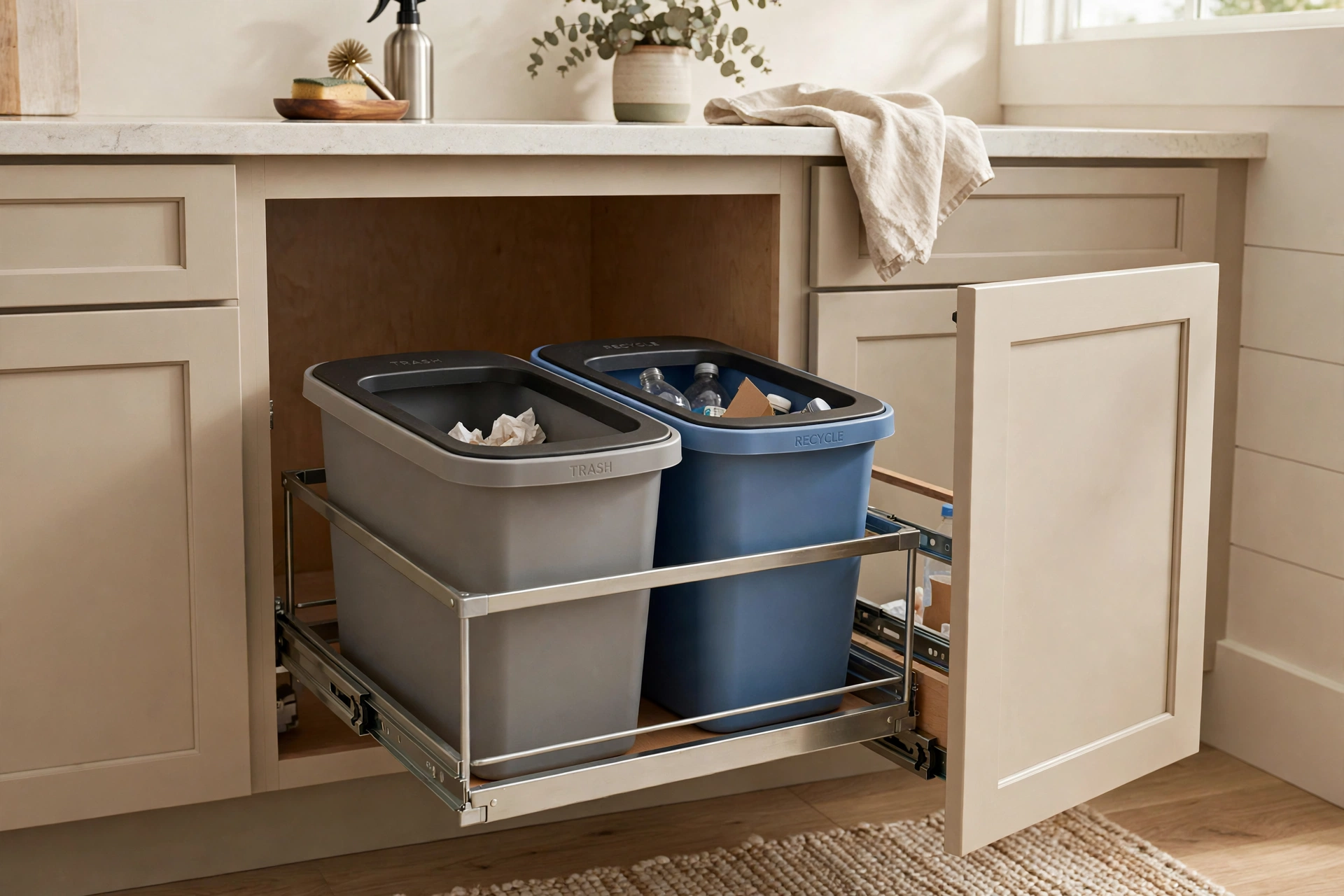
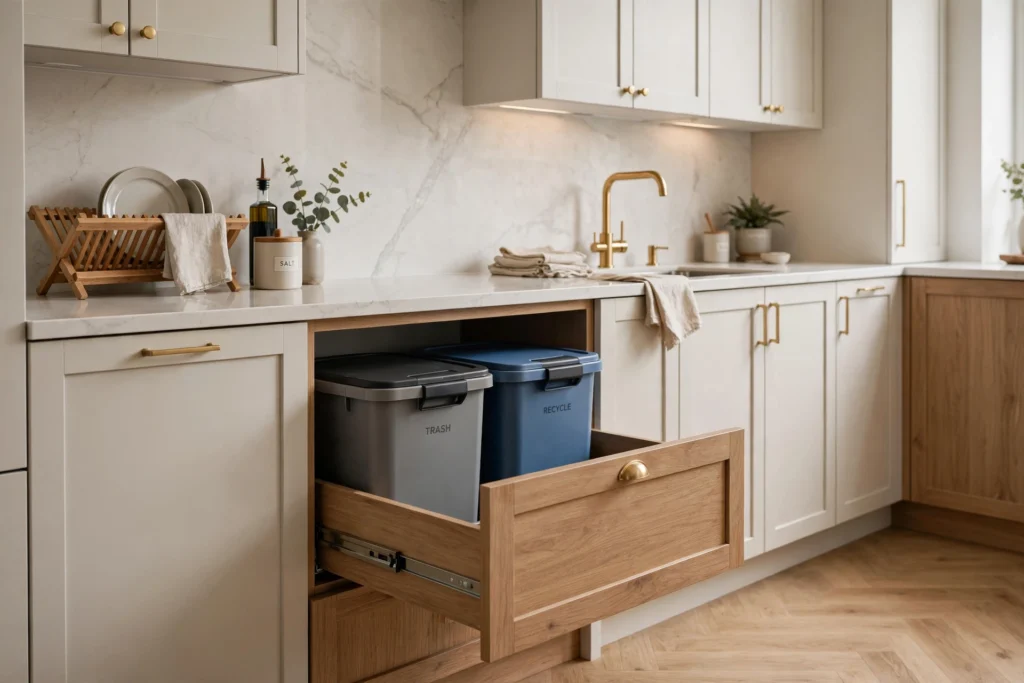
The gold standard of trash storage is a pull-out frame mounted inside a base cabinet: open the door, glide the bins out on smooth slides, toss, and push closed. Soft-close slides keep it quiet, and full-extension glides bring the back bin fully into reach. Most frames hold two 35-quart bins — trash and recycling side by side. This is a weekend DIY project with a conversion kit, or a standard option in new cabinetry. Keep a small bin liner stash in the cabinet above so bag changes never require a trip across the kitchen.
2. Try a Tilt-Out Cabinet Door
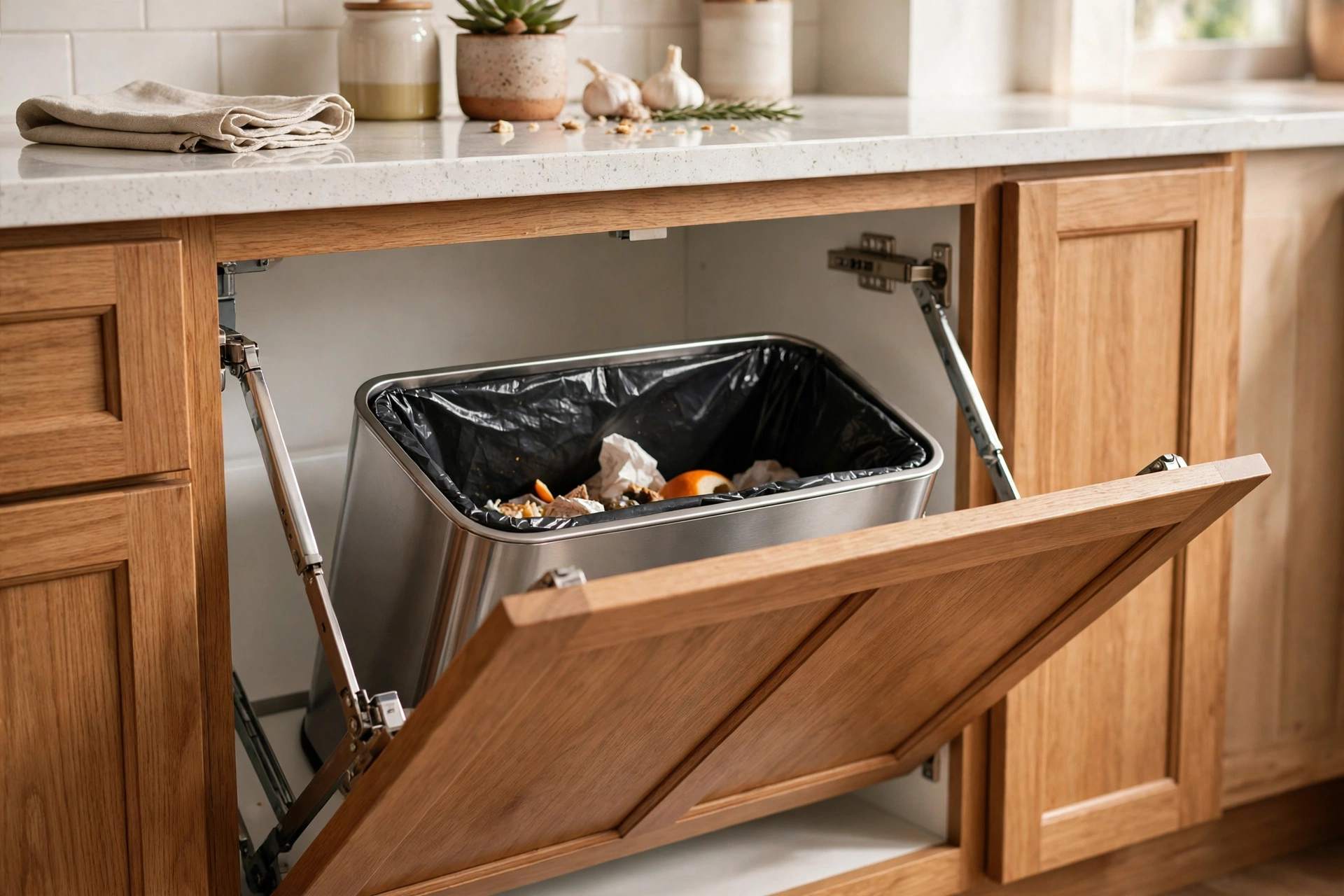
Tilt-out cabinets hide the bin behind a false drawer front that tips forward — charming, furniture-like, and perfect for trash-only setups. The bin hangs on the door’s interior frame, so opening is one smooth motion with no bending to reach inside a cabinet. Tilt-outs work best with a single tall kitchen bag and a cabinet at least 15 inches wide. They are quieter than pull-outs (no slides to wear) but hold less, so they suit smaller households or pair one tilt-out for trash with a separate recycling solution. The furniture look is their real selling point.
3. Use a Slide-Out Double Bin
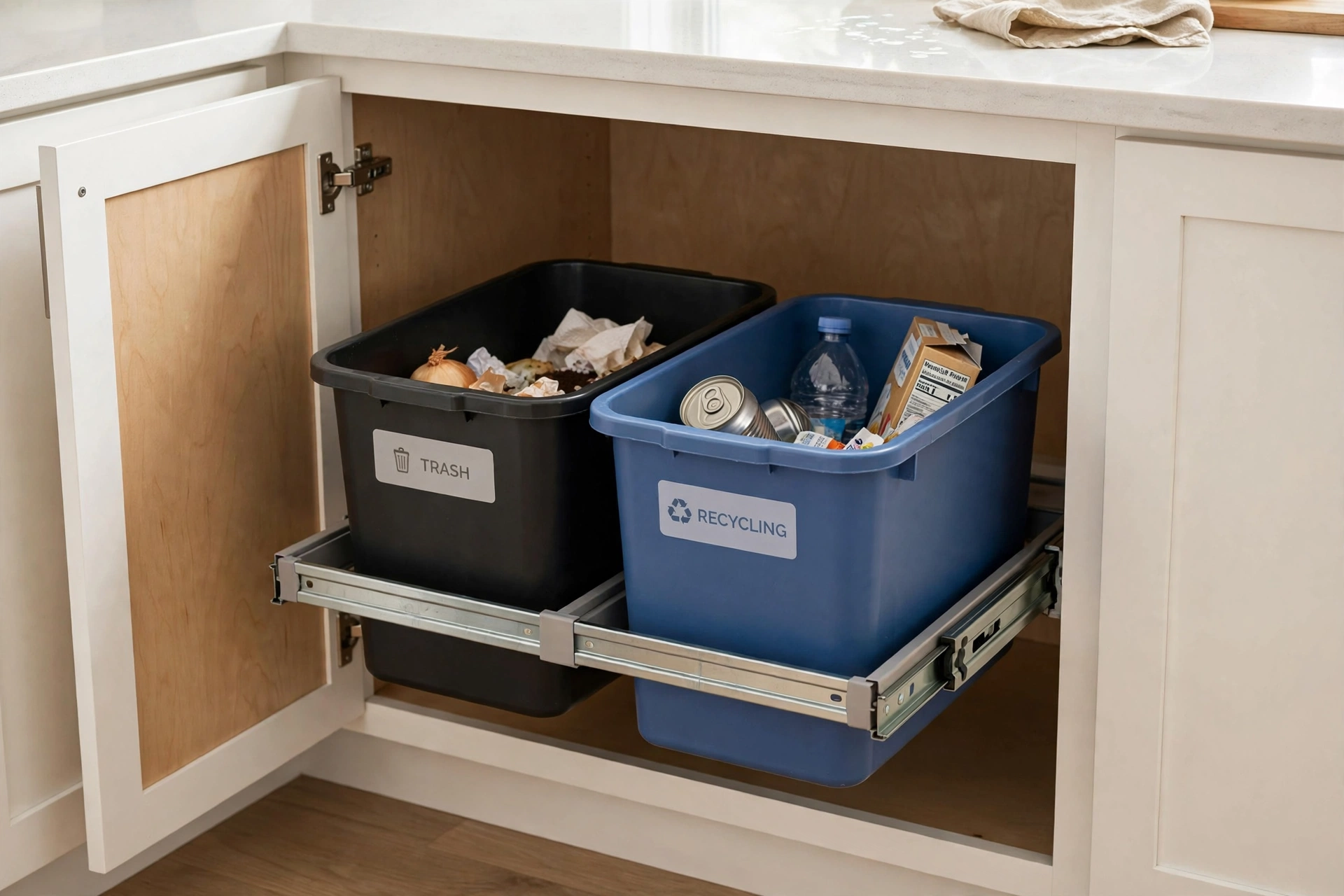
Double-bin slide-outs are the workhorse for households serious about sorting. Two full-size bins glide out together on heavy-duty slides — trash on one side, recycling on the other — with lids that stay put while you toss. Look for frames with a 100-pound slide rating so loaded bins glide smoothly for years. Some models add a small top shelf for bags and air fresheners, using the cabinet’s vertical space. Measure your cabinet’s interior width carefully: double units need at least an 18-inch opening, and the door must clear adjacent hardware when open.
4. Hide It in the Pantry
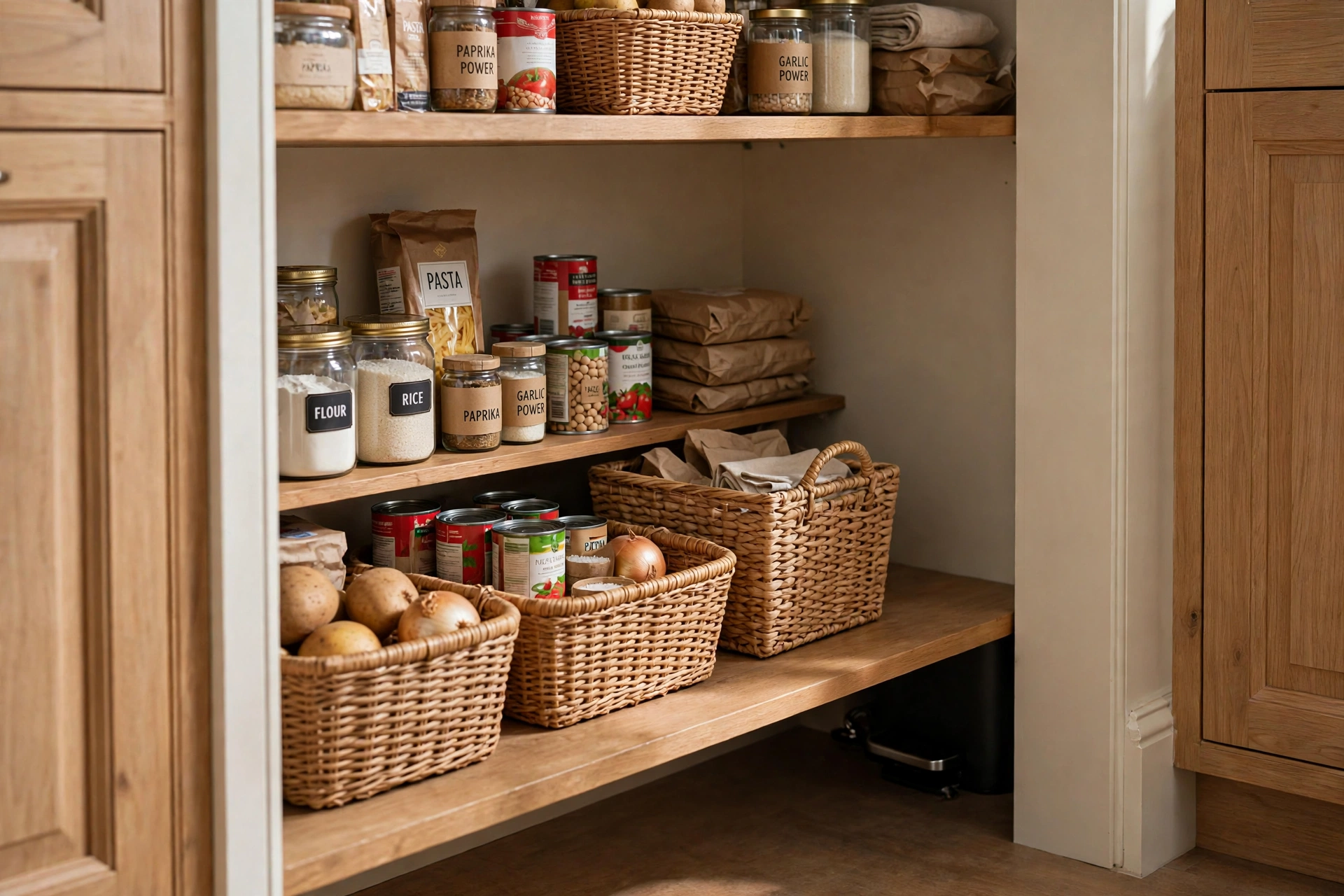
If your pantry has floor space to spare, it makes an excellent trash home — out of sight, steps from the prep zone, and easy to ventilate. Dedicate a low shelf or floor corner to a lidded bin, add a motion-sensor light so you can see what you are tossing, and keep a small step trash can inside for the compostables you handle constantly. The pantry door contains odors better than an open kitchen corner. This works especially well in butler’s pantries and walk-ins; Butlers pantry ideas for a functional luxury space show pantries designed with exactly this kind of hidden utility in mind.
5. Build a Trash Cabinet From a Hamper
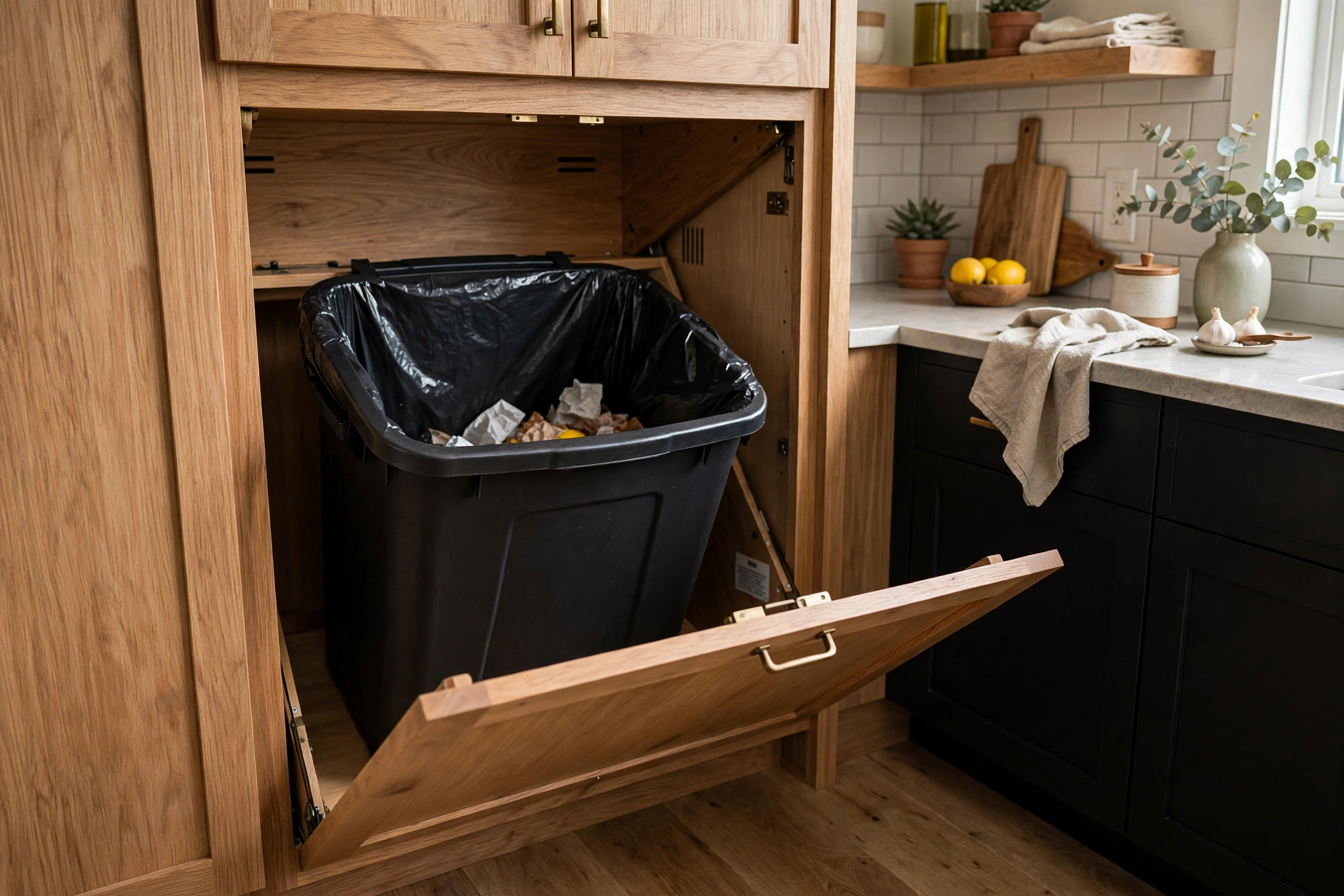
A wooden tilt-out hamper — sold for laundry rooms — converts beautifully into a trash cabinet with zero carpentry. Remove the canvas bag, drop in a tall kitchen bin, and the louvered or solid front hides it completely while looking like intentional furniture. Choose a hamper at least as tall as your bin plus a few inches for the bag’s overhang. This is one of the cheapest furniture-grade solutions: hamper cabinets cost a fraction of kitchen-specific tilt-outs. Place it at the end of a cabinet run or beside the island where it reads as a side table.
6. Use a Slim Bin Between Cabinets
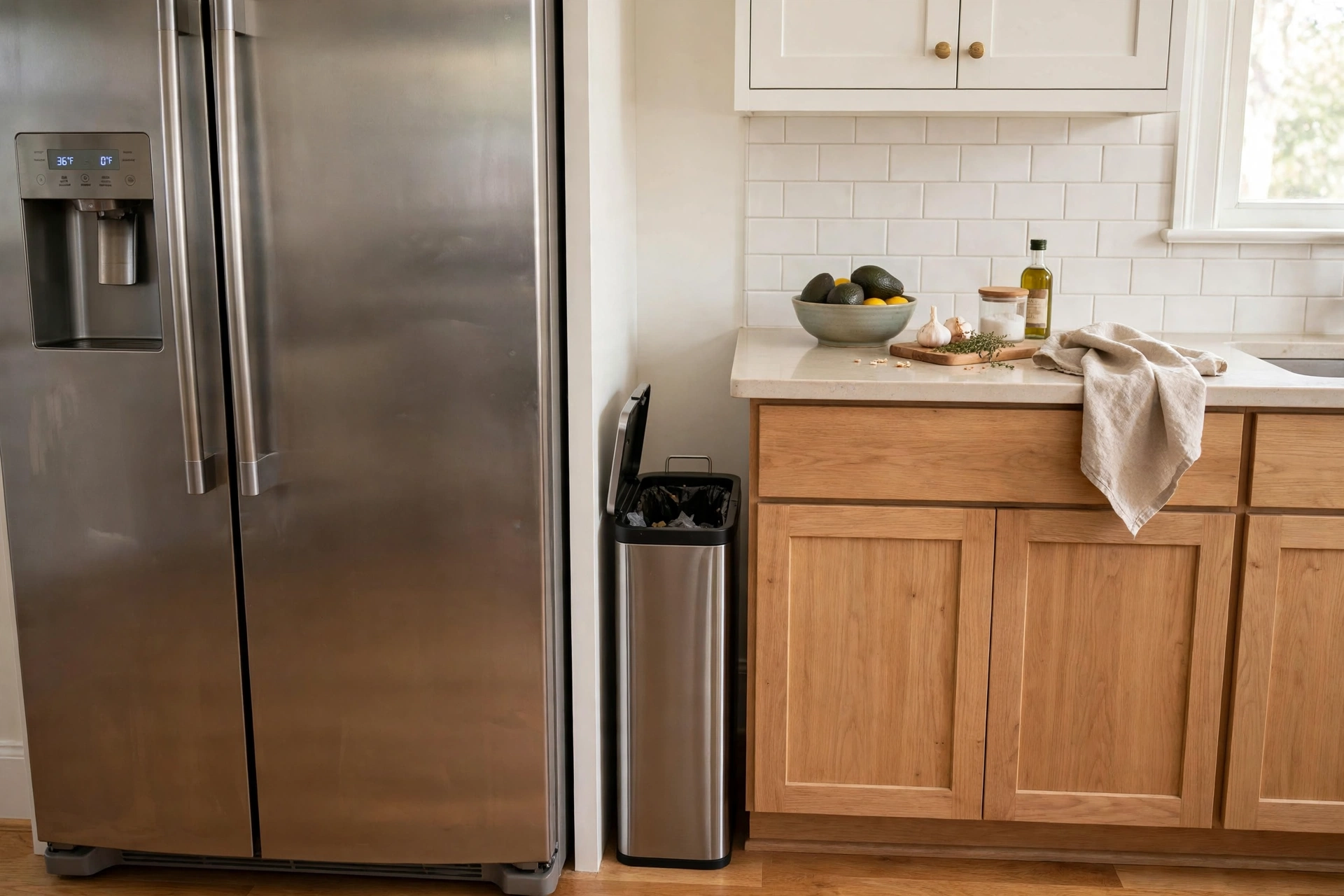
That awkward 6-inch gap between the fridge and the counter is a slim trash can’s destiny. Narrow bins — some just 7 inches wide — slide into dead space and hold a surprising amount, especially for recycling or compost. Look for tall, rectangular profiles that use vertical space, and choose a step or touch-top lid since the bin will sit in a tight slot. Measure the gap at the floor, counter, and middle — walls and appliances are rarely perfectly parallel. This idea turns wasted inches into genuinely useful storage.
7. Tuck It Under the Sink
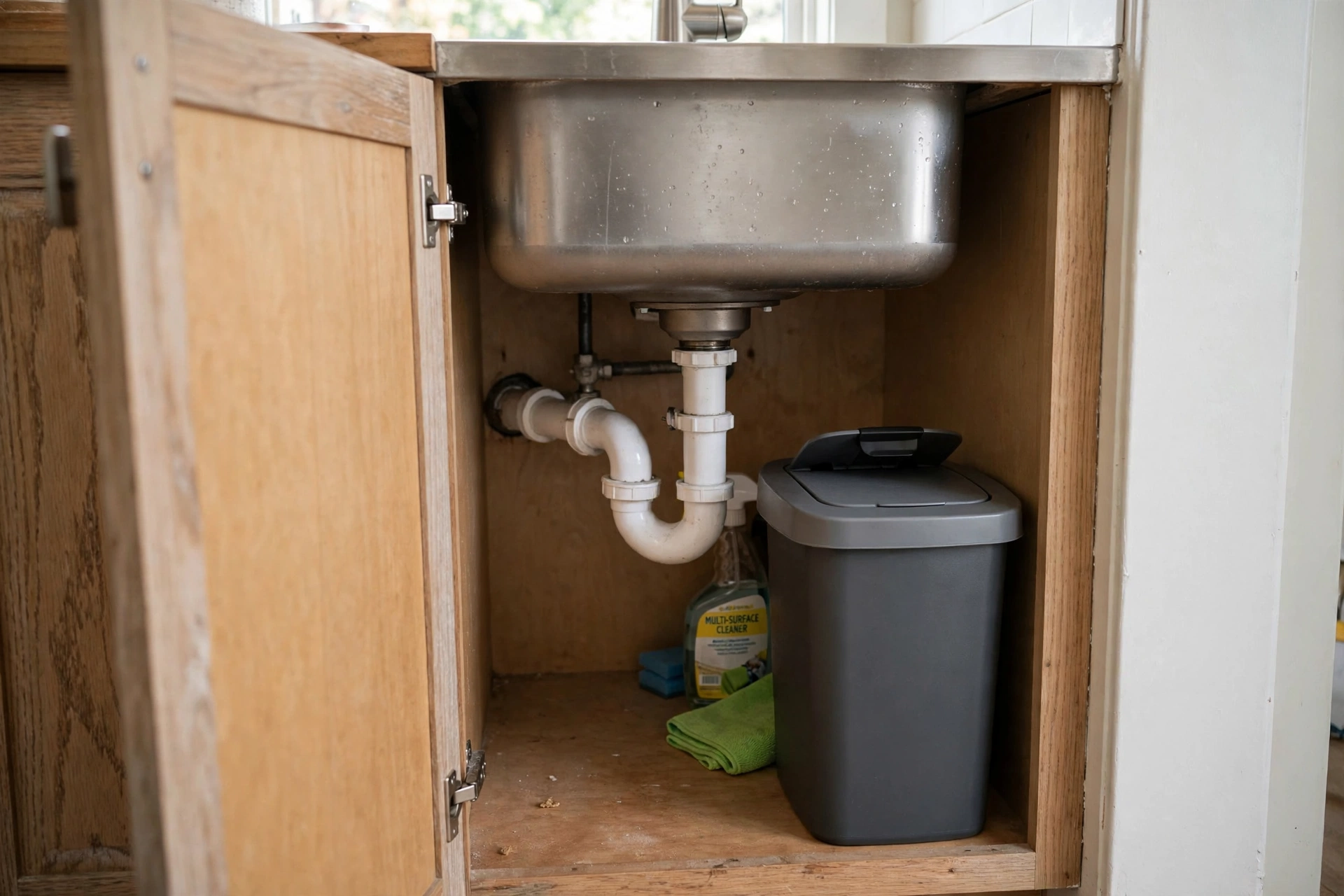
The cabinet under the sink is prime trash real estate in small kitchens: central, hidden, and steps from food prep. A compact bin with a tight lid fits beside the plumbing — measure around pipes and the disposal before buying. Door-mounted bag holders keep liners handy, and a small caddy on the door interior holds dish soap and sponges above the bin. The trade-offs are real: the space is cramped, plumbing can drip, and odors concentrate. A lidded bin, a drip tray underneath, and an odor absorber make it work. For tiny kitchens, the convenience outweighs the compromises.
8. Choose a Designer Bin Worth Displaying
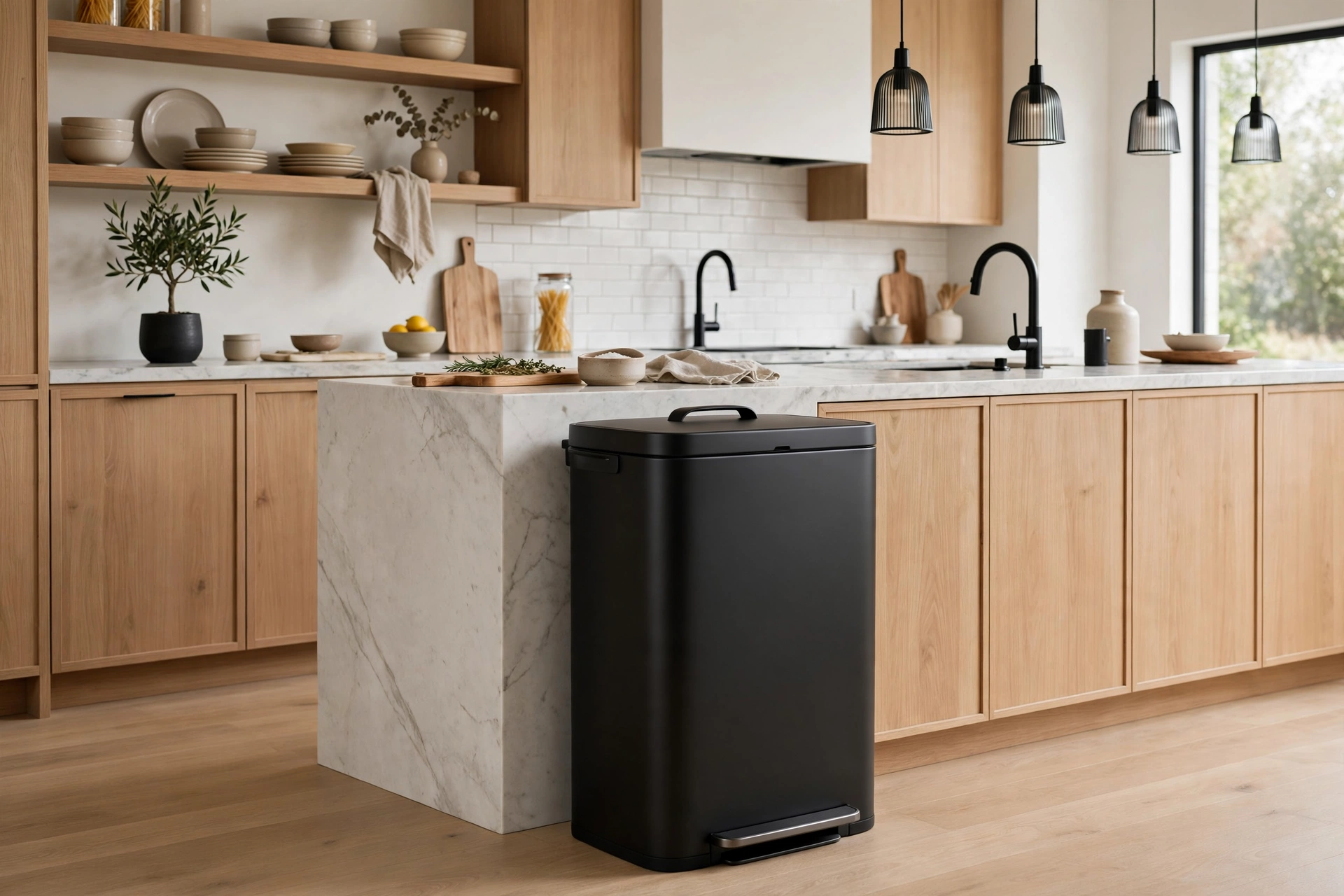
Sometimes the smartest hiding strategy is not hiding at all — it is buying a bin so good-looking it becomes decor. Designer cans in matte black, brushed steel, or sculptural shapes sit proudly in open kitchens and loft spaces. Look for fingerprint-resistant finishes, soft-close lids, and liners that fit without ugly overhang. A beautiful bin costs more upfront but saves the contortions of hiding a cheap one. Style the corner around it — a small plant, a framed print above — and the bin reads as an intentional design choice rather than a surrender.
9. Hide It in the Island End
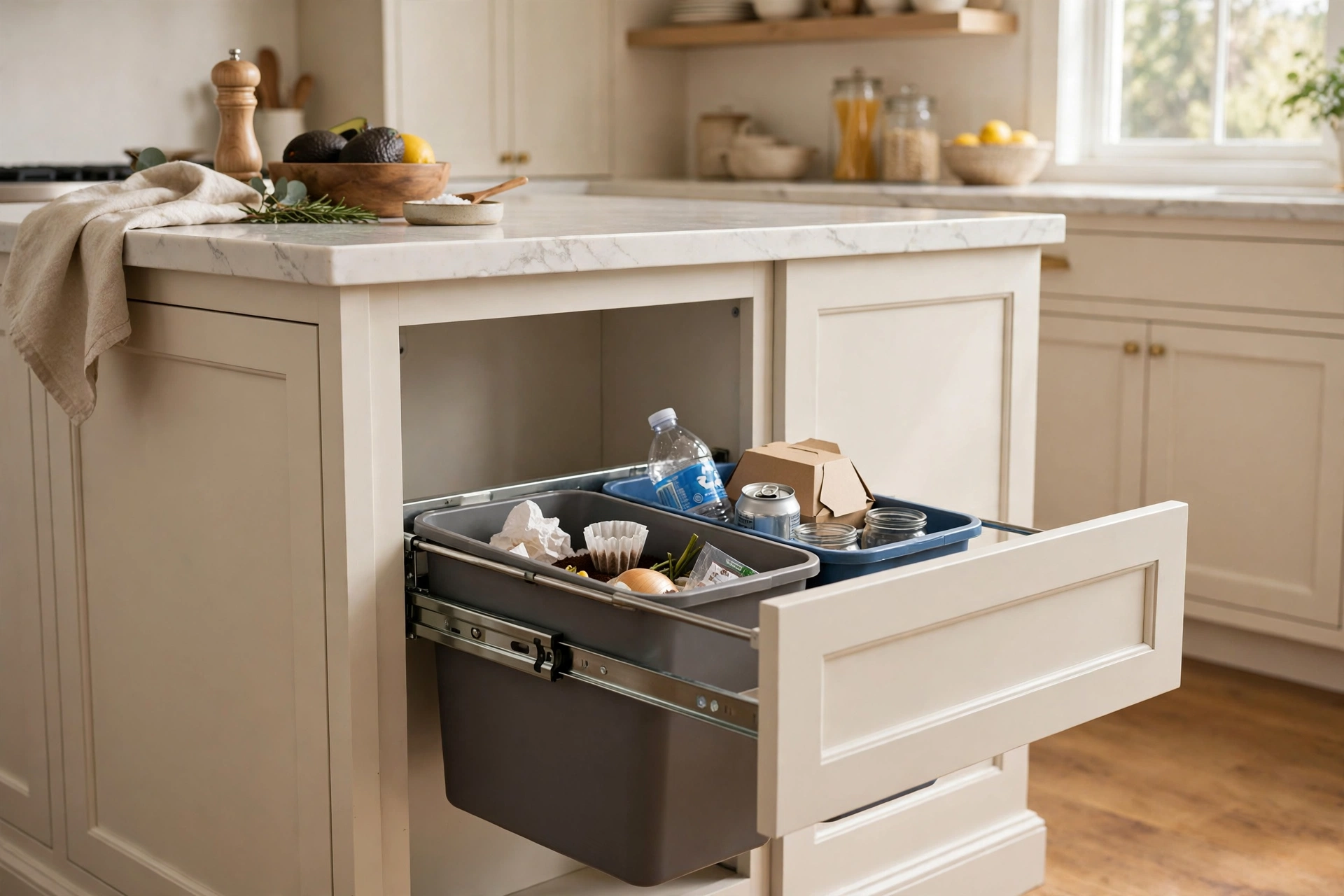
Kitchen islands often have dead-end panels begging for a purpose — convert one into trash storage. A pull-out or tilt-out installed in the island’s end puts the bin exactly where prep happens, cutting the steps between chopping and tossing. This is easiest to plan in a new island build, but retrofit kits exist for standard base cabinets too. Position it on the working side of the island, not the seating side, and confirm the door swing clears stools. An island bin plus a main pull-out elsewhere gives busy cooks two toss points, which is genuine luxury.
10. Use a Trash Drawer With a Lid
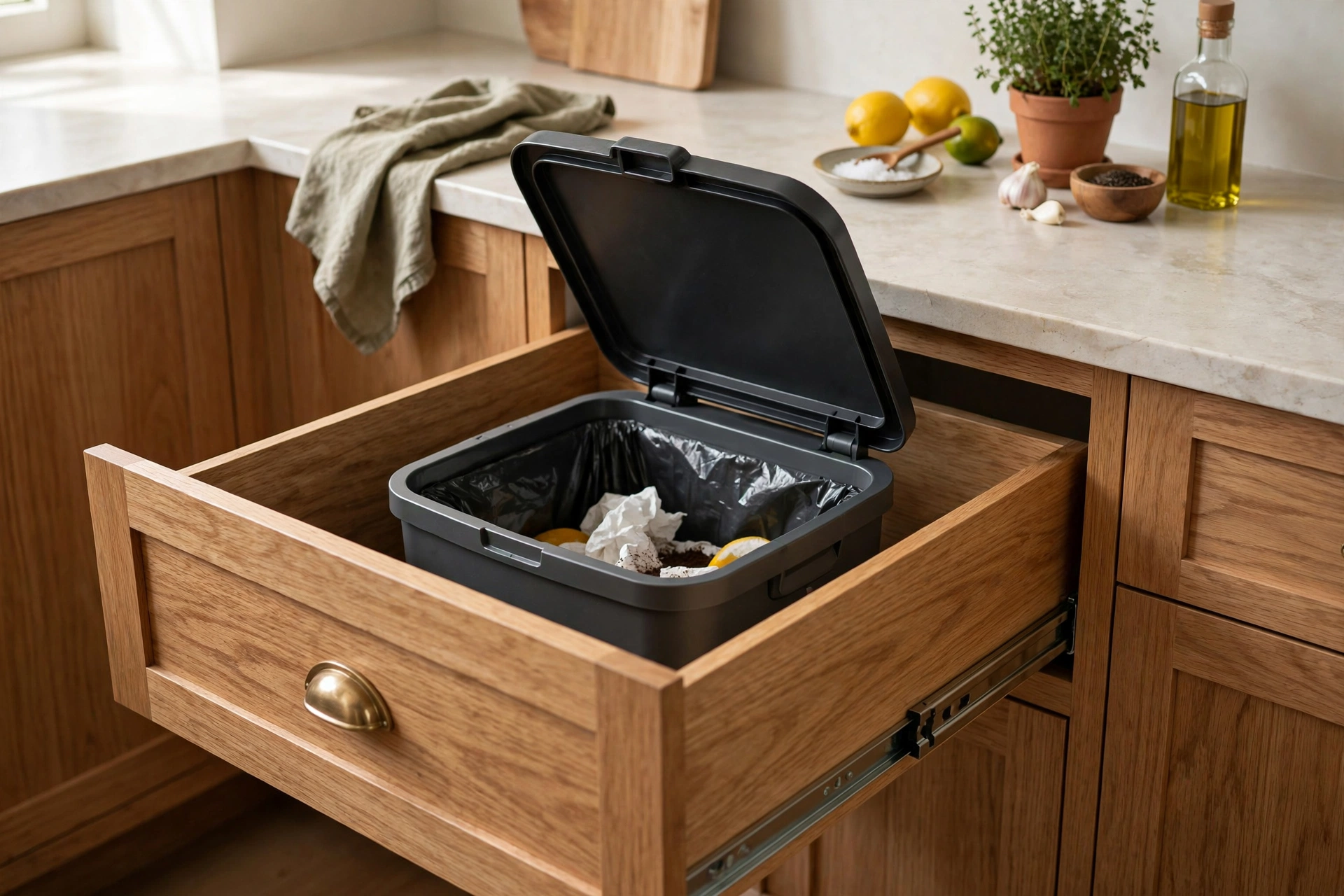
Deep drawers convert into brilliant trash stations: the drawer front matches your cabinetry perfectly, and inside, bins sit under a hinged lid that opens as the drawer glides out. Drawer systems handle heavy loads gracefully and keep everything — bins, bags, cleaners — in one organized unit. They cost more than simple pull-outs but look the most seamless, since the “trash cabinet” is invisible even with the drawer closed. Size the drawer for your bin height plus lid clearance, and choose full-extension, soft-close glides rated for the weight of full bins.
11. Conceal It Behind a Curtain
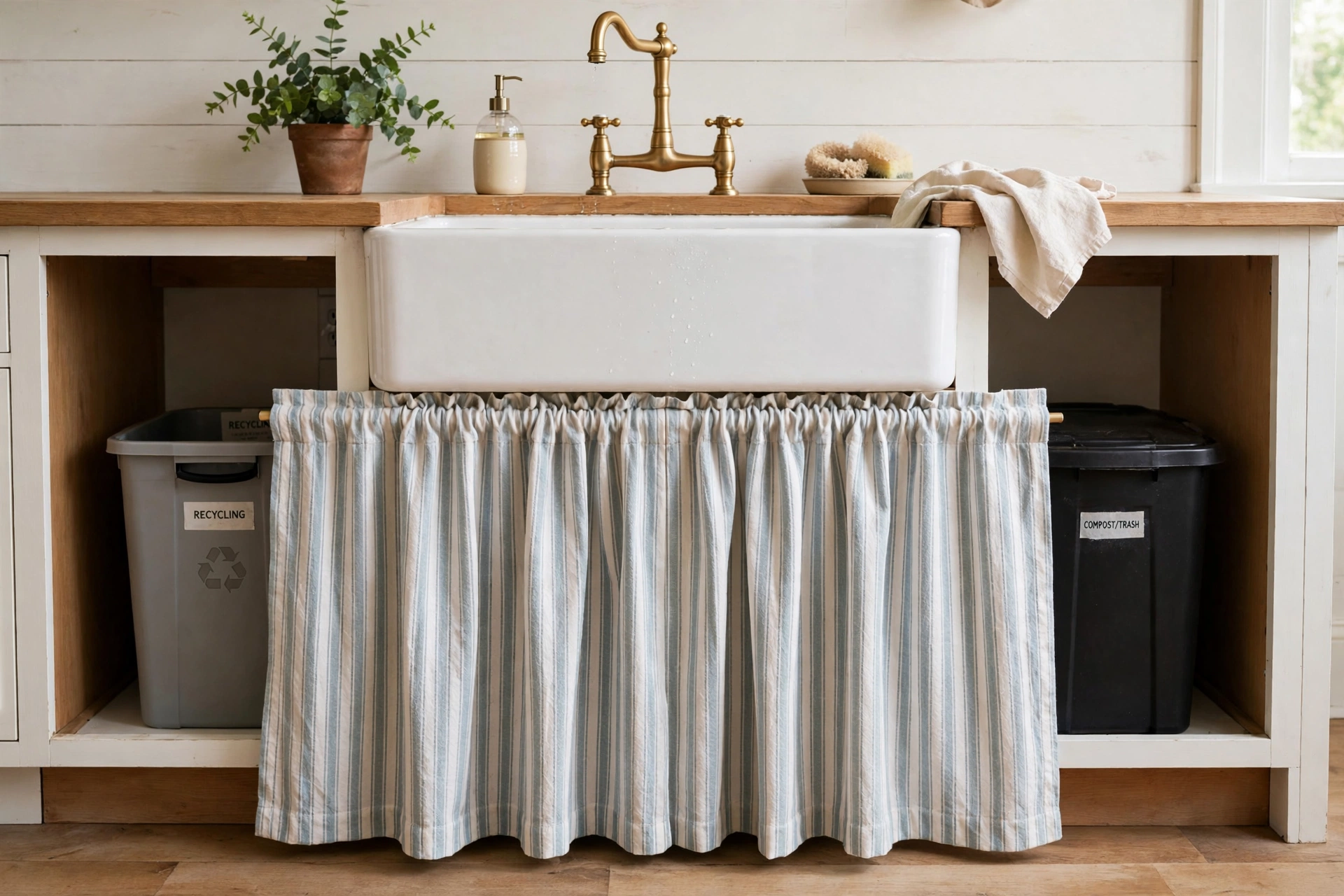
A sink skirt or cabinet curtain hides the bin with farmhouse charm and zero carpentry. Hang a washable curtain on a tension rod inside the cabinet opening or beneath an open sink base, and the trash disappears behind gathered fabric. Choose machine-washable material in a pattern you love — gingham, ticking stripe, linen — and make two so one can wash while the other hangs. This is the renter’s best friend and the cheapest idea on the list. The curtain also softens the kitchen visually, which is a bonus in hard-edged modern spaces.
12. Build a Custom Bin Enclosure
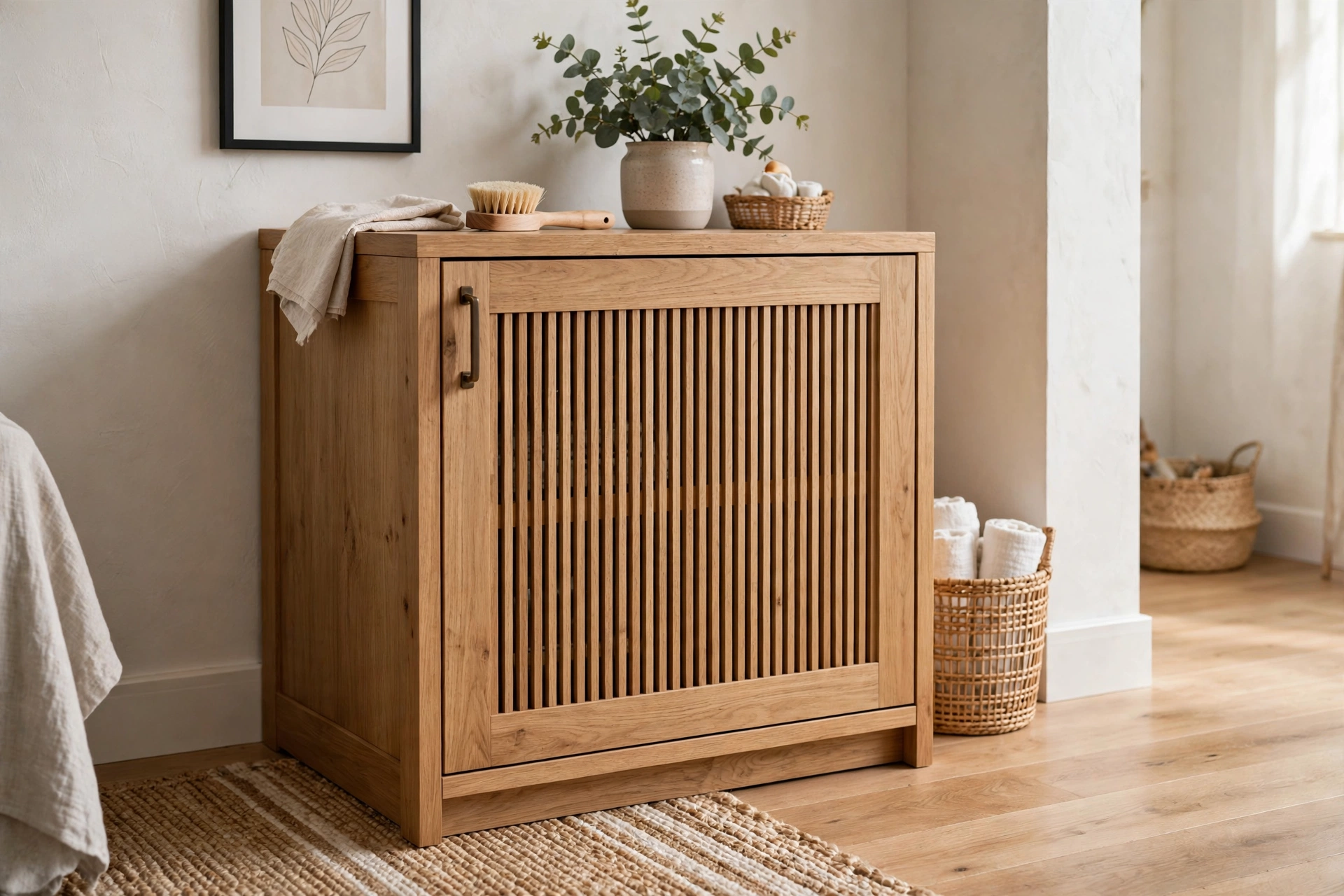
For the DIY-inclined, a custom enclosure built to your bin’s exact dimensions looks like bespoke furniture. A simple plywood box with a hinged or lift-off top, painted to match your trim, hides any bin while adding a surface for a plant or tray on top. Add ventilation holes near the bottom and a charcoal filter inside the lid to manage odors. Cut a bag-dispenser slot in the side for grab-and-go liners. This weekend project costs little, fits any odd-sized bin, and looks like it came with the kitchen — the hallmark of good DIY.
13. Use a Countertop Compost Crock
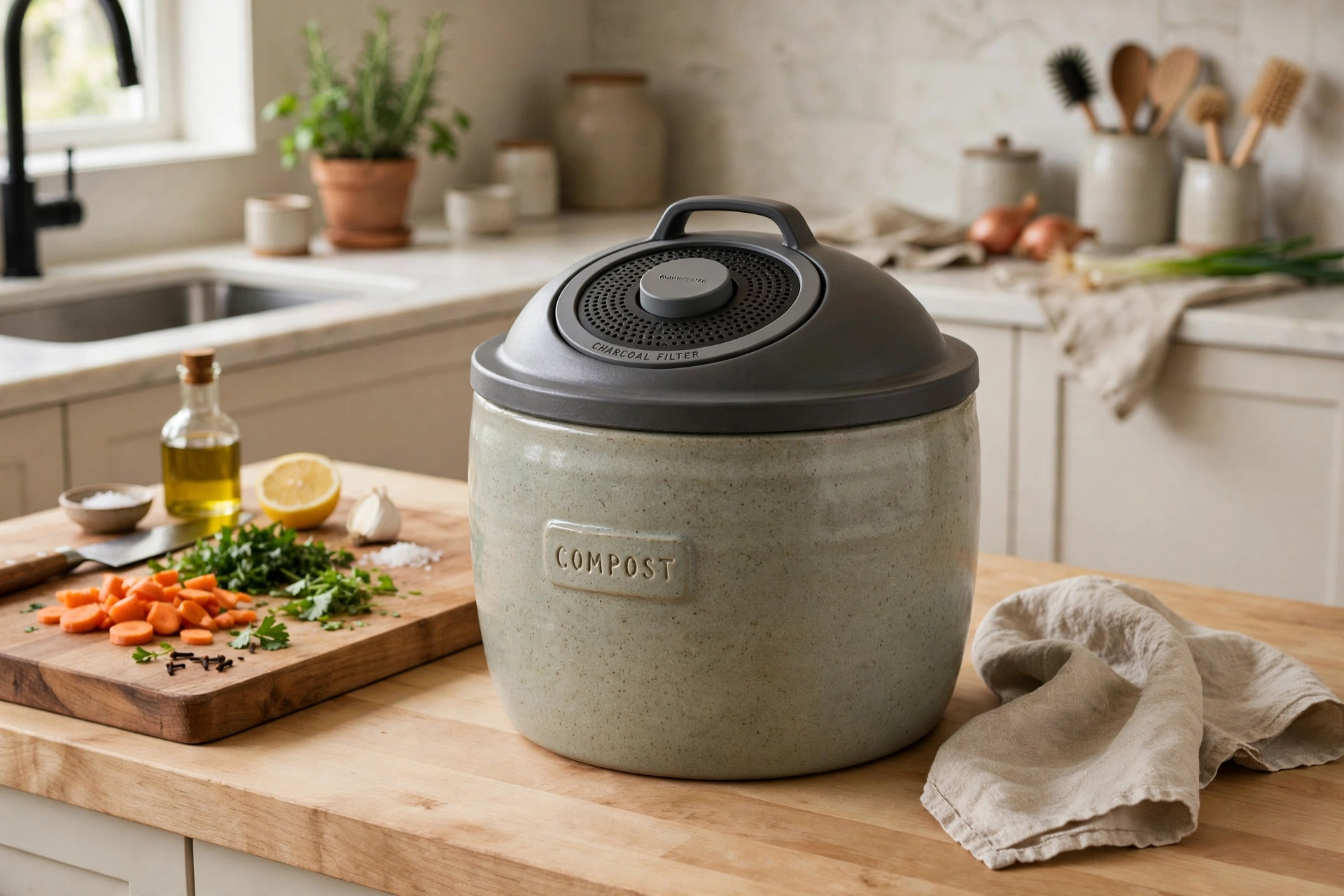
While the main trash hides away, give food scraps their own beautiful home: a countertop compost crock. Ceramic crocks with charcoal filters in the lid contain odors while looking like pottery, not garbage gear. Empty it into the outdoor bin or municipal compost every couple of days — small size is the point, since scraps should not sit. Keep it near the main prep zone so peeling and trimming go straight in. A crock plus a hidden main bin is the complete system: the pretty one you see, the practical one you do not.
14. Hide Recycling Beside the Trash
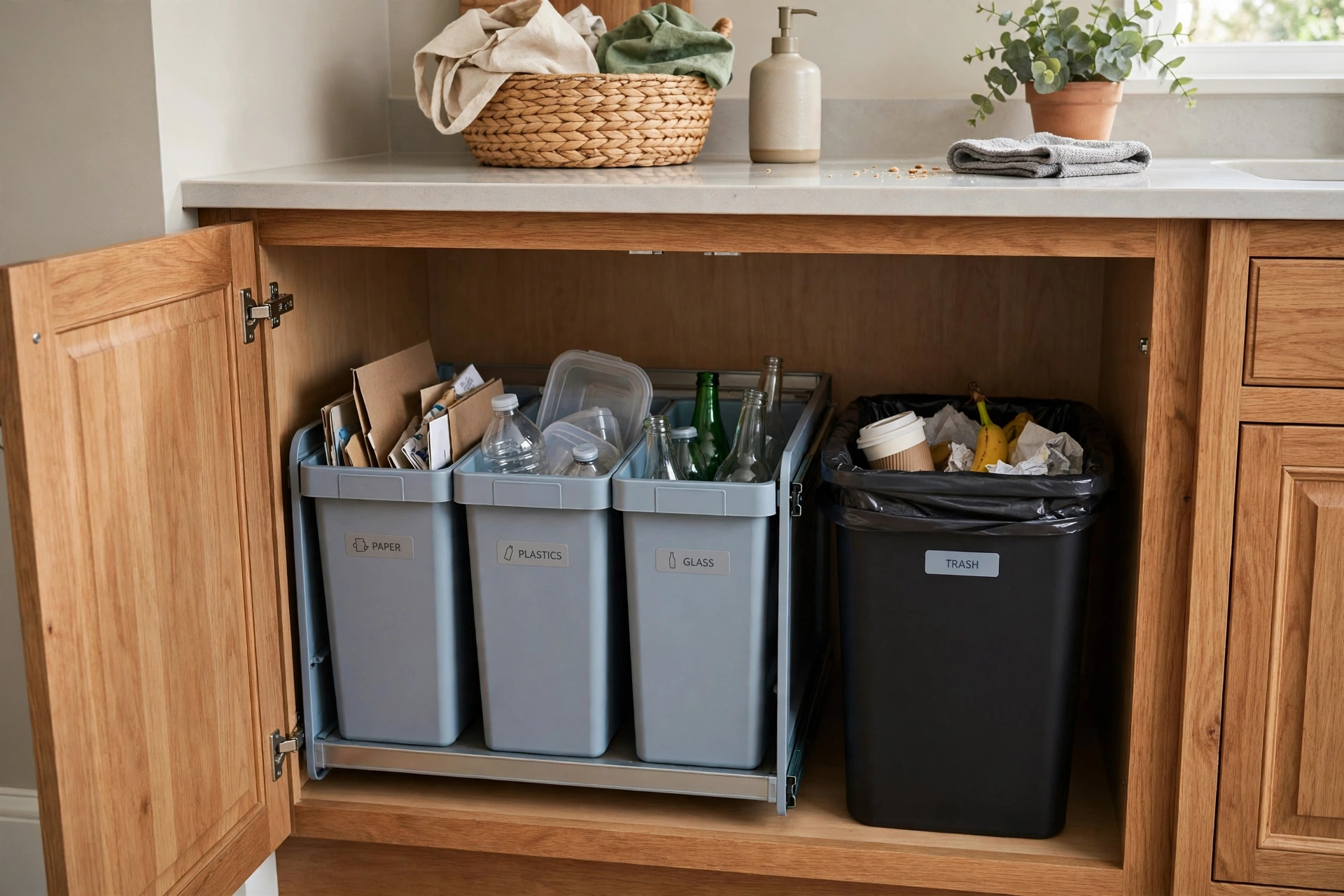
A trash solution that ignores recycling is only half done. Plan the recycling bin as part of the same hidden system — a second pull-out bin, a slim sorter beside the main cabinet, or stacked sorters inside a tall pantry cabinet. Label each stream clearly so the household sorts correctly without thinking. If space is truly tight, a single divided bin with a split lid handles trash and recycling in one footprint. Whatever the format, hiding both streams together keeps the kitchen’s clean lines intact and makes sorting effortless.
15. Choose Touchless With a Furniture Look
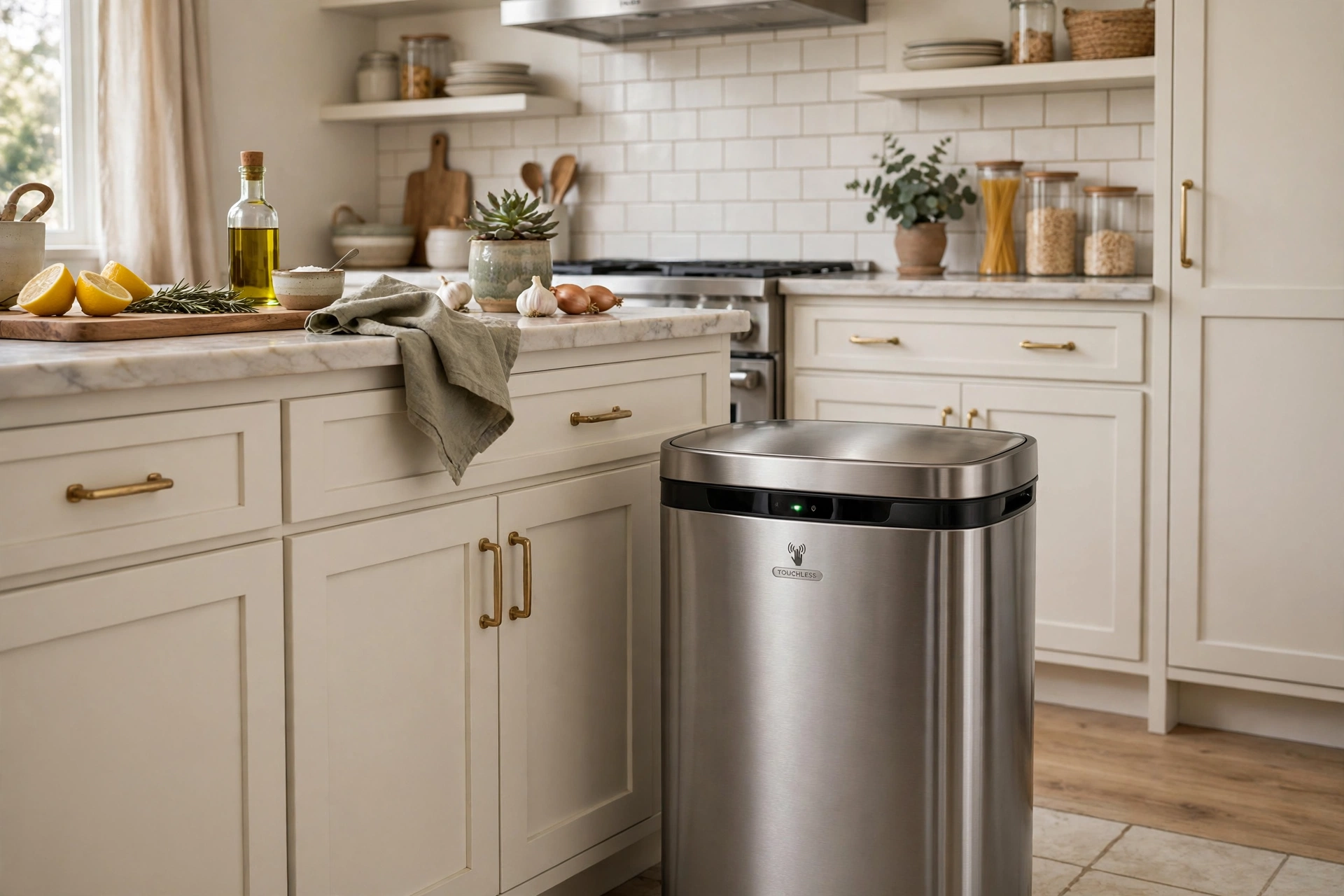
If your trash must live in the open, make it the best-looking open bin possible: a touchless can with a furniture-grade finish. Brands like simplehuman at simplehuman.com build sensor cans in brushed steel, matte black, and bronze that genuinely suit styled kitchens — the motion lid is hygienic and the profiles are slim. Place it at the end of a cabinet run or in a nook where it reads as intentional. Wipe the sensor weekly so it keeps responding, and use the brand’s fitted liners for a clean, bag-free look. Open does not have to mean ugly.
FAQ
Where is the best place to put a trash can in the kitchen?
Near the main prep zone and sink, since most trash is generated there — inside a base cabinet pull-out beside the sink is the ideal most designers recommend. Avoid placing bins where they block workflow triangles or door swings. If cabinet space is tight, the pantry, island end, or a slim gap between appliances are strong alternatives.
How do I keep a hidden trash cabinet from smelling?
Use bins with tight-fitting lids, take trash out before it overflows, and line the cabinet with a washable mat for easy wipe-downs. Baking soda in the bin bottom, a charcoal odor absorber stuck inside the cabinet door, and a lidded design all help. For persistent odors, drill small ventilation holes in the cabinet’s toe-kick area to keep air moving.
What size trash can fits in a standard kitchen cabinet?
Most base cabinets have about 21 to 24 inches of interior depth and fit 35-quart bins comfortably in pull-out frames; double-bin units need at least an 18-inch-wide opening. Tall 13-gallon kitchen bags need roughly 25 inches of vertical clearance including the lid mechanism. Always measure your cabinet’s interior — not the door — before ordering a frame or bin.
Are pull-out trash cabinets worth it?
For most households, yes. They hide the bin completely, keep odors contained, make bag changes easy, and protect floors from drips. Quality slide hardware lasts for years, and conversion kits make it a manageable DIY project. The main cost is the lost cabinet storage space — weigh that against how much you value an uncluttered kitchen.
How do I hide a trash can in a rental kitchen?
Use non-permanent solutions: a furniture-style tilt-out hamper, a designer bin worth displaying, a curtain on a tension rod, or a slim bin in a dead-space gap. Freestanding enclosures that look like side tables need no installation at all. Avoid drilling into cabinets or modifying doors — keep everything movable so you leave no trace.
Keep Exploring
The right trash solution is the one you stop noticing — it opens smoothly, closes quietly, contains the smell, and never interrupts the room’s good looks. Pick the approach that fits your cabinet layout and your tolerance for DIY, then enjoy a kitchen that looks as clean as it is. Kitchen corner cabinet ideas for every kitchen layout squeeze just as much hidden function from the trickiest spots in the room.