
There is a special frustration in cooking from a recipe, reaching for the smoked paprika, and finding three half-empty jars, two expired ones, and one mystery tin with no label. Spices are the soul of cooking, yet most kitchens store them like an afterthought — shoved in a dark cabinet where flavors fade and duplicates multiply. These kitchen spice rack ideas fix that for good, with formats for every layout: drawers, walls, doors, counters, and pull-outs, each designed to keep every flavor visible, fresh, and grabbable mid-recipe.
Before you buy anything, audit what you own. Spices lose potency fast — ground spices are at their best for about six months and whole spices for up to two years, since grinding massively increases the surface area exposed to air. Your collection’s size decides your format: a dozen everyday spices fit a drawer insert, while a 60-jar collection needs a dedicated pull-out. And if you grow your own, our kitchen herb garden ideas for fresh flavor and style pair beautifully with a well-organized dried-spice station nearby.
1. Use a Tiered Drawer Insert
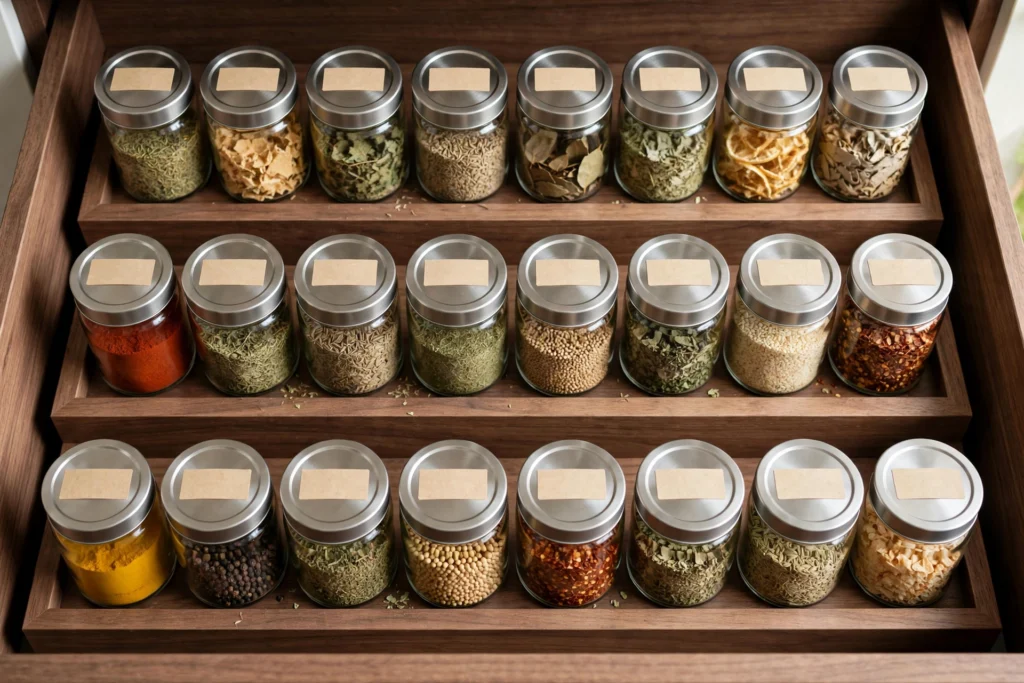
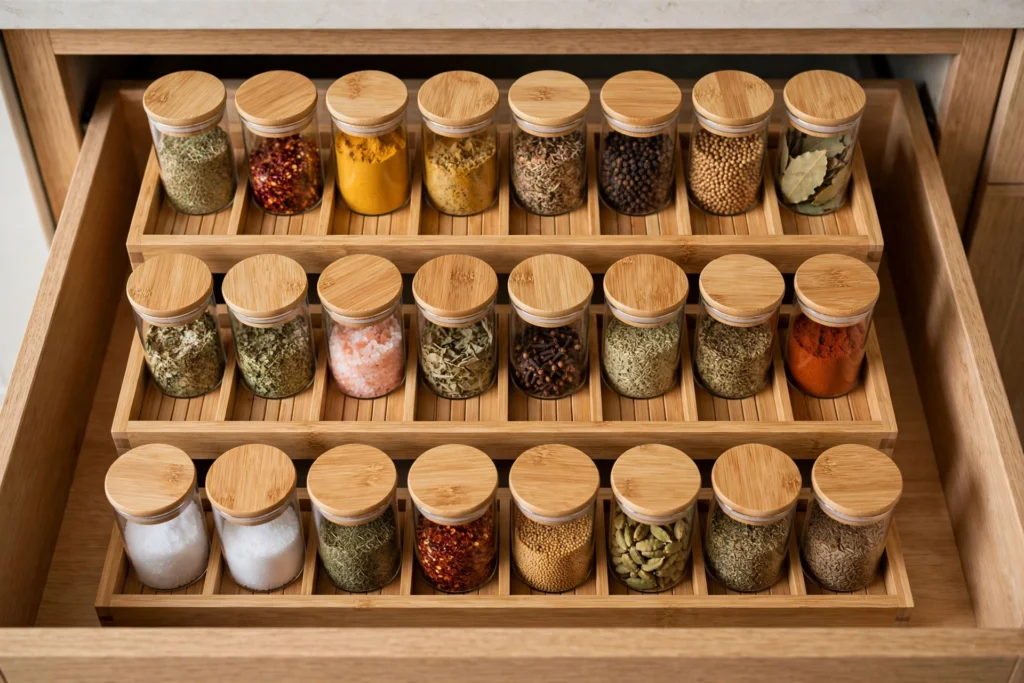
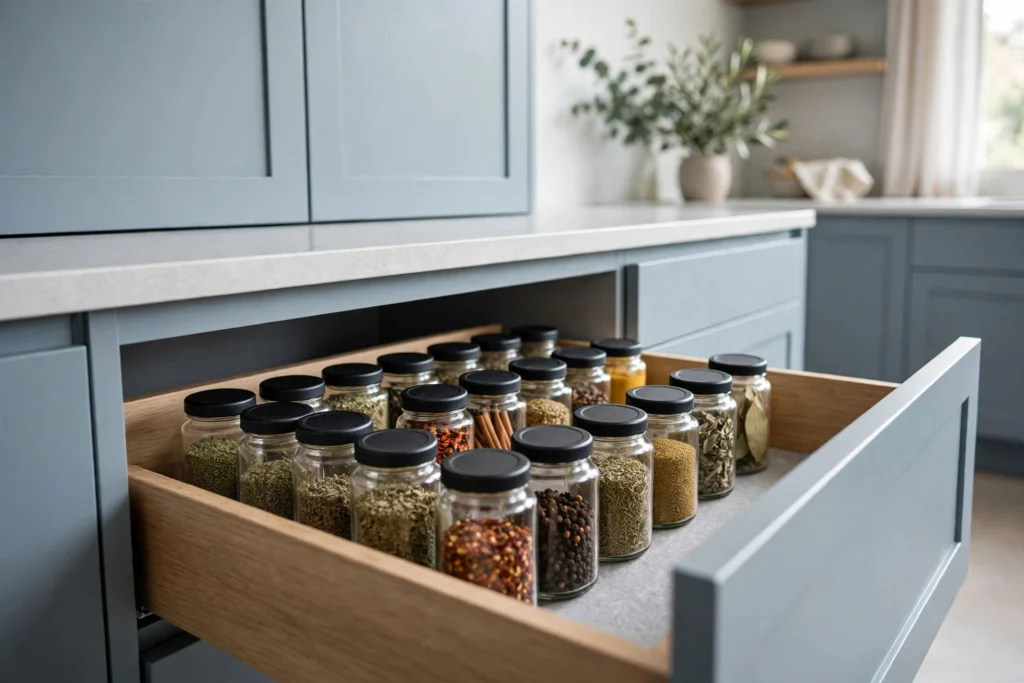
The tiered drawer insert is the gold standard for spice storage, and for good reason. Jars lie at a gentle angle in stepped rows, so every label faces up and is readable at a glance — no digging, no unstacking, no guessing. Spices also stay in the dark, which preserves their flavor far better than a sunny countertop rack. Measure your drawer depth before buying; most inserts fit standard 3-inch-deep drawers, and expandable models adjust to odd widths.
2. Mount a Wall-Mounted Rack
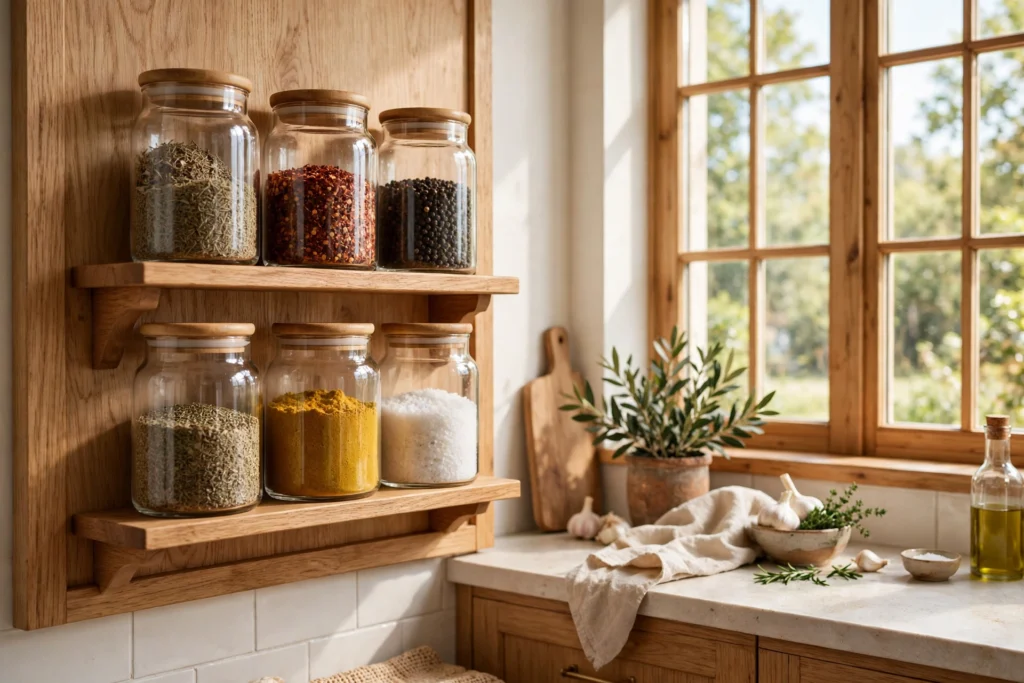
A wall-mounted spice rack turns storage into decor. A slim wooden or metal rack on the backsplash or a side wall keeps everyday spices at eye level while adding the warm, lived-in texture of a working kitchen. This format suits small kitchens best, where cabinet space is precious and vertical wall space goes unused. Keep the rack away from the stove’s heat and steam — spices lose flavor fastest when exposed to heat, light, and air, so a wall rack belongs on a cool wall, not beside the range. Choose jars with airtight seals and refill them in small batches to keep everything fresh.
3. Try Magnetic Jars on the Fridge or a Metal Board
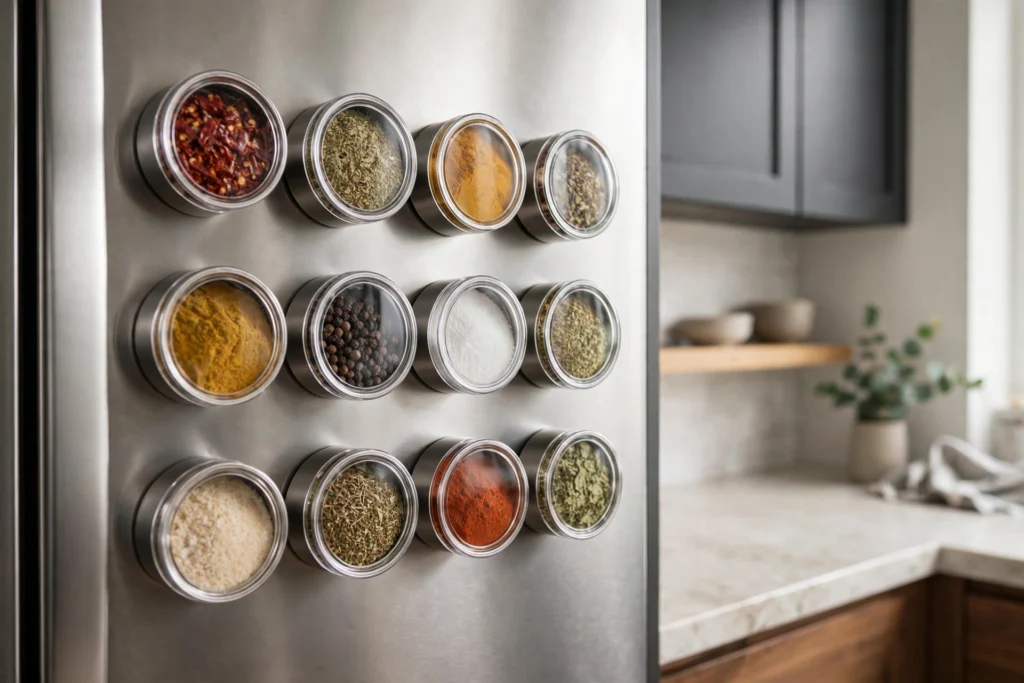
Magnetic spice jars are the space-saving darling of small kitchens and renters. Small tins with strong magnets stick to the side of the fridge, a metal backsplash panel, or a mounted steel board — no drilling, no shelf space sacrificed. The clear lids make identification instant, and the tins keep spices in the dark if you use opaque containers. This system shines for the 10 to 15 spices you reach for weekly; bulk or rarely used spices still belong in a cabinet.
4. Install a Pull-Out Cabinet Organizer
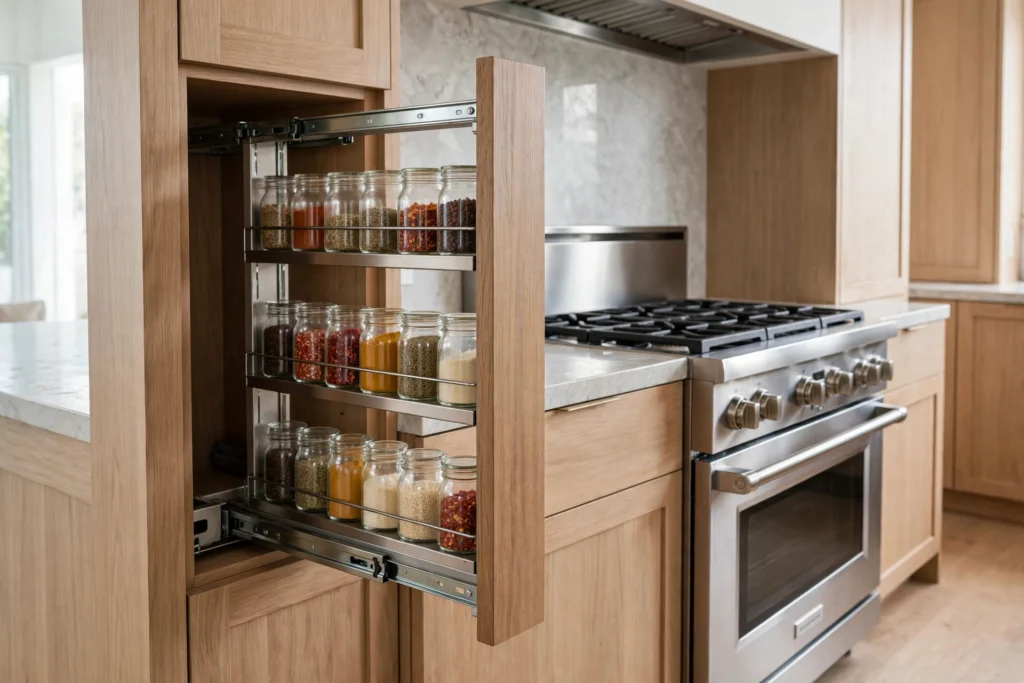
A narrow pull-out organizer turns a wasted 6-inch gap beside the range or fridge into prime spice real estate. Mounted on full-extension slides, the rack glides out to reveal two or three tiers of jars, every one visible and reachable. This is the best format for serious collections — 30-plus jars fit comfortably in a single pull-out. Have it installed near (not over) the stove for convenient access during cooking, and choose a model with a soft-close mechanism so jars do not rattle. The downside is cost: pull-outs are a small cabinetry project, so they make most sense during a remodel.
5. Add a Lazy Susan Turntable
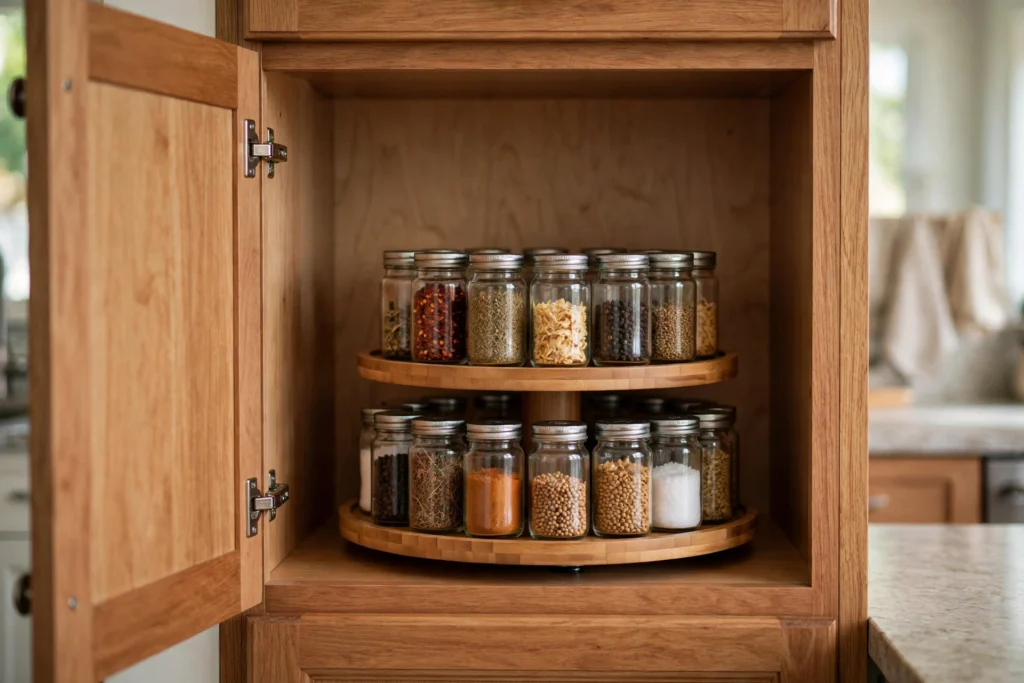
The humble turntable solves the deep-cabinet problem in one spin. Place a two-tier lazy Susan inside a base or upper cabinet and every jar becomes reachable with a flick of the wrist — no more lost spices migrating to the back. Look for models with a raised lip or non-slip surface so jars stay put during the spin, and choose a diameter that fits your cabinet with an inch to spare. Turntables work especially well in corner cabinets, where fixed shelves are nearly useless.
6. Use the Inside of a Cabinet Door
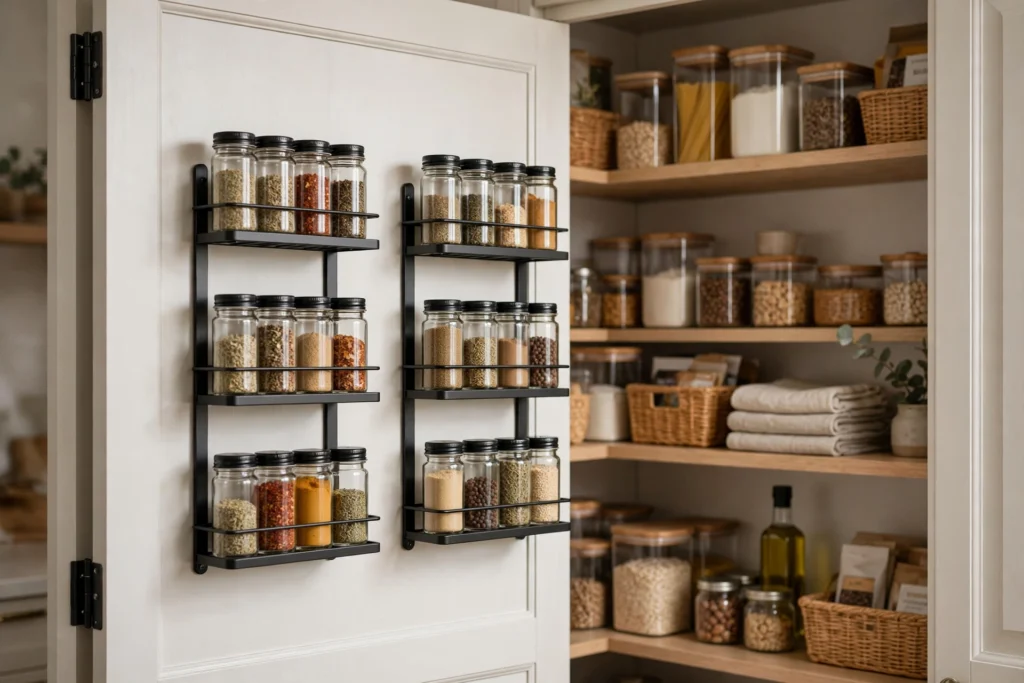
Cabinet door backs are free real estate. Slim mounted racks or adhesive spice holders on the inside of a pantry or upper-cabinet door keep spices hidden yet instantly accessible — open the door and your whole collection is there. This trick works best with flat tins or slim jars, since deep containers prevent the door from closing. Measure the clearance between the door and the shelf front before you shop; you need at least 3 inches. It is a renter-friendly option too, since adhesive and over-door styles require no drilling. Keep heavy glass jars off doors — the constant swinging loosens mounts over time.
7. Style a Countertop Tiered Stand
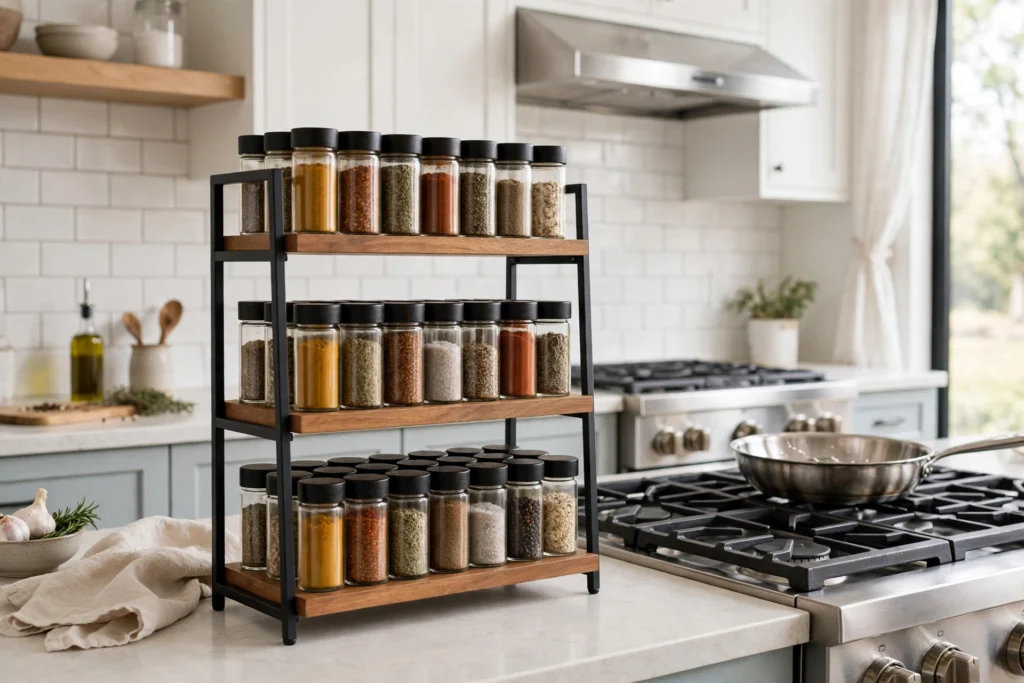
If your spices deserve display status, a tiered countertop stand puts them front and center. Two or three stepped levels fan jars out like a stadium, so every label is visible from the cooking zone. This format suits the daily-use dozen — the salt, pepper, garlic powder, and blends you grab every meal — while the rest live in darker storage. Countertop stands add a styled, apothecary feel to the kitchen, especially in uniform jars with matching labels. The trade-off is light exposure, so keep the stand away from direct sun and refill from a dark bulk stash. Our kitchen countertop decor ideas for a clutter-free styled look show how to keep a display rack looking intentional rather than cluttered.
8. Dedicate a Spice Drawer with Custom Dividers
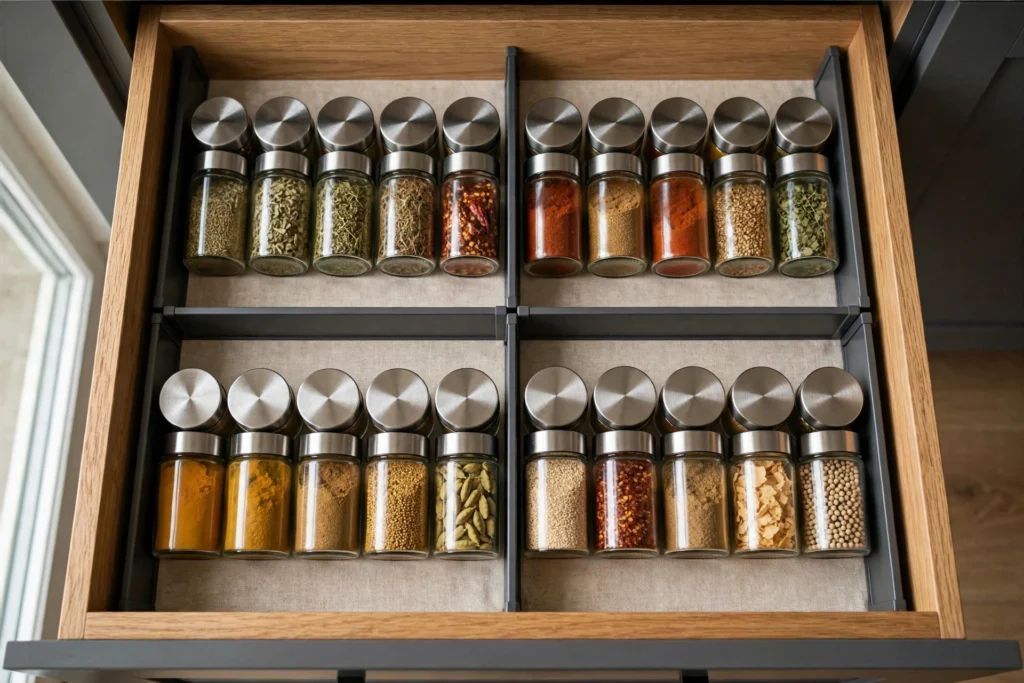
If a tiered insert feels too rigid, a custom-divided drawer gives you total control. Adjustable dividers or a honeycomb organizer let you zone the drawer by cuisine, frequency, or alphabet — whatever your brain reaches for mid-recipe. This approach adapts as your collection changes, unlike fixed inserts. Line the drawer with non-slip liner so jars do not slide, and store jars upright with labels on the lids for top-down reading. Custom dividers also handle odd shapes — the tall vanilla bottle, the squat tin of saffron — that never fit standard racks. It is the most flexible system on this list.
9. Hang a Pegboard Spice Wall
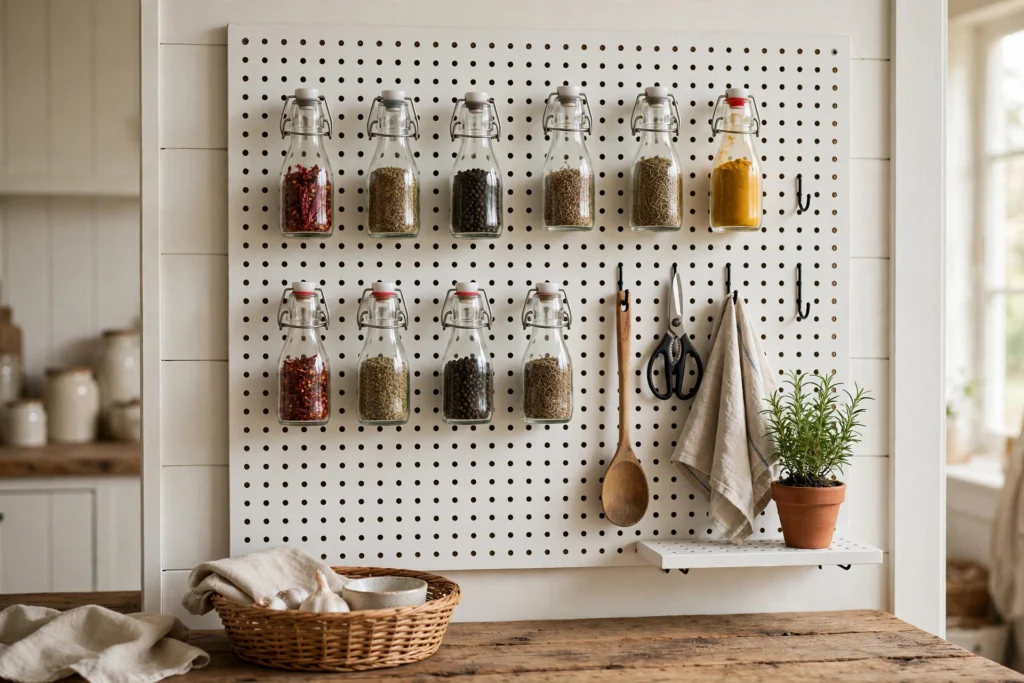
A pegboard spice wall is part organization, part art installation. Mount a painted pegboard panel, add small shelves and hooks, and arrange spice jars, measuring spoons, and a tiny potted herb into a working display. The look is pure creative kitchen — part studio, part apothecary. Paint the pegboard to match your cabinets for a built-in feel, or go bold with a contrasting color as an accent. Keep it on a cool wall away from the range, and use jars with tight seals since open display means more air exposure.
10. Try an Over-the-Door Pantry Rack
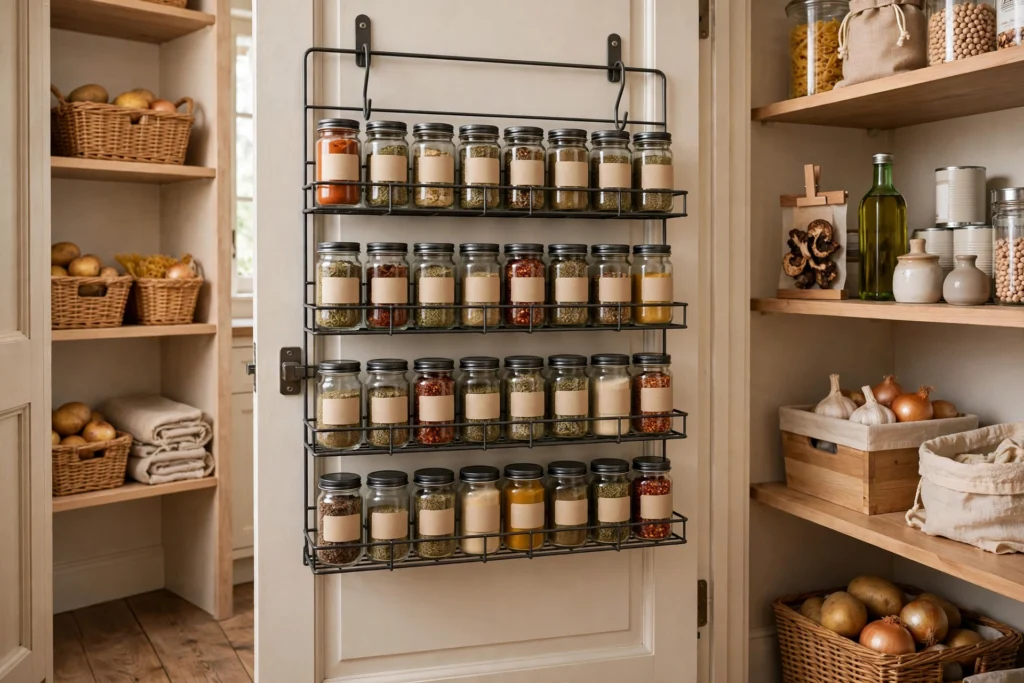
For renters and anyone short on cabinet space, an over-the-door pantry rack adds a whole wall of storage in minutes. The rack hooks over the pantry door with no screws, holding 20 or more jars on adjustable shelves. Choose a model with deep enough shelves for your jar size and a slim enough profile that the door still closes fully. Wire racks keep things light and visible; solid shelves look tidier. This is also a great overflow zone — keep daily spices near the stove and the full collection on the door.
11. Build a Shallow Pull-Down Rack for Upper Cabinets
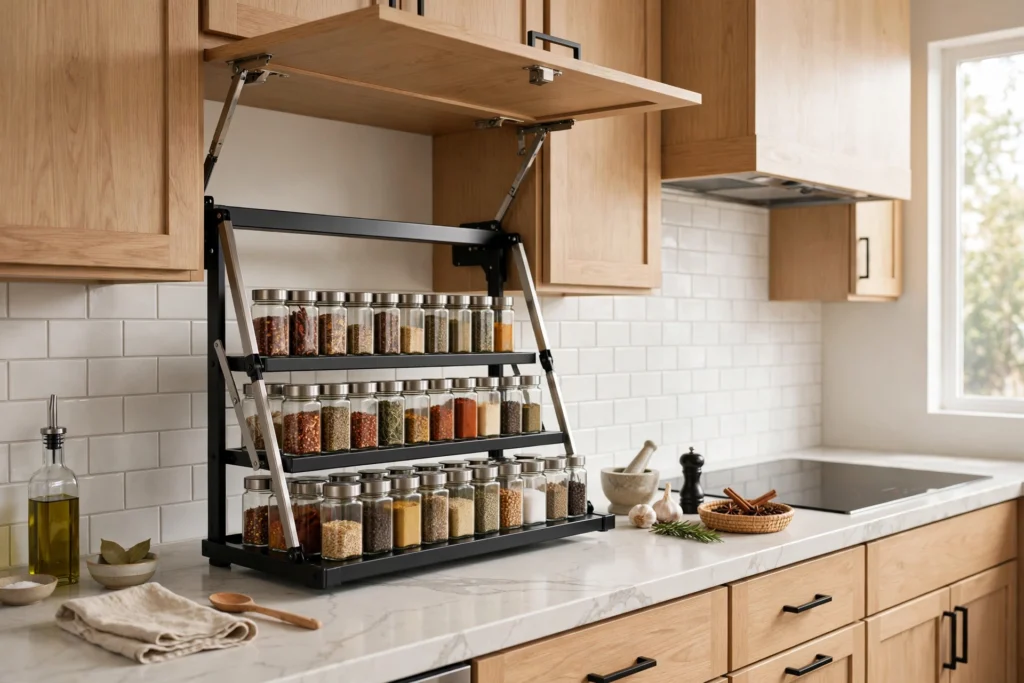
Upper cabinets are where spices go to be forgotten — the back rows are unreachable and the high shelves need a step stool. A pull-down rack fixes both problems: the whole unit swings down to counter level with one pull, bringing every jar into easy reach. This is a game-changer for shorter cooks and anyone with mobility concerns. Quality matters here — look for smooth hydraulic or spring mechanisms rated for the weight of full glass jars, from a brand like Rev-A-Shelf. It is the priciest option on this list, but for a frequently used upper cabinet it transforms a dead zone into the hardest-working storage in the kitchen.
12. Alphabetize with Uniform Jars and Labels
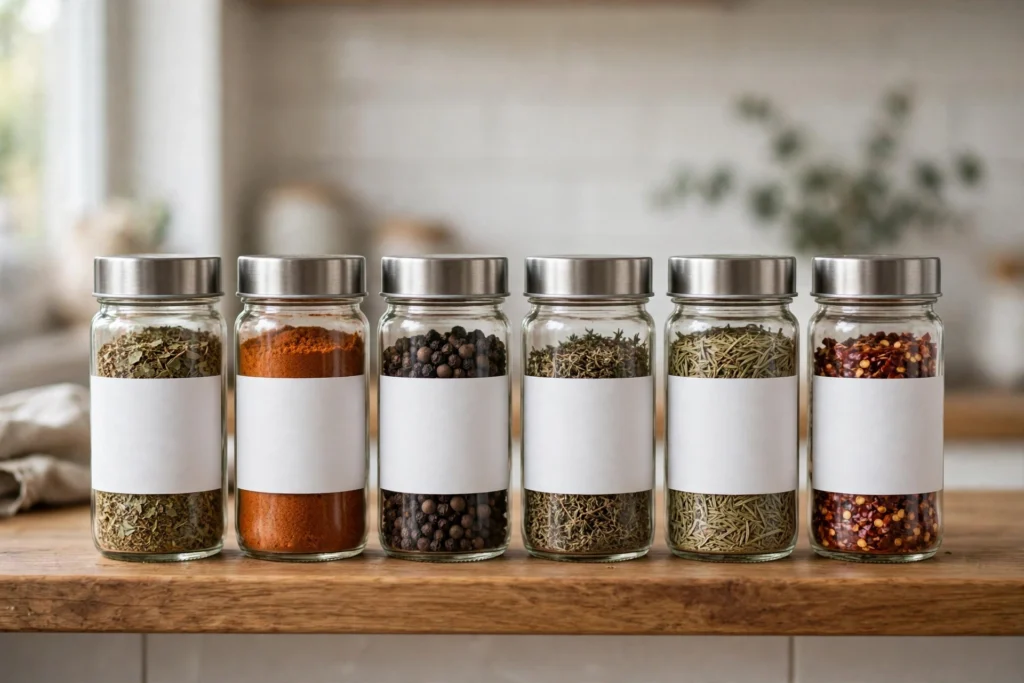
Whatever rack you choose, uniform jars with clear labels multiply its effectiveness. Matching jars — same size, same shape — stack and line up perfectly, while consistent labels let you scan the collection in seconds. Label the lids as well as the fronts if you use a drawer or tiered system. Include the purchase or decant date on the label so you know when a spice has passed its prime; a tiny date line prevents the eternal “is this cumin from 2019?” question.
13. Store Bulk Spices Separately from Daily Jars
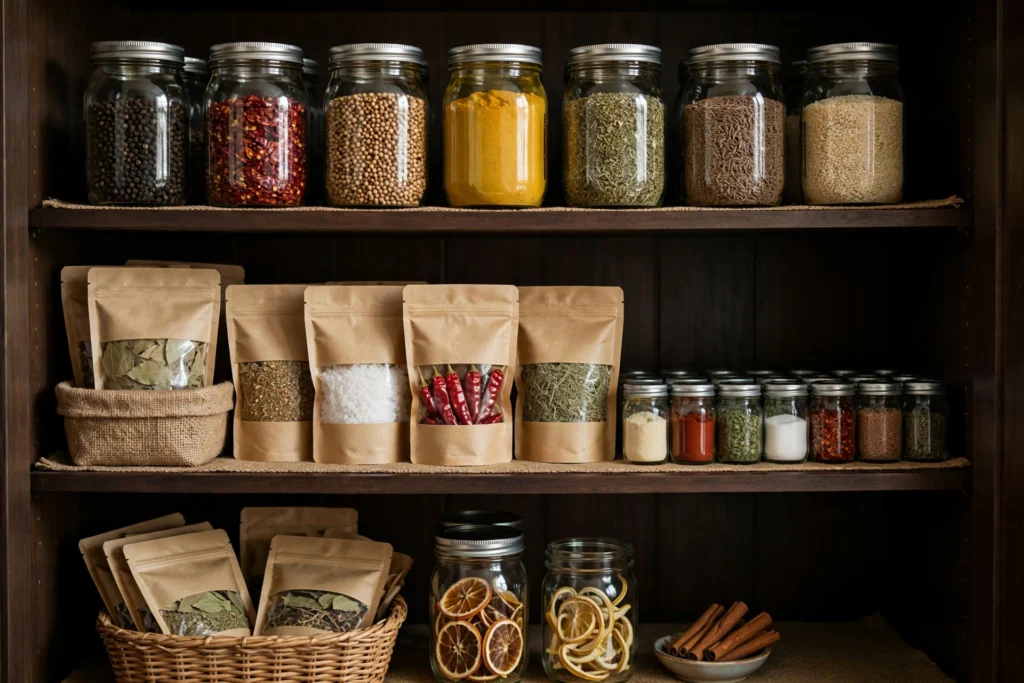
Serious cooks buy in bulk — the pound bag of cumin from the international market is a fraction of the per-ounce cost. But bulk bags do not belong in your working rack. Keep a small working jar in your spice rack and the bulk supply in airtight containers in a cool, dark cabinet or pantry. Refill the working jar as needed; this keeps the bulk stash sealed and fresh while your daily jar stays small and manageable. Glass mason jars with tight lids are ideal for bulk storage — visible enough to remind you what you have, sealed enough to protect flavor. This two-tier system cuts waste and keeps the rack itself uncluttered.
14. Keep Heat-Sensitive Spices Away from the Stove
This is the rule that protects your investment: heat, light, and moisture are the enemies of flavor. The cabinet directly above the range — the most convenient spice spot — is the worst place for them, since rising heat and steam degrade volatile oils fast. Store spices in a cool cabinet or drawer at least a few feet from the stove and oven. The Spruce’s home organization guides at thespruce.com consistently recommend cool, dark, dry storage for maximum shelf life.
15. Refresh and Rotate Twice a Year
Even the best rack needs maintenance. Twice a year — pick the clock changes as your reminder — pull every jar, check dates, and sniff-test the questionable ones. If a ground spice smells like dust instead of itself, it is done. Wipe the rack or drawer, consolidate duplicates, and update your shopping list for refills. This 20-minute ritual keeps the collection honest and prevents the slow creep back to chaos. While you are at it, our kitchen utensil holder ideas for a stylish organized counter can help you apply the same ruthless edit to the tools crowding your prep zone.
FAQ
Where is the best place to store spices in the kitchen?
In a cool, dark, dry spot close to — but not directly above — the stove. A drawer beside the range, a cabinet a few feet away, or a pull-out organizer are all ideal. Avoid spots near the oven vent, dishwasher steam, or sunny windows, since heat, light, and moisture degrade flavor fastest.
Should I decant spices into matching jars?
If you want a tidy, scannable rack, yes. Uniform jars make every label readable and every row stackable, and airtight jars protect flavor better than most store packaging. Keep the original labels or note the purchase date until you are sure of your system. The one exception: keep bulk backups in their sealed bags or large airtight containers in the pantry.
How long do spices actually last?
Whole spices stay potent for roughly two years; ground spices for about six months; dried herbs for six months to a year. These are flavor guidelines, not safety dates — old spices will not hurt you, they just taste like nothing. Date your jars when you decant so you always know where you stand.
What size jars should I use for a spice rack?
Four-ounce (half-cup) jars suit most households — large enough to hold a standard store refill, small enough that spices get used before they fade. Heavy users of a few staples (salt, pepper, cumin) can go bigger on those and smaller on the rarely touched ones.
Can I store spices above the stove if I use sealed jars?
Sealed jars help, but the heat is still the problem — the cabinet above a range can run surprisingly warm even with the door closed, and heat degrades volatile oils regardless of the seal. If that cabinet is your only option, store only salt, whole peppercorns, and other hardy staples there, and keep delicate ground spices and dried herbs somewhere cooler.
Keep Exploring
A great spice rack is really a promise to your future self: the weeknight cook who needs the oregano now, not after a cabinet excavation. Pick the format that fits your collection and your kitchen’s reality, decant into jars you can read at a glance, and give the whole thing a twice-yearly refresh. Do that, and the flavors you paid for actually make it into the food — which is the whole point. Keep refining the zones around it, and your kitchen will start to feel like it cooks alongside you.