
The humble filing cabinet has a reputation problem. Most of us picture a dented gray box in a corporate corner, but the right file cabinet can be one of the hardest-working style pieces in your home office. It hides the paper chaos that kills focus and anchors your layout like a proper piece of furniture. These home office filing cabinet ideas cover everything from vintage card catalogs to sleek lateral files, so whatever your space and budget, you will find a pick that keeps paperwork sorted and your workspace beautiful.
Before you buy, measure your spot and audit your paper. Count the hanging folders you actually keep, then add about twenty percent headroom for growth. Standard cabinets run 18 inches deep for letter-size files and 25 inches for legal, so check your folder size before falling in love with a shallow vintage piece. Then pick the ideas below that fit how you work — and how you want the room to look.
1. Classic Vertical File Cabinets
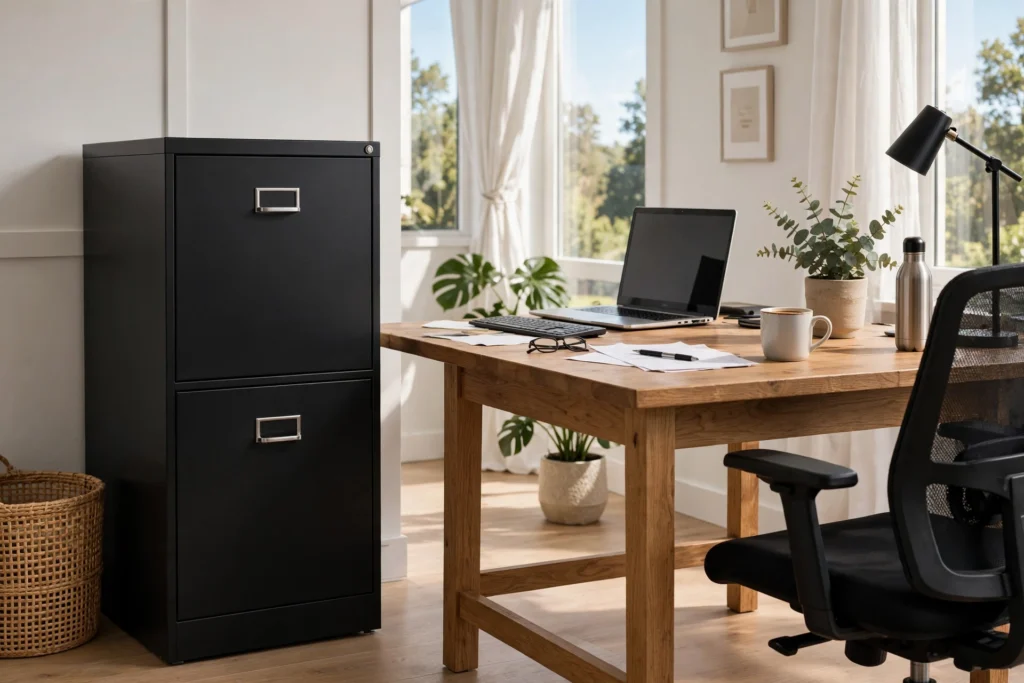
The standard two-to-five-drawer vertical cabinet is the storage workhorse: it packs a huge amount of paper into a footprint of roughly 15 by 18 inches, slotting neatly beside a desk or into a closet alcove. Look for smooth ball-bearing suspension so heavy drawers still glide, and always choose an anti-tip mechanism — cabinets get dangerously top-heavy when the top drawer opens. Two drawers handle most household paperwork; freelancers with client files usually need four.
2. Wide Lateral File Cabinets
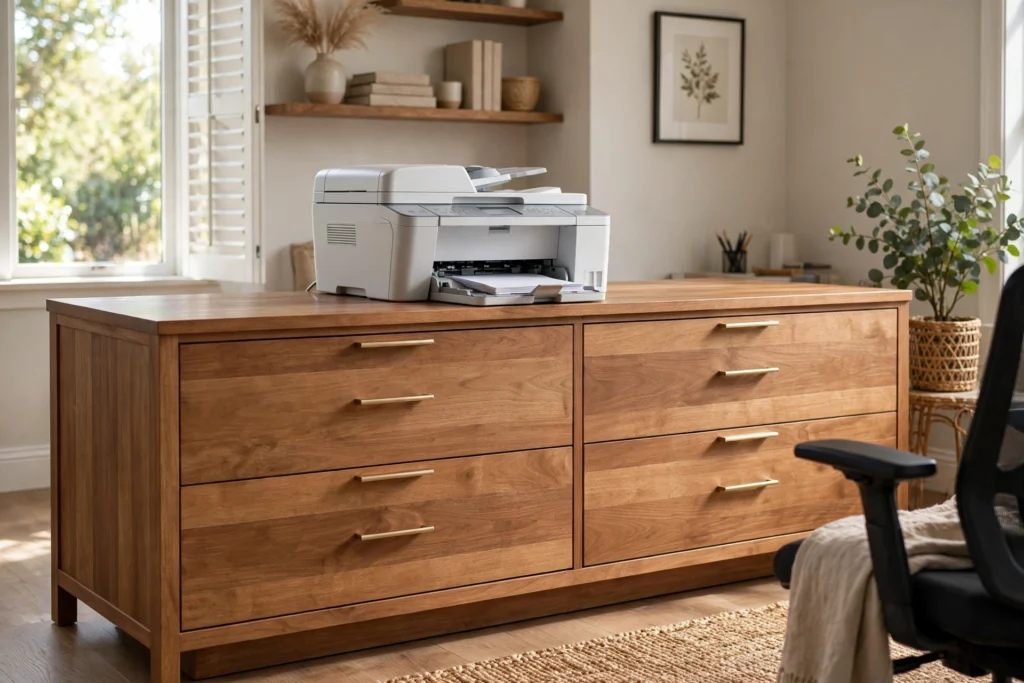
Lateral cabinets store folders side-to-side instead of front-to-back, which means shallower drawers, faster label scanning, and a wide flat top you can actually use. A two-drawer lateral runs about 30 to 42 inches wide and 36 inches tall — perfectly sized to double as a printer stand. Because the drawers are wide rather than deep, nothing gets buried at the back, and bulky items like tax binders fit without wrestling. Place one against a wall as a room divider, or slide it under floating shelves for a built-in look.
3. Vintage Card Catalog Cabinets
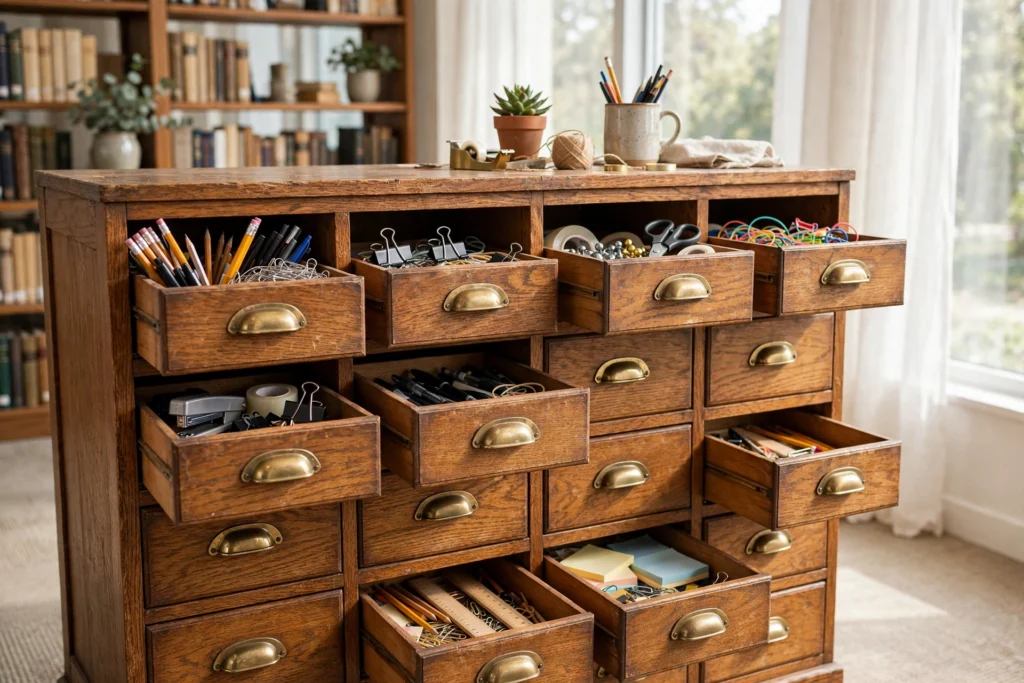
Among all home office filing cabinet ideas, an old library card catalog is the pick for people who hate filing cabinets. These wooden drawers-within-drawers beauties, usually oak or maple, were built to hold thousands of index cards and now make irresistible homes for stationery, cables, and USB drives. A standard 30-drawer unit measures about 33 inches wide and 17 inches tall — ideal for a desktop or credenza top. Add brass label pulls for authenticity and sort by category: chargers, pens, batteries, stamps. Complete, unwarped units cost more, but the craftsmanship is unmatched.
4. Painted Thrift-Store Cabinets
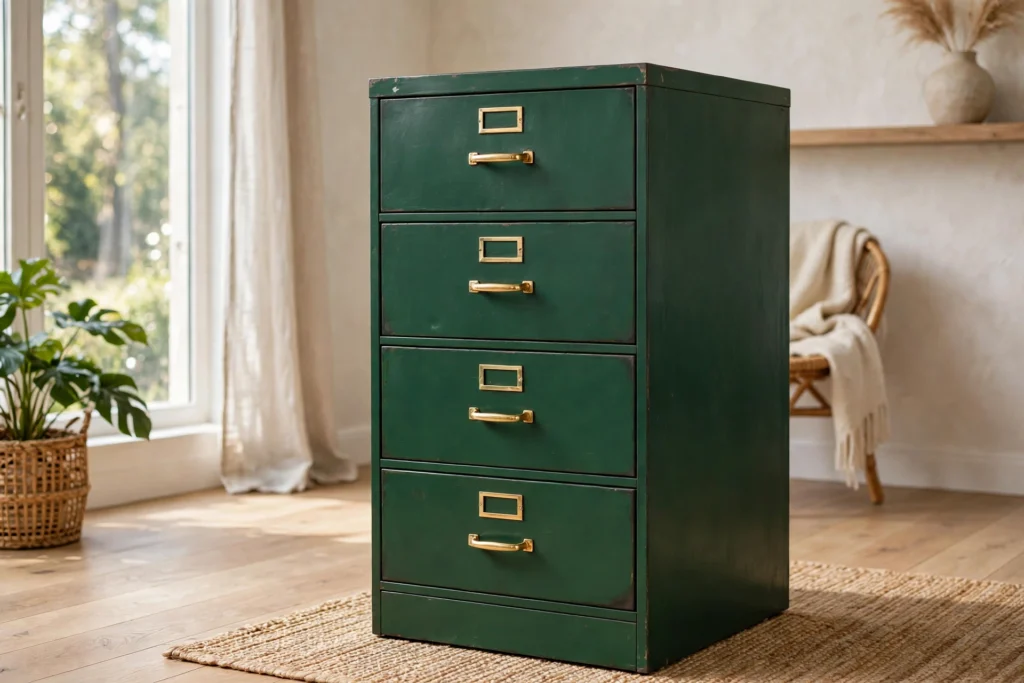
Metal cabinets from office liquidations are built like tanks — all-steel bodies, welded seams, full-extension drawers — and a weekend of prep turns them from dingy gray to designer-grade. Degrease with TSP substitute, scuff-sand with 120-grit paper, prime with a bonding primer made for metal, then spray two thin coats in a confident color: deep forest green, matte black, or dusty blue all look expensive. Swap the plastic label holders for brass ones and add leather drawer pulls. The result costs a fraction of a boutique cabinet and fits your palette exactly.
5. Two-Drawer Desk-Height Files
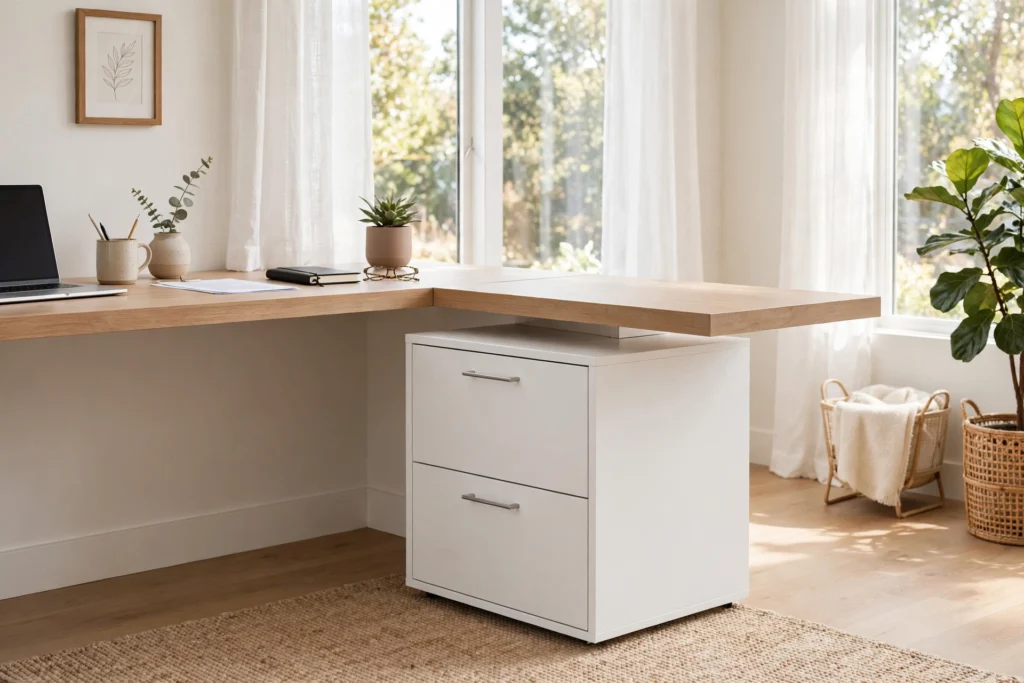
A two-drawer file cabinet that matches your desk height pulls double duty as a desk return or side table, tucking beneath a floating desktop to extend your work surface. Measure carefully: most desks sit at 29 to 30 inches, so look for a file around 26 to 28 inches tall to slide underneath without binding. Use the top for a desk lamp or your daily inbox tray — keeping essentials at arm’s reach cuts down on the stand-up-and-search dance. Pair it with our home office desk setup ideas for focus and comfort to build a whole workstation around this one compact piece.
6. Locking Cabinets for Sensitive Documents
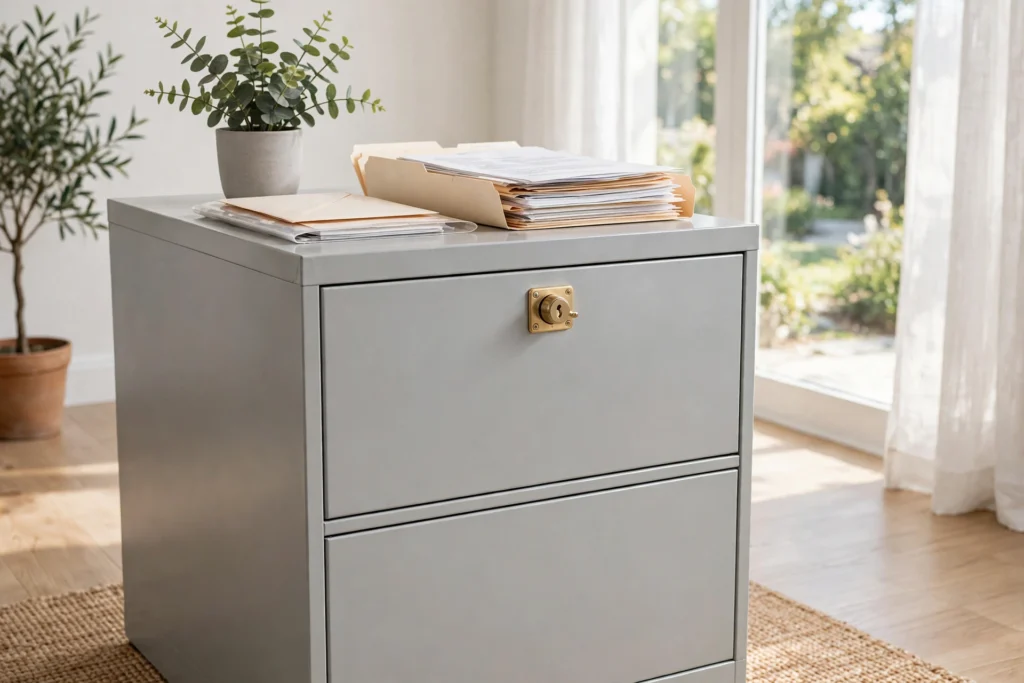
Tax returns, passports, contracts, and client records deserve a lock — not a hope. Look for a real cam lock on every drawer rather than a single central lock, and consider a fire-resistant rating for irreplaceable originals. Keep keys somewhere separate from the office so a break-in does not hand over access with the hardware. Position the cabinet where visitors cannot see drawer contents when one opens — against a wall, facing your chair. Keep daily papers in a separate unlocked drawer.
7. Rolling and Mobile File Cabinets
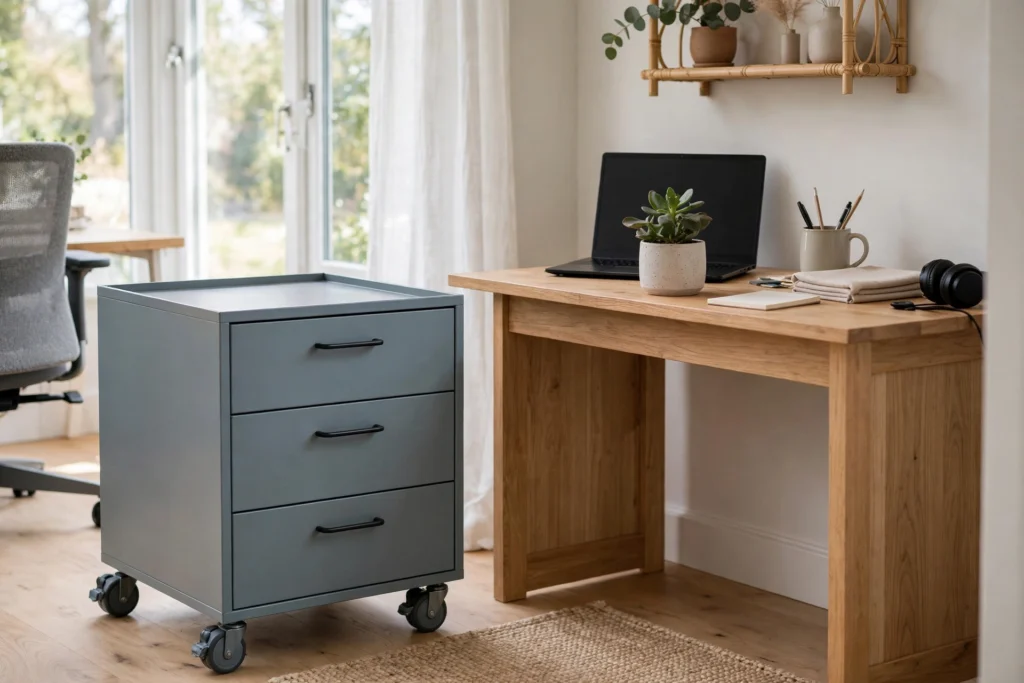
A file cabinet on casters is storage that follows you. Slim rolling pedestals, usually 15 inches wide, tuck under a desk by day and roll out for cleaning or rearranging by night — perfect for renters and guest-room offices. Choose locking casters so the unit stays put while you work, and a cushion top if you want extra seating. Mobile cabinets shine in shared spaces: roll the whole unit into a closet when guests arrive and your paperwork disappears with it. Just keep the drawer load balanced so a tall unit does not tip on a thick rug.
8. File Credenzas
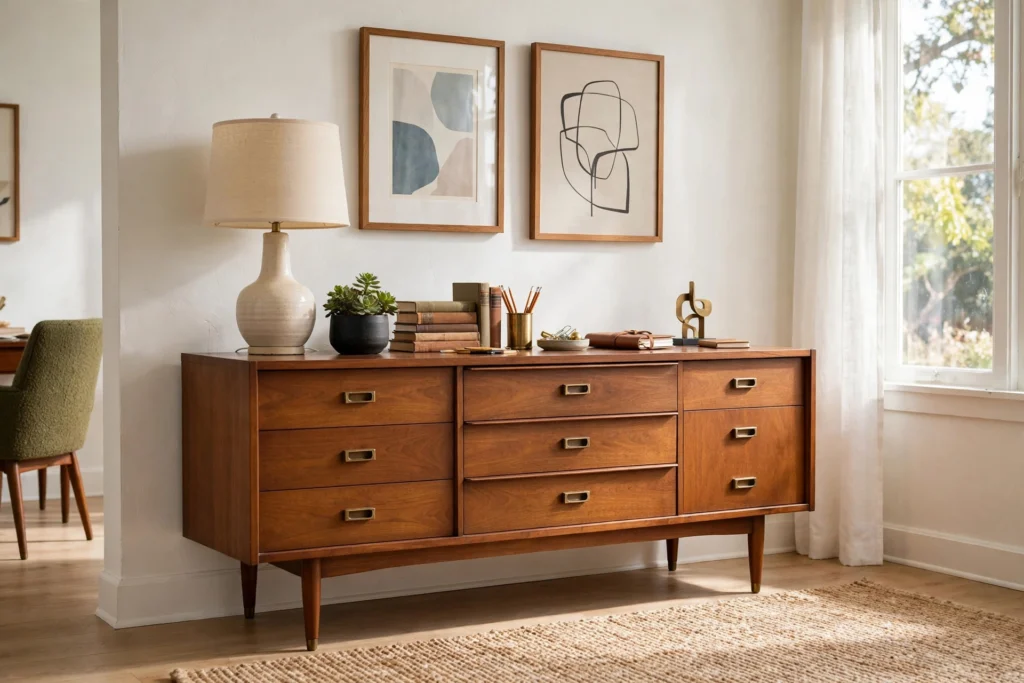
A file credenza is what happens when a filing cabinet grows up and gets a wood veneer: wide, low, and handsome enough for the living room corner that doubles as your office. Look for two lateral drawers flanked by an open shelf or a center cabinet for books and baskets. At 20 to 24 inches deep and around 30 inches tall, a credenza slides behind a sofa without screaming “office.” Style the top like a console — a lamp, a framed print, a small stack of books — and pair it with our home office shelving ideas for a tidy inspired workspace.
9. Industrial Steel Cabinets
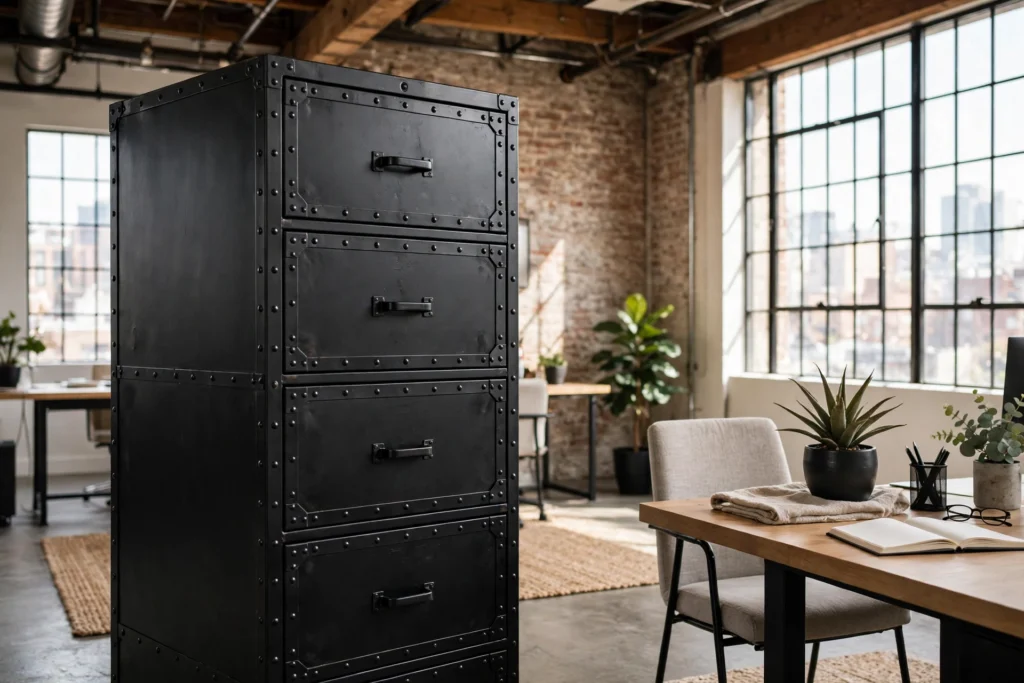
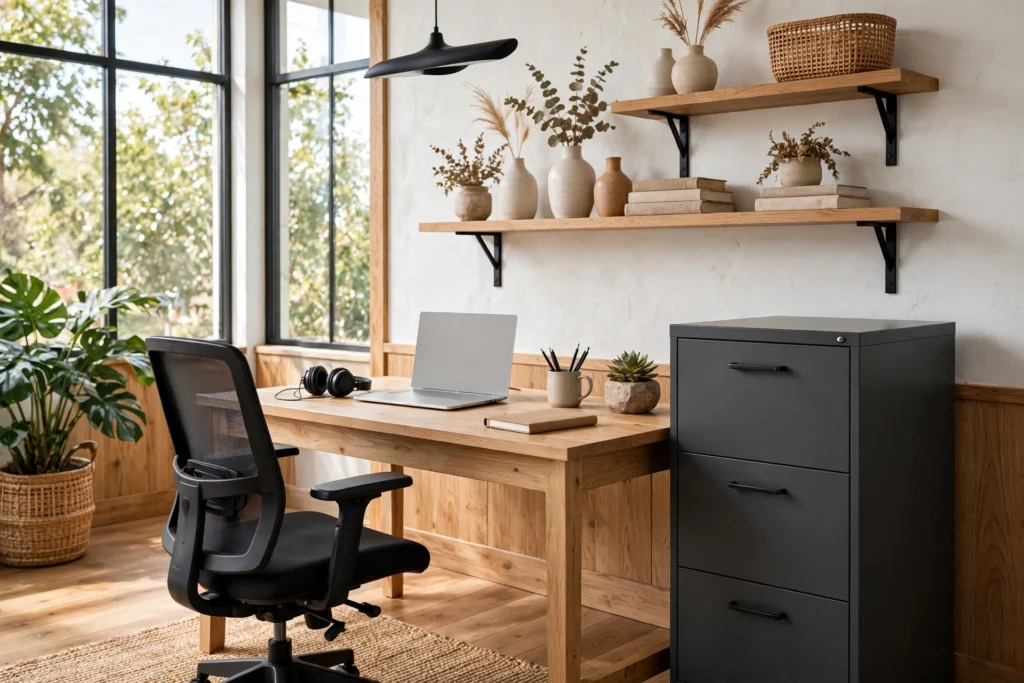
Raw and riveted, industrial steel cabinets bring loft energy to a home office while shrugging off decades of use. Hunt vintage pieces at architectural salvage yards, or buy new flat-pack steel cabinets with visible hardware for the same look without the search. A brushed or powder-coated finish in black, olive, or gunmetal pairs beautifully with wood desktops and leather chairs. Keep the aesthetic balanced: among home office filing cabinet ideas, one steel cabinet is a statement; three is a warehouse. Soften it with a wood tray on top and a woven rug underneath, and the industrial look reads intentional rather than cold.
10. Warm Wooden Cabinets
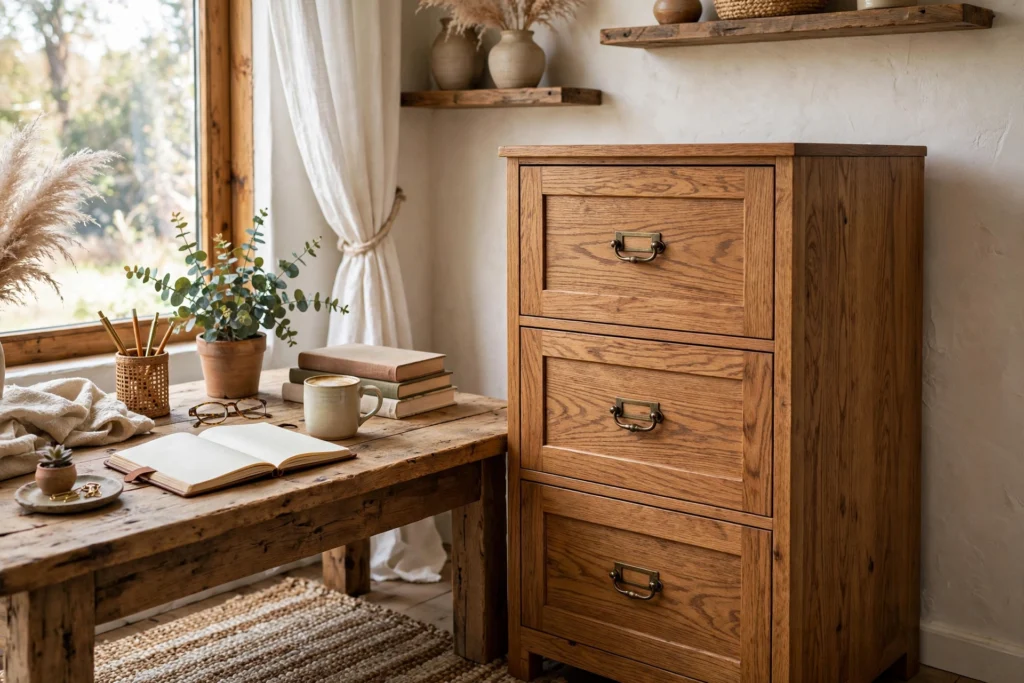
If metal reads too corporate, wooden file cabinets bring furniture warmth to the office. Solid oak and walnut age beautifully, while mid-range cabinets with real wood veneer offer the look at half the price — just avoid thin laminate that chips at the corners. A two-drawer oak file at 30 inches wide pairs naturally with a wooden desk, creating a matched set even from different makers if the tones are close. Wood also takes paint well if your style changes later, unlike powder-coated steel. Oil the finish yearly and add felt pads underneath to protect hardwood floors.
11. DIY Cabinet Makeovers
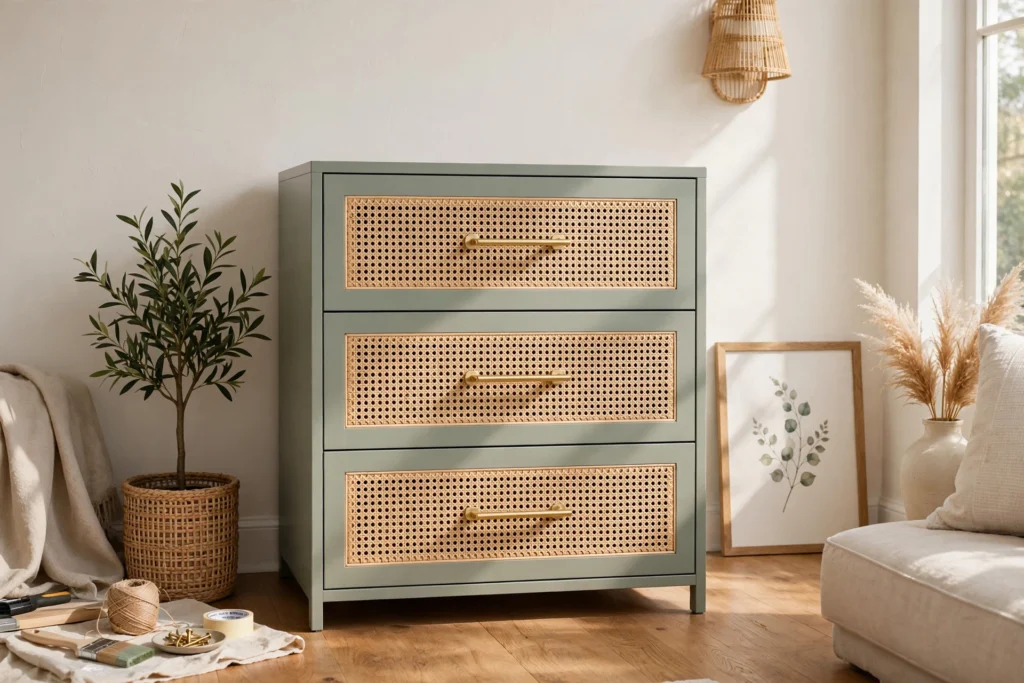
A basic cabinet becomes a custom piece with simple upgrades. Wrap drawer fronts in cane webbing for a rattan look, add fluted trim for a furniture-grade front, or decoupage the sides with vintage maps for a one-of-a-kind finish. Replacing standard wire pulls with brass cup pulls or leather tabs takes ten minutes and changes the whole personality. Even simpler: fit a shallow tray insert in the top drawer, turning it into a supply drawer with compartments. For more inventive reuses of ordinary office pieces, browse these clever home office storage ideas and adapt a trick or two to your cabinet.
12. Styling the Cabinet Top
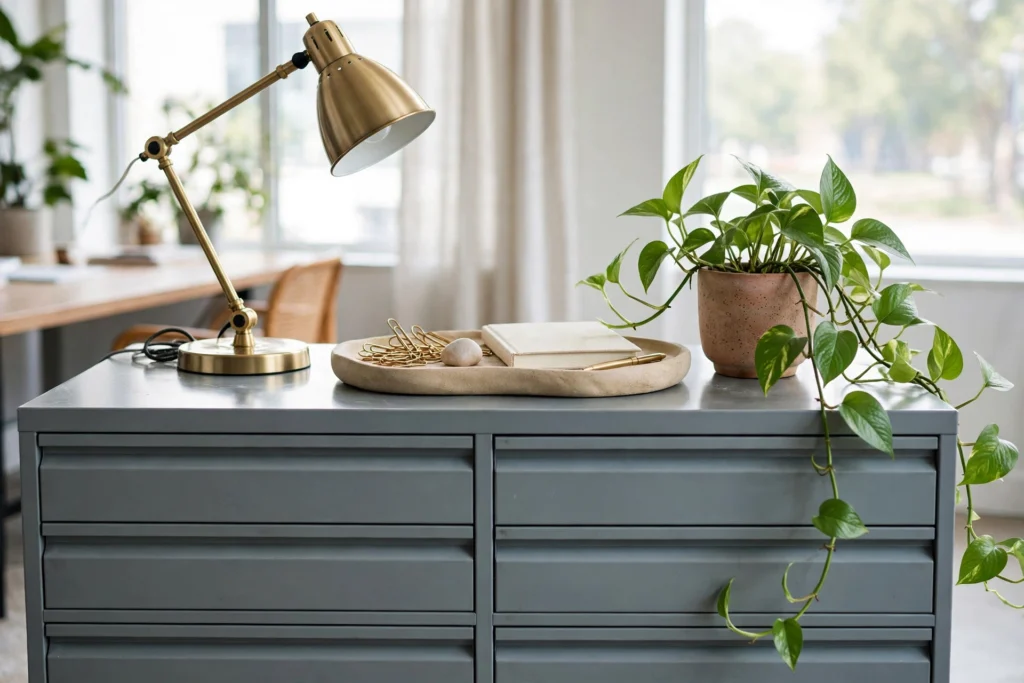
The top of your filing cabinet is free real estate — treat it like a styled shelf rather than a landing pad. Start with a tray to corral small items, add height with a small lamp or a trailing pothos, and finish with something like a framed photo. In small offices, the top can host your printer on a riser, with paper stored in the drawer directly below. Keep it to three or four objects; the goal is a vignette, not storage overflow. A runner or cut-to-fit leather protects the finish and adds texture.
13. Color-Coded Interiors
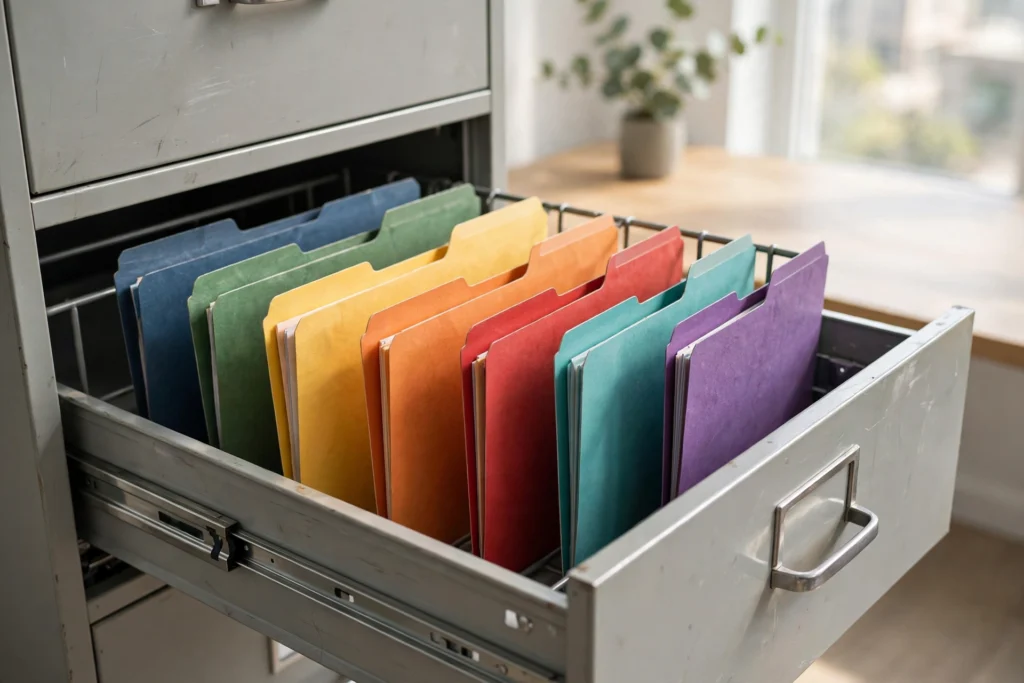
A beautiful cabinet means nothing if the inside is chaos, so build a color system that makes filing automatic. Assign each category a hanging-folder color — green for finance, blue for home, red for urgent, yellow for work projects — and keep a key taped inside the top drawer until it becomes habit. Use plastic tab inserts so labels stay crisp, and file front to back by frequency: daily papers in front, archives behind. Purge once a year at tax time, shredding anything past its keep window. Extend the order to the whole room with our home office organization ideas for a clutter-free space.
14. Repurposed Cabinets as Furniture
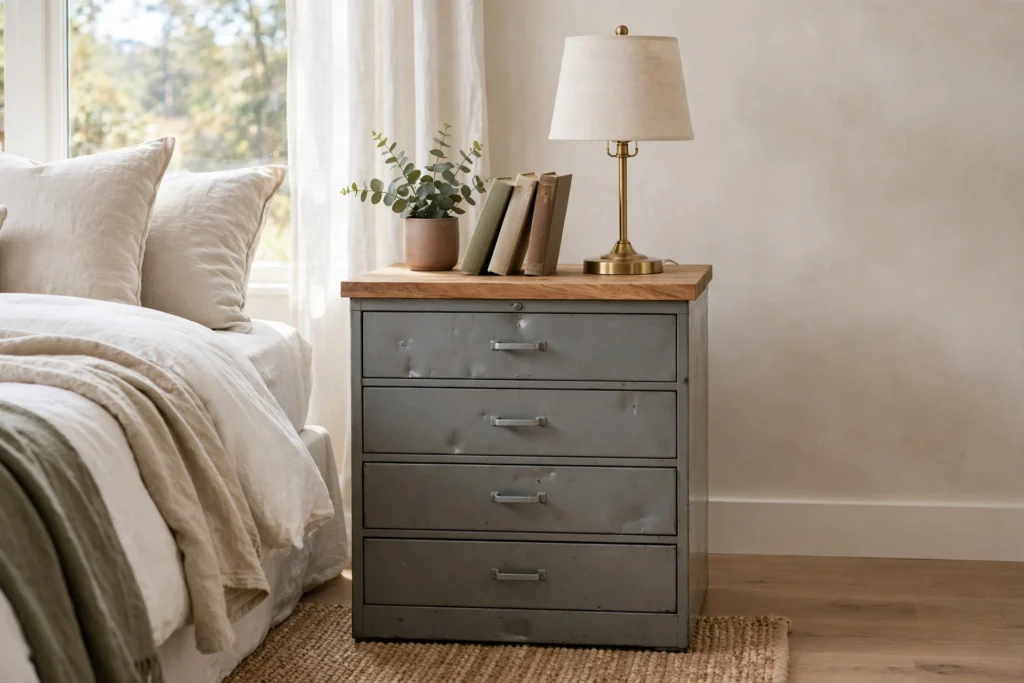
Like other home office filing cabinet ideas, this one does not have to live in the office. A sturdy two-drawer steel file makes an excellent nightstand — the drawers swallow chargers and journals, and the 26-inch height matches most beds. In the living room, a card catalog or short lateral file becomes a plant stand or an entryway catch-all with character. A rolling file beside the sofa works as an end table with hidden storage for remotes and throws. When repurposing, remove the hanging-file rails, add furniture feet or a wood top for a finished look, and always anchor tall units to the wall in homes with kids.
15. Label Systems That Stick
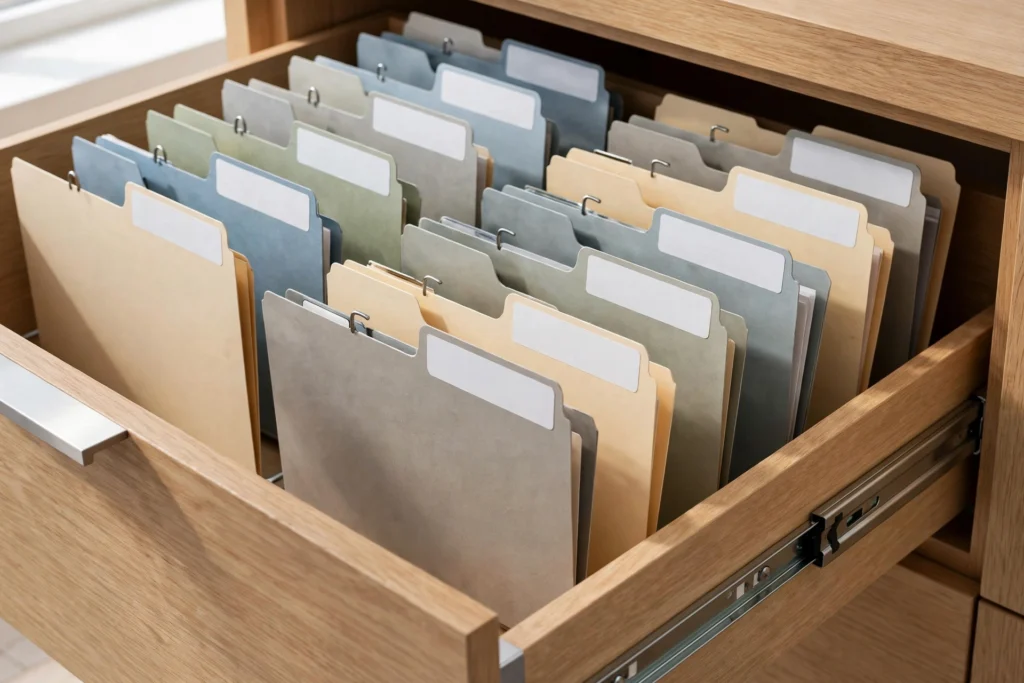
Labels are the difference between a cabinet and an organized cabinet. Invest in a handheld label maker — printed labels look intentional and survive years of drawer pulls, unlike handwritten tabs that fade. Keep naming consistent and specific: “2025 Taxes” beats “Misc,” and “Insurance – Home” beats “Important.” Put a master index inside the top drawer listing every drawer and section, so anyone can find things without opening everything. For shared household offices, color-coded labels per family member end the mystery of whose folder is whose.
FAQ
What size filing cabinet is best for a small home office?
A two-drawer vertical cabinet, roughly 15 by 18 inches, is the sweet spot for small spaces — it holds a full household’s paperwork in a footprint smaller than a side table. A two-drawer lateral at 30 inches wide stores the same amount in shallower, easier-to-browse drawers, though it needs more wall width. Check drawers open fully without hitting furniture, and note that letter-size files need 12 inches of interior width while legal files need 15.
Should I choose a vertical or lateral filing cabinet?
Choose vertical when floor space is tight and you file by category in deep drawers; choose lateral when you want a usable top surface and shallower drawers that keep folders visible. Laterals double as printer stands or credenzas and suit open rooms where the cabinet is on display, while verticals disappear into closets and desk gaps. Lateral drawers are wider and heavier to pull when full, so quality drawer slides matter more.
How can I make a filing cabinet look good in a styled room?
Paint it a confident color, upgrade the hardware to brass or leather pulls, and style the top like a console with a lamp, plant, and tray. Wooden cabinets blend with furniture more easily than bare metal, and art hung above the unit makes it read as intentional furniture. The fastest upgrade is a label system with crisp printed labels — tidy drawers signal a tidy room even with the drawers closed.
How do I organize the inside of my filing cabinet?
Sort papers into broad categories first — finance, home, medical, work, personal — then give each a colored hanging folder and file front-to-back by frequency. Keep an “action” folder in front for this week’s paperwork, and archive anything older than a year into labeled boxes elsewhere. Purge annually at tax time, shredding expired documents, and keep a master index inside the top drawer so every folder has a findable home.
Do I need a locking filing cabinet at home?
If you store tax returns, passports, contracts, or client records, yes — a locking drawer is cheap insurance against theft and prying eyes. Put locks on each drawer you use for sensitive material, store the keys away from the office, and keep everyday papers in an unlocked drawer. For irreplaceable originals, look for a fire-resistant model and keep digital backups in a second location.
Keep Exploring
A good filing cabinet is a promise to your future self: every paper has a home, every drawer closes, and the desk stays clear for actual work. Start with the cabinet style that fits your room, set up the color-coded folders and labels while the motivation is fresh, and enjoy a drawer that glides open to exactly what you need. When the rest of the room needs the same treatment, revisit our home office desk setup ideas for focus and comfort to pick up right where this list leaves off — happy filing!