
A vision board turns your goals from background noise into a daily visual cue — and in a home office, that cue sits exactly where you need it: in your line of sight while you work. These home office vision board ideas prove motivation and style can share the same wall, whether you are pinning quarterly targets or the portfolio pieces you are chasing. For the surrounding walls, our home office wall art ideas to inspire focus and creativity round out the room beautifully.
Place your board where you will actually see it — beside the monitor, above the desk, or on the wall you face during calls — and keep it out of harsh sunlight so prints do not fade. Plan a seasonal refresh so the goals stay honest. Most of these take under an hour and cost very little, so there is no reason to stare at a blank wall any longer.
1. Start With a Classic Cork Board Vision Wall
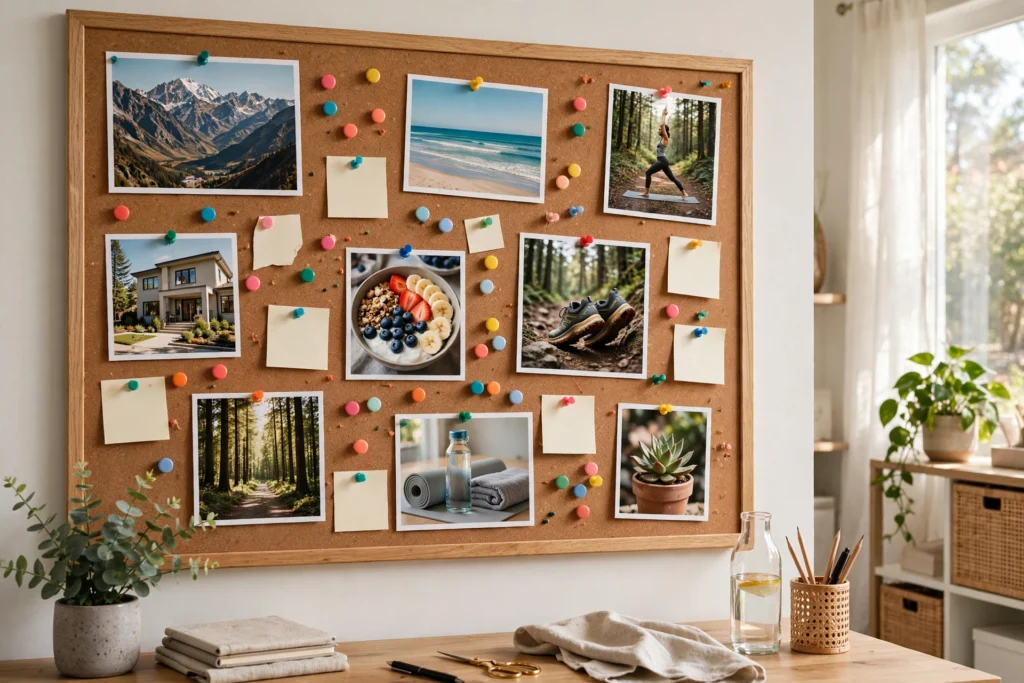
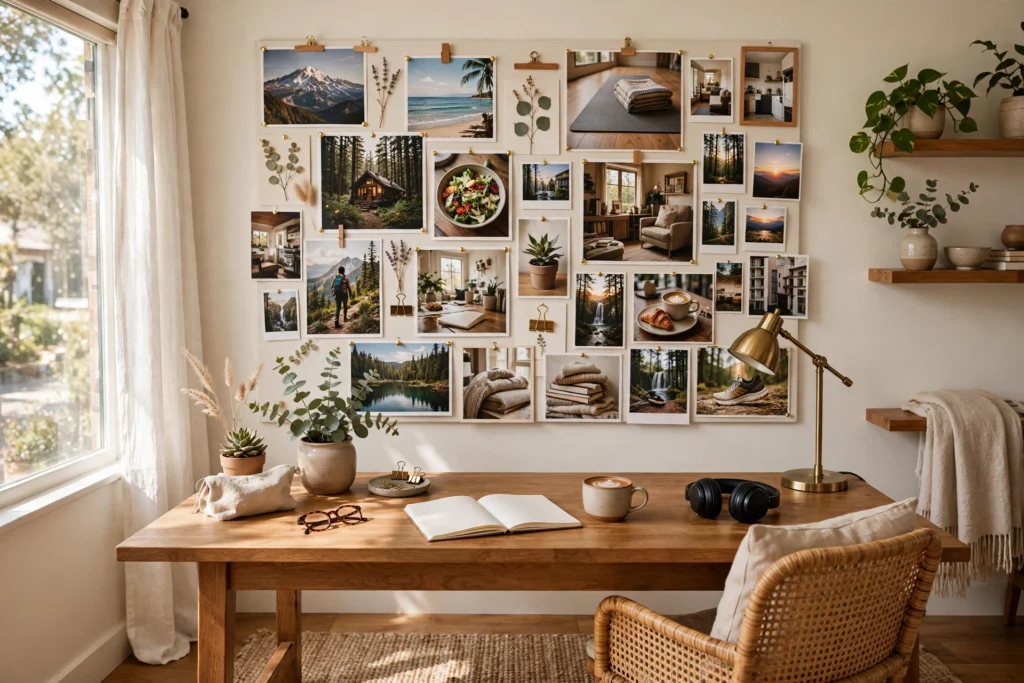
The cork board is the original vision board for a reason: it is cheap, forgiving, and endlessly rearrangeable. Get the biggest board your desk wall can hold — a 24-by-36-inch cork panel reads like a statement piece rather than an office supply. Arrange images in loose clusters by theme (career, health, home, money) instead of a rigid grid, and pin printed photos, quotes, and ticket stubs with decorative pushpins or washi tape. The refresh rule is simple: every quarter, remove anything that no longer excites you and add one new goal. What stays is what still matters.
2. Frame It Into a Vision Collage
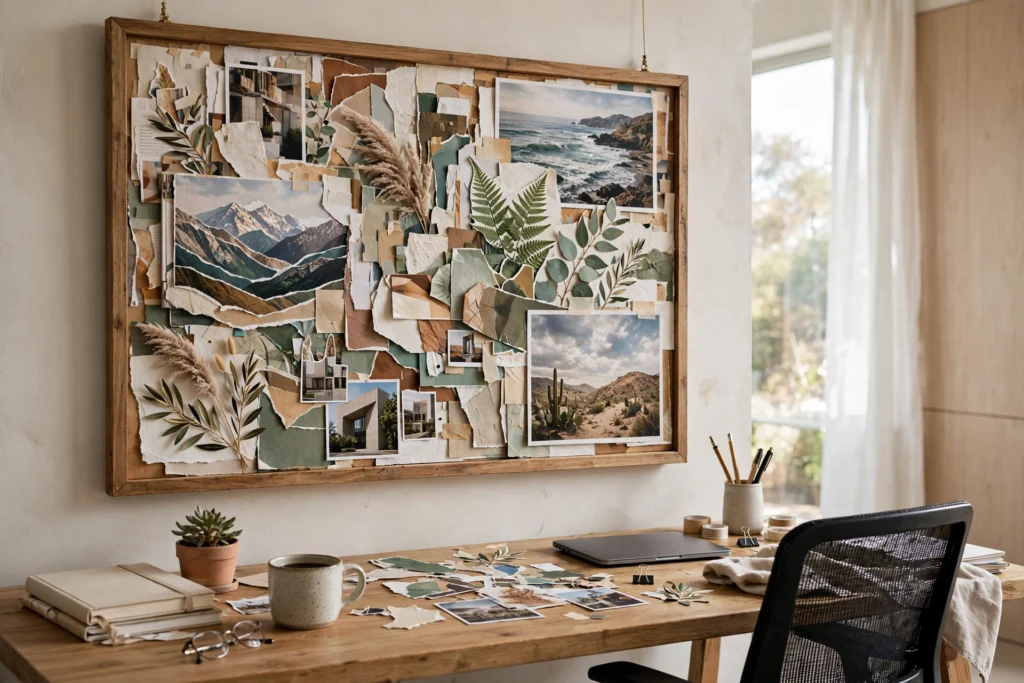
If pinboards feel too dorm-room for you, a framed vision collage gives the same inspiration with a finished, gallery look. Build your collage on foam core or heavy cardstock cut to fit a large frame — 18 by 24 inches works well above a desk — layering magazine cutouts, printed photos, and hand-lettered words with a glue stick. Leave some white space so it breathes. Frame it in black, oak, or brass to match your office, and suddenly your goals read as intentional art. Rebuild the collage once or twice a year: it takes twenty minutes and re-commits you to the vision.
3. Clip Goals to a Wire Grid Panel
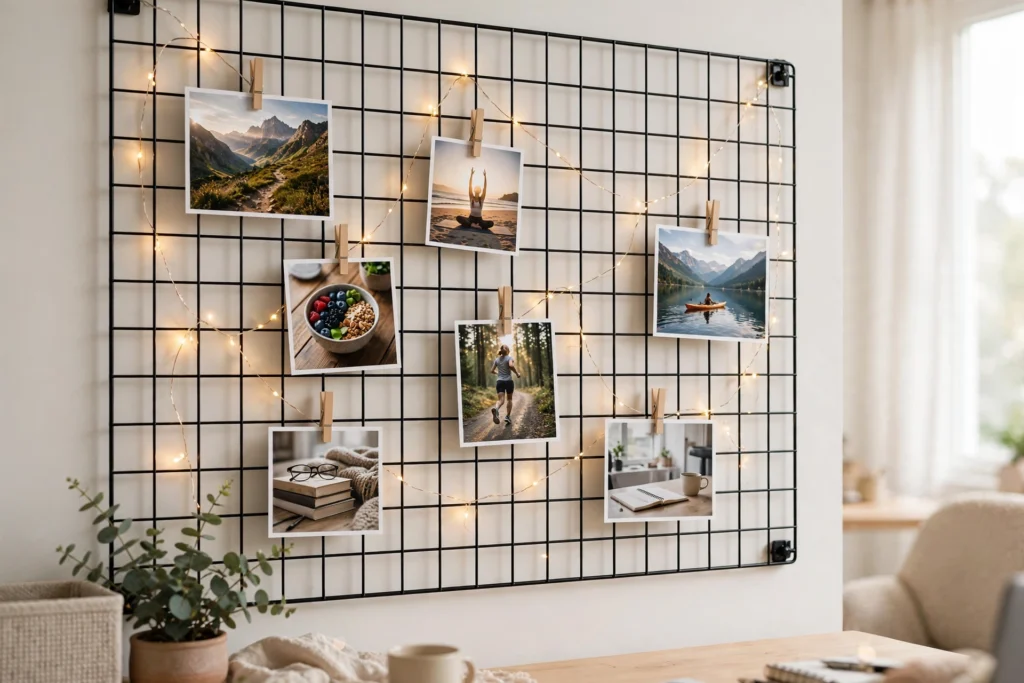
Wire grid panels bring an airy, modern feel that heavy cork cannot match, and clips let you swap images in seconds. Mount a black or gold grid panel beside your desk and hang printed goals, affirmations, and progress snapshots with small binder or bulldog clips. The open framework keeps the wall feeling light, which matters in small rooms. Layer in a string of fairy lights or a small hanging plant for warmth. If you like the grid look, our home office pegboard ideas for organized workspaces show how to pair display panels with real storage.
4. Build a Digital Vision Board in a Tablet or Monitor Frame
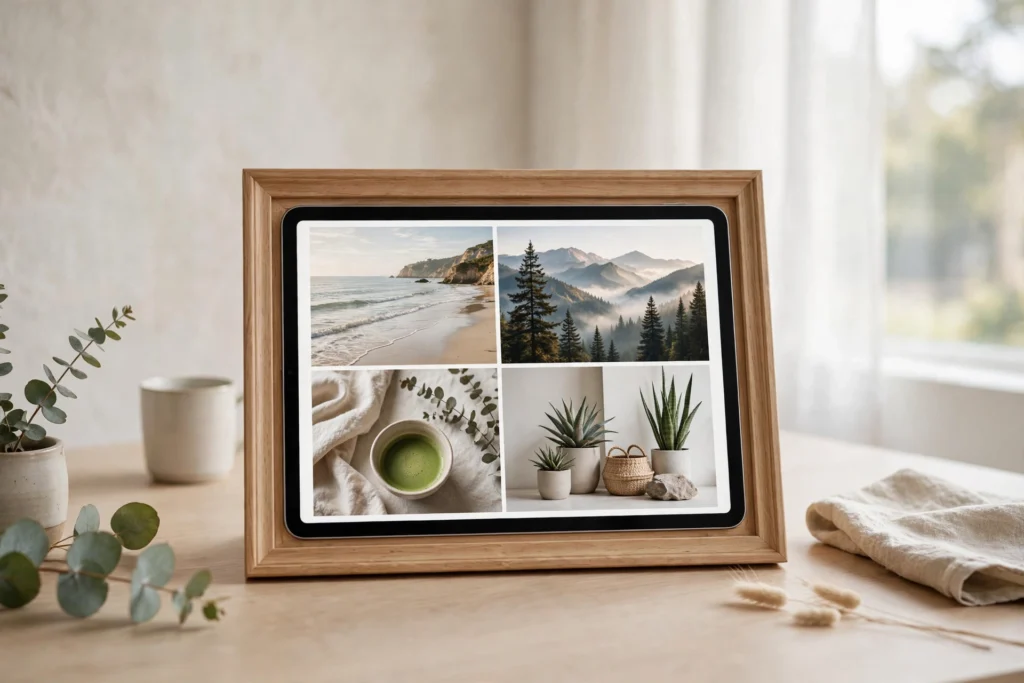
A digital vision board lives inside a screen — zero clutter, infinite flexibility, and slideshow magic. Load a rotating slideshow of goal images onto an old tablet mounted in a picture frame, a digital photo frame on the desk, or even a second monitor during focus hours. Free tools like Canva or Pinterest make the collage itself; set the slideshow to change every minute so fresh goals keep catching your eye. Because there is no printing or pinning, updating is effortless — swap in new images whenever a goal shifts. It is ideal for minimalists and renters who cannot drill holes.
5. Map the Whole Year on a Goal Board
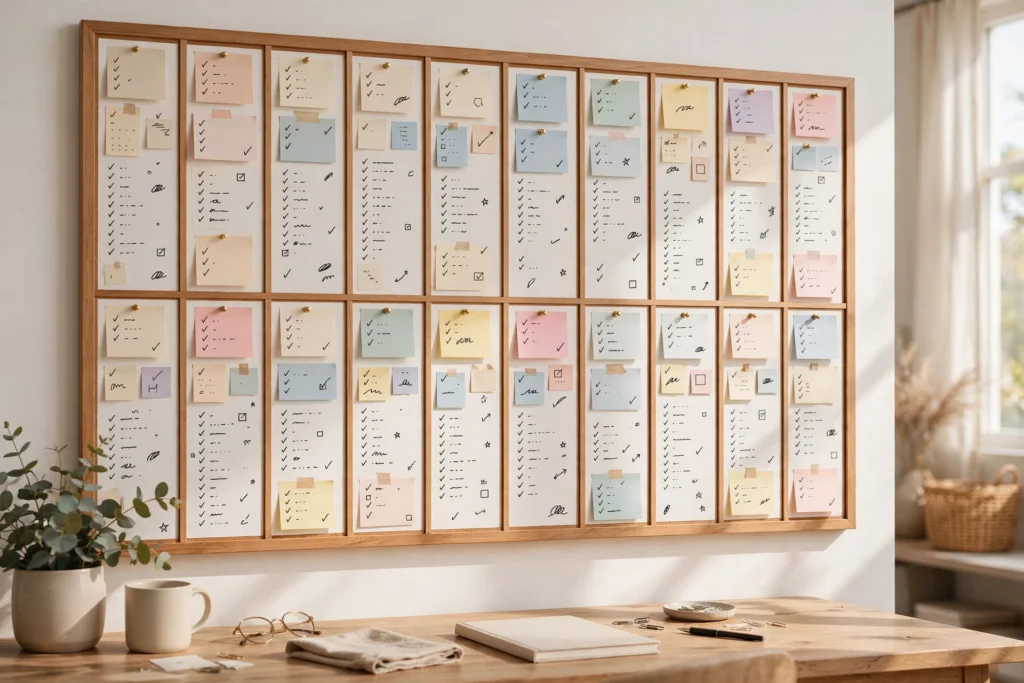
A yearly goal board trades dreamy imagery for structure: twelve months, one row each, with a concrete goal pinned under every month. Use a whiteboard, chalkboard, or large poster sheet divided into monthly columns, and write goals as outcomes (“publish portfolio,” “run 10K,” “save emergency fund”) rather than tasks. Checking off a month delivers a satisfaction that vague collages never will. When choosing goals worth a year of your life, BetterUp’s guide to life goals offers a thoughtful framework for picking priorities that genuinely align with your values.
6. Dedicate a Board to One Big Project
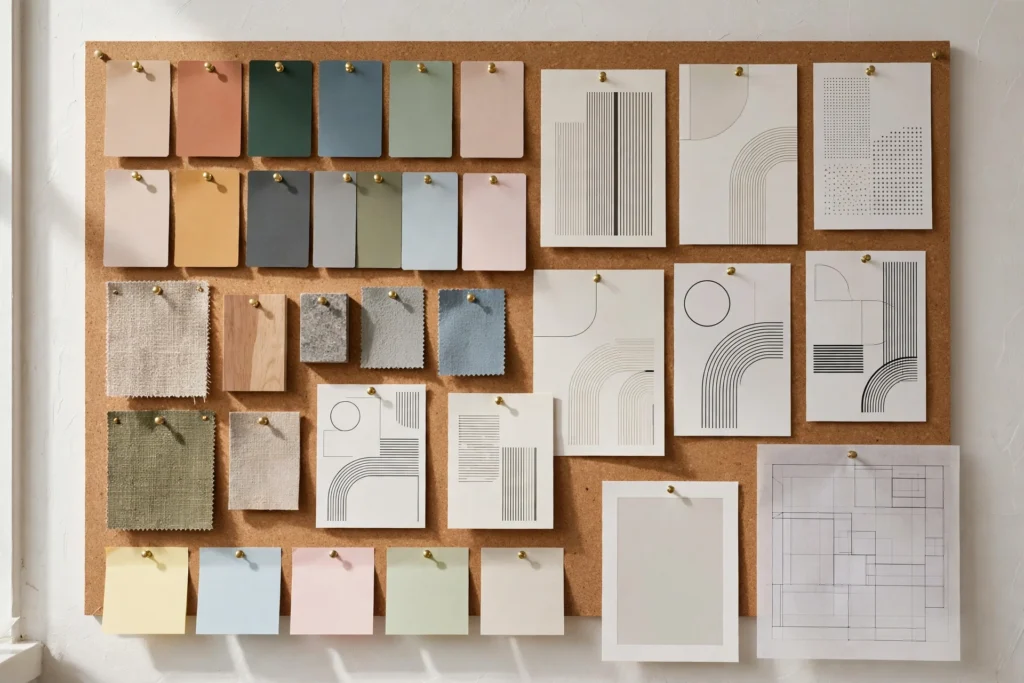
When one project dominates your work life — a book, a launch, a rebrand — give it its own board. A project-specific board collects reference images, color palettes, typography samples, and milestones in one place, keeping the vision tight and the scope creep visible. The mood board tradition comes from design studios, and it works because constraints breed clarity: if an image does not serve the project, it does not earn a pin. Keep this board within arm’s reach of where the work happens, and archive it — photograph, then clear — the day the project ships.
7. Climb the Career Ladder Visually
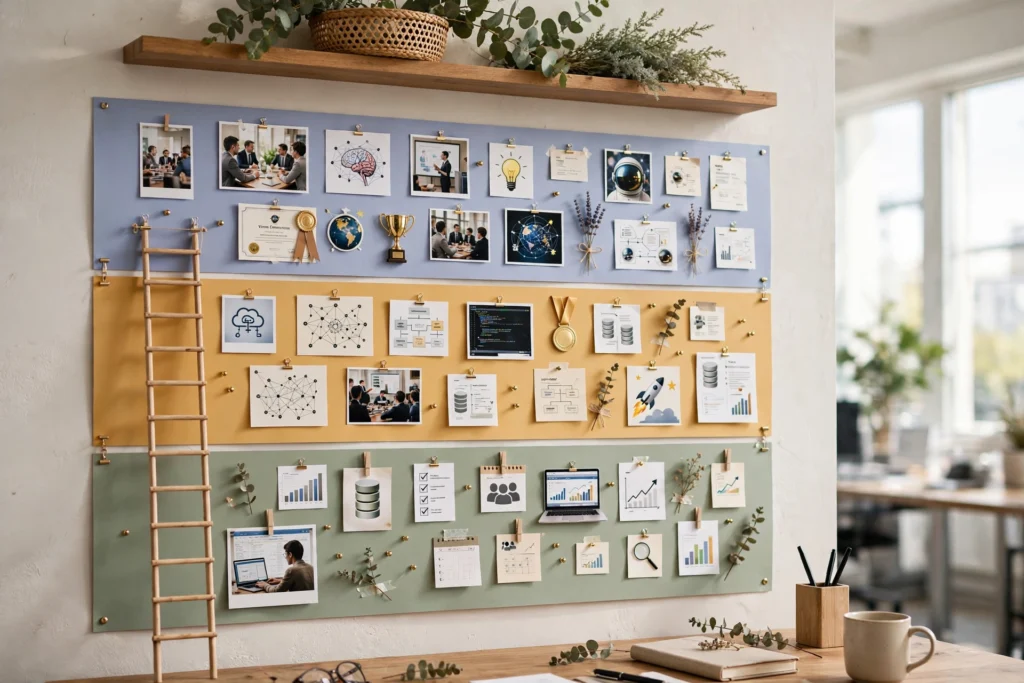
A career-ladder board maps where you are going, not just where you are. Divide the board into three horizontal bands — now, next, someday — and pin the roles, skills, certifications, and salary milestones that mark each rung. Add photos of people whose careers you admire and conference badges you want to earn. Review it during annual planning or before performance reviews, and move items up a band as you grow. The visual climb makes abstract ambition concrete, and on hard days it reminds you the ladder has a direction. Keep it facing away from the camera if it lives in a shared office.
8. Blend Wellness Into the Vision
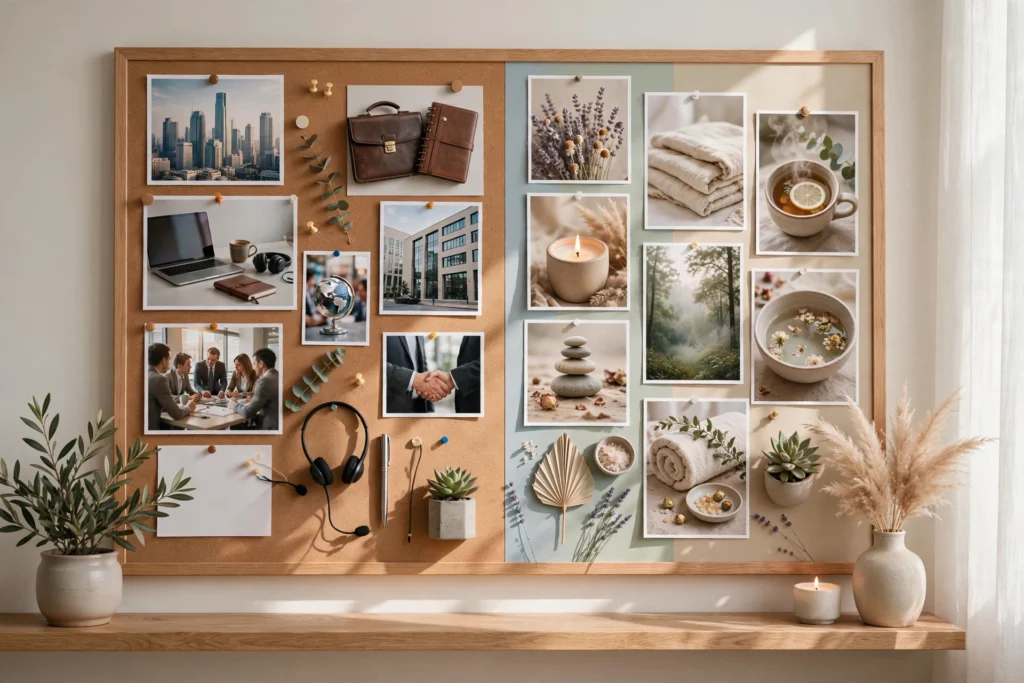
Burnout-proof your ambition with a wellness-vision hybrid board: half goals, half self-care cues. One side holds the targets; the other holds the habits that sustain them — sleep schedules, workout plans, meal ideas, and reminders to log off. Use calming colors and nature imagery on the wellness side so the board itself feels restorative rather than demanding. Pin one weekly non-negotiable (a walk, a hobby hour, a tech-free evening) at eye level. Refresh the wellness side monthly based on what is actually recharging you. A board that only demands will eventually be ignored; one that also nurtures gets looked at daily.
9. String Up a Polaroid Photo Line
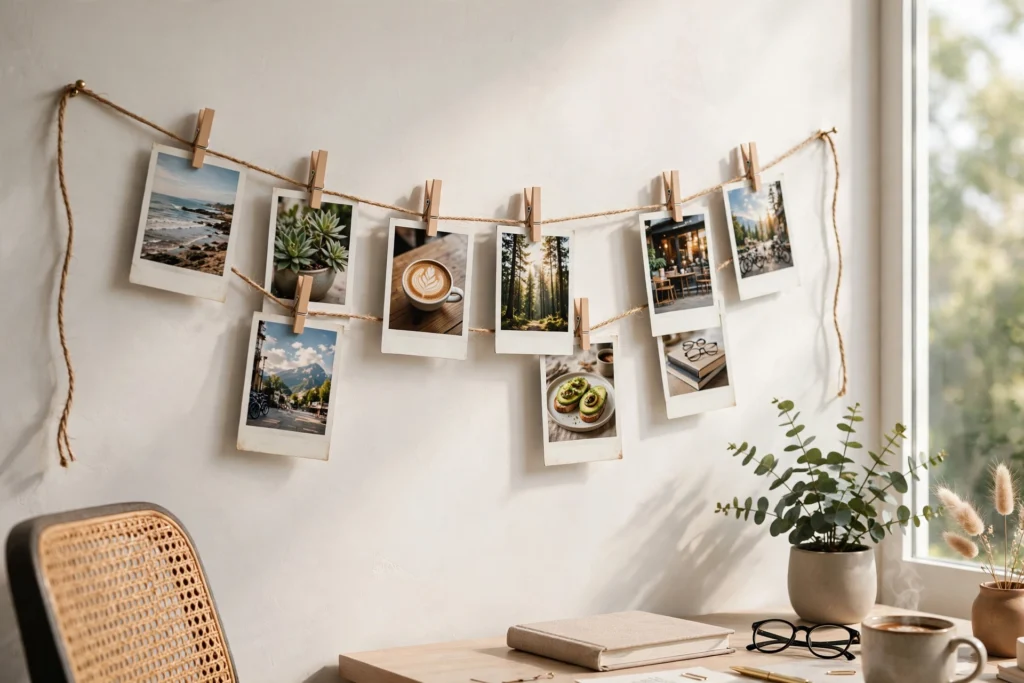
A photo-print polaroid string brings warmth and nostalgia that printed collages cannot quite match. Hang two or three lengths of twine or thin wire across a section of wall with small nails or adhesive hooks, and clip instant-camera prints or square photo prints along them with mini clothespins. Mix goal imagery with real memories — trips taken, people loved, moments that felt like the life you are building toward. The line format makes rearranging effortless, and prints cost very little at a drugstore kiosk. Swap in fresh prints quarterly, and keep the strings taut so the display looks intentional, not droopy.
10. Sew a Soft Fabric Pinboard
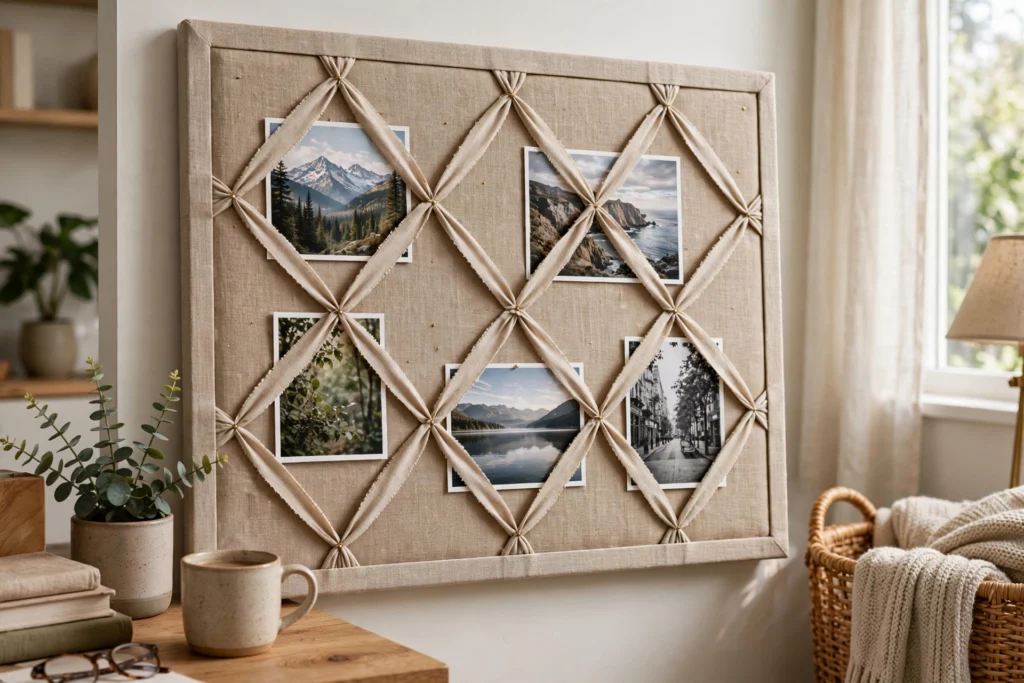
A fabric-covered pinboard softens a home office in a way cork and metal never will. Wrap a foam board or plywood panel in linen, velvet, or patterned cotton, securing the back with a staple gun, then crisscross ribbon over the front to create diamond tucks for holding cards and photos without pins. The result looks like upholstered wall decor — no pin holes showing, no office-supply vibe. Choose a fabric that echoes your room’s palette so the board blends with the decor. Fabric boards suit bedrooms-turned-offices beautifully, and the padded surface is gentle on framed photos you would rather not puncture.
11. Go Magnetic With a Metal Board
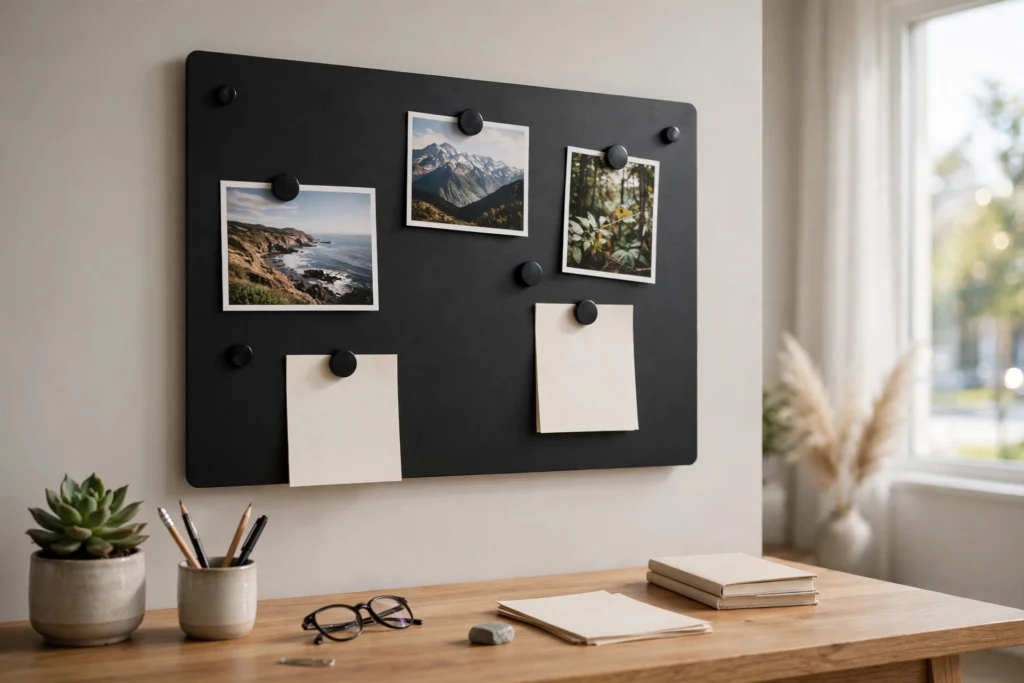
Magnetic boards are the vision board for people who rearrange constantly. A powder-coated steel panel — in matte black, white, or a bold color — holds images with small magnets instead of pins, so swapping content takes seconds and leaves no holes. Lean a large panel on the desk against the wall for a casual look, or mount it flush for a cleaner line. Use a mix of round magnets and magnetic clips for photos and notes. Metal boards double as memo centers for deadlines and reminders, and they wipe clean with a damp cloth. One panel, zero commitment, endless rearranging.
12. Track Goals on a Chalkboard or Whiteboard
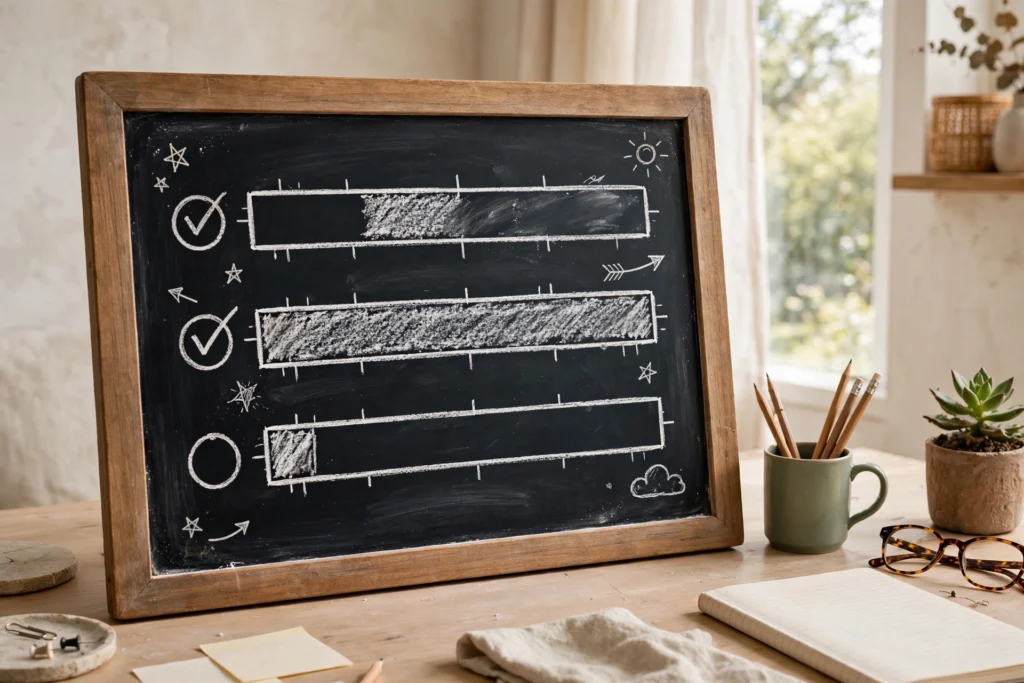
Some goals need numbers, not pictures. A chalkboard or whiteboard goal tracker turns your vision into a dashboard: savings targets with progress bars, word counts, workout streaks, project deadlines. Use chalk markers on a framed chalkboard for a crisp, erasable finish, or a glass whiteboard for a sleek modern look. Update the numbers weekly — the ritual of filling in a progress bar is motivation in itself. Place it where you will see it during work, not behind you. Keep one image-based board nearby too, so the room still feels inspiring rather than purely metric.
13. Rotate a Seasonal Vision Board
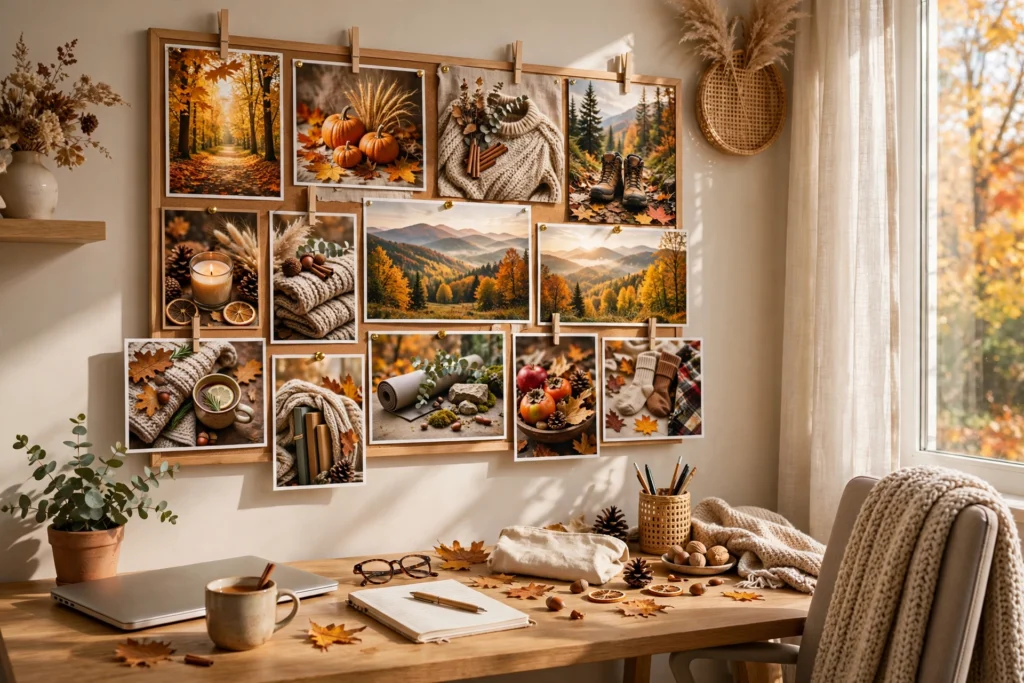
A rotating seasonal vision board stays honest because it expires on purpose. Dedicate one board to the current season only: spring goals, summer travel plans, fall projects, winter rest. Swap the entire board four times a year — photograph the old one for your records, then clear it and start fresh. The ritual forces a quarterly life review, which is the real value: you notice what actually happened versus what you planned. Keep the frame or base permanent and only change the contents, so the swap takes an afternoon, not a weekend. Seasonal boards never go stale, because staleness is the trigger to change them.
14. Keep a Mini Desk-Side Vision Tray
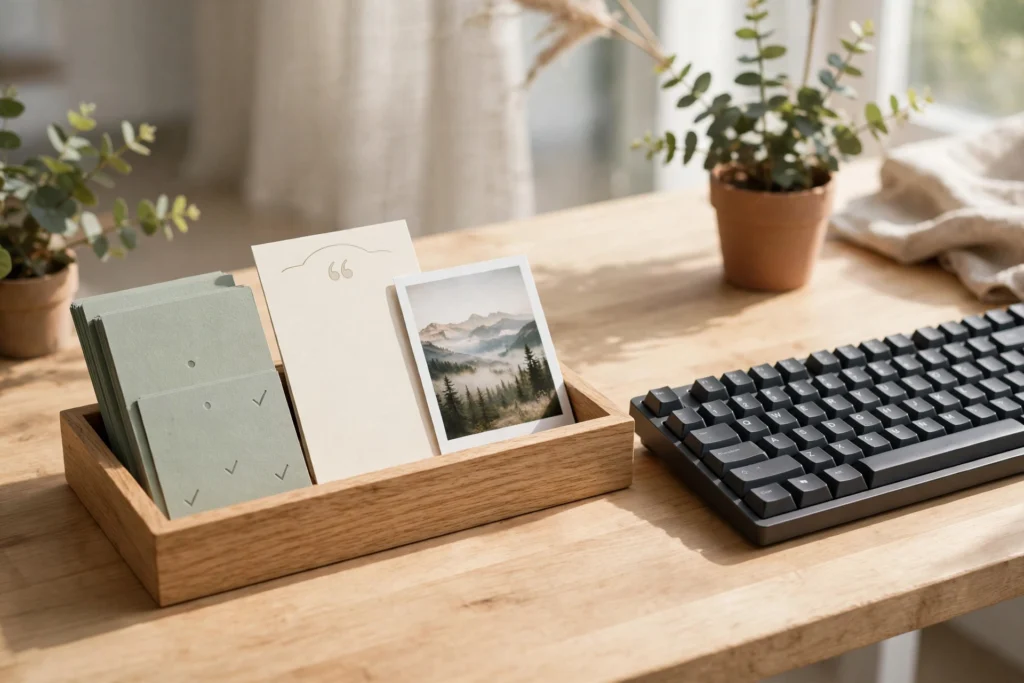
No wall space? A mini desk-side vision tray brings the vision board down to desktop scale. Use a shallow wooden tray, a small framed cork tile, or even the lid of a keepsake box, and arrange five to seven goal cards, a favorite quote, and one photo inside. It sits beside your keyboard or on a shelf at eye level — always in peripheral vision during work. The constraint is the feature: with room for only a handful of items, you keep just the goals that matter most. Refresh it monthly when you review priorities, and it doubles as a pretty desk vignette.
15. Make the Vision Board Wall-Art Centerpiece
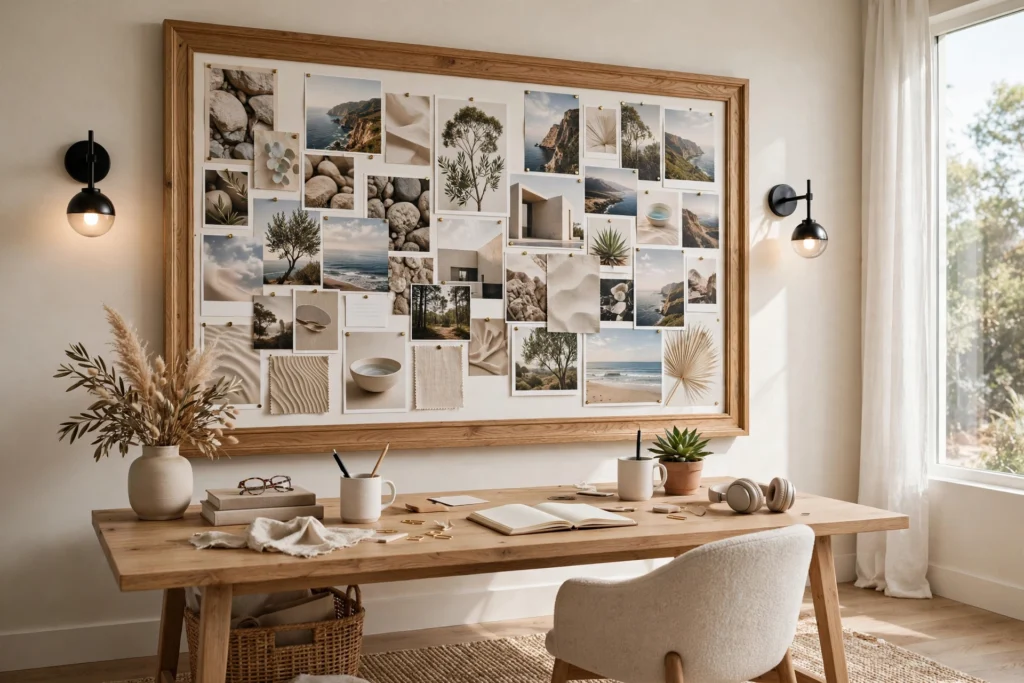
Treat the vision board as the room’s hero piece and design around it. Choose one large, beautiful format — an oversized framed collage, a linen pinboard in a statement frame, or a grid of small framed prints — and hang it centered above the desk as the focal point. Style the rest of the wall to support it: a pair of sconces or a picture light, a floating shelf below with a plant and books, and a calm paint color behind it. When the board is the centerpiece, you maintain it — because a neglected hero piece is impossible to ignore. This is the vision board for people who want their goals to look like art.
FAQ
Where should I hang a vision board in my home office?
Hang it where your eyes land during the workday — beside or above your monitor, or on the wall you face most. It must be visible without turning around. On video calls, a tidy board reads as personality; a chaotic one distracts. Keep it out of direct sunlight to prevent fading.
How often should I update my vision board?
Check it monthly and refresh it fully each quarter. Monthly, remove achieved goals (celebrate first) and anything that no longer fits. Quarterly, ask whether it still reflects where you are headed. If you have not really looked at it in weeks, change something.
What is the difference between a vision board and a mood board?
A vision board focuses on goals and outcomes — where you are going. A mood board captures aesthetics and feelings — the look or vibe of a project. Vision boards are personal and long-term; mood boards are often project-specific. Many home office boards blend both.
Can a vision board look professional on video calls?
Yes, with curation. Choose a framed collage, fabric pinboard, or tidy grid — formats that read as decor. Keep content work-appropriate and calm: cohesive colors, no loose papers, nothing overly personal. A styled board signals creativity. Avoid half-erased chalkboards or overstuffed cork.
What if my home office is tiny — where does a vision board fit?
Go small: a desk-side tray, a narrow wire grid beside the monitor, or a tablet slideshow. Use vertical space — the wall strip above a desk or beside a door. A framed 11-by-14 collage needs barely a square foot. Even laptop wallpaper counts; the principle is visibility, not size.
Keep Exploring
Your vision board works hardest when the room around it supports focus — so once the board is up, look at the bigger picture. A thoughtful backdrop makes any board look more intentional, and our home office accent wall ideas for a focused creative space show how color and texture can frame your goals beautifully. Start with one board, keep it fresh, and let it quietly steer your workdays toward the life you are building.