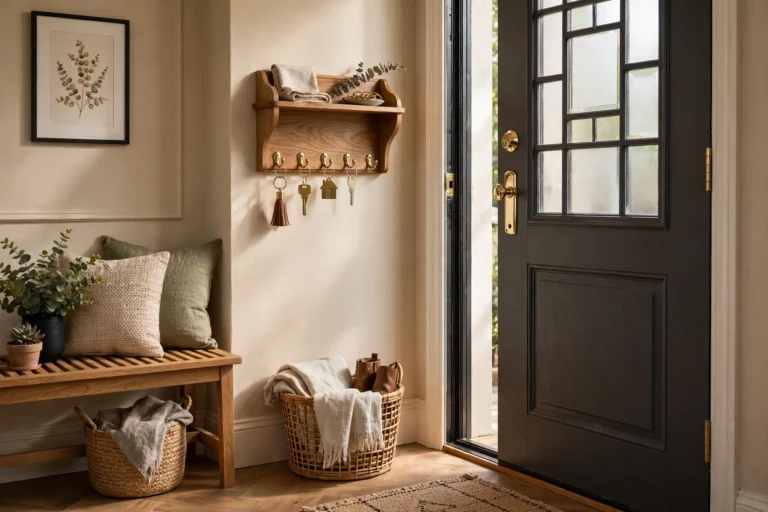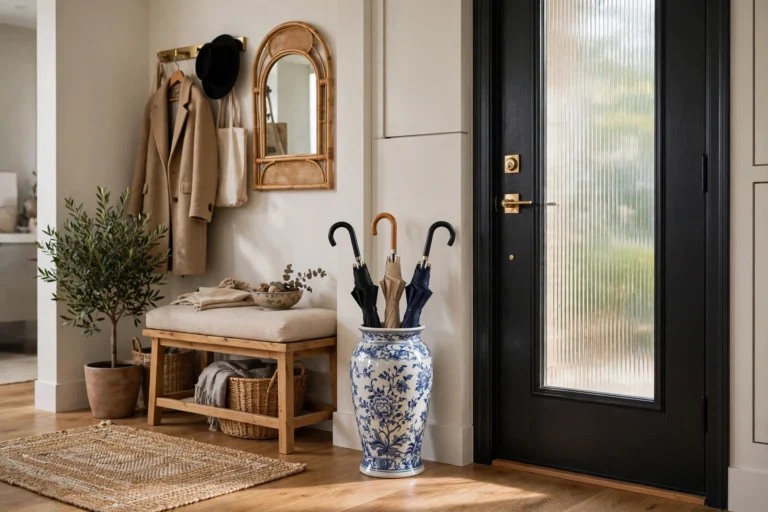

The entryway is where daily life lands: keys tossed, mail dropped, sunglasses abandoned, bags slung. Without a system, it becomes a clutter drift in about forty-eight hours. A tray is the simplest system there is — one defined boundary that says “the small important things live here.” These entryway tray decor ideas turn that humble catch-all into a styled moment, proving that organization and beauty are the same project. Start with the most functional piece of all, the key drop — our entryway key holder ideas for a clutter-free first impression pair perfectly with every tray below.
Before you style anything, size the tray to its surface. A tray should be roughly one-third to one-half the width of the console or shelf it sits on — big enough to hold the essentials, small enough to leave breathing room. Rectangular trays suit long consoles; round trays soften square side tables. And remember the golden rule of tray styling: leave negative space. A tray packed edge to edge reads as clutter in a container; a tray with three to five well-chosen items reads as design.
1. Start With a Classic Catch-All Tray
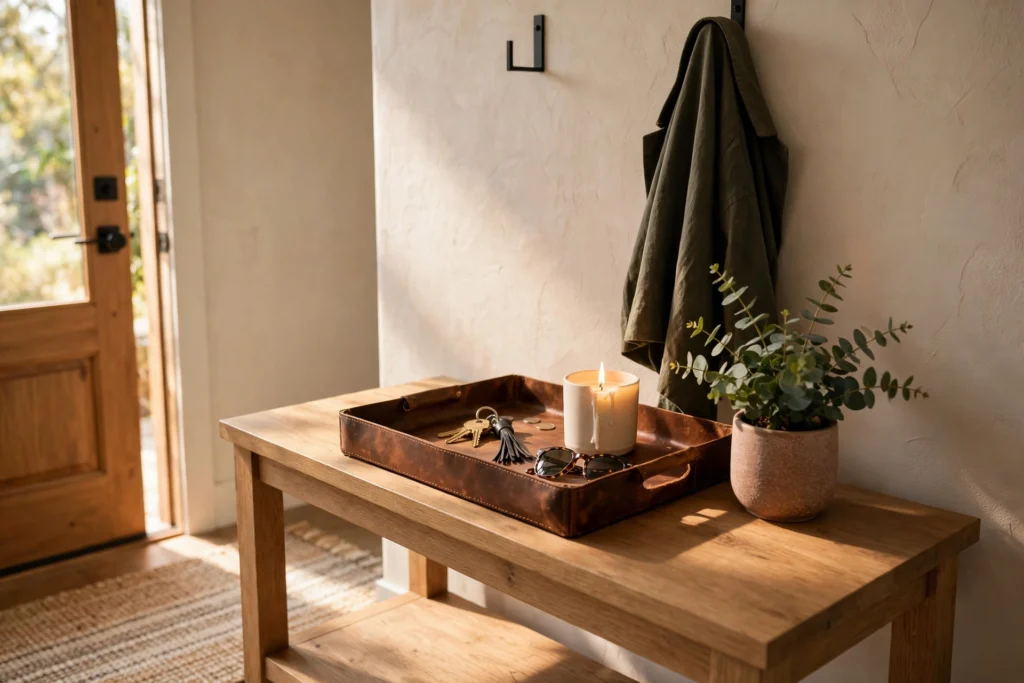
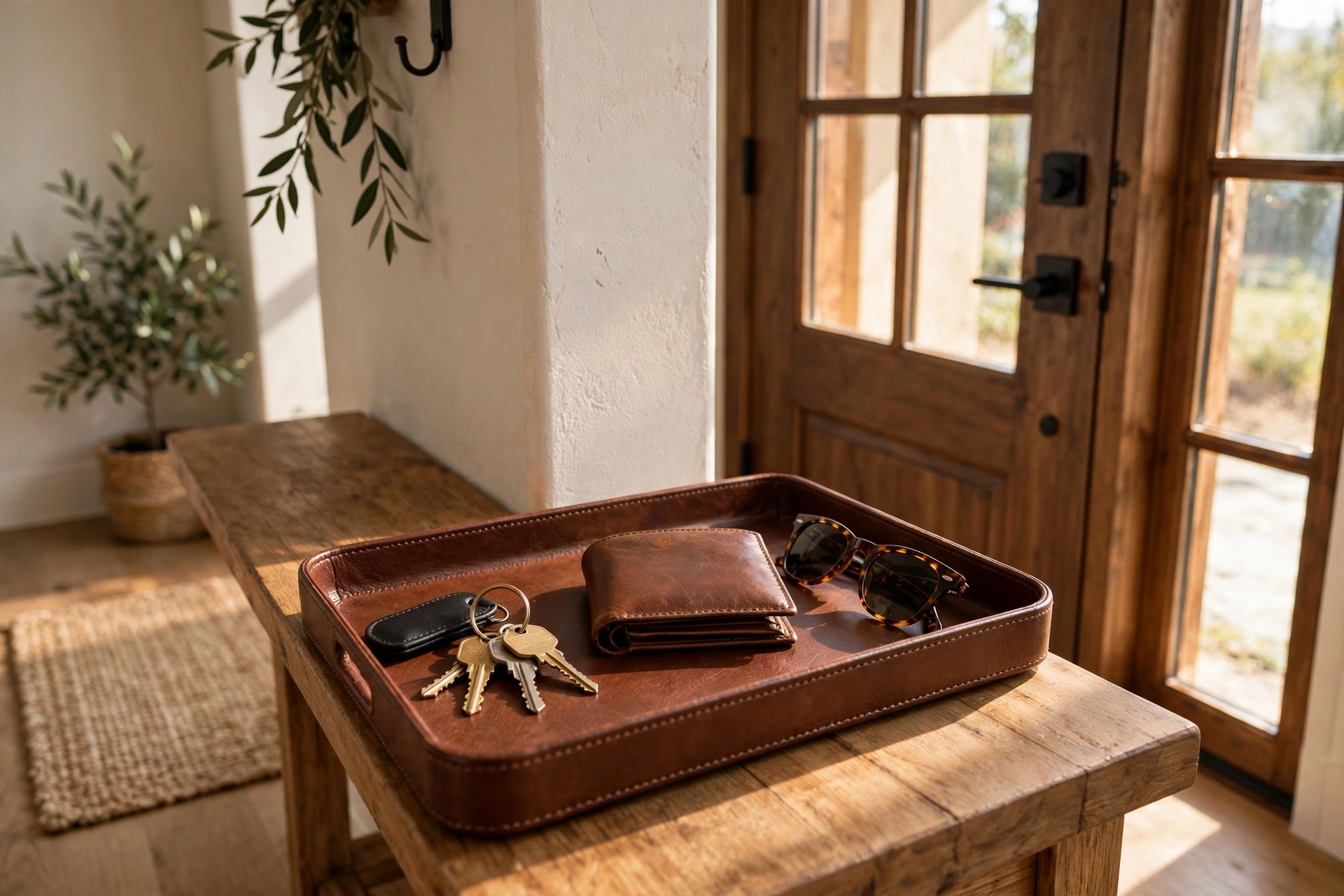
Every entryway needs one honest catch-all: a tray by the door that gathers keys, wallet, sunglasses, and whatever else empties from pockets. Choose a tray with a lip high enough to contain small items — at least an inch — and a material that forgives daily use, like leather, wood, or powder-coated metal. Place it in the exact spot where hands naturally land when walking in, whether that is the console table, a wall shelf, or the top of a shoe cabinet. The catch-all only works if emptying pockets into it becomes automatic, so make it the easiest target in the room.
2. Layer the Tray on Your Console Table
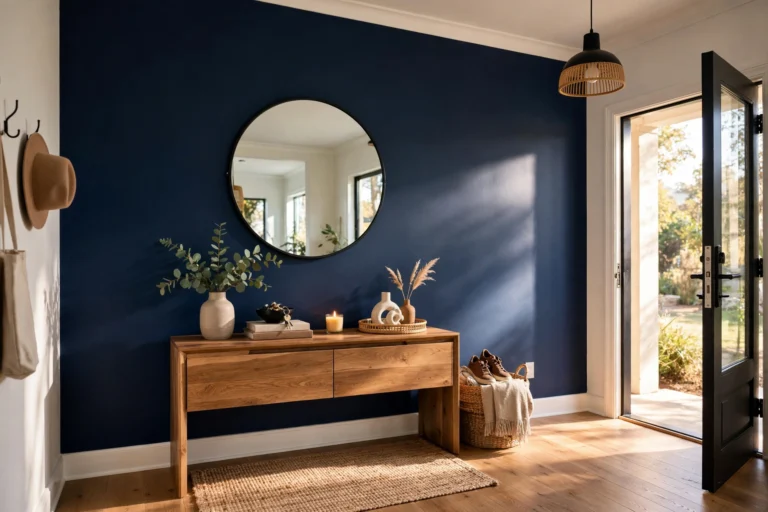
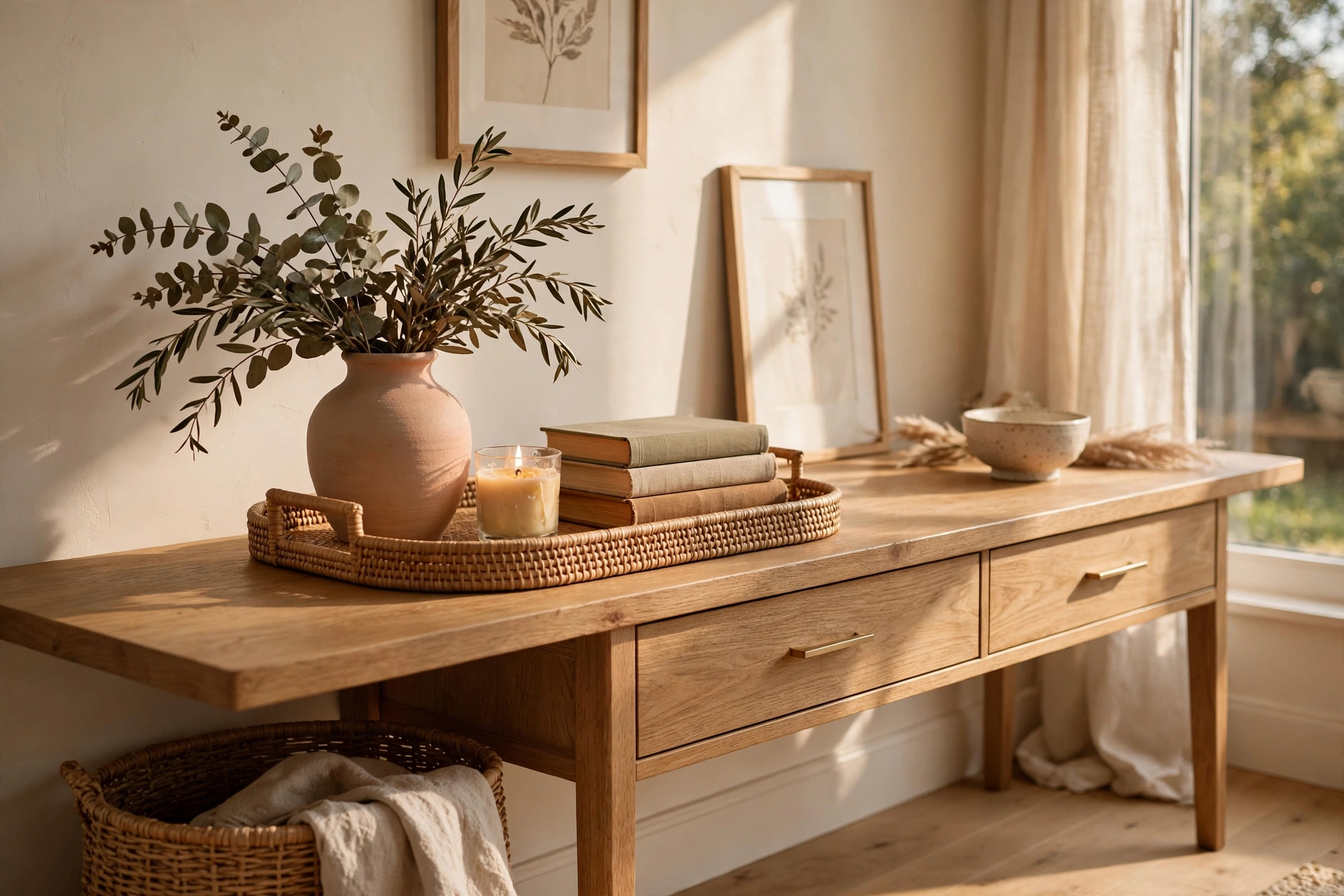
A tray on the console table turns a flat surface into a composed vignette. Set the tray slightly off-center — never dead center, which looks static — and build the arrangement inside it: a small vase with stems, a candle, a stack of two books, a decorative object. The tray’s boundary makes the grouping feel intentional rather than scattered, and it protects the console’s finish from candle wax and water rings. Vary heights within the tray for visual rhythm: tall vase, medium candle, low books.
3. Build a Candle and Greenery Vignette
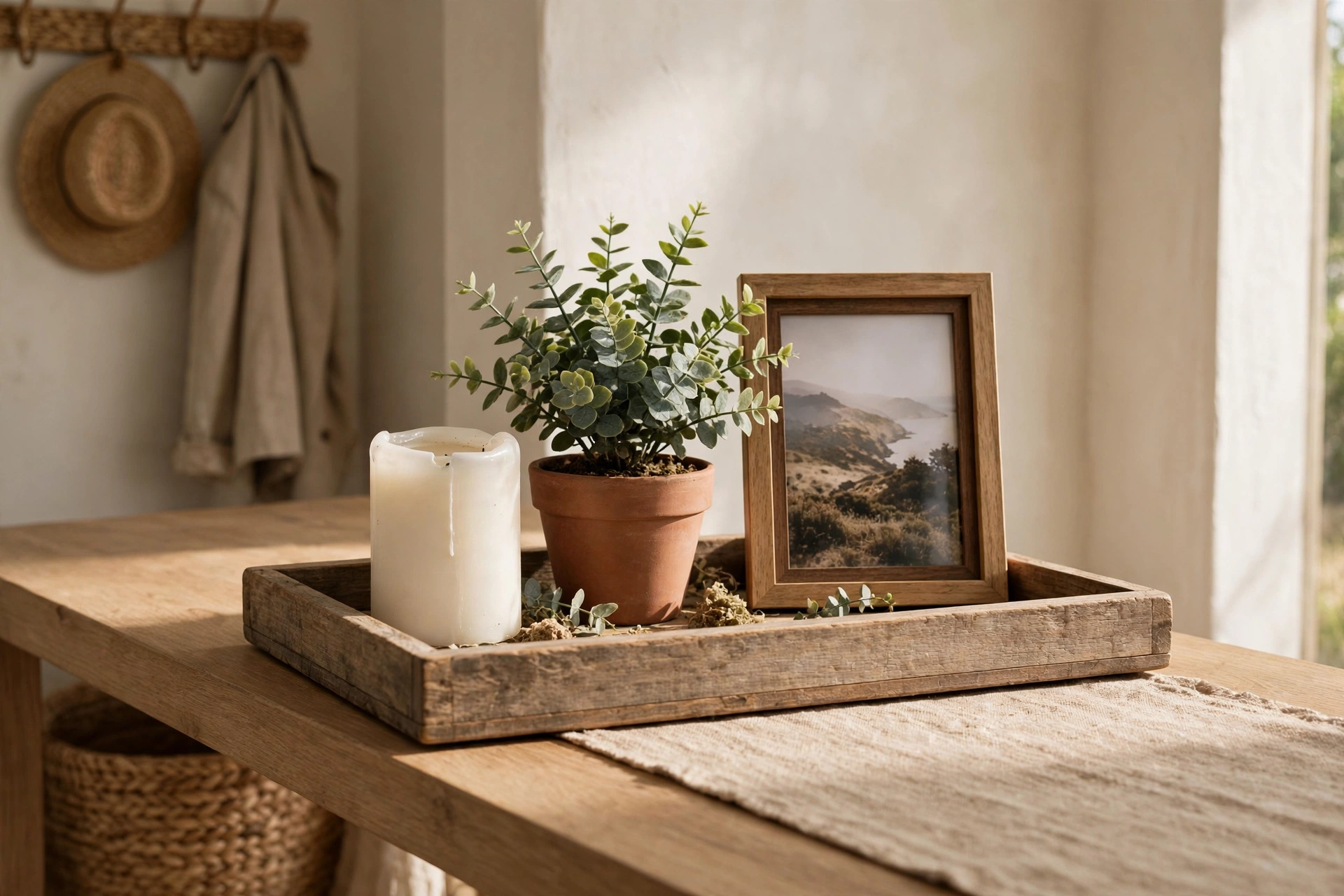
The classic tray formula — candle plus greenery plus one personal object — never fails in an entryway. A pillar candle in a glass hurricane, a small potted plant or a bud vase with fresh stems, and something with meaning: a framed photo, a stone from a trip, a beautiful box. The candle adds warmth and a welcoming scent for guests; the greenery adds life; the personal object makes it yours. Keep the plant small and easy — a succulent or a pothos cutting in water — since entryway light is often limited.
4. Choose Leather for a Luxe Look
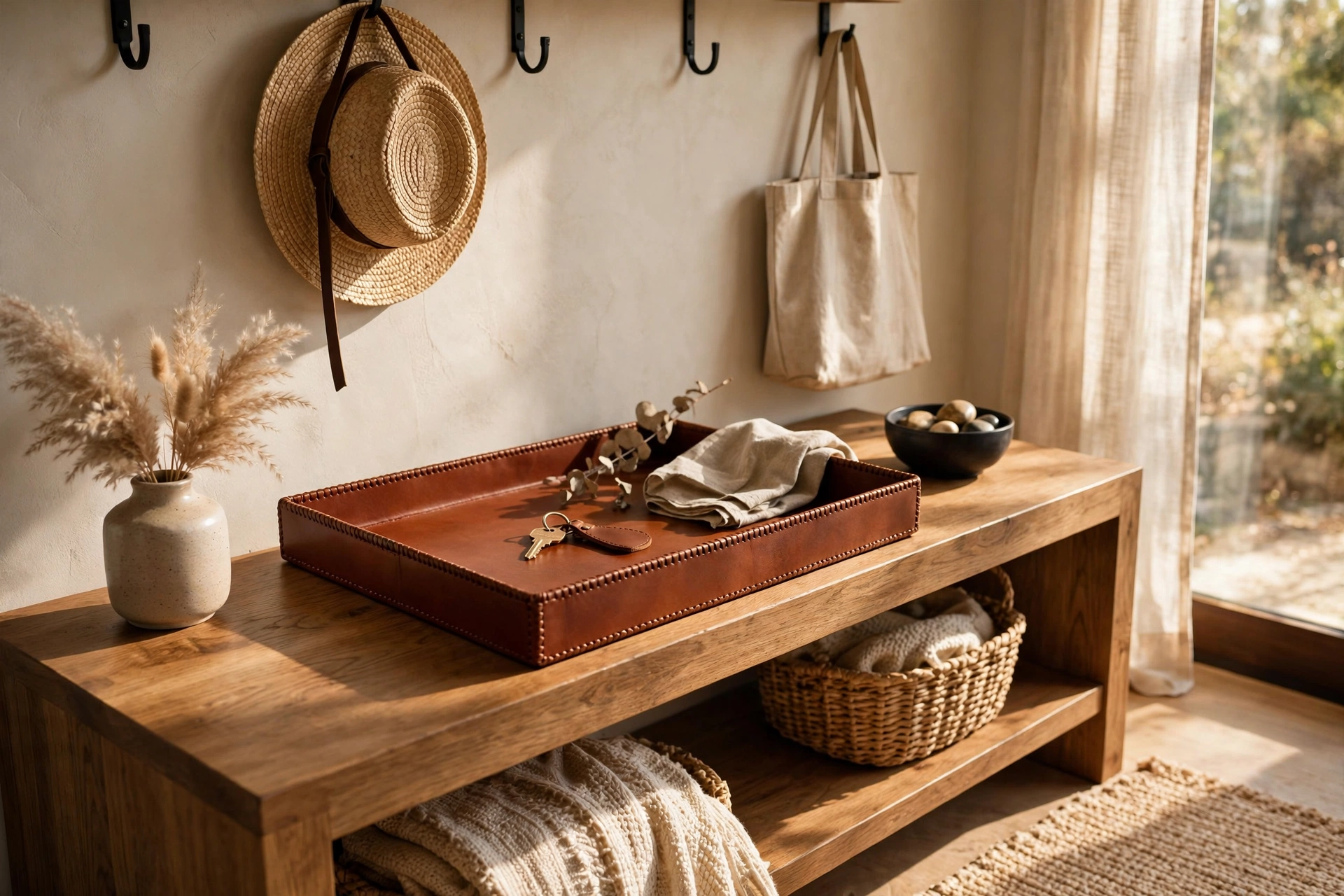
A leather tray brings instant sophistication to the entryway — the material equivalent of a well-made wallet. Cognac, black, or deep green leather with contrast stitching looks rich against wood consoles and marble tops alike. Leather is also practical: it is soft enough not to scratch surfaces, sturdy enough to hold its shape, and it develops a beautiful patina with use. Wipe it clean with a damp cloth and condition it occasionally.
5. Add Texture With a Woven Tray
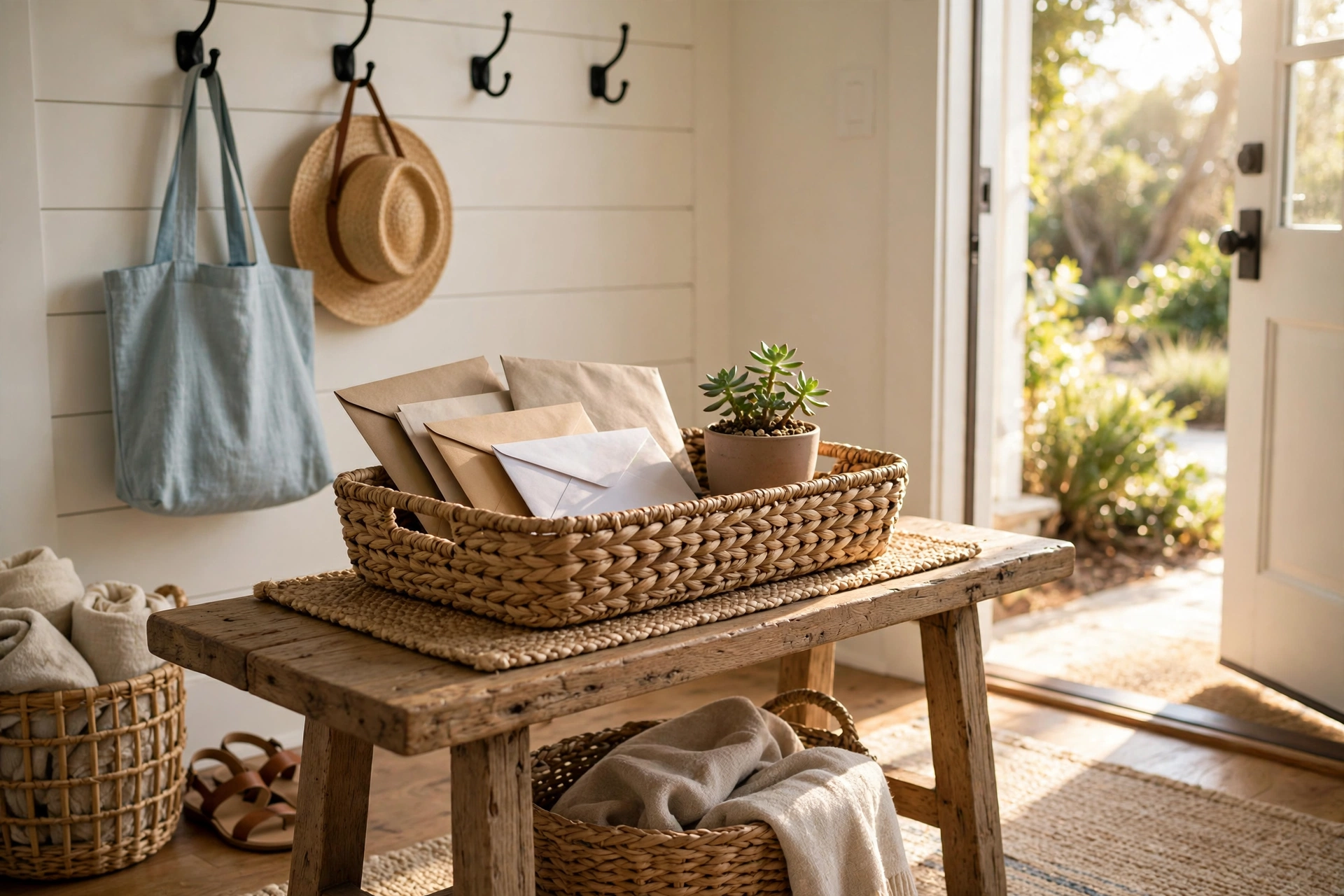
Woven trays — rattan, seagrass, wicker, water hyacinth — add the natural texture that keeps an entryway from feeling cold or formal. The woven surface contrasts beautifully with smooth console tops and metal hardware, and the casual material keeps the styling relaxed. Use a woven tray to corral mail and magazines, or as the base for a plant and candle grouping. Line it with a piece of felt if you are worried about small items slipping through the weave.
6. Go Glam With a Mirrored Tray
A mirrored tray bounces light around the entryway and makes everything on it look more precious — perfume bottles, a small vase, a candle all double their sparkle on a reflective surface. Mirrored trays suit glam, Hollywood Regency, and contemporary entries, especially ones short on natural light. Keep the styling minimal since the mirror is already doing visual work: three items maximum, or the reflections turn chaotic. Wipe the surface weekly because entryways are dusty and mirrors show everything.

7. Corral the Mail in Style
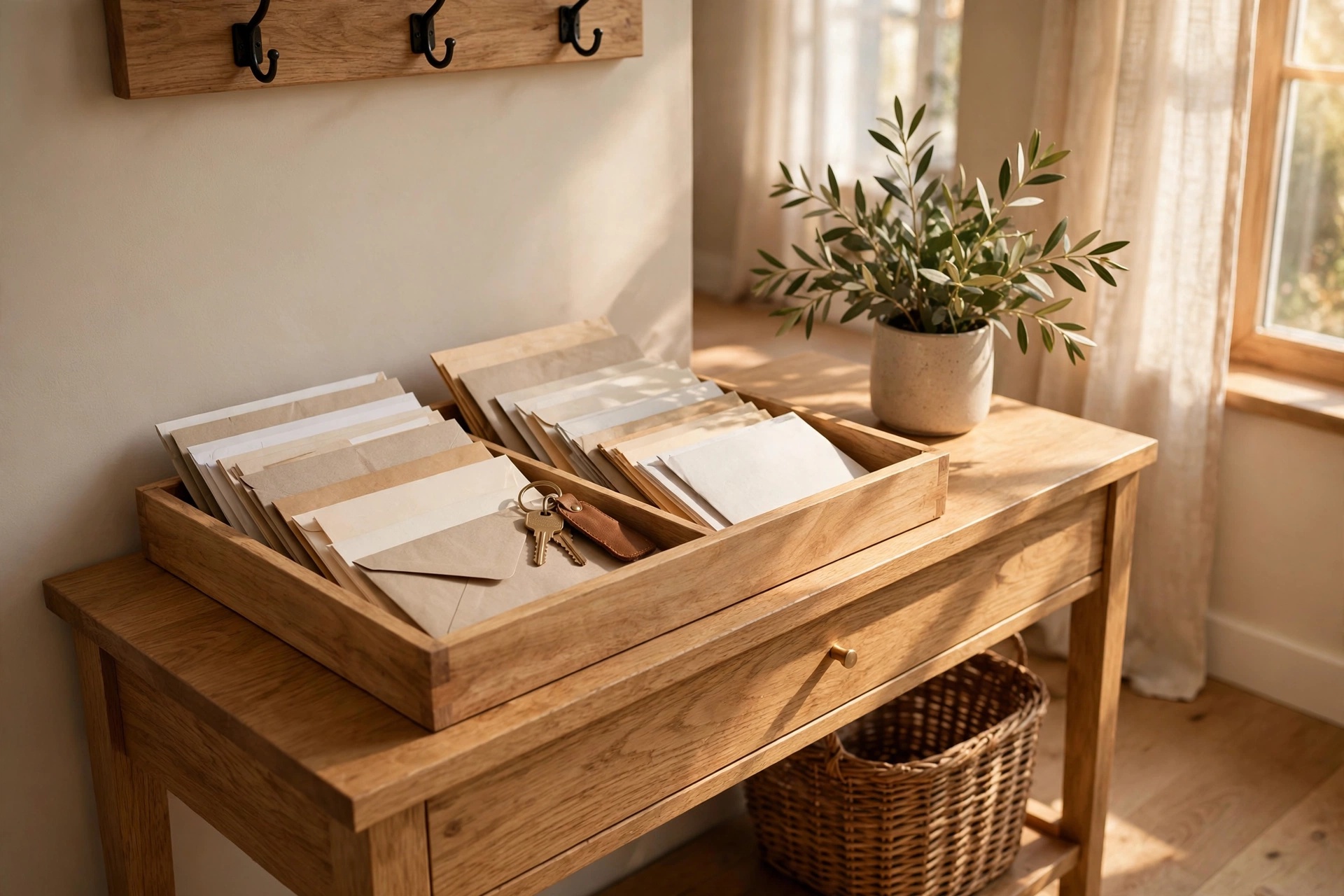
Mail is the entryway’s eternal clutter source, and a tray is the elegant solution. Dedicate a shallow tray or a tray with a small upright sorter to incoming mail, placed exactly where you naturally set it down. Add a small recycling bin or shredder nearby so junk mail leaves immediately instead of breeding on the tray. Once a week, process the tray: file, pay, or toss everything in it. The tray does not organize your mail — you do — but it gives the chaos a single, visible home instead of five horizontal surfaces.
8. Swap the Styling Seasonally
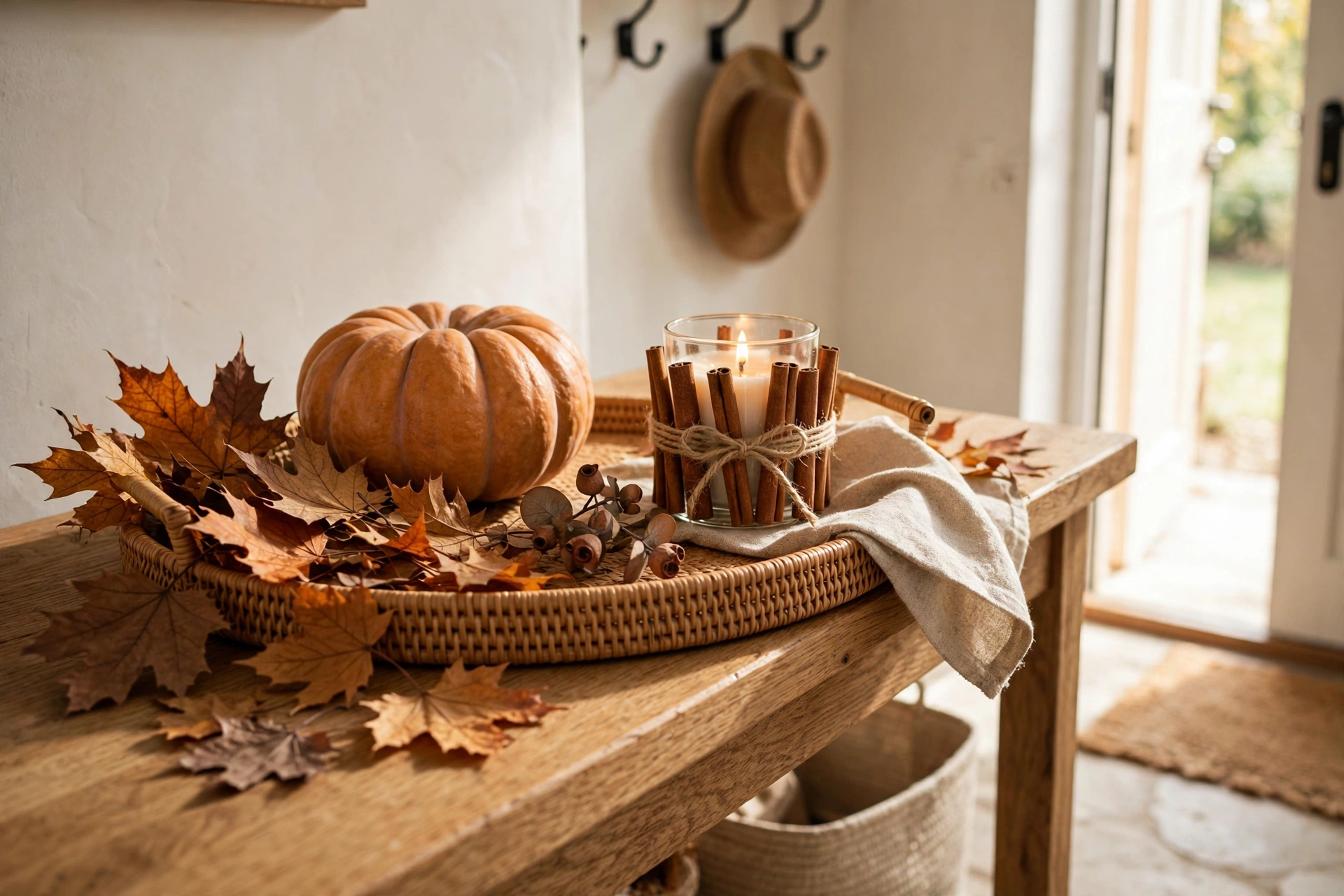
Treat your entryway tray like a tiny gallery with rotating exhibitions. In fall, fill it with a small pumpkin, dried leaves, and a cinnamon candle; in winter, pinecones, a sprig of evergreen, and a brass candlestick; in spring, a bud vase of tulips and a pastel candle; in summer, a bowl of lemons or shells. The tray’s small scale means a seasonal swap takes five minutes and costs almost nothing. Keep a labeled bin of off-season tray decor in a closet so the changeover is painless.
9. Style a Tray on the Entryway Bench
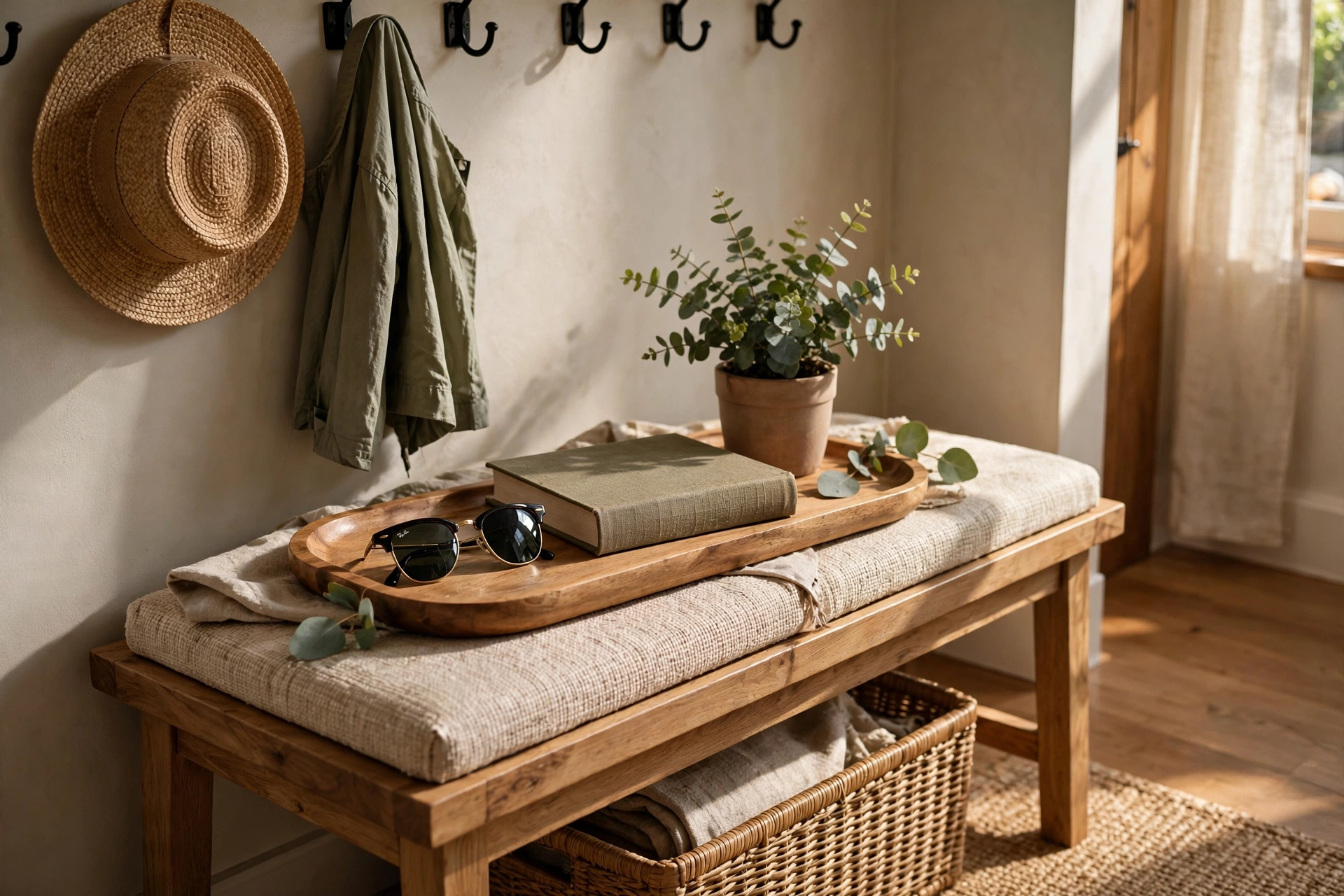
The entryway bench is not just for sitting — its surface is prime tray territory. A tray on the bench corrals the items that migrate there: the book you are reading, hand cream, a small plant, the sunglasses you always forget. Keep the tray to one end so there is still room to sit, and choose a tray with a lip so items do not slide off when someone plops down. A bench tray also protects upholstery from water rings and scratches.
10. Try a Tiered Tray for Small Spaces
When console space is tight, go vertical with a two- or three-tiered tray. The top tier holds the daily essentials — keys, sunglasses — the middle holds a small plant or candle, and the bottom holds mail or a decorative object. Tiered trays pack a full vignette into the footprint of a dinner plate, making them ideal for narrow consoles, wall shelves, and apartment entries. Keep the styling light on each tier; a tiered tray stuffed on every level looks cluttered rather than clever.
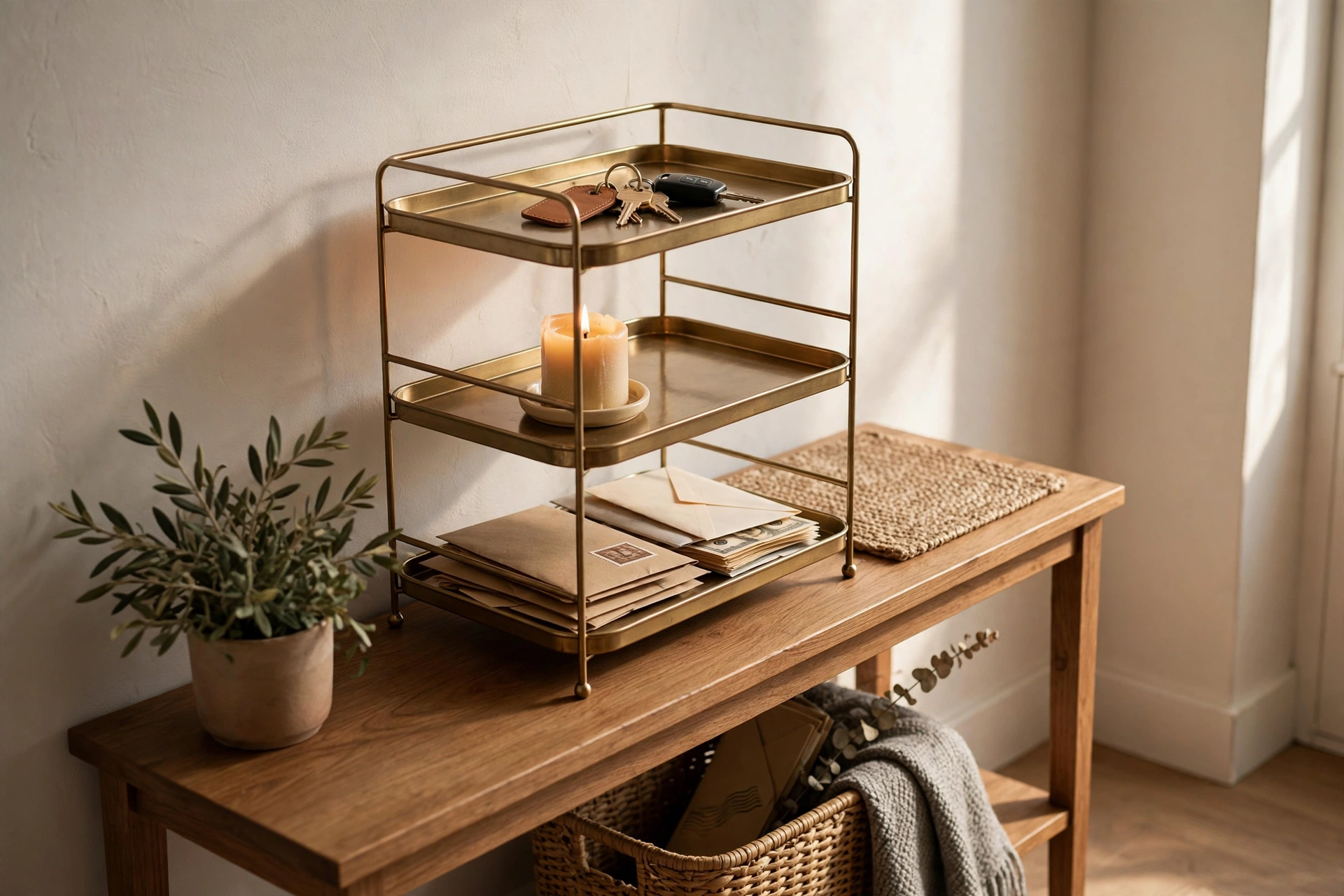
11. Add a Small Lamp to the Tray
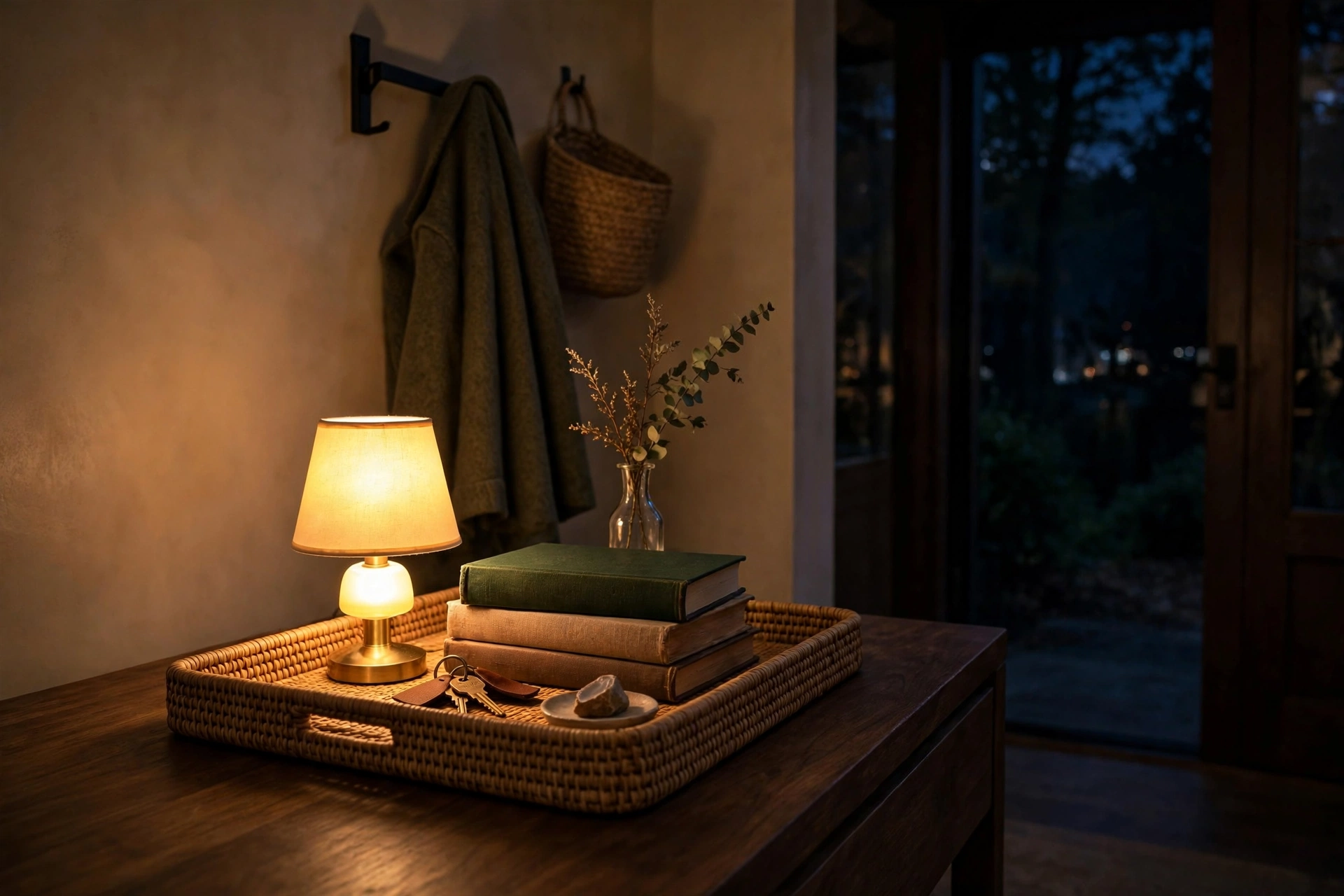
A tiny lamp on the tray turns the entryway vignette into a light source — and a lit tray is pure welcome-home magic. Battery-operated mini lamps and rechargeable LED candles give the glow without cords, while a small corded lamp works if an outlet is near. The light makes the tray a focal point after dark and helps you actually see your keys when you walk in at night. Keep the lamp proportional: the shade should clear the tray’s tallest item by a few inches.
12. Keep It Elegant With Marble
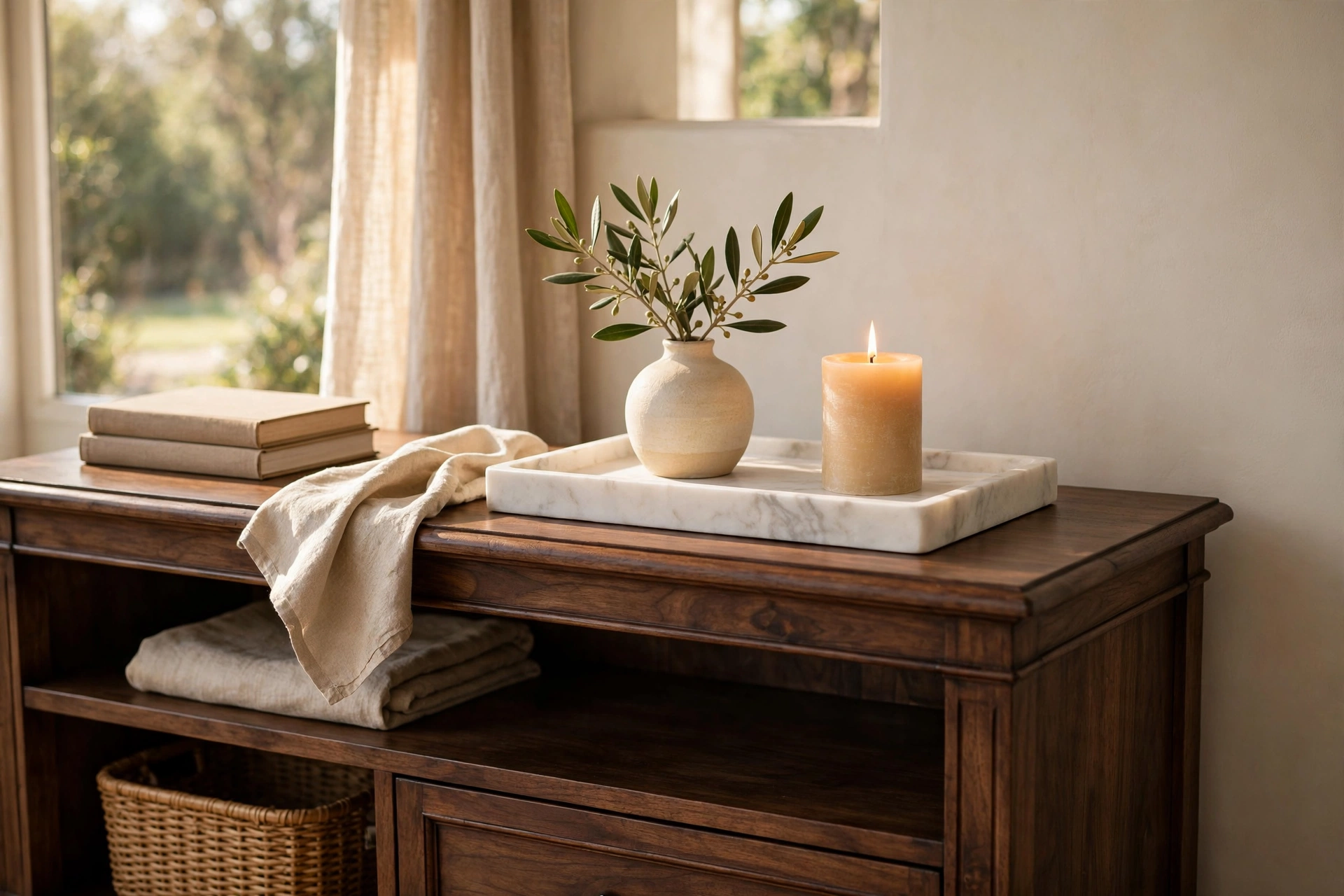
A marble tray is the quiet luxury choice — cool, heavy, veined, and timeless. White Carrara with gray veining suits classic and modern entries; black marble with gold veining leans glam. The weight keeps the tray planted even in high-traffic spots, and the stone surface shrugs off water rings and scratches. Style it simply: the marble is the statement, so two or three items are plenty. Seal it annually if you use it for anything that might stain, and wipe spills promptly.
13. Warm It Up With Wood
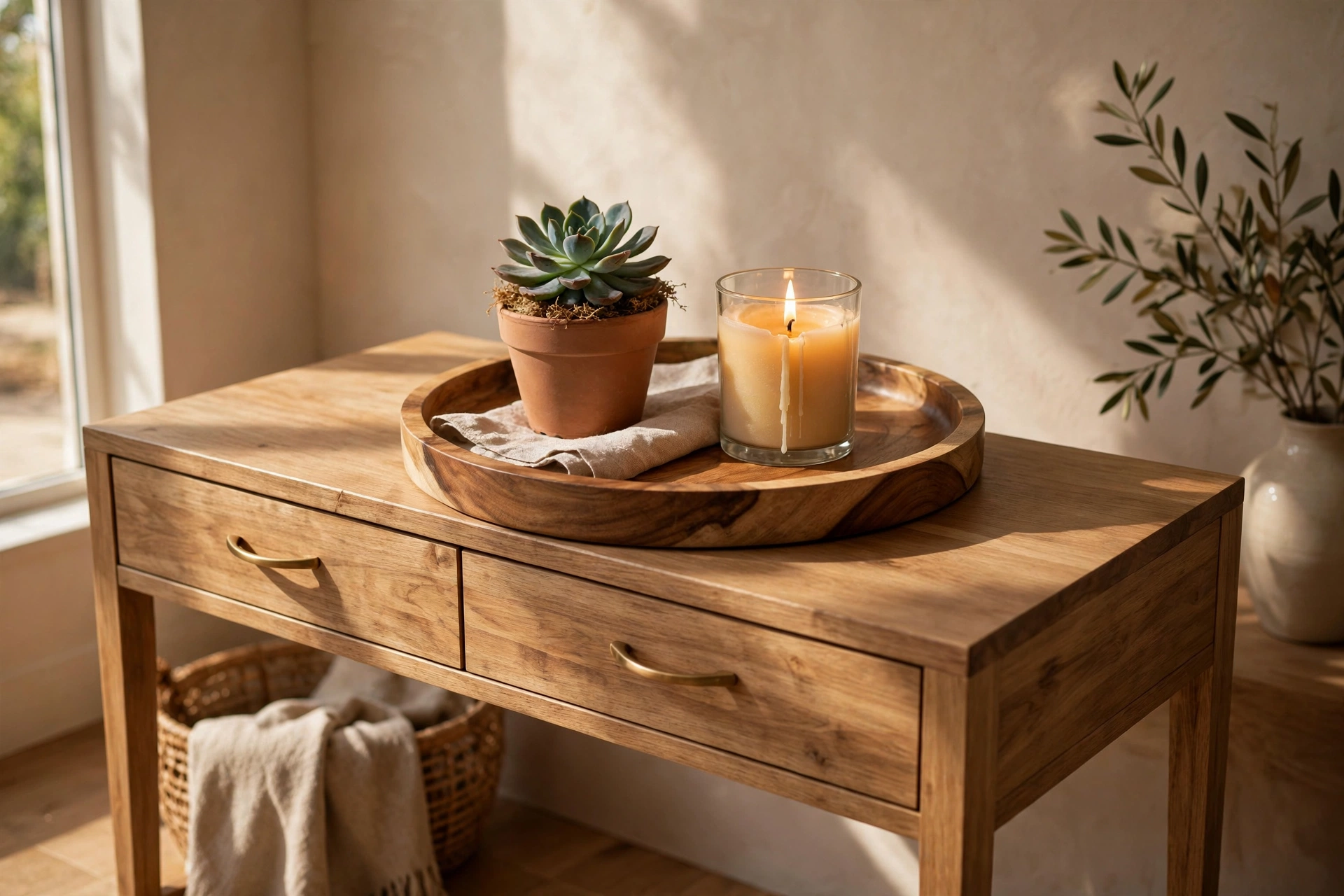
A wooden tray — acacia, walnut, mango wood, or reclaimed oak — brings warmth that stone and metal cannot. The natural grain adds organic pattern, and wood suits every style from rustic to Scandinavian to traditional. Use a wooden tray as the catch-all for its forgiving surface, or as the base for a candle-and-plant vignette. Oil it occasionally with food-safe mineral oil to keep the finish rich, especially if it holds anything damp.
14. Layer Art Behind the Tray
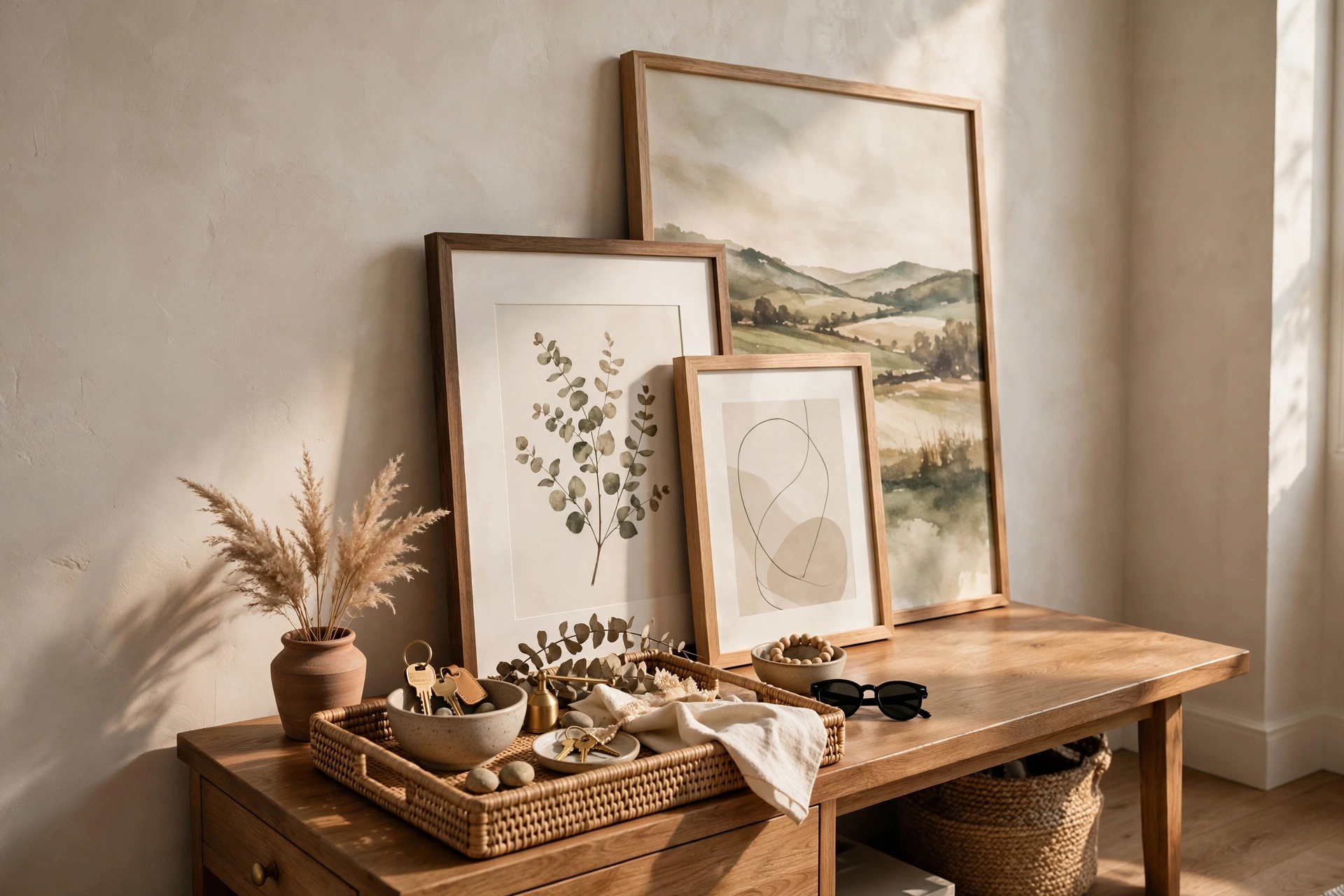
A tray styled in front of layered art creates depth that a bare wall cannot. Lean a medium framed print against the wall behind the console, overlap a smaller frame in front of it, then set the tray in front of both. The layers — art, art, tray — build a vignette with real dimension. Keep the frames in one finish family so the layering reads as intentional, and make sure the tray’s tallest item does not hide the art’s focal point. This technique works beautifully on entryway accent walls, where the art and tray play off the wall treatment. For console styling beyond the tray, our console table decor ideas for stylish entryways go deeper.
15. Personalize It With a DIY Tray
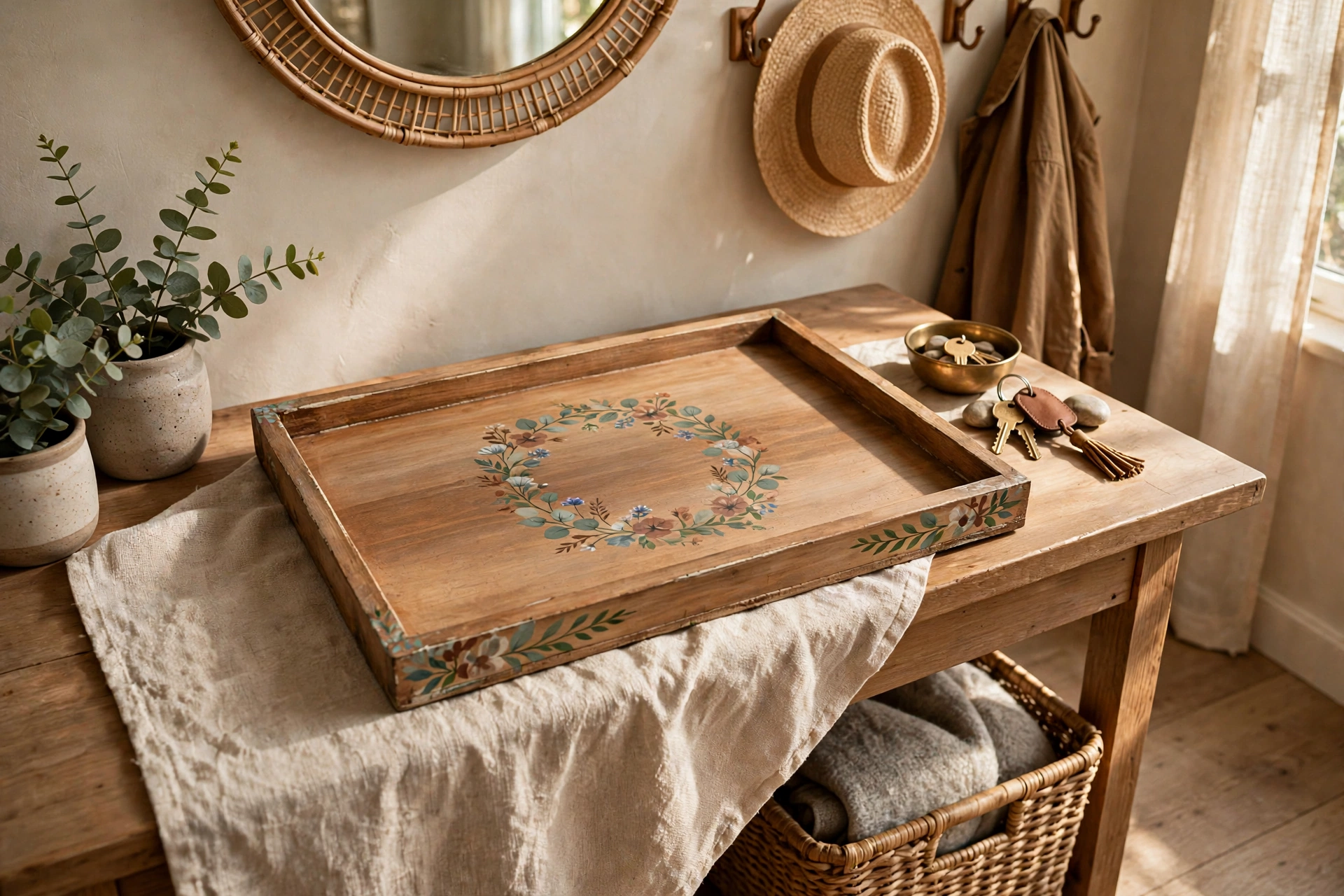
The most meaningful tray in the entryway might be one you make yourself. Paint a thrifted wood tray in your home’s accent color, decoupage the base with vintage maps, stencil a family monogram, or line it with a favorite fabric under glass. A DIY tray costs almost nothing and carries a story no store-bought piece can match. The Rothesay Mercantile tray styling guide nails the underlying principle: mix materials, leave breathing room, and let the tray be useful — advice that applies whether the tray cost five dollars or five hundred. Seal any painted or papered surface so daily use does not wear it down, and enjoy the only tray in the world exactly like it.
FAQ
What should I put on an entryway tray?
The daily essentials first: keys, wallet, sunglasses. Then add one beautiful thing — a candle, a small plant, a bud vase — and one personal thing, like a framed photo or a travel souvenir. Three to five items total is the sweet spot.
What size tray is best for an entryway?
Size the tray to its surface: roughly one-third to one-half the width of the console or shelf it sits on. For a standard 48-inch console, a 14- to 20-inch tray is right. On a small wall shelf, go 10 to 12 inches.
How do I style a tray without it looking cluttered?
Follow three rules: odd numbers of items (three or five), varied heights (tall, medium, low), and breathing room (at least a third of the tray’s surface empty). Remove one item before you call it done — the edit is where styling happens. Group small loose items like keys in a tiny bowl within the tray so they read as one element. Our entryway shelf decor ideas for a styled organized entry apply the same principles to shelves.
Where should I place a tray in the entryway?
Put the catch-all tray where hands naturally land when you walk in — usually the console table nearest the door, a wall-mounted shelf, or the top of a shoe cabinet. Decorative vignette trays belong on the console’s off-center sweet spot or on the entryway bench.
What material tray is most durable for daily use?
Leather, wood, and powder-coated metal handle daily abuse best — they resist scratches, wipe clean, and age gracefully. Marble is durable but can stain if unsealed. Mirrored and glass trays look stunning but show every fingerprint and need frequent wiping. Woven trays are beautiful but least forgiving of spills.
Keep Exploring
A tray is a small thing that solves a big problem, and the entryway has plenty of both. Once your tray system is working, look at the surfaces around it — the shelf above, the bench below, the wall behind — because a styled entryway is a series of small decisions that add up. Start with one tray by the door this week.