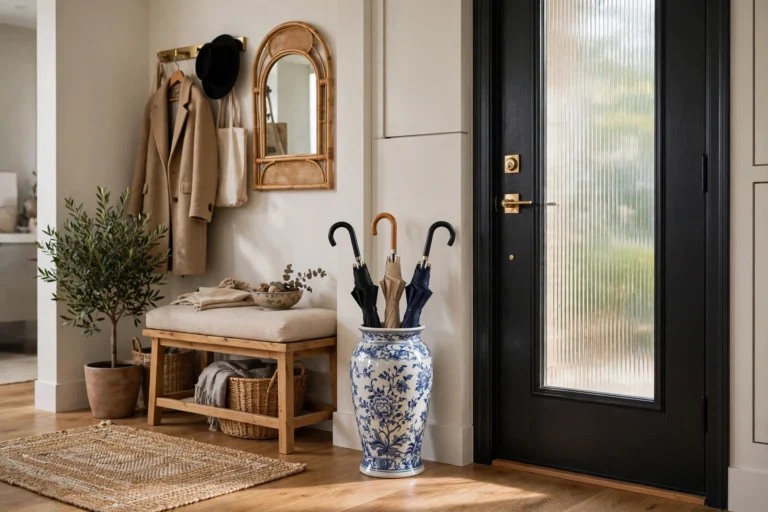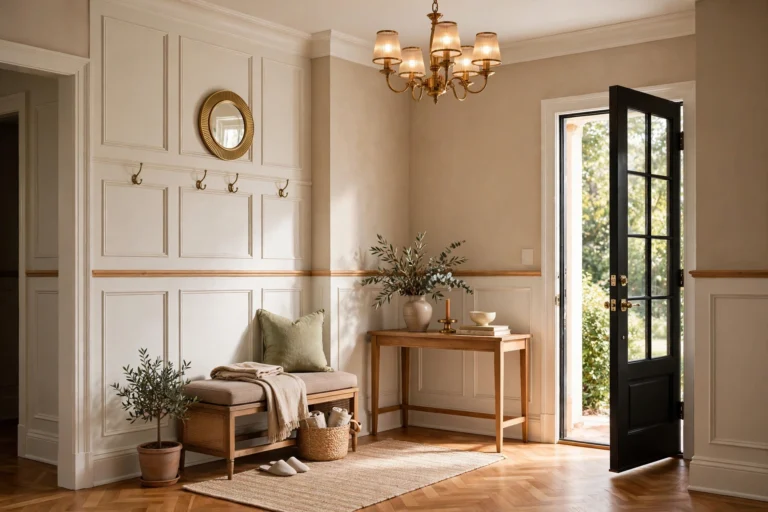

Lost keys are the most common morning emergency in any household — the frantic pocket-patting, the couch-cushion excavation, the late departure. The fix is almost embarrassingly simple: a designated home for keys right by the door, used every single time. These entryway key holder ideas go beyond a lone nail in the wall, offering options for every style, household size, and entry layout, all built around one principle: keys live here, full stop.
Placement matters as much as the holder itself. Mount or set your key holder at the first thing you touch coming in and the last thing you reach for going out — beside the door at hip to chest height, on the console table, or just inside the closet door. A keychain is only as organized as the system it returns to, so choose a holder the whole household will actually use: visible, reachable, and dead simple. If the system requires more than one motion, people will bypass it.
1. Mount a Simple Row of Hooks
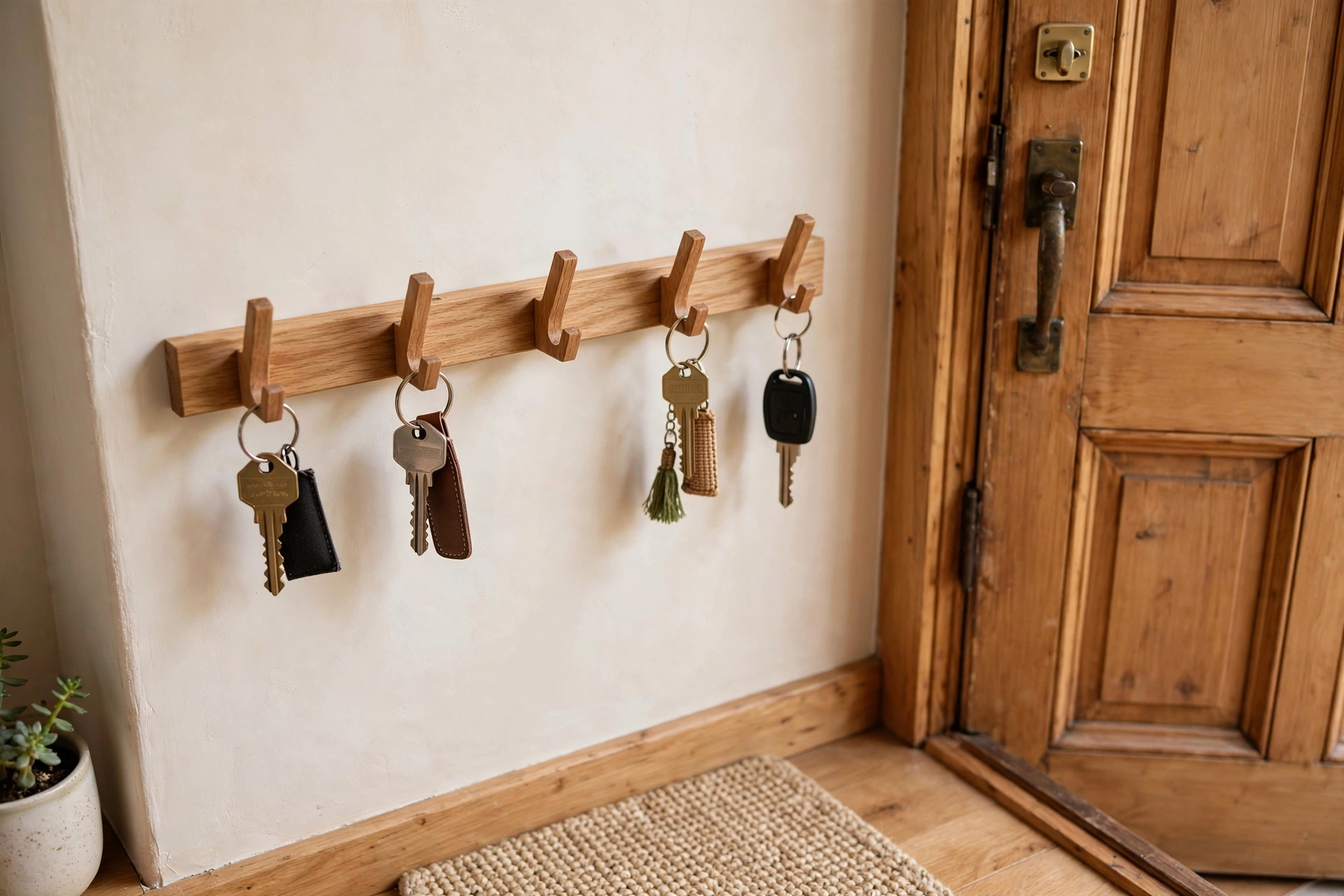
A simple row of wall hooks is the key holder that never fails — no moving parts, no batteries, nothing to learn. Mount a wooden or metal rail with four to six hooks beside the door at about 48 to 54 inches high, reachable for adults and older kids. Assign each household member a hook, or dedicate hooks by set: house, car, office, spare. The open design means keys are visible at a glance — you can see from across the room whether they’re home. Choose hooks with a slight upward angle so key rings don’t slide off. This is the fastest, cheapest, most reliable key system ever devised, and it suits every decor style.
2. Try a Key Holder With a Mail Slot
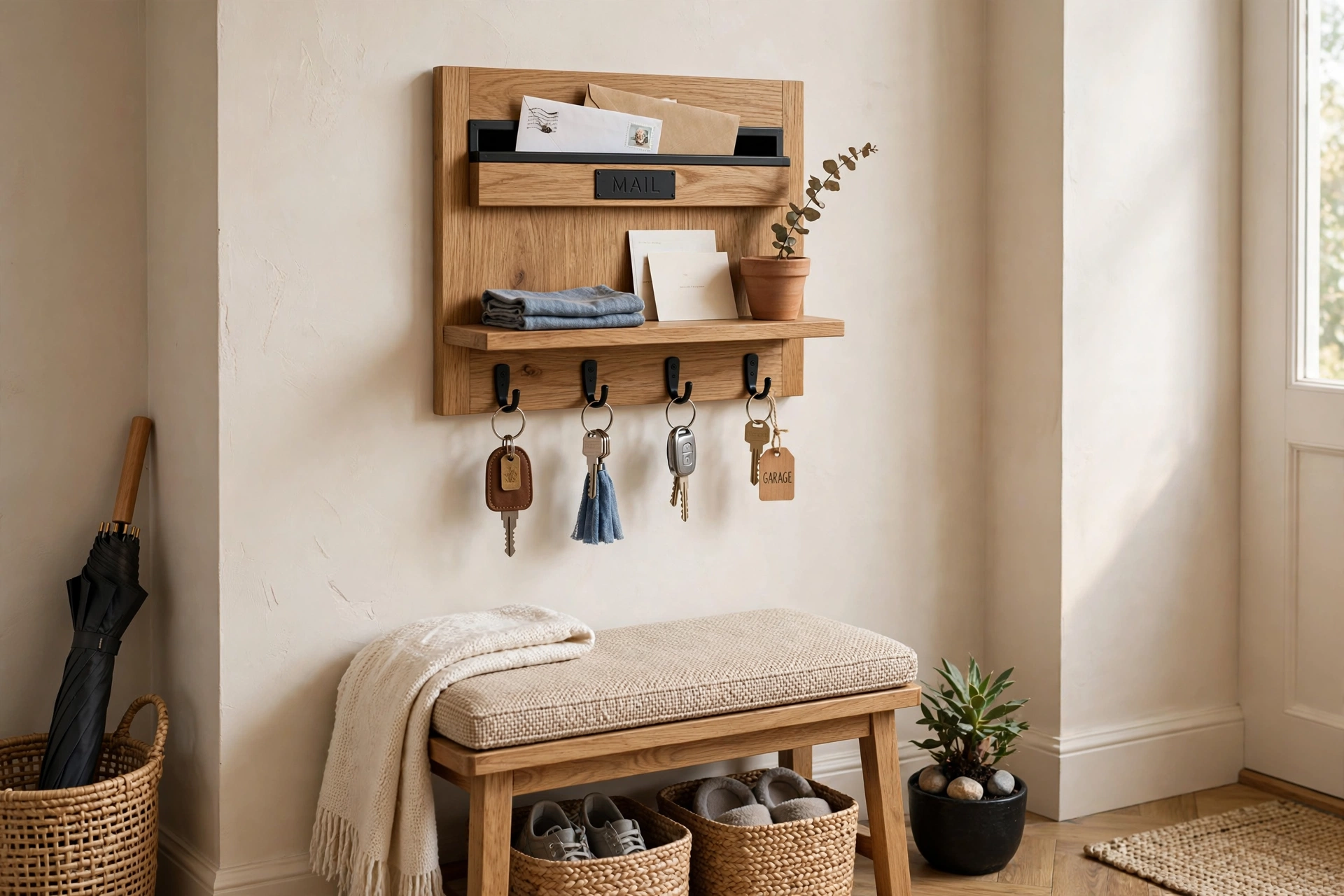
Keys and mail arrive together and leave together, so a combined key-and-mail holder handles the whole coming-home ritual in one unit. These wall-mounted organizers pair hooks below with slots or a tray above for letters, bills, and the school papers that otherwise colonize the counter. Sort mail the moment it lands — recycle junk immediately, file the rest — and the tray never overflows. Choose a unit sized to your actual mail volume; oversized sorters become paper purgatories. This combination is especially valuable in entries without a console table, condensing two landing zones into one tidy wall footprint. Entryway shelf decor ideas for a styled organized entry show how to build the same pairing with separate pieces if you prefer.
3. Use a Magnetic Key Strip
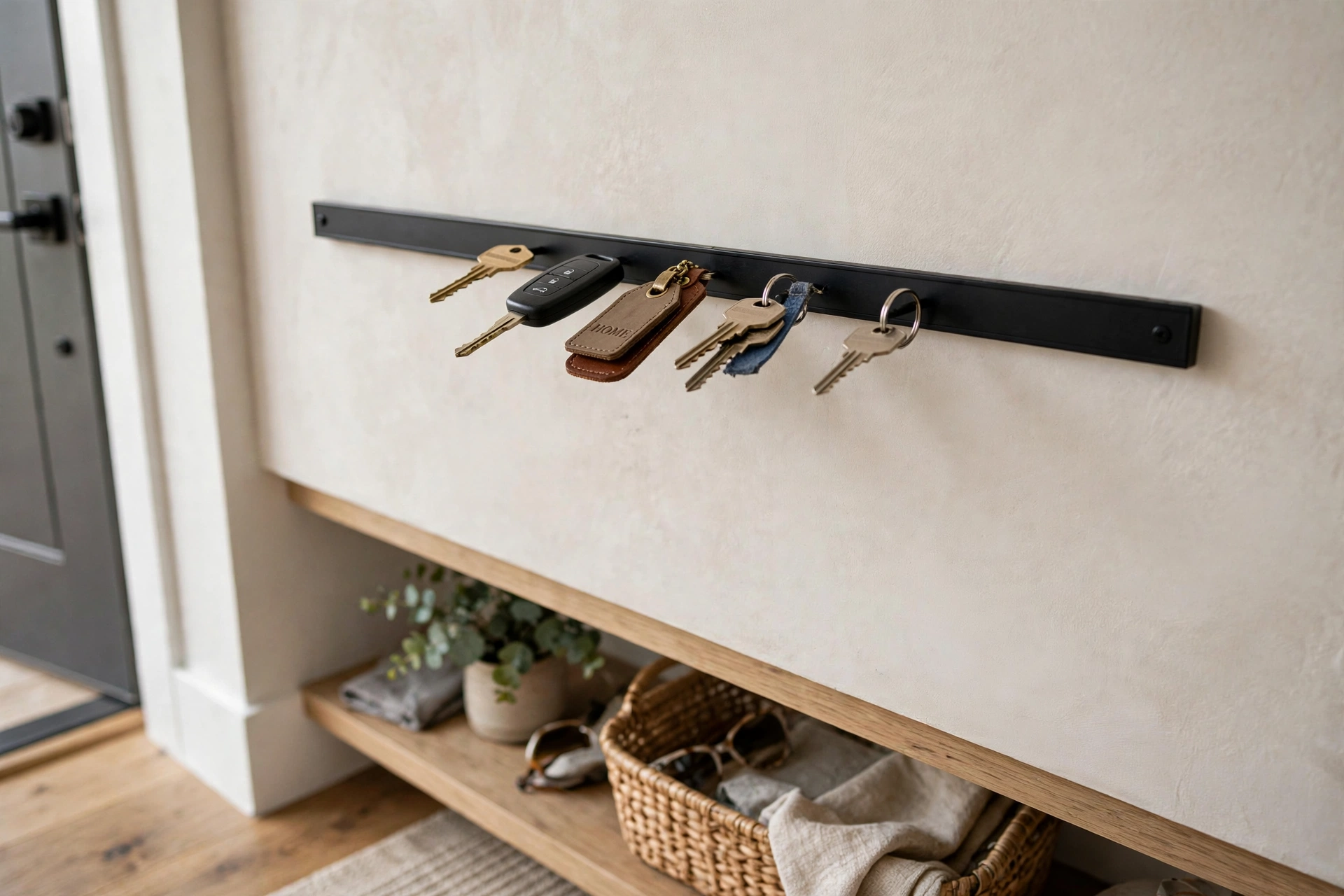
A magnetic key strip — a slim bar with strong embedded magnets — holds keys with a satisfying click and releases them with one pull. No hooks to aim for, no rings to thread: just toss the keys at the strip and they stick. Mount it inside a cabinet door, on the wall beside the door, or under a shelf for a hidden-in-plain-sight system. The minimal look suits modern and Scandinavian entries beautifully. Check magnet strength before committing — it needs to hold your heaviest key ring confidently. Note the one caveat: keep magnetic strips away from hotel key cards and older magnetic-stripe cards, though modern chip cards are unaffected.
4. Add a Chalkboard Key Organizer
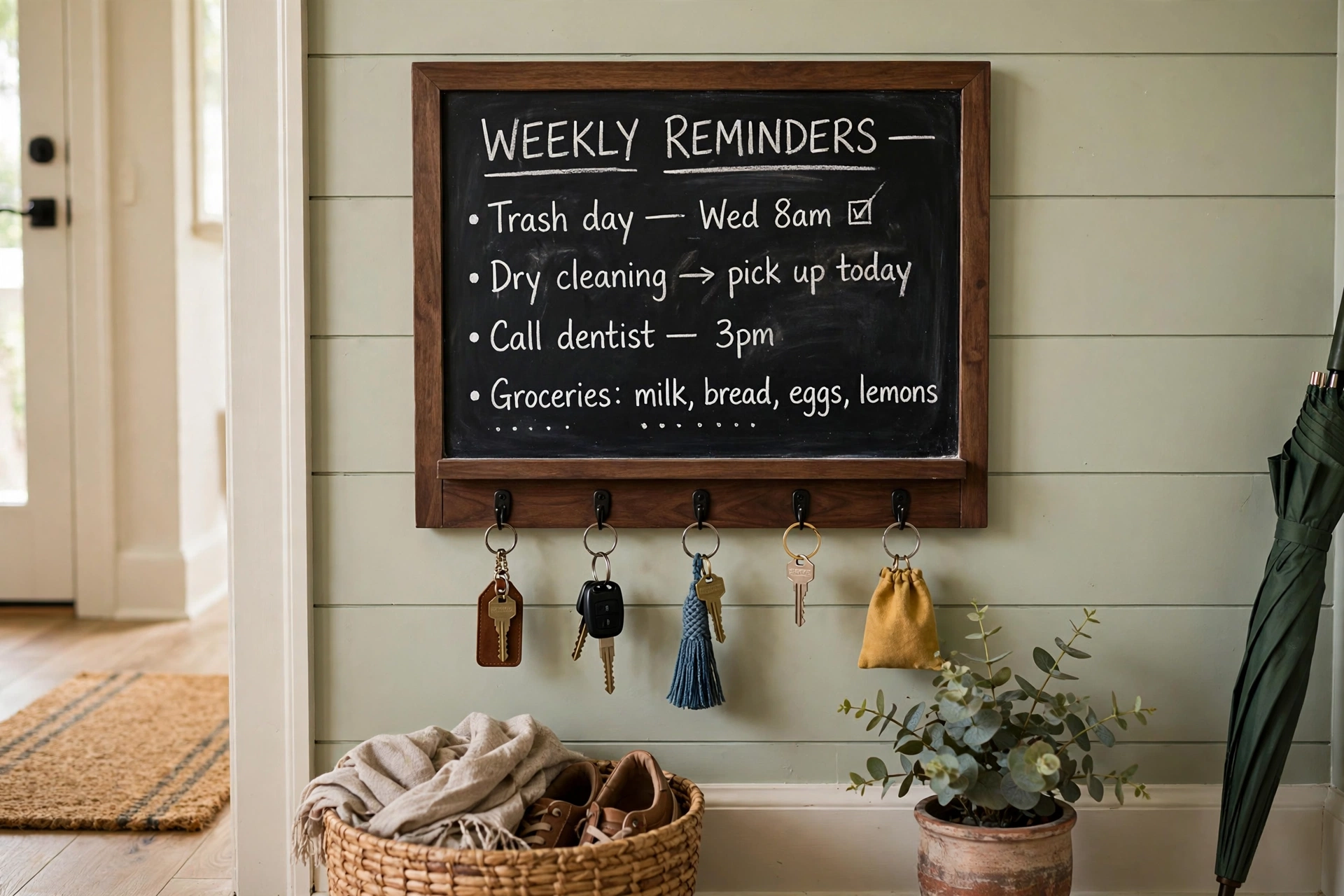
A chalkboard-backed key holder adds message-center function to key storage — hooks below, a writable surface above for reminders, grocery lists, and “don’t forget” notes. The chalkboard keeps the family communication visible right where everyone passes, which is exactly where reminders work best. Use chalk markers for a cleaner look that doesn’t dust, and keep a small eraser or cloth nearby. Frame styles range from rustic wood to sleek black metal, so the organizer can match any entry. This is the key holder for households that run on sticky notes and shared calendars — it centralizes both the keys and the information.
5. Try a Wooden Peg Rail
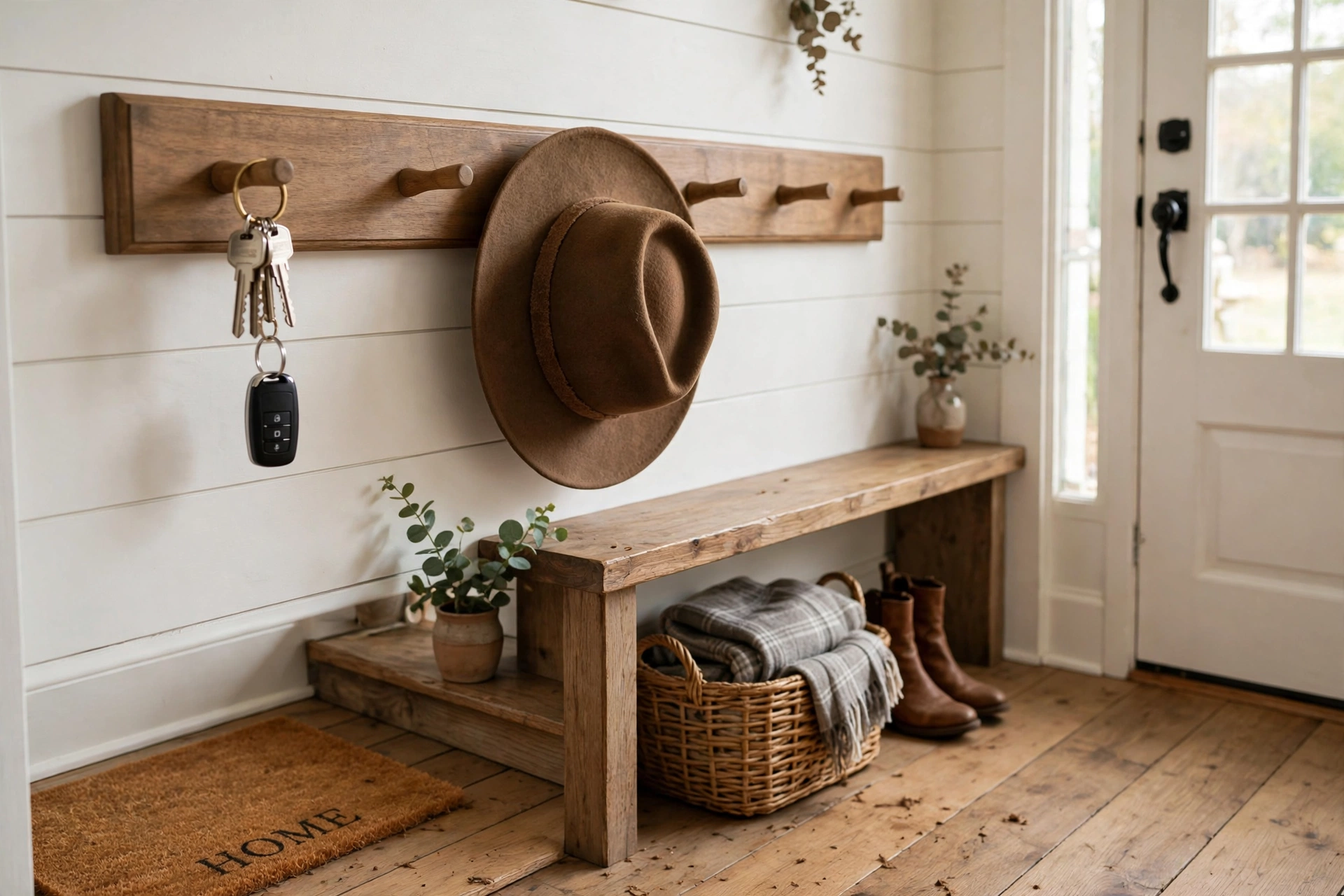
A Shaker-style peg rail is farmhouse function at its most beautiful — a simple wooden board with rounded pegs that holds keys, hats, leashes, and light bags with quiet charm. Pegs are more versatile than hooks: keys hang on the tip, while bags and scarves drape over the full peg. Mount the rail with proper anchors — a loaded peg rail carries real weight — and space pegs 6 to 8 inches apart so items don’t crowd. Finish the wood to match your entry’s trim or go with a natural oil finish for warmth. The peg rail’s handmade feel suits entries with other natural materials like jute, linen, and woven baskets.
6. Go Modern With a Floating Shelf and Hooks
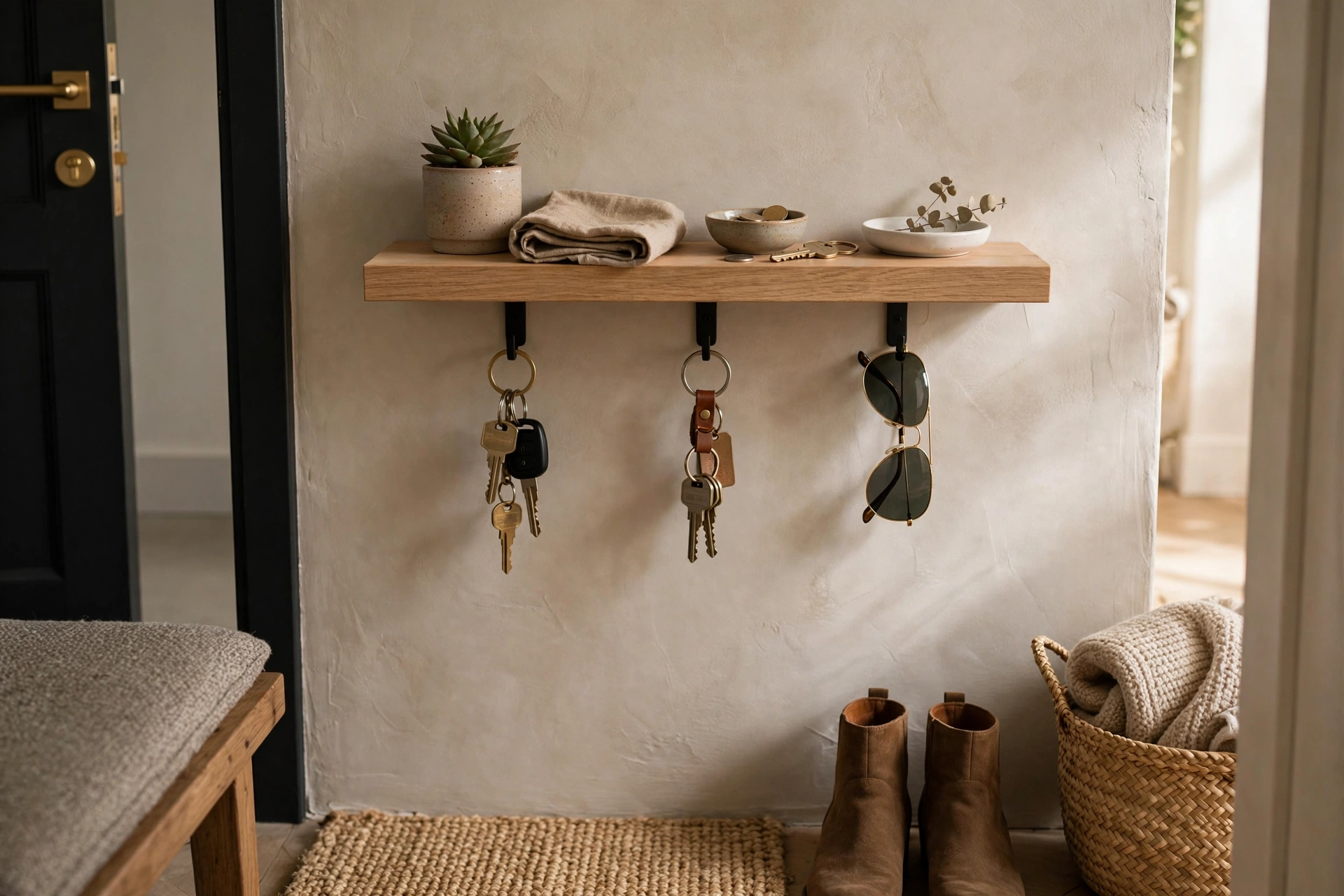
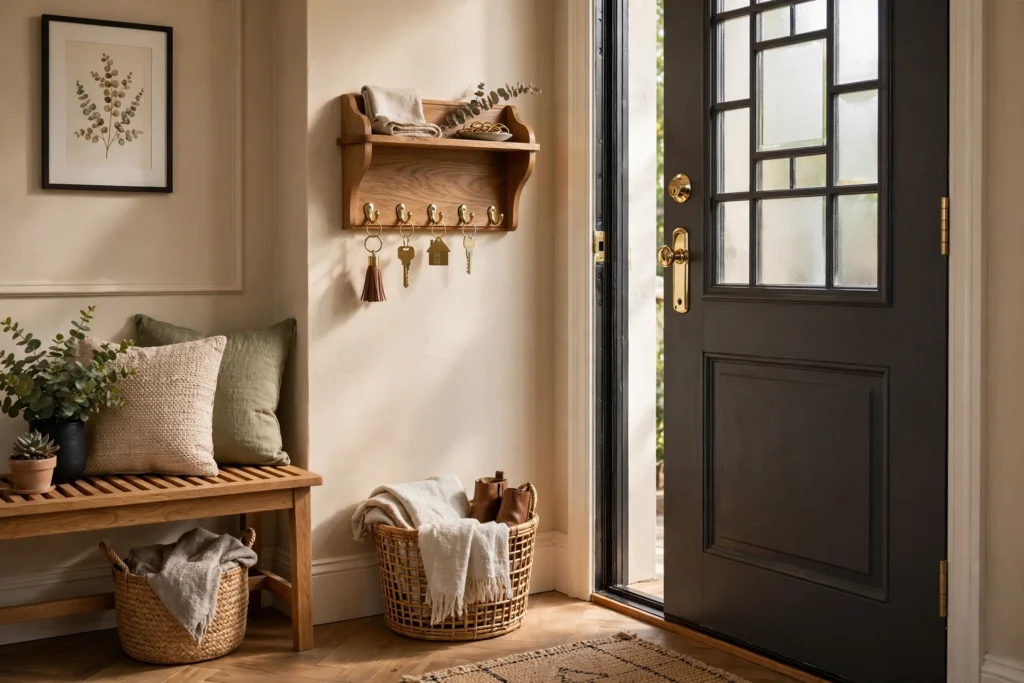
A floating shelf with hooks mounted underneath is the modern entry’s key station — the shelf holds sunglasses, wallets, and a small plant while keys hang below, all in one compact unit. The shelf gives keys’ companions a home too, because keys rarely travel alone: the wallet, the sunglasses, and the earbuds all need landing spots. Choose a shelf 18 to 24 inches wide — enough for the essentials without becoming a clutter shelf — and mount it at 54 to 60 inches high. Hooks underneath should be small and numerous rather than large and few. Keep the shelf styled minimally: a tray for small items, one decorative object, nothing more.
7. Use a Decorative Tray as a Key Drop
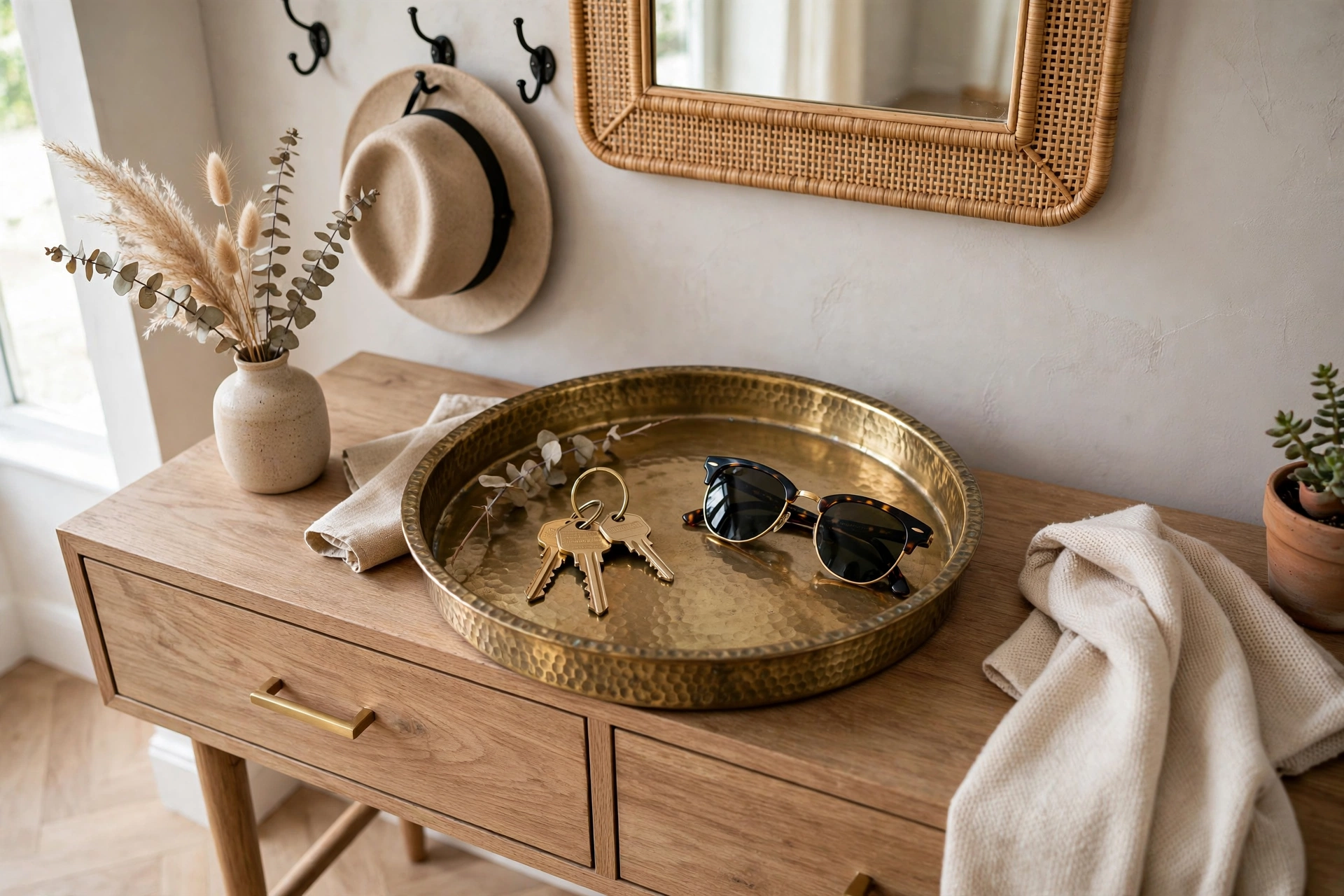
If wall mounting isn’t an option — renters, concrete walls, or just preference — a decorative tray on the console table is the classic key drop. The tray’s boundary is the system: keys live in the tray, and the tray’s edges keep them from migrating across the table. Choose a tray with some weight and a lip — brass, marble, lacquered wood — so it feels intentional rather than improvised. Size it for keys plus the usual companions: sunglasses, watch, loose change. The tray method’s weakness is overflow, so pair it with a weekly clear-out habit. It is the lowest-commitment key system on this list and works in any entry with a flat surface.
8. Try a Vintage-Inspired Key Cabinet
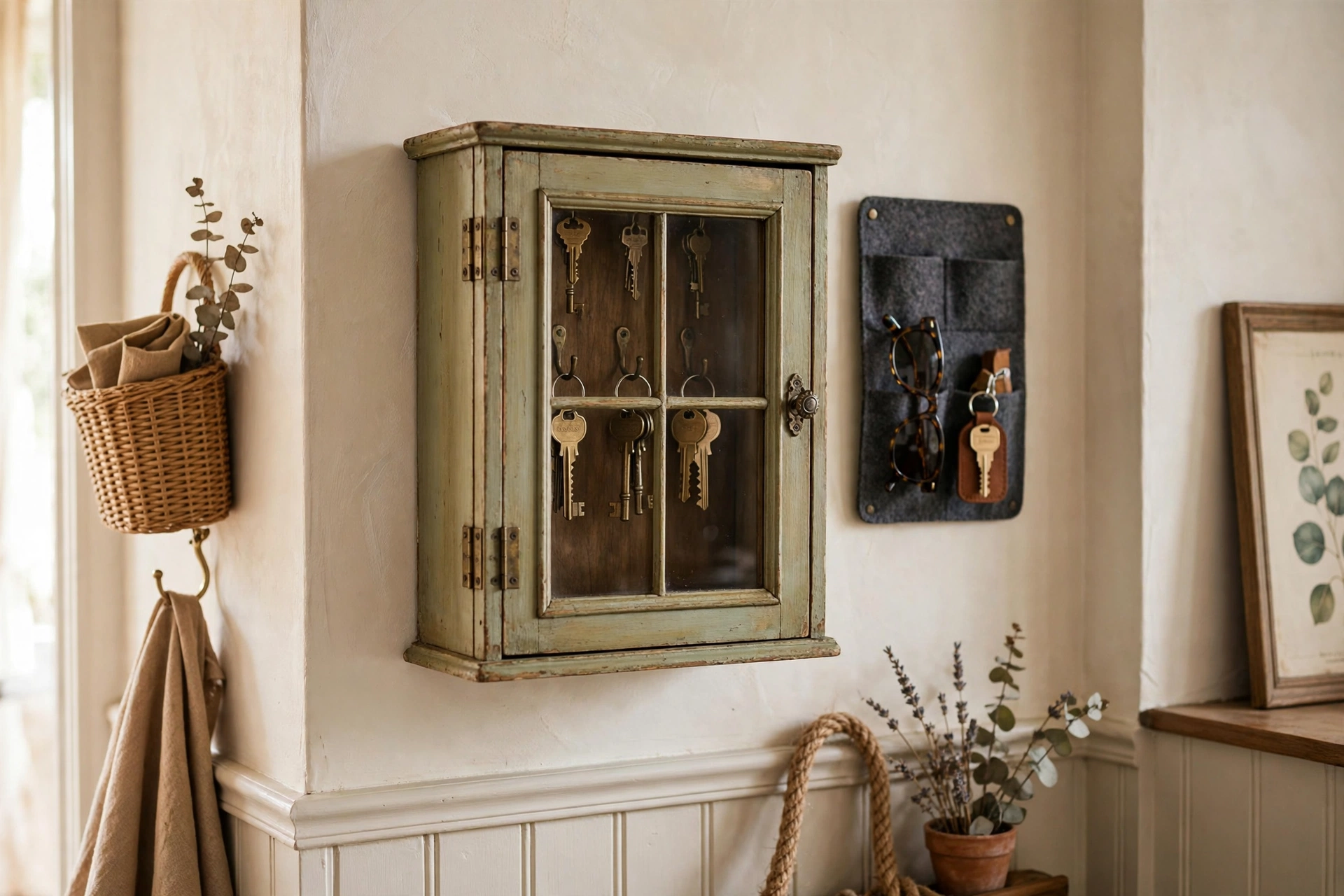
A small wall-mounted key cabinet — the kind with a tiny door, sometimes glazed — hides keys behind closed doors for the cleanest possible look. Inside, hooks hold each set; outside, the cabinet reads as a decorative box, often with vintage or apothecary styling. This is the key holder for minimalists who can’t abide visual clutter and for households where keys are, frankly, ugly. The door adds one motion to the routine, so it suits people who are already disciplined about the habit. Mount at eye level where the little door is easy to open one-handed while carrying bags. Some designs include a chalkboard or mirror on the door for double duty.
9. Mount a Key Holder Inside the Closet Door
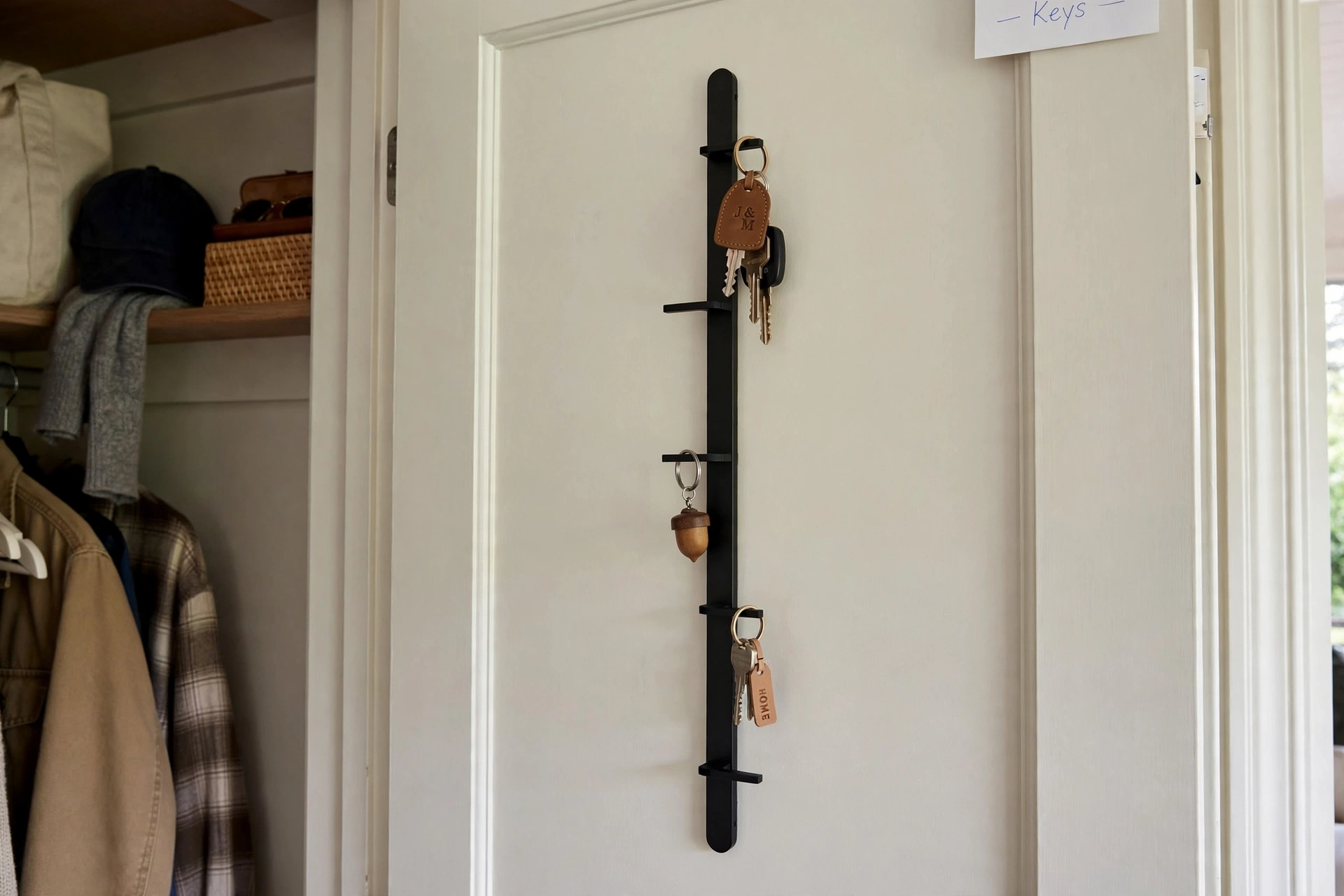
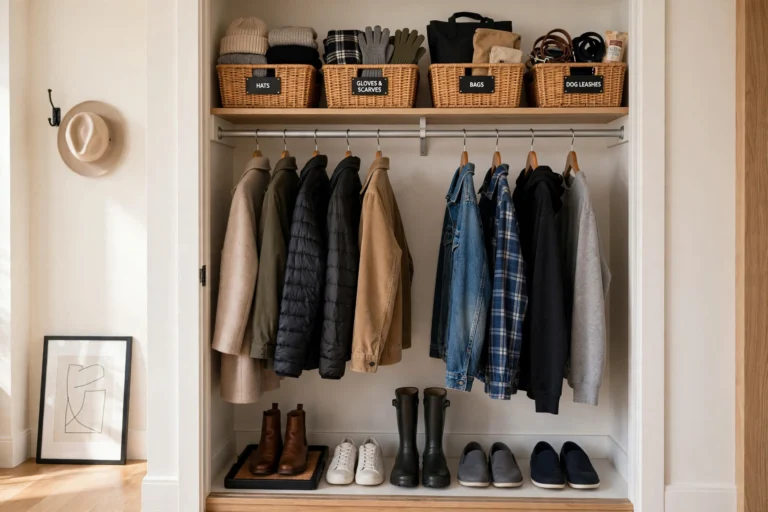
For entries where wall space is precious or you prefer keys out of sight, the inside of the entry closet door is prime key-holder territory. A slim hook rail or magnetic strip mounted inside the door keeps keys hidden from guests but exactly on the coming-and-going path. This works beautifully in small entries with no console table and no free wall — the door is space you already have. Use slim-profile hardware so the door still closes, and mount at a height reachable without thinking. The one risk: keys get forgotten behind a closed door, so this suits households where opening the closet is already part of the leaving routine.
10. Use Individual Labeled Hooks per Person
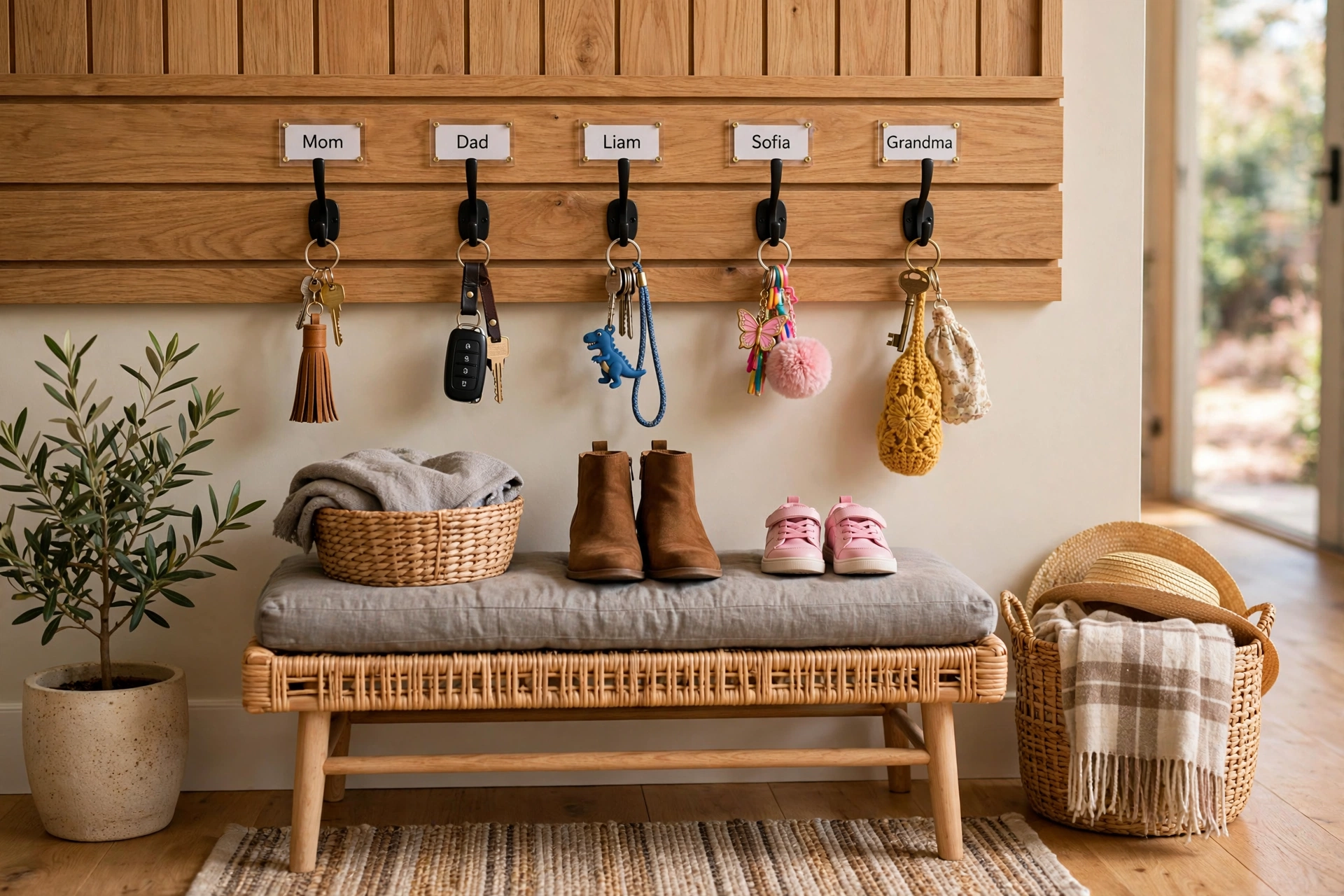
In multi-person households, key chaos is often identity chaos — four sets of similar keys, nobody sure which is which. The fix is individual labeled hooks: one hook per person, labeled with a name, initial, or color code. Each person owns their hook completely, which creates accountability — there’s no ambiguity about whose keys are missing. Use distinct keychains or colored rings so sets are identifiable at a glance. Mount the hooks in a row at a height the youngest user can reach, or stagger heights for kids and adults. Small entryway ideas for a welcoming first impression show how labeled systems keep compact entries working for whole families.
11. Try a Leather Strap Key Hook
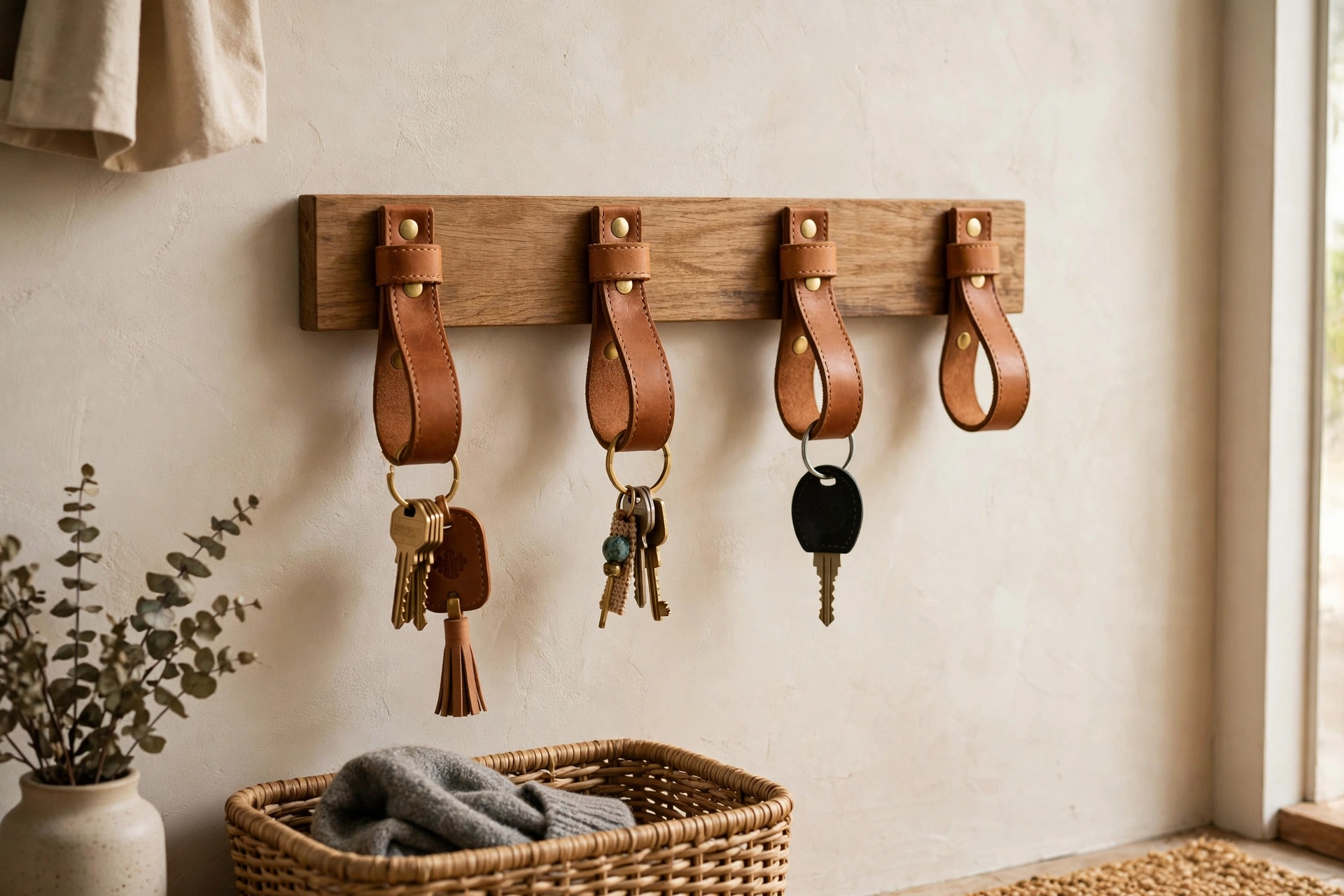
A leather strap looped through a wall-mounted ring or peg is the artisanal key holder — minimal, tactile, and quietly luxurious. Keys hang from the strap’s loop, and the leather ages beautifully with handling. This is a single-set solution, perfect for individuals or as one element of a larger system — mount several straps in a row for a family, each in a different leather tone. Installation is a single screw or peg per strap. The look suits warm modern, Scandinavian, and craft-inspired entries. Keep leather conditioned occasionally if your entry gets humid; otherwise, this is a nearly zero-maintenance option with maximum style per inch.
12. Add a Key Holder With a Mirror
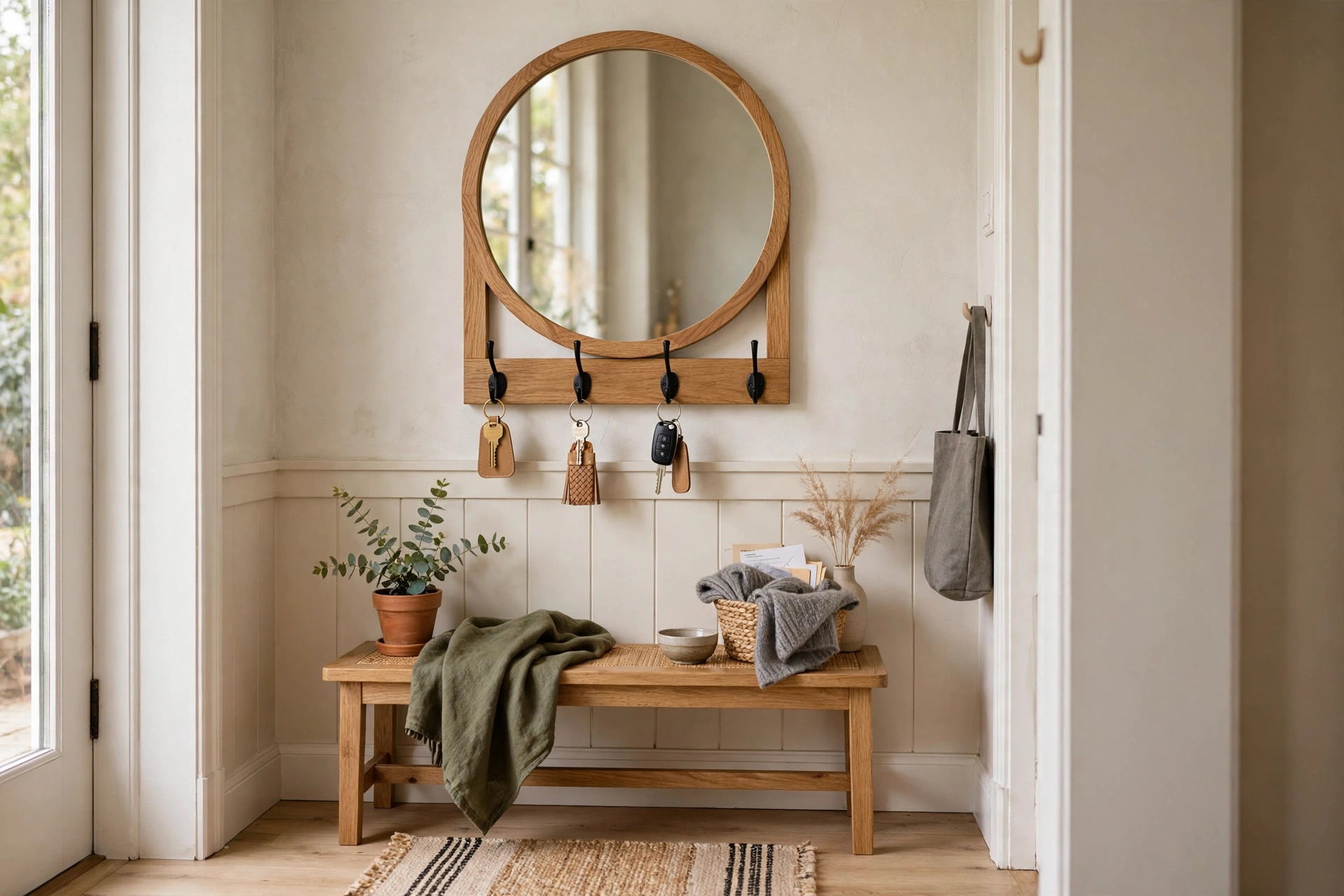
A mirror with integrated key hooks does double duty in the entry — last-look check plus key storage in one wall footprint. The mirror makes small entries feel larger and brighter while the hooks below keep keys at hand. Choose a mirror sized to your wall — round mirrors soften the look, rectangular ones suit modern entries — with three to five hooks mounted on the frame or a small shelf beneath. Hang it at a height where the mirror is useful (center around 60 inches) and the hooks fall naturally below. This combination is ideal for narrow entries where every object must justify its wall space twice over.
13. Use a Small Drawer Pull Board
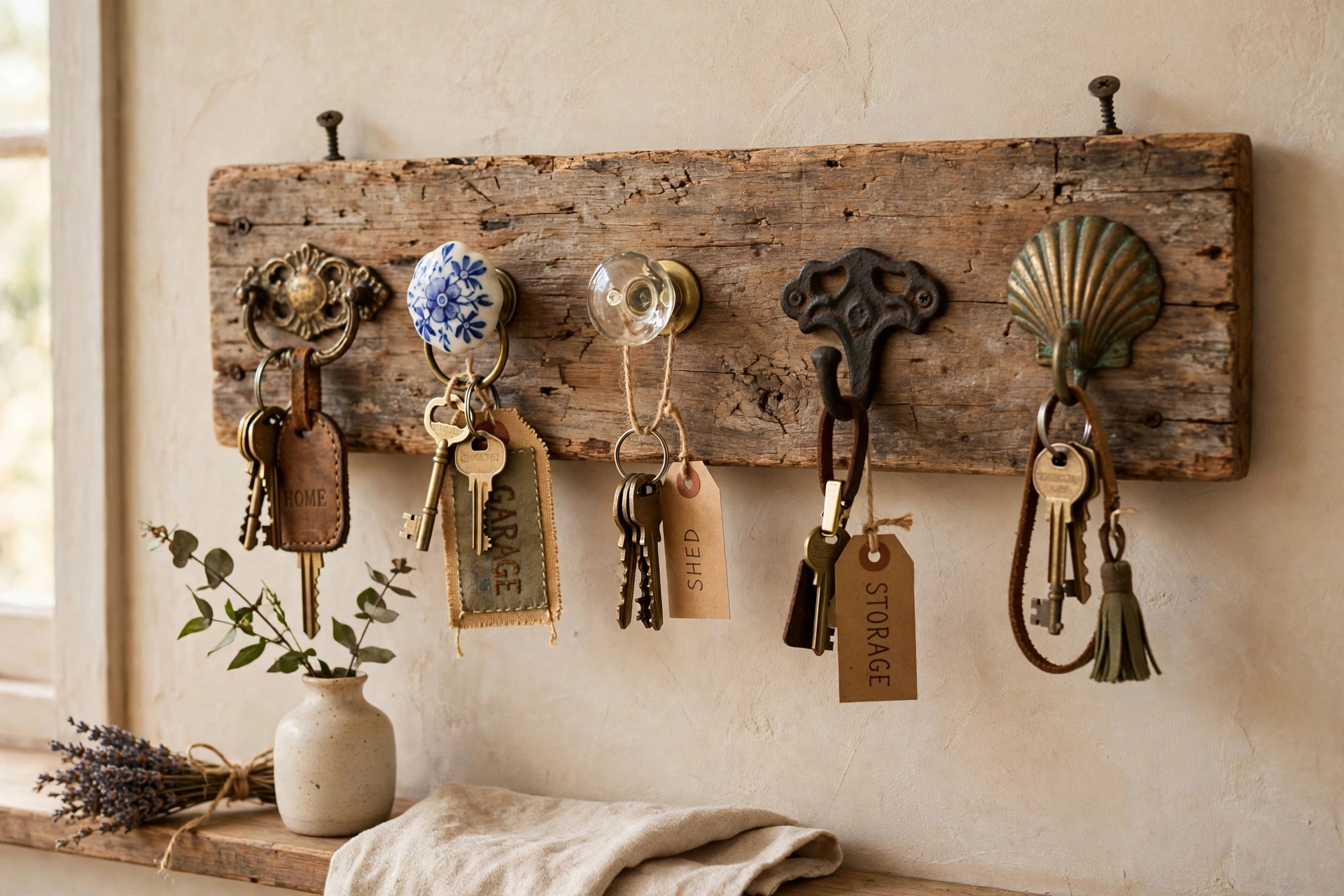
A board fitted with mismatched vintage drawer pulls — glass knobs, brass cups, porcelain handles — is the key holder as wall art. Each pull becomes a hook with its own character, and the eclectic collection looks curated rather than cluttered. Source pulls from salvage shops, flea markets, or hardware store clearance bins; mount them on a painted or stained board in a pleasing rhythm. This is a wonderful weekend DIY that costs little and delivers a genuinely one-of-a-kind piece. The pulls’ varied shapes hold different key ring styles well. Seal the board’s finish so it wipes clean — entries are high-touch zones.
14. Try a Smart Key Tracker Dock
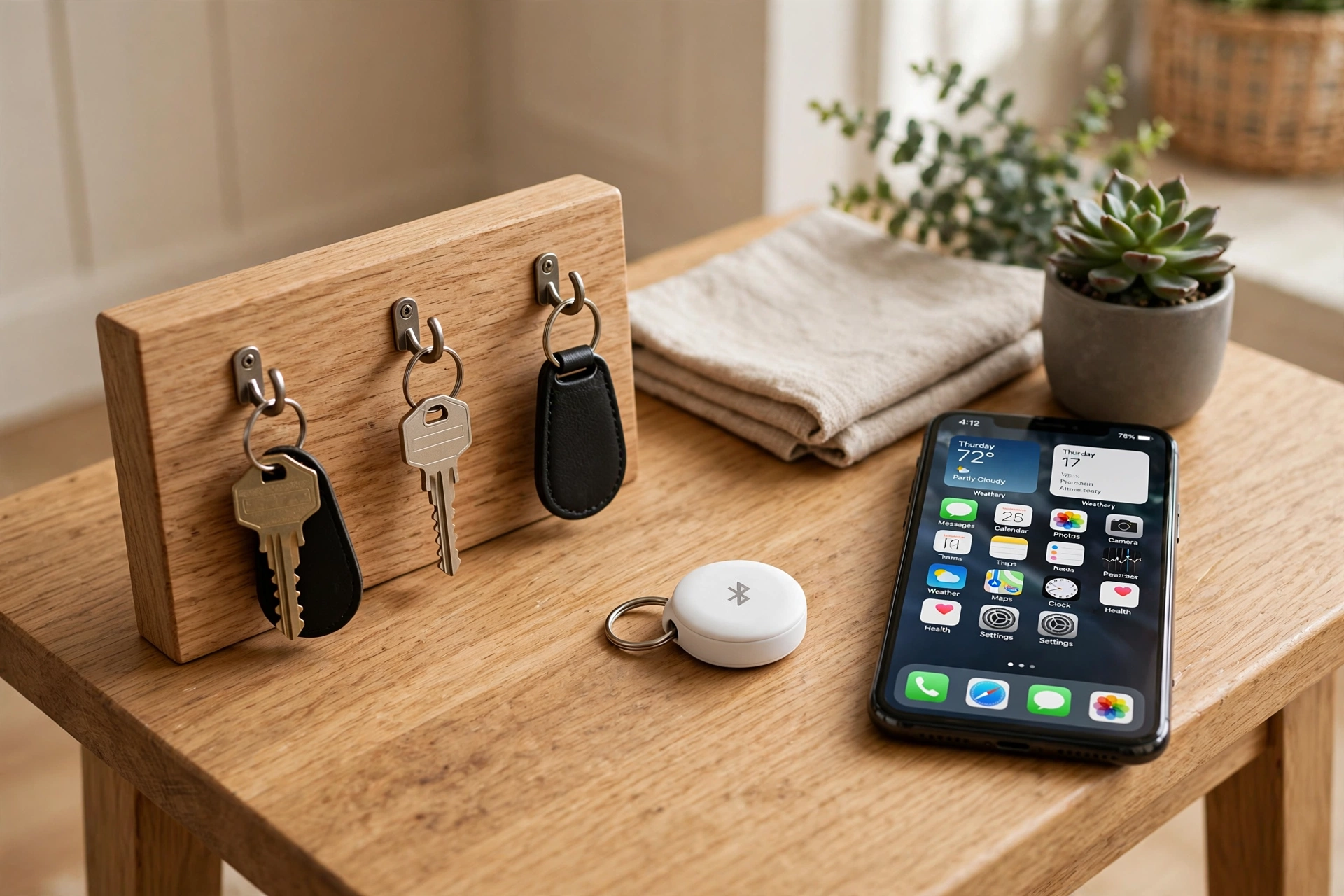
For the chronically key-misplacing household, a smart dock combines a physical home with Bluetooth tracking — keys live on the dock, and if they don’t, your phone finds them. Tile, Apple AirTag, and similar trackers attach to the key ring; the dock itself can be any holder on this list. The real value is the separation alert: your phone notifies you when you leave home without the keys. This is the key system for people who have tried everything else — the technology covers the human-failure mode that hooks alone can’t fix. Keep a spare battery on hand and replace tracker batteries annually so the safety net never quietly expires.
15. Keep a Spare-Key Backup System
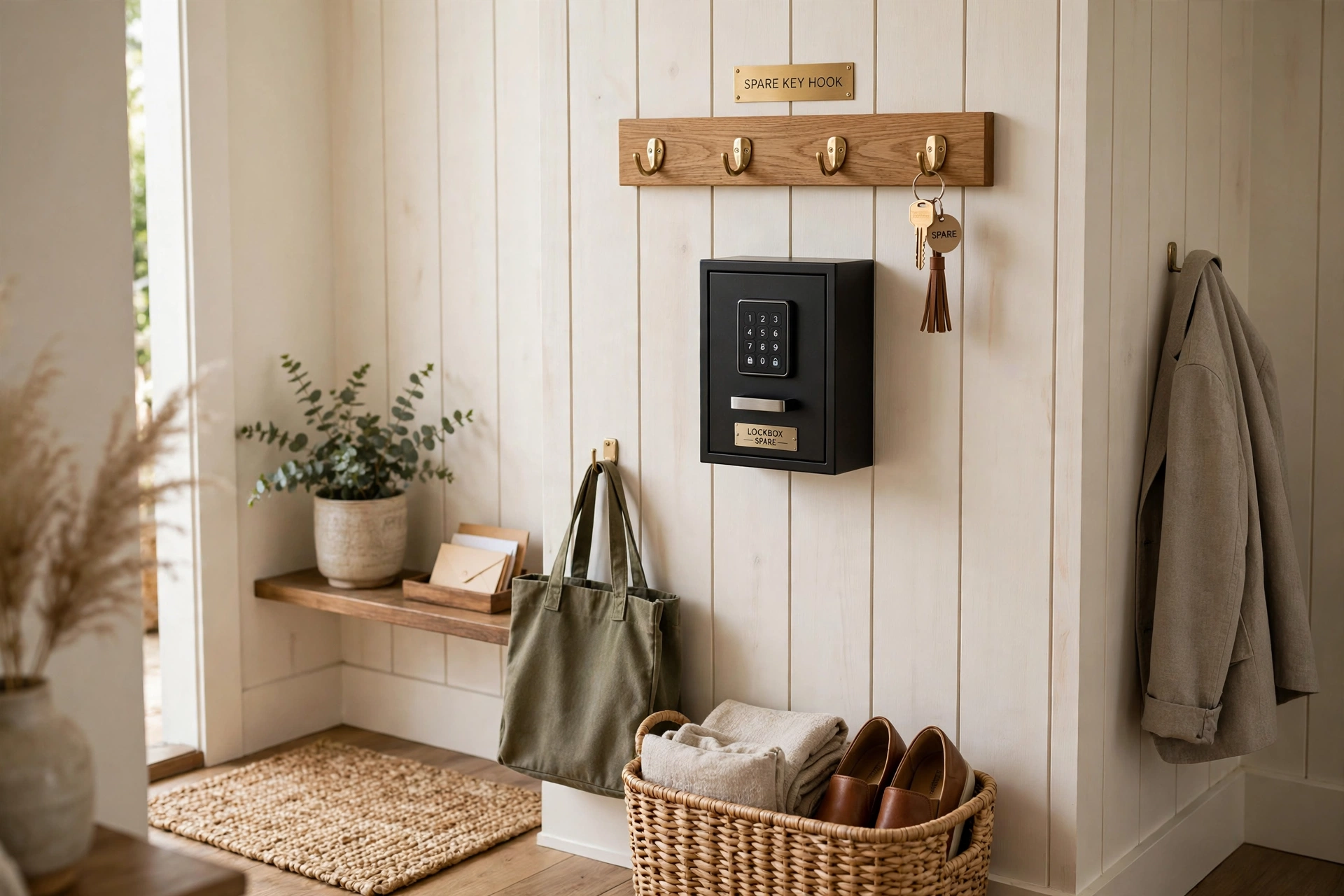
Every key system needs a backup layer: the spare house key, the trusted neighbor’s set, the lockbox code. Store one spare set on a dedicated labeled hook — the “emergency” hook that never gets borrowed for daily use — and keep another outside the home in a lockbox or with a trusted person. Coohom guide to wall key stands covers organizer styles with dedicated spare-key storage built in. Review the backup system twice a year: locks change, neighbors move, and the spare key taped under the planter is a security risk, not a system. A key holder handles the daily; the backup handles the disaster.
FAQ
Where is the best place to put a key holder in the entryway?
Beside the door at hip to chest height (48 to 60 inches), on the first surface or wall section you pass entering and the last you touch leaving. Console tables, the wall beside the door, and the inside of the closet door are the three best spots. The key test: can you hang the keys without breaking stride?
How do you get family members to actually use a key holder?
Make it easier than the alternative — the holder must be visible, reachable, and require one motion. Assign personal hooks so there’s ownership, and model the habit yourself for two weeks. Most households adopt a well-placed system within days; if they don’t, the holder is probably in the wrong spot, not the wrong style.
What’s the best key holder for a rental?
Adhesive-mounted hooks, a decorative tray on existing furniture, or an over-the-door hook rail — all zero-hole options. Magnetic strips with adhesive backing also work on metal surfaces. Avoid anything requiring drilling into tile or concrete; command-style strips rated for the weight hold keys reliably and remove cleanly.
How many key hooks do you need?
One per household member plus one for the spare set and one for guests — so a family of four wants six hooks. It’s better to have an empty hook than a crowded one; overstuffed hooks tangle rings and discourage use. If you’re consistently out of hooks, declutter key rings before adding more.
Are smart key trackers worth it?
For people who regularly misplace keys, yes — the separation alerts alone justify the cost. For households with a working hook habit, they’re unnecessary. The sweet spot is combining both: a physical home for daily discipline plus a tracker for the inevitable failure days. Replace batteries annually.
Keep Exploring
The best key holder is the one your household actually uses — visible, reachable, and simpler than tossing keys on the nearest surface. Pick the style that fits your entry, assign every set a home, and back it up with a spare-key plan. Then extend the organization to the whole entry wall with our entryway mirror ideas for light space and first impressions, where the key station becomes part of a polished first impression.