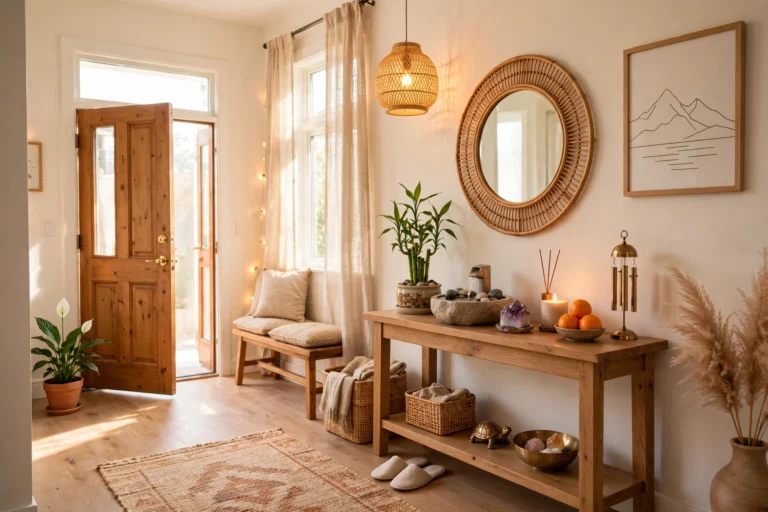
Entryway welcome sign ideas are the fastest way to make your front hall feel like it is actually glad to see you. The entryway sets the emotional tone of the whole home — it is the first thing guests see and the last thing you see before leaving — and a well-chosen sign turns that transitional space into a personal greeting. Whether your style runs farmhouse, modern, coastal, or somewhere delightfully in between, a welcome sign is a small, affordable piece with an outsized emotional return.
The beauty of entryway welcome sign ideas is their range: a chunky reclaimed-wood board leaning on the porch says something entirely different from a slim brass script plaque mounted beside the door. This guide walks through fifteen distinct approaches, covering materials, sizing, hanging methods, and styling tricks so your sign looks intentional rather than like an afterthought. Most of these can be done in a weekend, and several cost less than a takeout dinner.
1. Classic Vertical Wooden “Welcome” Board

The tall vertical welcome board leaning against the wall by the front door is the undisputed classic of entryway welcome sign ideas. Choose a board about four to five feet tall and eight to ten inches wide — cedar fence pickets work beautifully and cost almost nothing. Sand the edges lightly, stain or whitewash the wood, then paint or stencil the letters vertically down the face.
For a polished finish, use a stencil with painter’s tape and two thin coats of exterior acrylic paint, then seal with a matte outdoor polyurethane if the sign will live on a covered porch. Lean it at a slight angle against the wall, or add a small easel back for freestanding stability. This is one of the most forgiving DIYs in the whole list: imperfect lettering reads as rustic charm rather than a mistake.
2. Rustic Reclaimed Barn-Wood Plaque
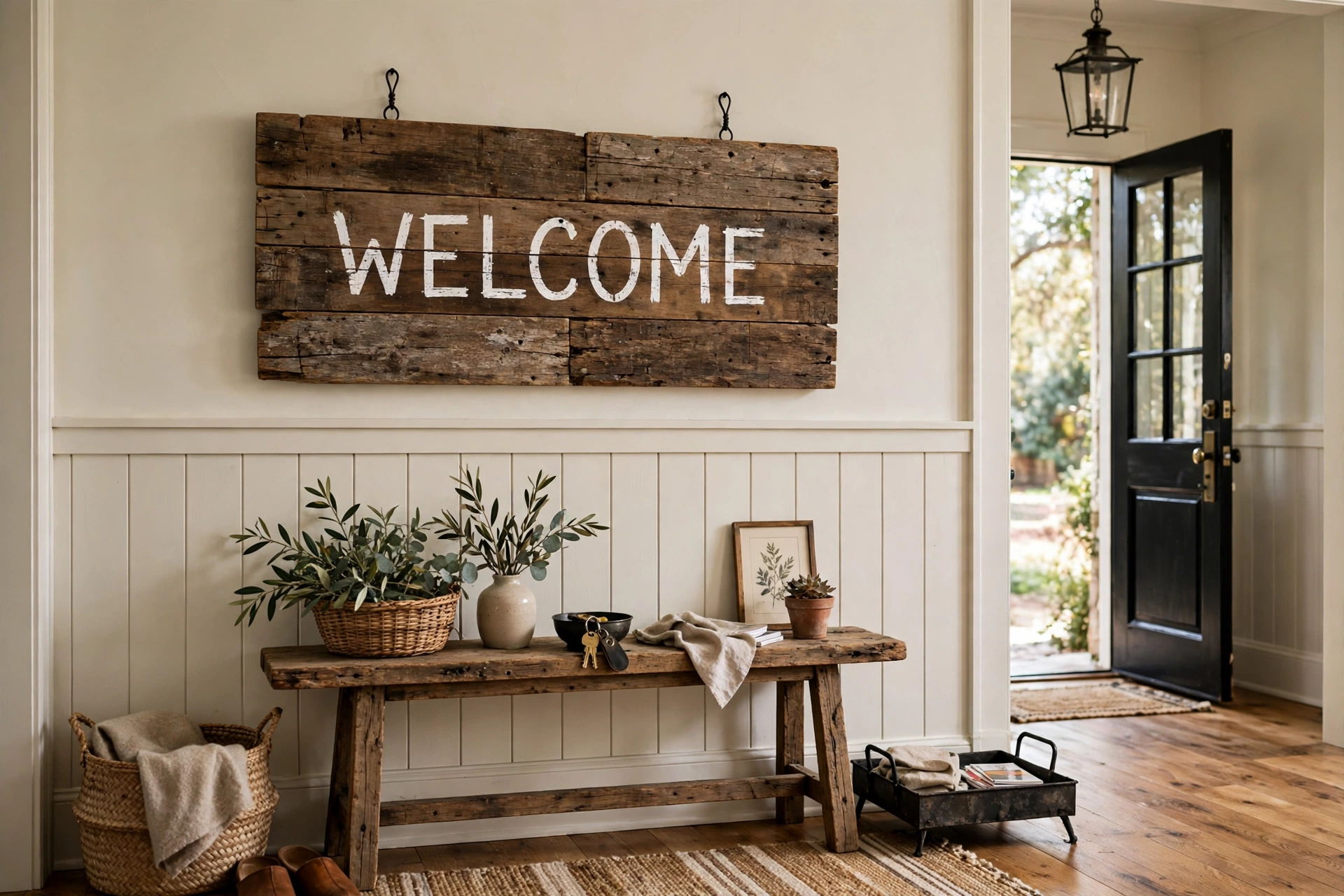
Reclaimed barn wood brings instant character — nail holes, saw marks, and weathered gray tones that no new lumber can fake. Source boards from architectural salvage yards or online marketplaces, clean them with a stiff brush and mild soap, and let them dry fully before working. A simple “Welcome” in white chalk-style paint over gray barn wood is timeless, or go bolder with a deep charcoal background and cream lettering.
Because reclaimed boards vary in width, keep your layout flexible: sketch the letters on paper first, then transfer with carbon paper. Hang with a French cleat or sturdy sawtooth hangers rated for the board’s weight — old wood is dense. Pair it with a galvanized boot tray and a jute runner to complete the rustic entryway vignette; for more ways to layer farmhouse texture in your foyer, browse our farmhouse entryway roundup.
3. Modern Acrylic Floating Script Sign

For contemporary entryways, a clear acrylic panel with raised script lettering looks like it floated in from a boutique hotel. Order a custom-cut acrylic rectangle — 24 by 8 inches suits most foyers — and apply vinyl script decals or have a sign shop laser-cut raised letters in gold or matte black. Mount it with brushed-metal standoff bolts, which hold the panel about an inch off the wall for that floating shadow effect.
Keep the surrounding wall clean: this sign reads best against a solid paint color or a subtle grasscloth wallpaper, not a busy gallery wall. The acrylic wipes clean with a damp microfiber cloth, and because it is weather-resistant, the same style works on a covered porch. It is the sleekest of all entryway welcome sign ideas and suits minimalist, Scandinavian, and modern-farmhouse homes equally well.
4. Farmhouse Shiplap Welcome Sign

Shiplap and welcome signs are a match made in farmhouse heaven. Build a simple shiplap panel — three or four horizontal boards with nickel gaps — mount it on the foyer wall, and stencil a large “Welcome” across it in black or dark gray. The texture of the gaps gives the sign architectural presence without any carving or routing.
Make the panel roughly 30 by 12 inches for a standard entryway; larger foyers can handle 36 inches wide. Distress the painted letters lightly with fine sandpaper for an aged look, then wax with clear furniture wax to protect the finish. This approach doubles as wall paneling interest in an otherwise plain hallway. If your entryway needs more than one focal point, see how to balance statement pieces with our entryway wall decor guide.
5. Hand-Lettered Chalkboard Welcome Sign

A chalkboard sign is the most changeable option on this list — rewrite it for seasons, holidays, or houseguests in minutes. Buy a framed chalkboard (or paint a board with two coats of chalkboard paint over primer) and invest in chalk markers rather than dusty stick chalk; markers give crisper lines and wipe off cleanly with a damp cloth. Practice your lettering on paper first, or use a chalk-transfer technique with printed text.
The trick to a professional look is hierarchy: make “Welcome” the largest element, then add a smaller secondary line like your family name or a favorite quote. Hang it at eye level — center of the sign about 60 inches from the floor — so it reads naturally as guests walk in. (Chalk lettering is an art in itself; calligraphy traditions behind beautiful hand lettering are explored in depth at Wikipedia’s calligraphy overview.) Keep a damp cloth nearby and you will actually change it with the seasons.
6. Metal “Welcome” Script Wall Art

Cut-metal script signs — laser-cut steel or aluminum reading “welcome” in flowing cursive — add industrial polish to modern and transitional entryways. Choose a powder-coated finish (matte black is the most versatile) so the metal never rusts, even in a humid mudroom entry. Sizes from 18 to 36 inches wide work; the open letterforms cast delicate shadows that become part of the design.
Mount with the included standoff hardware or small L-brackets, keeping the sign about six inches above a console table or bench so the two read as one vignette. These signs are nearly indestructible, which makes them ideal for high-traffic entries with kids and pets. Pair with warm wood and soft textiles to keep the metal from feeling cold.
7. Personalized Family Name Sign

Nothing says “this is home” like your actual name on the wall. A personalized family-name sign — “The Hendersons, Est. 2019” or simply “Welcome to the Miller Home” — turns a generic greeting into a statement of identity. Order from a custom wood-sign maker or DIY with a router and stencils; oak, walnut, or maple boards take stain beautifully and feel substantial.
Get the sizing right: the sign should span roughly two-thirds the width of the furniture beneath it. A 24-inch sign over a 36-inch console table is the sweet spot. Hang with a French cleat for a flush, secure mount. This is a popular housewarming gift, and it photographs beautifully for real-estate listings too — a small detail that signals a loved home.
8. Wreath-Framed Welcome Sign

Combine two entryway staples — the wreath and the welcome sign — into one layered piece. Hang a round wreath (boxwood, eucalyptus, or seasonal greens) and center a small wood or metal sign within its opening. Use floral wire or a ribbon to suspend the sign so it floats inside the wreath’s circle, creating depth and a boutique look.
Swap the wreath seasonally while keeping the same sign, or swap the sign’s message while keeping the wreath — either way you get two decor elements for one hanging point. Keep the combined diameter under 30 inches for a standard door or foyer wall so it does not overwhelm the space. This is one of the most photogenic entryway welcome sign ideas and a favorite for front-door styling as well.
9. Stenciled Doormat-Style Floor Sign

Welcome signs do not have to hang on the wall — a stenciled coir doormat puts the greeting literally at guests’ feet. Buy a plain coir mat and stencil your message with exterior black paint, or layer a smaller printed mat (“hello,” “come on in”) over a larger patterned rug for the popular layered look. The layered approach adds color and pattern while the top mat carries the message.
For the stencil, use adhesive stencil film and a nearly-dry stencil brush to prevent paint bleed into the coir fibers. Two thin coats beat one thick one. Refresh the paint once a year, and shake the mat out weekly — coir sheds, but that is also what makes it so good at trapping dirt. This is the hardest-working of all entryway welcome sign ideas: decor and doormat in one.
10. Vintage Enamel-Style Welcome Sign

Vintage-look enamel signs — white lettering on deep navy or forest green with a faux-aged patina — bring European cafe charm to the entryway. These are widely available as reproductions, or you can age a new sign yourself with dark wax rubbed into the edges. The classic rounded-rectangle shape with a thin border line reads instantly as “heritage,” even when brand new.
Mount with visible brass screws for authenticity, or lean a larger one on the console table against the wall. Because the style is so distinctive, keep the rest of the entryway simple: a vintage enamel sign plus one plant and a bowl for keys is a complete vignette. It suits traditional, colonial, and French-country homes especially well.
11. Light-Up Marquee Welcome Letters

Marquee letters spell it out in lights — literally. Freestanding metal marquee letters spelling “WELCOME” or “HELLO” bring playful, retro energy to the foyer, and the warm bulbs double as ambient lighting on dark winter evenings. Battery-operated LED versions avoid cord clutter; look for a warm 2700K color temperature so the glow feels cozy rather than commercial.
Style them on top of a console table, bookshelf, or the floor leaning against the wall — seven letters need about three feet of width. Turn them on for parties and evenings, off during the day; the letters look sculptural even unlit. This is the most fun option on the list and a guaranteed conversation starter, especially in eclectic and mid-century entryways.
12. Botanical Pressed-Flower Welcome Sign

For a softer, artisanal take, press real flowers and leaves between glass with your welcome message. Arrange dried botanicals on a linen or watercolor-paper background, add “welcome” in calligraphy or printed script, and frame it under glass or between two panes in a floating frame. Ferns, Queen Anne’s lace, and small wildflowers press beautifully and hold their color for years out of direct sun.
Keep the frame out of strong sunlight to prevent fading, and choose a message in a fine, elegant typeface so the botanicals stay the stars. This sign doubles as genuine art — guests will lean in to inspect the flowers. It is one of the most unique entryway welcome sign ideas and suits cottage, botanical, and romantic-style homes perfectly.
13. Seasonal Rotating Welcome Sign Set
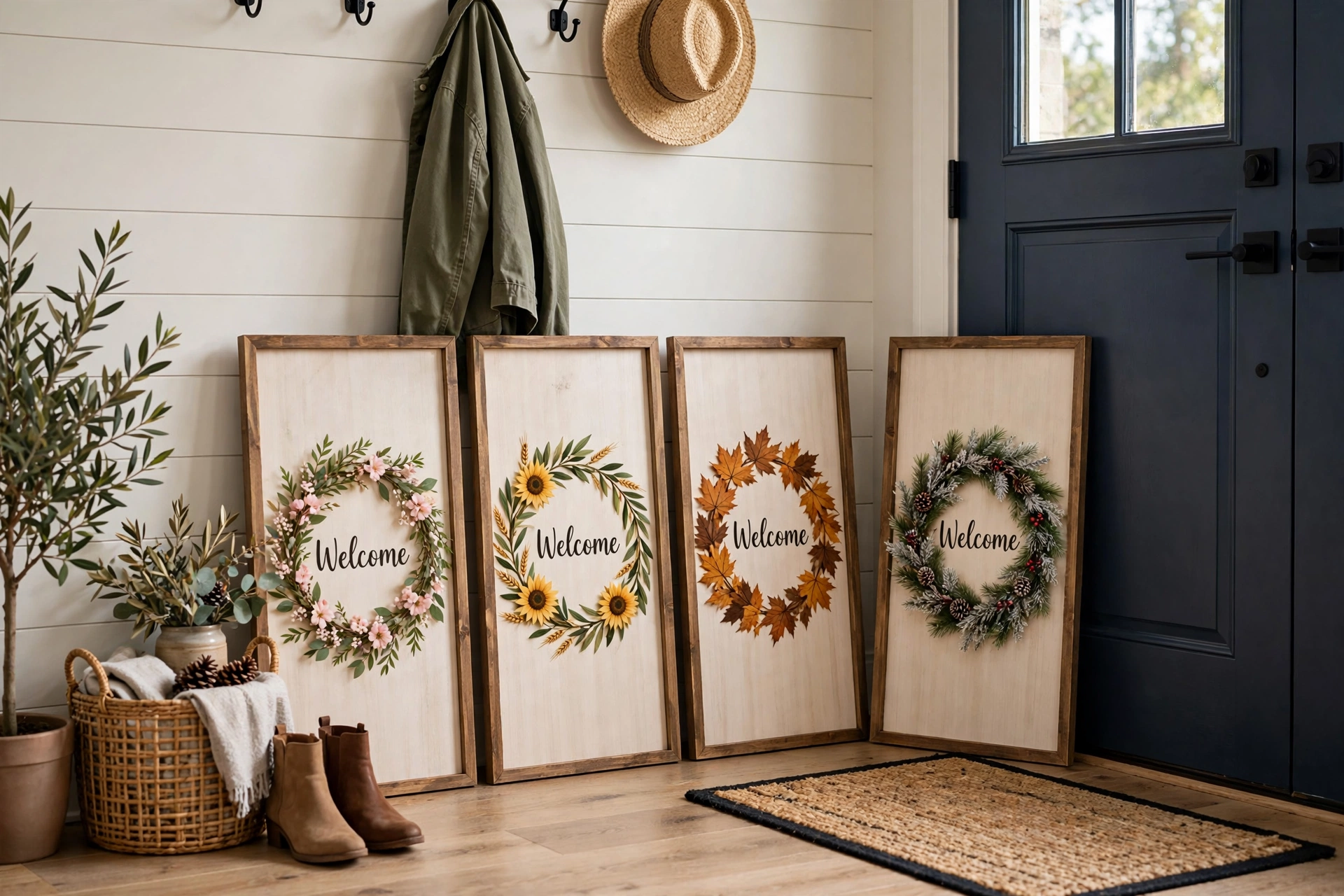
If you love decorating for every season, build a small collection of interchangeable signs on one hanger. Make or buy four to six slim signs — spring florals, summer nautical, fall harvest, winter evergreen — all the same size, and hang the current one on a fixed hook or wreath hanger by the door. Off-season signs store flat in a closet or behind a bookshelf.
Keeping the dimensions consistent (say, 12 by 24 inches) makes swaps effortless and the wall hardware invisible. Use the same hanging method for all — a sawtooth hanger at the same position — so each sign sits identically. This system scratches the seasonal-decor itch without the storage sprawl of full wreath collections. For coordinating the rest of your seasonal entryway, our main entryway decor guide has you covered.
14. Carved Wood Relief Welcome Sign

A carved or routed wooden sign adds craft and dimension that flat painted signs cannot match. You do not need to be a woodcarver: a palm router with letter templates routs clean, professional grooves, or order a CNC-carved sign from an online maker with your chosen font. Fill the carved letters with a contrasting paint or stain, then sand the surface back so the color sits only in the grooves.
Oak and cherry carve crisply and finish beautifully; pine works but can tear along the grain, so go slow. A 20-by-8-inch carved sign over the door or on the porch pillar looks substantial and permanent — the kind of detail that makes a house feel established. Seal outdoor versions with spar urethane, which flexes with the wood through seasons.
15. Minimalist Brass Plaque by the Door
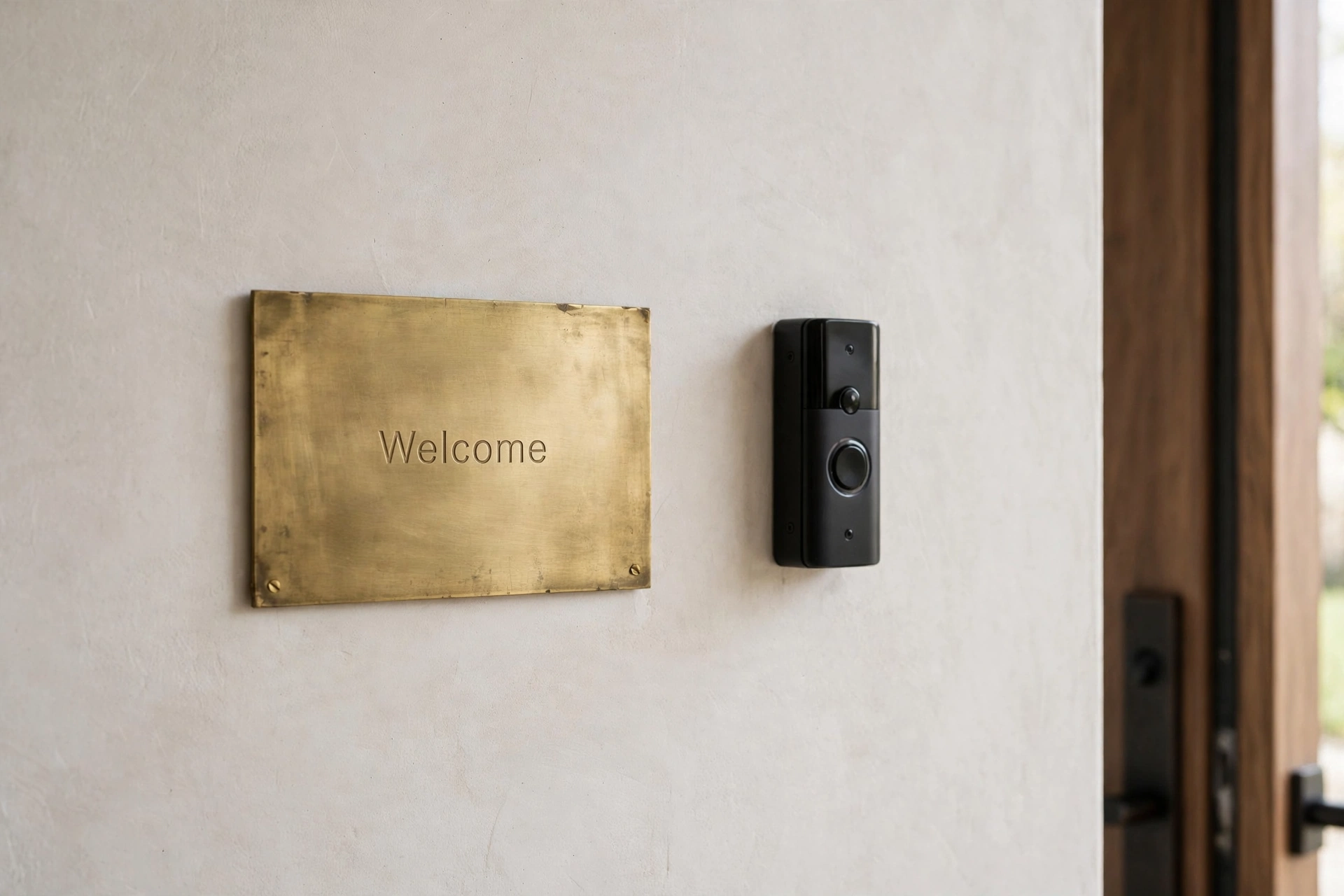
Sometimes the most welcoming thing is restraint: a small engraved brass plaque beside the doorbell reading “Welcome” or your house number with a welcome line. Solid brass develops a rich patina over time; polished brass stays bright with occasional metal polish. Typical sizes run 6 by 2 inches — small, but the gleam draws the eye.
Mount with brass screws into the door frame or adjacent siding, level and centered with the doorbell. This is the most durable and weatherproof of all entryway welcome sign ideas — it will outlast the door itself. It suits colonial, traditional, and modern-classic exteriors, and pairs beautifully with a polished brass door knocker. (The tradition of marking thresholds with a greeting stretches back centuries — Wikipedia traces the history of welcome signs from roadside markers to the front door.)
Frequently Asked Questions
Where should you hang a welcome sign in the entryway?
Hang the main sign on the wall guests face when they walk in, centered about 60 inches from the floor to the sign’s center. If the sign leans on a console table, place it slightly off-center with a plant or lamp balancing the other side. For exterior use, mount beside the doorbell or lean a tall board against the wall within the covered porch area.
What size should an entryway welcome sign be?
Scale the sign to the wall and the furniture beneath it: the sign should span roughly two-thirds the width of the console table or bench below. For most foyers, a sign 18 to 30 inches wide works well; tall leaning boards run 4 to 5 feet high. When in doubt, cut a paper template and tape it up first — it is the fastest way to judge scale.
What does a welcome sign say besides “welcome”?
Popular alternatives include your family name with an established date, “hello,” “come on in,” “home sweet home,” a meaningful quote, or greetings in another language that reflects your heritage. Seasonal signs can carry messages like “gather” in fall or “let it snow” in winter. Choose wording that feels like something you would actually say to a guest.
How do you weatherproof an outdoor welcome sign?
Use exterior-grade paint and seal every surface — including the back and edges — with spar urethane or marine varnish, which flexes with temperature changes. Choose rot-resistant woods like cedar or teak, or powder-coated metal and acrylic that never rust. Under a covered porch, standard indoor finishes last for years; fully exposed signs need resealing every one to two years.
Can a welcome sign work in a small entryway or apartment?
Absolutely — scale down rather than skipping it. A slim 8-by-24-inch sign, a small framed print, or a stenciled mini doormat delivers the greeting without crowding a tight foyer. In rentals, use removable adhesive strips or lean the sign on existing furniture so you leave no holes. Even a tiny entry feels intentional with one thoughtful greeting.
Keep Exploring
A welcome sign is a small promise: come in, you are wanted here. Pick the material and message that sound like you, hang it where the light hits it, and let your entryway do the greeting before you even reach the door. For the full foyer picture — lighting, rugs, and furniture that complete the welcome — keep exploring our entryway guides and give every guest the warm arrival they deserve.