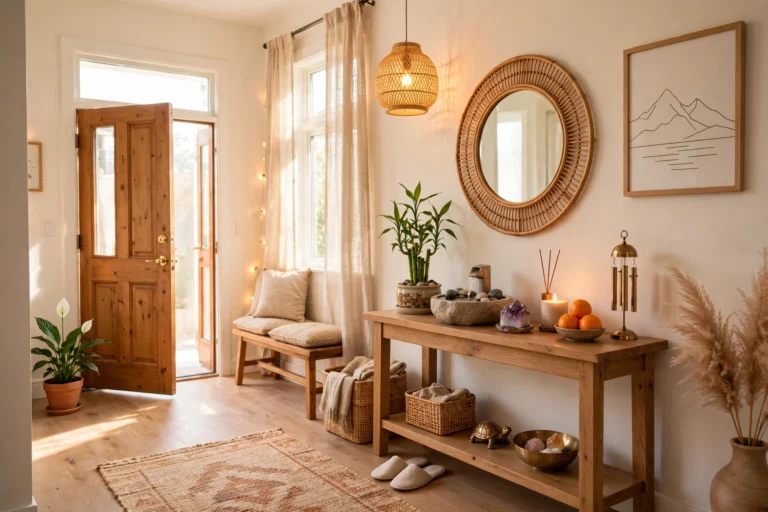
Entryway plant decor ideas are the fastest way to make your front door feel like a fresh welcome. Plants do something no other decor can: they are alive, so an entryway with greenery instantly feels cared for, vibrant, and inviting. Whether your foyer is a grand double-height space or a narrow hallway nook, the right plant in the right pot sets the tone for the entire home before a guest takes a second step inside.
The best entryway plant decor ideas balance beauty with practicality — entryways get temperature swings, varying light, and the occasional bumped leaf from bags and coats. The fifteen ideas below cover statement plants, small-space solutions, low-light survivors, and styling tricks that keep your entrance looking lush with minimal fuss.
1. Tall Fiddle-Leaf Fig in a Woven Basket
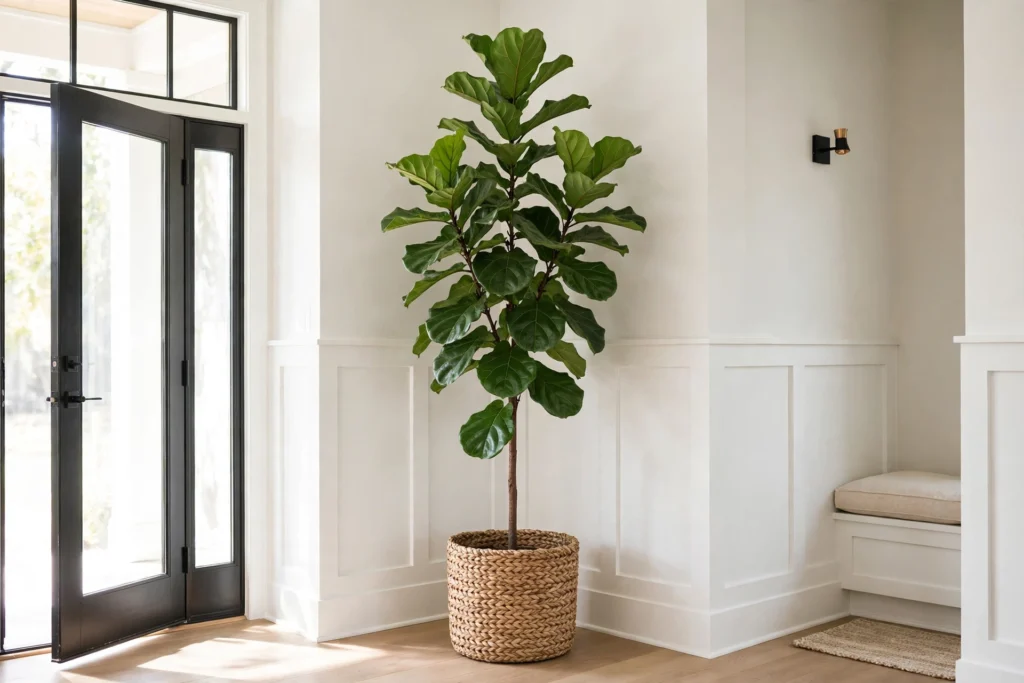
A tall fiddle-leaf fig in a woven seagrass basket is the entryway statement that never fails. The tree’s broad, sculptural leaves draw the eye upward, making even modest foyers feel grand, while the basket softens the look and hides a plain nursery pot. Place it in the brightest corner of your entryway — fiddles crave light — and rotate the pot a quarter turn each month so growth stays even.
Choose a basket slightly wider than the pot with a plastic liner inside to protect the weave from watering drips. If a full-size fiddle feels like a commitment, start with a three-foot tree; it will grow into the space. Dust the leaves monthly with a damp cloth — clean leaves photosynthesize better and look dramatically glossier, which matters in a first-impression space.
2. Monstera Statement by the Front Door

Few plants announce “welcome” like a monstera deliciosa with its dramatic split leaves. Positioned beside the front door or on a plant stand in the foyer, a mature monstera brings tropical energy that makes the whole entrance feel like a breath of fresh air. Its bold silhouette reads clearly even from the doorway, so it works as living art in the home’s most-seen corner.
Monsteras tolerate the medium light typical of entryways, though they grow fastest near a bright window or glass door. Give climbing varieties a moss pole to encourage those iconic fenestrated leaves — the splits appear as the plant matures and climbs. The monstera’s popularity is no accident: its sculptural form has made it a design icon, as detailed on Wikipedia’s monstera page. Wipe leaves occasionally and watch for the new leaf unfurling — guests will notice.
3. Console Table Vignette with Trailing Pothos
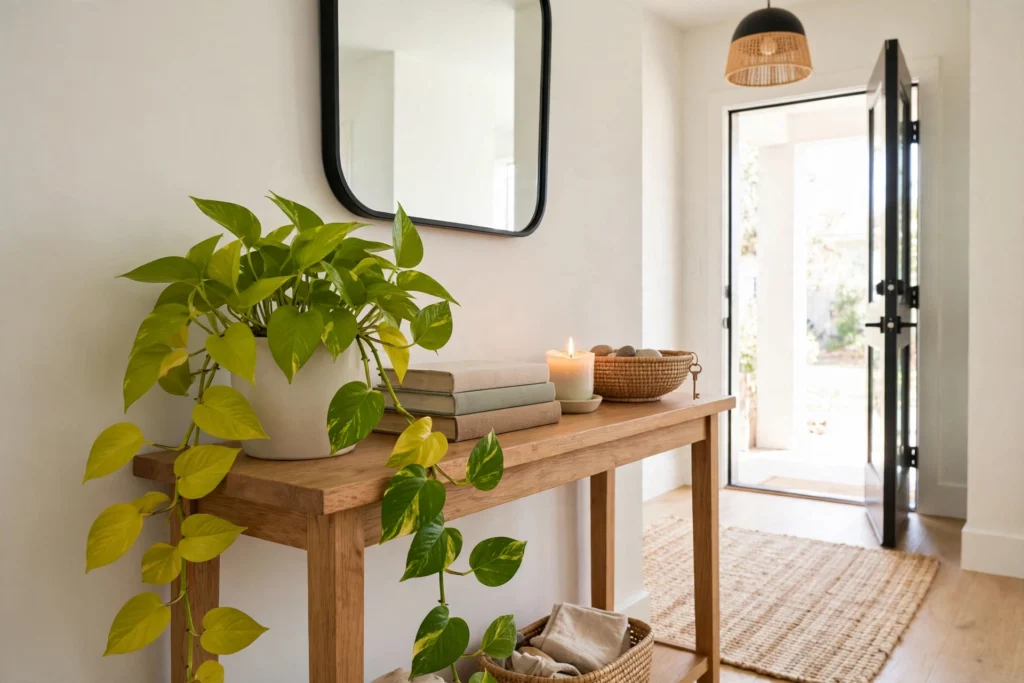
A console table dressed with a trailing pothos is entryway styling at its most effortless. Let the pothos cascade from a ceramic pot at one end of the table, balance it with a stack of books or a catch-all tray at the other, and add a small lamp or candle in the middle — you have a vignette that looks professionally styled in five minutes. Pothos tolerates the lower light behind a console and forgives missed waterings.
Train the vines along the table edge or let them trail to the floor for drama; either way, trim occasionally to keep the shape full rather than leggy. A golden or marble-queen pothos adds variegated brightness that pops against dark furniture. For more ways to style this hardworking furniture piece, see our console table decor ideas. This single vignette often carries the whole entryway.
4. Hanging Planters to Save Floor Space
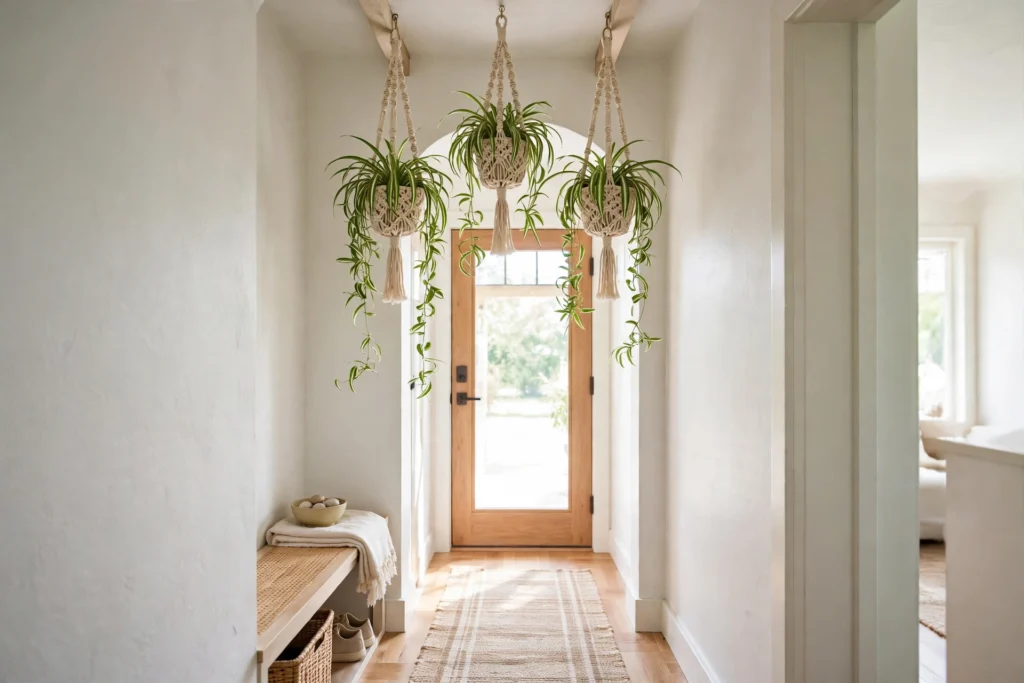
When floor space is nonexistent — a narrow hallway, a tiny apartment foyer — hanging planters put greenery overhead where it cannot be bumped. A macramé hanger or a sleek brass hook by the door holds a trailing spider plant, pothos, or string of pearls, adding life at eye level without sacrificing a single square foot of floor. Hang at varying heights for a curated, collected feel.
Anchor hooks into studs or use rated ceiling anchors; a watered hanging plant is heavier than it looks. Keep a small watering can with a narrow spout nearby, or choose planters with removable inner pots you can water at the sink. Hanging plants also stay safely above wagging tails and curious toddlers — a practical bonus in a busy entrance.
5. Mirror and Greenery Pairing for Light and Depth

Pairing a mirror with greenery is the oldest small-entryway trick in the book, and it works twice as hard with plants involved. A round or arched mirror hung above the console reflects both natural light and the plant beside it, doubling the sense of lushness and making a cramped foyer feel twice its size. The reflection turns one plant into a fuller, more abundant display.
Position a tall plant to one side of the mirror rather than directly in front of it, so the reflection reads as depth rather than blockage. A trailing plant on the console will appear to cascade in the mirror too, multiplying the effect. For guidance on choosing the right mirror shape and placement, explore our entryway mirror ideas. This pairing is especially powerful in windowless entries that need every bit of borrowed brightness.
6. Entryway Bench with Potted Ferns Below

The space beneath an entryway bench is prime real estate for potted ferns. Boston ferns or bird’s-nest ferns tucked under the bench seat fill the visual gap between floor and furniture, softening the bench’s hard lines with feathery fronds. Because the bench partially shades them, ferns — which prefer indirect light anyway — are perfectly happy in this tucked-away spot.
Use matching pots for a tailored look or mix textures (terracotta, ceramic, woven) for a collected feel. Ferns like humidity, so this is a great spot to cluster them where they create their own microclimate. Keep a boot tray or waterproof mat under the pots to catch drips, and choose the bench as your drop zone for bags so the ferns stay undisturbed and lush.
7. Snake Plant for Low-Light, Low-Fuss Corners
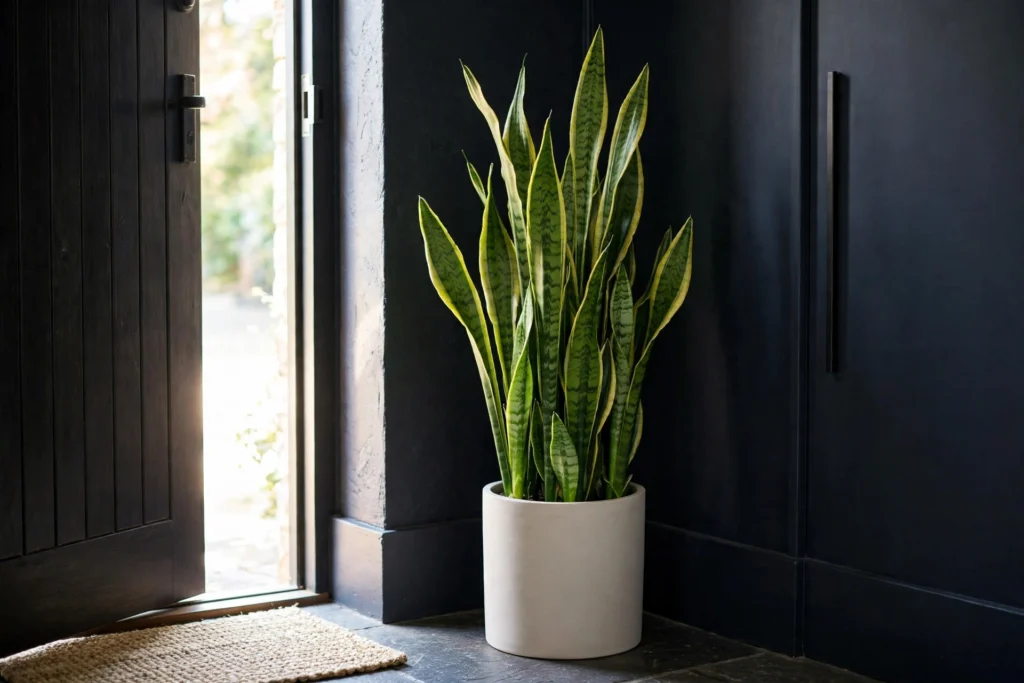
Every entryway has that one dark corner where nothing seems to survive — that is exactly where the snake plant belongs. Nearly indestructible, the snake plant tolerates low light, irregular watering, drafts from the opening door, and general neglect, all while maintaining its sharp architectural silhouette. It is the ultimate set-it-and-forget-it entryway plant.
A tall snake plant in a simple ceramic cylinder adds vertical structure without visual clutter, perfect for modern and minimalist foyers. Water only when the soil is completely dry — overwatering is the one thing that kills them. Snake plants are among the most forgiving houseplants for beginners; learn more about easy-care indoor plants on Wikipedia’s houseplant page. For darker entries, choose a variety with deep green leaves rather than variegated ones, which need more light to hold their pattern.
8. Wall-Mounted Plant Shelves for a Living Display
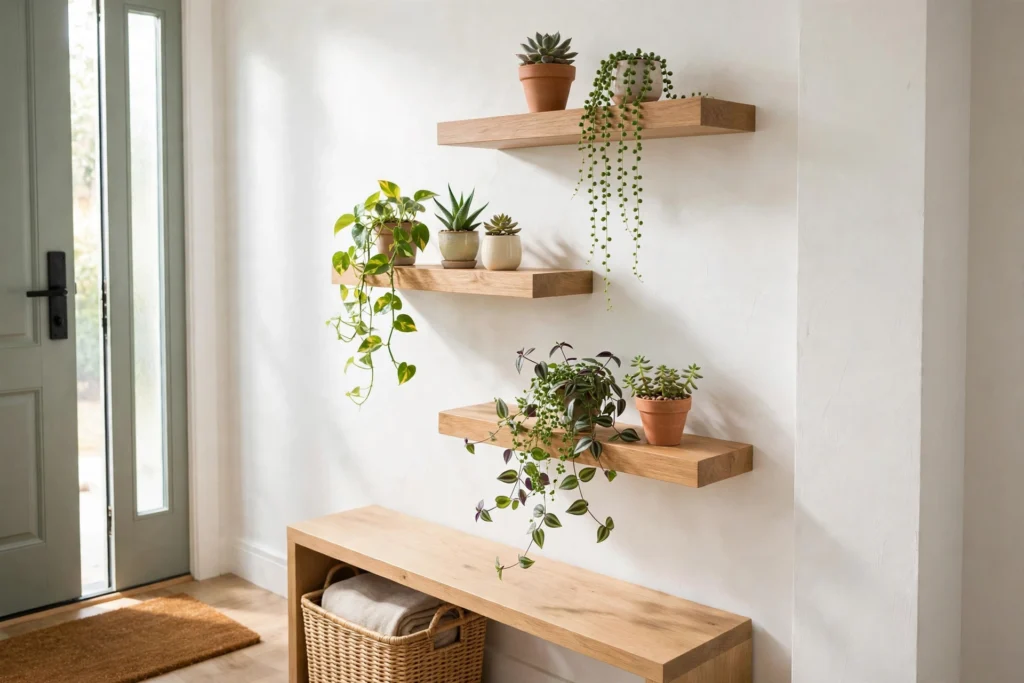
Wall-mounted shelves turn a blank entryway wall into a living display. Two or three floating shelves staggered up the wall hold small pots — succulents, baby pileas, tiny ferns — creating a vertical garden that draws the eye up and makes the entrance feel taller. This is one of the most space-efficient entryway plant decor ideas, using zero floor space at all.
Vary pot sizes and plant heights for a natural, unforced arrangement, and leave some shelf space empty so the display breathes. Secure shelves to studs, and use lightweight plastic pots inside decorative cachepots to reduce the load. A small trailing plant on the top shelf will cascade down past the lower shelves, tying the whole arrangement together into one flowing composition.
9. Oversized Floor Pot with a Bird of Paradise

When you want maximum impact, an oversized floor pot holding a bird of paradise delivers it. The plant’s huge, banana-like leaves on tall stems create instant tropical drama, and a single specimen in a statement pot — think fluted ceramic, aged terracotta, or a bold color — anchors an entryway the way a sculpture would. This is the plant equivalent of a grand gesture.
Birds of paradise need bright light, so reserve this idea for entries with a large window, glass door, or skylight. The oversized pot matters as much as the plant: scale it generously, at least eighteen inches wide, so the composition feels intentional. Wipe the big leaves regularly — they collect dust fast — and give the plant room; those leaves need space to unfurl without brushing the walls.
10. Seasonal Rotation from Porch to Foyer
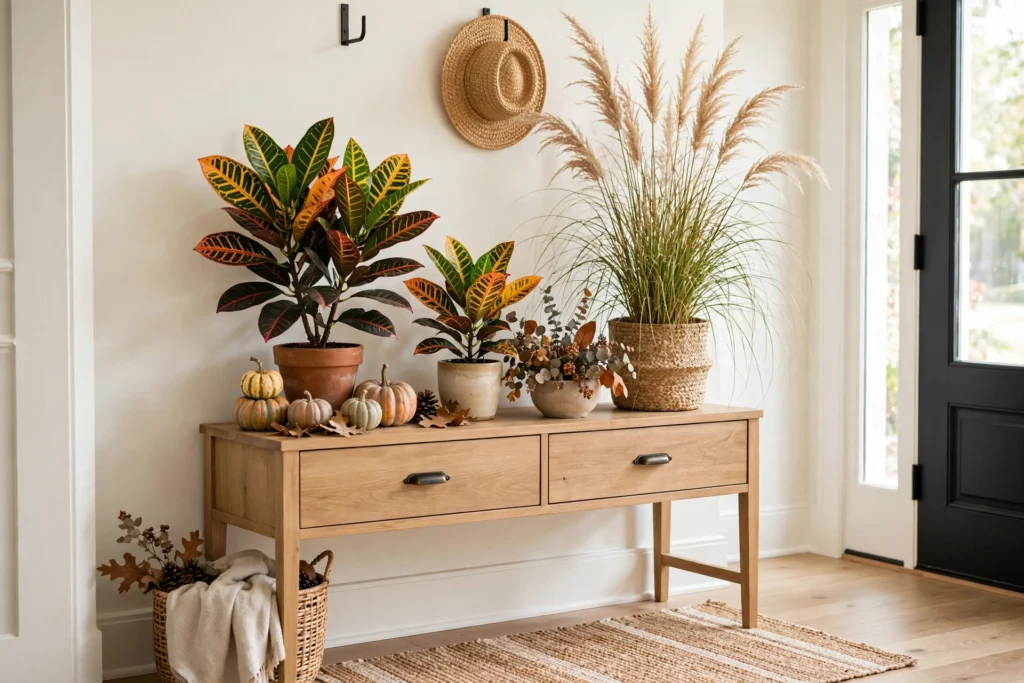
Treat your entryway plants as a rotating cast that changes with the seasons. In spring, bring in flowering bulbs and fresh herbs; summer calls for lush tropicals moved in from the porch; fall brings ornamental grasses and deep-toned crotons; winter is for evergreens, amaryllis, and forced paperwhites. This rotation keeps the entrance feeling current and gives you an excuse to refresh the whole vignette quarterly.
Keep a small stash of empty decorative pots so swaps are instant — just drop the nursery pot in. The seasonal approach also protects tender plants: tropicals summer on the porch and winter safely inside. Tie each season’s planting to your entryway’s other decor — pumpkins beside the fall croton, a wreath above the winter amaryllis — and the whole entrance tells one coherent seasonal story.
11. Small Succulent Tray on the Entry Table
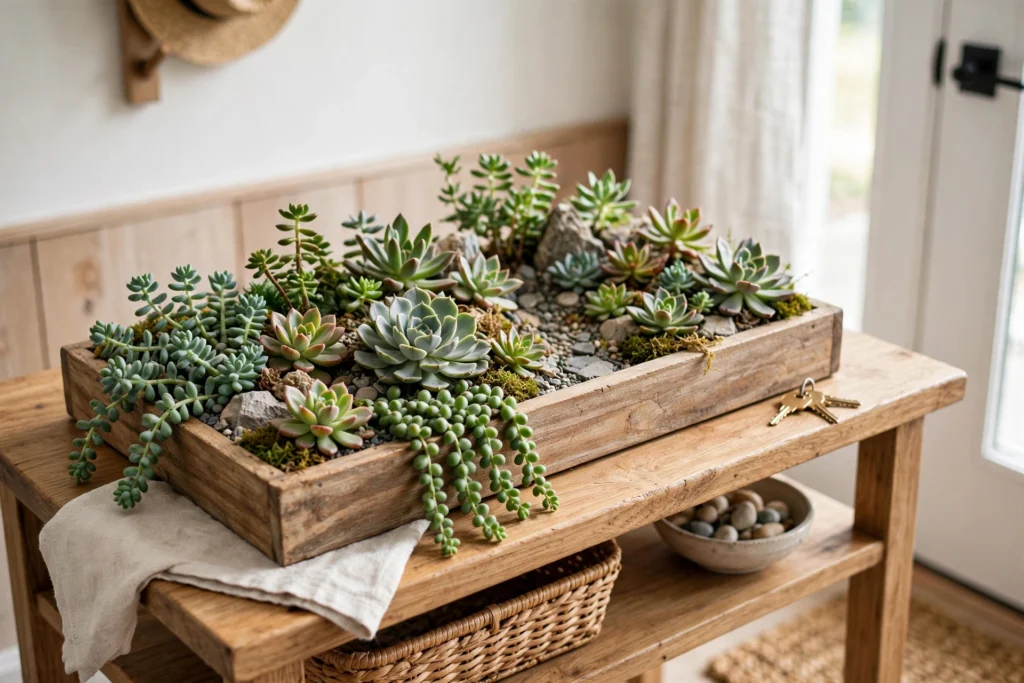
A shallow tray of mixed succulents on the entry table is the low-maintenance answer to a fresh welcome. Echeverias, haworthias, and jade plants in a long wooden dough bowl or a stone trough create a miniature landscape that needs water only every couple of weeks and thrives in the bright spot by the door. The sculptural rosettes read as decor first, plants second.
Group succulents with similar water needs and give them the brightest position available — a south-facing sidelight is ideal. Top the soil with small pebbles or sand for a finished look that also reduces evaporation. This arrangement is perfect for frequent travelers: it will look exactly the same when you return from a two-week trip, which is more than most entryway decor can claim.
12. Olive Tree for a Mediterranean Welcome
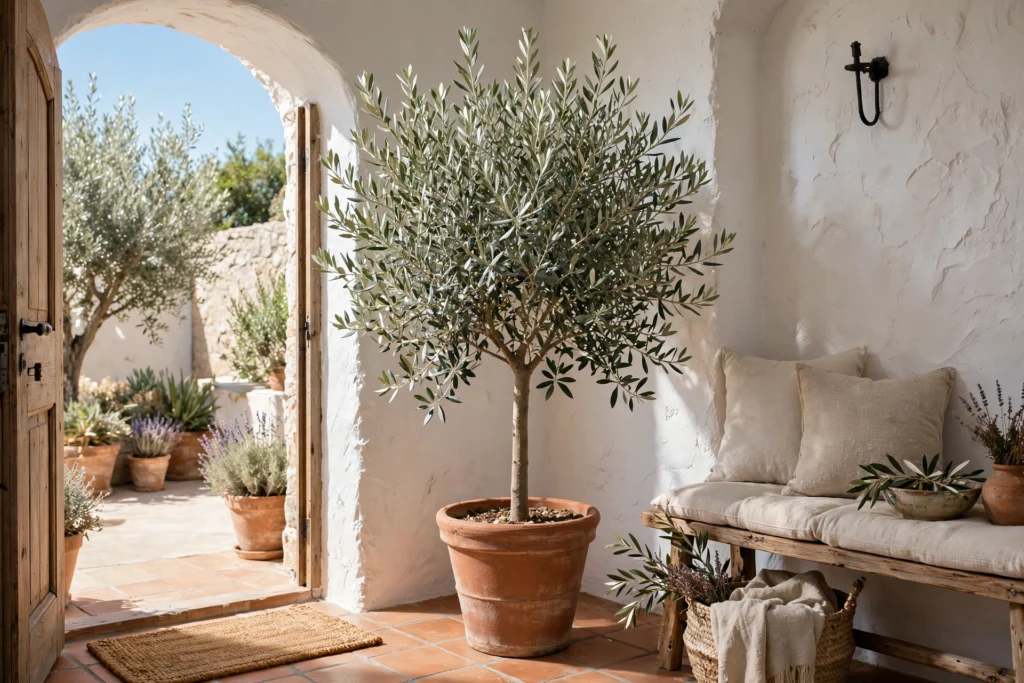
A potted olive tree brings sun-drenched Mediterranean calm to an entryway. Its silvery-green leaves shimmer in natural light, and the gnarled trunk adds sculptural age that makes even a young tree feel storied. In a simple terracotta or limewashed pot, an olive tree turns a foyer into a tiny Italian courtyard — no passport required.
Olive trees demand bright light, so this suits entries with generous windows or glass doors; supplement with a grow light in darker spaces. Let the soil dry between waterings — olives hate wet feet — and prune lightly to maintain an airy canopy. The silvery foliage pairs beautifully with warm neutrals, natural wood, and stone, making it a natural fit for Mediterranean, coastal, and modern-rustic entryways alike.
13. Grouped Trio of Varying Heights
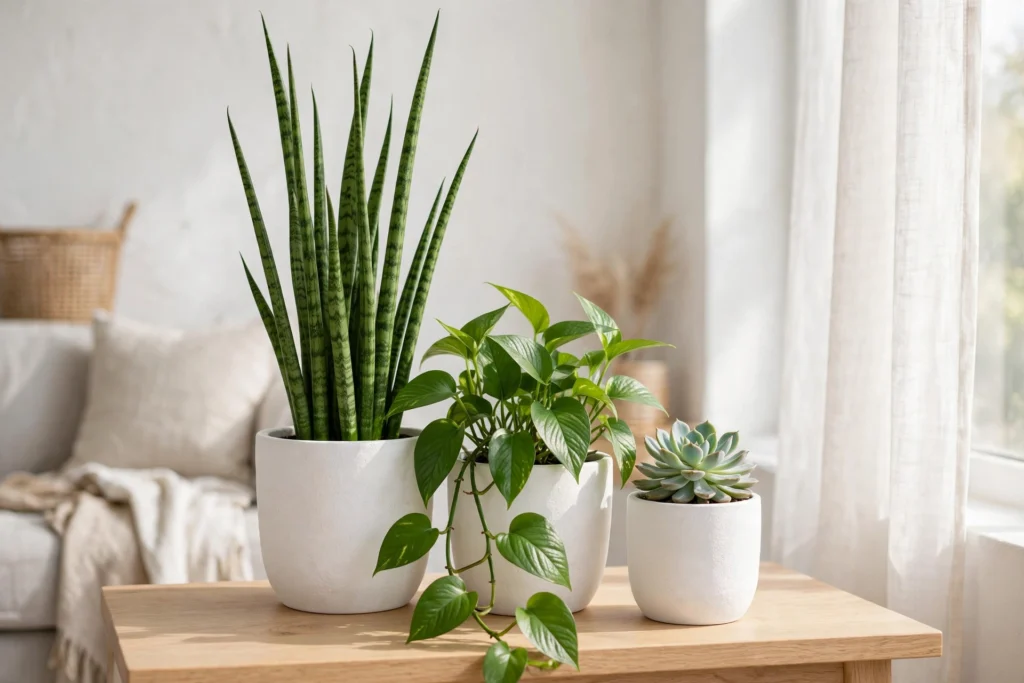
Designers swear by the rule of three, and a grouped trio of plants at varying heights is its best entryway application. Combine a tall floor plant (fiddle-leaf fig or dracaena), a medium plant on a stand (calathea or peace lily), and a small trailing plant (pothos or philodendron) in coordinating pots. The height variation creates a composition with depth and rhythm instead of a flat row of pots.
Keep the pots in one color family — all terracotta, all white ceramic, all woven baskets — so the trio reads as a set despite the different plants. This grouping fills an empty foyer corner completely, eliminating that awkward dead zone beside the door. Odd numbers feel natural to the eye, which is why three plants look styled while two can look like an afterthought and four like a crowd.
14. Dried Stems and Branches for Zero Maintenance

Not every entryway plant needs to be alive — dried stems and branches deliver the organic look with literally zero maintenance. Tall pampas plumes, dried eucalyptus, curly willow branches, or preserved palm fronds in a floor vase add height, texture, and movement that never needs water, light, or pruning. They are the perfect solution for windowless entries where live plants struggle.
Choose a substantial vase with presence — the stems are the show, but the vessel grounds them. Refresh the arrangement seasonally: bare branches in winter, dried lavender in spring, wheat stems in fall. Keep dried arrangements away from the direct blast of heating vents, which makes them brittle, and out of reach of open flames. For dark hallways and frequent travelers, this is honestly the smartest of all entryway plant decor ideas.
15. Pet-Friendly Plant Picks for a Busy Household

A beautiful entryway should not endanger the dog that greets you at the door. Pet-friendly plants — parlor palms, spider plants, Boston ferns, calatheas, and prayer plants — give you lush greenery without worry if a curious pet takes a nibble. Style them exactly as you would any other plant; nobody will know the selection was strategic.
Place even pet-safe plants thoughtfully: hanging planters keep leaves away from enthusiastic tails, and sturdy floor pots resist tipping by large dogs. If you love a plant that is toxic to pets, like monstera or fiddle-leaf fig, put it high on a shelf or behind a closed console where paws cannot reach. For a complete overview of building a warm, welcoming entrance around your greenery, see our entryway decor ideas.
Frequently Asked Questions
What plants do best in an entryway?
The best entryway plants tolerate fluctuating light and temperature: snake plants, pothos, ZZ plants, spider plants, and parlor palms are the most reliable. For bright entries, add fiddle-leaf figs, monsteras, and birds of paradise. For dark entries, stick with snake plants, ZZ plants, and cast-iron plants. Always match the plant to your entryway’s actual light — a light meter app on your phone takes the guesswork out.
How do you keep entryway plants alive with little light?
Choose genuinely low-light-tolerant plants (snake plant, ZZ plant, pothos, cast-iron plant) rather than hoping a sun-lover adapts. Supplement with a small grow light on a timer if the entryway is truly dark — modern LED grow bulbs fit standard fixtures and look like normal lighting. Water less than you think, since low light means slow growth and slow water use; soggy soil kills more low-light plants than darkness does.
Are plants safe near the front door in winter?
Most houseplants dislike the cold blasts that come with an opening front door. Keep plants at least a few feet from the door itself, never in the direct path of winter drafts, and avoid placing tropicals against cold glass. If your entryway gets genuinely cold, choose hardy plants like snake plants and ZZ plants, or use dried arrangements through the coldest months and bring the tropicals back in spring.
How do you style plants without cluttering a small entryway?
Go vertical: hanging planters, wall shelves, and tall narrow plants use air space instead of floor space. Stick to odd-numbered groupings in coordinating pots so multiple plants read as one intentional arrangement. Choose one statement plant rather than five small ones scattered about — a single confident placement looks styled, while many tiny pots look cluttered. And leave breathing room: every plant needs visual space around it.
Which entryway plants are safe for pets?
Pet-safe standouts include parlor palms, spider plants, Boston ferns, calatheas, prayer plants, and peperomias — all non-toxic to cats and dogs according to the ASPCA. Keep even safe plants out of enthusiastic reach to avoid knocked-over pots. Avoid common toxic entryway plants like monstera, fiddle-leaf fig, ZZ plant, and snake plant if your pets chew greenery, or place those well out of reach on high shelves.
Keep Exploring
Plants turn an entryway from a pass-through into a welcome — living proof that someone tends this home with care. Start with one forgiving plant matched to your light, style it in a pot you love, and let it grow into the space. Before long, that first green greeting by the door will be the thing guests remember most about arriving at your home.