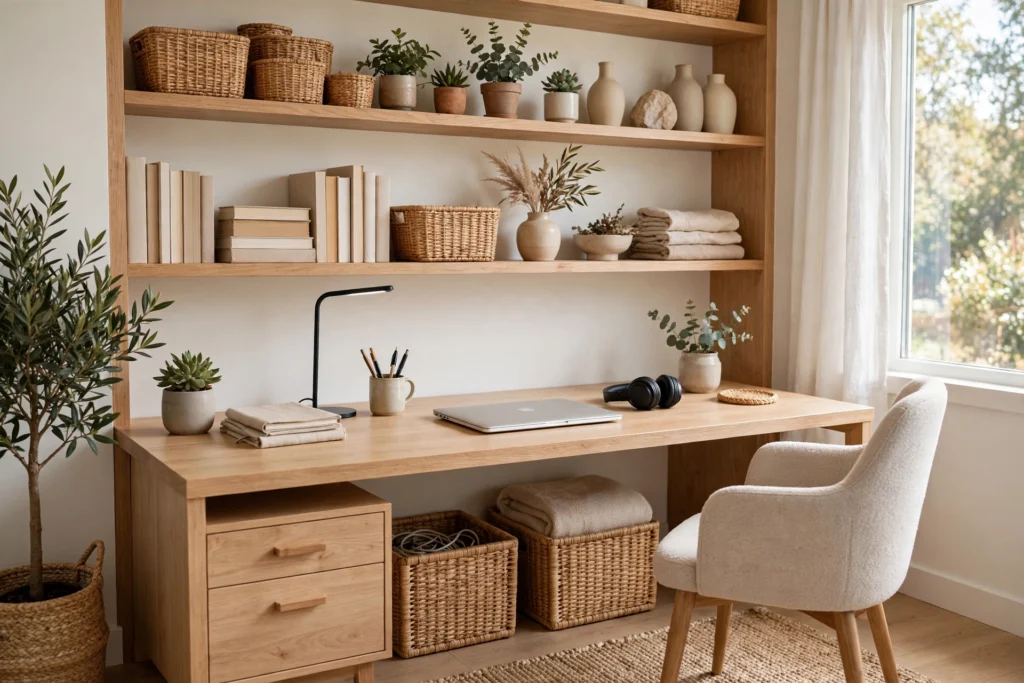

A tidy workspace is more than a nice-to-have — it directly shapes how you think, focus, and feel during the workday. When every pen, paper, and cable has a home, your mind stops juggling background mess and can give full attention to the task at hand. These home office organization ideas are built for real life: small rooms, shared desks, limited closets, and the everyday clutter that creeps in. Work through the list, pick the systems that match how you actually work, and enjoy a space that stays calm even on your busiest weeks. Scandinavian home office ideas.
1. Start With a Full Desk Reset
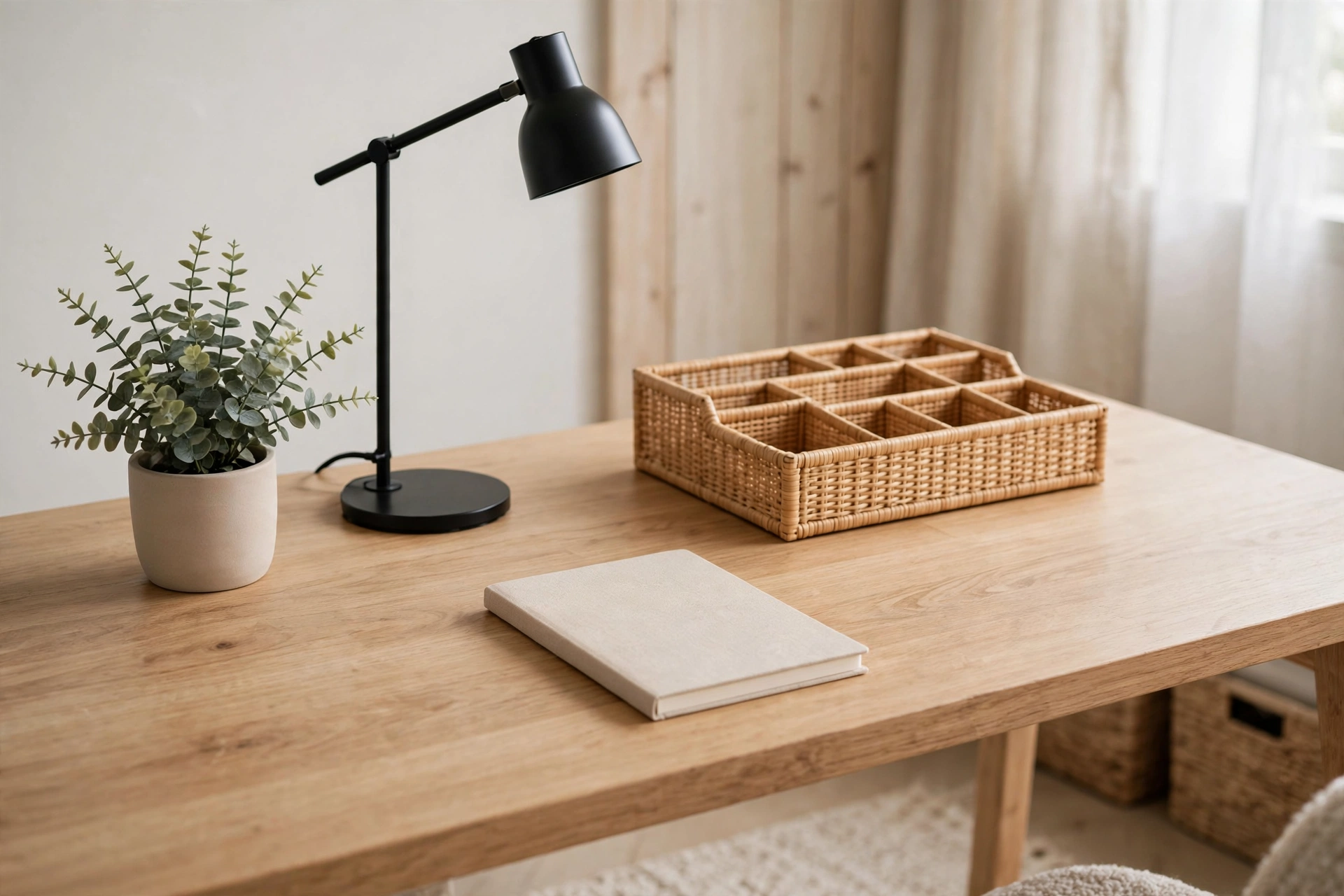
Before buying a single organizer, pull everything off your desk and sort it into three piles: daily tools, occasional items, and things that do not belong here at all. Only daily tools — your laptop, a notebook, one pen cup, and your charger — earn a permanent spot on the surface. Occasional items get a drawer home, and the rest leave the room immediately. This blank-slate reset takes twenty minutes and instantly shows you how little actually needs to live on your desk. Repeat it once a month to keep drift under control, and you will be amazed how much calmer the room feels with nothing extra on display.
2. Zone Your Desk Into Work Areas
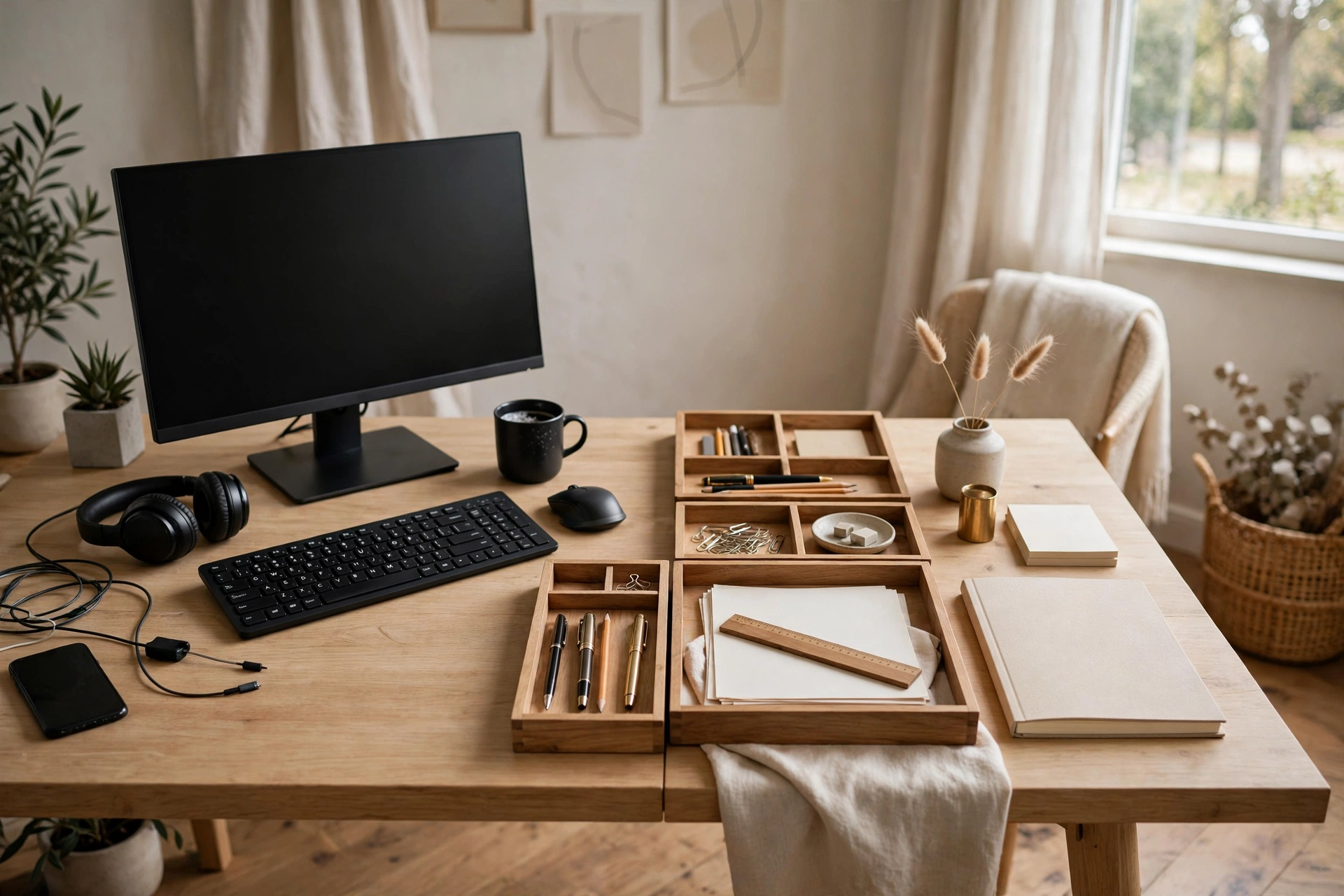
Divide your desk surface into clear zones: a computer zone on one side, a writing and paper zone on the other, and a slim landing strip near the edge for your phone and coffee. Zones stop your papers from migrating under your keyboard and your chargers from tangling with notebooks. Small trays, a desk mat, or even a strip of washi tape can mark the boundaries visually. Once the zones are set, clean up takes seconds because every object has a defined destination. This simple spatial rule works on desks of every size and is especially powerful in compact setups where one messy stack quickly takes over everything.
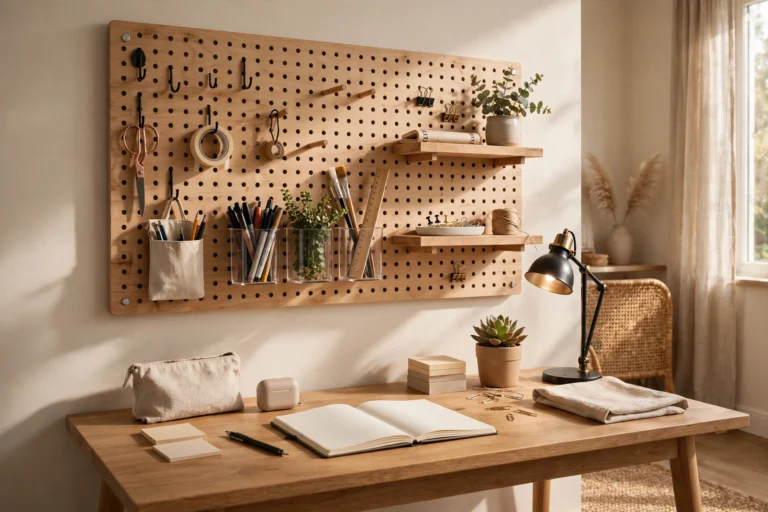
3. Mount a Pegboard Above the Desk
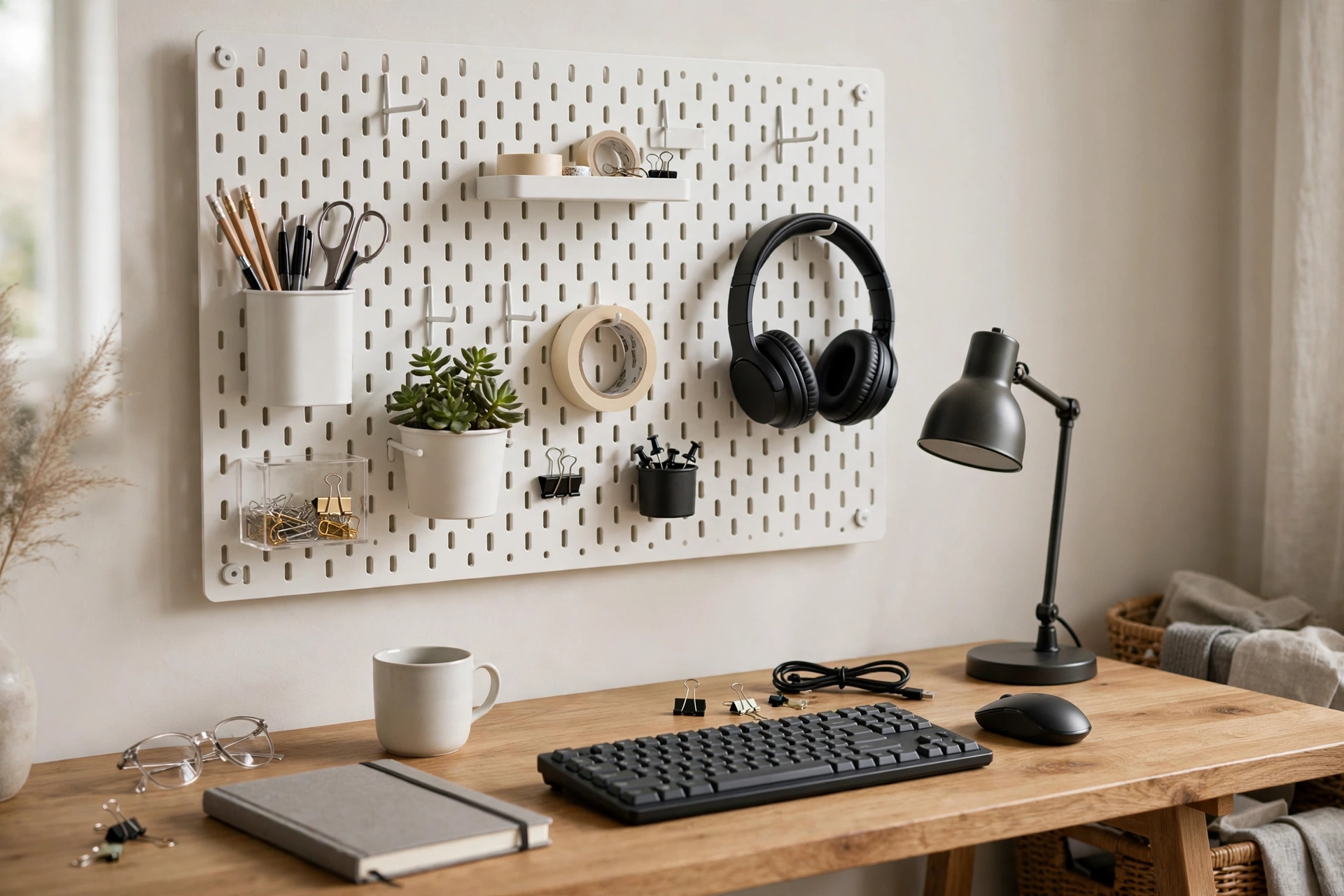
A pegboard turns dead wall space above your desk into flexible, renter-friendly storage. Hang small bins for pens, hooks for headphones, and shelves for notebooks — everything visible and within arm’s reach without touching your desk surface. The beauty of pegboard is that it grows with you: rearrange hooks and shelves in minutes as your needs change. Paint it to match your wall color for a built-in look, or choose a bold contrast color to make it a design feature. A pegboard over the desk is one of the most affordable ways to add serious storage to a small workspace.
4. Use Vertical Shelving, Not Wider Furniture
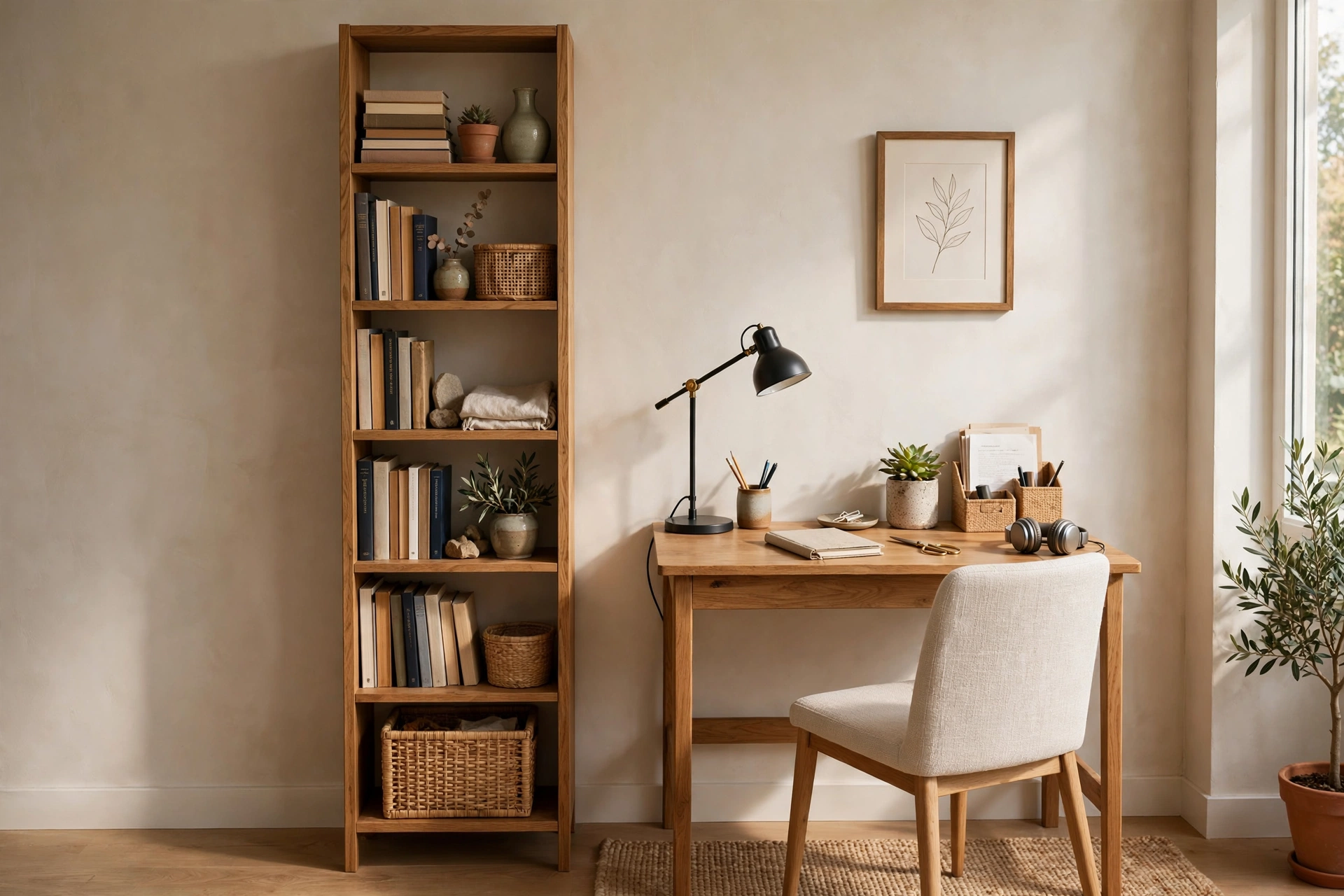
When floor space is limited, the only way to expand is up. Tall, narrow bookcases, floating shelves, and wall-mounted cabinets add storage without stealing legroom. Reserve the lowest shelf for daily grab items, middle shelves for reference books and supplies, and the top for archived files and decor. Keep shelf displays edited — a shelf packed edge to edge looks chaotic no matter how organized the contents are. Vertical storage is also the secret weapon of closet offices and alcove setups; Clever closet office designs for vertical storage in tiny footprints.
5. Tame Cables With a Management Kit
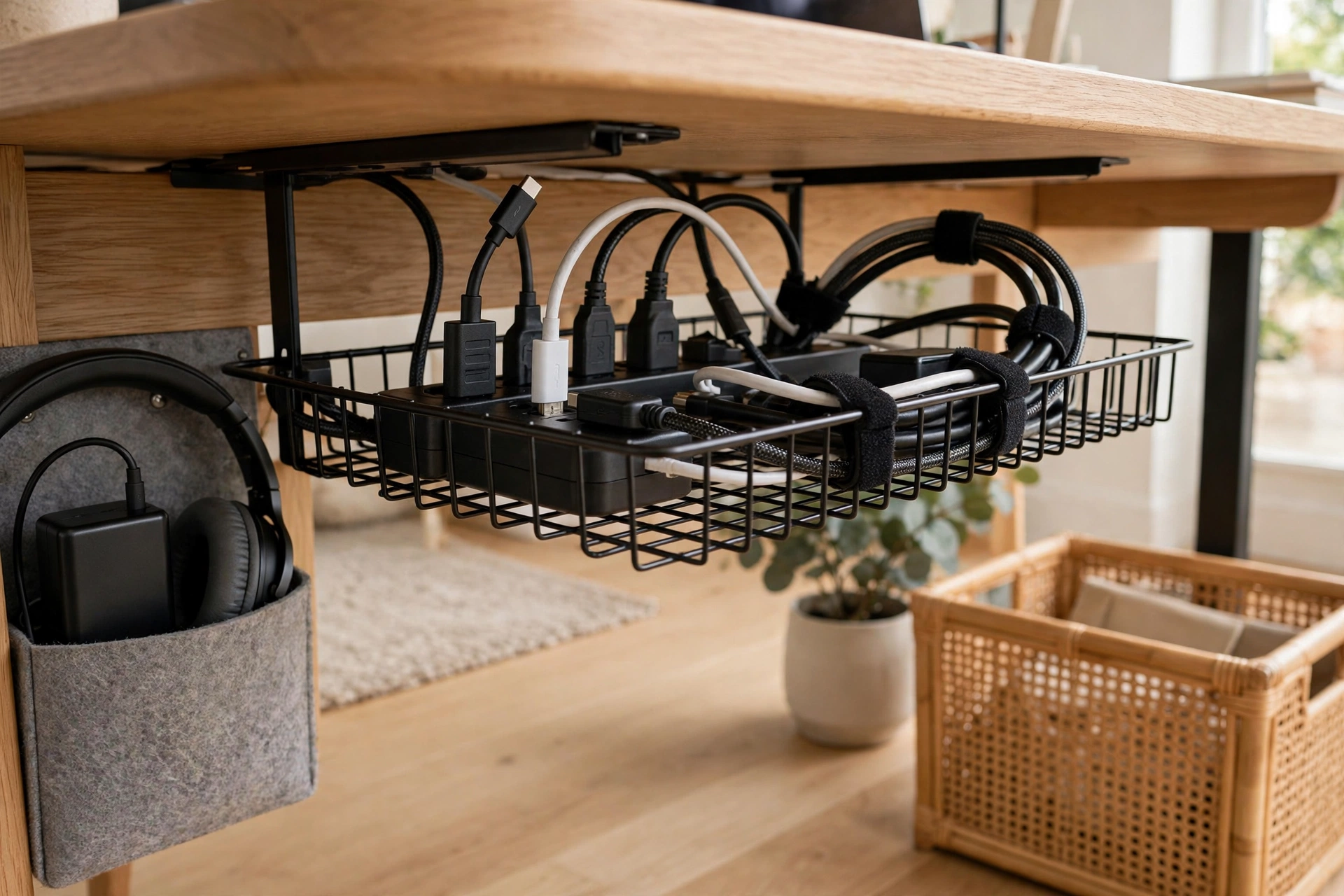
Cable chaos is the fastest way to make an organized desk look messy. A simple kit — an under-desk cable tray, adhesive clips, and a few Velcro ties — can hide every cord in under half an hour. Mount a power strip inside the tray under your desk, coil excess cable length with ties, and route the single neat bundle down one leg to the outlet. Label both ends of every cable with small tags so future you can unplug without a guessing game. A clear floor zone under the desk also makes vacuuming effortless, which keeps dust from building up behind your setup.
6. File Papers the Day They Arrive
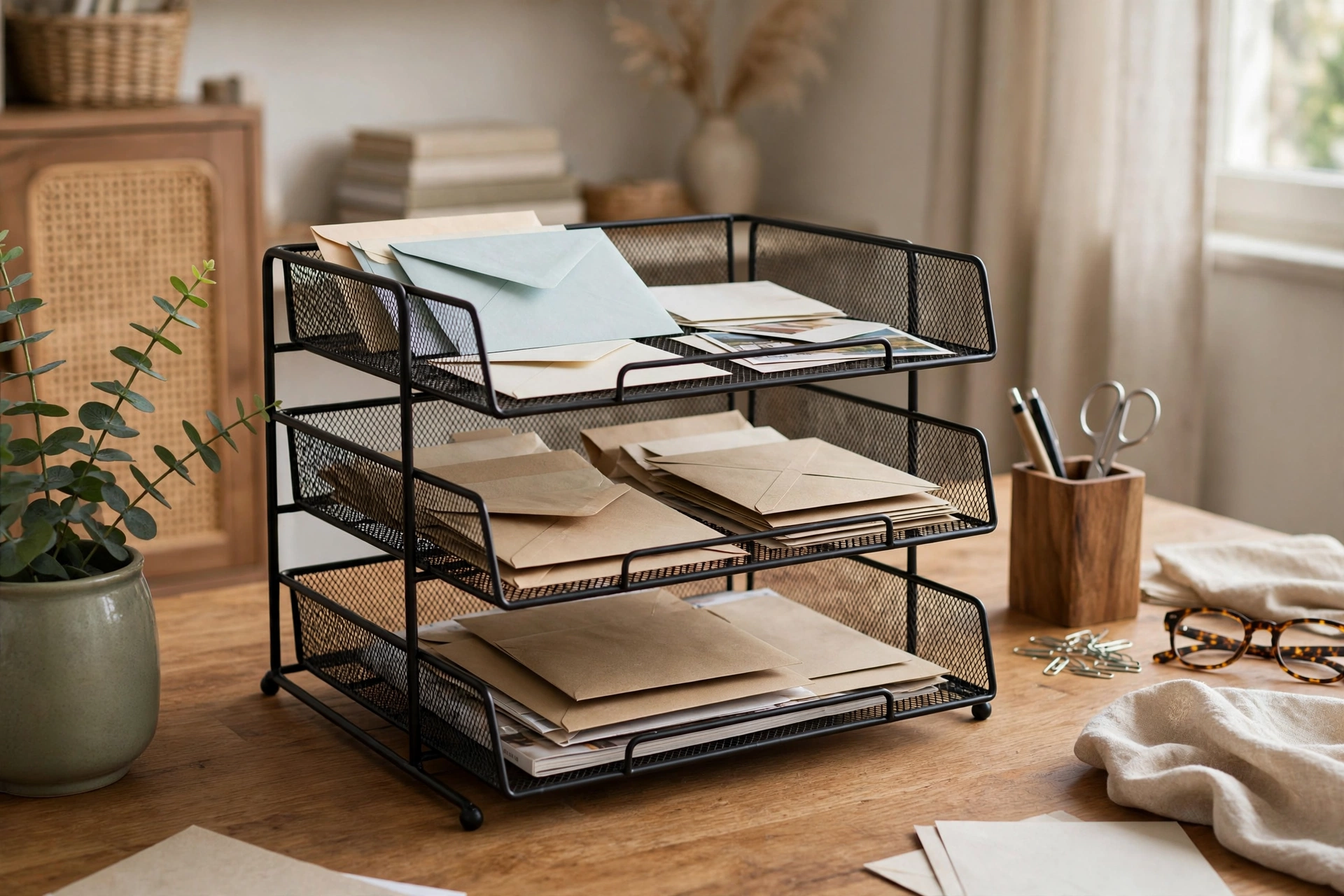
Paper piles are clutter’s favorite camouflage, so stop them at the source. Set up a small three-tray inbox near the door or beside your desk: action, file, and recycle. When mail or documents arrive, sort them immediately instead of stacking them for later. Once a week, spend ten minutes clearing the action tray. For keepsake papers like tax records and warranties, use a labeled accordion file or a slim filing box. The real secret is going paperless where possible — scan what you can and shred the originals, because a digital file takes up zero physical space.
7. Assign Every Drawer a Single Job
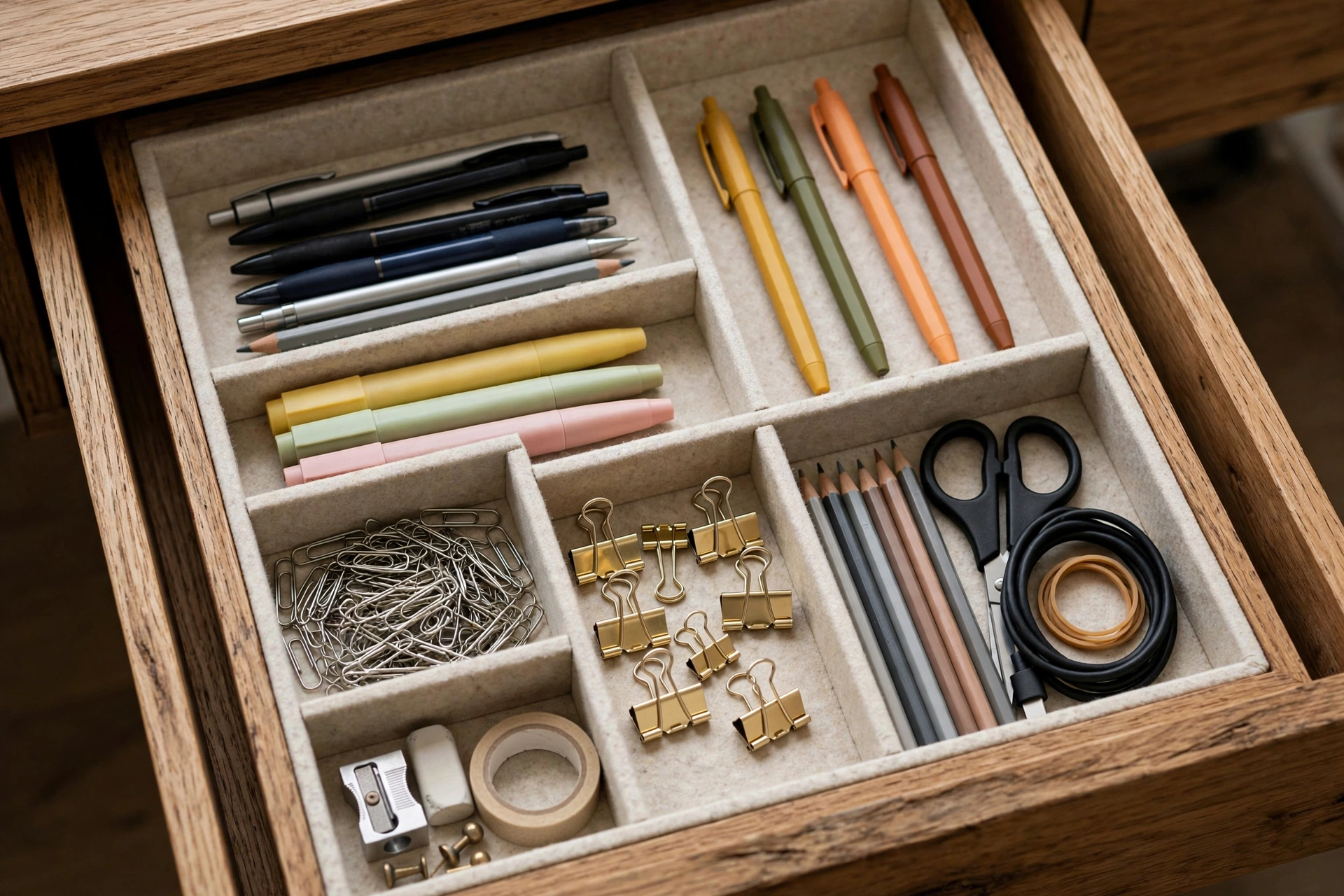
Junk drawers are born when drawers have no defined purpose. Give each drawer one job: top drawer for writing tools and sticky notes, second for chargers and tech accessories, third for paper and envelopes. Then fit each drawer with an adjustable organizer so items stay in their compartments instead of sliding into one tangled layer. Label the compartments if you share the office. When a drawer has a single job, you can see at a glance what belongs and what has overstayed its welcome, which makes quarterly purges nearly automatic.
8. Build a Rolling Supply Cart
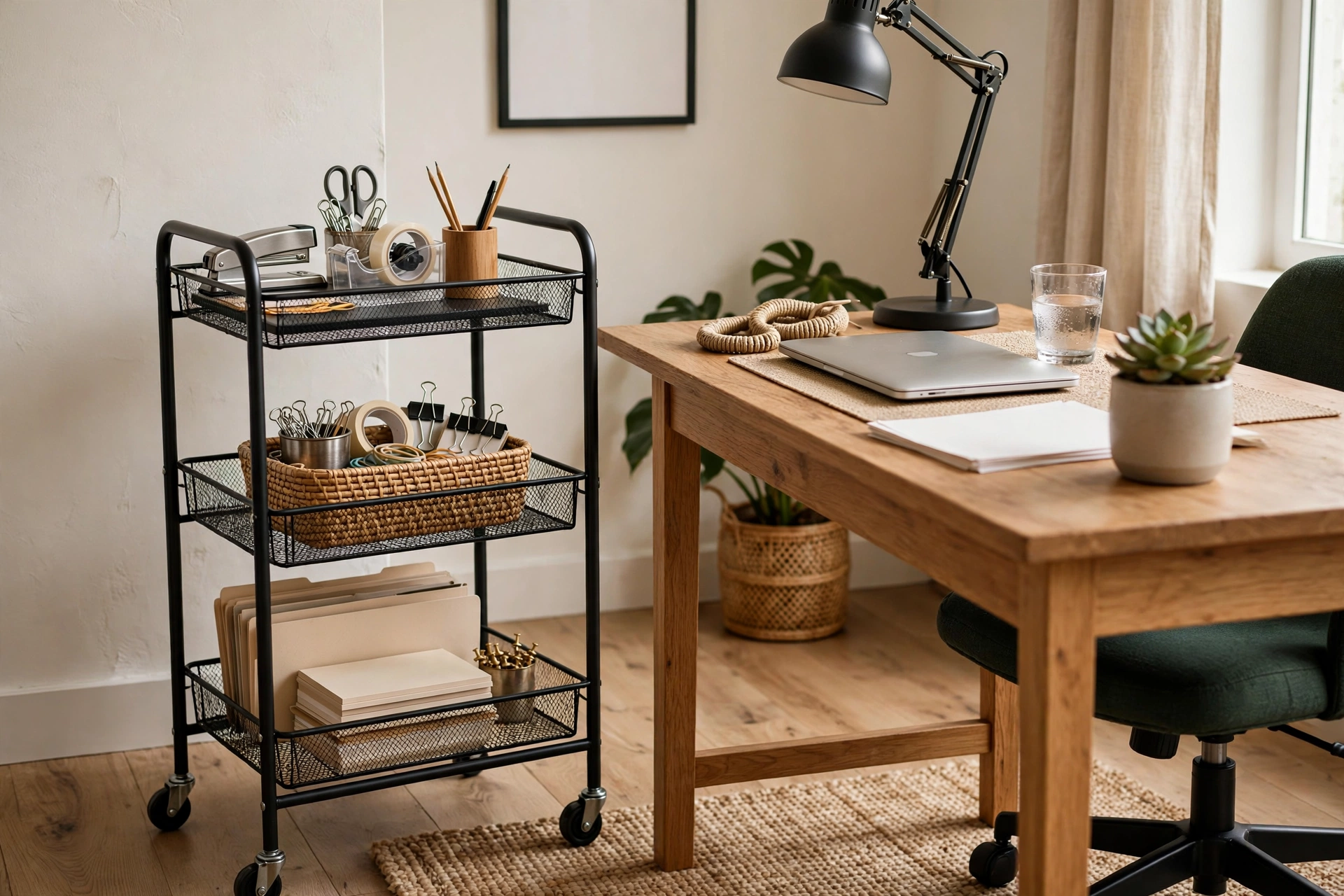
A three-tier rolling cart is the Swiss Army knife of home office organization. Load the top tier with daily supplies, the middle with project materials, and the bottom with bulk refills like paper and toner. Roll it beside your desk while you work, then tuck it into a closet or corner when guests arrive. Because carts are narrow, they slide into gaps beside desks, bookcases, and doorways that full furniture pieces cannot reach. Choose one with sturdy casters and a top that doubles as an extra surface for your printer or reference books.
9. Go Up the Walls With Floating Shelves
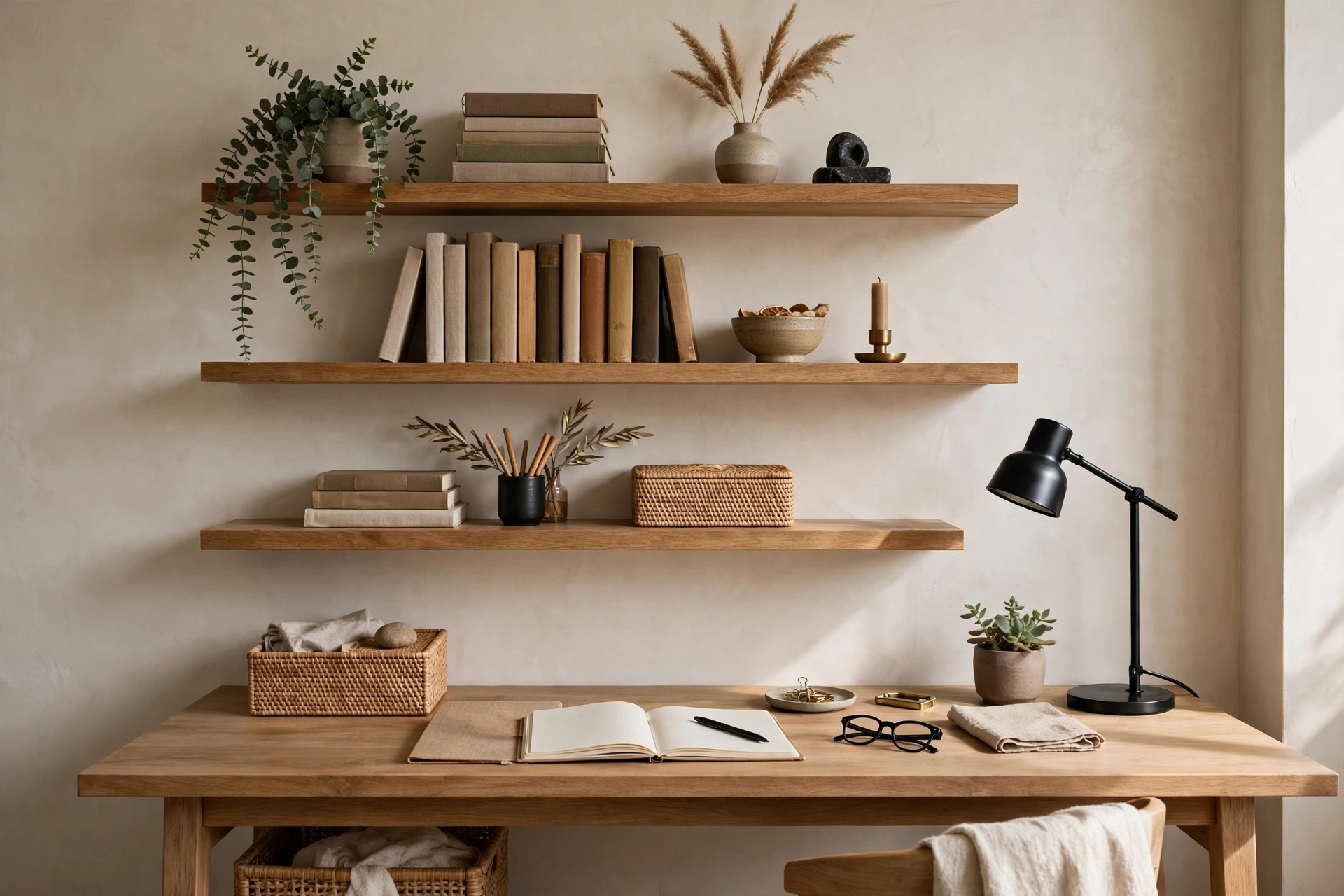
Two or three floating shelves above or beside your desk add display and storage without a single extra square foot of floor. Use the lowest shelf for books and binders you reach for daily, and the higher shelves for decor and reference materials. Match the shelf finish to your desk for a cohesive, built-in feel. To avoid visual clutter, leave some breathing room on every shelf and group items in odd numbers. If your office doubles as a guest room, floating shelves keep supplies accessible without making the space feel like an office when visitors stay over.
10. Corral Small Items in Labeled Bins
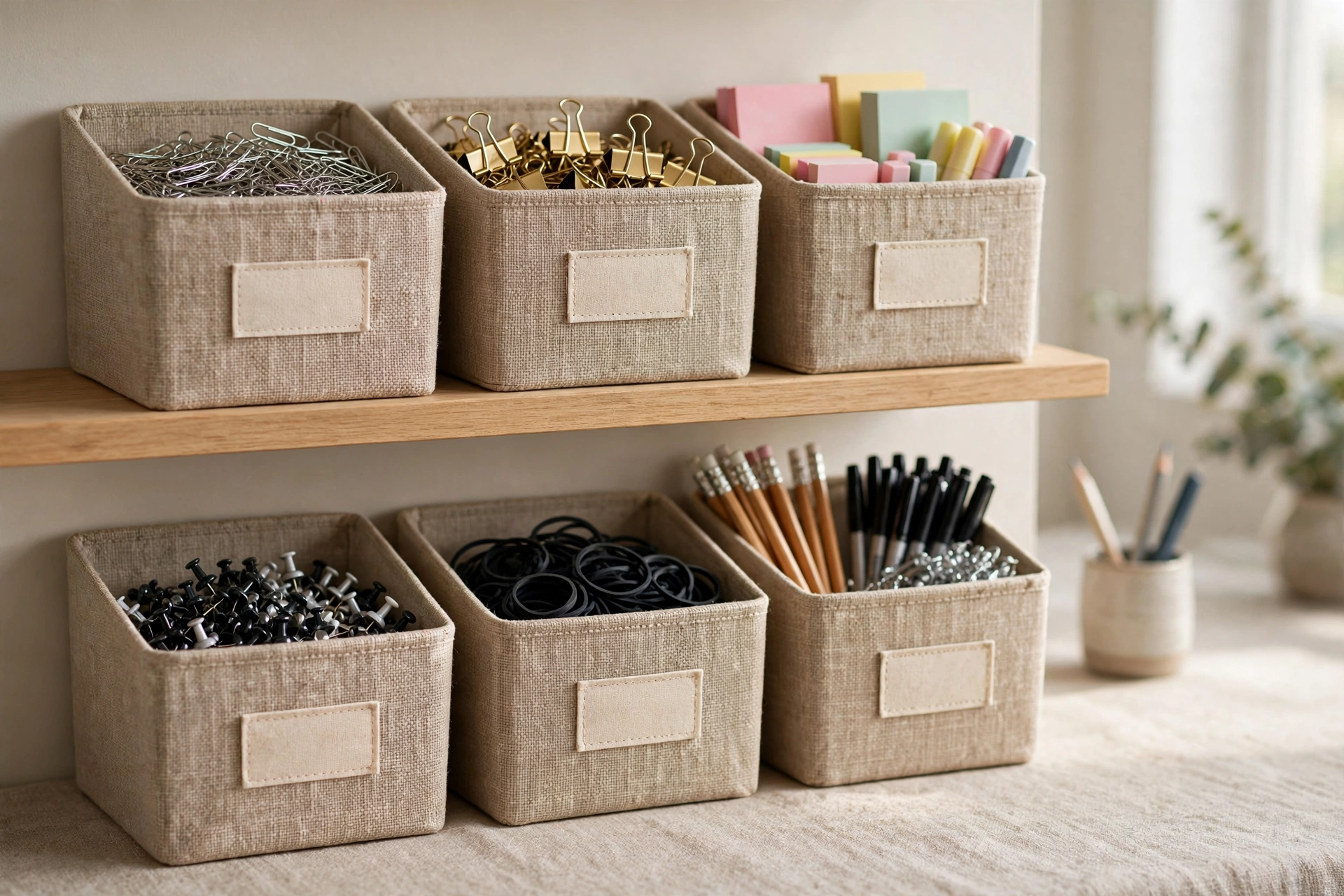
Small supplies — clips, batteries, USB drives, stamps — vanish into chaos without containment. Gather them into matching labeled bins so the shelf reads as one calm unit instead of twenty scattered items. Clear bins let you see contents at a glance, while fabric or woven bins hide visual noise behind a tidy facade. Keep a label maker or a stack of chalk labels handy, because labels are what turn a bin from a junk container into an organized system. Group like items together and store them where you use them: mailing supplies near the door, tech extras near the desk.
11. Keep a Weekly Desk-Closeout Ritual
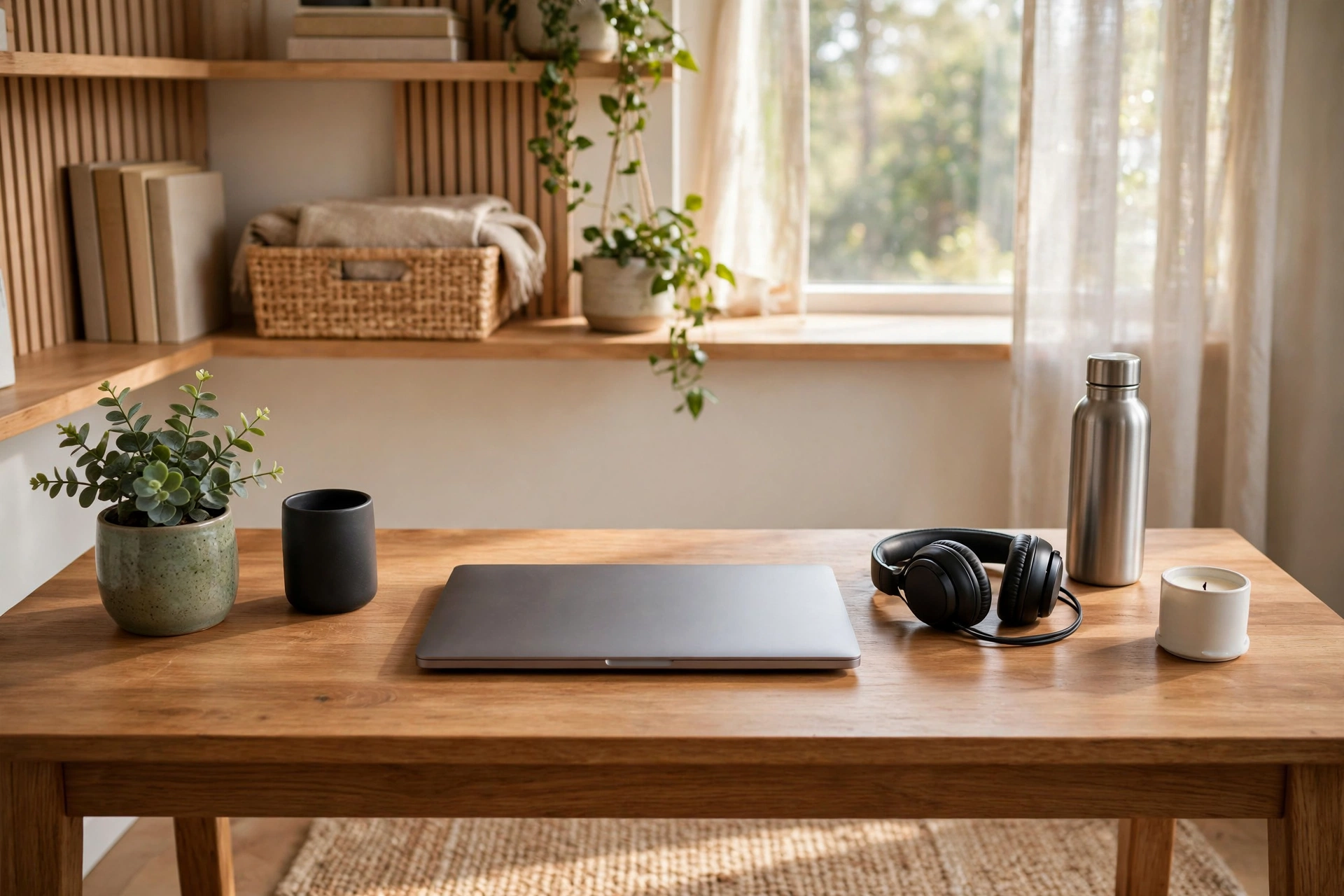
Organization systems decay without maintenance, so schedule a ten-minute Friday closeout. Clear every surface back to its zoned home, toss or file loose papers, wipe the desk, and restock supplies for Monday. This tiny ritual prevents the slow creep that turns a tidy desk into a disaster zone over two weeks. Put it on your calendar as a recurring event so it actually happens. The psychological payoff is real: you leave for the weekend feeling finished, and you return Monday morning to a calm, ready-to-work space instead of last week’s leftovers.
12. Choose a Desk With Built-In Storage
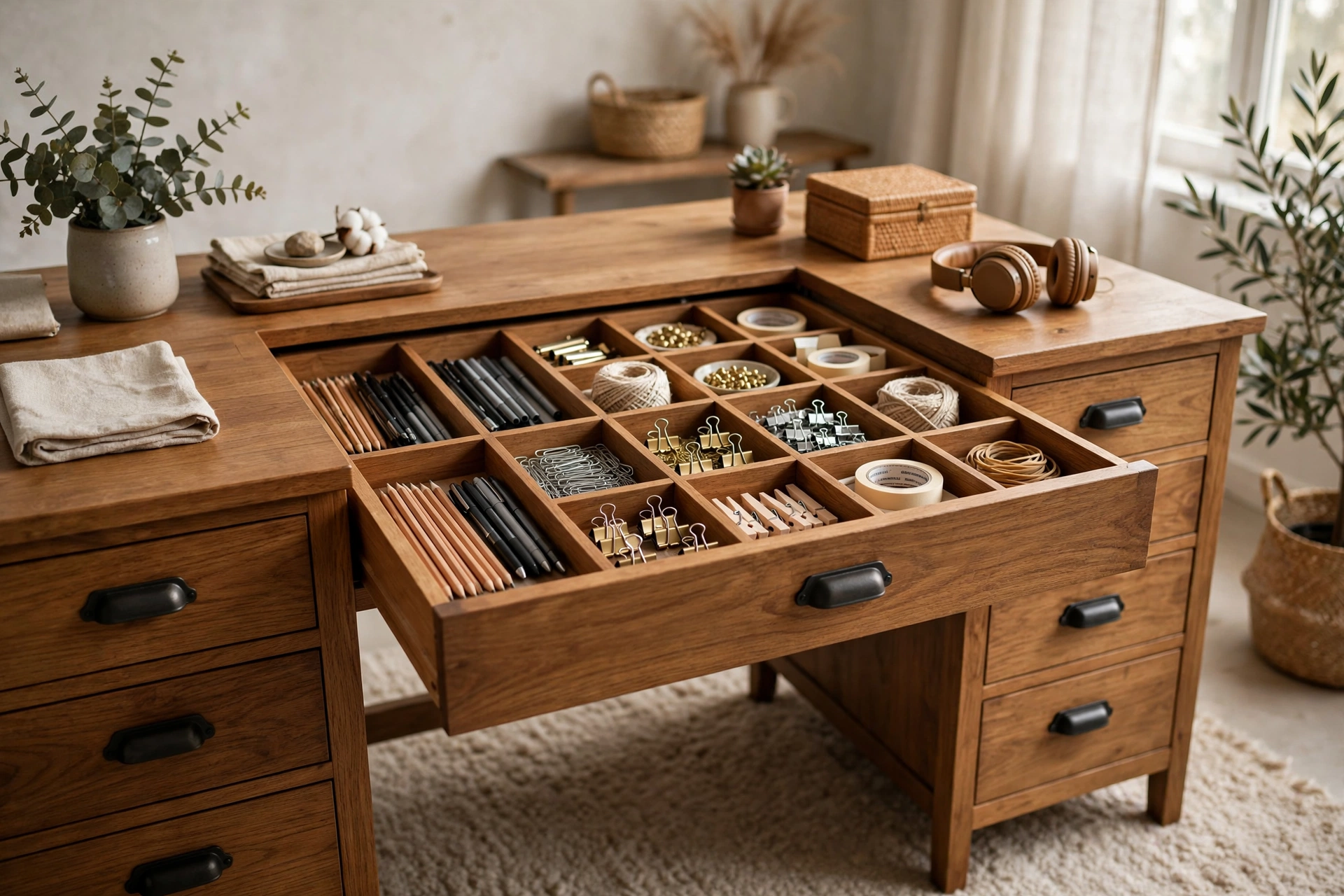
The right desk does half the organizing for you. A desk with deep drawers, a keyboard tray, and a cable grommet keeps essentials accessible and everything else hidden. In tight rooms, look for a desk with a narrow profile but full-depth drawers, or an L-shaped corner desk that wraps storage around you. Avoid glass-top desks if you hate visual clutter, since everything stored underneath stays visible. Roundup of built-in desk ideas shows how integrated storage can double your capacity without adding furniture.
13. Digitize Reference Materials and Notes
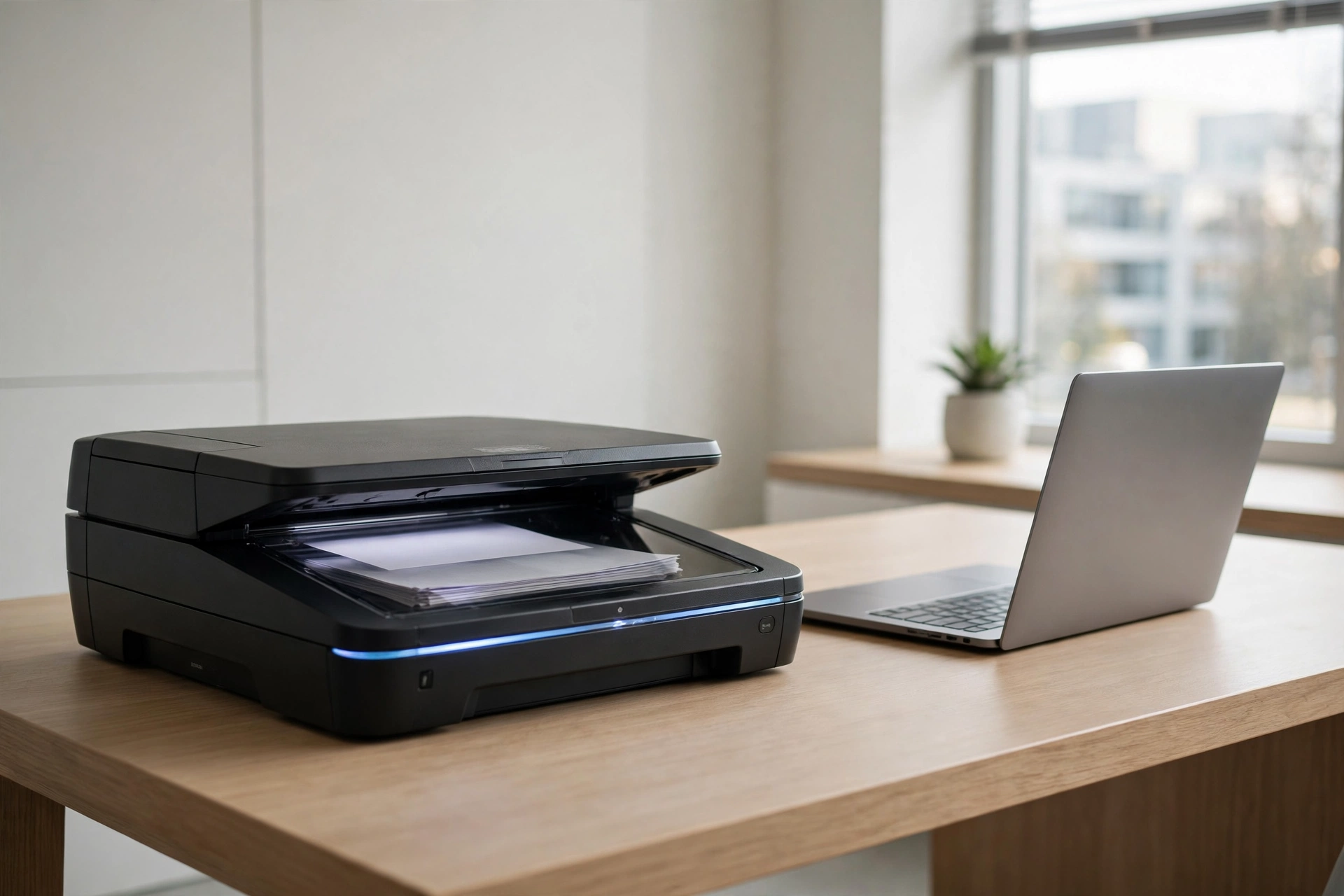
Binders of old notes and stacks of reference printouts eat shelf space fast. Set up a simple scanning habit: snap a photo or scan of anything you want to keep, file it in a named folder, and recycle the paper. Cloud folders named by project make retrieval faster than digging through a filing cabinet ever was. For handwritten brainstorms, a notes app with handwriting search preserves your sketches in searchable form. Keep only active-project papers in physical form; everything else lives in the cloud where it cannot clutter your room.
14. Create a Dedicated Charging Station
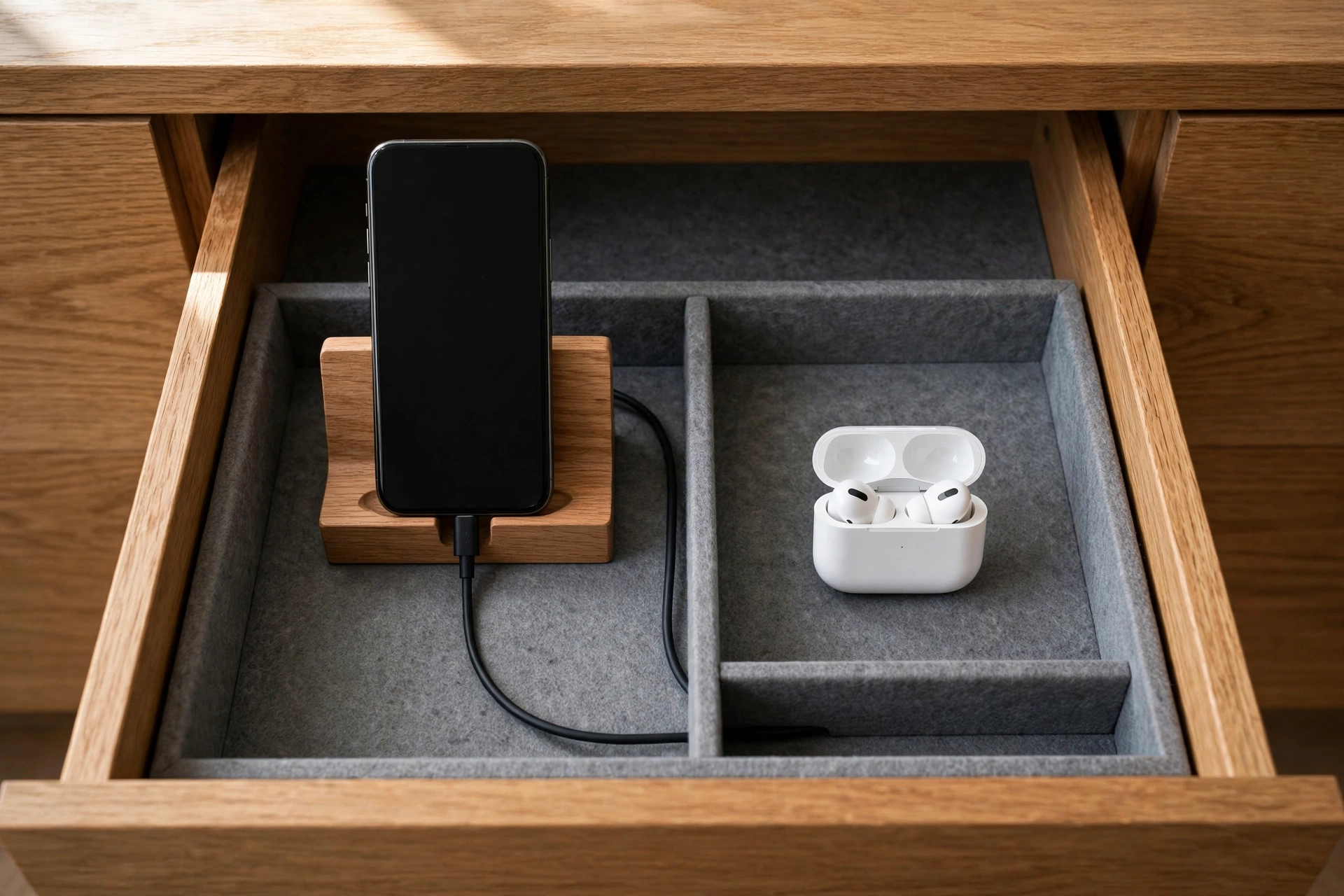
Chargers scattered across the desk breed tangled cords and dead-device panic. Designate one drawer or a small dock as the office charging station, with a multi-device charger and labeled spots for your phone, earbuds, and tablet. Route the station’s single cord to the wall so only one cable ever crosses your desk. When every device charges in the same place, you stop hunting for cables and your desk stays clear of the nightly plug-in sprawl. A charging station is a small upgrade with an outsized effect on daily tidiness.
15. Edit Ruthlessly Every Season
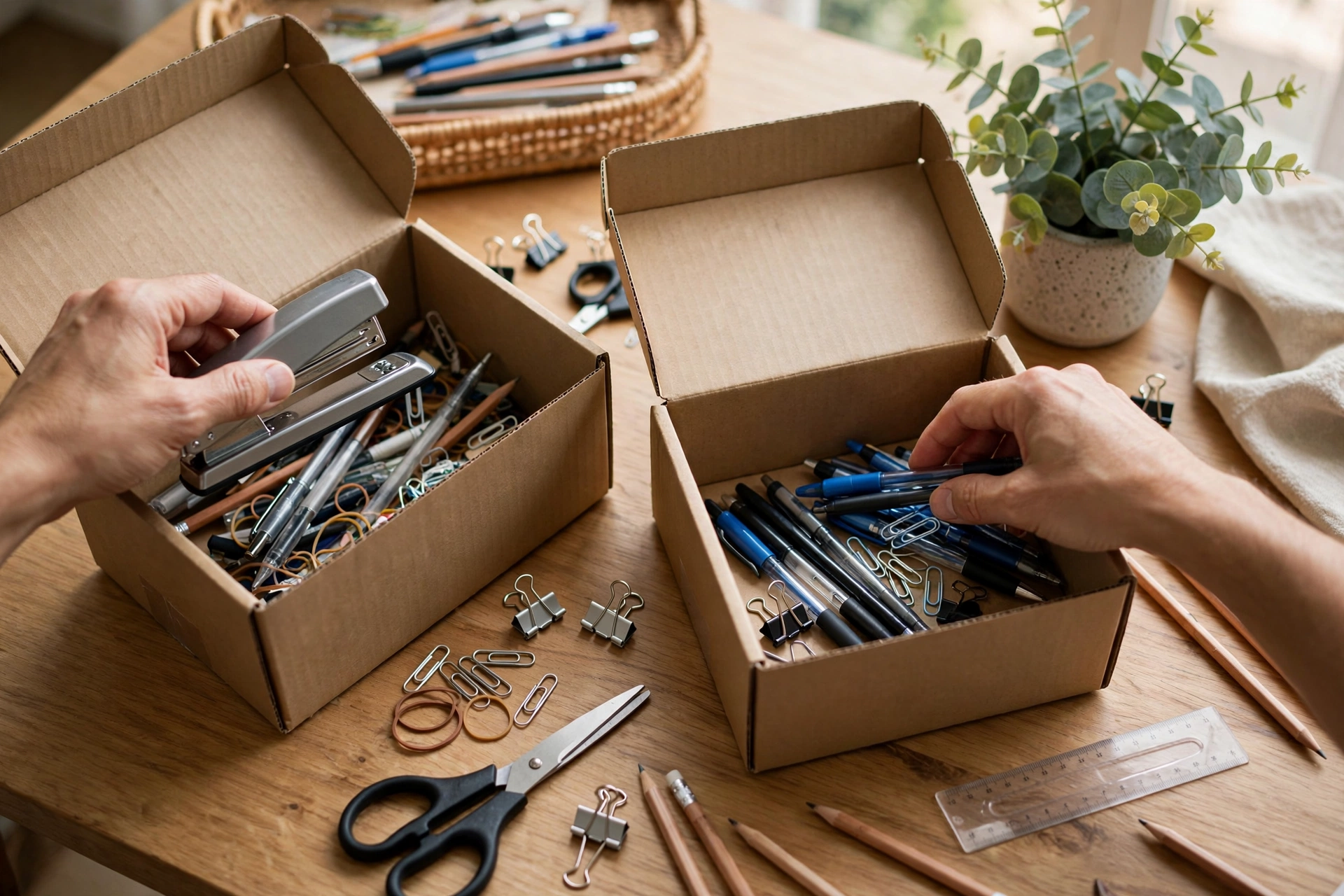
Even perfect systems collect strays, so do a seasonal edit. Pull out anything you have not used in three months and be honest about whether it earns its space. Dead pens, outdated manuals, dried-out highlighters, and duplicate chargers all go. Donate or relocate the maybes, and resist the urge to organize clutter you should simply discard. This fifteen-minute seasonal purge keeps your storage systems honest — organizers only work when they hold things you actually use. Guide to small home office ideas proves that a small, well-edited space can outperform a big messy one.
Frequently Asked Questions
What is the best way to organize a small home office?
Start vertical: use wall shelves, pegboards, and tall narrow storage instead of wider furniture. Zone your desk into a computer area, a writing area, and a landing strip for your phone. Corral small items in labeled bins, tame cables with an under-desk tray, and digitize paper reference materials so binders do not eat your shelves. A weekly ten-minute closeout keeps everything you set up from drifting back into chaos.
How do I keep my desk clutter-free every day?
Give every item a defined home and end each workday with a two-minute reset: return tools to their zones, file or toss loose papers, and clear cups and wrappers. Keep only daily tools on the surface and store occasional items in drawers. The secret is making the reset faster than the mess — once returning things takes seconds, tidiness becomes automatic instead of a chore.
What are the most useful home office storage items?
The highest-impact pieces are an under-desk cable tray, a pegboard or floating shelves for the wall above your desk, a drawer organizer set, a three-tier rolling cart, and a set of matching labeled bins. If you are buying furniture, choose a desk with built-in drawers and a cable grommet. For paper-heavy work, add a slim three-tray inbox and a labeled accordion file.
How can I hide cables in my home office?
Mount an under-desk cable tray and fix a power strip inside it so adapters hang below the desk instead of pooling on the floor. Use adhesive clips to route cords along the desk’s back edge, coil excess length with Velcro ties, and label both ends of every cable. Run the final bundle down one desk leg to the outlet for a single clean line.
How often should I declutter my home office?
Do a quick surface reset daily, a ten-minute closeout weekly, and a deeper edit every season. The seasonal edit is where you remove anything unused for three months, toss dead supplies, and re-check that every drawer still serves its single job. Regular small sessions beat marathon cleanouts because they stop clutter from ever reaching critical mass.
Keep Exploring
A clutter-free space is easier to maintain when the whole room supports your systems, so pair these organization ideas with the right lighting and layout. Home office ceiling lighting ideas show how layered light reduces eye strain and makes tidy shelves look their best.
Keep your momentum going with one small project a week — a pegboard this weekend, a cable tray the next — and watch your workspace transform from stressful to serene without a single renovation.


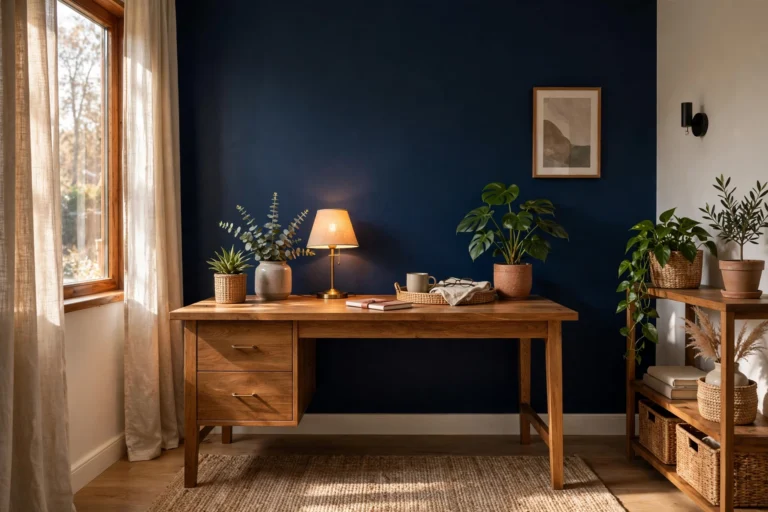




[…] on the other. Install them at staggered heights so the corner feels sculptural instead of boxed in. Is a strong move for anyone following home office organization ideas, since corners often collect stray piles. Keep each arm to one purpose so the setup stays tidy, and […]
[…] that works as hard as you do. They also pair beautifully with broader tidy-desk strategies like our home office organization ideas for a clutter-free space, which covers the whole-room habits that keep a workspace […]