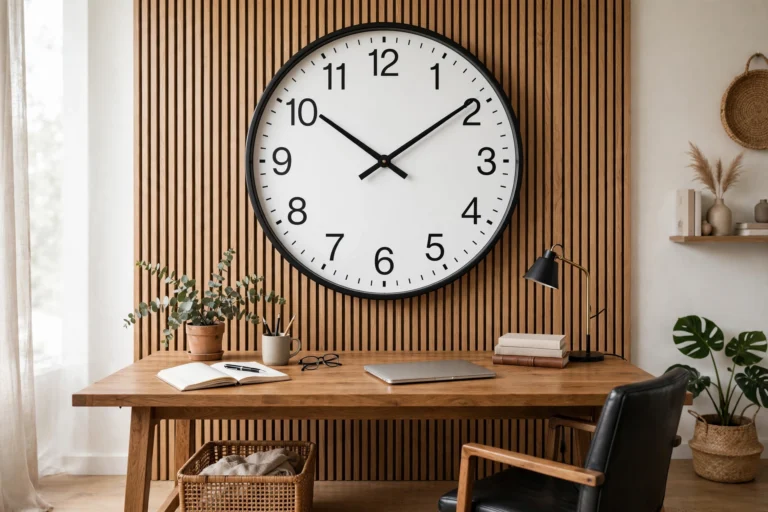

A memo board is the hardest-working square foot in any home office: it catches the paper clutter that migrates to your desk and turns it into something you can actually see and act on. These home office memo board ideas cover every style — cork, magnetic, linen, chalkboard, and clever DIYs — so your reminders, inspiration, and half-formed plans stay visible without swallowing your workspace. Pair your board with these home office organization ideas for a clutter-free space and your whole office will start running itself.
The secret to a board that stays useful is zones: one area for this week’s tasks, one for inspiration, one for reminders that cannot slip. A board without structure becomes wallpaper in a week, but a board with simple zones becomes the command center of your workday. This magnetic storyboard roundup from Apartment Therapy shows how modern boards turn clutter into wall art worth looking at.
1. Start With a Classic Cork Board

The humble cork board endures because it simply works: pin up notes, swap them out, and never worry about markers drying up. Choose a framed cork board that matches your office — natural wood for warmth, black metal for modern, gold for glam — and hang it at eye level beside your desk. Refresh the pins themselves with brass or colored push pins so even the hardware looks intentional. Cork is also the most forgiving board for renters, since a couple of small nail holes patch invisibly.
2. Try a Magnetic Metal Board

Magnetic boards give you the pin-free convenience of instant rearranging without holes in your paper. Steel boards come in colors from blush to navy, so the board itself becomes decor, and strong magnets hold everything from photos to a full letter-size page. Look for powder-coated finishes that wipe clean and resist fingerprints. One clever trick: place a sheet of patterned paper behind a clear acrylic magnetic board for a custom look that changes with your mood. Magnetic boards shine in minimalist offices where you want function without visual noise.
3. Wrap It in Linen

A linen-covered pinboard softens the utilitarian look of cork into something that belongs in a styled room. Stretch natural or colored linen over a foam-backed board and secure it with upholstery tacks in a grid or diamond pattern — the tacks add structure and keep fabric taut. The fabric texture makes pinned items look curated, like a design studio mood board. This DIY takes an afternoon and costs far less than designer pinboards with the same tailored look.
4. Go Big With a Wall Grid

Wire wall grids turn memo-keeping into a flexible, industrial-chic display. Hang the grid with clips and S-hooks, then clip on notes, photos, small baskets for pens, and even a tiny shelf. Everything is movable in seconds, so the board evolves with your week. Grids work especially well above a desk where depth is limited — they sit nearly flat against the wall. Style one corner with inspiration images and keep the rest ruthlessly functional. The open wire keeps even a packed board feeling light, which solid boards struggle to do.
5. Paint a Chalkboard Section

Chalkboard paint turns any wall section into a rewritable memo zone with zero hardware. Frame a rectangle with painter’s tape, apply two coats, and season the surface by rubbing chalk across it once before first use. Use chalk markers for a crisp look that still wipes away, and keep a small tray for chalk and an eraser nearby. A chalkboard calendar section is the classic play: draw the month once, update events with a swipe.
6. Mount a Dry-Erase Board

Dry-erase boards are the memo board for people who hate commitment: write, wipe, repeat. A framed whiteboard looks far more polished than the office-supply version, and glass dry-erase boards wipe cleaner and never ghost. Dedicate one to your weekly top three priorities where you will see it every morning — the physical act of writing goals beats any app for accountability. Mount it beside your monitor at seated eye level so glancing at it becomes reflex. Keep two markers handy and retire any that squeak or fade, since a board you cannot read is just wall decor.
7. Create a Ribbon Memo Board

The French ribbon memo board — fabric stretched over batting with crisscrossed ribbon — is equal parts organization and art. Tuck invitations, photos, and notes under the ribbons without a single pin hole. Choose ribbon in your office’s accent color and space the lattice tightly enough to hold postcards securely. These boards suit creative professionals whose work lives in images: stylists, designers, writers collecting visual research.
8. Combine Cork and Whiteboard

Why choose one surface when a combo board gives you both? Pin the permanent stuff — inspiration, contacts, reference cards — on the cork side, and use the whiteboard side for the daily churn of tasks and reminders. Many framed combo boards split the surface half and half, or you can hang two separate boards side by side for a custom ratio. This setup ends the classic conflict between the keeper (who never takes anything down) and the doer (who needs a clean slate).
9. Use a Pegboard as a Memo Wall

Pegboards are memo boards with superpowers: hooks, shelves, and cups turn flat display into three-dimensional storage. Paint yours to match the wall for a subtle look or in a bold color for a statement. Pin notes to the board itself with clips, and use hooks for headphones, scissors, and the notebook you reach for daily. The modularity means the layout grows with your work — add a shelf when projects pile up, remove it when they clear. A pegboard above the desk keeps every tool visible, which is the whole point of a memo system that actually works.
10. Frame Chicken Wire for Rustic Charm

For farmhouse and cottage offices, a chicken-wire frame brings rustic texture to memo duty. Staple wire mesh inside a vintage or distressed frame, then clip notes and photos on with tiny clothespins. The wire’s grid is forgiving — items hang straight without measuring — and the whole piece reads as decor first, organizer second. Seal the wire’s cut edges with a dab of glue or tape so nothing snags your sleeves or your papers.
11. Try a Felt Letter Board

Felt letter boards bring a boutique-cafe charm to home offices: arrange changeable letters into quotes, your week’s mantra, or a cheeky reminder to drink water. Grooved felt holds the letters securely, and the tactile letters invite rearranging — which means you actually interact with the board. Use one shelf of the board for a rotating motivational line and the rest for pinned notes with small clips. The soft felt texture also dampens sound slightly, a nice bonus near a desk. Keep spare letters in the frame’s back slot so updates take thirty seconds.
12. Build a Gallery Memo Wall

Who says a memo board has to be one rectangle? Cluster small frames, mini clipboards, and a narrow shelf into a gallery wall that doubles as your memo system. Each frame holds a different category — calendar, inspiration, receipts to file — and the arrangement looks like curated art from across the room. Use matching frames for cohesion or mixed vintage frames for character. This approach suits people who find single boards visually boring; the variety keeps you looking at it, which keeps it functional.
13. Add a Clip-String Display

The simplest memo system of all: a length of twine or wire strung between two hooks, with notes clipped along it. It costs almost nothing, installs in minutes, and holds exactly the current, active papers — when the string fills up, you are forced to file or finish things. Hang it at eye level beside your desk and rotate contents weekly. This minimal system works brilliantly for people overwhelmed by big boards; constraint becomes the feature. Dress it up with brass clips and a beautiful string, and the simplest solution becomes the prettiest one too.
14. Make a Fabric-Covered Foam Board

Foam insulation boards from the hardware store, wrapped in fabric, make oversized memo boards for pennies. Cut to any size — even a full wall section — wrap with your chosen textile, and secure the back with packing tape. The foam grips pins beautifully and the whole thing is light enough to hang with adhesive strips. This is the renter’s secret weapon for a dramatic, custom-sized board without landlord drama. Either way, you get square footage no store-bought board offers.
15. Style a Vision-Meets-Memo Hybrid
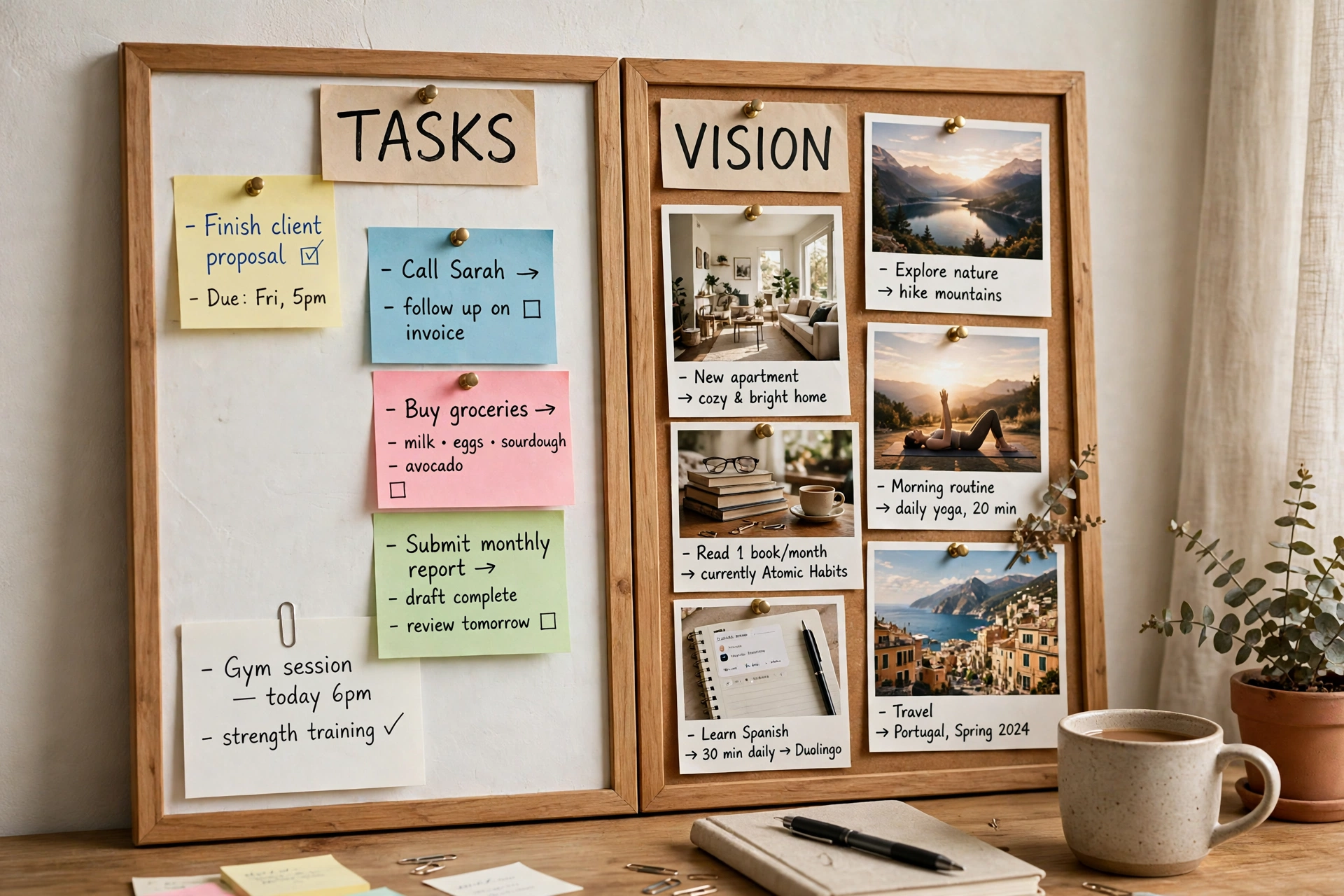
The most inspiring boards do double duty: half practical memos, half vision-board dreaming. Dedicate the left side to tasks and reminders and the right to the images, quotes, and goals pulling you forward. Seeing your aspirations beside your to-do list reframes the daily grind as progress toward something. Refresh the vision side quarterly and the task side weekly so both stay alive. If the concept appeals, these home office vision board ideas for focus and style dive deeper into the inspiration half of this powerful hybrid.
Frequently Asked Questions
Where should I hang a memo board in my home office?
At seated eye level, within arm’s reach of your desk — the board only works if glancing at it is effortless. Beside the monitor or directly above the desk are the classic spots. Avoid hanging it behind you, where it becomes decoration you never consult. This DIY command-center guide shows a full wall setup with the board as the undisputed focal point.
How do I keep my memo board from getting cluttered?
Give the board zones and a weekly reset ritual: every Friday, file or toss anything expired. Limit active items to what fits without overlapping — when the board fills, something must leave. A small inbox tray beside the board catches new papers so they do not pile on the desk. The board stays useful only if it stays current, so treat the reset as non-negotiable maintenance.
What is the best memo board for renters?
Fabric-wrapped foam boards and ribbon memo boards hang with adhesive strips and leave no marks. Magnetic boards on a leaning easel need no wall mounting at all. Even cork boards can hang from a single picture hook whose tiny hole patches invisibly. Avoid chalkboard paint and anything requiring multiple anchors. When in doubt, test your hanging method in a closet first.
Cork vs magnetic vs dry-erase — which is best?
It depends on your thinking style. Cork suits keepers who pin reference material for months. Magnetic boards suit visual arrangers who reshuffle constantly. Dry-erase suits planners who rewrite priorities daily. Many productive offices end up with two: cork for the permanent and whiteboard for the daily. Match the surface to how your brain actually works, not how you wish it worked.
How big should a home office memo board be?
Big enough to hold a week’s active papers without overlap — typically 24 by 36 inches above a desk. Bigger boards invite clutter; smaller ones force focus. If you share the office, give each person their own zone rather than one giant board. Measure your wall before buying, and remember the board needs visual breathing room around it to stay readable.
Keep Exploring
Pick the board that matches your brain, hang it this weekend, and give it simple zones before you pin a single thing. A memo board earns its wall space when it makes your week visible at a glance — tasks you will do, reminders you cannot miss, and a little inspiration to keep you going. Start with one surface, keep the weekly reset, and watch paper clutter lose its power over your desk.
For the full tidy-office system, our home office lighting ideas for bright productive days build on your new board with light and workflow tips for every corner.