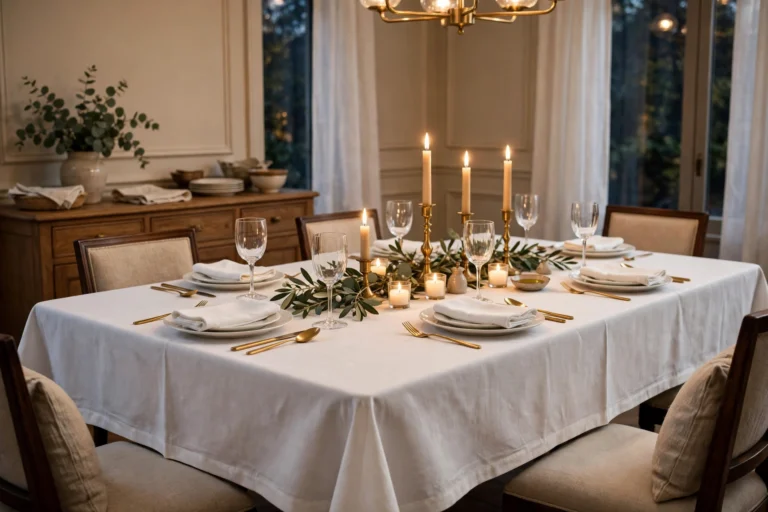
Dining room fireplace ideas turn an ordinary eating space into the warm heart of the home. There is something deeply comforting about gathering around a table while a fire flickers nearby — conversation lingers longer, meals feel more special, and even a simple weeknight dinner takes on a sense of occasion. A fireplace gives the dining room a natural focal point, which makes furniture placement easier and the whole room feel intentionally designed rather than just furnished.
Whether your home already has a fireplace waiting to be styled or you are considering adding one, dining room fireplace ideas span every style and budget. From grand stone chimney breasts to renter-friendly electric inserts, the options below cover real fireplaces, clever alternatives, mantel styling, and the layout details that make a hearth and a dining table work beautifully together.
1. Floor-to-Ceiling Stone Fireplace Surround
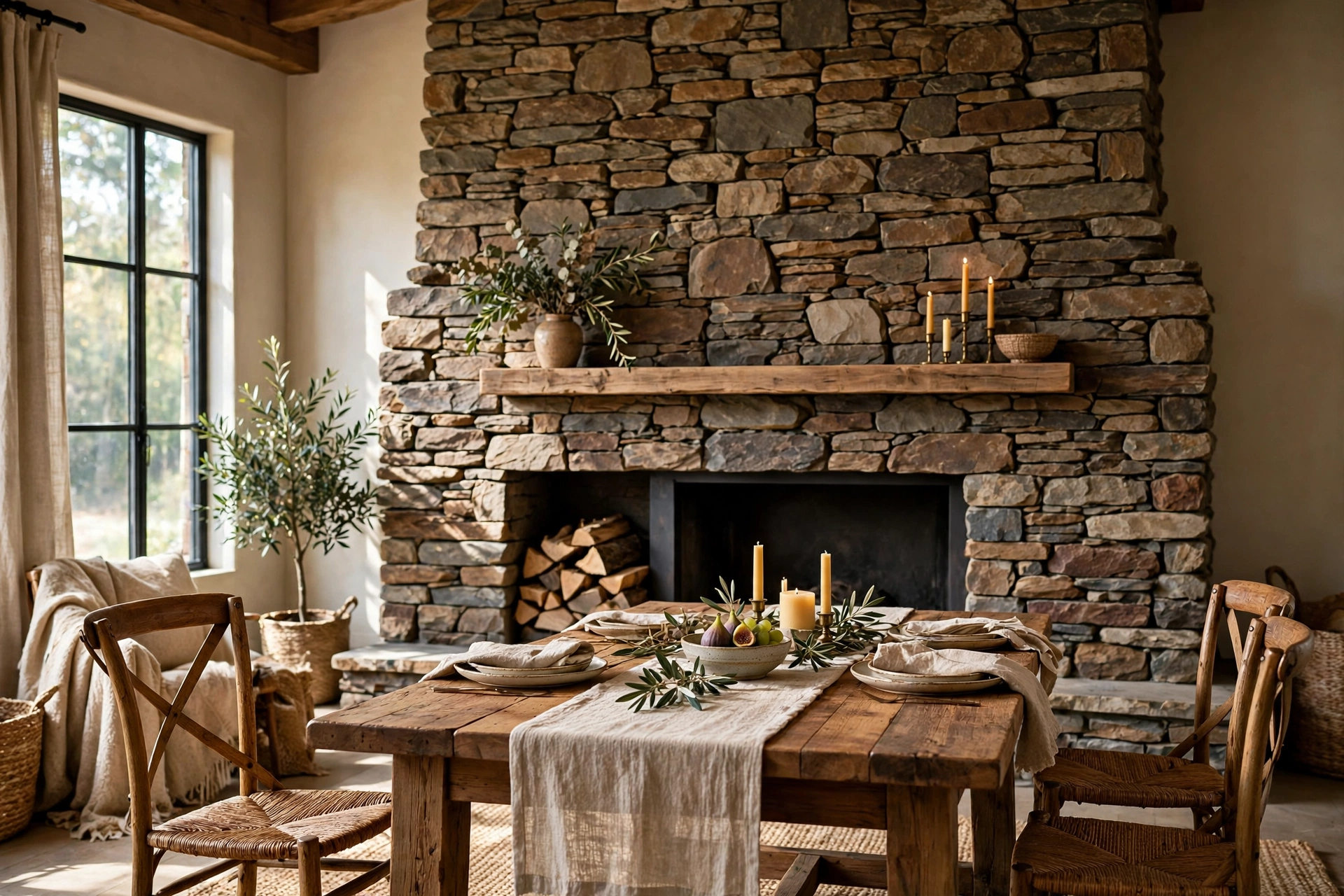
A floor-to-ceiling stone surround makes the fireplace the undisputed star of the dining room. Natural stone — stacked ledgestone, fieldstone, or rough-cut limestone — adds texture and a sense of permanence that anchors even a large, open-plan space. The vertical emphasis draws the eye upward, which makes standard eight-foot ceilings feel taller and gives the room architectural interest without any additional decor.
Keep the surrounding walls simple so the stone can breathe: warm white or soft greige paint lets the texture do the talking. Extend the hearth slightly into the room to create a natural ledge for lanterns, firewood baskets, or seasonal greenery. If full-height stone feels like too much, stop the surround at mantel height and paint the chimney breast above in a complementary tone — you still get the drama at half the material cost.
2. Classic Wood Mantel with Layered Decor
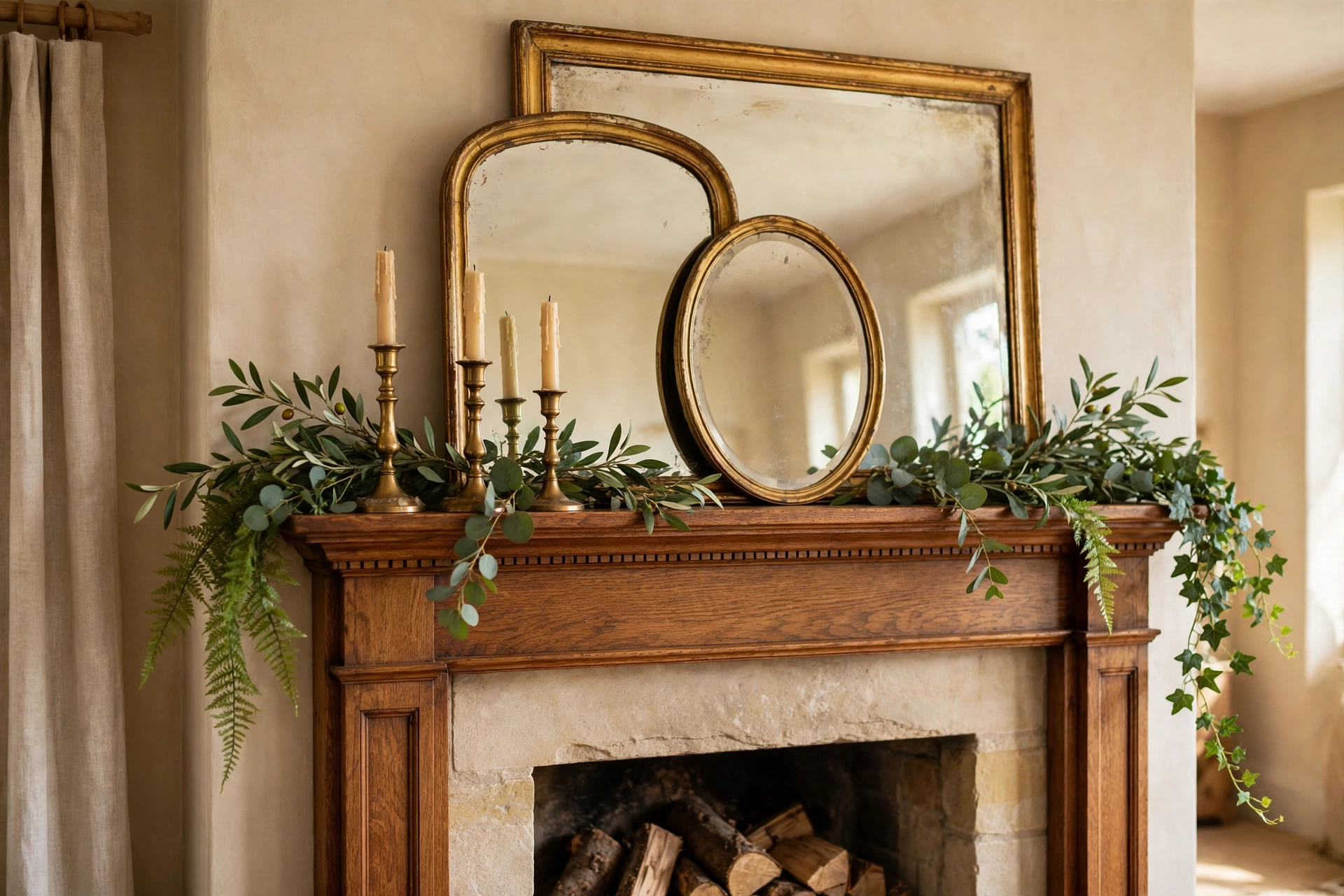
Few things feel cozier than a classic wood mantel dressed in layers. Start with a substantial beam or traditional mantel shelf, then build your display in three depths: a large anchor piece in the center (a mirror, framed art, or wreath), medium-height objects flanking it (candlesticks, vases, or topiaries), and small filler pieces at the front (stacked books, pinecones, or a small clock). This layered formula works in every season — just swap the accents.
Keep the palette tied to your dining room so the mantel feels integrated rather than staged. A mantel is traditionally the decorative shelf above a fireplace opening, and its styling sets the tone for the whole hearth — read more about its history and design variations on Wikipedia’s mantel page. Leave some breathing room between objects; a crowded mantel reads as clutter, while a few well-spaced pieces read as curated.
3. Sleek Linear Gas Fireplace in the Feature Wall

For a contemporary dining room, a linear gas fireplace set into the feature wall delivers warmth with minimalist polish. These long, low fireboxes — often three to five feet wide — create a ribbon of flame that looks stunning behind or beside the dining table. Because they are vented or vent-free gas units, they install with far less construction than a masonry fireplace and can go almost anywhere with a gas line.
Frame the linear unit with a bold material contrast: dark tile, blackened steel, or a book-matched stone slab make the flames pop. Many homeowners build the entire wall as a statement, combining the fireplace with floating shelves or art — for inspiration on making that wall unforgettable, see our guide to dining room accent walls. Keep furniture at least three feet from the glass front for safety and comfortable heat.
4. Corner Fireplace to Anchor an Awkward Layout

Corner fireplaces are the unsung heroes of tricky dining room layouts. If your dining space has an odd angle, a jutting wall, or an open-plan edge that resists furniture placement, tucking the fireplace into the corner creates an instant anchor. A 45-degree angled unit or a small corner stove turns dead space into the room’s coziest spot and frees up the main walls for the table and storage.
Angle the dining table to echo the fireplace’s diagonal placement, or keep the table straight and let the corner hearth sit slightly apart as a secondary conversation nook with two armchairs. Either way, the corner placement keeps the fire visible from the table without competing with it. Add a pair of sconces or a floor lamp nearby so the corner feels intentional at night, not shadowy.
5. Antique Mantel with an Electric Insert

Love the look of a fireplace but live in a home without a chimney? An antique or reproduction mantel paired with a modern electric insert gives you the charm with none of the masonry. Salvage shops, flea markets, and online marketplaces are full of beautiful old mantels — often cheaper than a new surround — and a standard electric firebox slides right into the opening.
Electric inserts now mimic flame remarkably well, with LED logs, adjustable ember beds, and heaters that genuinely warm a dining room. Because there is no venting, you can place the mantel against any wall, making this one of the most flexible dining room fireplace ideas for apartments and condos. Style the mantel top as you would a real one, and run the cord discreetly behind a leg or through a small channel in the baseboard.
6. Double-Sided Fireplace Shared with the Living Room
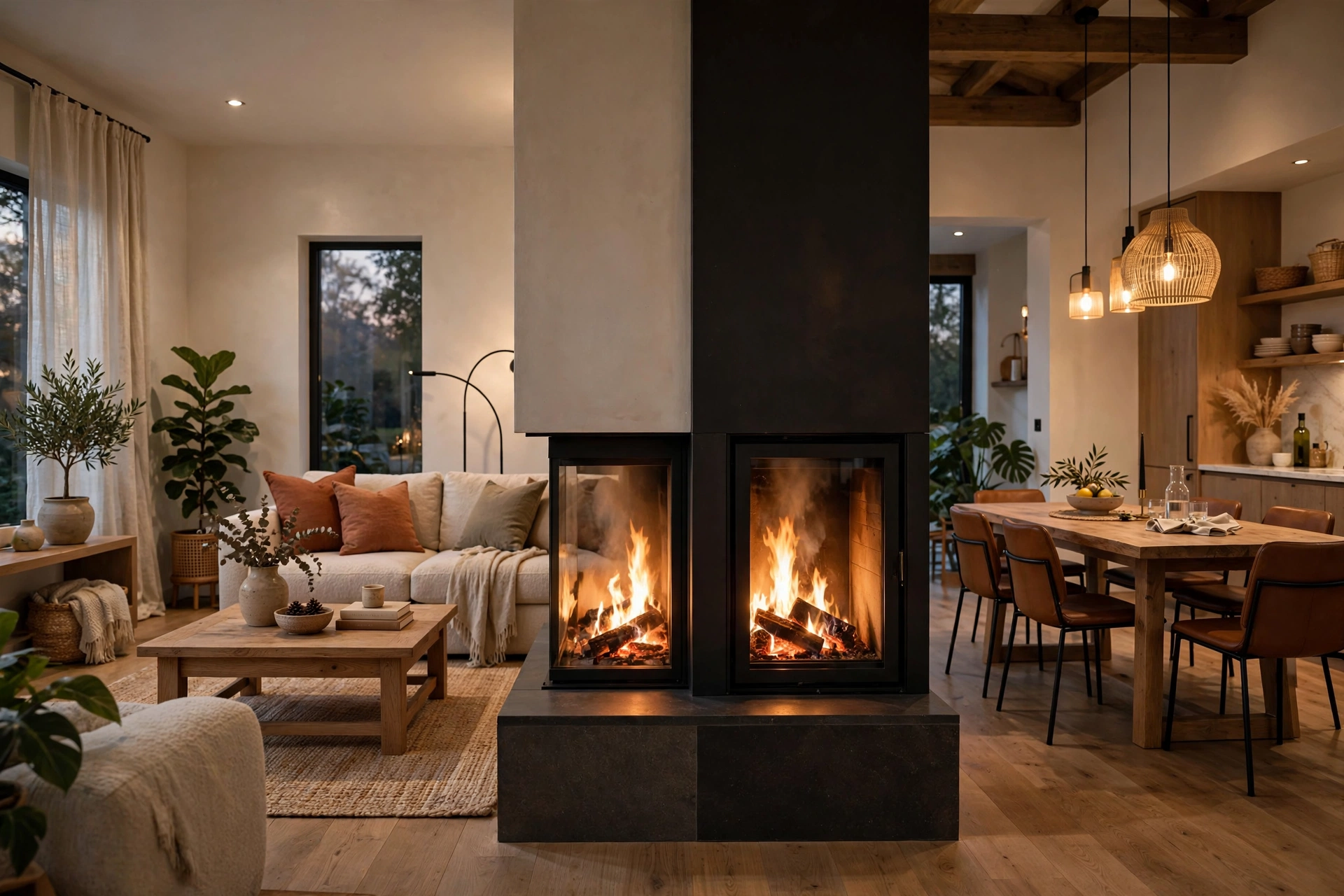
In open-plan homes, a double-sided fireplace between the dining and living areas serves two rooms with one fire. Visible from both sides, it creates a glowing divider that defines each zone without closing off the space. Diners get the ambience during meals, and the living room gets it afterward — the fireplace becomes the shared heart of the main floor.
Design-wise, keep both faces consistent: matching surrounds and hearths make the unit read as one architectural element rather than two stuck together. Lighting matters enormously here, since the fireplace zone bridges two rooms — layer sconces flanking the surround with your overhead fixtures so the transition feels seamless. For a full breakdown of fixtures that flatter a hearth-centered space, browse our dining room lighting ideas. A low hearth bench on the dining side doubles as extra seating for big gatherings.
7. Reclaimed Beam Mantel for Rustic Warmth
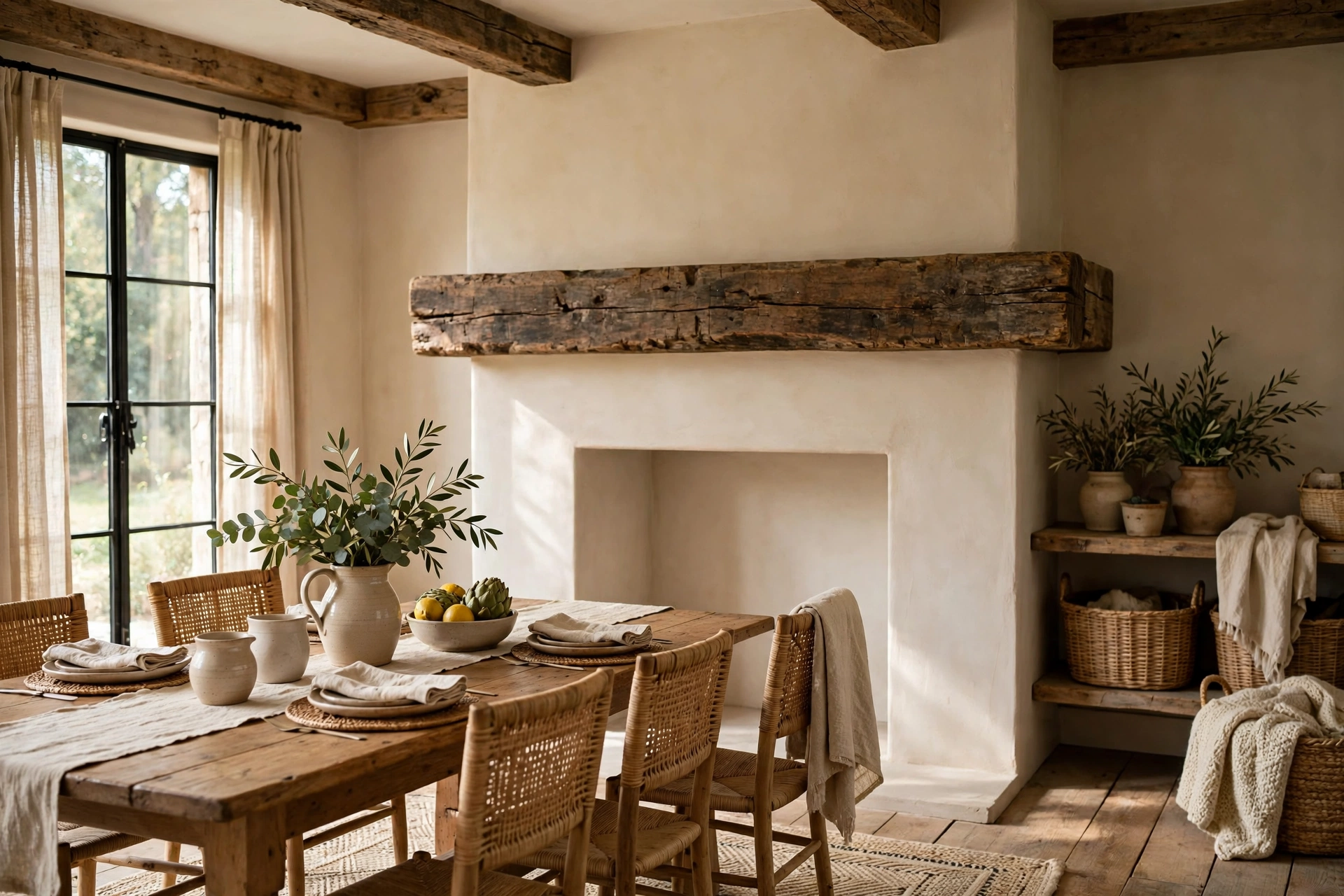
A chunky reclaimed wood beam as a mantel brings instant rustic warmth to a dining room fireplace. Old barn beams, with their saw marks, nail holes, and weathered patina, carry character that new lumber cannot imitate. Mount the beam with hidden steel brackets rated for its weight — reclaimed oak is heavy — and seal it with a matte clear coat to prevent dust and soot from settling into the grain.
Style a beam mantel simply: its texture is the decoration. A few iron candlesticks, a trailing plant, or a single piece of landscape art is plenty. Pair it with a simple plaster or brick firebox so the beam remains the star. This look shines in farmhouse, lodge, and transitional dining rooms, and it ages beautifully — the beam will look even better in ten years than it does today.
8. Marble Surround for Quiet Luxury
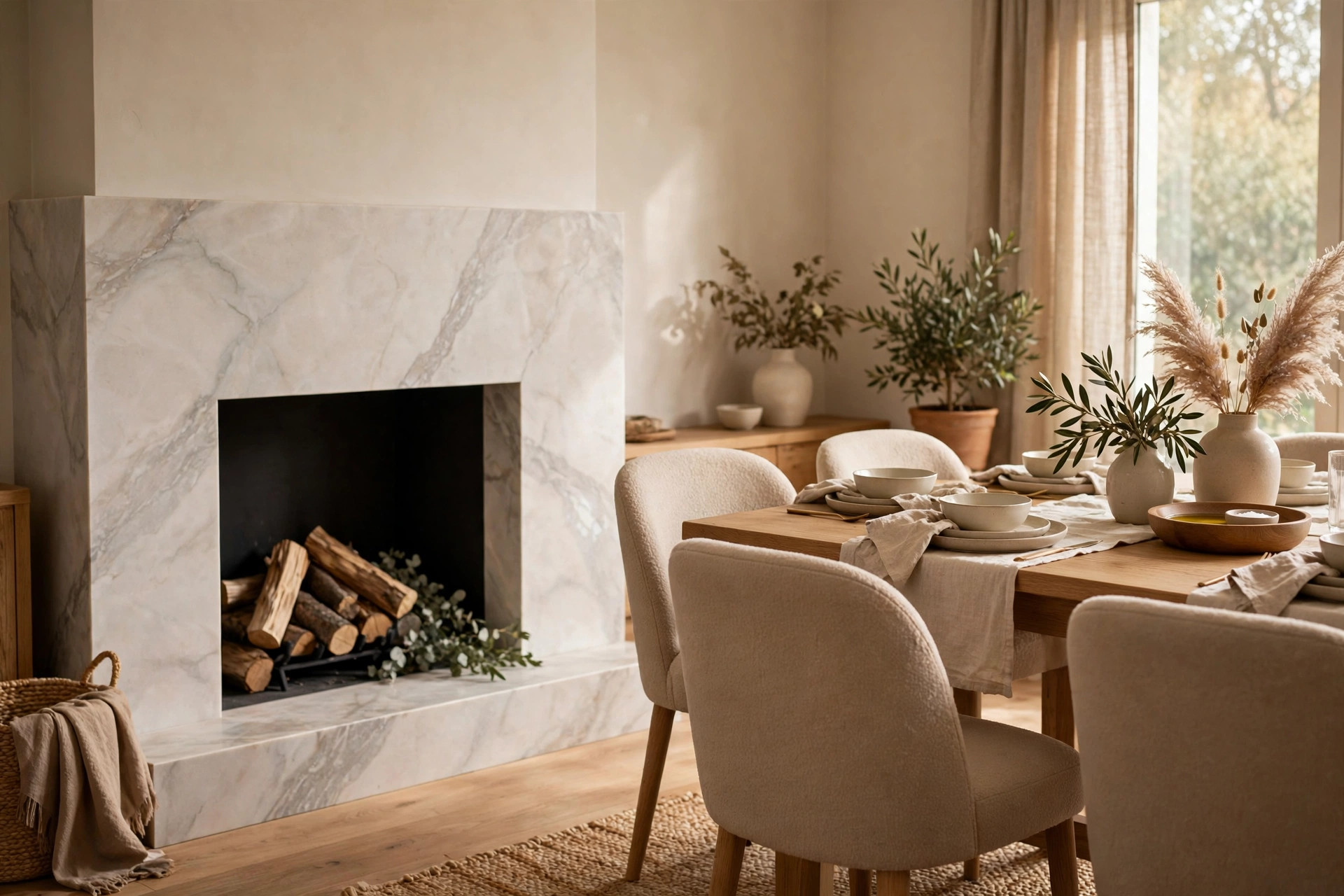
Marble brings a calm, luxurious feel to a dining room fireplace without shouting. A honed Carrara or Calacatta surround with soft veining reflects candlelight and firelight beautifully, adding a gentle glow to evening meals. Unlike busy stone, marble’s subtle pattern keeps the room feeling serene, which suits dining rooms meant for lingering conversation.
Choose honed rather than polished marble around a working fireplace — it hides soot marks and etching far better. Extend the same marble to the hearth for a seamless look, and keep the mantel styling restrained: a pair of brass candlesticks and a low bowl of fruit or greenery is enough. Marble pairs beautifully with upholstered dining chairs and soft drapery, creating a dining room that feels quietly expensive rather than flashy.
9. Freestanding Wood Stove in a Farmhouse Dining Room
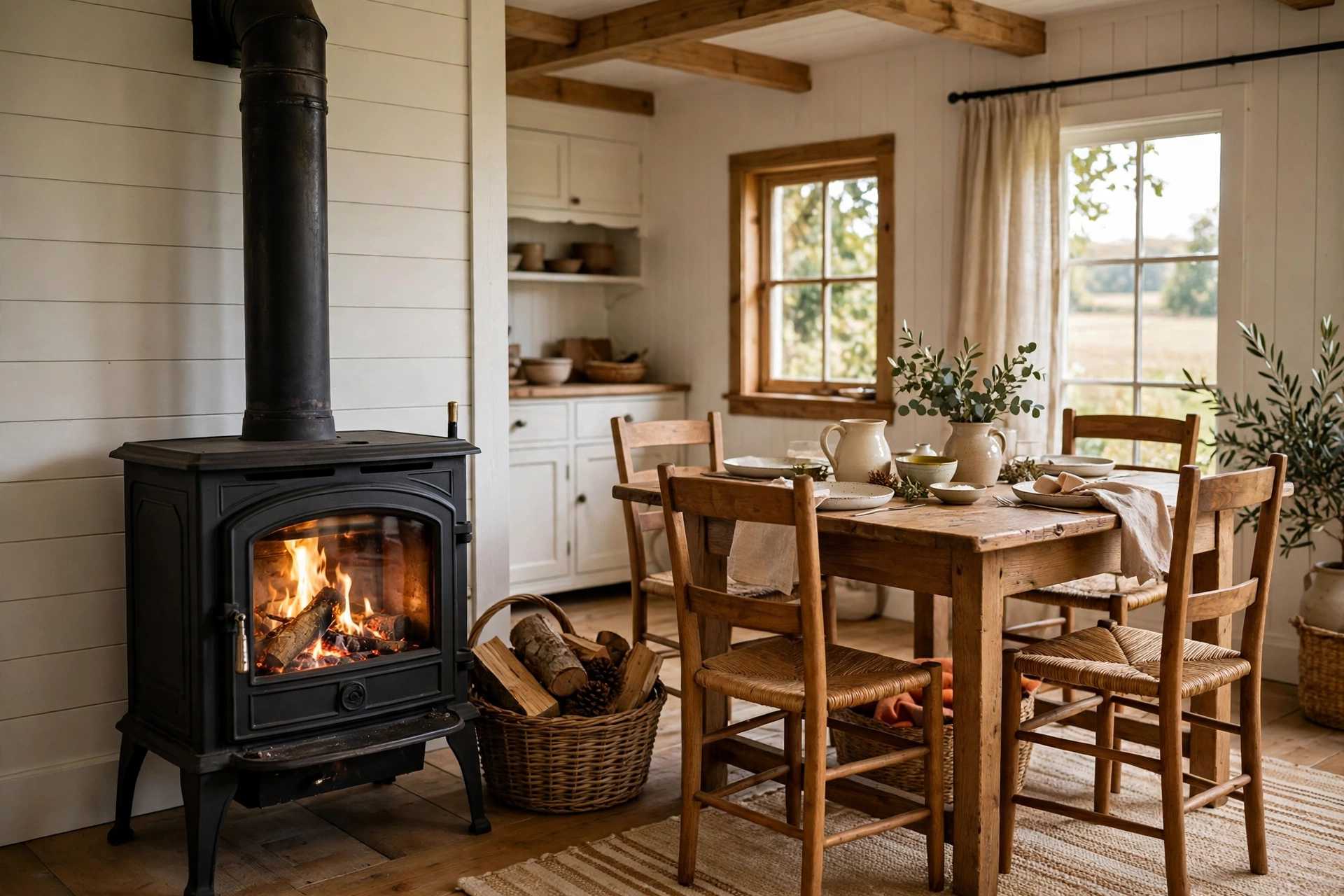
A freestanding wood stove gives a farmhouse dining room unbeatable cozy credentials. Unlike a built-in fireplace, a stove radiates heat in every direction, warming the whole room efficiently, and its sculptural black-iron form becomes a beloved focal point. Modern EPA-certified stoves burn cleanly and can heat a large dining space on surprisingly little wood.
Position the stove with proper clearances — check your model’s manual, but eighteen to thirty-six inches from combustible walls is typical — and protect the floor with a stone or tile hearth pad. A small wood basket beside the stove keeps fuel handy and adds to the look. This is one of the most practical dining room fireplace ideas for rural homes, cabins, and anyone who loves the ritual of building a real fire before dinner.
10. Fireplace Flanked by Built-In Display Shelves
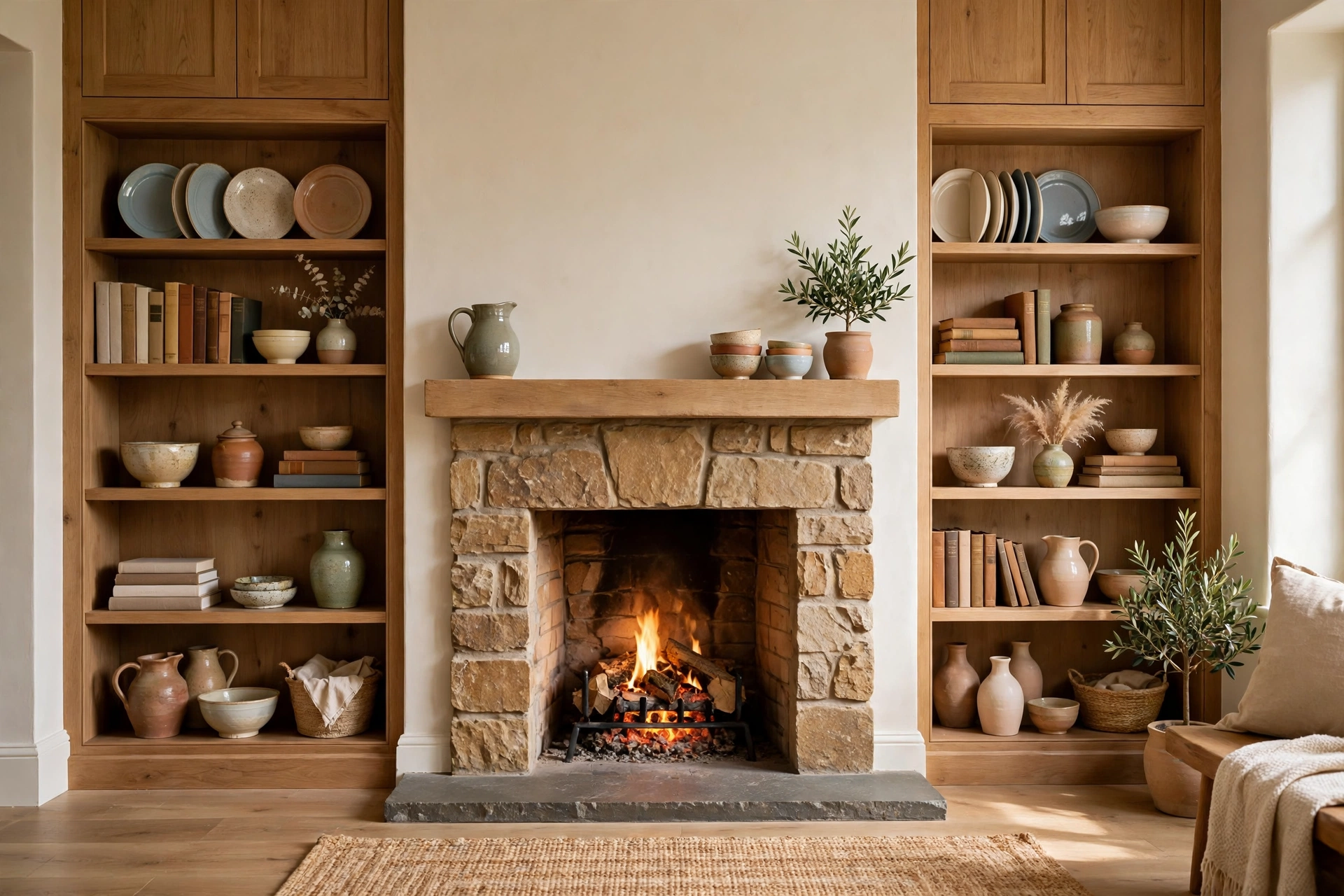
Built-in shelving on both sides of the fireplace turns the hearth wall into the dining room’s complete storage and display story. The symmetry frames the fire beautifully while giving you a home for serving pieces, cookbooks, ceramics, and glassware. Paint the built-ins the same color as the wall for a seamless look, or contrast them — deep green or navy shelves around a white fireplace surround feel rich and intentional.
Style the shelves with a mix of practical and pretty: everyday dishes you actually reach for, plus a few decorative objects and small plants. Keep the lowest shelves clear for items you grab during meals. Lighting the shelves with small picture lights or LED strips makes the whole wall glow at night and turns the fireplace into a true evening centerpiece, even when no fire is lit.
11. Whitewashed Brick for a Cottage Refresh
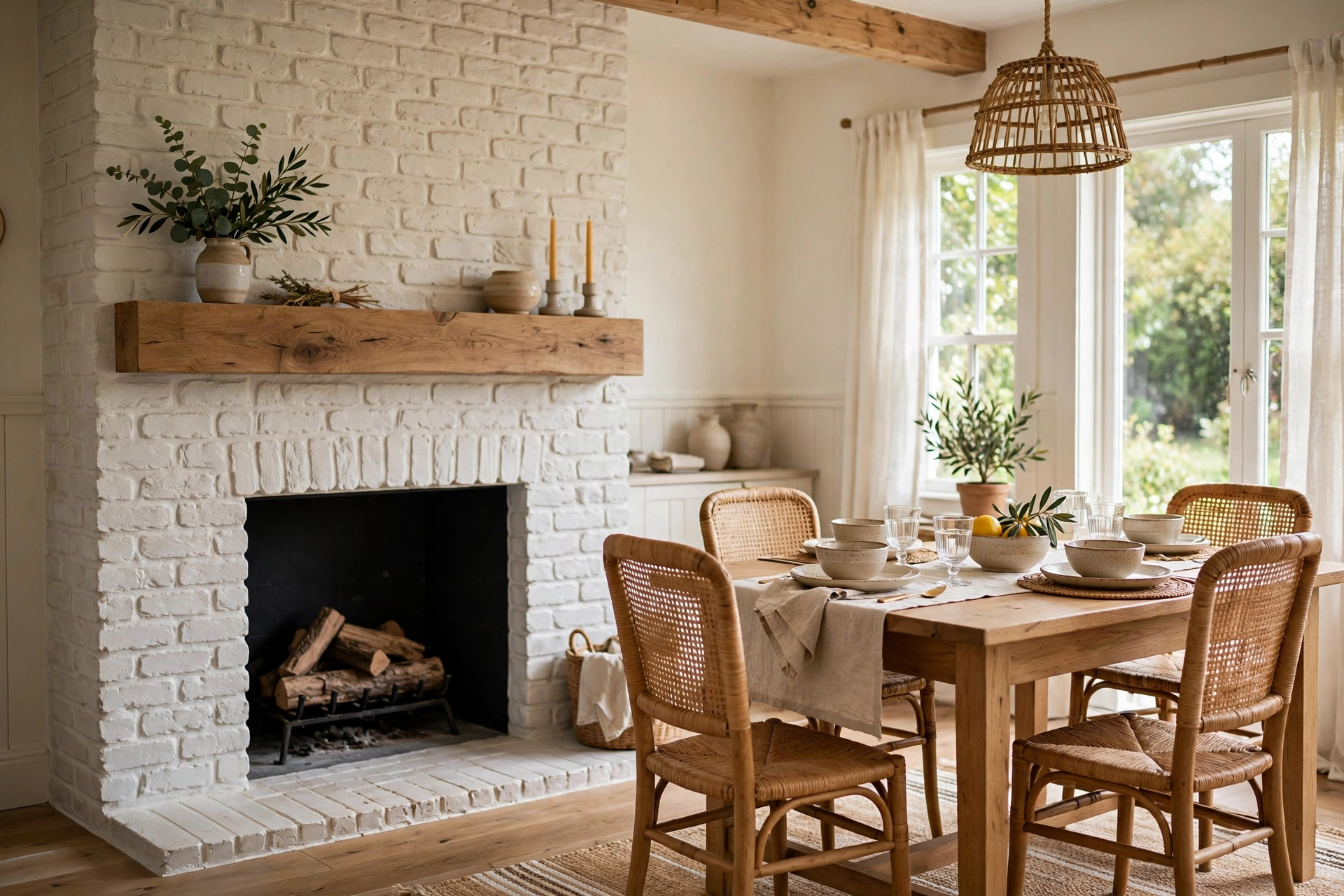
If your dining room already has a brick fireplace that feels heavy or dated, whitewashing is a transformative weekend project. A thin wash of diluted white paint lets the brick texture show through while lightening the whole wall — the result reads as cottage-fresh rather than industrial. It is far more forgiving than full painting, since variations in the wash look intentional.
Test your wash ratio on a hidden spot first; a fifty-fifty paint-to-water mix is a good starting point, applied with a rag and wiped back for a translucent effect. Pair the whitewashed brick with a natural wood mantel and soft linen dining chairs for a relaxed coastal-cottage feel. This refresh costs little more than a gallon of paint but completely changes the mood of the room.
12. Ventless Gel-Fuel Fireplace for Easy Ambience

Gel-fuel fireplaces are the simplest path to real flame in a dining room — no chimney, no gas line, no electrician. These ventless units burn small canisters of gel fuel that produce a genuine dancing flame for two to three hours per canister, with no smoke, soot, or ash. Tabletop models, freestanding cabinets, and wall-mounted designs all exist, so there is a format for every layout.
Because the flame is real but modest, gel fireplaces are about ambience rather than heating — perfect for dining rooms where you want atmosphere during dinner, not a furnace. Fireplaces have evolved from essential heating to decorative focal points over centuries; explore the different types and their history on Wikipedia’s fireplace page. Keep gel units away from table linens and curious hands, and never leave them burning unattended, just as with any open flame.
13. Formal Marble Fireplace as the Dining Room’s Crown Jewel
In a formal dining room, the fireplace should dress up, not down. A full marble surround with a carved mantel, flanked by tall candlesticks or a pair of urns, gives the room the gravitas that formal entertaining deserves. This is the fireplace as jewelry — polished, symmetrical, and unapologetically elegant, designed to impress before the first course is even served.
Keep the firebox itself pristine: a polished brass fender, neatly stacked white birch logs (even if purely decorative), and a clean hearth. The styling above and around the mantel should be symmetrical and restrained — think matching topiaries, a single large mirror, or a pair of sconces. For more inspiration on creating a dining room worthy of special occasions, explore our formal dining room ideas.
14. Hearth Bench Seating for Extra Gathering Space
A wide hearth ledge or a built-in bench beside the fireplace solves the eternal holiday problem: where does everyone sit? A stone or wood hearth bench, topped with cushions, gives you flexible extra seating that feels intentional rather than improvised. Kids love perching by the fire, and adults appreciate a spot to set down a drink during cocktail hour.
Build the bench eighteen to twenty inches deep for comfortable sitting, and choose a heat-resistant material like stone, tile, or thick timber if it sits close to the firebox. Add washable cushion covers in a fabric that coordinates with your dining chairs. When the fireplace is not in use, the bench doubles as a display surface for plants, lanterns, or a stack of coffee-table books — it earns its footprint year-round.
15. Seasonal Mantel Styling That Rotates Year-Round
The smartest of all dining room fireplace ideas might be treating your mantel as a rotating seasonal display. A simple formula keeps it fresh without a full redecorate each quarter: keep your anchor piece (mirror or art) constant, then swap garlands, candles, and small objects with the seasons — budding branches in spring, sun-bleached wood in summer, amber glass and gourds in fall, evergreen and twinkle lights in winter.
Store each season’s accents in a labeled bin so the swap takes under an hour. This approach keeps the dining room feeling current and gives returning guests something new to notice. Because the mantel is the room’s focal point, even small seasonal changes have an outsized effect — it is the highest-impact, lowest-cost refresh in the entire dining room.
Frequently Asked Questions
Can you put a fireplace in a dining room?
Yes, fireplaces work beautifully in dining rooms and are increasingly common in new builds and renovations. Gas, electric, and gel-fuel options mean you do not need an existing chimney — a vent-free gas unit or electric insert can go on almost any wall. Just maintain proper clearances between the firebox and the dining table (at least three feet) and check local codes for ventless installations.
What is the safest fireplace type for a dining room?
Electric inserts are the safest choice: no real flame, no emissions, cool-touch glass options, and automatic shutoff features. Vent-free gas fireplaces are also safe when installed to code with proper room ventilation. Whichever type you choose, keep table linens, chair backs, and decorations at the manufacturer’s recommended clearance distance, and install a carbon monoxide detector nearby if you burn any fuel.
How far should the dining table be from the fireplace?
Allow at least three feet between the edge of the dining table and the fireplace surround so chairs can pull out comfortably and nobody feels overheated. For wood-burning fireplaces, increase that to four or five feet to keep sparks and radiant heat at a safe distance. If space is tight, a linear gas unit with cool-touch glass lets you sit closer than a traditional open hearth.
How do you style a dining room mantel?
Use the three-depth layering formula: a large anchor piece centered (mirror, art, or wreath), medium objects flanking it (candlesticks, vases), and small fillers in front (books, pinecones, small plants). Tie the palette to your dining room’s colors, vary heights for visual rhythm, and resist overcrowding — negative space makes each piece stand out. Refresh the small accents seasonally to keep the display feeling current.
Do fireplaces add value to a dining room?
A well-designed fireplace generally adds perceived value and buyer appeal, especially in colder climates where a dining room hearth reads as a luxury feature. Real estate professionals consistently rank fireplaces among desirable amenities. That said, the value comes from quality execution — a cheap-looking electric unit in an awkward spot adds little, while a handsome surround integrated into the room’s design makes the whole dining room feel more premium.
Keep Exploring
A fireplace gives your dining room something no furniture can: a living, flickering heart that draws people together and keeps them at the table long after dessert. Whether you go grand with stone, sleek with a linear gas unit, or simple with a styled mantel and electric insert, the glow of a hearth makes every gathering feel warmer. Pick the idea that fits your space and budget, and let the fire do the entertaining.