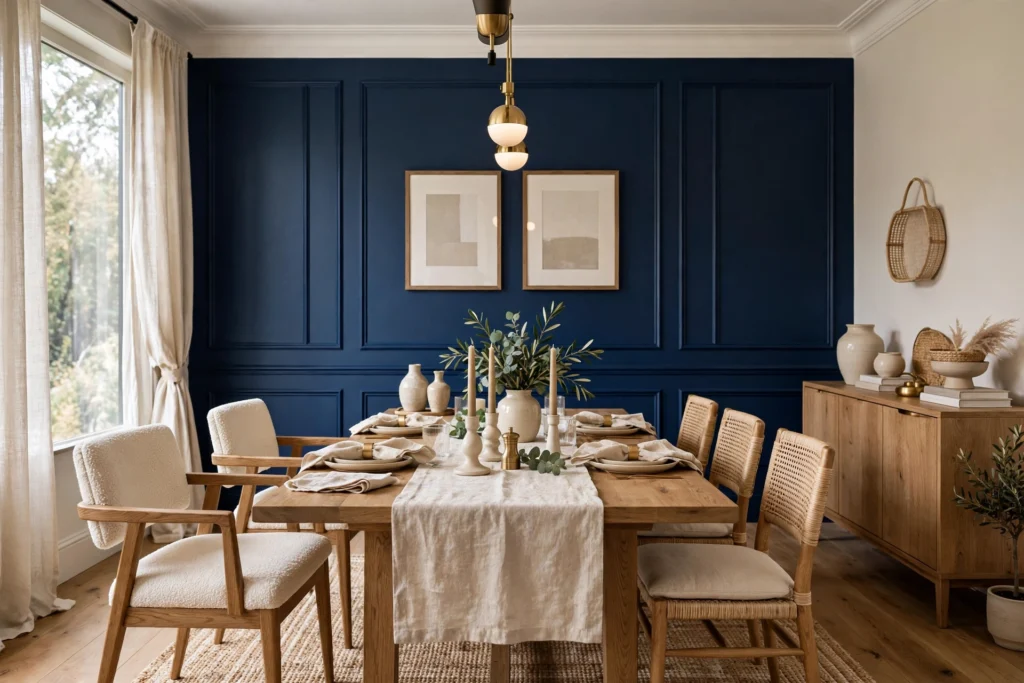

The dining room is where the house shows off — holiday dinners, birthday gatherings, long evenings with friends — and an accent wall gives that room the backdrop it deserves. One bold wall focuses the eye, adds depth, and makes even weeknight takeout feel like an occasion. These dining room accent wall ideas span paint, wallpaper, wood, molding, and texture, with options for every budget and commitment level. Dining room wall decor ideas for warm inviting gatherings layer art and objects over the foundation you build here.
Choose the wall with the most presence — usually the one behind the head of the table, the sideboard wall, or the wall you face when entering. An accent wall works by contrast, so the bolder the treatment, the quieter the other three walls should be. Interior design basics apply: consider the room’s light, the furniture in front of the wall, and how the color reads at night under warm dining light, not just in daylight.
1. Go Bold With a Deep Moody Paint Color
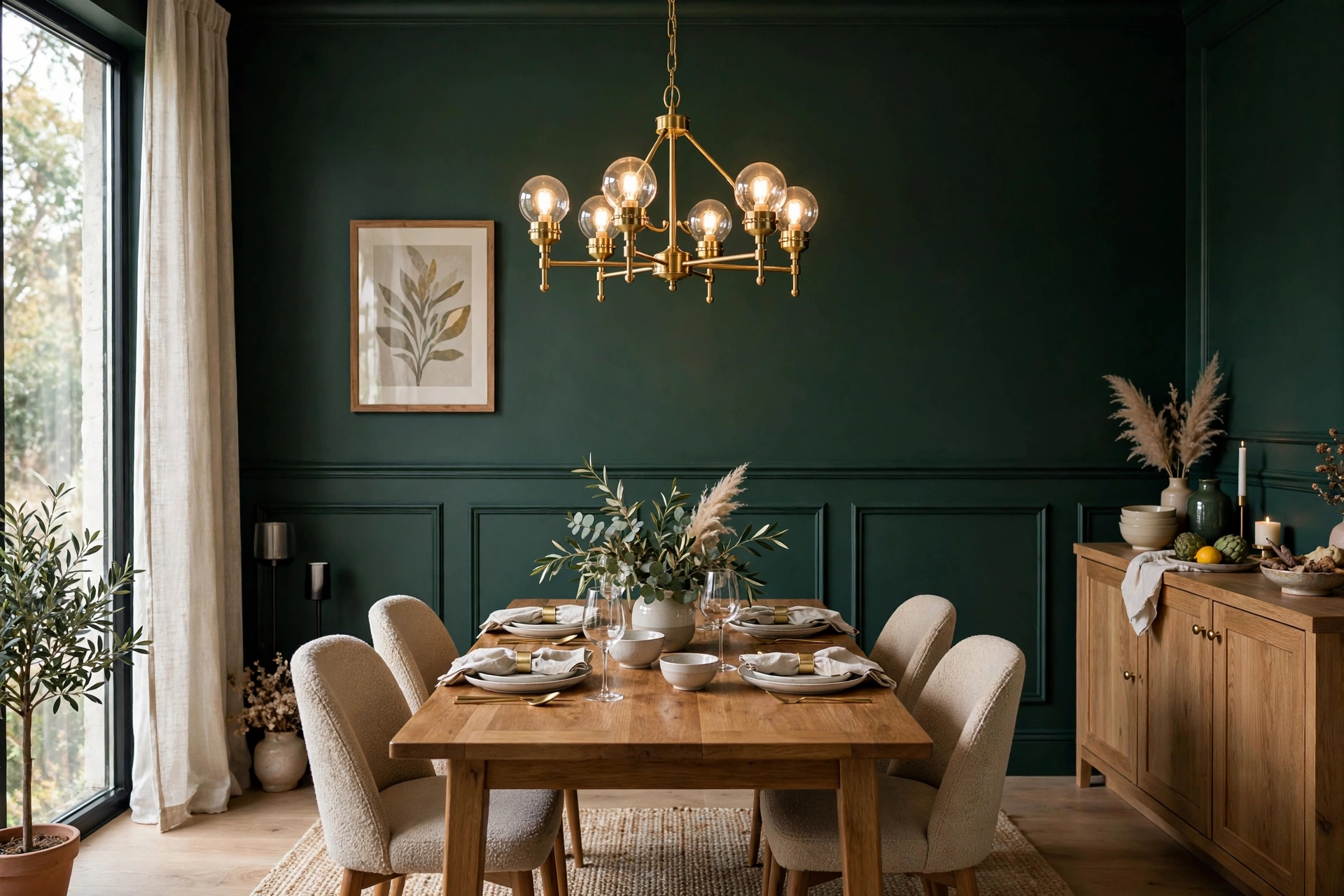
A deep, moody paint color — ink navy, forest green, aubergine, or rich chocolate — turns one dining room wall into pure drama. Dark walls recede visually, making the room feel larger and more intimate at once, and they make wood furniture, brass, and candlelight glow. The trick is committing fully: one timid dark wall surrounded by stark white can look accidental, so carry the mood with darker textiles and warm lighting. Test large swatches and view them at night, when dining rooms get used most. Moody paint is the cheapest transformation on this list with the biggest atmosphere payoff.
2. Add Board and Batten for Classic Texture
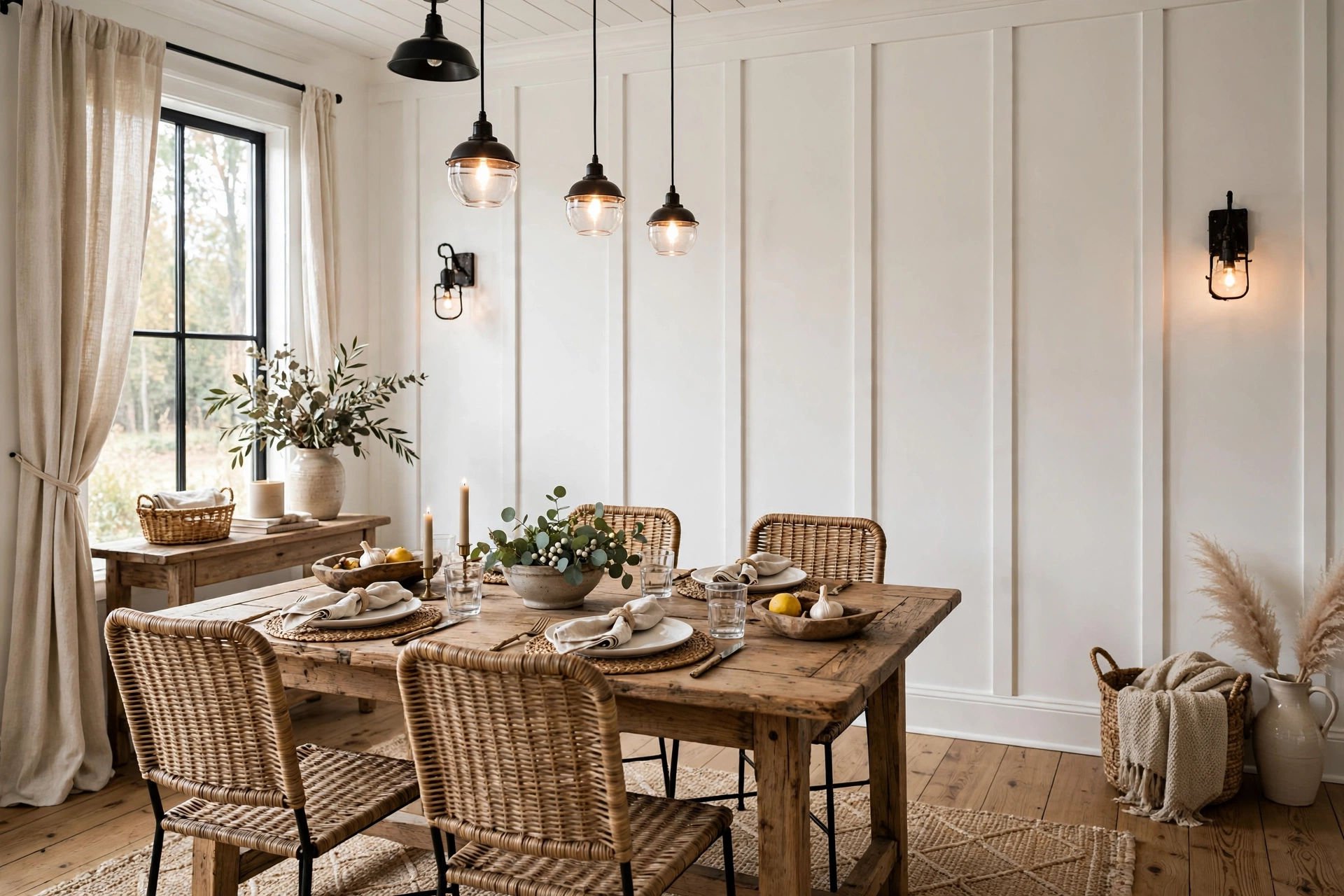
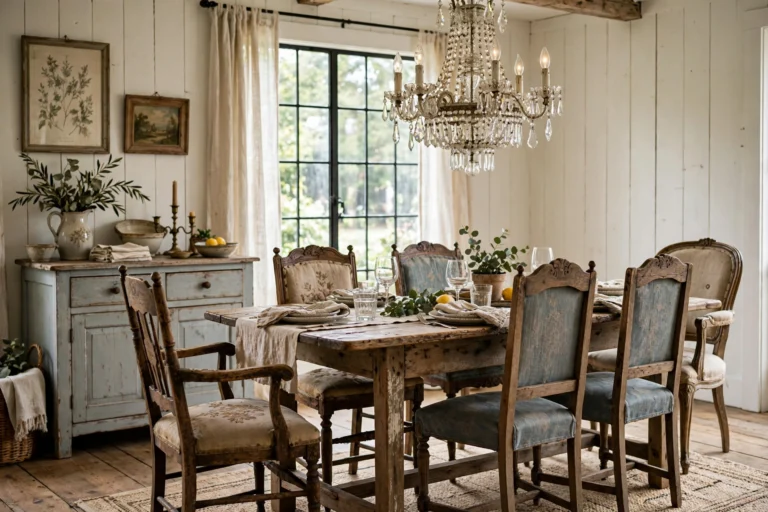
Board and batten — vertical boards over flat panels with horizontal rails — adds tailored, architectural texture that suits farmhouse, traditional, and transitional dining rooms. Painted the same color as the wall, it reads as subtle shadow play; painted in contrast, it becomes a graphic feature. The grid rhythm gives the eye something to follow and makes standard eight-foot walls feel designed rather than default. It is a very DIY-friendly project: primed MDF boards, a brad nailer, caulk, and paint. Keep the spacing even and the lines level — the whole effect depends on crisp geometry.
3. Try a Dramatic Wallpaper Mural
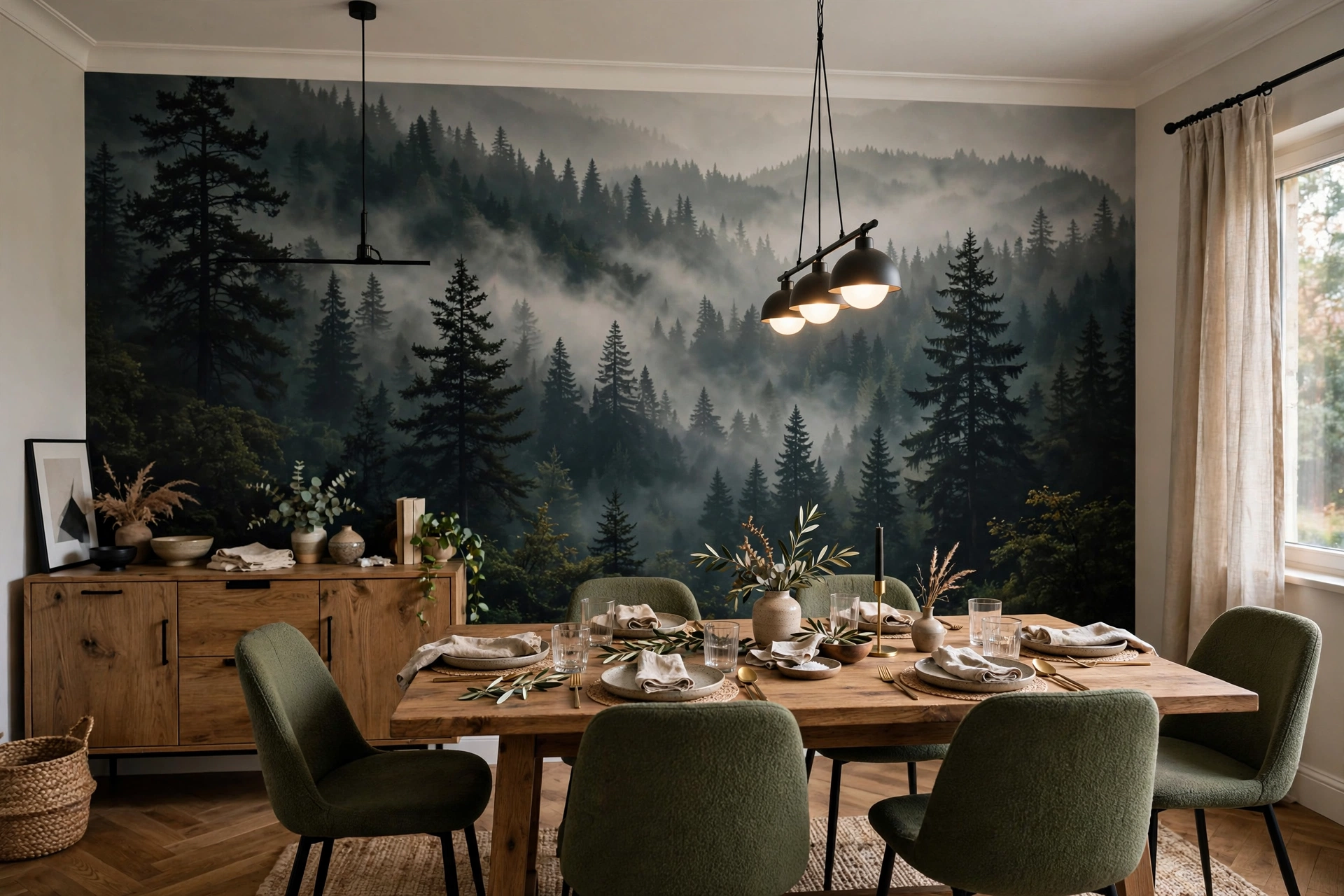
A wallpaper mural — an oversized landscape, moody forest, abstract wash, or vintage map — turns the accent wall into art you live inside. Murals work brilliantly behind a sideboard or the head of the table, where they read like a commissioned painting at a fraction of the cost. Choose a mural whose colors flatter your furniture, and keep the other walls quiet so the mural breathes. Peel-and-stick murals make this renter-friendly and commitment-light. Scale matters: the mural should fill the wall generously, not float like a poster.
4. Install Reclaimed Wood Planks
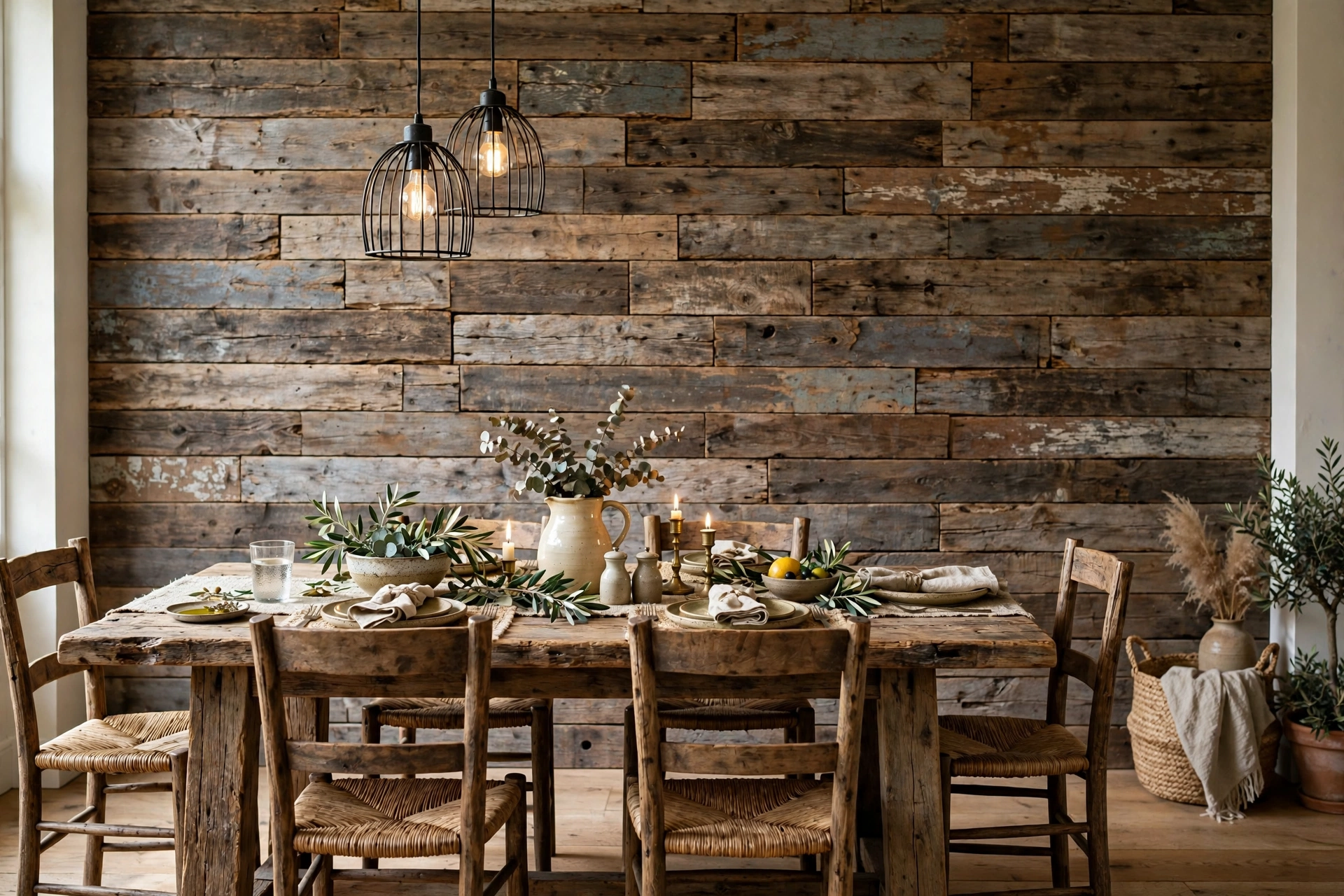
Reclaimed wood planks bring warmth, history, and texture that paint cannot touch — each board’s grain, nail holes, and patina tells a story. A wood accent wall behind the dining table softens modern rooms and deepens rustic ones, and it pairs beautifully with iron, linen, and candlelight. Use real reclaimed boards for authenticity or engineered planks for easier install; either way, seal the wood against dining splatters. Run planks horizontally to widen the room visually, vertically to add height. Dining room wallpaper ideas for stylish gatherings offer a lower-commitment alternative if real wood feels like too much.
5. Create a Gallery Wall of Art and Plates
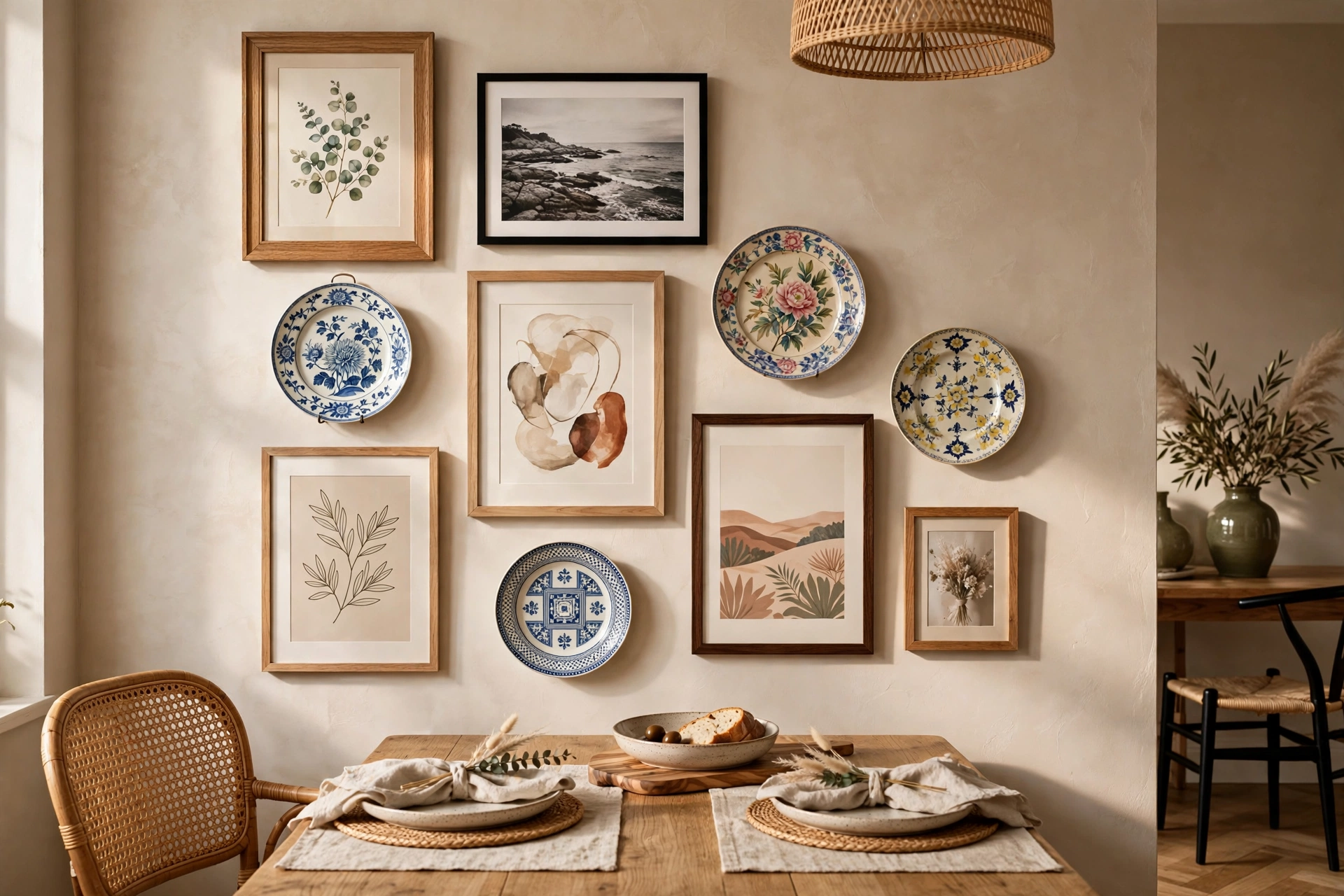
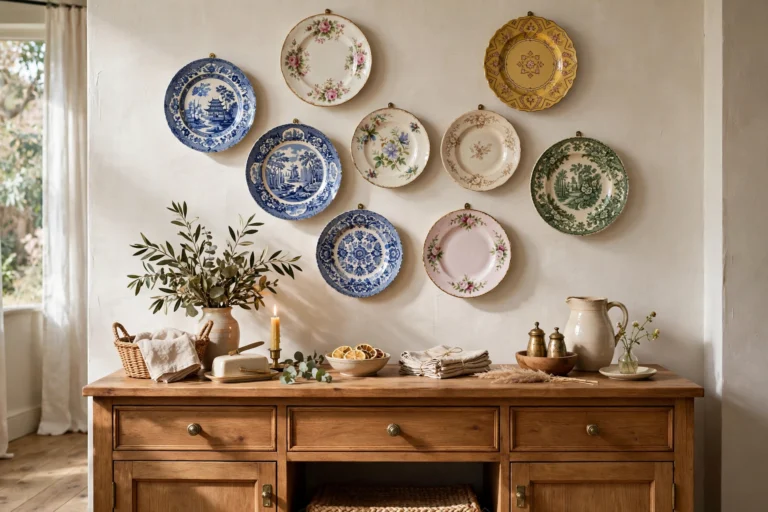
A gallery wall mixing framed art with decorative plates turns the accent wall into a personal collection — the most characterful option on this list. Plates add sculptural roundness that flat art lacks; mix sizes, patterns, and eras for a collected feel, or keep a tight color story for polish. Use proper plate hangers and plan the layout on the floor first. This wall evolves: add a plate from every trip, a print from every artist you love. It is the accent wall for people whose dining room should tell their story, not follow a trend.
6. Go Dark and Dramatic With Charcoal or Black
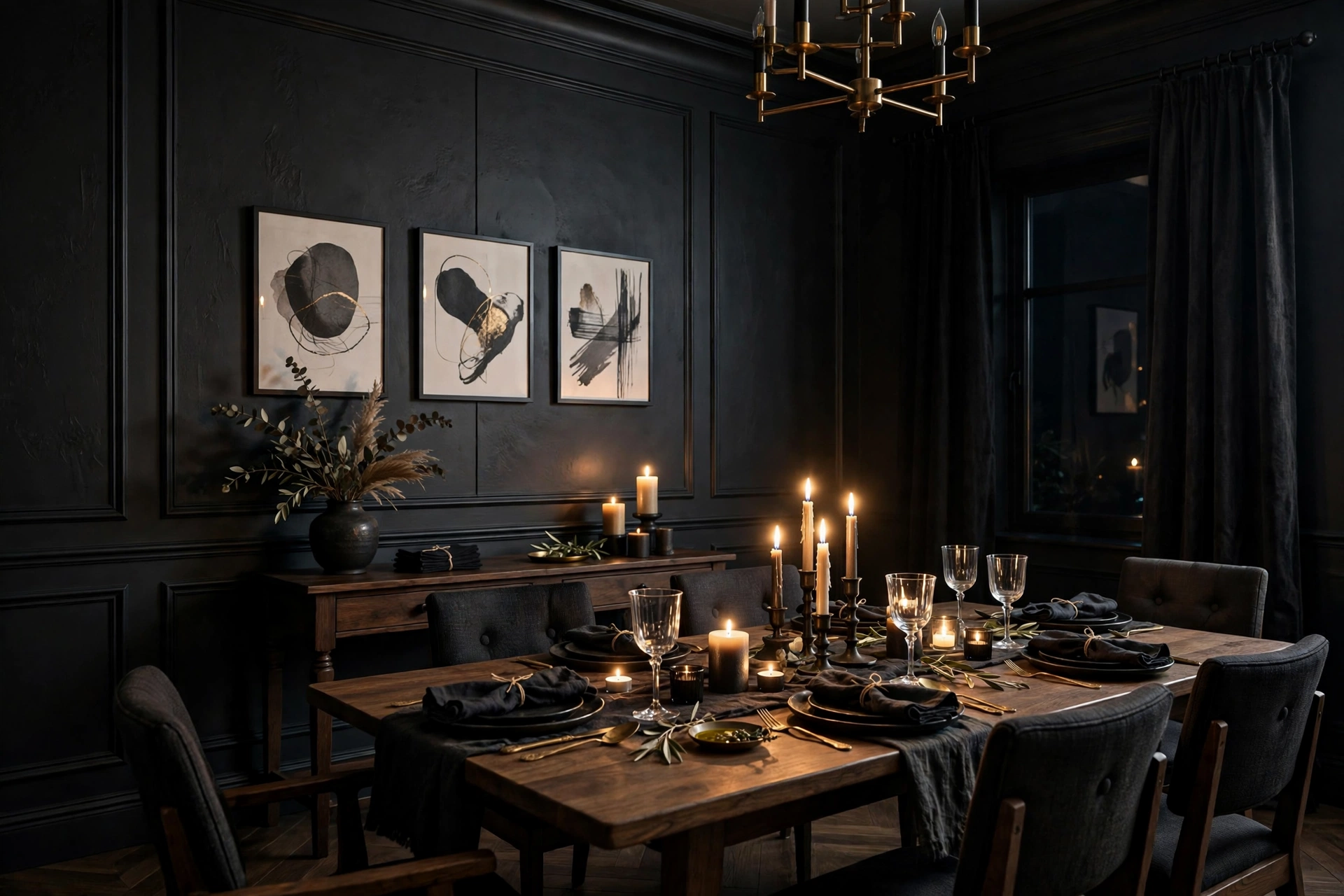
Charcoal or black walls are the boldest paint move, and in a dining room they are pure magic: the room becomes a jewel box where food, faces, and candlelight take center stage. Black absorbs visual clutter, hides imperfections, and makes every other color in the room sing. The key is lighting — layer sconces, a statement chandelier, and candles so the dark wall glows rather than caves. Keep trim crisp white or go full color-drenched for cocooning drama. It is not for the faint of heart, but no other choice makes dinner feel this cinematic.
7. Add Wainscoting With a Modern Twist
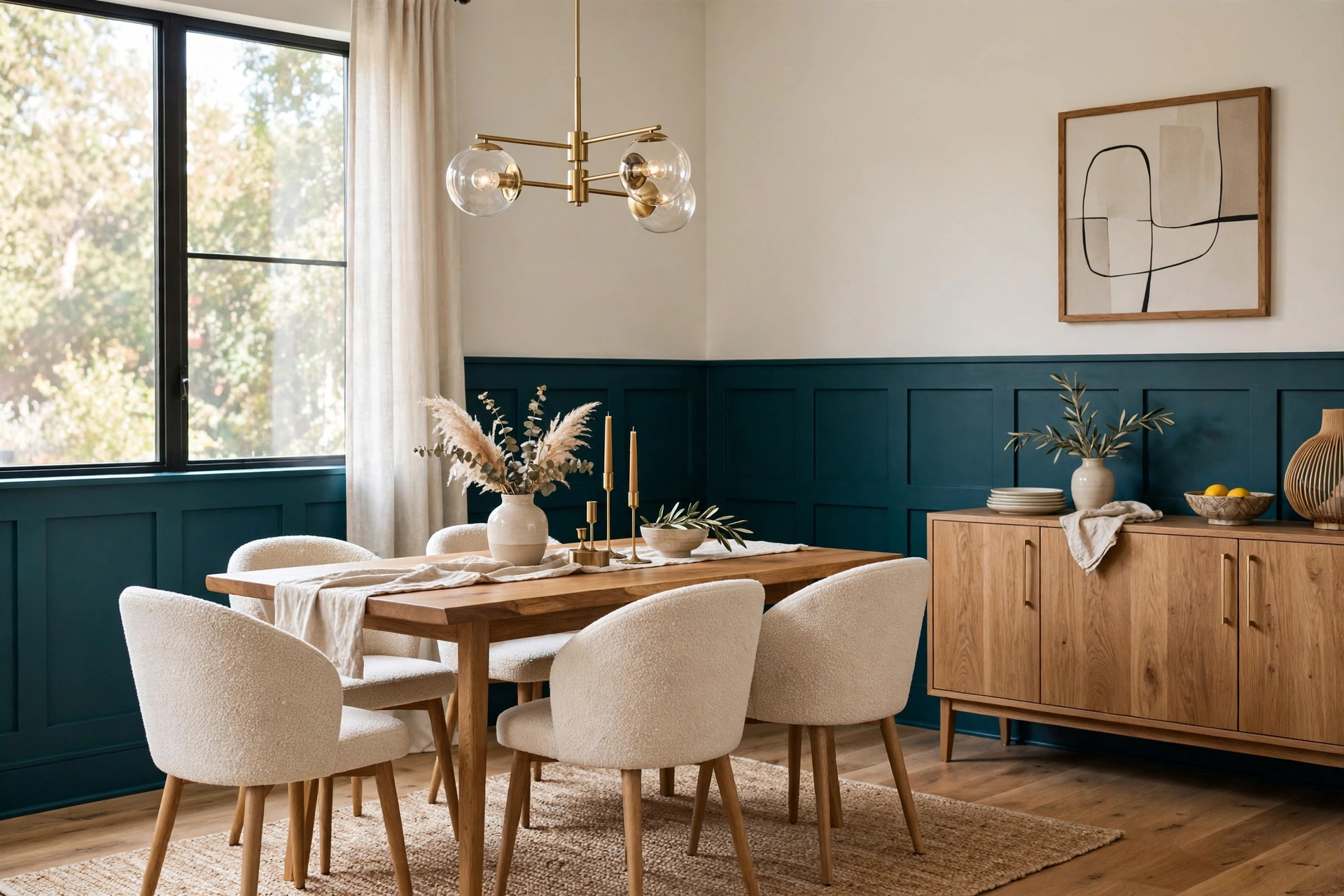
Wainscoting is not just for traditional homes: painted in a deep modern color, run floor-to-ceiling, or detailed with slim contemporary profiles, it becomes a fresh architectural feature. Classic chair-rail wainscoting in a moody green suits transitional dining rooms; full-height panel molding in charcoal reads as modern luxury. The paneling adds the shadow lines and craft that flat drywall lacks, and it protects lower walls from chair scuffs — genuine function in a dining room. Paint it the same sheen as the trim for a built-in, intentional look.
8. Try a Limewash Finish for Soft Movement
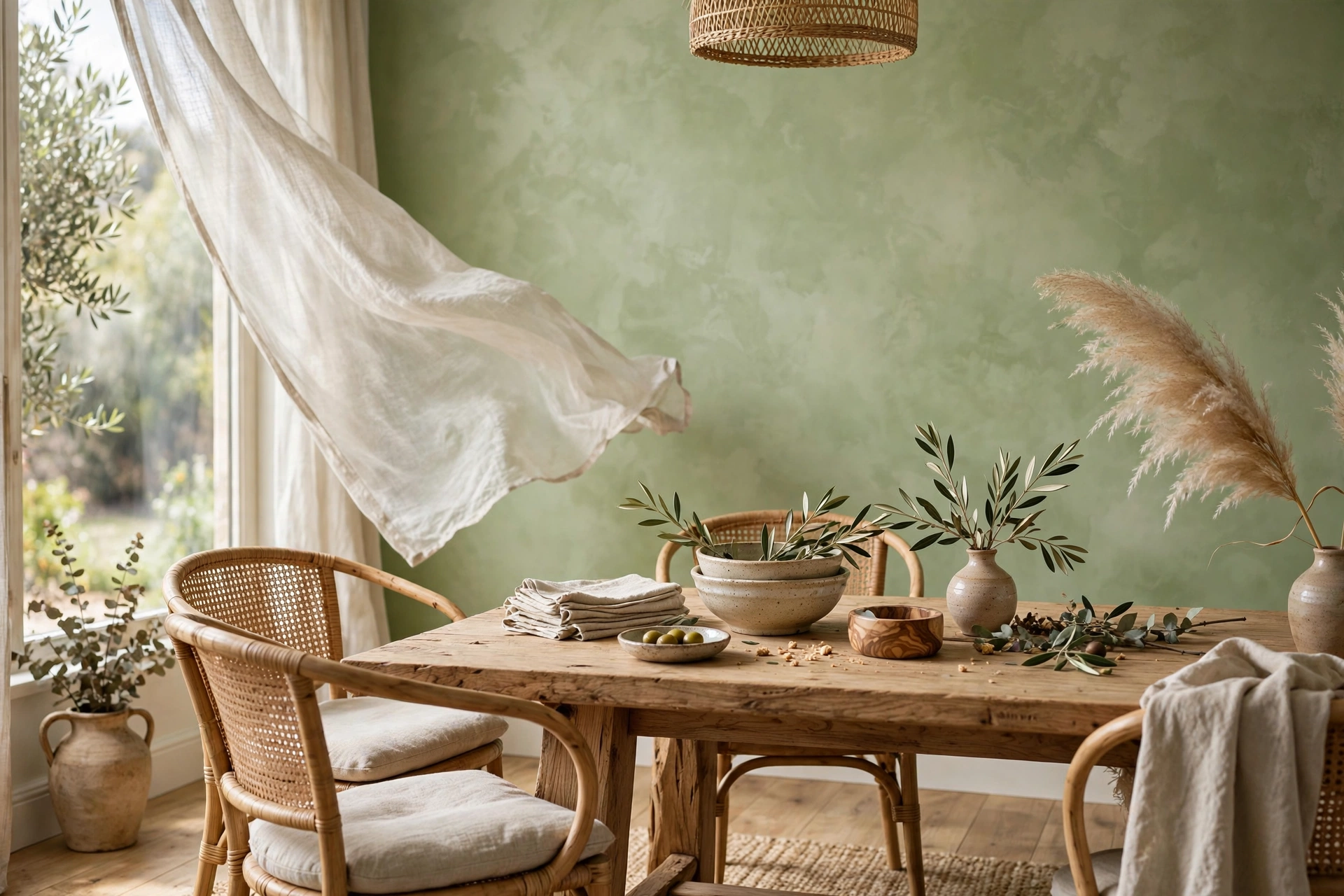
Limewash paint — a mineral finish applied in cloud-like, overlapping strokes — gives walls a soft, old-world movement that flat paint cannot replicate. The subtle tonal variation catches light beautifully, adding depth without pattern, and it suits Mediterranean, modern organic, and romantic dining rooms. Limewash is forgiving to apply (the mottling is the point) and touch up, making it more DIY-friendly than it looks. Choose warm whites and earthy tones for glow, or deep tones for drama. It is the accent wall for people who want texture without wallpaper’s commitment.
9. Hang an Oversized Mirror as the Focal Point
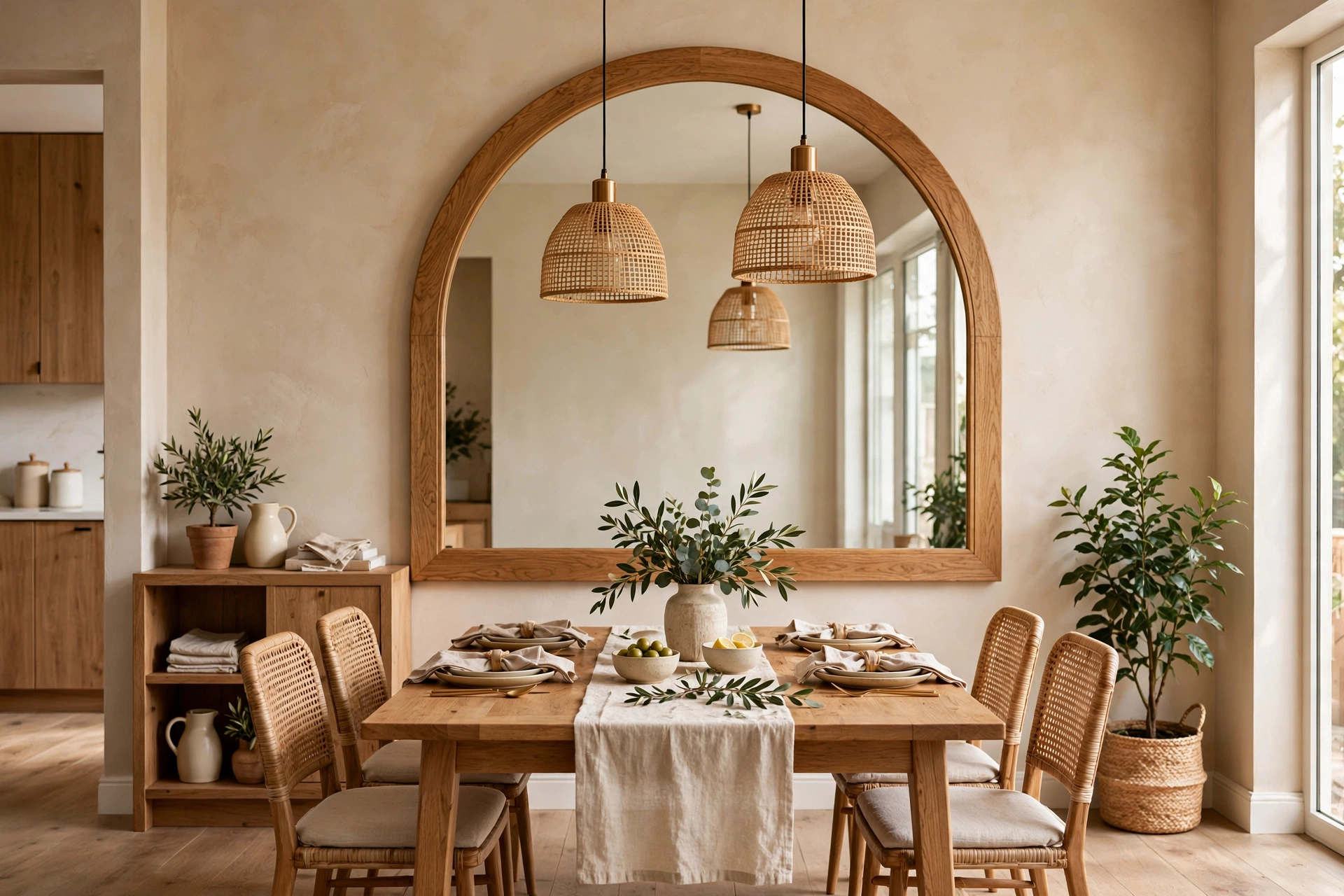
An oversized mirror as the accent wall’s centerpiece doubles the room’s light and makes gatherings feel grander — every candle and chandelier reflected twice. Lean a large arched or rectangular mirror against the wall behind the sideboard, or hang a dramatic round mirror as the focal point. The mirror becomes the art, so choose a frame with presence: aged brass, black metal, or sculptural wood. Keep the wall color behind it quiet so the reflection shines. In small dining rooms, this is the highest-impact single object you can add.
10. Use Grasscloth for Natural Texture
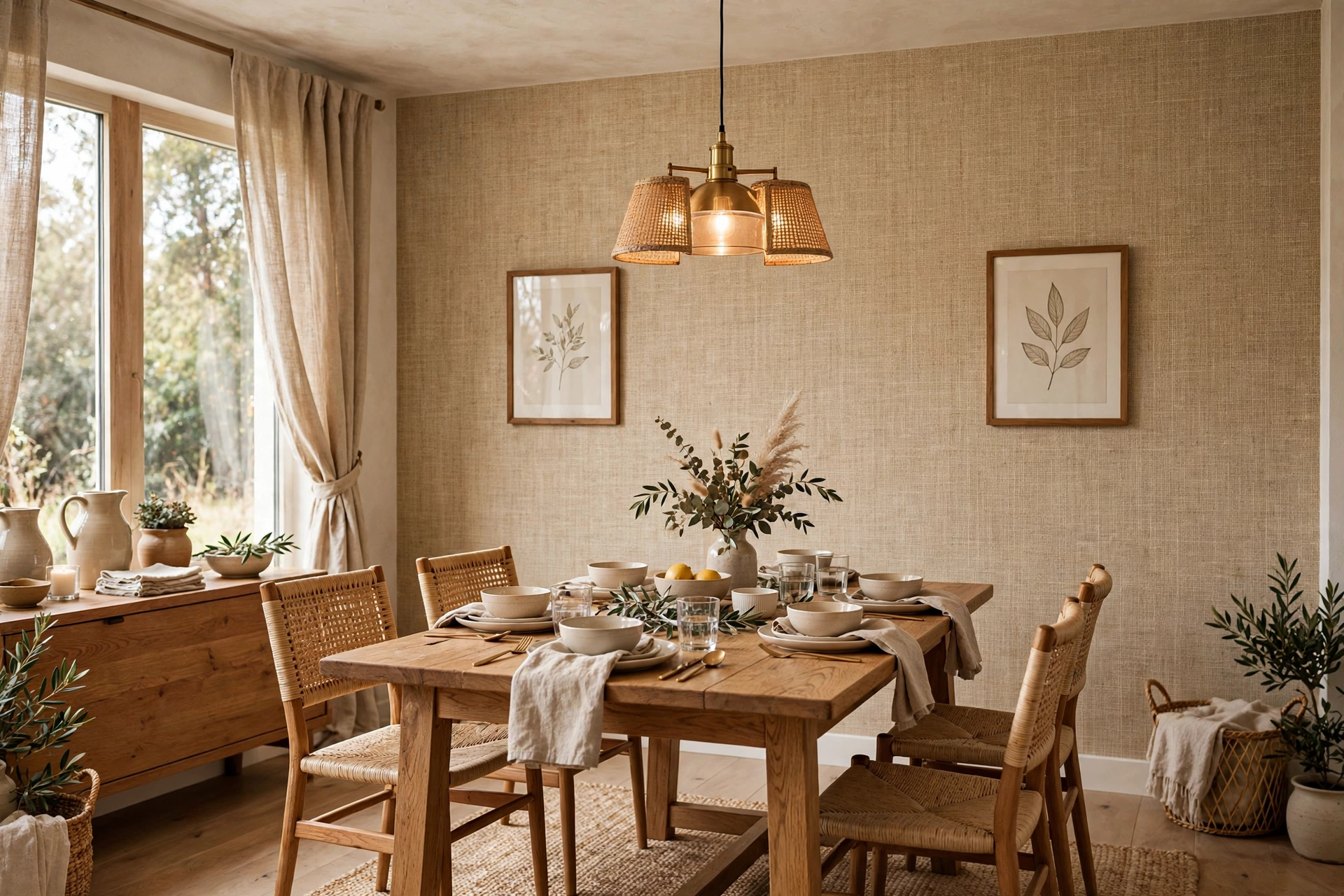
Grasscloth wallpaper — woven from natural fibers — wraps the accent wall in organic texture that reads as quiet luxury. The subtle horizontal weave adds warmth and depth without pattern, and it pairs beautifully with wood tables, linen upholstery, and warm metals. Natural grasscloth varies panel to panel, which is part of its handmade charm — order from the same dye lot. It is delicate (no scrubbing) and best on a wall away from chair backs, so the sideboard wall is ideal. For texture lovers who find paint flat and murals loud, grasscloth is the perfect middle.
11. Paint a Bold Geometric Pattern
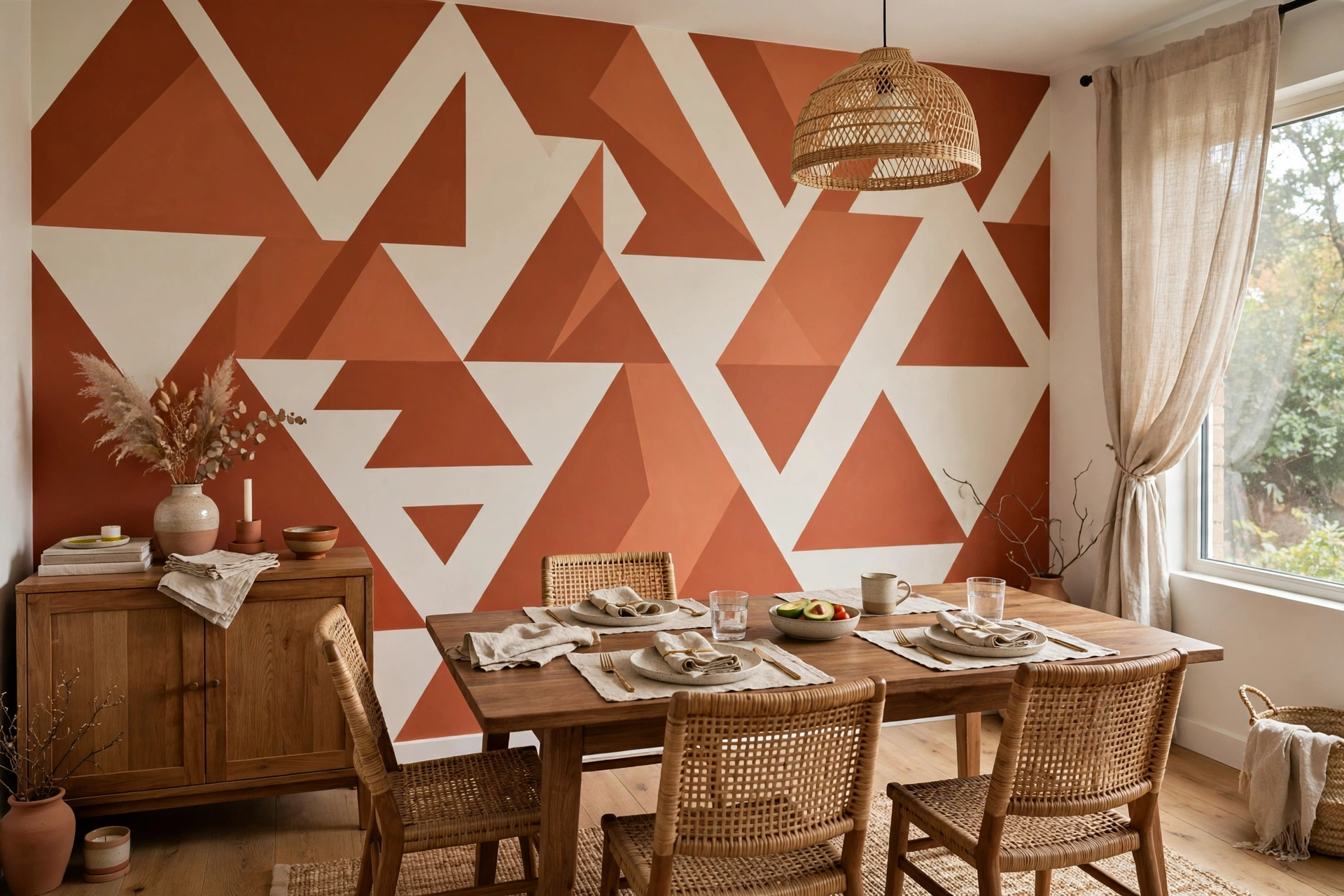
A bold geometric pattern — wide stripes, oversized arches, a color-blocked mural, or a hand-painted grid — turns the accent wall into graphic art with nothing but paint and painter’s tape. Geometrics energize modern and eclectic dining rooms and can be scaled to the wall: big shapes for big walls, tighter patterns for small ones. The DIY route is genuinely achievable with a level, tape, and patience; the key is crisp edges and a limited palette of two or three colors. It is the most personal accent wall — nobody else will have exactly yours.
12. Add Picture-Frame Molding for Elegance
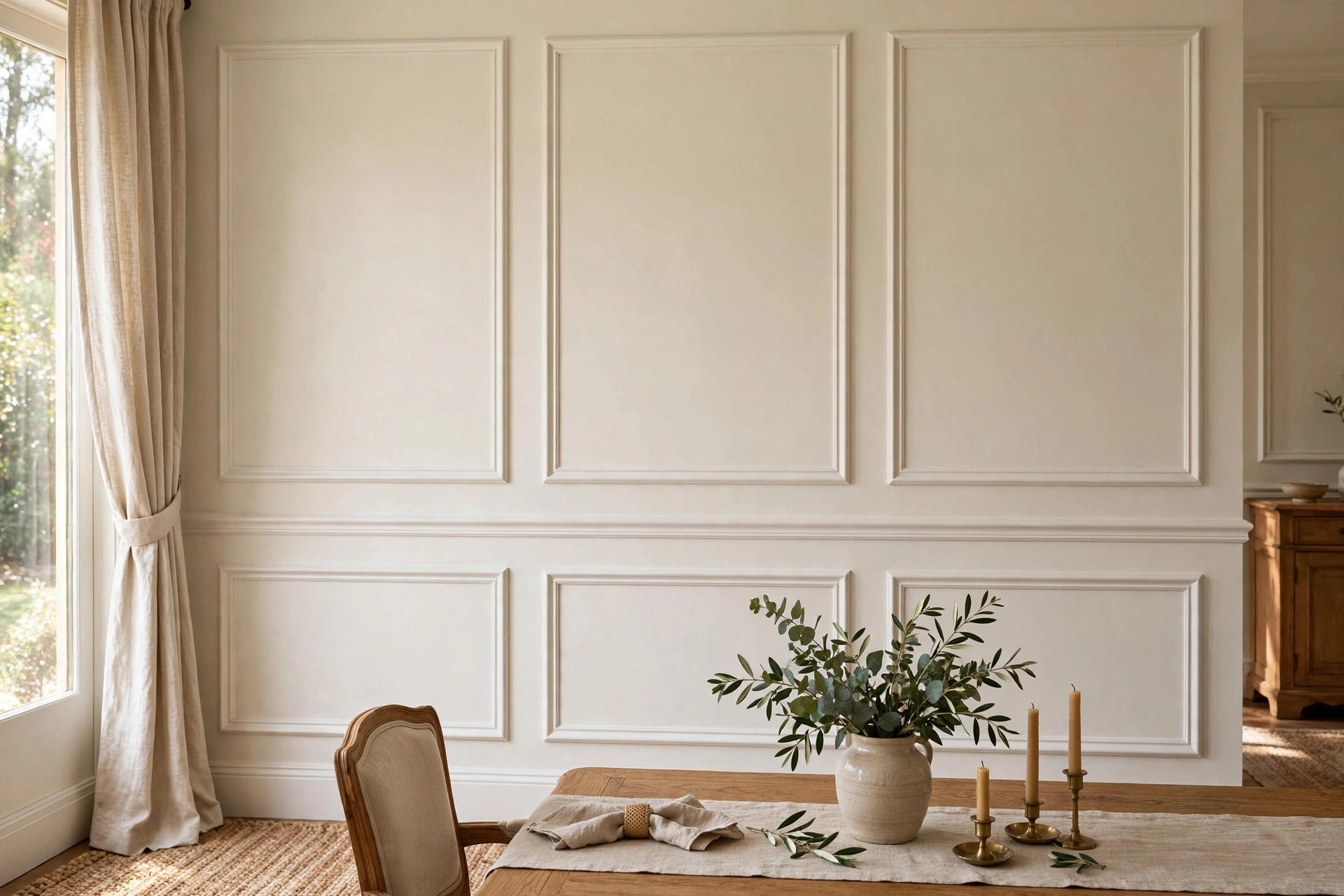
Picture-frame molding — thin trim boxes applied directly to the wall — delivers classic European elegance for the cost of lumber and paint. The rectangular panels add architectural rhythm that flatters traditional, transitional, and even modern dining rooms when painted in a current color. Layout is everything: keep panels evenly spaced, aligned with furniture, and proportioned to the wall — a common formula divides the wall into thirds. Paint wall and molding the same color for subtle sophistication, or contrast for graphic punch. It is wainscoting’s dressier cousin.
13. Try a Two-Tone Wall With a Chair Rail
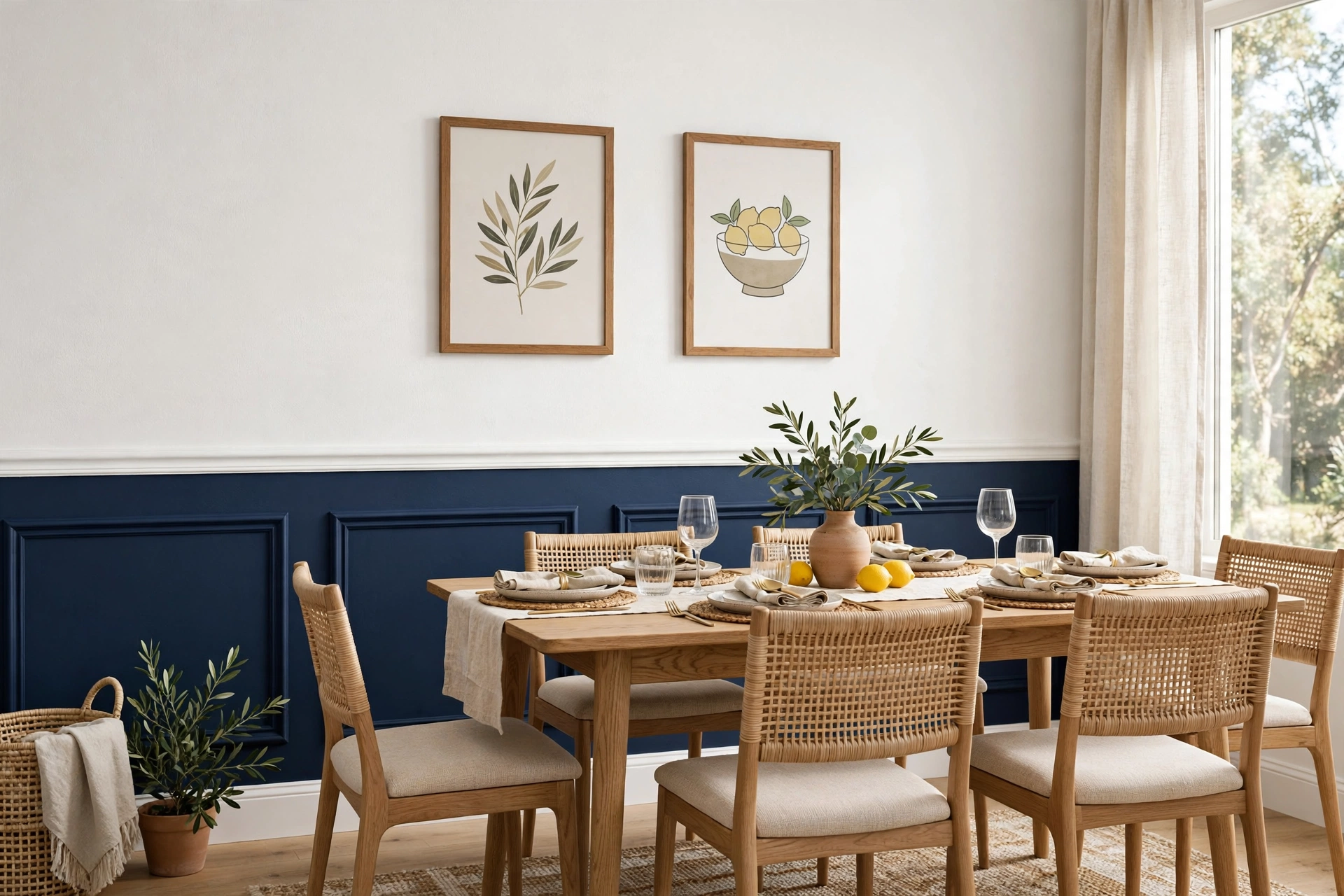
A two-tone wall split by a chair rail — dark below, light above, or vice versa — is the classic dining room treatment for good reason: it adds structure, protects the lower wall, and lets you use bold color without overwhelming. Traditional formula puts the darker tone below; flipping it (dark above, light below) feels fresh and modern. The chair rail itself should be substantial enough to read as architecture, not trim afterthought. This is the safest bold move on the list: contained color with timeless bones.
14. Install a Stone or Brick Veneer
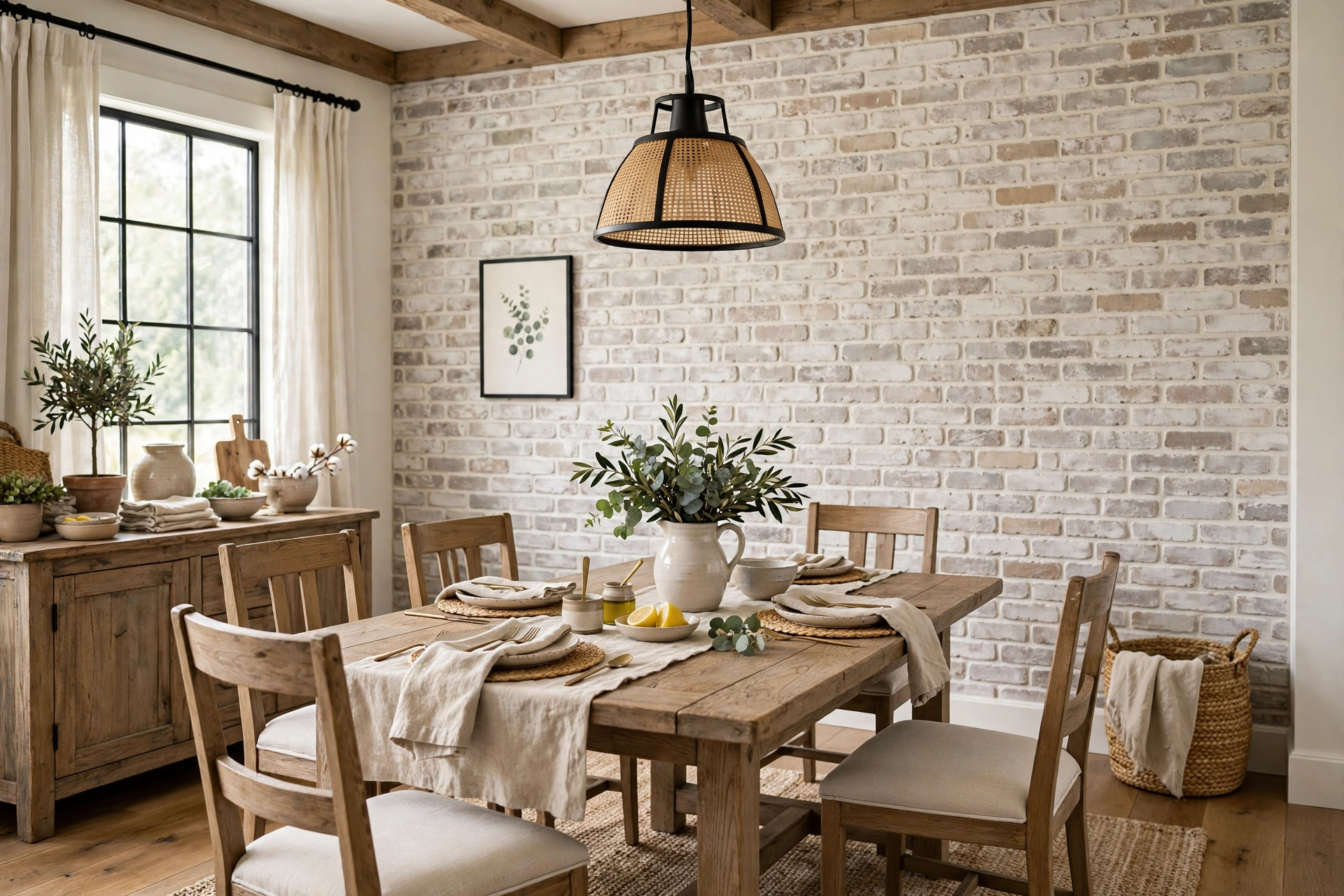
Stone or brick veneer brings raw, tactile character — a whitewashed brick wall for farmhouse warmth, a stacked stone for rustic drama, a sleek stone-look panel for modern edge. Veneer is far lighter and thinner than real masonry, installing like tile over cement board. It is a commitment (removal is a project), so be sure of the style. In dining rooms, veneer shines on the wall behind the table, where its texture catches candlelight beautifully. Seal it against cooking splatter if the dining room opens to the kitchen. The Spruce’s wall treatment guides compare veneer types and their installation demands in detail.
15. Light It Right to Show It Off
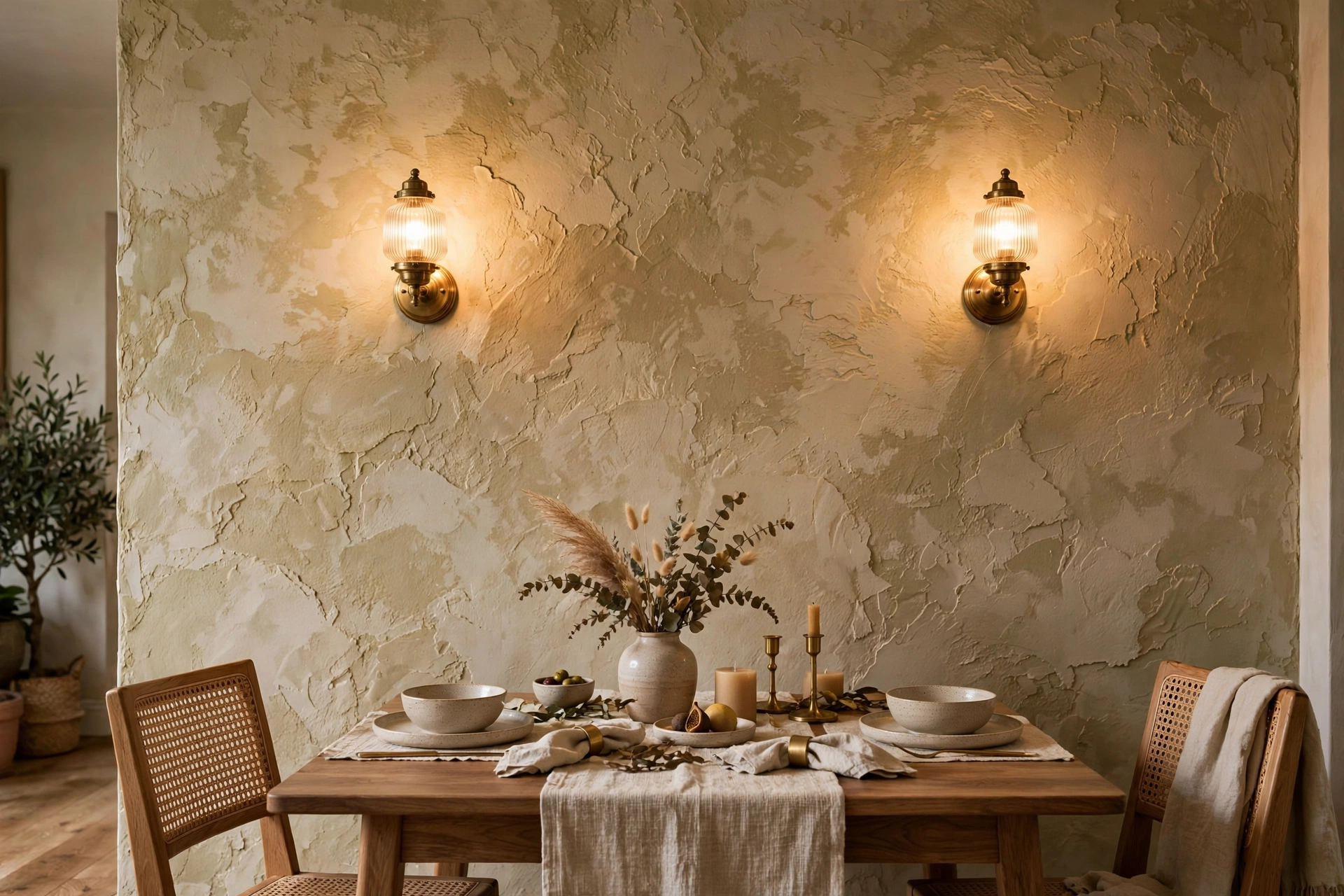
The finest accent wall falls flat under bad lighting — this final idea is the one that makes the other fourteen work. Picture lights, wall sconces, or directional spots wash the accent wall with warm light, revealing texture and color that flat overhead light kills. Sconces flanking a mural or mirror add symmetry and glow; a picture light over wainscoting highlights the craft. Use warm bulbs (2700K) for dining ambiance, and put accent lighting on a dimmer. An accent wall is only as good as its lighting — budget for both, and the wall will earn it every evening.
FAQ
Which wall should be the accent wall in a dining room?
Choose the wall with the most visual weight — usually behind the head of the table, the sideboard wall, or the first wall you see entering the room. Avoid walls broken up by many doors and windows, since interruptions dilute the effect. The accent wall should be the room’s natural focal point.
What is the best color for a dining room accent wall?
Deep, appetite-friendly tones work best: navy, forest green, warm terracotta, deep aubergine, and rich chocolate all flatter food and faces under warm light. Dark colors make dining rooms feel intimate and cinematic. Always test large swatches at night, when dining rooms are actually used.
Is an accent wall outdated?
No — the execution evolves, but the concept is timeless. What dates a room is a single random red wall from 2005, not the idea itself. Current approaches favor texture (limewash, grasscloth, panel molding), murals, and deep moody color over flat bright paint. Done with intention, an accent wall is classic.
Can I do an accent wall in a small dining room?
Absolutely — a bold accent wall can make a small dining room feel larger by adding depth, especially dark colors that recede visually. Keep the other walls light and the treatment proportional; a mirror or mural on the accent wall doubles the spacious effect. Small rooms handle drama well when it is contained to one wall.
How much does a dining room accent wall cost?
Paint is cheapest ($50–$150 DIY), followed by peel-and-stick wallpaper and board-and-batten ($200–$500). Grasscloth, murals, and wood planks run $500–$1,500 depending on wall size, while stone veneer and professional panel molding can exceed $2,000. Lighting adds $100–$400 but transforms the result.
Keep Exploring
One bold wall changes how the whole dining room feels — more intimate, more intentional, more ready for the people you love. Pick the treatment that matches your commitment level, light it well, and keep the other walls quiet. Living room accent wall ideas with big impact bring the same bold thinking to the rest of the home.





[…] dozens of plates. For bold wall treatments that play well with dishware displays, explore these dining room accent wall ideas to find your perfect […]