
Few updates deliver as much transformation per dollar as a slipcover. Tired wood chairs, stained upholstery, or a set that clashes with your new dining table can all be reinvented with fabric — no reupholstery bill, no new furniture. These dining chair slipcover ideas cover fabrics, fits, and styling tricks, from relaxed linen skirts to tailored Parsons covers, so you can give every seat in the room a fresh start.
Slipcovers are also wonderfully practical for real life: they protect chairs from kids, pets, and dinner-party spills, and most can be tossed in the washing machine. Whether you sew your own or buy ready-made, the ideas below will help you choose the right look, get the fit right, and style the finished chairs like a designer.
1. Choose a Relaxed Linen Skirted Slipcover
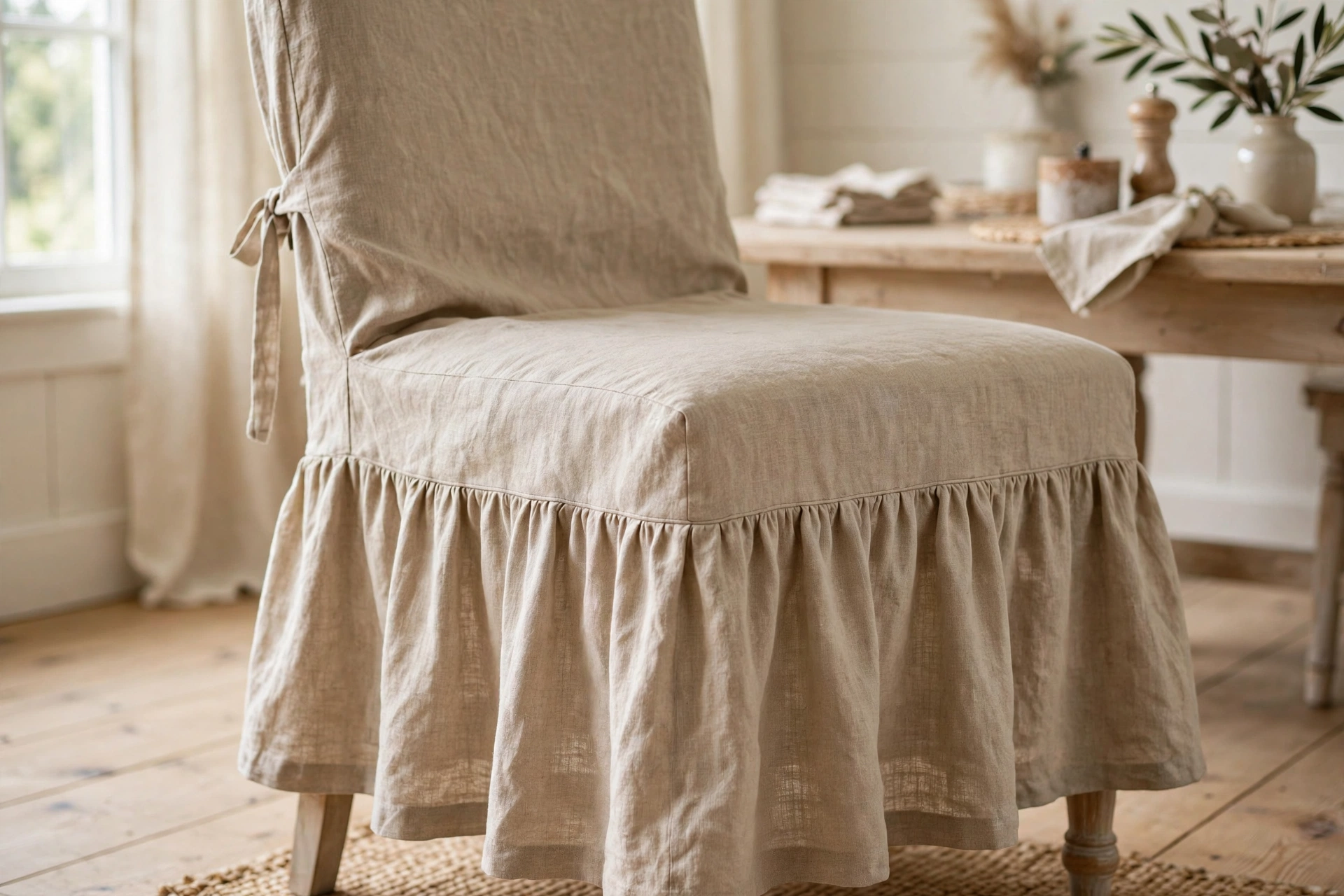
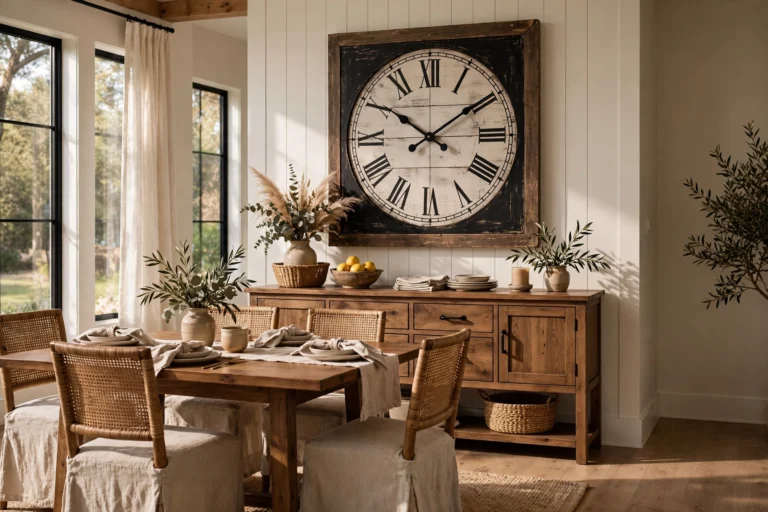
The classic long slipcover — fabric pooling just above the floor with a soft, unstructured skirt — is the most forgiving style for beginners. Natural linen or a linen-blend in oatmeal, flax, or white instantly relaxes a formal dining set and hides scratched legs, mismatched wood tones, and worn stretchers. Aim for a drop length that ends 1 to 2 inches above the floor so the skirt skims rather than drags and collects dust.
Because the silhouette is loose, exact measurements matter less: you need the seat width and depth, back height, and leg drop, plus 4 to 6 inches of ease all around. Prewash linen before sewing or fitting, since it can shrink up to 5 percent. This style suits farmhouse, coastal, and French-inspired dining rooms, and it is one of the most timeless dining chair slipcover ideas because the soft drape looks intentional even when it wrinkles a little.
2. Try a Tailored Parsons Chair Cover
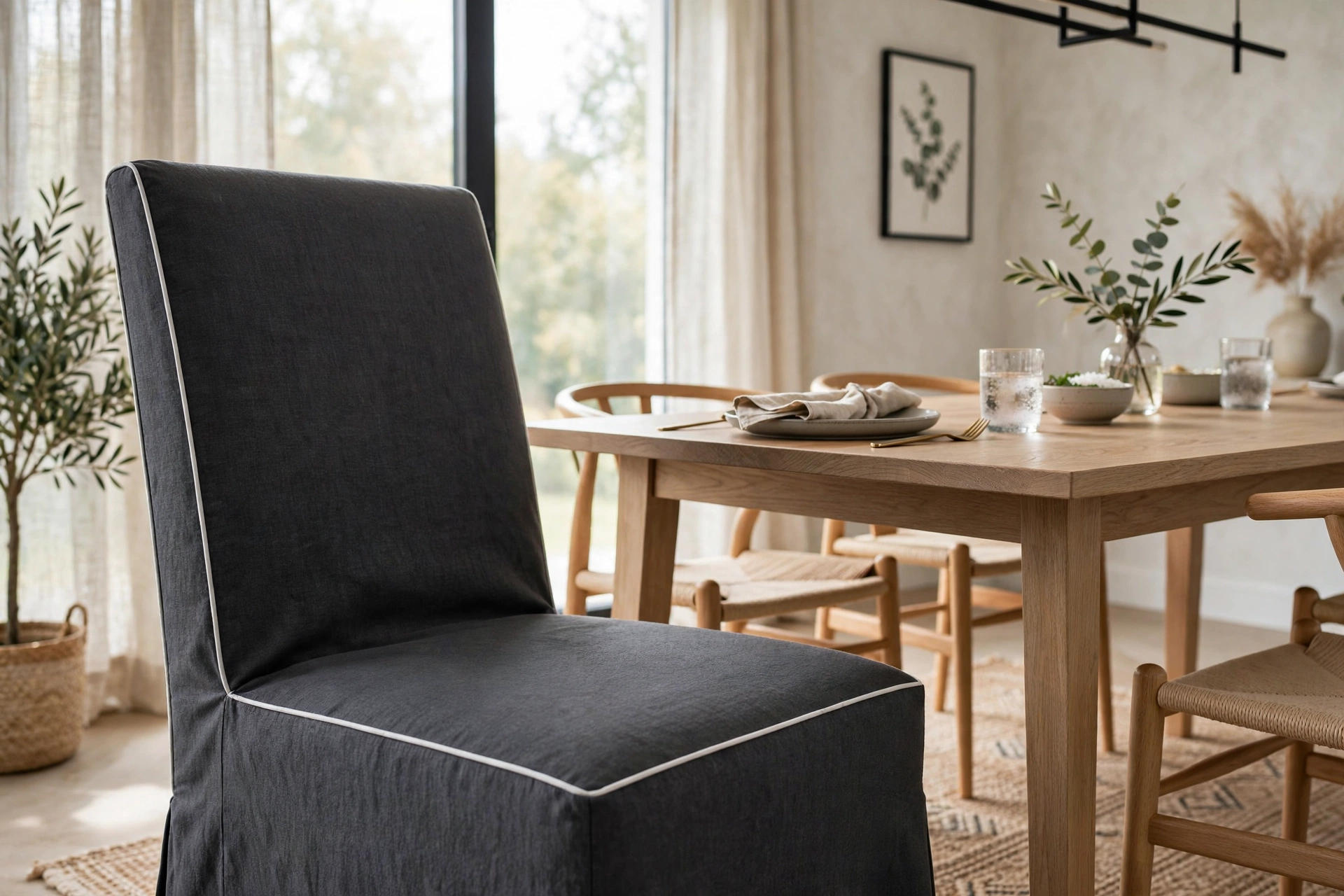
For a crisp, modern look, a tailored slipcover on a Parsons-style chair delivers clean lines and a custom-upholstery feel. Choose a medium-weight fabric with a bit of structure — cotton duck, denim, or a performance twill — and fit it closely through the back and seat, with welt cord (piping) along the seams for a professional finish. The cover should hug the chair with no more than half an inch of ease.
Measure the chair’s back height, seat depth, and leg height carefully, and consider adding a hidden zipper along one back leg for easy removal. Solid colors in charcoal, navy, or warm greige keep the look sophisticated; a subtle stripe adds interest without overwhelming. Tailored covers elevate everyday dining chairs into something that looks straight out of a showroom.
3. Go With Stretch Slipcovers for a Snug Fit
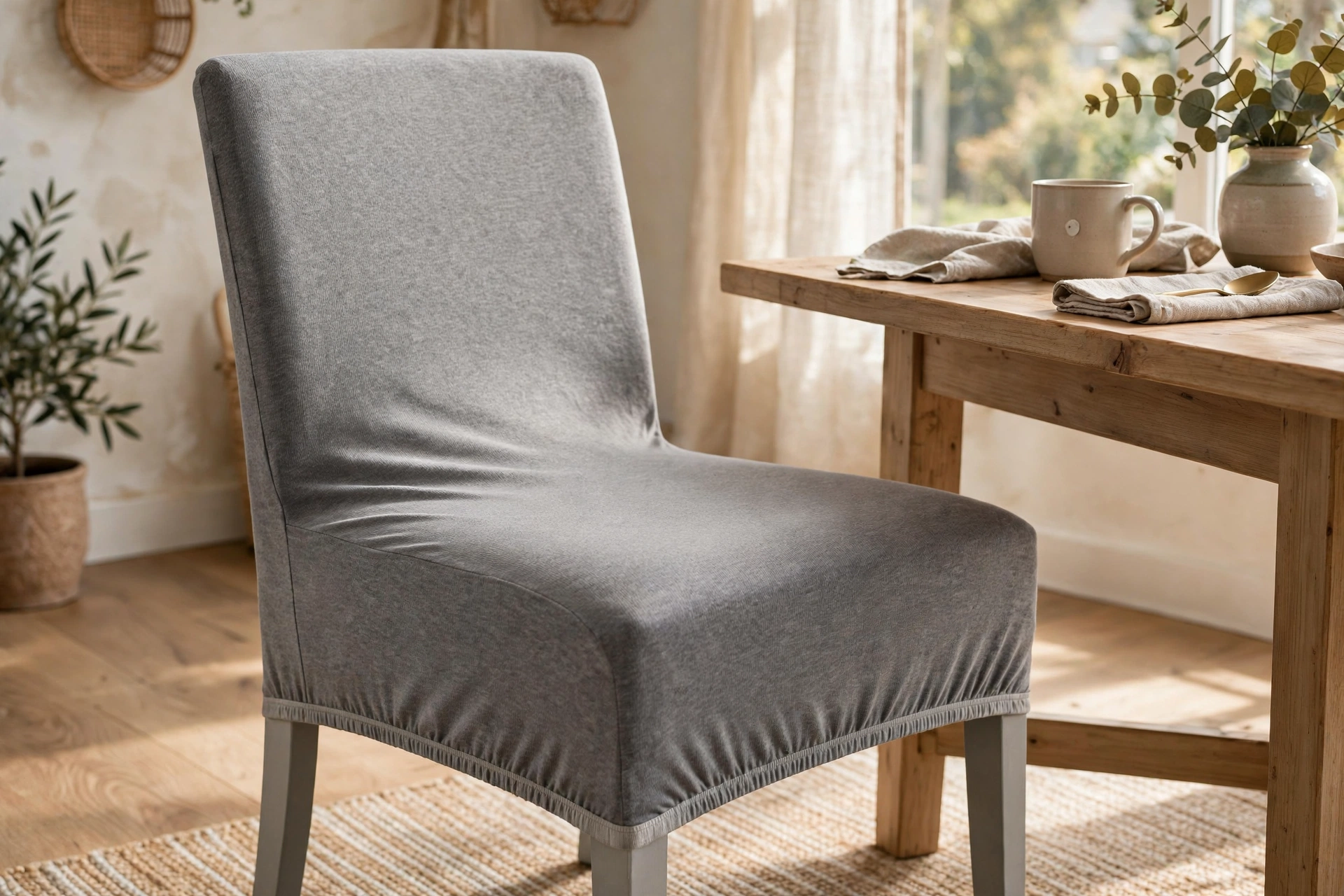
Ready-made stretch slipcovers, cut from spandex-blend fabrics, are the fastest route to a new look — most slip on in under five minutes per chair with no sewing. They work best on simple chair shapes: armless dining chairs with straight backs and square seats. Buy by seat measurements (width, depth, and back height) rather than by chair style name, and check the size chart twice.
Stretch covers come in dozens of colors and patterns now, from solid neutrals to damask prints and even faux leather. They grip the chair through elastic hems and foam stays tucked into the seat crevices. While they will never look fully custom, a well-chosen stretch cover in a quality fabric is a legitimate budget solution — and you can swap colors seasonally for less than the cost of one reupholstered chair.
4. Sew a Simple Seat-Only Cover
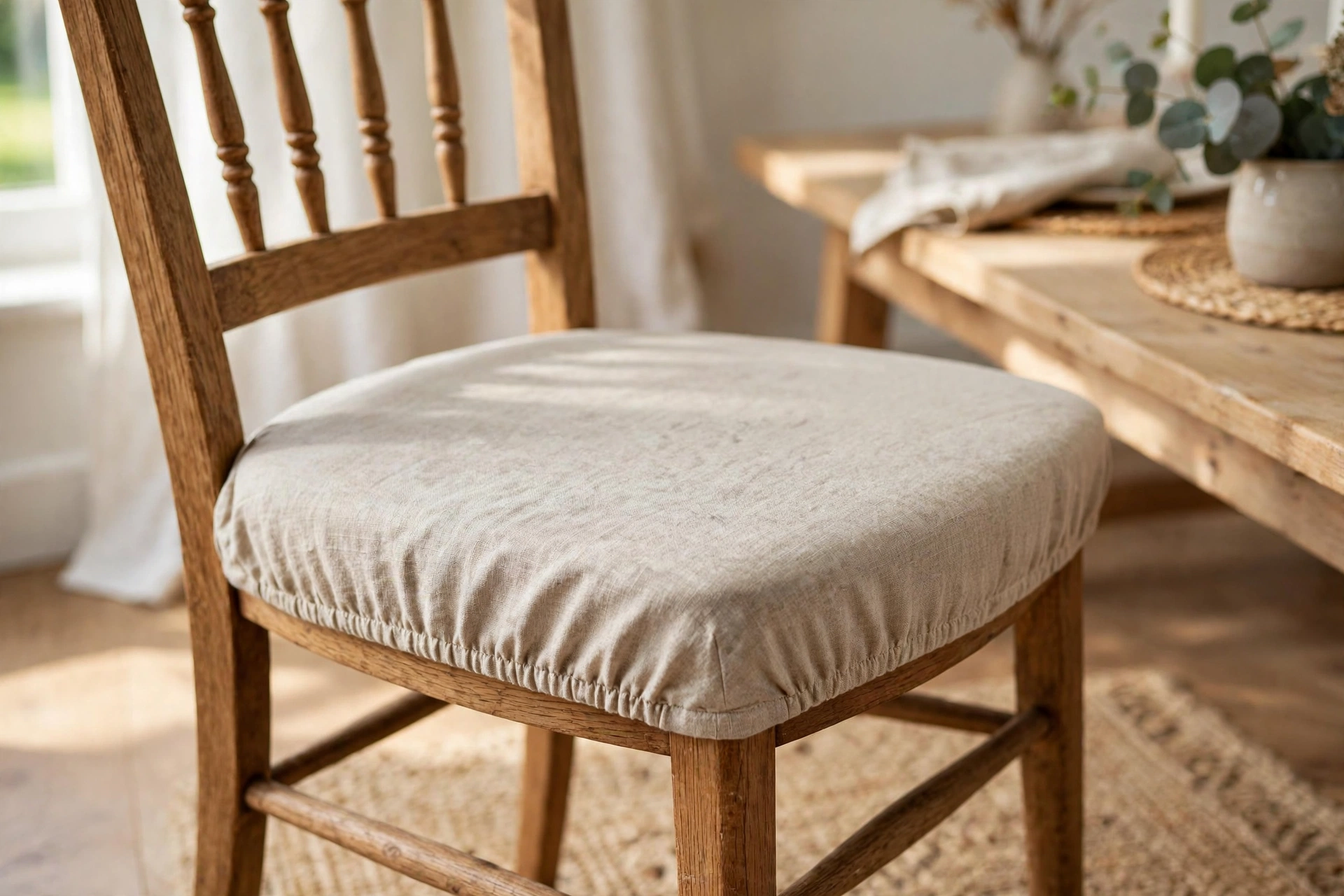
If full slipcovers feel like too much commitment, start with the seat only. A fitted seat cover — essentially a deep cushion cap with an elastic hem or ties — refreshes the most visible and most abused part of the chair. Cut the fabric 4 inches larger than the seat on all sides, hem the edge, thread elastic through the hem, and slip it over the seat so it grips underneath.
This project takes under an hour per chair even for novice sewers and uses less than half a yard of fabric each. It is ideal for wooden chairs with rush, cane, or worn wooden seats where the frame itself still looks good. Choose a durable, washable fabric like cotton canvas or outdoor fabric for everyday dining, and consider making two sets so one is always clean while the other is in the wash.
5. Add Ties for a Cottage Look
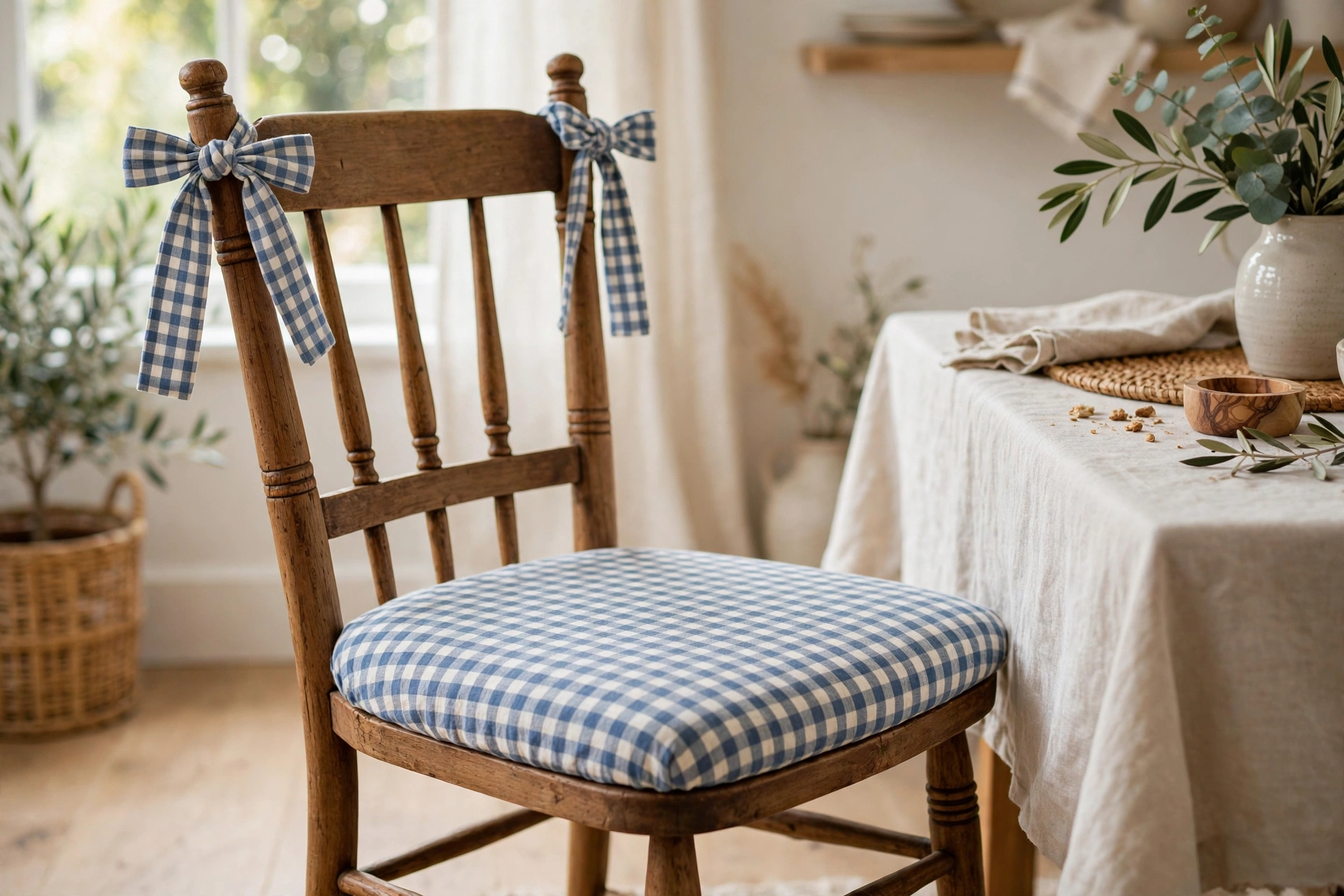
Fabric ties at the back corners of a seat cover or at the sides of a chair-back slip instantly signal cottage, country, or shabby-chic style. Cut four ties per chair, each 1.5 inches wide and 18 inches long, from the same or a coordinating fabric, and stitch them into the cover’s seams at the back posts. Tie them in simple bows — not too tight, or the fabric will pucker.
Gingham, ticking stripe, and small floral prints are natural partners for tied covers. The bows add a handmade, welcoming feel that suits breakfast nooks and casual dining rooms. For a more refined take, replace bows with simple knots and choose a solid linen; the tie detail remains but reads tailored rather than cutesy.
6. Pick Performance Fabric for Kid-Proof Chairs
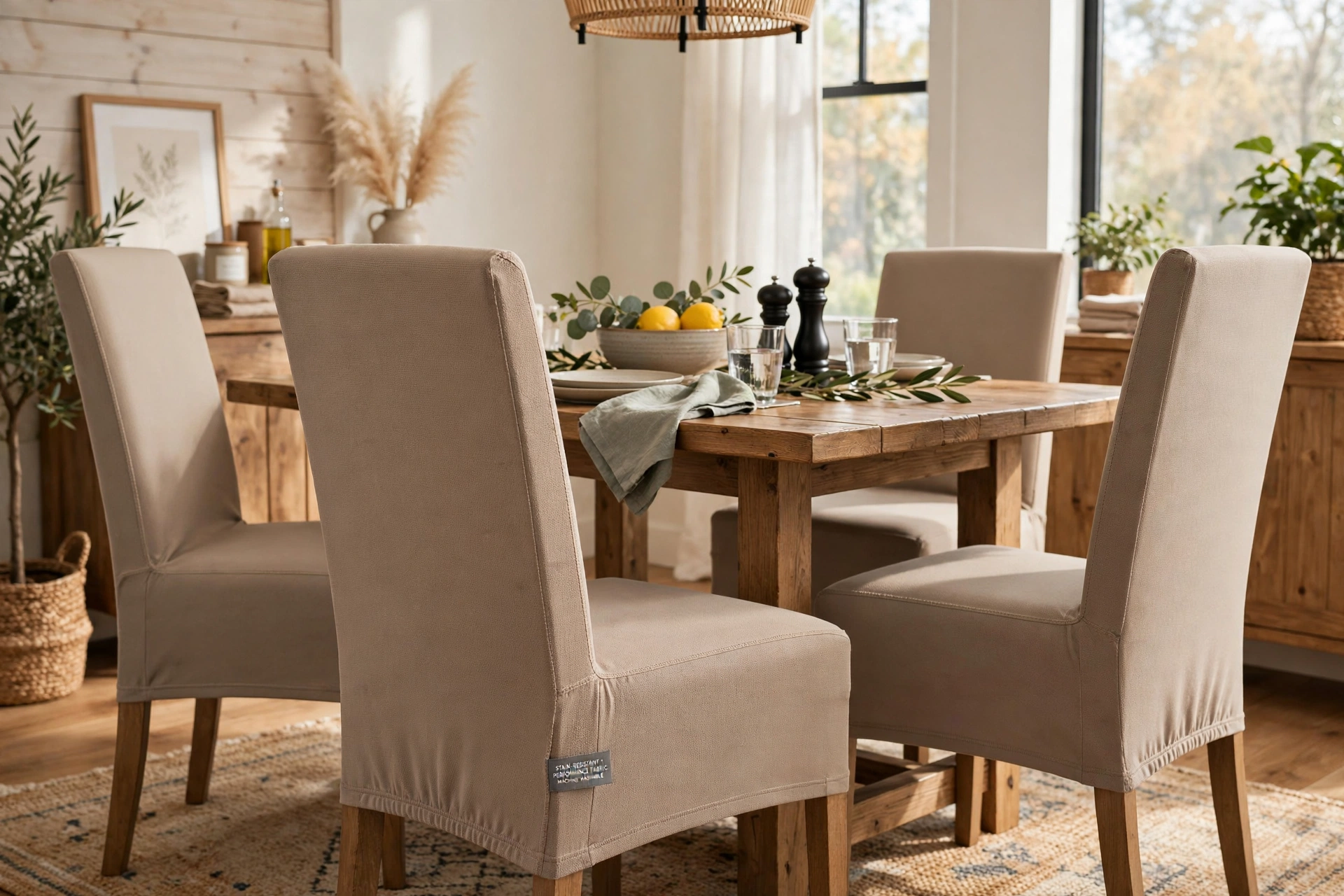
If your dining chairs survive toddlers, performance fabrics are non-negotiable. Look for solution-dyed acrylics, indoor-outdoor fabrics, or treated cottons labeled stain-resistant and machine-washable. These fabrics resist juice, spaghetti sauce, and crayons far better than untreated linen or cotton, and most release stains with just soap and water.
When shopping, check the rub count (aim for 15,000 double rubs or more for dining use) and confirm the care label allows machine washing. Performance fabrics now come in soft, natural-looking weaves — not the stiff, plasticky textures of years past — so you do not have to sacrifice style for durability. For more ways to keep dining seating beautiful under real-life conditions, see these dining chair ideas.
7. Try a Drop-Cloth Slipcover on a Budget
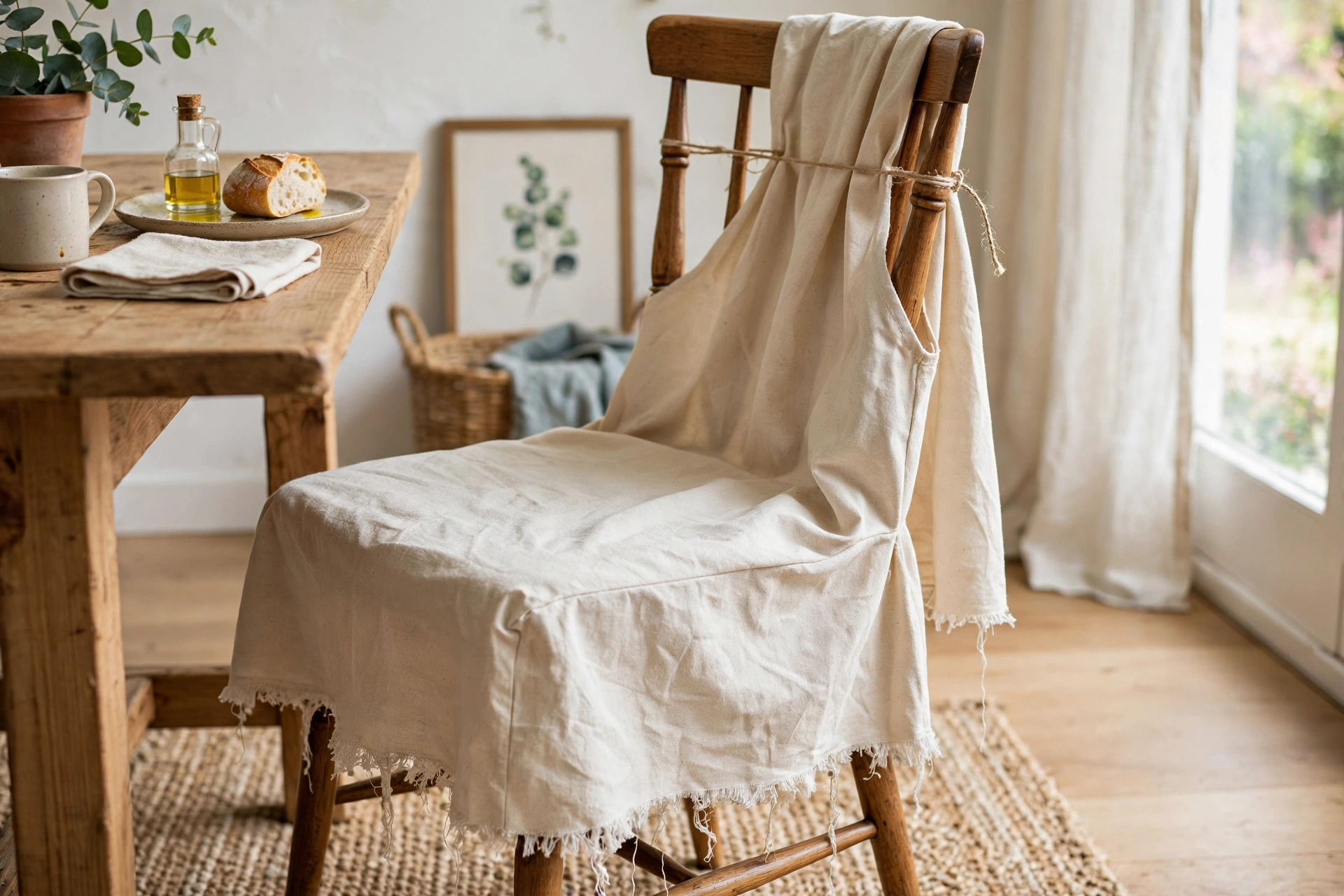
Painter’s drop cloths from the hardware store are the open secret of budget slipcovering. A 9-by-12-foot canvas drop cloth costs a fraction of yardage fabric and yields enough material for four to six chair slipcovers. Wash it twice in hot water first — it arrives stiff and heavily sized — and it softens into a texture remarkably like rustic linen.
The natural beige tone works with nearly every palette, and you can bleach or dye drop cloths for custom color. Because the fabric is inexpensive, it is the perfect material for a first sewing attempt: mistakes cost almost nothing. Finish edges with a simple hem or leave a raw, frayed edge for a deliberately casual look.
8. Style a Two-Tone Slipcover
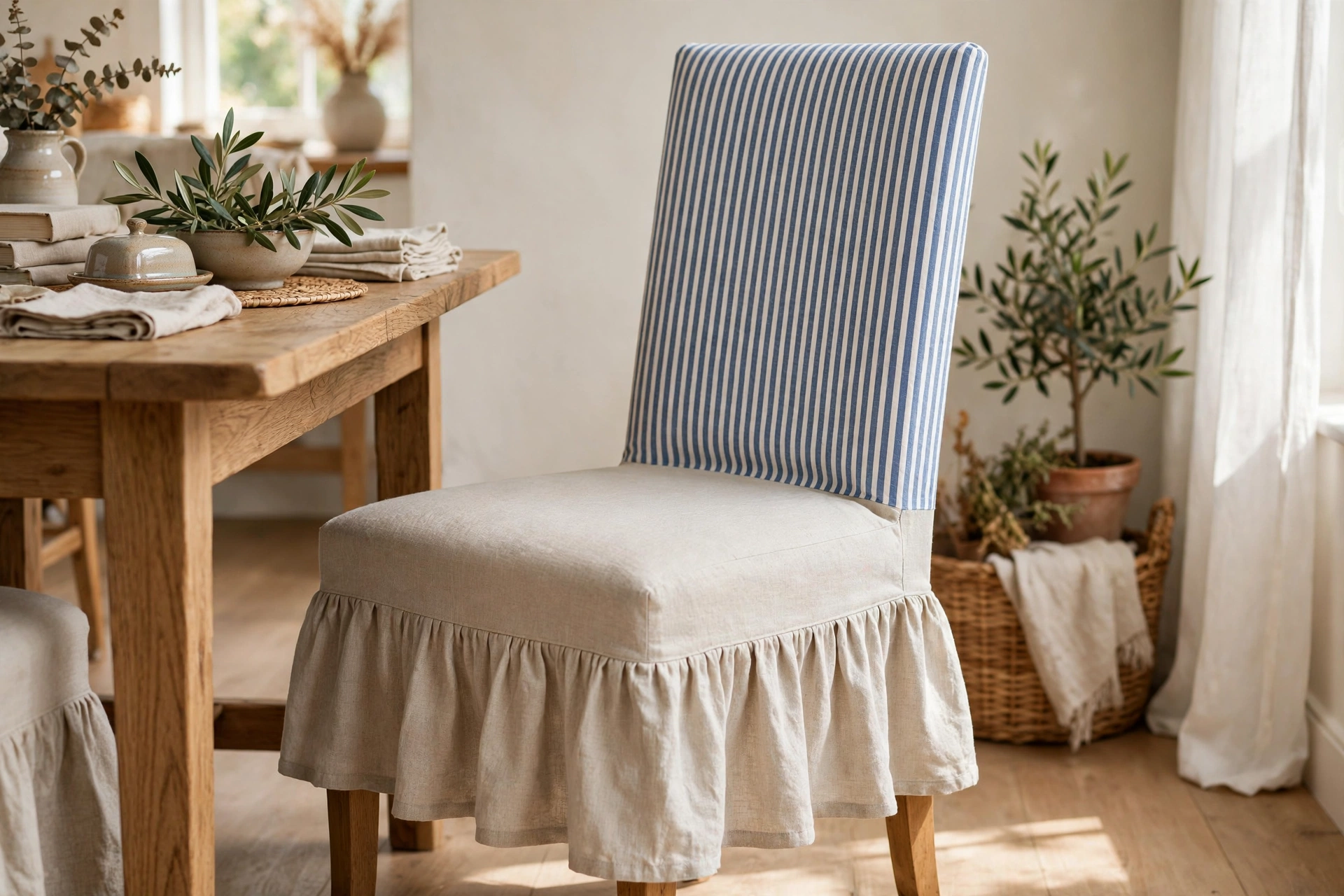
A two-tone slipcover — one fabric for the chair back, another for the seat and skirt — adds designer-level interest for little extra effort. Pair a solid with a stripe, a neutral with a bold print, or two complementary solids like navy and natural linen. Place the visual break at the seat line, where it looks most natural, and finish the seam with contrasting welt cord to emphasize the division.
This approach also stretches a precious fabric: use the special print where it shows most (the chair back, visible across the table) and an affordable solid for the skirt. When planning the cut, add the pieces separately and join them at the seat seam before assembling the cover, so the color break stays crisp and level on every chair.
9. Add a Box-Pleat Skirt for Structure
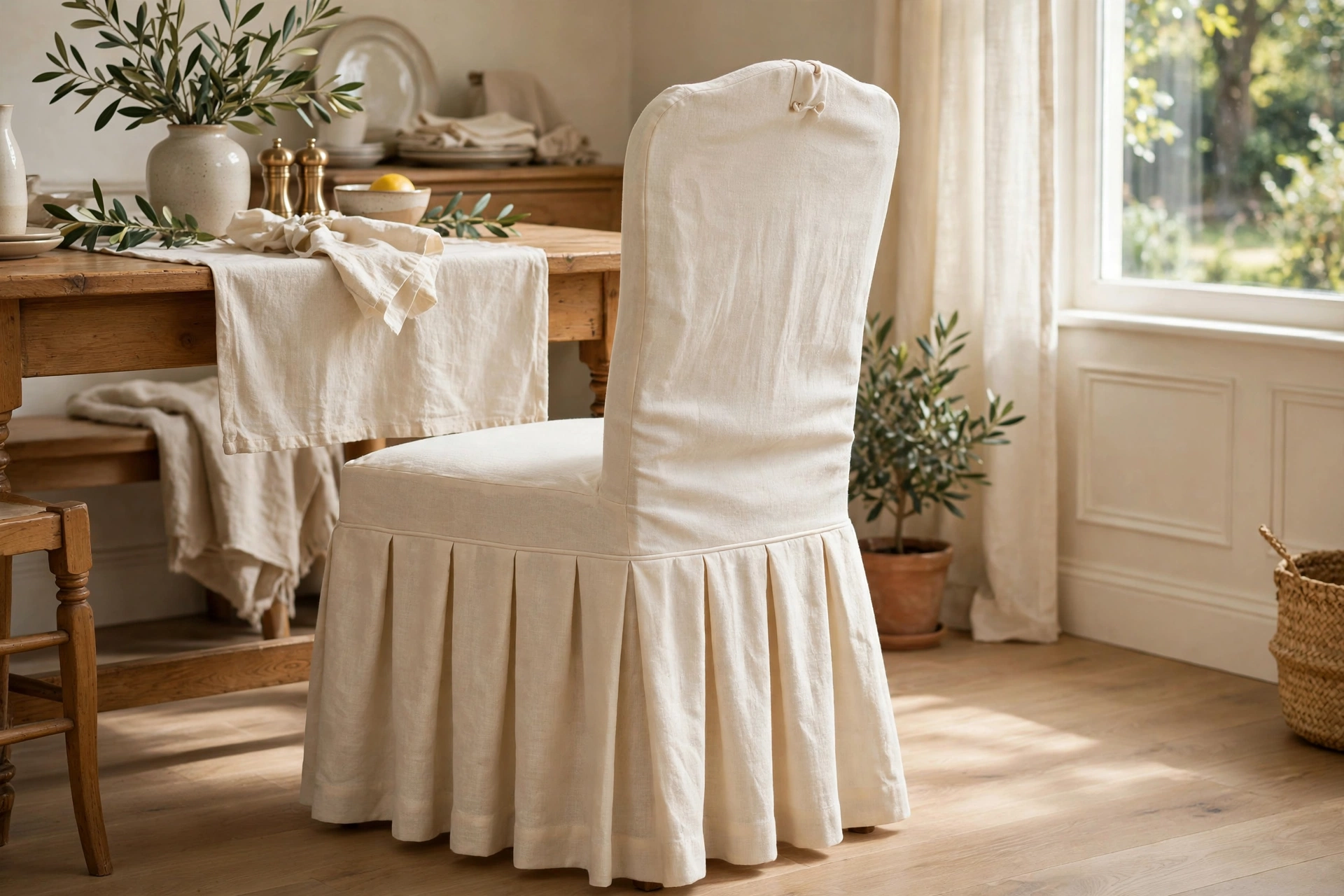
If loose skirts feel too casual, a box-pleat or kick-pleat skirt brings tailored structure. Box pleats — flat, evenly spaced folds — give the slipcover a furniture-grade finish that suits traditional and transitional dining rooms. Plan pleats 4 inches wide, spaced 4 inches apart, which means adding roughly double the skirt’s finished circumference in fabric.
Press pleats with an iron before hemming for crispness, and consider a contrasting lining visible inside each pleat for a subtle surprise detail. Kick pleats at the front corners allow the skirt to clear chair legs gracefully. The structured skirt elevates the whole cover, making even simple cotton look custom-made.
10. Use Slipcovers to Mix and Match Chair Styles
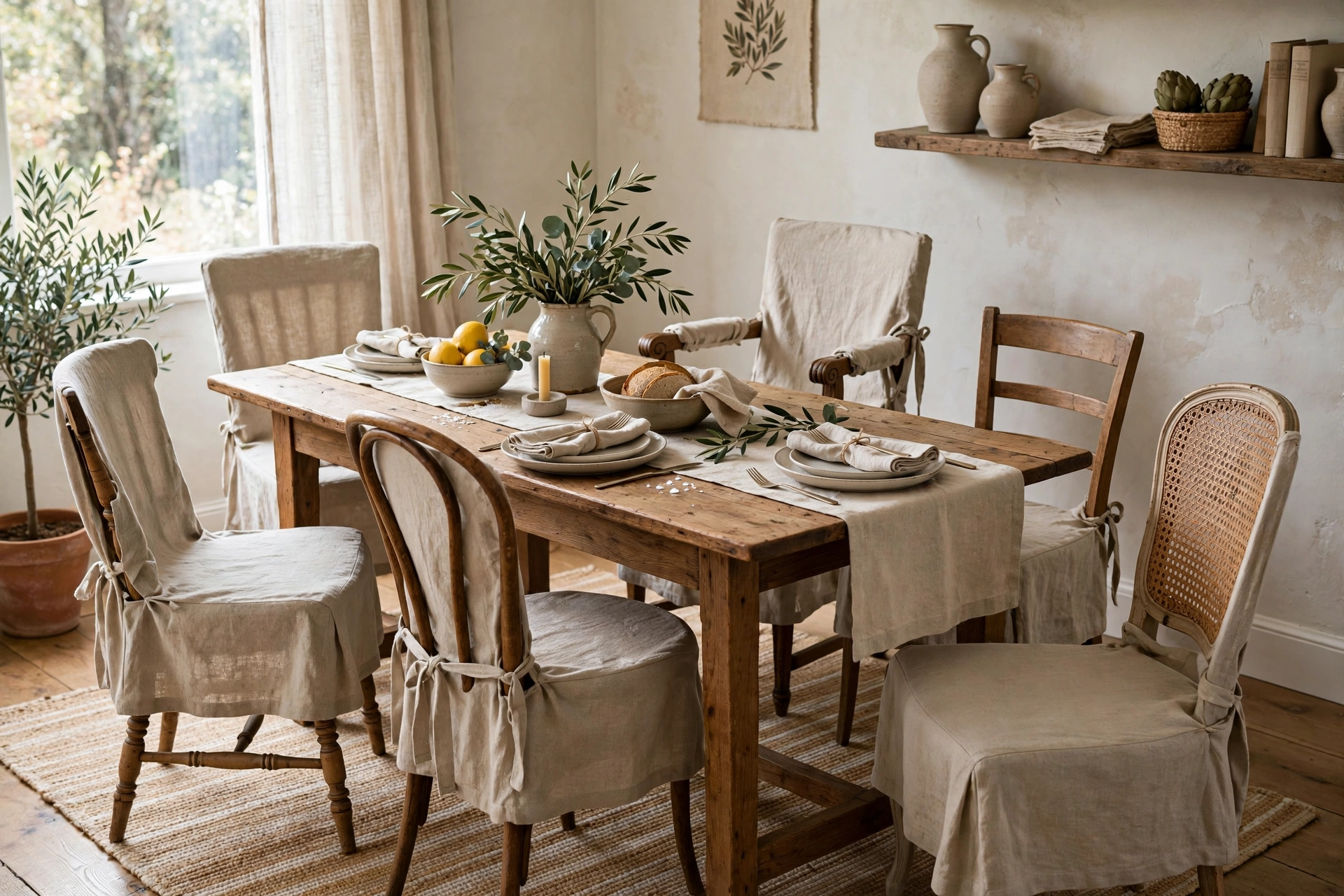
Slipcovers are the great unifier: mismatched chairs from different eras disappear under matching covers, creating a cohesive set from a flea-market collection. This is one of the smartest dining chair slipcover ideas for budget decorating — buy interesting chair frames cheap, then unify them in one fabric. Just make sure the chairs are similar in overall height and seat size so the covers read as a true set.
Choose one fabric for all chairs for maximum cohesion, or cover host and hostess chairs in an accent fabric while side chairs share a neutral. The latter trick adds a custom, designer touch. Keep the slipcover style simple across all chairs; elaborate details will highlight rather than hide the frames’ differences.
11. Choose White for a Timeless Look — and Wash Often
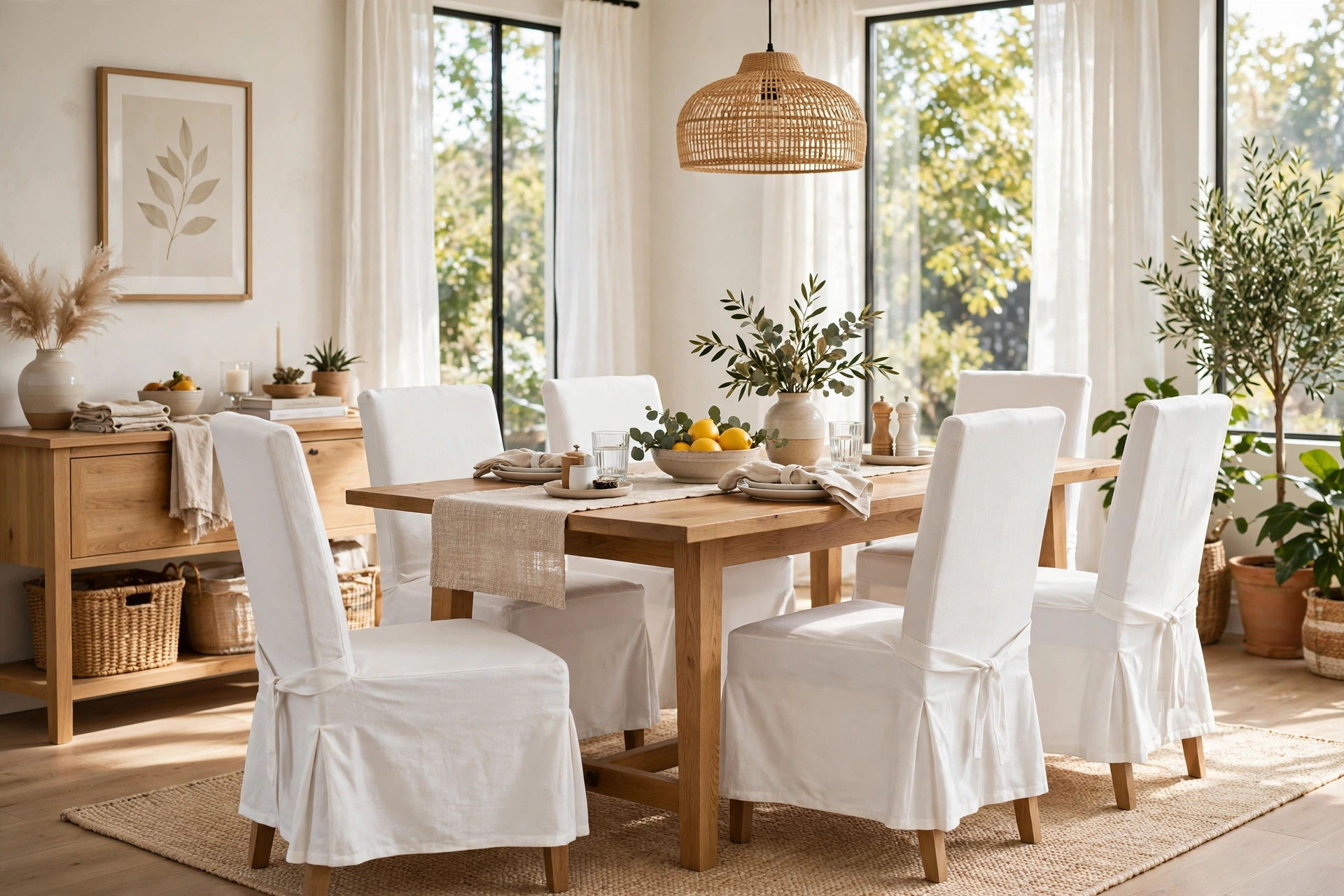
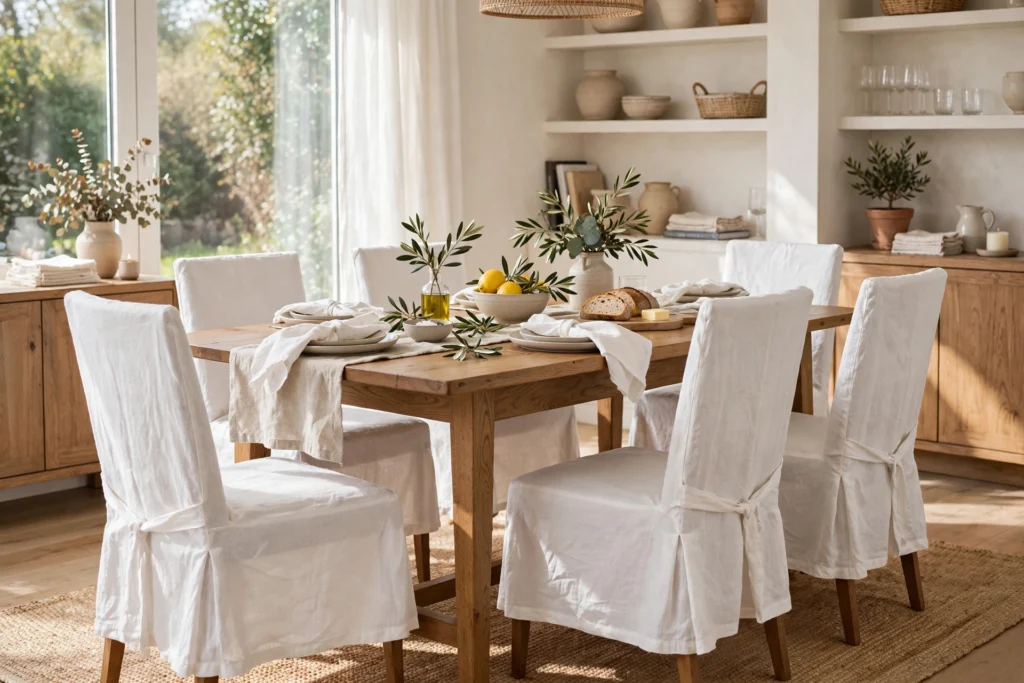
White slipcovers are the iconic look for a reason: they brighten the dining room, suit every style from coastal to formal, and signal relaxed elegance. The fear of stains is real but manageable — choose a machine-washable cotton or performance fabric, keep a stain-treatment stick in the laundry room, and wash covers every two to four weeks depending on use.
Buy or sew one extra cover so chairs are never bare on laundry day. White shows wear fastest at the seat front edge and arm areas, so reinforce those spots with an extra layer of fabric during construction. The maintenance is honest work, but the payoff is a dining room that always looks fresh, light, and inviting. For styling the table that sits between those white chairs, browse these dining table decor ideas.
12. Add Welt Cord for a Professional Finish
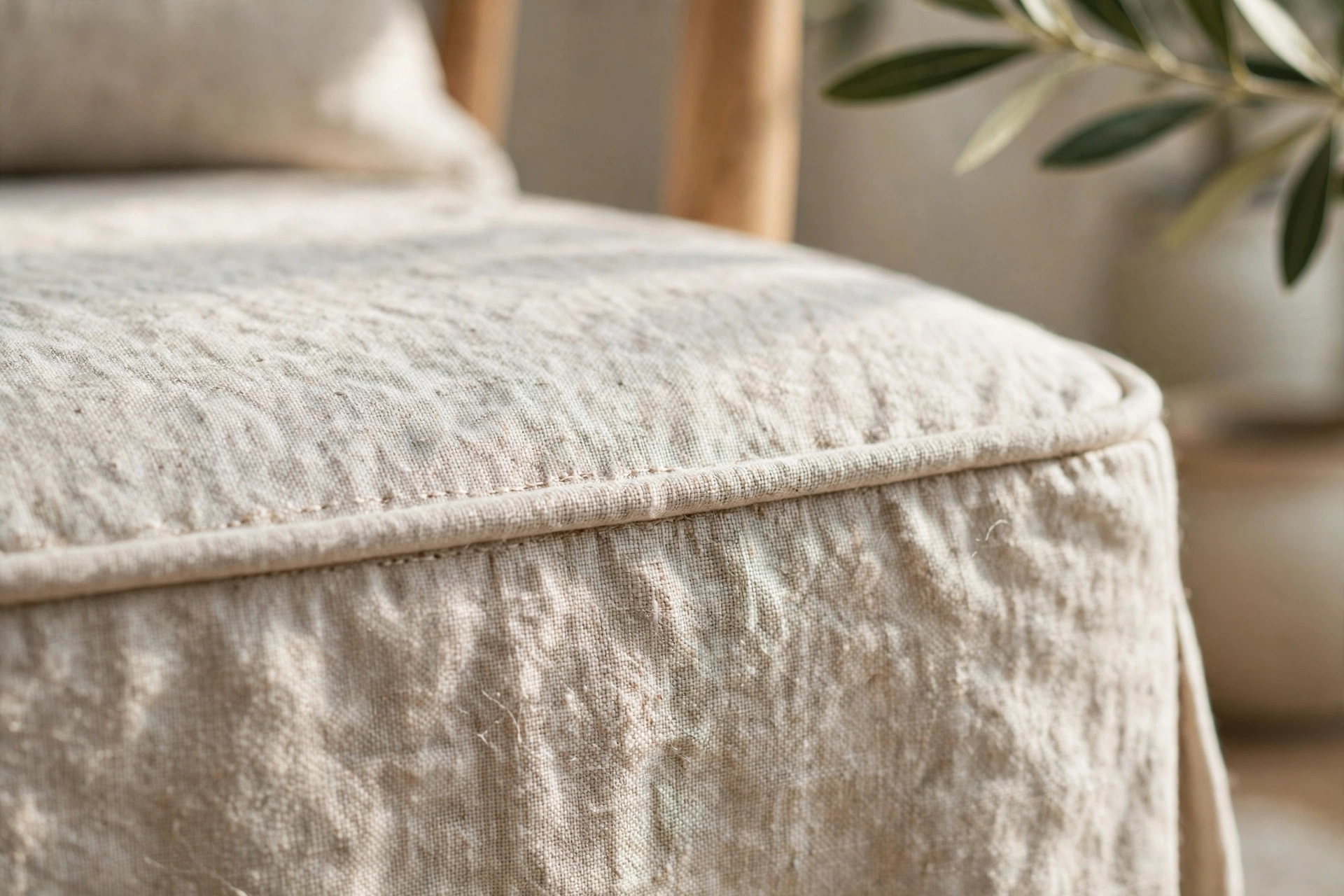
Welt cord — fabric-covered piping sewn into seams — is the single detail that makes a homemade slipcover look store-bought. It defines edges along the seat, back, and arm seams, and it hides minor imperfections in your stitching. Buy pre-made cord or make your own by wrapping bias-cut fabric strips around cotton cording, cutting strips 1.5 inches wide for standard 5/32-inch cord.
Pin the cord into the seam allowance before sewing, keeping it snug against the seam line, and use a zipper foot to stitch close. Match the cord fabric to the slipcover for a subtle finish, or choose a contrasting color to outline the chair’s shape deliberately. One afternoon of piping transforms a plain cover into something that looks genuinely upholstered.
13. Slipcover Only the Host Chairs
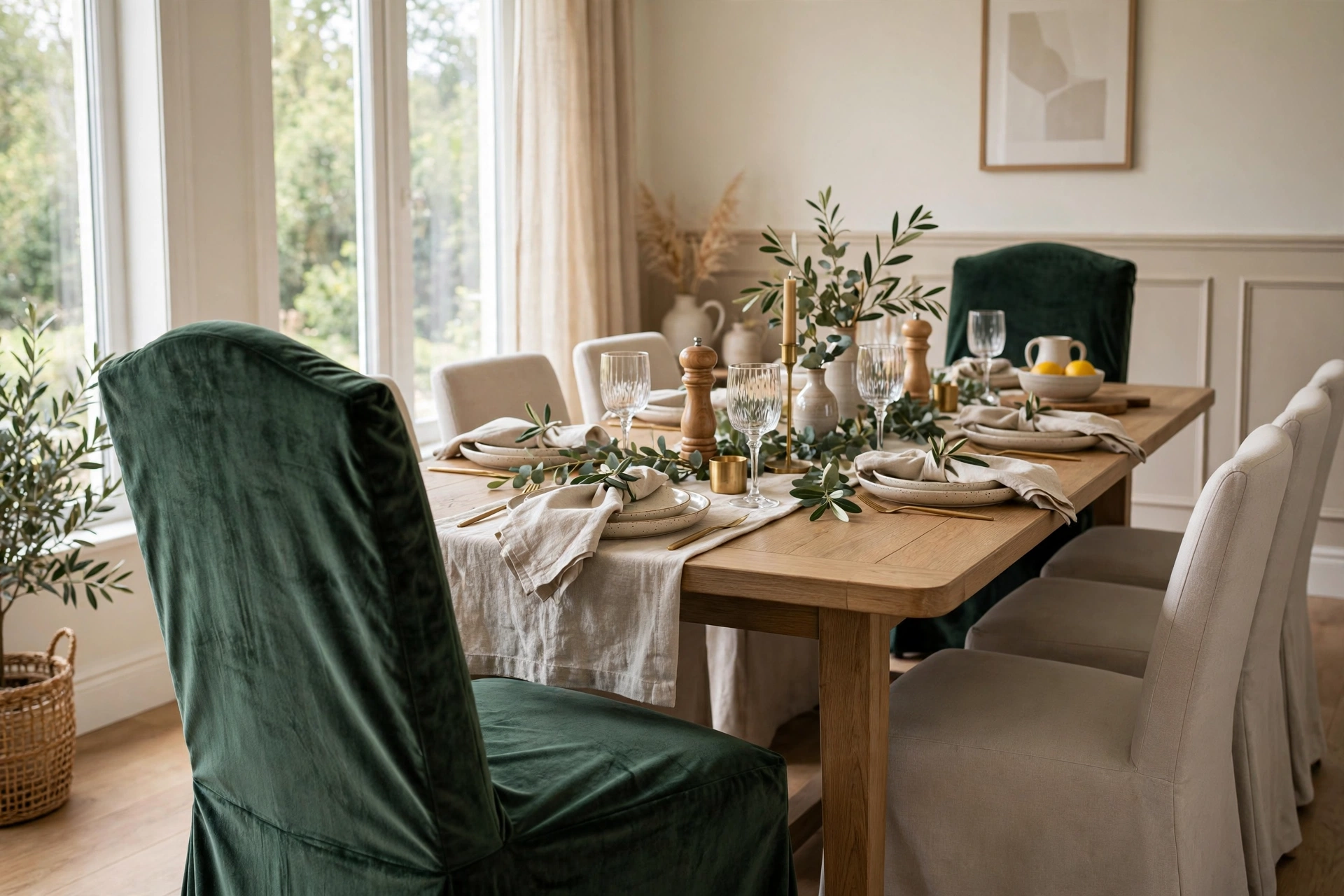
You do not have to cover every chair. Slipcovering just the two host chairs at the heads of the table creates a focal point and a sense of occasion while leaving side chairs as they are. Choose a luxurious or patterned fabric for the host covers — velvet, a bold stripe, an elegant damask — since you only need two, the budget stretches to nicer material.
This partial approach works best when the host chairs have a distinct shape (higher backs, arms) that justifies the special treatment. Keep the color in the same family as the side chairs so the pairing feels deliberate. It is also a low-risk way to test whether you like the slipcovered look before committing to a full set.
14. Try a Grain-Sack Stripe for Rustic Charm
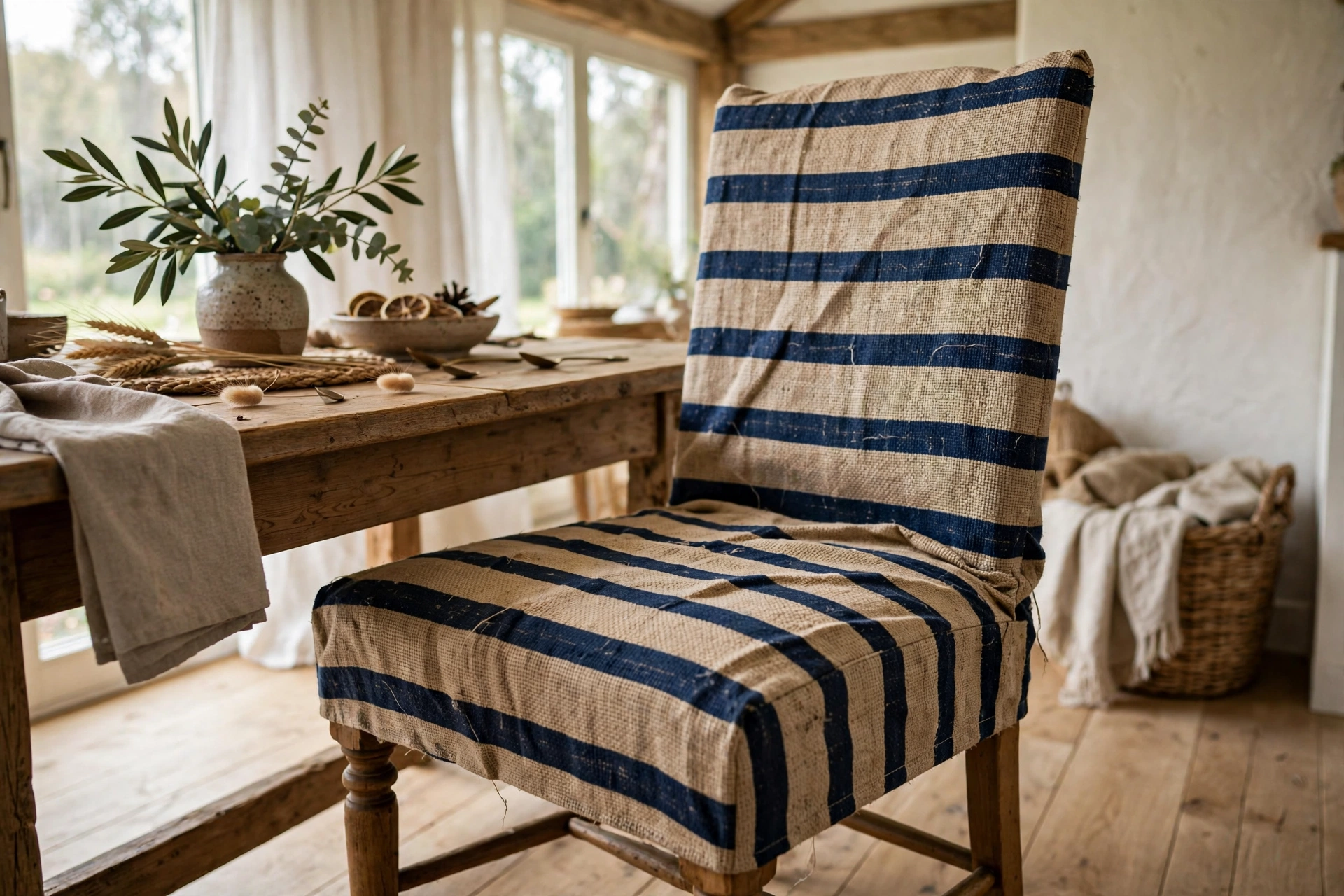
Grain-sack fabric — heavyweight linen or cotton with bold woven stripes — brings instant farmhouse and European-rustic character to dining chairs. Authentic vintage grain sacks are pricey, but reproduction grain-sack fabric is widely available and far more consistent in width and color. The classic look is natural flax with one or two stripes in black, navy, or red.
Because the stripes are the star, keep the slipcover silhouette simple: a straight skirt, minimal pleating, and let the stripe placement do the design work. Center a stripe down the chair back for symmetry. Pair grain-sack chairs with a wood table and simple ceramics for a dining room that feels collected and warm rather than decorated. For a fully pulled-together traditional look, see these formal dining room ideas.
15. Finish With Fabric Protection Spray
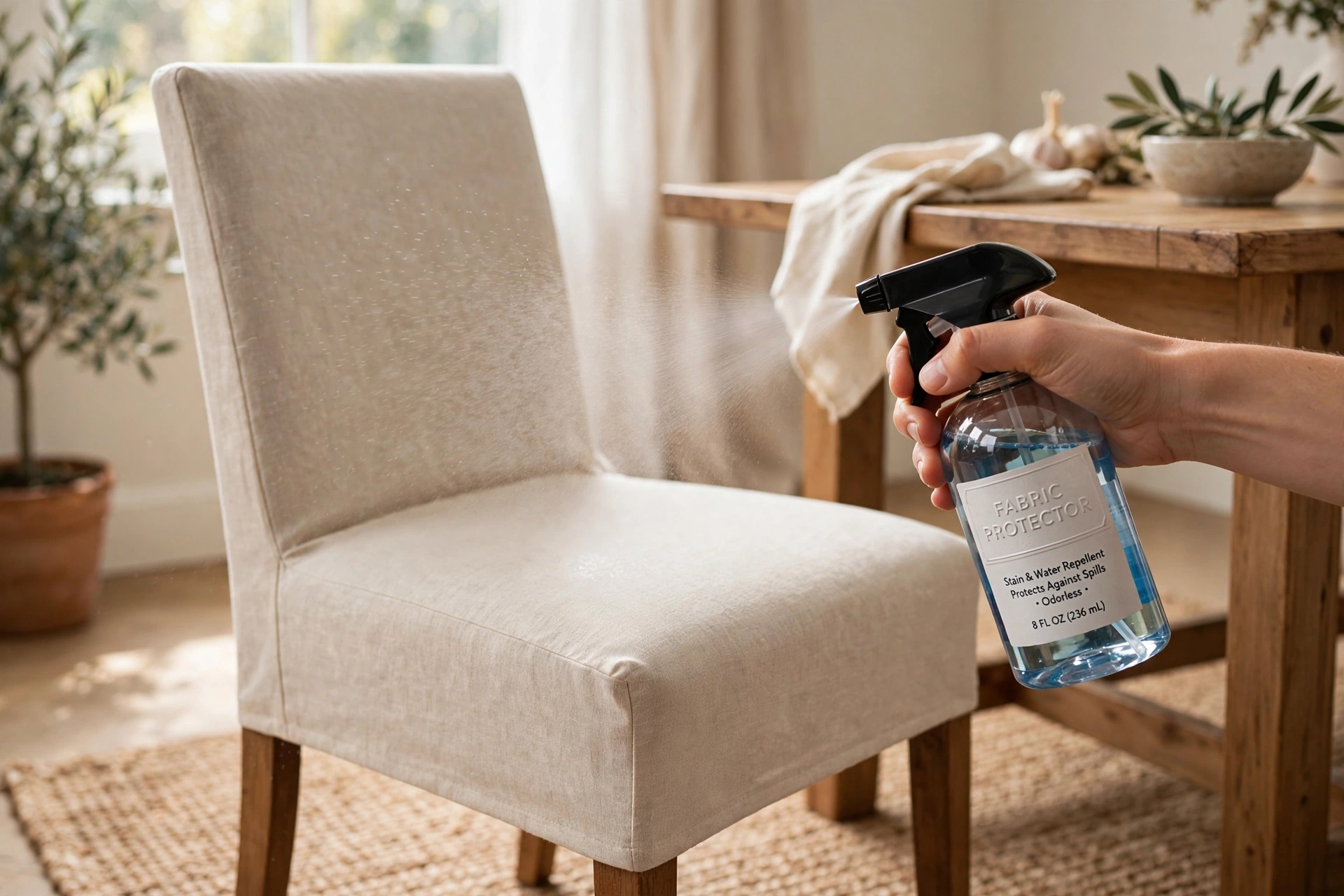
Whatever fabric you choose, a fabric protection spray adds an invisible shield against spills. Apply two light coats to the finished slipcover before first use, holding the can 6 to 8 inches away and letting each coat dry completely. The treatment makes liquids bead instead of soaking in, buying you precious seconds to blot up accidents.
Reapply every six months or after each machine wash, since laundering gradually removes the treatment. Test on a hidden scrap first — a few specialty fabrics can darken slightly. This final step costs little and extends the good-looking life of your slipcovers dramatically, which is the whole point of choosing washable, practical chair dressing in the first place. Textile science backs the approach: understanding textile fibers helps you match the right protection product to natural versus synthetic fabrics.
Frequently Asked Questions
How much fabric do I need for a dining chair slipcover?
Plan on 2 to 2.5 yards of 54-inch-wide fabric per standard armless dining chair for a full skirted slipcover. Chairs with arms need 3 to 3.5 yards. Always buy an extra half yard beyond your calculation for pattern matching, mistakes, and prewash shrinkage. For a set of six chairs, 12 to 15 yards is a typical total.
What is the best fabric for dining chair slipcovers?
Medium-weight, washable fabrics work best: cotton duck, linen blends, denim, and performance fabrics. Avoid lightweight quilting cottons (they wrinkle and wear fast) and heavy upholstery fabrics (hard to sew and too stiff to drape). For homes with kids or pets, choose a stain-resistant performance fabric with a rub count of at least 15,000 double rubs.
Can you put slipcovers on chairs with arms?
Yes, but armed chairs need more fabric, more careful measuring, and usually a zipper or Velcro closure for removal. The arm adds fitting complexity, so beginners should start with armless chairs. If you are buying ready-made, look specifically for armchair slipcovers sized to your chair’s measurements rather than stretching a dining-chair cover over arms.
How do you keep slipcovers from slipping off?
Tuck foam batting or non-slip shelf liner into the seat crevices, add ties or Velcro straps around the back posts, and make sure elastic hems are snug. For sewn covers, a closer fit through the seat and back prevents riding up. Some people add small upholstery twist pins at the seat corners for extra grip on frequently used chairs.
Are slipcovers machine washable?
Most cotton, linen, and performance-fabric slipcovers are machine washable — that is their main advantage. Always prewash fabric before sewing to account for shrinkage, and follow the fabric’s care label: wash cold or warm, tumble dry low or line dry, and iron while slightly damp for the crispest result. Reapply fabric protector after washing. Caring for washable home textiles properly extends their life considerably, as any good laundry guide will confirm.
Keep Exploring
Slipcovers reward the practical decorator: they protect your chairs, hide their flaws, and let you redecorate the dining room for the price of fabric. Pick one idea that fits your skill level, start with a single chair, and enjoy watching your dining set transform — one washable, beautiful seat at a time.