
There is a reason vintage dining rooms photograph so well: they carry the patina of real life. A scarred farmhouse table, a chandelier with a little history, chairs that have hosted decades of dinners — these pieces bring warmth and character that brand-new furniture simply cannot fake. These vintage dining room ideas will help you build that collected-over-time look deliberately, mixing genuine antiques with vintage-inspired pieces for a dining room with timeless charm.
The vintage approach is not about recreating a museum period room. It is about choosing pieces with history, honoring craftsmanship, and styling them in a way that feels livable today. Whether you love Victorian elegance, mid-century lines, or rustic farmhouse warmth, the ideas below show how to get the balance right.
1. Anchor the Room With a Farmhouse Table
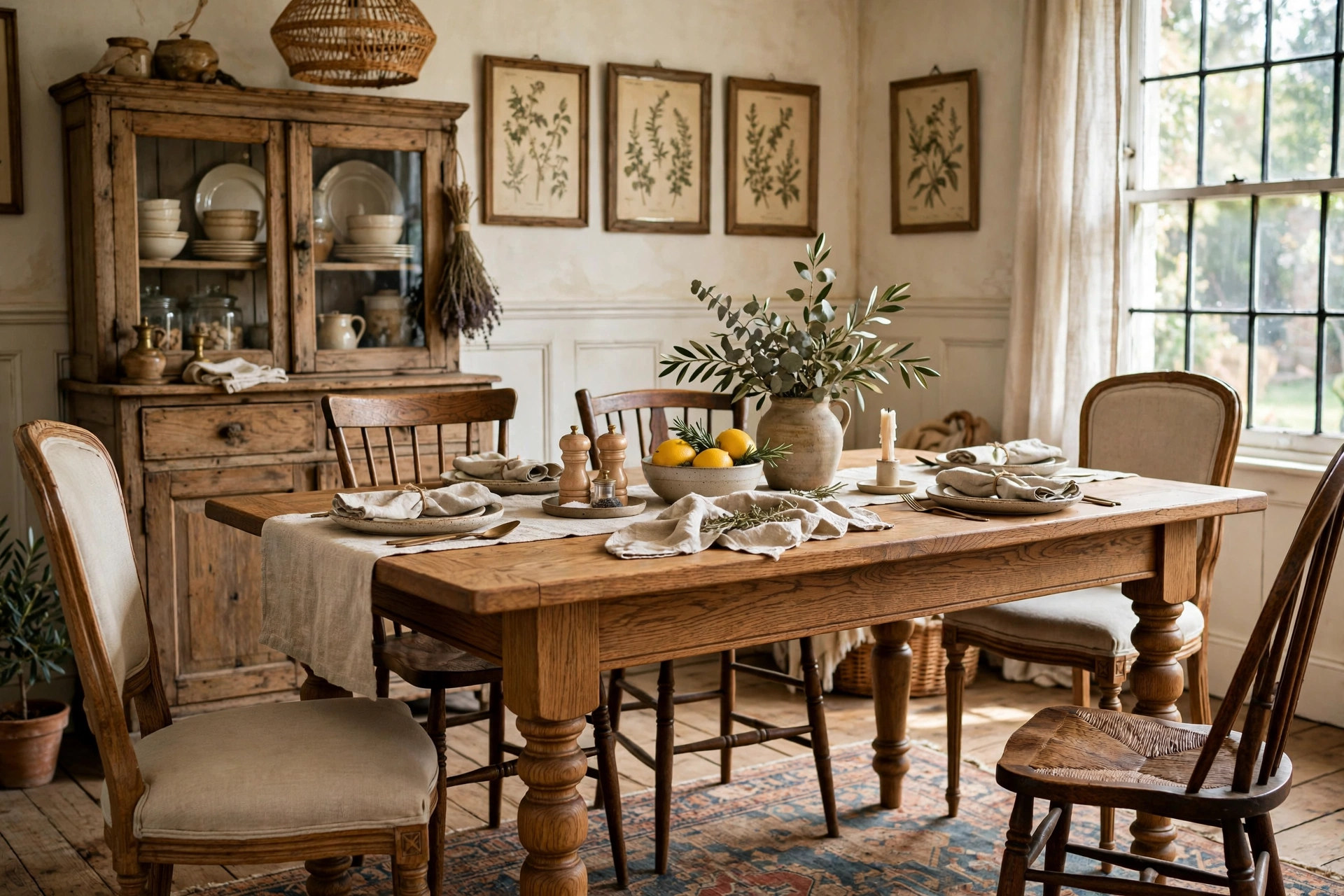
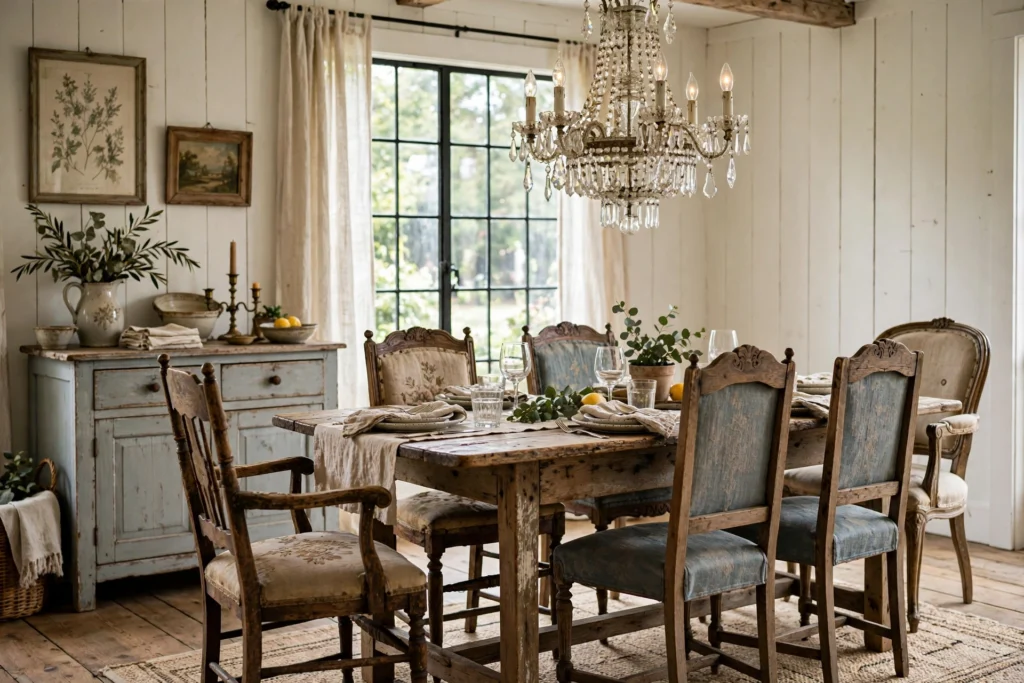
A substantial wood farmhouse table is the natural heart of a vintage dining room. Look for solid wood — oak, pine, or walnut — with visible grain, turned legs, and the kind of wear that tells a story. Genuine antique farmhouse tables often measure 72 to 96 inches long and seat six to eight; reproductions in the same proportions give you the look with a sturdier, level surface.
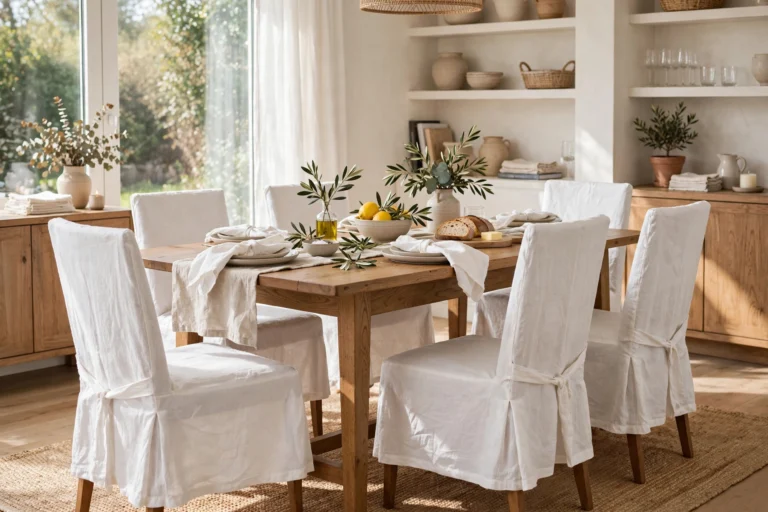
When buying vintage, check that the table sits flat without rocking, inspect the underside for woodworm or repairs, and run your hand across the top for deep gouges that could snag tablecloths. A table with honest wear is perfect; a table with structural damage is a project. Pair it with seating that does not match too precisely — the collected look depends on a little contrast.
2. Mix Vintage Chair Styles Around the Table
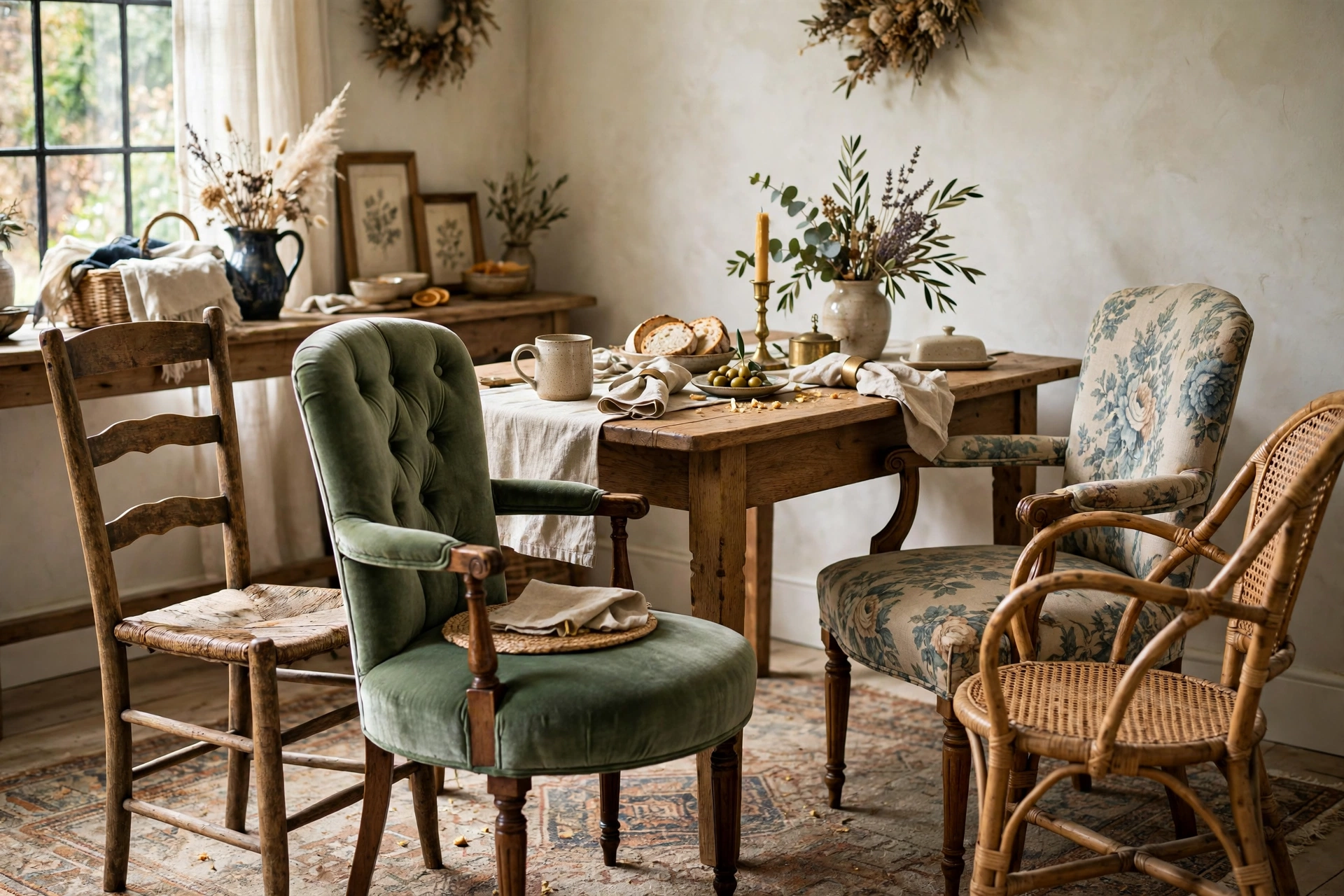
Perfectly matched dining sets can feel stiff and showroom-like; a mix of vintage chair styles feels gathered and personal. Combine, for example, four ladder-back chairs with two upholstered host chairs, or pair mid-century teak chairs with a rustic oak table. Keep one unifying element — similar wood tones, a shared upholstery fabric, or comparable seat heights (standard dining seat height is 17 to 19 inches) — so the mix reads as curated.
When hunting mismatched chairs, measure seat height first; a two-inch difference between chairs is noticeable and uncomfortable. Reupholstering seat pads in one fabric is the fastest way to unify a motley collection. This collected approach is the soul of vintage style: every chair can have its own story while the table setting still feels harmonious.
3. Hang a Crystal or Brass Chandelier
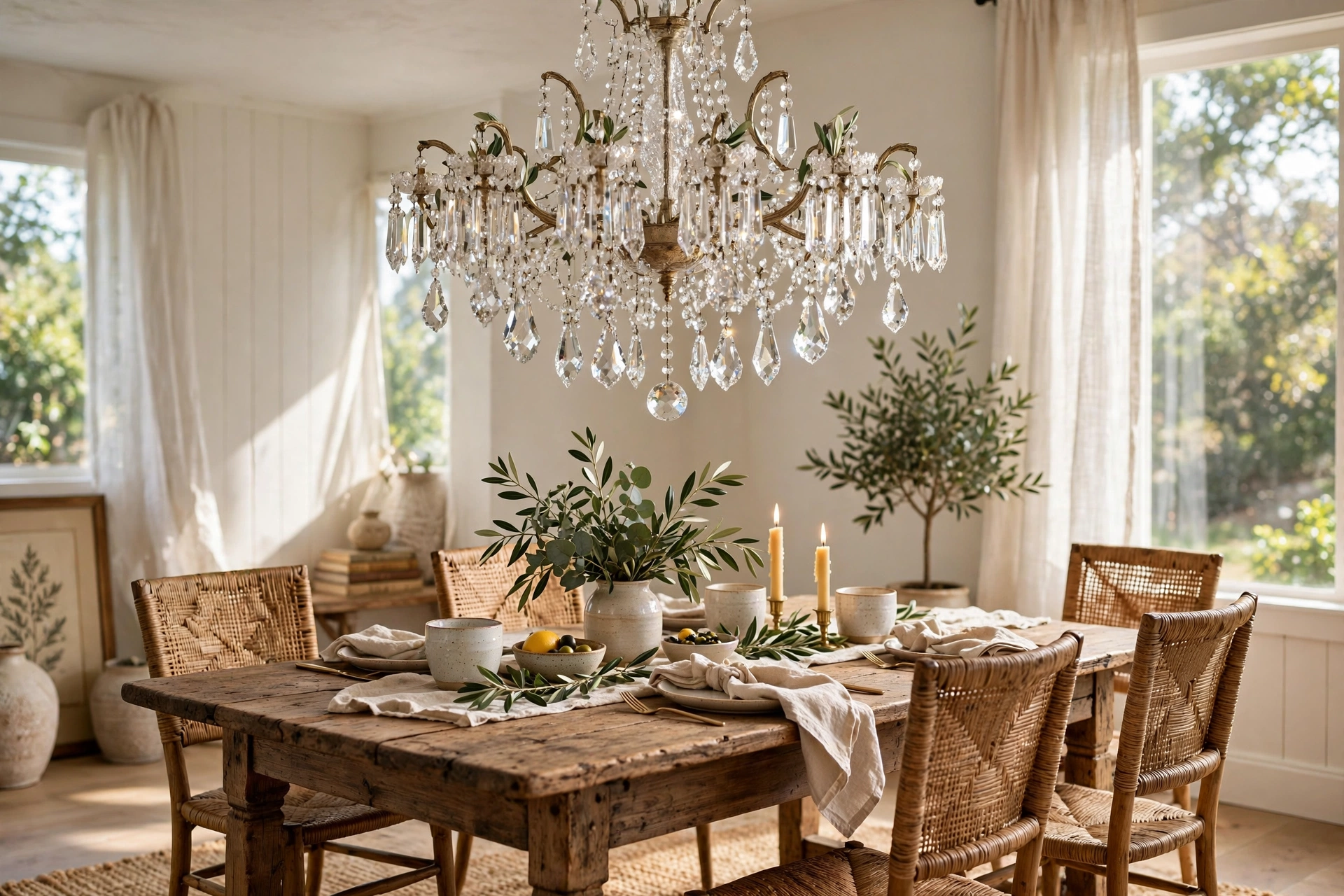
Nothing says vintage dining room like a chandelier with history. Crystal chandeliers — even modestly sized ones — scatter light beautifully and become the room’s jewelry, while aged brass fixtures bring warmth and old-world character. Size the chandelier to the table: the fixture’s diameter should be roughly half to two-thirds the table’s width, and it should hang 30 to 34 inches above the tabletop.
Rewiring is the critical step for any antique fixture; have an electrician replace old cloth wiring and confirm the fixture is rated for modern bulbs before it goes up. LED filament bulbs mimic the warm glow of incandescents while running cool. A vintage chandelier over the table instantly establishes the room’s era and elegance, anchoring every other vintage choice around it.
4. Add a Vintage Sideboard or Buffet
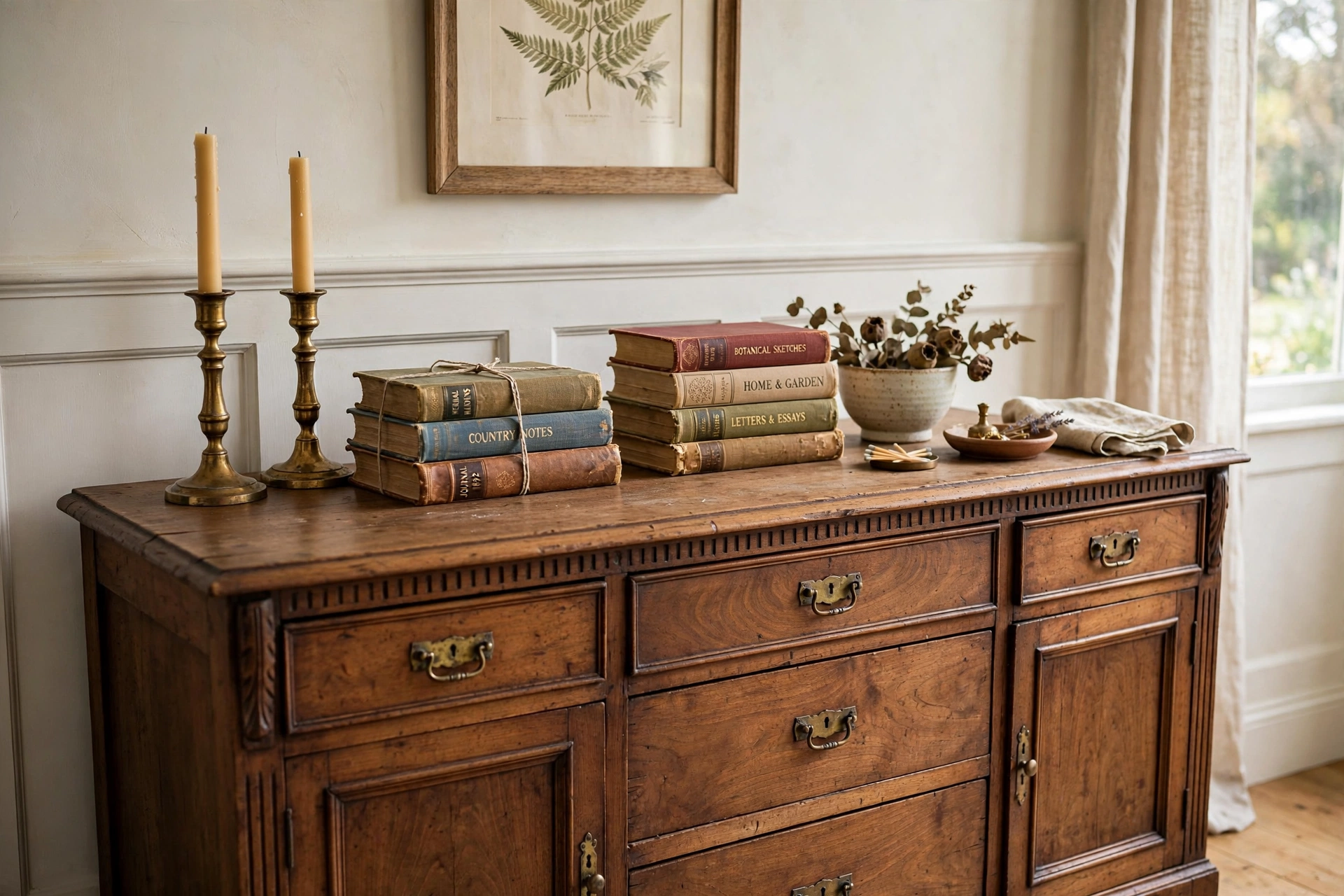
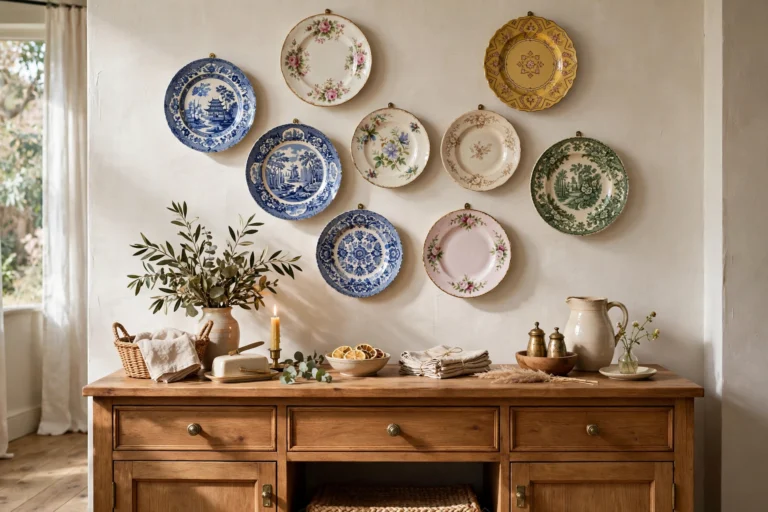
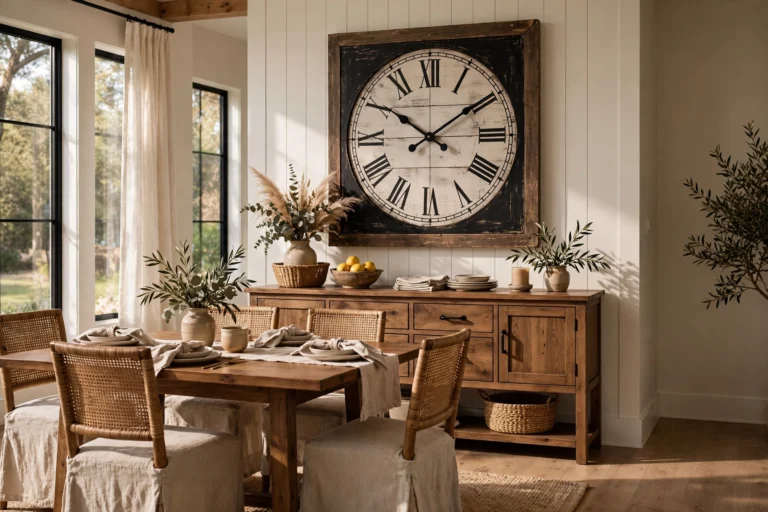
A sideboard does triple duty in a vintage dining room: storage for linens and serving pieces, a serving surface for buffets, and a display stage for your prettiest objects. Look for pieces with dovetailed drawers, original hardware, and interesting wood — mahogany, walnut, and oak were the standards. Standard sideboard height is 30 to 36 inches, with a depth of 16 to 20 inches.
Style the top in odd-numbered groupings: a stack of antique books, a pair of candlesticks, and a small potted plant or bowl of fruit. Leave some breathing room; a crowded sideboard reads as storage, while a styled one reads as decor. For more inspiration on dressing this essential piece, explore these dining room buffet decor ideas.
5. Layer a Persian or Oriental Rug
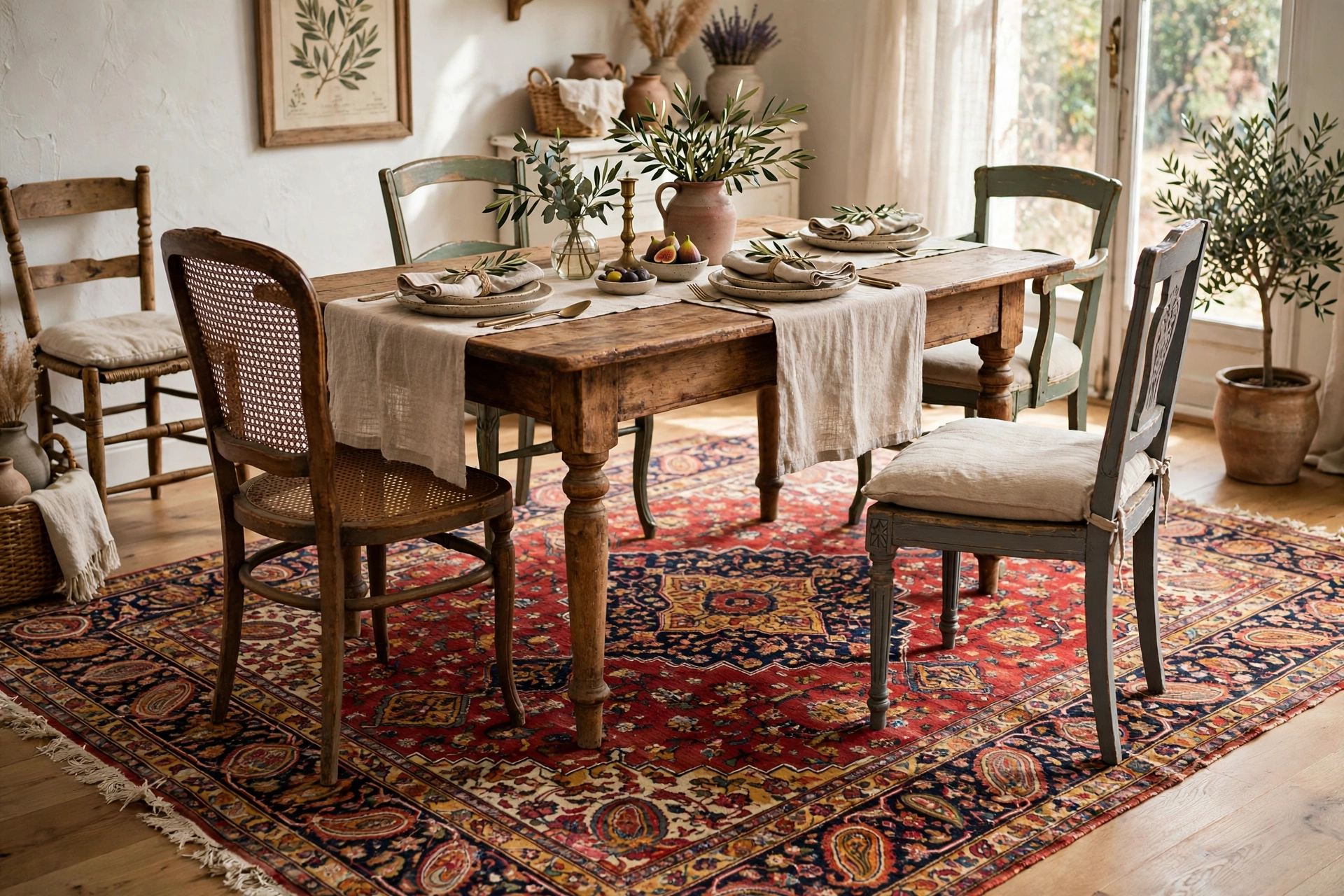
A vintage-style Persian or Oriental rug under the dining table adds pattern, color, and softness while protecting floors from chair legs. Size it generously: the rug should extend at least 24 inches beyond the table on all sides so chairs stay on the rug when pulled out. For a standard 72-inch table, that means a rug roughly 8 by 10 feet or larger.
Genuine hand-knotted vintage rugs are investments; good-quality reproductions deliver the look at a fraction of the price and handle dining-room spills with less heartbreak. Choose a low-pile weave for easy chair movement and simpler crumb cleanup. Deep reds, navy, and warm neutrals are classic choices that hide wear and complement wood furniture beautifully.
6. Display Antique China and Silver
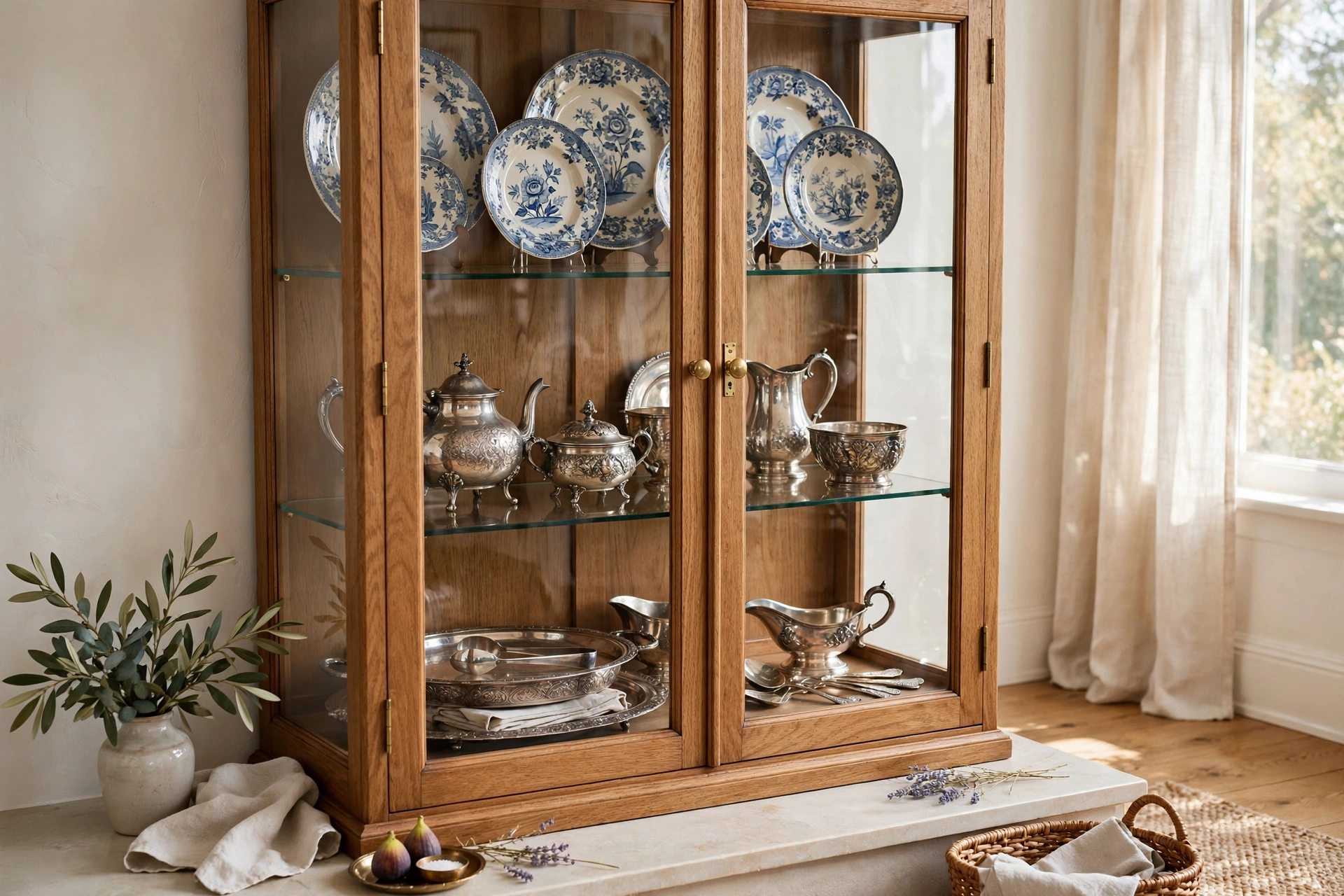
Vintage dining rooms were made for beautiful tableware. Display antique china, silverplate, or crystal in a glass-front cabinet or on open shelving where the pieces catch the light. Group by type — all the teacups together, all the serving platters together — for a curated rather than cluttered effect. Even a single shelf of mismatched vintage teacups becomes a charming focal point.
Use the good stuff, too: vintage tableware was made to be used, and regular gentle hand-washing keeps silver bright and china safe. For daily display pieces, a light dusting every couple of weeks prevents buildup. Mixing one or two antique serving pieces into your everyday table setting is an easy way to live with your collection instead of just storing it.
7. Choose Vintage-Inspired Lighting Beyond the Chandelier
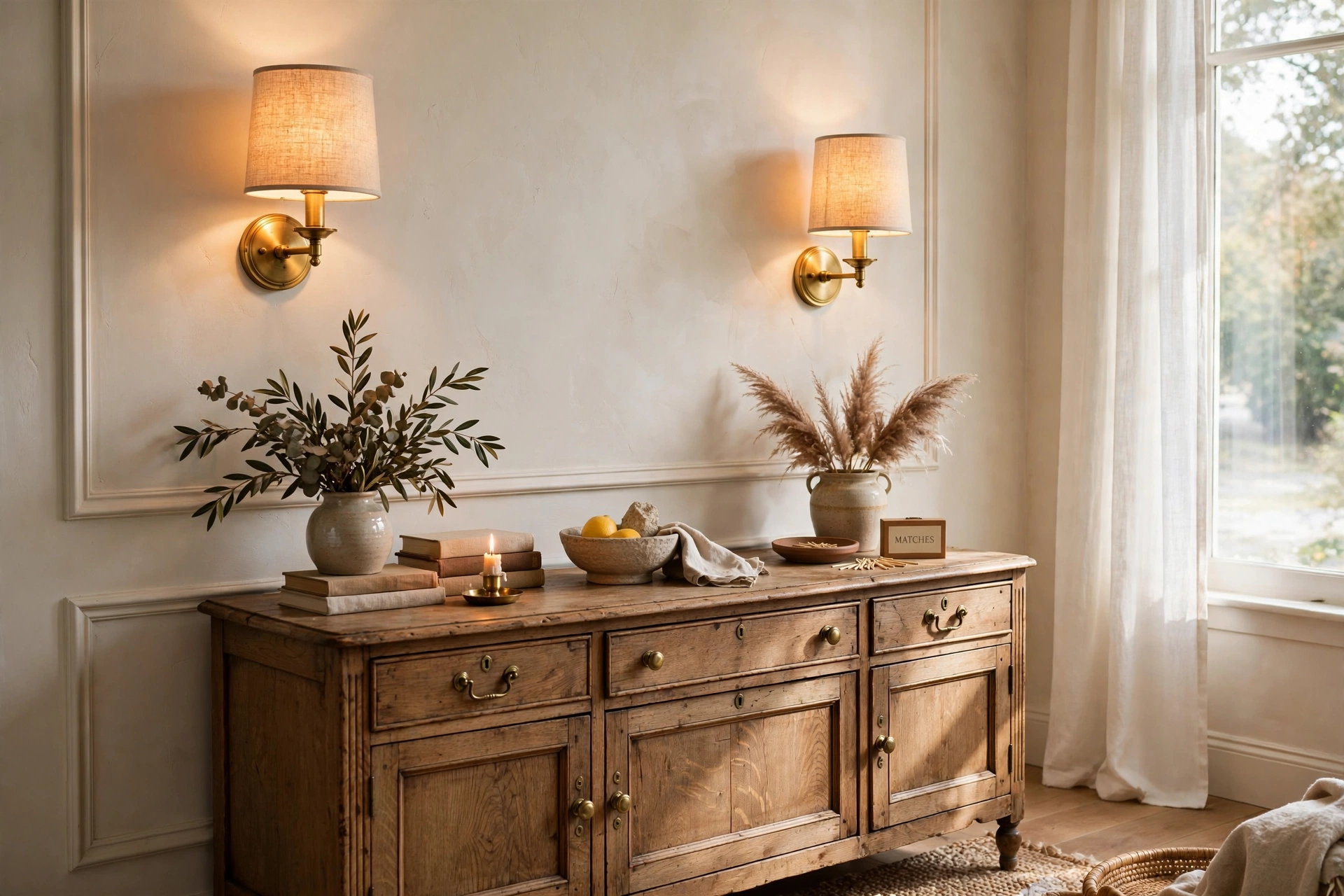
Layer your lighting the way vintage homes did: wall sconces with fabric shades, a pair of buffet lamps with warm-toned bases, or candles in antique holders. Sconces flanking a sideboard or window add a soft glow at eye level that overhead lighting alone cannot provide. Look for brass, bronze, or milk-glass fixtures from the early to mid-20th century.
Keep all your bulbs at the same warm color temperature (2700K) so the layers blend seamlessly. Dimmer switches are a modern upgrade worth adding — they let a vintage chandelier shift from bright family dinners to moody evening entertaining. The goal is light that flatters both the room and the people in it, the way candlelight always has.
8. Incorporate a Vintage Bar Cart
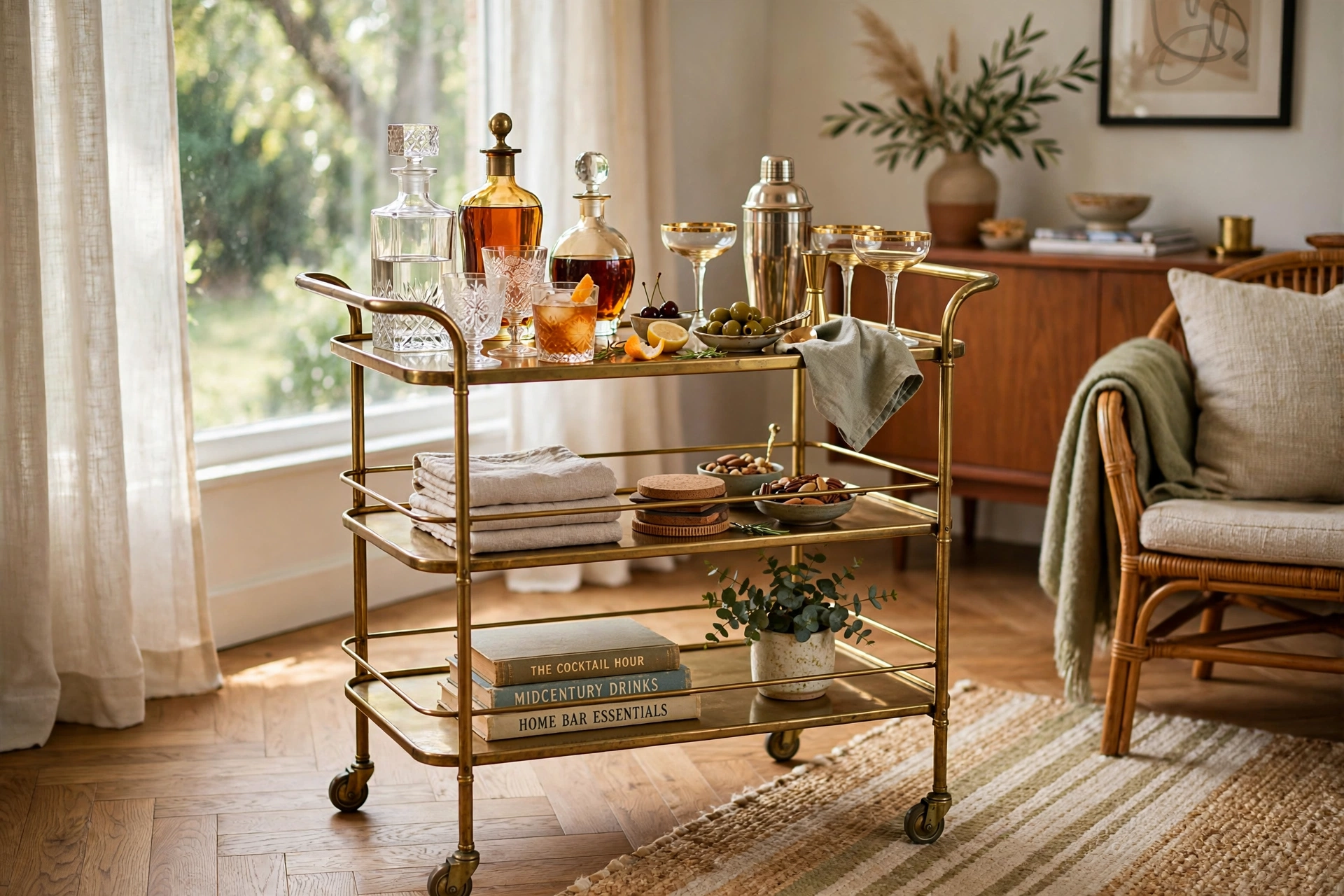
A bar cart is vintage dining’s most charming accessory: part furniture, part theater. Mid-century brass-and-glass carts are the classics, but wooden tea carts and industrial metal trolleys work too. Stock it with decanters, vintage glassware, a cocktail shaker, and a small plant or framed photo — styled, not stuffed.
Position the cart where it is visible but out of traffic flow: a dining room corner or against a short wall. The cart’s mobility is its superpower — wheel it to the table for serving, then tuck it back. When styling, follow the rule of thirds: group items in clusters of varying heights rather than lining everything up in a row. For a formal counterpoint to all this vintage ease, see these formal dining room ideas.
9. Use Linen Tablecloths and Cloth Napkins
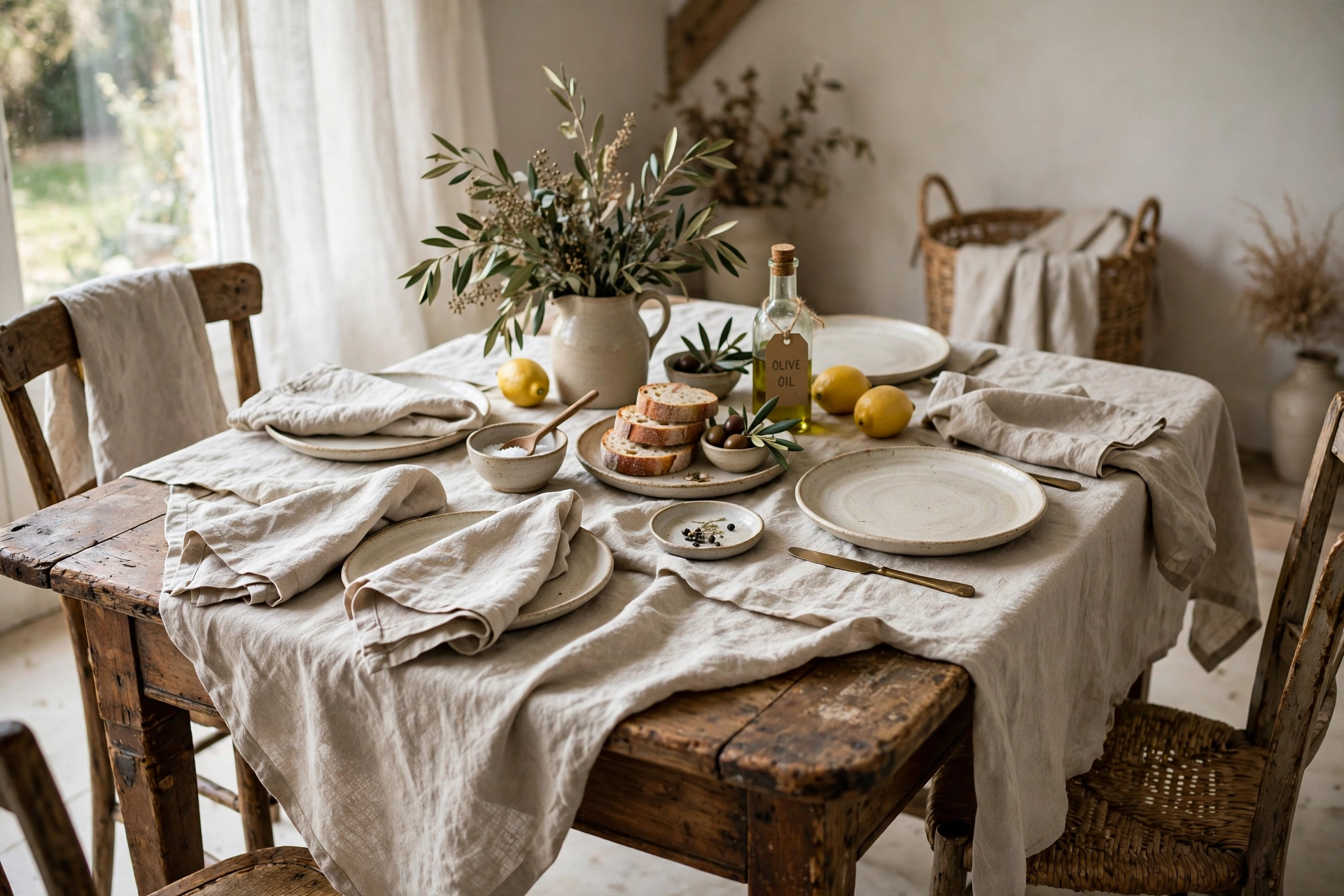
Nothing establishes vintage dining character faster than real linens. A linen or cotton tablecloth in white, cream, or soft natural tones softens a wood table and sets a gracious tone; cloth napkins — even simple hemmed squares — elevate everyday meals. Standard napkins measure 18 to 20 inches square; tablecloths should drop 8 to 12 inches over the table edge for casual dining, 15 inches or to the floor for formal occasions.
Vintage linens from estate sales often feature beautiful monograms and handwork at tiny prices. Wash in warm water, iron while damp for crispness, and embrace the soft wrinkles that make linen look like linen. Keeping a stack of cloth napkins in daily rotation is one of the easiest vintage dining room ideas to adopt — and one of the most noticeable.
10. Add Architectural Salvage Details
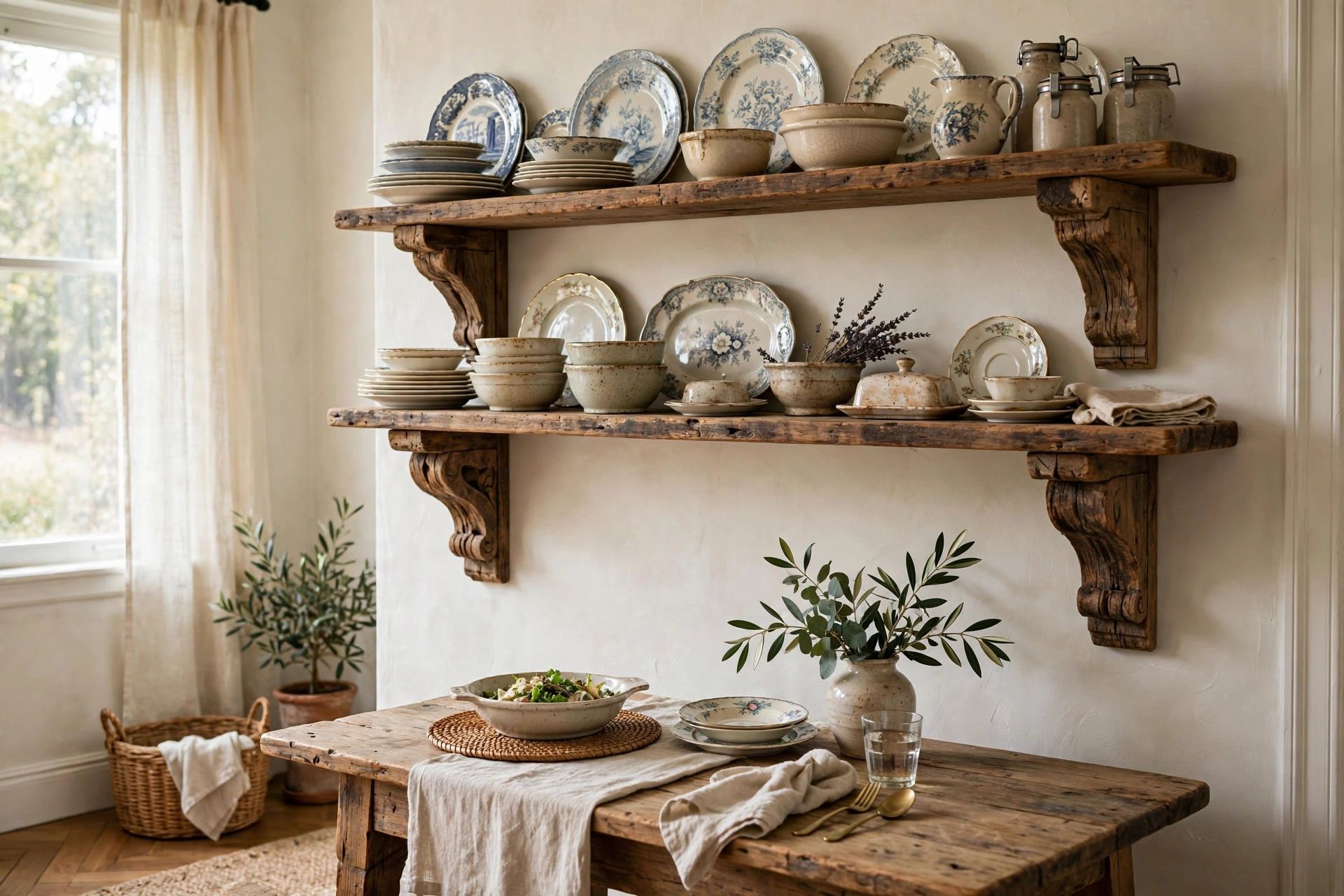
Architectural salvage — a reclaimed mantel used as a sideboard back, vintage corbels as shelf brackets, an old window frame as wall art, antique doors repurposed as a room divider — gives a dining room genuine age and one-of-a-kind character. Salvage yards, demolition sales, and online marketplaces are the hunting grounds; measure your space before you fall in love with a 9-foot beam.
Use salvage thoughtfully: one or two statement pieces per room is plenty. A pair of chunky corbels supporting open shelves for vintage dishes, for instance, adds architecture and function at once. Clean reclaimed wood with a stiff brush and check for lead paint on anything pre-1978 before bringing it indoors — a simple test kit from the hardware store takes minutes.
11. Style With Vintage Artwork and Mirrors
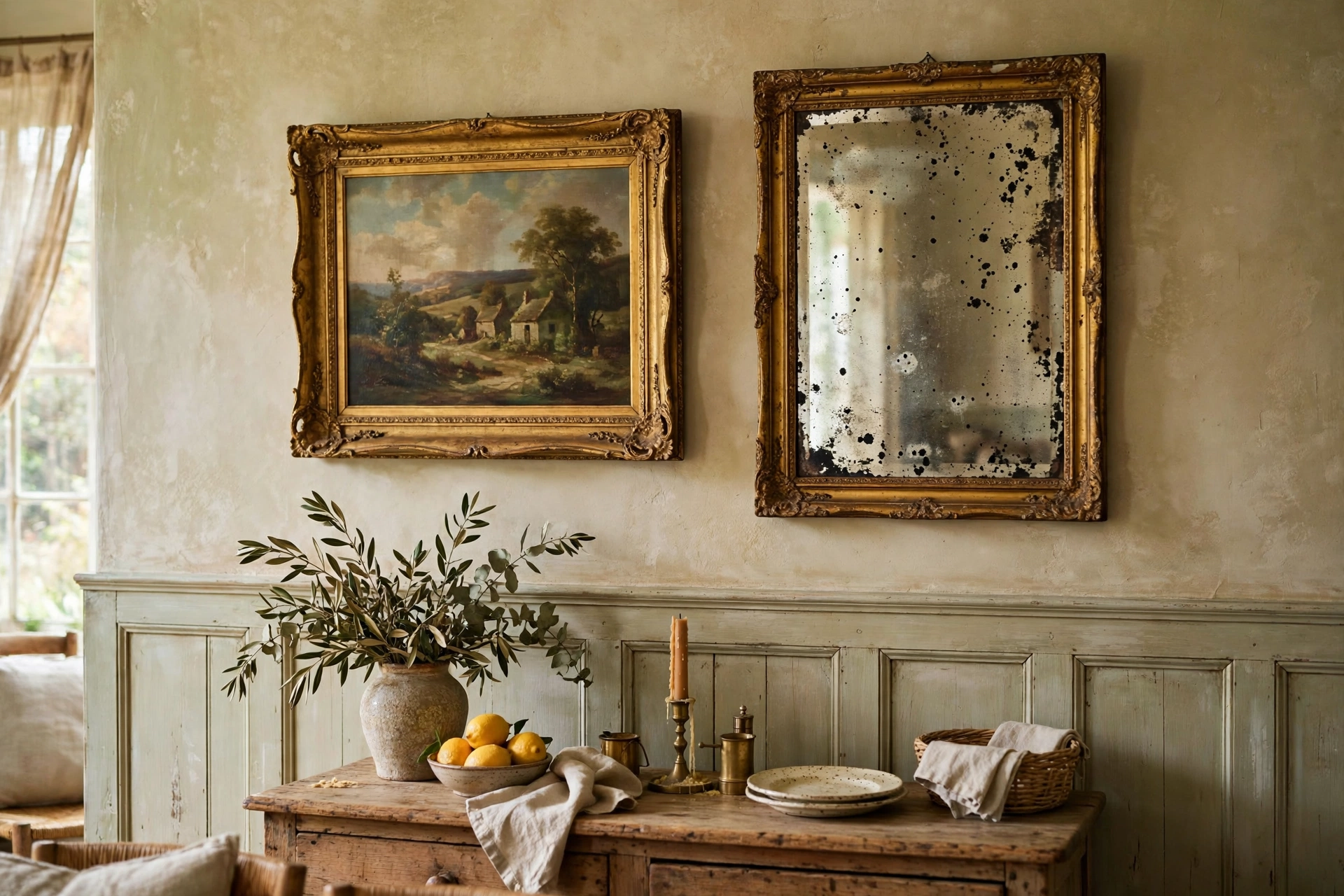
Walls complete the vintage story. Hunt for oil paintings in gilt frames, vintage botanical prints, antique mirrors with foxed (aged) glass, and old maps or advertisements in simple frames. A large antique mirror opposite a window doubles the light and adds the soft, imperfect reflection that only aged glass provides.
Hang art with the center at 57 to 60 inches from the floor, and keep frames in the same metal family — all gilt, all dark wood, all brass — for cohesion across different subjects. Thrift stores and estate sales are goldmines; look past ugly art for beautiful frames, since reframing a vintage print in a found gilt frame is a classic decorator trick. History on the walls makes the whole room feel rooted.
12. Bring In Vintage Textures: Velvet, Lace, and Wicker
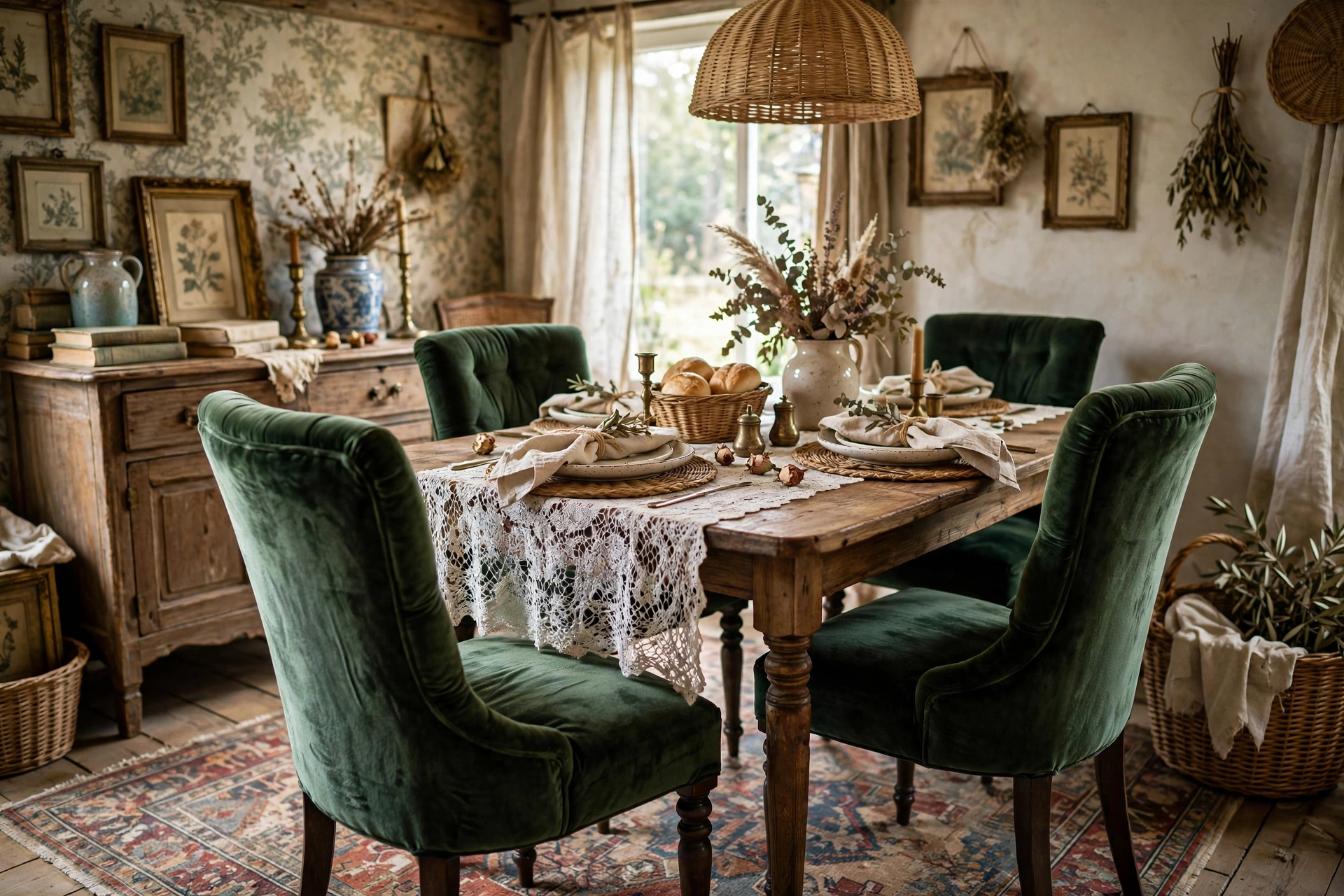
Texture is vintage style’s secret language. Velvet upholstery on dining chairs, a lace runner down the table, wicker or cane seating, a chunky knit throw over a host chair — these tactile layers make a dining room feel rich and lived-in. Mix at least three textures in the room: something smooth (silver, glass), something soft (velvet, linen), and something rough (raw wood, wicker).
Keep the color palette restrained so the textures can shine — creams, taupes, faded blues, and soft greens let materials do the talking. A velvet seat pad in deep emerald or burgundy adds jewel-box richness without overwhelming. These material choices are what separate a truly vintage-feeling room from one that just looks old-fashioned.
13. Create a Vintage Tablescape
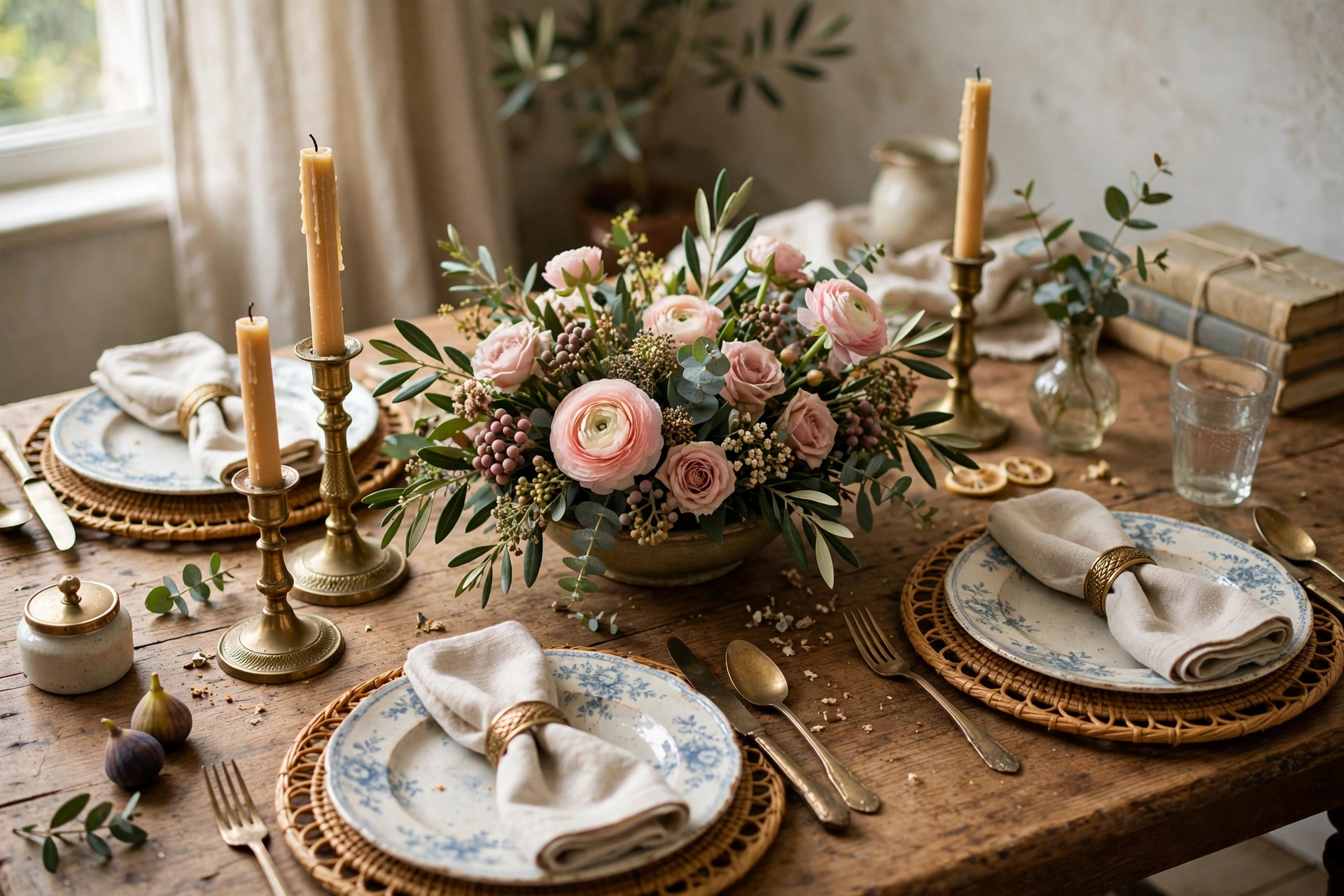
A styled table is the centerpiece of any vintage dining room, even between meals. Build your tablescape in layers: a runner or cloth, chargers or placemats, simple dinnerware, vintage glassware, and cloth napkins. Add height with candlesticks of varying heights — odd numbers work best — and a low centerpiece like a bowl of fruit, a small potted herb, or a collection of bud vases so conversation flows across the table.
Change the tablescape seasonally for freshness: pumpkins and amber glass in fall, evergreen sprigs and brass in winter, wildflowers and pastel ceramics in spring. The base pieces stay the same; only the accents rotate. A beautiful everyday tablescape means the dining room always looks ready to welcome someone — which is the whole spirit of vintage hospitality. Understanding how table settings evolved through the centuries can inspire historically grounded arrangements.
14. Balance Vintage With Modern Touches
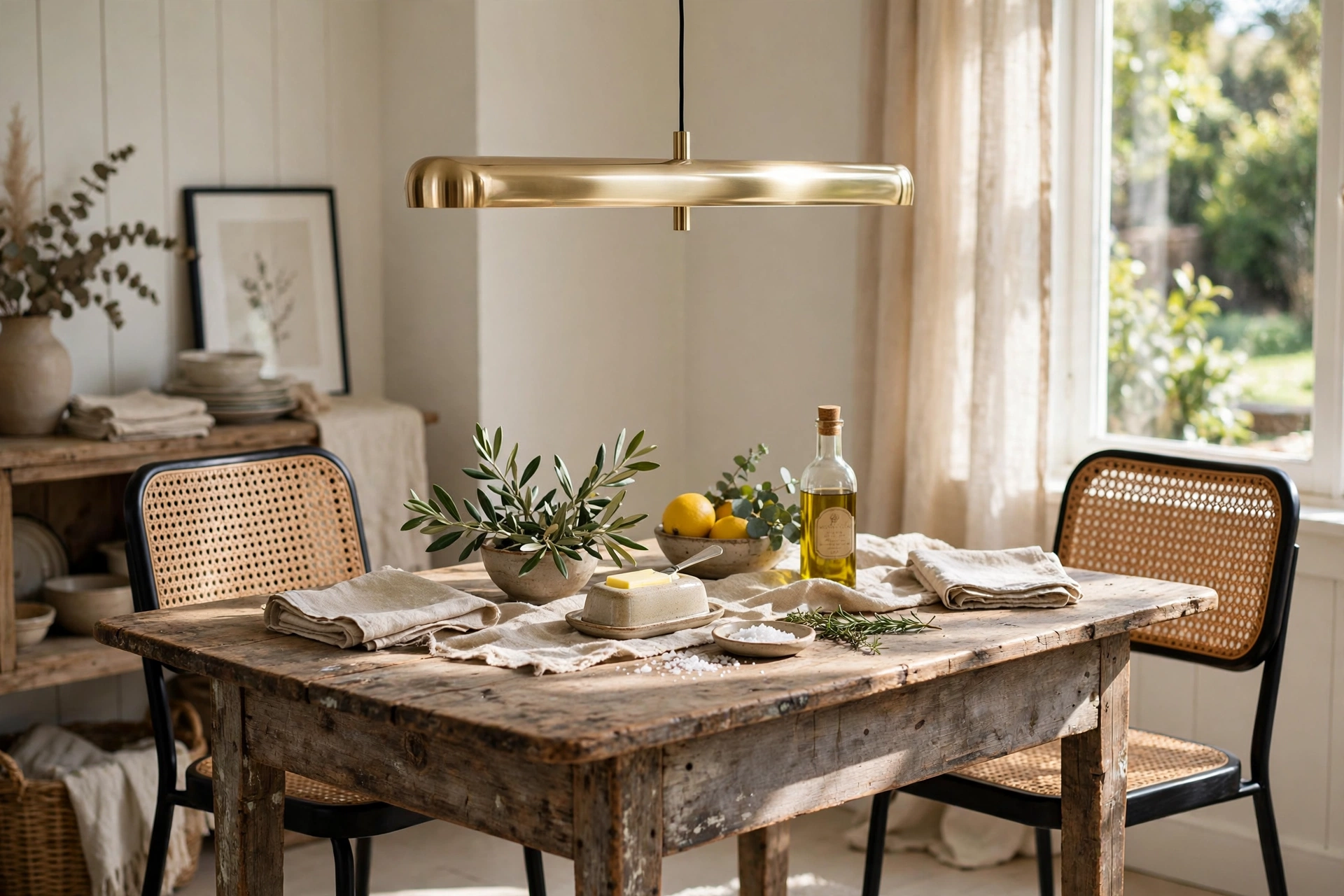
A room full of antiques can feel like a museum; the trick is contrast. Pair your farmhouse table with a sleek modern pendant, or set mid-century chairs around a rustic table. One or two contemporary pieces — a minimalist light fixture, abstract art, a streamlined rug — keep the vintage elements looking intentional rather than accidental.
The widely used 80/20 guideline works well: roughly 80 percent vintage character, 20 percent modern relief. Modern pieces also bring practical benefits — better lighting technology, easier-clean fabrics — that make the vintage room livable. For a study in the contemporary end of the spectrum, compare these modern dining room ideas to see exactly where the two styles diverge.
15. Hunt Secondhand Like a Pro
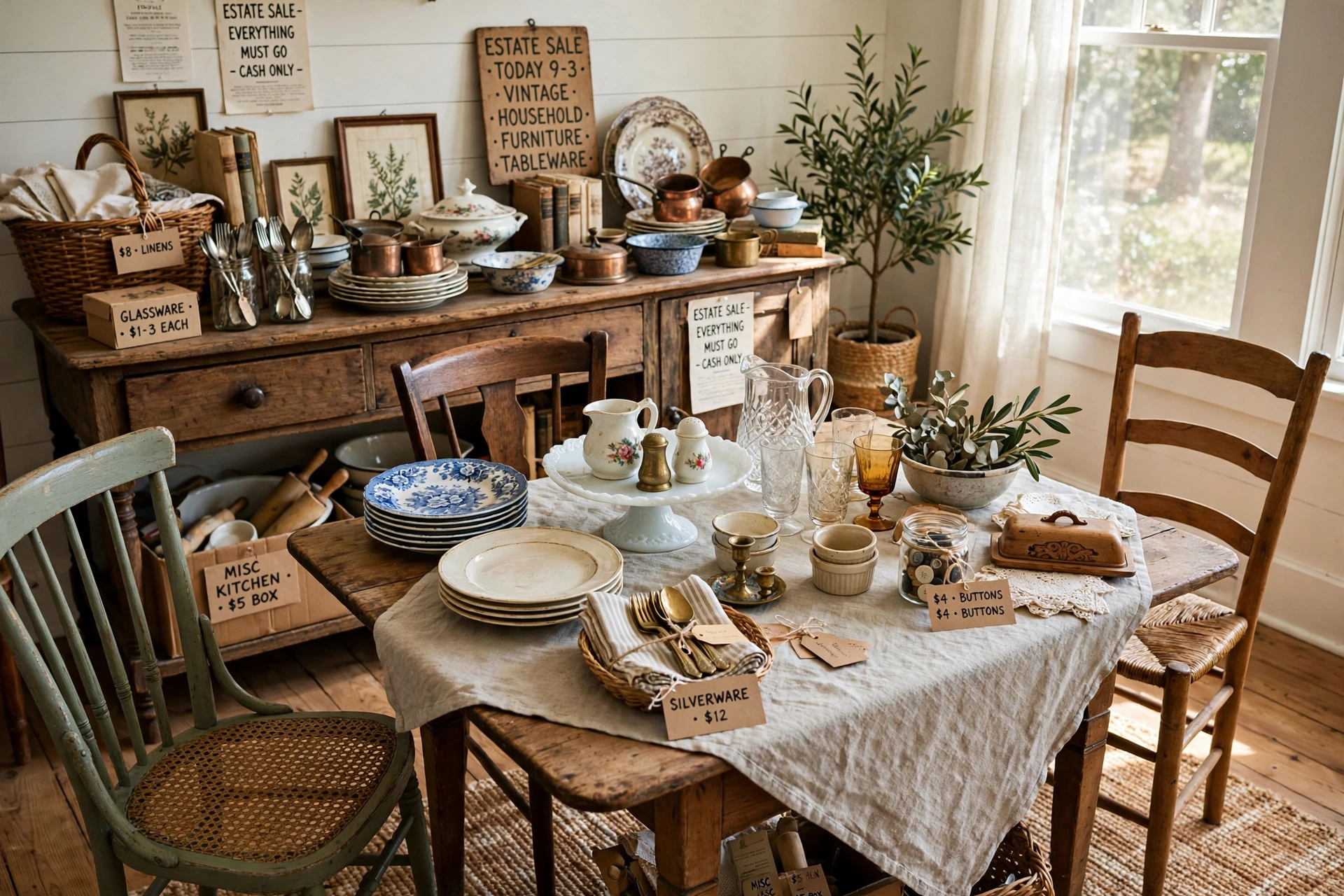
The best vintage dining rooms are built slowly, and skilled hunting is the skill that makes it possible. Shop estate sales early for furniture, thrift stores regularly for small finds, and architectural salvage yards for statement pieces. Learn the markers of quality: dovetailed drawers, solid wood (not veneer over particleboard), maker’s marks, and the heft that signals real materials.
Set a running list of what you actually need so impulse buys do not pile up, and measure your spaces — tape the dimensions inside a notebook or your phone. Patience pays: the perfect sideboard or set of chairs appears when you are looking consistently, not when you need it tomorrow. Every piece you find secondhand keeps history in circulation and keeps your dining room unlike anyone else’s. The antique trade’s century-old threshold is a useful benchmark when judging whether a find is truly vintage or simply vintage-style.
Frequently Asked Questions
What defines a vintage dining room style?
A vintage dining room features furniture and decor from past eras — typically 20 to 100 years old — mixed with vintage-inspired pieces. Key markers include solid wood furniture with patina, classic lighting like crystal or brass chandeliers, layered textiles, and collected accessories. The overall feel is warm, storied, and curated rather than matched or brand-new.
How do you mix vintage and modern in a dining room?
Follow an 80/20 balance: let vintage pieces dominate while one or two modern elements provide contrast. Good modern additions include streamlined lighting, contemporary art, or a simple rug. Keep a consistent color palette across both styles so the mix feels deliberate, and let the modern pieces handle practical needs like better task lighting.
Where is the best place to buy vintage dining furniture?
Estate sales offer the best furniture selection at fair prices — arrive early on the first day. Thrift stores are better for small decor and tableware. Architectural salvage yards carry unique statement pieces. Online, try local marketplace listings and auction sites, always checking measurements and condition in person before committing to large pieces.
How do you style a vintage dining table every day?
Layer a runner or cloth, chargers, simple dinnerware, and cloth napkins, then add varying-height candlesticks and a low centerpiece that does not block conversation. Keep the everyday setup simple enough to clear quickly for meals. Rotate seasonal accents — fruit, greenery, flowers — to keep the table feeling fresh year-round.
Is vintage dining room decor expensive?
It does not have to be. Secondhand furniture often costs less than new flat-pack equivalents and lasts far longer. Thrift stores, estate sales, and online marketplaces yield remarkable finds at low prices. The main costs are patience and transport. Splurge selectively on one anchor piece — like a chandelier or farmhouse table — and fill in affordably around it.
Keep Exploring
A vintage dining room is never truly finished — it grows as you find pieces with stories worth keeping. Start with one anchor, hunt patiently, and let each addition earn its place. The result is a dining room with timeless charm that no catalog could ever replicate.