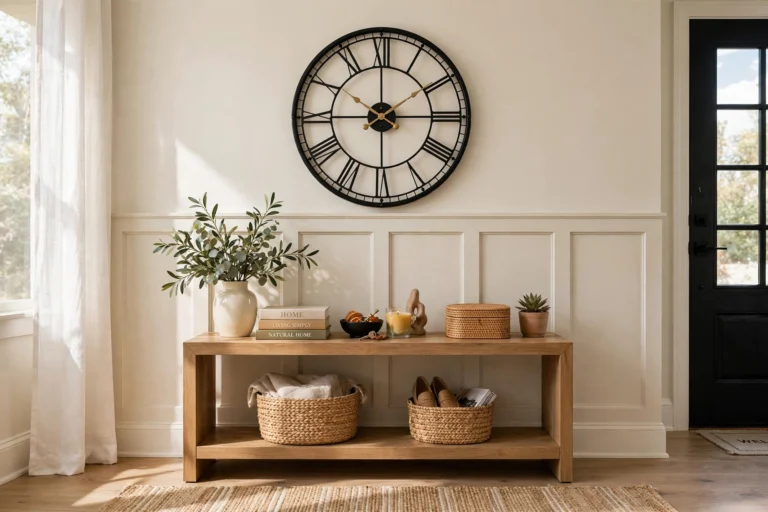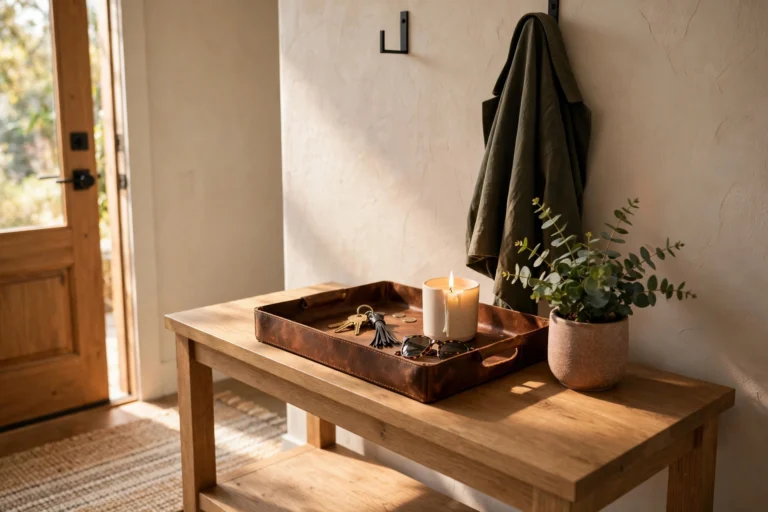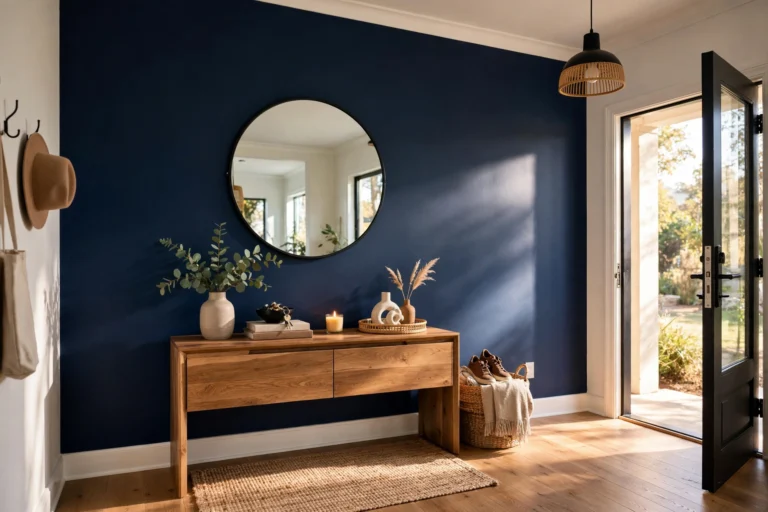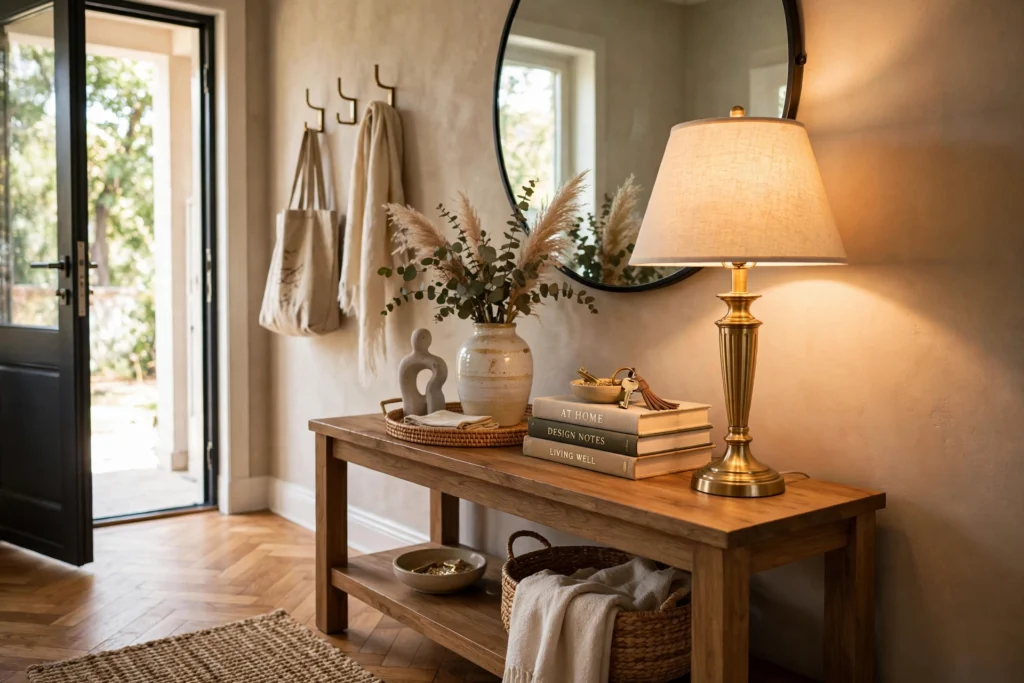

The entryway sets the tone for your entire home, and nothing says “welcome” quite like the warm pool of light from a well-chosen table lamp. Overhead lights can feel harsh and institutional; a lamp on the console table brings the light down to human level, where it flatters faces, highlights your decor, and makes guests feel instantly at ease. These entryway table lamp ideas cover lamp styles, sizing rules, placement, and console-top styling so your foyer greets everyone with a warm glow.
Whether your entry is a grand foyer or a narrow hallway nook, the right lamp does double duty as lighting and sculpture. From classic buffet lamps to modern sculptural pieces, here is how to choose, size, and style the perfect lamp for your welcome zone.
1. Size the Lamp to Your Console Table
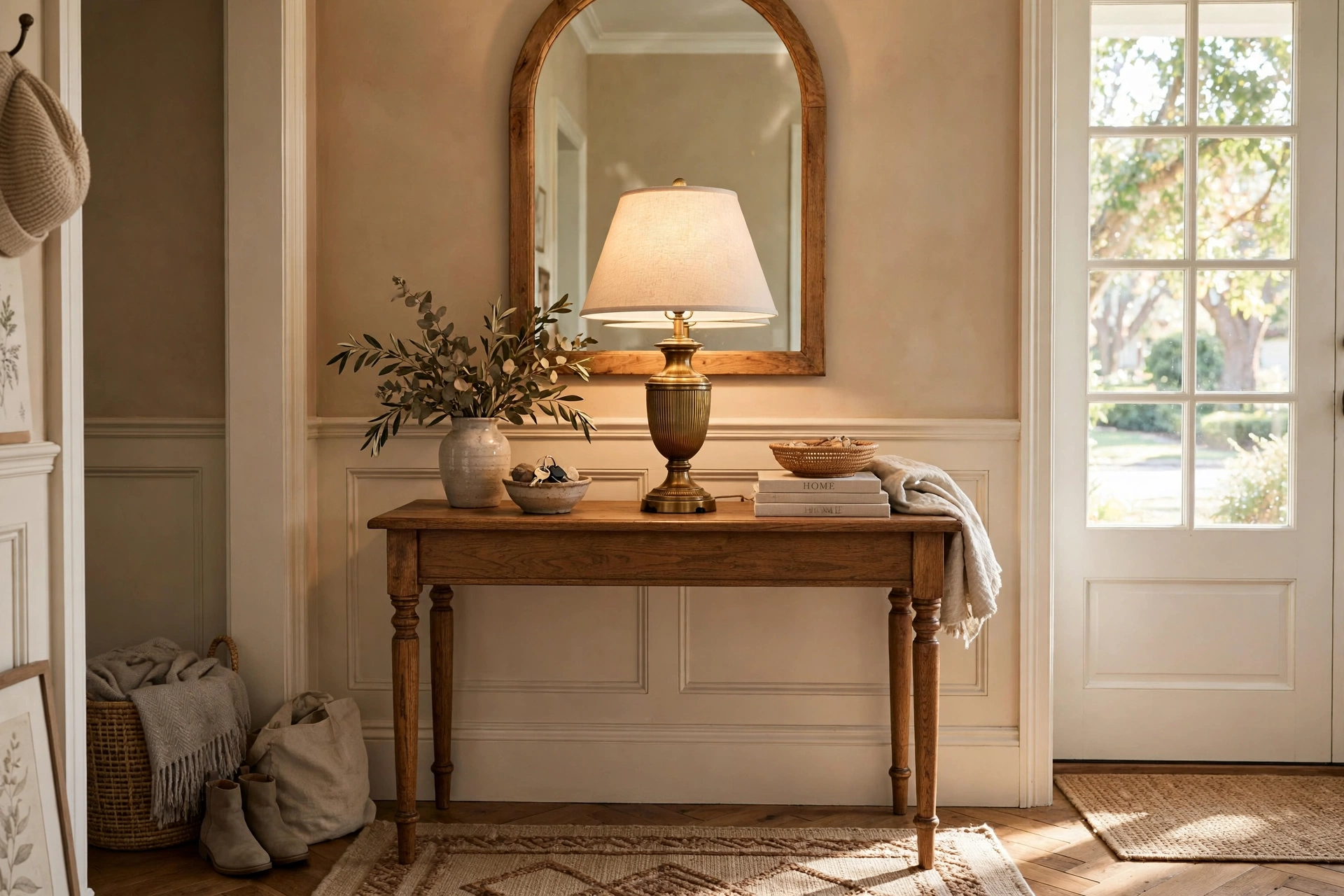
Proportion is the first rule of lamp selection. A table lamp for the entryway should stand roughly 28 to 34 inches tall overall, with the bottom of the shade sitting at about eye level when you are standing nearby — typically 60 to 66 inches from the floor. On a standard 30- to 36-inch-high console, that means a lamp of 28 to 32 inches works beautifully.
The shade’s diameter should be about one-third the width of the table surface it sits on, and the lamp base should occupy no more than one-third of the tabletop depth so there is room for styling around it. A lamp that is too small looks lost; one that is too large overwhelms the vignette and crowds out keys, trays, and decor. Measure your console before you shop, and bring a tape measure to the store — eyeballing lamp scale is notoriously unreliable.
2. Choose a Classic Buffet Lamp Pair
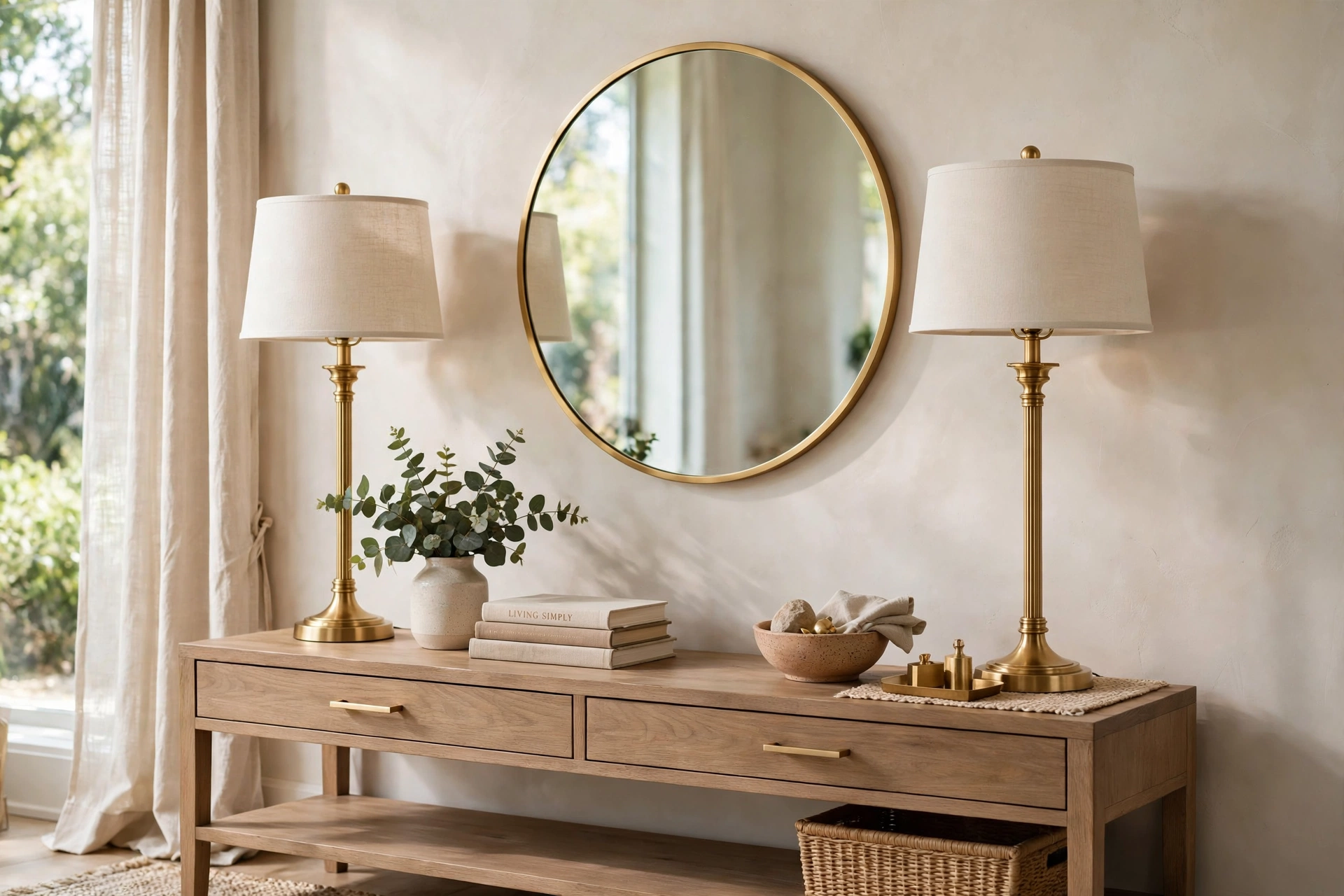
Buffet lamps — tall, slim lamps designed specifically for narrow console tables — are the traditional answer for entryways, and they remain one of the most elegant entryway table lamp ideas. Their slender profile (often just 6 to 8 inches deep) leaves plenty of tabletop for styling, while their height brings light up to a flattering level. A matching pair flanking a mirror or artwork creates instant symmetry and a sense of occasion.
Look for buffet lamps with fabric shades in white, cream, or soft linen, which diffuse light warmly without glare. Brass, bronze, or crystal bases suit traditional entries; matte black or brushed nickel lean contemporary. Keep both lamps on the same switch or a smart plug so they turn on together — nothing undermines symmetry like one lit lamp and one dark one.
3. Try a Single Statement Lamp
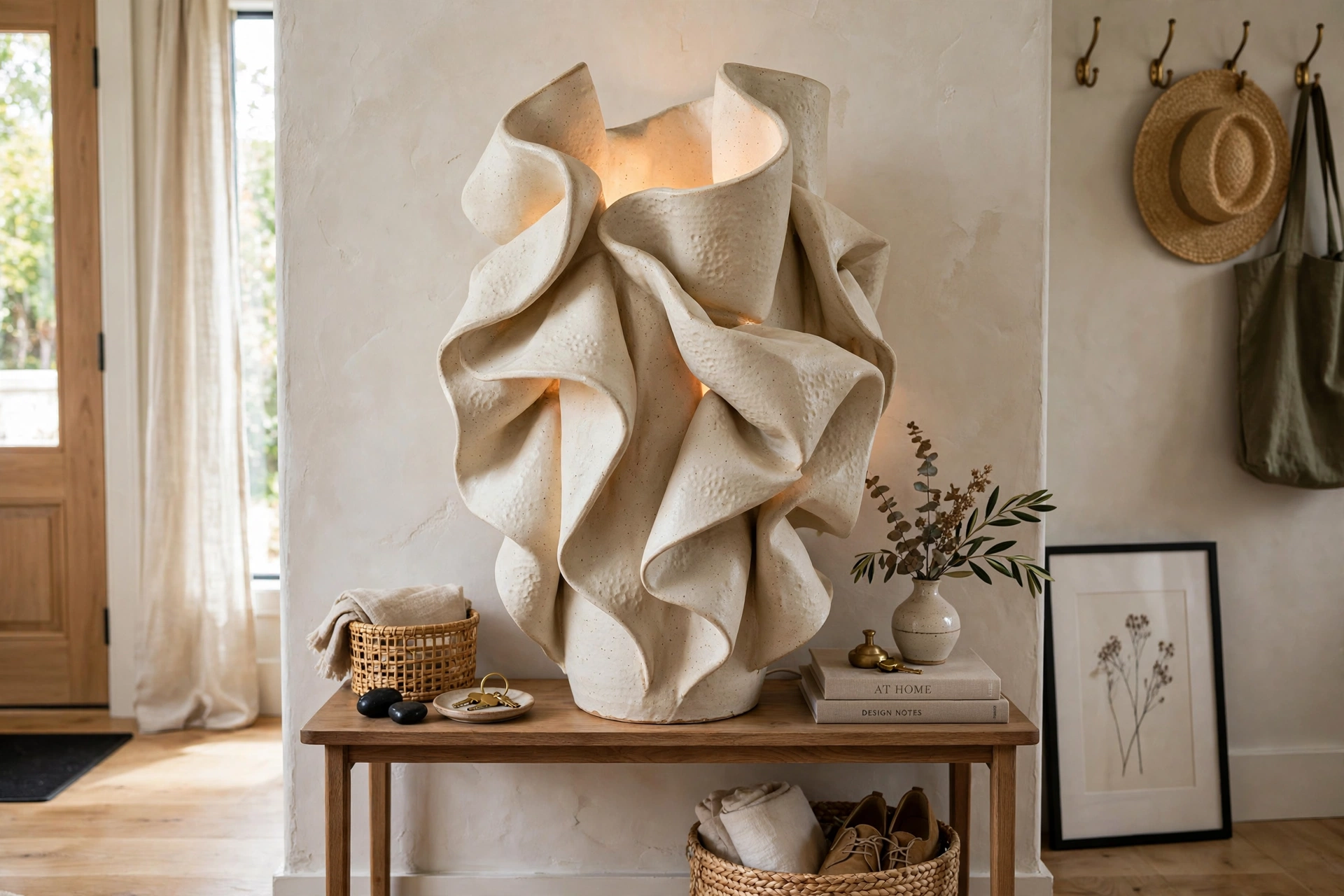
If your console is small or your entry is narrow, one bold lamp beats two timid ones. A single statement lamp — an oversized ceramic gourd, a sculptural mid-century piece, a lamp with an unusually shaped shade — becomes the focal point of the whole vignette. Place it off-center, roughly one-third of the way along the table, and balance it with lower objects (a stack of books, a small plant) on the opposite end.
The single-lamp approach suits modern and eclectic entries where asymmetry feels intentional. Choose a lamp with real presence: 30 inches or taller, an interesting silhouette, or a rich material like travertine, hammered metal, or hand-thrown ceramic. One remarkable lamp makes the entire entry feel designed rather than decorated.
4. Go Cordless With Rechargeable Lamps
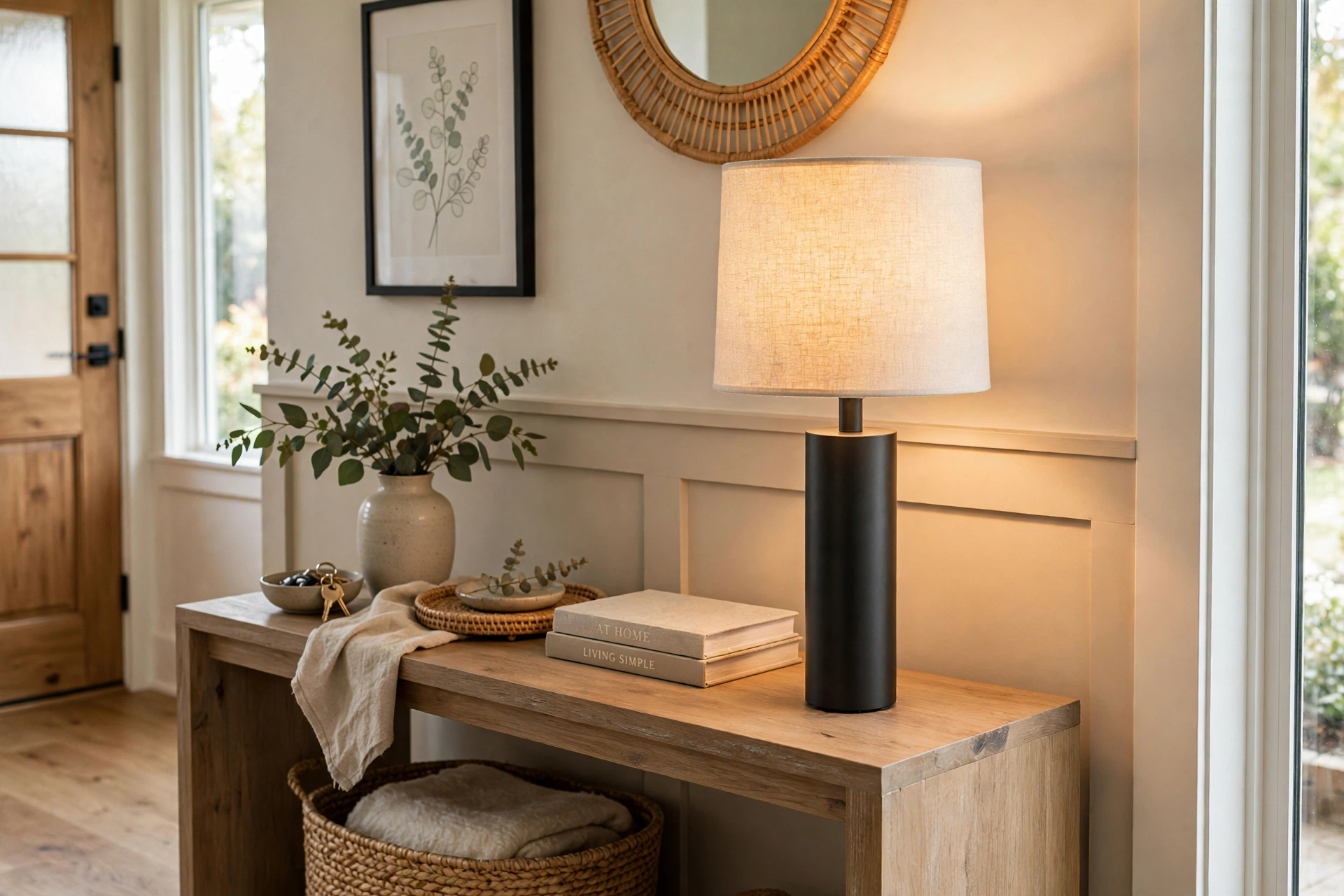
No outlet near the console? Cordless rechargeable table lamps have matured into genuinely beautiful options. Modern LED cordless lamps run 8 to 20 hours per charge depending on brightness, offer warm-to-cool color temperature adjustment, and come in styles from minimalist mushrooms to classic shaded silhouettes. They free your lamp placement from outlet geography entirely.
Keep the charging cable tucked in a drawer and top up the lamp overnight once or twice a week — most use USB-C now. Cordless lamps are also ideal for styling spots that shift seasonally, like a lamp that moves from the entry console to the dining buffet for parties. The technology has reached the point where guests will never guess the lamp is battery-powered. For hardwired lighting schemes that pair with your lamp, see these entryway lighting ideas.
5. Pick the Right Shade Shape
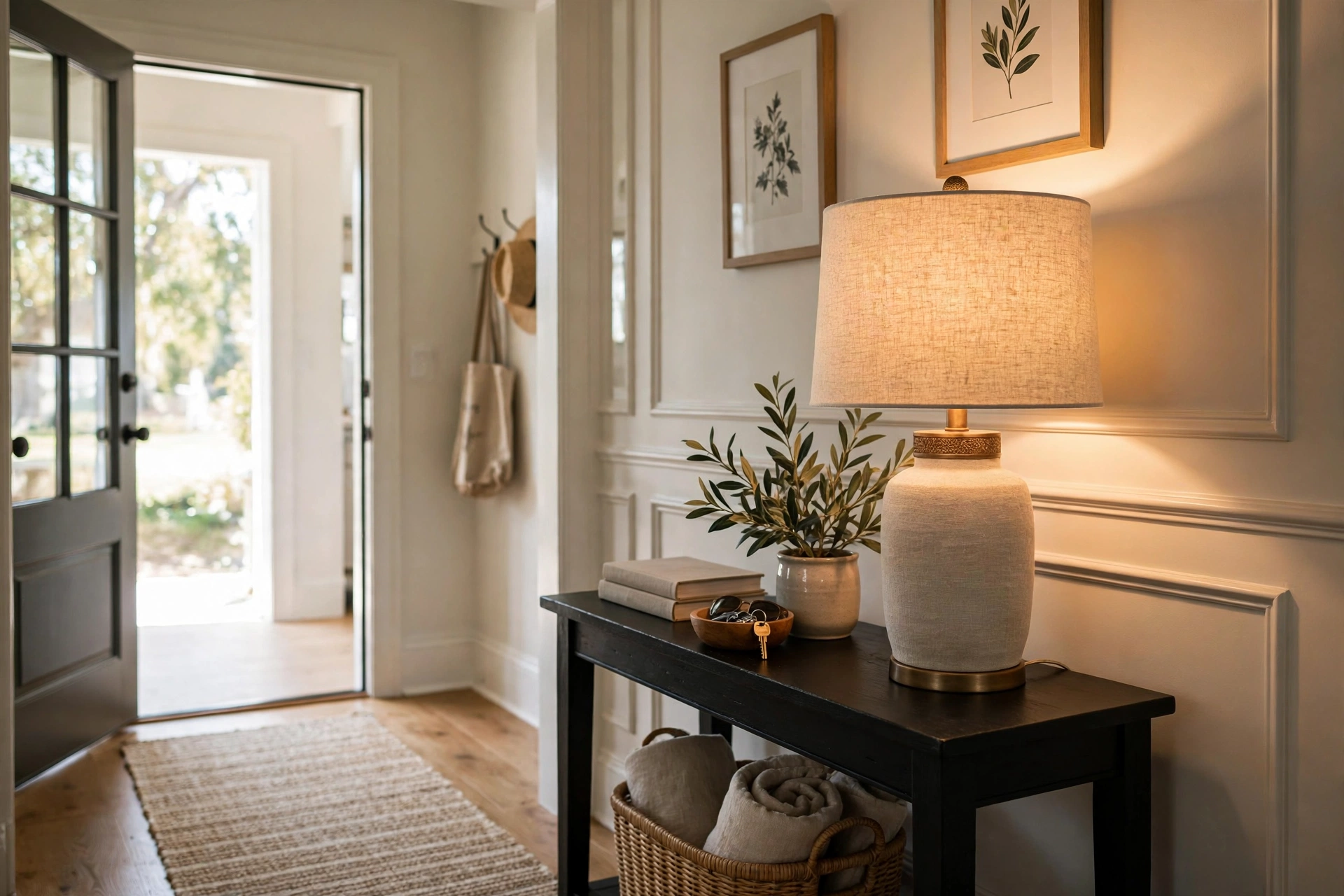
The shade shapes the light — and the look — more than any other part of the lamp. Drum shades cast light evenly up and down and suit modern entries; empire shades (wider at the bottom) direct more light downward onto the tabletop, perfect for highlighting decor; tapered shades lean traditional. As a rule, the shade’s bottom diameter should be roughly equal to the lamp base’s height for balanced proportions.
Fabric shades in linen or cotton diffuse light softly and hide the bulb; avoid dark or opaque shades in entries, which swallow light instead of spreading welcome. The shade’s bottom edge should sit at or just above your eye level when standing — about 60 inches from the floor — so you never stare directly at a bare bulb. A well-chosen shade makes even an inexpensive lamp base look custom.
6. Layer Lamp Light With Ambient Sources
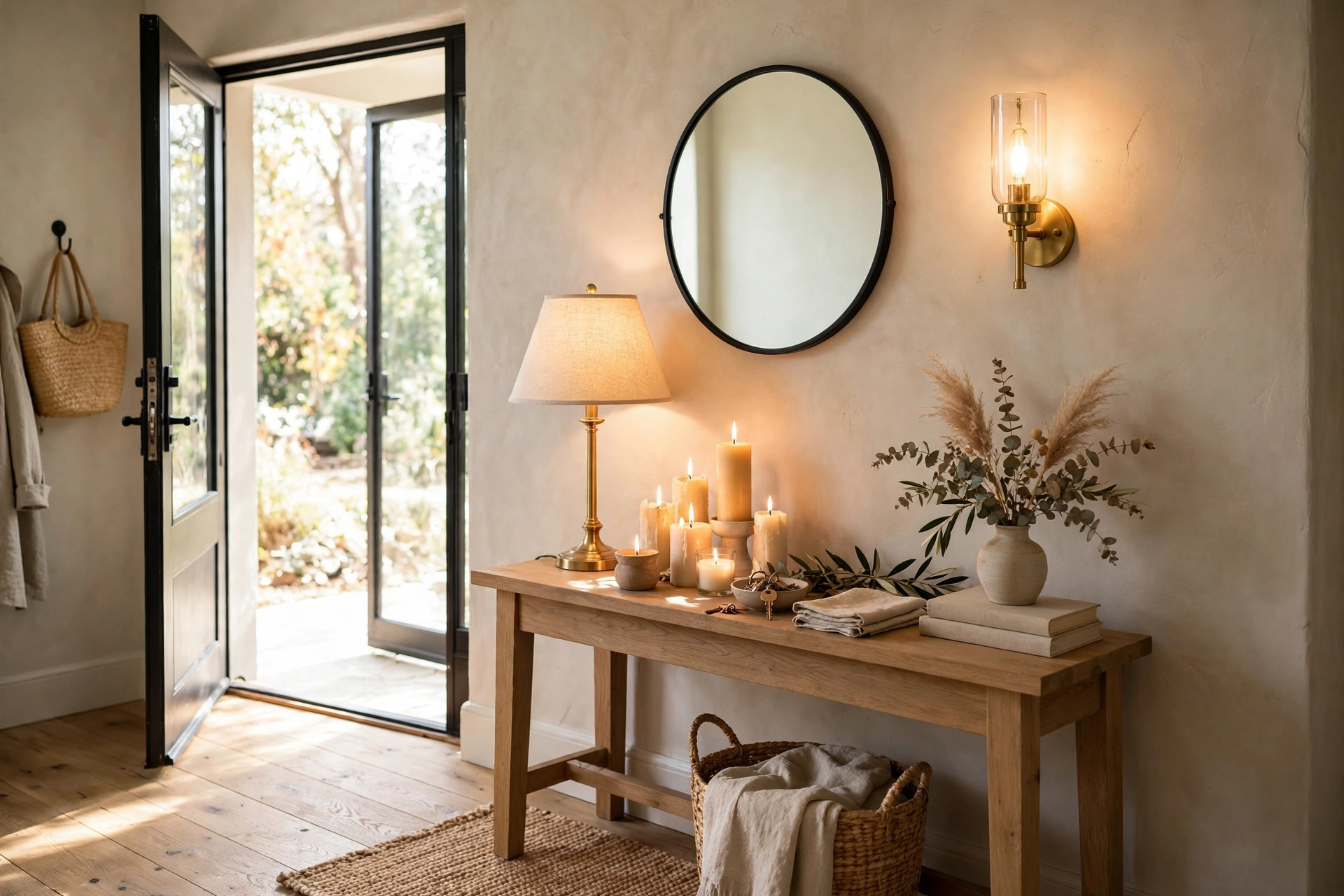
One lamp alone can feel isolated; layering makes entryway light feel rich. Combine your console lamp with a second light source: a small picture light over artwork, LED strip lighting under a floating shelf, a plug-in wall sconce, or even candles in hurricane holders. The goal is pools of light at different heights rather than a single bright spot.
Keep every bulb at the same warm color temperature — 2700K is the sweet spot for welcoming light — so the layers blend. Put the lamp on a timer or smart plug set to turn on at dusk; an entry that lights itself feels magical and means you never walk into a dark house. Layered light is what separates a styled entry from a merely furnished one.
7. Style the Console Around the Lamp
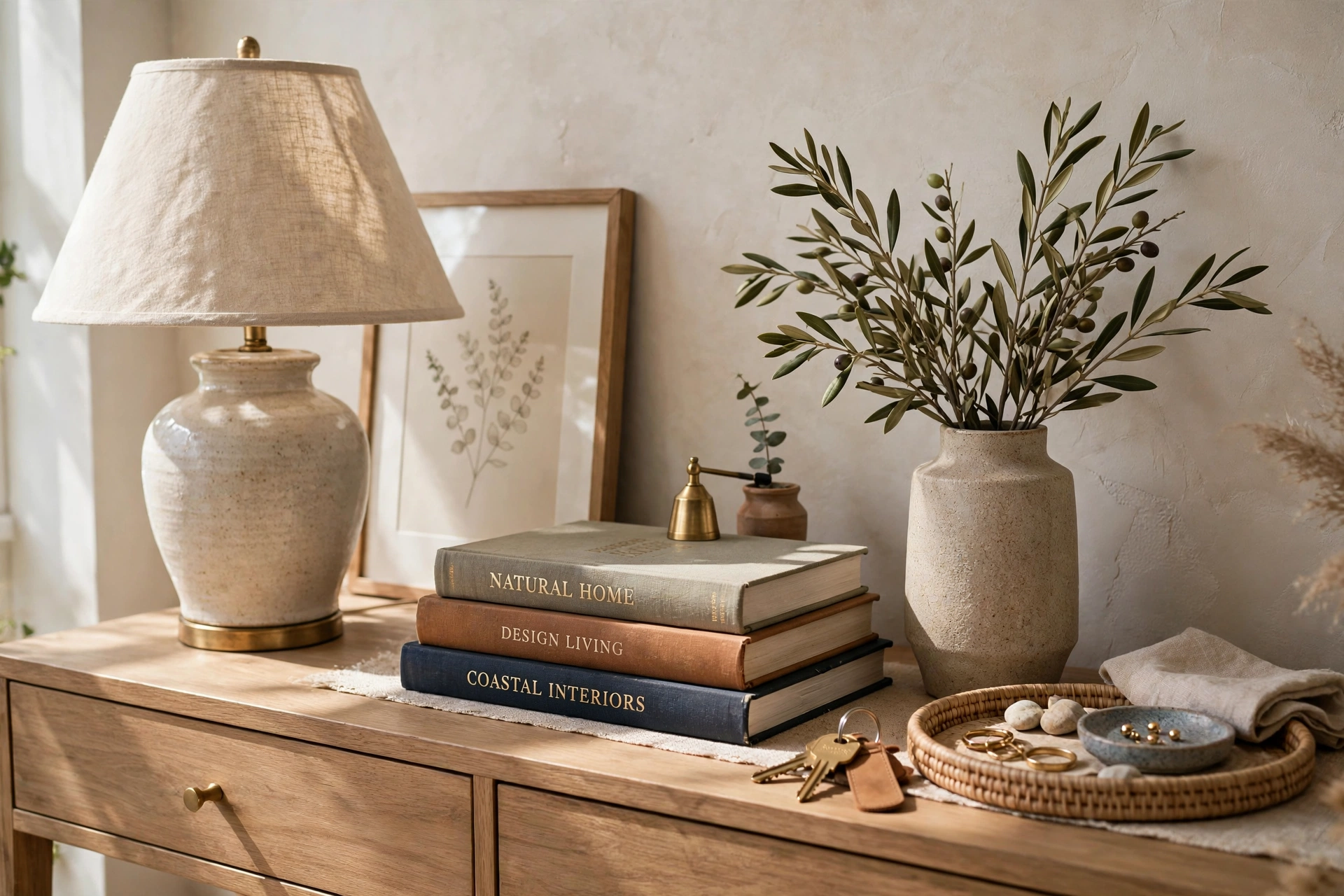
A lamp is the anchor, but the styling around it completes the picture. Build your console vignette in three height zones: the lamp (tall), a medium object like a vase with branches or a stack of two to three books (middle), and low items like a catchall tray, a small bowl, or a candle (low). This triangle of heights keeps the eye moving and the surface interesting.
Leave negative space — at least a third of the tabletop should stay clear so the arrangement breathes and there is room for keys and mail. Corral small daily items on a tray so function does not fight the styling. For a full masterclass in dressing this hardworking surface, explore these console table decor ideas.
8. Choose Ceramic and Glass Bases for Light Reflection
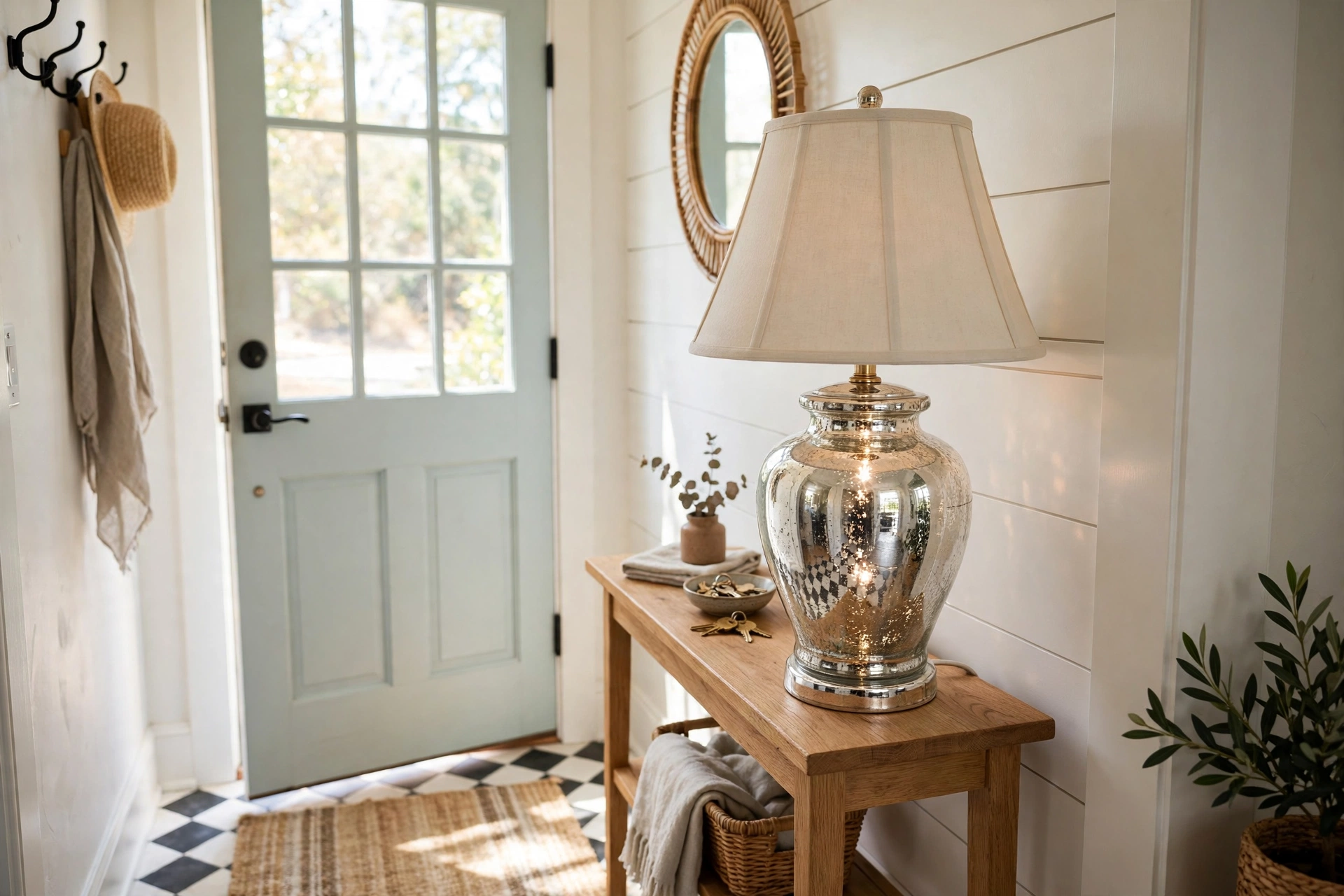
In entries with limited natural light, the lamp base itself can help brighten the space. Ceramic, glass, crystal, and mirrored bases catch and bounce ambient light, subtly lifting a dark hallway. A mercury-glass or clear-glass lamp virtually disappears visually while still delivering glow — ideal for small entries where a heavy base would feel bulky.
Colored ceramic bases, from deep cobalt to soft celadon, add personality and can echo accent colors elsewhere in the entry. When choosing glass, check that the cord and socket hardware are neatly finished, since they show through. A reflective base multiplies your lamp’s brightening power without adding a single extra watt.
9. Try a Wood or Rattan Base for Warmth
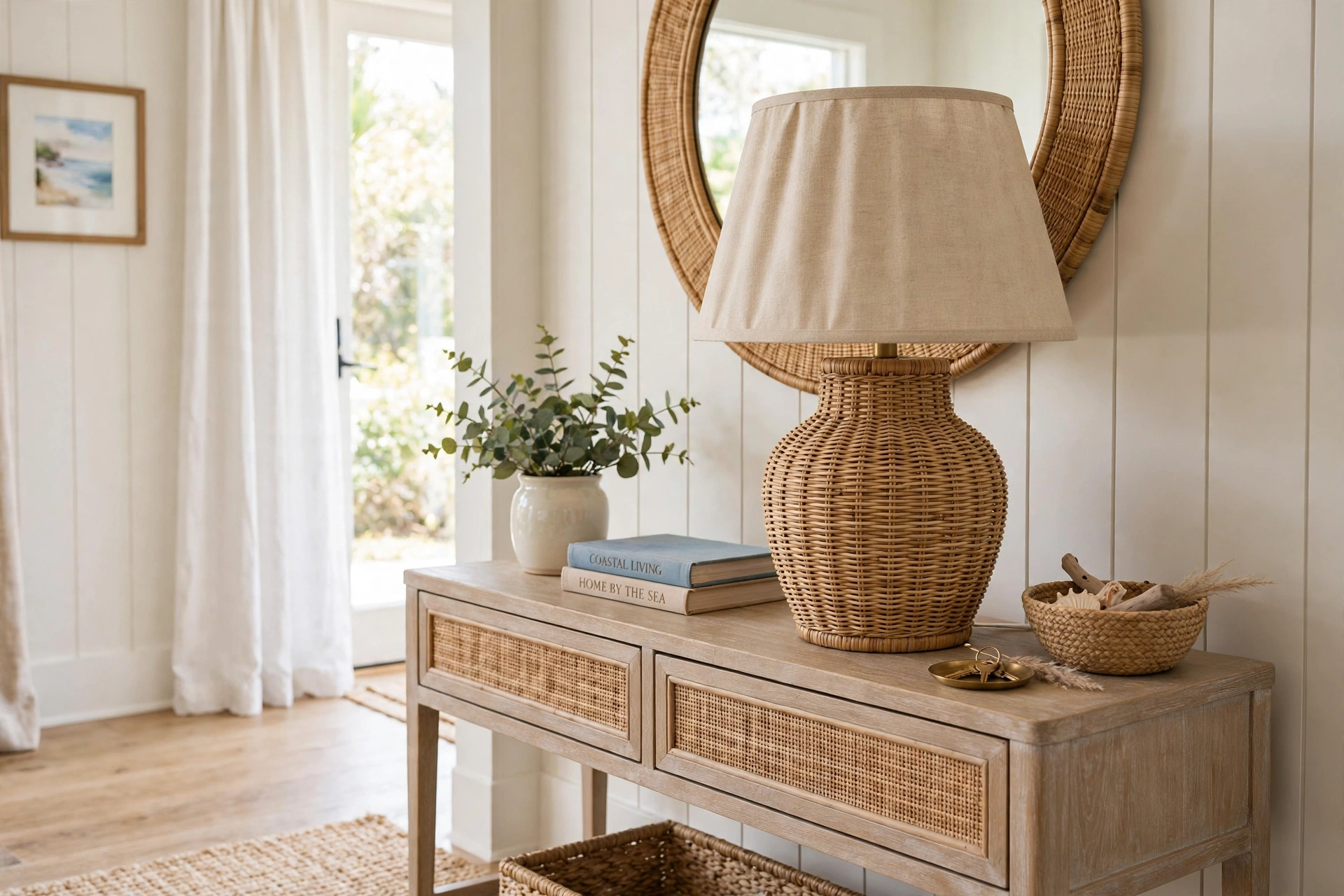
Natural materials bring instant warmth to an entryway, and wood or rattan lamp bases deliver it in spades. Turned-wood bases suit traditional and farmhouse entries; rattan and wicker weaves lean coastal, boho, or tropical. These textures catch raking light beautifully and add an organic counterpoint to hard console surfaces like marble or lacquered wood.
Pair natural bases with simple linen drum shades to let the material star — busy shades fight the texture. Because wood and rattan read as casual, they are perfect for family entries where a crystal lamp would feel precious. Seal or dust woven bases regularly; rattan’s crevices collect dust, and a soft brush keeps them fresh.
10. Add a Lamp With a Built-In Nightlight
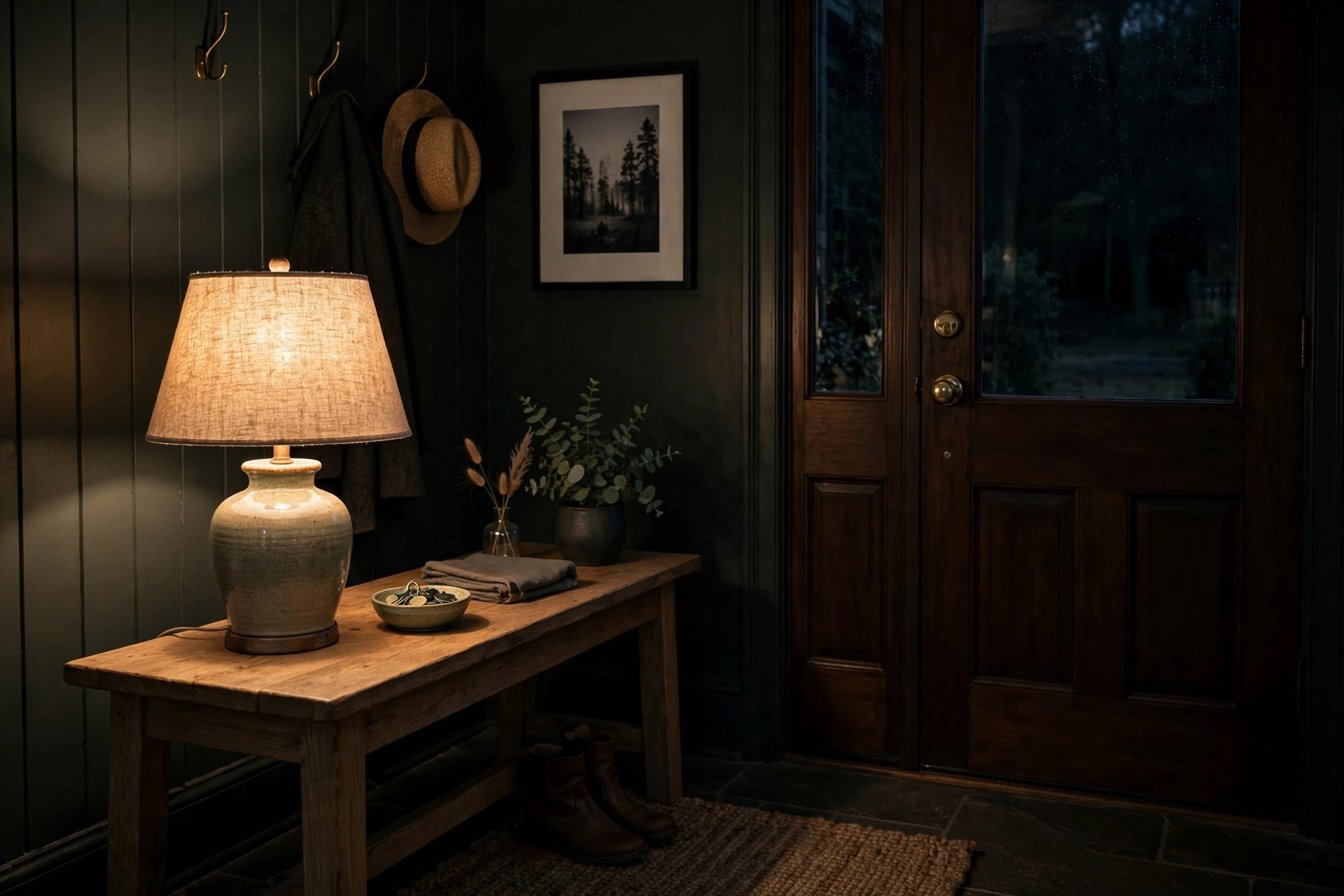
Some table lamps include a small nightlight in the base — a gentle glow that stays on even when the main bulb is off. In an entryway, this feature is genuinely useful: it marks the path for late-night arrivals, comforts kids, and keeps the foyer from ever feeling pitch black. Look for lamps with a separate switch or touch control for the nightlight function.
If your chosen lamp lacks the feature, a plug-in LED nightlight tucked behind the console achieves the same effect invisibly. The principle matters more than the product: an entryway that holds a whisper of light all night feels safe and welcoming around the clock, which is exactly the impression you want your home to give.
11. Match Lamp Style to Your Entry’s Architecture
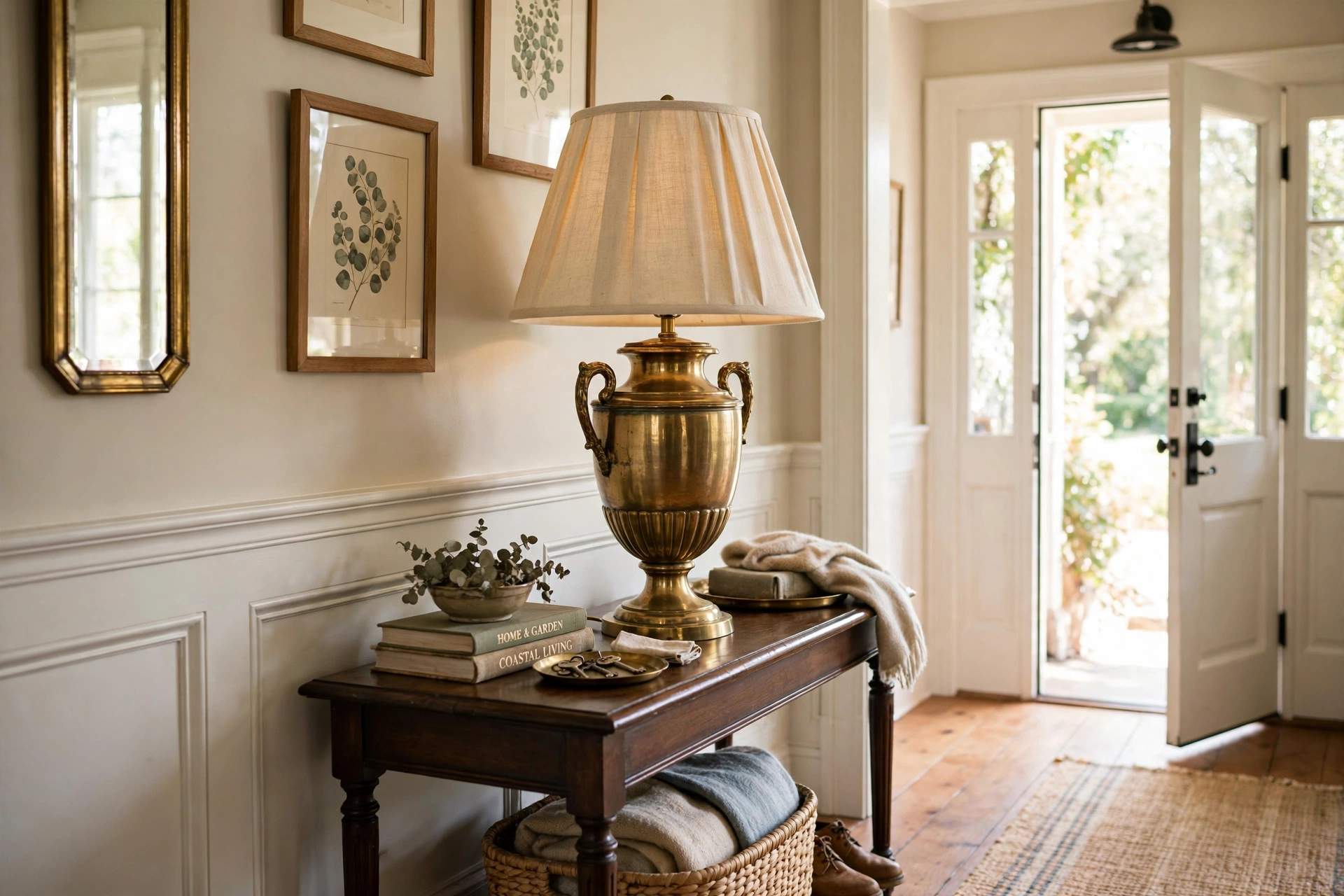
The best lamp feels inevitable in its setting. A traditional home with crown molding and wainscoting calls for classic silhouettes — urn shapes, brass, fabric shades. A modern entry with clean lines wants sculptural minimalism — a simple dome, a slim stem, matte finishes. A rustic or farmhouse entry welcomes textured ceramics, wood, and seeded glass.
You do not need to match the lamp to other fixtures exactly, but keep the metal finishes in the same family: if your door hardware is oil-rubbed bronze, a bronze-based lamp harmonizes better than chrome. This architectural sympathy is what makes a lamp look like it belongs rather than like it was placed. Understanding basic lighting principles — task, ambient, and accent layers — helps you place the lamp as part of a whole scheme rather than a lone object.
12. Use a Swing-Arm or Adjustable Lamp
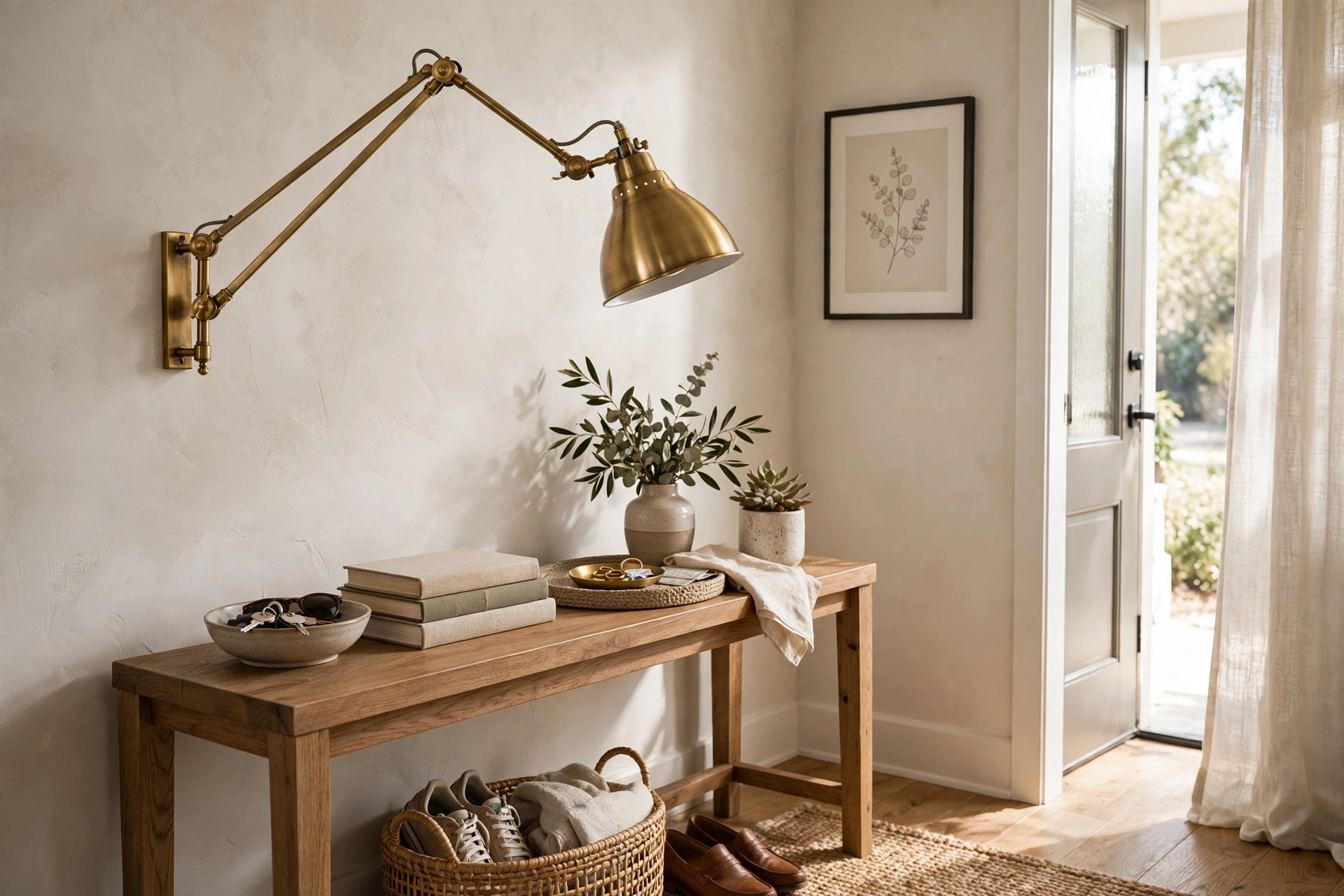
An adjustable table lamp — swing-arm, pharmacy-style, or articulated — adds function to the entryway’s form. Angle the light toward artwork, aim it at the key tray for finding things at night, or swing it outward to wash the wall with warm light. Pharmacy lamps with their classic brass shades suit traditional entries; matte-black swing arms suit modern ones.
Look for models with the switch on the shade or cord within easy reach, since you will adjust these lamps often. The adjustability also future-proofs the vignette: when you restyle the console, the lamp adapts instead of needing replacement. Function-forward lighting earns its place in the hardest-working square footage of the house.
13. Consider Lamp Scale for Double-Height Entries
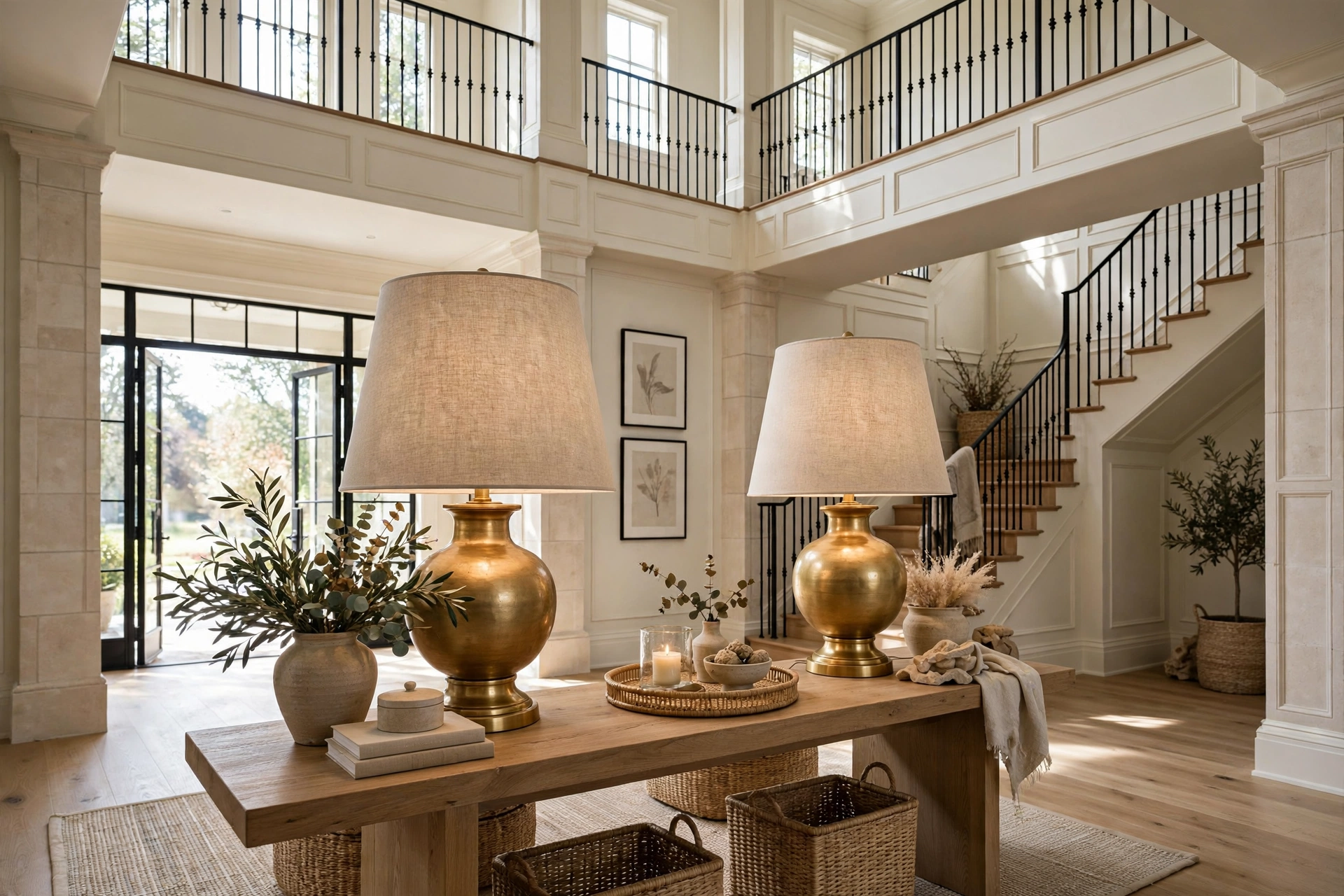
Grand two-story foyers swallow normal-scale lamps whole. In a double-height entry, go bigger and bolder: lamps 36 to 42 inches tall, oversized drum shades 18 inches or more in diameter, or a pair of substantial lamps that can hold their own against the volume. The lamp needs to read from the second-floor landing as well as from the front door.
Balance the large lamp with a generously sized console — at least 60 inches wide — so the proportions stay believable. In vast entries, the lamp’s job shifts from intimate glow to architectural punctuation; choose sculptural forms that look good as silhouettes. When in doubt in a big space, size up: an undersized lamp in a grand foyer looks like a mistake, while a bold one looks like confidence.
14. Add Smart Bulbs for Effortless Ambiance
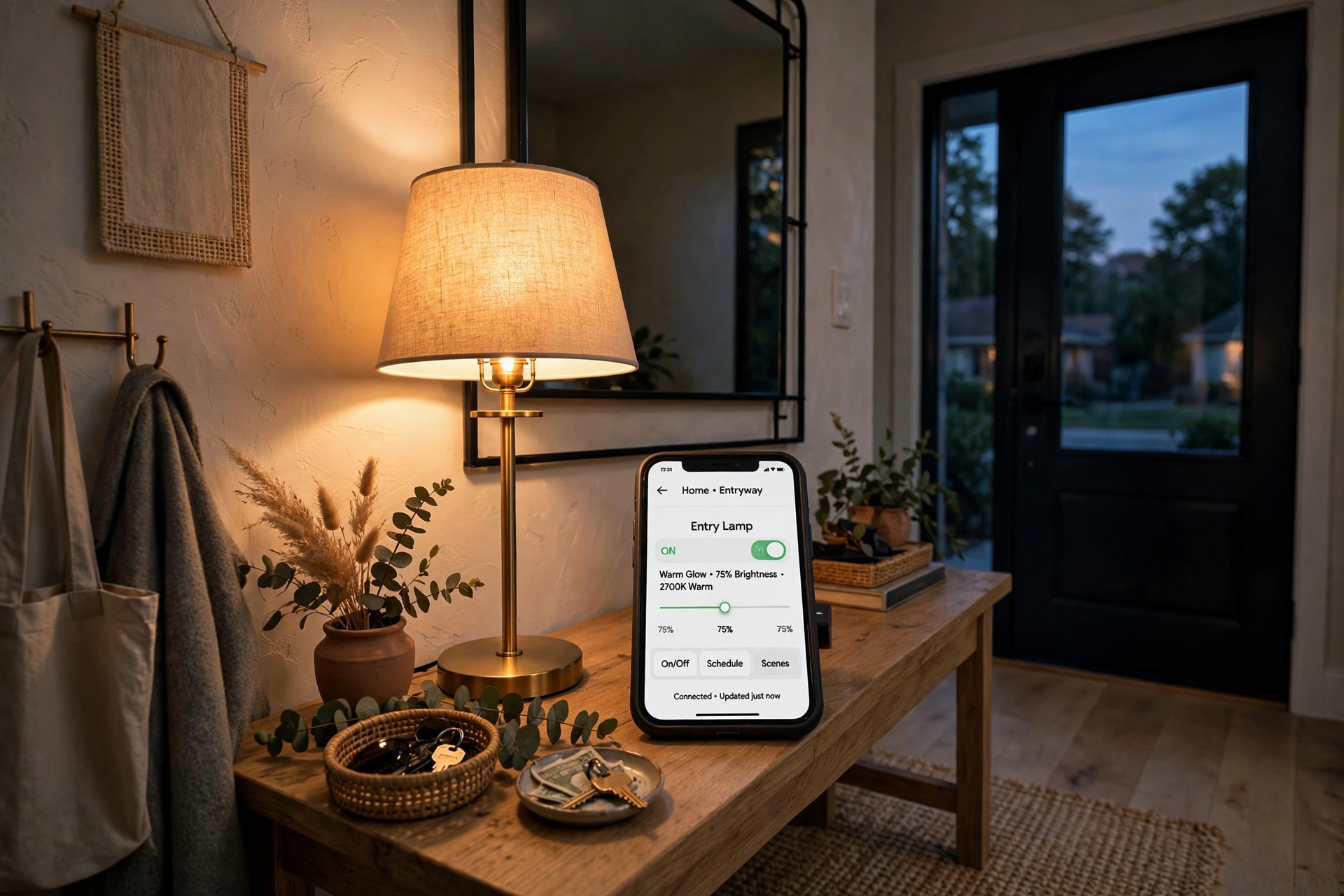
A smart bulb in your entryway lamp unlocks the warm welcome on autopilot. Schedule the lamp to turn on at sunset and off at bedtime, dim it to 30 percent for evening ambiance, or set it to greet you when your phone’s location shows you are nearly home. Warm-dim smart bulbs shift from bright 3000K to candlelike 2200K as they dim, mimicking incandescent behavior.
Choose a smart bulb with a high color-rendering index (CRI 90+) so wood tones and fabrics look rich rather than washed out. The entryway is the ideal first room for smart lighting because the automation is simple — on at dusk, off at night — and the payoff is immediate: you never walk into a dark house again. For the bigger picture of a welcoming entrance, see these entryway decor ideas.
15. Keep Shades Clean and Bulbs Warm
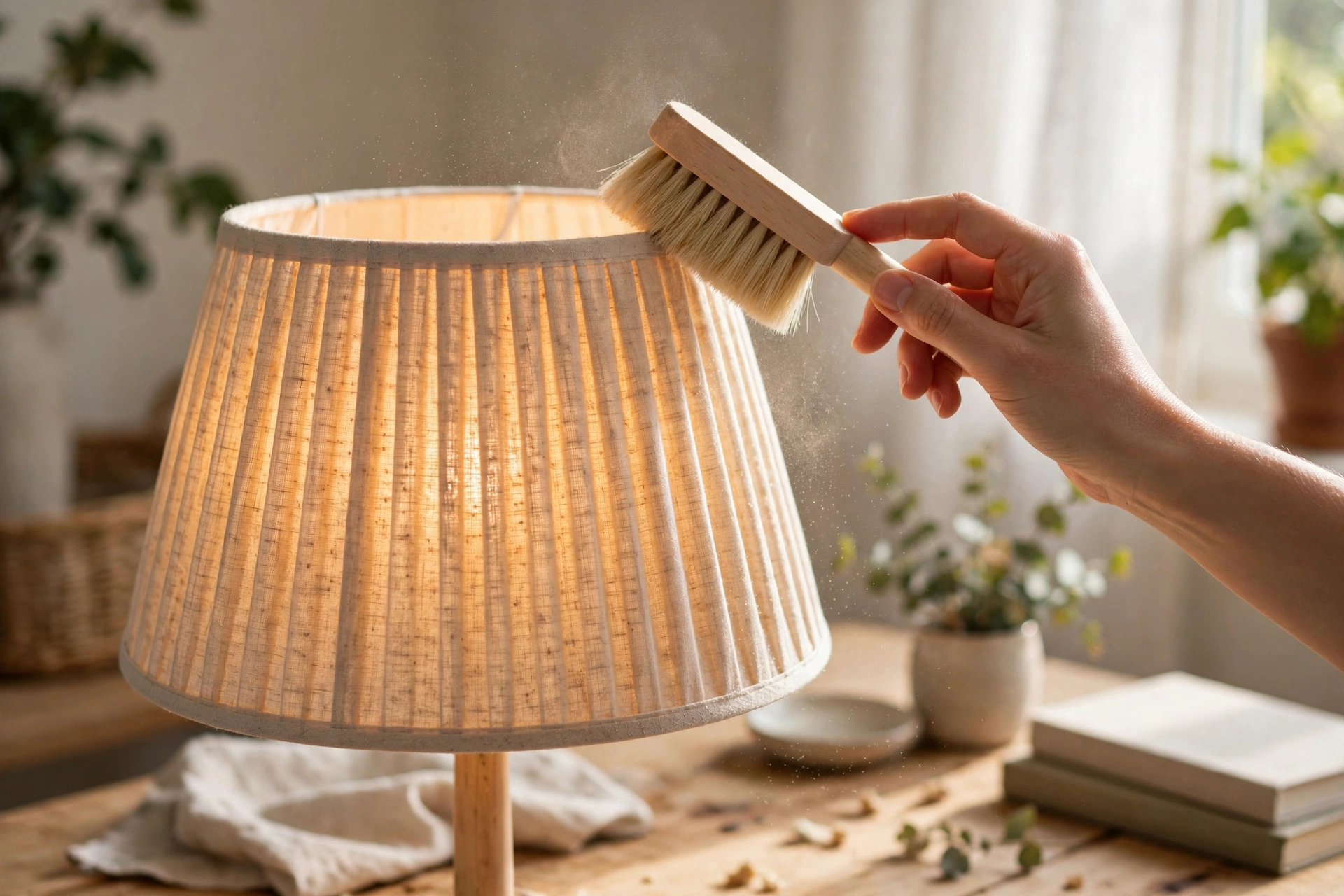
The final detail is maintenance, and it matters more than you would think. Dusty shades can cut light output noticeably — vacuum fabric shades monthly with a brush attachment, and wipe glass or hardback shades with a microfiber cloth. Replace bulbs before they burn out if they start flickering or dimming, and always choose warm white (2700K) for entries; cooler temperatures feel clinical at the front door.
Check that the bulb’s wattage (or LED equivalent) suits the shade: too bright a bulb in a small shade creates glare and heat. A 40- to 60-watt equivalent LED is plenty for most entryway lamps — the goal is glow, not interrogation lighting. The science of color temperature explains why warm light reads as welcoming: it mimics firelight, the original welcome-home signal. A clean shade and the right bulb keep your entryway’s warm welcome literally glowing.
Frequently Asked Questions
How tall should an entryway table lamp be?
Aim for 28 to 34 inches tall overall on a standard 30- to 36-inch console table. The bottom of the shade should sit at about 60 inches from the floor — roughly eye level — so you are never staring at a bare bulb. In double-height foyers, scale up to 36 to 42 inches so the lamp holds its own in the larger volume.
What wattage bulb is best for an entryway lamp?
A 40- to 60-watt equivalent LED (roughly 450 to 800 lumens) suits most entryway lamps. The goal is a warm glow, not bright task lighting. Always use warm white bulbs at 2700K for a welcoming feel, and check the lamp’s maximum wattage rating — never exceed it, especially with enclosed or fabric shades.
Should entryway lamps match?
Matching pairs create classic symmetry, especially flanking a mirror or artwork on a wide console. But a single statement lamp works better on narrow consoles and in modern or eclectic entries. If you use two different lamps, keep them in the same style family and at similar heights so the pairing feels intentional.
How do you hide lamp cords in an entryway?
Run the cord along the back edge of the console and secure it with adhesive cord clips, then route it down the back leg nearest the outlet. A cord cover painted to match the wall makes the vertical run nearly invisible. For the ultimate clean look, use a cordless rechargeable lamp and skip the cord entirely.
Can you put a lamp on a narrow entryway table?
Yes — choose a buffet lamp or another slim-profile design no more than 8 inches deep, and keep the base diameter modest so styling space remains. Wall-mounted plug-in sconces are an alternative when the tabletop is truly tiny. The key is leaving at least a third of the surface clear for keys, trays, and decor.
Keep Exploring
An entryway lamp is a small object with an outsized job: it is the first light guests see and the last one you switch off. Choose the right scale, keep the glow warm, and style the surface around it — your foyer will deliver that warm welcome every single time.