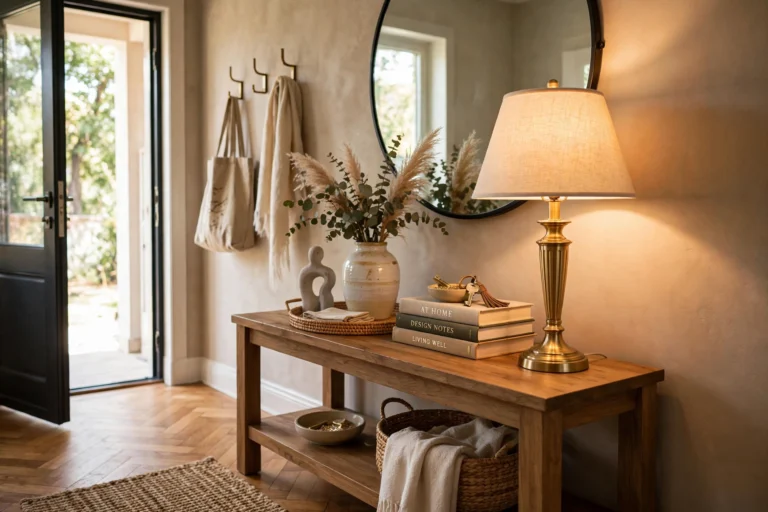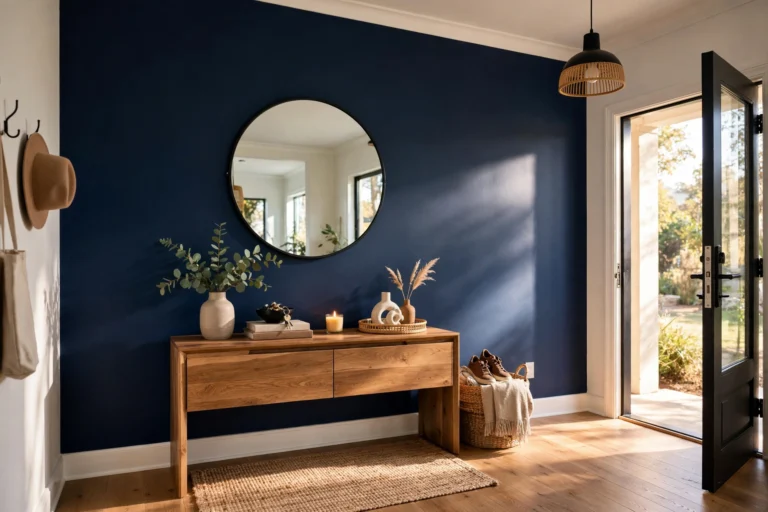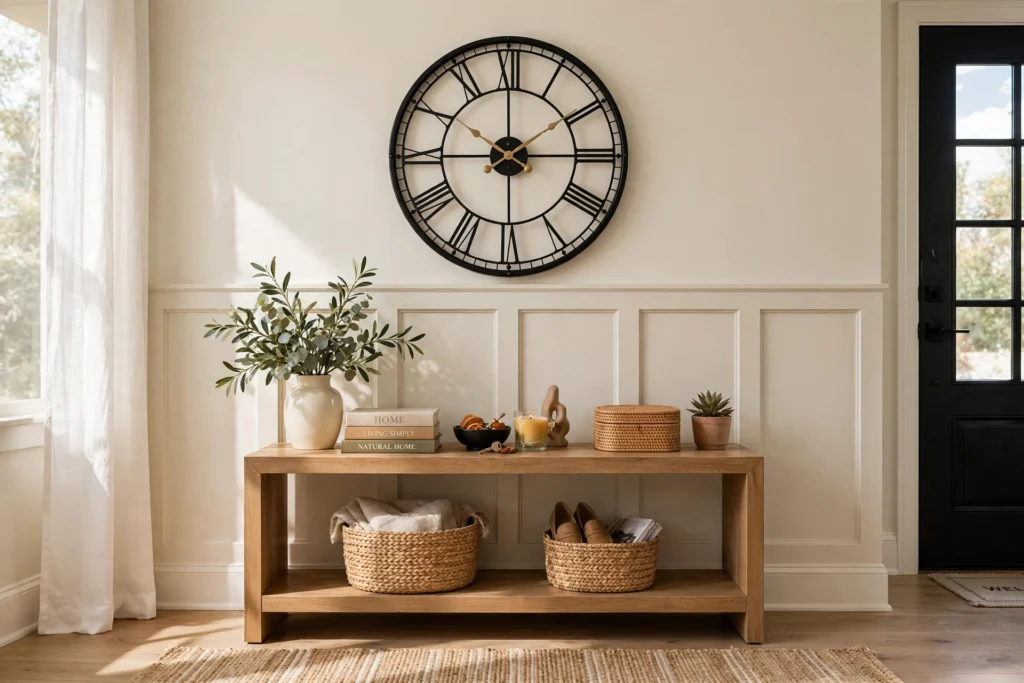

An entryway wall clock is one of the hardest-working decor pieces in your home: it fills empty wall space with personality and gives you that crucial last-glance time check before you head out the door. No more digging for your phone with keys in hand — a well-placed clock keeps the whole household running on time. These entryway wall clock ideas balance style and function, covering sizes, styles, placement, and the practical details that make a foyer clock genuinely useful.
From oversized statement pieces to discreet modern designs, the right clock anchors your entryway decor while serving a daily purpose. Here is how to choose one that looks beautiful and keeps you punctual.
1. Hang the Clock at the Right Height
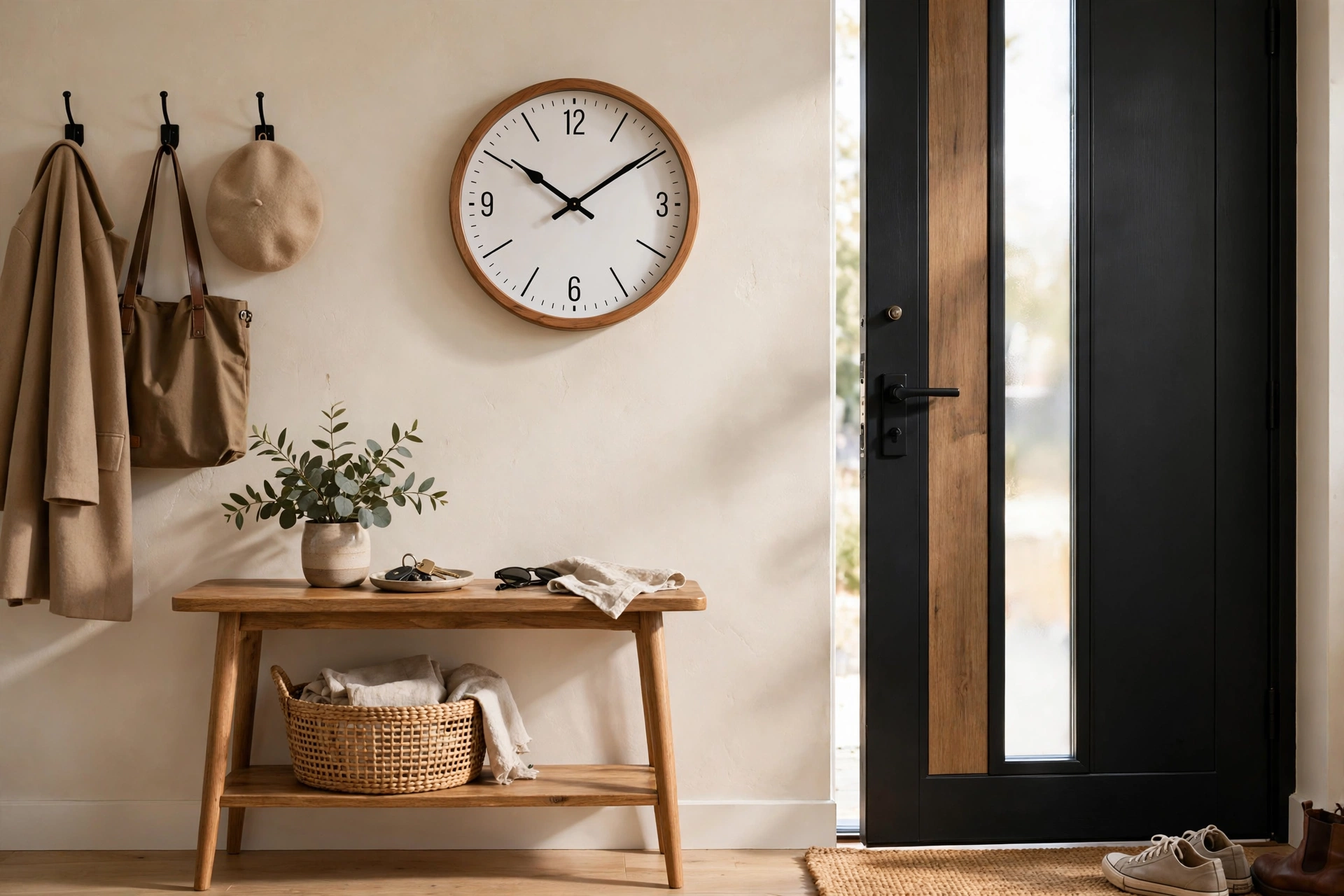
Placement determines whether your entryway clock is decor you glance at or decor you ignore. Hang the clock’s center at 60 to 66 inches from the floor — slightly above standard eye level — so it is readable at a glance while standing, even with an armful of bags. In entries where you check the time while putting on shoes, err toward the lower end of that range.
If the clock hangs above a console table, leave 6 to 10 inches of clearance between the tabletop decor and the bottom of the clock so the two elements feel connected but not crowded. For readability from the front door, choose a clock with high-contrast hands and numerals; ornate low-contrast faces look pretty in photos but fail at the clock’s primary job. Function first, then beauty — the best entryway clocks deliver both.
2. Go Oversized for a Statement
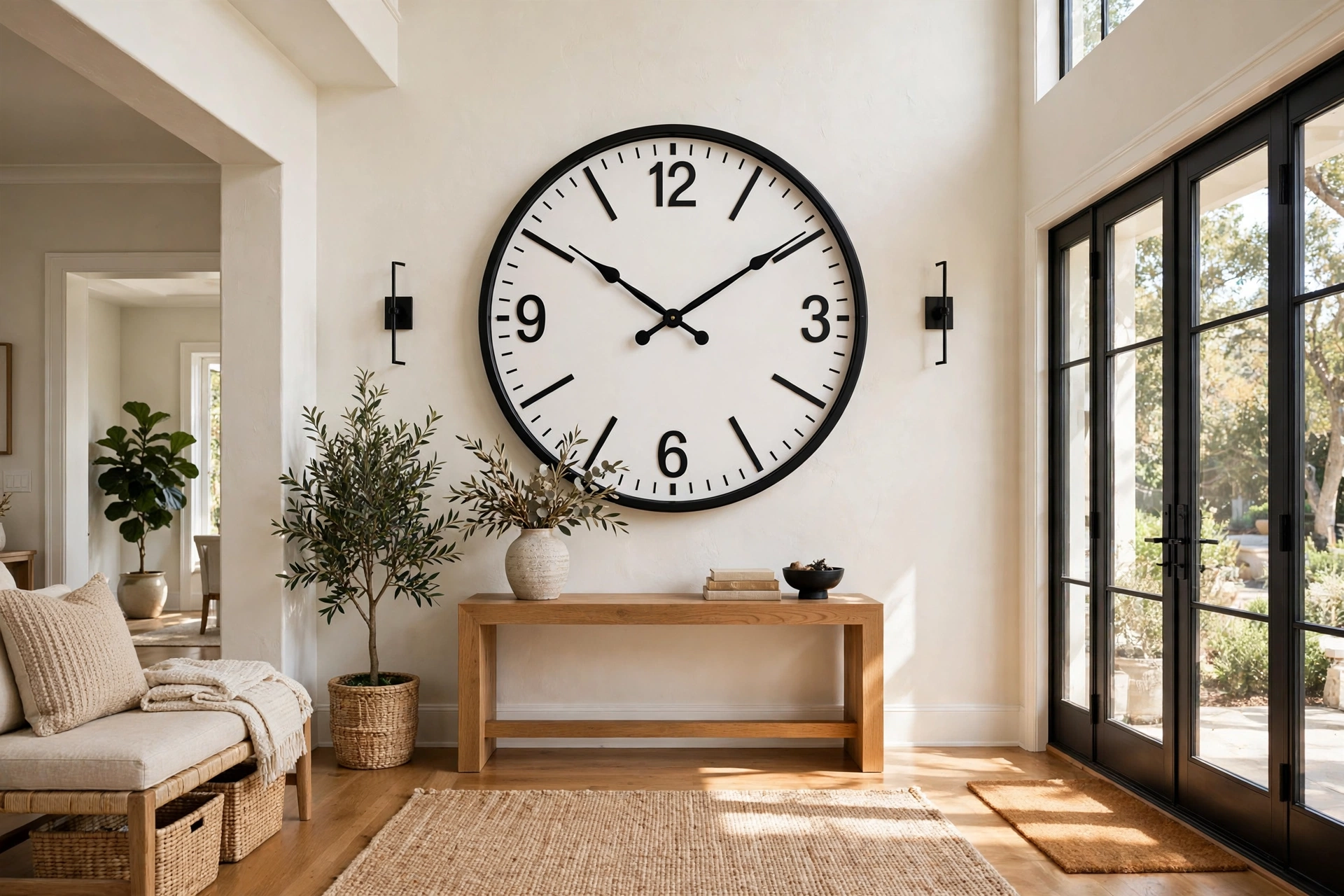
An oversized wall clock — 24 inches in diameter or larger — turns the entryway’s biggest blank wall into a focal point. Large clocks read clearly from across the room and down hallways, which makes them genuinely more functional in spacious foyers. A 30-inch clock on a 6-foot wall section fills the space the way art would, with the bonus of utility.
Keep the design simple at large scale: clean numerals or markers, uncluttered faces, and slim hands. Busy faces become visual noise when magnified. Oversized clocks suit modern farmhouse, industrial, and contemporary entries especially well, where their bold geometry echoes the architecture. One dramatic clock beats a cluster of small decor every time in a grand entry.
3. Choose a Classic Round Clock
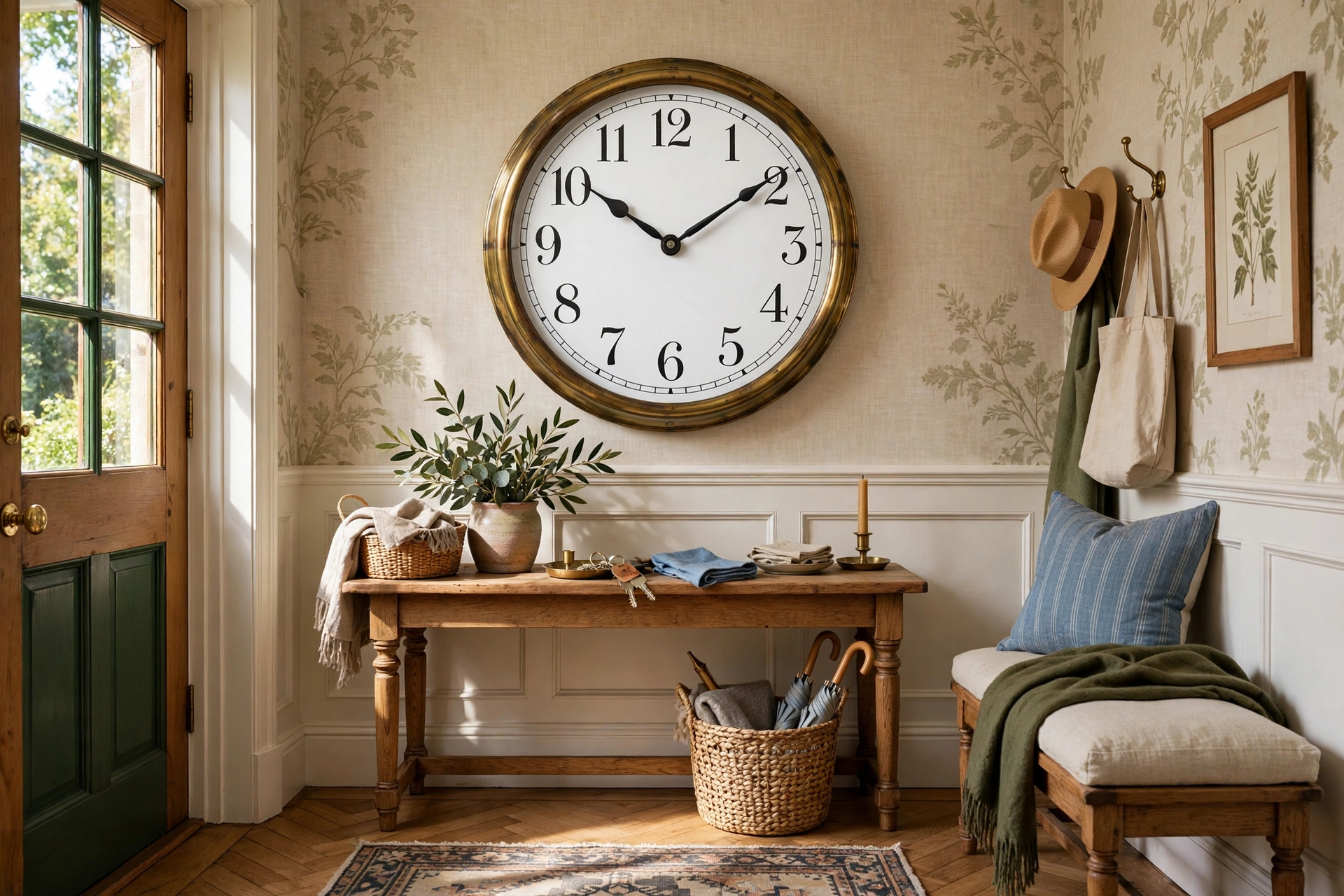
The round wall clock is the timeless default for good reason: its shape echoes mirrors, wreaths, and other entryway staples, and it suits every style from traditional to Scandinavian. A 16- to 20-inch round clock is the versatile sweet spot for most entries — substantial enough to notice, compact enough to share the wall with other decor.
Look for details that elevate the classic: a solid wood or brass frame, a subtly textured face, or elegant serif numerals. Black-and-white faces offer maximum readability; softer combinations like brass hands on cream read as more decorative. The round clock is the safe choice that never looks like a compromise — it is popular because it works.
4. Try a Vintage or Antique-Style Clock
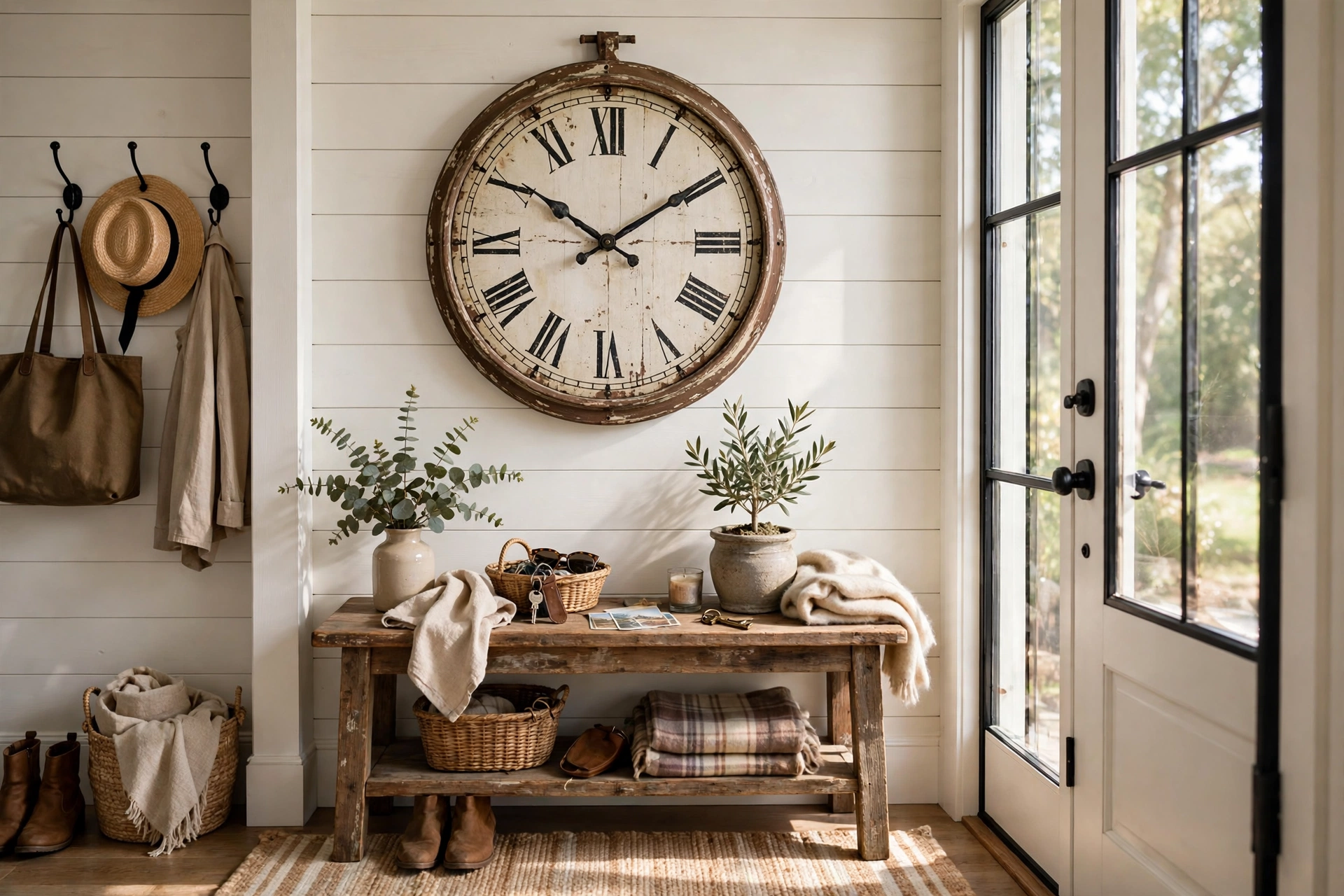
A vintage-style clock — Roman numerals, distressed finishes, ornate frames, or a classic schoolhouse silhouette — brings instant character to the entryway. These designs pair naturally with farmhouse, traditional, and eclectic decor, and their old-world charm makes even a new-build foyer feel established. Look for Roman numeral faces, aged metal finishes, and glass-covered dials for authenticity.
When buying vintage-look clocks, check the movement quality: a silent sweep movement is worth seeking out, since entryways sit near living spaces where an audible tick can irritate. Battery-operated quartz movements keep time accurately for a year or more per battery. A vintage-style clock tells guests your home values character over trends. The history of clocks as household objects shows how long they have served as both tools and status symbols at the entrance of a home.
5. Go Modern With Minimalist Designs
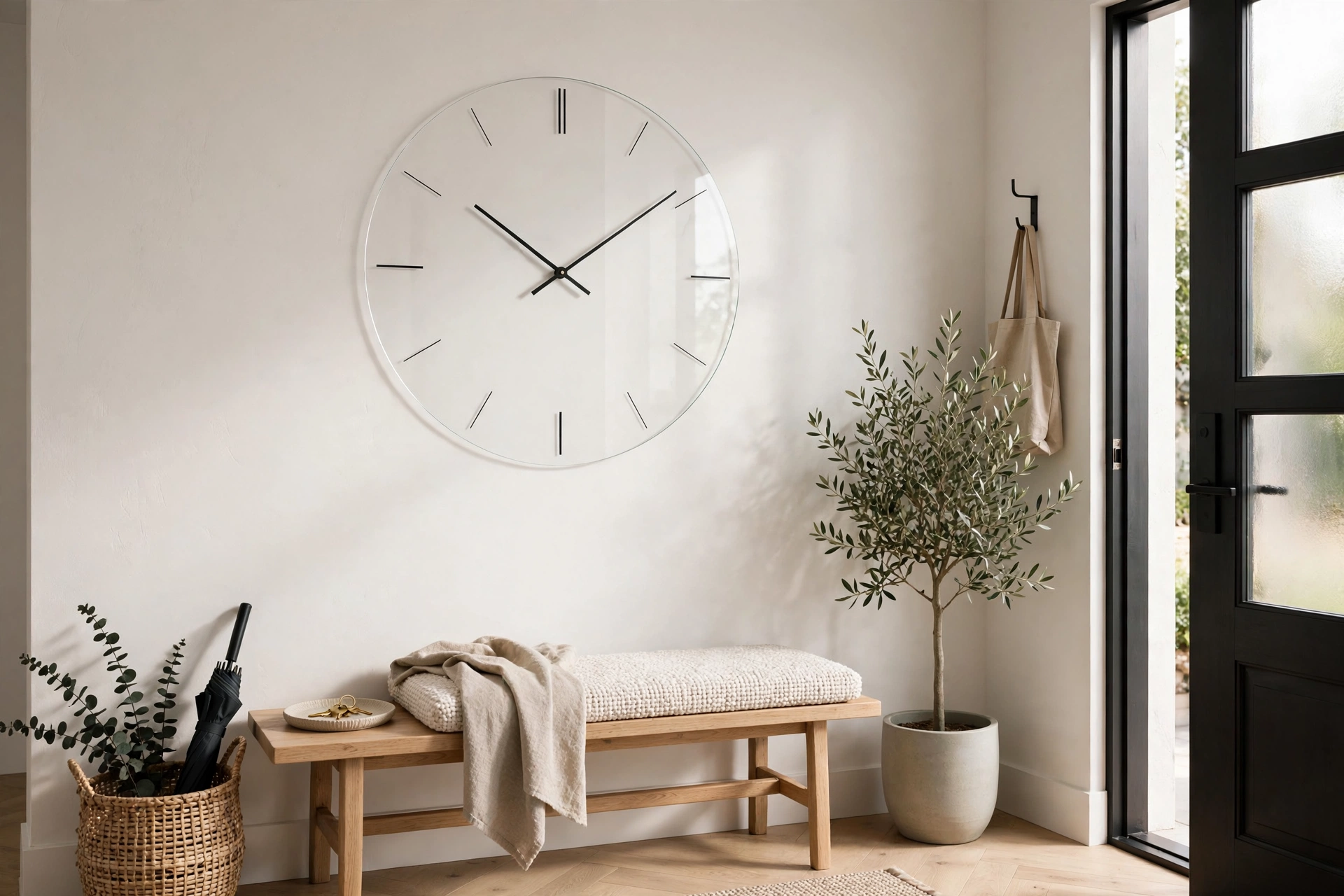
For contemporary entries, a minimalist clock — thin profile, no numerals or simple dot markers, monochrome palette — delivers time-telling without visual clutter. These designs treat the clock as sculpture: a slim black ring with floating hands, a concrete disc, or a frameless glass face mounted directly on the wall.
Minimalist clocks work best when they contrast subtly with the wall: a black clock on a white wall, a brass clock on deep green. Because the design is so reduced, material quality matters enormously — cheap minimalist clocks look cheap, while well-made ones look like gallery pieces. Keep the diameter moderate (14 to 18 inches) so the simplicity reads as intentional rather than sparse.
6. Pair the Clock With a Mirror
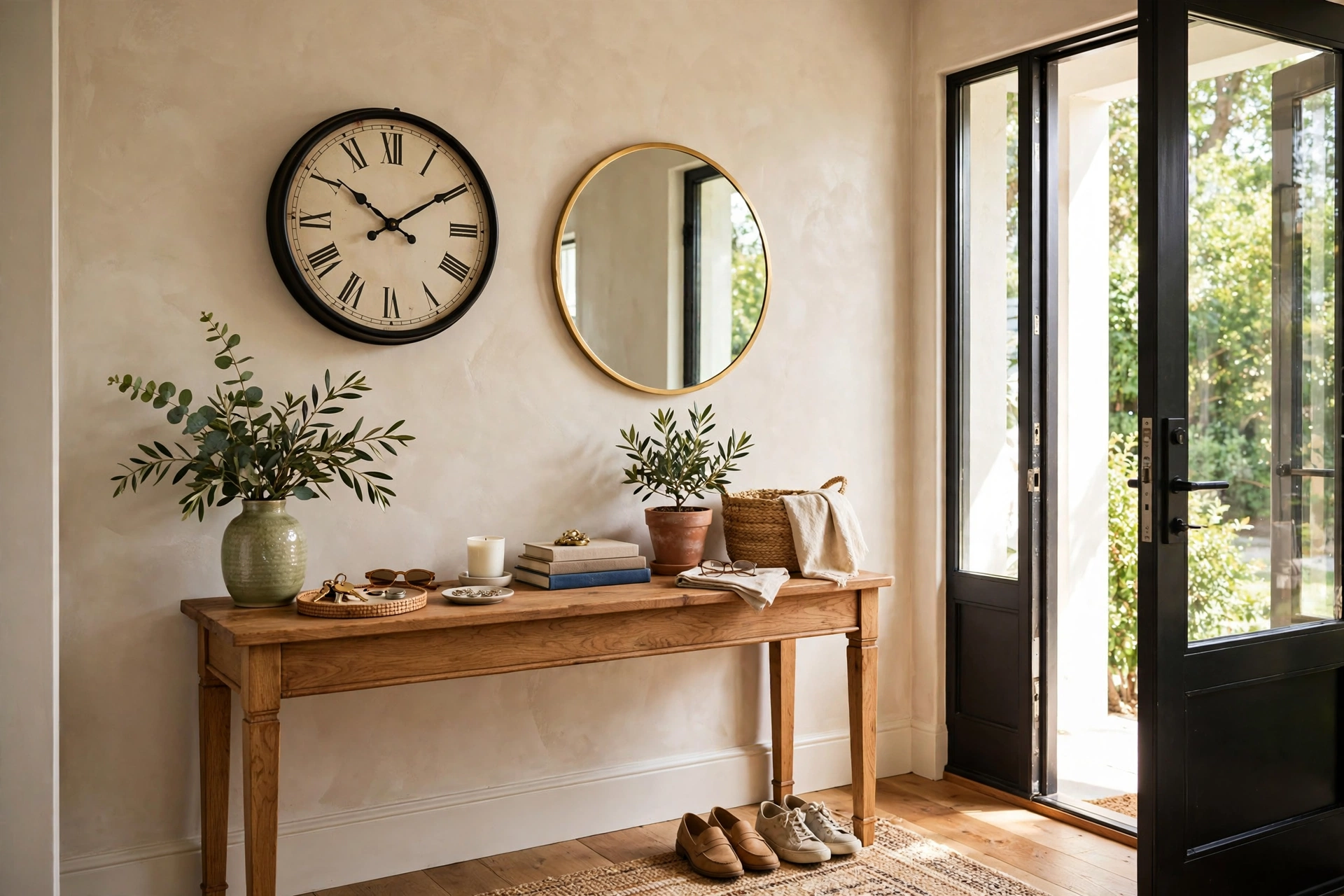
Hanging a clock near or above a mirror is an entryway power move: the mirror bounces light and creates the illusion of space, while the clock adds function and visual weight. The classic arrangement places the clock above the console and the mirror beside it, or the mirror above the console with the clock on the adjacent wall where it catches your eye on the way out.
Keep finishes complementary — a brass-framed clock with a brass-trimmed mirror, for instance — so the pairing feels designed. Avoid placing the clock directly opposite the mirror, which creates a confusing double reflection of the face. For more on this essential entryway pairing, see these entryway mirror ideas.
7. Choose High-Contrast Faces for Readability
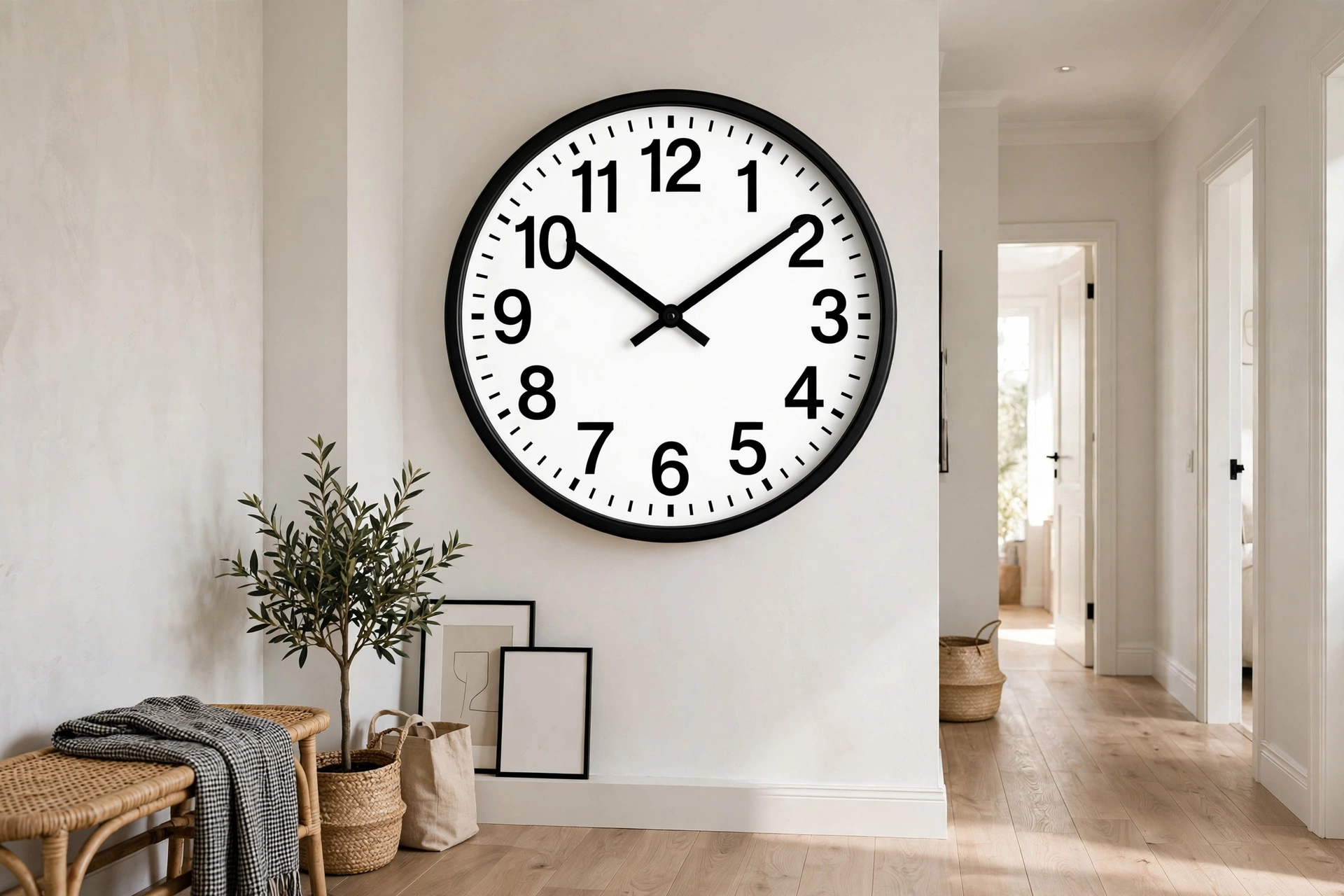
An entryway clock earns its keep through quick readability, and contrast is what makes a glance sufficient. Black hands and numerals on a white or cream face remain the gold standard; white on charcoal or navy is equally effective and moodier. Avoid low-contrast combinations like gold hands on beige or gray on silver — they photograph beautifully and read terribly.
Numeral style matters too: clear Arabic numerals read fastest, followed by simple baton markers; ornate script numerals and marker-only faces slow you down. If anyone in the household has aging eyes, prioritize ruthlessly for legibility — a beautiful clock you cannot read at a glance is just a wall decoration with hands.
8. Add a Clock With a Built-In Shelf
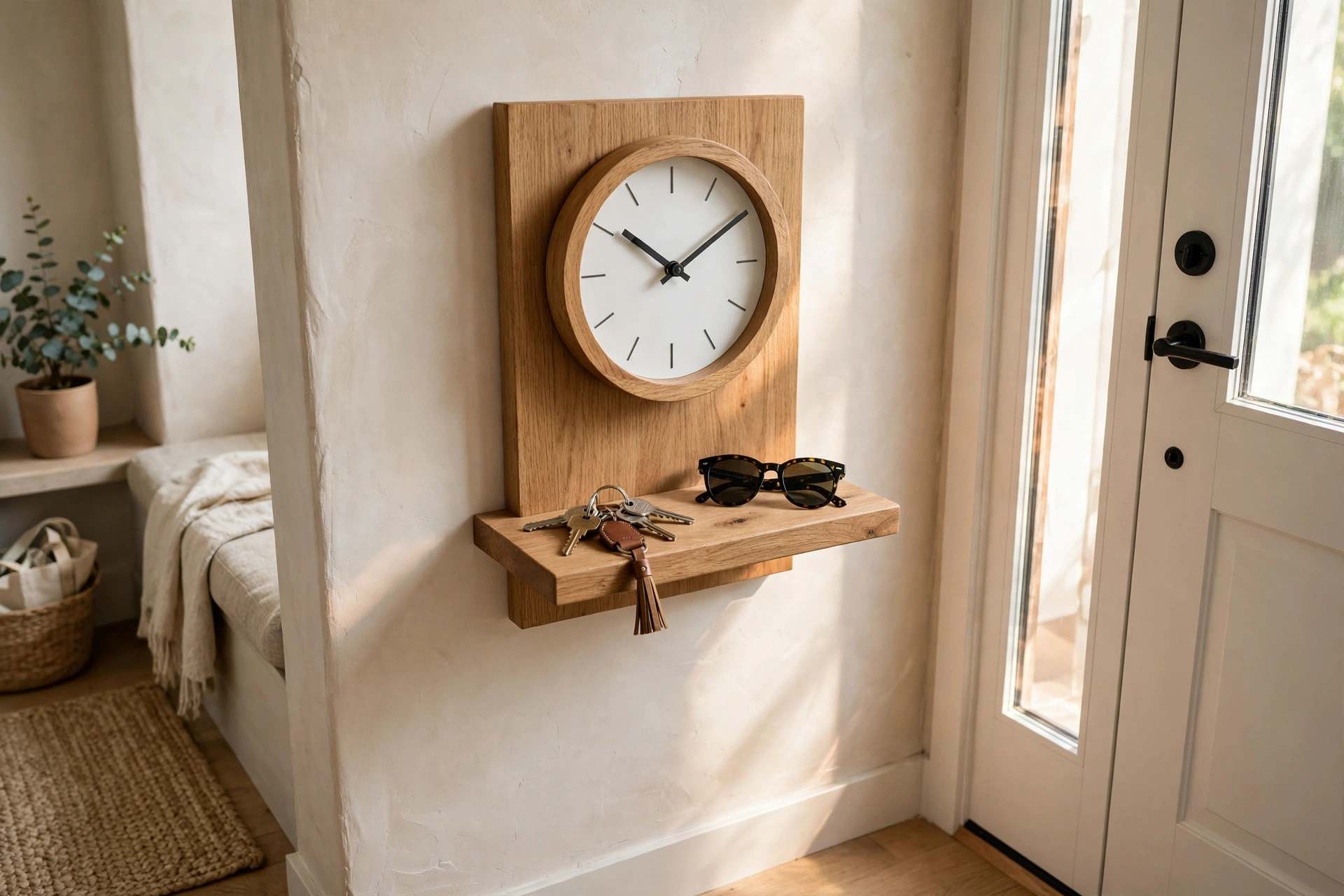
Combination clock-shelves — a clock face integrated with a small ledge or cubby — are brilliant for compact entries. The shelf holds keys, sunglasses, or a small plant while the clock keeps time above, consolidating two entryway essentials into one footprint. These pieces typically span 18 to 24 inches wide and project 4 to 6 inches from the wall.
Mount them at a height where the shelf is reachable — the shelf surface around 48 to 54 inches from the floor works for most adults — which naturally places the clock face in a readable zone. This is one of the most practical entryway wall clock ideas for small foyers, apartments, and narrow hallways where every inch of wall must multitask.
9. Try a Wooden Clock for Warmth
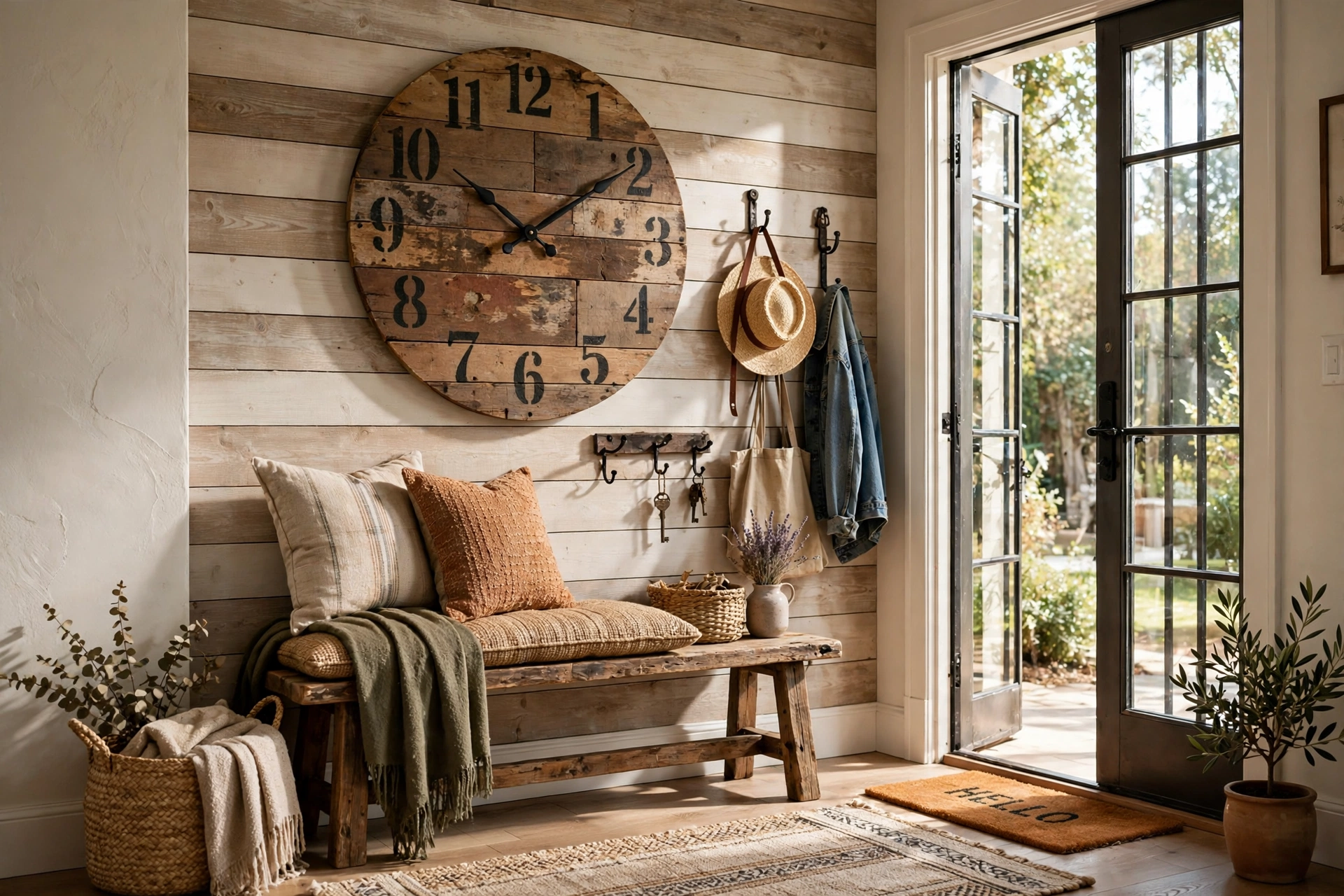
Wooden wall clocks bring organic warmth that metal and plastic cannot match. Options range from rustic — reclaimed wood planks with stenciled numerals — to refined, like a mid-century teak starburst or a live-edge walnut disc. Wood’s natural variation means no two clocks are identical, adding artisanal character to the entry.
Match the wood tone loosely to other wood in the entry (console table, flooring, door) rather than exactly — close-but-not-identical woods look collected, while perfect matches can look flat. Protect the clock from direct sunlight, which fades and dries wood over time, and dust carved or textured faces with a soft brush. A wooden clock softens modern entries and enriches traditional ones.
10. Hang a Gallery Wall Around the Clock
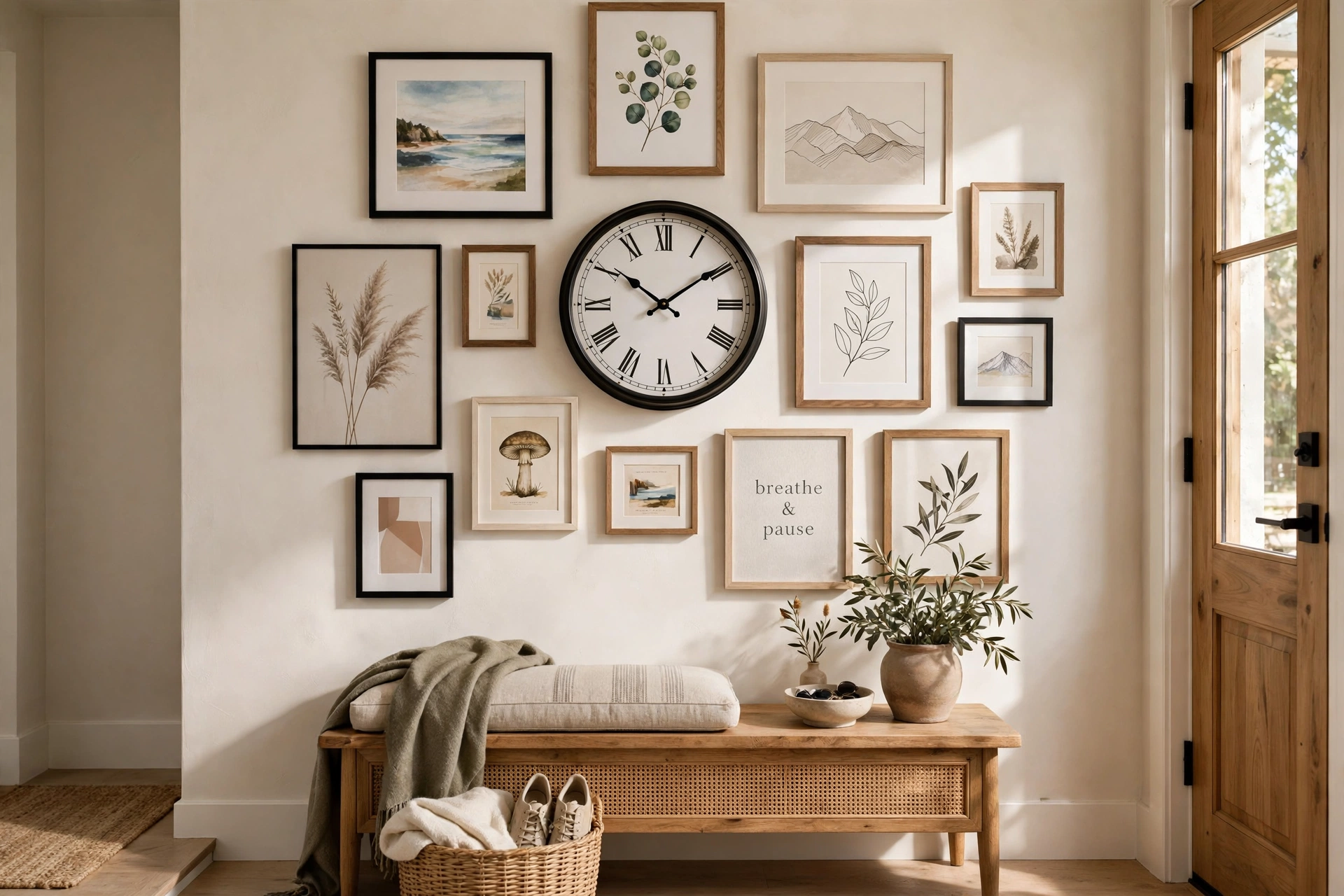
Make the clock the centerpiece of an entryway gallery wall by surrounding it with framed art, small mirrors, and decorative objects. The clock becomes the anchor — typically the largest piece, hung at center — with smaller frames radiating outward. This approach fills a large foyer wall with personality while keeping time visible.
Plan the arrangement on the floor first, keeping 2 to 3 inches between pieces, and hang the clock first so everything else orbits it. Choose frames in two finishes maximum to keep the collection cohesive. The clock’s round shape contrasts beautifully with rectangular frames, and its function justifies its prominence. For broader inspiration on dressing entry walls, explore these entryway wall decor ideas.
11. Choose a Silent Sweep Movement
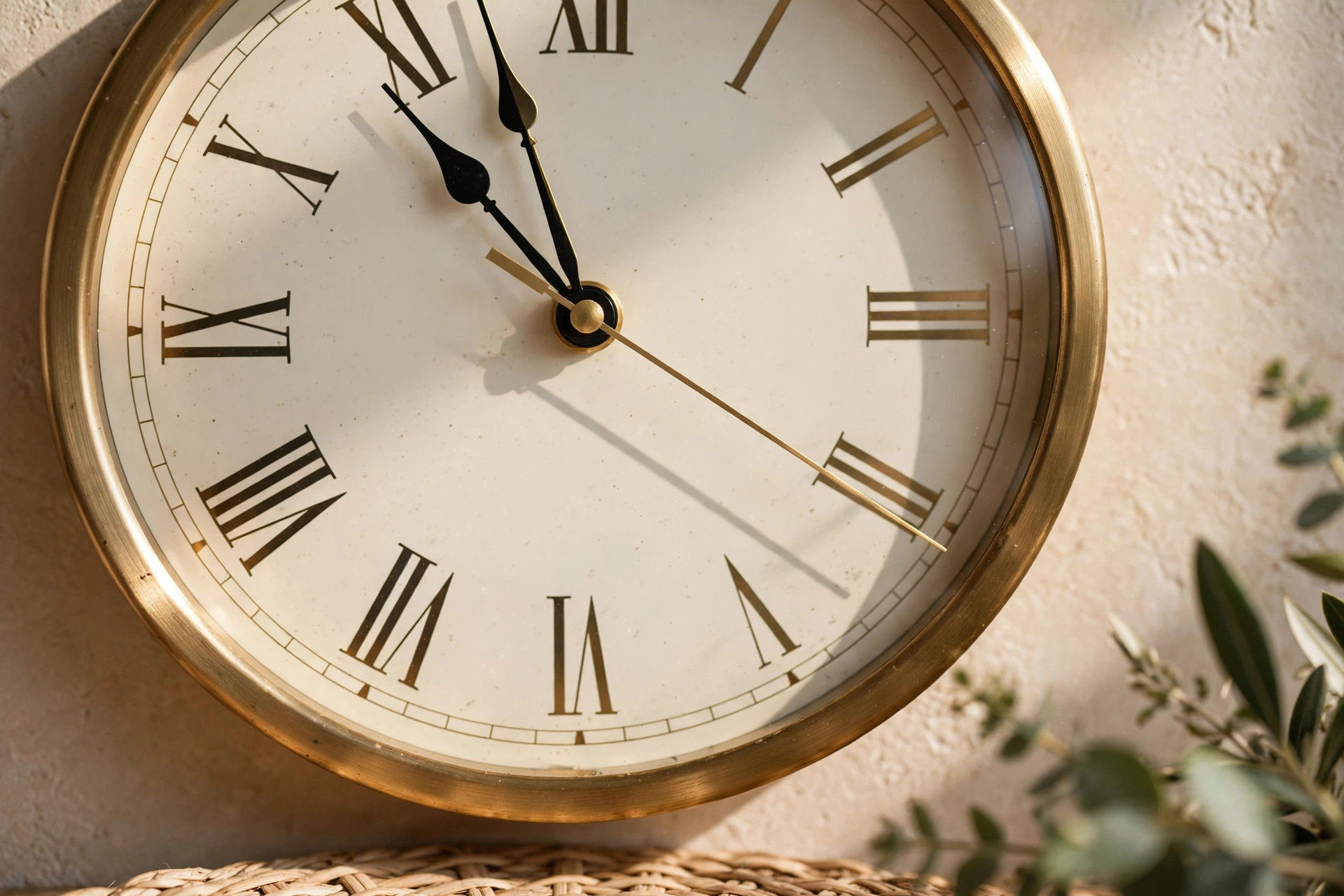
The tick-tock of a traditional clock movement can be surprisingly intrusive in an entryway that opens onto living areas. Silent sweep movements — where the second hand glides continuously instead of ticking — eliminate the sound entirely and look more elegant in motion. Most quality wall clocks now offer sweep options, often labeled “silent” or “non-ticking.”
When shopping, confirm the movement type in the specifications rather than trusting the product photos. Sweep movements use slightly more battery power but still typically run a year or more on a single AA battery. If you love the idea of an audible tick as a homey sound, place a ticking clock in a closed-off foyer; otherwise, silence is the sophisticated choice.
12. Try an Industrial Metal Clock
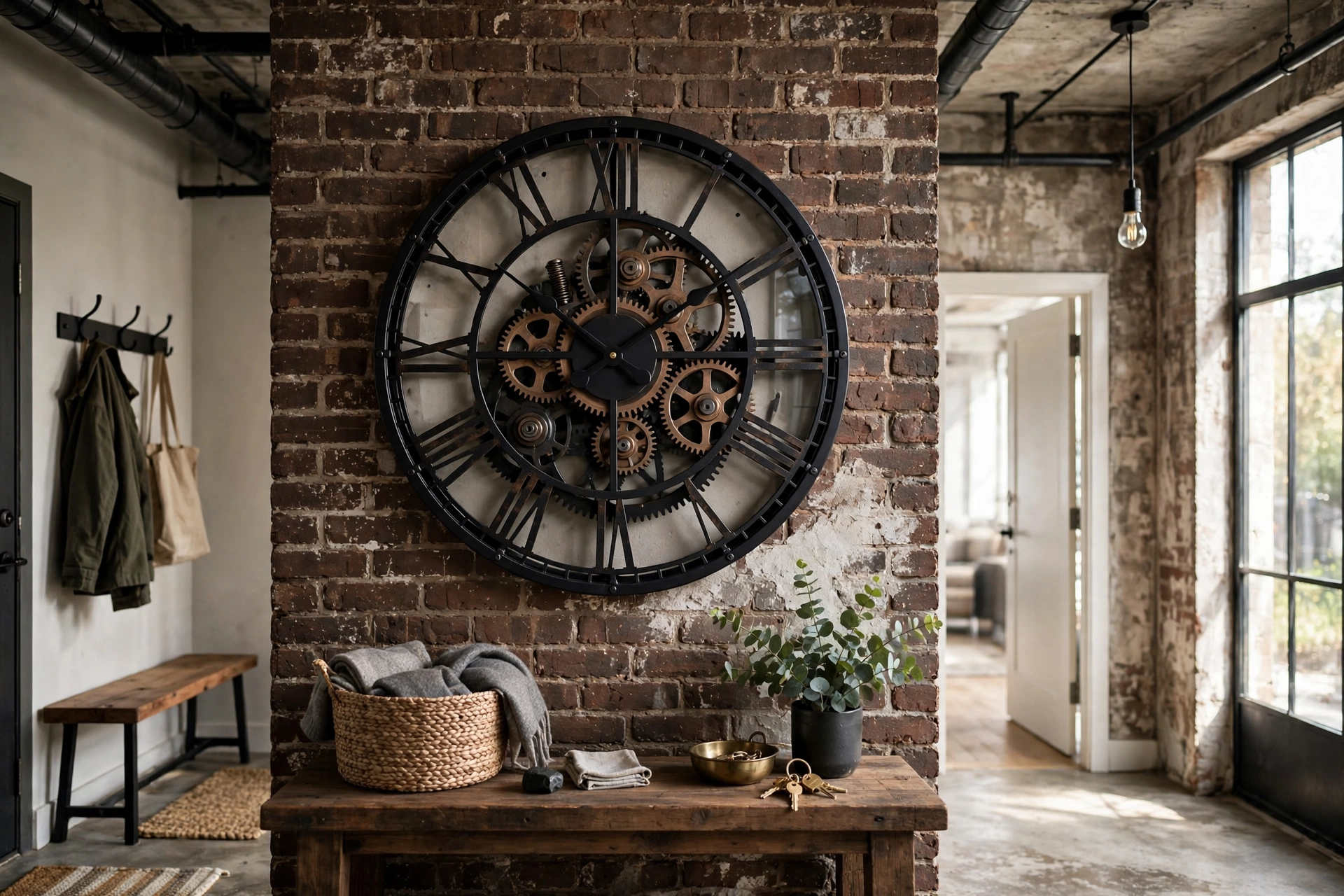
Industrial-style clocks — blackened metal, exposed gears, cage frames, factory-inspired numerals — bring edge and masculinity to the entryway. They suit lofts, modern farmhouses, and any entry with raw materials like brick, concrete, or reclaimed wood. The exposed-gear designs double as kinetic sculpture, with visible mechanisms that fascinate guests.
Scale industrial clocks generously; their bold details need size to read properly — 20 inches minimum, 30 plus for large walls. Keep the rest of the entry’s metal finishes in the same dark family (matte black, oil-rubbed bronze) so the clock feels integrated rather than imported from a different aesthetic. One industrial statement per entry is plenty; let the clock be it.
13. Add a Smart or Digital Clock Discreetly
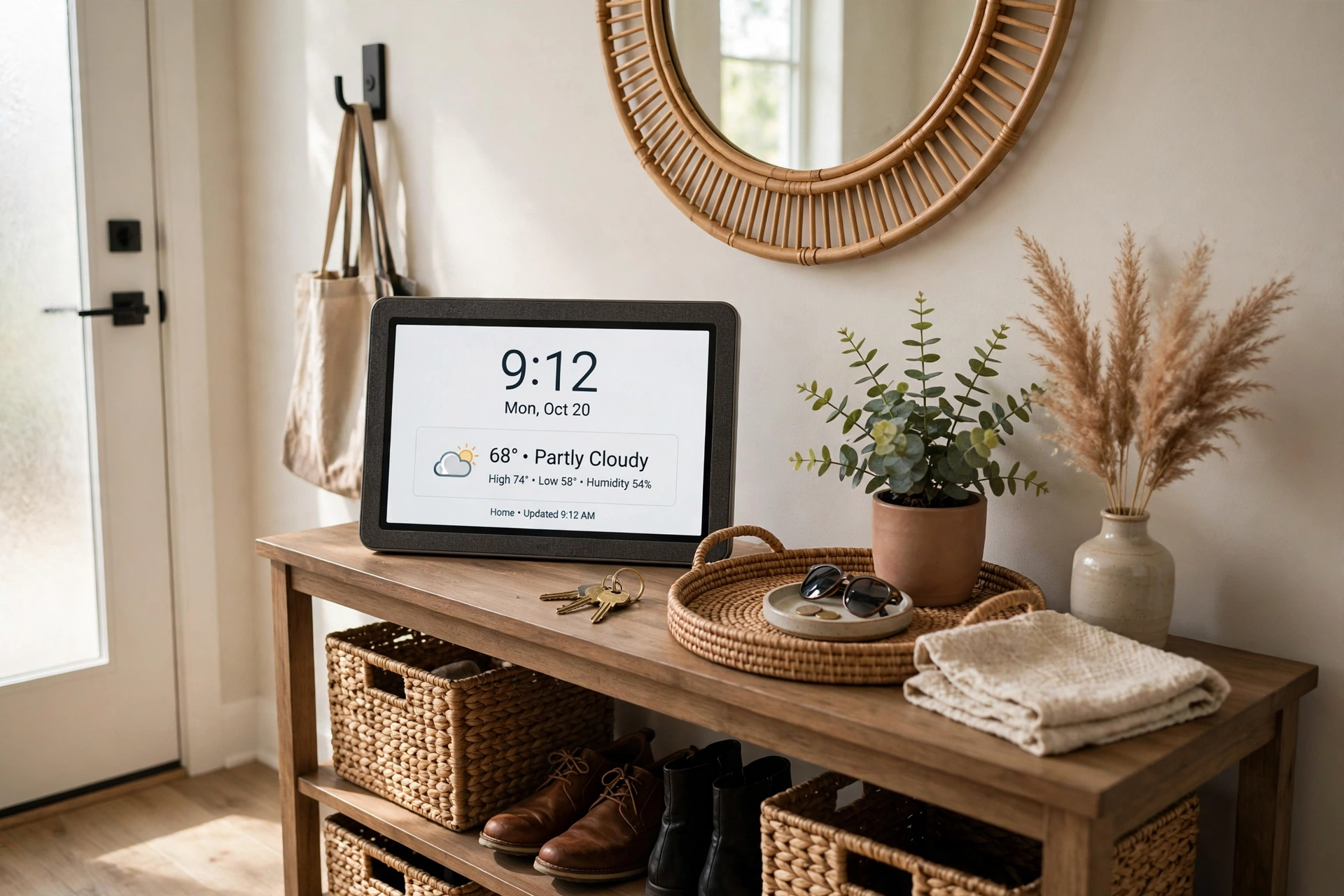
Smart displays and digital clocks bring genuinely useful function to the entryway: time, date, weather, and calendar glanceable on the way out. The trick is integrating the technology without creating a gadget aesthetic. Choose models with ambient display modes that mimic analog faces, or mount a small digital clock inside a decorative frame.
Position smart displays where they are useful but not dominant — on the console rather than as the wall centerpiece. Set brightness to auto-adjust so the screen does not glare at night. Technology in the entry should feel like a quiet assistant, not a billboard; the best smart clock is one guests barely notice until they need it. For clock inspiration in other rooms of the house, see these living room wall clock ideas.
14. Style a Clock Above the Console Table
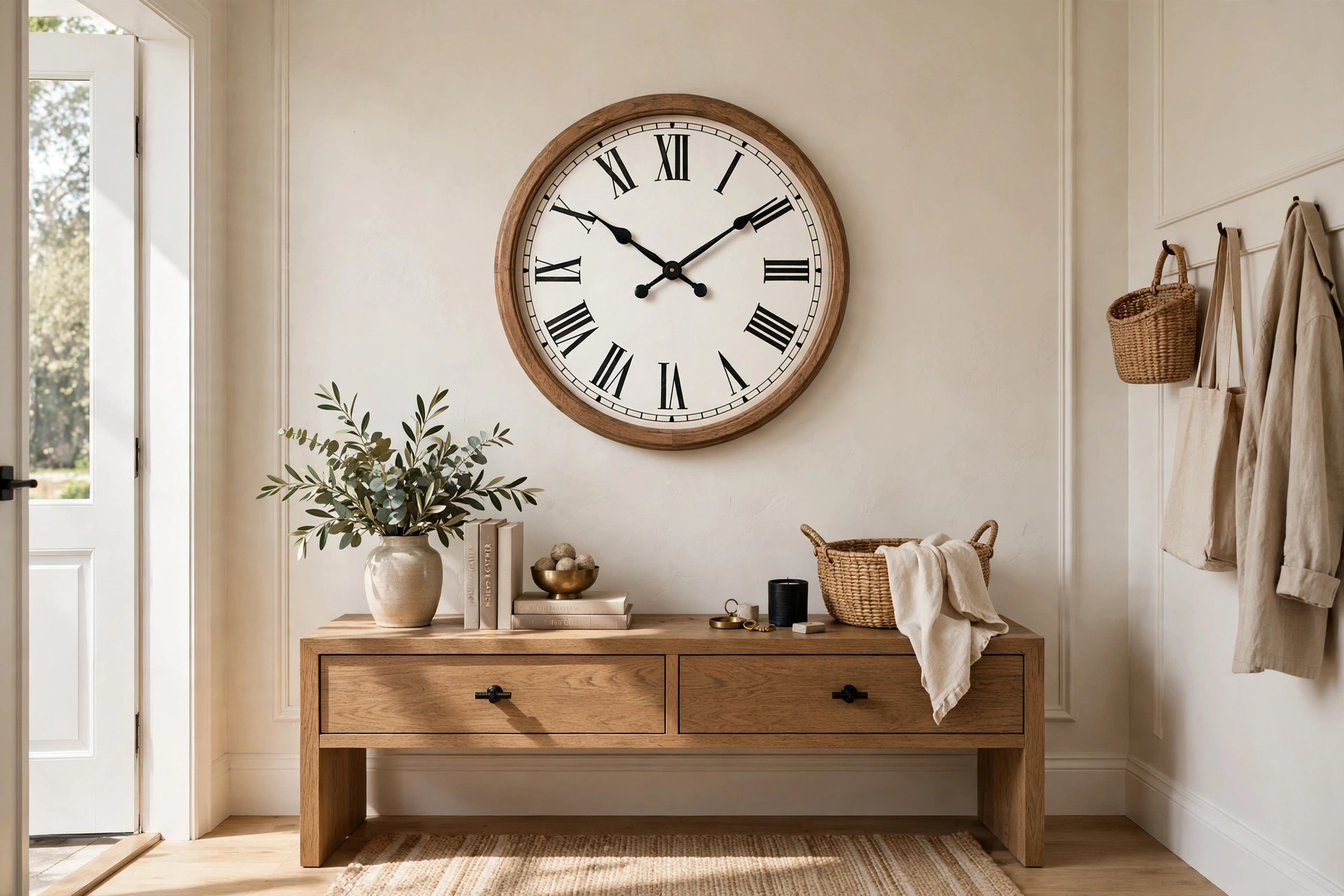
The console-top wall is the entryway’s prime real estate, and a clock is one of its best uses. Center the clock above the console, leaving 6 to 10 inches between the tallest tabletop object and the clock’s bottom edge. The clock’s width should span roughly one-half to two-thirds of the console’s width — a 20-inch clock over a 48-inch console, for example.
Style the console top to complement rather than compete: keep the center low (a tray or bowl) so the clock dominates the vertical space, and place taller objects (lamps, vases) toward the ends. This classic composition — clock above, styled surface below — is the entryway equivalent of art above a sofa: balanced, expected in the best way, and endlessly adaptable.
15. Maintain Your Clock for Years of Service
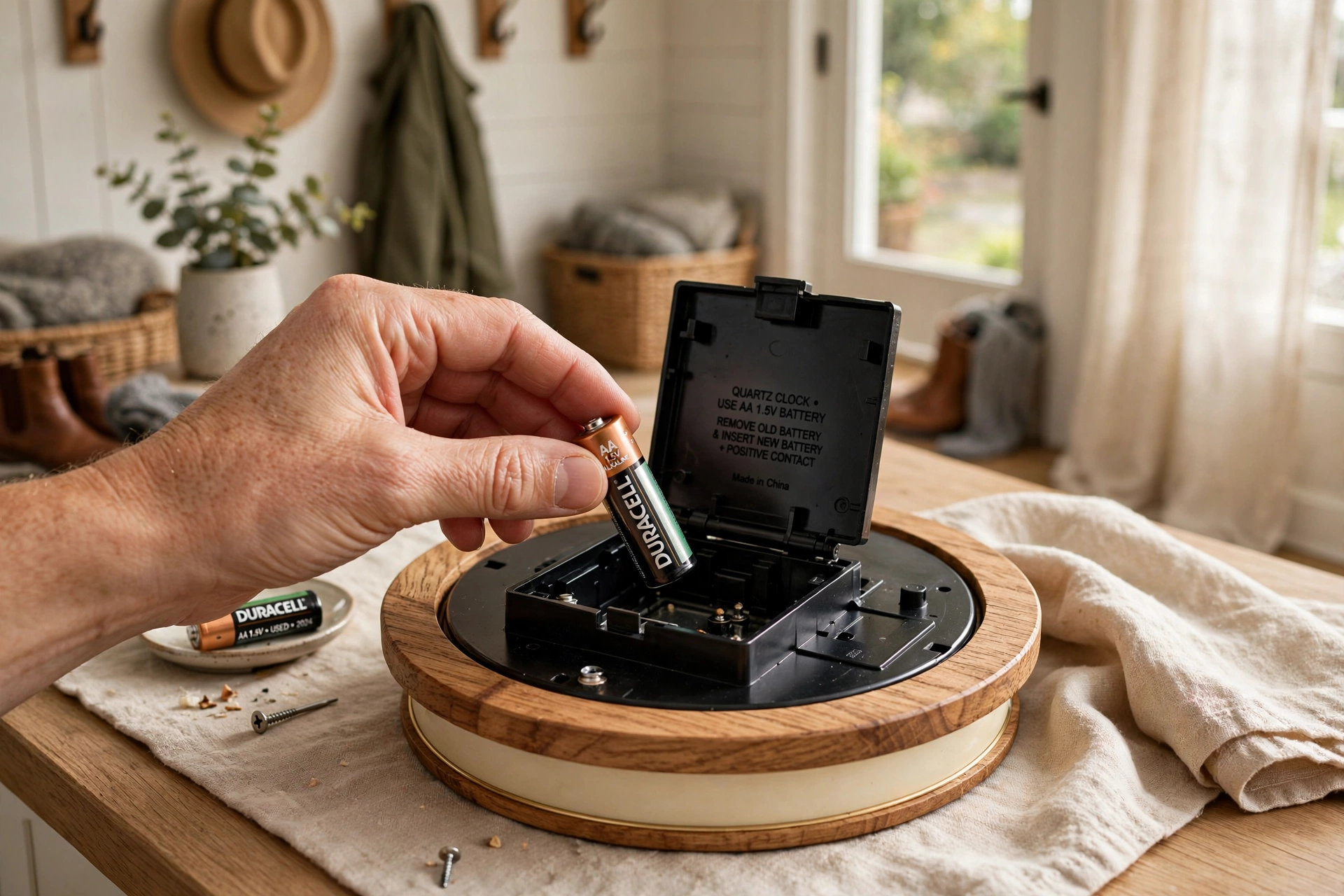
A wall clock is a simple machine that rewards basic care. Replace batteries annually — pick a memorable date like the start of daylight saving time — rather than waiting for the clock to slow. Clean the face with a dry microfiber cloth; never spray cleaner directly on the dial, which can seep behind the glass and damage the finish. Check wall mounting yearly, especially for heavy clocks, tightening anchors as needed.
If the clock runs fast or slow, most quartz movements have a small regulation dial on the back for fine adjustment. Keep a spare battery in the entryway drawer so a dead clock never lingers. Understanding basic quartz clock maintenance takes minutes and keeps your entryway’s hardest-working decor accurate for a decade or more.
Frequently Asked Questions
Where should you hang a clock in the entryway?
Hang it where you will see it on your way out — on the wall facing the front door or above the console table. Center the clock at 60 to 66 inches from the floor for easy readability. Avoid walls that get direct harsh sunlight, which fades faces and creates glare that makes the time hard to read.
What size wall clock is best for an entryway?
A 16- to 20-inch diameter clock suits most standard entries. For grand foyers or large blank walls, go oversized at 24 to 30 inches or more. Above a console table, choose a clock spanning one-half to two-thirds of the console’s width. When in doubt, size up slightly — small clocks get lost on entryway walls.
Are ticking clocks too loud for an entryway?
They can be, since entries often open directly onto living areas. Choose a silent sweep movement to eliminate ticking entirely — most quality clocks offer this option. If you enjoy the ticking sound, reserve ticking clocks for closed-off foyers or mudrooms rather than open-plan entries.
How do you style a wall clock in a small entryway?
Choose a clock with a built-in shelf to consolidate function, or hang a medium round clock (14 to 16 inches) above a narrow console. Keep the surrounding wall simple so the clock stands out, and pick high-contrast faces for readability in tight quarters. A mirror hung nearby will make the small entry feel larger.
Should the entryway clock match other decor?
It should coordinate, not necessarily match. Keep metal finishes in the same family as other entry hardware, and echo the room’s style — vintage clocks for traditional entries, minimalist designs for modern ones. The clock can be a subtle team player or a deliberate statement piece; either works as long as the choice looks intentional.
Keep Exploring
The right entryway clock does two jobs beautifully: it keeps your household on schedule and gives your foyer a finished, intentional look. Choose for readability first and style second — or better yet, find the clock that delivers both — and enjoy never wondering about the time on your way out the door again.