
A wall clock is one of the few decor pieces that earns its place twice — it tells the time and anchors the wall. Done well, it becomes the room’s quiet focal point, the thing guests notice without quite knowing why the wall feels finished. These living room wall clock ideas cover sizes, styles, and placement so your clock looks like a design choice rather than an afterthought. Living room gallery wall ideas with personality pair beautifully with a statement timepiece.
Before you hang, think about scale and sound. A clock should fill its wall confidently — too small and it looks lost, too large and it bullies the room. And a mechanical clock’s tick can be charming or maddening, so choose a silent sweep movement for open-plan spaces where the living room flows into the kitchen. Measure the wall, note the sightlines from the sofa, and hang the center at roughly eye level.
1. Go Oversized for Instant Drama
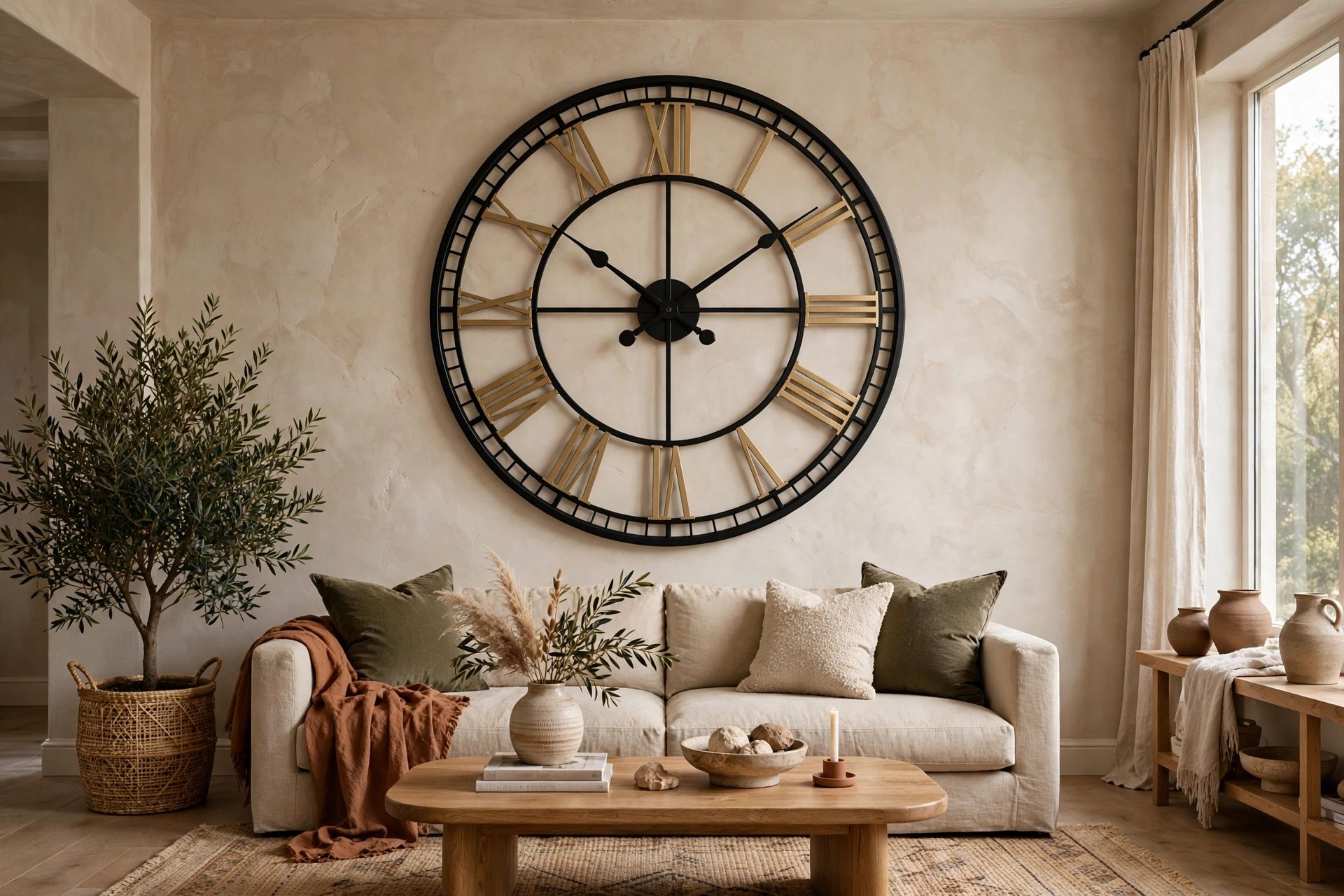
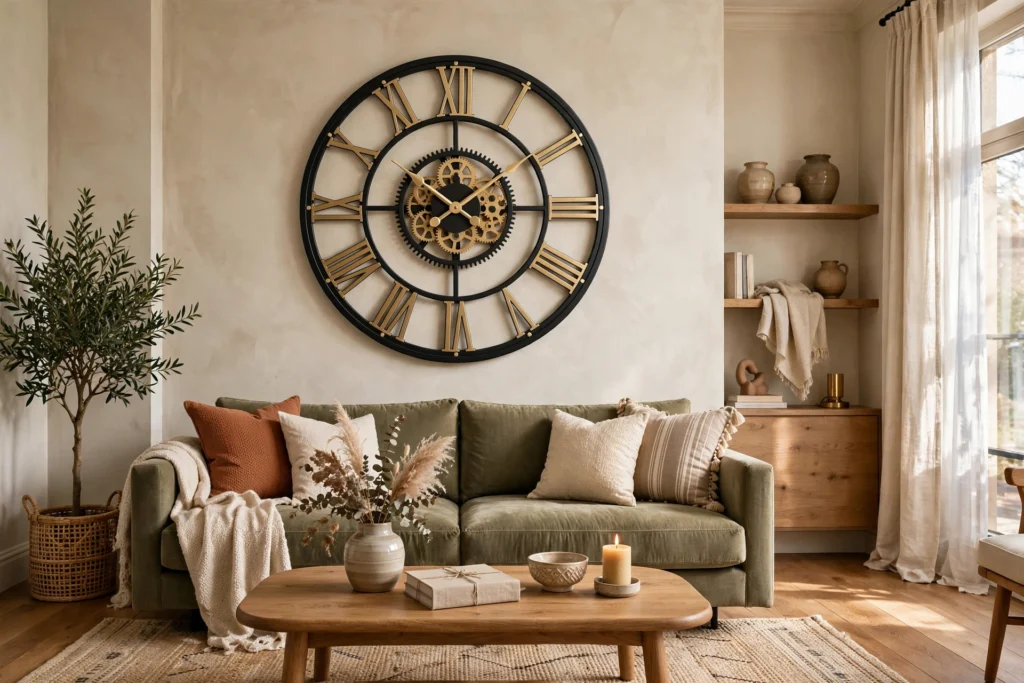
An oversized wall clock — 30 inches and up — turns an empty wall into a destination. Large clocks work like art: they fill vertical space, balance tall ceilings, and give the eye a single confident focal point instead of a fussy cluster of small frames. Hang one over the sofa, the console, or the fireplace where its scale can breathe. Keep the face simple — clean numerals or minimal markers — because at this size, busy details become visual noise. An oversized clock also solves the classic problem wall, the one too big for a single frame but too prominent to ignore. One clock, one wall, done.
2. Try a Classic Roman Numeral Face
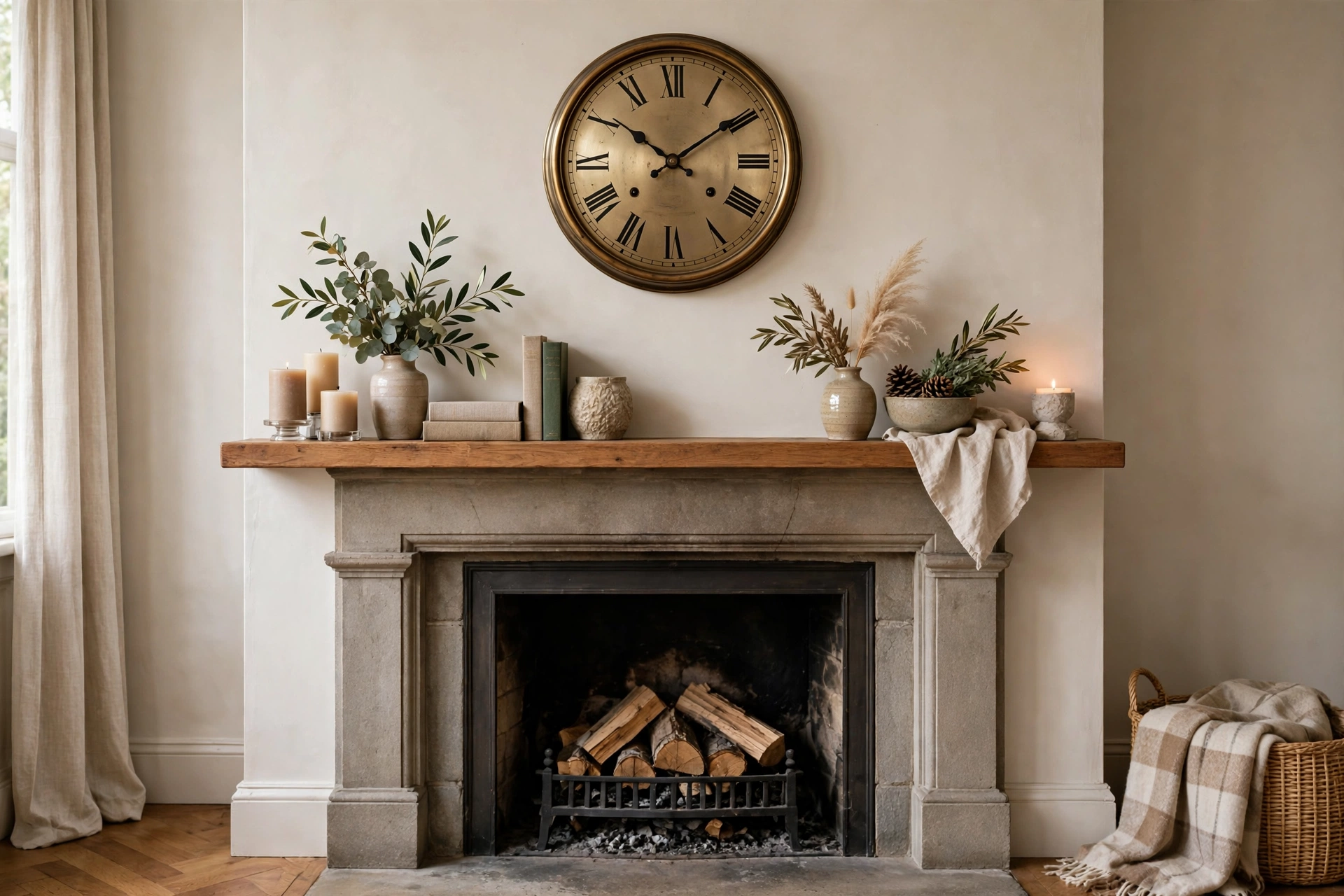
Roman numerals are the shorthand for timeless. A clock face with classic I, V, and X markers brings old-world elegance to traditional, transitional, and farmhouse living rooms without feeling stuffy. Look for serif numerals on a cream, white, or aged-metal face with slim black or brass hands. The style pairs naturally with wainscoting, built-ins, and classic moldings. One detail to check: many clock faces use IIII instead of IV for the four — a traditional clockmaker’s quirk that adds authentic character. A Roman numeral clock over the mantel is practically a design law in classic interiors.
3. Choose a Minimalist Face with No Numbers
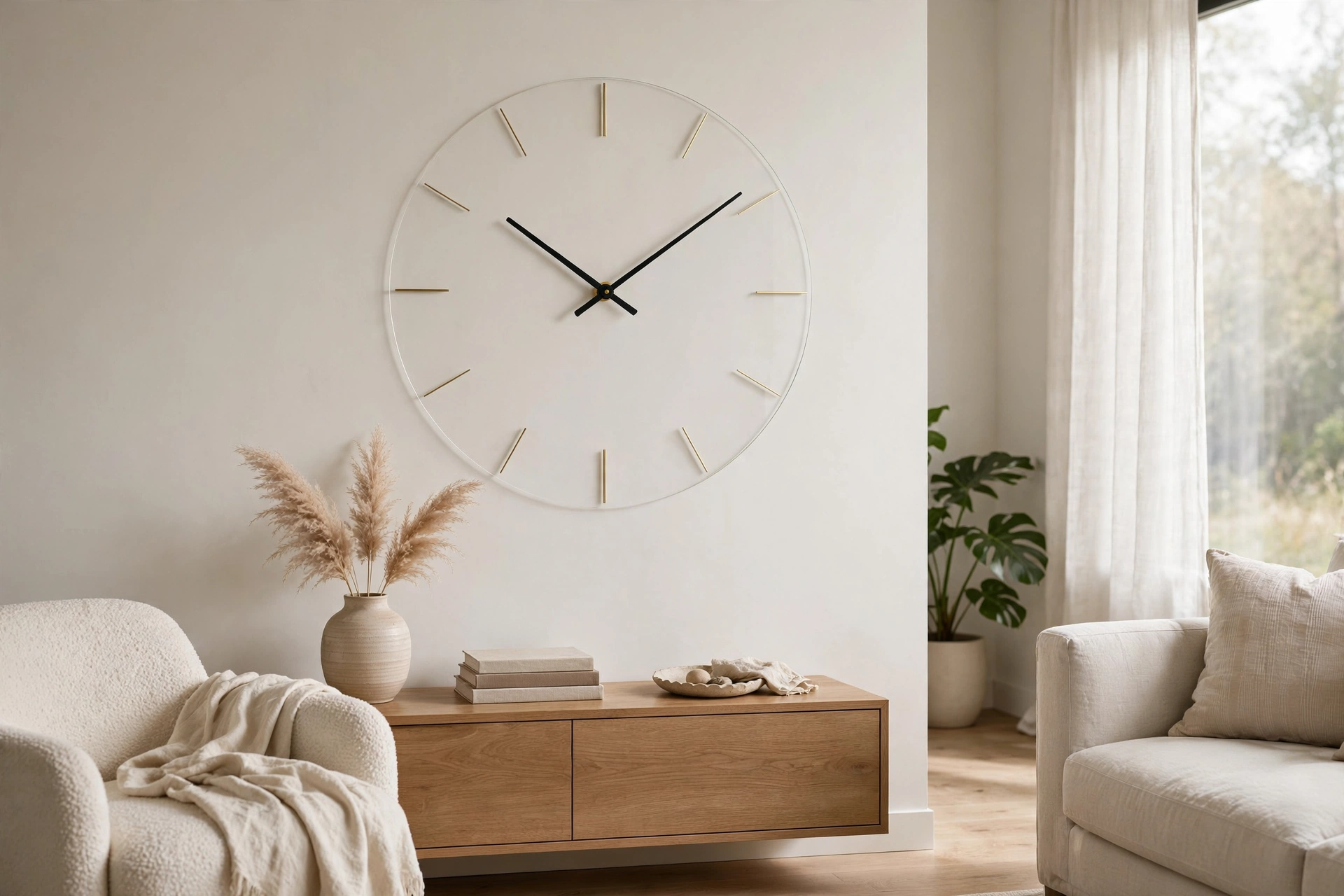
For modern and Scandinavian rooms, a clock with no numbers at all — just slim markers or a bare face with elegant hands — reads as pure sculpture. The absence of numerals keeps the wall calm, and the clock becomes a graphic shape rather than a readable instrument. This style works best at medium to large scale, where the proportions carry the design. Pair it with clean-lined furniture and plenty of negative space; a minimalist clock drowns in a cluttered gallery wall. Choose a silent movement here — the whole point is serenity, and a loud tick would betray it.
4. Hang a Vintage or Antique Clock
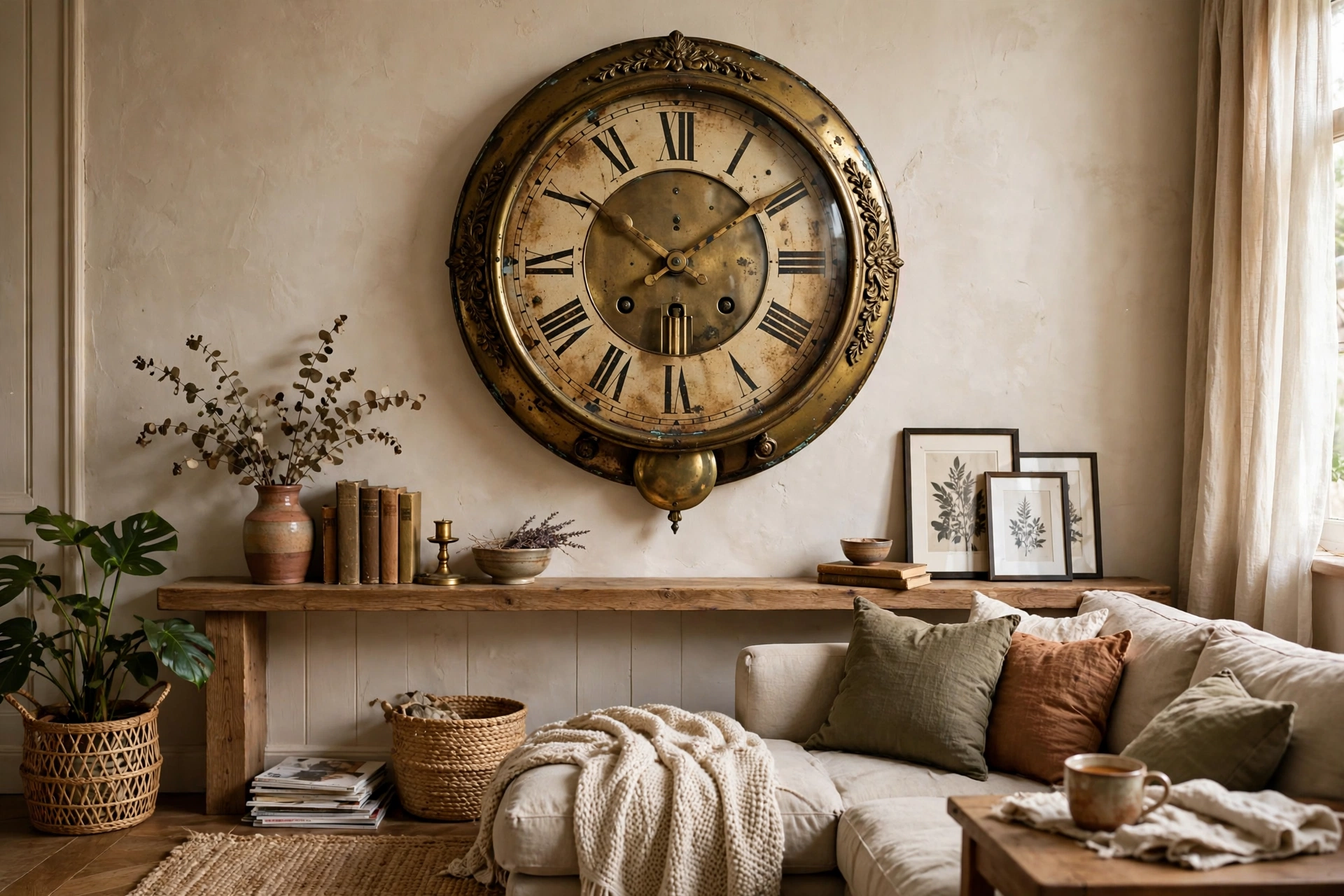
A genuine vintage clock — a schoolhouse regulator, an Art Deco mantel clock scaled up, a mid-century starburst — brings patina no new piece can fake. Hunt flea markets, estate sales, and architectural salvage for clocks with honest wear: aged brass, crazed enamel, a face with a story. Even if the movement no longer runs, a beautiful vintage clock works as pure decor (though getting it serviced is worth it). Hang it where the light catches the aged finish. One caveat: verify the hanging hardware on heavy antique clocks — old cases plus glass can be surprisingly weighty, so anchor into a stud.
5. Make It the Star Above the Mantel
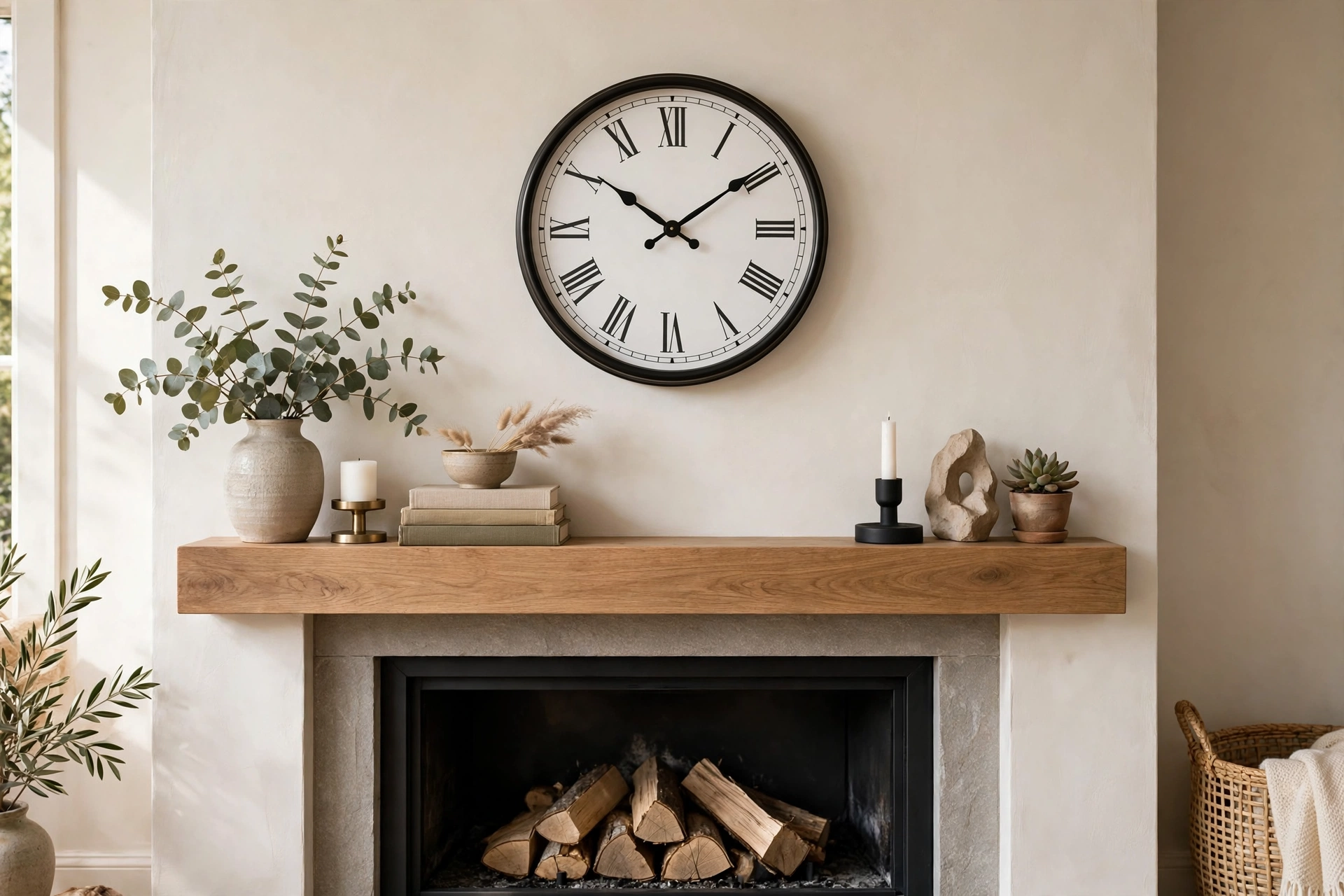
The wall above the fireplace is prime real estate, and a clock is its classic tenant. A round clock centered over the mantel creates perfect symmetry — the architectural equivalent of a period at the end of a sentence. Size it to roughly two-thirds the width of the mantel for balanced proportions. Keep the mantel styling low and simple so the clock owns the vertical space: a pair of candlesticks or a low garland, nothing that competes at eye level. This placement also puts the clock in everyone’s sightline, which is exactly where a timepiece belongs.
6. Try a Rustic Wood-Framed Clock
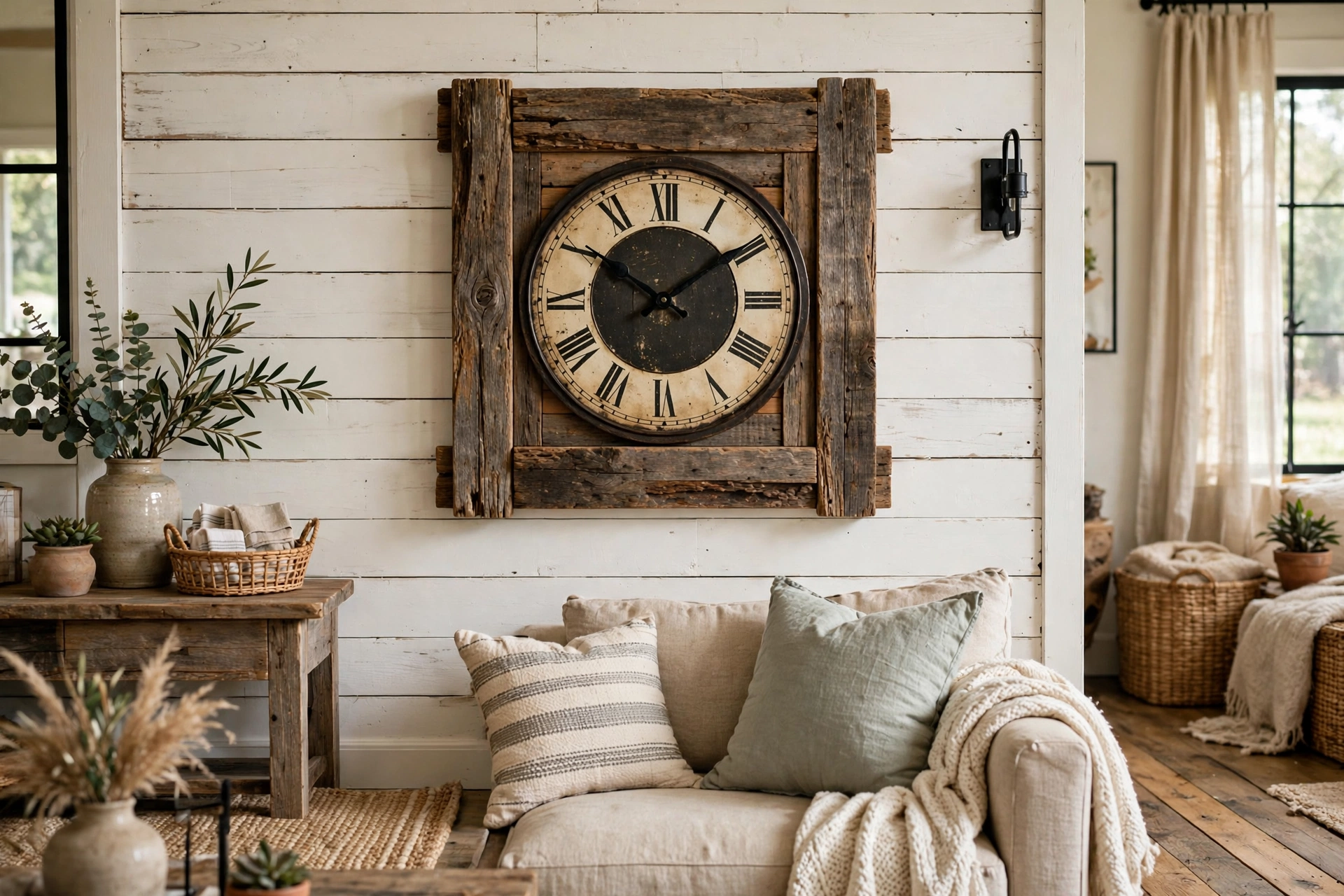
A clock framed in reclaimed wood, weathered oak, or rough-hewn timber brings warmth and texture that metal and glass cannot. Rustic wood frames suit farmhouse, cabin, and modern-rustic living rooms, especially alongside stone fireplaces and leather seating. Look for frames with visible grain and natural imperfections — the wood is the design. The face can stay simple; the frame does the talking. These clocks tend to run large, which suits the big walls of open-plan great rooms. Pair with other natural materials — jute, wool, iron — for a room that feels grounded and handcrafted.
7. Go Industrial with Exposed Gears
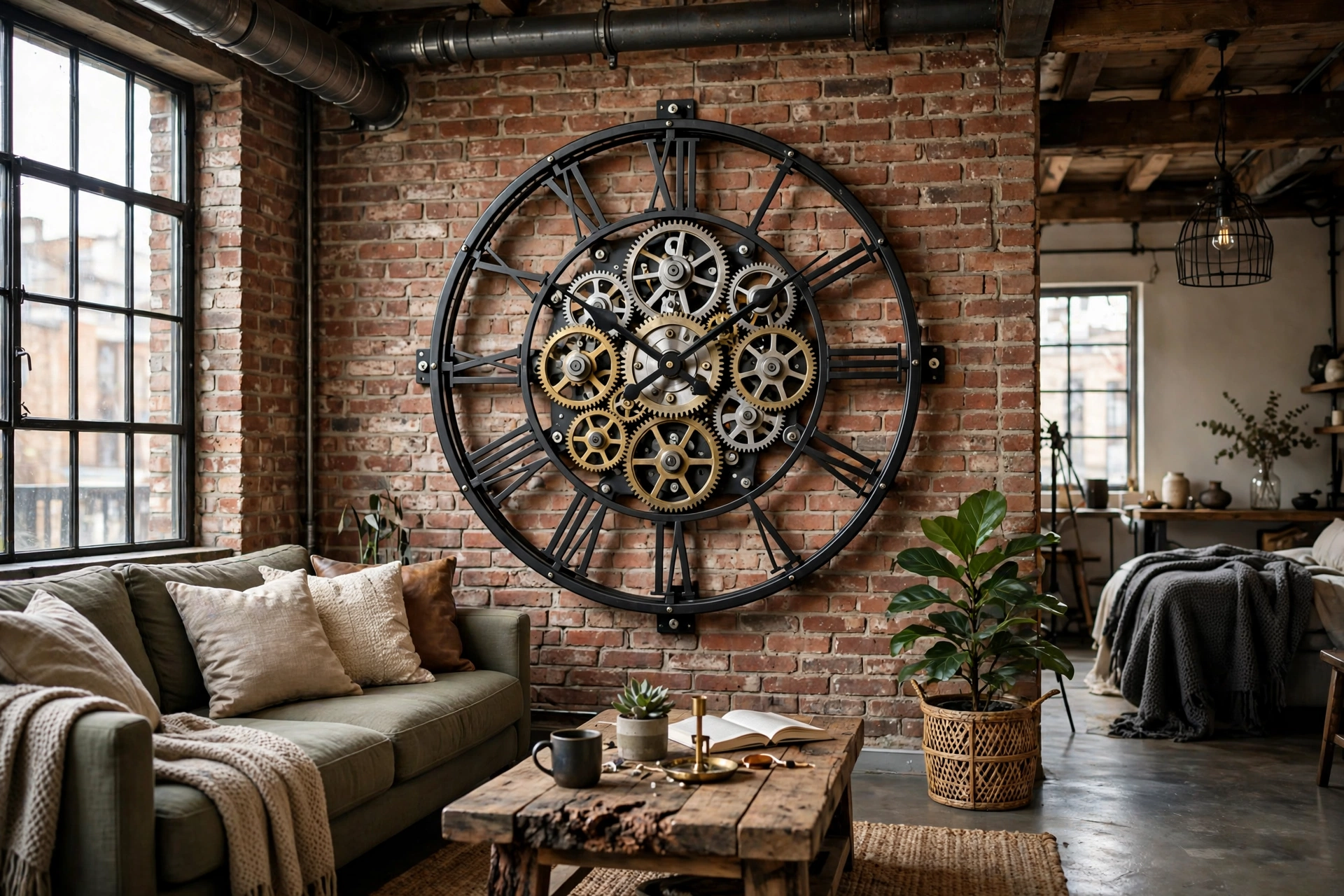
Exposed-gear clocks celebrate the machinery of time itself — visible wheels, riveted rims, and metalwork that looks salvaged from a factory. The industrial style suits lofts, urban modern rooms, and anyone who loves steampunk-adjacent decor. Real moving gears add mesmerizing motion; even static gear motifs give the right flavor. Keep the surrounding decor edited — exposed brick or concrete, black metal, leather — so the clock reads as intentional rather than theme-park. Scale matters here: gear clocks look best large, where the mechanical detail is legible from across the room.
8. Choose a Sleek Metal Frame for Modern Rooms
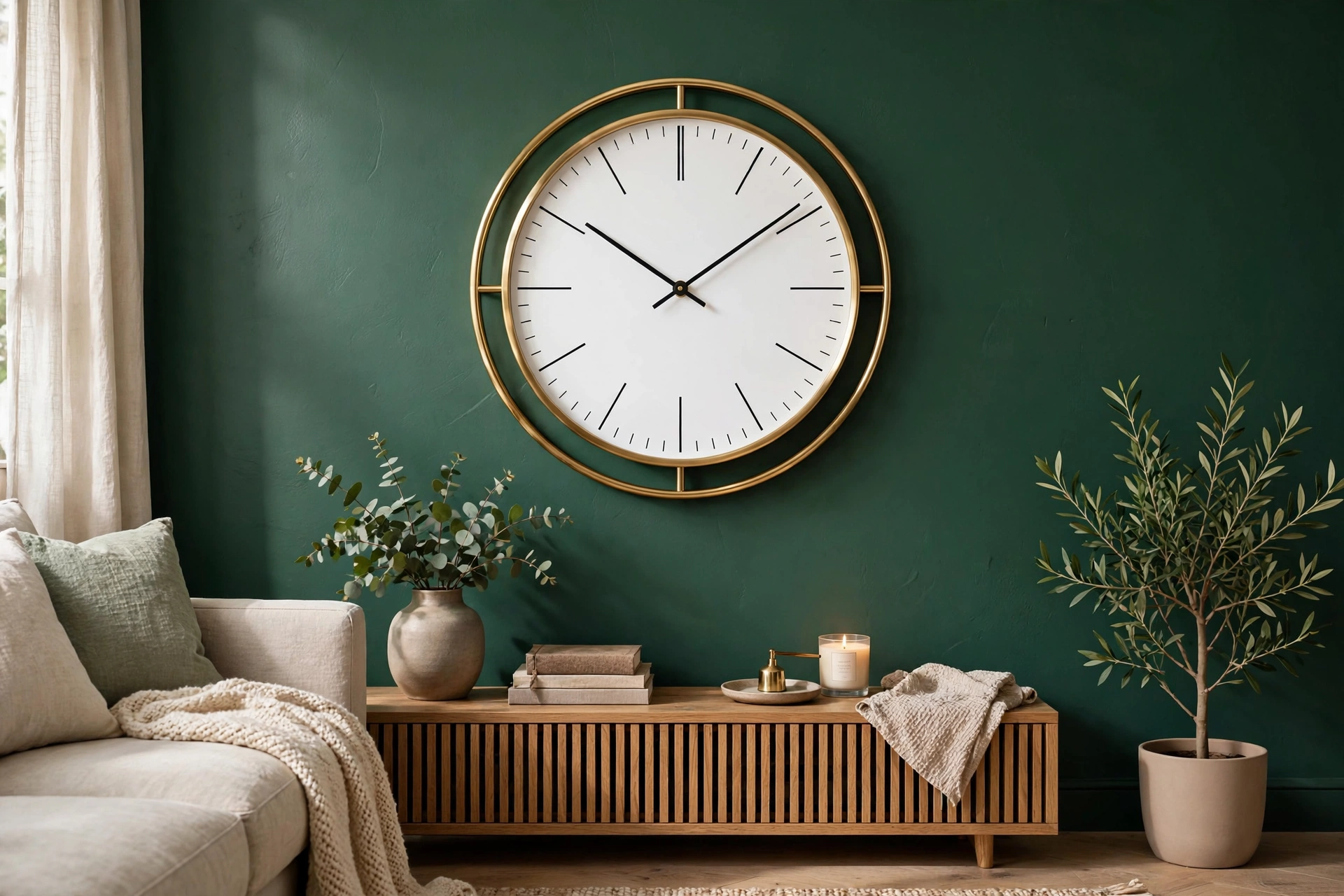
A thin-profile clock in brushed brass, matte black, or polished chrome disappears into modern rooms in the best way — present but never loud. Metal-frame clocks work like jewelry: a precise circle of metal floating on the wall, often with a glass or open face. They suit minimalist, mid-century, and contemporary spaces where every object earns its place. Brass warms up gray and white rooms; black sharpens them. Hang a metal clock on a colored or textured wall — deep green, limewash, grasscloth — where the slim frame can silhouette crisply against the background.
9. Layer a Clock into a Gallery Wall
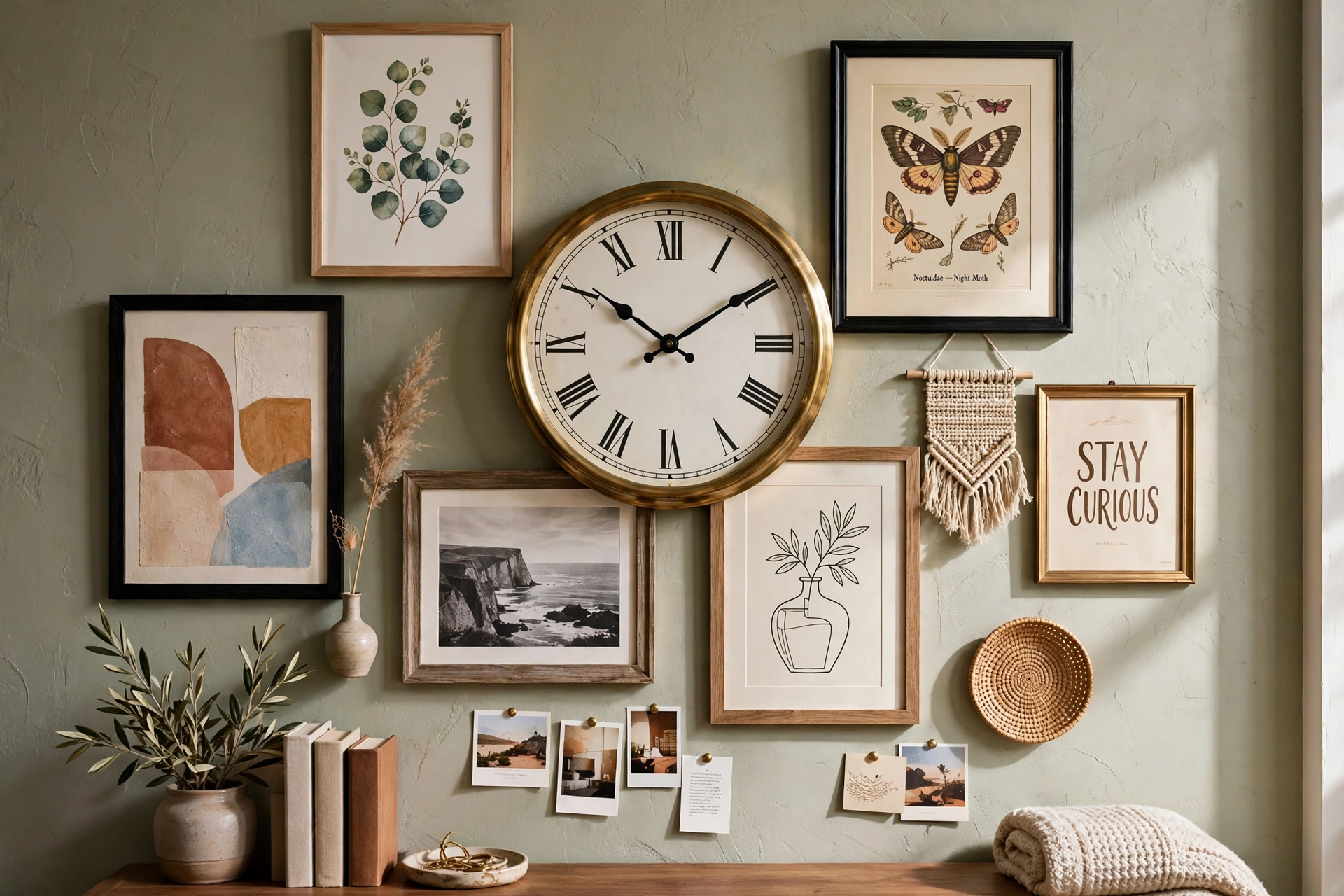
A clock does not have to hang alone. Nestling a medium clock into a gallery wall adds function to the art mix and a round shape among all those rectangles. Place it slightly off-center within the arrangement — centered clocks in galleries can look like bullseyes. Keep the clock’s style sympathetic to the frames around it: a brass clock with gilt frames, a black clock with black-and-white photography. Living room accent wall ideas with big impact show how a single functional piece can anchor an entire wall composition. The gallery’s variety makes the clock feel collected rather than installed.
10. Try a Sunburst Clock for Mid-Century Charm
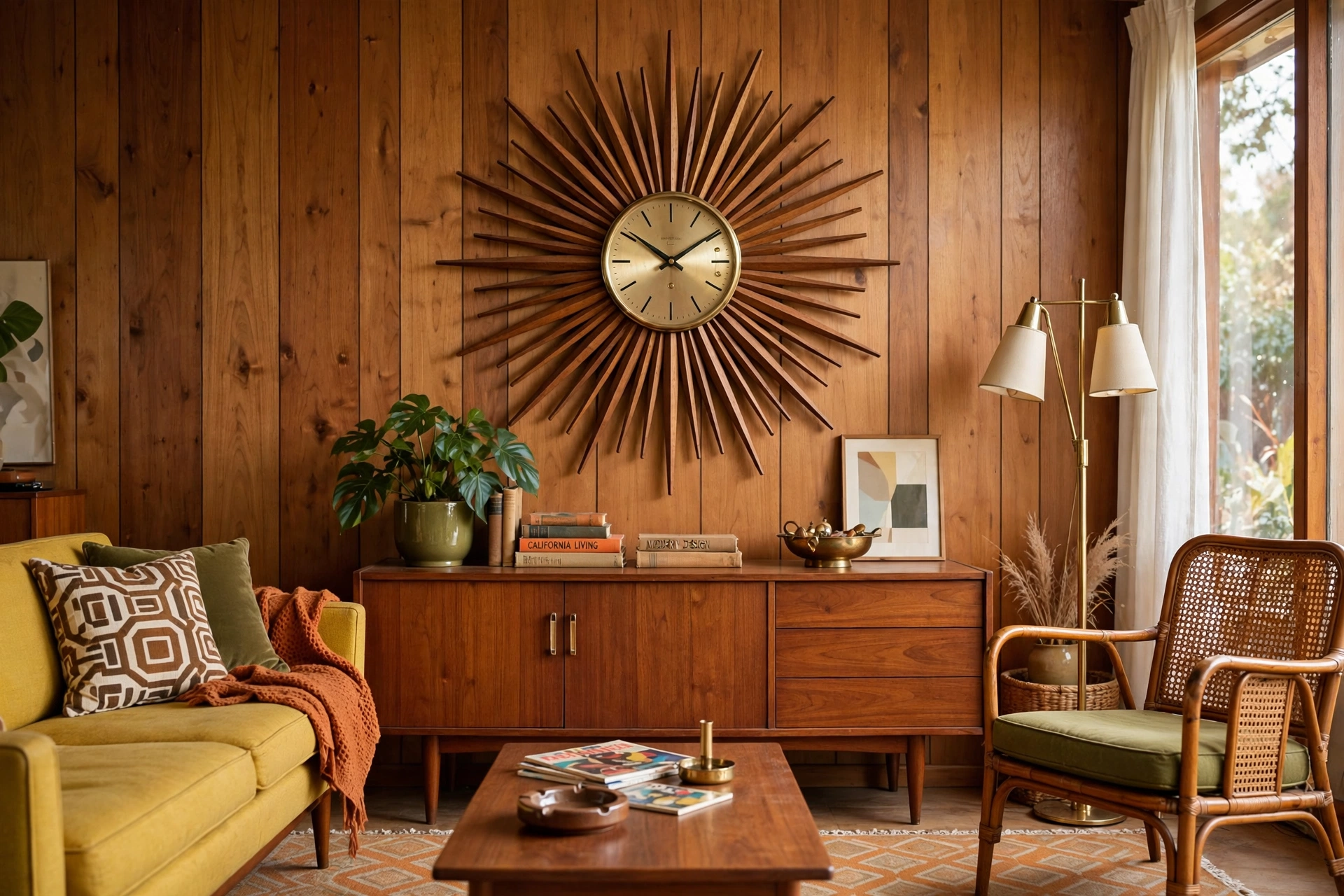
The starburst clock — radiating wood or metal rays around a central face — is the definitive mid-century wall accessory. Originals by designers like George Nelson are collectible; good reproductions capture the look for far less. Sunburst clocks work best on uncluttered walls where their silhouette can shine — they are sculpture first, timepiece second. The rays cast lovely shadows in directional light, so consider placement near a window. Keep the rest of the wall bare: a starburst surrounded by frames looks crowded. One great starburst on a clean wall is a whole design statement.
11. Pick an Arched or Unusual Shape
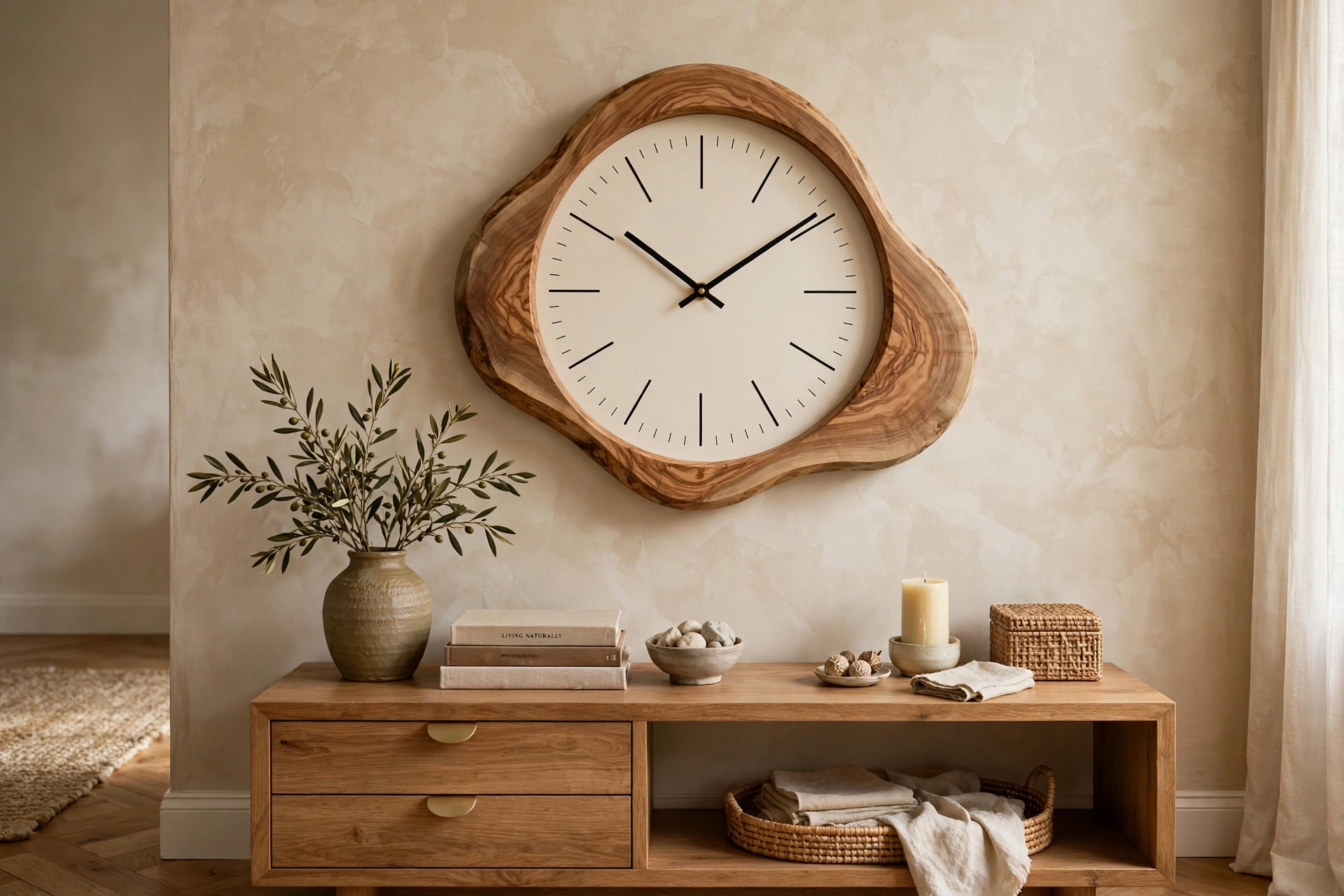
Round is classic, but arched, oval, square, and even asymmetrical clocks break the expected circle and add architectural interest. An arched clock echoes doorways and windows, creating rhythm with the room’s architecture. Square clocks suit grid-like modern gallery arrangements. Unusual shapes work best as the wall’s sole statement — they have enough personality without competition. When choosing, consider the wall’s shape: a tall arched clock flatters a narrow wall between windows, while a wide oval suits the space over a long console. Shape is the fastest way to make a clock feel custom.
12. Coordinate the Clock with Your Color Palette
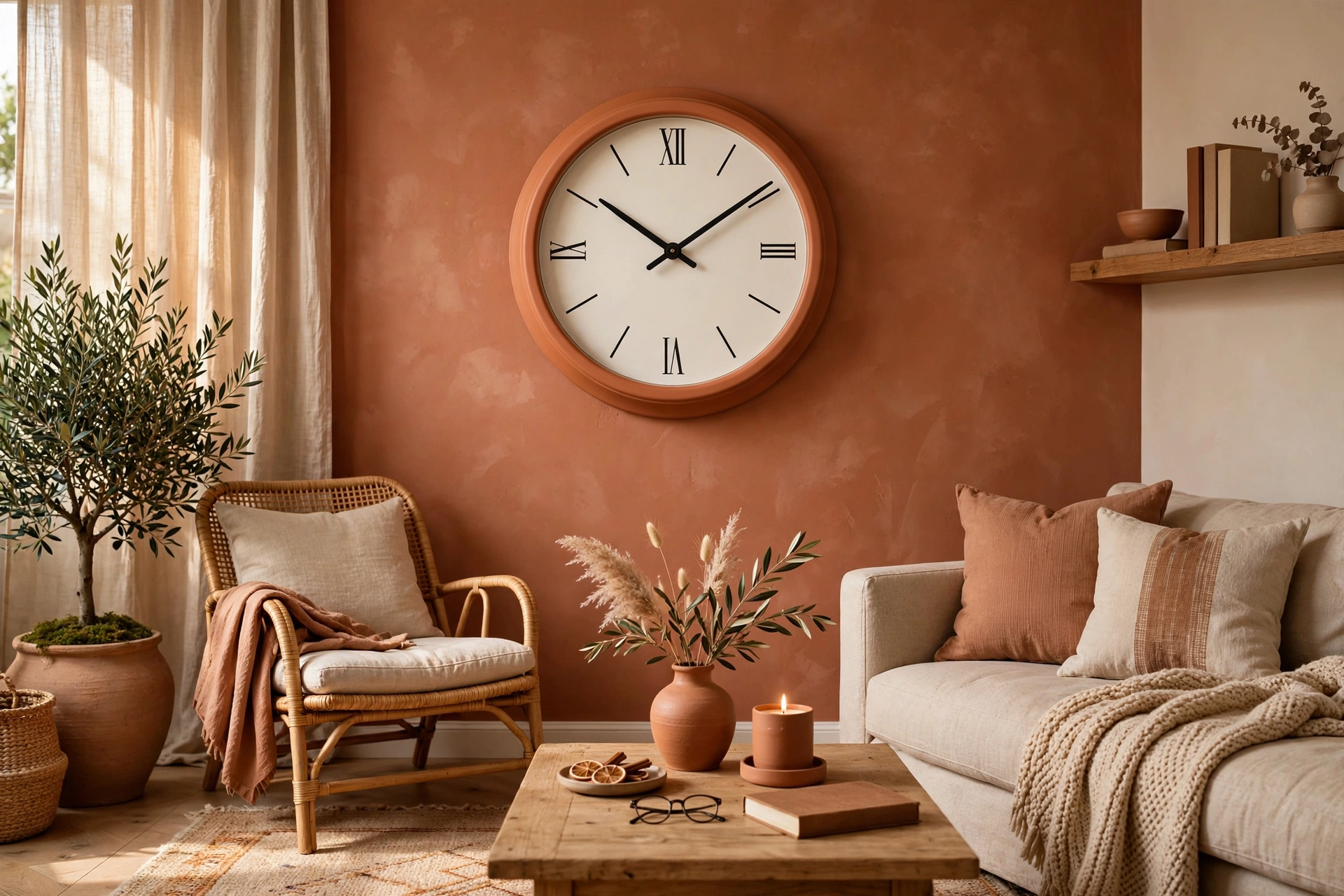
Treat the clock as part of the room’s color story, not an exception to it. A clock in the room’s accent color — terracotta, navy, sage — ties the wall into the textiles and art. Alternatively, match the clock’s metal to your other metals: brass clock with brass lighting, black clock with black window frames. This coordination is what separates decorated rooms from designed ones. If your palette is neutral, the clock is your chance for one confident hit of color. Just keep it to a single color note — a rainbow clock fights everything.
13. Consider a Backlit or LED Clock
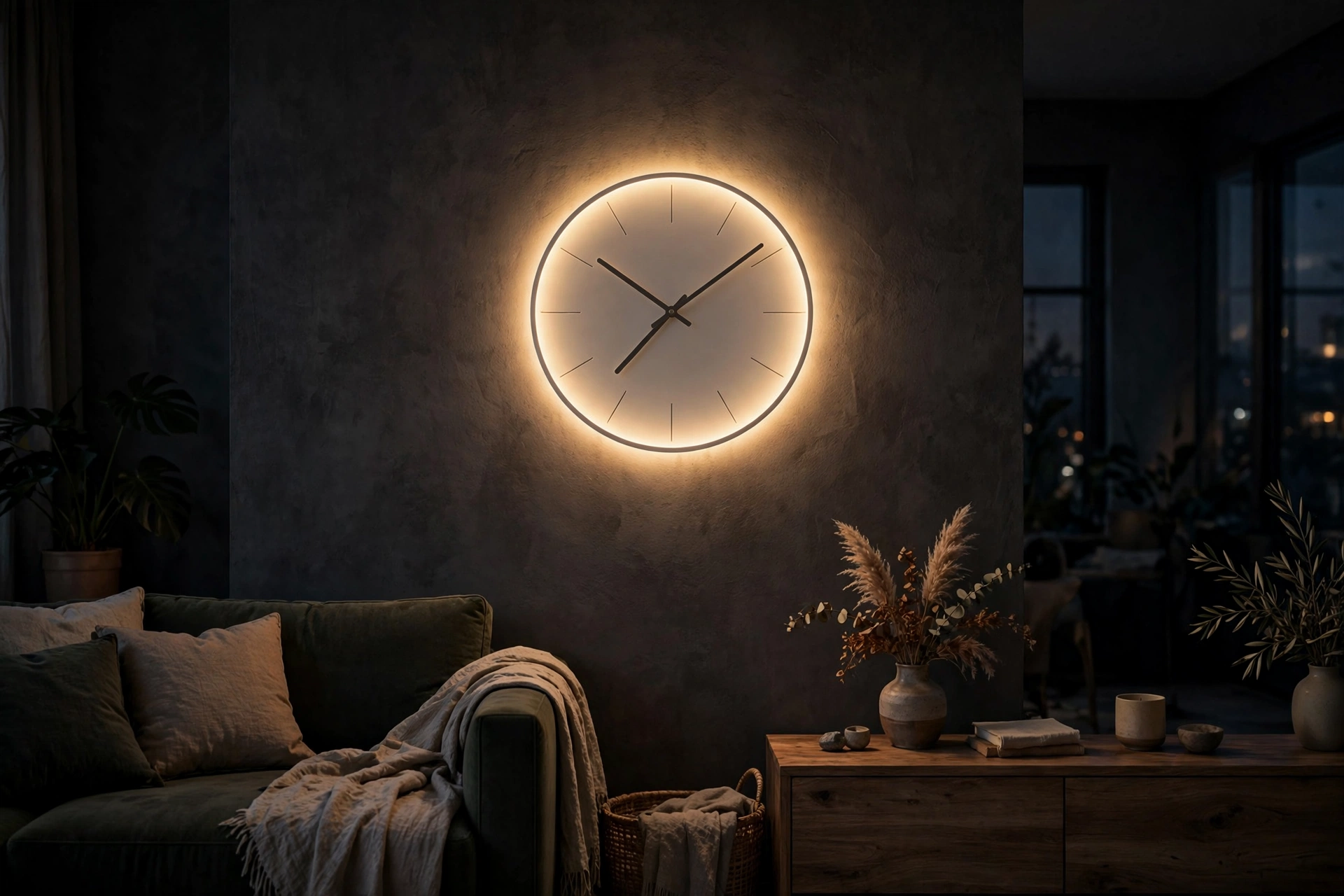
A clock with subtle backlighting or LED accents does double duty as ambient lighting after dark. The soft glow behind or around the face creates a halo effect that makes the clock float on the wall — dramatic in the evening, invisible by day. This works beautifully in media rooms and moody living rooms where harsh overheads stay off. Look for warm-white LEDs (2700K) rather than cool tones, which feel clinical. Battery or USB-powered options avoid visible cords. A backlit clock over a bar cart or in a dark hallway nook is pure evening magic.
14. Style a Clock with Flanking Sconces
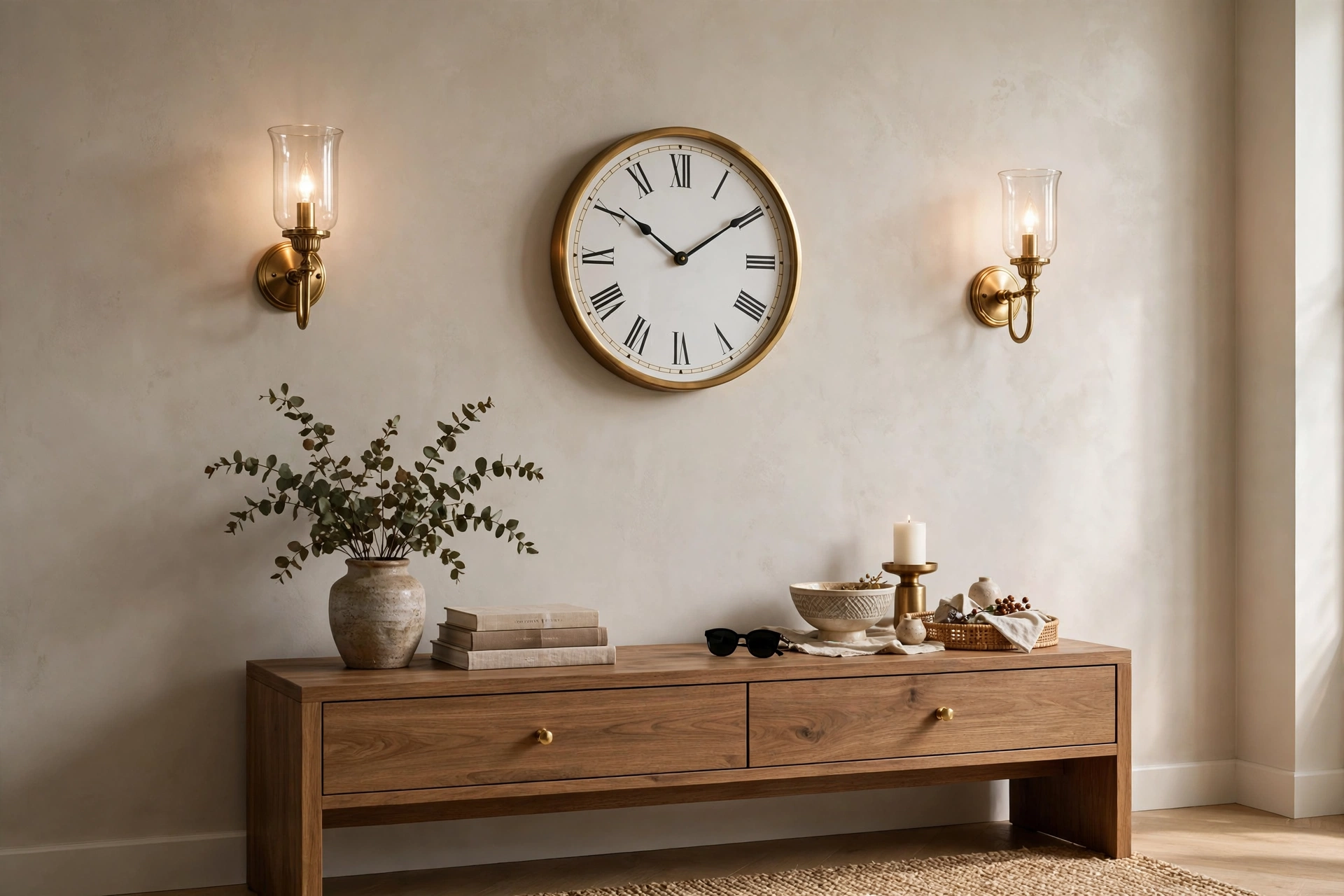
Framing a wall clock with a pair of sconces — or even slim picture lights — elevates it from decor to installation. The symmetry reads as deliberate and high-end, like a hotel lobby detail. This works especially well in traditional and transitional rooms, over a mantel or a long console. Keep the sconces simple so the clock remains the star; their job is to frame, not compete. Hardwired sconces are ideal, but plug-in or battery versions achieve the look without an electrician. The lit clock at night becomes the room’s glowing heart.
15. Invest in a Quality Movement That Lasts
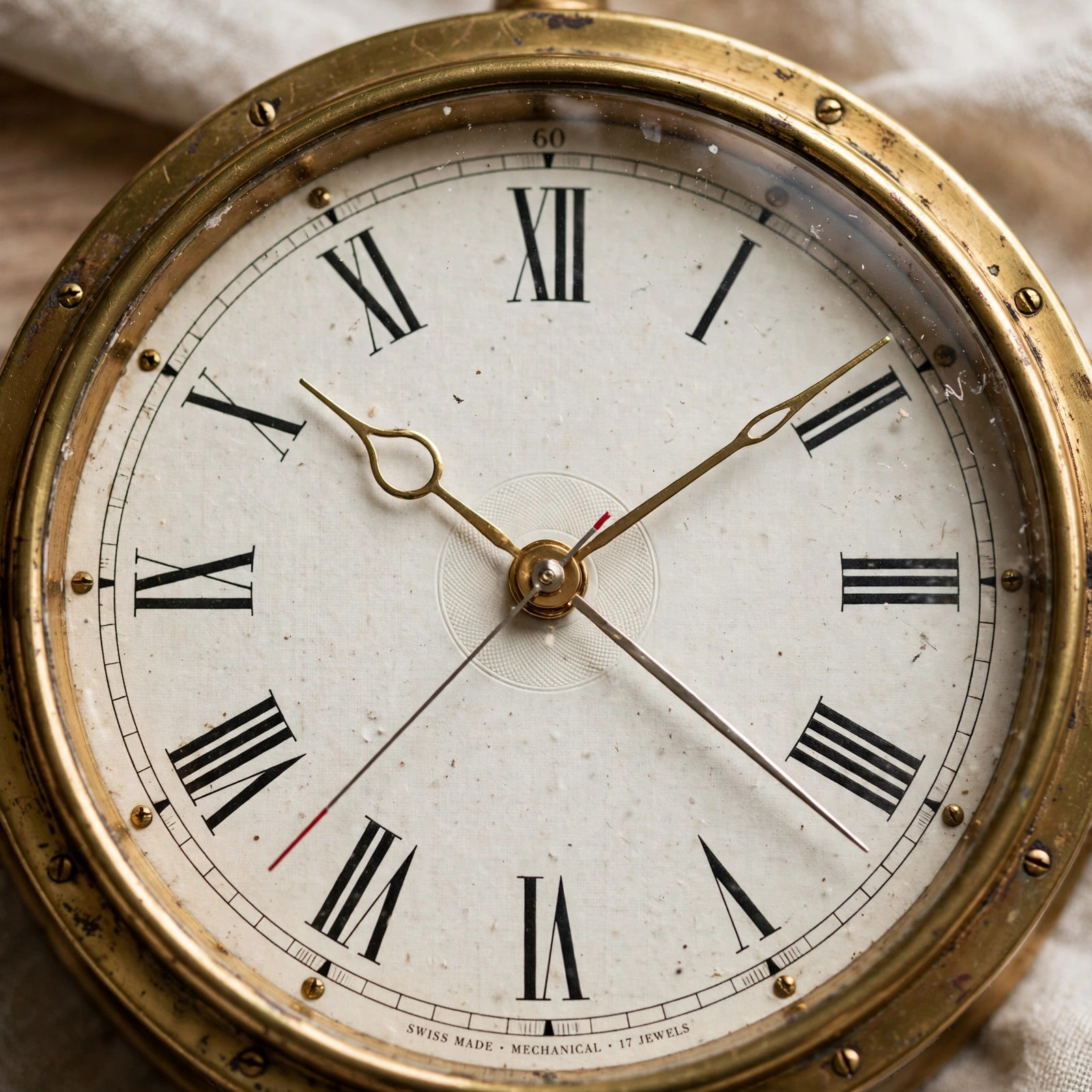
A beautiful clock with a cheap movement is a future disappointment — the hands that drift, the tick that develops a stutter, the battery that dies monthly. When buying, look for a quality quartz sweep movement (silent, smooth second hand) or, for heirloom pieces, a serviced mechanical movement from a reputable maker. Read reviews specifically about timekeeping accuracy and noise before committing. Retailers like The Spruce regularly round up well-reviewed wall clocks across styles and budgets. A clock is one of the few decor items you interact with dozens of times a day — it deserves mechanics as good as its looks.
FAQ
What size wall clock should I get for my living room?
For a focal wall over a sofa or mantel, choose 24 to 36 inches in diameter — large enough to read from across the room. On smaller walls or inside gallery arrangements, 12 to 18 inches works. A good rule: the clock should span roughly two-thirds the width of the furniture below it. When in doubt, go bigger; undersized clocks are the most common mistake.
Where is the best place to hang a living room wall clock?
The classic spots are centered above the fireplace mantel, over the sofa, or on the wall facing the main seating so it is easy to read. Hang the center at eye level — about 57 to 60 inches from the floor. Avoid hanging where direct sun hits the face all day, which fades finishes and creates glare.
Are wall clocks still in style?
Absolutely — they have never left. Oversized statement clocks, vintage finds, and minimalist designs are all current, and a clock’s dual role as art and tool keeps it relevant in every era. What dates a room is a small, generic clock hung as an afterthought; a considered, well-scaled clock always looks intentional.
How do I hang a heavy wall clock safely?
Use a stud finder and anchor heavy clocks (over 10 pounds) directly into a wall stud with a proper hook or screw. For plaster or masonry, use appropriate wall anchors rated well above the clock’s weight. Always use the clock’s built-in hanger or wire, hang it level, and give it a firm tug test before walking away.
Should a wall clock match other metals in the room?
Ideally, yes — coordinating the clock’s frame with your room’s dominant metal (brass lighting, black hardware, chrome accents) makes the whole space feel cohesive. It does not need to be an exact match; staying in the same metal family is enough. A deliberate contrast can work too, but it should look like a choice, not an accident.
Keep Exploring
The right wall clock does quiet work all day — marking time beautifully while holding its wall with confidence. Choose a scale that fills the space, a style that speaks your room’s language, and a movement you will not have to think about. Then give the surrounding walls the same considered treatment with our fireplace mantel decor ideas for every season, where a well-placed clock becomes the crowning piece of a styled mantel.