
Few treatments add warmth and architecture to a living room as quickly as wood slats. These living room wood slat wall ideas cover every approach — vertical slats that add height, horizontal runs with mid-century soul, slatted media walls that hide the tech, and renter-friendly versions that come down cleanly. Our favorite living room accent wall ideas with big impact all share one trait: a single confident move, and slat walls are among the most confident of all.
The magic of slats is rhythm. Evenly spaced wood strips create shadow lines and texture that flat walls cannot, while the wood itself warms up the room’s palette. Choose your wood tone, mind your spacing, and let the wall become the room’s best feature.
1. Run Vertical Slats Behind the Sofa
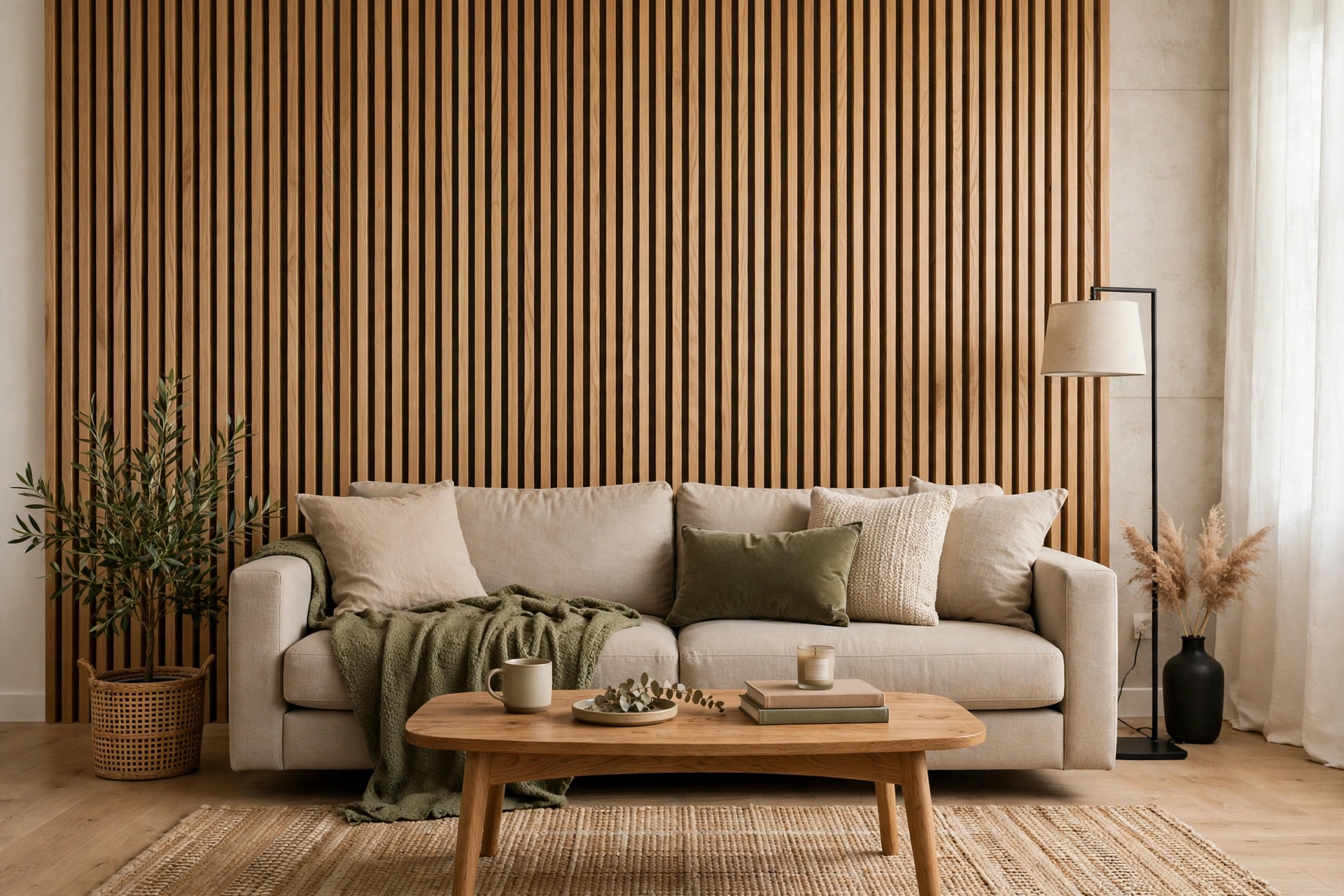
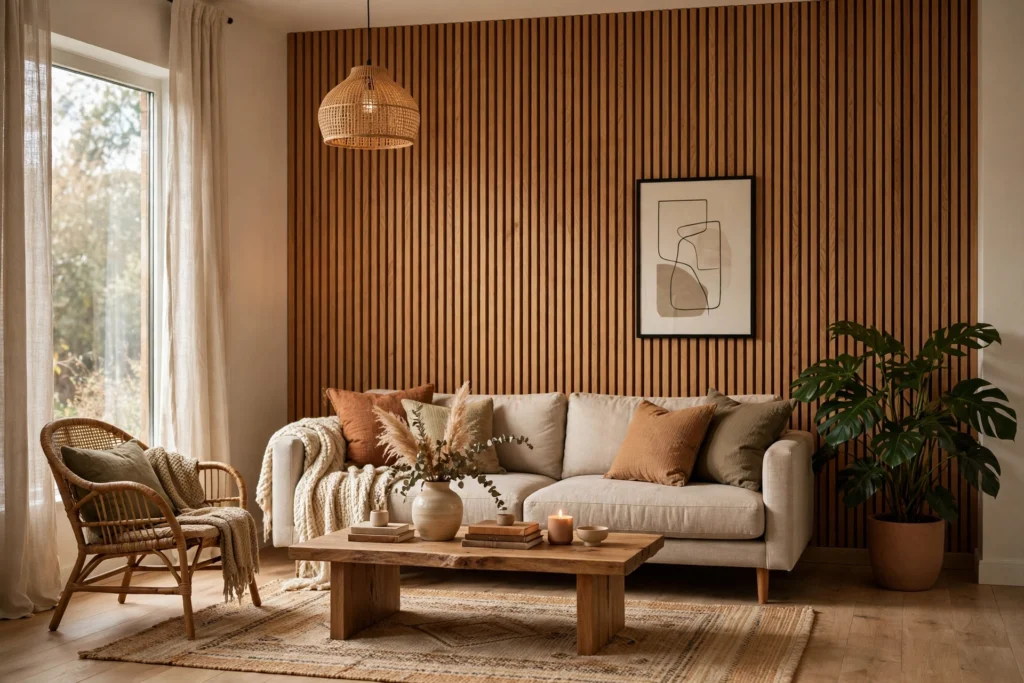
Vertical wood slats behind the sofa create a tailored backdrop that makes the whole seating area feel designed. The vertical lines draw the eye upward, which is a gift in rooms with standard eight-foot ceilings. Use 1×2 or 1×3 pine, oak, or walnut strips spaced about half an inch to an inch apart, mounted over a wall painted in a contrasting tone — dark paint behind light wood, or vice versa. The sofa sits proudly against the texture instead of a blank wall. This is the single most popular slat application for a reason: it is simple, affordable, and transformative.
2. Build a Slatted Media Wall
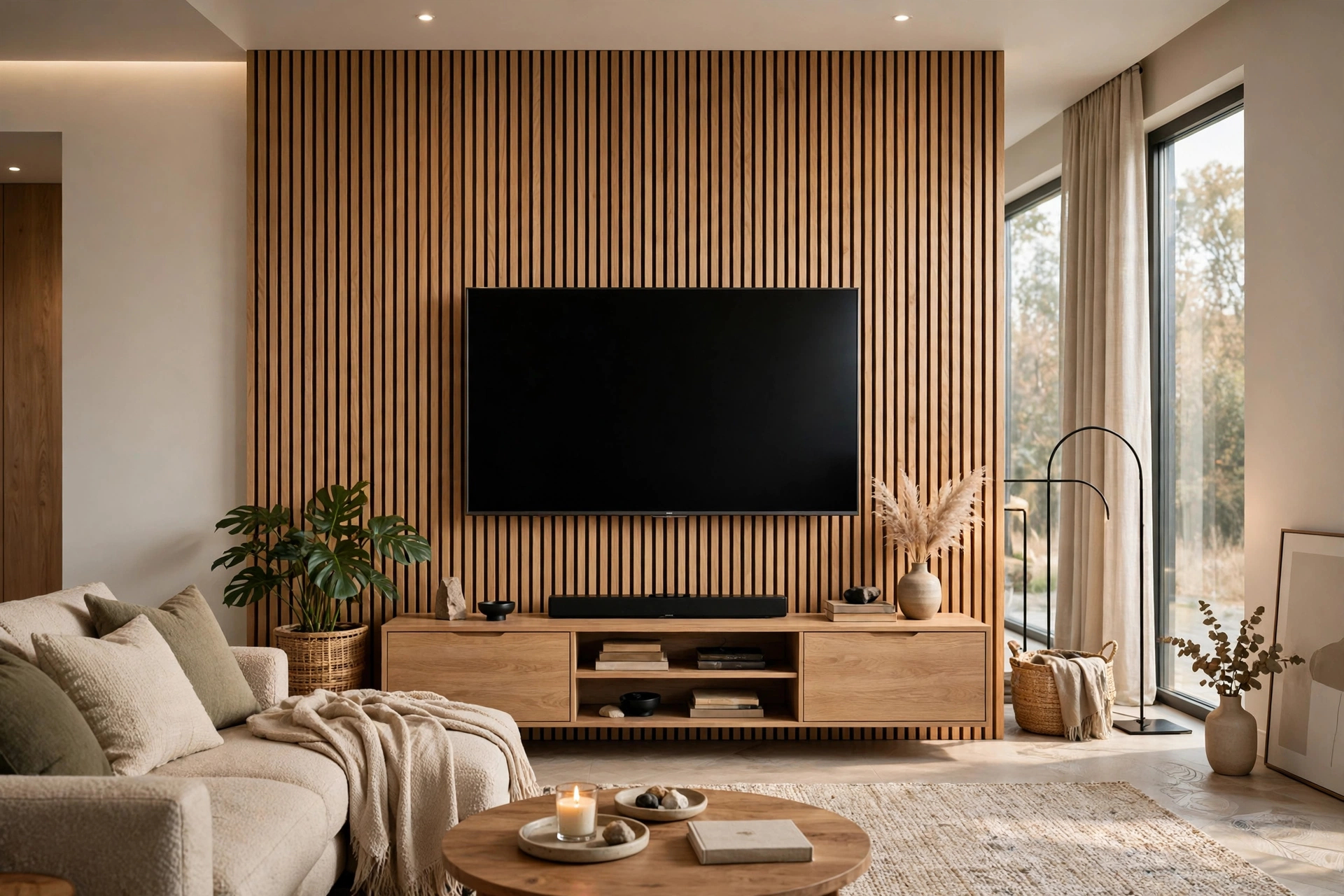
A slat wall behind the television solves the two big media-wall problems: visible wires and a big black rectangle floating on a blank wall. Run floor-to-ceiling slats across the media wall, mount the TV on top, and route cables behind the slats for an invisible, floating effect. Walnut and smoked oak are trending for this look, bringing richness that flatters the screen. Add a low media console in a matching tone to ground the composition. Apartment Therapy’s before-and-after of a slatted TV wall shows how a weekend of work turns a blank wall into a warm, mid-century focal point.
3. Try Horizontal Slats for Retro Calm
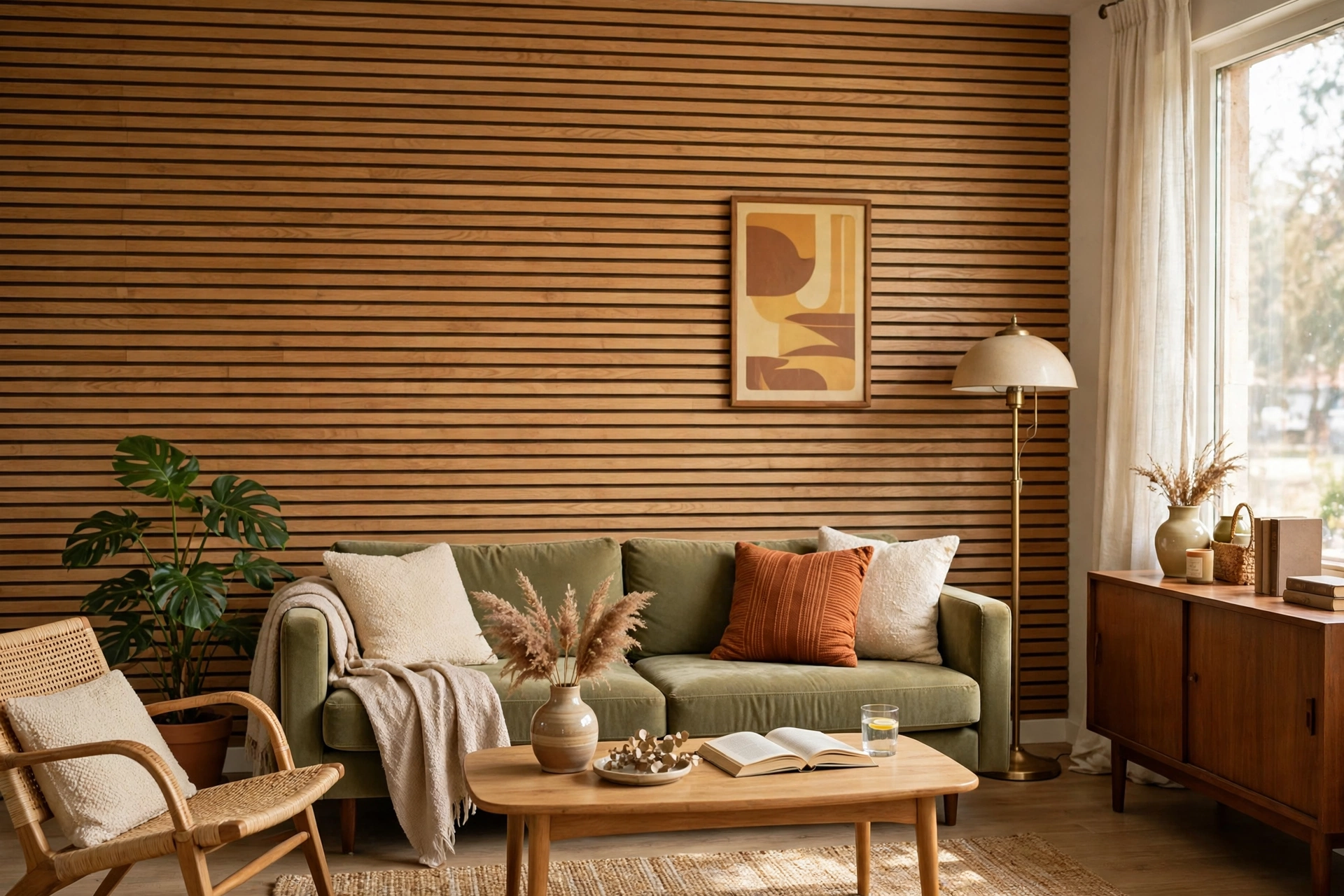
While vertical slats add height, horizontal slats stretch a room wider and carry a relaxed, mid-century-modern feel. Run the slats horizontally across a feature wall, keeping the spacing consistent for a calm rhythm. Horizontal lines suit low, long furniture — think low-slung sofas and long media consoles — and they make narrow rooms feel broader. Lighter woods like white oak or ash keep the look airy; the gaps let the wall color show through for contrast. This orientation feels a touch more casual and retro than vertical, which makes it perfect for laid-back living rooms.
4. Paint the Backing Wall Dark First
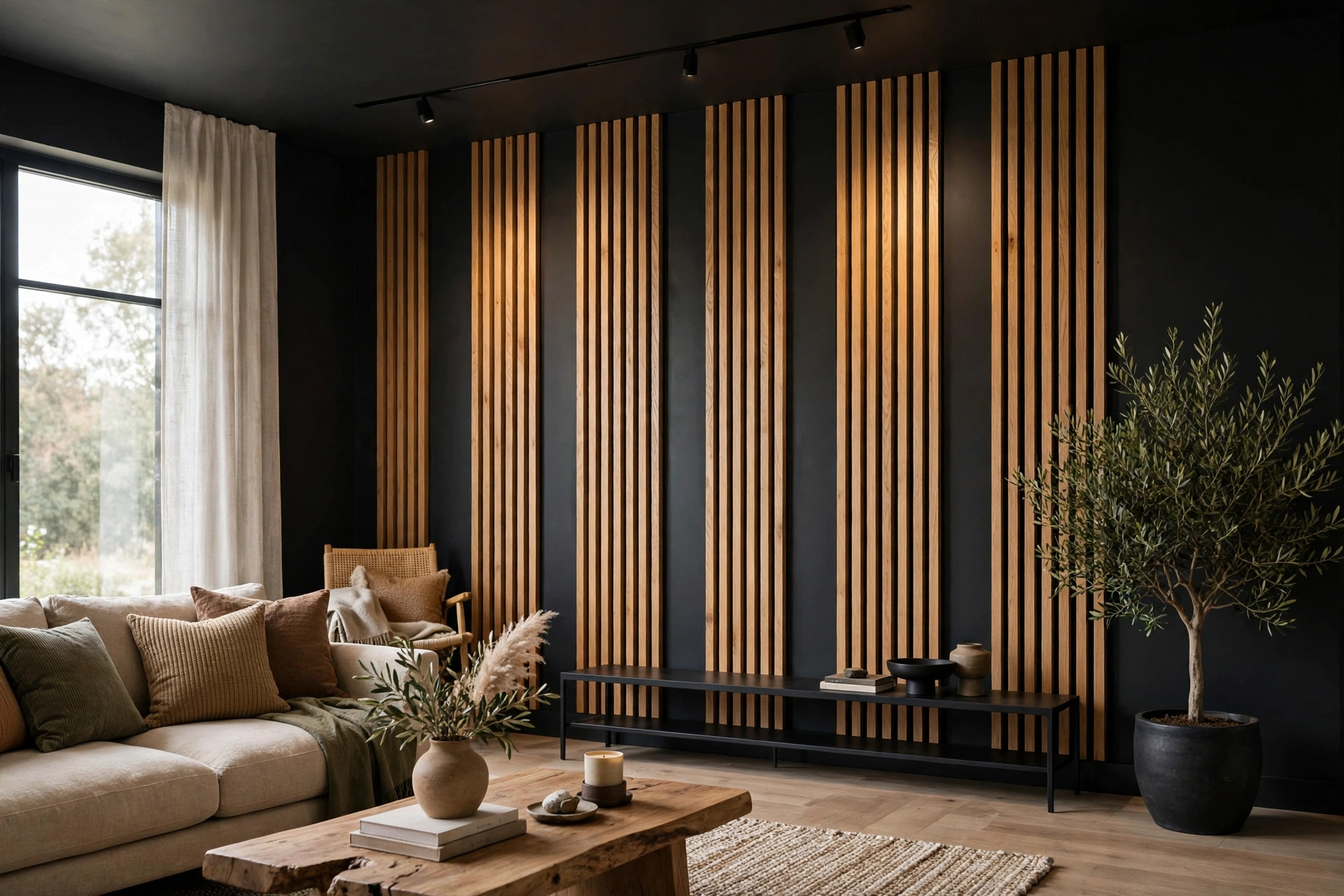
Here is the pro trick that separates polished slat walls from amateur ones: paint the wall behind the slats a dark color — charcoal, deep green, or black — before mounting the wood. The dark backing makes each slat pop with crisp shadow lines and hides any uneven gaps or future wood shrinkage. If a slat shifts slightly over the years, the shadow line still looks intentional. The contrast also adds depth that a same-color backing cannot. This one prep step takes an afternoon and elevates the entire project. Do not skip it.
5. Use Prefab Slat Panels

Not everyone wants to cut and space dozens of individual slats. Prefabricated slat panels — wood strips pre-mounted on felt or MDF backing — install in hours with basic tools and deliver perfectly even spacing every time. They come in oak, walnut, and painted finishes, and many are designed for straightforward wall mounting. Prefab panels cost more than raw lumber but save enormous time and guarantee a professional result. They are also easier to remove cleanly if you move. For DIYers who want the look without the labor, panels are the smartest route to a slat wall.
6. Add Integrated LED Strip Lighting

Slat walls and hidden lighting are a match made in heaven. Tuck warm-white LED strips behind the top or bottom edge of the slats — or vertically in the gaps — and the wall glows with indirect light that emphasizes every shadow line. The effect is pure boutique hotel: dramatic, warm, and architectural. Use dimmable strips so you can tune the mood from subtle evening glow to statement lighting. Battery or plug-in strips avoid hardwiring. Light the slats and the wall stops being a surface — it becomes an experience. Evening rooms were made for this combination.
7. Slat Just a Section, Not the Wall

You do not need to cover an entire wall to get the slat effect. A six-to-eight-foot section behind the TV, flanking the fireplace, or defining a reading corner delivers most of the impact for a fraction of the cost and effort. Partial slat walls also suit smaller living rooms, where a full wall of wood might overwhelm. Frame the section deliberately — floor to ceiling, or as a wide band — so it reads as a design choice rather than an unfinished project. Less wood, less money, nearly all the warmth.
8. Mix Slats With Floating Shelves
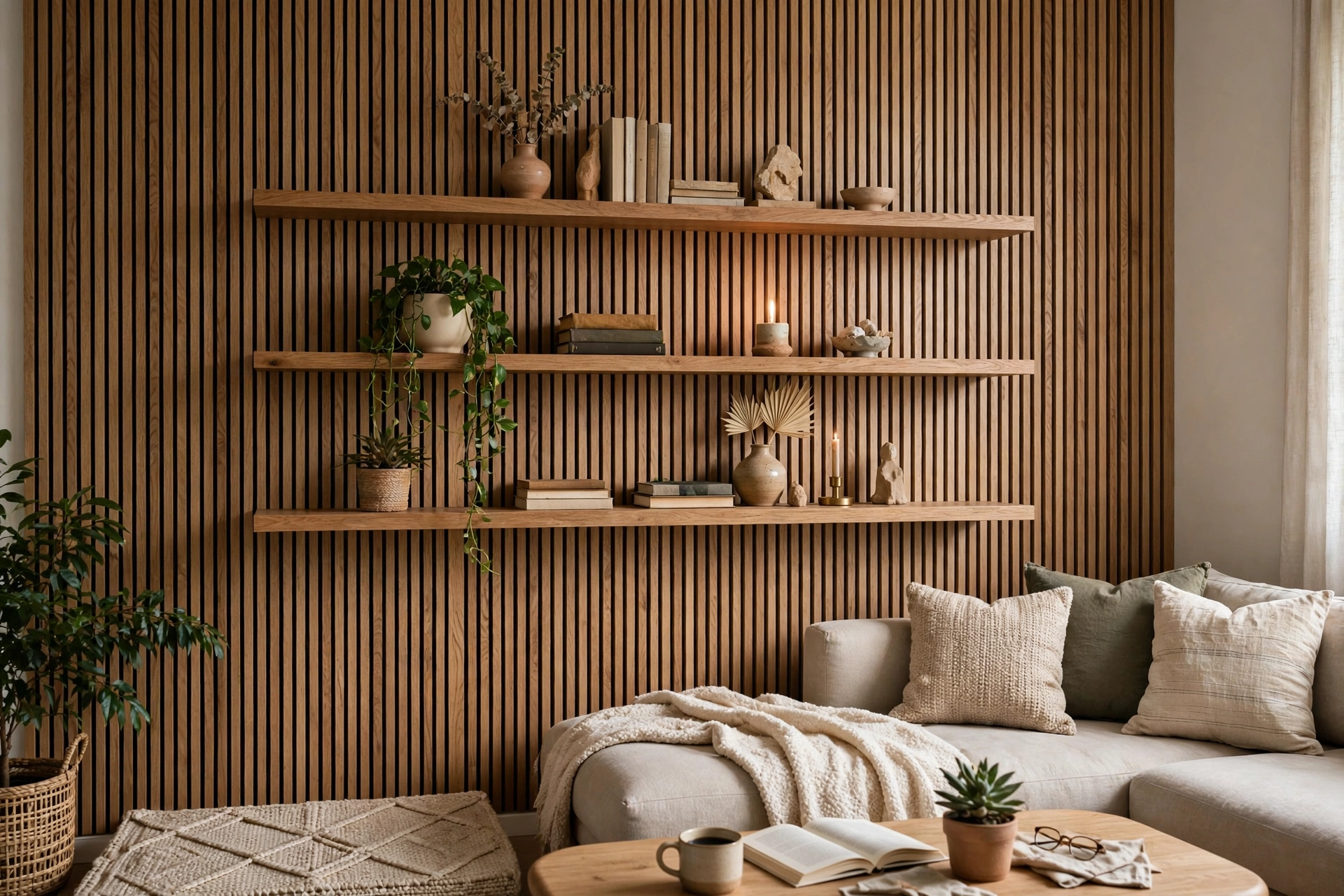
Interrupting a slat wall with floating shelves creates a custom, built-in look that is both beautiful and functional. Mount thick wood shelves at intervals across the slats, aligning them with the slat rhythm, and style them with ceramics, books, and plants. The shelves appear to float out of the textured wall — a high-end detail that costs little extra. Keep shelf styling simple so the slat texture remains visible. This combination turns a decorative wall into storage and display in one move. It is especially effective on media walls, where shelves flank the screen symmetrically.
9. Go Reclaimed for Instant Character
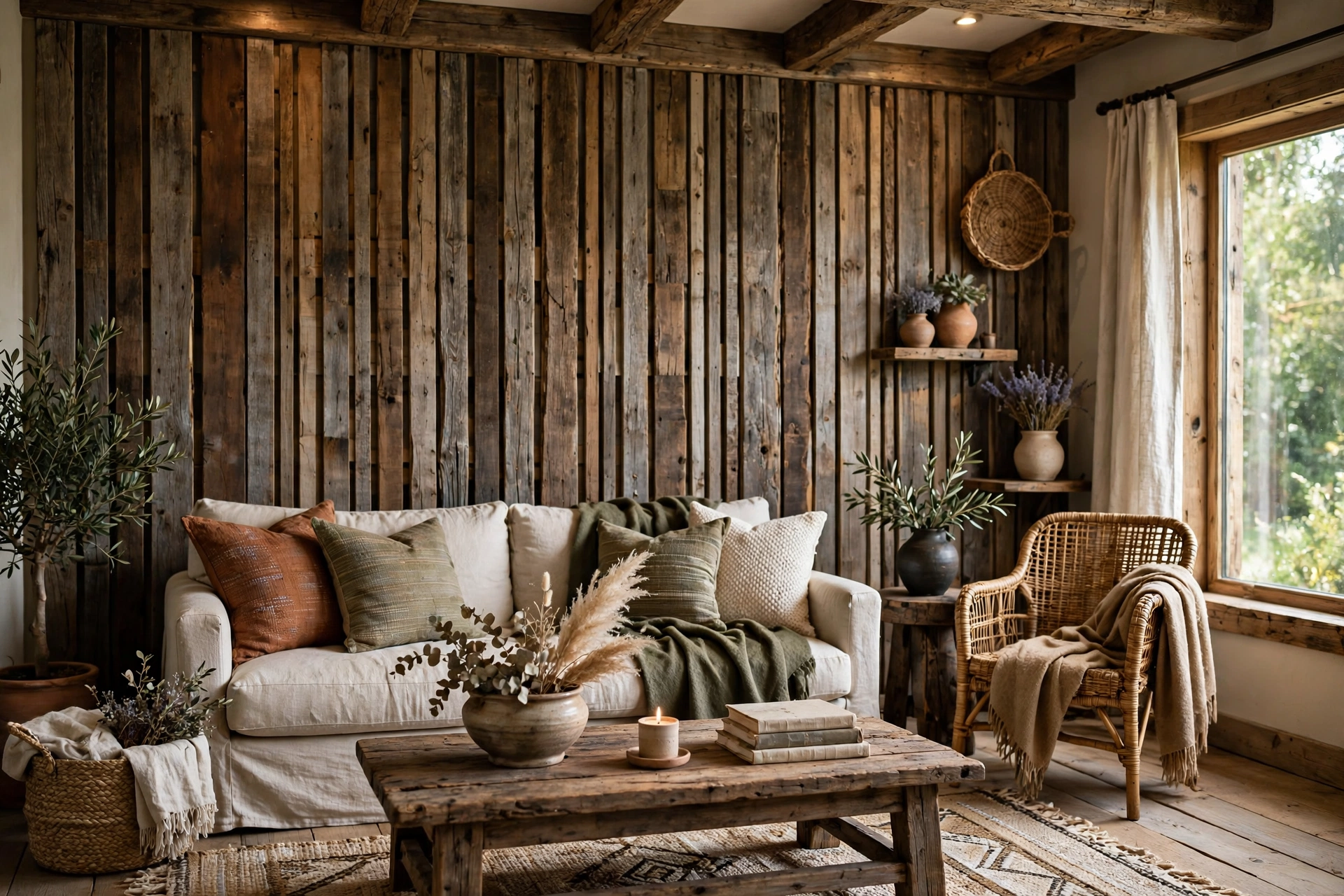
Reclaimed barn wood or salvaged planks bring color variation, saw marks, and history that new lumber cannot fake. A reclaimed slat wall adds instant soul — grays, silvers, and weathered browns that make new furniture look expensive. Source reclaimed wood from salvage yards or buy faux-reclaimed panels for a similar look at lower cost. This approach suits farmhouse, rustic, and eclectic living rooms. The wall tells a story before you hang a single picture.
10. Try a Slatted Room Divider

In open-plan living rooms, a freestanding slatted partition divides space without blocking light. Build or buy a slatted screen — floor-standing or ceiling-mounted — to separate the living area from dining or entry zones. The gaps between slats let light and sightlines through, so the division feels airy rather than walled-off. This is zoning with texture: the divider becomes a design feature instead of just a barrier. For more ways to give walls and dividers personality, these living room tapestry ideas for textured walls offer a softer, textile-based alternative.
11. Stain, Don’t Paint (Usually)

Wood slat walls look best when the wood grain shows. Choose a stain — natural, honey, walnut, or smoked — rather than opaque paint, and let the grain be part of the design. White oak takes stain beautifully and evenly; pine is budget-friendly but blotch-prone, so use a pre-stain conditioner. Test your stain on a scrap piece first, since slat lighting changes how tones read. But as a rule, stain celebrates the material — and the material is the whole point of a wood wall.
12. Mind the Spacing Mathematics

Sloppy spacing is what makes DIY slat walls look cheap. Decide your gap — typically half an inch to an inch — and use a spacer block cut to exactly that width as you install each slat. Work from the center outward or from one edge with a level, checking every few slats. Consistent gaps create the crisp rhythm that makes slat walls beautiful; drifting gaps catch the eye immediately. Take your time on layout — measure twice, and dry-fit before fastening. Precision is free, and it is the difference between custom-millwork looks and a weekend-project look.
13. Combine Slats With a Gallery Wall

Slat walls and art are natural partners. Hang framed prints and photos directly on the slats — the wood texture makes white mats and simple frames pop like a gallery. Use slim standoff mounts or hang from the top rail so frames sit slightly proud of the slats. Keep the art arrangement simple: a grid or a single large piece lets the wood breathe. The combination gives you texture plus personality in one wall — keep the frames simple and let the wood breathe.
14. Go Renter-Friendly With Peel-and-Stick

Renters can get the slat look without a nail gun. Peel-and-stick wood-look panels, lightweight faux slats with adhesive backing, or even wood-grain wallpaper with painted batten strips deliver convincing texture that removes cleanly. Faux slat panels made from lightweight PVC or foam weigh little and mount with damage-free strips rated for the load. Test adhesion in a hidden spot first. The result will not fool a carpenter up close, but from the sofa it reads beautifully. For a deep dive on wood accent wall options, this wood accent wall guide covers slats, board-and-batten, and reclaimed looks with cost breakdowns.
15. Extend Slats Onto the Ceiling

For a truly enveloping look, continue the slats from the wall onto the ceiling — across a cove, a beam run, or the full ceiling of a reading nook. The wraparound effect makes the room feel architecturally intentional, like a custom cabin or a high-end hotel suite. This works best in rooms with decent ceiling height and a clear zone to define, such as over the seating area. Keep the slat tone consistent between wall and ceiling for a seamless flow. It is a bold move, but the coziness payoff is enormous. These living room ceiling ideas from beams to bold paint offer more ways to make the fifth wall work harder.
Frequently Asked Questions
How much does a wood slat accent wall cost?
DIY slat walls using pine 1x2s typically run $150 to $400 for a standard feature wall, including paint for the backing and fasteners. Prefab slat panels cost more — roughly $5 to $12 per square foot — but install much faster. Professional installation of a full custom wall generally runs $800 to $2,500 depending on wood species and wall size. Starting with a partial wall or a single section keeps any budget in check.
What wood is best for a slat accent wall?
White oak is the designer favorite — it stains evenly and looks clean and modern. Pine is the budget pick; use pre-stain conditioner to avoid blotchiness. Walnut delivers rich drama but costs more and shows dust. For a rustic look, reclaimed barn wood adds unbeatable character. Whatever you choose, buy extra for test staining.
Are wood slat walls hard to dust?
They need occasional attention — dust settles on the tops of horizontal slats and in the gaps. A microfiber duster with an extendable handle handles it in minutes, and a vacuum with a brush attachment works for deeper cleans. Vertical slats collect less dust than horizontal ones. Sealing the wood makes dusting easier. It is a small maintenance trade for a big style payoff, and most owners dust monthly without complaint.
Do wood slat walls make a room look smaller?
Done well, no — and vertical slats can actually make ceilings feel higher. The key is restraint: one feature wall, not four, and keep the wood tone in harmony with the room. Very dark slats on every wall would close a room in, but a single warm-toned slat wall adds depth that reads as spaciousness. In small rooms, stick to a partial wall or a single section and keep surrounding walls light.
Can I install a slat wall myself?
Yes — it is one of the most DIY-friendly accent walls. The basic process is: paint the backing wall dark, cut slats to length, and attach them with a brad nailer or construction adhesive using a spacer block for even gaps. A weekend is realistic for a standard wall. The critical skills are measuring carefully and keeping gaps consistent. If power tools are not your thing, prefab panels with adhesive mounting are the beginner-friendly alternative.
Keep Exploring
A wood slat wall is architecture you can add in a weekend — warmth, rhythm, and texture that makes everything in front of it look better. Pick your wood, mind your spacing, and enjoy the glow.
Planning the rest of the room around your new wall? Our living room ceiling ideas from beams to bold paint keep the design momentum going overhead — because great rooms are finished on all six surfaces.