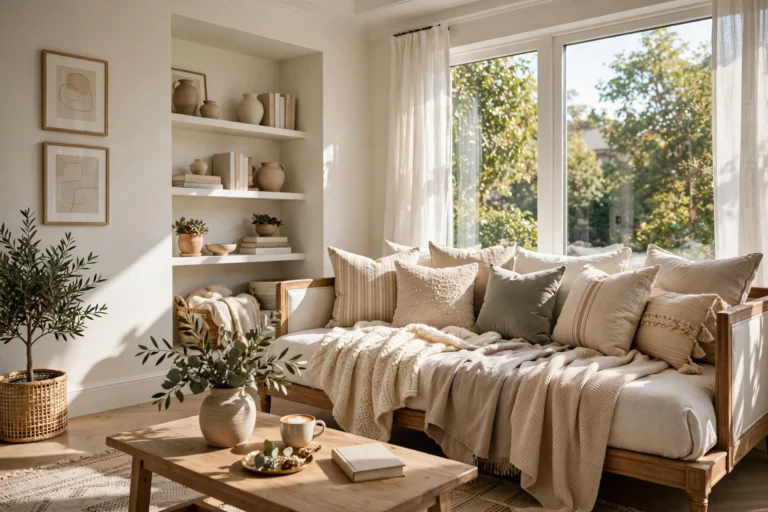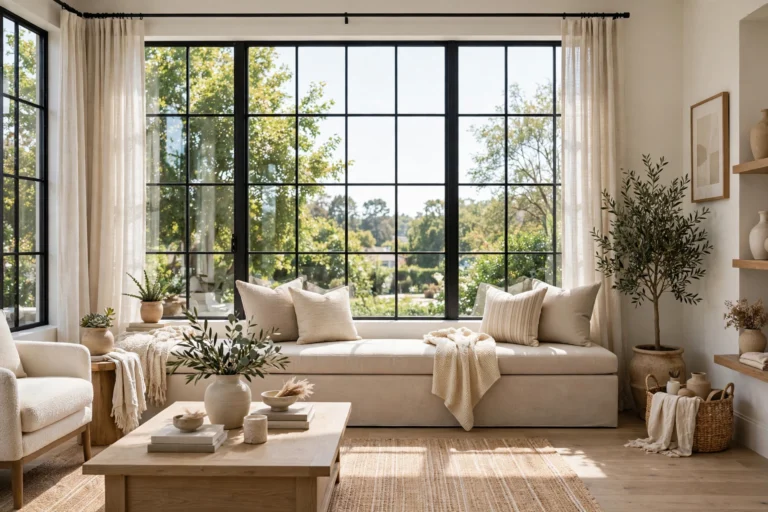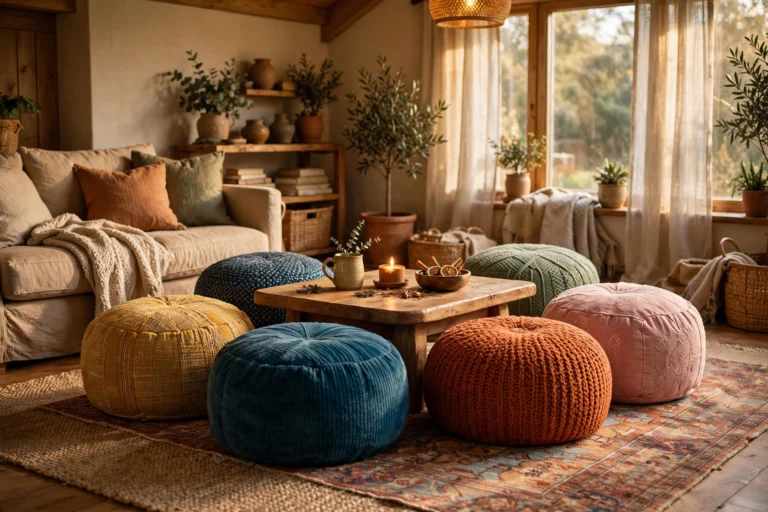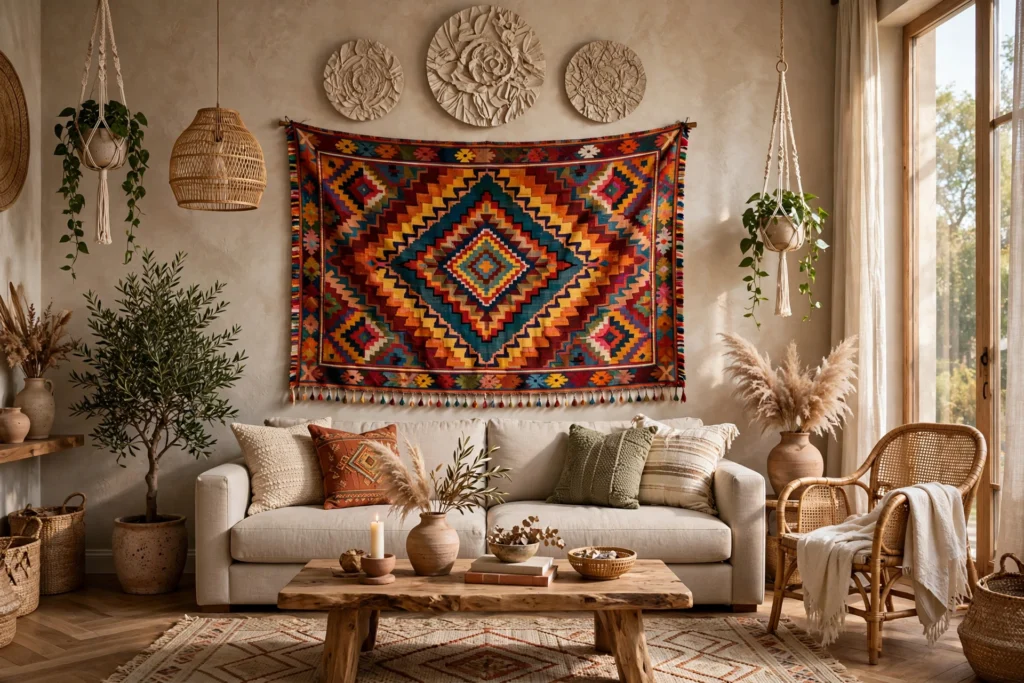

A tapestry does what paint and framed prints cannot: it softens a wall with texture, adds warmth you can almost feel, and covers serious square footage for the price of one framed print. Whether you love boho botanicals, vintage medieval scenes, or bold modern graphics, these living room tapestry ideas will help you hang fabric art with confidence. If your walls need a full rethink, our living room accent wall ideas with big impact pair well with several looks below.
Scale is the first decision. A tapestry should cover roughly 60 to 75 percent of the wall width it hangs on — too small and it looks like a postage stamp, too large and it overwhelms. Above a sofa, match the tapestry width to about two-thirds of the sofa. As for hanging, a decorative rod, a simple wooden dowel with finials, or discreet clip hangers all work; heavy vintage pieces need a mounted rod with proper anchors. Choose your size, pick your hanging method, then find your style.
1. Hang a Large Statement Tapestry Above the Sofa
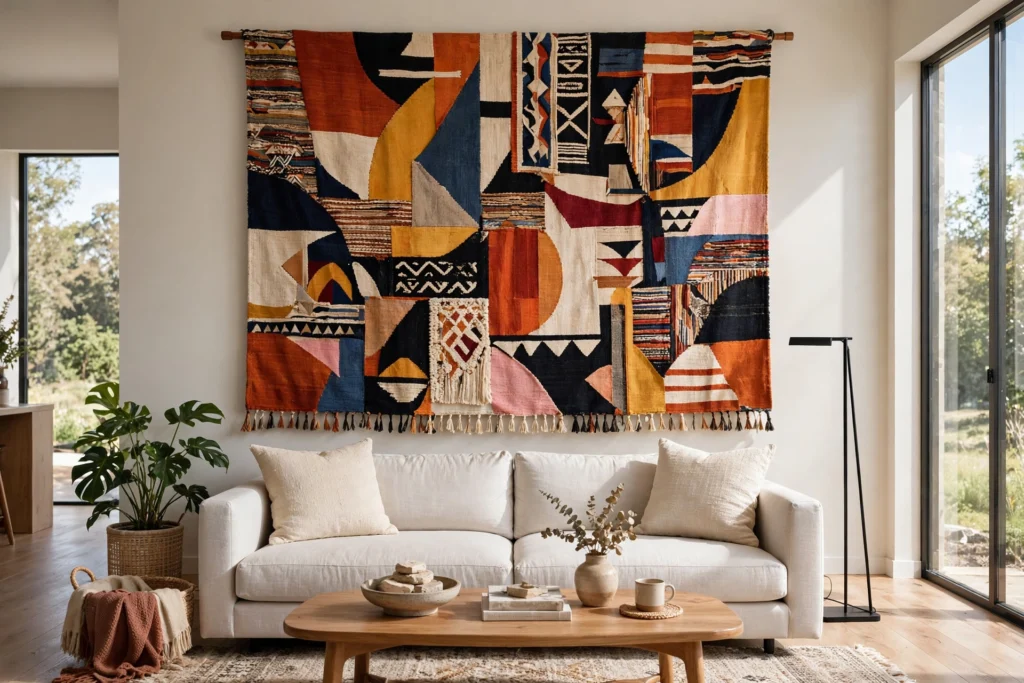
One large tapestry above the sofa is the fastest way to give a living room a finished, collected feel. It fills the big blank wall that defeats so many decorators, adds color and pattern in one move, and costs a fraction of equivalent framed art. Choose a piece with colors pulled from your rug or pillows for instant cohesion. Hang it so the bottom edge sits 6 to 10 inches above the sofa back. This single move can carry the whole room’s personality — keep surrounding decor quiet and let the textile star.
2. Choose a Botanical Tapestry for Calm
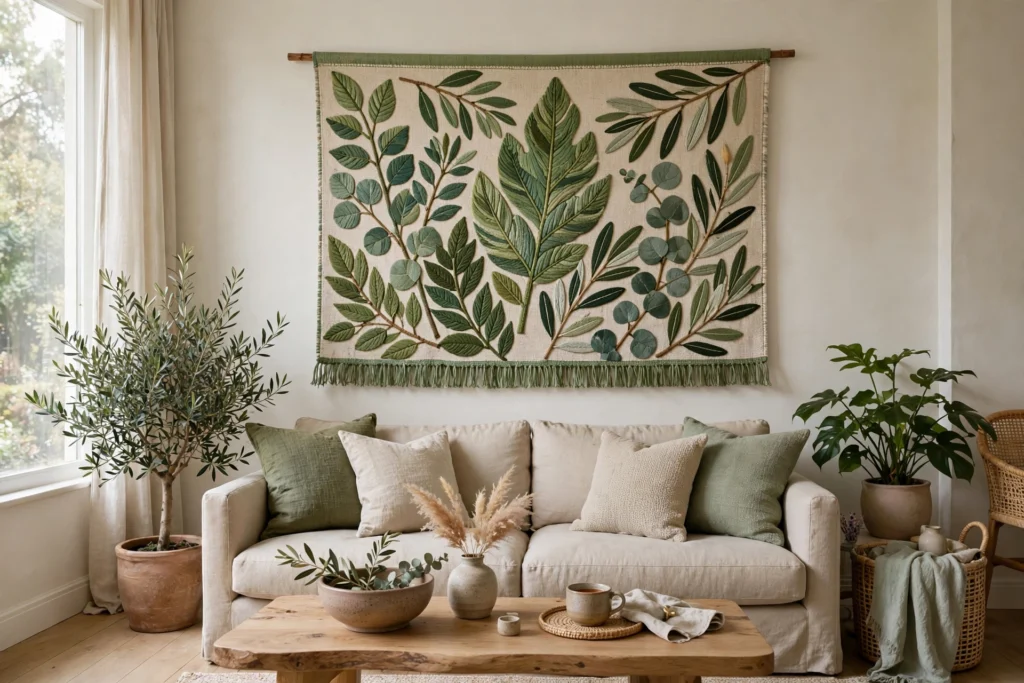
Botanical tapestries — leaves, trees, garden scenes in greens and earth tones — bring the calm of nature indoors without the watering schedule. They work beautifully in Scandinavian, Japandi, and transitional living rooms, where their organic shapes soften clean lines. A forest or tree-of-life design above a neutral sofa creates a serene focal point; pair it with real plants nearby to blur the line between art and nature. Keep the frame of reference simple: the tapestry is the garden, so the rest of the wall stays quiet. It is wall art that genuinely lowers the room’s visual temperature.
3. Hunt a Vintage Tapestry
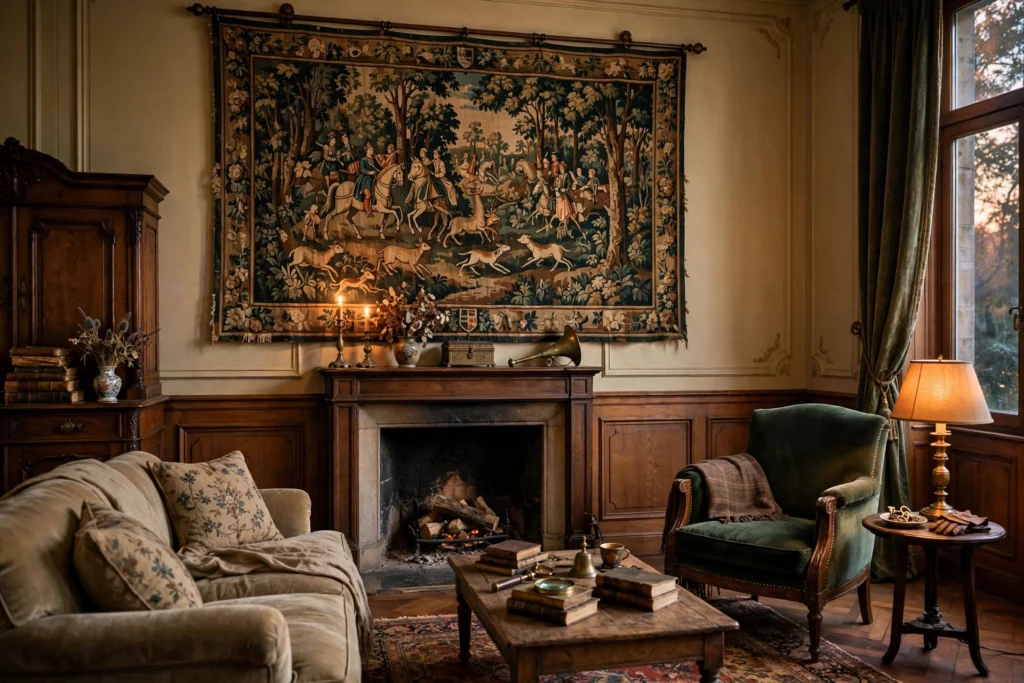
Real vintage tapestries — Belgian, French, or mid-century wall hangings — carry a depth of color and craftsmanship that new prints cannot match. Estate sales, flea markets, and auction sites are the hunting grounds; look for hand-finished edges, rich wool texture, and scenes with narrative interest. A faded medieval-style hunting scene or floral panel adds instant old-world soul to traditional and eclectic living rooms. Check the back for damage and moth issues before buying, and budget for professional cleaning on true antiques. One vintage piece can anchor an entire room’s story.
4. Hang a Throw Blanket as a Tapestry
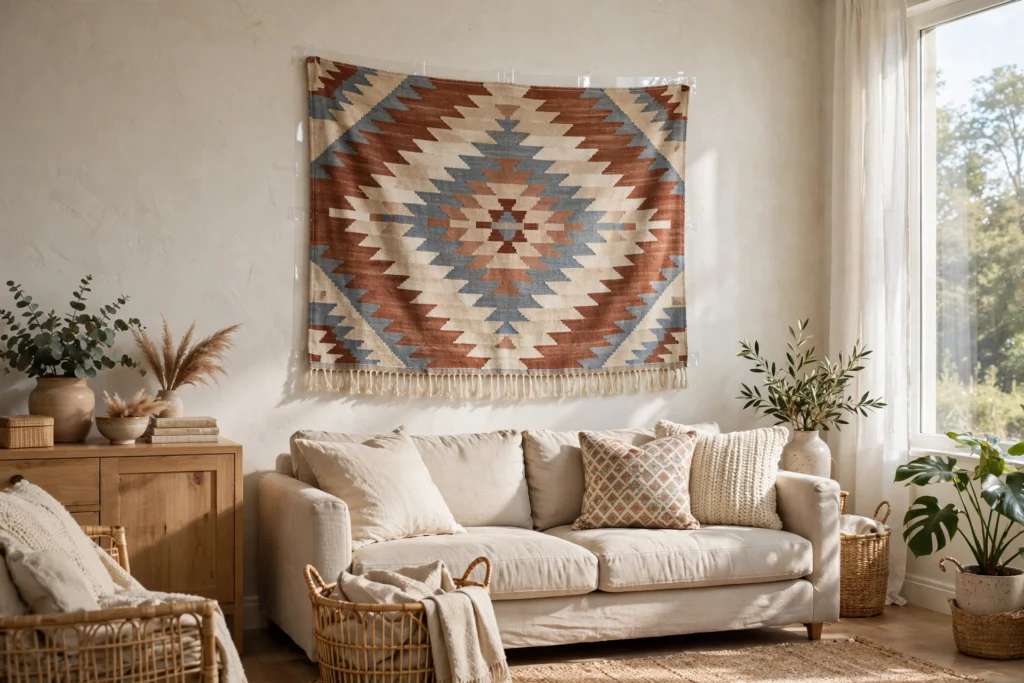
The renter’s secret weapon: a beautiful throw blanket hung like a tapestry gives you large-scale textile art with zero commitment. Apartment Therapy’s guide to hanging a throw like a tapestry shows how Command strips along the top and sides hold a blanket flat with no wall damage. Choose a throw with a bold pattern or rich texture — it reads as intentional art, not a blanket on a wall. When you tire of it, take it down and put it back on the sofa. It is the cheapest, most reversible large art you can own.
5. Layer Macrame With a Tapestry
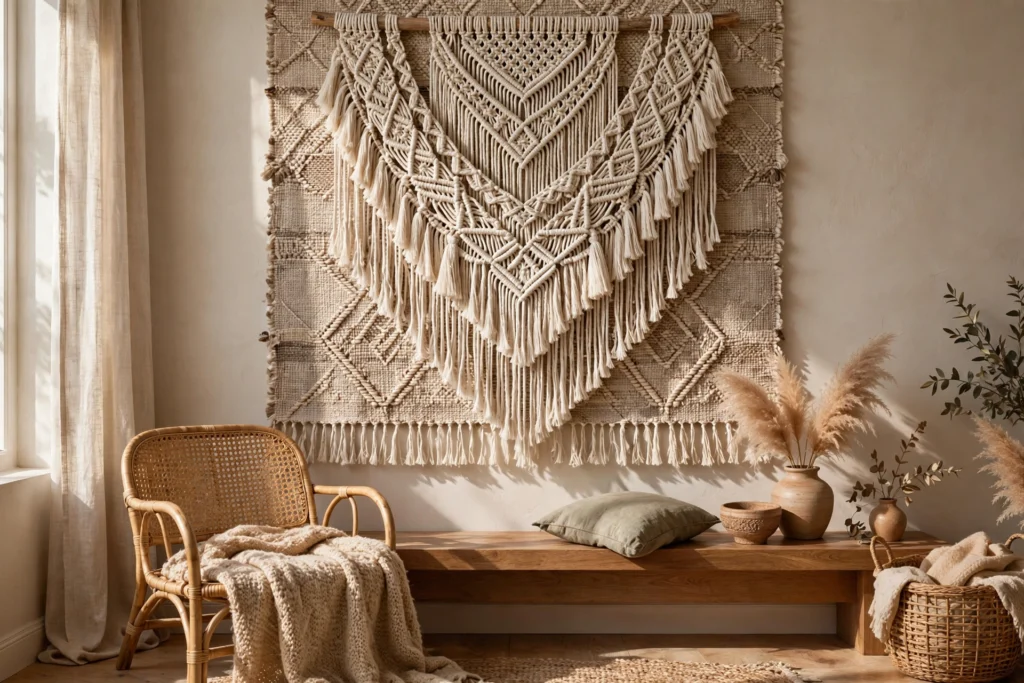
For full boho texture, layer a macrame wall hanging over or beside a tapestry. The dimensional knots of macrame against the flat weave of a tapestry create a rich, collected wall that feels like a textile gallery. Keep both pieces in a similar neutral palette — cream, natural, sand — so the layering reads as texture rather than clutter. Hang the macrame slightly overlapping one corner of the tapestry for an artful, styled feel. This combination shines in boho, eclectic, and global-inspired living rooms where more texture is always the answer.
6. Style a Tapestry Behind a Console Vignette
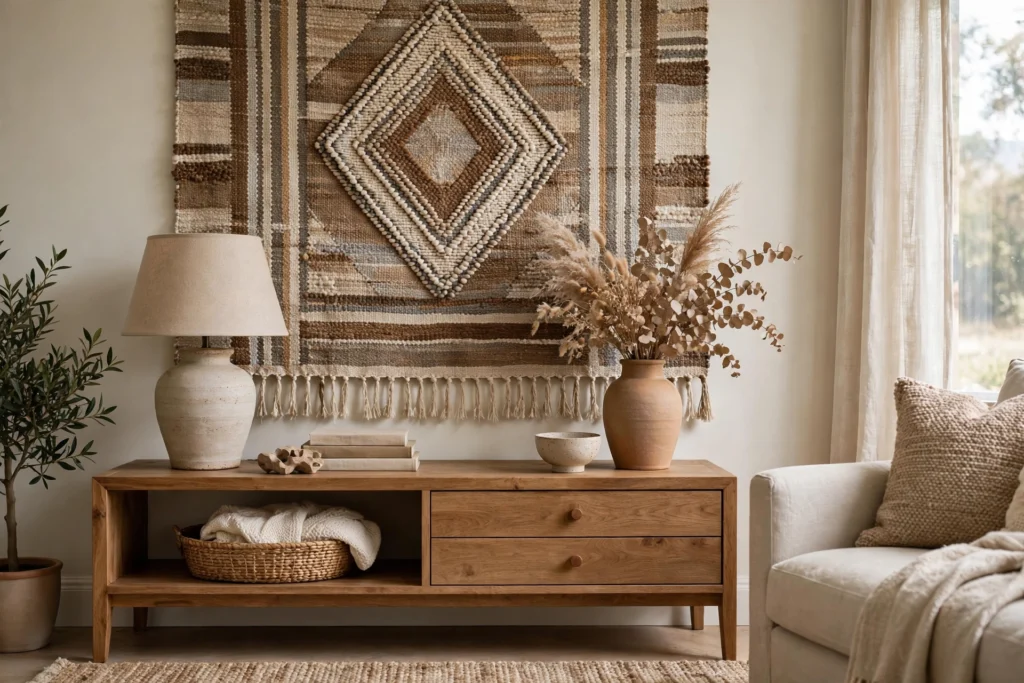
Hang a tapestry on the wall behind a console table and style the tabletop in front of it for a layered, designer vignette. The textile becomes the backdrop; a lamp, stacked books, and a vase become the foreground. Keep the tapestry’s colors in conversation with the objects — pull one accent color from the weave into a vase or book cover. This arrangement works in entry-adjacent living rooms and on narrow walls where a gallery would crowd. The depth of layers makes even a simple console look styled by a professional.
7. Hang a Tapestry From the Ceiling
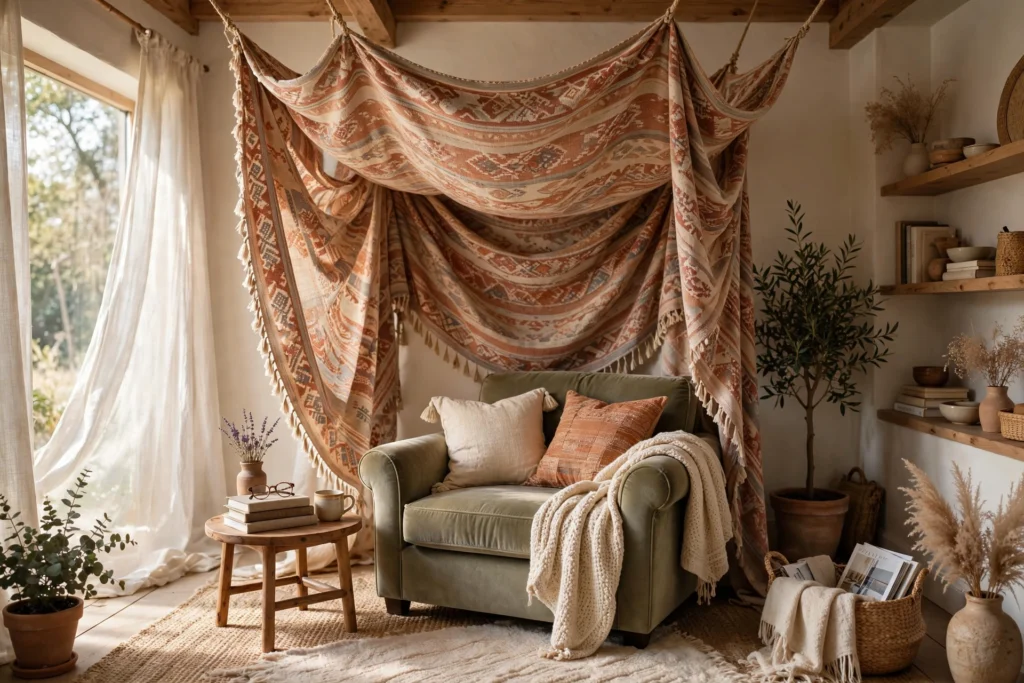
For drama, suspend a tapestry from the ceiling a few inches off the wall — or as a canopy over a reading corner. The slight shadow gap adds dimension, and a ceiling-hung textile can define a zone within an open-plan living room the way a rug defines floor space. Use a slim curtain track or decorative rod mounted to the ceiling, and choose a lighter-weight fabric so the hanging hardware stays discreet. This approach also solves the problem of damaged or textured walls you would rather cover than repair. It is unexpected, and guests always ask about it.
8. Mix a Tapestry Into a Gallery Wall
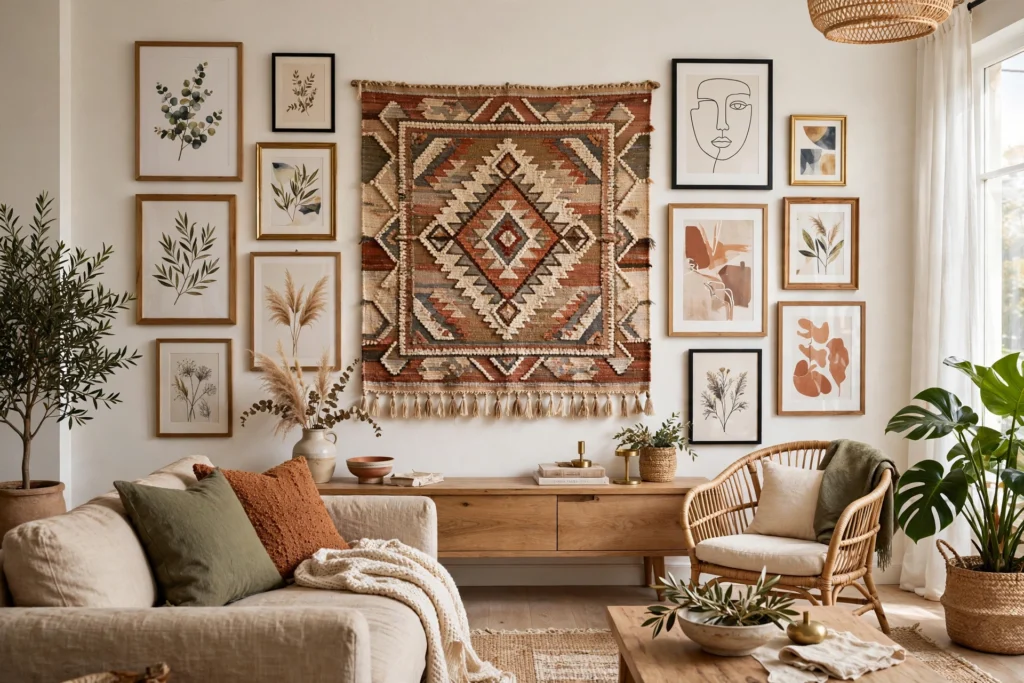
Break up a traditional framed gallery wall with one textile piece — the soft texture contrasts beautifully with glass and frames. Choose a tapestry in colors that echo the art around it, and keep its size comparable to the larger frames so it holds its own. Hang it slightly off-center within the arrangement for a collected, evolved feel. This trick works especially well when your art collection feels flat or one-note; the fabric adds the missing dimension. Our living room gallery wall ideas with personality show how mixed-media walls come together.
9. Use a Tapestry as a Media Wall Alternative
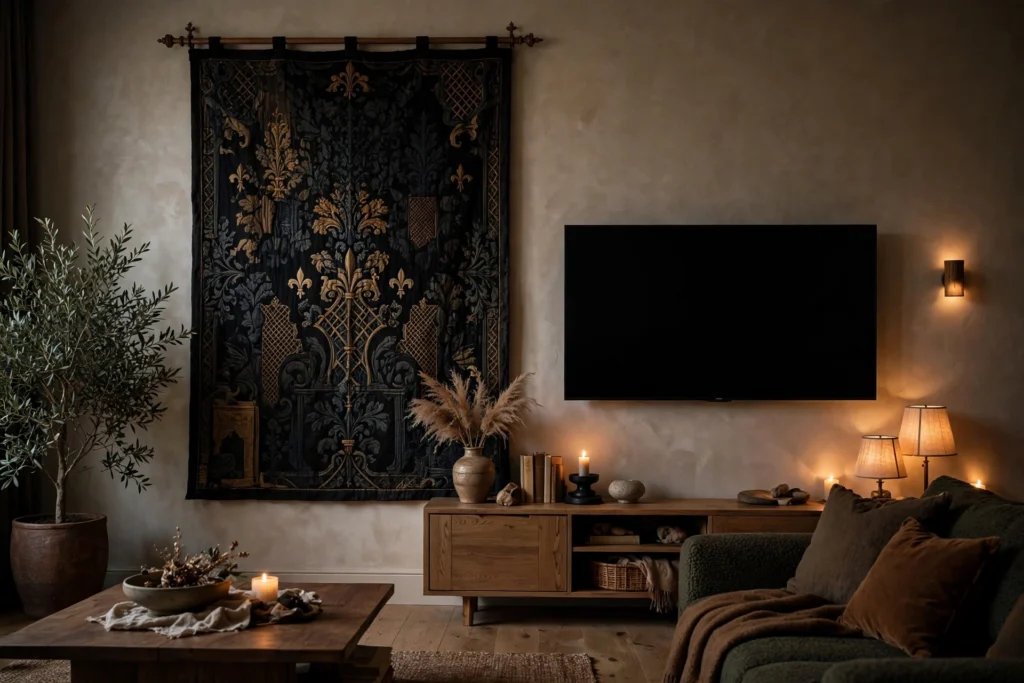
If your TV dominates the living room, flank it — or cover the wall around it — with a tapestry to soften the black rectangle’s visual weight. A large textile behind or beside the TV adds warmth and pattern that makes the technology feel integrated rather than intrusive. Choose darker, richer designs that recede rather than compete; avoid anything too busy right behind the screen. For a bold move, mount the TV on a wall fully covered by an oversized tapestry using a mount that extends through the fabric — the screen floats on art.
10. Go Graphic With Black-and-White
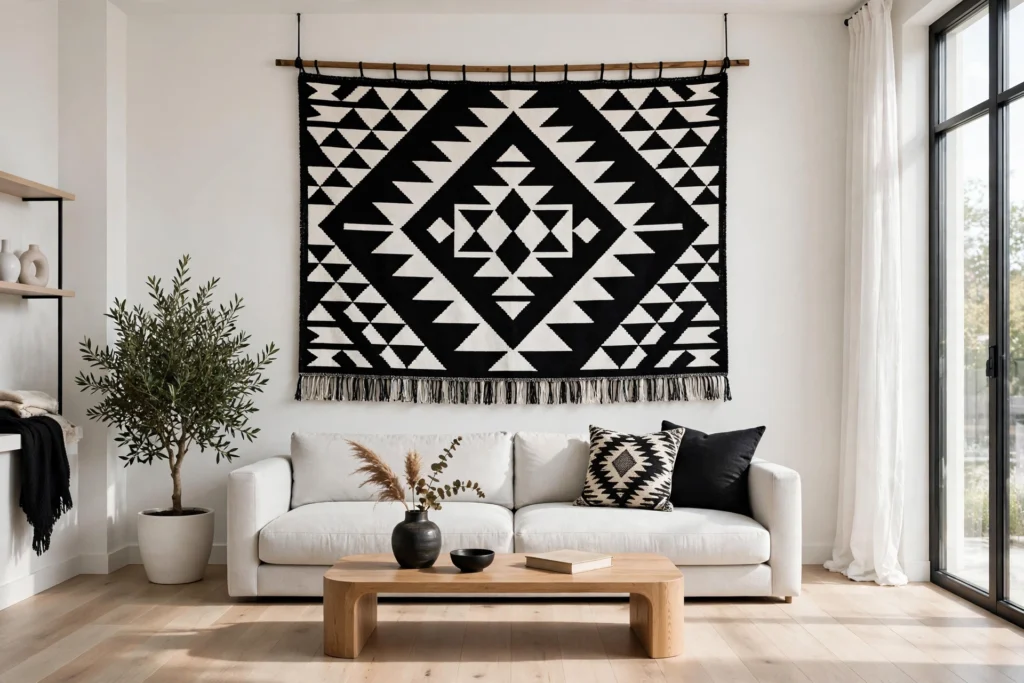
A black-and-white graphic tapestry — bold stripes, abstract linework, geometric patterns — brings modern edge to contemporary and minimalist living rooms. The high contrast acts like art with the volume turned up, and the monochrome palette keeps it sophisticated rather than loud. Pair it with solid furniture and let the tapestry supply all the pattern in the room. This is the tapestry for people who think they do not like tapestries: no florals, no fringe, just bold graphic impact. Keep the hanging hardware minimal — a slim black rod disappears into the design.
11. Hang a World Map Tapestry
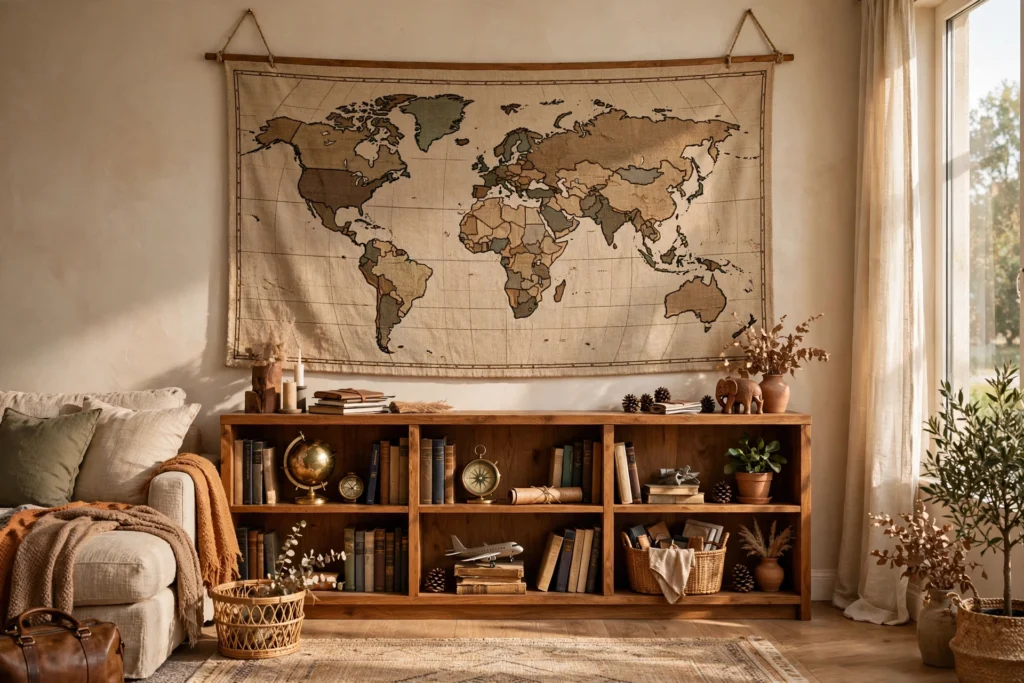
A world map tapestry feeds wanderlust while filling a big wall beautifully. The muted tones of most map designs work with nearly any palette, and the detail rewards close looking — guests will stand in front of it tracing routes. It suits eclectic, traditional, and home-office-adjacent living rooms, and it is a natural fit above a bookshelf or reading chair. Mark your travels with small pins if you like interactive decor. Choose a large size; maps need scale to be legible and impressive. It is art, education, and conversation starter in one textile.
12. Divide Space With a Hanging Tapestry
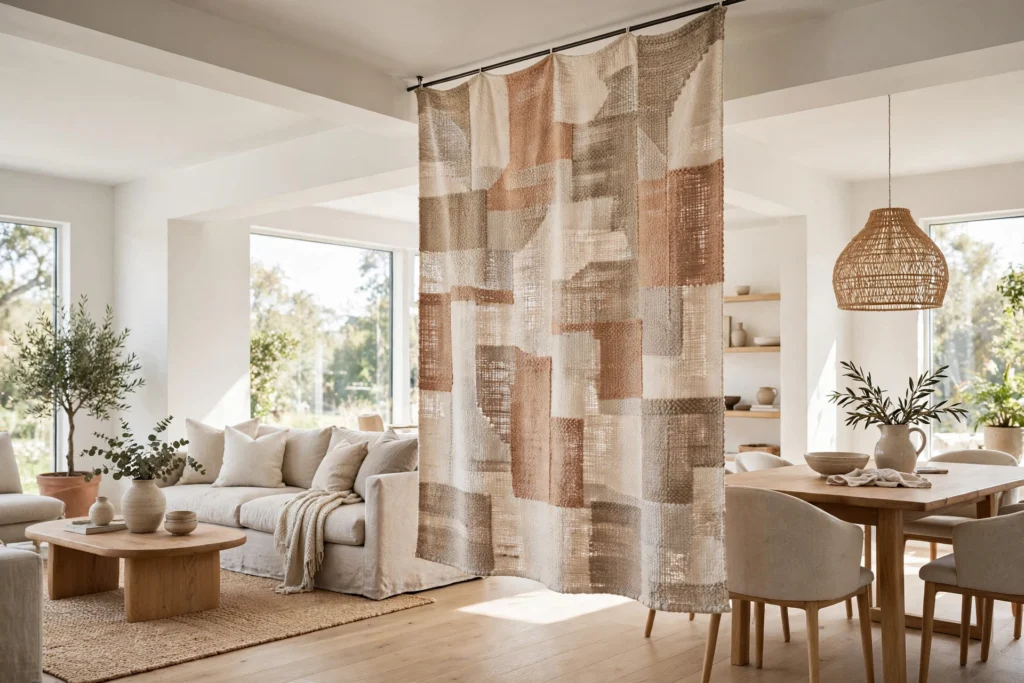
In open-plan living rooms, a ceiling-hung tapestry works as a soft room divider — marking the boundary between the lounge zone and dining area without blocking light. Choose a double-sided design or hang two back to back so both sides look finished. A curtain track on the ceiling lets you slide it open or closed like a fabric wall. This is gentler than a bookshelf divider and more flexible than furniture arrangement. Keep the fabric opaque enough to read as a boundary but light enough to move with the air — linen and cotton blends are ideal.
13. Swap Tapestries Seasonally
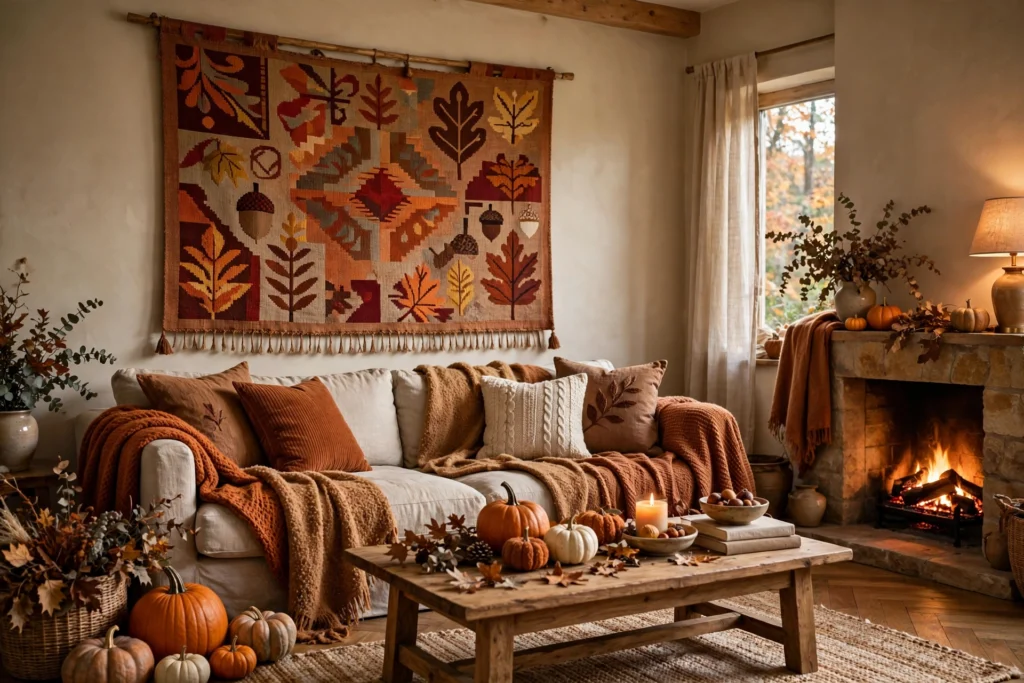
Because tapestries hang in minutes and store flat, they are perfect for seasonal rotation: botanical greens for spring, sun-washed neutrals for summer, rich rusts and ochres for fall, deep jewel tones for winter. Buy two or three affordable tapestries instead of one expensive piece and your living room gets a fresh look four times a year. Store off-season pieces rolled, not folded, in a breathable bag to avoid creases. This is the easiest room refresh in decorating — ten minutes on a ladder, and the whole wall changes mood. Start with your favorite season and build the collection slowly.
14. Frame a Small Textile as Art
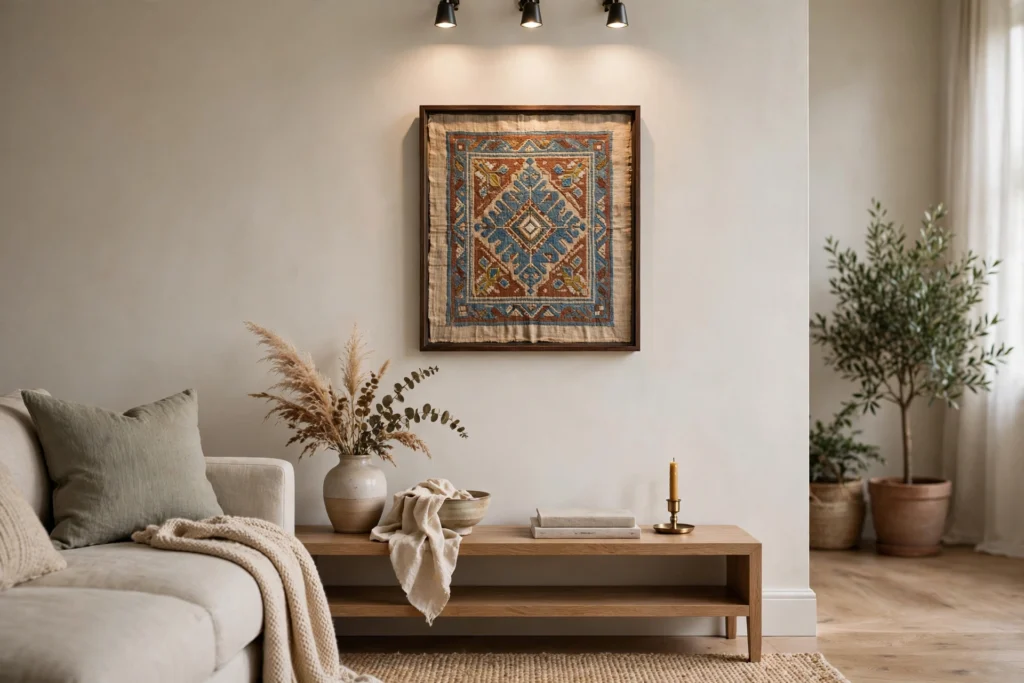
Not every textile needs to hang loose — a small vintage tapestry, embroidered panel, or woven fragment in a simple frame reads as fine art. This approach suits traditional and eclectic living rooms and lets you display precious or fragile pieces safely behind glass. Choose a frame deep enough for the textile’s thickness, and use spacers so the glass does not press the weave. A series of three small framed textiles in a row makes a sophisticated alternative to prints. It is also the best way to honor a textile inherited from family — preserved, visible, and protected.
15. Know the Craft Behind the Cloth
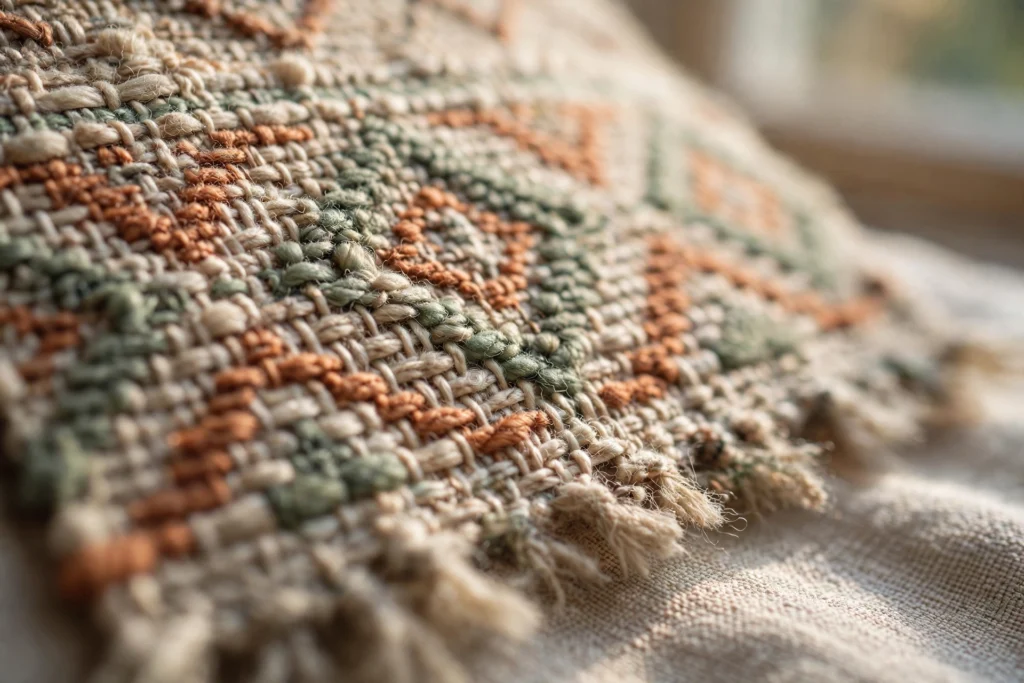
Appreciating what a tapestry actually is — hand-woven textile art with centuries of history — makes choosing one more rewarding. True tapestry is weft-faced weaving where the design is built thread by thread; the tapestry weaving tradition stretches from medieval Europe to contemporary fiber artists. Knowing the craft helps you spot quality: tight, even weaving, finished edges, and colorfast dyes. Whether you buy a handwoven original or an affordable printed hanging, choose the piece whose craft you can feel. The wall will thank you daily.
FAQ
How do you hang a tapestry without damaging walls?
For lightweight tapestries, adhesive strips or removable hooks rated for the weight work well — attach them along the top edge and corners. A tension rod inside a sewn sleeve needs no wall hardware at all if you have a recessed spot. For heavier pieces, a mounted wooden rod with proper wall anchors is safest; the small holes are easily patched. Always check the tapestry’s weight against your hardware’s rating.
What size tapestry should go above a sofa?
Aim for a tapestry about two-thirds the width of the sofa — for an 84-inch sofa, roughly 55 to 65 inches wide. It should cover 60 to 75 percent of the wall width for proper scale. Hang it 6 to 10 inches above the sofa back. When in doubt, go bigger: an undersized tapestry looks timid on a large wall.
Are tapestries out of style?
No — they cycle, and right now they are firmly back. What reads dated is the 1970s dorm-room look (thin printed polyester tacked up carelessly). Today’s approach treats textiles as art: quality fabrics, proper hanging hardware, intentional scale, and styles from botanical to graphic-modern. A well-chosen tapestry looks timeless, not trendy.
How do you clean a wall tapestry?
Dust it regularly with a vacuum’s upholstery attachment on low suction or a soft brush, working top to bottom. For spots, test a hidden area first and blot — never rub. Most cotton and polyester tapestries can handle gentle hand washing; wool, silk, and true vintage pieces should go to a professional textile cleaner. Always check the care label, and keep tapestries out of direct prolonged sun to prevent fading.
Can a tapestry work in a modern living room?
Absolutely — choose graphic, abstract, or monochrome designs and hang them with minimal hardware like a slim rod or hidden clips. The texture of fabric against sleek modern furniture is exactly the contrast that keeps minimal rooms from feeling cold. Avoid heavy fringe and fussy traditional scenes; think bold geometry, subtle gradients, or architectural photography printed on fabric.
Keep Exploring
A tapestry is the rare decor piece that adds color, pattern, texture, and scale in a single move — start with the wall that bothers you most and hang with confidence. When the textile is up, give the surrounding wall treatment the same attention with our living room wall molding ideas for elegant walls, because great walls are built in layers.