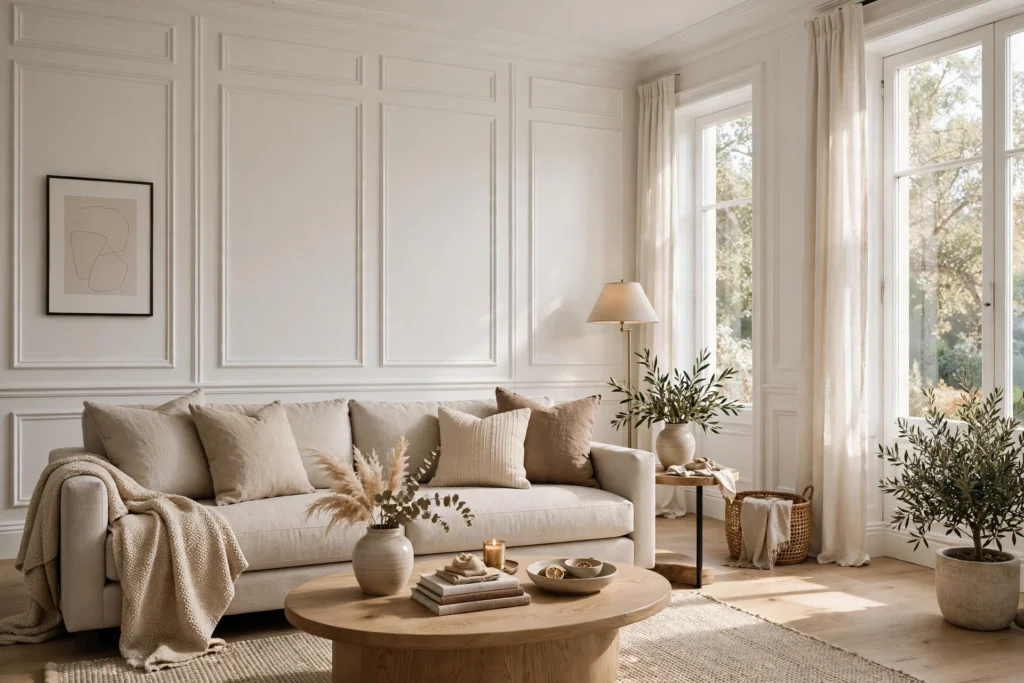

Bare walls can make even a beautifully furnished living room feel unfinished, which is why living room wall molding ideas are such a powerful upgrade. A few strips of trim turn flat drywall into architecture, adding the shadow lines, rhythm, and craftsmanship that make a space feel considered. Whether you rent or own, molding is one of the most budget-friendly ways to add character — just paint, patience, and a miter saw.
From classic picture-frame trim to bold color-drenched panels, these fifteen living room wall molding ideas cover every style, from traditional to modern. Each one is achievable as a weekend project, and most cost far less than new furniture. Pick the look that matches your home’s bones, grab a level and some caulk, and get ready to transform your walls. Notes on paint pairings and placement help you picture each idea in your own space.
1. Classic Picture Frame Molding
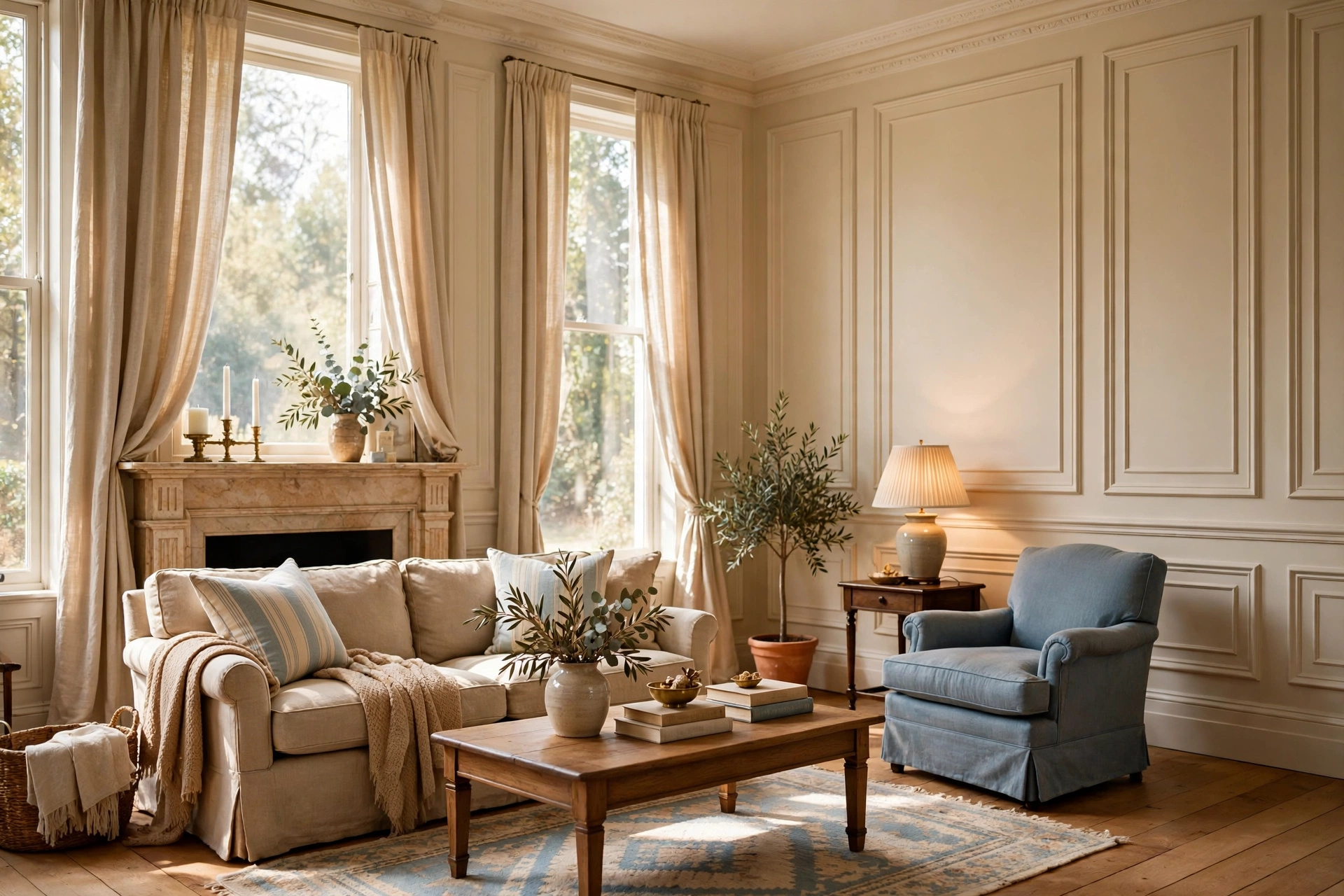
Nothing says elegant quite like classic picture frame molding. Thin strips of chair-rail or panel molding are mitered into rectangles and applied directly to the wall, creating the paneled look of a Parisian apartment or Georgian townhouse. Keep the boxes evenly spaced and sized to your wall’s proportions, with larger frames on big walls and smaller ones flanking windows. Paint the trim the same color as the wall for a subtle shadow-line effect, or go white against a colored wall for classic contrast. This timeless choice suits any era of home.
2. Floor-to-Ceiling Panel Molding
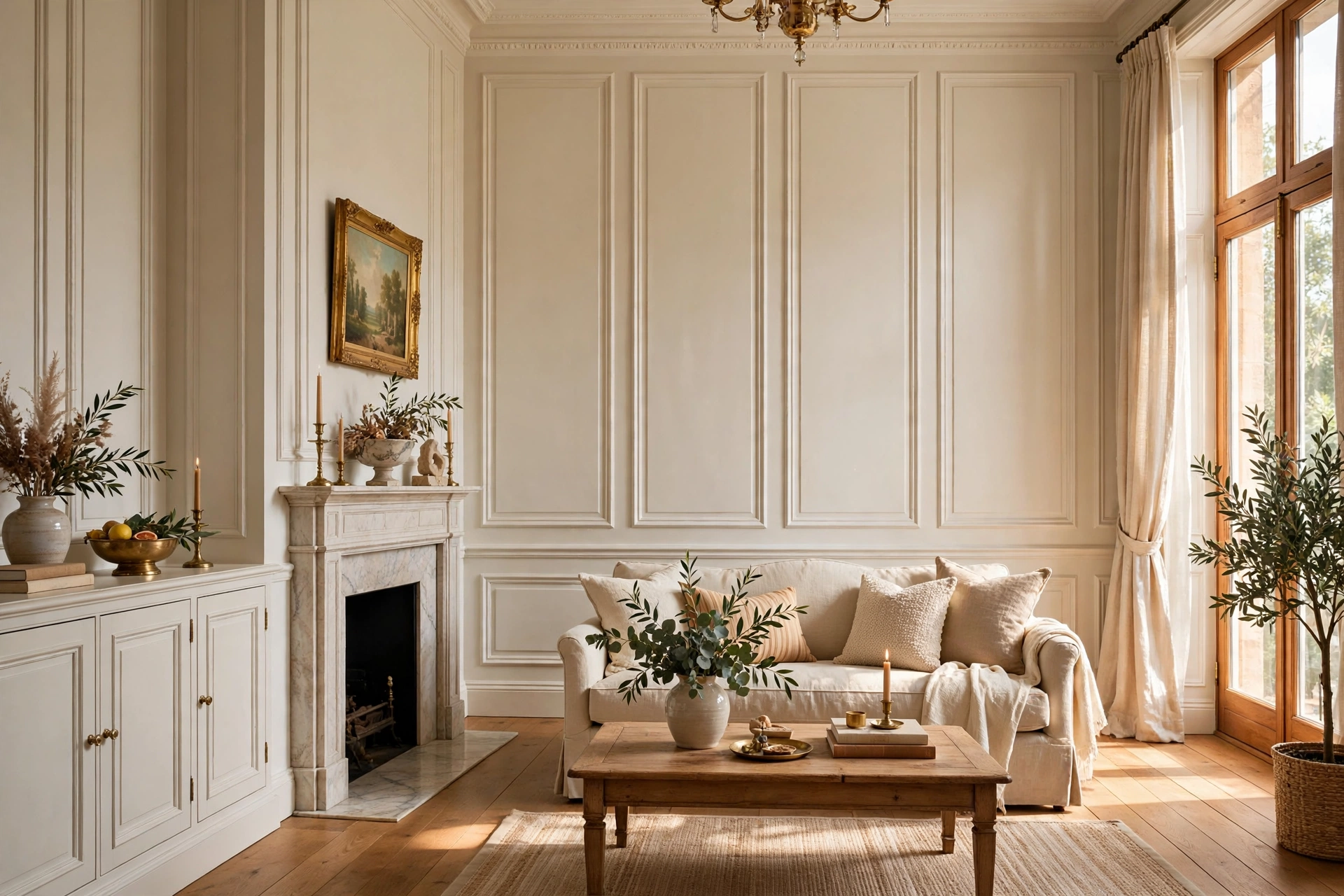
When you want real drama, take the molding all the way up. Floor-to-ceiling panel molding divides the entire wall into tall, stately rectangles that draw the eye upward and make standard eight-foot ceilings feel grander. This treatment shines on the main wall of a formal living room, especially when painted in a rich, saturated color like deep green or inky navy. Keep furniture low and simple so the wall stays the star, and balance the verticals with a soft rug and upholstered pieces.
3. Chair Rail With Wainscoting
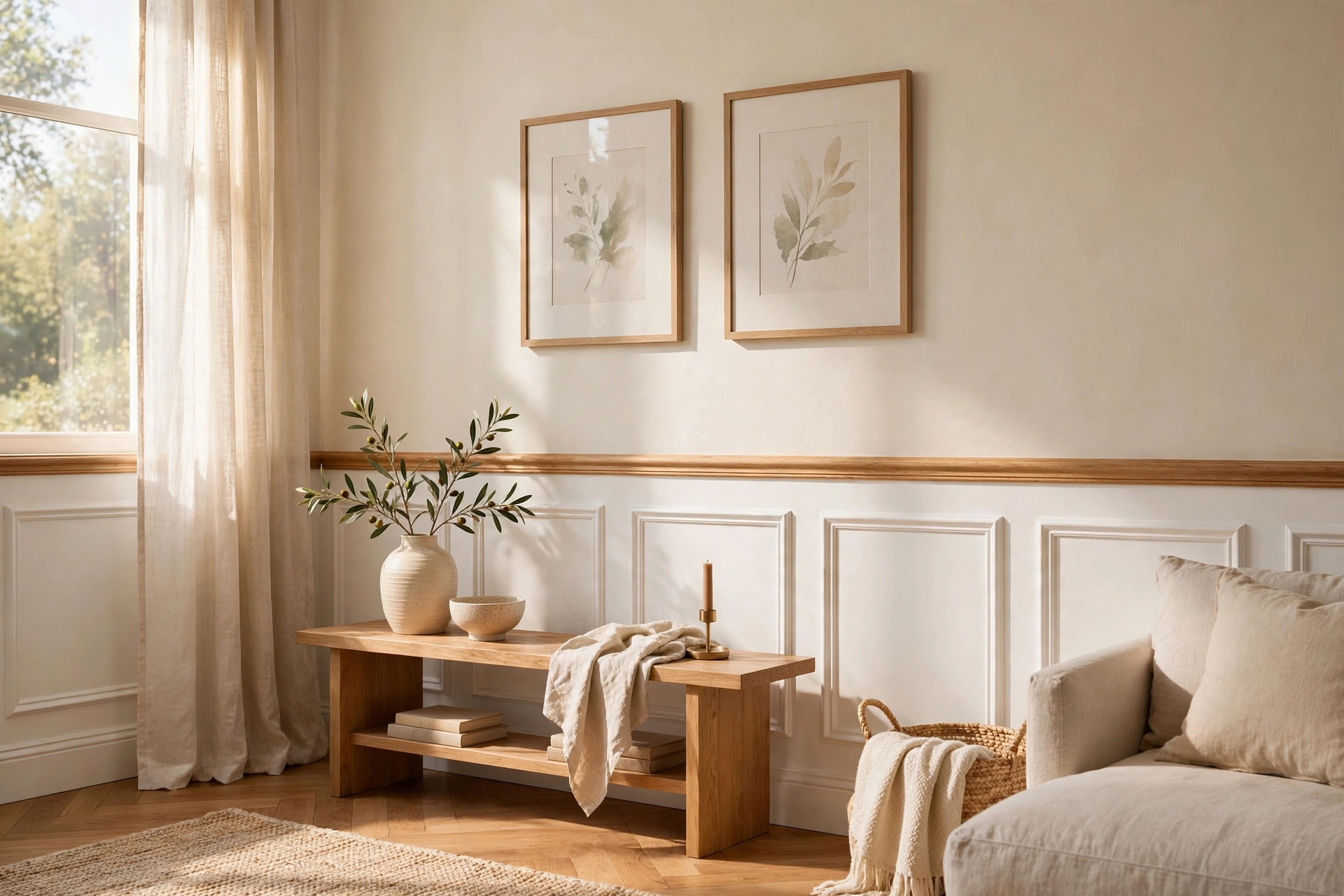
A chair rail with wainscoting below is the traditional recipe for an elegant living room wall. The horizontal rail divides the wall at roughly one-third height, with panel molding or beadboard filling the space beneath. Paint the lower section a crisp white or a soft neutral while keeping the upper wall a complementary shade, and the room gains instant architectural order. This classic combination suits colonial, craftsman, and transitional homes beautifully. Traditional living room design ideas.
4. Board and Batten
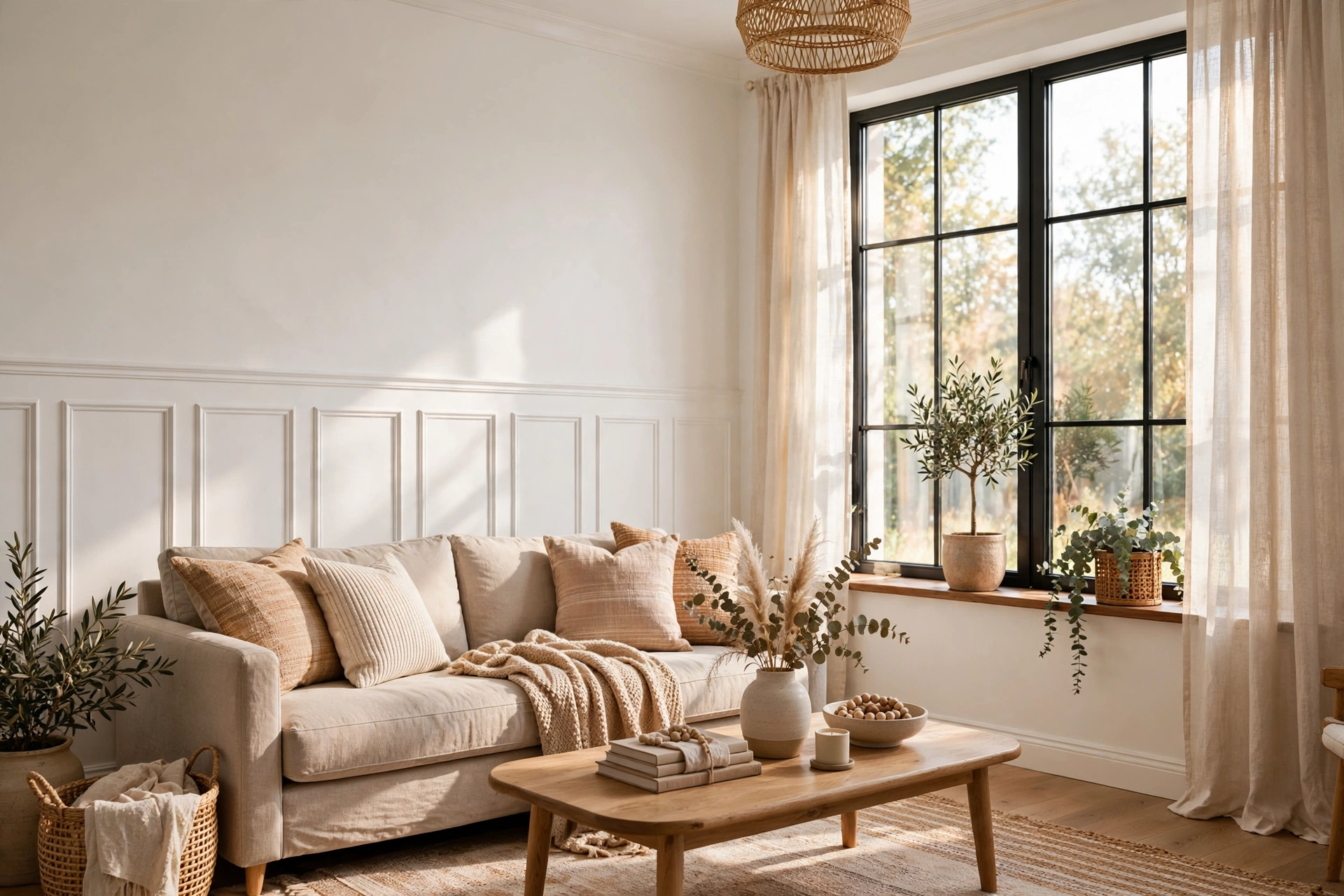
Board and batten brings a relaxed, farmhouse-meets-modern texture to living room walls. Vertical battens are spaced evenly over flat boards or directly on drywall, creating strong vertical lines that make ceilings feel taller. Unlike fussy Victorian trim, this look is wonderfully simple — just straight lines and crisp paint. Try it in warm white for a coastal-farmhouse feel, or paint it a moody charcoal for a contemporary twist. It works especially well on a single accent wall, where the rhythm of the battens becomes a graphic, almost architectural pattern.
5. Beadboard Wainscoting
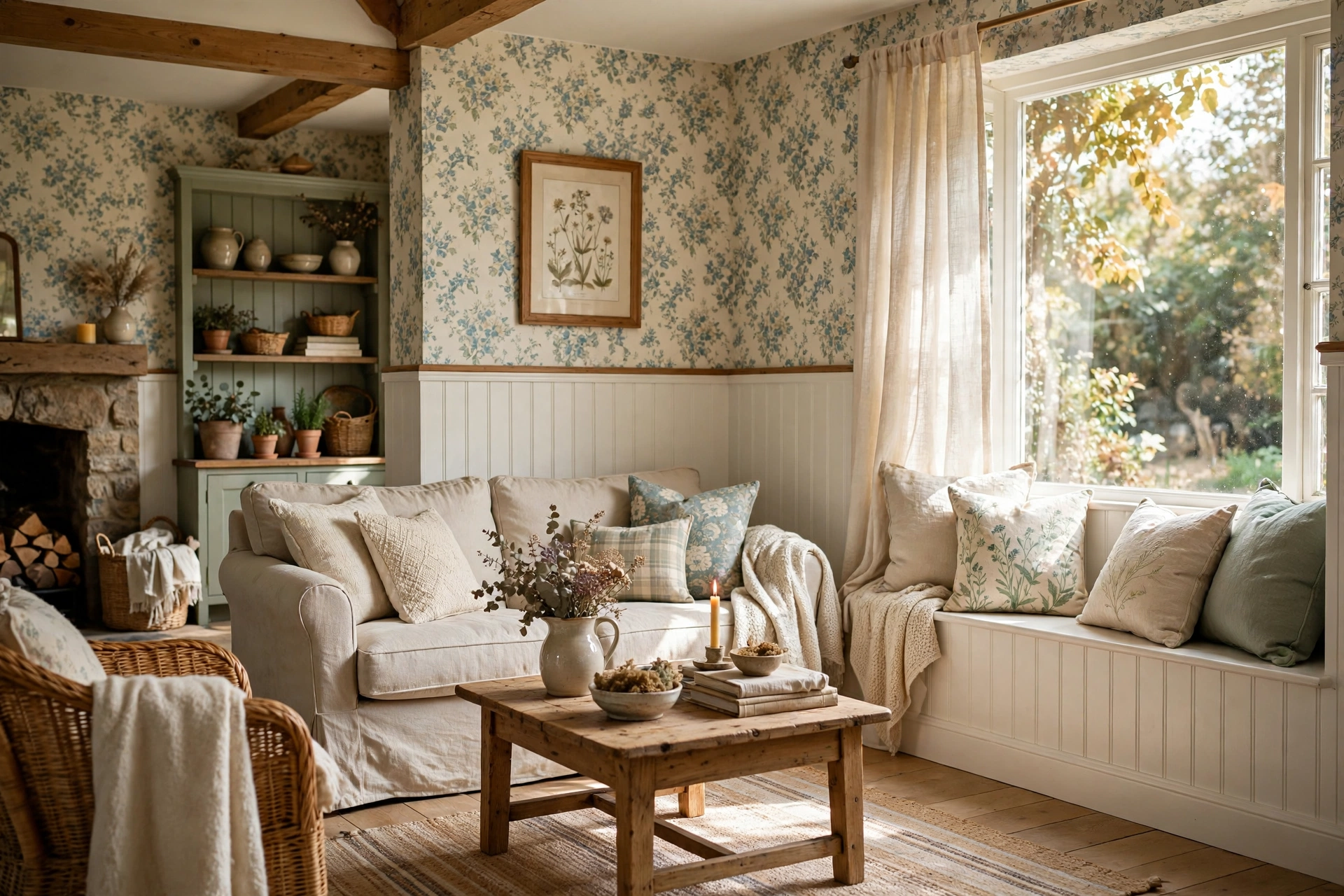
Beadboard wainscoting adds cottage charm and quiet texture to a living room without overwhelming it. The narrow vertical grooves catch light and shadow beautifully, giving plain walls a handcrafted feel. Traditionally it runs from the floor to a chair rail at about waist height, and it looks fresh painted white, sage green, or soft blue. Beadboard is also one of the most forgiving moldings to install, since small gaps hide in the grooves. This relaxed profile suits cottage and coastal schemes — French country living room design ideas for complementary textures and palettes.
6. Crown Molding at the Ceiling Line
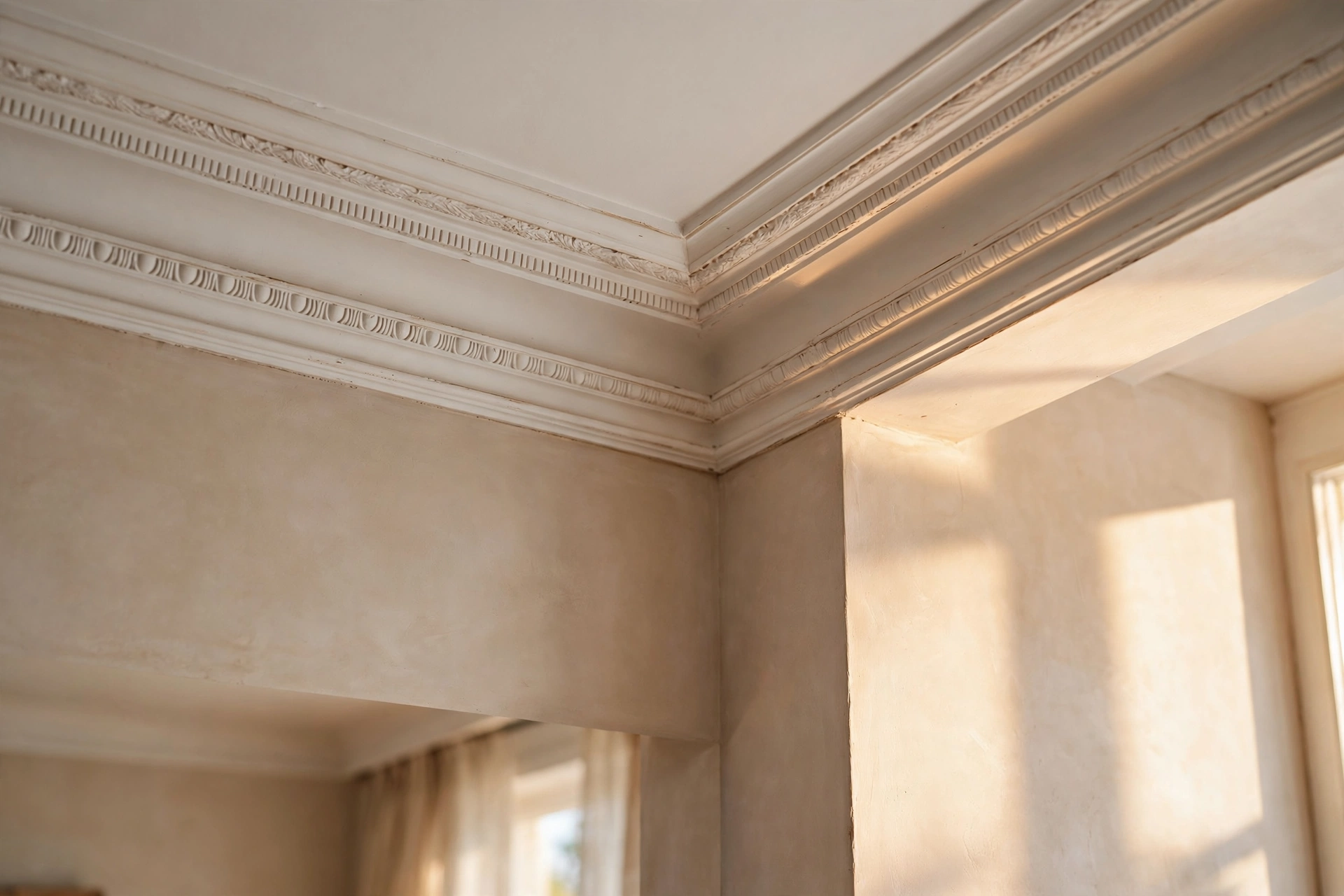
Crown molding is the jewelry of the room, finishing the line where walls meet the ceiling. Even a modest profile adds a sense of completeness that flat walls lack, while a built-up, multi-piece crown delivers true old-house grandeur. With standard ceiling heights, choose a medium profile that adds elegance without crowding the space. Paint it the same white as the ceiling for a seamless lift, or match it to the wall color to make the ceiling feel higher. Pair it with tall baseboards for a fully tailored, custom-built look.
7. Color-Drenched Dark Molding
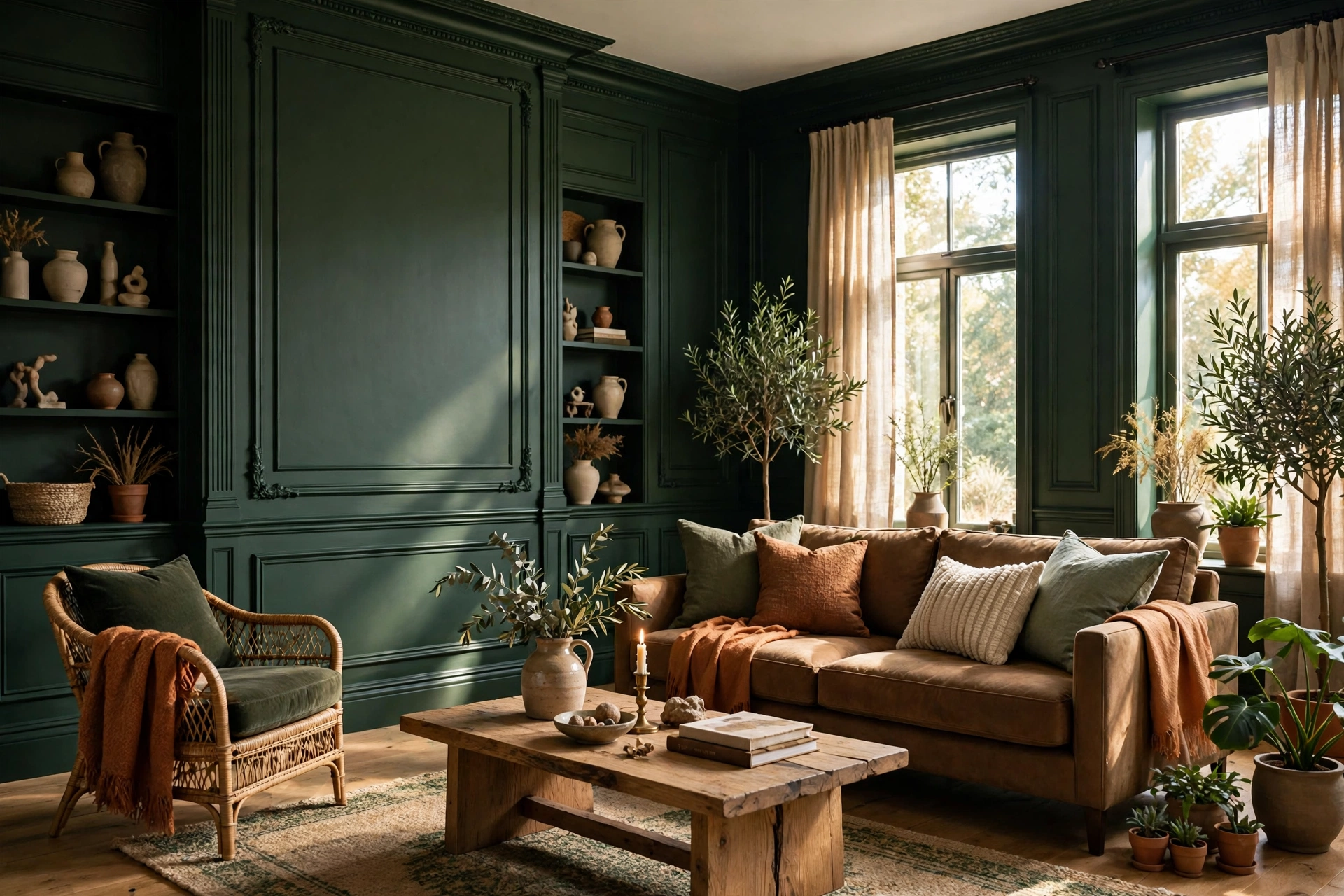
For a moody, cocooning living room, drench the molding and walls in one deep color. Painting trim, panels, and wall the same shade of forest green, charcoal, or espresso erases the boundaries between them, so the molding reads as pure texture rather than decoration. The result feels rich and enveloping — perfect for a media corner or a fireside seating area. Add brass or warm wood accents to keep the darkness from feeling flat, and let one good floor lamp wash light across the panels so the shadows do the talking.
8. Two-Tone Contrast Molding
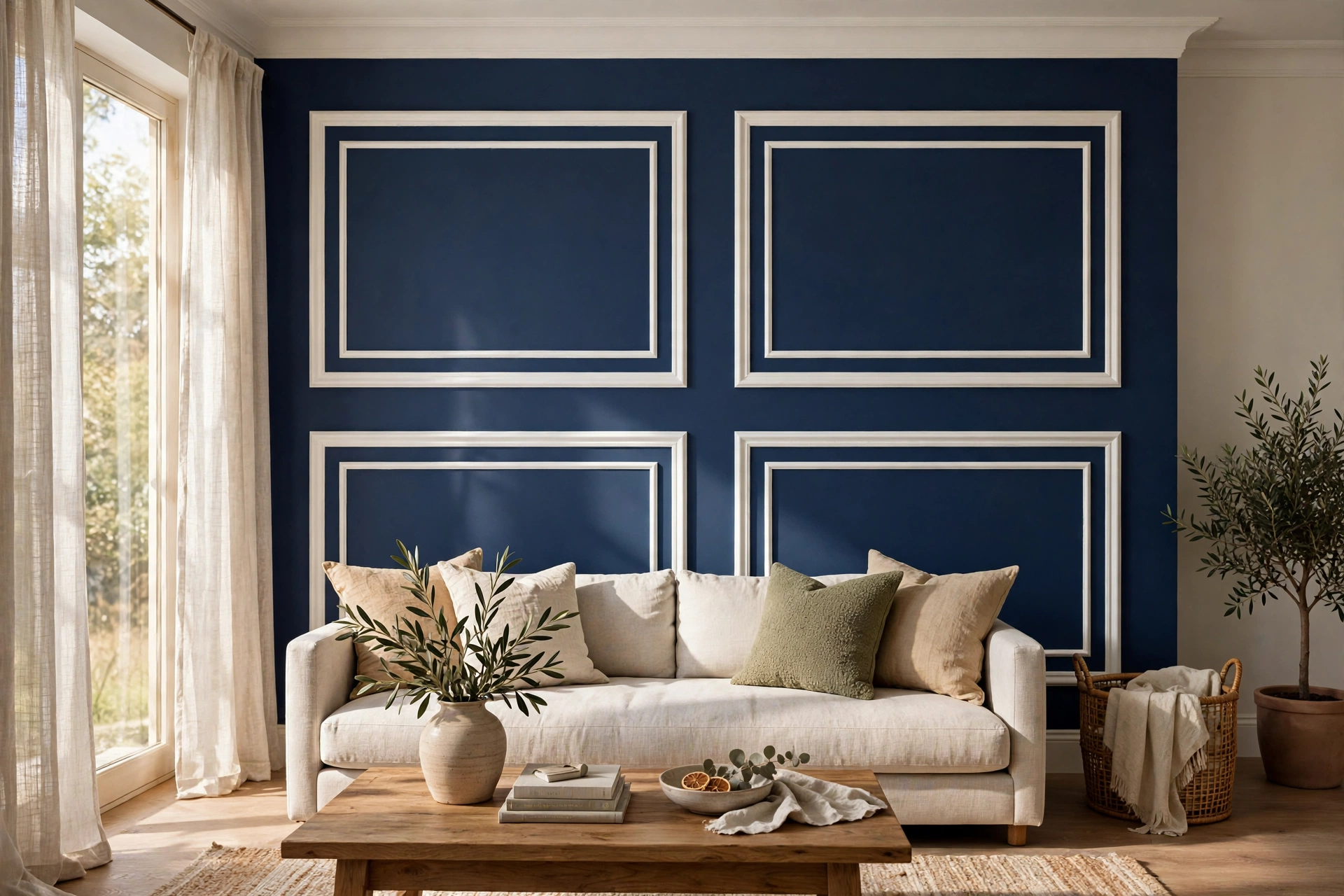
Two-tone molding delivers classic contrast with almost no extra effort. Paint the wall a rich color — navy, hunter green, or warm terracotta — and keep the molding crisp white, or flip it with white walls and charcoal trim. The color difference makes every panel edge pop, giving the room a tailored-suit sharpness. This approach is ideal if you love color but want it to feel structured rather than chaotic. Keep the rest of the palette quiet so the walls stay the undisputed focal point of the room.
9. Geometric Grid Molding
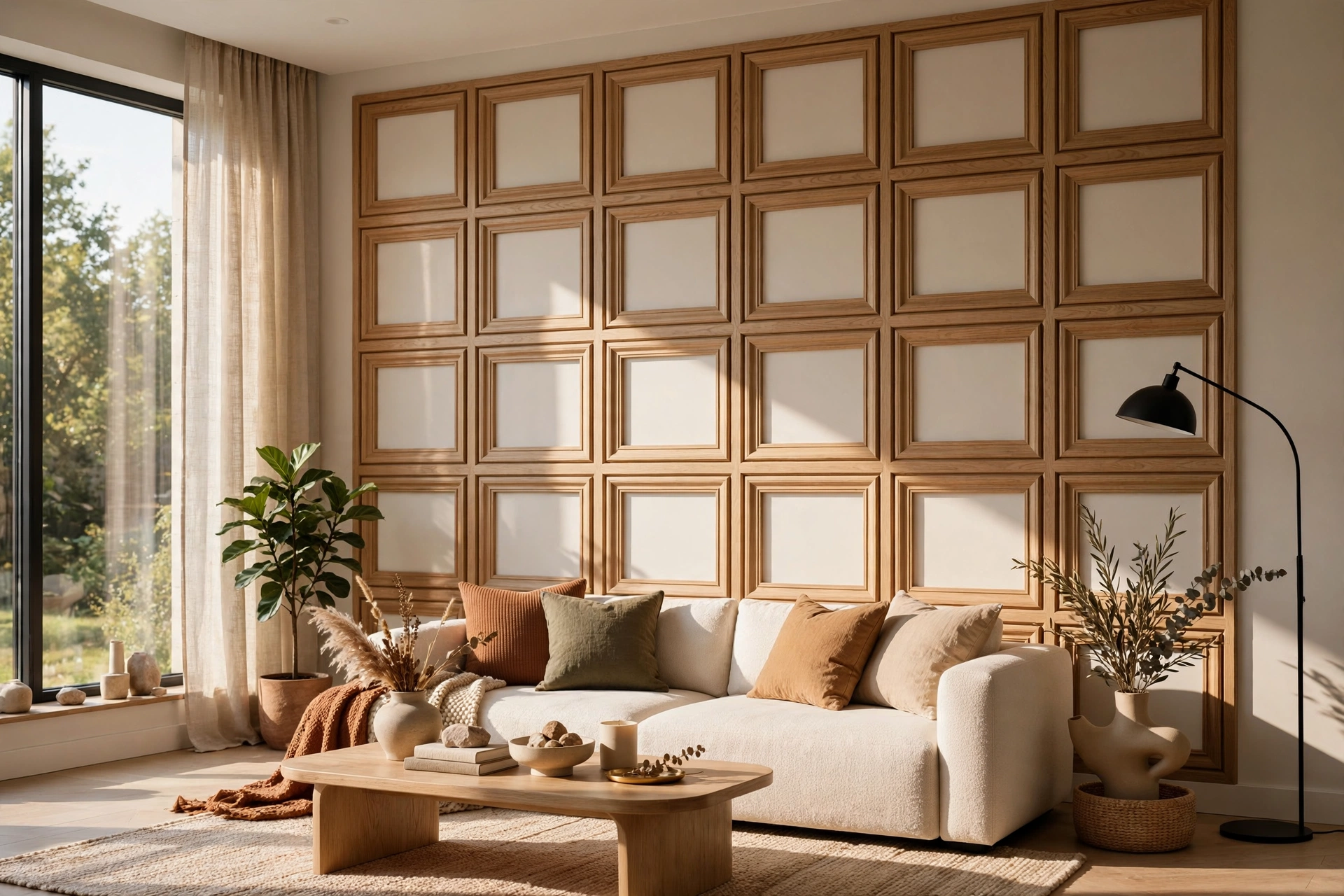
Geometric grid molding brings a modern, architectural edge to living room walls. Instead of traditional rectangles, thin trim is arranged in squares, oversized grids, or asymmetric patterns that feel fresh and graphic. This style suits contemporary and transitional homes where classic wainscoting might feel too formal. Paint the grid the same color as the wall for a subtle 3D effect, or use a contrasting tone to make the pattern pop. Keep furnishings clean-lined so the geometry stays the hero, and repeat one shape elsewhere to tie it together.
10. Arched Panel Molding
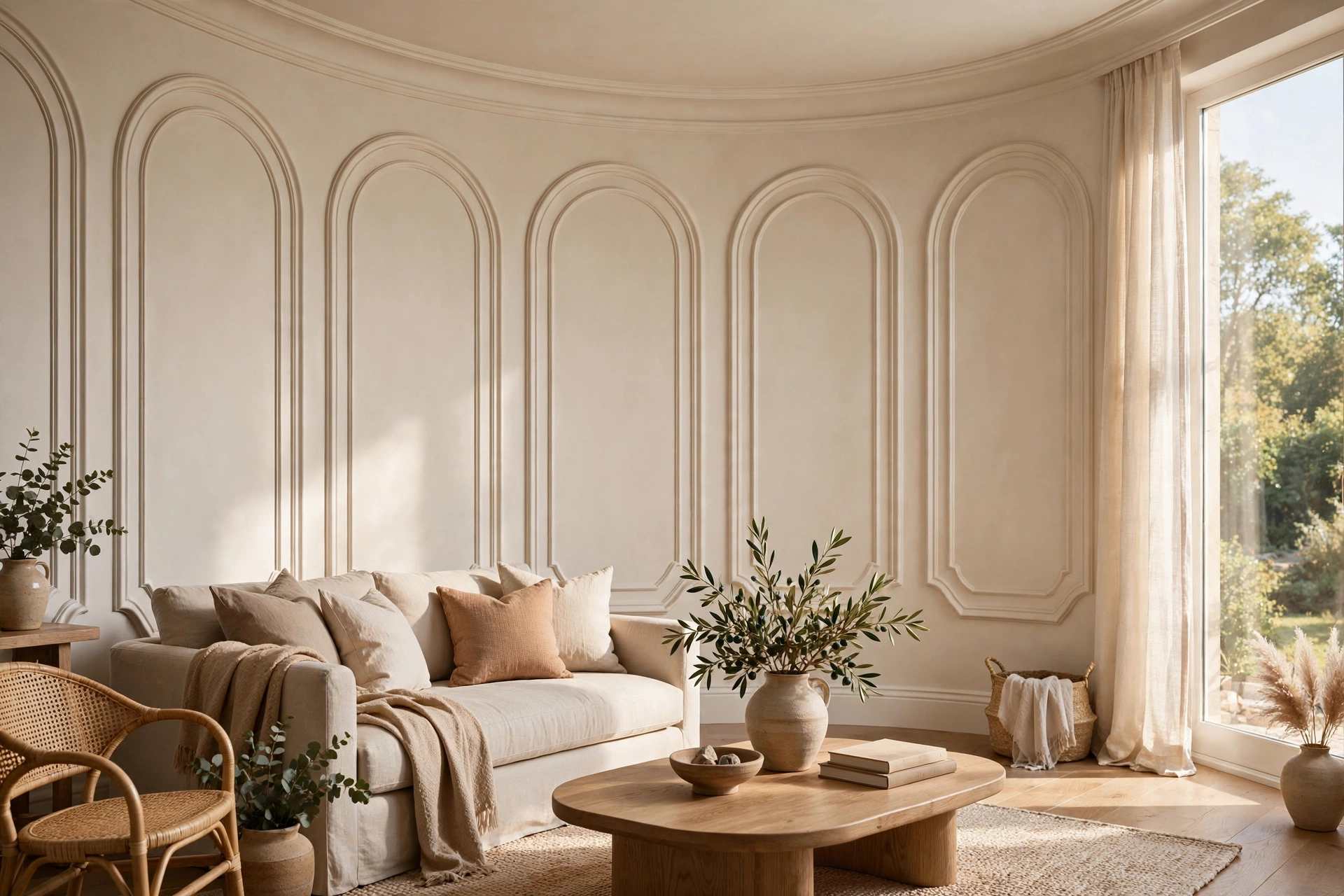
Arched panel molding softens a living room with graceful curves. Instead of sharp rectangles, trim is bent or built into arches, rounded tops, and gentle curves that echo doorways and windows. This look brings a romantic, old-world feel — think Mediterranean villas or Parisian salons — and it pairs beautifully with curved furniture like barrel chairs and round coffee tables. Installing arches takes more patience than straight runs, so consider flexible trim products or a skilled carpenter. The payoff is a wall that feels sculptural and utterly elegant.
11. Molding as a Sofa Focal Wall
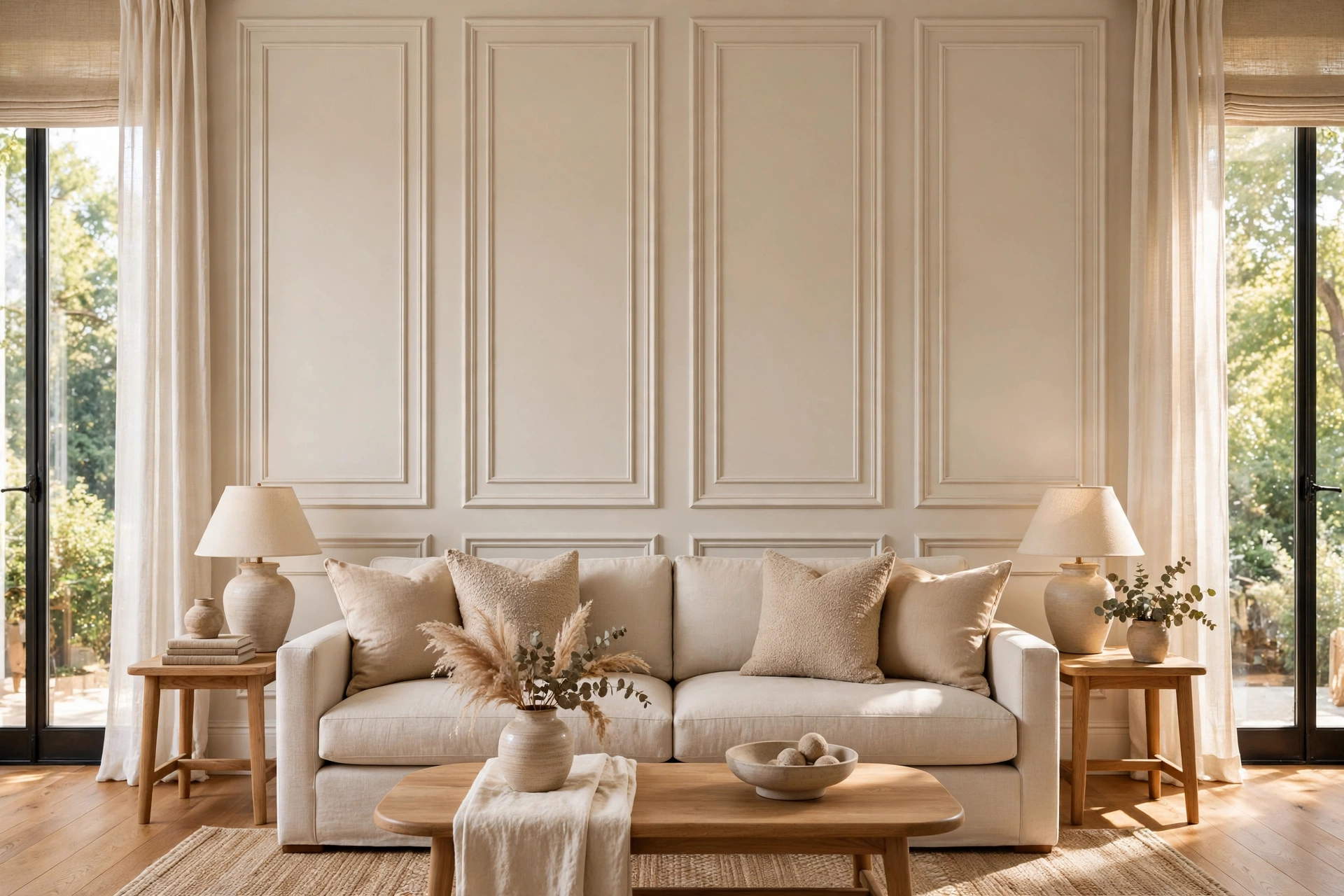
Turn the wall behind your sofa into a built-in work of art with molding. Symmetrical panel frames centered on the seating area create a backdrop that makes even a simple sofa look styled and intentional. Size the frames to the sofa — roughly two-thirds its width is a safe starting point — and hang art or a mirror inside one central frame for extra polish. This trick anchors the whole seating arrangement. Living room accent wall ideas for paint, panel, and texture pairings that work beautifully with molding.
12. Molding Around the Fireplace
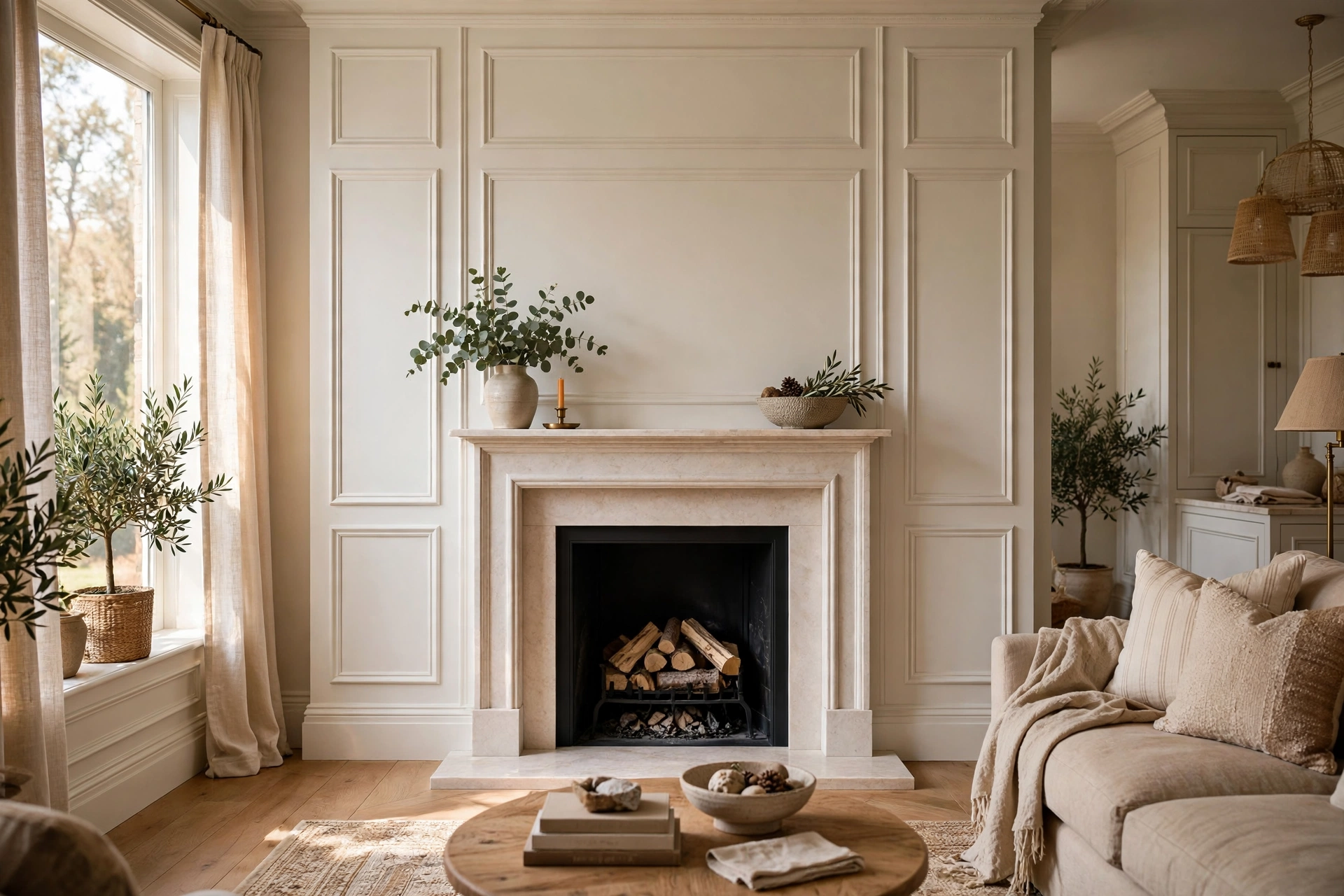
A fireplace deserves a frame, and molding delivers one. Running panel molding symmetrically on both sides of the mantel — or building a full paneled chimney breast — turns the fireplace into the room’s architectural centerpiece. Keep the design restrained so the fire itself stays the focus: simple rectangles in a soft neutral let a beautiful mantel and artwork shine. Without a working fireplace, the same treatment around a console or media unit creates a convincing faux focal point with all of the elegance and none of the maintenance.
13. Molding With Wallpaper Inlays
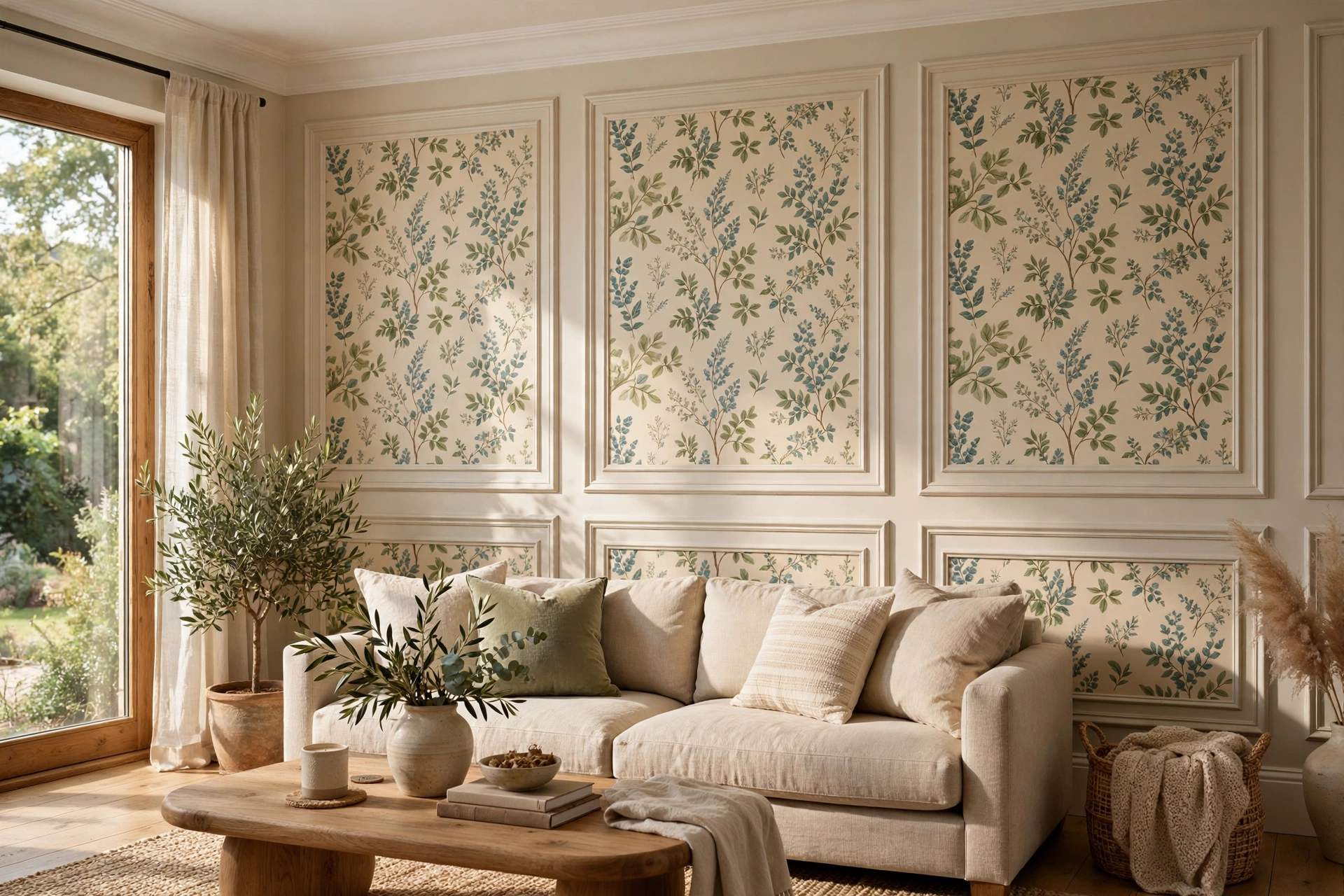
Molding with wallpaper inlays is the designer trick for maximum impact. Panel frames are installed on the wall first, then wallpaper is applied inside each frame like a piece of art. The molding gives the pattern structure and a finished edge, while the wallpaper adds color and movement that paint alone cannot match. Choose a large-scale print for drama or a subtle grasscloth for texture. Because the wallpaper lives inside defined borders, even bold patterns feel controlled and elegant rather than overwhelming.
14. Slim Minimalist Trim
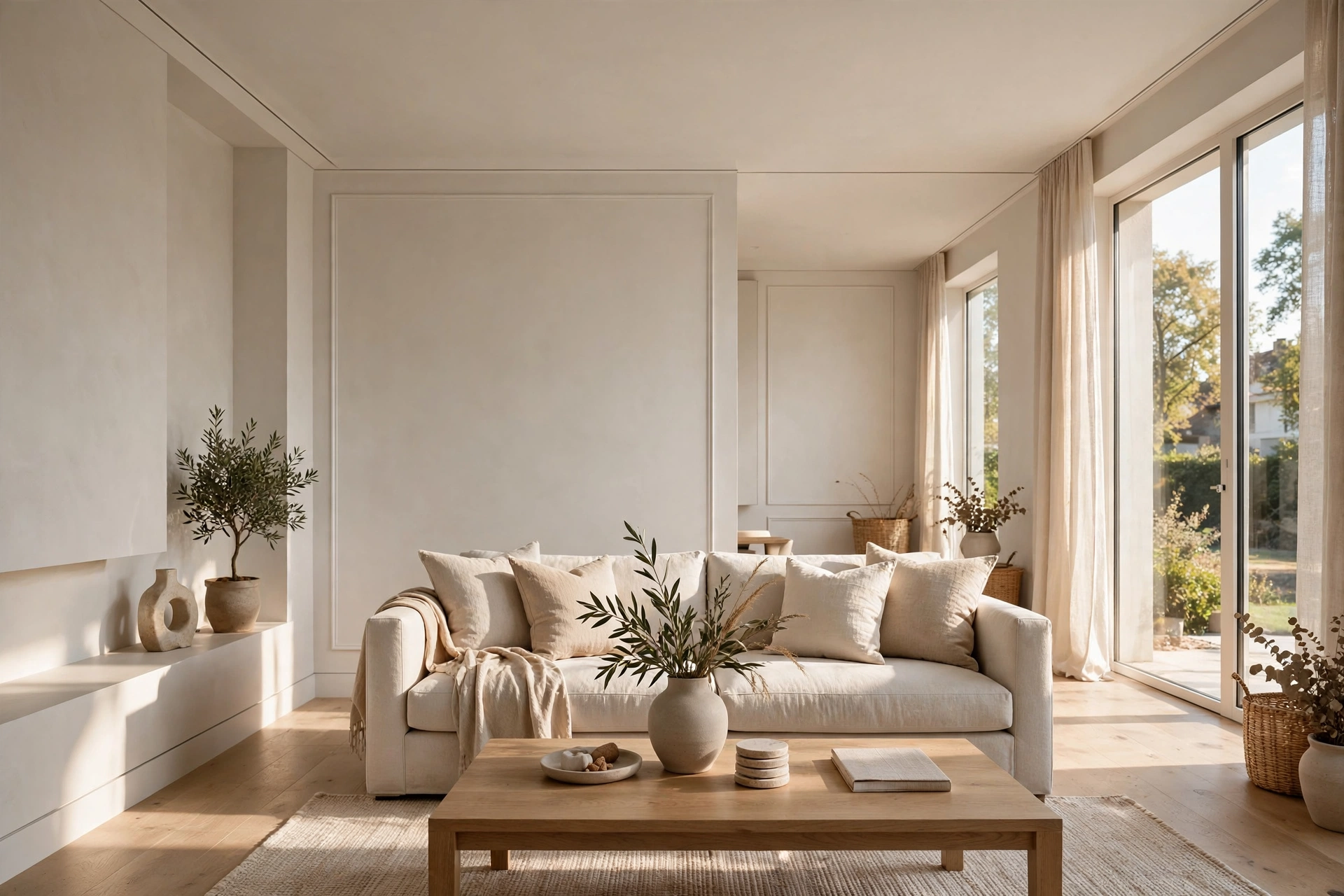
Slim minimalist trim proves that molding can suit modern spaces too. Ultra-thin battens or narrow shadow-gap profiles create just a whisper of paneling — enough to add rhythm without the formality of traditional trim. This restrained approach works beautifully in Scandinavian, Japandi, and contemporary living rooms, where the goal is texture rather than ornament. Paint everything one soft neutral, from walls to trim to ceiling, so the lines read as quiet architecture. The result is calm, tailored, and quietly luxurious.
15. Layered Double-Frame Molding
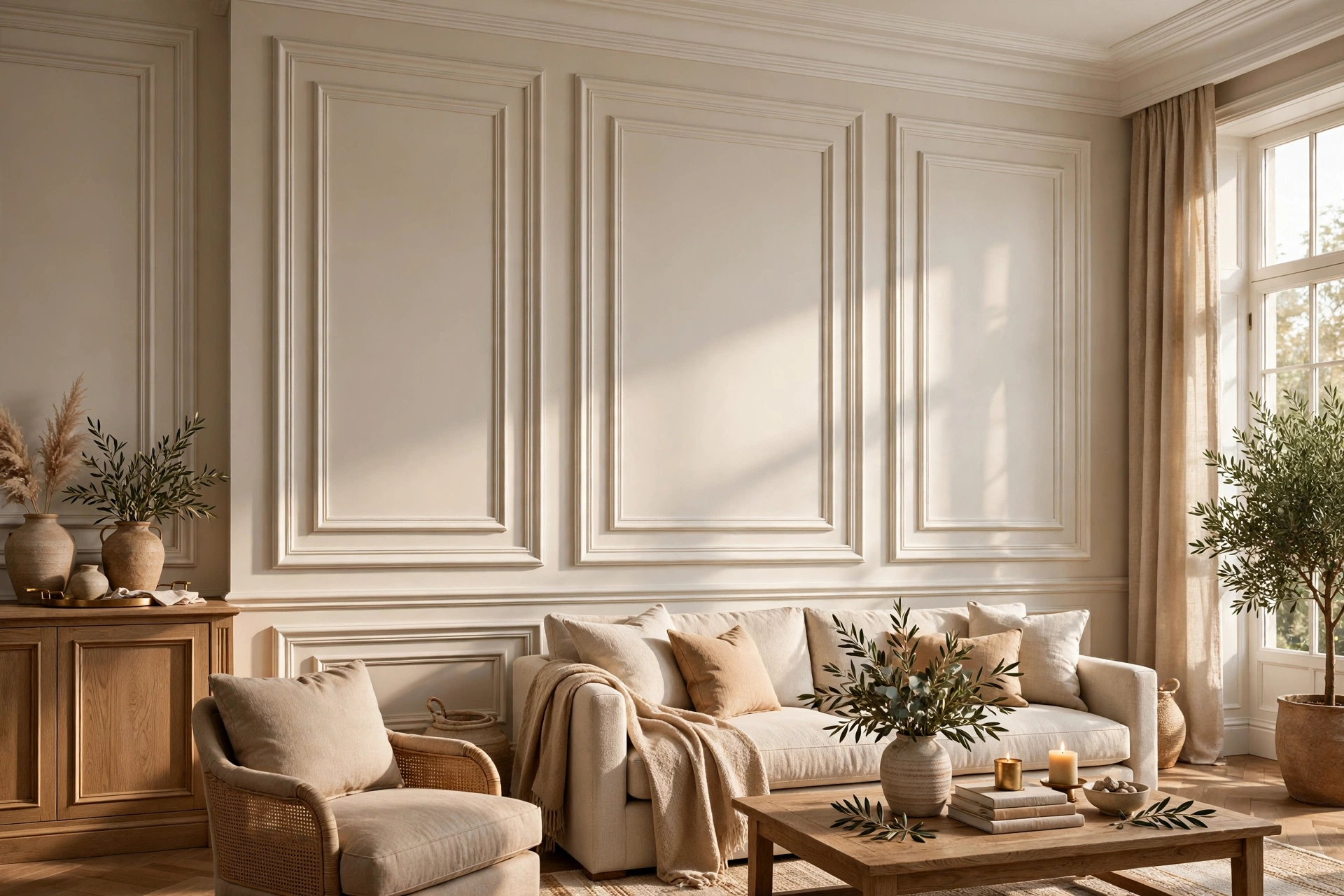
Layered double-frame molding adds depth that single panels cannot match. A smaller trim profile is nested inside a larger frame on each wall section, creating stepped shadow lines that feel rich and custom. This technique was a hallmark of grand historic interiors, and it still reads as pure luxury today. Keep the color scheme simple — one elegant paint color throughout — so the layered profiles take center stage. It is a bigger investment in trim and labor, but the dimensional finish is worth every penny.
Frequently Asked Questions
What type of wall molding is best for a living room?
Picture frame molding is the most versatile choice for a living room — it suits traditional and modern homes alike and is simple to install. If your style leans rustic, board and batten adds great texture, while full-height wainscoting brings formality. Before committing, it helps to understand the profiles: Old House’s guide to choosing interior molding explains crown, baseboard, and panel options with clear visuals. Match the molding scale to your ceiling height, and keep profiles slimmer in smaller rooms.
How much does it cost to add wall molding to a living room?
A single living room wall typically costs between $150 and $600 in materials, depending on the molding profile and whether you need paint. Basic pine or MDF panel molding is very affordable, while hardwood and built-up profiles cost more. Doing the work yourself keeps the total low — you will mainly need a miter saw, brad nailer, caulk, and paint. Hiring a carpenter usually adds $50 to $100 per hour. Start with one accent wall to test the look before committing to the whole room.
Can I install wall molding myself as a beginner?
Yes — picture frame molding and board and batten are genuinely beginner-friendly projects. The basic process is measure, cut at 45-degree angles, attach with construction adhesive and finishing nails, fill the nail holes, caulk the edges, and paint. A miter saw makes clean corners much easier, though a simple miter box works for small jobs. Take your time with measuring, since accurate cuts are the difference between crisp and sloppy. Most first-timers can finish one wall in a weekend.
Should wall molding be painted the same color as the wall?
Both approaches look great — it depends on the mood you want. Painting molding the same color as the wall creates a seamless, high-end look where the panels read as texture and shadow, which suits modern and moody rooms. Contrasting white molding against a colored wall feels more traditional and makes each frame pop. If you are unsure, start with same-color: it is the more forgiving choice and easier to repaint later.
Does wall molding make a small living room look smaller?
Not if you choose the right scale. Slim profiles, light colors, and same-color paint keep molding from visually crowding a small living room — the panels add interest without shrinking the space. Vertical designs like board and batten can even make ceilings feel taller. Avoid heavy, dark, multi-piece profiles in compact rooms, since those add visual weight. Spruce’s collection of wainscoting ideas covering beadboard, shiplap, and raised panels in rooms of every size.
Keep Exploring
Wall molding is one of those rare upgrades that looks expensive, feels timeless, and costs surprisingly little. Whether you chose classic picture frames, rustic board and batten, or a moody color-drenched wall, the result is a living room with real architectural character — the kind of detail guests notice and remember. Take your time with the layout, measure twice, and do not rush the caulk and paint. Those finishing steps are what separate a DIY job from a designer look.
Once your molding is up, style the room to let it shine. Keep large furniture a few inches off paneled walls so the trim stays visible, choose lighting that washes across the panels to emphasize the shadows, and let the molding be the pattern so fabrics and art can stay calm. Your elegant new walls are ready for their close-up — enjoy every glance.





[…] paint color or wallpaper for maximum impact. These trim details bridge to the walls beautifully — Living room wall molding ideas for elegant walls cover coordinating wall treatments. Small trim, big […]
[…] or contrast it for graphic punch. For molding profiles, placement heights, and paint pairings, these living room wall molding ideas for elegant walls walk through the options step by step. Keep the wallpaper inside the frames a touch simpler than […]