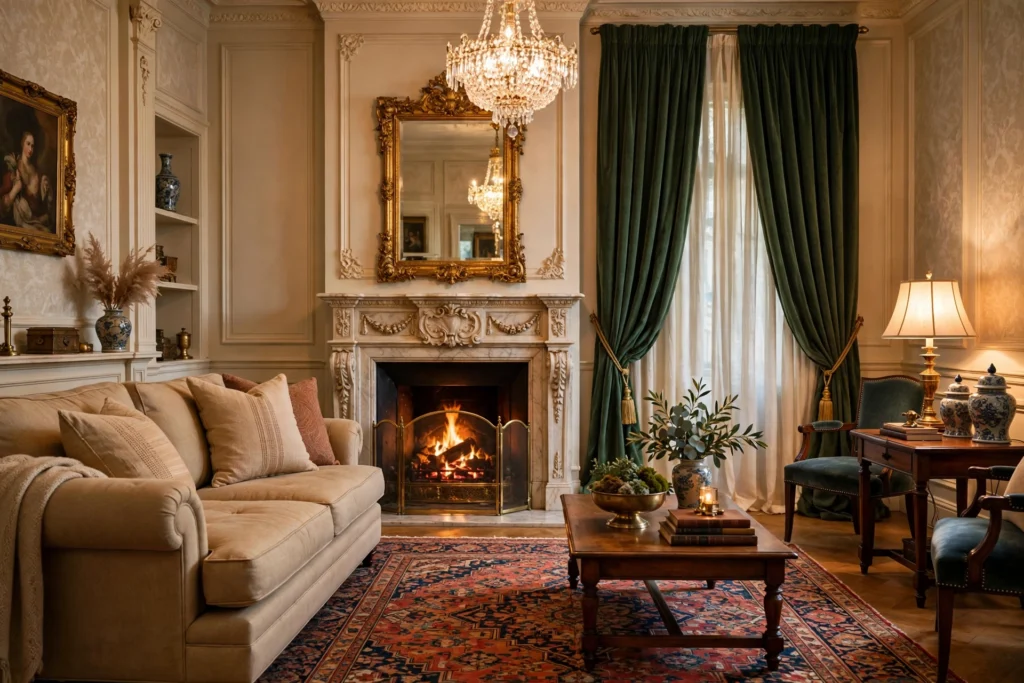

There is a reason traditional style never really leaves. Long after trends have come and gone, a well-composed traditional living room still feels right — warm, gracious, and quietly confident. It is the style of rooms that host holiday dinners, long conversations, and Sunday afternoons with a book, and it never asks you to keep up with the latest fad.
These traditional living room design ideas are about building that kind of lasting beauty: classic silhouettes, rich materials, balanced layouts, and details with a sense of history. Whether your home is a century-old colonial or a brand-new build, these fifteen ideas will help you create a living room with timeless charm.
1. Build Around a Focal Fireplace
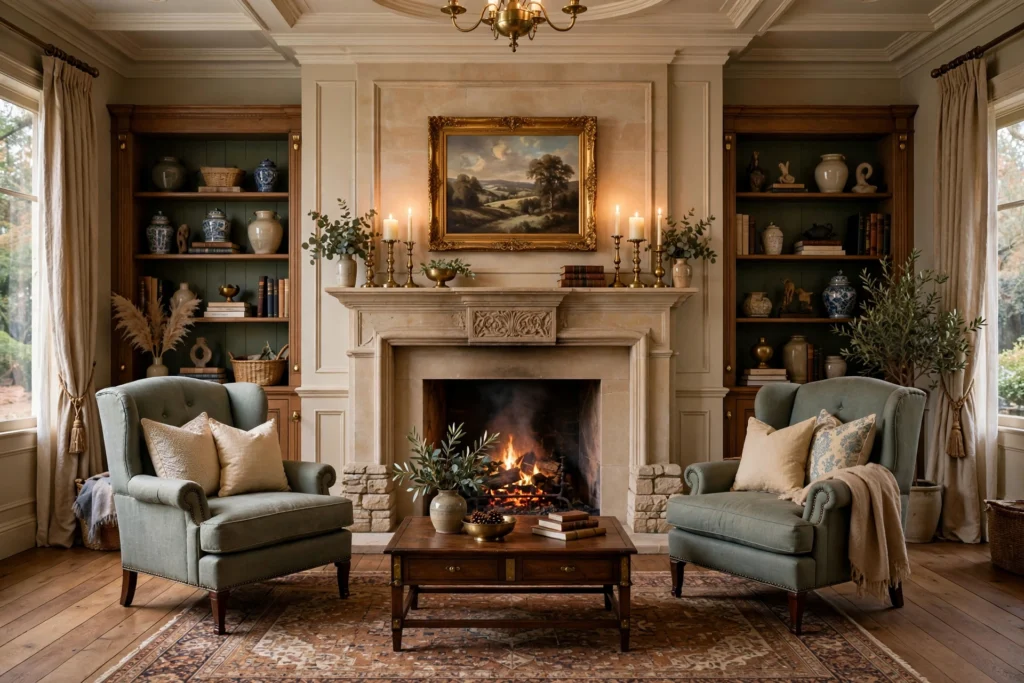
A fireplace is the natural heart of a traditional living room, and designing around it gives the whole room instant purpose. Arrange the seating to face the hearth, keep the mantel as your display shelf, and let the firebox anchor the furniture plan. Even an unused fireplace works — style the mantel with art, candles, and greenery, and it still reads as the room’s centerpiece.
If you don’t have a fireplace, create a visual equivalent: a large console table with a mirror or artwork above it, flanked by matching lamps. The principle is the same — one strong focal point that everything else defers to. The Spruce’s roundup of traditional living room ideas shows how designers treat the fireplace as the room’s organizing force in dozens of real homes.
2. Choose a Classic Rolled-Arm Sofa
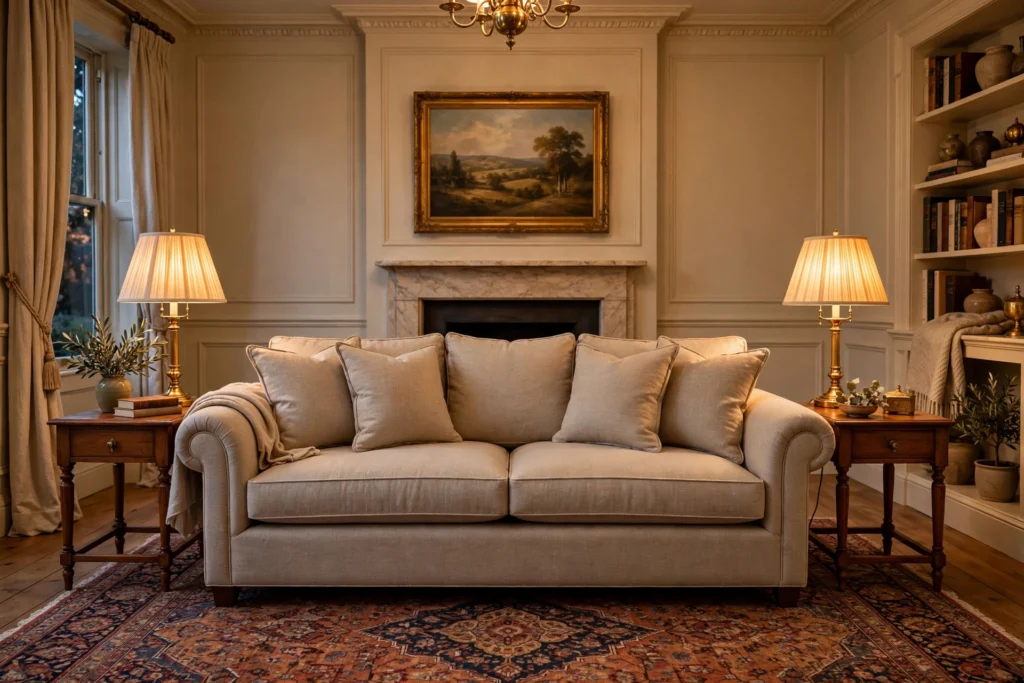
The sofa sets the tone, and in a traditional living room nothing beats a rolled-arm or English roll-arm design. Its curved arms, deep seat, and tailored upholstery are the visual shorthand for classic comfort — the kind of sofa that looks as good in ten years as it does on delivery day. Choose a durable fabric in a timeless color: warm beige, soft gray, deep green, or a classic stripe.
Fit matters more than fashion here. A well-made frame with eight-way hand-tied springs will outlast three trendy sofas, and quality upholstery ages gracefully instead of sagging. If the budget is tight, a slipcovered rolled-arm sofa gives you the same classic lines with the practical bonus of washable covers — a genuinely smart move for homes with kids or pets.
3. Embrace Symmetry in the Layout
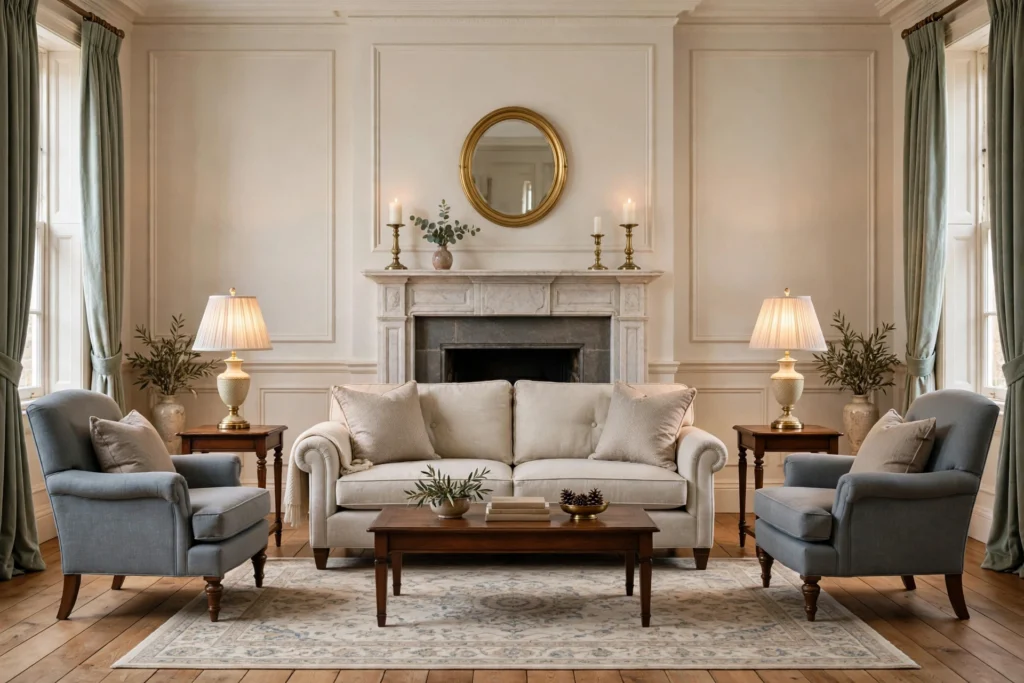
Symmetry is the quiet engine of traditional design. Matching armchairs flanking the fireplace, a pair of identical table lamps on the console, balanced bookcases on either side of the window — these mirrored arrangements create a sense of order and calm that feels inherently elegant. You don’t need perfect mirror images; similarly scaled pieces on each side achieve the same effect.
Start with the largest pieces: sofa facing the focal point, two chairs opposite or flanking, coffee table centered. Then echo the balance in the details — lamps, art, even throw pillows in pairs. The result is a room that feels composed without feeling stiff, the way a well-set table feels inviting before anyone sits down.
4. Layer Rich, Timeless Fabrics
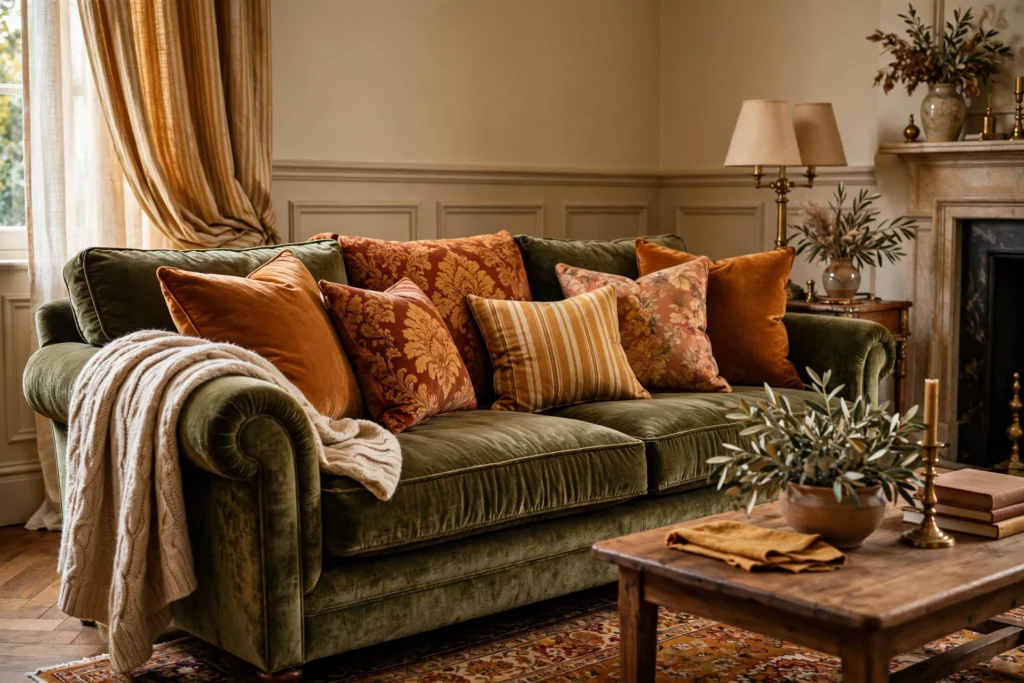
Traditional rooms are textile rooms, and the layering is what makes them feel luxurious. Velvet, damask, brocade, needlepoint, and good linen — these are the fabrics that carry the style. Mix them with intention: a velvet sofa with linen pillows, damask drapes beside a needlepoint footstool, a wool throw over the arm of a leather chair.
Pattern plays a starring role. Classic florals, stripes, checks, and toile have decorated traditional rooms for centuries, and they mix beautifully when they share a color story. Keep the palette to three or four hues and let the patterns vary in scale — a large floral on the drapes, a small stripe on the chair, a check on the pillow. The layering should feel collected over time, not purchased in a single afternoon.
5. Hang Elegant Floor-to-Ceiling Drapes
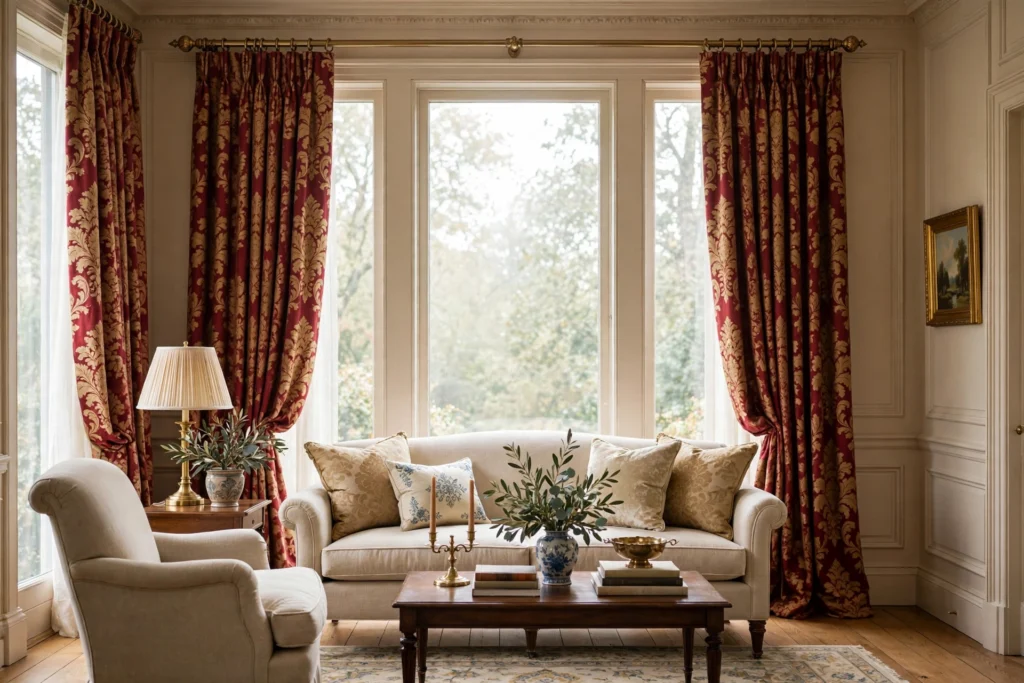
Few things elevate a traditional living room like proper drapery. Floor-to-ceiling panels in a rich fabric — silk-look, velvet, or heavy linen — hung high and wide make windows look grander and ceilings taller. The traditional details matter here: pinch pleats or goblet pleats, decorative rods with finials, and tiebacks or holdbacks that show off the fabric’s drape.
Don’t skimp on fullness; skimpy curtains read as an afterthought. Panels should be at least twice the width of the window when closed, so they look lush even when open. Layer sheers underneath for daytime privacy that still filters light softly. Good drapes are one of the highest-impact investments in a traditional room — they frame every view and soften every hard edge.
6. Add Warm Dark-Wood Furniture
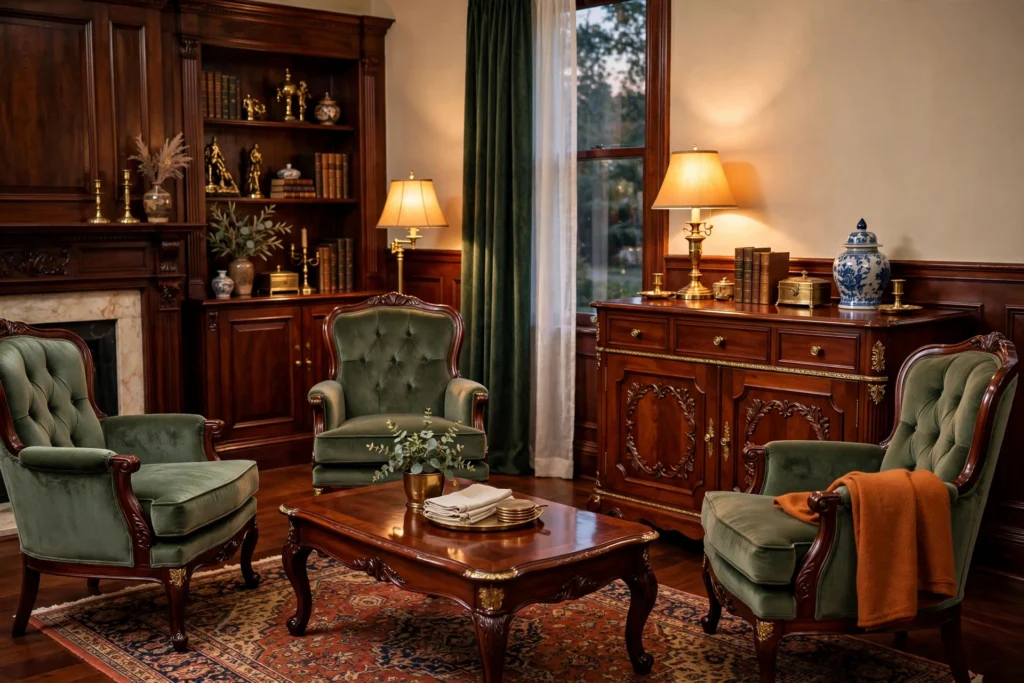
Traditional style loves the richness of dark wood: mahogany, cherry, walnut, and deep-stained oak. A mahogany coffee table, a cherry sideboard, walnut end tables — these pieces bring weight and warmth that pale woods simply can’t match. The deep tones also ground lighter upholstery and make brass and gold accents glow.
You don’t need a room full of it; a few key pieces are enough. Mix in some lighter or painted pieces to keep the room from feeling heavy — a painted bookcase, a light upholstered ottoman. And let the wood show its character: polished surfaces reflect lamplight beautifully in the evening, which is exactly when a traditional living room does its best work.
7. Incorporate Antique and Vintage Pieces
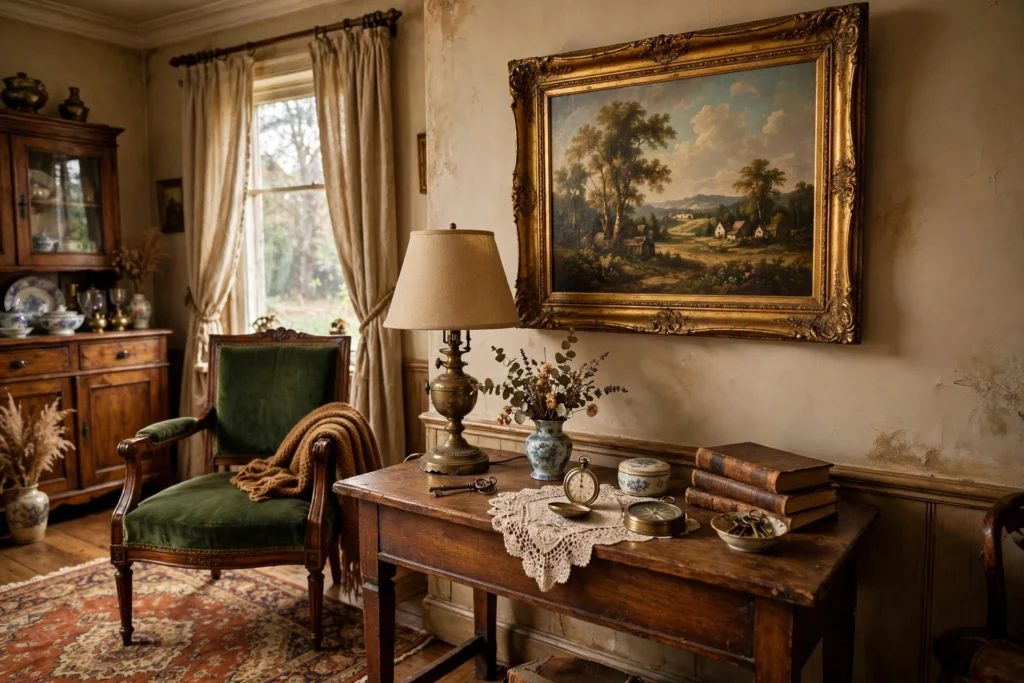
A traditional living room should feel like it has a past, and the fastest way to give it one is with genuine antiques. A Georgian-style side table, a vintage brass lamp, an old oil painting, a needlepoint rug from a flea market — these pieces bring patina and story that new furniture can’t fake. One or two antiques per room is enough to change the whole feeling.
Hunt with a plan: estate sales, architectural salvage shops, and good consignment stores reward patience. Look for solid construction and classic lines; finish can be refreshed, but bones can’t be faked. Our vintage living room design ideas share the same treasure-hunting spirit — old pieces with good bones are the soul of a traditional space too.
8. Lay Down a Persian or Oriental Rug
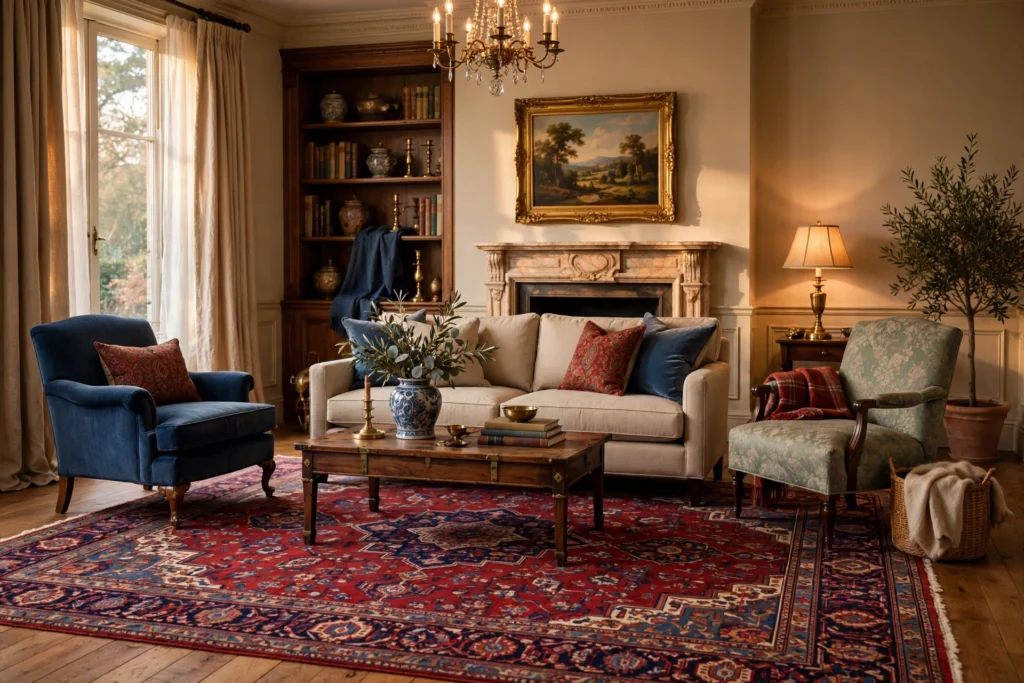
If there is one non-negotiable in a traditional living room, it is a proper rug — and the Persian or oriental rug is the classic choice. Its intricate pattern, rich colors, and soft patina anchor the seating area and tie every color in the room together. Size it generously: front legs of all seating should rest on the rug at minimum.
A genuine antique Persian is an investment, but excellent reproductions deliver the look for far less. Either way, the rug does heavy lifting — it defines the conversation zone, adds pattern and warmth, and makes hardwood floors feel intentional rather than bare. In a traditional room, the rug is not an accessory; it is the foundation the whole design stands on.
9. Display Classic Art in Ornate Frames
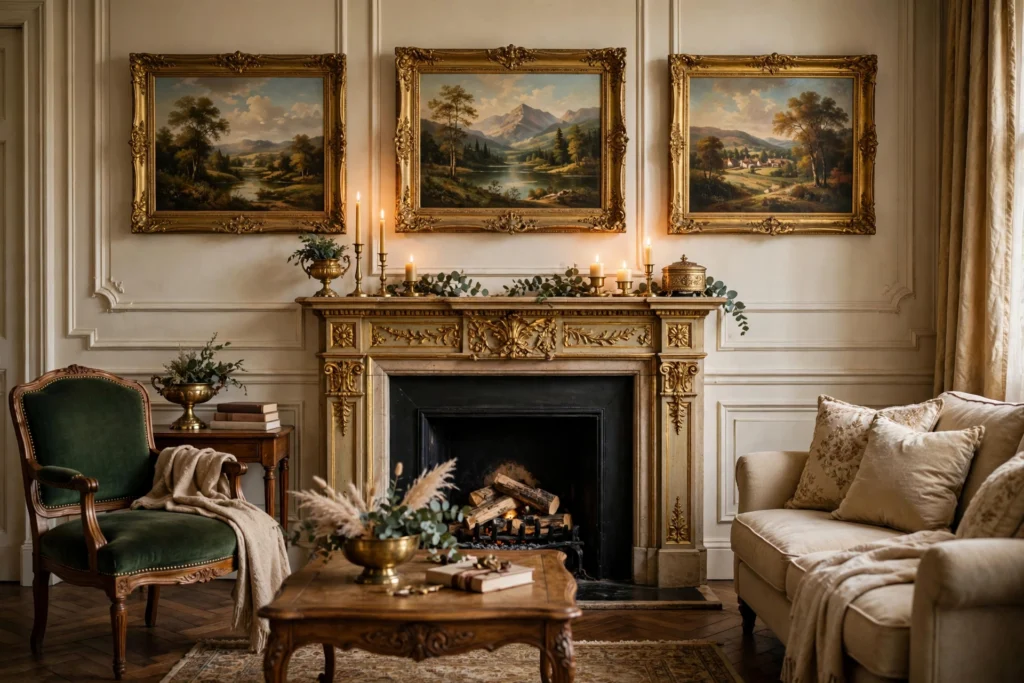
Traditional walls deserve art with presence: landscapes, portraits, still lifes, and botanical prints in ornate gilt or carved-wood frames. A large piece over the mantel is the classic move; a salon-style gallery wall of smaller pieces works beautifully in a hallway-adjacent sitting area. The frames matter as much as the art — gold leaf, carved detail, and aged finishes are all part of the language.
Don’t be afraid of the hunt: flea markets and estate sales are full of forgotten oil paintings waiting for a good cleaning and a better frame. Hang art at eye level — the center of the piece around 57 inches from the floor — and light it if you can. A picture light over a mantel painting is a small touch that makes the whole room feel like a proper gallery.
10. Install a Statement Chandelier
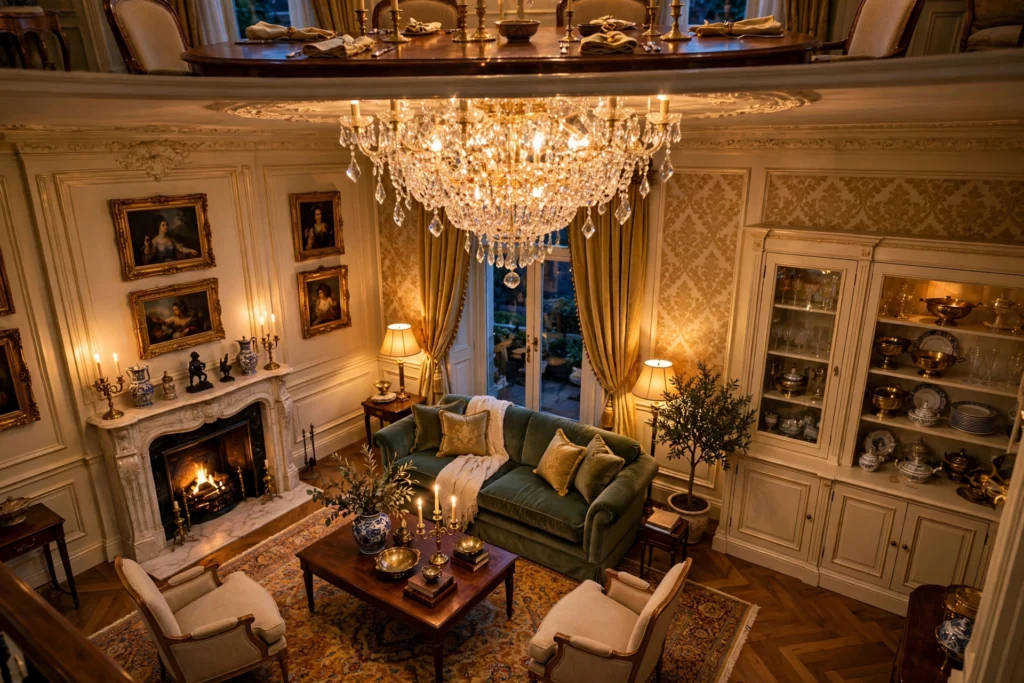
Overhead lighting is where a traditional living room gets its glamour. A crystal chandelier, a brass candelabra-style fixture, or an elegant lantern pendant turns the ceiling into jewelry and casts the warm, flattering light the style demands. Scale it generously — a too-small fixture disappears, while a grand one makes even a modest room feel special.
Put it on a dimmer so the room can shift from bright daytime to candlelit evening. And keep the bulbs warm, around 2700K: traditional fixtures were designed for incandescent glow, and cool white light flattens all that beautiful metalwork and crystal. The chandelier is the room’s crown — choose it like you mean it.
11. Use a Refined, Warm Color Palette
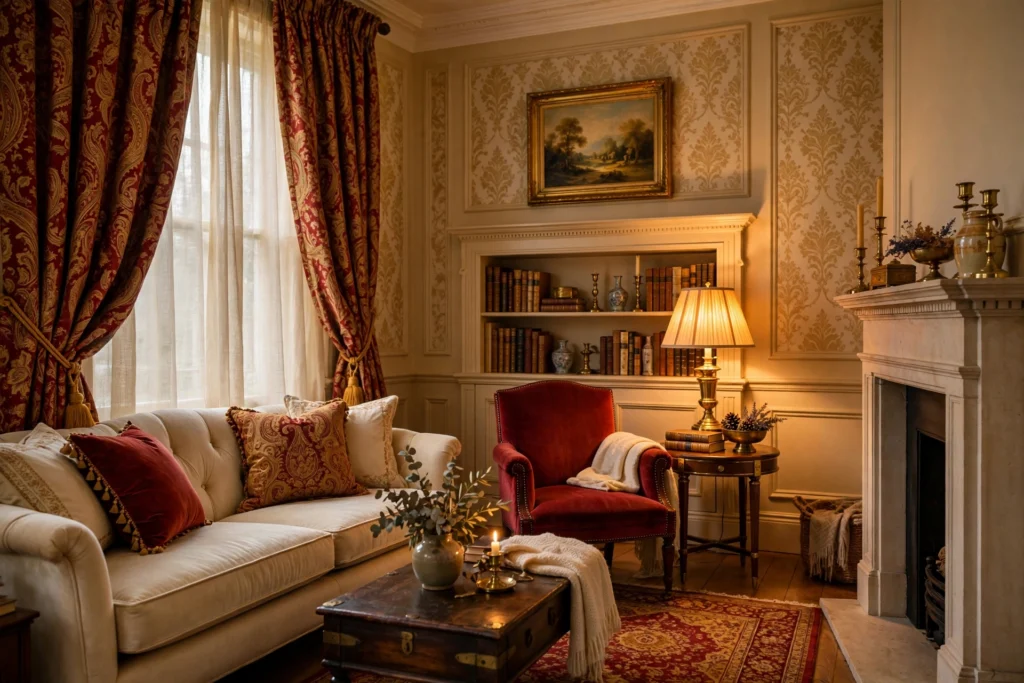
Traditional color palettes lean warm and rich: creams and ivories, warm beiges, deep reds, forest greens, navy blues, and golden mustards. These are colors with history — they flatter wood tones, brass, and classic fabrics, and they make a room feel enveloping rather than stark. Start with warm neutrals on the walls and layer the deeper colors through upholstery, drapes, and art.
If you love drama, one saturated color can carry the room: deep green walls with cream trim, or navy built-ins against warm white. For a softer take, the whole room in layered creams and beiges with wood and brass for warmth is endlessly elegant. Our moody living room design ideas explore the darker end of this palette if deep, enveloping color calls to you.
12. Add Built-In Bookcases
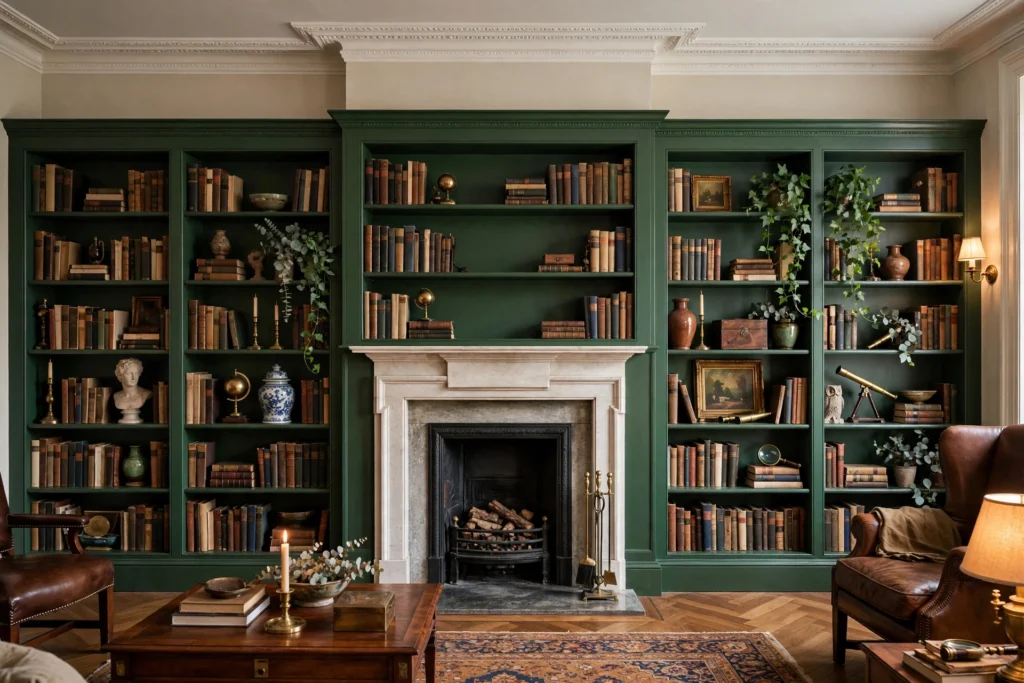
Built-in bookcases are the architectural jewelry of a traditional living room. Flanking the fireplace or filling an entire wall, they add depth, storage, and that unmistakable library feeling. Paint them in a rich color — deep green, navy, or warm white — and add crown molding at the top so they read as architecture rather than furniture.
Style the shelves with a mix of books, art, and objects, leaving breathing room between groupings. Books spine-out in loose color groups look better than rigid rainbow arrangements. If true built-ins aren’t in the budget, a pair of tall bookcases with molding added to the tops and a coat of paint fakes the look convincingly. A room with books in it always feels more like home.
13. Style With Brass and Antique Gold Accents
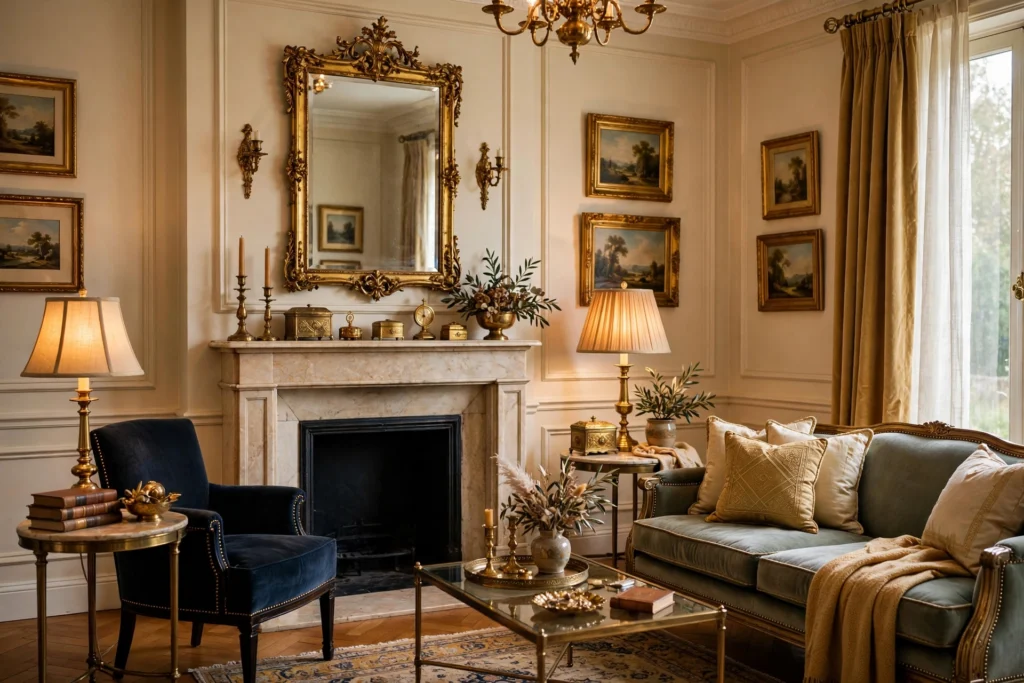
Metallics in a traditional living room should feel aged and warm, not shiny and new: unlacquered brass, antique gold, oil-rubbed bronze. Table lamps with brass bases, a gilt mirror over the mantel, brass picture lights, antique brass hardware on the bookcases — these warm metals catch lamplight and add a quiet gleam to every corner.
The key is consistency: pick one or two metal finishes and repeat them through the room so the accents feel intentional. Apartment Therapy’s guide to traditional interior design makes the same point about timeless materials — brass and richly grained woods are the elements that make a traditional room feel permanent rather than trendy.
14. Create a Cozy Reading Corner
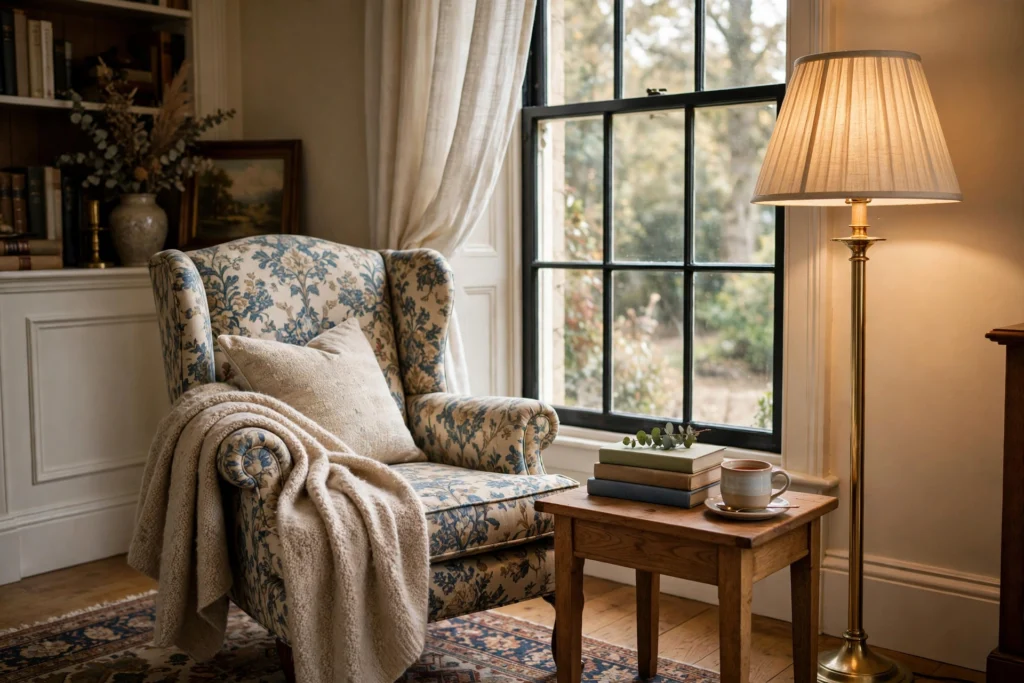
Every traditional living room deserves a corner made for lingering: a wingback or club chair, a good floor lamp or table lamp, a small side table for tea and a book. Tuck it by the window or beside the bookcases, add a soft throw and a pillow, and you have the room’s most-used seat within a week.
This corner is where the traditional style proves its real value — it is designed for actual living, not just looking. Choose the chair for comfort first and looks second; a beautiful chair nobody sits in is just sculpture. The reading corner should look like someone was just there, lost in a chapter, because someone will be.
15. Finish With Architectural Details
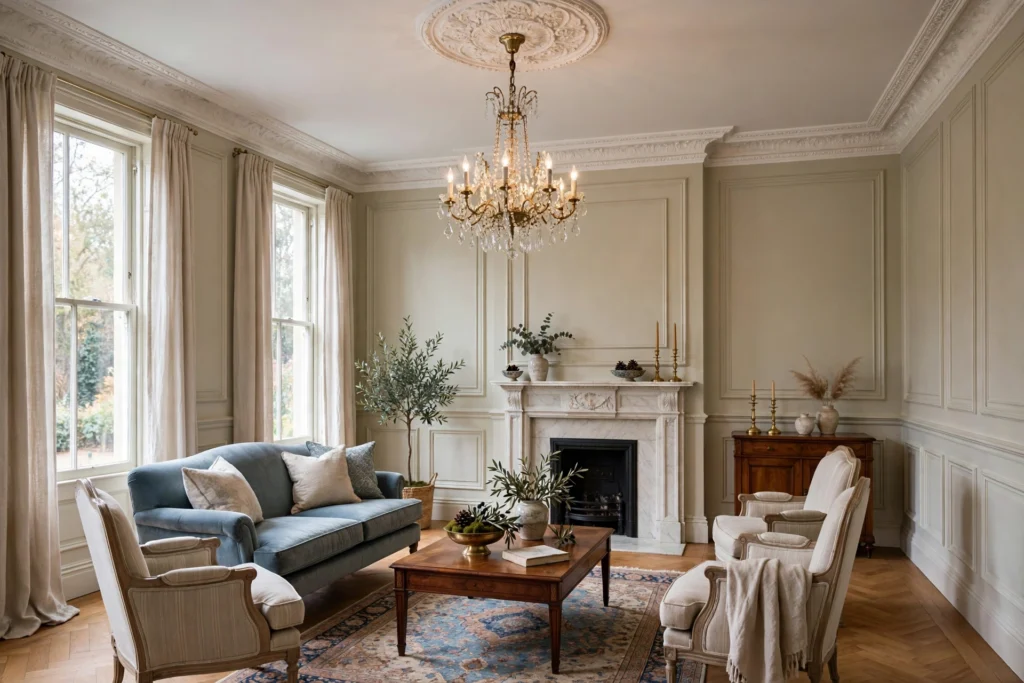
The details that separate a traditional living room from a merely furnished one are architectural: crown molding, chair rails, picture-frame molding, wainscoting, a ceiling medallion around the chandelier. These elements give walls depth and shadow, and they make even new construction feel like it has history. A simple chair rail with paint below and a classic color above captures the spirit for modest effort.
Don’t overlook the ceiling: a medallion centered on the chandelier is a small project with outsized period impact. And if your home has original details — plasterwork, old doors, vintage hardware — preserve and celebrate them. For a lighter take on classic-meets-modern balance, our transitional living room design ideas show how traditional bones pair beautifully with contemporary pieces.
Frequently Asked Questions
What defines a traditional living room?
Classic furniture silhouettes (rolled-arm sofas, wingback chairs), symmetrical layouts, rich fabrics and patterns, dark warm woods, and architectural details like molding and millwork. The overall feeling is elegant, comfortable, and timeless — a room that doesn’t reveal which decade it was decorated in.
How do I keep a traditional living room from looking dated?
Mix in a few contemporary pieces: a modern lamp, abstract art, or a streamlined coffee table keeps the room feeling current. Keep the architecture and big furniture classic, and let the accessories and art bring freshness. “Fresh traditional” — classic bones with updated details — is the sweet spot.
What colors work best in a traditional living room?
Warm neutrals (cream, beige, ivory) as the base, with rich accent colors like deep red, forest green, navy, and gold. These classic combinations flatter wood tones and brass and never look trendy. For a lighter feel, layer creams and soft blues; for drama, go deep and saturated.
Can a traditional living room work in a small space?
Absolutely. Choose scaled-down classic pieces — a loveseat instead of a full sofa, a pair of small armchairs — and keep the palette light to maximize the sense of space. Symmetry actually helps small rooms feel more organized and calm, and a good rug anchors everything.
Is traditional style expensive to achieve?
It can be done at any budget because the style rewards secondhand hunting: estate sales and consignment shops are full of quality traditional furniture at a fraction of retail. Invest in the sofa and rug; hunt for side tables, lamps, and art. Good bones matter more than big spending.
Keep Exploring
A traditional living room is a long-term relationship — it rewards patience, good bones, and pieces chosen with love rather than haste. Start with the layout and the sofa, layer in the fabrics and the wood, and let the room deepen over time.
If you love classic style with a slightly more current edge, explore our living room decor ideas for inspiration across every aesthetic — because the best rooms are the ones that feel timeless and personal at once.





[…] A chair rail with wainscoting below is the traditional recipe for an elegant living room wall. The horizontal rail divides the wall at roughly one-third height, with panel molding or beadboard filling the space beneath. Paint the lower section a crisp white or a soft neutral while keeping the upper wall a complementary shade, and the room gains instant architectural order. This classic combination suits colonial, craftsman, and transitional homes beautifully. Traditional living room design ideas. […]