
The industrial living room takes its cues from converted warehouses and city lofts — soaring ceilings, exposed brick, blackened steel, and furniture with the honest heft of things built to last. It is a style with genuine attitude, but the best industrial living rooms are never cold: layered textiles, warm leather, and glowing light keep the edge livable.
These industrial living room design ideas show how to capture that urban edge while keeping the room comfortable enough for real life. From celebrating raw architecture to softening steel with wool and green, here are fifteen ways to build a living room with backbone.
1. Celebrate Exposed Brick Walls
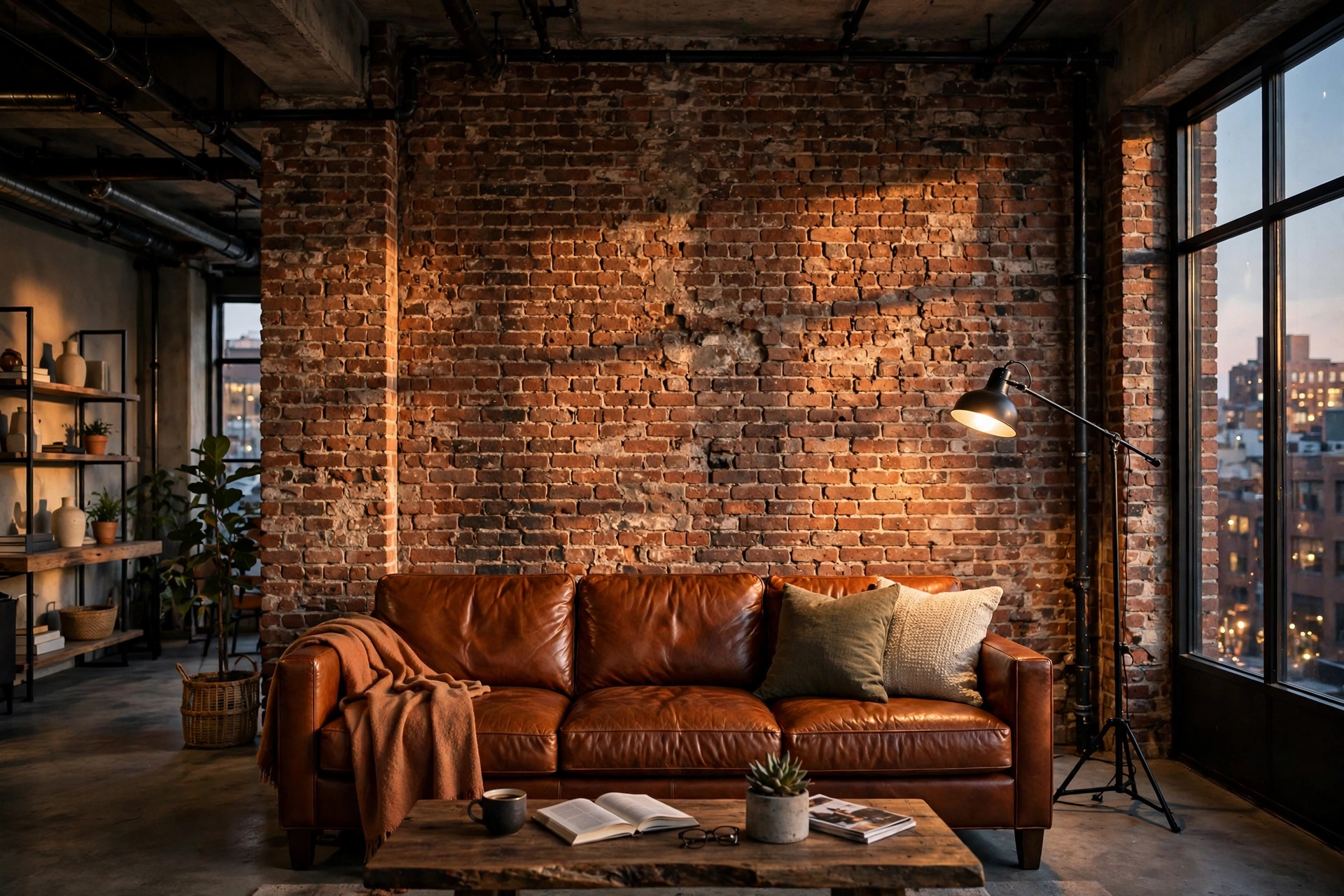
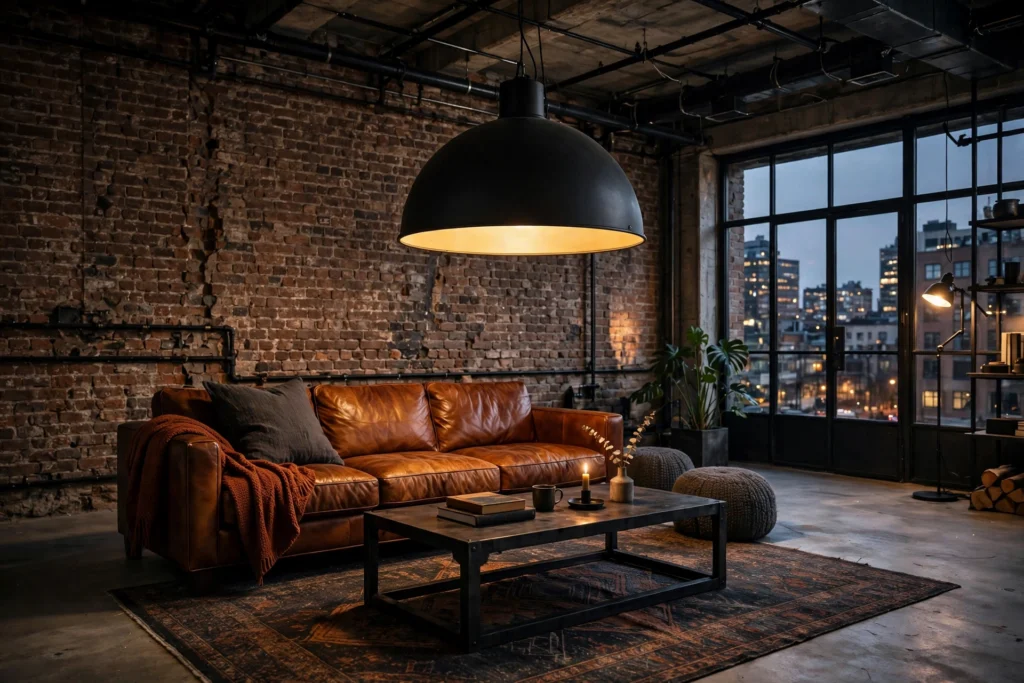
If your living room has brick behind the drywall, exposing it is the defining industrial move. A full brick wall — or even one dramatic section — brings texture, warmth, and history that no paint color can match. Clean it, seal it, and let it be the room’s undisputed focal point.
No real brick? High-quality brick veneer panels install over drywall in a weekend and look remarkably convincing. Keep the brick to one or two walls so the room stays balanced, and style against it simply — the brick is the art. Apartment Therapy’s tour of a comfortable industrial-style Chicago condo shows how original architectural features like these become the soul of the space.
2. Keep Concrete or Wood Floors Raw
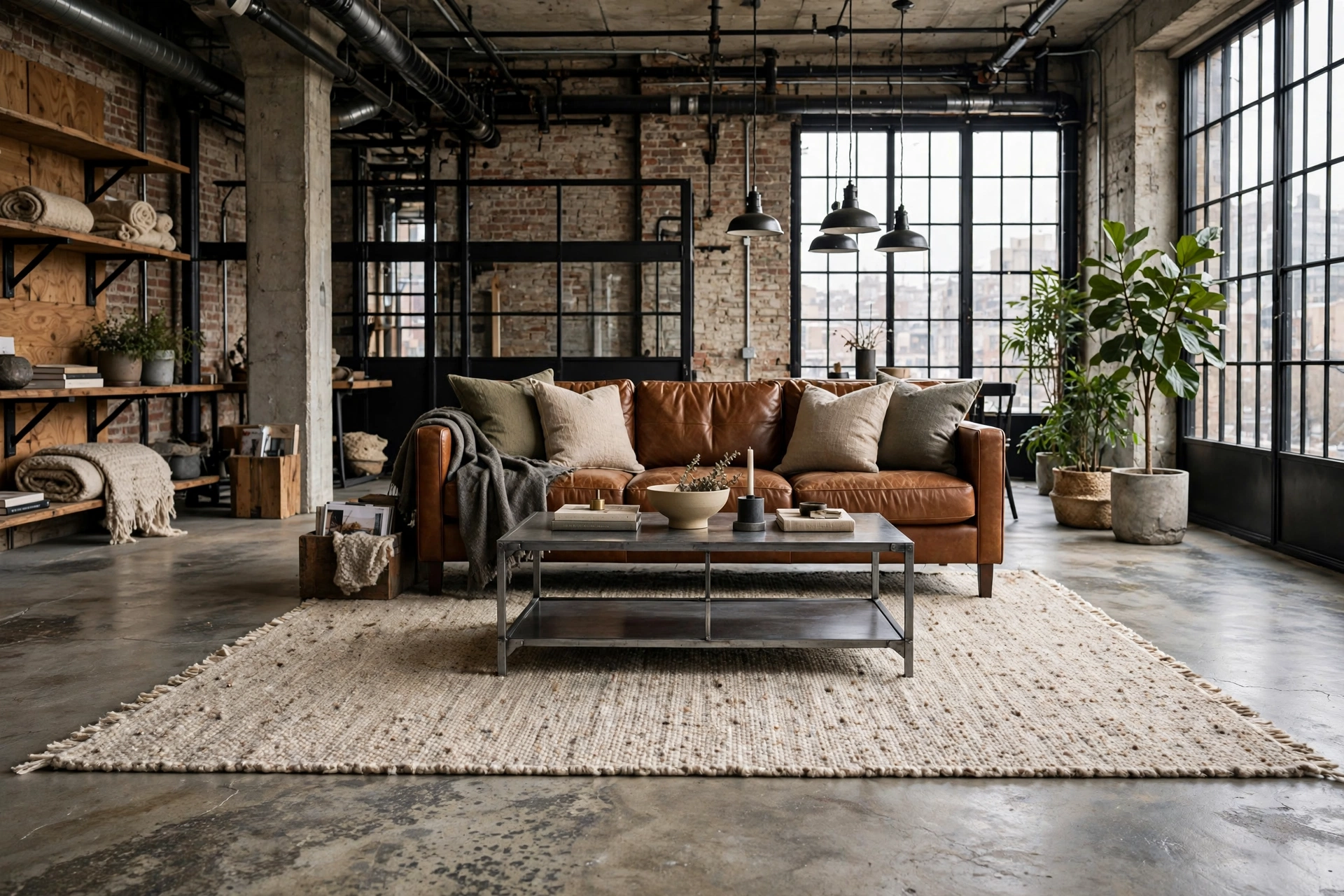
Industrial floors tell the truth about the building. Polished concrete — with all its subtle variations and imperfections — is the purist’s choice, cool underfoot and endlessly durable. Wide-plank wood floors, left natural or stained dark, bring the same honesty with more warmth.
Whatever is underfoot, let it show: skip wall-to-wall carpet entirely. A large area rug defines the seating zone and softens the acoustics, but the floor itself should read as structure, not decoration. If your floors are neither concrete nor beautiful wood, large-format luxury vinyl in a concrete look gets you convincingly close.
3. Choose a Leather Sofa
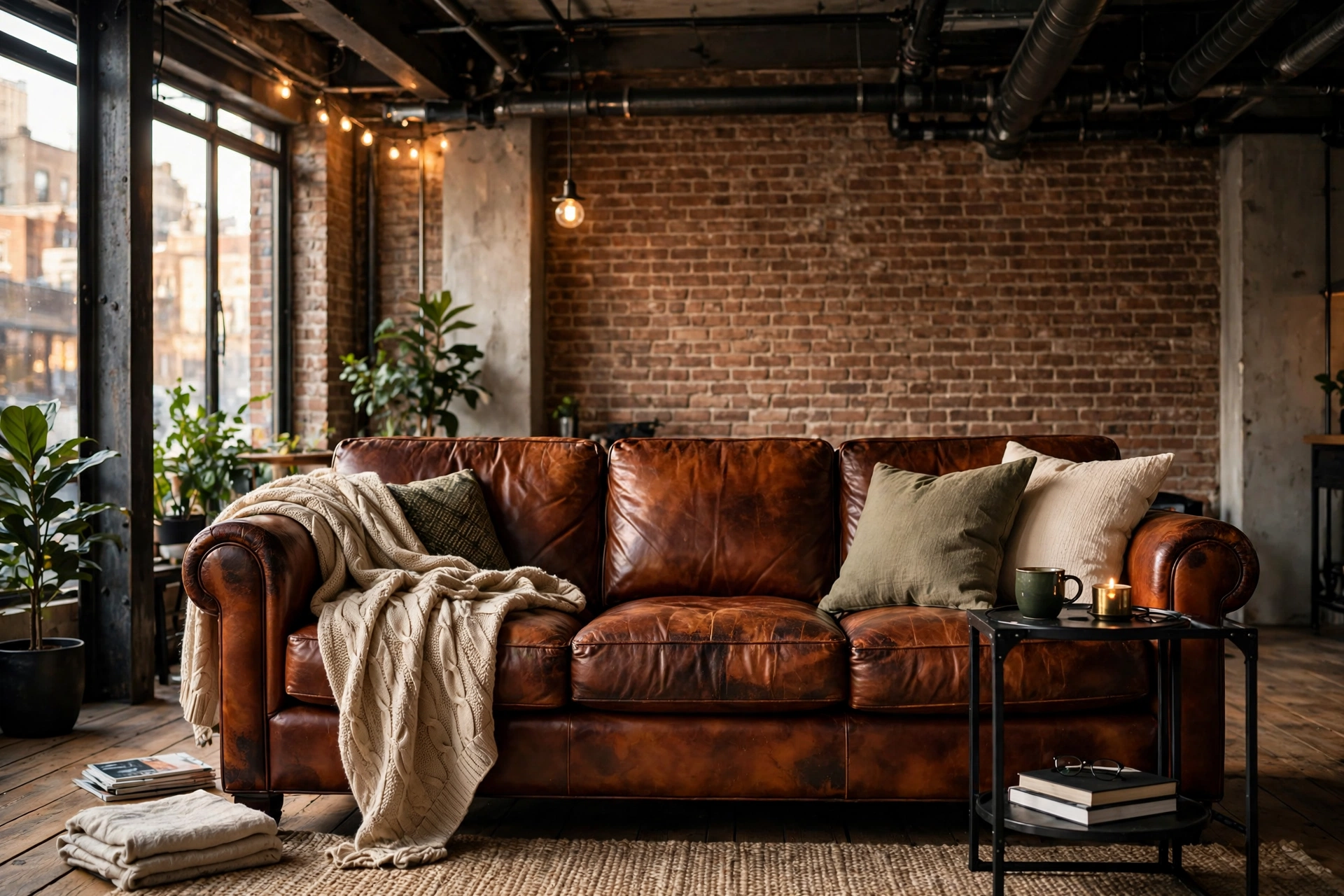
The leather sofa is the industrial living room’s anchor piece. A deep, comfortable sofa in cognac, saddle, or oxblood leather brings warmth, patina, and an invitation to sink in — the perfect counterpoint to brick and steel. Chesterfields suit the look beautifully, but so do cleaner modern silhouettes.
Buy the best leather you can afford, and embrace aging: scratches, creases, and darkening are the patina that makes leather more beautiful every year, exactly like the reclaimed wood beside it. Condition it twice a year and it will outlive every other piece in the room. One great leather sofa beats a matching set of lesser pieces.
4. Add a Statement Metal Coffee Table
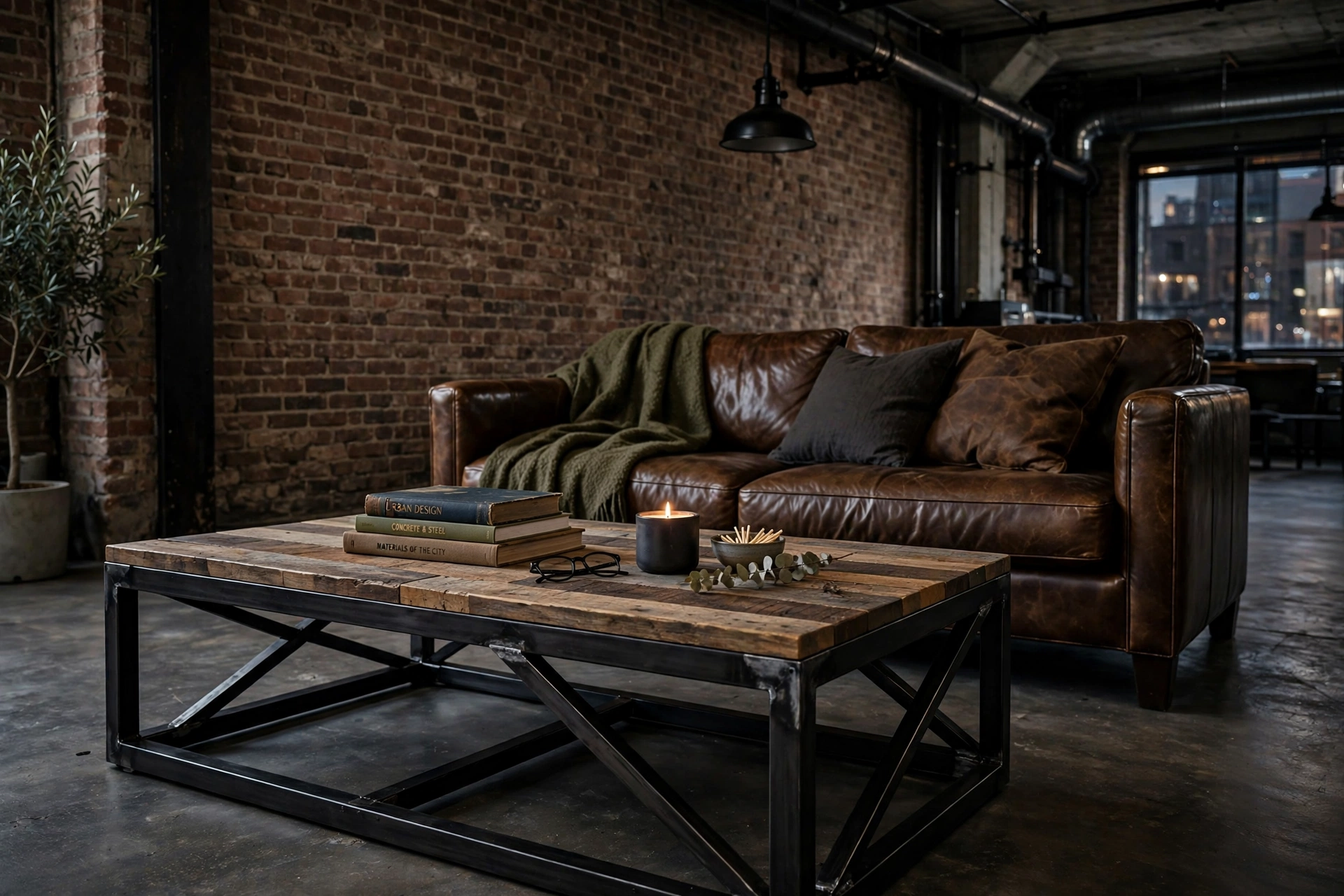
The coffee table is where industrial materials get to show off up close. A blackened-steel frame with a reclaimed wood top, a riveted metal trunk, an old factory cart on casters — choose something with weight and history that can handle feet, books, and coffee cups without fuss.
Scale it to the sofa: roughly two-thirds the sofa’s length, and low enough that the sightline across the room stays open. If you entertain often, a trunk-style table doubles as hidden storage for throws and board games. The coffee table should look like it could survive a factory floor — because the best ones did.
5. Hang Oversized Industrial Lighting
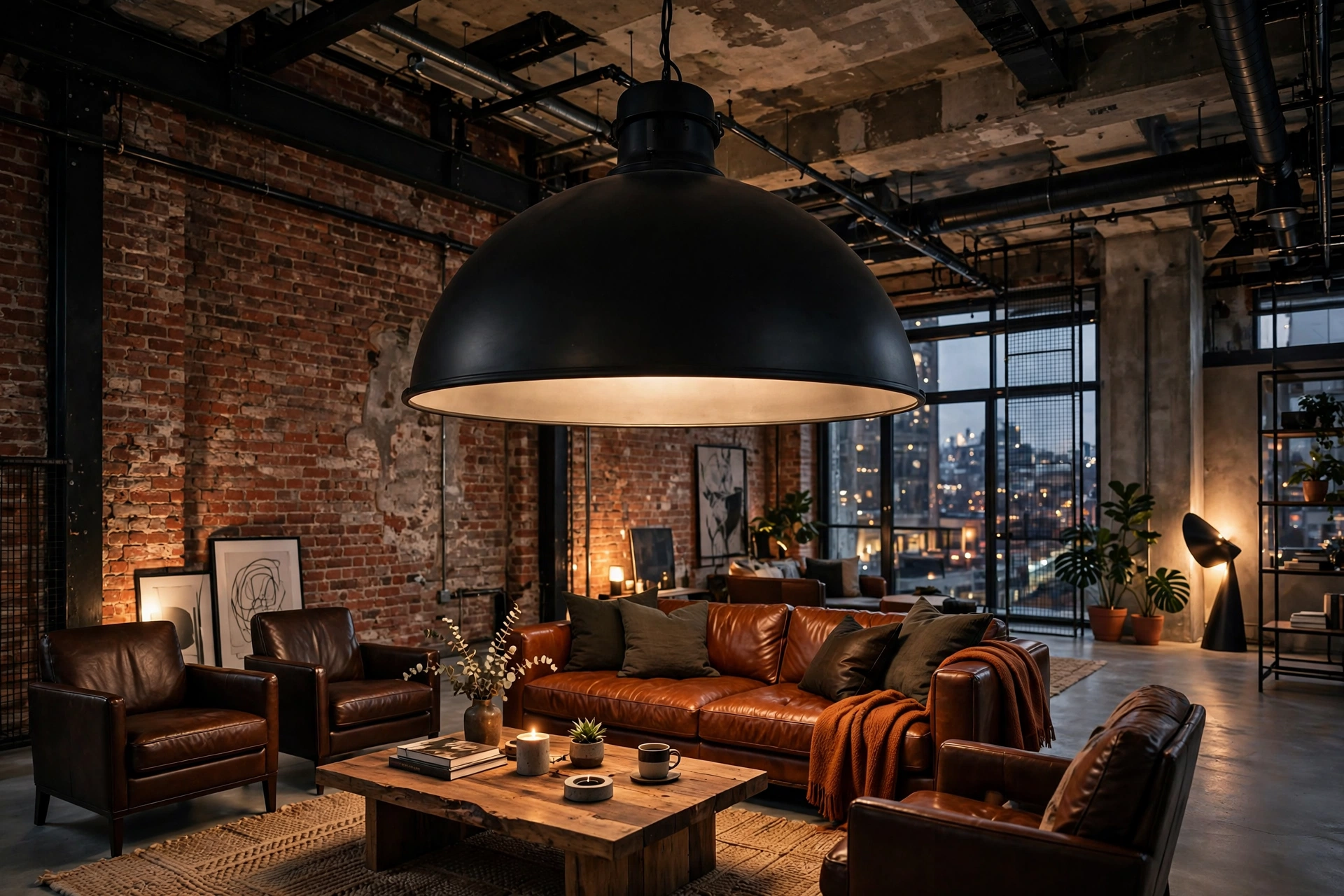
Overhead, think big and bold. An oversized black dome pendant, a multi-arm chandelier with Edison bulbs, a row of cage pendants over the seating area, or a dramatic arc floor lamp in brushed steel — industrial lighting is jewelry at architectural scale. Do not undersize it; a too-small fixture disappears against brick and high ceilings.
Layer it like any good lighting plan: the statement piece for drama, floor and table lamps for task light, all on dimmers. Keep every bulb warm (2700K) — warm light on brick, leather, and wood is what turns industrial edge into evening glow. The statement fixture should be visible from the room’s entrance; it sets the tone instantly.
6. Leave Ducts and Beams Exposed
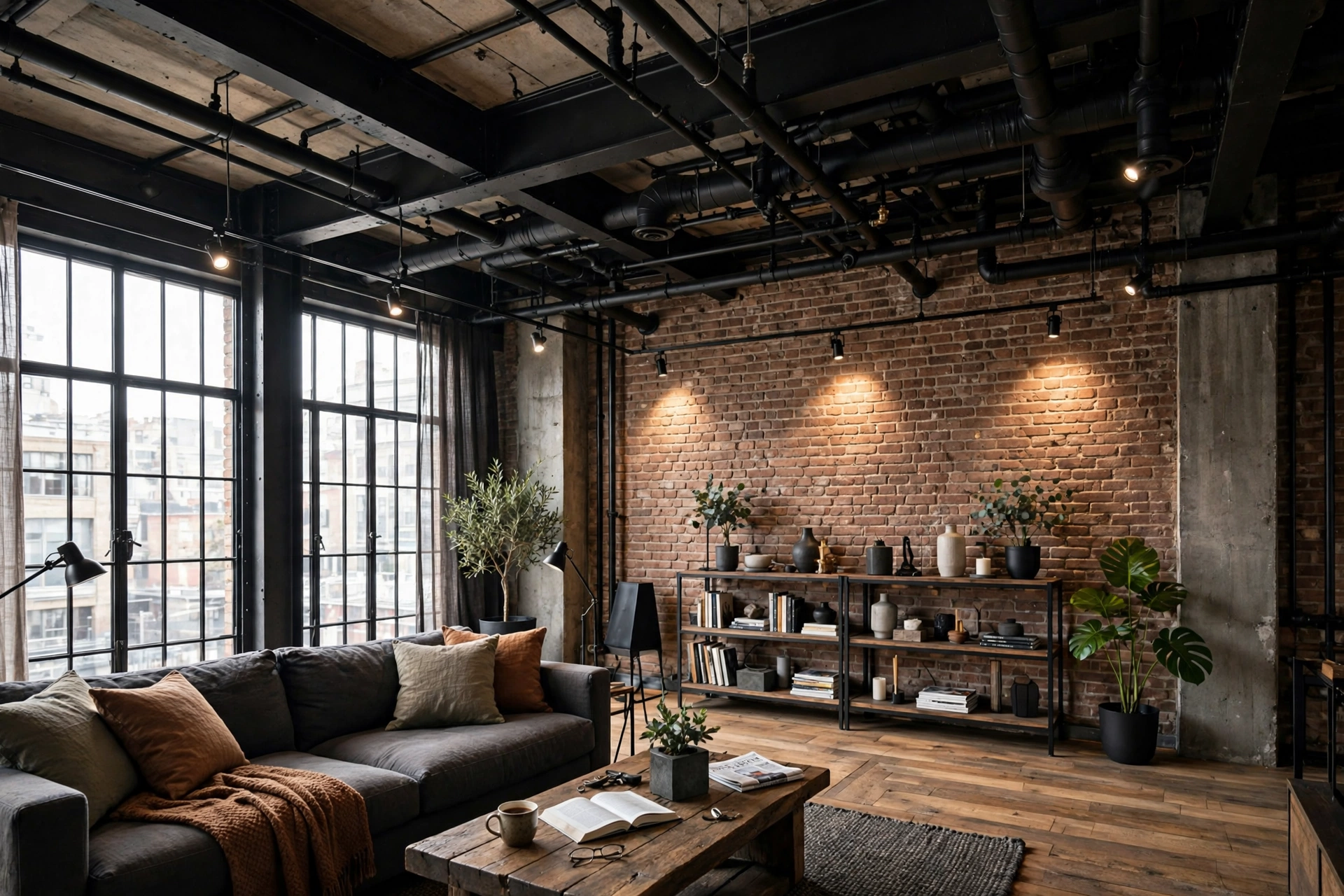
The ceiling is industrial design’s fifth wall. Exposed ductwork, structural beams, pipes, and conduit — painted matte black, left raw, or finished to match the ceiling — add the authentic loft architecture that defines the style. If your ceiling hides these features, exposing even a section delivers the effect.
Paint everything one color (matte black is classic, warm white keeps things bright) so the tangle reads as intentional architecture rather than unfinished construction. Then light it: track heads or spotlights aimed at the brick walls and art turn the ceiling’s rawness into a gallery backdrop.
7. Mix Reclaimed Wood Furniture
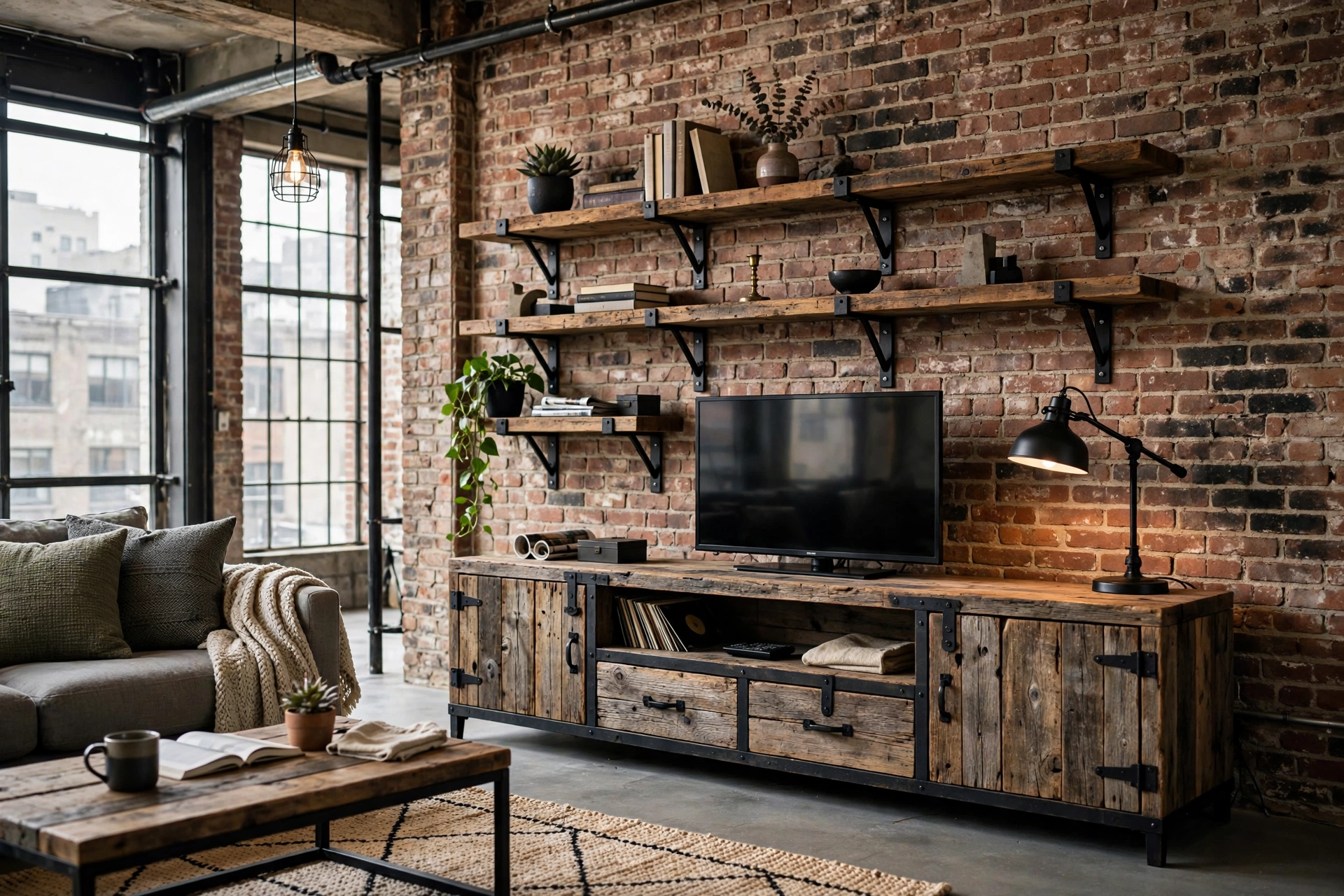
Reclaimed wood is industrial’s warm half. A media console from salvaged timber, floating shelves on black iron brackets, a reclaimed-wood sideboard, a chunky wood bench — these pieces bring the grain and history that keep steel-and-brick rooms from feeling stark.
Mix wood tones confidently within the warm family: the exact match matters less than the shared character of aged, honest timber. Our industrial bathroom ideas use the same reclaimed-wood-plus-black-metal formula to warm up the hardest-working room in the house. Keep finishes matte and natural — glossy wood fights the industrial mood.
8. Use a Moody Neutral Palette
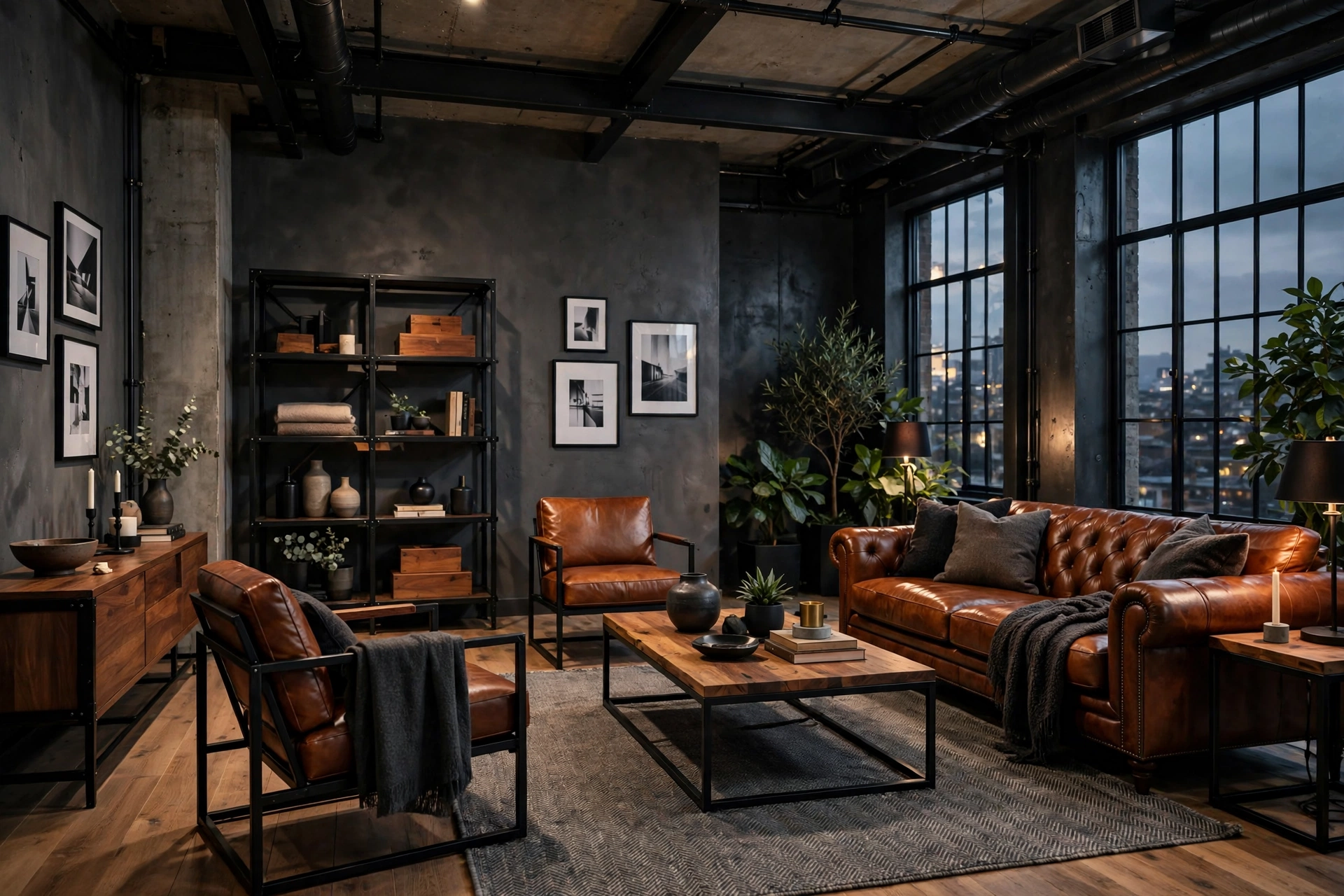
Industrial color is drawn from the materials: charcoal, black, warm gray, the red-brown of brick, cognac leather, weathered wood. Build the palette from these tones and the room feels cohesive without trying. Walls in warm white or soft gray let the materials star; deep charcoal walls add drama in well-lit rooms.
Upholstery and textiles should stay in the same family — grays, blacks, creams, cognac, olive. One accent color used sparingly (deep red, amber, forest green) adds life without breaking the mood. Restraint with color is what keeps industrial feeling sophisticated rather than themed.
9. Add Vintage Factory Accessories
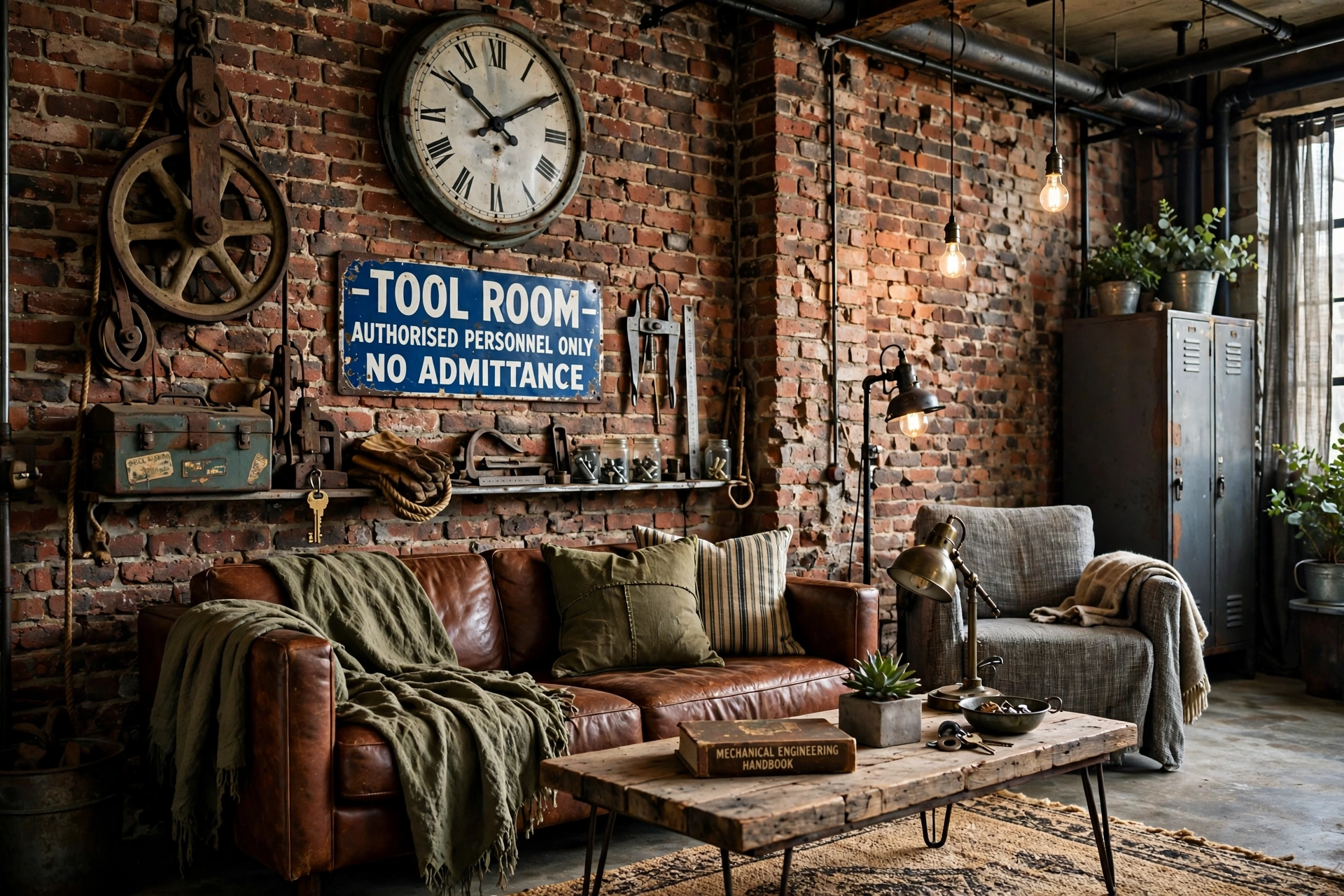
The details tell the industrial story: a vintage factory clock with a metal face, old signage in enamel or painted wood, antique pulley wheels, salvaged gears, metal lockers as storage, an old workbench as a console. These pieces bring the authentic past lives that reproductions can only imitate.
Hunt salvage yards, flea markets, and architectural reclamation shops — and check metal pieces for stability and lead paint. Apartment Therapy’s industrial rental loft tour is a masterclass in mixing authentic industrial finds with comfortable modern living. Edit the collection: a few strong pieces beat shelves of small themed objects.
10. Layer Textiles for Warmth
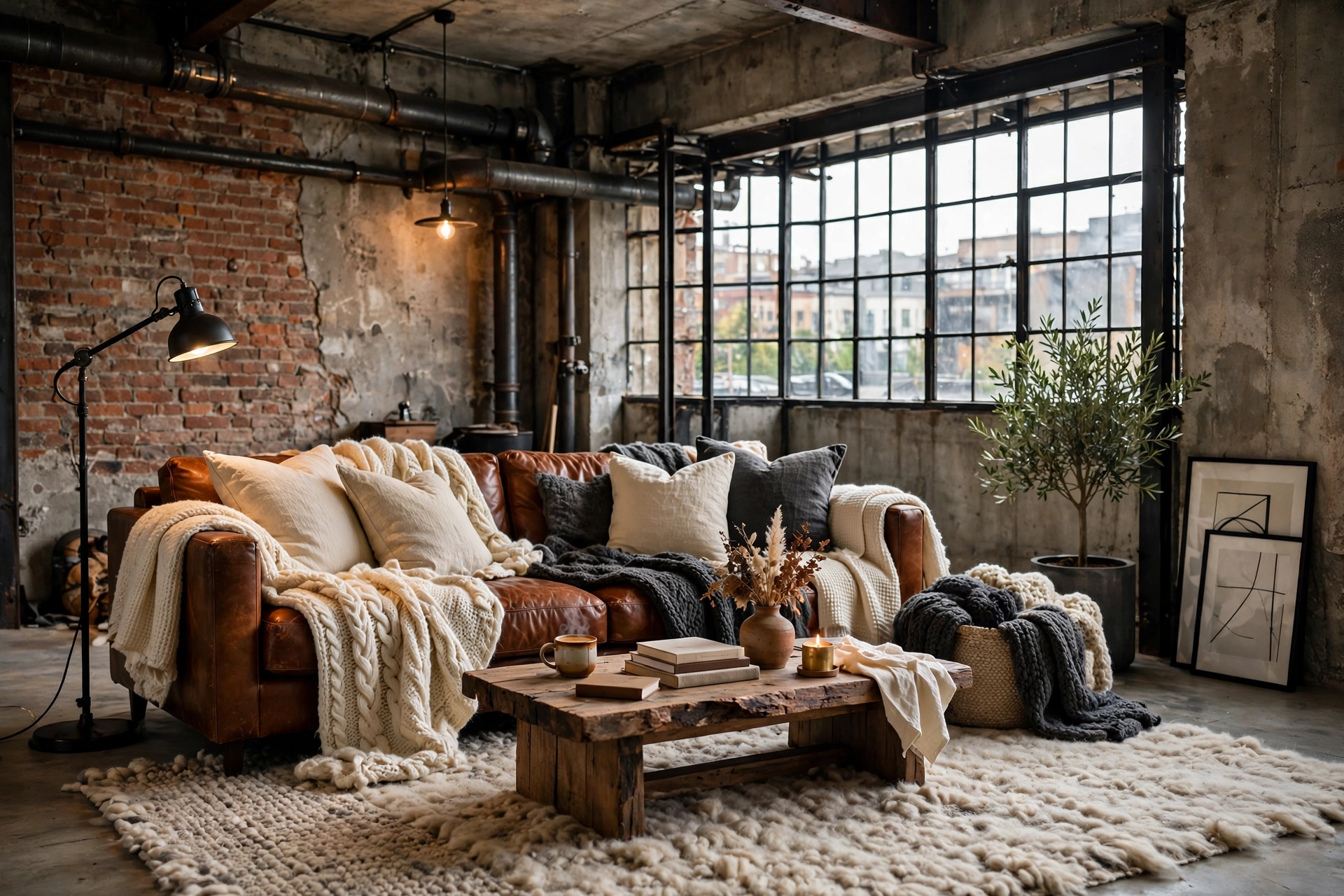
Textiles are what make an industrial living room livable. A large wool or vintage-look rug, chunky knit throws on the leather sofa, linen or canvas cushions, heavy curtains in natural fibers — these soft layers absorb sound, add comfort, and warm up every hard surface in the room.
Stick to the palette: creams, grays, charcoals, cognac, olive, in natural textures. Layer generously — industrial rooms can take more textile than you think, because the hard architecture balances it. A room with brick walls and a soft rug underfoot is the definition of industrial comfort: edge you can sink into.
11. Create a Gallery Wall with Edge
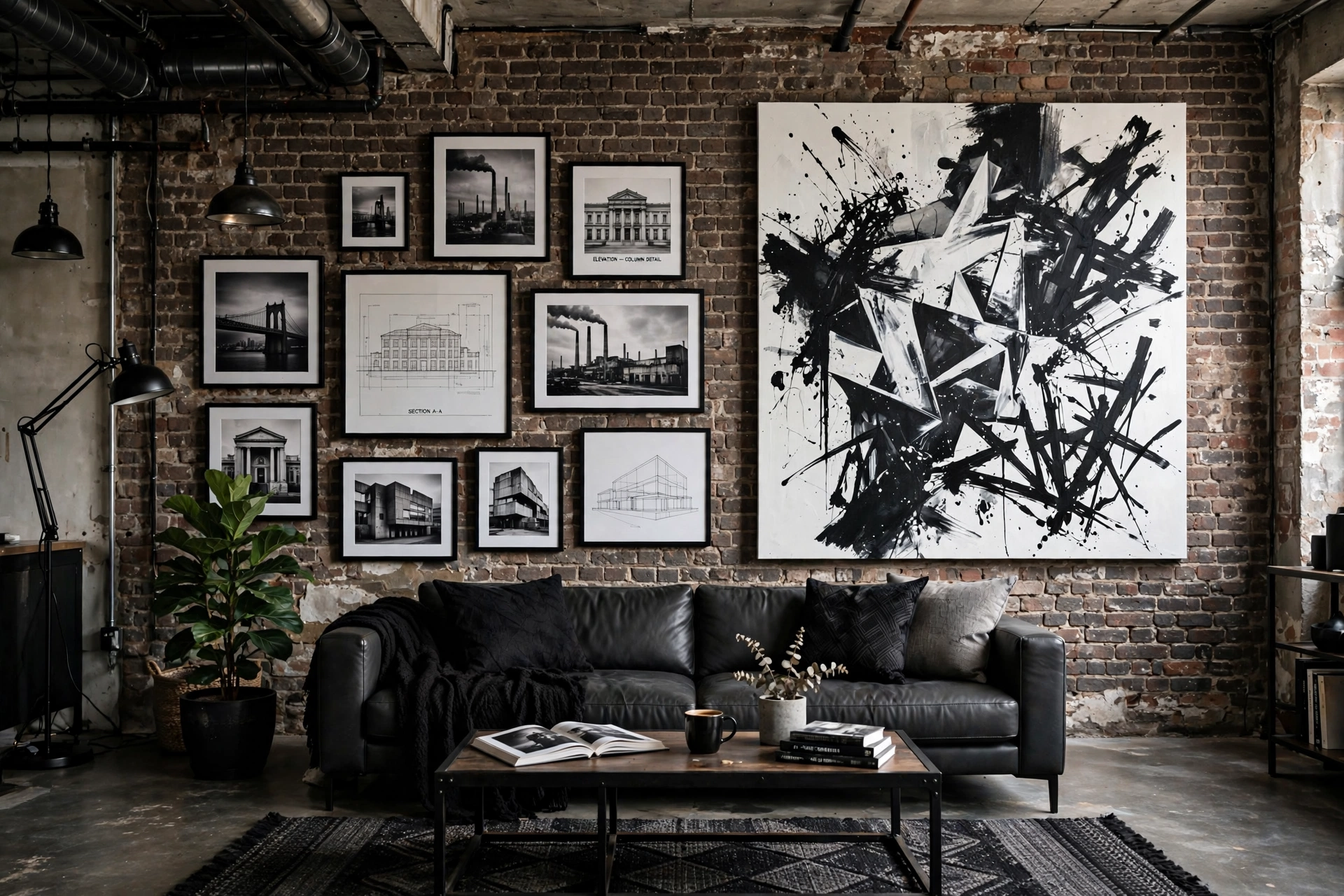
Industrial walls can take bold art. A gallery wall of black-and-white photography, architectural prints, vintage posters in simple black frames, and one metal or wood sculptural piece brings personality without softening the room’s attitude. Keep frames consistent — all black, all raw wood — so the mix reads as curated.
Include something oversized: one large canvas or framed print anchors the wall better than a dozen small pieces. In a loft-style room, scale art to the architecture — small art on a huge brick wall looks lost. Let the gallery wall be the room’s conversation piece.
12. Add Greenery to Soften Steel
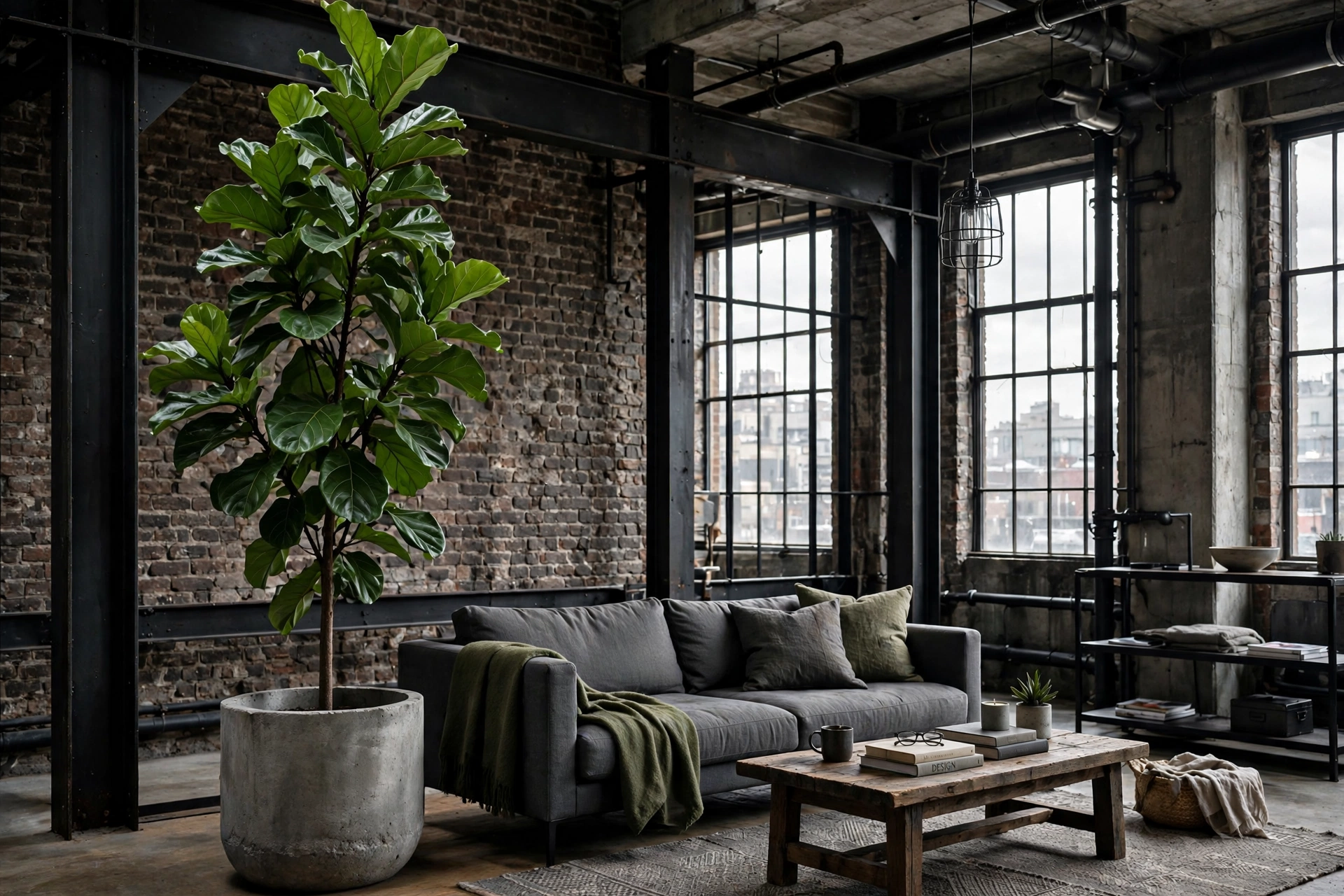
Living plants are the essential softening agent in industrial rooms. A tall fiddle-leaf fig or olive tree in a concrete planter, trailing pothos on the iron shelves, a cluster of succulents on the coffee table — green against gray is one of design’s most satisfying contrasts, and it keeps the room feeling alive.
Choose tough, architectural plants that suit the aesthetic: snake plants, ZZ plants, birds of paradise. Use concrete, black metal, or raw terracotta planters — nothing fussy. One dramatic plant makes more impact than a dozen small ones scattered around.
13. Choose Black Steel Window Frames
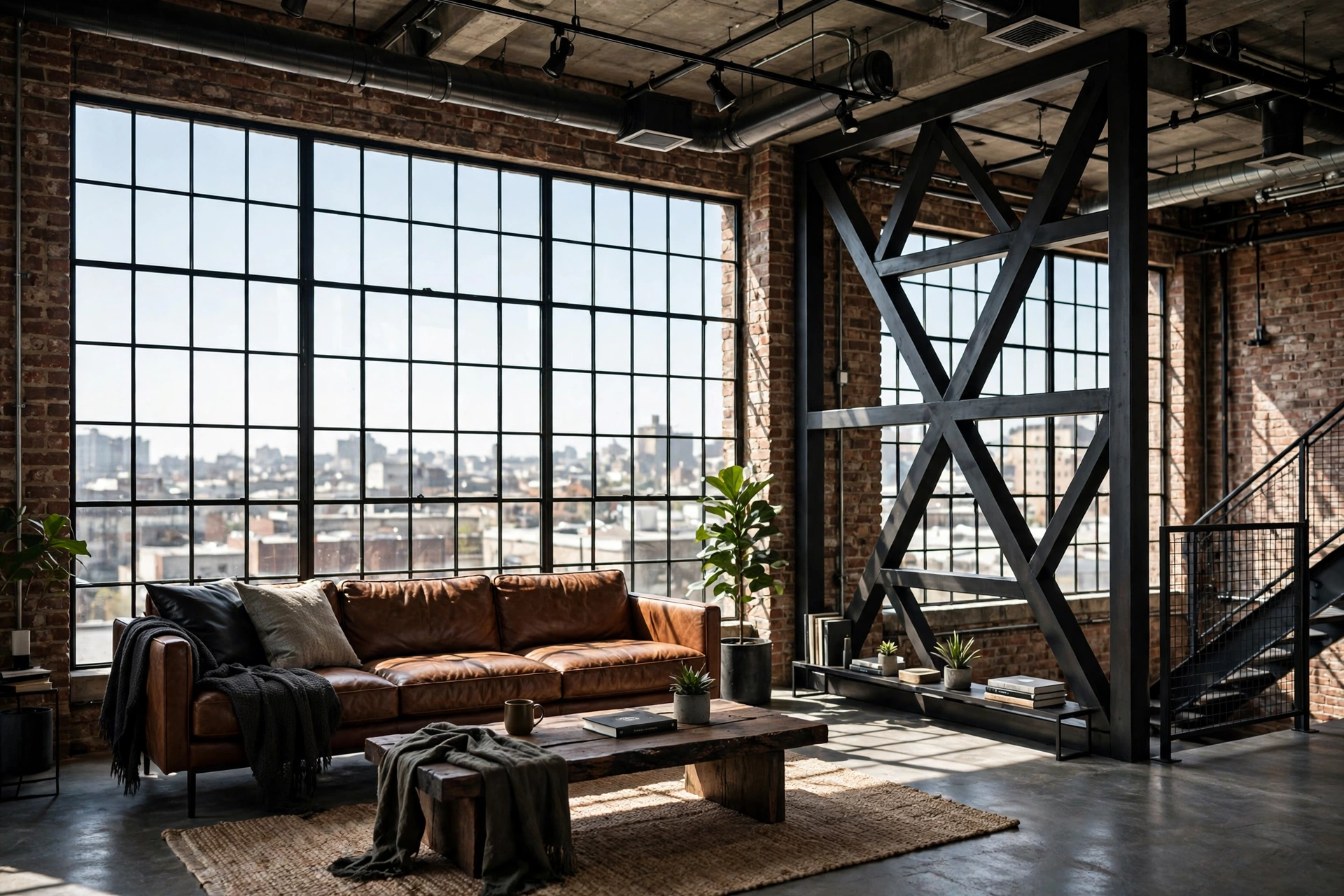
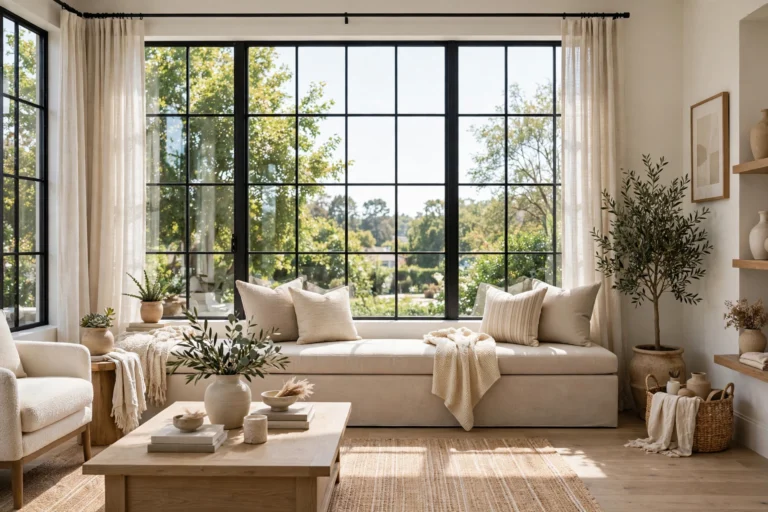
Steel-framed windows and interior glass partitions are industrial architecture at its most beautiful. The thin black grid — whether real steel windows, interior partitions between rooms, or even a large grid-pattern mirror — adds graphic structure and lets light flow while defining zones.
If new windows are not in the budget, paint existing frames matte black and keep treatments minimal: simple roller blinds or sheer panels that disappear when raised. The black grid against brick or white walls is striking even in a single window. It is the detail that quietly says “loft” more than any furniture can.
14. Use Open Pipe Shelving
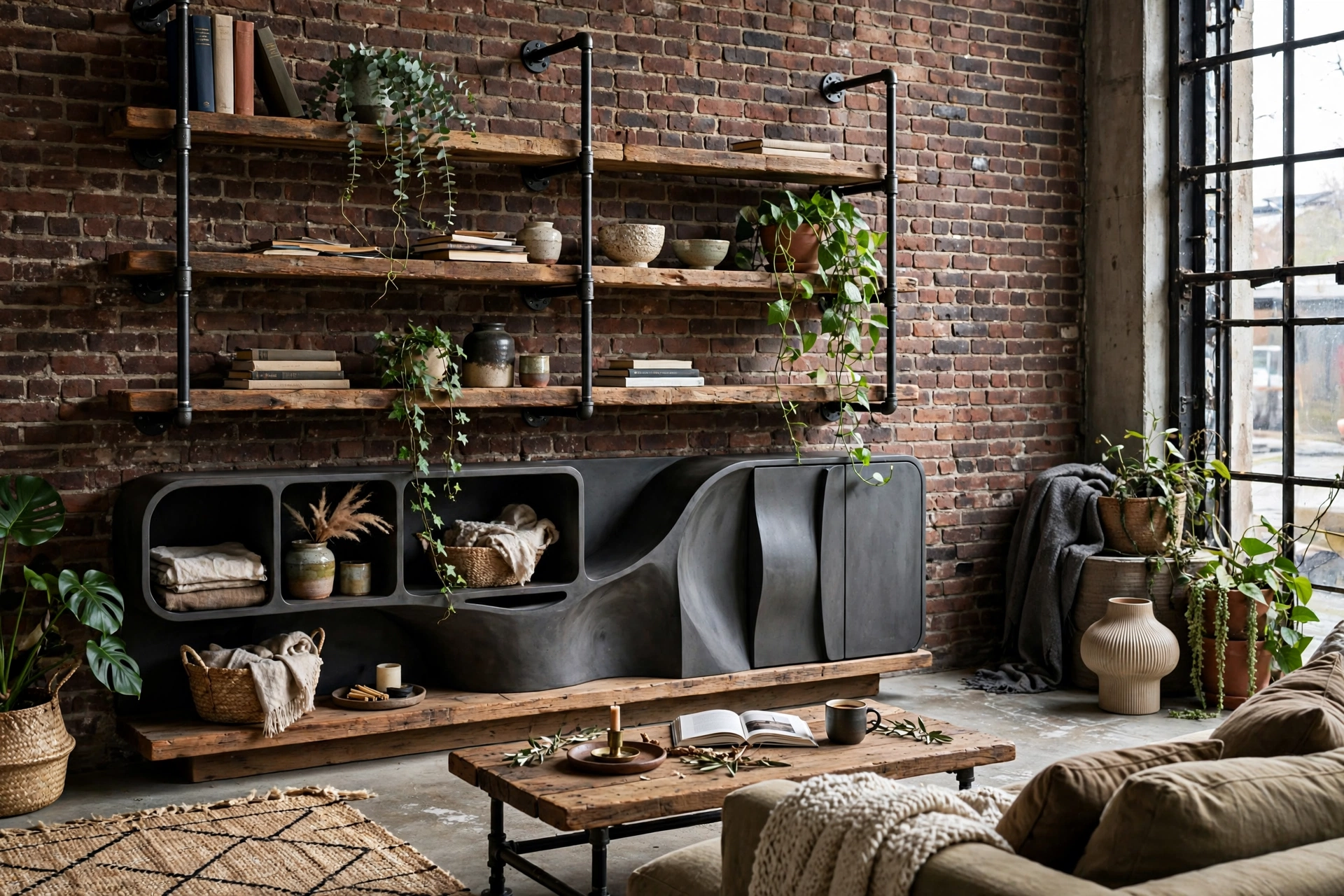
Black iron pipe with reclaimed wood planks — open pipe shelving is industrial storage at its most sculptural. Flanking the media console, filling an awkward wall, or running the length of a hallway wall, it displays books, ceramics, and plants while doubling as wall art.
Anchor into studs — iron pipe is heavy, especially loaded with books. Style with the same discipline as any open storage: books grouped, ceramics with breathing room, a plant trailing off one end. One substantial run of shelving beats several small floating shelves in an industrial room, where scale and substance rule.
15. Ground It with a Bold Rug
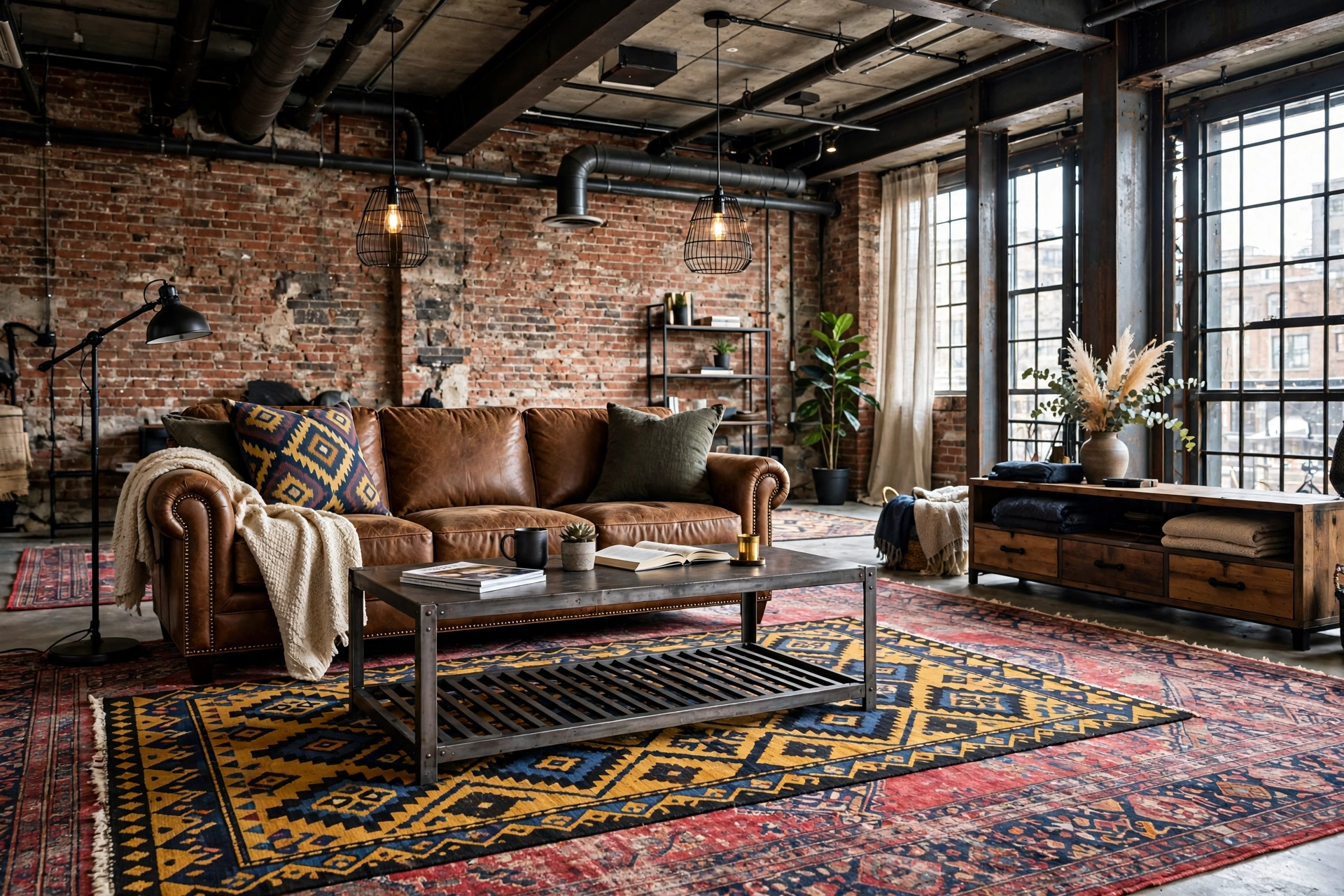
The rug is the industrial living room’s finishing move. A large vintage-look Persian in faded reds and indigos, a bold geometric flatweave in charcoal and cream, or a natural hide rug — the right rug ties brick, leather, steel, and wood into one composition. It also tames the echo that hard industrial surfaces create.
Size it generously: front legs of all seating on the rug at minimum, ideally the whole seating arrangement. Our minimalist living room ideas show the same grounding principle in a quieter palette — whatever the style, the rug is what makes separate pieces feel like one room. Choose low-pile for easy cleaning and a pattern that can handle real life.
Frequently Asked Questions
What defines an industrial living room?
Raw architectural materials — exposed brick, concrete or dark wood floors, visible ducts and beams — paired with blackened steel, reclaimed wood, and leather furniture in a moody neutral palette. Factory-inspired lighting and vintage industrial accessories complete the urban edge.
How do I make an industrial living room feel cozy?
Layer textiles generously (large rug, knit throws, linen cushions), choose a leather sofa over a metal one, keep all lighting warm and dimmable, add candles and living plants, and let reclaimed wood balance the steel. Coziness comes from tactile warmth, not from hiding the architecture.
Can industrial style work without exposed brick?
Absolutely — brick is iconic but not required. Concrete-look walls, dark wood paneling, black steel details, reclaimed wood furniture, leather, and factory-style lighting deliver the industrial feeling on plain drywall. One brick-veneer accent wall is an easy weekend addition if you want the real thing.
Is industrial living room decor expensive?
It is one of the most budget-friendly styles to do authentically, since its materials are reclaimed wood, vintage metal, and salvage finds. Invest in the sofa and the statement lighting; hunt flea markets, salvage yards, and secondhand shops for tables, accessories, and shelving.
How is industrial different from modern farmhouse?
Both love reclaimed wood and vintage finds, but industrial leans urban — black steel, concrete, Edison bulbs, factory and loft references — while modern farmhouse leans rural — whitewash, shiplap, linen, apron sinks, softer and brighter. Industrial is moodier; farmhouse is airier.
Keep Exploring
An industrial living room is honest design — real materials, bold lighting, and furniture built to last. Celebrate the architecture, soften it with leather and wool, and let the urban edge do the talking.
For more loft-style inspiration, our moody living room ideas explore the darker, dramatic side of the palette. And if the raw-materials look speaks to you throughout the house, our industrial bathroom ideas carry the same urban character into a smaller space.