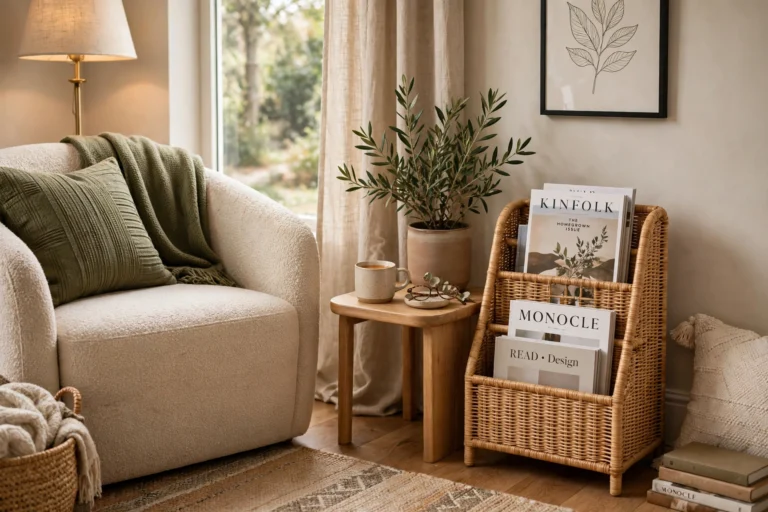
Few finishes change a living room’s mood like limewash. These living room limewash wall ideas deliver that soft, cloudy, old-world texture — walls that look like sun-warmed plaster in a Mediterranean villa rather than flat painted drywall. Our favorite living room accent wall ideas with big impact prove that one well-chosen wall can carry a whole room, and limewash does it with subtlety instead of shouting.
Limewash is crushed limestone paint applied in crisscross brush strokes, and its charm lies in its imperfection: tonal variation, soft mottling, and a matte depth that shifts with the light. It works over plaster and, with a mineral primer, over painted drywall. Choose warm, earthy tones and let the texture do the decorating.
1. Start With Warm White Limewash
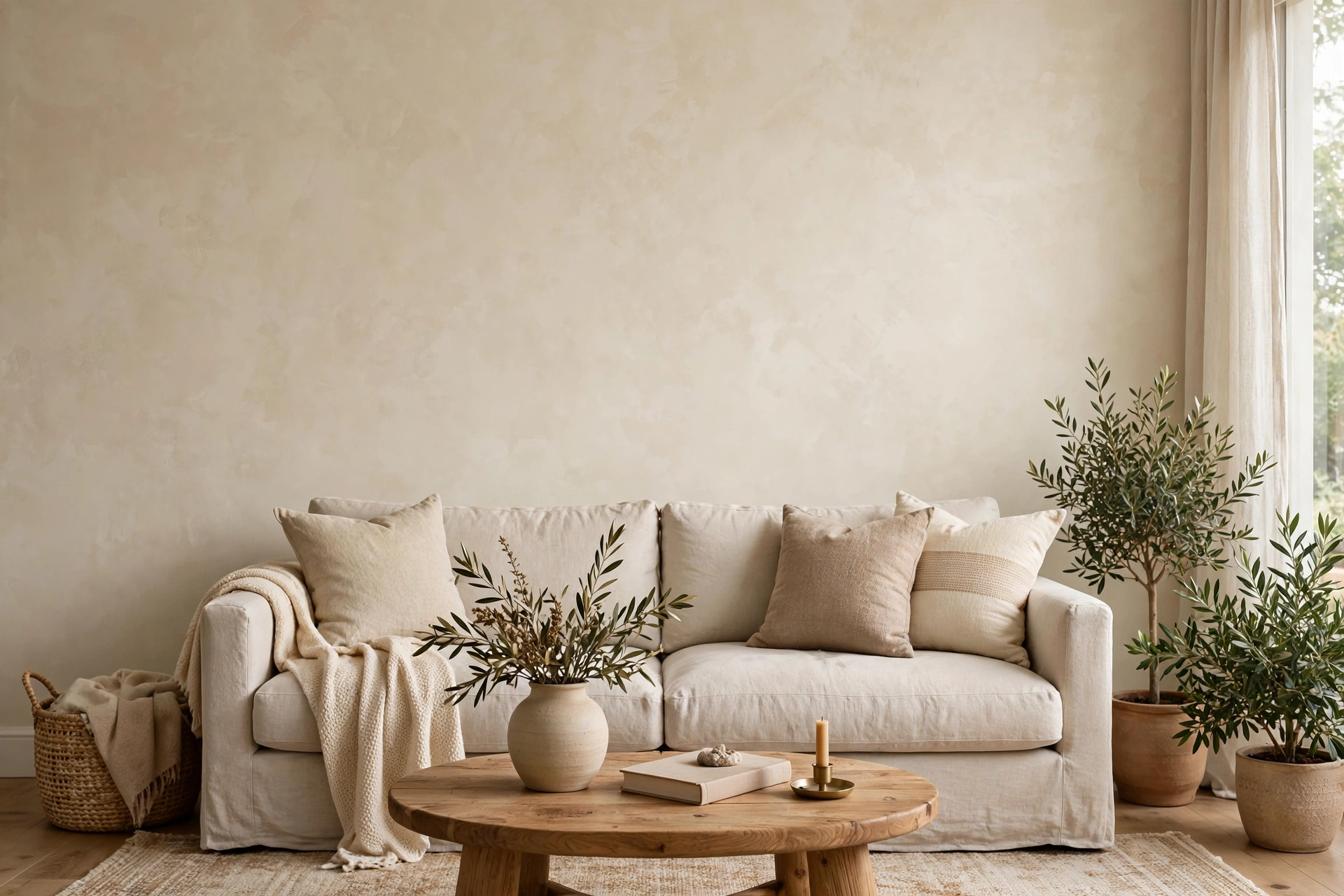
Warm white limewash is the friendliest entry point into textured walls. Choose a warm white — bone, ivory, or chalk — rather than a blue-white, so the mottling reads as depth instead of patchiness. Plan on two to three thin coats, and brush a test swatch first since limewash dries much lighter than it looks wet. Over previously painted drywall, a mineral primer helps it bond. Style the room so the texture can talk: a linen sofa, a jute rug, and one sculptural plant. This single change asks the least of your budget and transforms the room the most. Warm white flatters every furniture style you own.
2. Try a Clay Terracotta Feature Wall
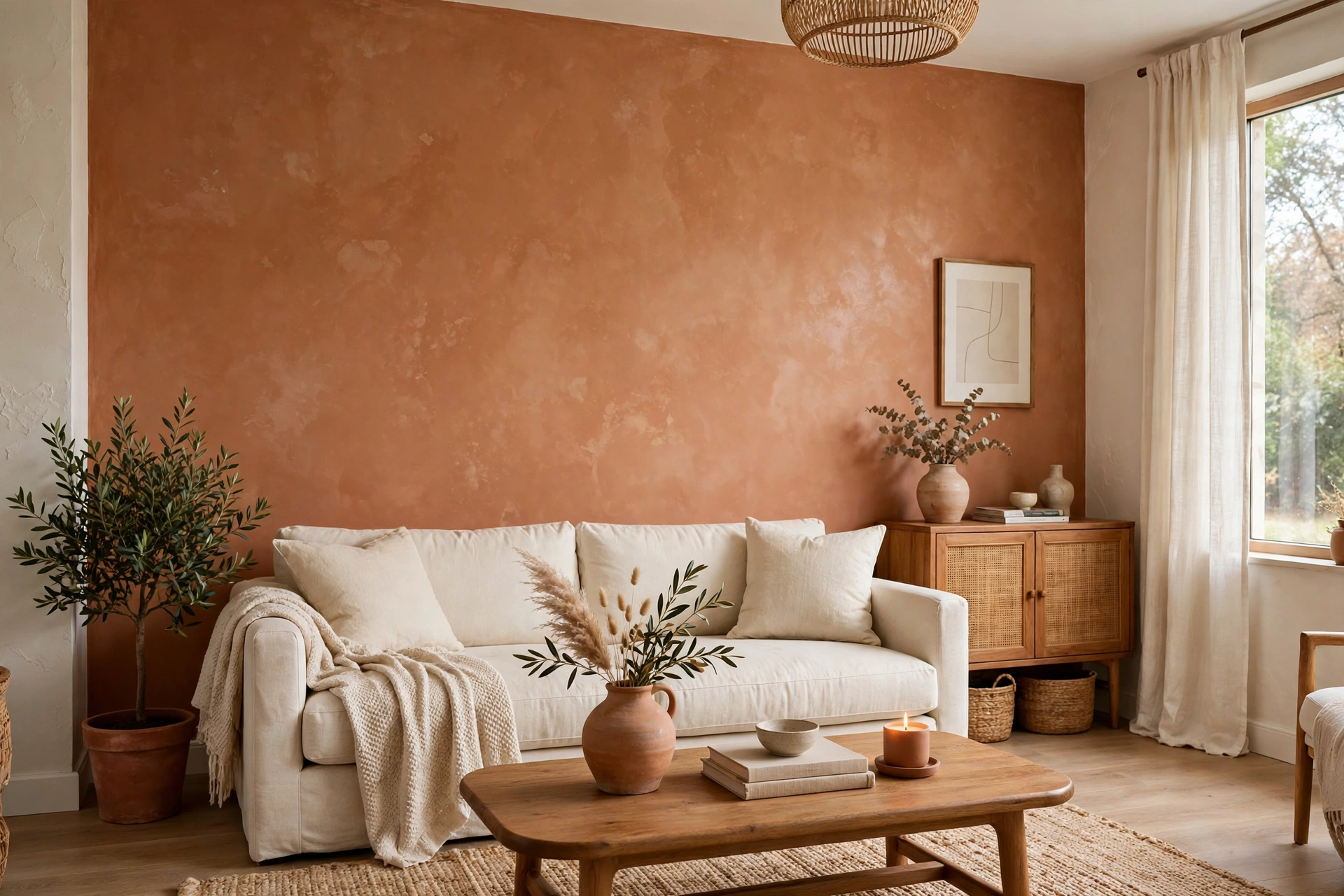
For warmth with real presence, limewash one feature wall in a dusty terracotta or clay tone. The limewash finish softens the orange undertones, giving the wall an earthy, aged quality that flat terracotta paint cannot match. Use it behind a cream or warm-white sofa with natural oak, woven textures, and understated ceramics. Keep the rest of the palette quiet so the wall is the main source of color. If full terracotta feels bold, choose a paler clay or faded-brick shade for the same warmth with less contrast. This is Mediterranean soul without leaving home.
3. Go Moody With Charcoal Limewash

Limewash is not only for light neutrals — a charcoal or deep umber limewash wall brings incredible depth to a living room. The cloudy texture keeps dark walls from feeling flat or oppressive; instead of a black hole, you get a velvety backdrop that glows under lamplight. Pair it with cognac leather, brass accents, and cream textiles for a rich, cocooning scheme. Dark limewash also hides wall imperfections better than dark flat paint. Reserve it for one wall — behind the sofa or fireplace — and keep the others light. Evening rooms were made for this finish.
4. Limewash the Fireplace Wall

The fireplace wall is the natural focal point, and limewash makes it unforgettable. Coat the chimney breast and surrounding wall in a warm greige or soft stone tone, letting the texture play across the largest surface in the room. The mottled finish gives even a plain drywall fireplace an old-European character. Keep the mantel styling simple — the wall is the art — with maybe a single mirror or a few candlesticks. If your fireplace is non-working, the limewash alone makes it feel intentional and storied. This one wall can define the entire room’s personality.
5. Create a Limewash Alcove

You do not need to limewash the largest wall to get the effect. An alcove, recessed niche, or reading corner in a slightly deeper tone than the surrounding walls creates a destination within the room. Try a deeper version of your wall color so the transition feels intentional, and add an armchair, a reading light, and one soft textile. The texture catches light beautifully in these smaller areas. This approach is perfect for small living rooms — you get visual interest from architecture you already have rather than adding furniture. Small moves, big atmosphere.
6. Pair Limewash With Natural Wood
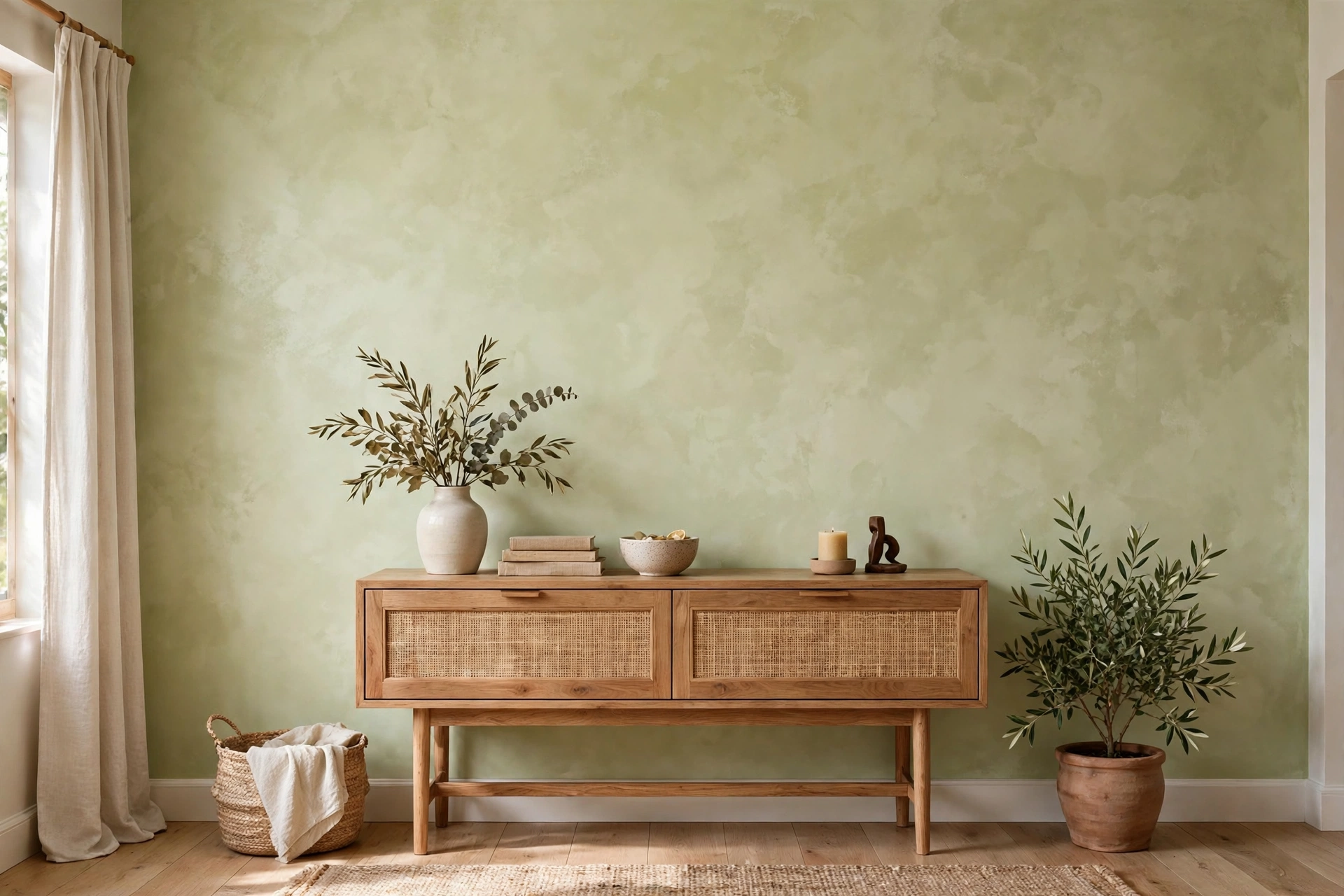
Limewash and natural wood are a match made in design heaven. The soft, chalky wall texture contrasts beautifully with the grain and warmth of oak, walnut, or teak furniture. A limewashed wall behind a wooden media console, a teak sideboard, or oak shelving lets both materials shine — the wall recedes softly while the wood glows. Add linen upholstery and a wool rug to complete the organic palette. This combination suits Japandi, Scandinavian, Mediterranean, and modern rustic rooms alike. When in doubt, let texture — not color — carry the room, and this pairing delivers exactly that.
7. Try Soft Sage Limewash

Sage green limewash brings a breath of nature indoors without the commitment of bold color. The gray-green tone stays calm and sophisticated, and the limewash mottling keeps it from feeling like ordinary sage paint. It pairs beautifully with cream upholstery, light wood, and brass details. Use it on the wall behind the sofa or in a sunlit corner where the green undertone glows. Sage limewash suits cottage, traditional, and transitional living rooms especially well. It is color for people who think they do not like color — present, but never loud.
8. Limewash Behind Open Shelving
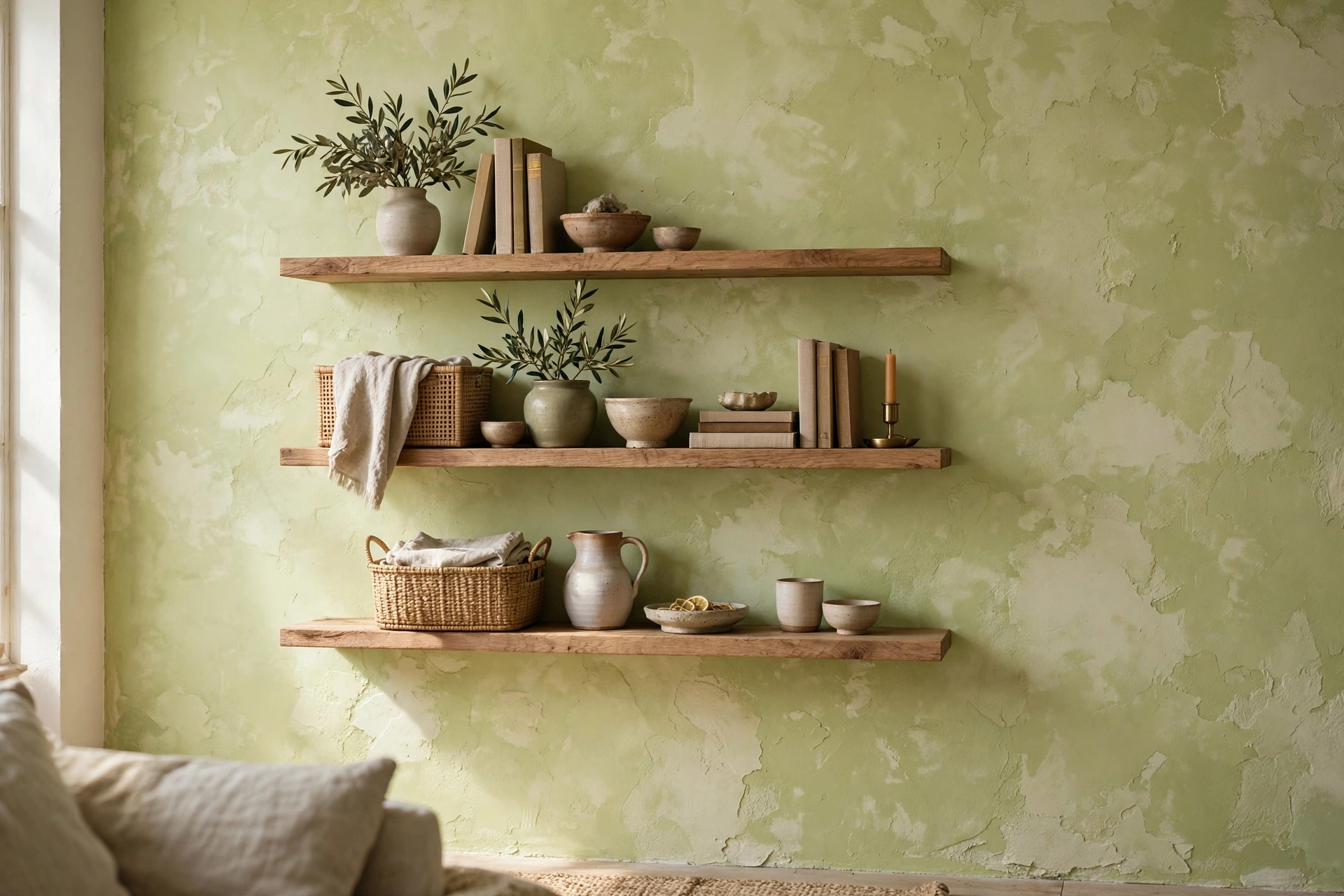
Open shelves pop dramatically against a limewash backdrop. The textured wall turns simple styling — ceramics, books, a trailing plant — into a curated vignette, because every object reads against that soft, cloudy surface. Choose a warm neutral limewash so your shelf objects provide the color. The combination is a favorite of stylists for a reason: texture behind, objects in front, and instant depth. This works on a full wall of shelving or a single pair of floating shelves. For more on making walls work harder, Romabio’s guide to interior limewash shows how the finish behaves behind furniture and decor.
9. Go Full-Room in a Soft Neutral
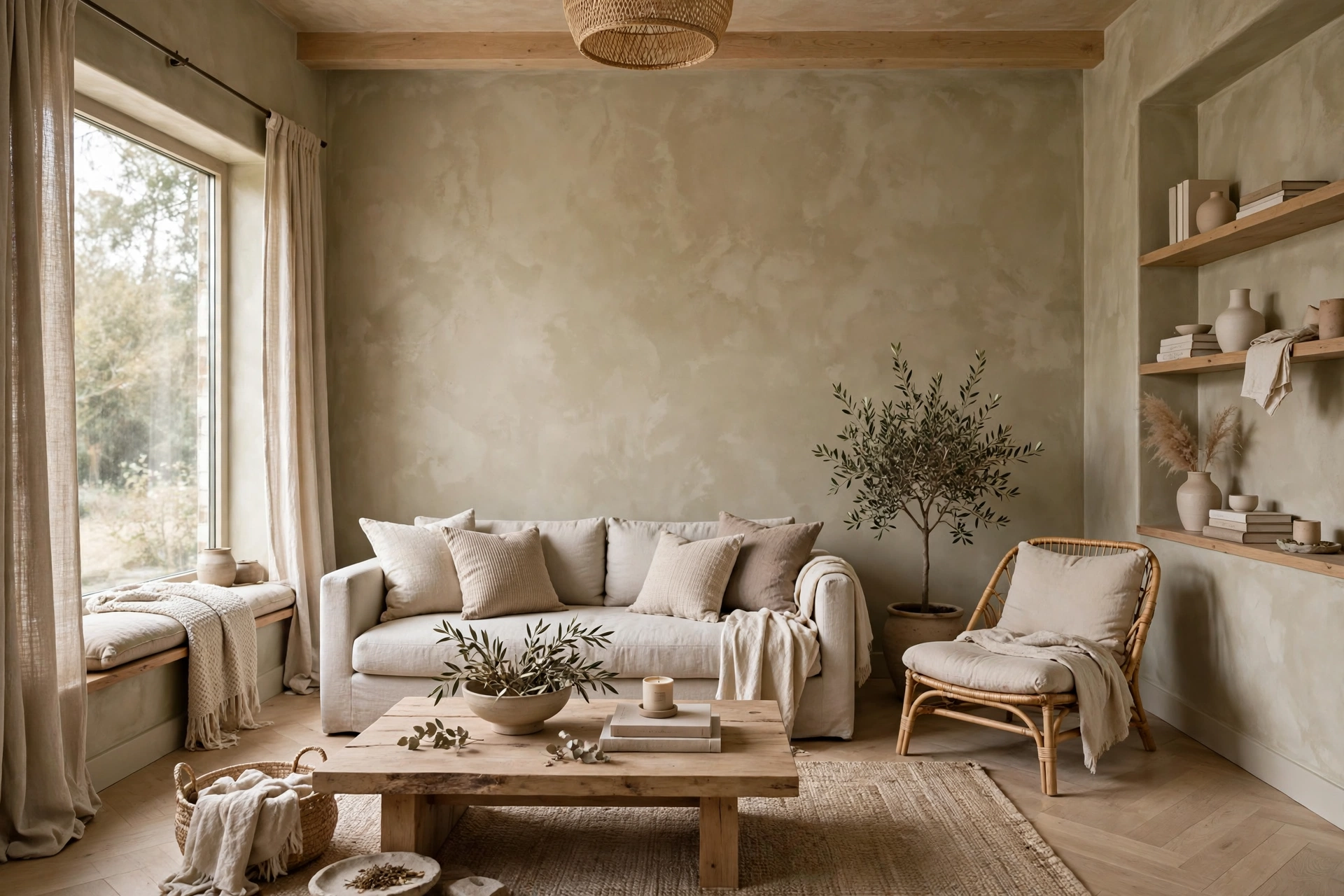
For the truly committed, limewashing all four walls in a soft neutral — warm greige, pale stone, or mushroom — wraps the living room in continuous, cocooning texture. The tonal variation keeps the monochrome scheme from feeling flat, and the room gains an enveloping calm that flat paint cannot deliver. Keep furniture and textiles in the same tonal family for a serene, gallery-like effect, then add contrast through black metal, dark wood, or greenery. Full-room limewash suits minimalist and Mediterranean rooms best. It is a bold move that paradoxically feels like the quietest choice.
10. Combine Limewash and Wall Molding
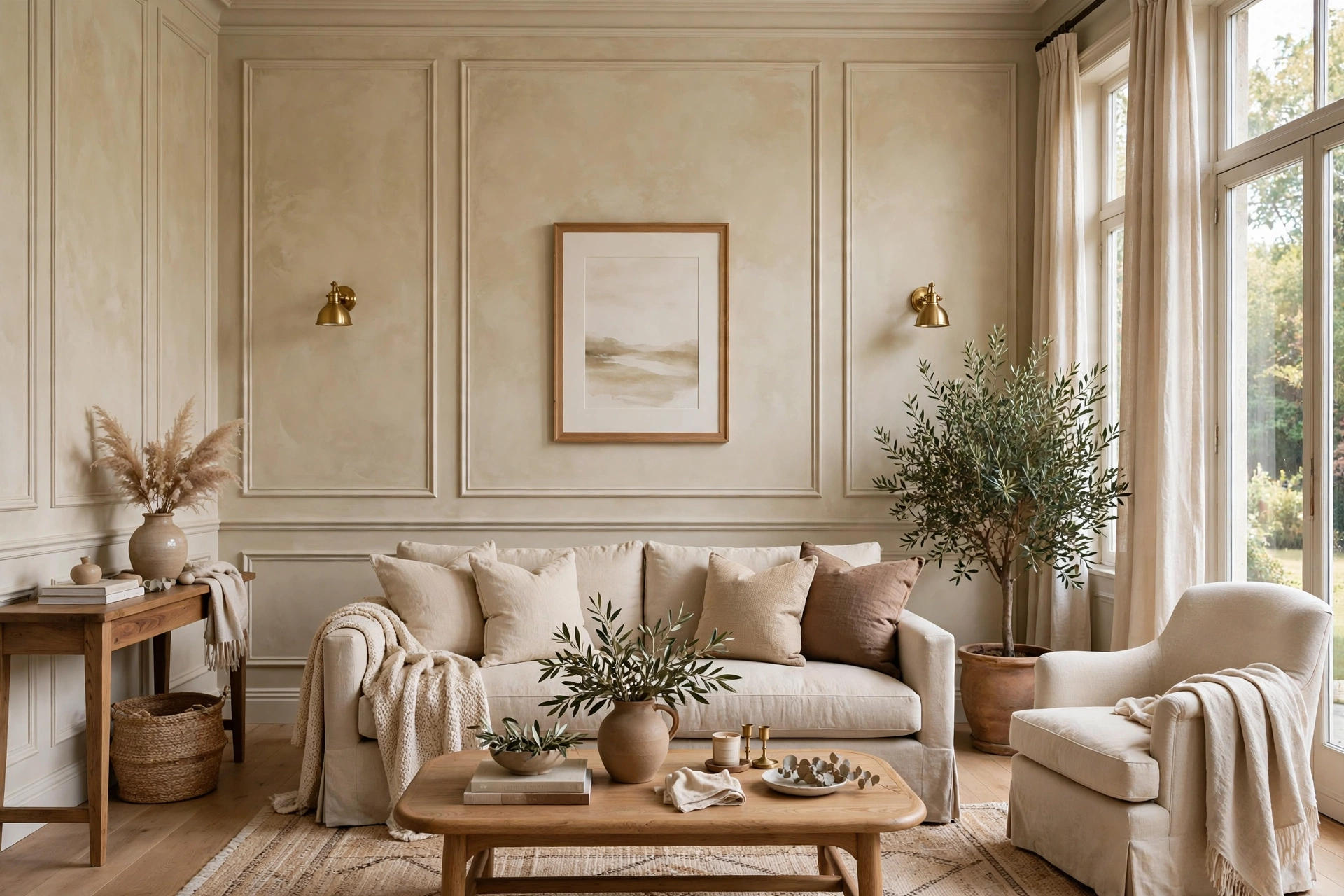
Picture-frame molding over limewash is a designer-level combination: the crisp molding lines contrast with the soft, cloudy plaster texture for a look that is both tailored and relaxed. Paint the molding the same limewash color for a seamless, tonal effect, or use a slightly deeper shade for definition. This works beautifully in traditional and transitional living rooms, giving classic architecture an updated, European feel. The molding adds structure that keeps the organic limewash from feeling too casual. These living room wall molding ideas for elegant walls pair perfectly with a limewash base.
11. Try a Two-Tone Limewash Effect

Apply limewash in two related tones — a deeper shade on the lower wall and a lighter one above a chair rail or picture ledge — for subtle dimension. Or wash the wall in one tone and let a second, barely-different tone drift across it in the final coat for an ombré-like softness. Two-tone limewash adds complexity without adding color, which keeps the room calm. This technique suits larger living rooms where a single tone might feel monotonous. Keep the tones close — think stone and chalk, or clay and sand — so the effect reads as depth rather than pattern. Restraint is the whole point.
12. Limewash a Textured Plaster Look Alike

If your walls are perfectly smooth drywall, you can still get a plaster-like effect: apply limewash over a skip-trowel texture or use a thick-nap roller for the primer coat to build subtle tooth. The limewash then settles into the texture, creating convincing old-plaster depth. Alternatively, layer two close limewash tones with a wide brush in random crisscross strokes for maximum mottling. The result fools the eye into seeing hand-troweled plaster. This is the budget path to European character — a few hundred dollars in materials versus thousands for real plaster. Wallhub’s limewash ideas for minimalist homes show how the finish transforms simple rooms.
13. Keep Furniture Light and Linen
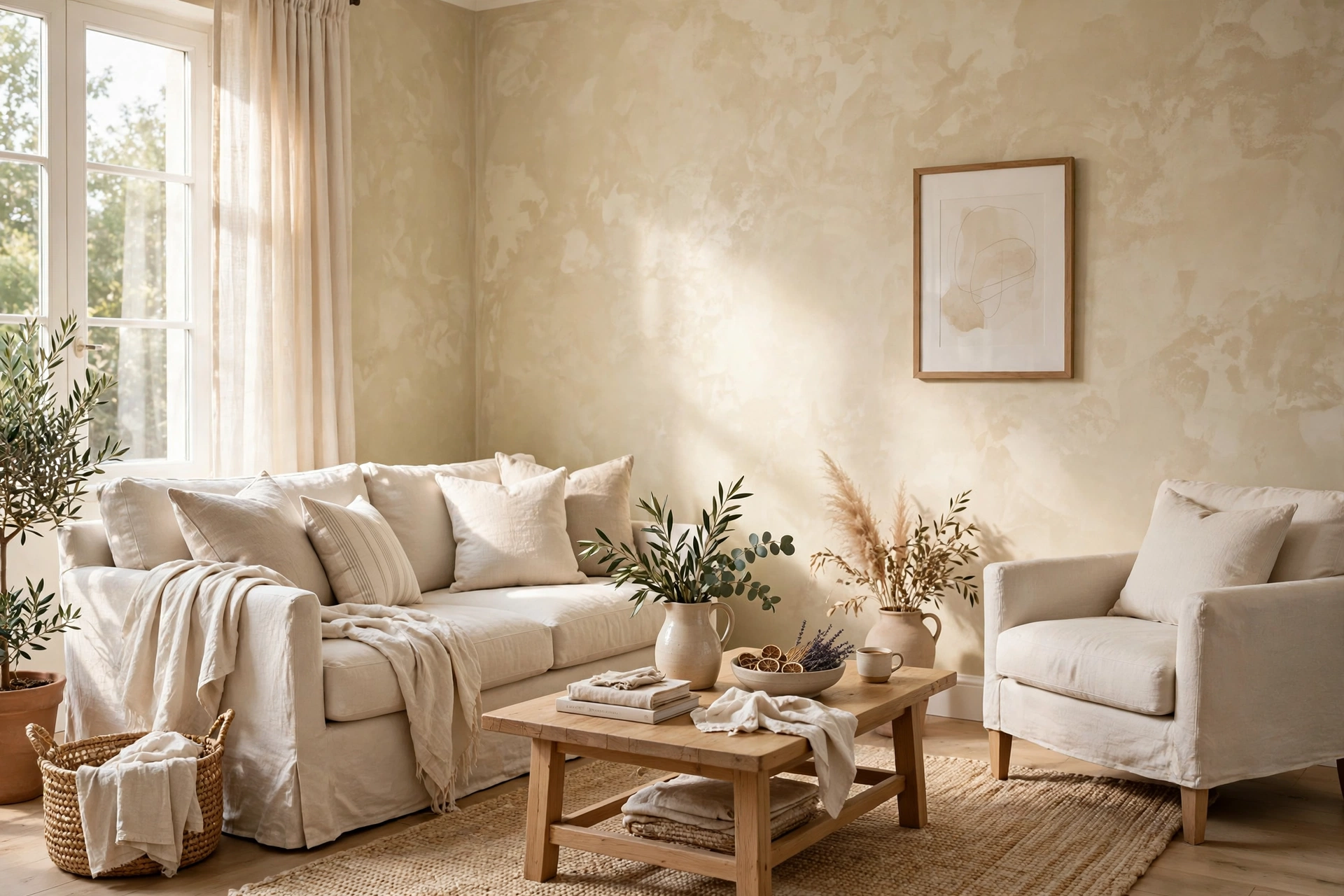
Limewash walls shine brightest against light, natural upholstery. Linen sofas, cotton slipcovers, and bouclé chairs in cream, oatmeal, and sand let the wall texture be the star while keeping the room airy. Heavy, dark, or highly patterned furniture competes with the mottled finish and muddies the effect. If your sofa is dark, balance it with light curtains, a pale rug, and cream throws to lift the room. The formula is simple: textured walls plus soft, light textiles equals effortless calm. Let the wall do the talking and keep everything else quiet.
14. Add Warm Lighting to Show It Off
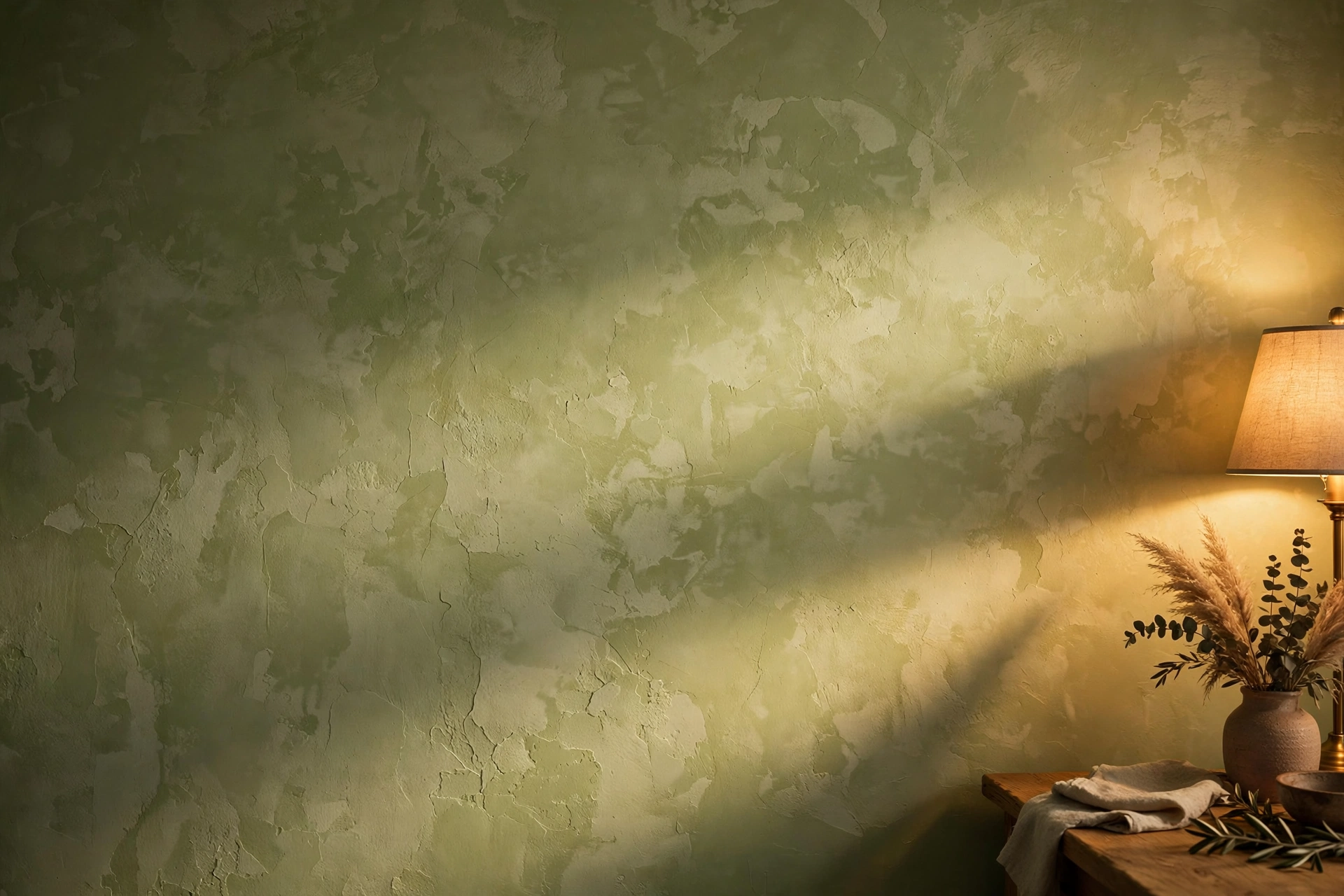
Limewash comes alive under warm light. Wall washers, picture lights, and table lamps with warm-white bulbs rake across the textured surface, revealing the cloudy variation that flat daylight can hide. Position a floor lamp or sconce to graze the wall at an angle — grazing light is what makes texture visible. Avoid cool daylight bulbs, which flatten the mottling and can make the finish look patchy. Evening is when limewash earns its keep, glowing softly like candlelit plaster. Light the wall deliberately and it becomes the room’s best feature after dark.
15. Seal It Right for Longevity

Limewash is naturally durable, but living room walls take abuse — lean back, bump, scuff. For high-traffic walls, apply a compatible matte sealer after the limewash cures fully, usually after a few days. The sealer adds washability without adding shine that would kill the chalky look. Always test the sealer on a hidden spot first, since some products slightly deepen the color. With proper sealing, limewash walls wipe clean and age gracefully, developing a soft patina rather than looking worn. A little protection up front means your beautiful walls stay beautiful for years.
Frequently Asked Questions
Is limewash good for living room walls?
Yes — it is one of the best finishes for living rooms. The soft, cloudy texture adds warmth and character that flat paint cannot match, it hides minor wall imperfections, and it works with nearly every style from Mediterranean to minimalist. It is also naturally breathable and low-VOC. The main trade-off is cost: quality limewash runs more than standard paint, but one feature wall keeps the budget reasonable.
Can I apply limewash over painted drywall?
Yes, with the right prep. Previously painted drywall needs a mineral primer designed for limewash so the finish bonds properly — standard paint primer will not work. Clean the wall, apply the mineral primer, let it cure, then brush on two to three thin limewash coats in crisscross strokes. The technique is forgiving, which makes it a realistic DIY. Always test in an inconspicuous spot first.
What colors work best for limewash living rooms?
Warm neutrals dominate: warm white, bone, greige, mushroom, and pale stone are timeless. Earthy tones like dusty terracotta, clay, and soft sage add color while staying sophisticated. Deeper shades like charcoal and umber create drama. Avoid cool blue-whites, which can make the mottling read as patchy. If you are torn between paint and texture, these living room wallpaper ideas for a dramatic backdrop offer another route to statement walls.
How much does it cost to limewash a living room wall?
A DIY limewash kit covering a standard accent wall typically costs $150 to $400 depending on brand and finish quality, plus mineral primer if you are going over painted drywall. Professional application runs higher but delivers a more consistent finish — worth considering for large walls or dark colors. Start with a sample pot and practice your technique on a closet wall before committing to the main wall.
Does limewash work in small living rooms?
Beautifully. Light-toned limewash adds depth without visual weight, making small rooms feel larger and more interesting. The texture gives the eye something to explore, which prevents small rooms from feeling plain. Limewash an alcove or a single wall rather than the whole room to keep the effect balanced. Pair with light furniture and warm lighting, and a compact living room gains boutique-hotel character.
Keep Exploring
Limewash is proof that walls can be a finish, not just a background. Whether you go full-room in warm white or commit to a single terracotta feature wall, the soft, cloudy texture brings an old-world calm that flat paint simply cannot fake.
Ready to plan your statement wall? Our living room accent wall ideas with big impact will help you choose the right wall — then let the limewash do the rest.