
A bench might be the most underrated piece of living room furniture. It seats two or three people in the footprint of one armchair, slides under a console when not needed, and doubles as a display surface, a footrest, or hidden storage. These living room bench ideas show how one long, low piece can solve seating shortages, fill awkward gaps, and add a tailored layer to any style. If you love multifunctional pieces, our living room side table ideas for style and function cover the bench’s best companion.
The trick with benches is giving them a clear job. A bench without a purpose drifts around the room looking lost; a bench with a role — window seat, coffee-table alternative, entry perch in an open plan — looks inevitable. Measure the spot first: standard seat height is 17 to 19 inches, and the bench should be proportional to whatever it sits near. Then choose the style that earns its place.
1. Build a Window Bench With Storage
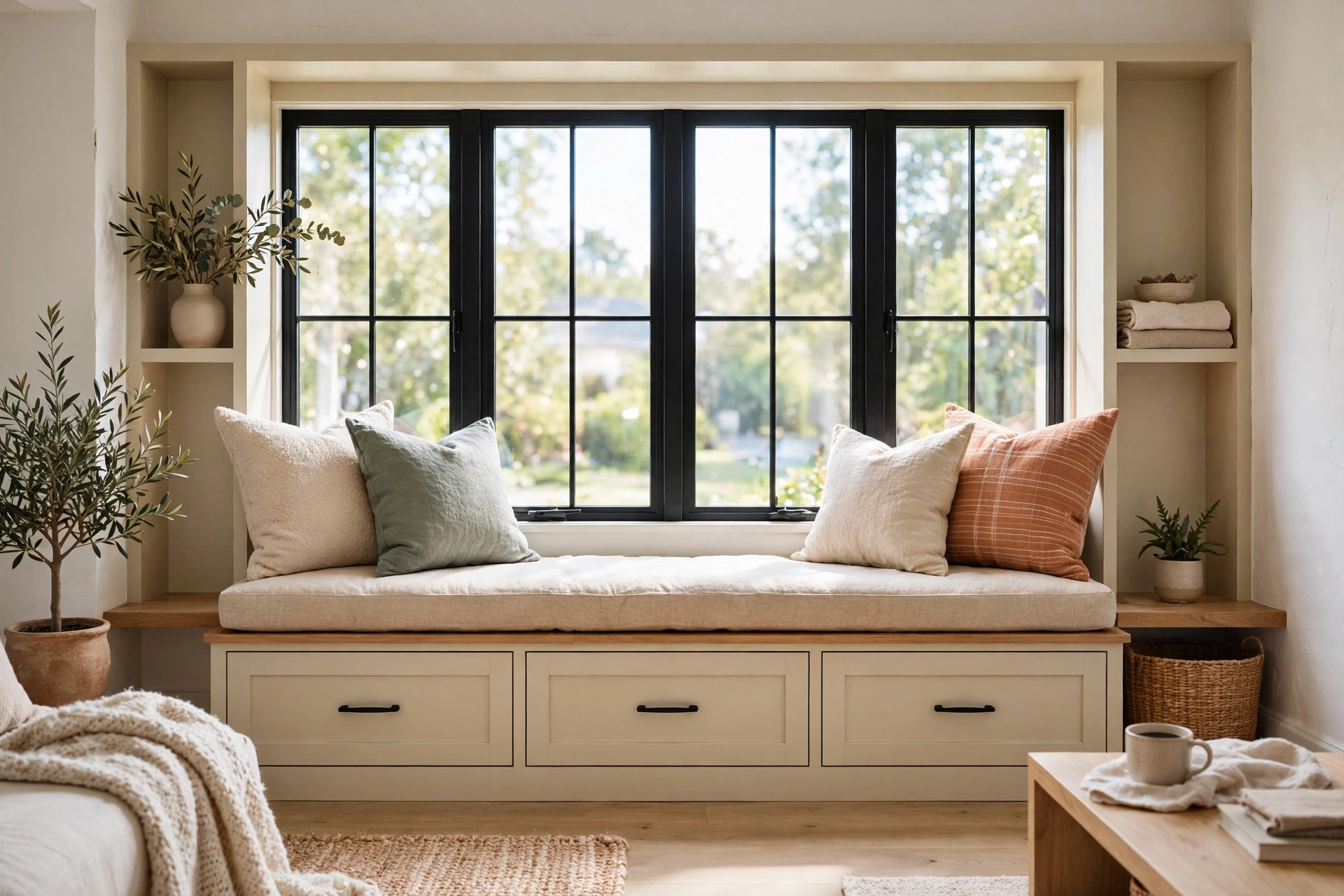
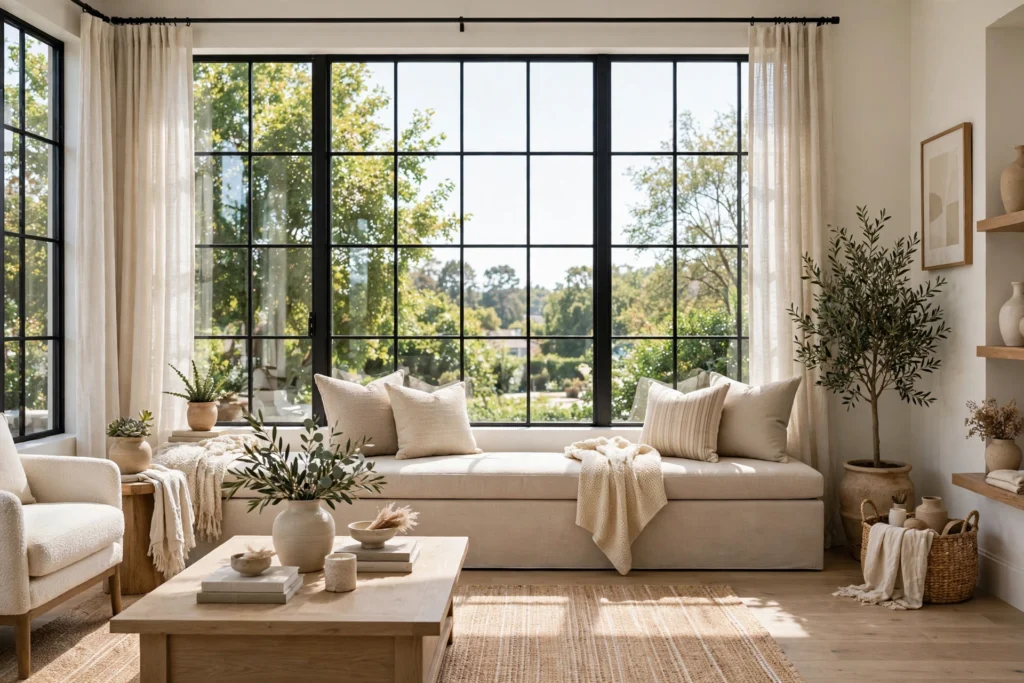
A bench under the living room window turns dead space into the room’s favorite seat. Add a hinged top or deep drawers underneath and it swallows blankets, board games, and kids’ toys while looking like custom millwork. Top it with a 3 to 4-inch foam cushion in a washable fabric and a couple of throw pillows for back support. This is one of the highest-value living room bench ideas because it adds seating, storage, and a sunny reading spot in one move. Paint it the wall color for a built-in look, or contrast it for a furniture feel. Our living room window seat ideas with cozy storage go deeper on this project.
2. Use an Upholstered Bench as a Coffee Table
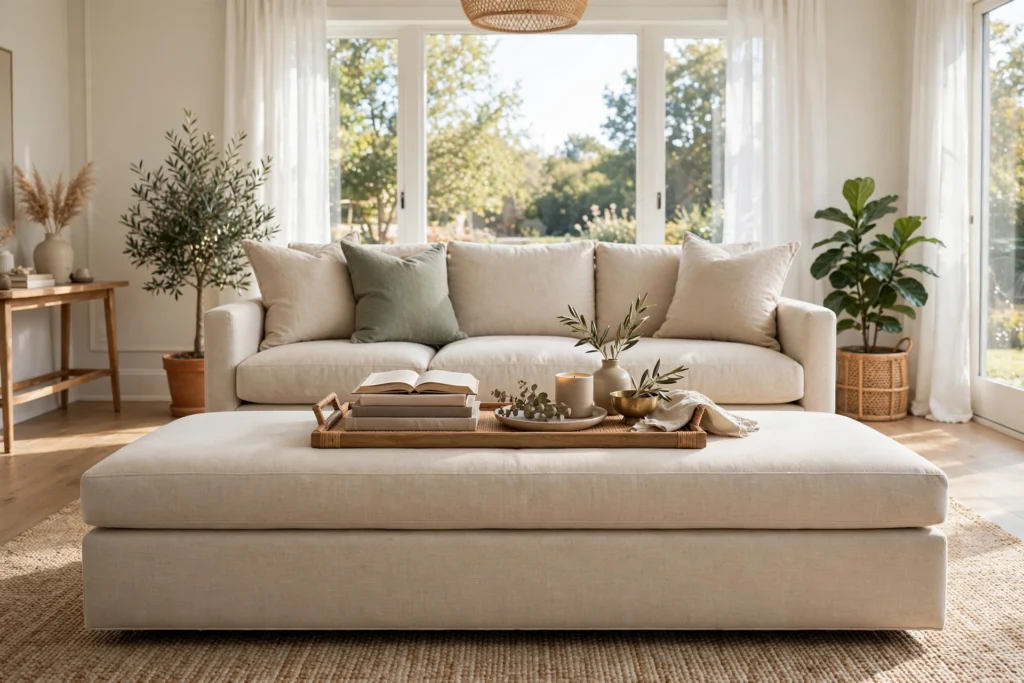
Swap the coffee table for a long upholstered bench and the whole room gets more flexible. By day it holds a tray with books and a candle; when guests arrive, the tray comes off and it seats two. Choose a firm, flat top — soft, crowned upholstery will not hold a tray steady — and a performance fabric that handles feet and spills. A bench at coffee-table height (16 to 18 inches) keeps sightlines open across the room, which makes small living rooms feel larger. This single swap is the fastest way to make a formal living room feel relaxed and livable.
3. Place a Slim Bench Behind the Sofa
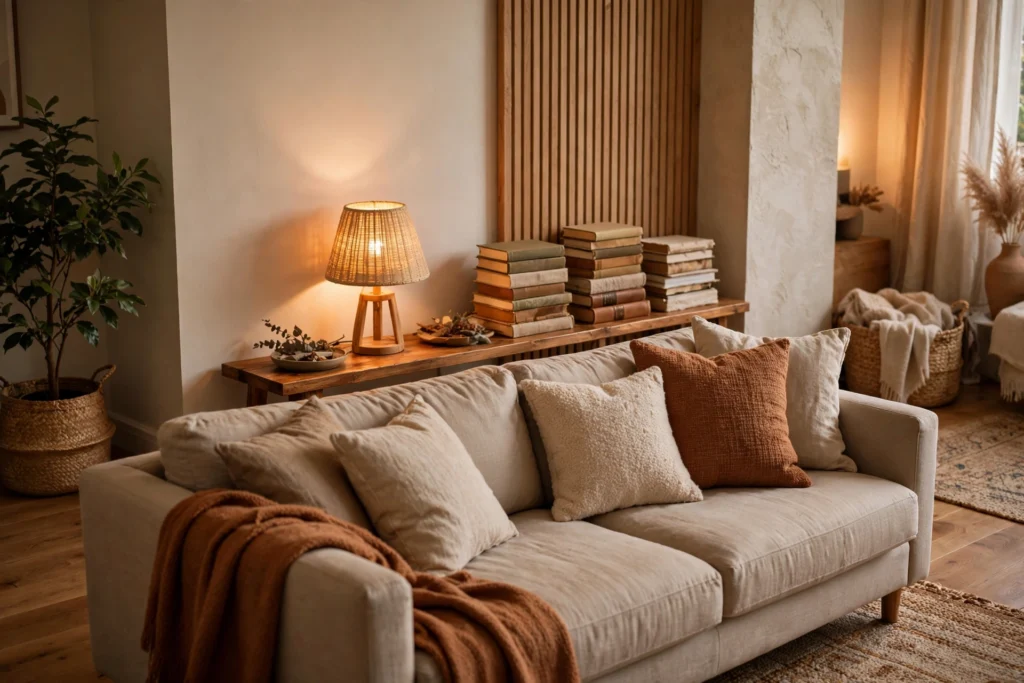
In open-plan spaces, a narrow bench behind the sofa acts as a soft room divider and a console table in one. Style the top with a lamp, a stack of books, and a small plant; the bench itself offers perch seating for parties. Keep it 10 to 12 inches deep so it does not eat into the walkway, and match its height to the sofa back or slightly lower. This trick defines the living zone without blocking light or conversation the way a tall console would. It is especially useful in studio apartments where every piece must multitask.
4. Add a Vintage Wooden Bench
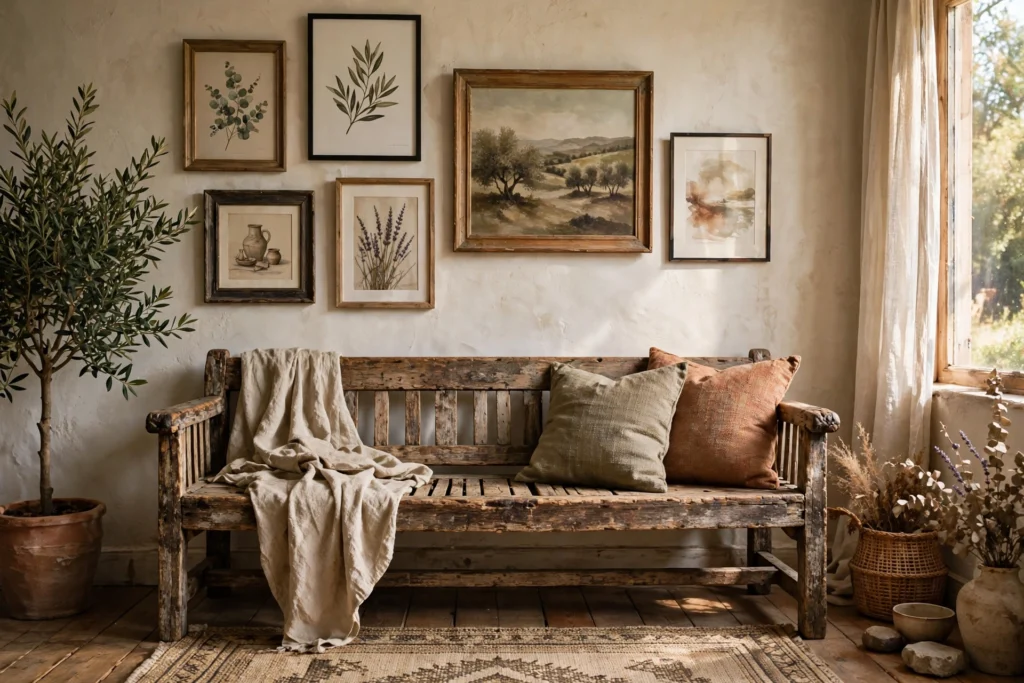
A timeworn wooden bench — farmhouse, church pew, or rustic slab — brings instant character that new furniture cannot fake. Use it against a wall under a gallery of art, at the foot of a large window, or as a low display shelf for plants and baskets. The patina and imperfections are the point, so resist the urge to refinish it perfectly; a light wax is enough. Pair it with softer, modern pieces to keep the room from feeling like a theme. Flea markets, estate sales, and architectural salvage yards are the best hunting grounds, often under fifty dollars.
5. Choose a Leather Bench for Modern Rooms
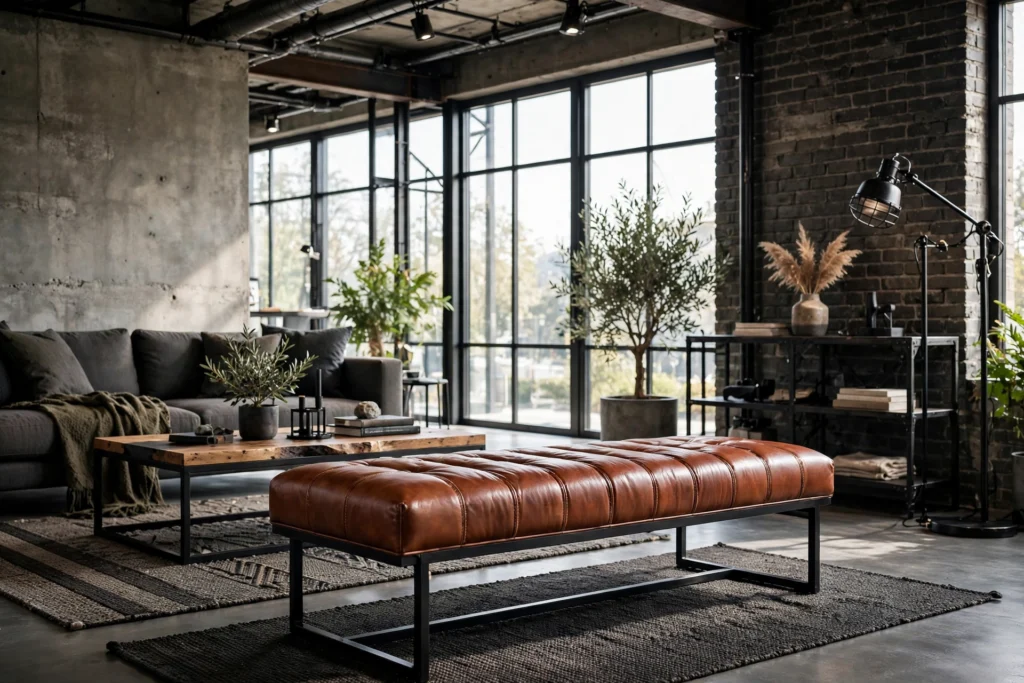
A leather bench — cognac, black, or oxblood — adds tailored polish to modern, industrial, and mid-century living rooms. The clean lines and rich material read as intentional and grown-up, whether it sits under a console, in front of a fireplace, or at the end of a chaise. Leather wipes clean and ages beautifully, developing a patina that improves with use. One leather bench can anchor the material palette of the whole room — echo it with a leather pillow or ottoman for cohesion.
6. Hide Clutter in a Storage Bench
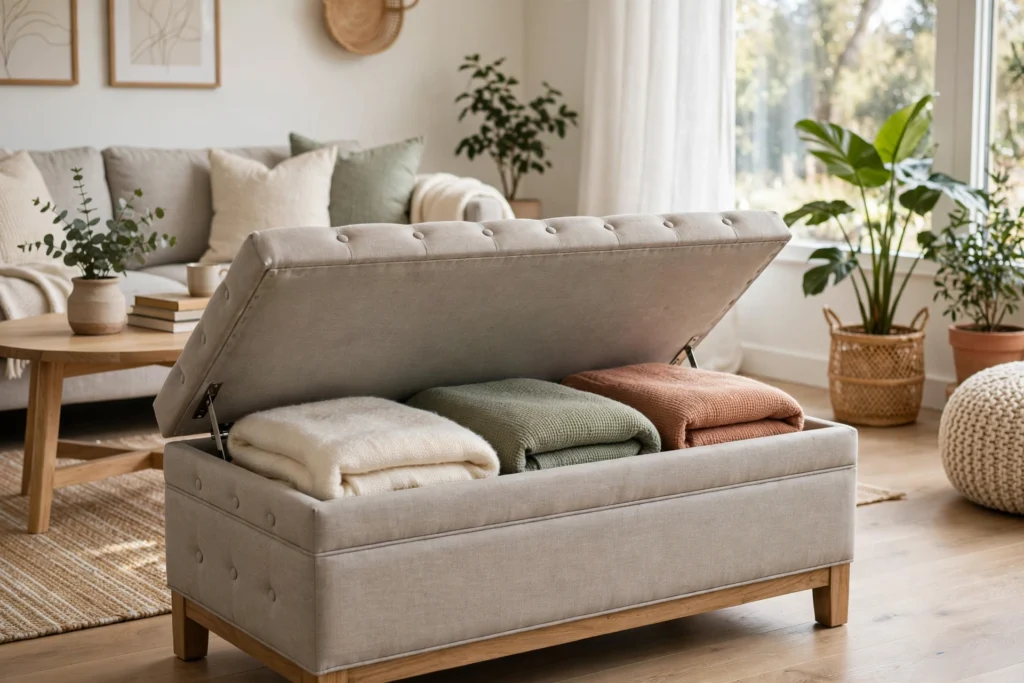
A storage bench is two furniture pieces for the price of one: seating on top, a deep bin inside. Use it to hide the living room’s chronic clutter — throw blankets, remotes, chargers, kids’ art supplies — behind a clean, upholstered lid. Place one under a window, against an empty wall, or at the foot of a large sectional where a coffee table would crowd. Look for safety hinges that will not slam on fingers and a lid sturdy enough for adult seating. The Spruce’s roundup of storage bench ideas shows clever configurations you can adapt from the mudroom to the living room.
7. Style a Tufted Velvet Bench

For glam, Hollywood Regency, or eclectic rooms, nothing beats a tufted velvet bench in emerald, navy, or blush. The deep buttoning and plush fabric make it jewelry for the room — place it where it will be seen, like under a console in the entry-adjacent living area or in front of a fireplace. Keep the silhouette low and the legs slim so it does not visually bulk up. Velvet shows pressure marks, so rotate cushions and brush the nap occasionally. One tufted piece is a statement; pair it with simpler companions so it stays the star.
8. Tuck a Narrow Bench Into a Nook
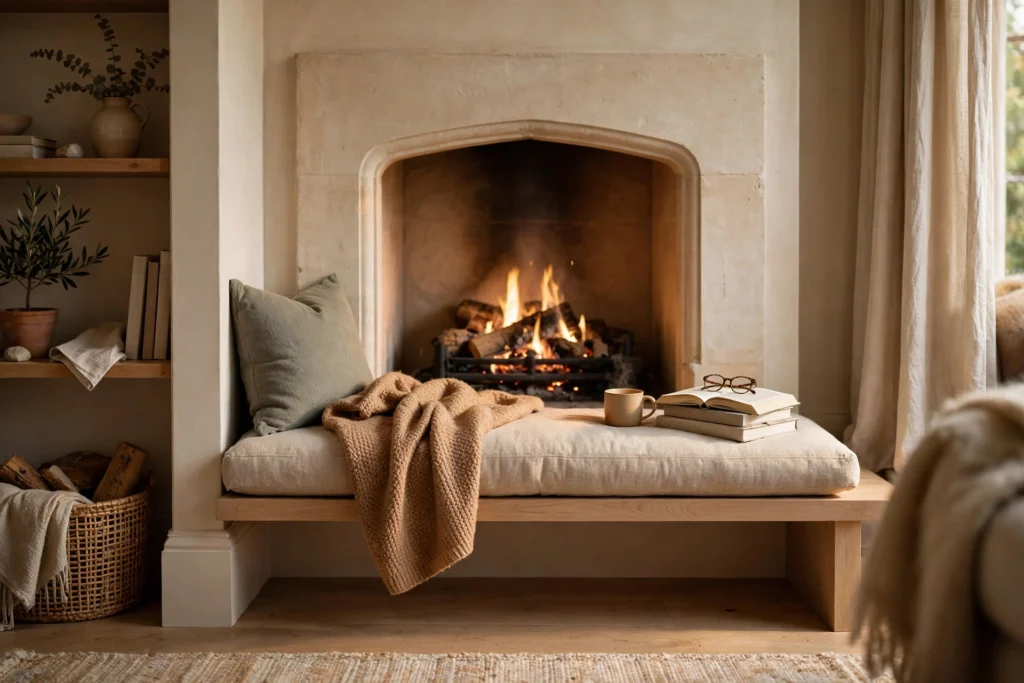
Awkward nooks — the recess beside the fireplace, the dead space under the stairs, the gap between bookshelves — are where benches shine. A narrow bench, 12 to 14 inches deep, fills the void with purpose: a reading perch, a plant display, a spot for the cat. Add a cushion cut to fit and a wall-mounted sconce above, and the forgotten corner becomes a destination. Measure carefully, since nooks are unforgiving, and consider a custom cushion for a built-in look. This is the highest-impact small project in this roundup for rooms with odd architecture.
9. Try a Woven Rattan Bench
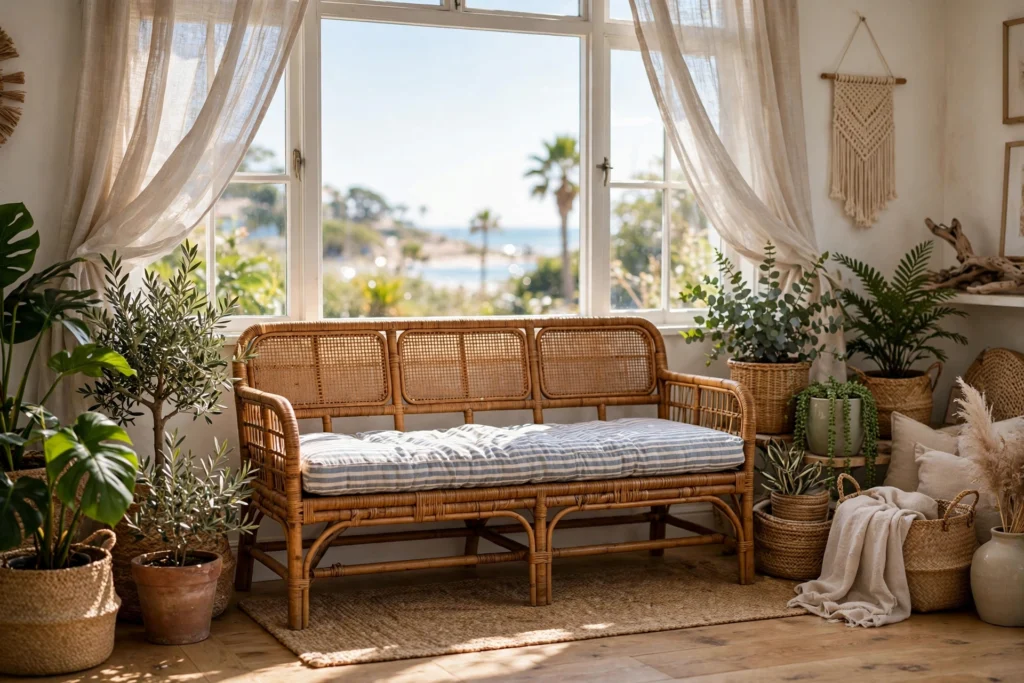
Rattan and cane benches bring breezy, natural texture to coastal, boho, and Scandinavian living rooms. The open weave keeps the piece visually light, so it works in small rooms where a solid bench would feel heavy. Use it under a window with a striped cushion, or as a coffee-table alternative topped with a tray. Real rattan needs protection from direct, relentless sun to avoid drying out; quality synthetic weaves handle sunrooms better. The texture pairs beautifully with linen, jute, and light woods — keep the surrounding palette natural for a cohesive feel.
10. Go Industrial With a Metal-Frame Bench
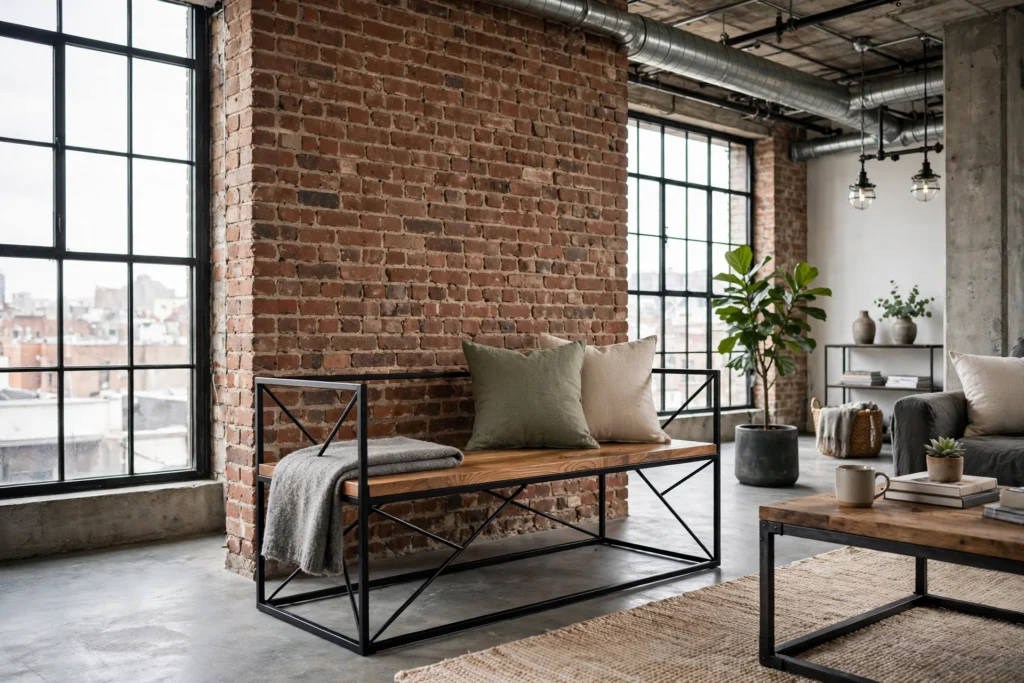
A bench with a black steel frame and wood seat brings industrial edge to lofts and modern farmhouses. The slim metal legs keep it airy while the wood top adds warmth — the combination works with leather sofas, concrete floors, and exposed brick. Use it as a coffee table, under a large piece of art, or as extra dining-style seating pulled up to a low table for game night. Powder-coated frames resist scratches; raw steel develops a patina. Keep the styling minimal — the materials are the statement.
11. Use a Bench as a Room Divider
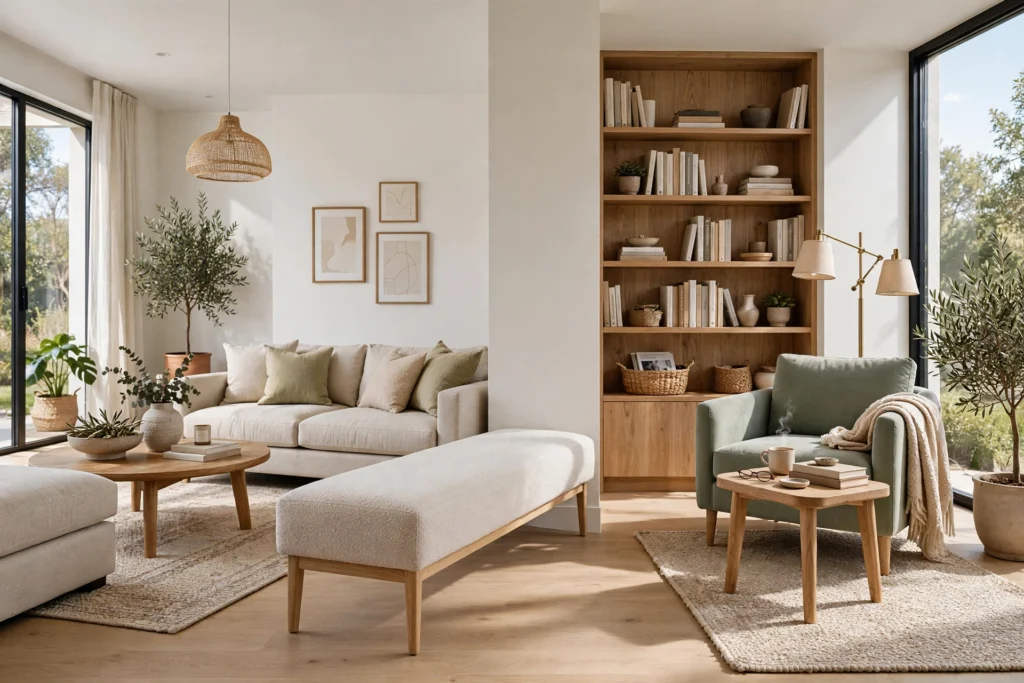
In a long or open-plan living room, place a bench perpendicular to the main seating to carve out zones without walls. A backless bench marks the boundary between the TV area and a reading corner while keeping sightlines open; add a low bookshelf or plant on one end to strengthen the division. This is gentler than a sofa with its back turned and more flexible than furniture you cannot move. Choose a bench long enough to read as a boundary — at least 48 inches — and keep both sides styled since both sides will be seen.
12. DIY a Simple Wood Slab Bench
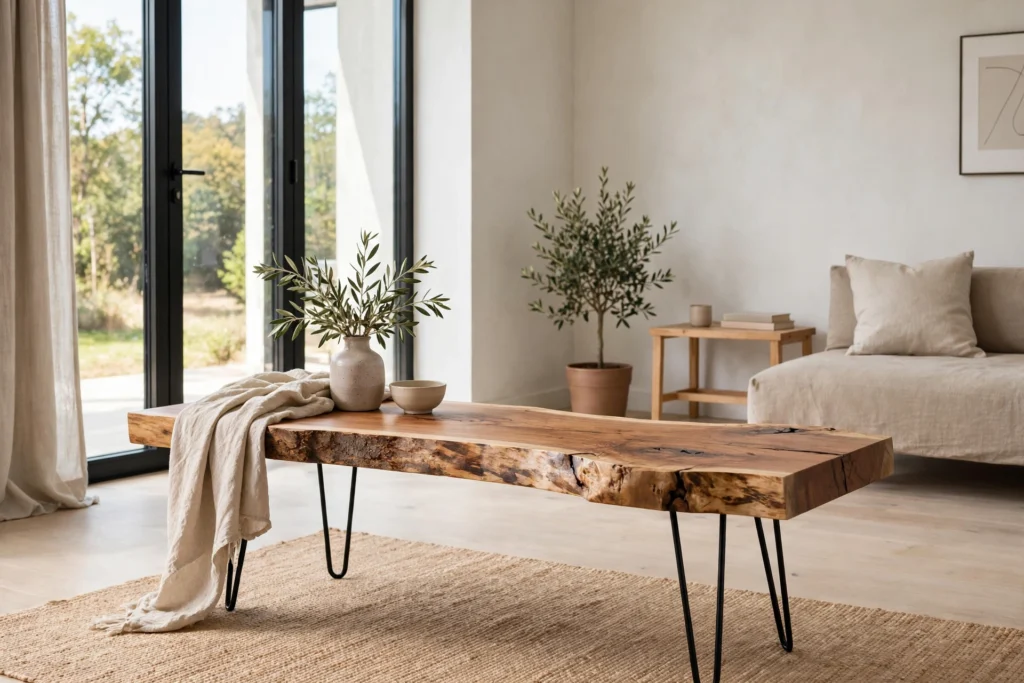
A wood slab on hairpin or tapered legs is the easiest DIY bench in this list and suits Scandinavian, rustic, and minimalist rooms. Sand a live-edge or straight-cut slab, finish it with hardwax oil, and attach legs — an afternoon’s work for a piece that looks far more expensive. The natural edge adds organic character; a straight cut reads more modern. Seal it well if it will hold drinks. This project is also the most customizable: cut the slab to the exact length your nook or window needs. Reclaimed lumber yards sell suitable slabs cheaply.
13. Double It as an Ottoman Bench
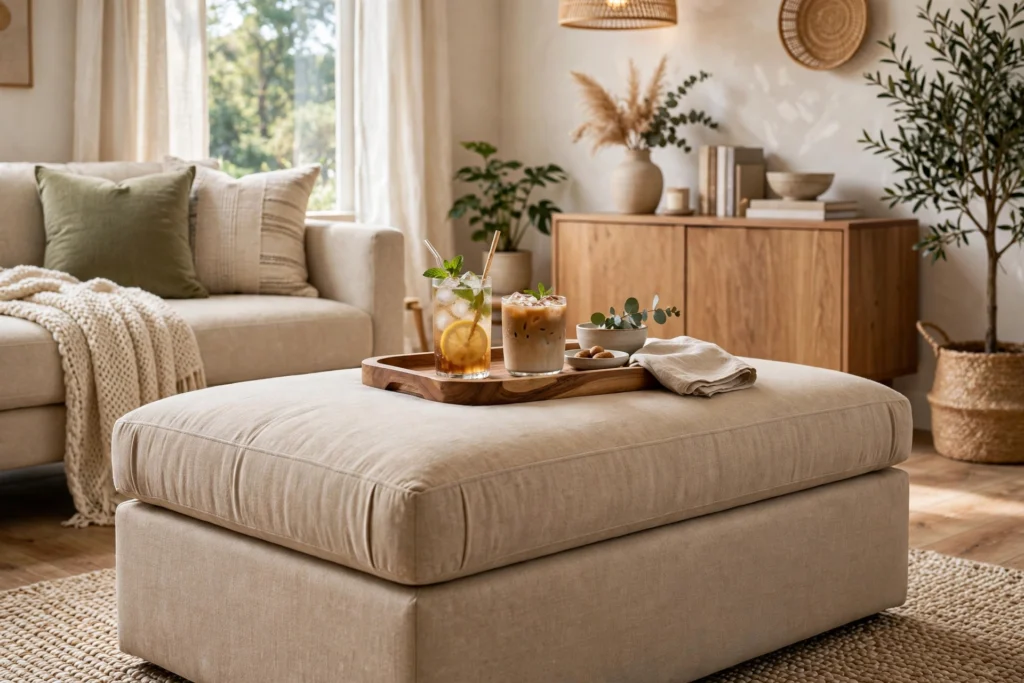
An ottoman-style bench — fully upholstered, no legs visible — works as a footrest, extra seat, and coffee table base in one soft package. Top it with a large tray and it holds drinks steadily; remove the tray and it is the room’s most comfortable perch. Choose a firm fill so it does not collapse under weight, and a dark or patterned fabric if it will see heavy foot traffic. This is the most versatile of these living room bench ideas for families: soft edges mean no bruised shins, and kids can climb freely. It also tucks neatly against a sectional.
14. Float a Bench Under Wall Art
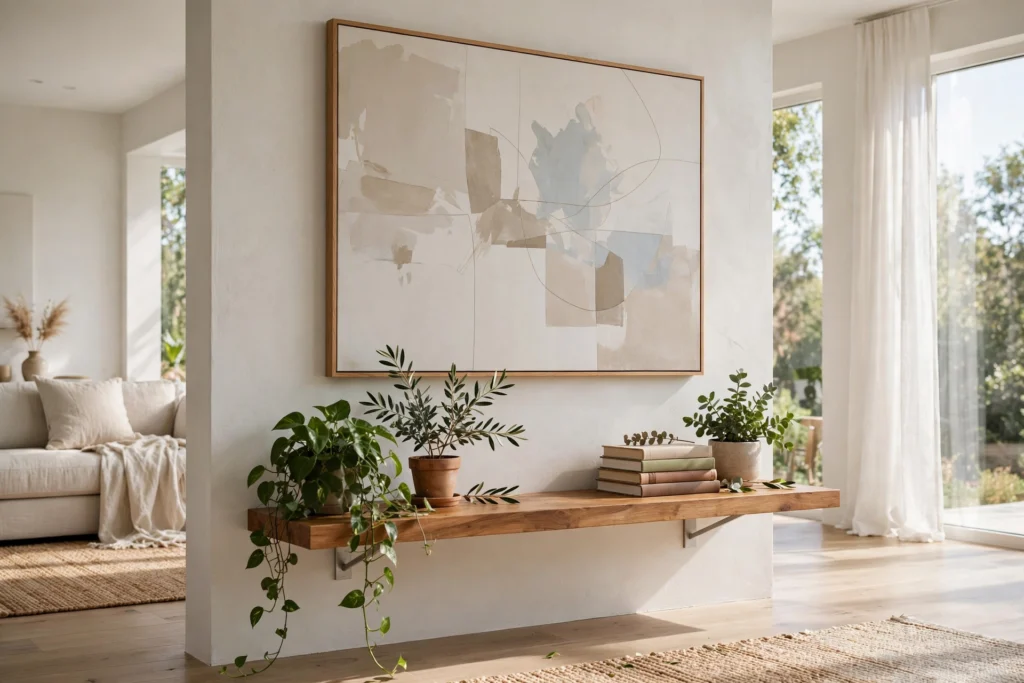
Hanging a bench-height shelf or mounting a floating bench under a large piece of art creates a gallery-like moment in the living room. The “bench” becomes a display ledge for sculpture, books, and plants — seating optional, style guaranteed. Keep the depth shallow (10 to 12 inches) and mount into studs for real weight capacity. This works beautifully on the wall opposite the sofa, where a traditional bench might crowd the walkway. Style it with restraint: three to five objects with breathing room read as curated, while a crowded ledge reads as storage.
15. Pick a Long Bench for Entry-Adjacent Living
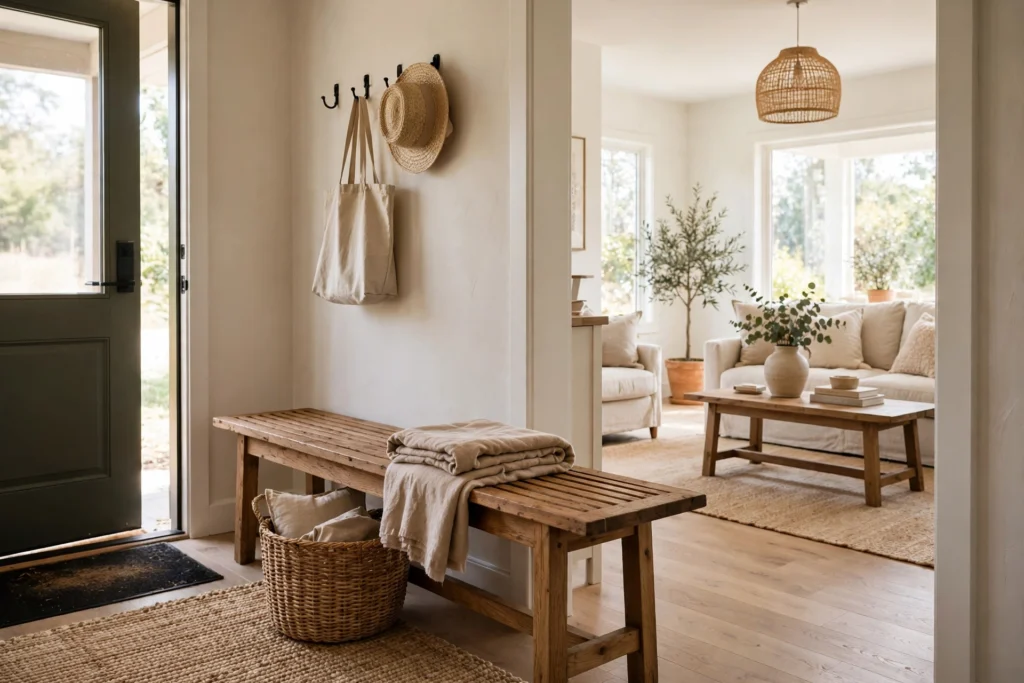
In open plans where the front door opens into the living room, a long bench near the entry serves as both a landing strip and living room seating. Style one end with a basket for shoes and a throw, and leave the other end clear for sitting. A long bench seat like this bridges the two zones visually, especially in a finish that echoes the living room furniture. Add wall hooks above for coats and a mirror for last looks, and the entry feels intentional instead of accidental. It is the hardest-working six feet in an open-plan home.
FAQ
What size bench works in a living room?
For seating, look for a bench 17 to 19 inches high (standard seat height) and at least 36 inches long; 48 to 60 inches seats two to three comfortably. As a coffee-table alternative, match your sofa seat height (usually 16 to 18 inches). Always measure the spot first — a bench should relate proportionally to the furniture nearest it, roughly two-thirds its width.
Can a bench replace a coffee table?
Yes, and it is one of the smartest swaps for flexible living rooms. Choose a bench with a firm, flat top at 16 to 18 inches high, add a tray for drinks, and you gain seating for guests whenever needed. Pick performance fabric or leather for durability. The only trade-off is less enclosed storage than a table with drawers — pair it with baskets underneath if you need that.
How do I style a living room bench?
Give it one clear job first (seat, table, display), then style lightly: a folded throw on one end, a tray or stack of books in the middle, and breathing room. If it is under a window, add a cushion and pillows; if it is a coffee-table stand-in, keep the top mostly clear. Less is more — a bench styled like a shelf looks cluttered.
Where should I put a bench in the living room?
The highest-value spots are under a window, behind the sofa in open plans, against an empty wall under art, or in place of a coffee table. Avoid floating a bench in the middle of a walkway or pushing it somewhere it blocks traffic. Every bench should sit near the activity it serves — reading, conversing, or displaying.
Are storage benches worth it for living rooms?
Absolutely, especially in small or family living rooms. A storage bench hides blankets, toys, and remotes while providing seating or a table surface — two functions in one footprint. Look for safety hinges, a sturdy lid rated for sitting, and a size that fits the spot. For more configuration ideas, our living room accent chair ideas for a cozy stylish space pair seating inspiration with storage-smart picks.
Keep Exploring
The right bench earns its keep daily — seating guests, hiding clutter, anchoring a wall — while the wrong one just takes up space. Choose the job first, then the bench. Once yours is in place, give its companions the same thoughtful treatment with our living room side table ideas for style and function, and watch the whole room pull together.