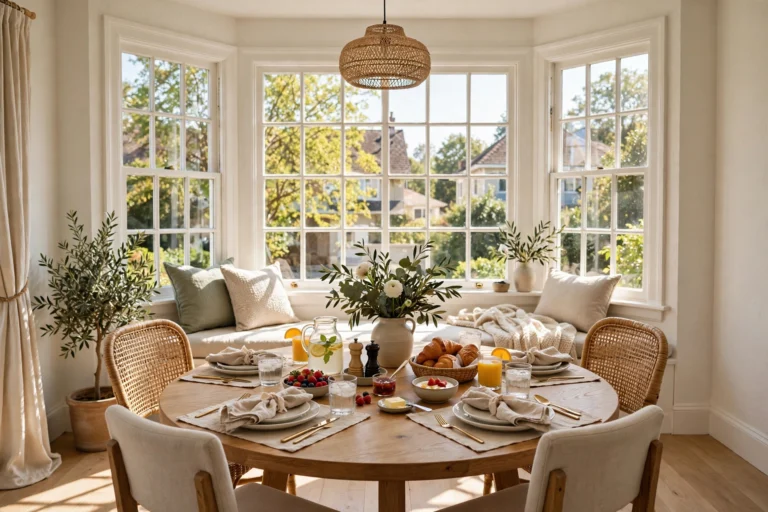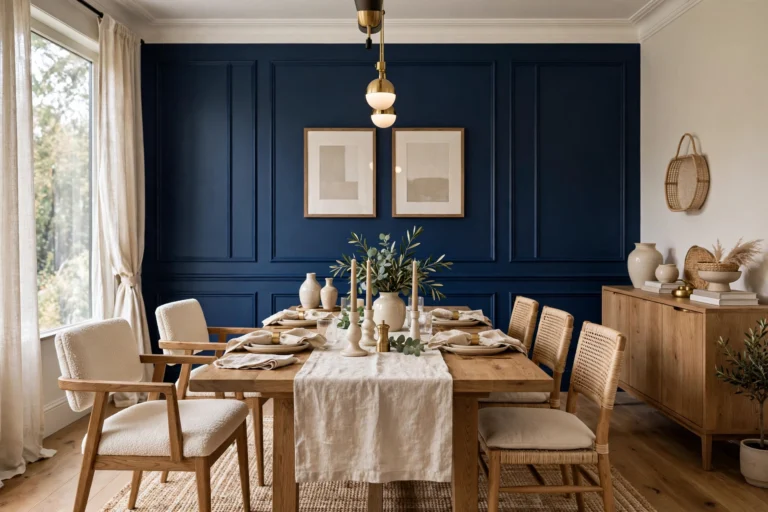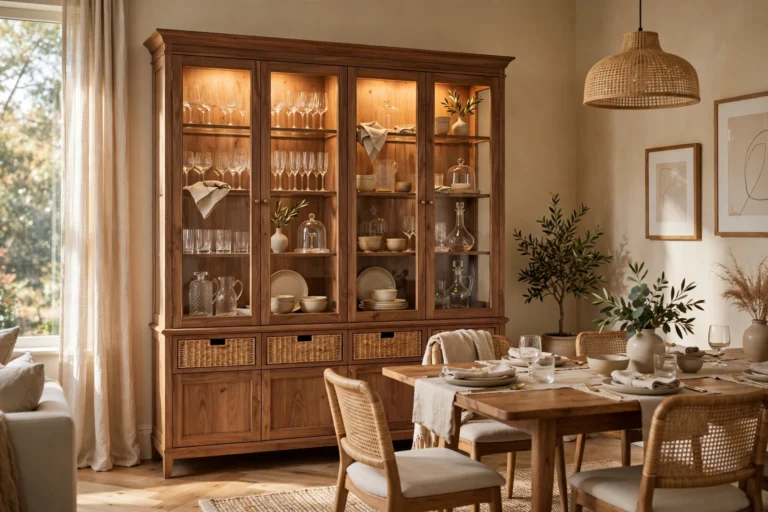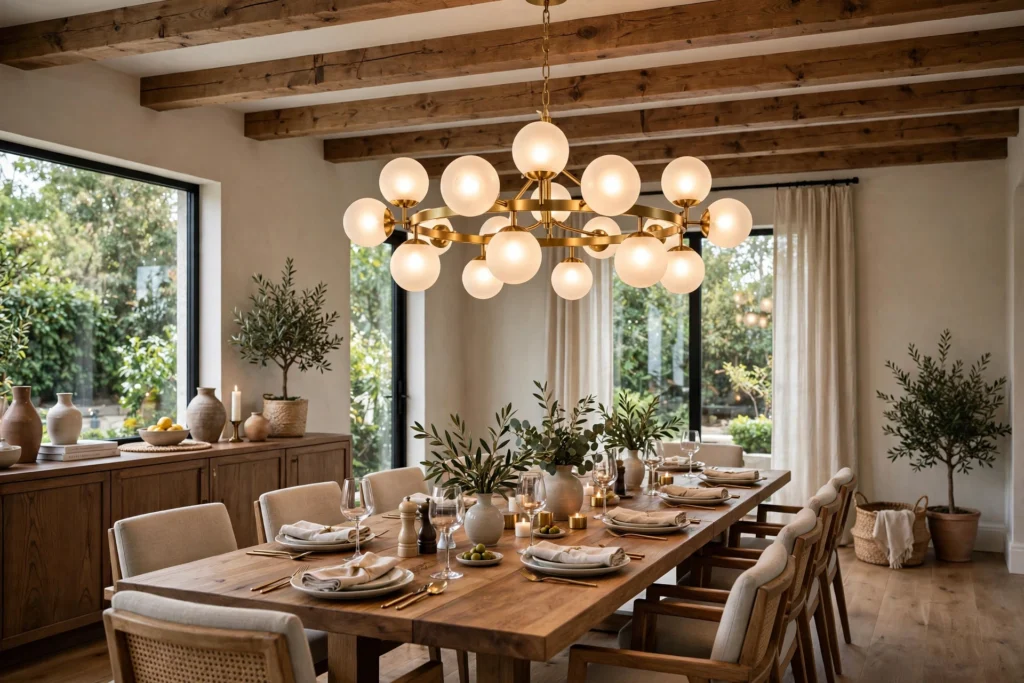

The dining room ceiling is the most underused surface in the house — everyone looks at the table, the chairs, the art, but the ceiling above quietly sets the whole mood. A flat white ceiling does its job and disappears; a treated ceiling defines the dining zone, bounces light where you want it, and makes even a simple weeknight dinner feel like an occasion. These dining room ceiling ideas run from architectural moves like beams and coffers to simple weekend projects like paint and medallions, so there is an option for every budget and skill level.
Before you commit, check the practical side: your ceiling height, the location of joists, and your lighting plan. Anything you do overhead should work with the fixture that hangs over the table — a chandelier, pendant, or cluster — because the ceiling and the light read as one composition. Dining room lighting ideas from chandeliers to sconces walk through fixture heights and layering, so plan the light and the ceiling treatment together rather than as afterthoughts.
1. Add Exposed Wood Beams
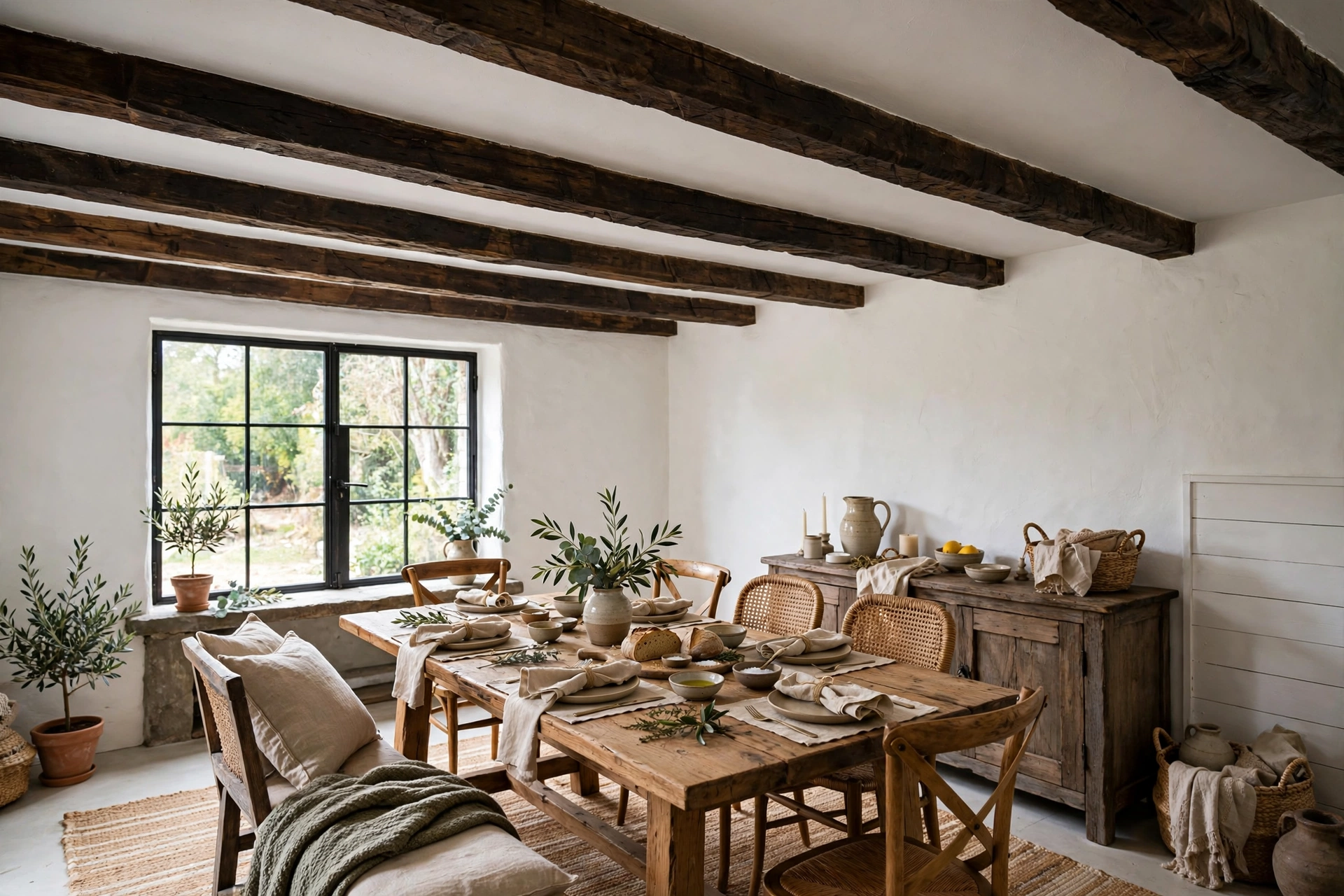
Exposed beams bring instant warmth and structure to a dining room, and they suit almost any style depending on the finish. Rough-hewn oak or reclaimed timbers lean rustic and farmhouse; slim, dark-stained beams read modern and tailored; whitewashed beams keep things coastal and breezy. Run them parallel to the table’s long axis to emphasize the room’s direction, and space them evenly — typically 4 to 6 feet apart. Faux beams in lightweight polyurethane look convincing from below and go up without structural work, which makes them a realistic weekend project. Keep the rest of the ceiling simple so the beams get the spotlight.
2. Try a Classic Coffered Ceiling
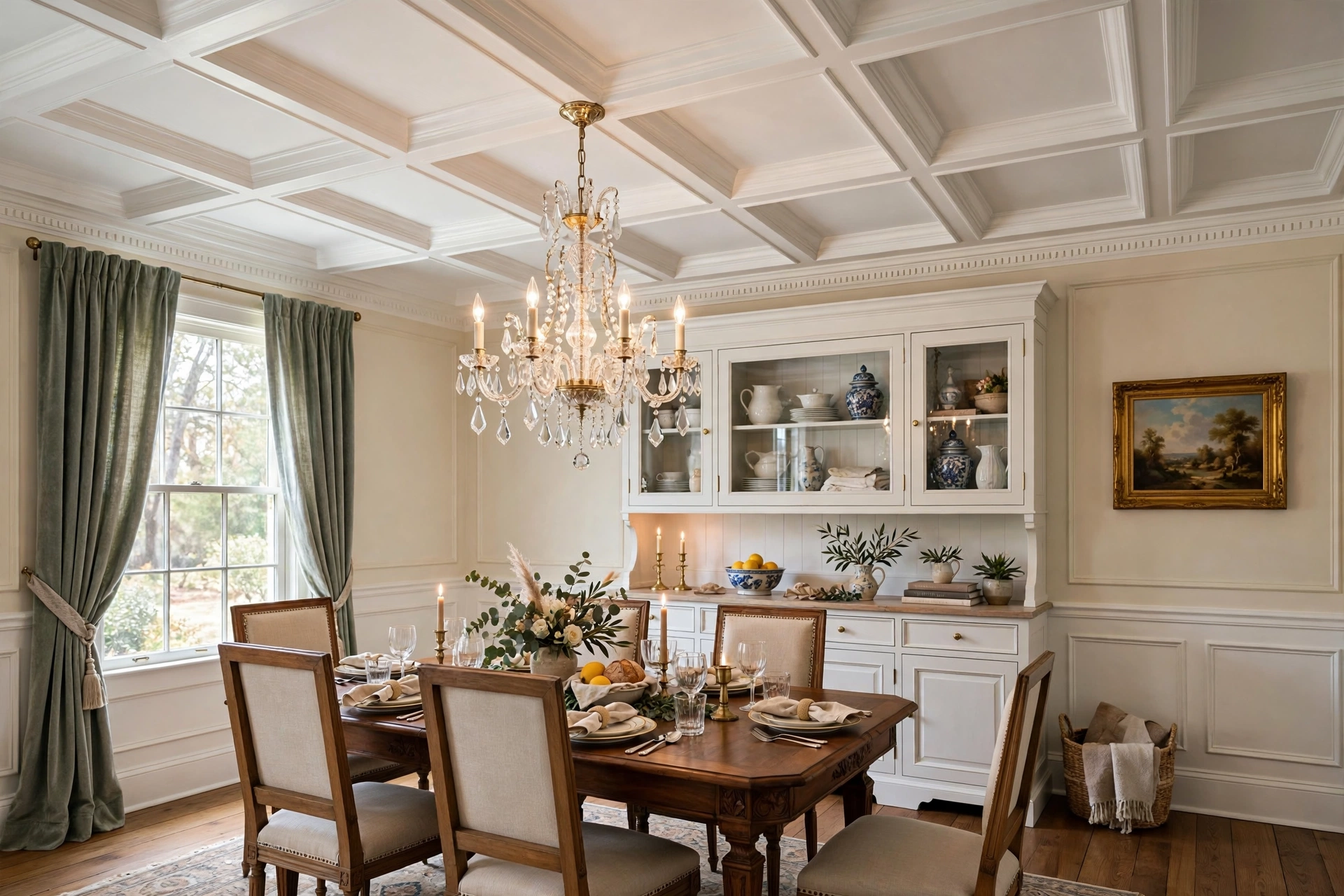
Few treatments say “dining room” like a coffered ceiling — the grid of recessed panels adds rhythm, depth, and a sense of occasion that flat drywall never will. A coffer is simply a sunken architectural panel, and grouping them in a regular grid turns the ceiling into a piece of millwork. Traditional coffers use deep wood beams, but painted versions — white beams with a slightly darker inset, or tone-on-tone all-white — feel fresh in transitional homes. Keep the grid spacing proportional: roughly 3 to 4 feet works in average rooms, wider in grand spaces. The look pairs beautifully with a traditional chandelier hung from the center coffer.
3. Create a Tray Ceiling for Depth
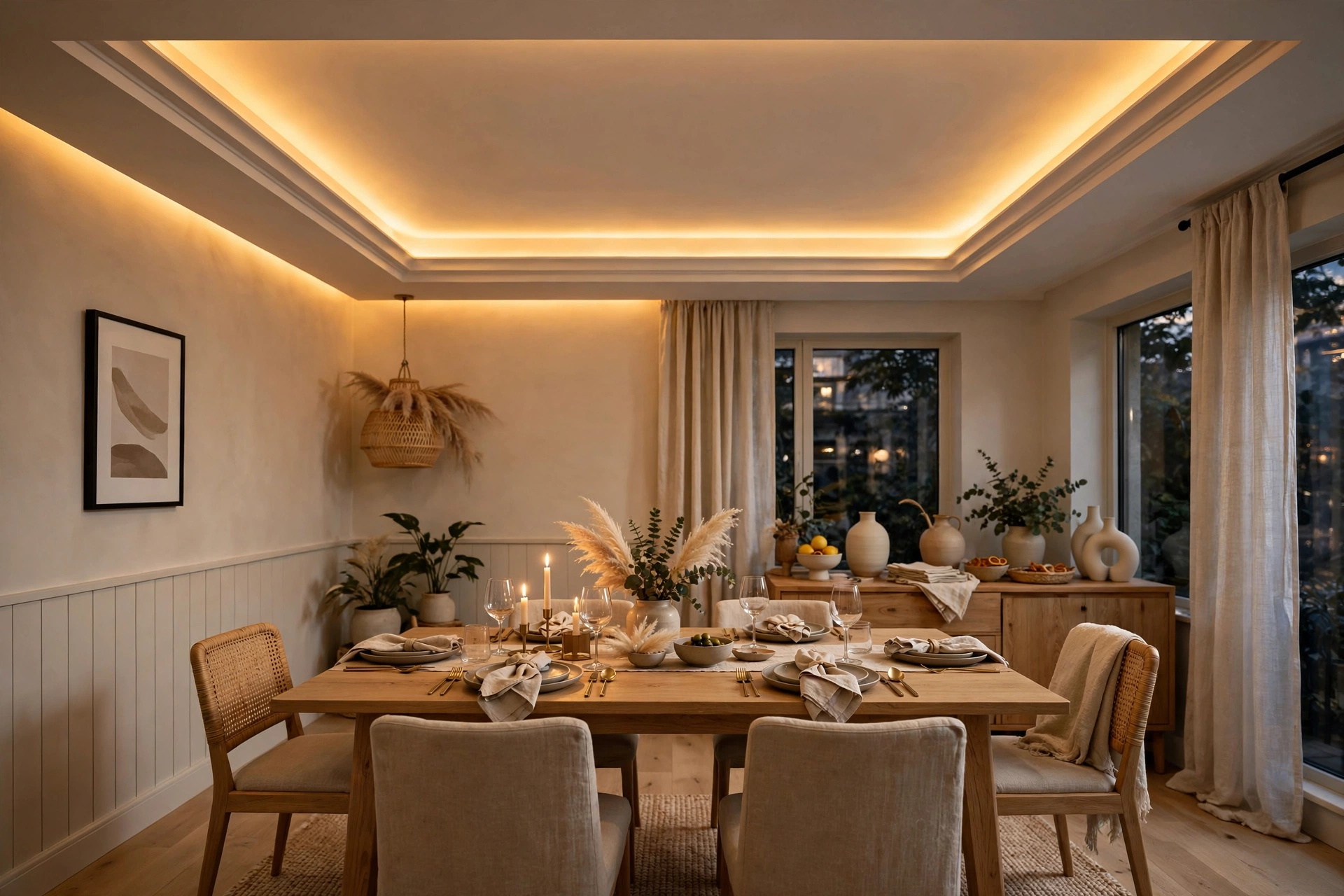
A tray ceiling — a recessed central section framed by a step down to the perimeter — adds the illusion of height without touching the actual joists. It is one of the best ceiling treatments for standard 8-foot ceilings because the recess tricks the eye upward while the perimeter can hide cove lighting. Paint the tray interior a shade deeper than the walls or line it with wallpaper for a jewel-box effect, then run warm LED strips in the cove for a soft wash of light. The step also creates a natural border that zones the dining area in open-plan layouts. Keep furniture placement in mind: center the tray over the table, not the room’s midpoint, in open concepts.
4. Paint the Ceiling a Statement Color
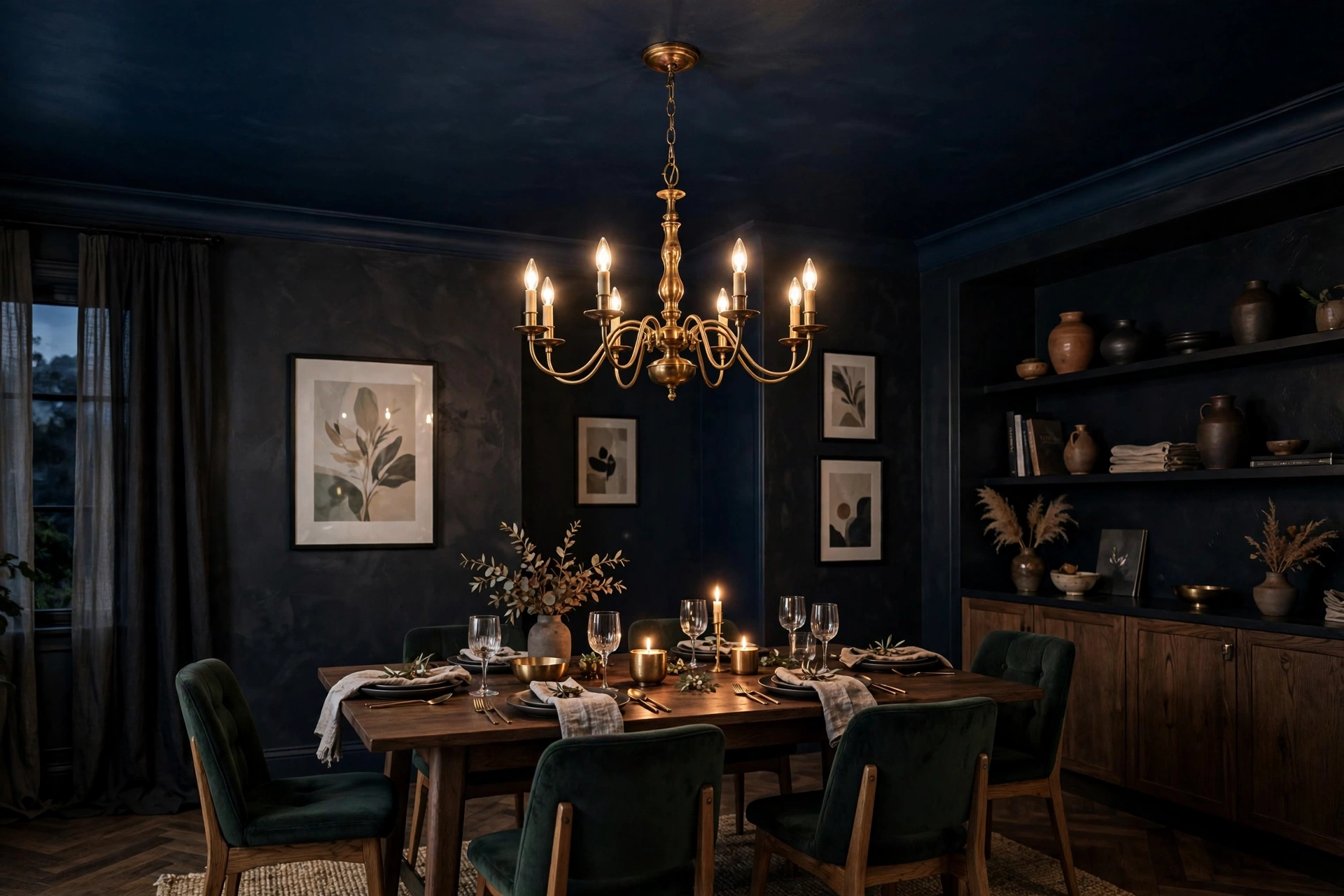
Paint is the cheapest, fastest ceiling transformation, and in a dining room it pays off enormously. A deep, moody color — charcoal, navy, forest green — makes evening dinners feel intimate and candlelit, while a soft blush, pale blue, or warm greige lifts the room without drama. The key is committing: a half-hearted pale tint looks accidental, so choose a color with enough saturation to read as intentional. Use a flat or matte finish to hide imperfections, and extend the color onto crown molding for a wrapped, cocooning effect. If the walls are already colorful, try the ceiling in a lighter or darker tone of the same family for tonal harmony.
5. Hang a Statement Chandelier Centerpiece
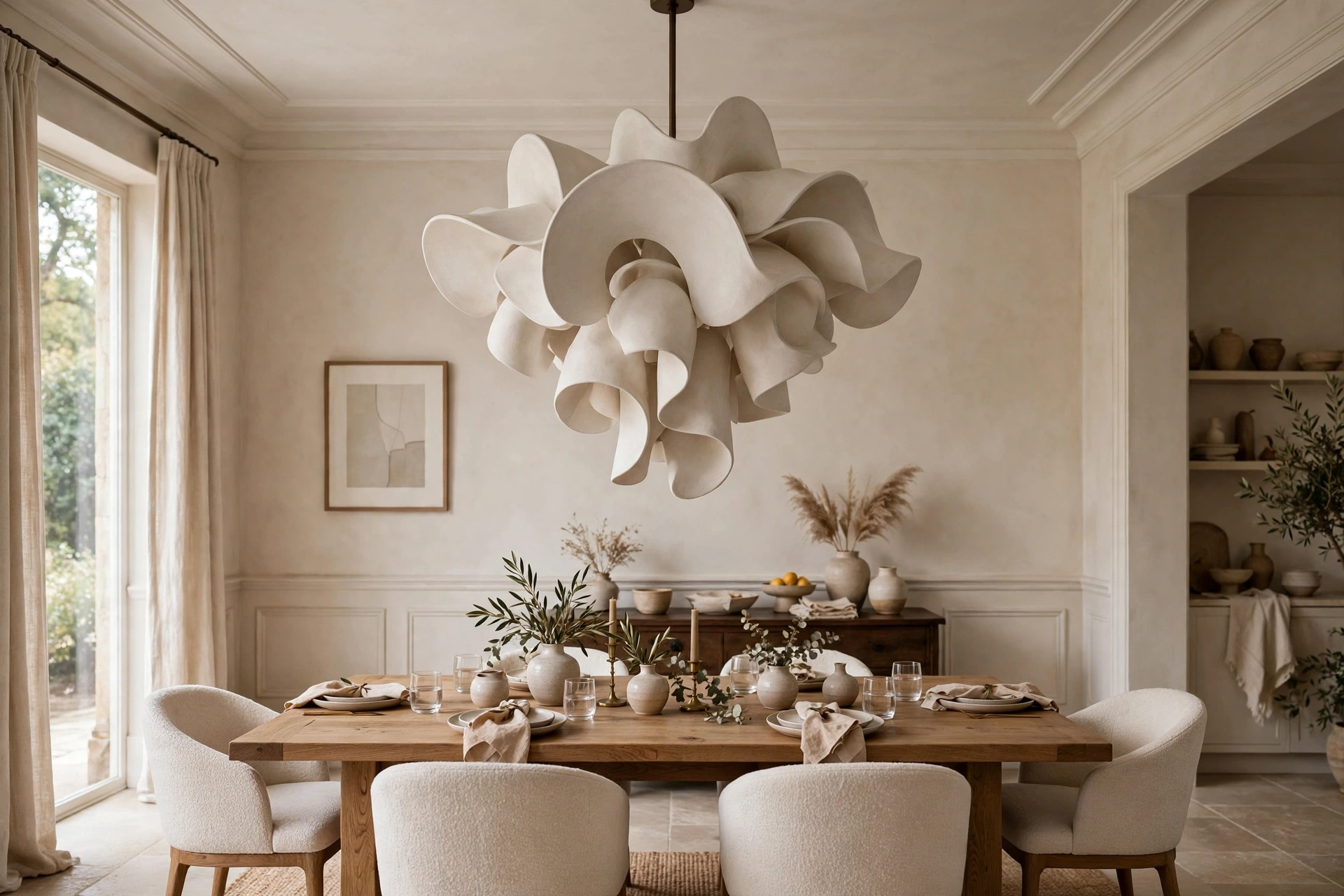
Technically lighting, but the fixture is part of the ceiling composition — the right chandelier makes a plain ceiling feel designed. Scale is everything: add the room’s length and width in feet and convert to inches for a starting diameter, and hang the bottom of the fixture 30 to 36 inches above the tabletop. Linear chandeliers suit rectangular tables, round fixtures suit round or square tables, and multi-light clusters add drama in rooms with higher ceilings. In dining rooms where you will not redo the ceiling itself, an oversized, sculptural fixture does most of the visual work. Dimmers are non-negotiable — bright for homework, low for dinner parties.
6. Install a Ceiling Medallion
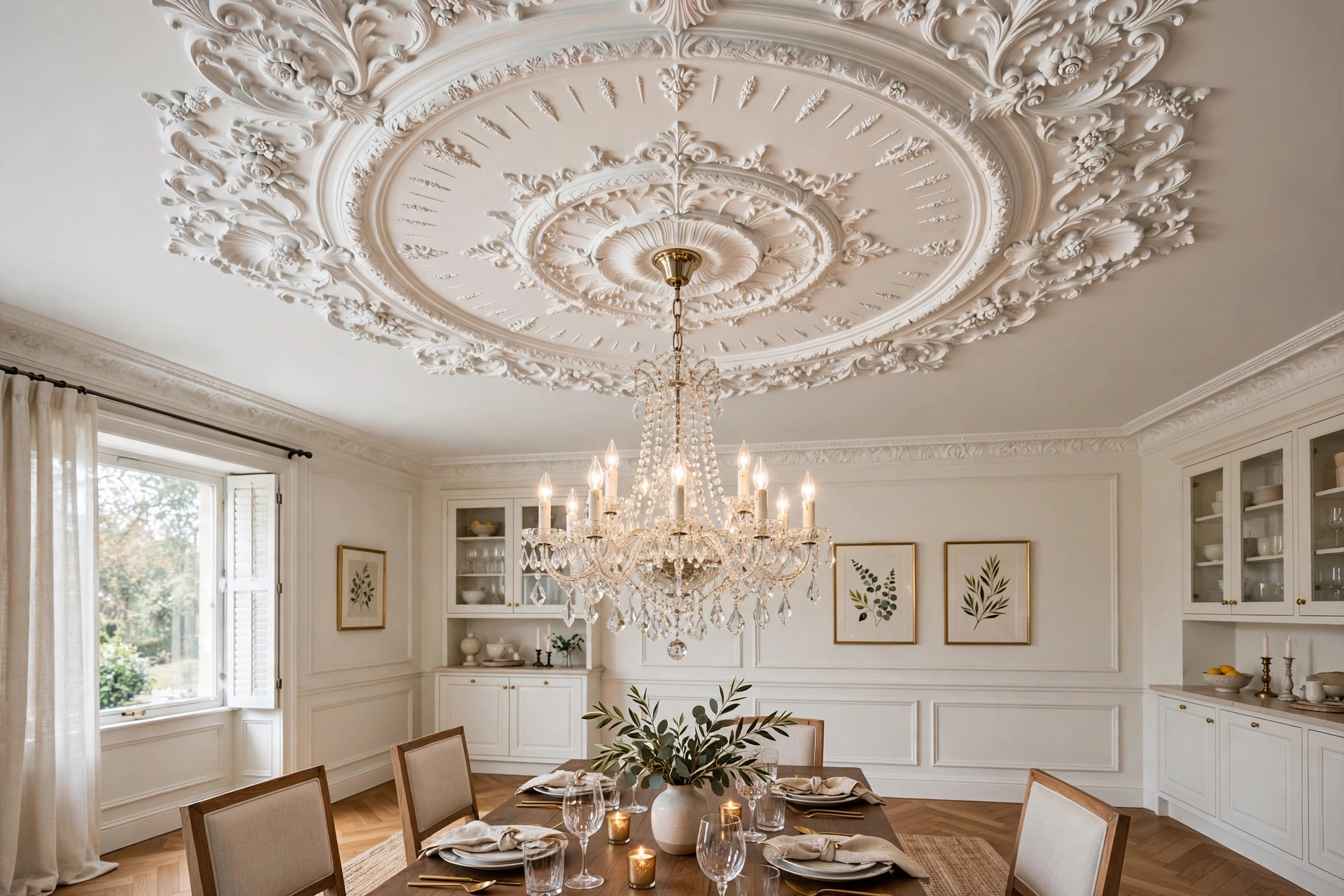
A ceiling medallion is the classic finishing touch that makes a chandelier look like it belongs — a decorative plaster or polyurethane disc that bridges the fixture canopy and the ceiling plane. Choose a medallion slightly wider than the fixture’s canopy but smaller than the table below it; oversized medallions look fussy, undersized ones look apologetic. Paint it the ceiling color for subtlety or an accent metallic for drama. Medallions also solve a practical problem: they cover patchy paint rings and old mounting holes from previous fixtures. It is a two-hour project — adhesive plus a couple of screws — that delivers an outsized sense of finish.
7. Go With Shiplap or Plank Panels
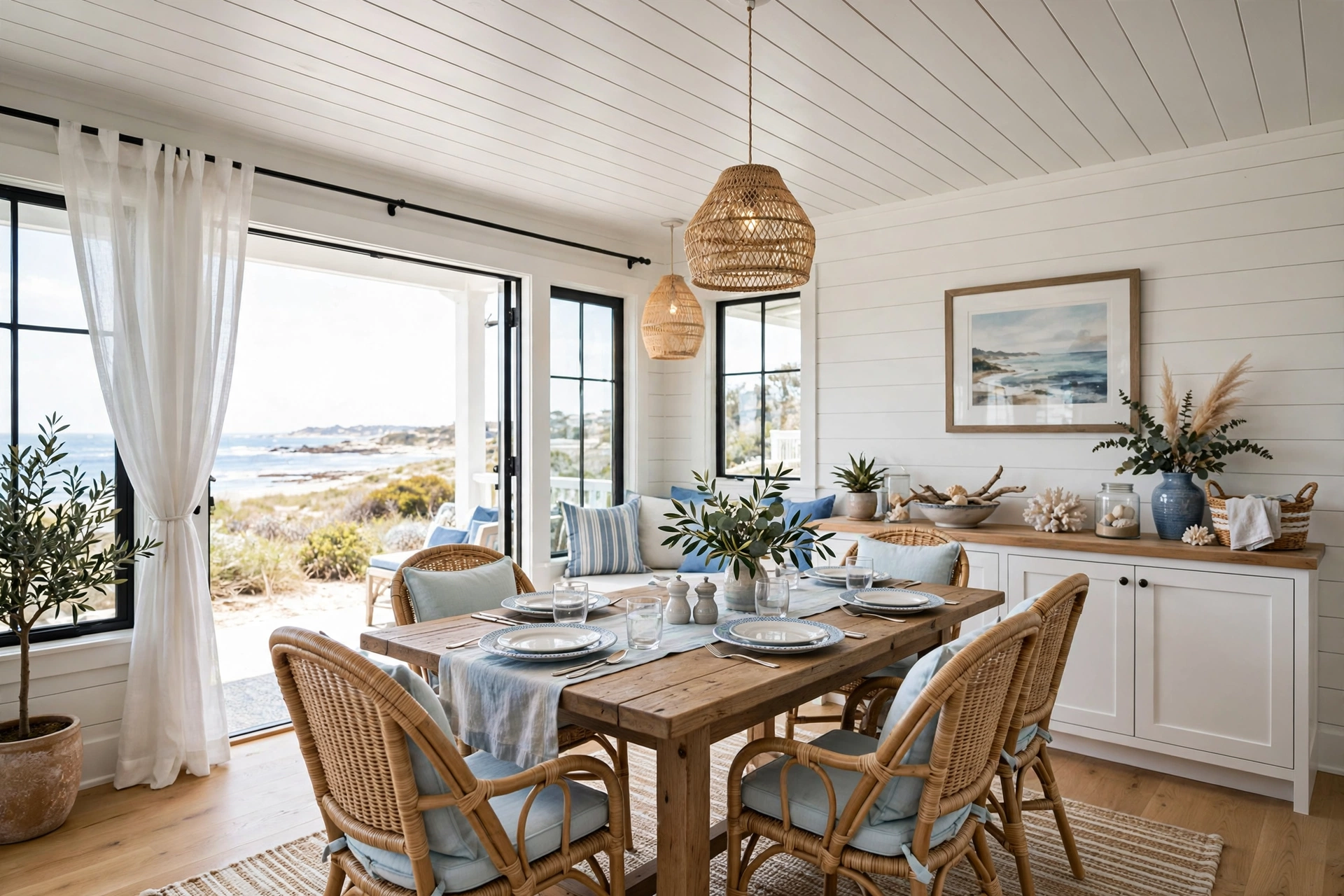
Shiplap and tongue-and-groove planks bring texture and a handcrafted feel overhead, and they work far beyond farmhouse style. Run planks across the narrow dimension of the room to make it feel wider, or along the long axis for a tunnel-like pull toward a focal window. Painted white, shiplap reads coastal and clean; stained in a warm walnut, it turns the ceiling into the room’s richest material. The grooves also help the ceiling feel lower and cozier in rooms with tall, echoing heights. DIY kits with interlocking panels make this a manageable project, though you will want a helper — overhead nailing is a two-person job.
8. Try a Bold Ceiling Wallpaper
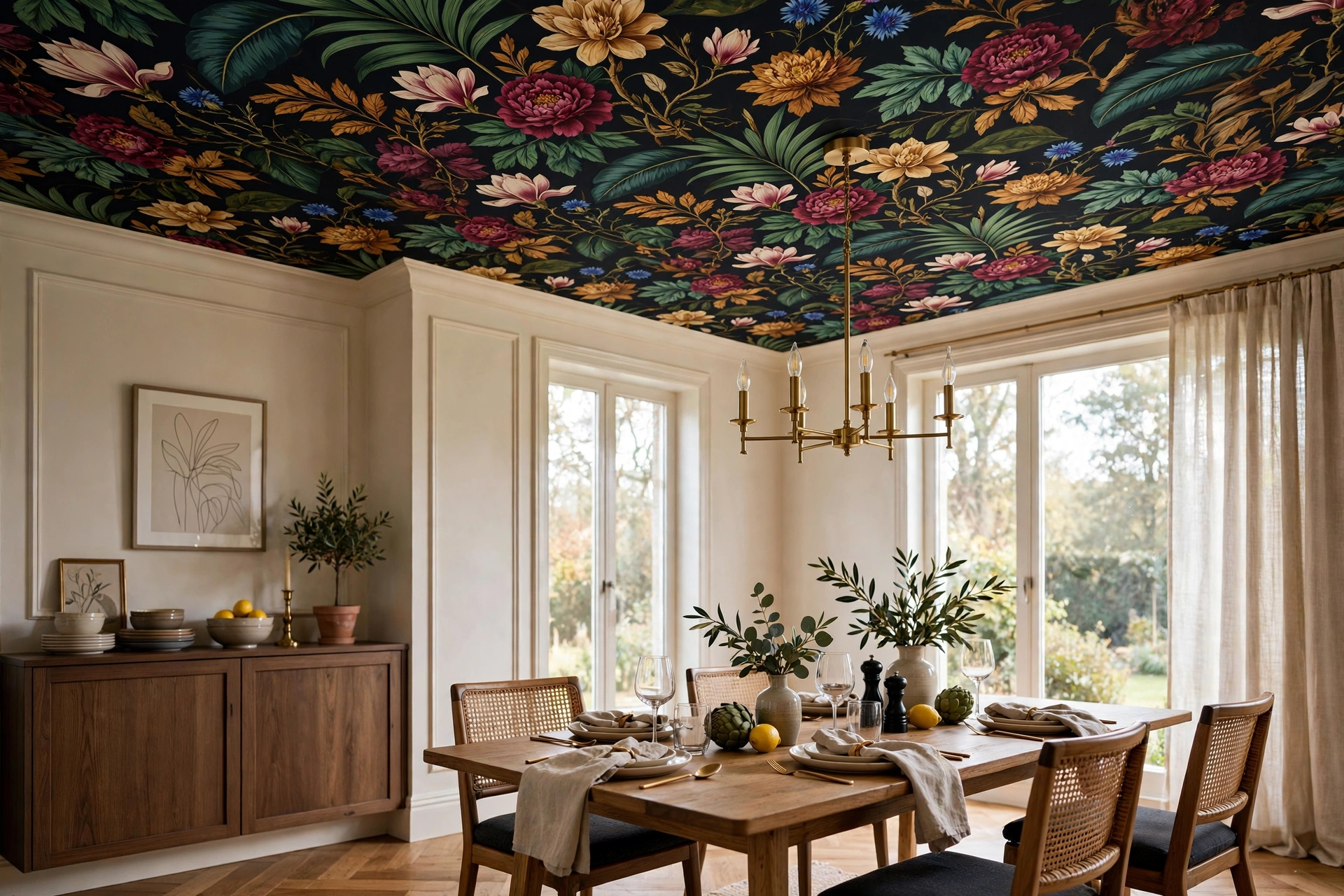
Wallpaper on the ceiling — the so-called “fifth wall” — is a designer move that has gone fully mainstream, and the dining room is the perfect room for it. Because nobody lingers staring at a dining ceiling the way they do a bedroom one, you can go bolder: oversized botanicals, chinoiserie scenes, geometric geometrics in saturated color. Metallic wallpapers catch chandelier light beautifully in the evening. Prep matters more overhead — the surface must be smooth and primed — and patterned paper should be centered on the room’s axis. If full wallpaper feels like too much, paper just the tray of a tray ceiling for a framed, artwork-like effect.
9. Add a Barrel or Vaulted Ceiling Effect
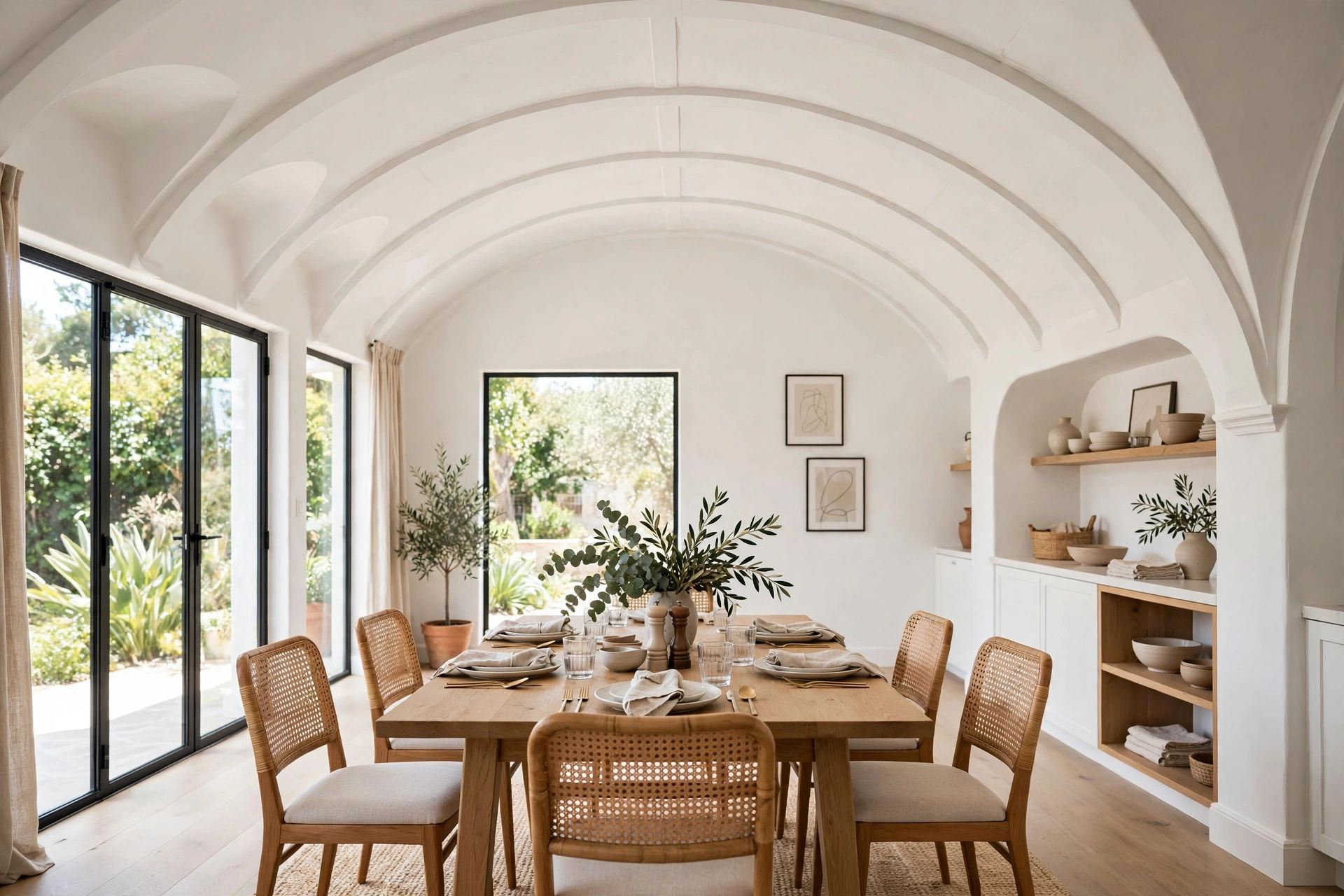
You cannot easily vault a flat ceiling, but you can borrow the feeling: a barrel-vault insert or a gently arched drywall treatment over the dining zone creates the same sense of lift and ceremony. These are contractor-level projects, but in rooms with attic space above, the payoff is a dining room that feels twice its size. Paint the curve a soft white to maximize the light-bouncing effect, and hang a pendant that drops into the curve’s center. Even a partial treatment — vaulting just the bay above the table — changes the room’s acoustics and atmosphere. Get structural advice first; roof framing is not a guessing game.
10. Use Cove Lighting for a Soft Glow
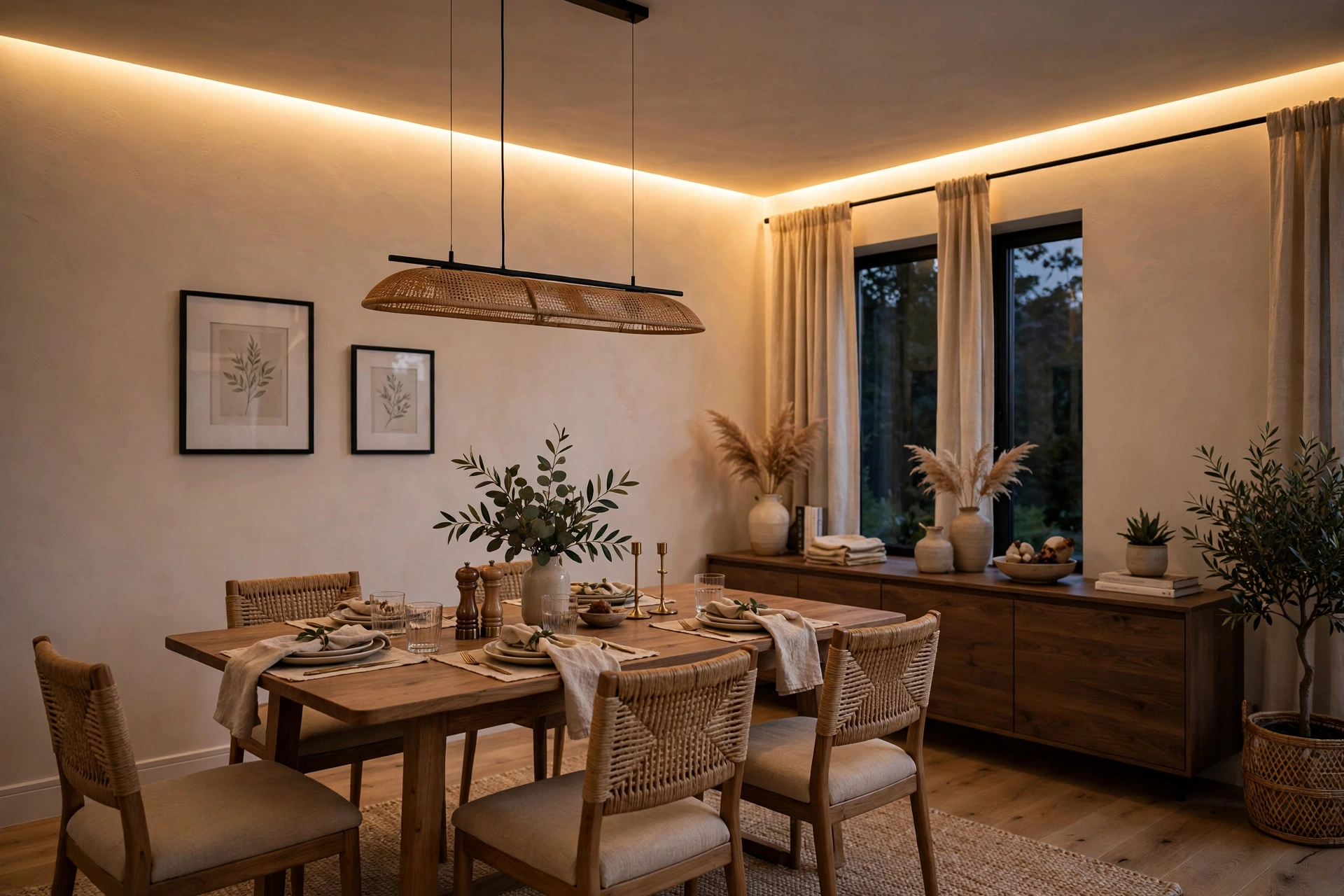
Cove lighting — LED strips hidden in a tray edge, crown molding channel, or dropped soffit — is the secret behind dining rooms that glow without visible fixtures. The indirect light washes the ceiling in a warm halo, eliminates harsh shadows on faces, and makes the whole room feel taller by separating the ceiling plane from the walls. Choose 2700K or warmer strips for dining; anything cooler feels clinical. Put the cove on its own dimmer so it can carry the room alone during dessert and conversation. Quality matters: cheap strips show hot spots and color-shift over time, so buy from a reputable lighting brand and use an aluminum channel with a diffuser.
11. Add a Tin or Pressed-Metal Tile Ceiling
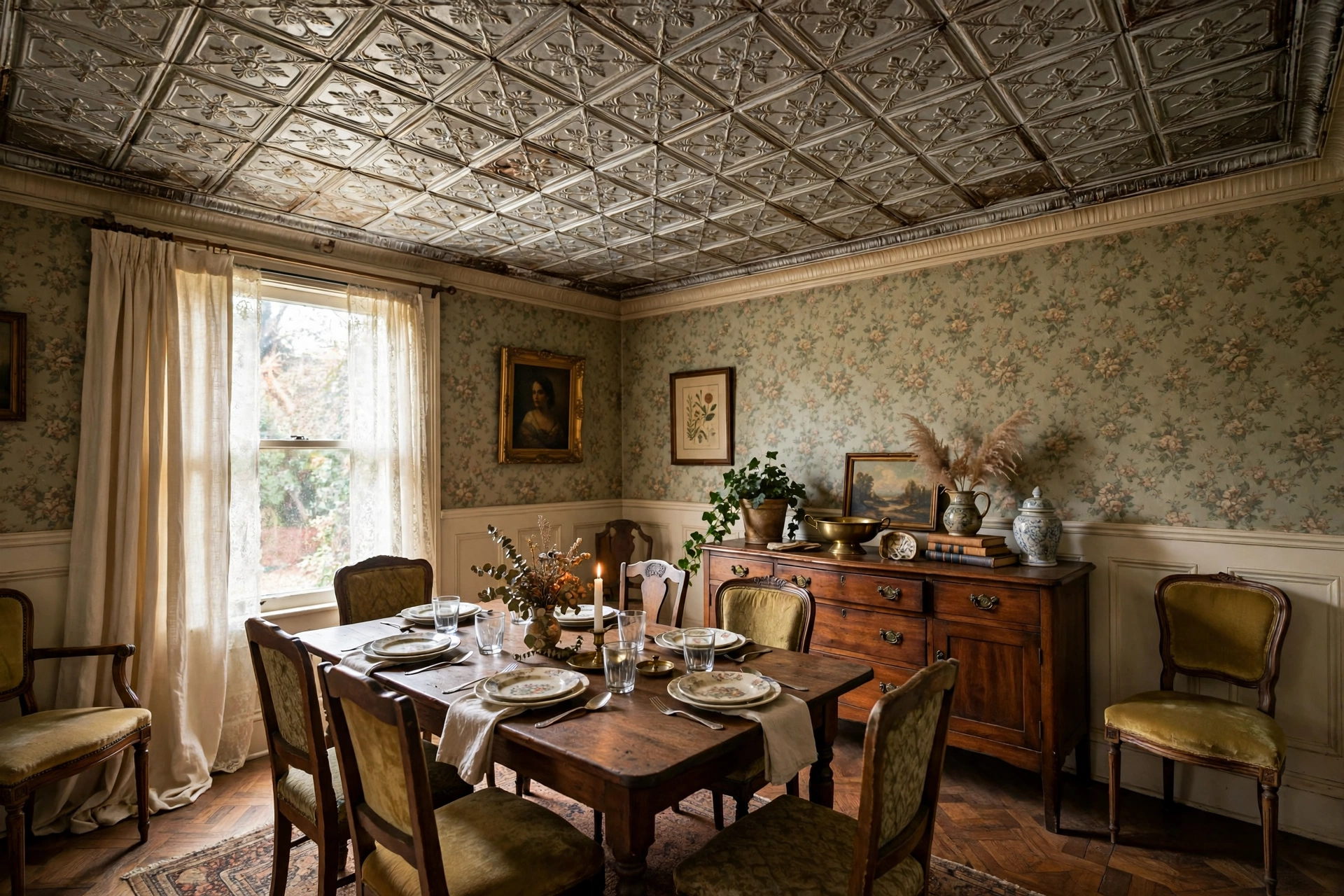
Pressed tin tiles bring vintage character that suits Victorian, farmhouse, and eclectic dining rooms — the stamped patterns catch light and add texture that drywall never will. Modern reproductions come in lightweight metal or PVC, nail up directly over existing ceilings, and can be painted any color. A white or cream finish keeps things bright and classic; a dark bronze or copper tone turns the ceiling into a moody, reflective surface. Tiles also hide a multitude of sins — cracked plaster, uneven patches — which makes them a practical choice in older homes. Run the pattern on a strict grid and center it on the chandelier for a tailored look.
12. Try a Wood Slat Ceiling
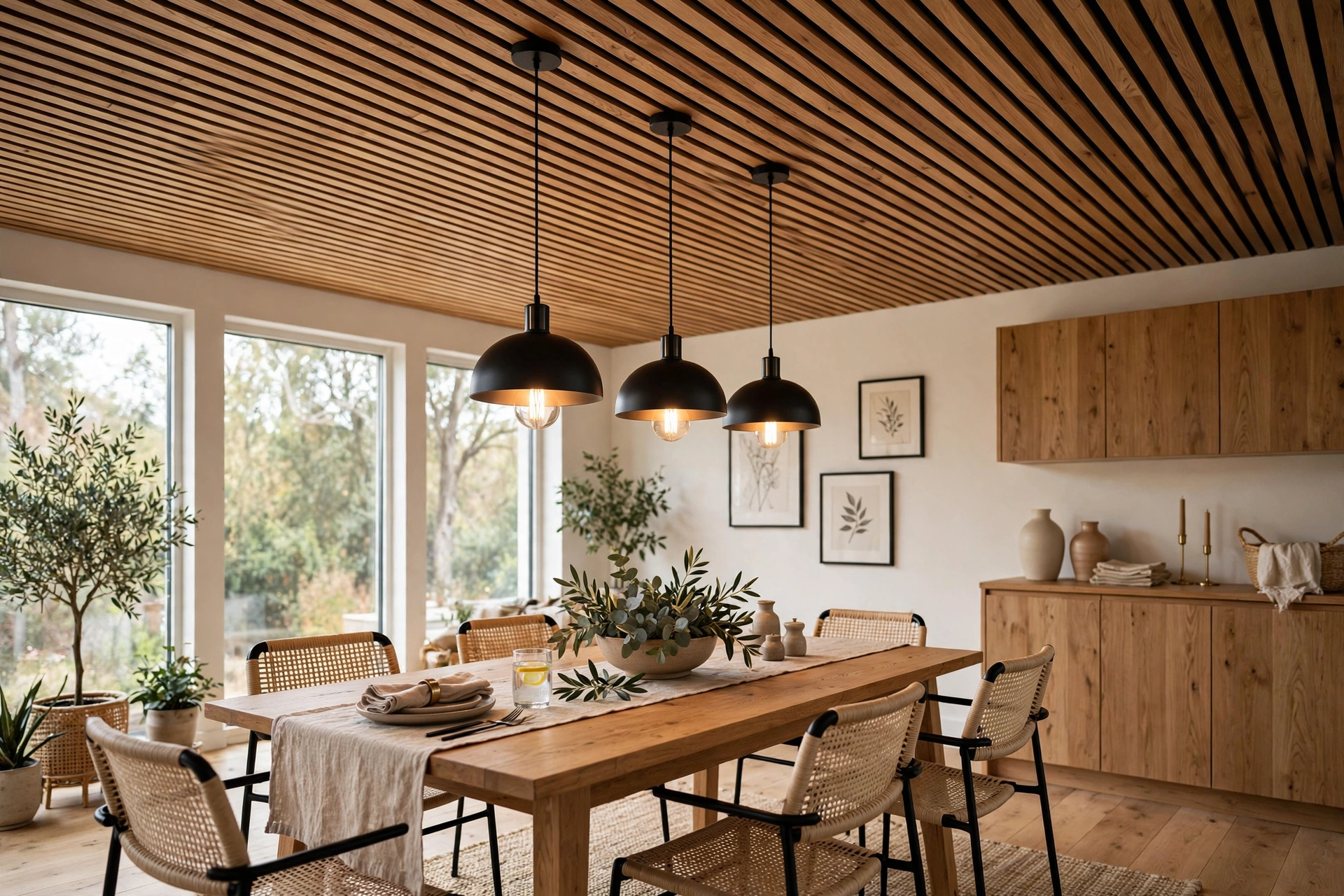
Wood slats — narrow battens spaced with small gaps — add rhythm, warmth, and acoustic softness to a dining room ceiling. Unlike full planks, the gaps let the dark backing show through, creating a striped effect that draws the eye along the room. Slat ceilings work beautifully in modern, Scandinavian, and mid-century dining rooms where you want texture without heaviness. Back the slats with black acoustic felt to tame dinner-party echo, and keep the wood tone consistent with other wood in the room — floors, table, or sideboard. Installation is repetitive but straightforward: a level line, a nail gun, and patience.
13. Go Moody With a Dark Ceiling
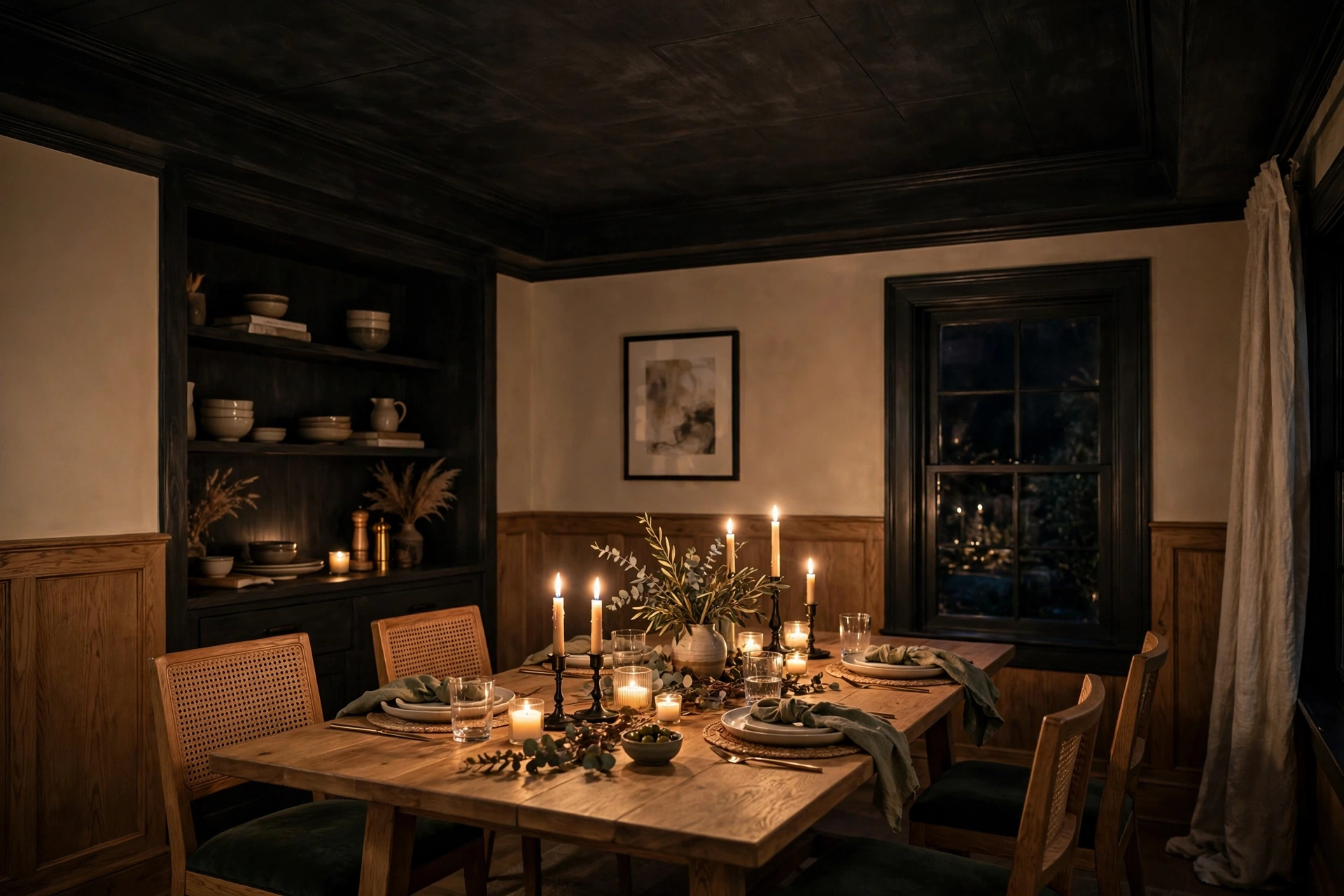
A dark ceiling in a dining room is pure evening magic: charcoal, espresso, or deep green overhead makes the room feel like a private restaurant after dark. The trick is balancing it — dark ceilings need generous light at table level and lighter walls or they turn cave-like. This treatment shines in rooms used mostly for dinner, where the drama pays off nightly, and feels cozier than white in windowless or north-facing dining rooms. Paint the trim and crown the same dark color so the ceiling wraps the room rather than sitting on it like a lid. Test a large swatch first; dark colors shift dramatically between day and evening light.
14. Add Crown Molding and Trim Detail
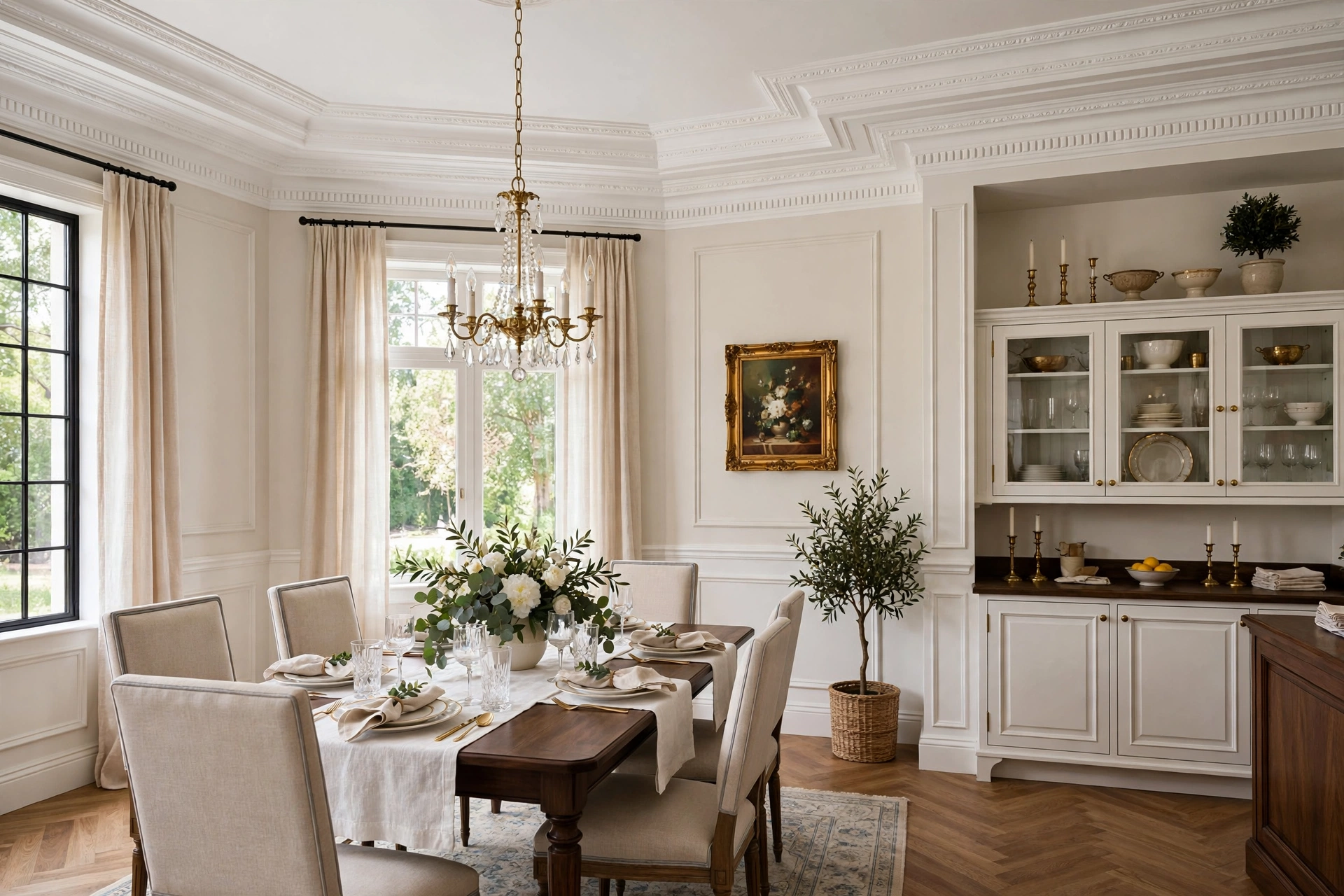
Crown molding is the tailored suit of ceiling treatments — it finishes the junction of wall and ceiling and makes the whole room feel custom. In dining rooms, go bolder than you would in a hallway: a 5-to-7-inch built-up profile with layered trim reads formal and finished. Paint it the ceiling color for a seamless look or the wall color for definition; white crown against colored walls is the classic move. Molding also gives you a place to hide LED cove channels and speaker wire. For extra architecture, add a picture-frame molding grid on the ceiling itself — painted boxes that mimic coffering at a fraction of the cost.
15. Keep It Clean With Recessed Lighting
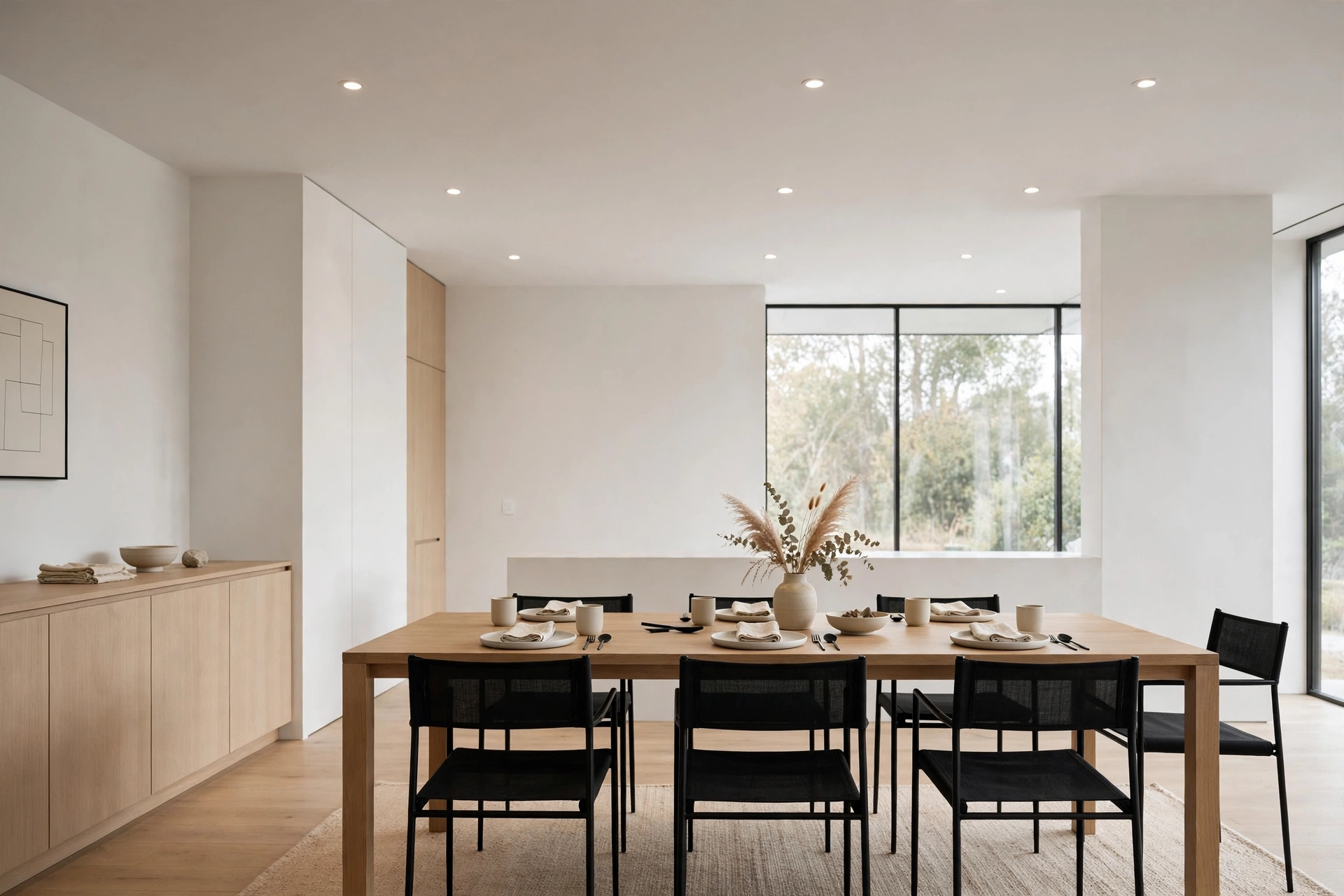
Sometimes the best ceiling idea is restraint: a perfectly smooth ceiling with well-placed recessed lights. Recessed cans disappear by day and deliver flexible, glare-free light by night — ideal for dining rooms that double as homework stations or home offices. Space cans 4 to 6 feet apart in a grid that avoids the chandelier’s zone, use adjustable trims to wash art or the sideboard, and always pair with dimmers. Warm 2700K bulbs flatter food and faces. Home-Dzine guide to coffered ceilings is a useful reference if you decide to combine recessed lights with a coffered grid — cans tucked inside coffers look especially tailored. Even in a minimalist room, one architectural gesture — a medallion, a dark paint color — keeps the ceiling from feeling forgotten.
FAQ
What is the best ceiling treatment for a low dining room ceiling?
Tray ceilings, paint, and slim faux beams work best under 8 feet. A shallow tray with cove lighting adds perceived height without stealing inches. Avoid deep coffers or heavy dark beams in low rooms — they press the ceiling down visually. Keep treatments shallow and lighting warm.
How much does a coffered ceiling cost in a dining room?
A DIY painted coffered ceiling using trim and MDF can run a few hundred dollars in materials for an average dining room. Professional wood coffered ceilings typically cost several thousand depending on room size, wood species, and finish. Faux beam grids land in between and go up much faster.
Should the dining room ceiling be white?
Not necessarily. White is safe and bright, but dining rooms benefit from mood — deep colors, wallpaper, or wood tones make evening meals feel special. If the room gets little natural light, a warm white or pale tint keeps it cheerful; if it is mostly used at night, go bold.
What lighting works best with a beamed ceiling?
Recessed lights tucked between beams, a chandelier or pendants hung from a beam, and cove lighting along the beam tops all work. Avoid flush-mount fixtures that fight the beams’ rhythm. Run wiring through or behind faux beams during installation to keep it hidden.
Can I wallpaper a textured dining room ceiling?
Not directly — texture telegraphs through wallpaper and ruins the finish. Skim-coat the ceiling smooth first, or install thin liner paper as a base. For heavily textured ceilings, consider planks, tin tiles, or paint instead; they handle imperfect surfaces far better than wallpaper.
Keep Exploring
The ceiling above your dining table works harder than any other surface in the room — it bounces the light, frames the chandelier, and sets the mood before anyone sits down. Whether you go architectural with beams and coffers or simple with paint and a medallion, treat the fifth wall as part of the design, not an afterthought. Then carry the same care downward with our dining room wall decor ideas for warm inviting gatherings Dining room table decor ideas for everyday gatherings, where the room comes together at eye level.