
A bay window is the dining room’s natural superpower — a bump-out of glass that pours in daylight, frames the view, and adds square footage exactly where you gather. But that angled, three-sided glass is also awkward to furnish, and plenty of bay windows end up as dead space with a sad plant and a dust-covered blind. These dining room bay window ideas turn the bay into the room’s best seat, its brightest corner, or its hardest-working storage, depending on what your household needs most.
Start by measuring the bay’s angles and depth — canted bays with 45-degree sides furnish differently than box bays with square corners. A bay window projects outward from the main wall, which means window treatments, furniture, and lighting all need to follow its geometry rather than fight it. Plan the bay as its own zone and the rest of the room will fall into place around it.
1. Build a Banquette Breakfast Nook
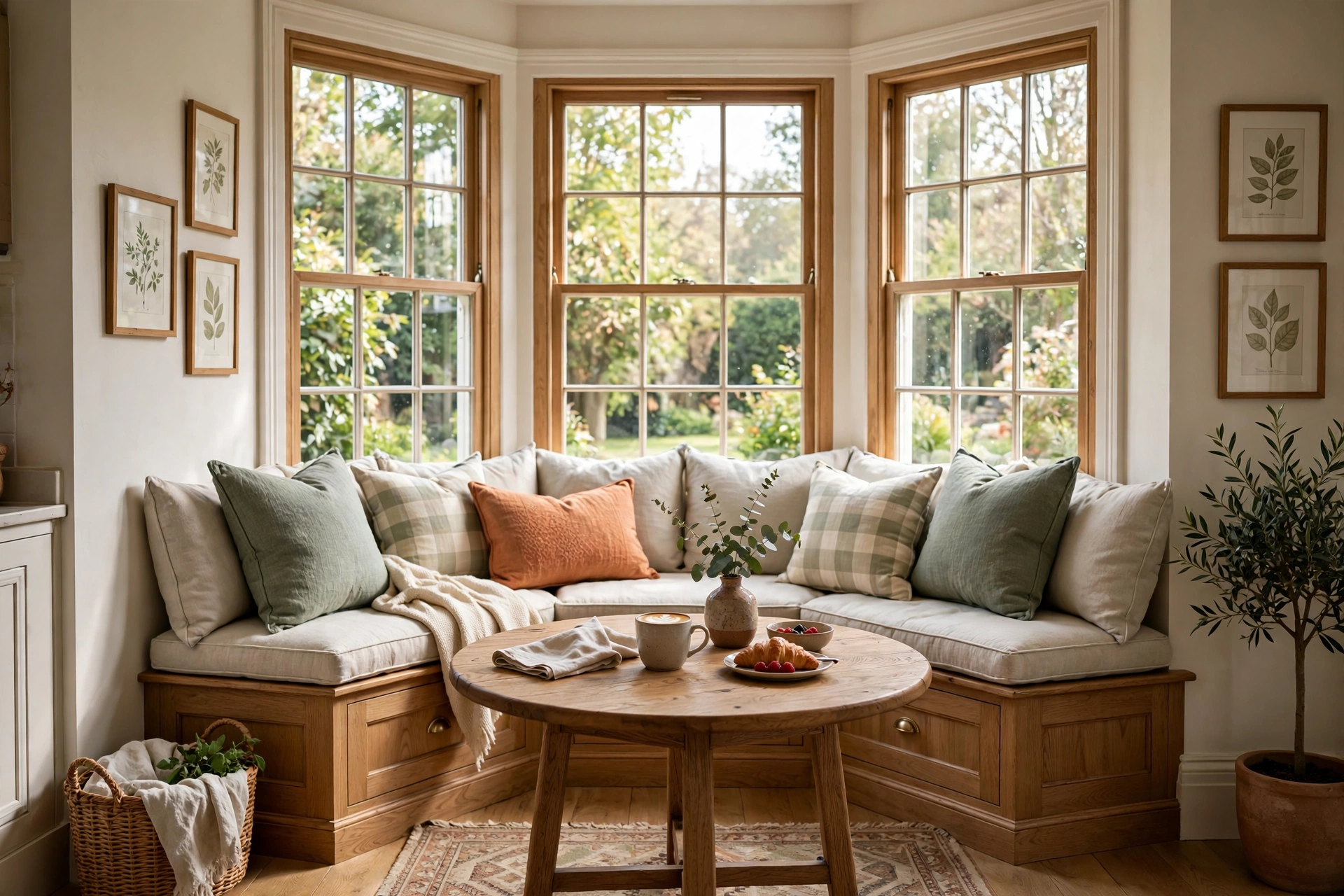
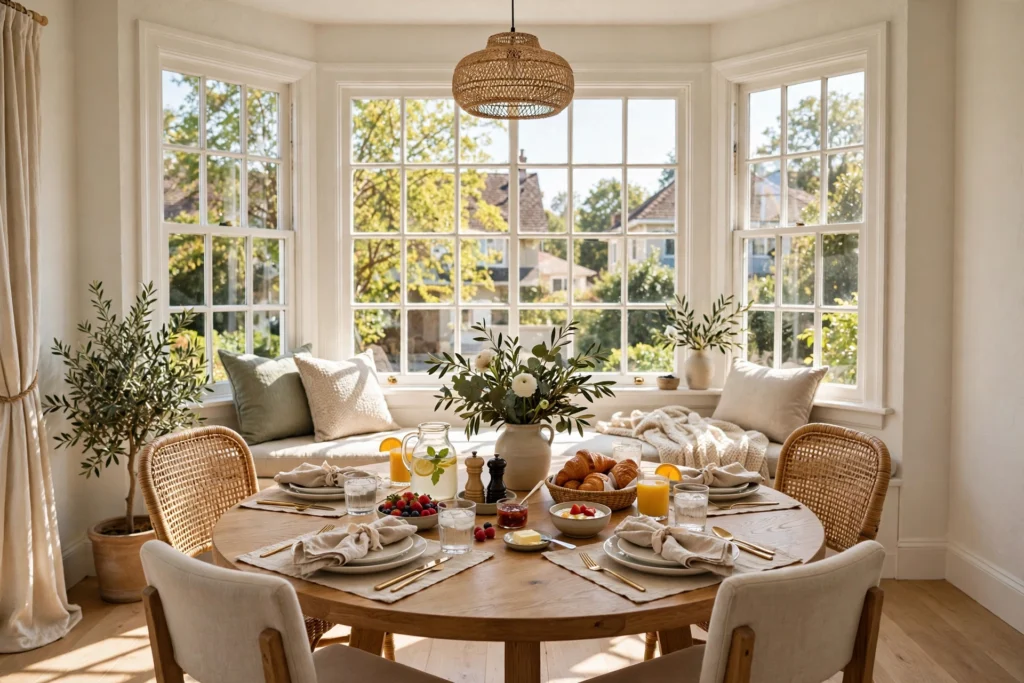
The classic bay-window move exists for a reason: a built-in banquette tucked into the bay turns dead space into the most coveted seat in the house. Custom banquettes follow the bay’s angles exactly, add hidden storage under the seat, and let a family of five squeeze around a table that would normally seat four. Upholster the bench in a wipeable performance fabric — breakfast nooks see jam, coffee, and homework glue — and add a pedestal table that chairs can tuck fully under. Dining room curtain ideas for elegant gatherings show how to dress the glass behind a banquette so the nook feels finished, not just furnished.
2. Add a Cushioned Window Seat

If a full banquette is more commitment than you want, a simple window seat delivers most of the charm. A custom cushion cut to the bay’s footprint, layered with throw pillows in varying sizes, creates a reading-and-coffee perch that doubles as extra dining seating when guests overflow. Choose outdoor-grade foam wrapped in a washable cover so the seat survives sun fading and spills. Under-seat storage — either a hinged top or drawers — swallows table linens, placemats, and the candles you only use at holidays. Keep the pillow palette tied to the dining room’s colors so the seat reads as part of the room, not a separate afterthought.
3. Place the Table in the Bay
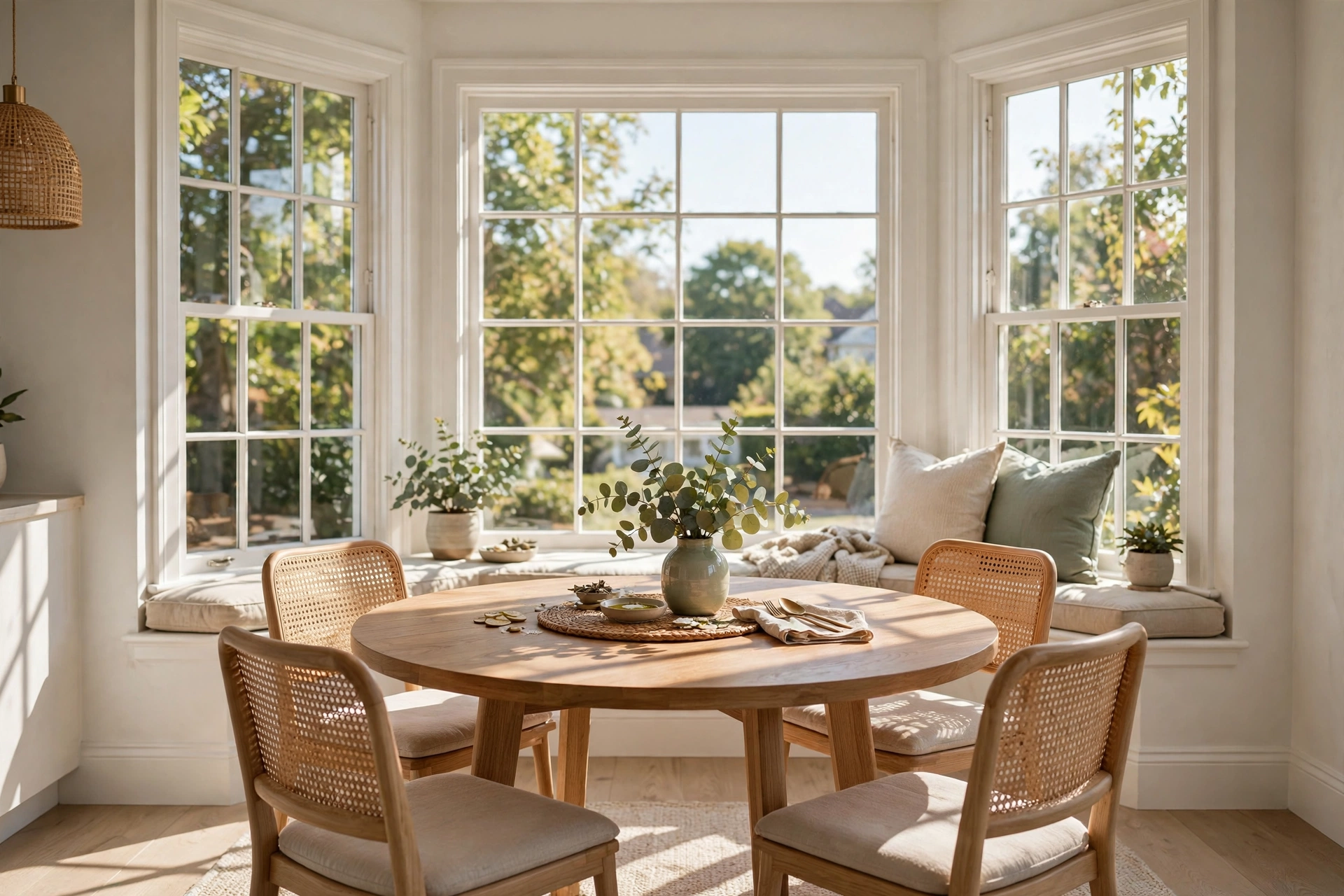
Centering the dining table in or partially within the bay is the simplest way to make the window the room’s focal point. Diners get the view, the daylight flatters everyone, and the room’s circulation opens up behind the chairs. This works best in box bays or wide canted bays with at least 36 inches of clearance for chair pull-out. A round or oval table follows the bay’s curve better than a rectangle and keeps traffic flowing around it. Anchor the arrangement with the chandelier centered over the table — not the room — so the composition reads as intentional from every angle.
4. Frame It With Floor-Length Curtains
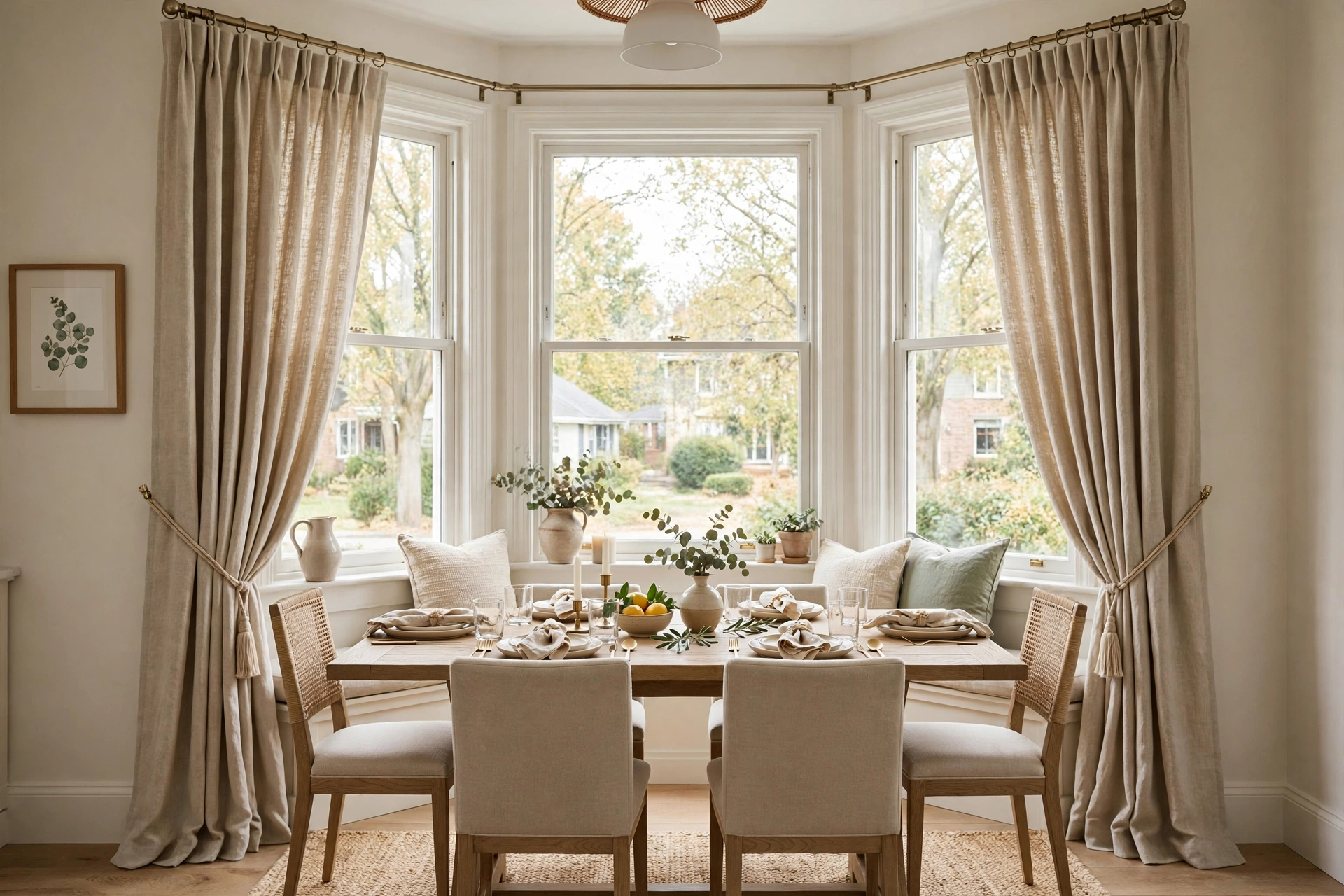
Floor-length curtains are the most flattering treatment for a bay window, softening its angles and adding the textile warmth glass walls lack. Hang a single rod or ceiling track that follows the bay’s shape — flexible curved tracks exist for exactly this — and mount it as close to the ceiling as possible with panels kissing the floor. Linen or linen-look fabrics filter light beautifully while keeping the view. Keep panels stacked to the sides during the day so the bay does its daylight job, and draw them at night for intimacy and insulation. Double rods let you layer sheers behind the drapes for daytime privacy.
5. Try Top-Down Cellular Shades

When curtains feel too fussy or the bay’s angles defeat rods, top-down/bottom-up cellular shades are the clean solution. They mount inside each window section, operate independently, and let you lower the top for daylight while keeping the bottom covered for privacy — perfect for street-facing dining rooms. The honeycomb structure also insulates, cutting heat loss through all that glass in winter. Choose a light-filtering fabric in a warm white that glows when the sun hits it. Cordless operation keeps the look minimal and is safer in homes with kids. They disappear visually when raised, letting the bay’s architecture speak.
6. Create a Coffee-and-Conversation Corner
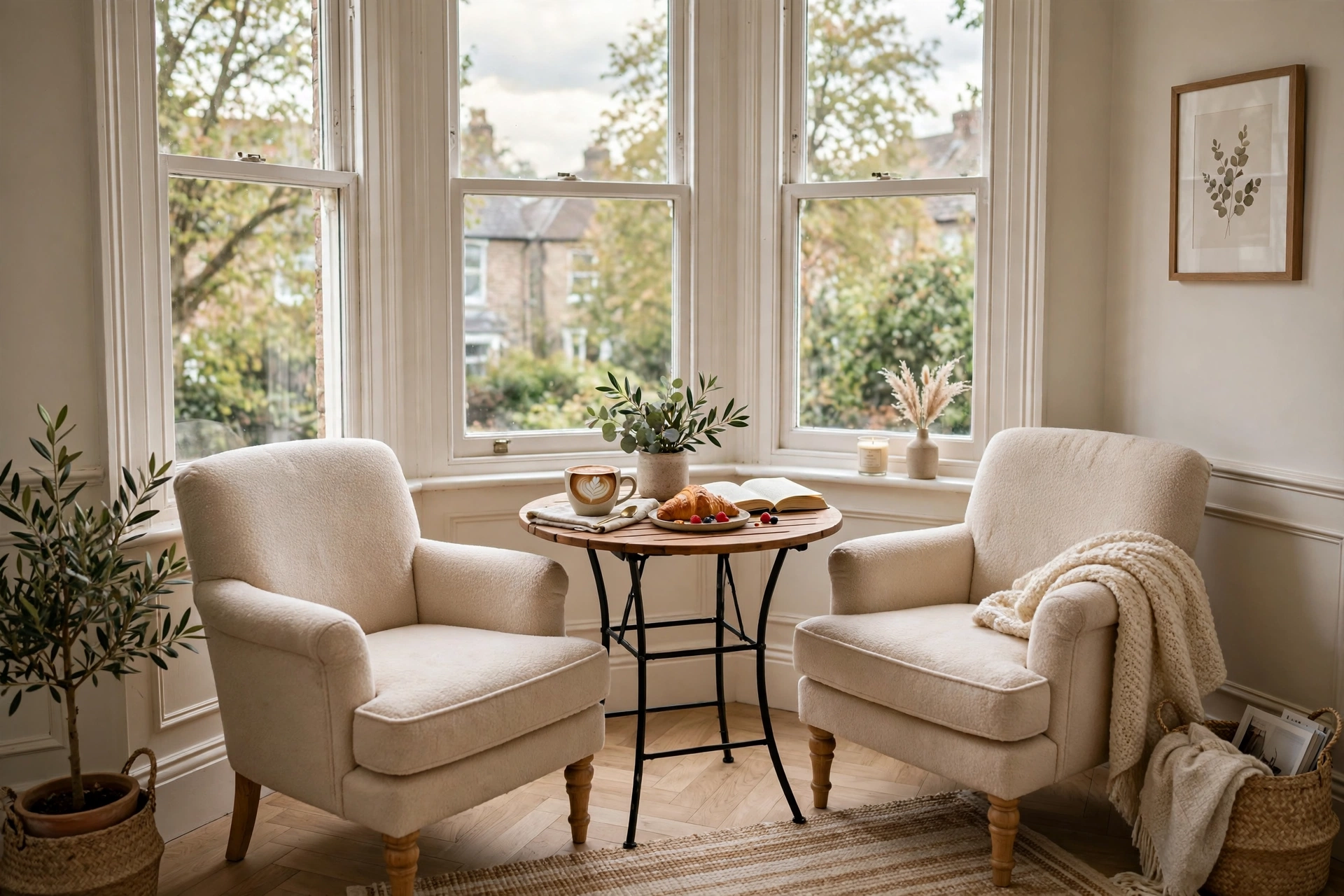
Not every bay needs to serve dinner — a small bistro table and two comfortable chairs turn the bay into a morning-coffee and evening-wine zone separate from the main table. This works beautifully in open-plan homes where the dining table is large and formal; the bay becomes the casual alternative. A round 30-inch table, two upholstered chairs with a small side table between them, and a pendant hung low over the table define the zone. Keep the scale petite so the corner feels like a cafe nook rather than a second dining room. It is also the perfect spot for a laptop when the house needs a sunny work perch.
7. Style a Plant-Filled Bay

Bay windows are greenhouses by accident — bright, indirect light on three sides is exactly what houseplants crave. A curated collection of plants turns the bay into a living focal point: tall floor plants like fiddle-leaf figs or olive trees in the corners, medium plants on stands at varying heights, trailing pothos on the sill. Use matching or coordinated pots so the collection reads as designed rather than accumulated. Add a slim plant stand or tiered shelf to lift smaller pots into the light. Just remember that dining bays get hot in summer — choose plants that tolerate warmth and rotate them so all sides get even light.
8. Add a Small Reading Nook
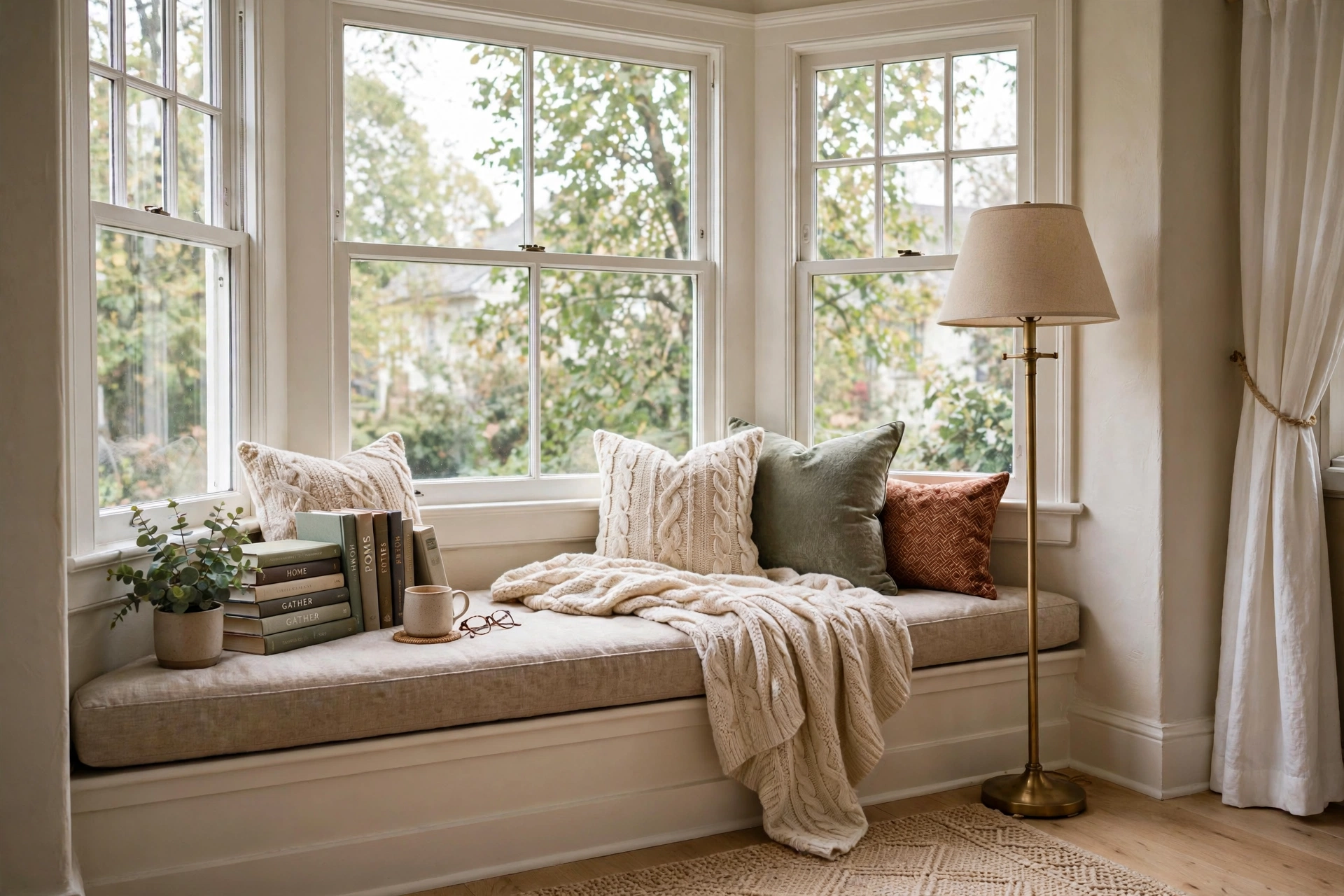
A bay window seat plus a good lamp equals a reading nook that will get used daily. Layer the seat with a deep cushion, add a throw blanket, and position a floor lamp or swing-arm wall sconce at shoulder height for evening reading. A small side table or a wide sill holds the coffee and the current book. This is an especially good use for dining-room bays in homes where the dining table is rarely used for meals — the room stays a gathering space, just a quieter one. Keep the styling calm: neutral cushions, one throw, and a stack of books rather than clutter.
9. Use the Bay as a Serving Station
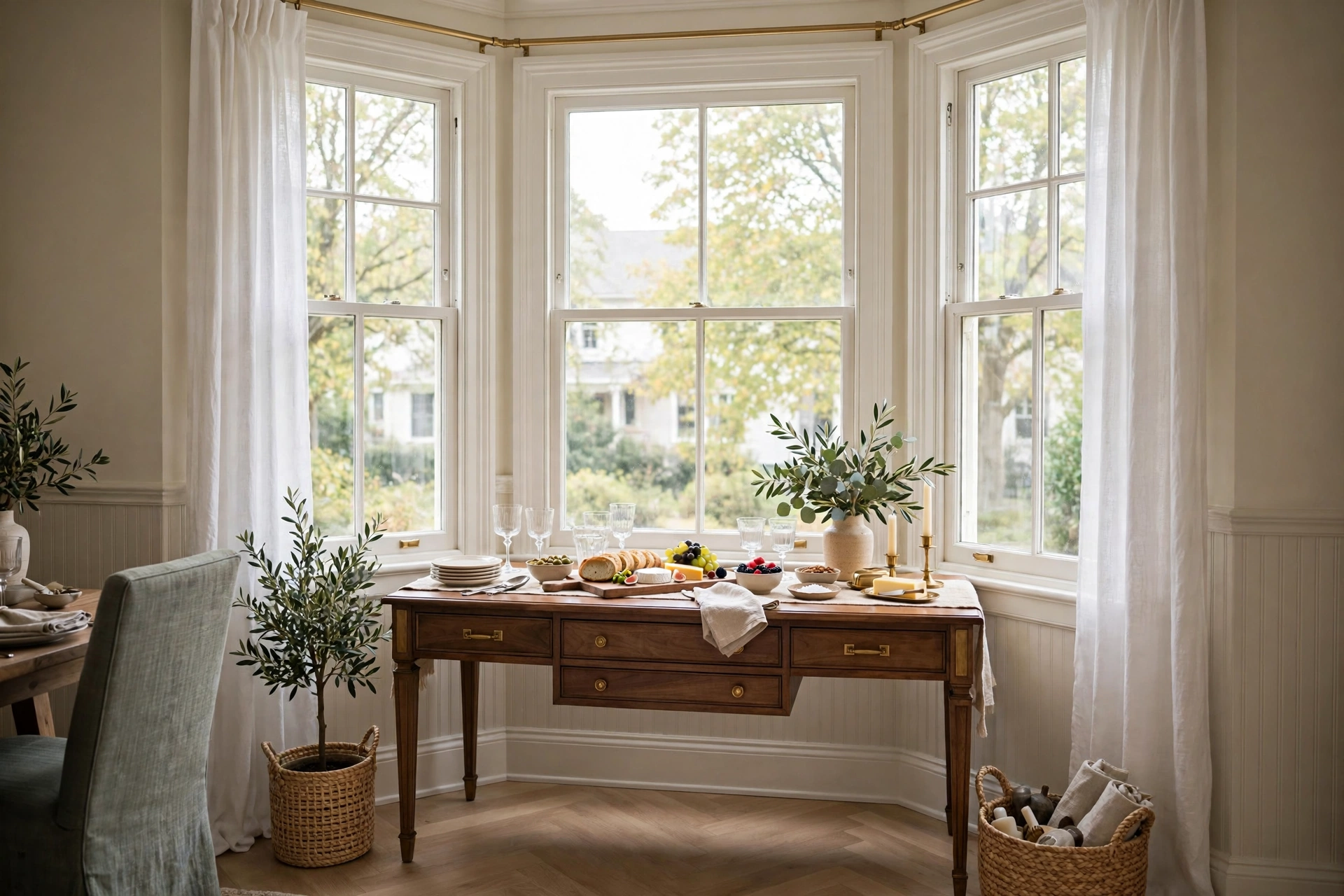
In dining rooms that host often, the bay makes a brilliant serving zone: a console table or sideboard set into the bay holds the buffet, the bar setup, or the dessert spread, keeping the main table clear for diners. A narrow console — 14 to 16 inches deep — fits most bays without crowding. Style the top with serving pieces, a small lamp, and a mirror or art above to make it feel permanent rather than party-only. Pottery Barn’s guide to sprucing up bay windows has smart takes on furnishing these awkward footprints, including console and bench options. Between parties, the console displays ceramics, cookbooks, or seasonal decor.
10. Hang a Chandelier to Anchor the Bay
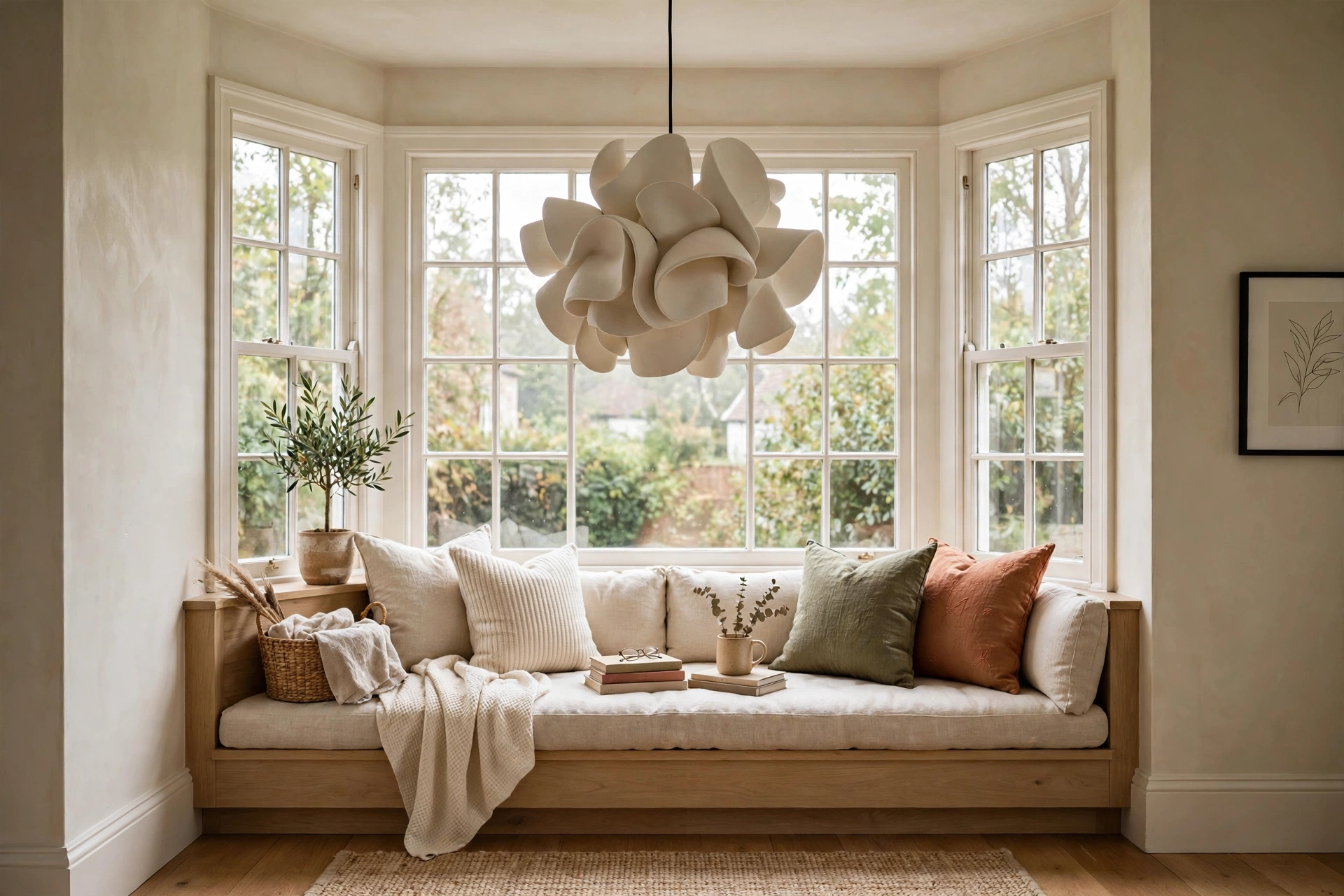
A pendant or chandelier hung in the bay’s center turns the bump-out into a defined zone, even in an open-plan room. Hang it lower than you would over a dining table — the bay fixture is about atmosphere, not task light — and choose something sculptural that looks good silhouetted against the glass. If the bay holds a banquette or bistro set, center the fixture over it; if the bay is styled decoratively, center it on the bay itself. A dimmer lets the bay glow as a backdrop during dinner parties. Just check the junction box situation — bays often lack ceiling wiring, so plan for an electrician.
11. Add a Window-Side Storage Bench
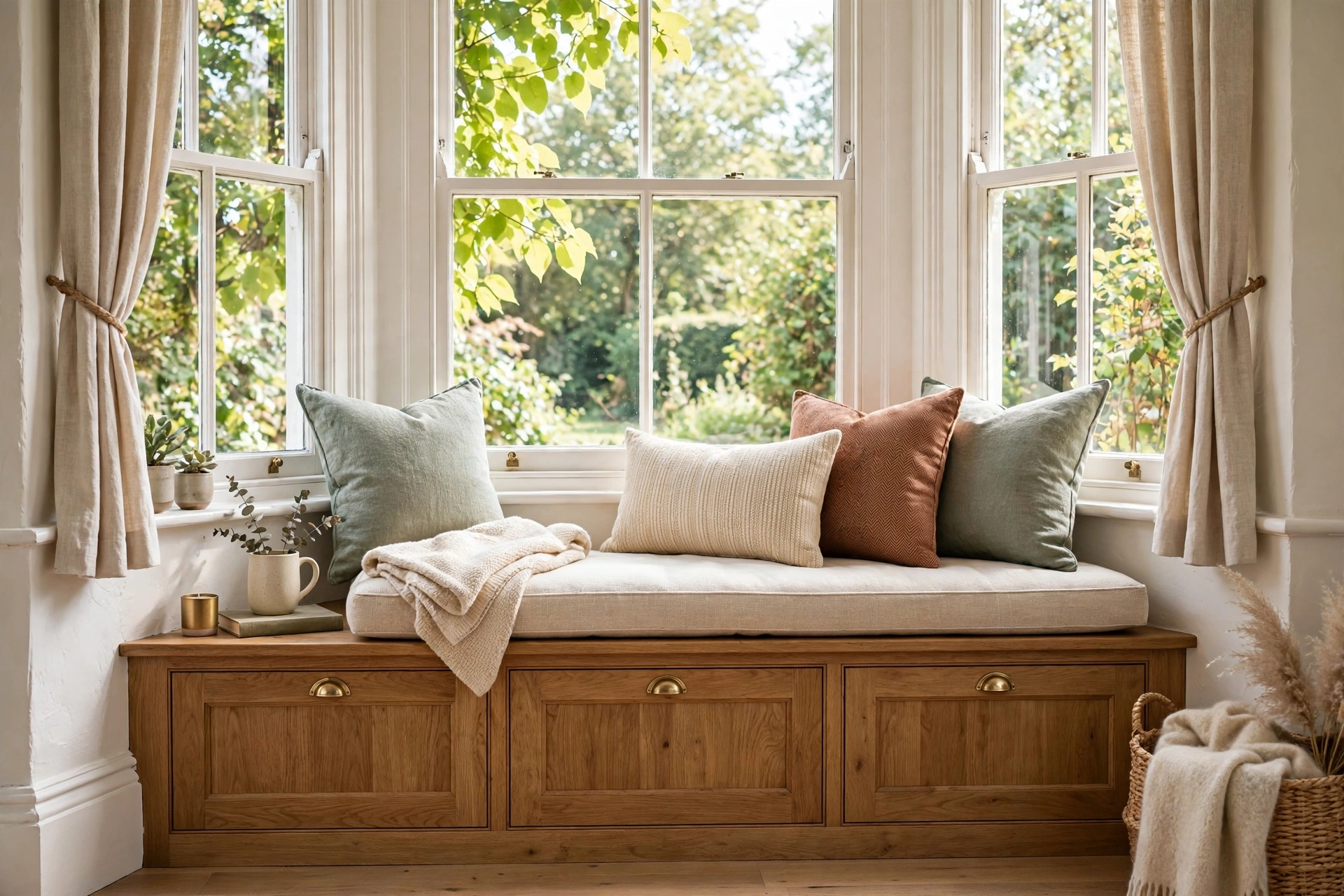
A storage bench set into the bay solves two problems at once: extra seating and hidden storage. Unlike a built-in banquette, a freestanding bench can move with you and costs far less. Look for benches roughly the depth of the bay — typically 18 to 22 inches — with a hinged or lift-off top. Inside, stash the things dining rooms accumulate: tablecloths, placemats, serving trays, holiday dishes. Top it with a cushion and pillows and it becomes the kids’ favorite seat. In narrow bays, a backless bench keeps sightlines open; in deep bays, a bench with a low back reads more like banquette seating.
12. Try Sheers for Filtered Light
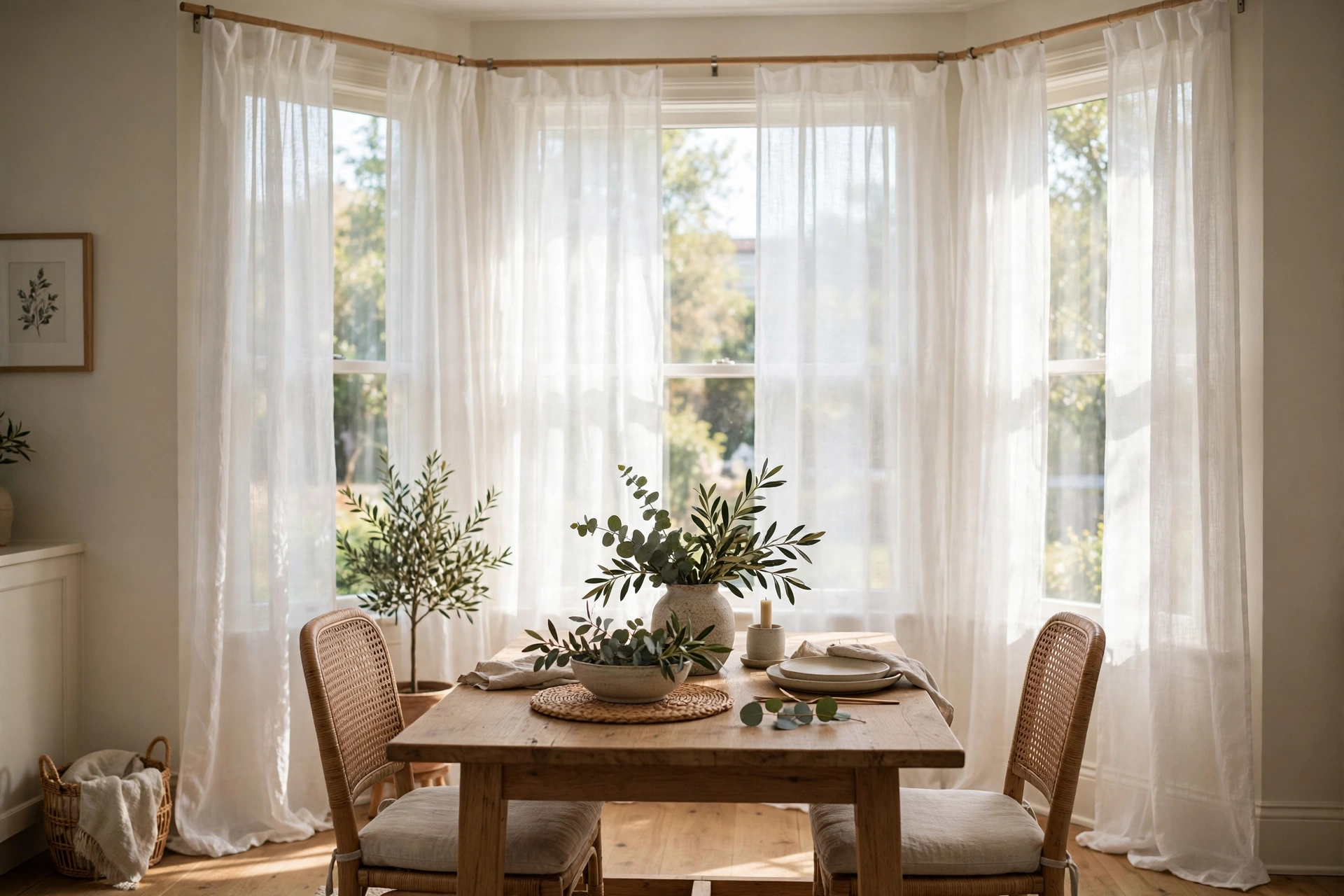
Sheer curtains are the bay window’s best friend when the view is worth keeping: they soften harsh sunlight, provide daytime privacy, and never block the outlook. Mount sheers on a ceiling track that follows the bay’s angles, or use tension rods inside each window frame for a tailored look. White or ivory sheers glow in sunlight and suit every style; linen sheers add texture for a more relaxed feel. Layer sheers under heavier drapes on a double track and you get three moods — open, filtered, closed — from one window. Wash them seasonally; sheers show dust faster than you’d expect.
13. Create a Bar Cart Zone
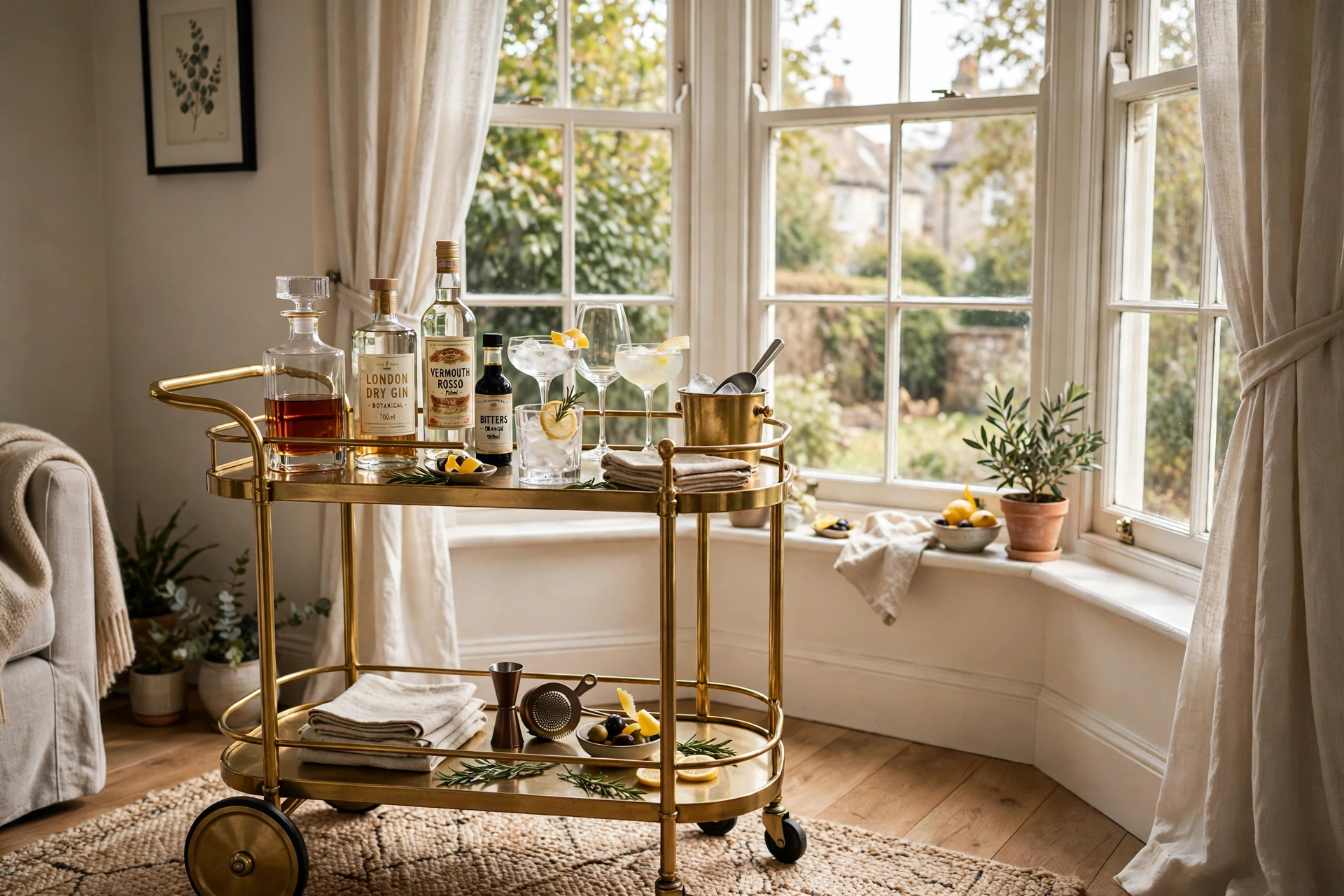
A bar cart tucked into one side of the bay is a dining room power move — the drinks station stays out of the kitchen traffic and becomes part of the room’s decor. Style the cart with decanters, glassware, a small plant, and a framed print or mirror hung on the adjacent wall section. A brass or mirrored cart catches the bay’s daylight and sparkles. When the bay is deep, the cart can live in the bay full-time; in shallow bays, roll it out for parties and park it against the dining room wall otherwise. Keep a small tray on top to corral bottles so the cart reads styled, not stocked.
14. Layer Rugs to Define the Bay
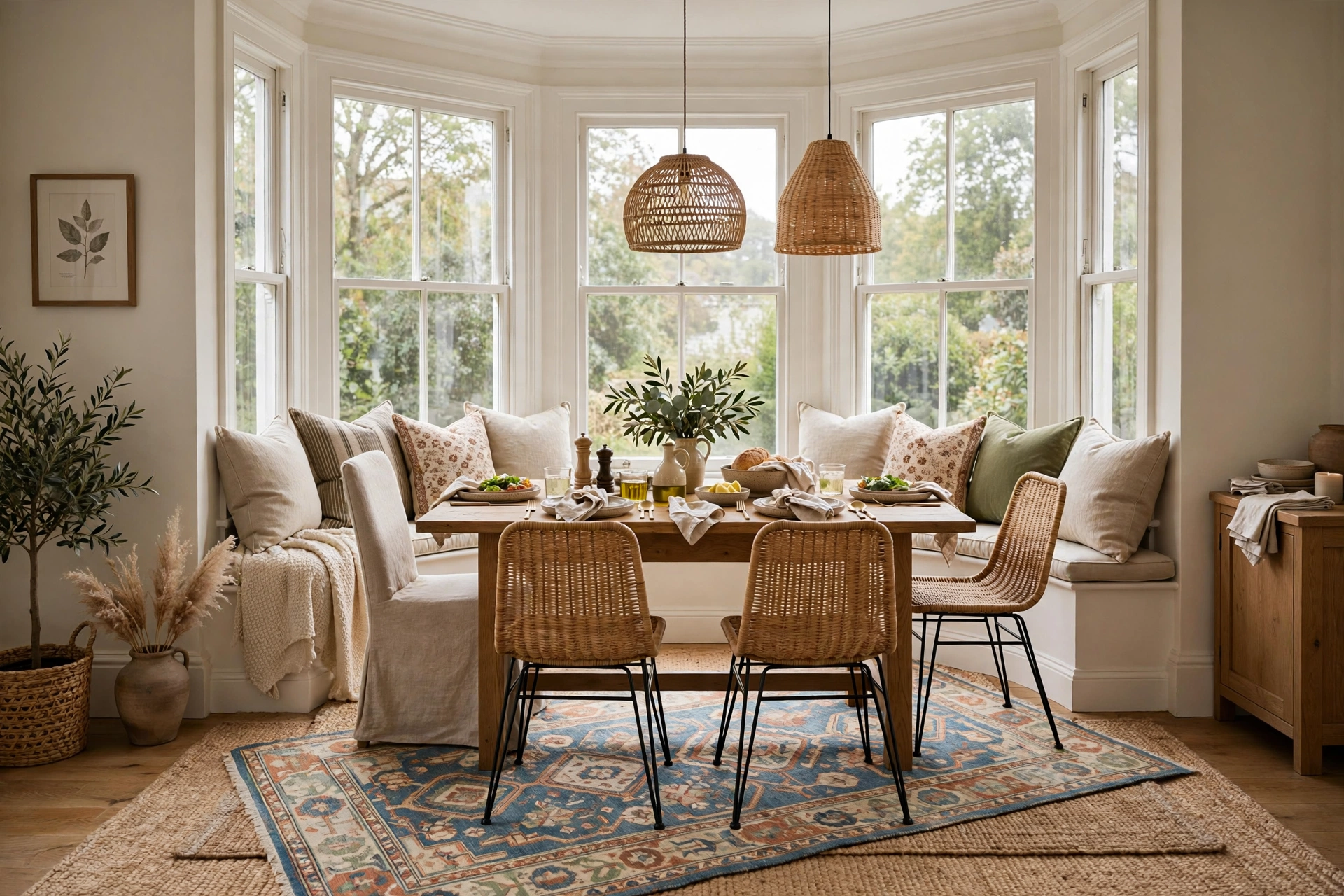
In open-plan dining rooms, a rug that extends into the bay visually claims the bump-out as part of the dining zone. A large rug under the table should reach at least to the bay’s inner edge; alternatively, layer a smaller rug or runner inside the bay itself to define a nook within the nook. Natural fibers like jute or sisal handle the bay’s sun exposure well and add texture underfoot. Keep rug edges clear of the bay’s swing — if windows open inward, size the rug to avoid interference. The rug also softens acoustics in a glass-heavy corner that can otherwise echo.
15. Dress the Sill Seasonally
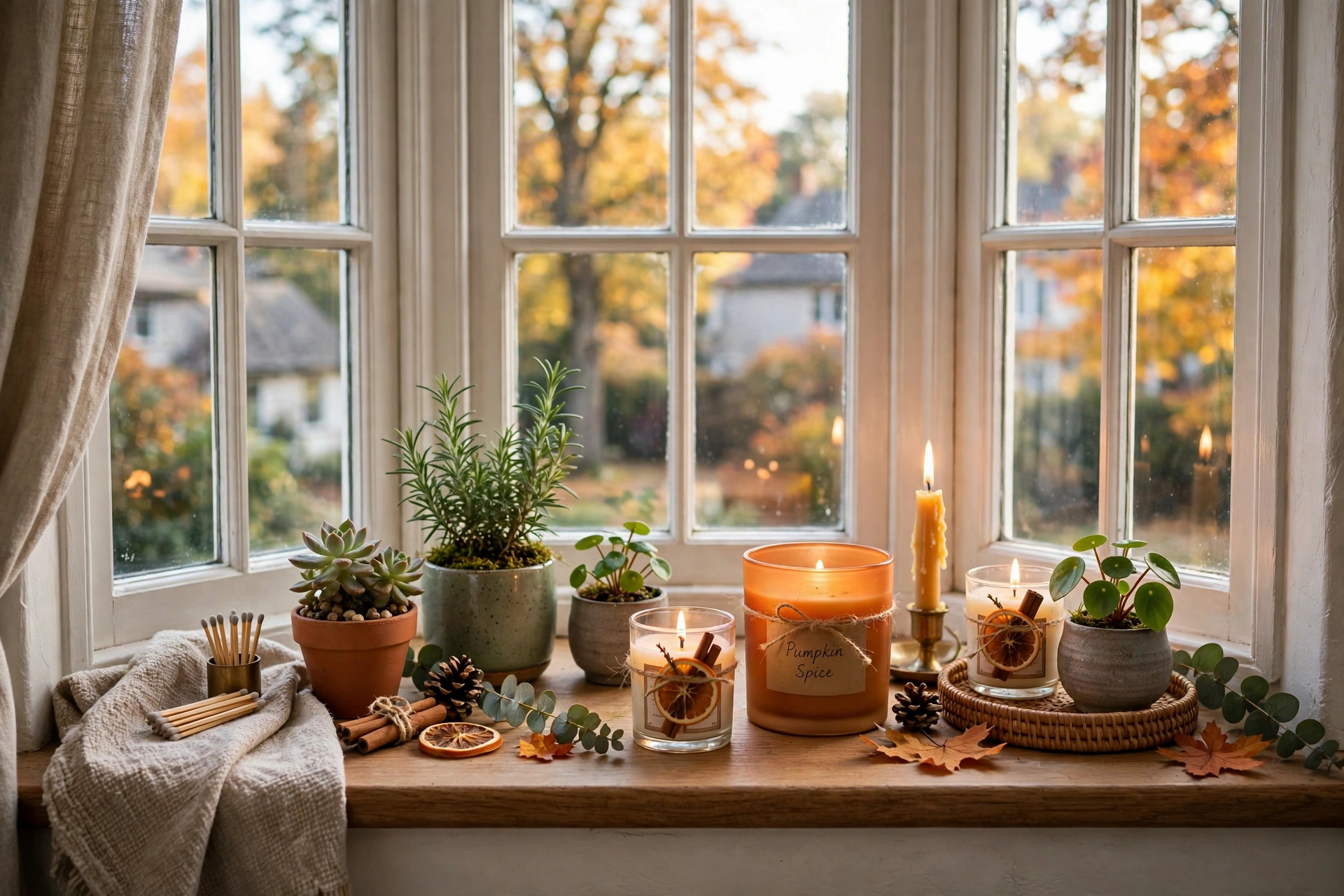
The deep sill of a bay window is a built-in display shelf — treat it like one. A rotating seasonal display keeps the bay feeling alive: spring bulbs and fresh greenery, summer shells and citrus, autumn pumpkins and dried grasses, winter evergreens and candles. Keep the arrangement low and airy so it never blocks light or the view — the sill should frame the outlook, not compete with it. A consistent set of vessels (matching pots, a row of bud vases, a long low tray) gives changing contents a designed feel. This is also the perfect home for the dining room’s candle collection, safely away from tablecloths.
FAQ
What do you put in a dining room bay window?
The most popular uses are a banquette breakfast nook, a window seat, the dining table itself, or a serving console. Choose based on how you use the room: daily casual meals favor a nook, formal entertaining favors a serving station, and small rooms benefit most from putting the table in the bay to free up floor space.
How do you hang curtains on a bay window?
Use a curved ceiling track or flexible bendable rod that follows the bay’s angles, mounted close to the ceiling. Alternatively, mount individual rods or tension rods inside each window section. Floor-length panels stacked to the sides look best; sheers on a separate track add daytime privacy.
Should the dining table go in the bay window?
If the bay is wide and deep enough — at least 36 inches of chair clearance — yes, it is often the best spot. Diners get natural light and views, and the room’s main floor area opens up. Round or oval tables suit bays better than rectangles. Center the chandelier over the table, not the room.
How do you keep a bay window from looking cluttered?
Give the bay one clear job — seating, serving, or display — and edit ruthlessly. Use coordinated containers and a limited color palette, keep sill styling low and seasonal, and choose window treatments that disappear when open. One intentional function always reads calmer than three half-hearted ones.
Do bay windows make a dining room colder?
All that glass does lose more heat than an insulated wall. Cellular shades, heavy curtains drawn at night, and draft-sealing the window frames all help significantly. A rug in the bay and upholstered seating also make the zone feel warmer. In very cold climates, consider secondary glazing on the bay’s windows.
Keep Exploring
A bay window rewards intention — measure its angles, give it one clear job, and dress the glass to match. Whether it becomes your breakfast nook, your brightest reading corner, or your party serving station, the bay should feel like the room’s best feature rather than its awkward corner. Finish the room around it with our dining room mirror ideas for light and space Dining room buffet decor ideas for elegant storage, which pair beautifully with a styled bay.