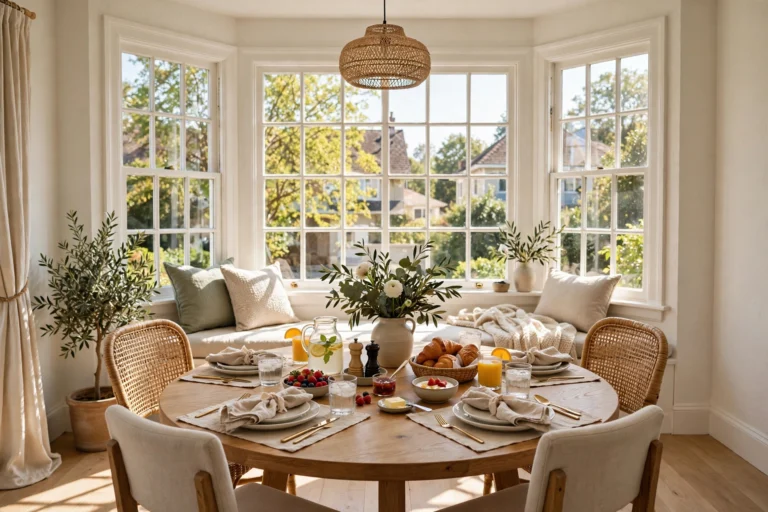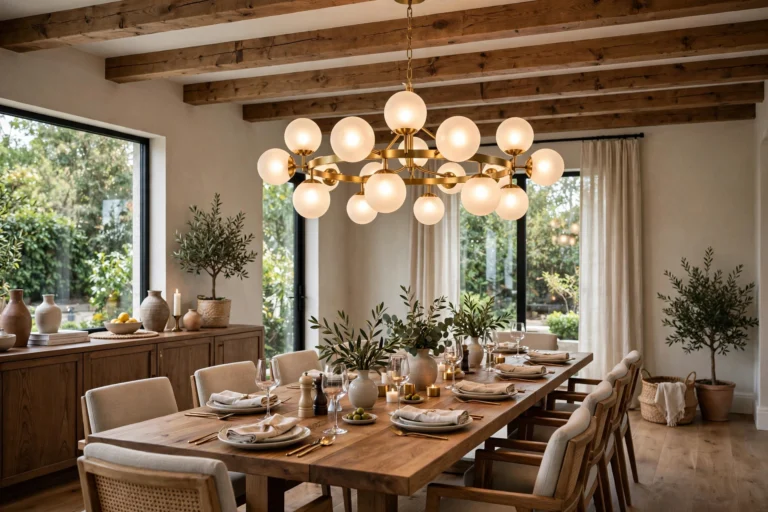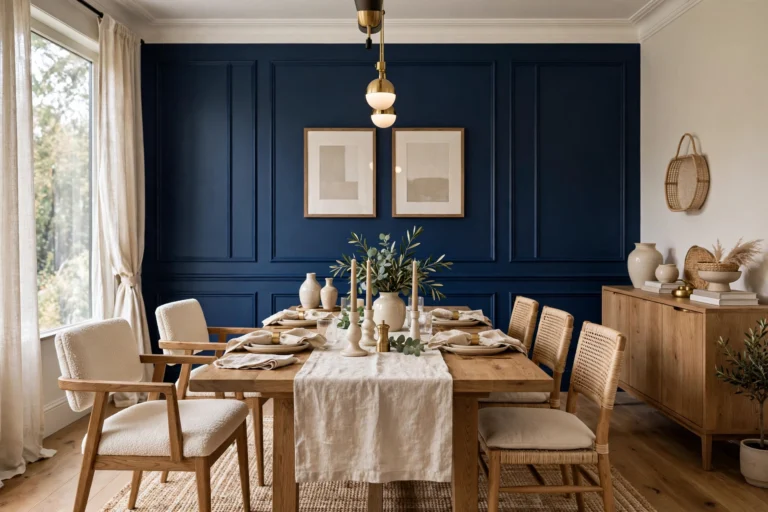

A mirror might be the hardest-working decor item a dining room can have. It doubles candlelight, borrows brightness from the nearest window, and makes a modest room feel grand — all without moving a single wall. These dining room mirror ideas show you how to place, size, and style mirrors so they amplify both light and atmosphere, whether you are working with a formal dining room or a compact breakfast corner.
The secret is thinking of a mirror as a light fixture you never have to wire. Hang it where it catches something worth doubling — a chandelier, a sunset window, a glowing sideboard — and the whole room gets an instant upgrade. For a broader look at dressing the walls that frame those reflections, these dining room wall decor ideas for warm inviting gatherings pair beautifully with every idea below.
1. Hang One Oversized Mirror Above the Sideboard
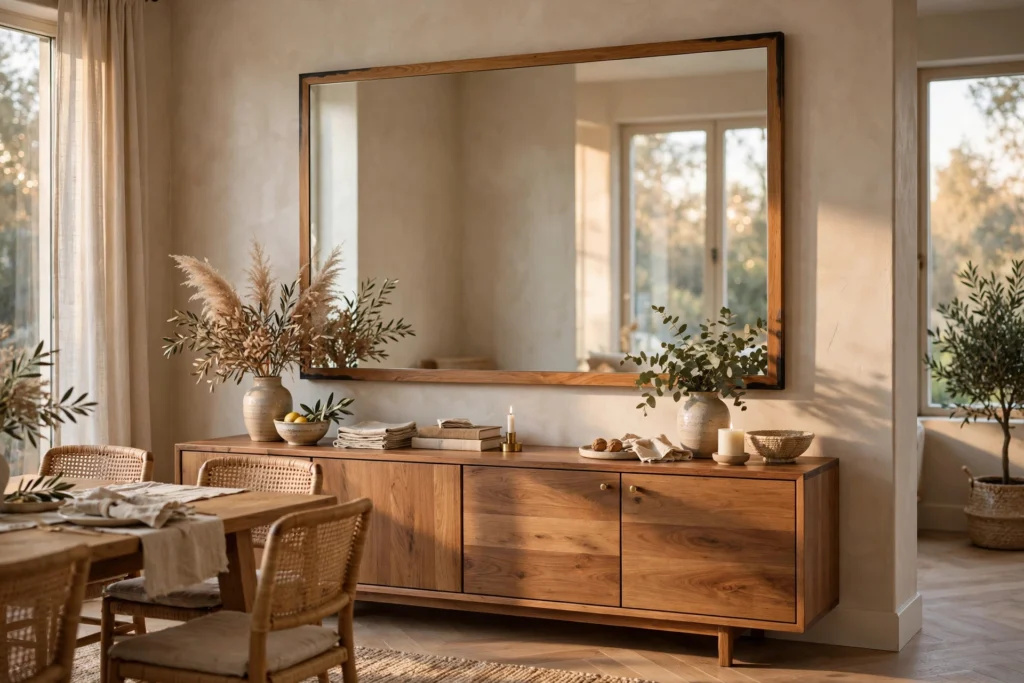
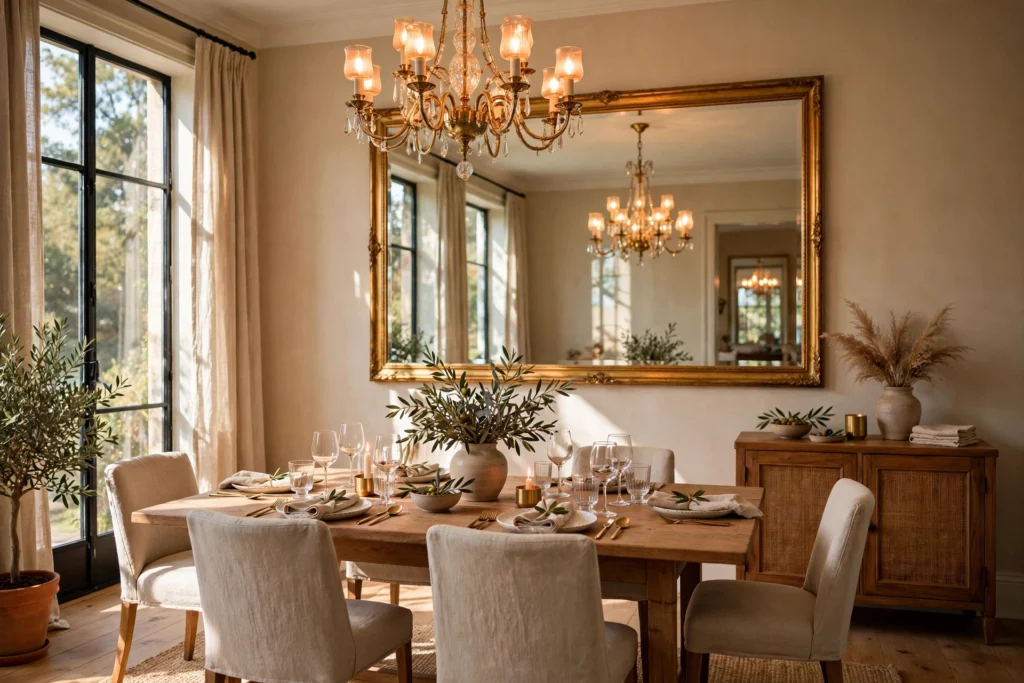
The classic move works because the proportions are forgiving: one generous mirror centered above the sideboard creates a single strong focal point instead of visual clutter. Aim for a mirror about two-thirds the width of the sideboard and hang the bottom edge six to ten inches above the surface, so table lamps, candlesticks, and serving pieces reflect without crowding the frame. A mirror this size catches the chandelier and doubles its glow across the table, which means dinner parties feel brighter and more animated without extra fixtures. Keep the sideboard styling low and layered — a shallow bowl, a small stack of plates, one floral stem — so the mirror stays the star.
2. Place a Mirror Opposite the Window
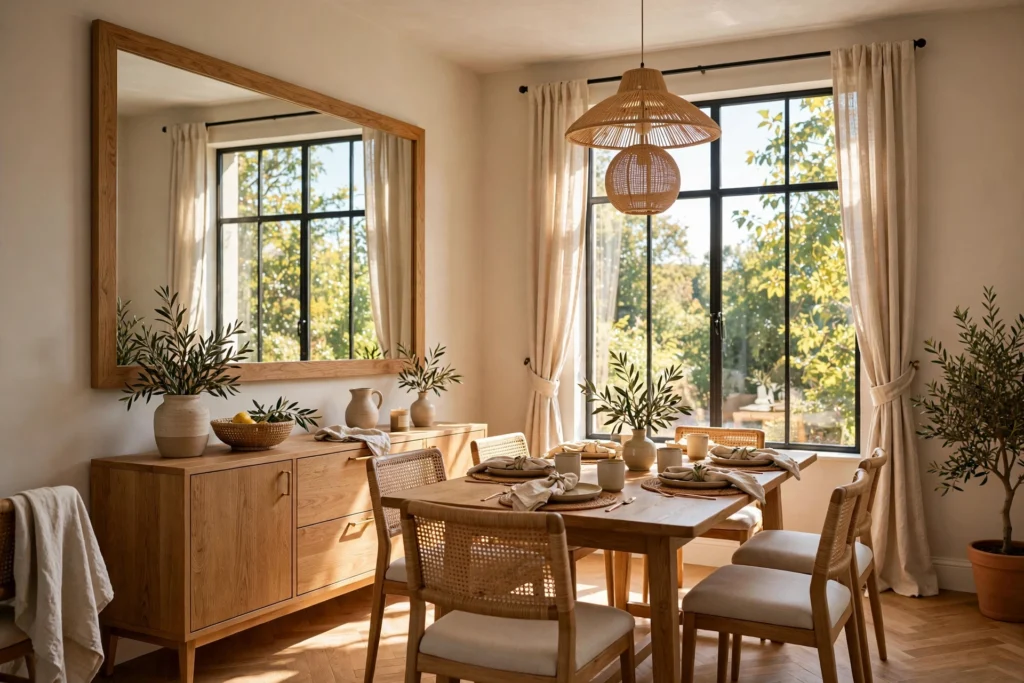
If your dining room has just one good window, put a mirror directly across from it. This is the single most effective way to borrow daylight, because the mirror bounces the view and the light deep into the room instead of letting it die at the glass. The reflected window also creates the illusion of a second window, which flattens the feeling of a closed-in box. Angle the mirror very slightly downward if the glass catches harsh midday glare; a subtle tilt keeps the reflection soft. This trick alone can make a windowless-feeling dining corner read as bright and open.
3. Try a Round Mirror Over a Round Table
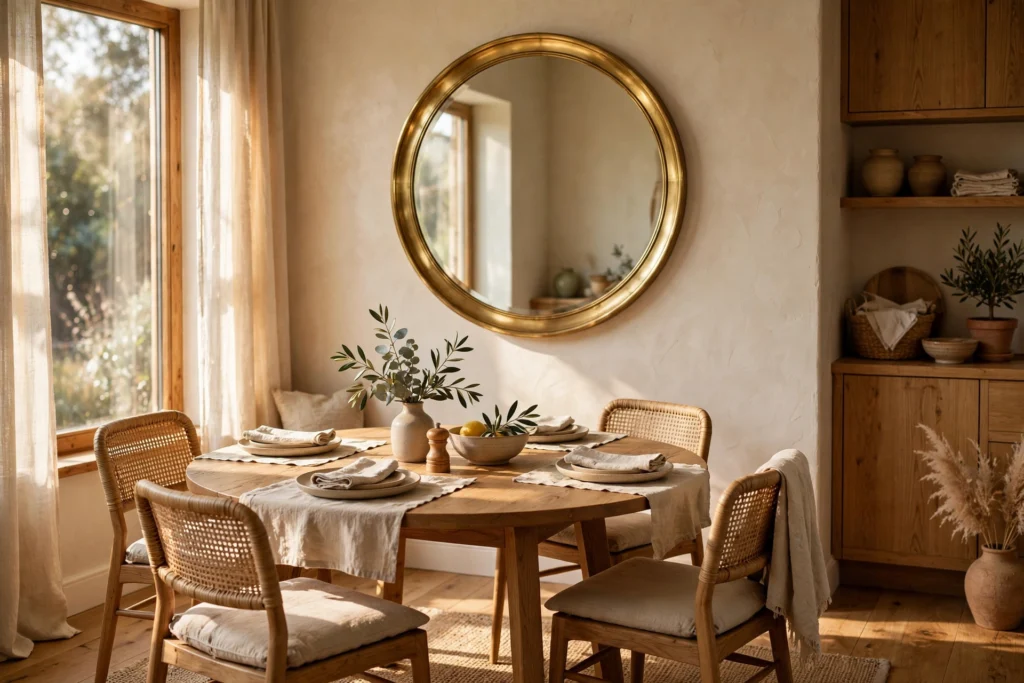
Round on round is a quiet design trick that makes a dining space feel intentional. A circular mirror echoes the shape of a round or oval table, softening all the straight lines of chair backs, door frames, and sideboard edges. It also reads friendlier than a sharp rectangle — fitting for a room built around conversation. Size matters: the mirror diameter should be roughly half to two-thirds the table diameter for balance. Framed in brass, black metal, or woven rattan, a round mirror doubles as wall art even in a room with no other decoration.
4. Create a Mirror Gallery Wall
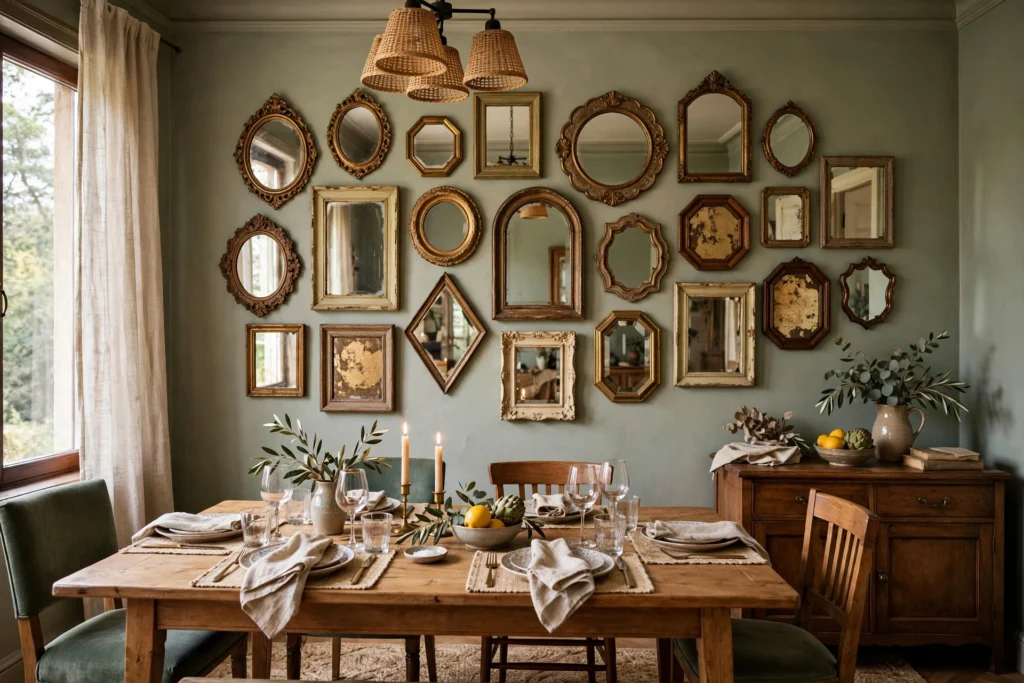
Instead of one statement piece, cluster five to nine small mirrors in mixed shapes and frames for a gallery wall that sparkles. Vintage brass ovals, small round sunburst mirrors, and plain square flea-market finds all work — the mix is the point. Lay the arrangement on the floor first, tracing a rough rectangle or organic cluster, then hang the center piece at eye level (around 57 to 60 inches from floor to center) and build outward. A mirror gallery delivers the light-bouncing power of a big mirror while acting as pure decor, and every small mirror catches a slightly different slice of the room.
5. Lean a Floor Mirror for Drama
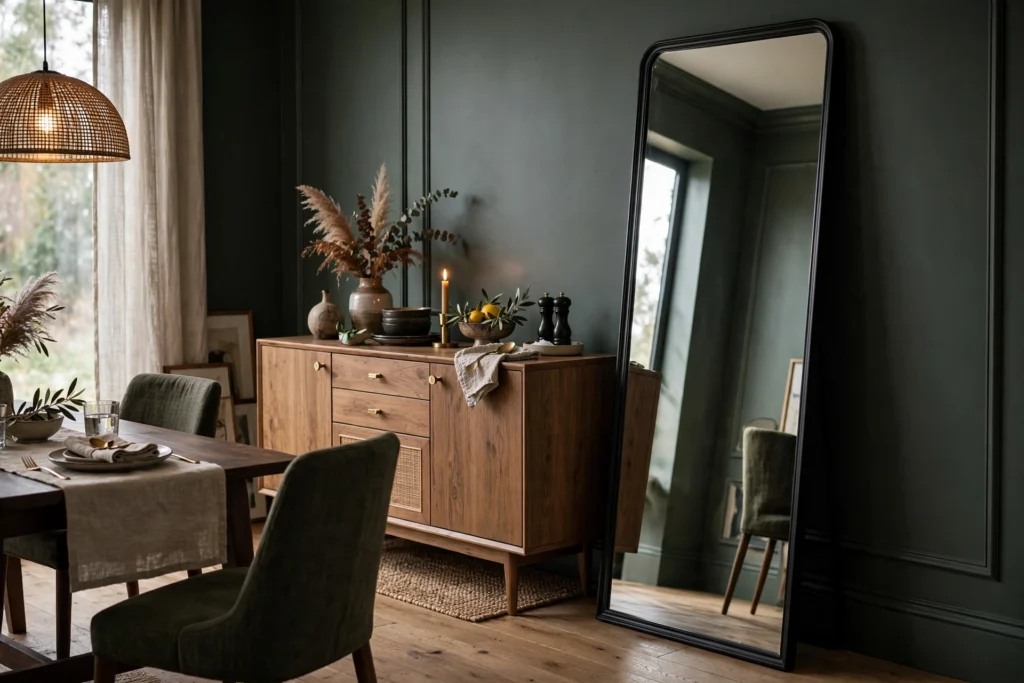
A tall floor mirror leaned against the wall brings instant designer drama to a dining room, especially one that doubles as a lounge or entertaining zone. Leaning mirrors read casual and curated rather than formal, and they visually raise the ceiling because the eye travels up the full height of the glass. Place it beside a sideboard or in an unused corner, and always anchor it to the wall with anti-tip hardware — a leaning mirror near a busy table is a toppling risk you should not skip. For maximum light gain, lean it so it reflects the room’s brightest window or fixture.
6. Frame the Chandelier With Reflection
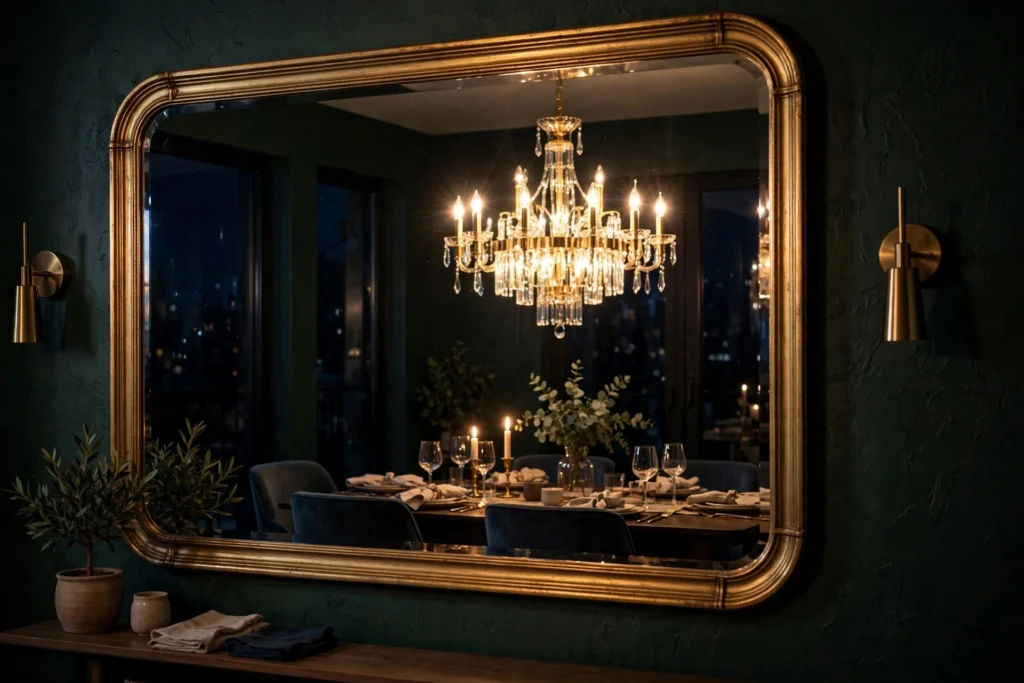
Design your mirror placement around the chandelier, and the chandelier pays you back double. A mirror hung on the wall behind or beside the table catches every bulb and multiplies the sparkle across the room, making even a modest fixture feel grander. This matters most at night, when the mirror turns one light source into many and the dining table glows like a restaurant setting. Choose mirror finishes that flatter warm light — clear glass with thin brass or gold frames — and avoid placing the mirror where it throws glare directly into seated guests’ eyes. Planning the lighting too? These dining room lighting ideas from chandeliers to sconces cover every fixture worth reflecting.
7. Use an Arched Mirror to Add Height
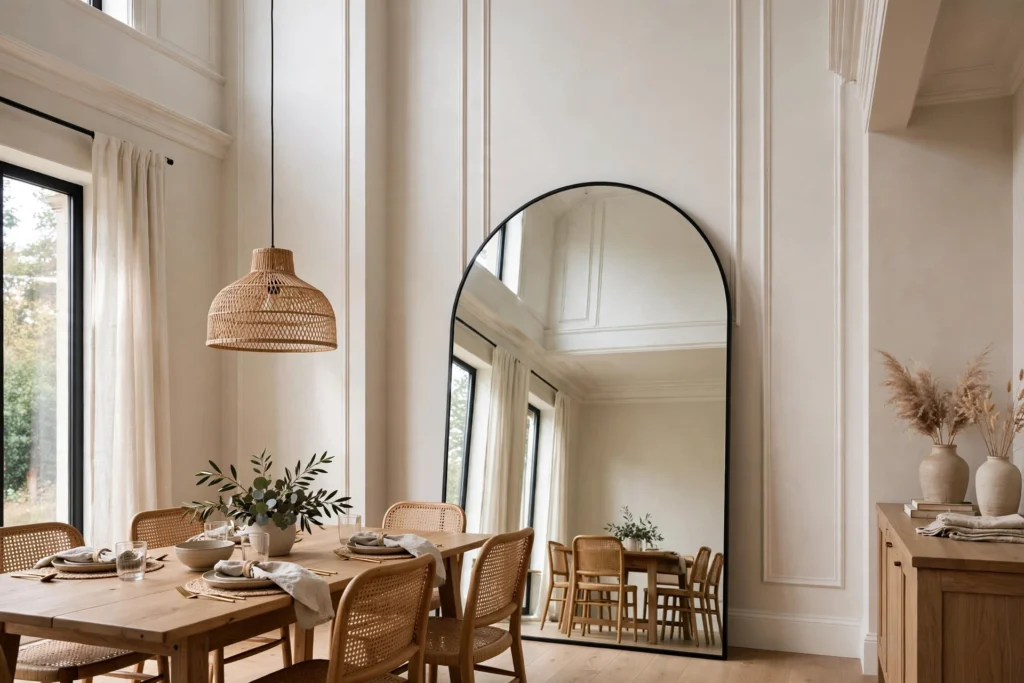
Arched mirrors are architectural magic in rooms with standard eight-foot ceilings. The curved top draws the eye upward and mimics the look of a window or doorway, which makes the wall feel taller than it is. An arch also softens boxy modern dining rooms and suits farmhouse, traditional, and Mediterranean styles equally well. Go as large as the wall allows — floor-standing arches leaned beside a console look straight out of a design magazine — or hang a medium arch over the sideboard for a scaled-down version of the effect. Black, natural wood, and aged-brass frames are the current favorites.
8. Build a Mirrored Tile Accent Wall
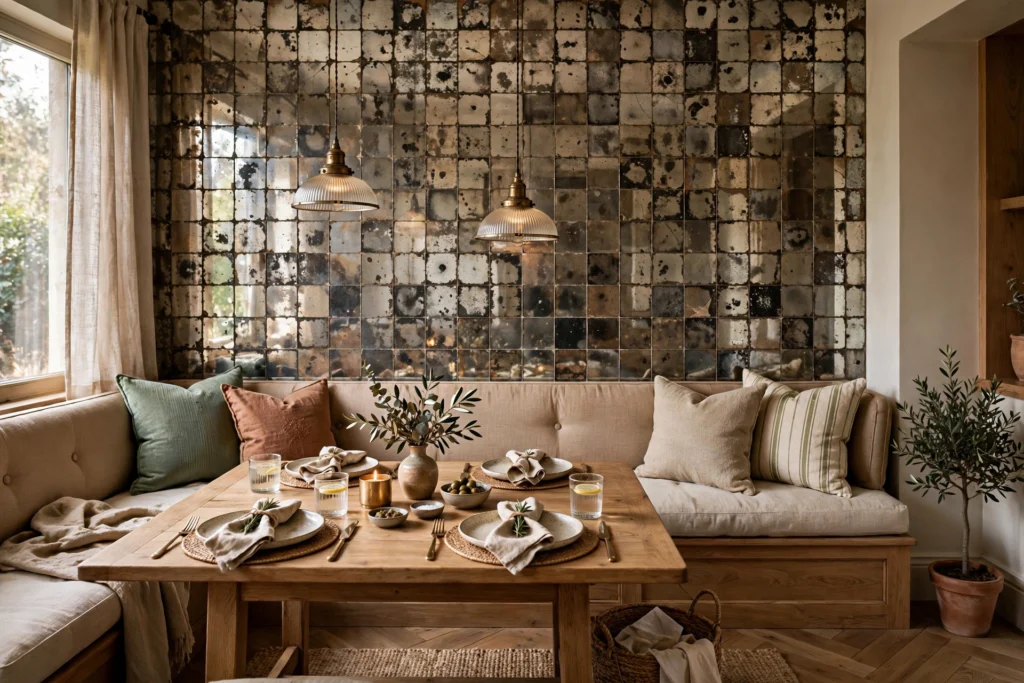
For a bolder commitment, clad one dining wall — or a section of it — in mirrored tiles, whether square, subway-pattern, or antiqued. A mirrored backsplash-style treatment behind a banquette or bar area visually erases the wall, and the faceted tiles scatter light in a way one big mirror cannot. Antiqued or foxed mirror tiles are the practical choice here: their mottled patina hides fingerprints and smudges far better than clear glass, a real advantage around food and hands. Keep surrounding decor minimal so the wall itself is the art, and balance all that shine with a textured rug and upholstered seating.
9. Layer Mirrors Over Existing Wall Panels
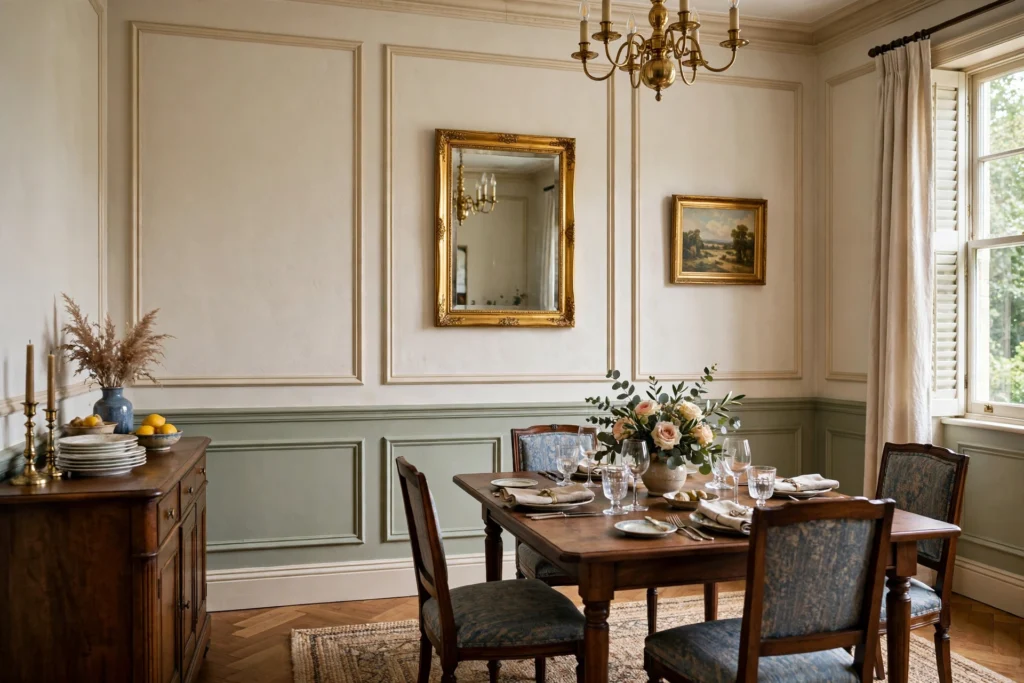
If your dining room has wainscoting, board-and-batten, or picture-frame molding, treat the panels as ready-made frames for your mirrors. Hang a mirror centered within each molding square for a built-in look that appears original to the house — this is one of the easiest ways to make a dining room feel architecturally rich without construction. The approach works best in traditional and transitional rooms, where the molding grid gives the mirrors a sense of order. Brass or thin black frames echo the panel lines, while frameless mirrors keep the look modern. This technique also hides the “hung art too high” mistake, because the panel dictates the center.
10. Double the Candles With a Table-Adjacent Mirror
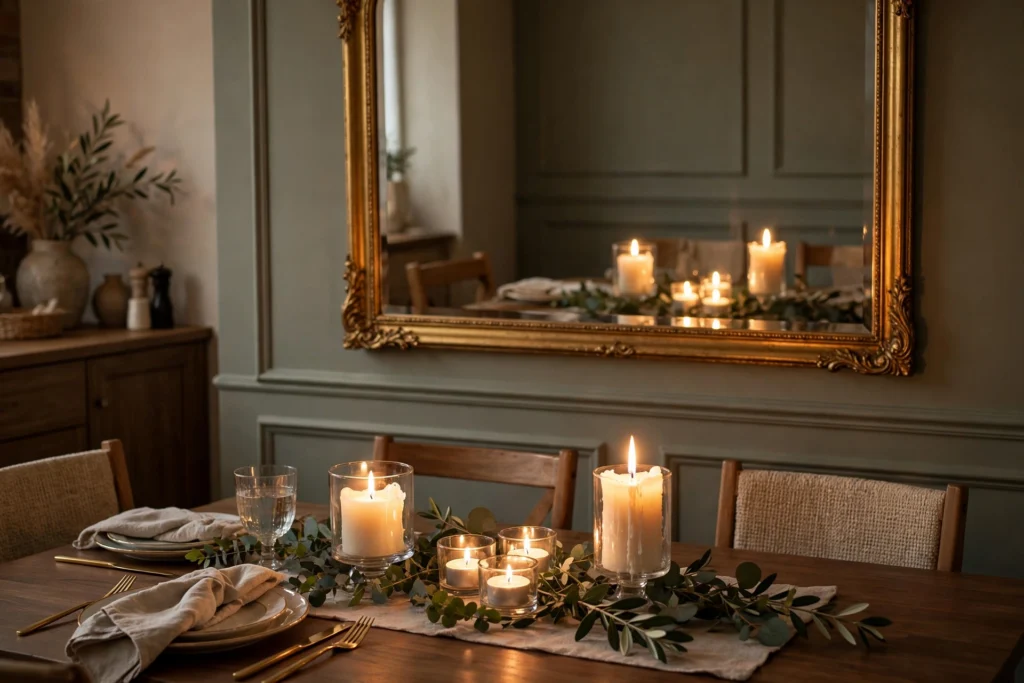
There is a reason candlelit restaurants line their walls with mirrors: every flame gets duplicated, and the room feels warmer with half the candles. Place a mirror where it catches your table centerpiece — on the side wall beside a long table, or above a low console behind the host’s chair — and watch ordinary tapers multiply into atmosphere. Keep candles unscented and at least four inches from the glass to avoid heat stress on the mirror backing. Pair this with dimmable overhead light for a setting that flatters both the food and the guests.
11. Mix Antiqued Mirrors for Vintage Charm
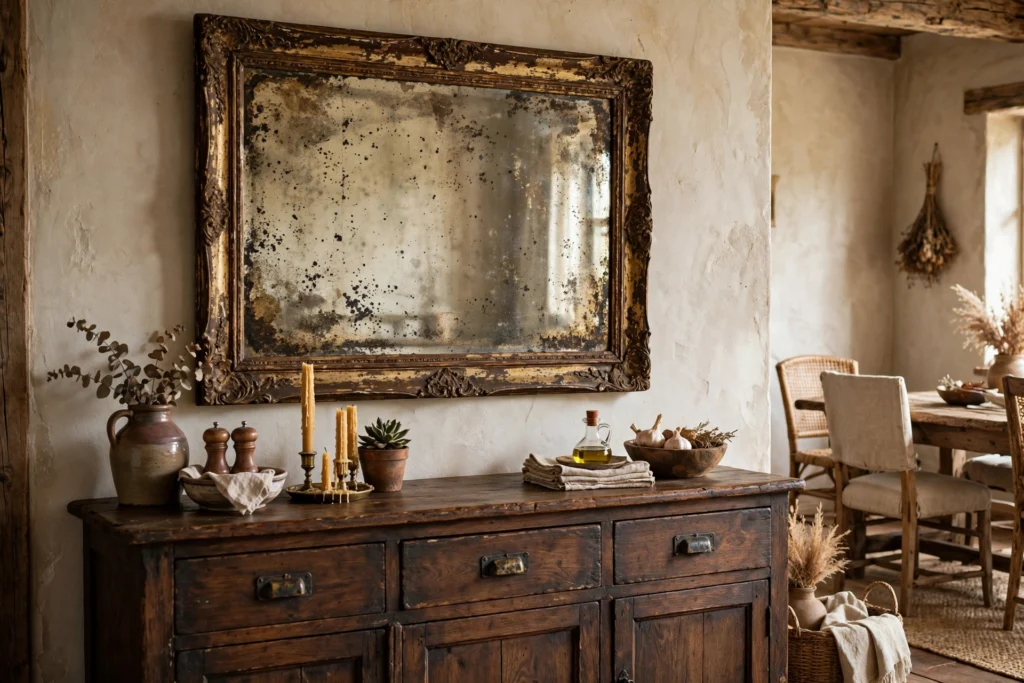
Clear glass can feel cold in a rustic or traditional dining room; antiqued mirrors solve that. Their softly distressed, foxed finish diffuses reflections instead of doubling them sharply, so they add depth and a warm, silvery shimmer without the stark brightness of modern glass. A single large antiqued panel above a dark-wood sideboard looks like it has been in the family for generations. Mix antiqued pieces with brass sconces and linen upholstery for a time-worn European mood, and know they forgive fingerprints and water spots far better than pristine mirror.
12. Hang Mirrors in Pairs for Symmetry
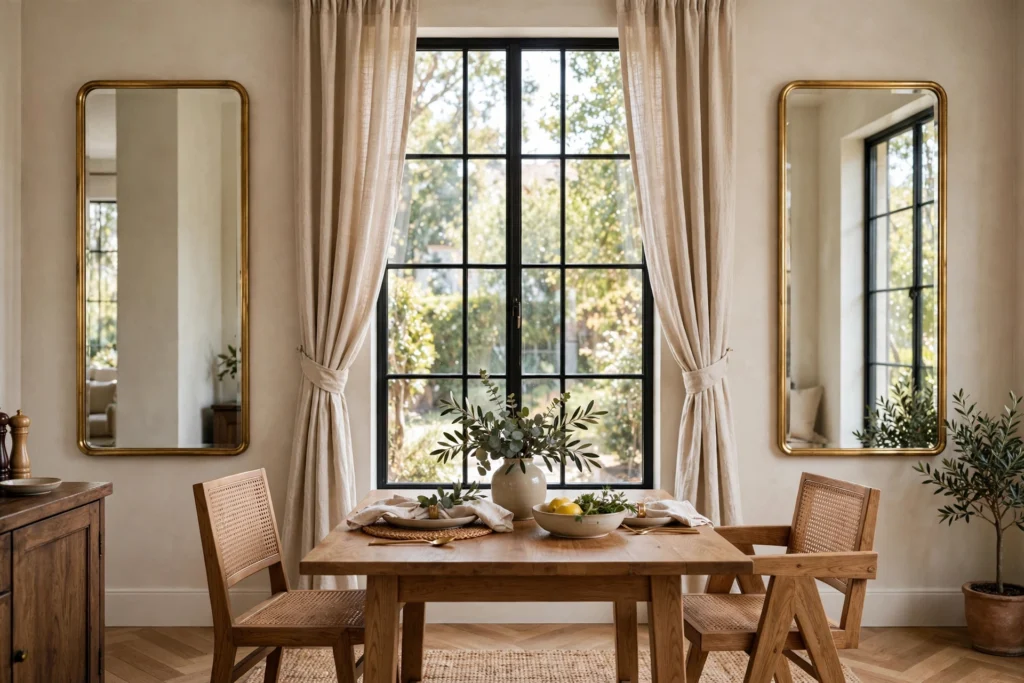
Formal dining rooms thrive on symmetry, and paired mirrors deliver it effortlessly. Hang two identical mirrors on either side of a central window, doorway, or large artwork to create a balanced, architectural rhythm that makes the room feel composed and grand. Pairs work especially well flanking a sideboard, where they read like sconces made of light. Keep the frames identical and the hanging heights exactly matched — symmetry only works when it is precise. If your dining room feels visually lopsided because of an off-center window, paired mirrors can absorb the imbalance and restore calm.
13. Add Mirrored Furniture for Subtle Glow
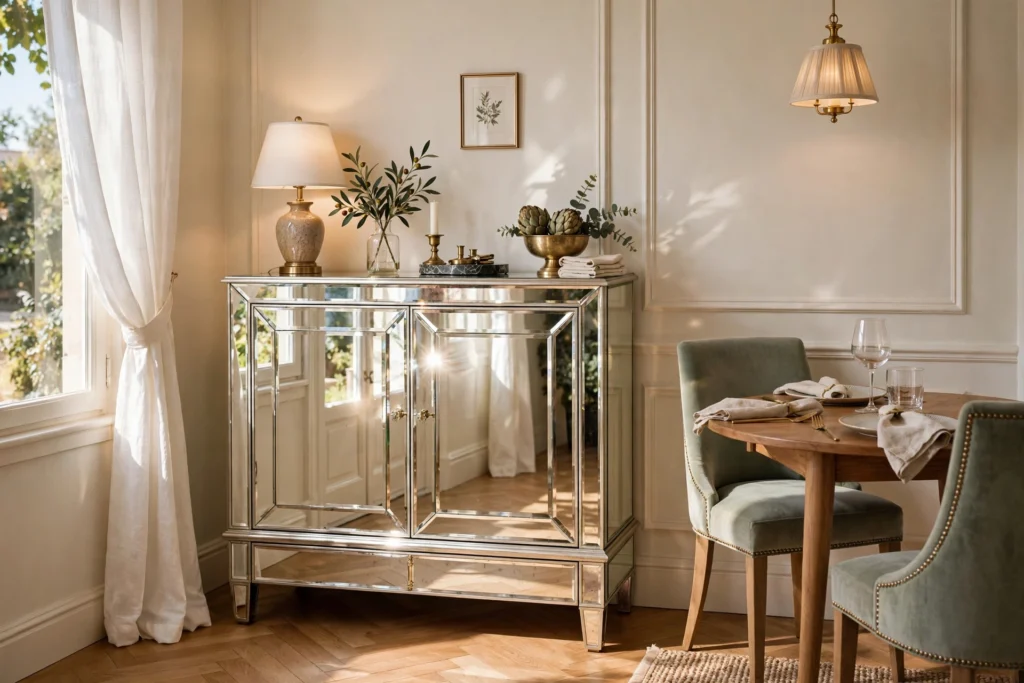
Not all mirror ideas hang on the wall. A mirrored sideboard, bar cart, or console reflects light at furniture level and keeps the room’s footprint feeling light — the pieces nearly disappear visually, which is gold in small dining rooms. A mirrored tray on the table or a pair of mirrored coasters carries the idea to the centerpiece itself. Balance mirrored furniture with soft textures — linen chairs, a jute rug, wooden table — so the room does not tip into nightclub shine. The reflective surfaces work hardest in rooms with strong directional light, like a sunny south-facing window.
14. Style a Mirror With Sconces
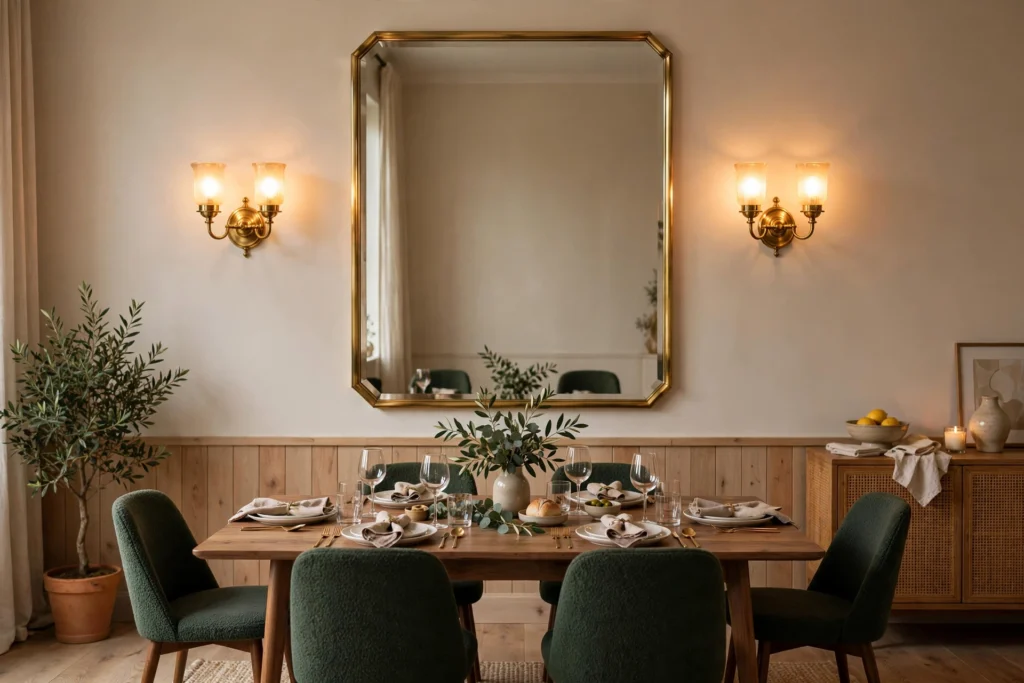
Flanking a mirror with a pair of wall sconces is the dining room’s power move: the mirror doubles the sconce light while the sconces frame the mirror like jewelry. Mount the sconces roughly level with the mirror’s midpoint, spaced eight to twelve inches from the frame edges, so the glow washes evenly across the glass. Candle-style or globe sconces in brass photograph beautifully in mirror reflections. This combination is ideal above a sideboard or buffet, where it creates a complete, finished vignette — mirror, light, and styled surface in one composition. The layered result is the dining-room equivalent of a chandelier moment, at a fraction of the cost.
15. Keep One Wall Mirror-Free for Balance

The final rule of dining room mirrors is restraint: give the reflections somewhere to rest. If every wall carries glass, the room feels busy and diners catch their own reflections at every turn — not the relaxed effect anyone wants over dessert. Let one wall hold matte art, a textile, or simple painted paneling, so the mirror wall reads as a deliberate choice rather than a hall of mirrors. This balance also matters acoustically: hard reflective surfaces bounce sound, so a soft-textured wall helps conversation stay comfortable. A single thoughtfully placed mirror in an otherwise calm room will always out-perform five competing ones. Guides to how mirrors reflect light explain the physics, but the design lesson is simple — one great reflection beats a roomful of glare.
FAQ
What size mirror is best for a dining room?
Scale the mirror to the furniture it hangs over: above a sideboard or console, choose a mirror roughly two-thirds to three-quarters the furniture’s width, with the bottom edge six to ten inches above the surface. On an empty wall, go as large as the wall and budget allow — oversized mirrors have more light-doubling impact and read as intentional art. In small dining rooms, one large mirror beats several small ones because it creates a single clean reflection instead of visual fragmentation.
Where should I not hang a mirror in a dining room?
Avoid hanging a mirror where it reflects clutter — a messy kitchen counter, a chaotic entry, or a blank wall with nothing to say. Skip spots that throw direct sun glare into seated guests’ eyes, since a mirror opposite a harsh west-facing window can make dinner uncomfortable. Also avoid placing two mirrors directly facing each other, which creates a disorienting infinity effect, and keep mirrors away from the busiest walkway where shoulders and serving trays pass.
Do mirrors really make a dining room look bigger?
Yes — mirrors create the illusion of depth by reflecting the room back on itself, and they multiply available light, which the eye reads as spaciousness. A mirror opposite a window effectively doubles the perceived window count, and a large mirror on a short wall pushes that wall visually backward. The effect is strongest in small or dark dining rooms; for more ways designers fake square footage, see this Apartment Therapy guide to small dining room ideas.
How high should a dining room mirror hang?
Hang the mirror so its center sits at roughly seated eye level — about 57 to 60 inches from the floor to the center of the glass — since diners experience the room sitting down. Above a sideboard or buffet, the bottom edge should clear the surface by six to ten inches so styled items reflect without crowding the frame. For floor-leaning mirrors, simply stand them tall and anchor them; the height takes care of itself.
Can a mirror replace art in a dining room?
Often, yes — an oversized mirror with a beautiful frame functions as both art and light source, which is why designers use it as a one-and-done wall solution. Ornate vintage frames, sculptural sunburst designs, and arched silhouettes all hold a wall with the presence of artwork. The difference is that a mirror also earns its place functionally, bouncing light and expanding space. If you miss color and texture, pair the mirror with a small piece of art on the adjacent wall instead of filling the same wall twice.
Keep Exploring
Mirrors are the fastest way to make a dining room feel brighter, larger, and more finished — but they work best as part of a layered plan. Choose one hero mirror, place it where it catches your best light, and let the rest of the room stay calm enough for the reflection to shine.
Ready to style the surface beneath your new mirror? Our dining room table decor ideas for everyday gatherings are made for centerpieces worth doubling in the glass.