A tablecloth does more than protect your table — it sets the entire mood of the meal before a single plate lands. These dining room tablecloth ideas show how one piece of fabric can swing a Tuesday dinner from ordinary to intentional and a holiday gathering from nice to unforgettable. Our roundup of dining room table decor ideas for everyday gatherings starts with the table surface itself, and nothing changes that surface faster than the right cloth.
The secret is matching the cloth to the occasion and the way you actually live. A crisp white linen for candlelit dinners, a wipeable vinyl for craft-afternoon chaos, a washed linen that survives a hundred tumbles in the dryer — every version below earns its place in the linen drawer. Pick two or three that fit your table, your family, and your entertaining style, and dinner starts looking like an occasion every single night.
1. Measure for the Right Drop
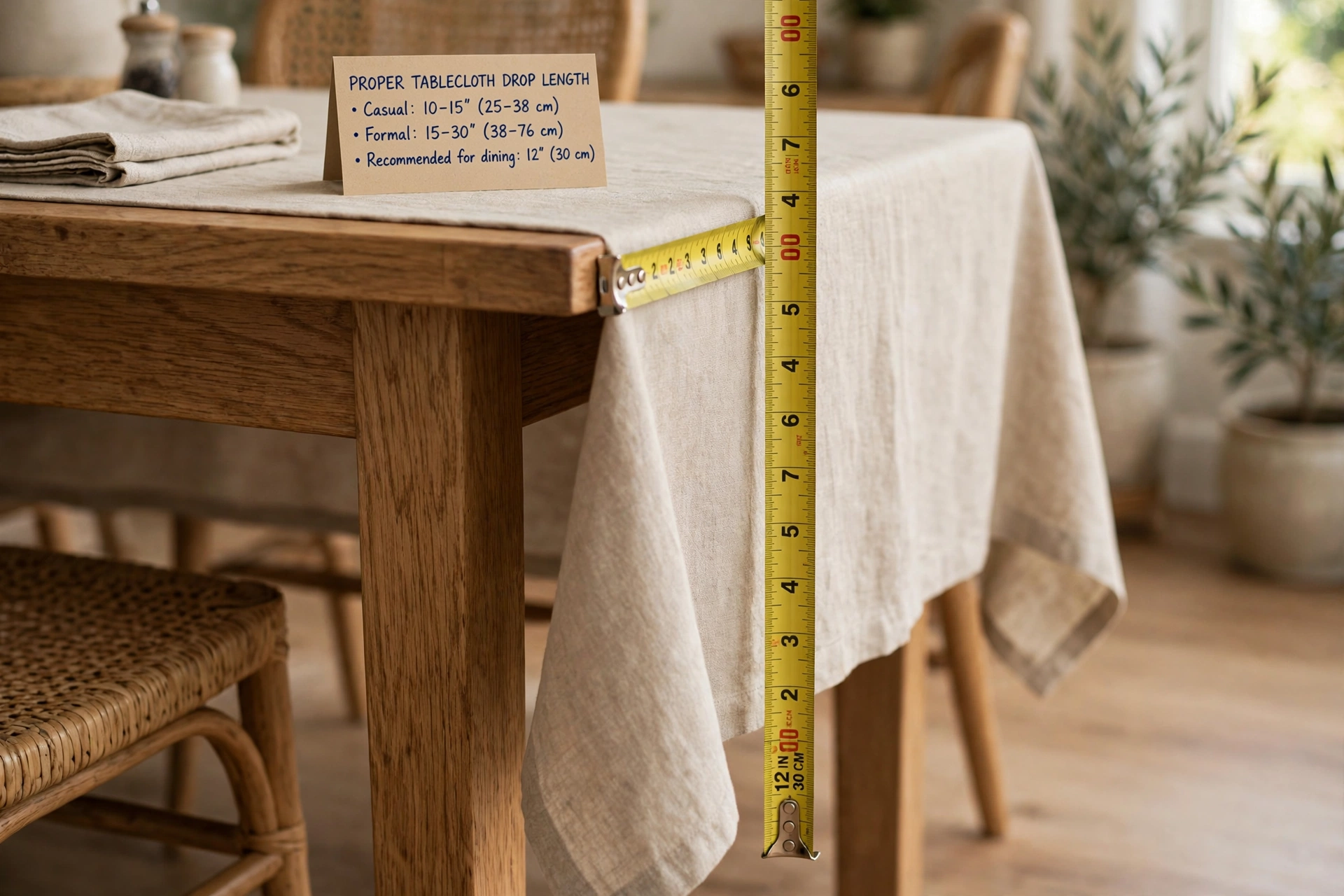
Before buying any cloth, measure your table properly so the drop — the part that hangs over the edge — looks intentional instead of accidental. For everyday dining, aim for an 8 to 12 inch drop; it protects the edge while keeping plates and elbows clear. For formal occasions, extend the drop to 12 to 15 inches for that generous, tailored look. Measure the tabletop length and width, then add twice the desired drop to each dimension. Round tables work the same way: table diameter plus twice the drop equals the cloth diameter you need.
2. Know Your Fabrics: Linen, Cotton, and Polyester

Each tablecloth fabric has a personality, and choosing well saves you years of ironing regret. True linen looks luxurious, drapes beautifully, and gets softer with every wash — but it wrinkles and costs more. Cotton is the everyday workhorse: affordable, easy to wash, and holds color well, though cheaper cottons can pill. Polyester resists stains and wrinkles and barely needs ironing, making it the practical pick for parties and rentals. If you want the full breakdown on linen’s drape and care, this guide to linen tablecloths walks through weights and weaves for every table design.
3. Go Crisp White for Formal Dinners

Nothing signals a special occasion like a crisp white tablecloth — it is the dining equivalent of a pressed shirt. White flatters every dish, makes food colors pop, and gives candlelight something beautiful to bounce off. For the formal look, iron or steam the cloth just before guests arrive, and let it drop a generous 12 to 15 inches. Polyester-cotton blends hold a sharp press longest, while pure linen adds texture if you don’t mind relaxed wrinkles. When the cloth is pristine, even simple food and flowers read as a celebration.
4. Choose Relaxed Washed Linen for Everyday

Everyday elegance shouldn’t require a steam iron, and that’s exactly where washed linen shines. Its soft, lived-in texture looks deliberately casual rather than messy, so you can pull it straight from the dryer, smooth it by hand, and call it done. Neutral shades — oatmeal, soft gray, natural flax — hide light wear and pair with anything. Washed linen only gets better with use, growing softer and more supple wash after wash. Elegance, in this case, is simply not worrying about perfection.
5. Try Patterned and Floral Cloths

A patterned tablecloth brings the decor with it, so the rest of the table needs almost nothing. Florals soften a formal dining room and pair beautifully with spring and summer entertaining; small ditsy prints read cheerful at brunch, while oversized botanicals make a statement at dinner. The trick is letting the cloth be the star: keep centerpieces simple, use solid-color napkins, and skip the busy runner.
6. Add Gingham and Stripes for Charm
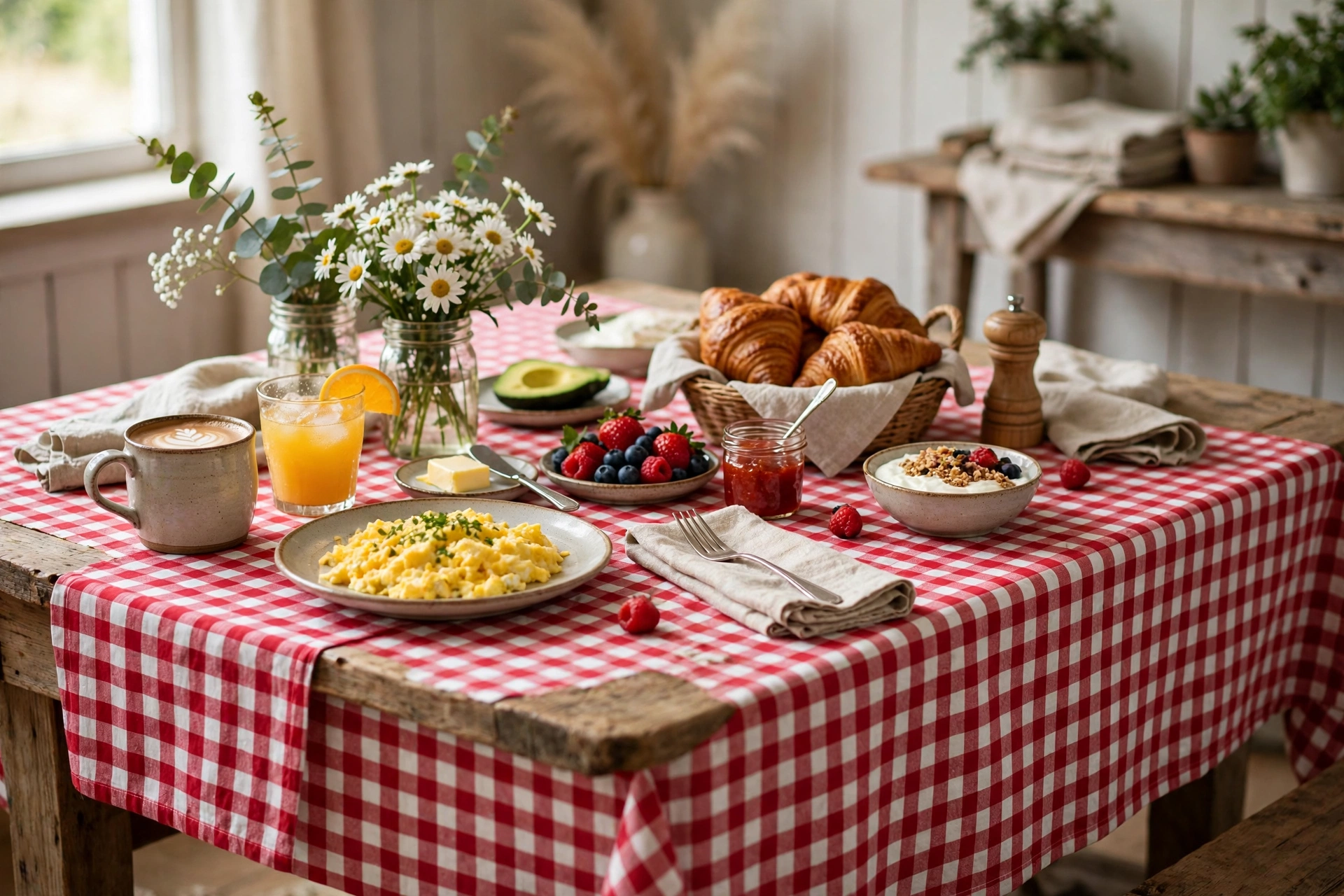
Checks and stripes give a table instant charm without trying too hard. Gingham reads picnic-fresh and happy, perfect for casual breakfasts, Easter, and outdoor-feeling meals — red or navy on white are timeless. Ticking stripes and awning stripes lean more coastal and crisp, working beautifully for summer lunches and farmhouse tables. These patterns hide crumbs and small stains far better than solids, which is a genuine weekday advantage. A cheerful checked cloth can make even takeout dinner feel like an occasion.
7. Layer a Runner Over a Cloth

Layering a runner over a full cloth adds depth, texture, and a focal line down the table’s center. Contrast is the whole point: try a natural jute runner on a white cloth, a linen runner on a patterned cloth in a matching solid, or something metallic over deep colors for evening. The runner should be about a third the cloth’s width and hang 6 to 12 inches past each end. For formal evenings, this layering technique builds the kind of collected, decorated look that full table settings achieve with multiple textiles.
8. Match the Cloth Shape to Your Table
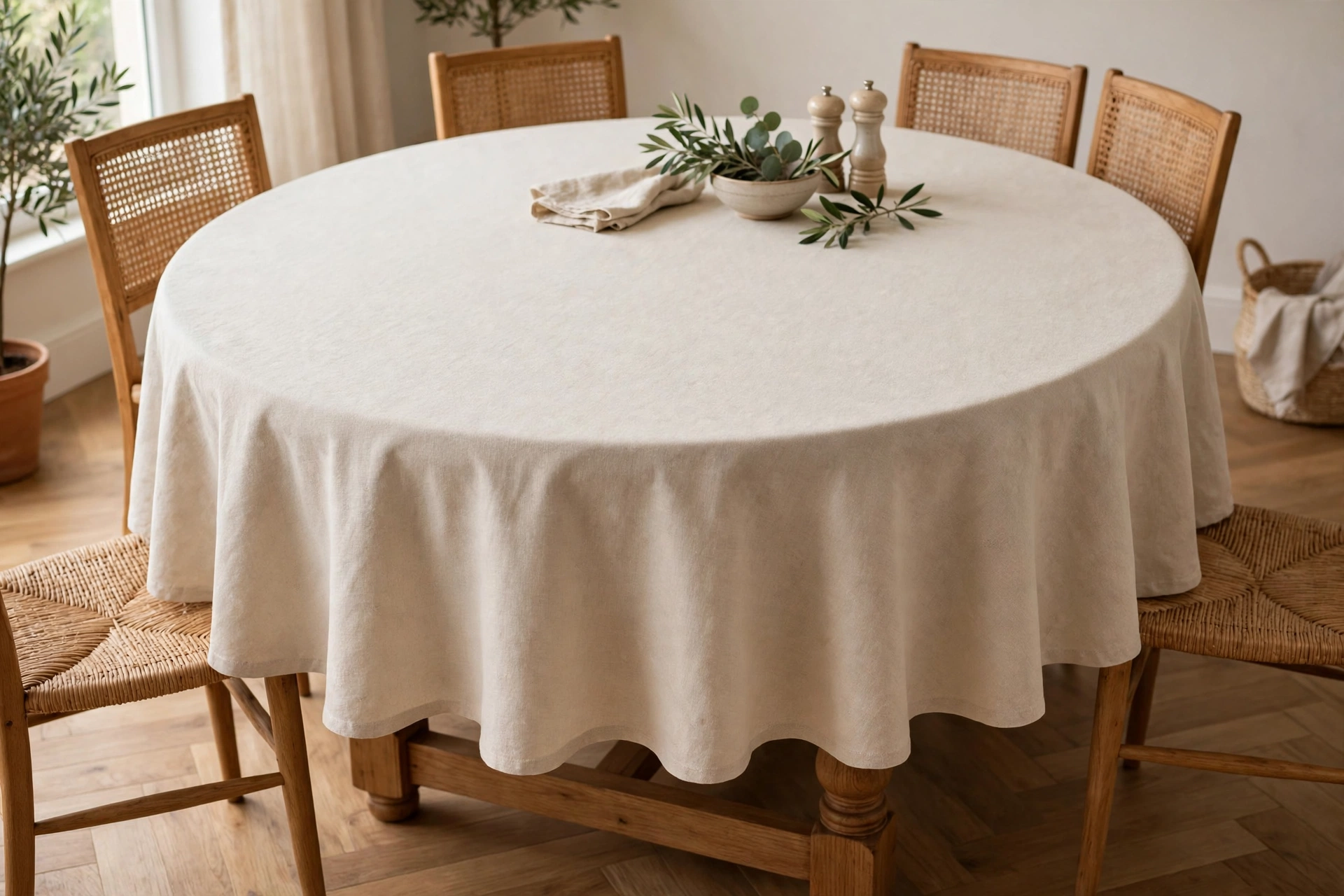
Round cloths and rectangular cloths are not interchangeable, and the wrong shape always looks like a compromise. A round cloth on a round table drapes evenly all the way around with no awkward corners — measure diameter plus twice your desired drop. Rectangular tables need rectangular cloths with enough overhang to cover the corners without pooling. Oval tables take oval cloths, and square tables can use square cloths or a round cloth for contrast if the drop is right.
9. Use Table Toppers and Overlays
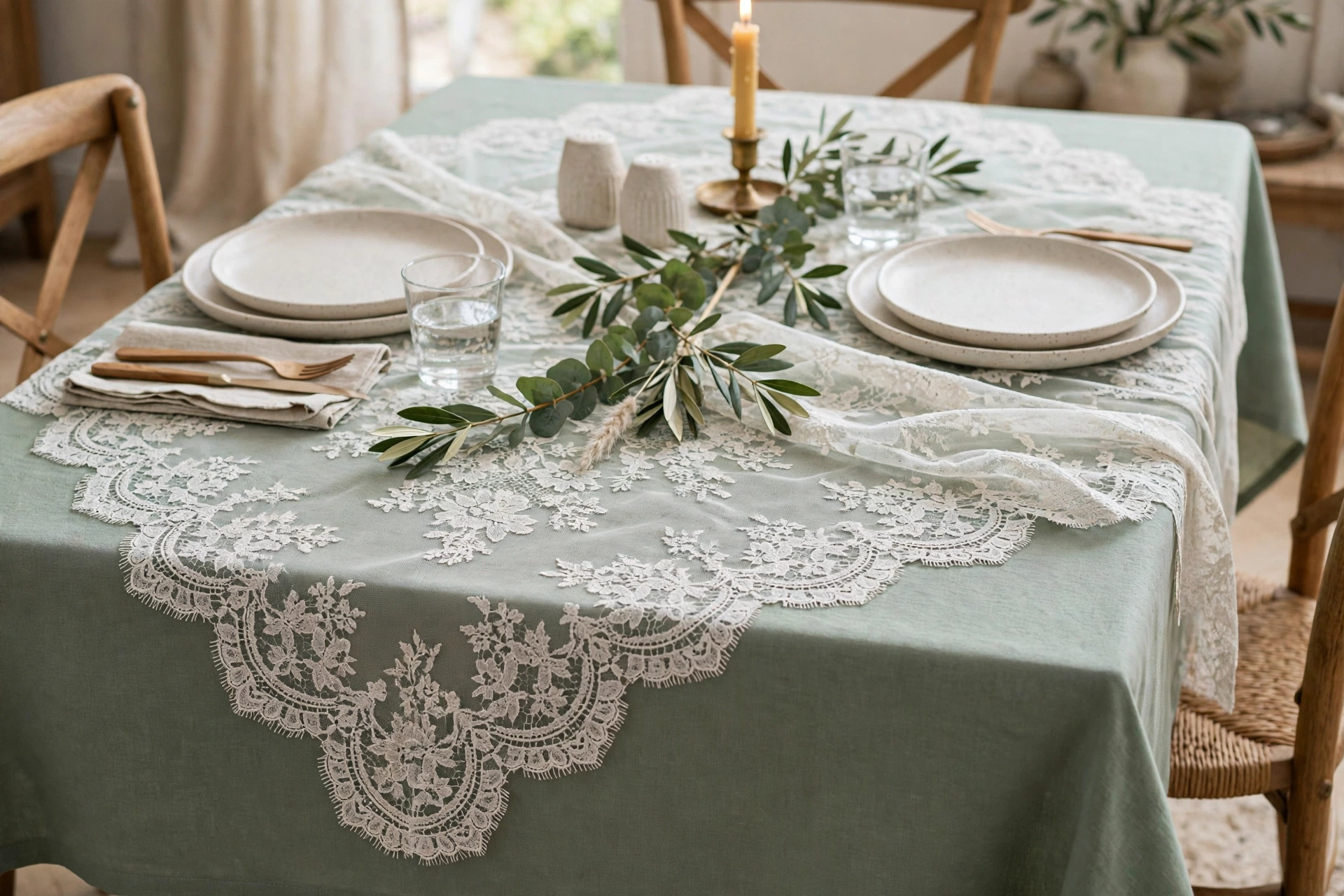
A topper or overlay is the tablecloth’s low-commitment cousin: a square, round, or runner-sized piece that sits on top of your main cloth or even on a bare table. Overlays in sheer organza, lace, or a contrasting color add formality for events without hiding a base cloth you love. Toppers work beautifully on bare wood too, protecting the center where dishes land while showing off the table’s edges. Two toppers in different fabrics give you four table looks for the price of almost nothing.
10. Dress for the Season and Holidays
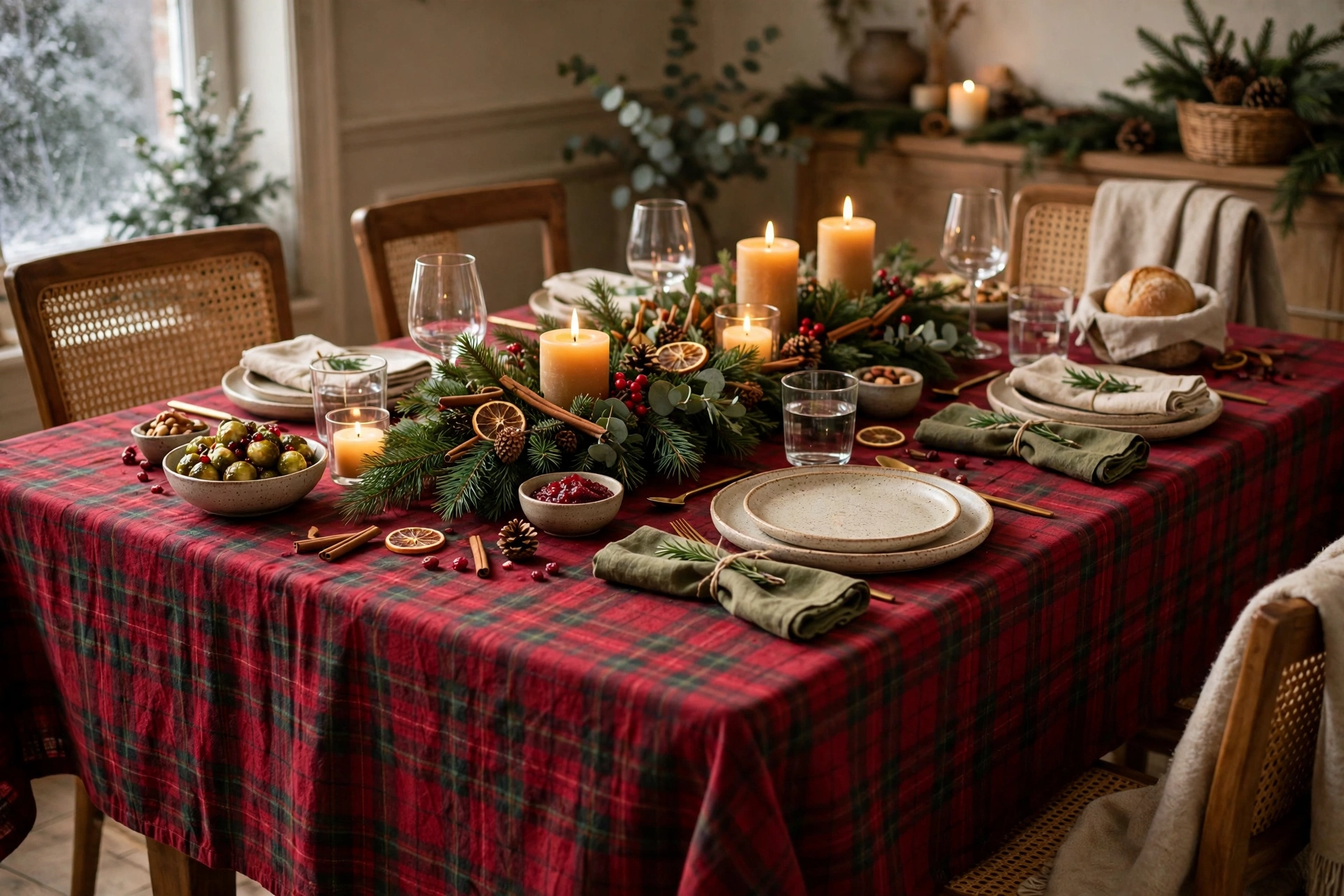
Seasonal cloths are the fastest way to make your dining room feel current without redecorating. Deep jewel tones and plaids carry fall and Christmas; pastels and florals lift Easter and spring; crisp whites and nautical stripes suit summer. You don’t need a dozen cloths — three or four well-chosen seasonal pieces plus one neutral year-round cloth cover every occasion. Store off-season cloths rolled rather than folded to avoid crease lines, tucked in labeled bags. Guests notice the effort immediately, and you spent about five minutes.
11. Keep Wipeable Vinyl for Kid Chaos

With small kids, a beautiful cloth you can’t stain is worth more than a beautiful cloth you can’t use. Modern vinyl and oilcloth tablecloths have come a long way from the sticky plastic of childhood — many now look convincingly like linen or cotton prints. Spills wipe off with a damp cloth, crayons and paint wash away, and the table underneath stays pristine. Keep one in a cheerful pattern for everyday family meals and save your good linens for grown-up dinners. Practical elegance means choosing the cloth that lets everyone relax.
12. Mix Cloths With Placemats
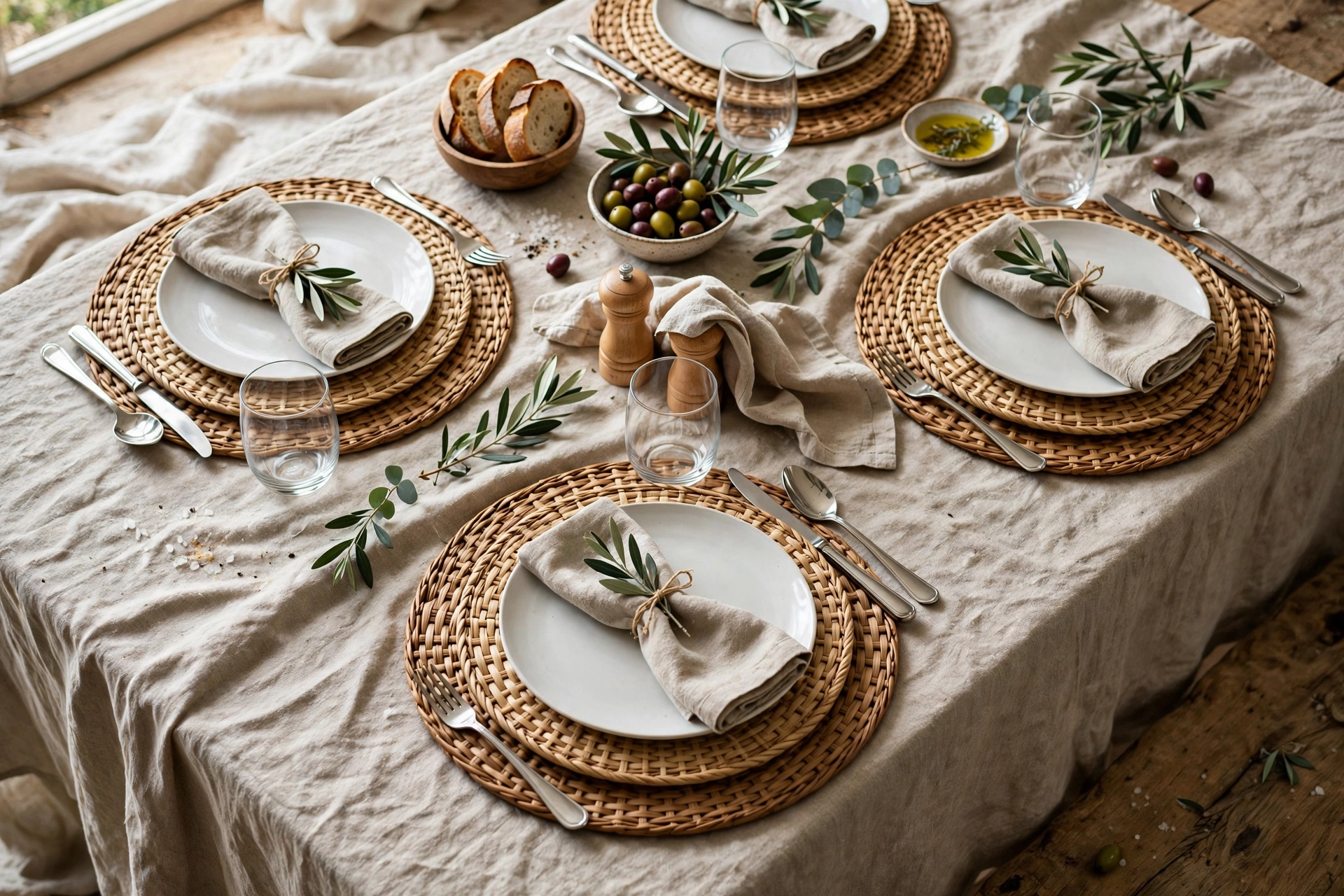
Cloths and placemats aren’t rivals — together they create a layered, finished place setting. Use placemats on a cloth to define each seat, protect the linen where plates actually land, and add a second texture or color. Woven, rattan, or beaded placemats contrast beautifully with smooth linen; crisp cotton placemats sharpen a rustic cloth. The placemat should be proportional — standard 12-by-18 inches suits most settings — and sit about an inch from the table’s edge.
13. Care for and Iron Your Linens

Good linen care keeps cloths looking elegant for decades instead of seasons. Wash cotton and linen in warm water with mild detergent, and pull them from the dryer while slightly damp — this is the secret to easy pressing. Iron on the reverse side while damp for the smoothest finish, or use a handheld steamer right on the table for formal occasions. Store cloths rolled on tubes or folded with acid-free tissue to prevent sharp creases. A little routine care turns a mid-range cloth into one that looks expensive every time you use it.
14. Rent vs Buy for Big Events

For weddings, milestone birthdays, and big holiday parties, renting tablecloths often beats buying. Rental houses stock floor-length cloths in dozens of colors and fabrics at a fraction of the purchase price, and they handle the laundering — you just return them stained and all. Rent when you need matching cloths for many tables, specialty fabrics like sequin or damask, or a color you’d never use twice. Buy when it’s a size and color you’ll reuse, since three rentals roughly equal the cost of ownership.
15. Skip the Cloth When the Wood Is Beautiful

Sometimes the most elegant choice is no cloth at all. If you own a table with beautiful grain, a live edge, or a finish you love, let it show — a bare table with great placemats, a runner, or a simple centerpiece looks confident and modern. This works best for casual and contemporary dining rooms where the table itself is the design statement. Protect the surface with felt pads under centerpieces and trivets under hot dishes. Knowing when to leave the table bare is as much a styling skill as choosing the perfect cloth — elegance is about intention, not coverage.
Frequently Asked Questions
How far should a tablecloth hang over the edge?
For everyday meals, an 8 to 12 inch drop looks neat and keeps the cloth clear of laps and chair arms. For formal dinners, extend the drop to 12 to 15 inches for a more generous, tailored appearance. Measure your table and add twice the desired drop to each dimension to find the right cloth size.
What is the best tablecloth fabric for daily use?
Washed linen and cotton-polyester blends are the best everyday choices. Washed linen looks intentionally relaxed, softens with washing, and needs little ironing. Cotton blends resist wrinkles and stains better than pure cotton, wash easily, and hold their color through heavy use — ideal for a cloth that lives on the table.
Should the tablecloth match the napkins?
It can, but it doesn’t have to. Matching cloth and napkins look crisp and formal; contrasting napkins add personality and are more forgiving about stains since they’re smaller to replace. A safe formula: solid cloth with patterned napkins, or patterned cloth with napkins pulled from one of its colors. For formal place-setting rules and layering ideas, this guide to dining table setting secrets covers napkin folds, placement, and polished finishing touches.
How do I keep a tablecloth from slipping?
Slipping usually means the cloth is too small or the table is too slick. Size up so the drop has weight, or add a felt-backed table pad underneath for grip and extra heat protection. Table clips work for outdoor or buffet use, and a runner layered on top adds weight right down the center where it matters most.
What size tablecloth do I need for a round table?
Measure the table’s diameter, then add twice your desired drop — 8 to 12 inches for everyday, 12 to 15 inches for formal. A 48-inch round table with a 12-inch drop needs a 72-inch round cloth. For more styling ideas for round tables specifically, these round dining table decor ideas for cozy charming centerpieces show how cloths, runners, and centerpieces work together on circular tops.
Keep Exploring
A tablecloth is one of the smallest investments in your dining room and one of the most transformative. Start with a versatile neutral for everyday, add a crisp white for occasions worth celebrating, and let one seasonal or patterned cloth keep things interesting. Swap them with the calendar, care for them simply, and your table will always look dressed for the moment. Everyday elegance isn’t about perfection — it’s about a table that says someone thought about dinner tonight.