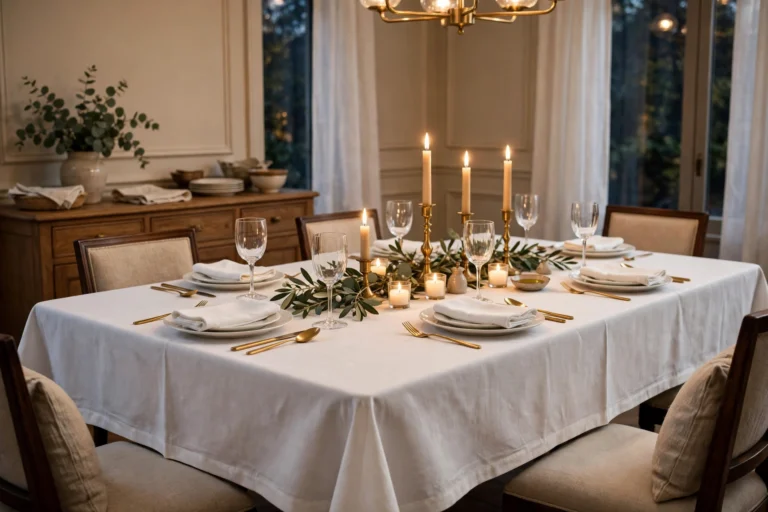
Few spots earn affection like a window seat — sunlight on the table and the best seat in the house already claimed. These dining room window seat nook ideas turn an ordinary window into a dining destination: benches under bay windows, thick custom cushions, hidden storage for linens, and styling tricks for every home. If you love the banquette look, our cozy kitchen nook banquette dining ideas show the same concept in kitchen settings.
A window seat nook suits nearly any layout. Under a wide bay window, a bench seats four in the footprint of two chairs. Along a single window, a slim banquette plus a small round table squeezes dining into a corner that felt unusable. The formula: bench height around 18 inches, cushion depth of 20 to 24 inches, and a table near 29 inches so knees and tabletop coexist happily.
1. Build a Bench Under the Bay Window

A bay window’s angles are practically begging for a custom bench that follows them. Measure each bay wall and build the bench to fit, or join stock kitchen wall cabinets to approximate the shape — their 15-inch depth suits most sills. Keep seat height at 17 to 19 inches so it matches dining chairs across the table. Paint it to match your trim. Since the bench replaces chairs on one side, traffic flows freely. These bay window dining ideas for light-filled gatherings show how the whole setting comes together around sunlit glass.
2. Choose a Cushion You Can Sink Into

The cushion makes or breaks a window seat. Three to four inches of high-density foam keeps it comfortable through a full dinner, while a down-blend topper adds sink-in softness. Wrap the foam in performance fabric — crypton, outdoor-rated linen, or a tight weave — so spills wipe away. Box the cushion with a welted edge and add a zipper so the cover washes easily. A loose stack of throw pillows finishes it. Foam is the one place never to economize — skimping here is the most common regret, and good foam gets the nook used daily.
3. Hide Storage Inside the Seat

A window-seat bench is secretly the best storage in the dining room. Build or buy it with a hinged top and you gain a deep chest for linens, serving dishes, or craft supplies. Add soft-close hinges so the lid never slams on fingers, and line the inside with felt for a finished feel. For narrower benches, flip-top lids beat drawers because nothing catches on table legs. Divide the interior with boxes or baskets so it stays organized. This one feature turns a pretty bench into the hardest-working piece in the room.
4. Pair It With a Round Pedestal Table

Round tables and window benches are a natural match. The curve lets people slide in from the corners without shuffling chairs, and a pedestal base means no legs bump into the bench. A 42-inch round seats four around a bay bench; a 36-inch version suits a single-window nook for two. Choose a pedestal in a slightly distressed or natural finish to echo the relaxed mood of window dining. Everyone faces inward, so conversation flows better than at a long rectangular table. Pull the table out six inches from the bench so cushions have breathing room.
5. Style a Classic Breakfast Nook

Breakfast nooks shine in morning light, so lean into an easy, casual feel. Pick washable slipcovered cushions in a cheerful stripe or small-scale print, a simple drum shade, and a small vase of whatever is blooming. Keep table styling light — a runner instead of a full cloth, everyday dishes within reach — so the nook invites use rather than ceremony. Morning coffee tastes better with a view, and this layout proves a dining room need not feel formal. Add a wall hook for a light cardigan and the nook becomes the house’s favorite morning spot.
6. Pick the Right Curtains
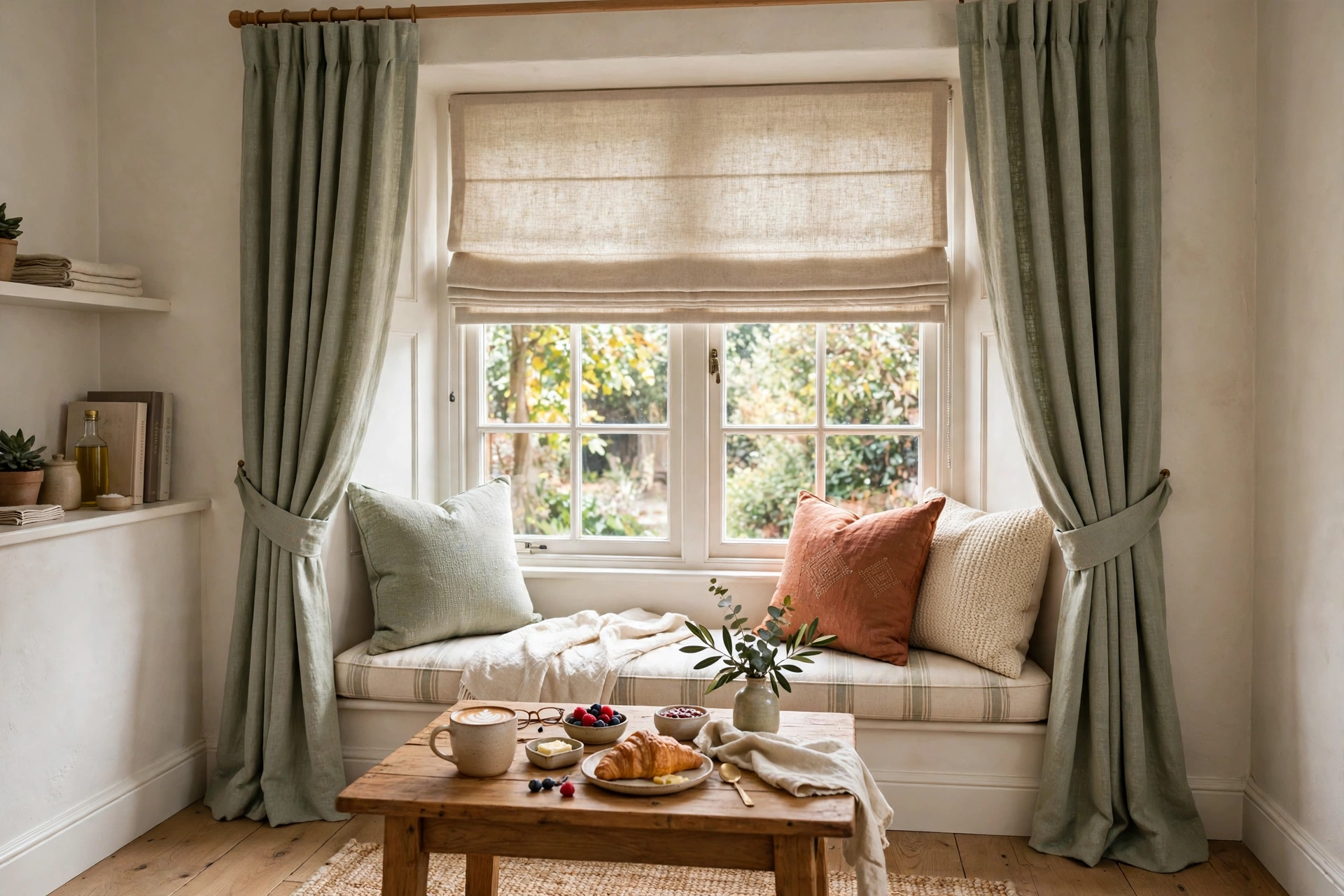
Curtains frame a window-seat nook but must clear the bench. Hang panels just outside the window frame, or mount the rod high and wide so open curtains stack on the wall, leaving the view unobstructed. Cafe-length curtains ending at the sill work behind a banquette since they never bunch behind cushions. Roman shades are another strong choice: they pull up during meals and drop for privacy later. Skip heavy puddled panels that collect behind the bench; the goal is a frame for the view, not fabric in your dinner.
7. Light It Like a Destination

A window seat gets daylight but can feel cave-like after dark, so layer lighting above the nook. A pendant hung 30 to 36 inches above the tabletop gives focused light without blocking sightlines across the table. Flank the window with plug-in sconces if the nook sits in a corner, or add a small picture light over artwork above the bench. Dimmers are worth every penny — bright for homework, low for dinner, softer for lingering conversation. Skip harsh overhead spots; warm bulbs around 2700K make skin and food look far better.
8. Make It Kid-Friendly
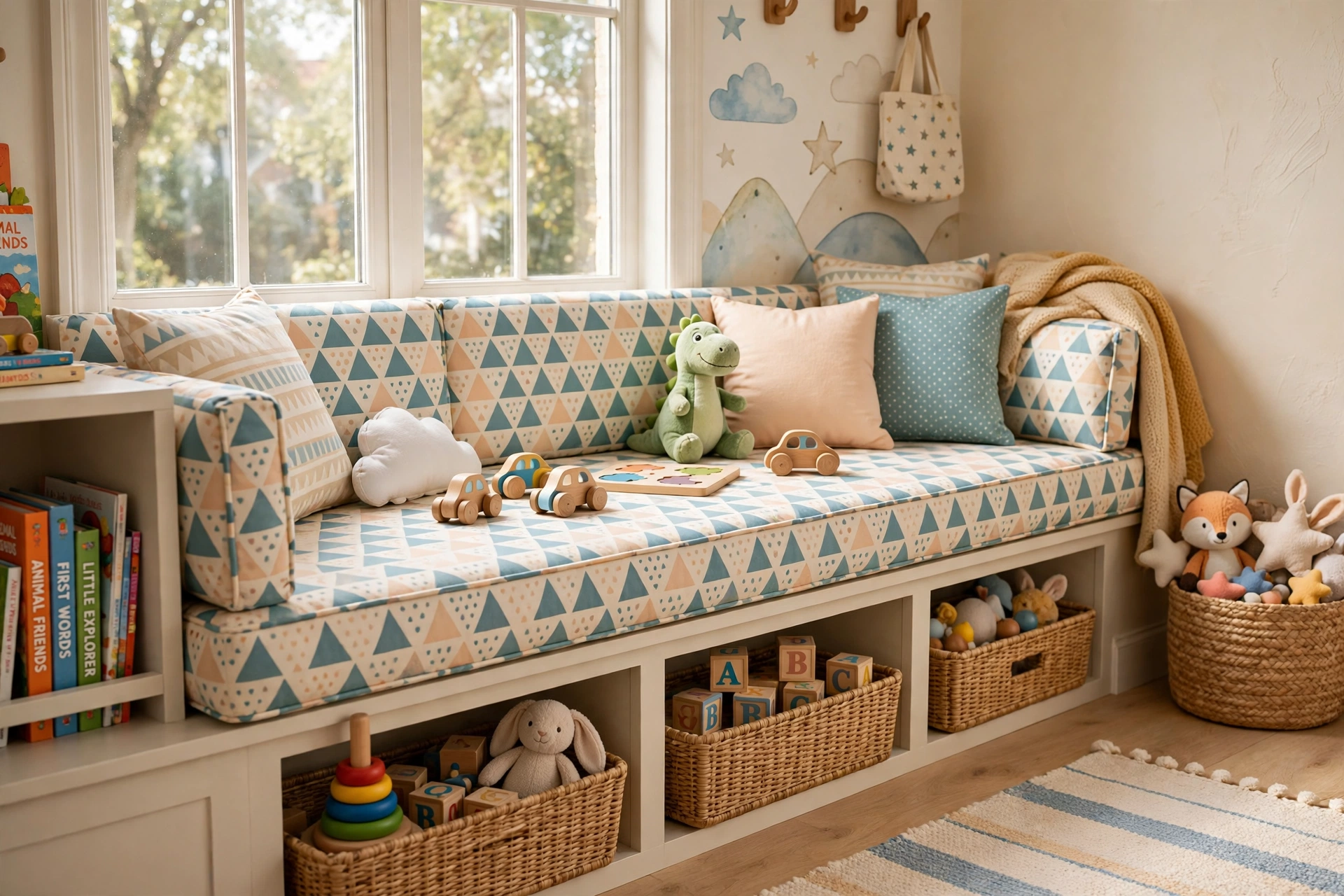
Window seats are magnets for kids, so plan for messes from the start. Choose wipeable performance fabrics in forgiving mid-tones or busy patterns that hide crumbs and sticky fingerprints. Rounded bench corners and soft-close hinges prevent bumped heads and pinched fingers. Stain-resistant slipcovers mean even grape juice is a non-event. Keep a small basket of coloring supplies under the bench, and use a washable runner on the table. Skip glass tops at kid height in favor of sturdy, easy-clean surfaces. When the nook survives snack time without drama, the whole family actually uses it.
9. Go Farmhouse With a Painted Bench

Farmhouse style and window seats belong together. Paint the bench soft white, warm cream, or sage green, with beadboard on the bench front for texture. Top it with a ticking-stripe or gingham cushion, layer on grain-sack pillows, and finish with a wood pedestal table in a weathered tone. A simple linen curtain and a pitcher of wildflowers complete the look. The palette stays light and airy, which suits the window location. Keep hardware simple — black or oil-rubbed bronze cup pulls — and let the natural light do the styling heavy lifting.
10. Keep It Modern and Minimal

A window seat works in a contemporary home with the right restraint. Choose a bench with clean lines — a slab-front bench in charcoal or warm white reads instantly modern. Top it with a single streamlined cushion in solid performance fabric, and limit pillows to two or three in tonal shades. Pair with a round table with a thin-profile top and a sculptural pendant overhead. Keep the palette tight: two neutrals plus one accent, repeated deliberately. Sheer roller shades preserve the view without clutter. The result feels calm and architectural.
11. Use the Seat for Extra Guest Seating

A window bench earns its keep at every dinner party. One six-foot bench comfortably seats three adults, replacing two to three chairs and freeing floor space. Keep a couple of backless stools tucked under the table for flexible overflow, and add firm cushions plus lumbar pillows so the bench feels like real seating, not a compromise. For big gatherings, extend the table into the room and use the bench as a serving-side perch. Guests consistently fight over the window side — treat it as premium seating and watch the conversation zone form.
12. Style It by Season
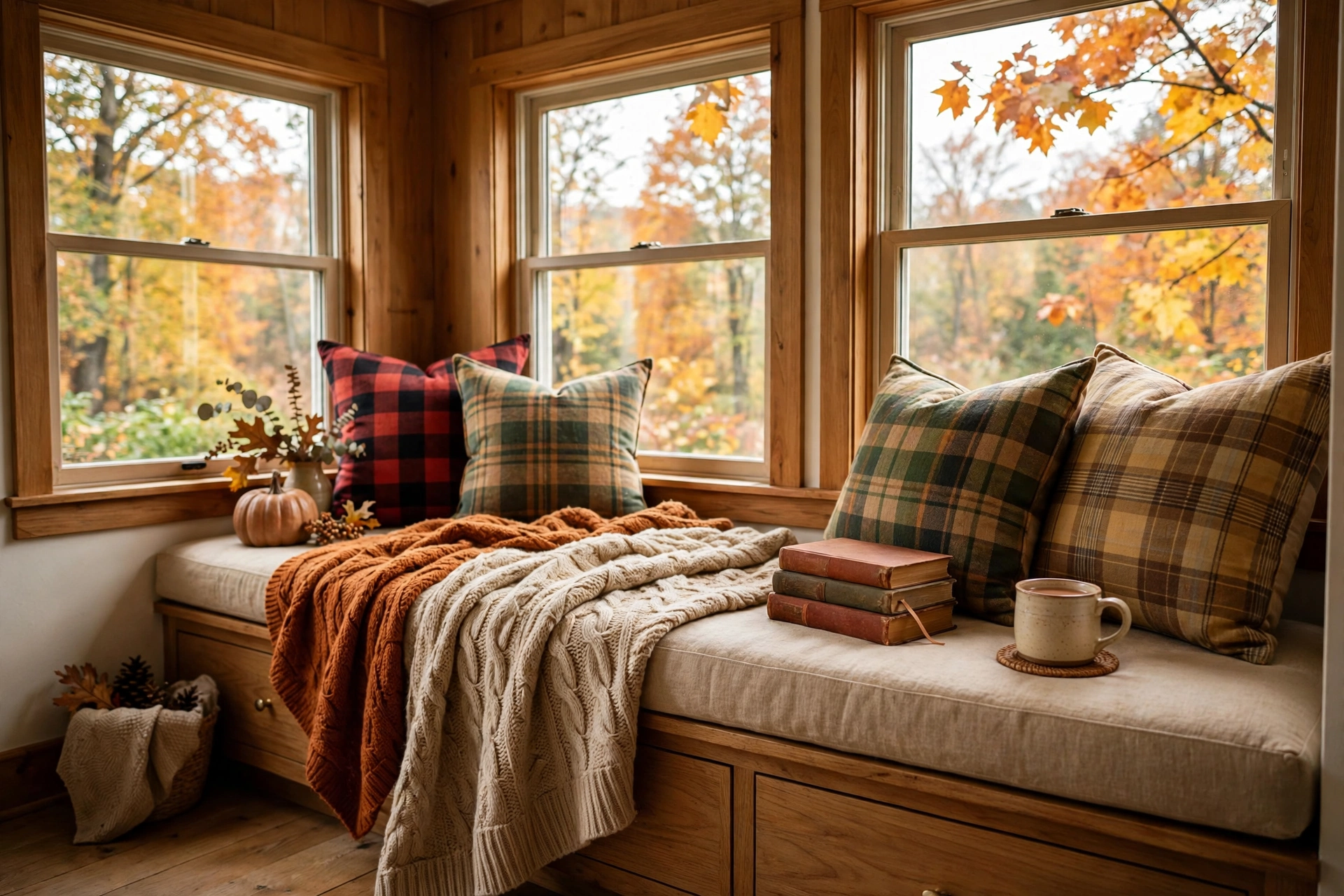
A window seat is the easiest spot in the house to refresh seasonally, since a cushion swap changes the whole scene. Spring: botanical prints and fresh greens. Summer: crisp stripes and citrus tones. Fall: plaid, warm rusts, and a chunky knit throw. Winter: velvet pillows, evergreen sprigs, and candlelight. Store off-season covers in the bench’s hidden storage — the system feeds itself. Change just the textiles and one small centerpiece, and the nook feels reinvented four times a year. Because the view beyond the window changes too, the styling stays perfectly in sync.
13. Try a Renter-Friendly Freestanding Bench

No carpentry or landlord approval needed for a window seat nook. A freestanding storage bench or low bookshelf pushed under the window creates the same effect with zero installation. Choose a bench 16 to 18 inches high so standard dining chairs still align with your table on the other side. Add a custom-cut foam cushion with a washable cover, and ground the bench with a rug so it does not slide. When you move, the whole nook moves with you. This approach suits apartments, and you can upgrade to a built-in version when you own the space.
14. Combine Dining and Reading
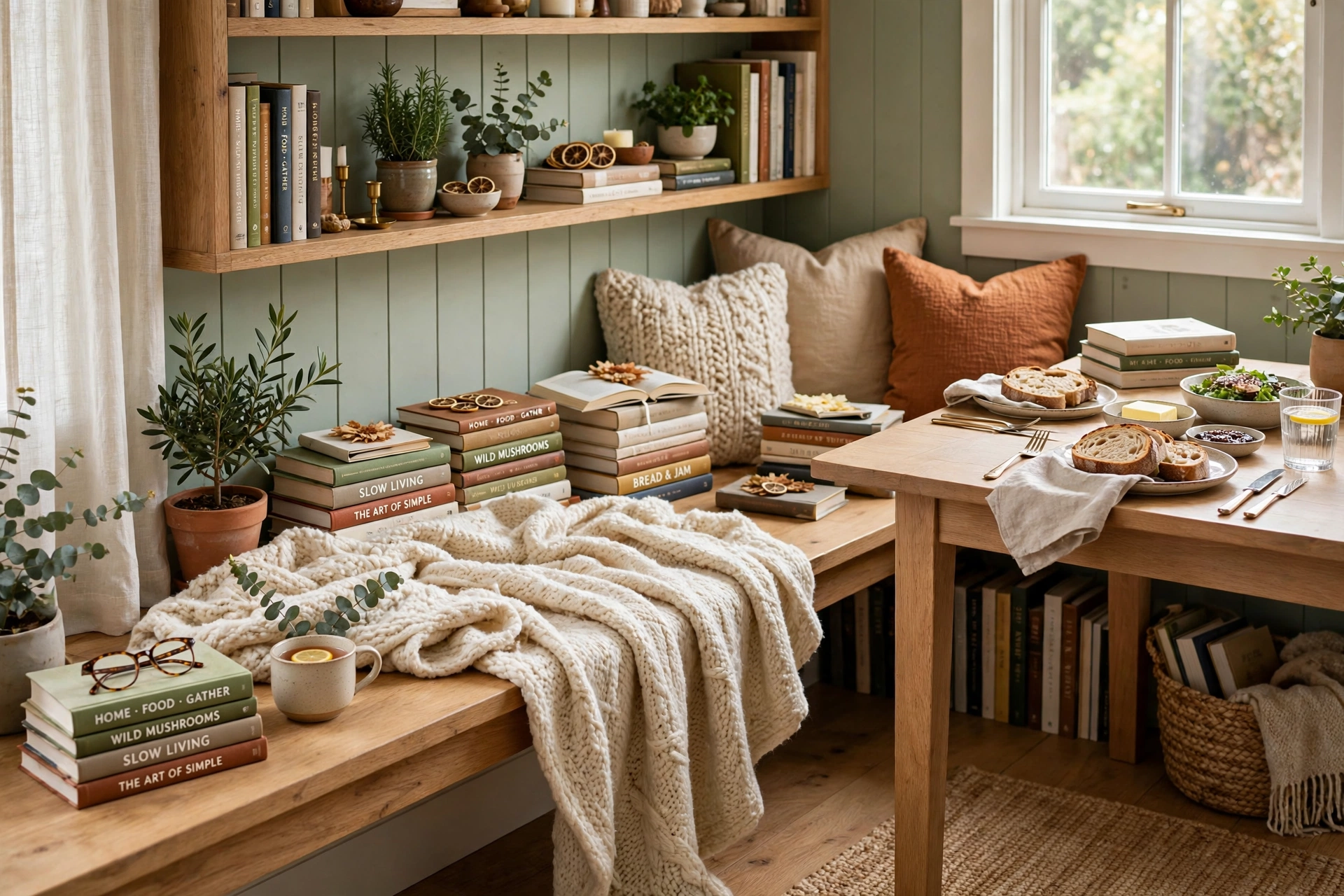
Why choose between a dining nook and a reading nook when the window seat does both? By day it is a sunlit reading perch — keep a throw blanket and a wide sill or small side table for coffee and books. At mealtimes the same bench slides up to the table. Choose a cushion firm enough for upright dining but soft enough for lounging, with plenty of throw pillows for back support while reading. A swing-arm wall light above one end serves both: aimed at the bench for reading, dimmed for dinner. The nook never sits idle.
15. Anchor It With a Rug and Art

A window seat can look unfinished without two grounding moves: a rug and art. Slide a low-pile rug under the table, extending at least a foot beyond the bench, to merge bench, table, and chairs into one zone. Above the bench, hang one large piece of art or a gallery of small frames; the wall over a window seat is prime real estate too many people leave bare. Keep the art’s palette in conversation with the cushion fabric. These two additions cost little but turn "furniture near a window" into a designed dining destination.
Frequently Asked Questions
How deep should a dining room window seat be?
Aim for a seat depth of 20 to 24 inches — deep enough to sit back comfortably, shallow enough for feet to reach the floor. Shallower than 18 inches feels like a ledge — measure your window wall carefully before buying.
What is the best fabric for a window seat cushion?
Performance fabrics win: crypton, solution-dyed acrylic, or tight-weave outdoor linen resist sun fading, spills, and daily wear. Mid-tones and patterns hide crumbs best. Choose a removable zippered cover and check fade ratings for direct sun. This window seat guide from The Spruce covers cushion materials and styling in more detail.
How tall should the bench be for a dining table?
Match standard seat height: 17 to 19 inches from floor to cushion top. A 15-inch bench plus a 3 to 4-inch cushion lands right in range. Pair it with a table about 29 to 30 inches tall, leaving 10 to 12 inches between seat and tabletop for leg room.
Can I add a window seat to a small dining room?
Yes — one of the best small-space moves. A bench under one window replaces several chairs and tucks flush against the wall. Pair it with a round or drop-leaf table, choose a slim 18-inch depth, and use the seat’s hidden storage for linens. Sunlight makes the whole room feel larger.
Do window seats need back support?
Not necessarily, but it helps for long meals. The window wall works as a backrest if the sill is low, or layer firm lumbar pillows along the wall. For a permanent fix, add an upholstered back panel. If your family lingers over dinner, invest in proper back cushions — comfort decides whether the nook gets used daily.
Keep Exploring
A window seat nook rewards the effort you put into it — the right bench height, a cushion worth sinking into, and textiles that welcome every season. Start with the structure that fits your space, then layer comfort until the sunny corner becomes everyone’s favorite.
Love the built-in storage angle? Our living room window seat ideas with cozy storage apply the same bench-and-cushion thinking to the living room, and this roundup of window seat ideas from BHG is full of built-in examples for your next project.