
Dining room bench ideas bring a relaxed, generous feeling to the table that individual chairs rarely match. A bench slides extra guests in without a seating chart, tucks neatly under the table when dinner is over, and softens a formal dining room into a place where people actually linger. It is the single easiest way to make a dining space feel welcoming rather than staged.
Whether you want a rustic farmhouse bench, a tailored upholstered seat, or a backless design that disappears under the table, dining room bench ideas span every style and budget. This guide walks through fifteen options with the sizing, comfort, and pairing details that make each one work at a real dining table.
1. Classic Farmhouse Wood Bench

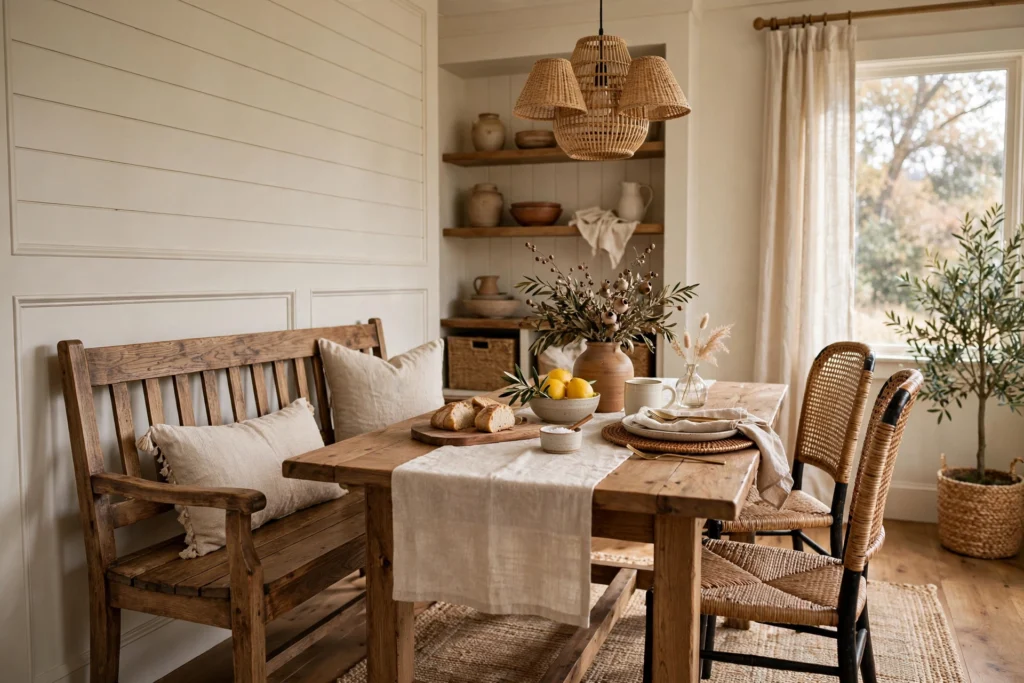
The classic farmhouse bench — thick plank seat, sturdy trestle legs — is the workhorse of dining room bench ideas. A seat depth of twelve to fourteen inches and a height of seventeen to eighteen inches matches standard dining tables, and a length of forty-eight to seventy-two inches seats two to four people comfortably. Solid pine or oak takes daily use and develops character over time.
Style it with a washable runner or sheepskin throws for comfort, and pair it with mismatched chairs on the opposite side for that collected farmhouse look. Seal the wood with a matte polyurethane so spills wipe up. This bench never goes out of style, which is exactly why it anchors so many dining rooms.
2. Upholstered Bench with Tufted Seat
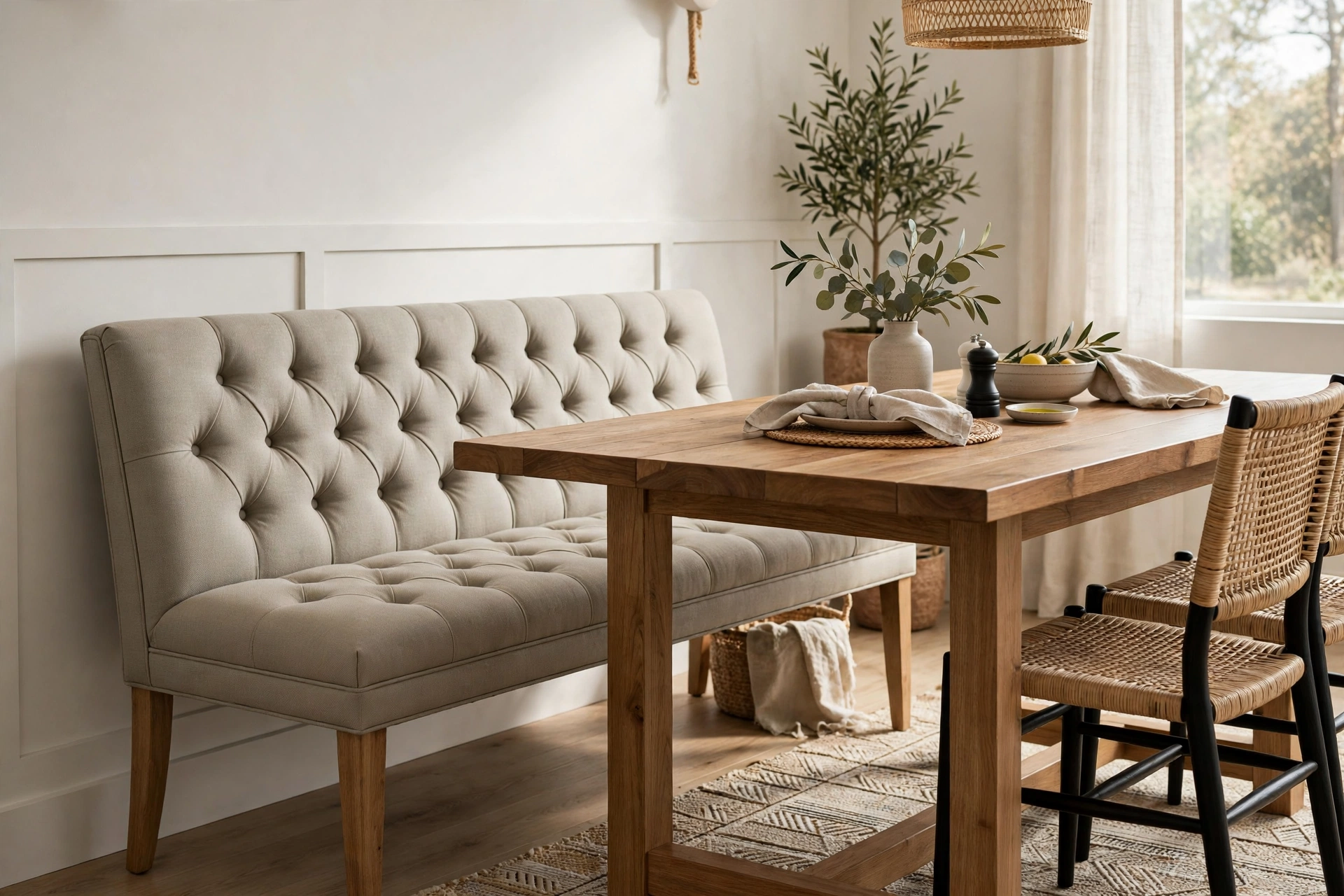
An upholstered bench brings chair-level comfort to bench seating. A foam seat two to three inches thick, wrapped in a performance fabric or leather, turns long dinners from endurance events into lingering conversations. Button tufting or channel stitching adds a tailored detail that reads elegant rather than casual.
Choose a stain-resistant fabric — spills are inevitable — and keep the bench’s legs slim so the upholstery stays the star. This style pairs beautifully with an upholstered host chair at the table ends, and it is one of the most comfortable dining room bench ideas for holiday hosting. For the full seating picture, compare comfort options in our dining chair guide.
3. Backless Bench That Tucks Under the Table

A backless bench is the space-saver of the category: when dinner ends, it slides completely under the table and the room opens up. This makes it ideal for small dining rooms, eat-in kitchens, and apartments where every square foot counts. Without a back, guests can also sit facing either direction, which keeps conversation fluid.
The trade-off is back support, so keep backless benches to one side of the table and put chairs with backs on the other. Add a long lumbar cushion if your family lingers over meals. Measure carefully — the bench must be shorter than the table’s leg span to tuck fully underneath.
4. Bench with a Low Backrest
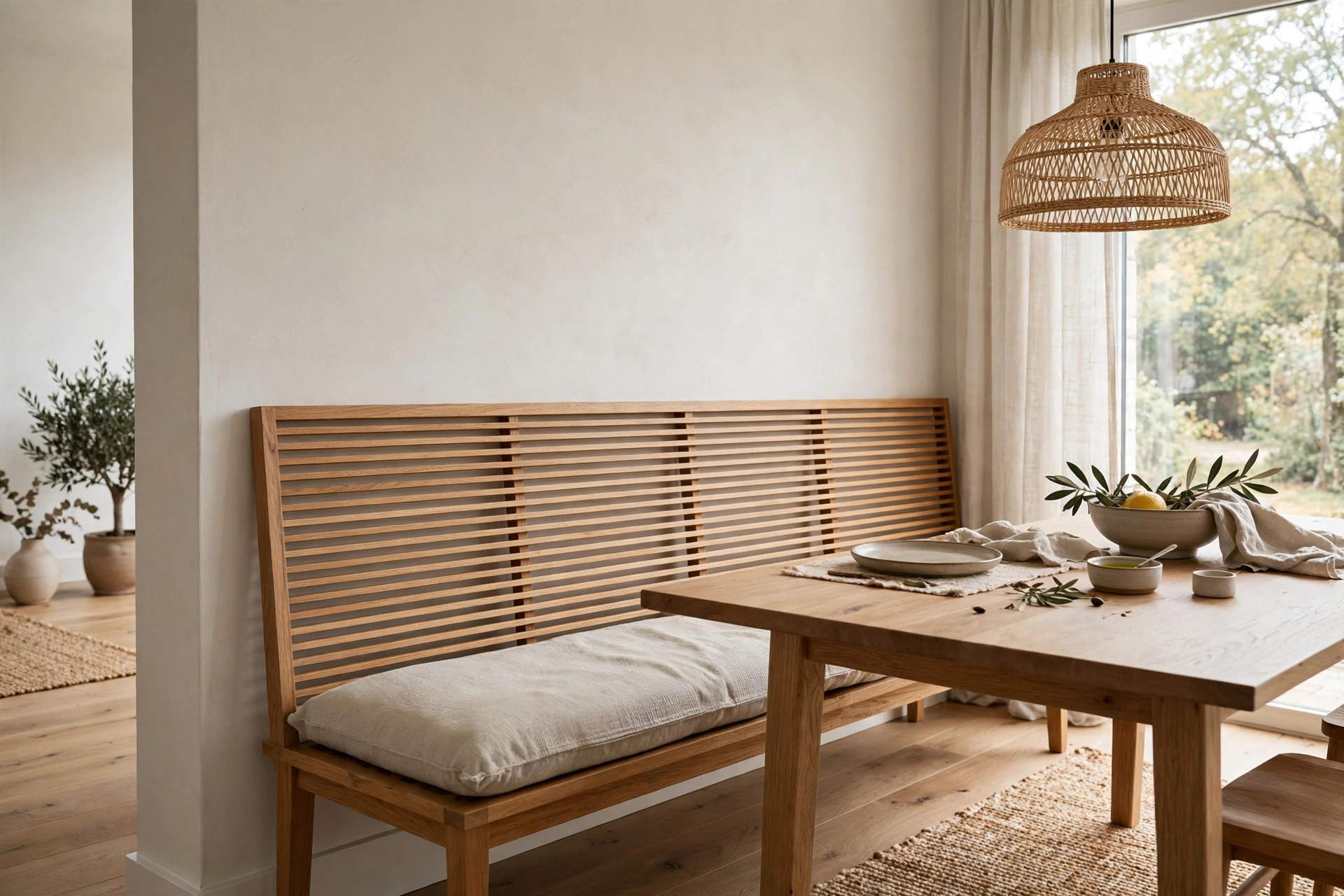
A low backrest splits the difference between a backless bench and a full chair. The back — usually twelve to eighteen inches above the seat — gives leaning support without visually blocking the room, preserving the open feeling benches are loved for. Spindle, slat, and curved backs all work; match the back style to your table’s legs for a cohesive set.
This is a smart pick for families with kids, who get the support they need while the room keeps its airy bench look. The classic bench form has furnished gathering spaces for centuries — see how the simple seat evolved in this history of bench furniture.
5. Storage Bench with Hidden Compartments

A storage bench earns its floor space twice: seating on top, hidden storage inside. The hinged seat lifts to reveal space for table linens, placemats, board games, or the good china you only use twice a year. In small homes, this one piece can replace an entire sideboard drawer.
Look for soft-close hinges so little fingers stay safe, and add a cushion top since the storage base is usually hard wood. Ventilate the interior if you store linens, and keep the stored items light enough that the bench stays easy to move. Function plus seating is hard to beat.
6. Banquette Bench Against the Wall
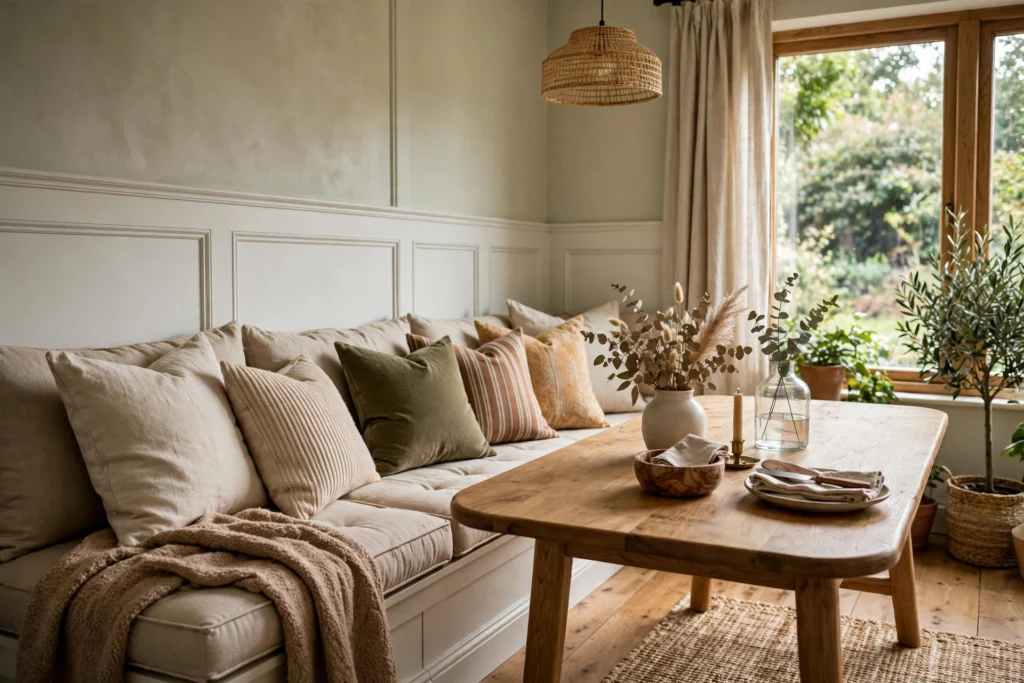
A banquette — a built-in or freestanding bench fixed against the wall — turns one side of the table into a cozy booth. Banquettes maximize seating in tight spaces because nobody needs pull-out room behind the bench, and the wall side feels intimate and cocooned. Add a cushion, throw pillows, and a pendant light above for instant bistro charm.
Freestanding banquette benches offer the look without construction; built-ins can include storage underneath and a perfectly fitted cushion. If the nook idea appeals, explore more cozy corner setups with our banquette inspiration.
7. Live-Edge Wood Slab Bench

A live-edge slab bench brings organic sculpture to the dining room. Each slab’s natural edge is one of a kind, and the thick cut — two to three inches — feels substantial and modern-rustic at once. Walnut, oak, and acacia are popular choices, finished with a hardwax oil that shows off the grain.
Pair a live-edge bench with a similarly organic table or contrast it against a sleek modern table for deliberate tension. Seal the live edge well, since bark inclusions can shed. This is one of the most striking dining room bench ideas, and it doubles as a conversation piece when guests arrive.
8. Metal-Frame Industrial Bench

A metal-frame bench with a wood or leather seat suits industrial, modern, and eclectic dining rooms. Blackened steel legs with a reclaimed wood top is the classic formula — sturdy, honest materials that age gracefully. The slim metal frame keeps the visual weight light even on a long bench.
Check that the frame has levelers or felt pads so it does not wobble or scratch floors. Powder-coated finishes resist chips better than raw steel. This style pairs well with Edison-bulb pendants and concrete or brick accents, and the bench’s clean lines keep an industrial room from feeling heavy.
9. Rattan or Wicker Bench

Rattan and wicker benches bring breezy texture to coastal, boho, and tropical dining rooms. The woven seat breathes in warm climates and the natural material warms up minimalist spaces. Look for a tight, even weave and a solid wood or rattan frame — cheap wicker sags within a year.
Add a flat cushion for longer sits, since woven seats can press into legs over time. Keep rattan out of direct, all-day sun to prevent drying and cracking. This is one of the lightest-looking dining room bench ideas, perfect for dining rooms that open onto patios or sunrooms.
10. Curved or Serpentine Bench
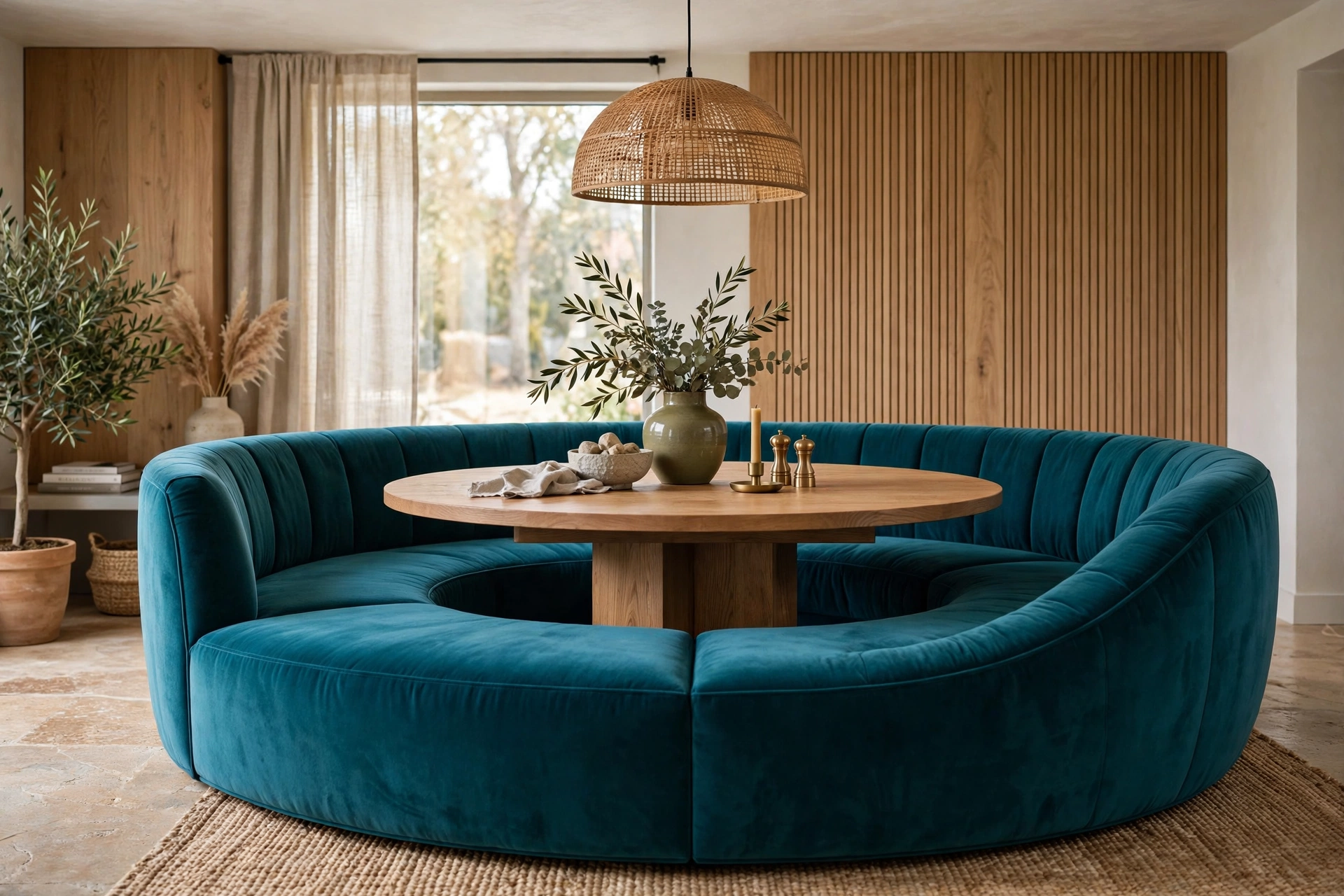
A curved bench breaks the rectangle habit and softens a room full of straight lines. Serpentine or gently bowed benches wrap slightly around round or oval tables, pulling diners into a more conversational arc. They also work beautifully at the end of a long table as a sculptural accent.
Because curved benches are less common, they read as a deliberate design choice — upholster the curve in a bold fabric and it becomes the room’s focal point. Measure your table’s curve carefully before buying; a mismatched radius looks accidental. The dining room itself has its own design history worth knowing — the dining room’s evolution explains how the space became the home’s gathering place.
11. Window-Side Bench with a View

Place a bench along the window side of the table and every meal comes with a view. This arrangement works especially well in breakfast nooks and dining rooms with garden outlooks — diners face into the room while the window light flatters everything. A low-profile bench keeps sightlines open.
Add a slim cushion so the bench is comfortable for long morning coffees, and choose fabrics that handle sun exposure without fading. This is one of the most pleasant dining room bench ideas to live with daily, and it pairs beautifully with a styled sideboard on the opposite wall — see elegant storage styling in our buffet decor guide.
12. Leather-Cushion Bench

A bench topped with a leather or faux-leather cushion brings tailored warmth that improves with age. Leather wipes clean, shrugs off spills, and develops a patina that makes the bench look better in year five than year one. Cognac, caramel, and black are the most versatile tones.
Choose a cushion with a removable cover or a wipeable top, and keep leather conditioned twice a year in dry climates. The cushion should be at least two inches thick for real comfort. This style bridges traditional and modern rooms effortlessly, pairing with both wood and metal tables.
13. Painted Bench in an Accent Color

A bench painted in a bold accent color is the fastest way to add personality to a neutral dining room. Deep green, navy, or terracotta on a simple wood bench turns seating into art, and paint is cheap enough to change with the seasons. Chalk or mineral paint gives a velvety matte finish that suits farmhouse and vintage styles.
Sand and prime first, then seal with a clear topcoat so the seat survives daily sliding. Keep the table neutral so the bench stays the star, or echo the color in small accents like napkins or art. This is one of the most budget-friendly dining room bench ideas with the biggest visual payoff.
14. Double Bench: Both Sides of the Table
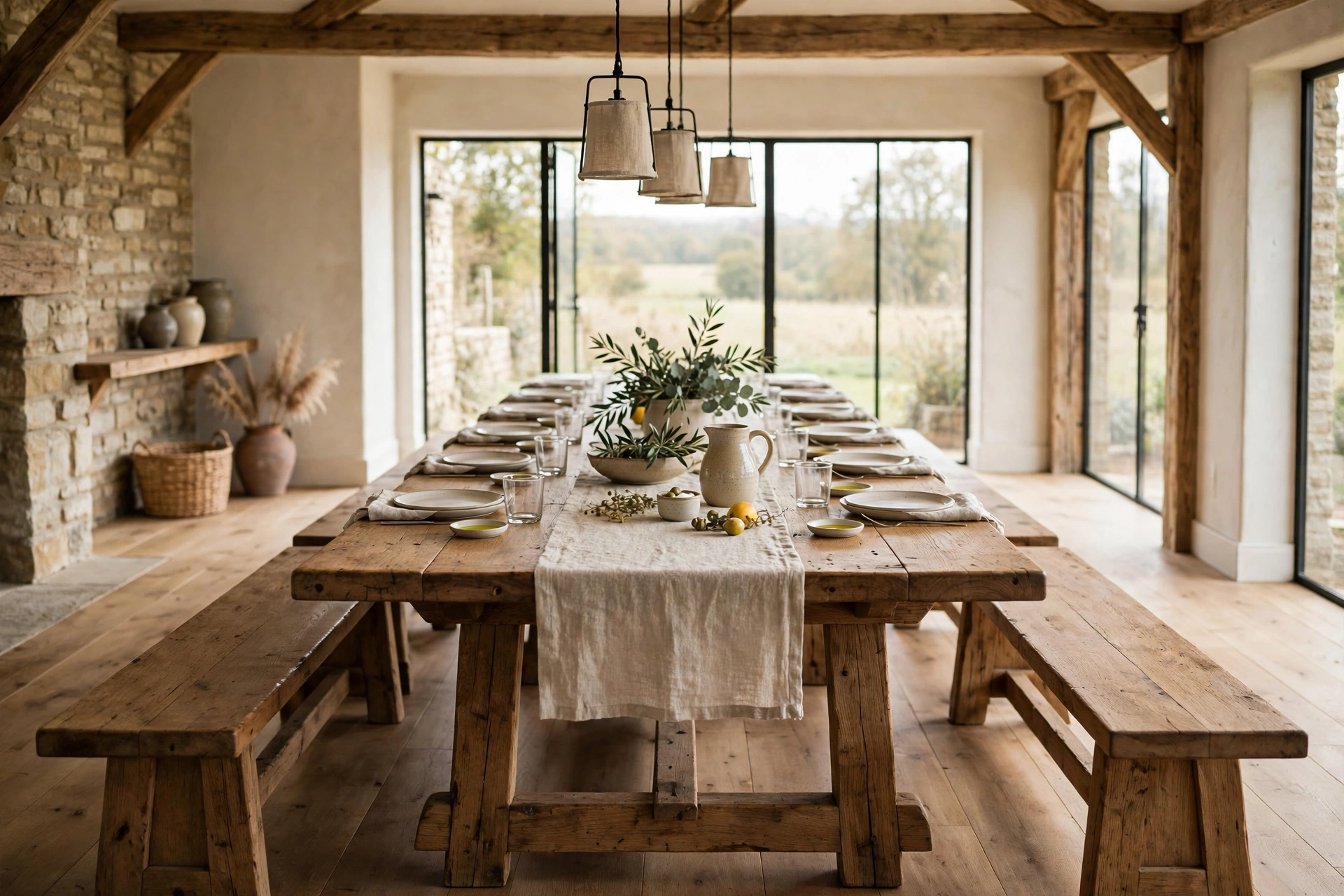
Why stop at one? Benches on both sides of the table create a communal, refectory-style setup that seats the maximum crowd. This is the go-to arrangement for big families and frequent entertainers — a seventy-two-inch table with two benches comfortably seats eight. The symmetry looks intentional and generous.
Keep both benches identical for a clean look, or mix a wood bench with an upholstered one for contrast. Leave enough room at the table ends for host chairs. When the party is over, both benches tuck under the table and the room feels spacious again.
15. Vintage Church Pew as a Dining Bench

A salvaged church pew brings instant history to the dining room. The long seat, the shaped back, and a century of patina give a room soul that new furniture cannot fake. Pews typically seat three to four and their height suits standard tables surprisingly well.
Refinish or leave the original finish — both work, depending on your style. Check the pew’s depth, since some are narrower than ideal dining seats; add a cushion if needed. Source from architectural salvage yards and inspect for structural soundness before buying. This is the most character-rich of all dining room bench ideas, and no two are alike.
Frequently Asked Questions
What size bench fits a standard dining table?
Match the bench height to seventeen to eighteen inches and keep the length two to twelve inches shorter than the table top so it tucks in. A forty-eight-inch bench seats two adults, sixty inches seats three, and seventy-two inches seats four.
Are dining benches comfortable for long dinners?
They can be, with the right setup: a two-to-three-inch foam cushion, a backrest or lumbar pillow, and a seat depth of at least fourteen inches. Upholstered benches rival chairs for comfort, while hard backless benches suit shorter, casual meals.
How many people can sit on a dining bench?
Plan on twenty to twenty-four inches of bench length per adult. Kids squeeze in tighter, which is the bench’s superpower — a bench that officially seats three adults often fits four children at a birthday dinner.
Do benches work in small dining rooms?
Yes — benches are ideal for small dining rooms because backless designs tuck fully under the table, freeing floor space when not in use. Wall-side banquettes save even more room since nobody needs clearance behind them.
Should the bench match the dining table?
It should coordinate, not necessarily match. A bench in the same wood tone looks classic, while a contrasting material — upholstered bench with a wood table, metal bench with a marble table — adds designer tension. Keep one element consistent, like finish color or style era, to tie the pairing together.
Keep Exploring
A bench changes how a dining room feels — less formal, more generous, ready for one more guest. Pick the style that suits your table and your household, add a cushion for comfort, and watch the dining room become the room everyone drifts toward. Extra seating has never looked this good.