
The shower head is the single fixture you interact with most in your bathroom, yet it is often the last thing people choose — picked in a hurry and regretted for years. The right one turns a rushed morning rinse into a ritual you look forward to, while the wrong one delivers a sad trickle at the wrong angle for a decade. These bathroom shower head ideas cover every type, finish, and spray pattern worth considering, from spa-grade rainfall heads to renter-friendly handheld wands. If you are coordinating the whole wet zone, our bathroom faucet ideas pair perfectly with everything on this list.
Before you buy, measure your plumbing’s reality: water pressure, pipe location, and ceiling height decide more than aesthetics ever will. A ceiling-mounted rainfall head needs the right drop pipe and at least seven feet of clearance, while a high-pressure head can feel like a fire hose on already-strong municipal water. HGTV’s showerhead guide is a solid starting point for comparing types side by side. Decide whether you want soaking, rinsing power, or versatility — then match the fixture to the job.
1. Go Big with a Rainfall Shower Head
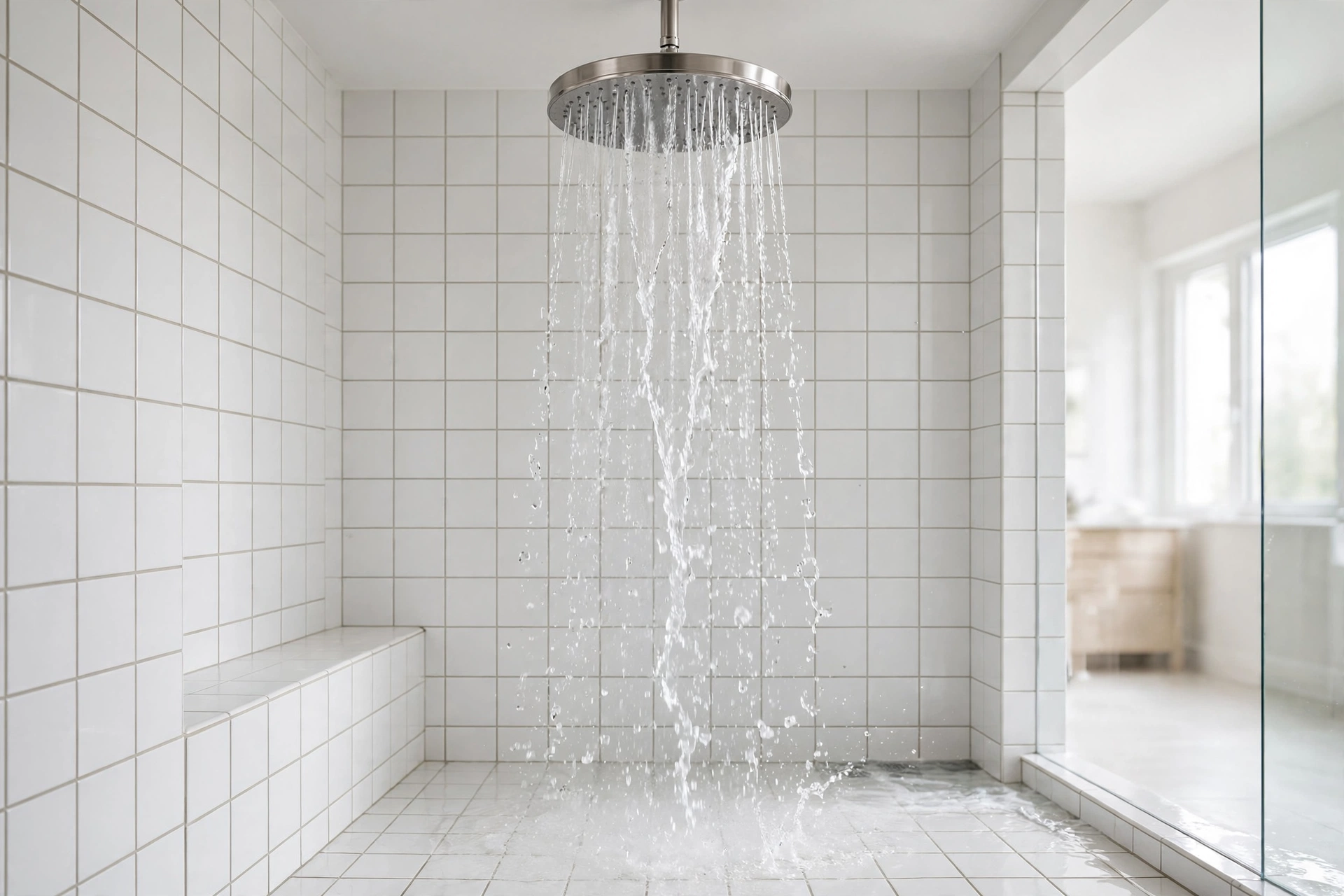
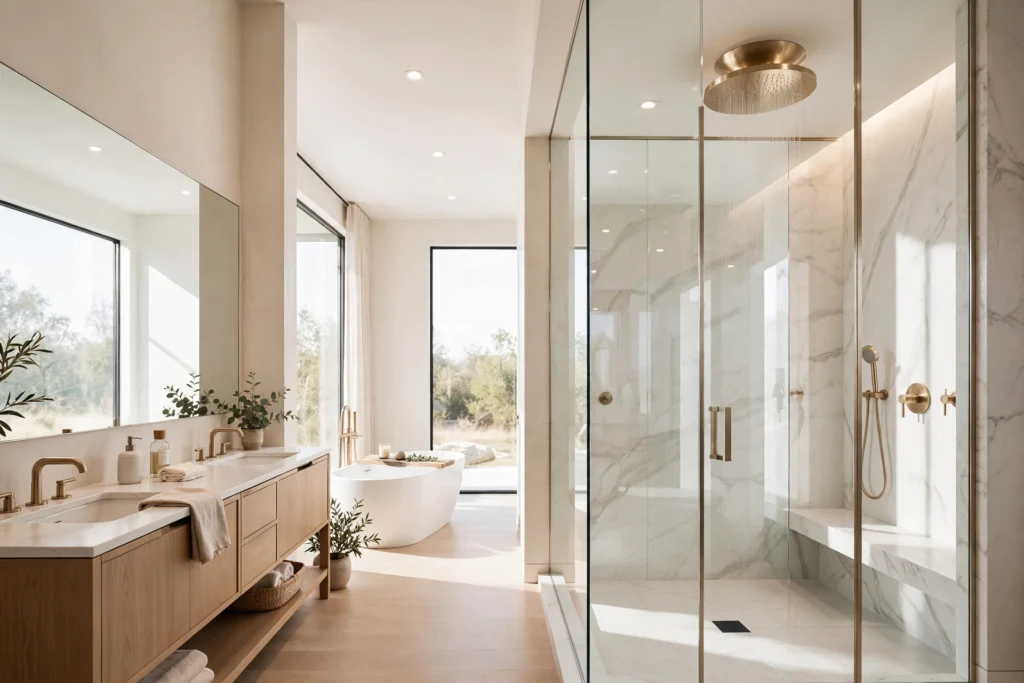
Nothing says luxury like standing under a wide disc of warm rain. Rainfall heads, usually 8 to 12 inches across, mount overhead and deliver a gentle, even drench that feels closer to weather than plumbing. They work best in showers with good water pressure and a glass enclosure that keeps the wider spray contained. Keep the ceiling height in mind: the head should sit at least 80 inches above the shower floor so tall users are not ducking. Pair it with a simple thermostatic valve and you have the backbone of a spa bathroom.
2. Keep It Flexible with a Handheld Shower Head
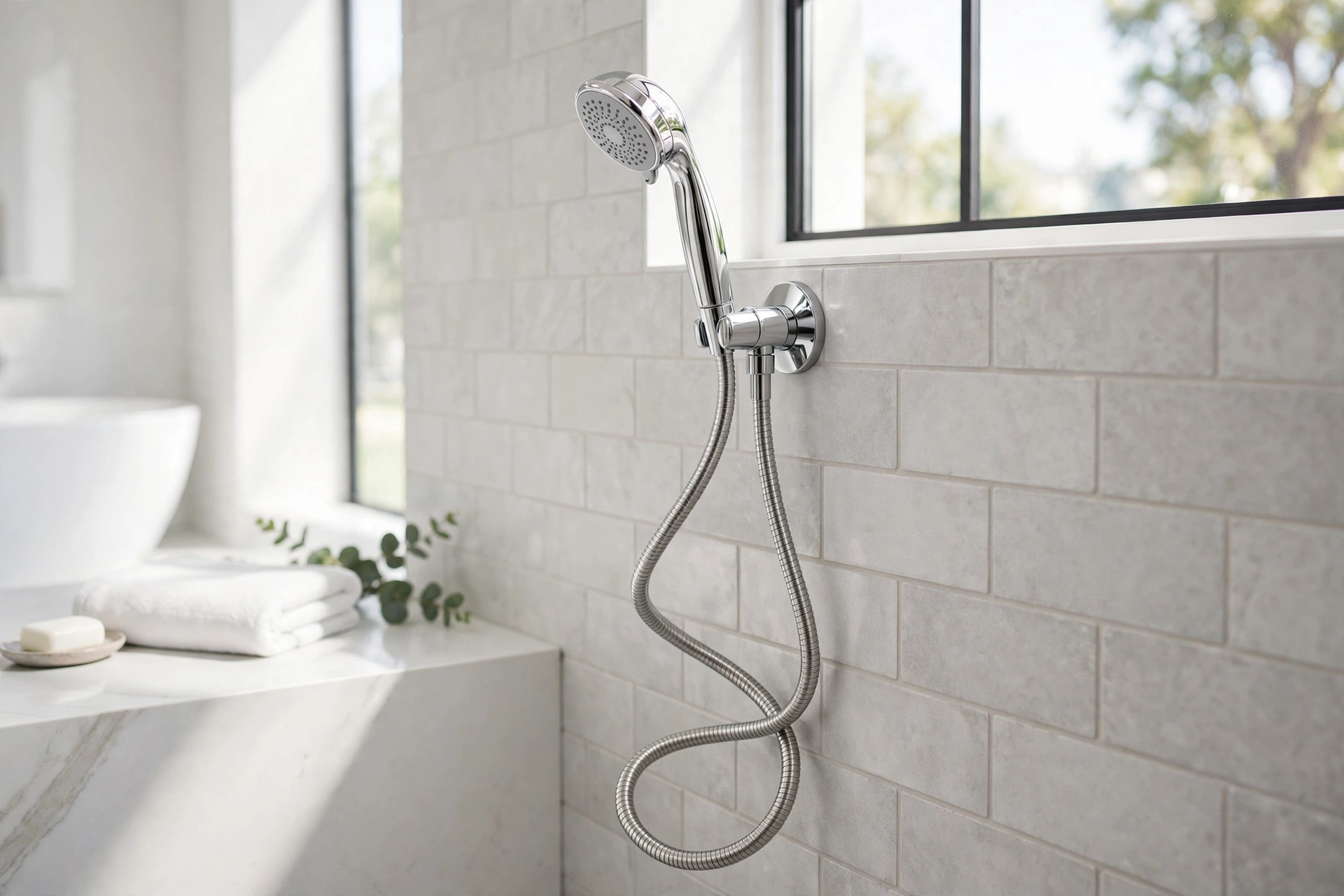
A handheld shower head on a hose is the hardest-working fixture in the bathroom. It rinses the tub, washes the dog, cleans the grout, and helps anyone with limited mobility shower safely while seated. Look for a metal hose rather than plastic — it resists kinking and lasts years longer — and a bracket that adjusts the angle. Many models dock into a fixed mount, so you get the aim-anywhere convenience without giving up the hands-free experience.
3. Get the Best of Both with a Dual Shower Head
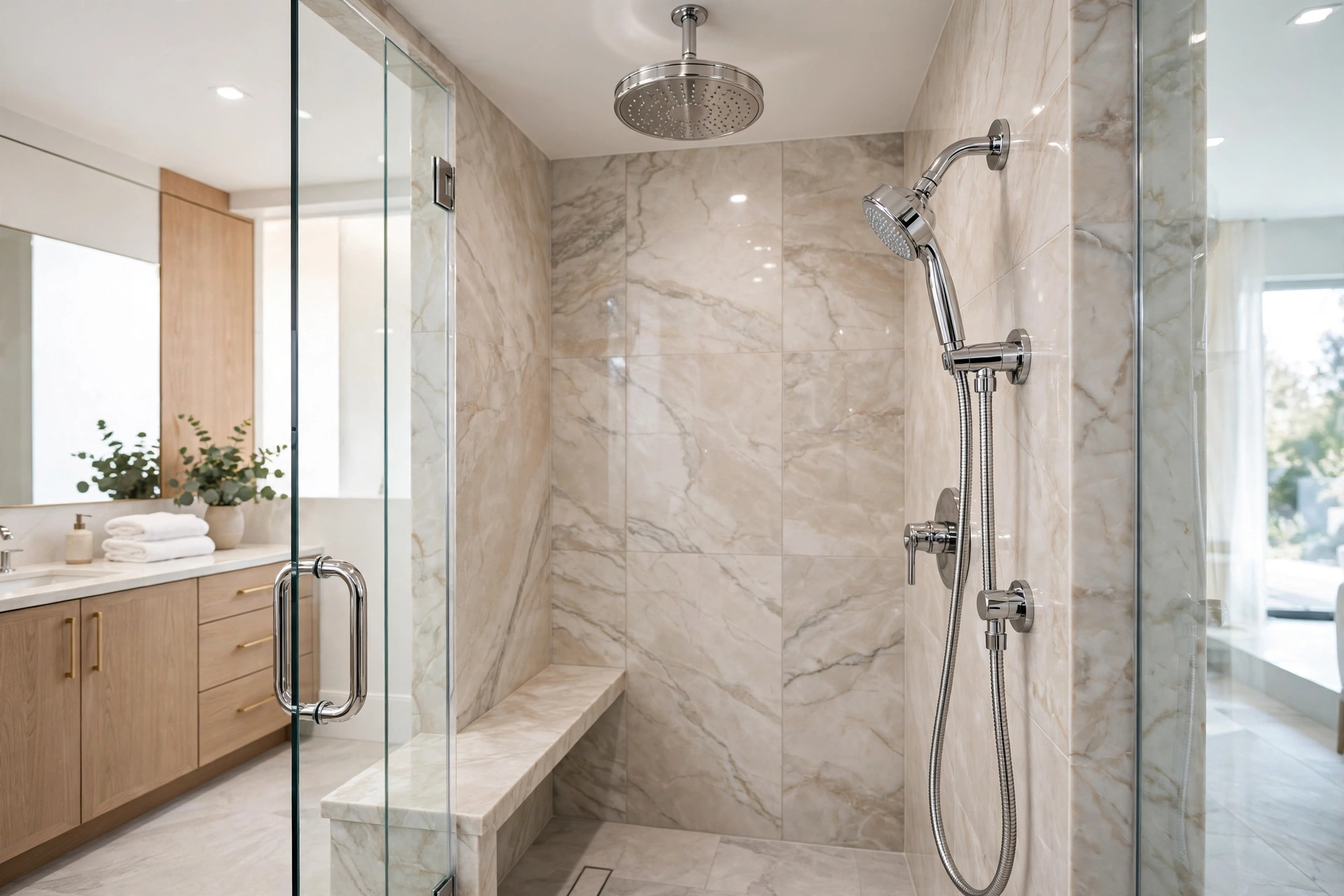
Why choose between rainfall and handheld when one fixture can do both? Dual shower heads pair a fixed overhead head with a detachable wand on the same valve, letting two people shower at once or one person enjoy a double drench. Some designs mount both heads on a single bar; others use a diverter to split flow between them. Check your water pressure first — running two heads at once demands decent flow, or both will feel weak.
4. Power Up with a High-Pressure Shower Head
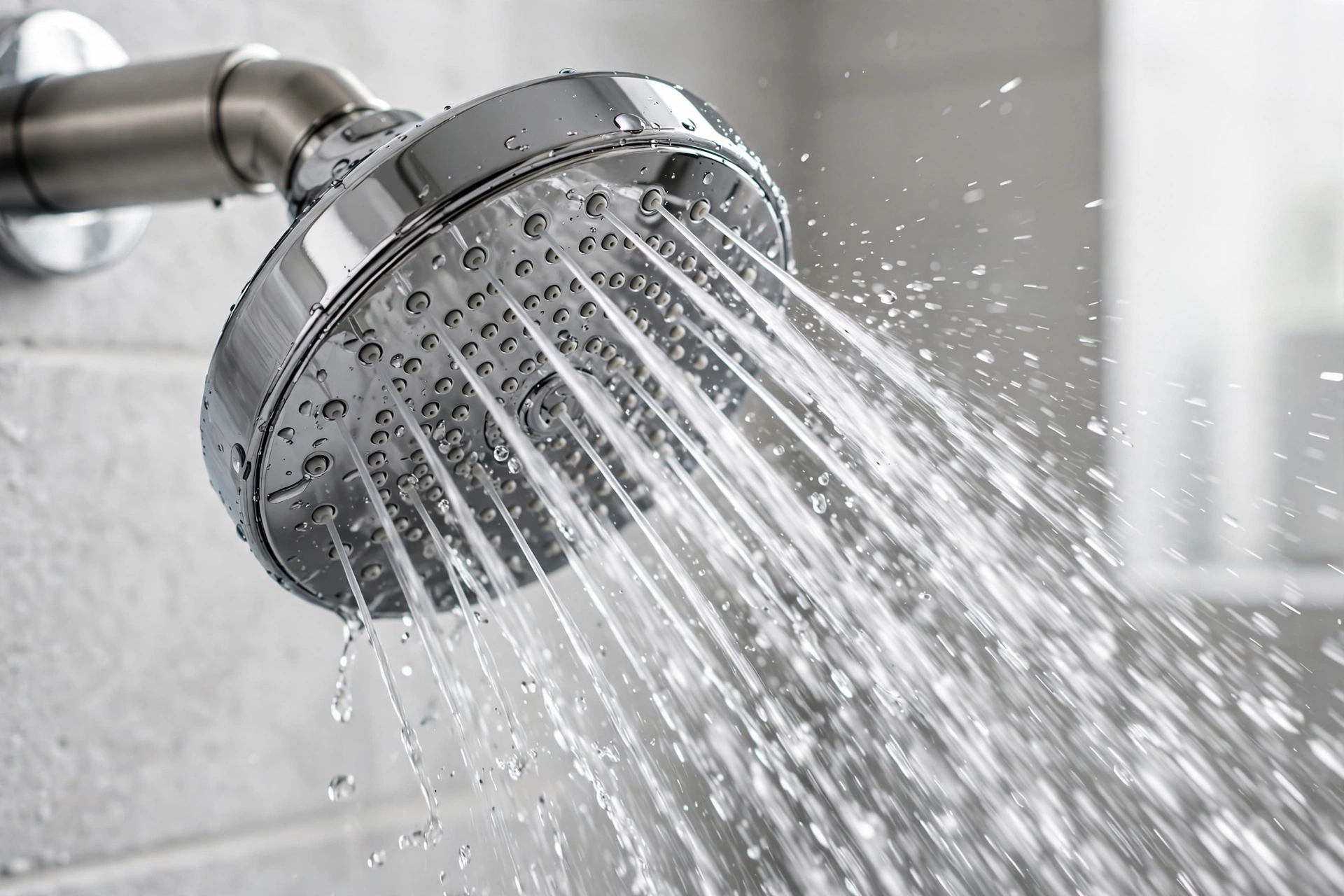
If your home suffers from weak water pressure, a high-pressure shower head is the fastest fix short of repiping. Engineered nozzles accelerate the stream, turning a sad trickle into an invigorating blast without using more water. They are especially popular in older homes and upper-floor bathrooms where gravity works against you. Look for models with pressure-compensating flow restrictors, which keep the spray consistent even when someone flushes a toilet elsewhere in the house.
5. Save Water with a Low-Flow Shower Head
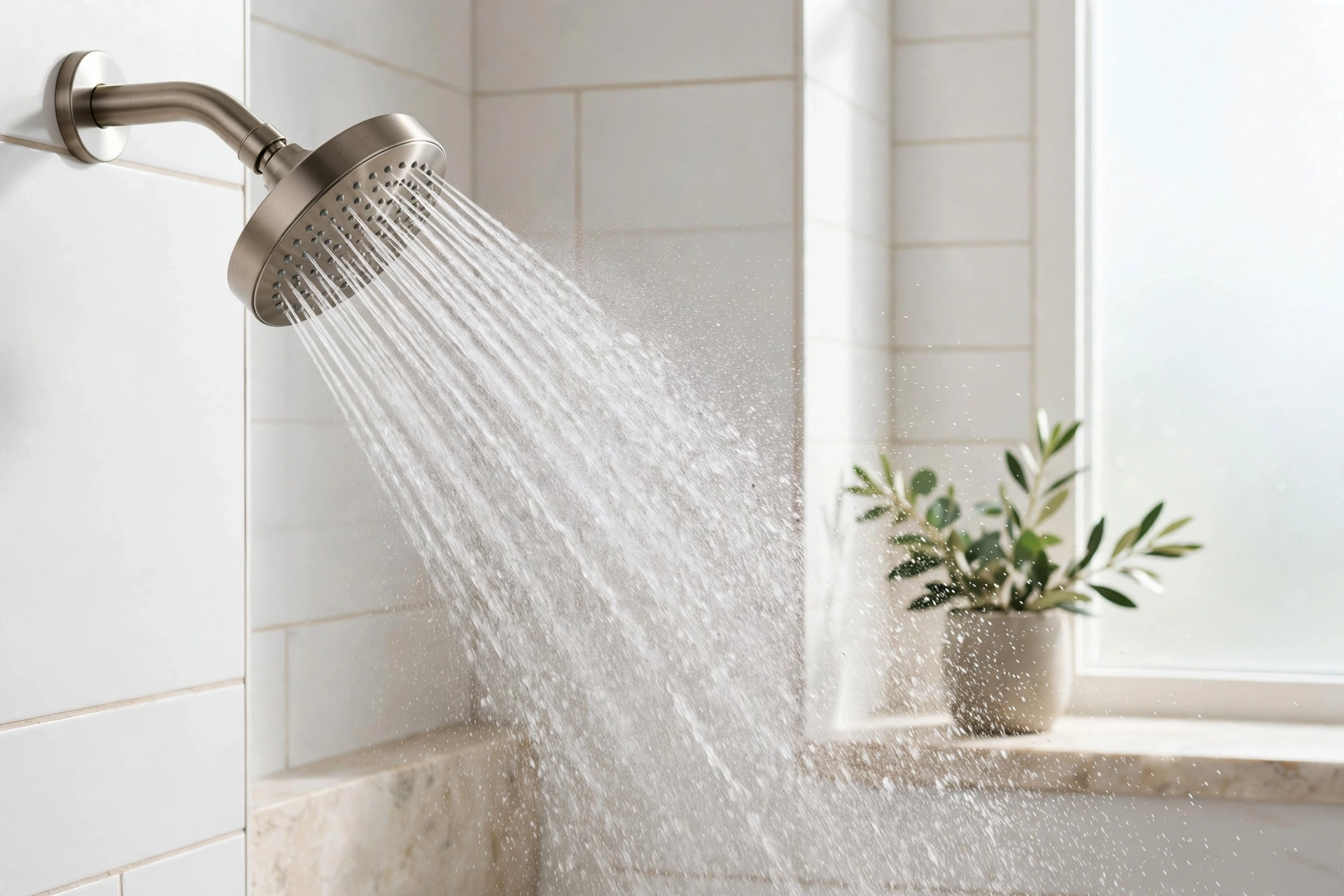
Modern low-flow shower heads prove you do not need a torrent to feel clean. Capped at 2.0 gallons per minute or less — many now hit 1.75 — they use air-injection or precision nozzles to make every drop feel fuller. The EPA’s WaterSense program certifies models that cut water use by at least 20 percent without sacrificing performance, and the savings show up on both your water and energy bills. If your current head predates 2010, swapping it is one of the cheapest green upgrades you can make.
6. Filter Your Water with a Filtered Shower Head
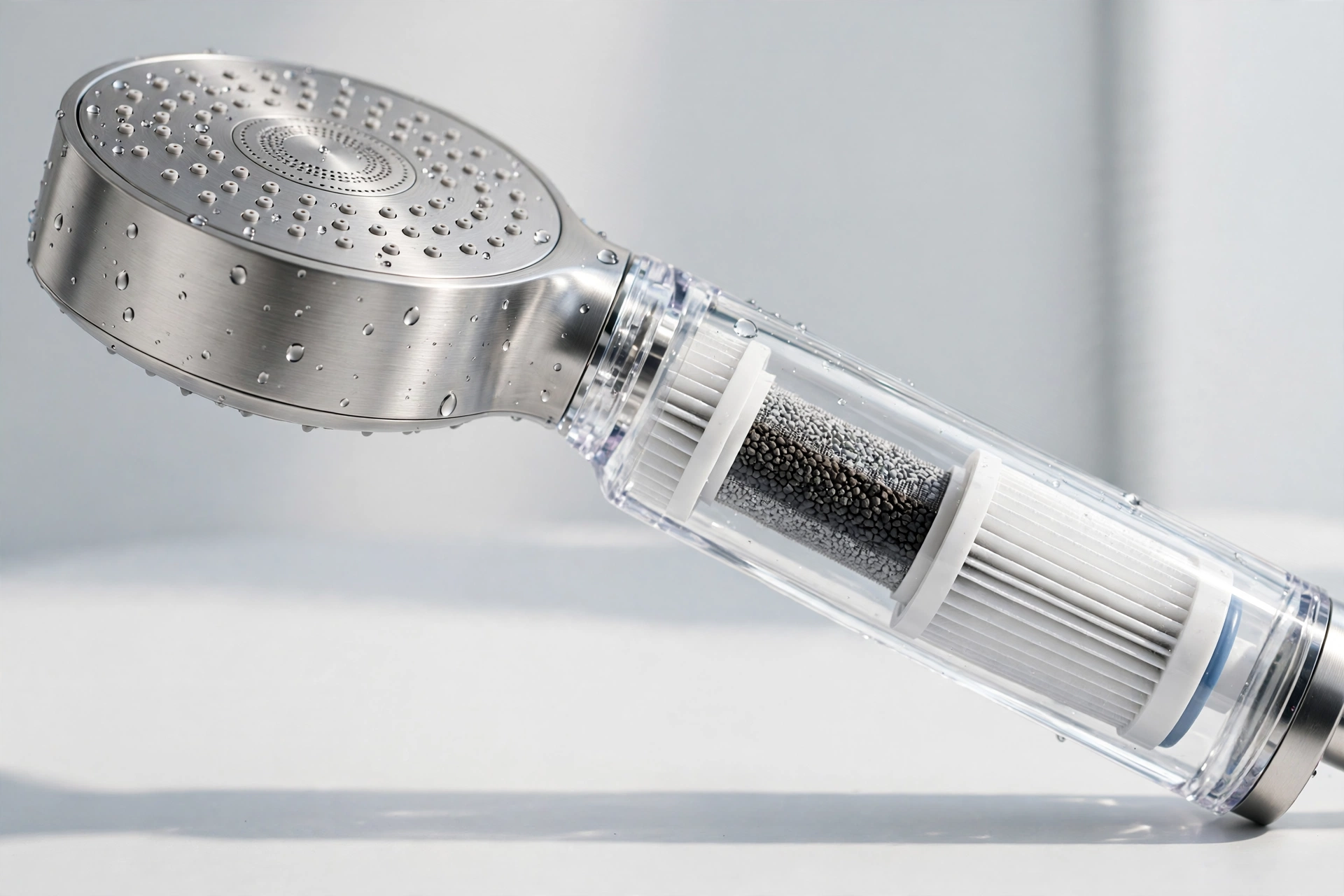
Hard water, chlorine, and sediment do not just dull your hair — they clog nozzles and spot up glass. Filtered shower heads place a replaceable cartridge (usually vitamin C, KDF, or activated carbon) between the pipe and the spray, softening harsh water before it touches you. The transparent-handle designs make it obvious when the cartridge needs changing, typically every two to three months. They are a renter-friendly upgrade that unscrews as easily as it installs.
7. Shine Bright with a Chrome Shower Head
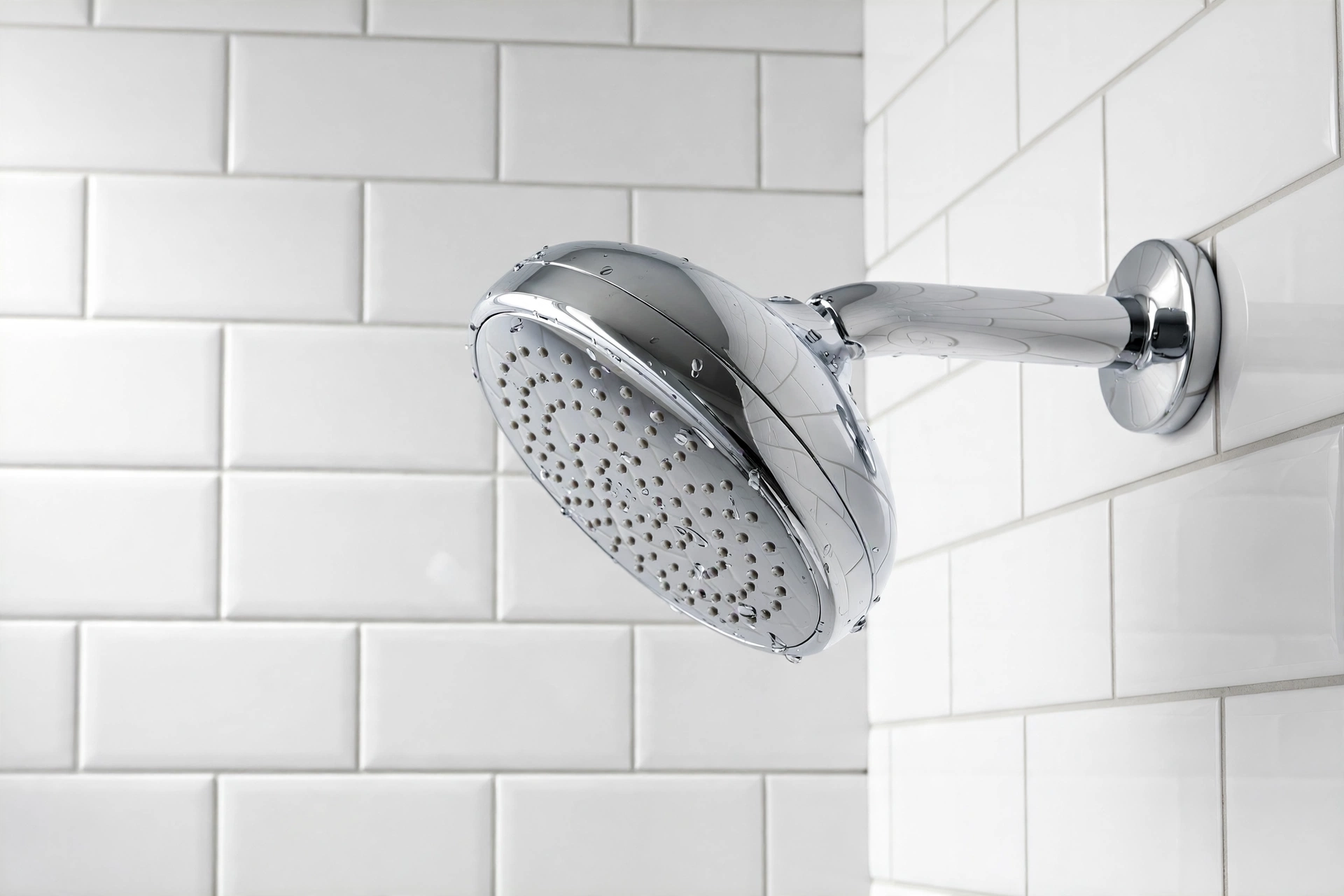
Chrome remains the default finish for a reason: it is affordable, durable, and matches nearly every faucet on the market. A polished chrome shower head gleams against white subway tile and wipes clean with a damp cloth — no special cleaners, no patina anxiety. If your bathroom already has chrome faucets, matching the shower head keeps the whole room visually quiet and cohesive. It is the safe choice that never looks dated.
8. Go Bold with a Matte Black Shower Head
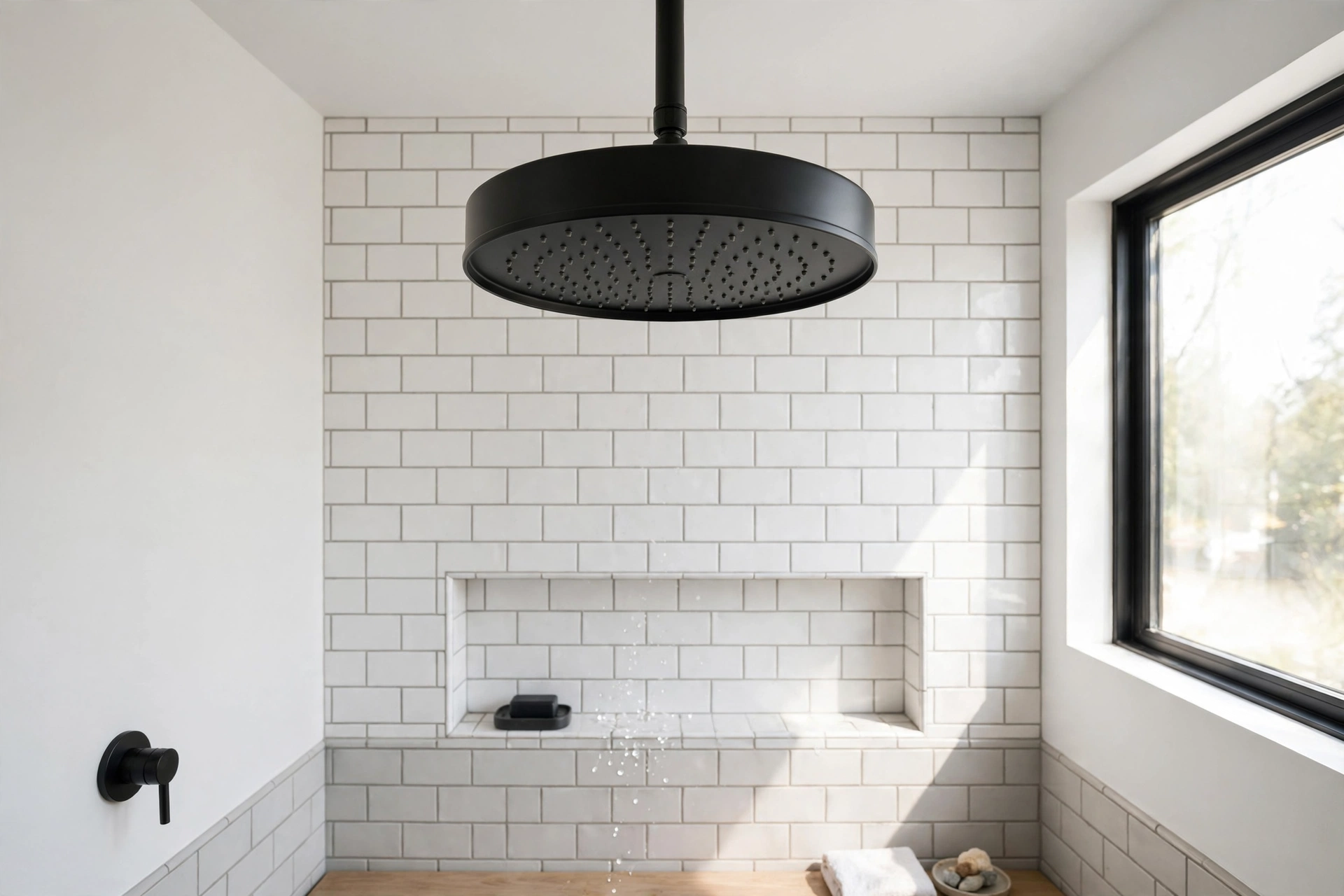
Matte black fixtures turn the shower into a design statement. Against white tile or natural stone, a black rainfall head reads as modern sculpture rather than mere plumbing. The powder-coated finish resists fingerprints better than polished black, but avoid abrasive cleaners that can dull it. Black pairs beautifully with brushed brass or matte white accents — just commit to the contrast rather than mixing it timidly with chrome.
9. Warm Things Up with a Brushed Brass Shower Head
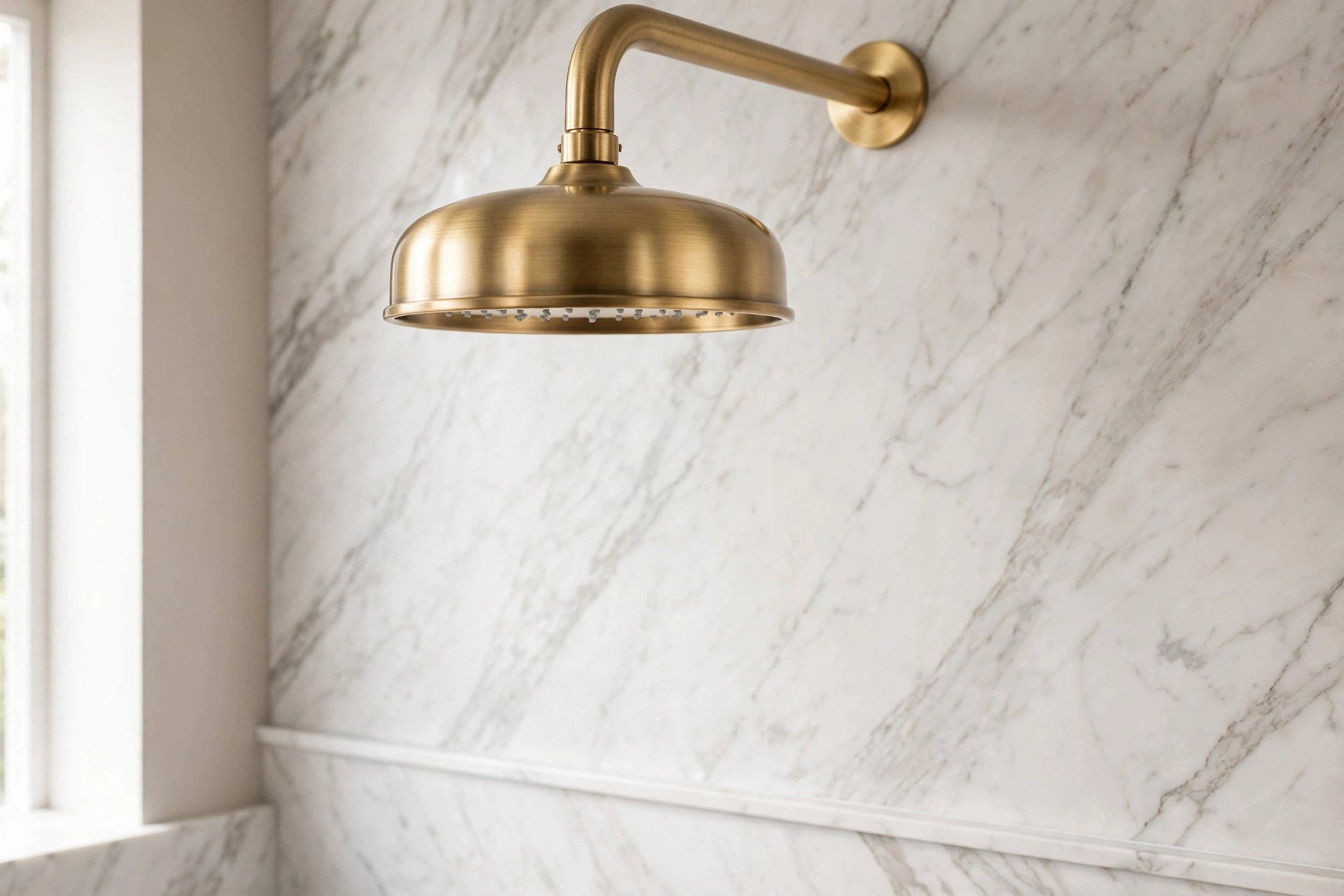
Brushed brass brings warmth to bathrooms that can otherwise feel cold and clinical. The soft golden tone glows against marble, deep green tile, or warm white walls, and the brushed texture hides water spots far better than polished finishes. Genuine brass fixtures cost more than brass-look plastic, but the weight and longevity justify it in a primary bath. Keep the rest of your metals in the same warm family to avoid a clash.
10. Stay Timeless with a Brushed Nickel Shower Head
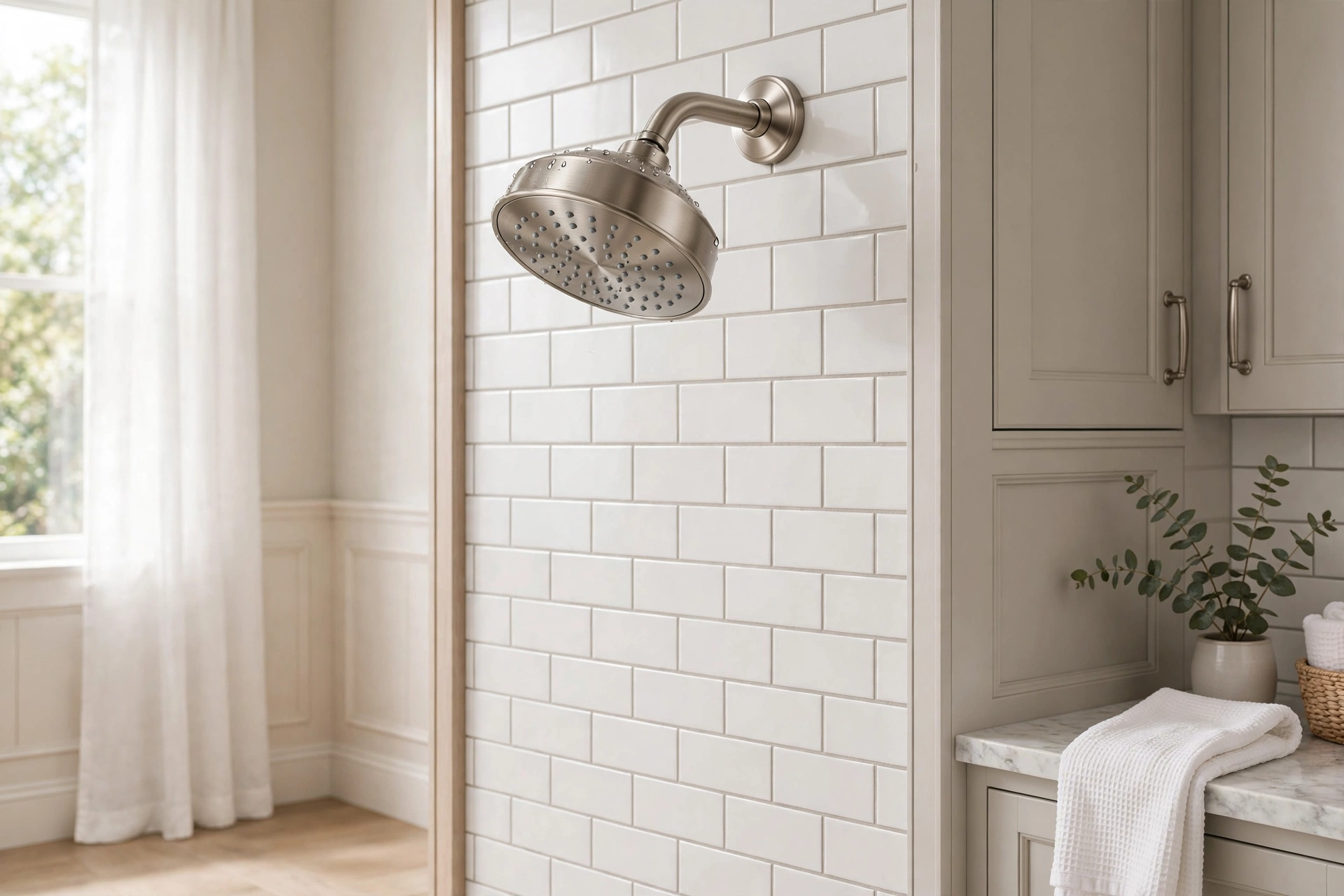
Brushed nickel sits in the sweet spot between chrome’s shine and brass’s warmth — neutral, soft, and endlessly adaptable. Its muted sheen works in transitional bathrooms that blend traditional and contemporary elements, and it coordinates with both stainless appliances and oil-rubbed bronze accents. Nickel finishes also hide fingerprints and water spots, making them a practical pick for busy family bathrooms.
11. Customize Your Spray with a Multi-Setting Shower Head
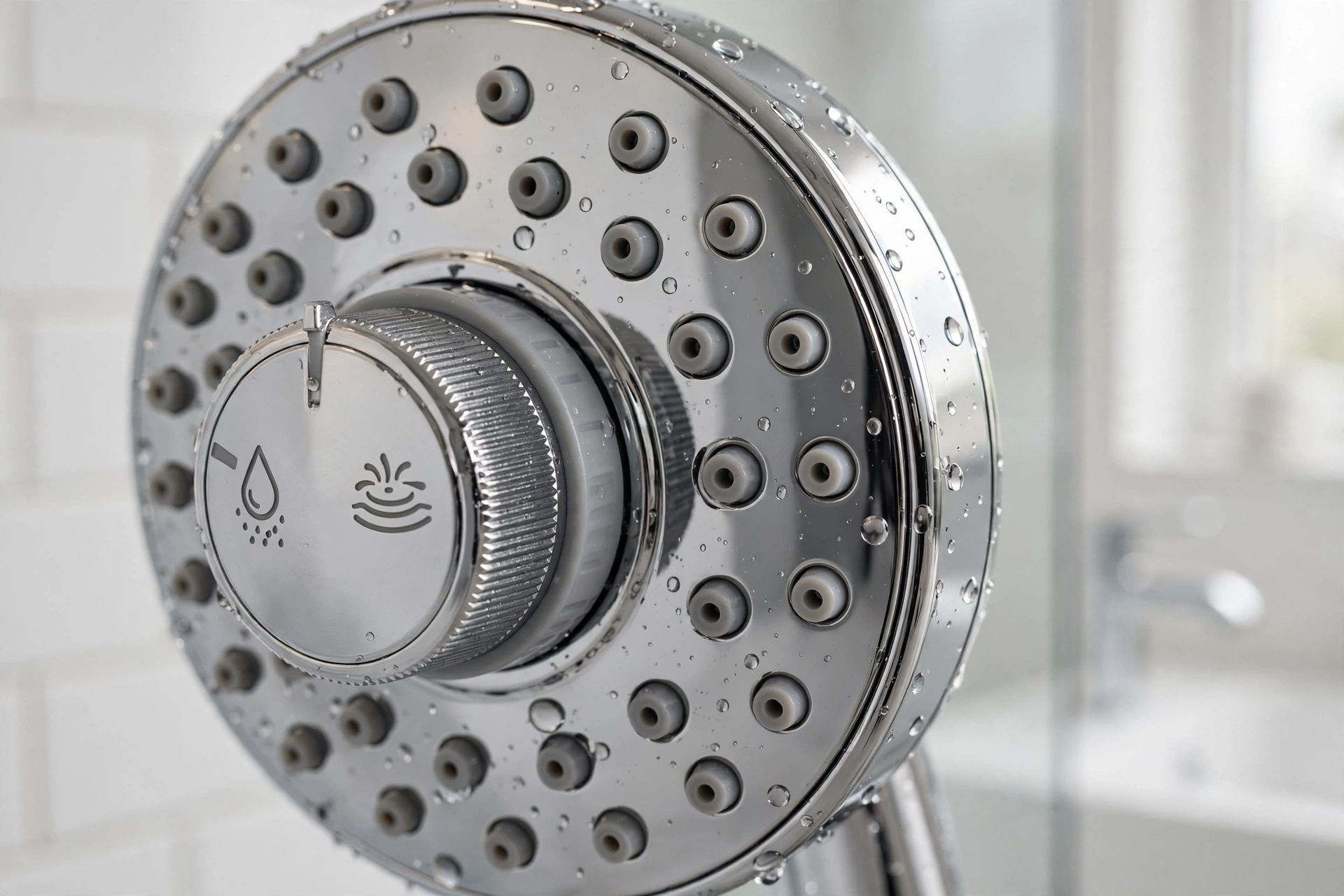
Rain today, massage tomorrow: multi-setting shower heads put a dial or lever on the face that switches between spray patterns. Typical options include full rain, focused massage, mist, and a water-saving pause trickle for soaping up. The mechanism should click firmly between settings — vague, mushy dials wear out fast. This is the best choice for households where everyone wants something different from their shower.
12. Create a Spa Feel with a Ceiling-Mount Shower Head
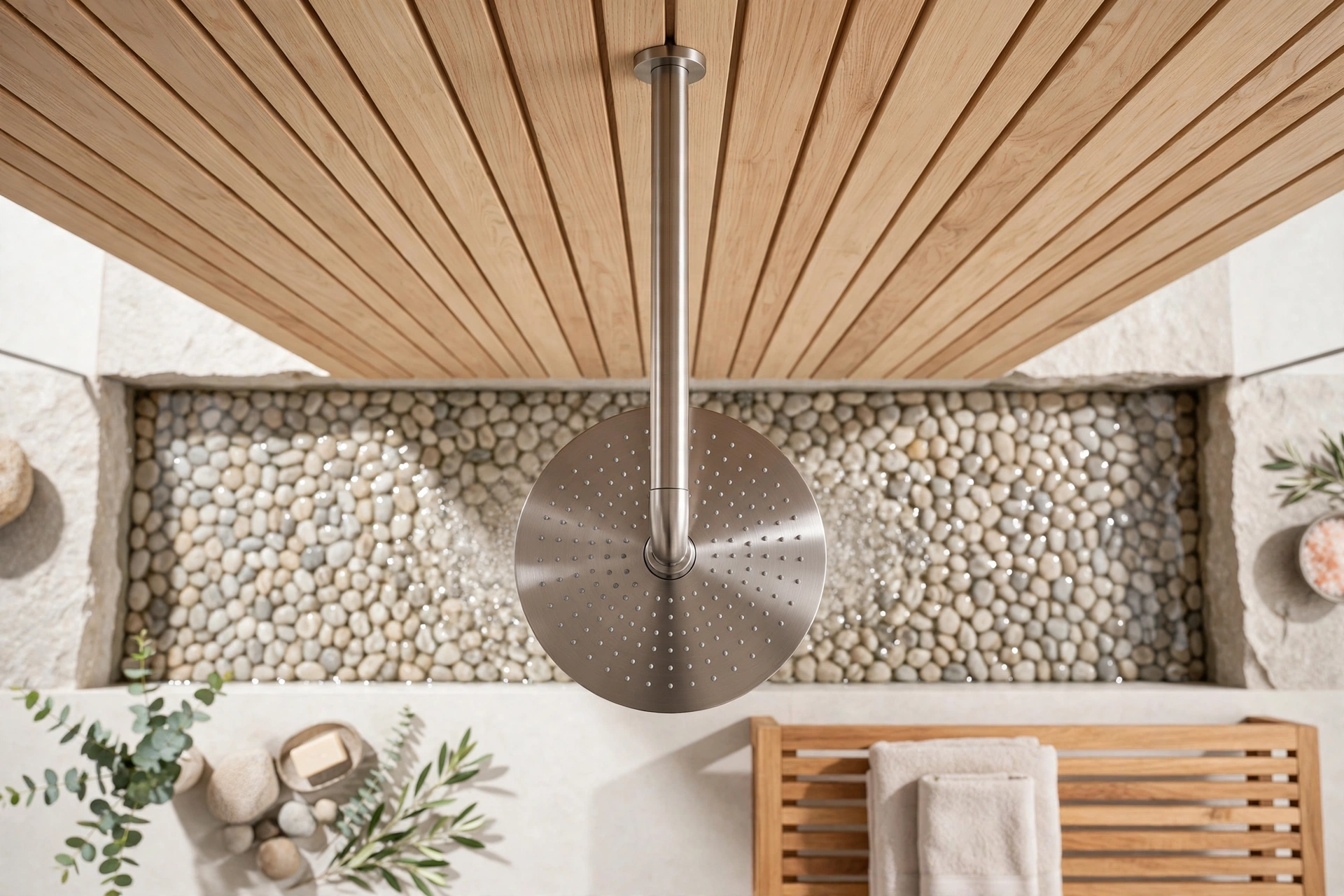
Mounting the head directly to the ceiling, rather than the wall, produces the truest rainfall effect — water falls straight down with no angle at all. A slim drop pipe or flush-mount arm keeps the look minimal, and the result feels like standing in warm rain. This is the move for walk-in shower design ideas where a wall arm would interrupt clean sightlines. Plan the plumbing during a remodel; retrofitting a ceiling supply through finished drywall is possible but messy.
13. Add Reach with a Slide Bar Shower Head
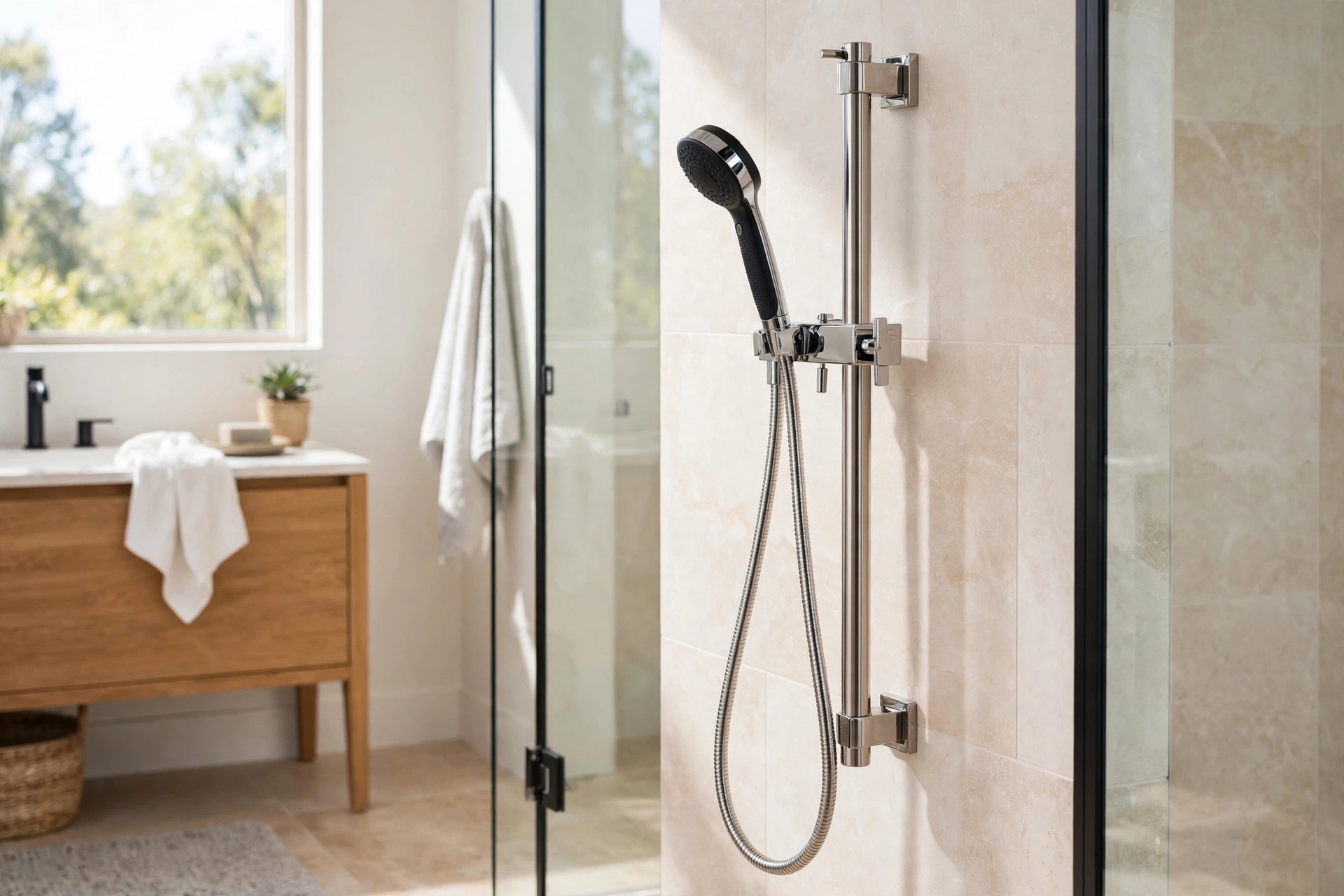
A slide bar mounts a handheld wand on a vertical rail, so the head glides up and down to suit any height — kids, tall adults, and seated users all get their ideal position. It is one of the most accessible upgrades you can make, and many bars double as a sturdy grab bar when properly anchored to studs. Look for a smooth-gliding slider with a one-hand adjustment button rather than a fiddly twist lock.
14. Indulge with Body Spray Jets
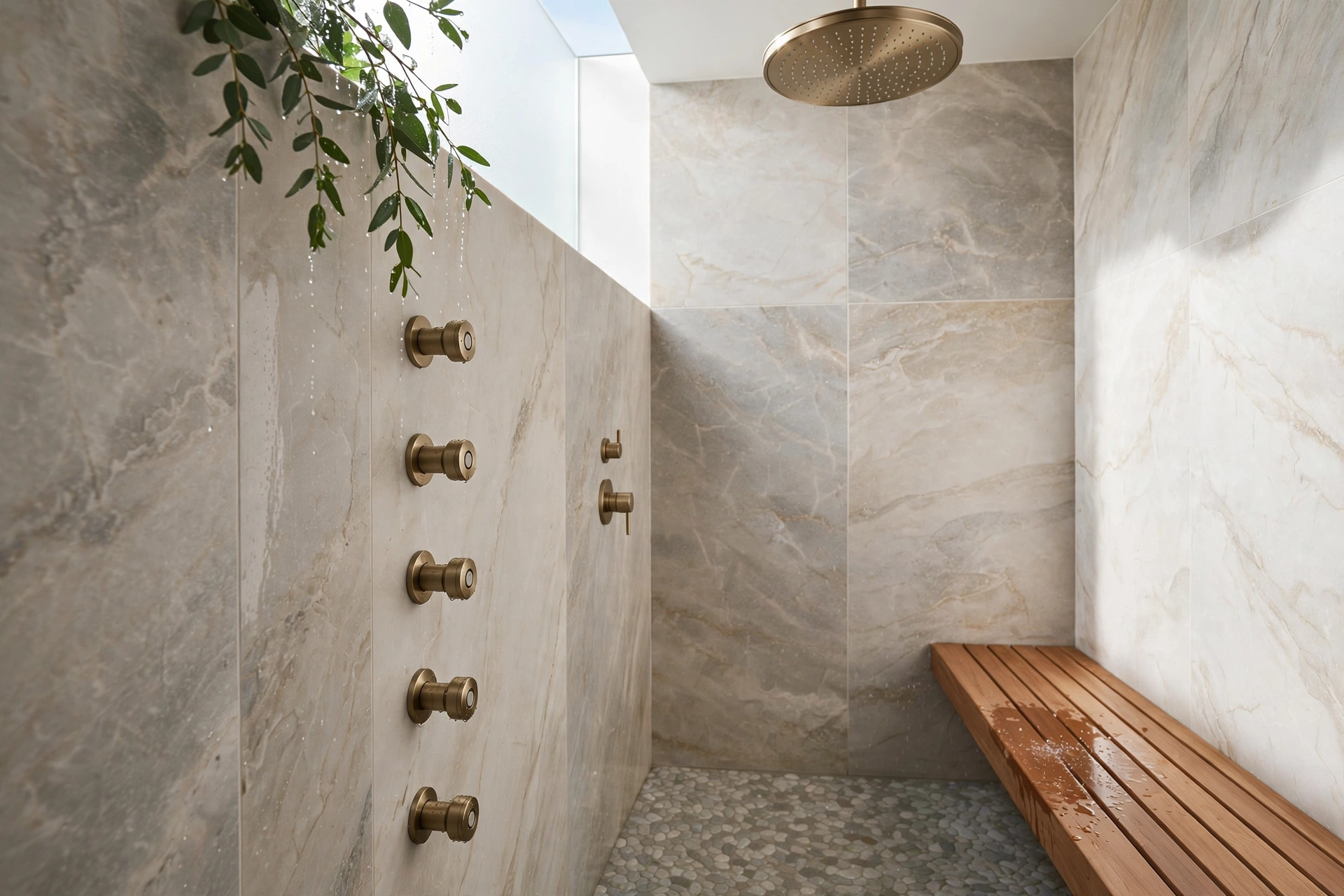
Body sprays are small jets mounted in the shower wall that mist or pulse water at your torso while the main head works from above. Arranged in vertical pairs, they create a full-body hydrotherapy experience that rivals high-end spas. They require dedicated plumbing lines and a diverter valve, so they are strictly a remodel project — but if you are already opening walls, they deliver the most dramatic upgrade per dollar of any shower feature.
15. Pick Smart for Small Bathrooms
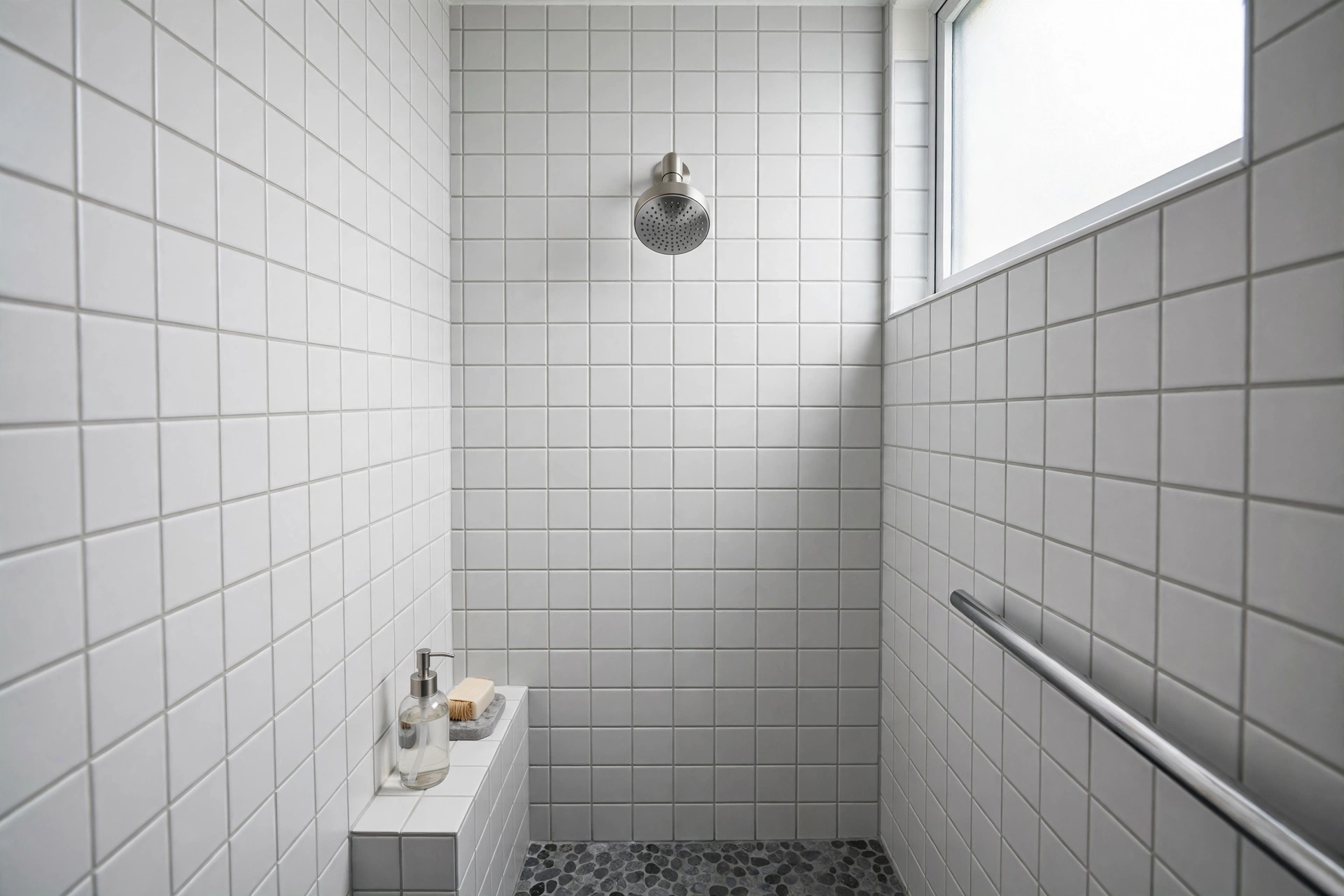
A compact shower does not need a giant head — it needs the right one. Choose a smaller-diameter head (6 inches or less) on a short arm to keep the spray inside a tight footprint, and favor high-pressure or multi-setting models that make a small space feel powerful. Corner-mounted or slide-bar designs free up elbow room, and a clear glass door keeps the visual space open. In a small bath, every inch of spray should land where you stand.
FAQ
What is the best shower head for low water pressure?
A high-pressure shower head with engineered nozzles is the best fix for weak flow — it accelerates the stream without using more water. Also check for clogged nozzles or an old flow restrictor before replacing the whole fixture.
What size rainfall shower head should I get?
Eight inches suits most showers; go 10 to 12 inches for a true drenching effect in larger enclosures. Make sure your water pressure can support the wider face, or the spray will feel thin at the edges.
Are filtered shower heads worth it?
If you have hard or chlorinated water, yes — replaceable cartridges reduce sediment and chlorine that dull hair and spot up fixtures. Expect to swap the cartridge every two to three months.
Can I install a shower head myself?
Absolutely. Most shower heads unscrew by hand or with an adjustable wrench, and the new one threads on with plumber’s tape. No plumber needed unless you are moving supply lines or adding body sprays.
What finish is easiest to maintain?
Chrome and brushed nickel hide water spots and clean with a damp cloth. Matte black looks striking but needs non-abrasive cleaners; brushed brass develops a patina that many owners love.
Keep Exploring
Choosing a shower head is really about choosing how you want to start and end your day — drenched, massaged, or efficiently rinsed. Match the fixture to your water pressure, your space, and your routine, and the rest of the bathroom will fall into place around it. For the finishing frame, our bathroom shower door ideas help you enclose the look in style.