
The shower door is one of the largest visible surfaces in the bathroom, and choosing the right one changes how big, bright, and private the whole room feels. A bulky framed door can chop a small bathroom in half visually, while a sheet of clear frameless glass makes the same footprint feel twice as large. These bathroom shower door ideas cover glass types, frame styles, opening mechanisms, and privacy levels so you can pick a door that suits your layout, your light, and your comfort level. Walk-in shower design ideas for a spa-like bathroom pair beautifully with the door styles below.
Before choosing, measure your opening carefully — width, height, and whether the walls are plumb — because most shower doors are sized to the opening with adjustment ranges rather than being custom-cut on site. Decide how much privacy you want versus how much light you want to keep, and check whether your door’s swing or slide clears the toilet, vanity, and towel bars. A shower enclosure is the bathroom’s biggest hardware decision, so think about glass, frame, and opening style together rather than picking each in isolation.
1. Go Frameless for a Clean Modern Look
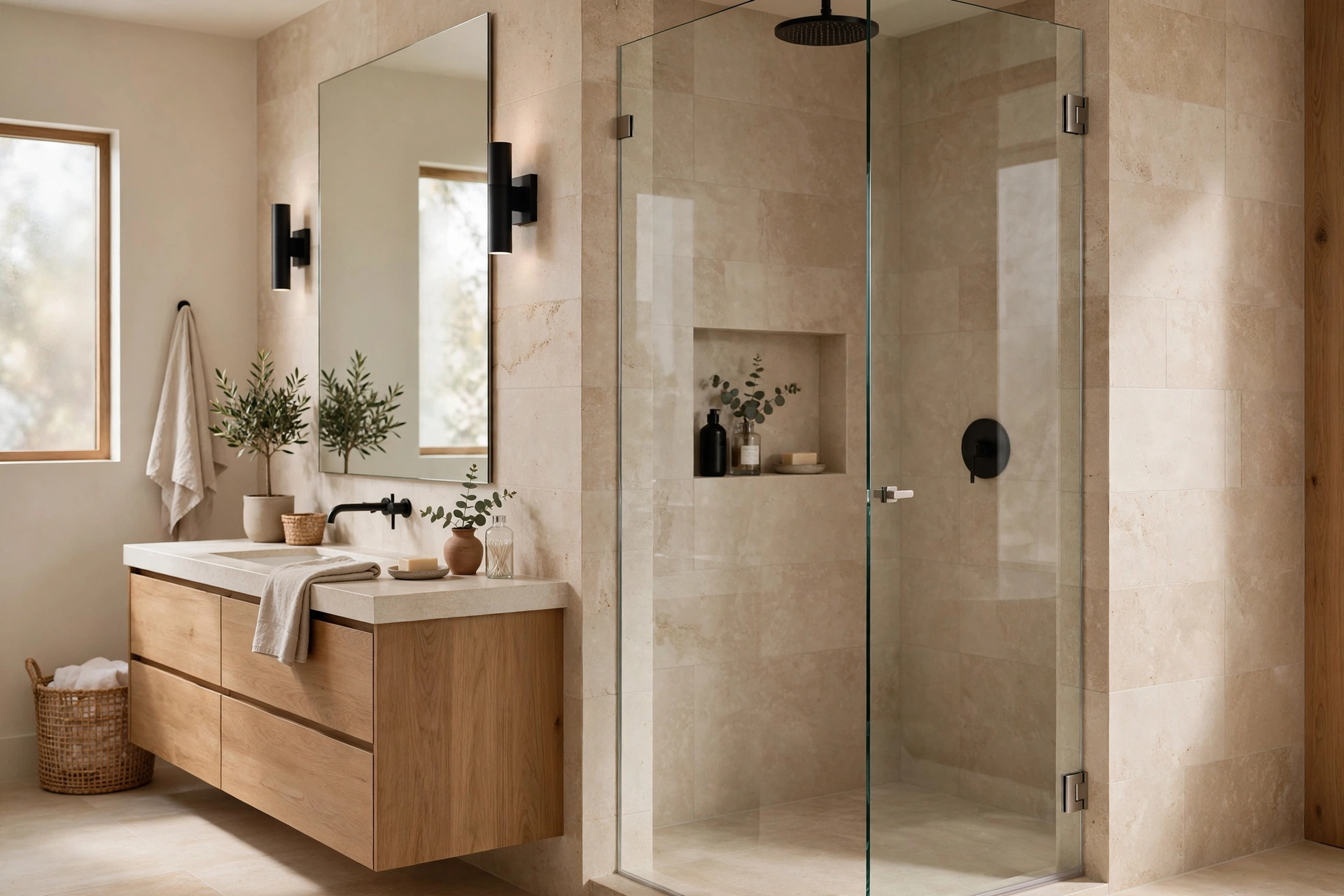
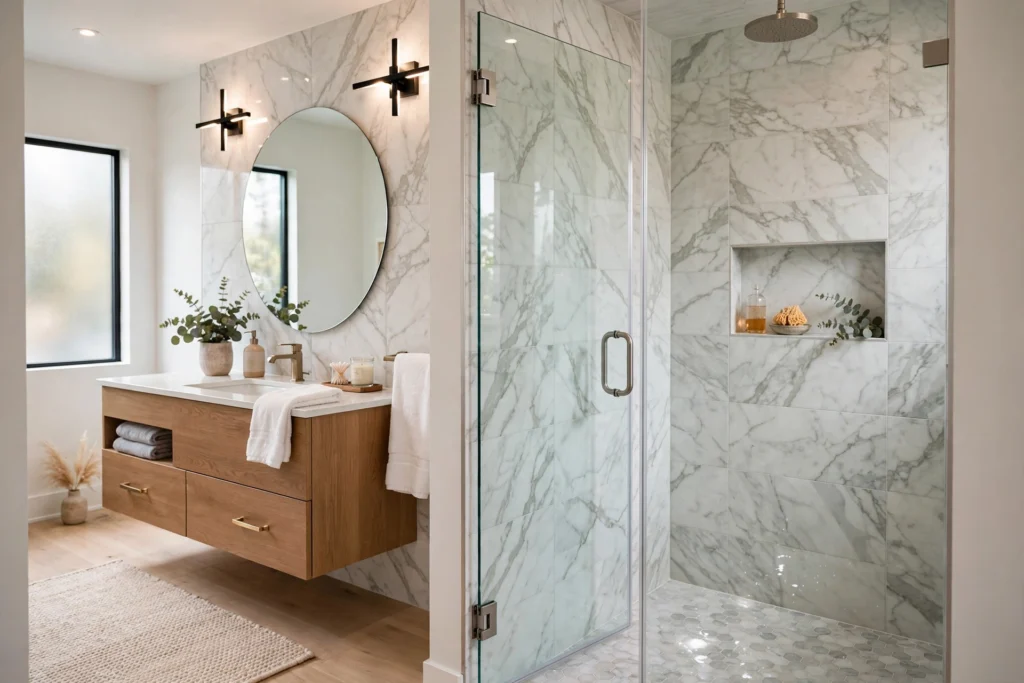
Frameless glass doors use thick tempered panels — usually three-eighths or half an inch — held by minimal clips and hinges instead of a metal frame, so the shower reads as one uninterrupted sheet of glass. The effect is airy and high-end: the tile work stays visible, light flows straight through, and small bathrooms feel noticeably larger. Frameless doors cost more than framed options and demand precise installation, since there is no frame to hide out-of-plumb walls. They also drip slightly at the seams, so a good sweep and a gentle inward threshold slope matter. Choose frameless when the shower tile is worth showing off and the budget allows the upgrade.
2. Try Frosted Glass for Privacy Without Darkness
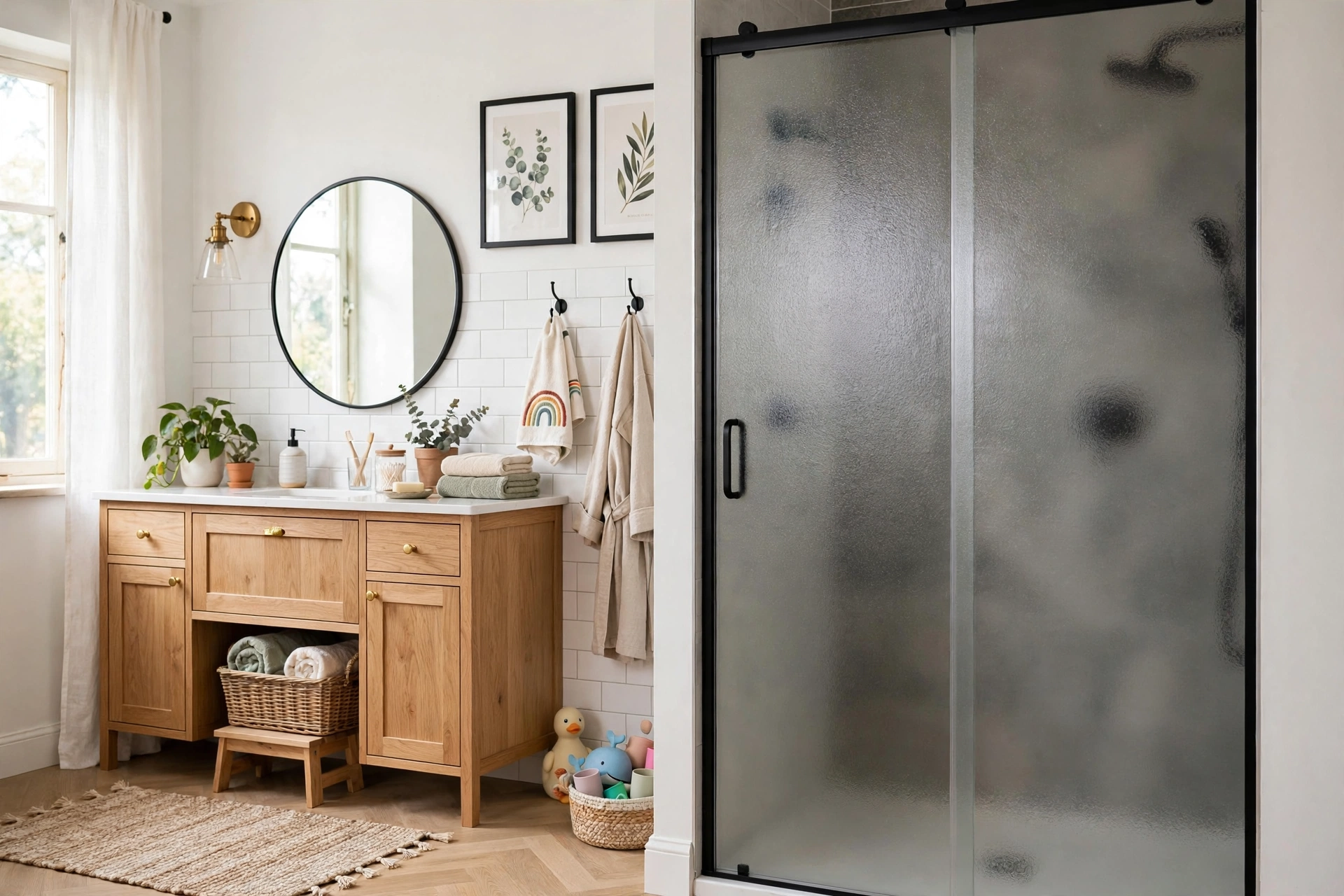
Frosted glass blurs shapes while still passing light, making it the classic privacy solution for shared bathrooms and guest baths. You get modesty without the cave-like feel of an opaque curtain or solid panel — daylight still reaches the shower interior. Frosted finishes range from fully opaque acid-etched looks to lightly satin finishes that merely hint at shapes. The etched side usually faces inward, and quality frosting resists fingerprints better than you would expect. Pair frosted glass with bright, light tile inside the shower so the enclosed space never feels dim. It is the most forgiving glass choice for busy family bathrooms.
3. Choose a Sliding Barn Door for Rustic Charm
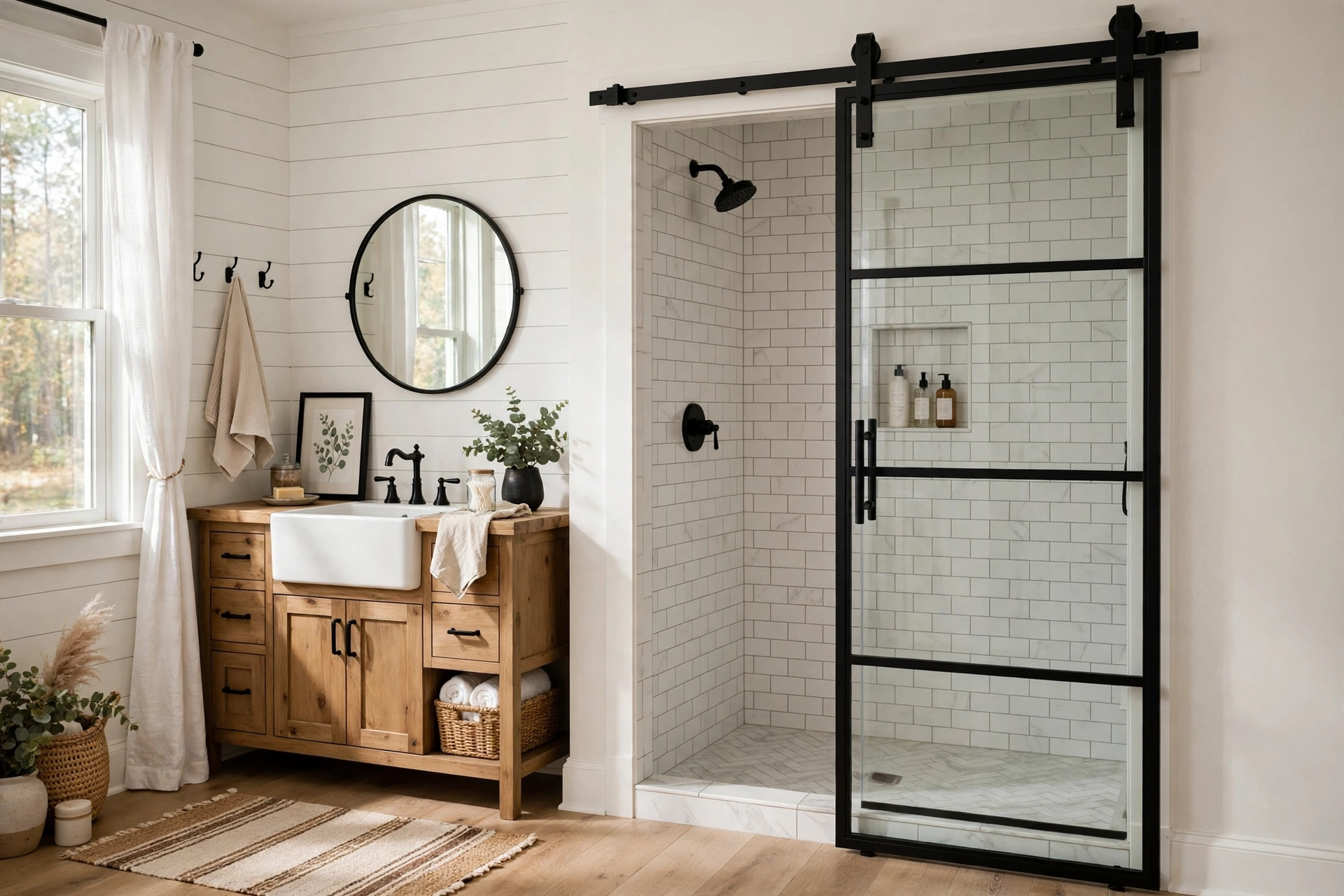
Sliding barn-style shower doors hang from an exposed top rail and glide sideways instead of swinging out — perfect for tight bathrooms where a swinging door would hit the vanity or toilet. The visible hardware becomes a design feature, especially in matte black or oil-rubbed bronze, and the look suits farmhouse, rustic, and industrial bathrooms beautifully. Because the panels overlap rather than seal, sliding doors leak a touch more than hinged ones, so they work best with a well-sloped threshold and a showerhead aimed away from the seam. Keep the track clean and the rollers adjusted, and the glide stays smooth for years.
4. Pick a Semi-Frameless Door to Save Money
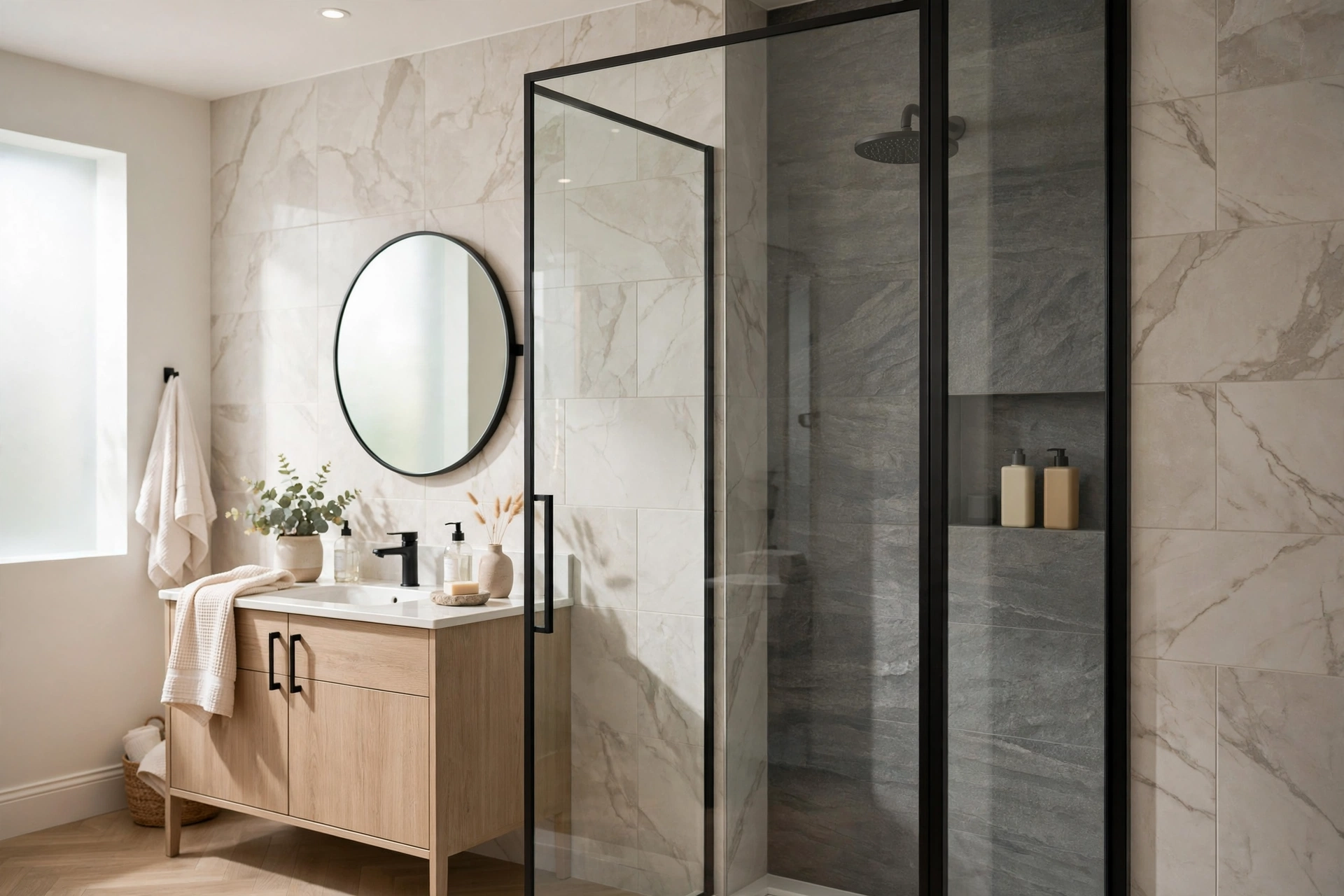
Semi-frameless doors split the difference: framed edges where structure matters and clean, unframed glass where the eye rests. You get much of the airy frameless look at a meaningfully lower price, with a slim perimeter frame that forgives slightly imperfect walls. The header and side channels give the door rigidity, so panels can be thinner and lighter than true frameless glass. The trade-off is a little more visual line and a few more crevices to clean around. For a remodel on a budget, semi-frameless is the sweet spot — it photographs almost as clean as frameless and installs with far less fuss.
5. Add Reeded Glass for Texture and Soft Privacy
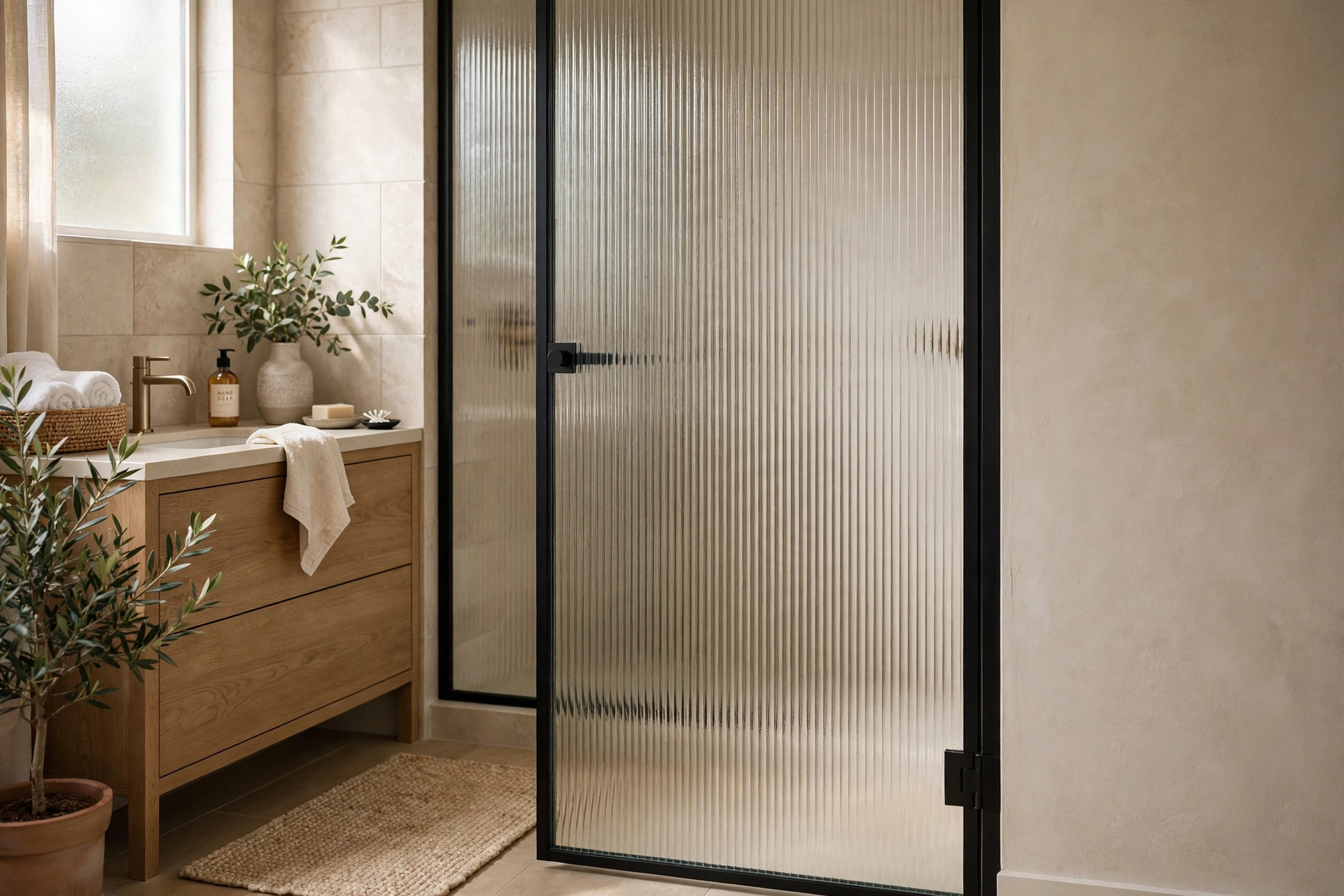
Reeded (fluted) glass has vertical ribs that distort the view while letting light stream through, delivering privacy with far more style than plain frosted glass. The fluting catches light beautifully, adding a tailored texture to the shower enclosure that feels considered and current. It suits modern, transitional, and Japandi bathrooms especially well, and the ribs hide water spots better than flat glass. Reeded glass costs more than standard clear or frosted panels, and the textured side needs a squeegee habit to stay crisp. Choose it when you want privacy that reads as a deliberate design choice rather than a compromise.
6. Go With a Black Grid Frame for Industrial Edge
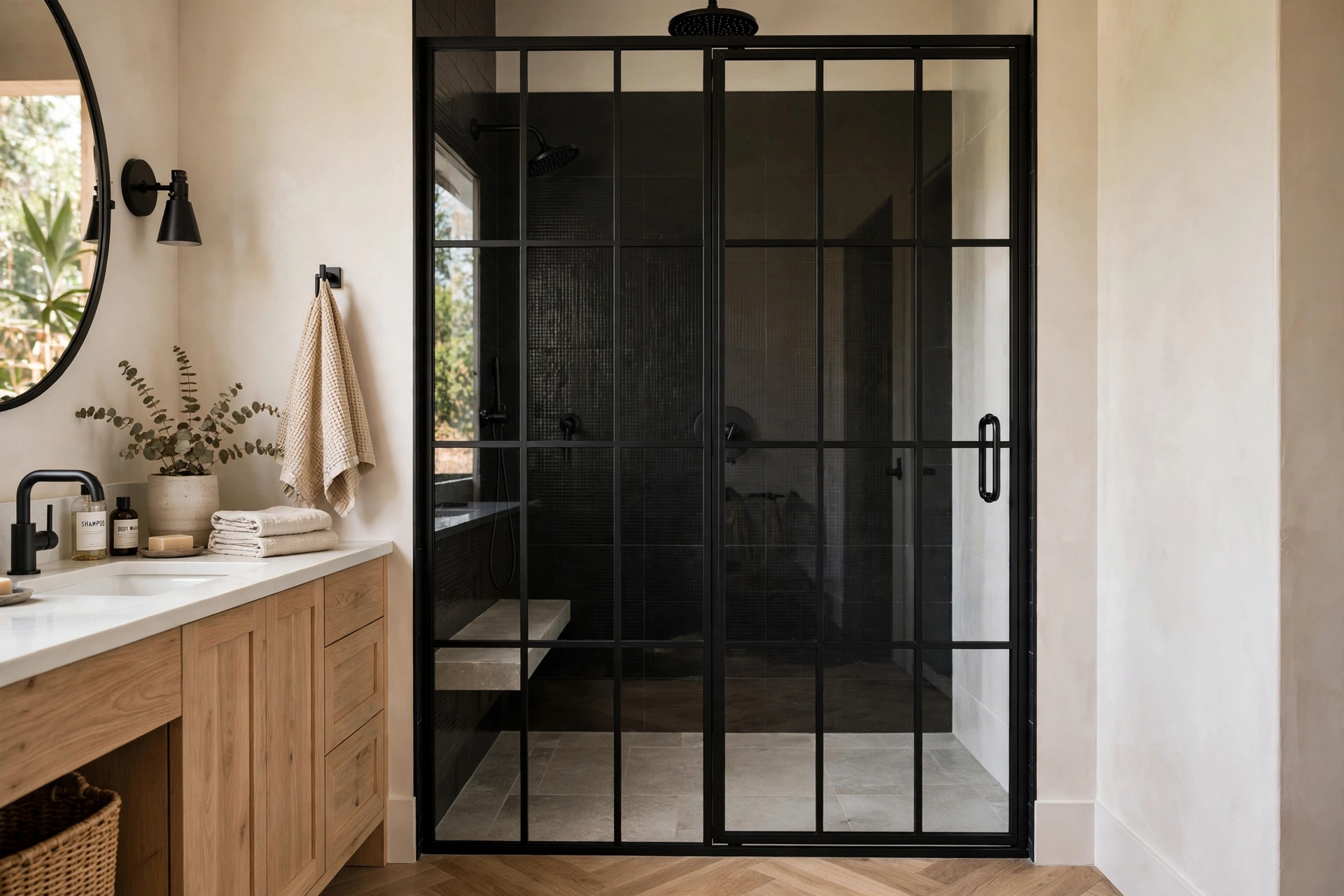
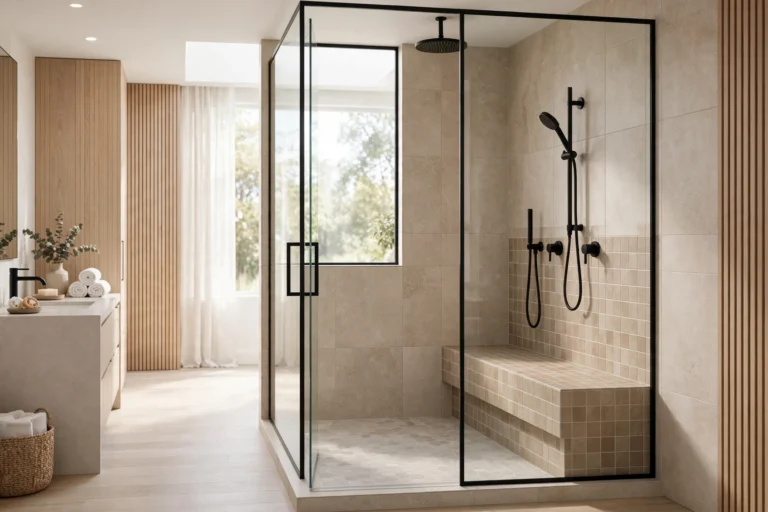
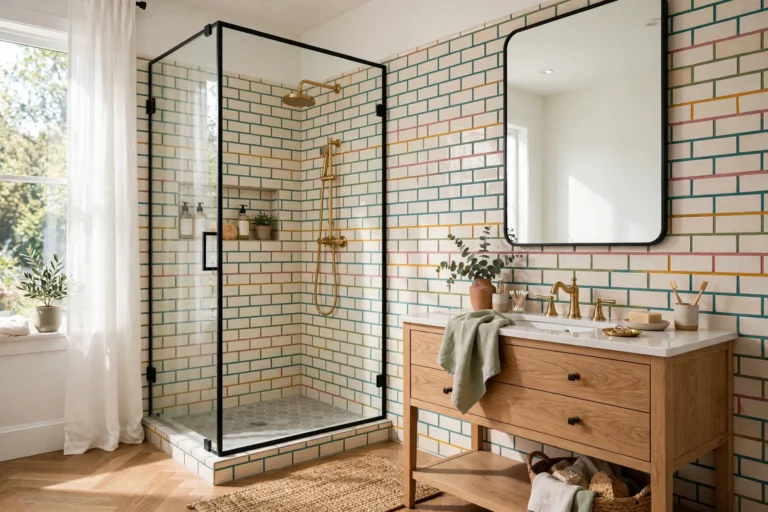
Black grid shower doors — thin black mullions dividing the glass into panes, like a steel factory window — bring instant architectural character. The grid pattern reads as intentional design rather than just a frame, and it flatters subway tile, concrete-look tile, and matte fixtures beautifully. The look is firmly industrial-modern, so it suits bathrooms that already lean that way; in a soft traditional bathroom it can feel jarring. Look for powder-coated aluminum or true steel-look frames that resist corrosion, and keep the grid lines thin — chunky mullions chop the view and defeat the purpose. Wipe the frames dry to keep black finishes flawless.
7. Try a Curved Glass Door for Small Corners
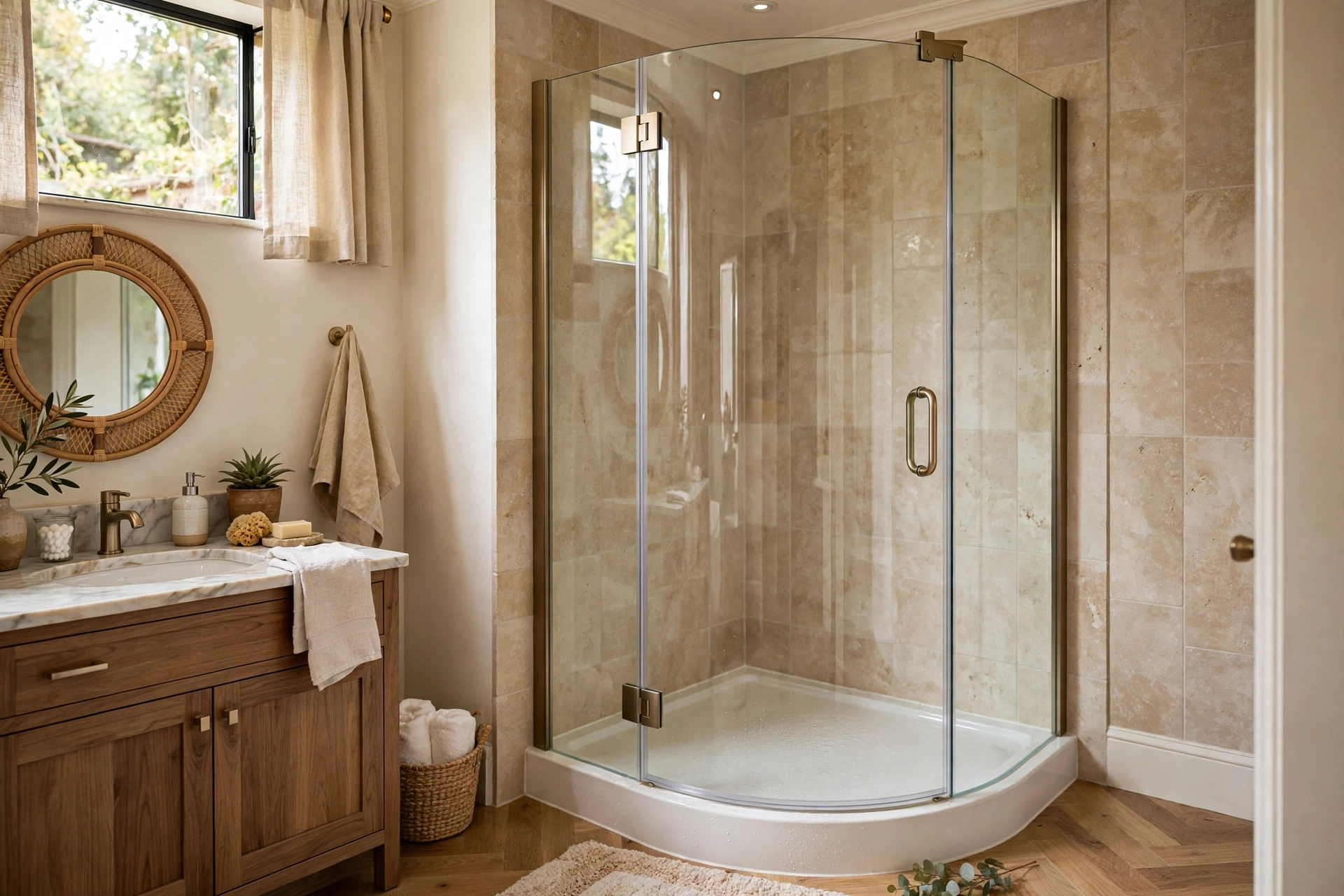
Curved (bow-front) glass doors bulge outward from a corner shower base, stealing a few precious inches of elbow room where a flat door would feel cramped. In small bathrooms those inches matter — the curve lets you turn and reach without banging elbows on glass. Curved doors typically come as framed sliding units that follow the rounded base, so measure the base radius exactly before ordering. The style reads slightly traditional, which suits classic bathrooms more than ultra-modern ones. Keep the track spotless, since curved sliders show grime in the bend, and the graceful arc rewards the extra wipe-down.
8. Choose Clear Glass to Show Off Tile Work
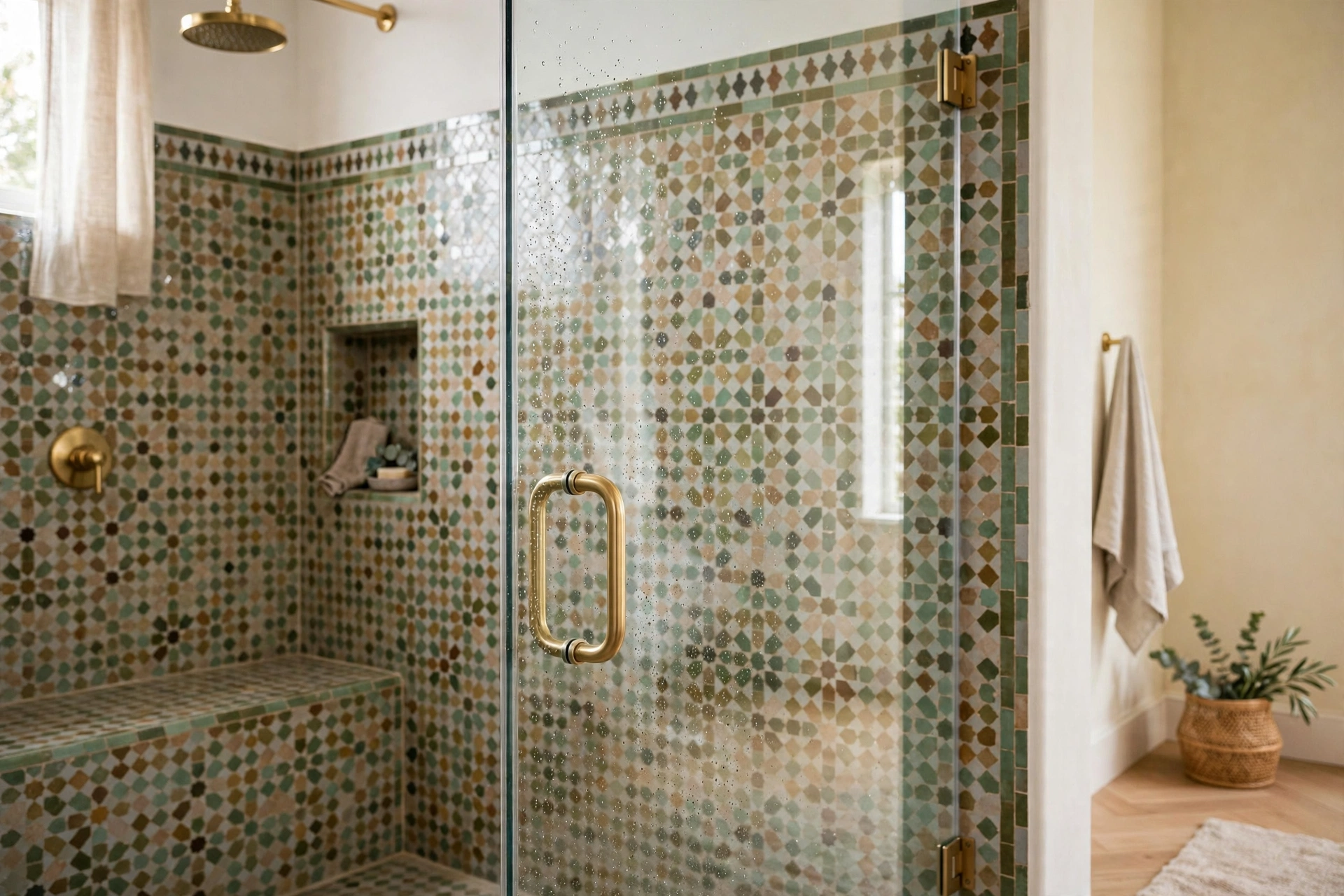
If you invested in beautiful shower tile — handmade zellige, dramatic marble veining, a mosaic accent wall — clear glass is the only door that lets it shine. A sheet of low-iron clear glass virtually disappears, turning the shower into a display case for your tilework. The honest trade-off is privacy (there is none) and maintenance (every spot shows), so clear glass suits primary ensuites and design-forward showers more than shared family baths. Use a quality glass coating or a daily squeegee to fight spots, and keep the shower interior styled — folded towels, a teak bench — since it is always on view. Bathroom shower niche ideas for style and storage help you style that visible interior beautifully.
9. Add a Pivot Door for a Sleek Entry
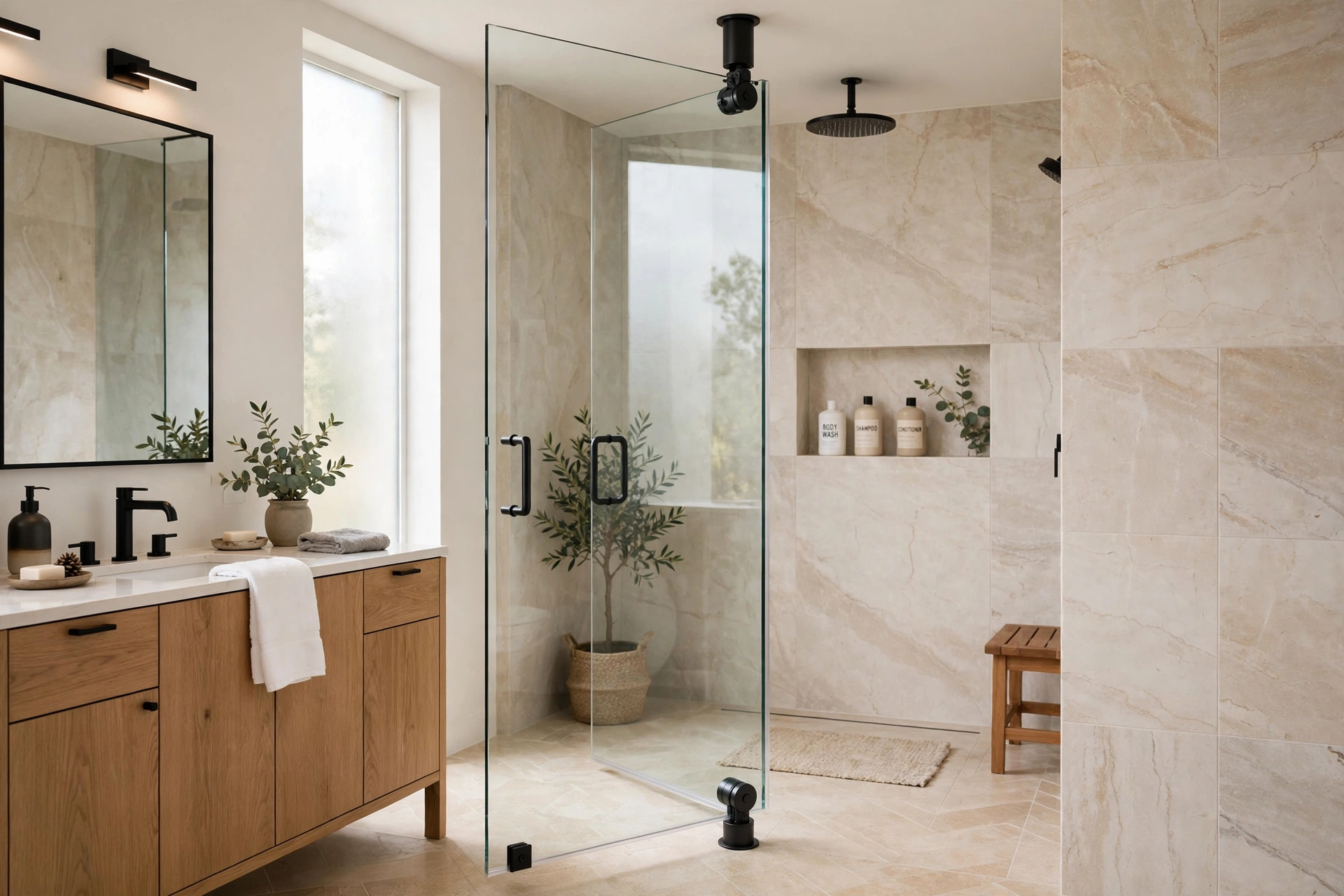
Pivot shower doors rotate on pins at the top and bottom rather than side hinges, creating a wide, unobstructed opening with a satisfyingly smooth motion. The pivot mechanism supports larger, heavier glass panels than standard hinges, which suits the frameless look beautifully. Pivot doors need clearance to swing, so they fit bathrooms with space in front of the shower — typically two feet or more of clear floor. The sweep at the bottom keeps water in, and the minimal hardware suits modern bathrooms. If your opening is wide and your floor space allows, a pivot door feels more luxurious than any slider.
10. Pick a Bi-Fold Door for Tight Spaces
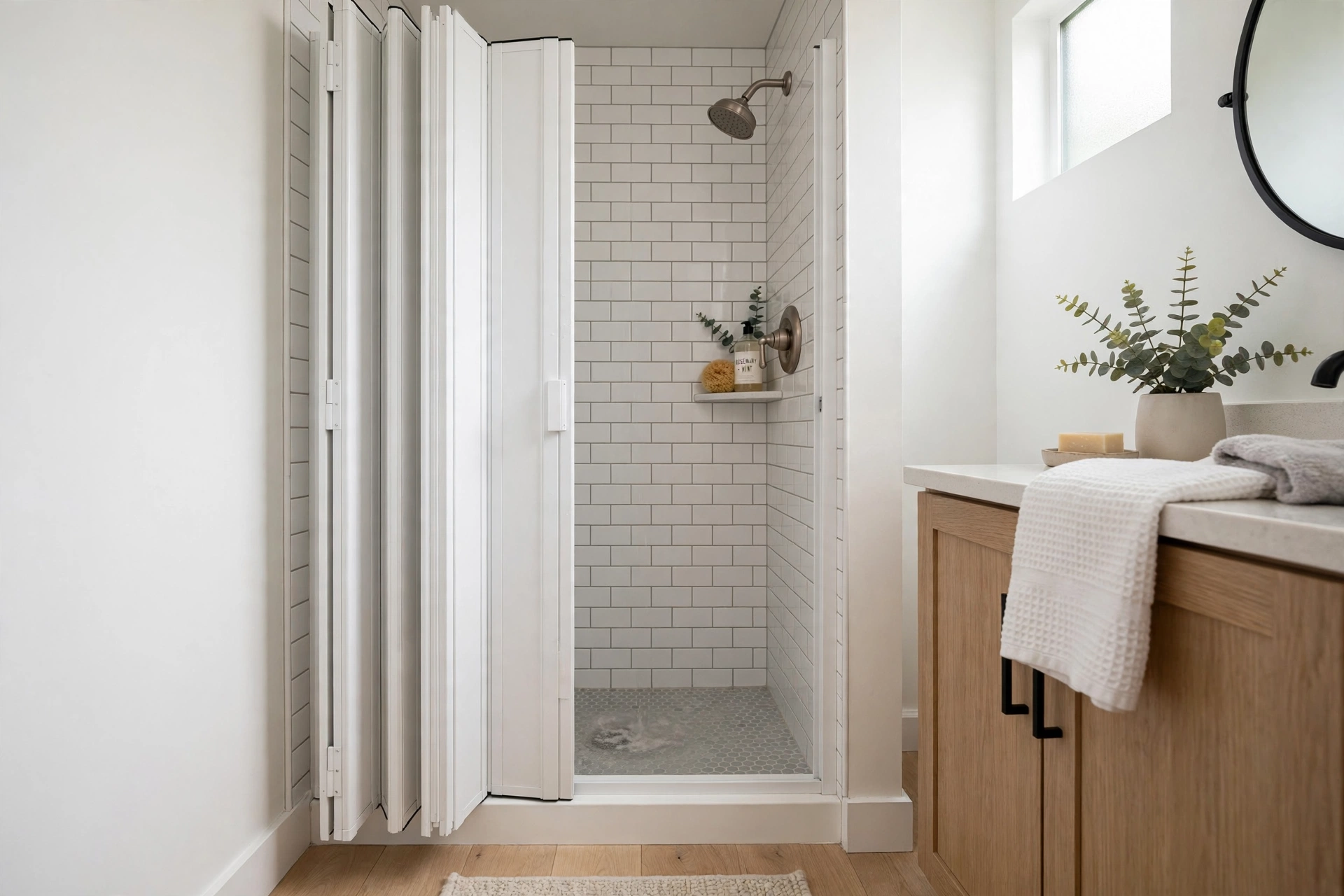
Bi-fold shower doors fold inward on themselves like an accordion, needing almost no clearance inside or outside the shower. They are the problem-solvers for alcove showers jammed between walls, where a swinging door would hit the toilet and a slider’s overlap would leak. The folded panels stack neatly to one side, giving nearly full access to the opening for cleaning. The hinges and folds mean more hardware and more cleaning crevices, so bi-folds suit practical bathrooms over showpiece ones. Choose a model with quality hinges — cheap bi-folds sag and stick — and keep the tracks free of soap scum.
11. Try a Walk-In Open Entry With No Door at All
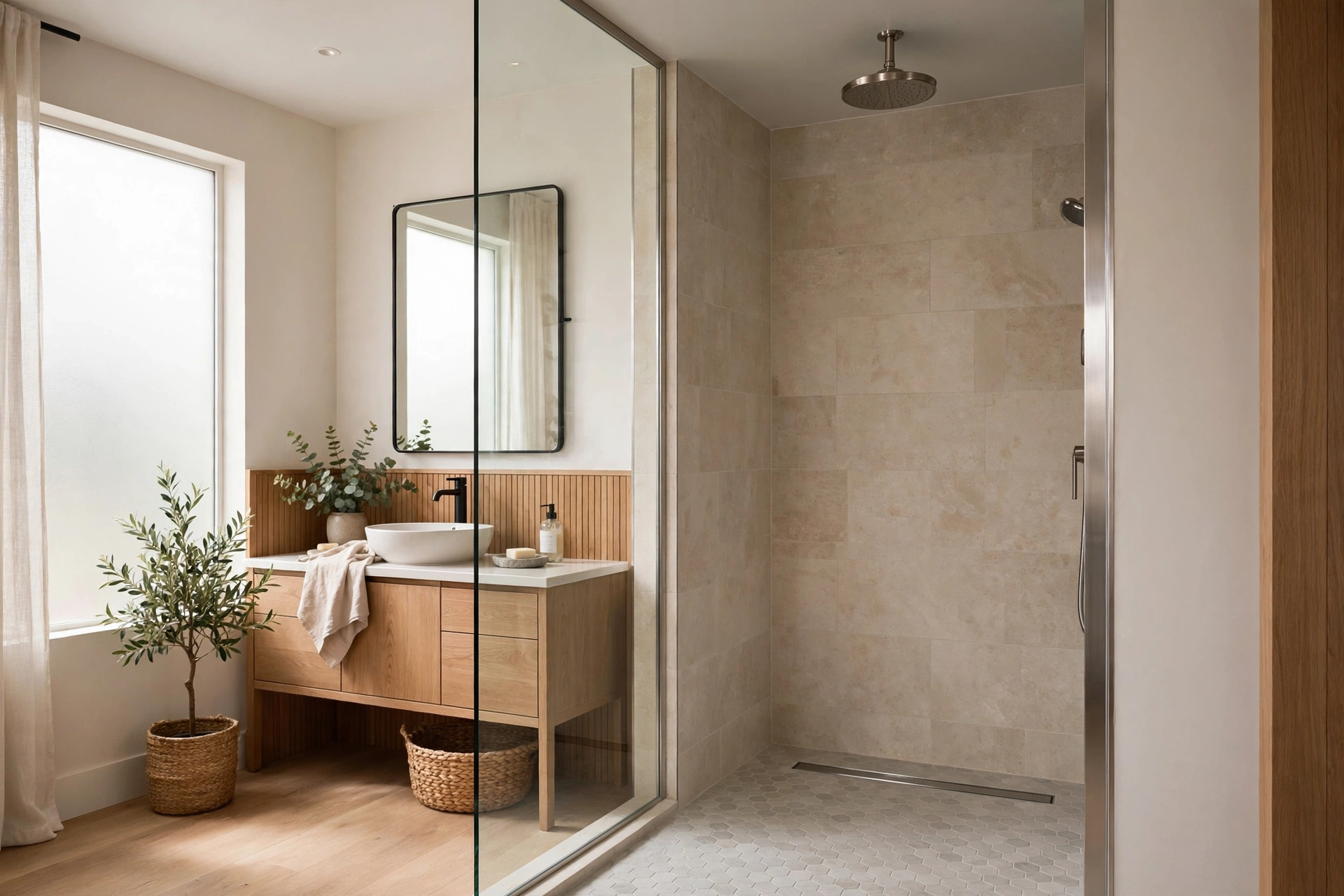
The boldest shower door idea is no door: a walk-in entry with a single fixed glass panel (or none at all) and a carefully sloped floor that keeps water where it belongs. Doorless showers feel the most spacious and spa-like, eliminate every hinge and track from your cleaning list, and make the bathroom fully accessible. They demand proper design — enough length for splash containment, a linear drain, and the showerhead positioned away from the opening. This is a remodel-stage choice, not a retrofit. Done right, a doorless shower is the easiest shower you will ever clean and the most luxurious you will ever step into.
12. Add Etched or Patterned Glass for Artistry
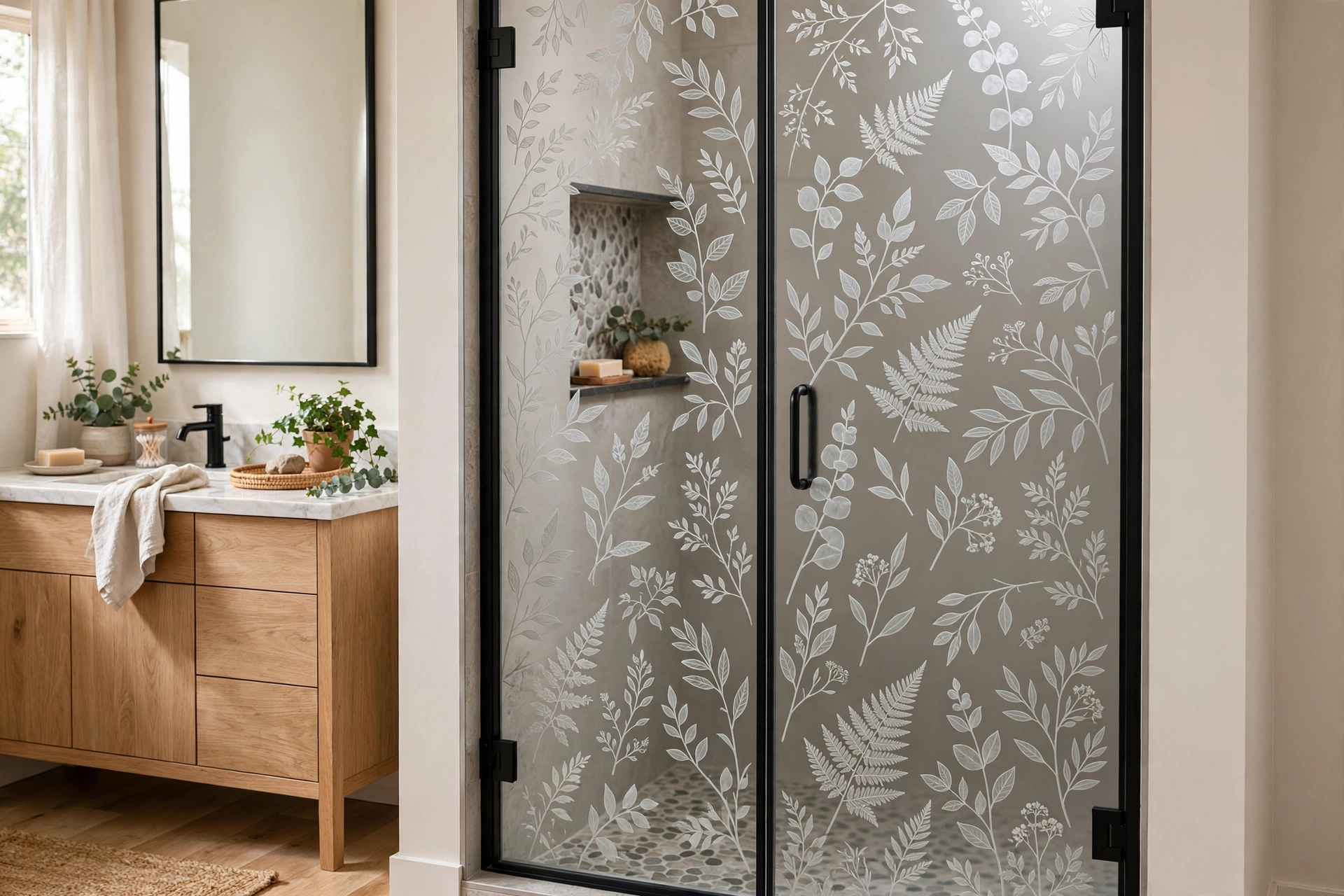
Etched glass turns the shower door into art: frosted bands, geometric patterns, botanical motifs, or a gradient that fades from opaque at the bottom to clear at the top. Patterned glass delivers privacy exactly where you want it — modesty at body level, light and views above — while adding a custom, designed feel no plain panel can match. Custom etching costs more and extends lead times, but stock patterned options like rain glass and bamboo textures are widely available. Keep patterns subtle in small bathrooms, since bold motifs can overwhelm. Etched glass hides spots well, making it as practical as it is pretty.
13. Choose a Neo-Angle Door for Corner Showers
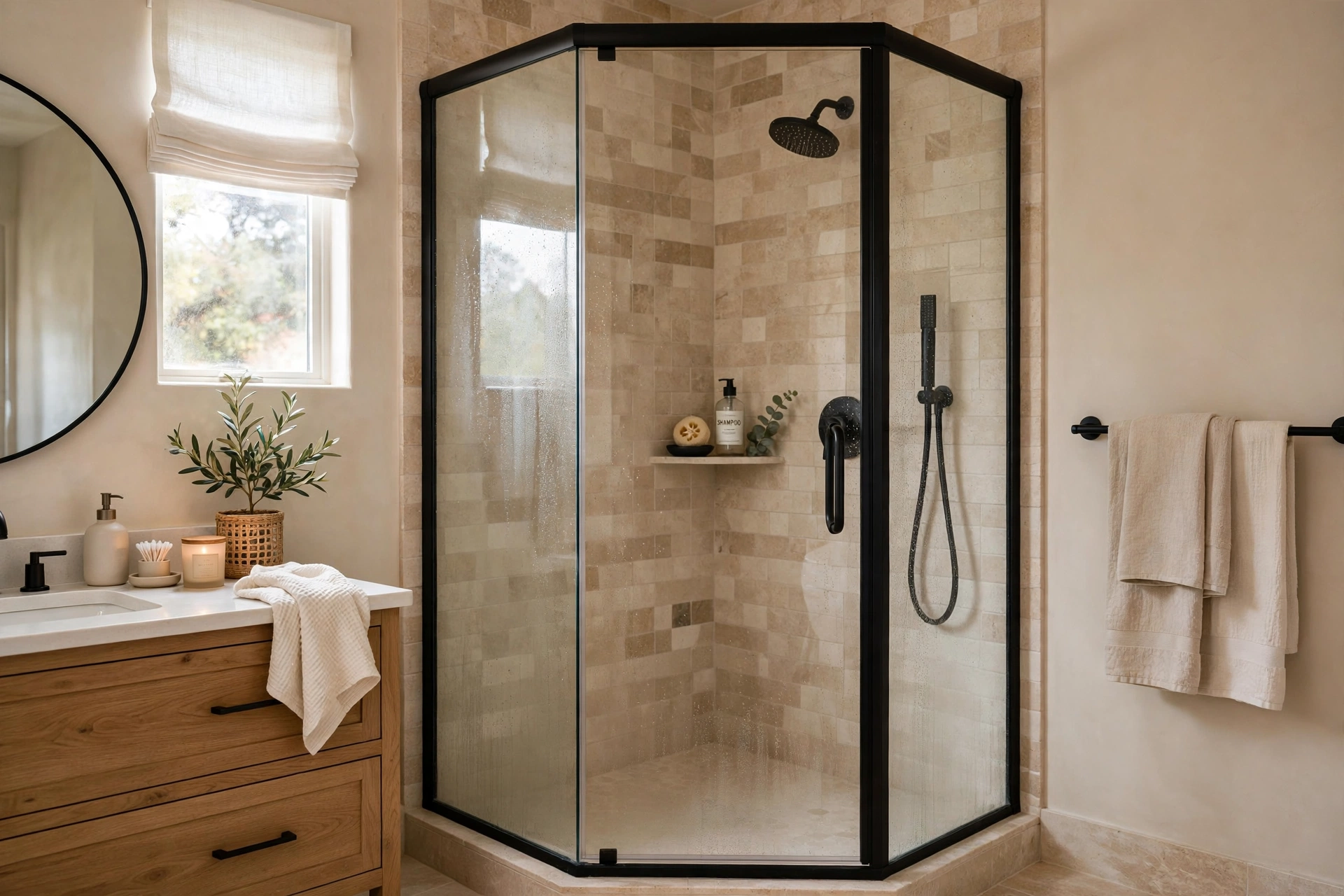
Neo-angle shower doors are cut for the angled front of a corner shower base — typically a 135-degree front with a center door flanked by fixed panels. This shape tucks the shower into a corner while keeping the entry generous, making it the space-efficient hero of small bathrooms. Neo-angle doors come framed or semi-frameless, with the door usually pivoting or sliding in the center panel. Measure the base’s exact angles before ordering; neo-angle units are unforgiving of wrong dimensions. The faceted front catches light interestingly and suits transitional and traditional bathrooms. It is the best answer when a square shower simply will not fit.
14. Match Your Hardware Finish to the Bathroom
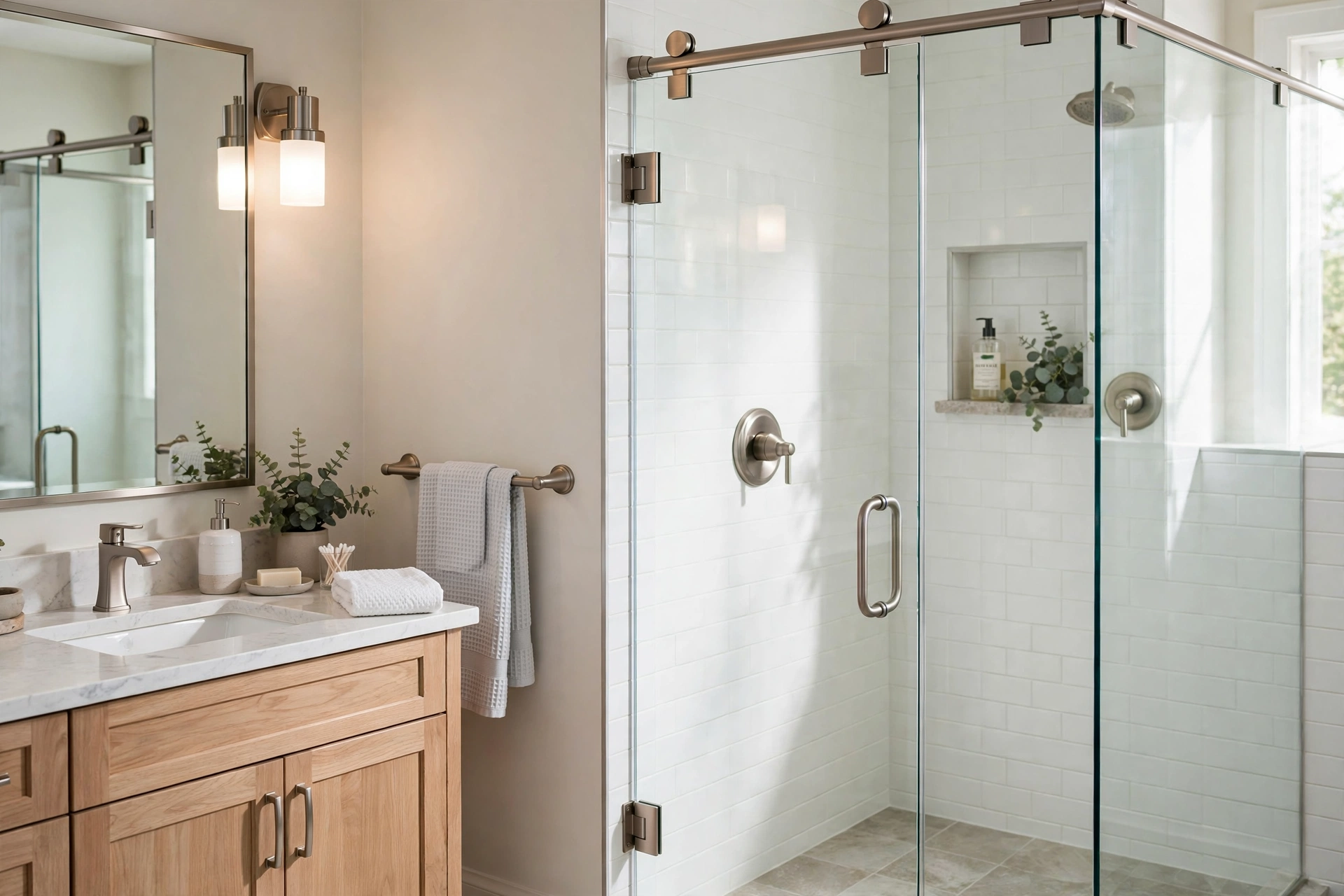
Shower door hardware — hinges, handles, tracks, and towel bars — should join the bathroom’s metal family, not start a new one. If your faucet and shower trim are matte black, choose matte black door hardware; if they are brushed nickel, match that. Mixed metals can work, but the door is too large a surface to clash quietly — a chrome door frame against brass fixtures will always look like a mistake. Many door manufacturers offer the same unit in five or six finishes, so matching is usually just a checkbox. When in doubt, choose the finish that already appears most in the room and repeat it on the door.
15. Don’t Forget Cleaning and Maintenance Access
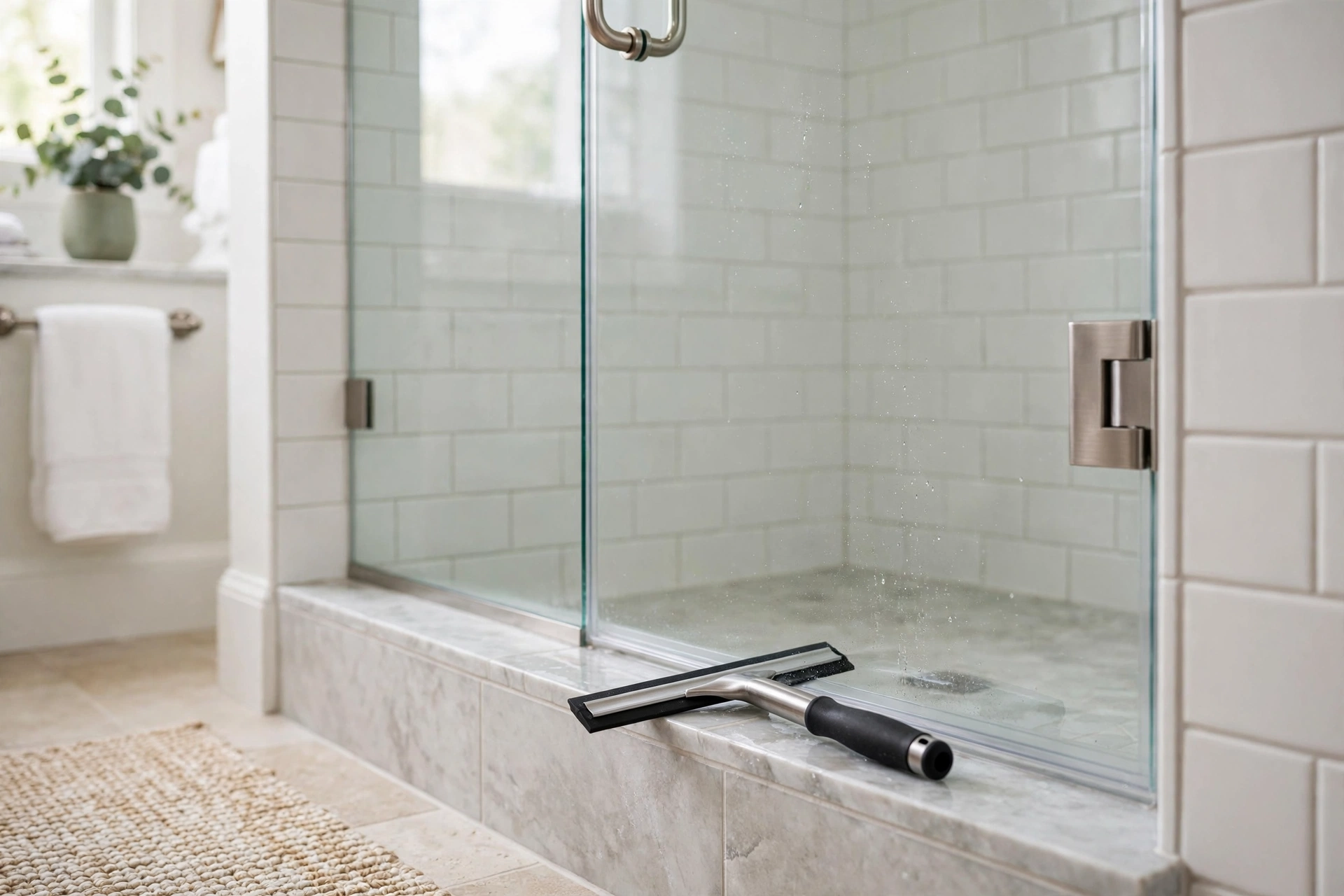
The most beautiful shower door fails if you cannot clean behind it. Before buying, think about access: can you reach every glass surface with a squeegee, and do fixed panels leave dead corners where mold will colonize? Sliding doors need removable panels or enough gap to clean the tracks, while hinged doors should open wide enough to wipe the interior side. Glass coatings that repel water and soap scum are worth the upcharge — they cut cleaning time dramatically. The Spruce’s bathroom guides are a solid reference for comparing door types and their upkeep demands. A door you can keep spotless will look better in year five than a fancier one you cannot.
FAQ
What is the best shower door for a small bathroom?
Sliding and bi-fold doors are the best picks for small bathrooms because they need no swing clearance — a hinged door needs roughly two feet of open floor in front of it. If your layout allows, a doorless walk-in entry with a fixed panel feels the most spacious of all. Measure the clear floor space in front of the opening before falling in love with any door style.
Is frosted or clear shower glass better?
Frosted glass wins on privacy and forgiveness — it blurs shapes and hides water spots — while clear glass wins on light and showing off tile. Choose frosted for shared and guest bathrooms, and clear for primary ensuites where privacy is less of a concern. Reeded glass splits the difference with texture and style.
How much does a frameless shower door cost?
A standard frameless shower door typically runs from about $700 to $1,500 installed, depending on glass thickness, size, hardware finish, and local labor rates. Custom sizes, notched panels, and specialty glass like reeded or low-iron push the price higher. Framed and semi-frameless doors cost meaningfully less for similar openings.
Do shower doors need to be tempered glass?
Yes — building codes in most places require tempered safety glass for shower enclosures. Tempered glass is heat-treated to be several times stronger than standard glass, and if it breaks, it crumbles into small dull pieces rather than sharp shards. Any reputable shower door uses it by default; never accept annealed glass for a shower.
Can I replace a shower curtain with a glass door?
Usually yes, as long as the tub or shower base has a flat, level rim for the door track and the walls are plumb enough for the panels. Measure the opening width at the top, middle, and bottom — walls are rarely perfectly straight — and choose a door with enough adjustment range. A curtain-to-door swap is one of the highest-impact small bathroom upgrades you can make.
Keep Exploring
The right shower door balances three things: how much light you want to keep, how much privacy you need, and how the door moves in your space. Get those three decisions right and the rest — glass texture, frame finish, hardware — falls into place. Finish the shower zone with our bathroom tile design ideas, where the surfaces behind your new glass get the attention they deserve.