
The strip of wall between your vanity countertop and the mirror is small, but it punches far above its size in style impact. A thoughtful backsplash protects the wall from splashes while giving the whole sink area a finished, intentional look — the difference between a vanity that floats in blank drywall and one that feels designed. These bathroom backsplash ideas span classic tile, artisan materials, budget-friendly options, and bold statements so you can dress up the vanity wall in any style. Bathroom tile design ideas cover floors, showers, and walls beyond the sink zone.
Before choosing, remember the backsplash lives in a wet zone: whatever you pick must handle daily splashes, steam, and cleaning products. That rules out untreated wood, standard wallpaper, and anything that swells with moisture — unless it is properly sealed. Measure the area carefully, decide how high you want the backsplash to run (a standard four inches, full height to the mirror, or all the way to the ceiling), and order ten to fifteen percent extra tile for cuts and breakage. A tile backsplash is a weekend-friendly project that pays off every single day.
1. Go Classic With Subway Tile
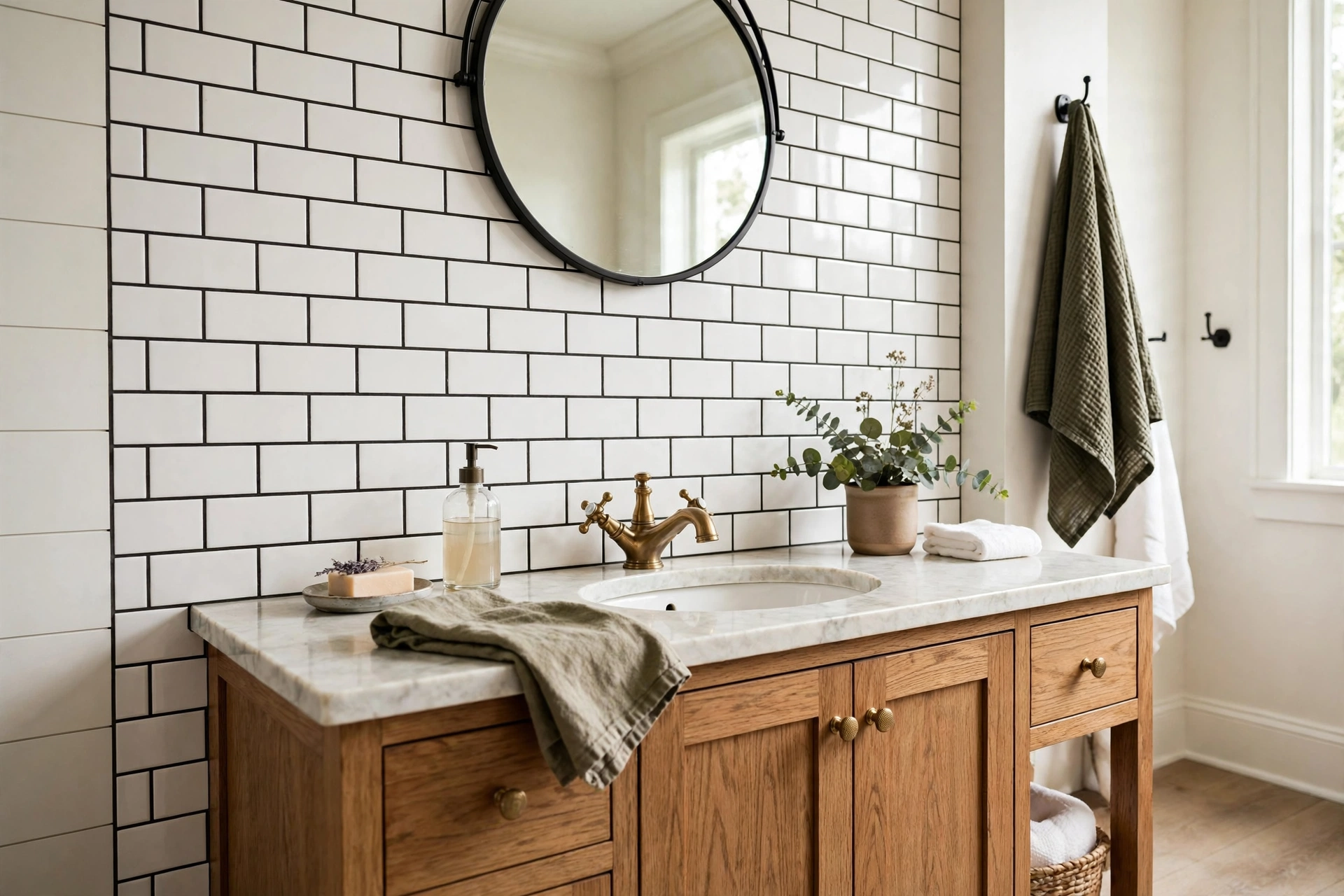
Subway tile is the little black dress of backsplashes: always appropriate, endlessly adaptable, and kind to budgets. The classic three-by-six brick pattern suits everything from farmhouse to modern bathrooms, and the glossy surface wipes clean with a swipe. Play with the grout color to change the mood — dark grout for graphic definition, matching grout for a seamless calm. Lay it in a herringbone or vertical stack instead of the standard offset to make the familiar feel fresh. Subway tile rarely goes on sale in the dramatic sense, but it is consistently one of the cheapest quality tiles you can buy.
2. Try Handmade Zellige for Artisan Texture
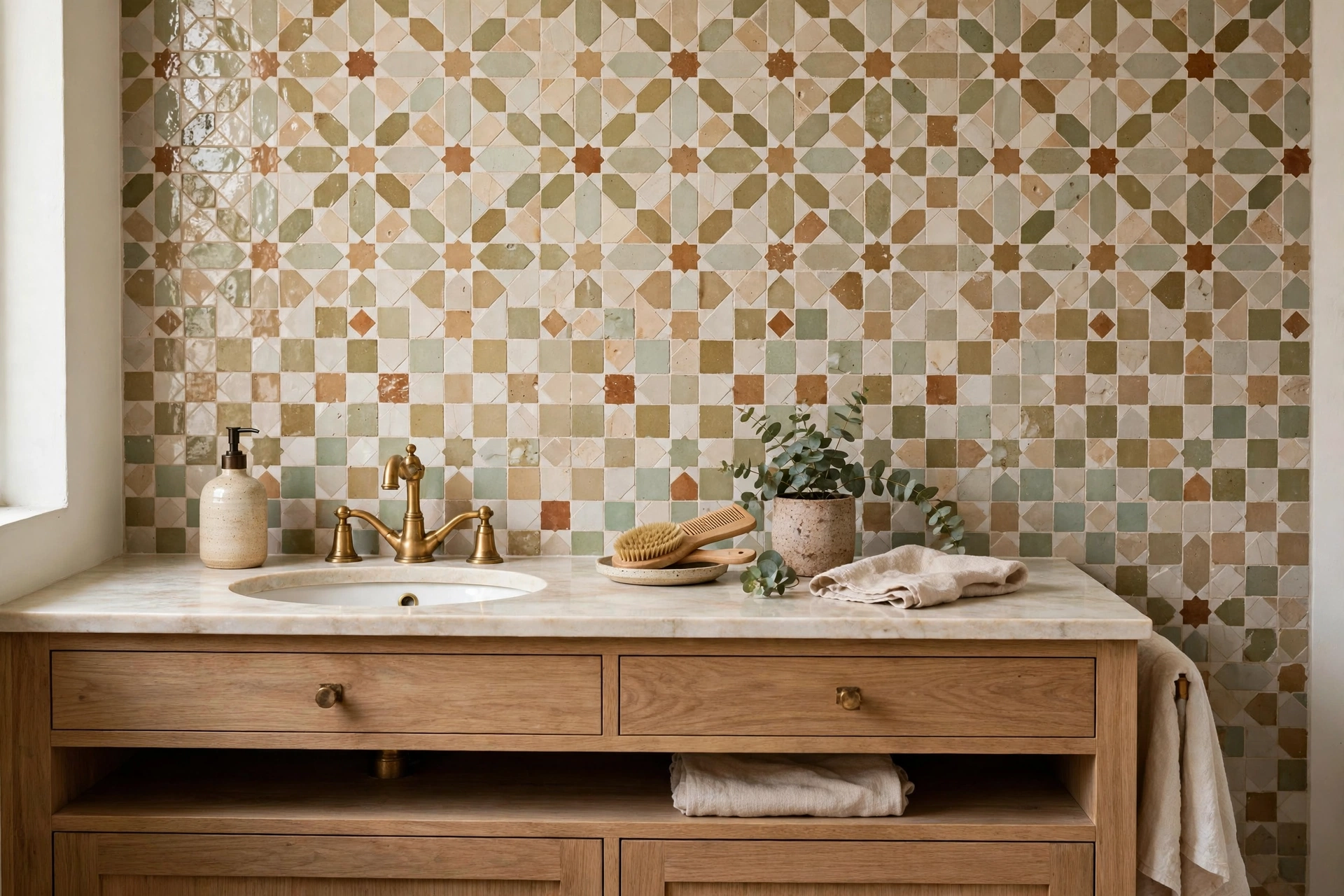
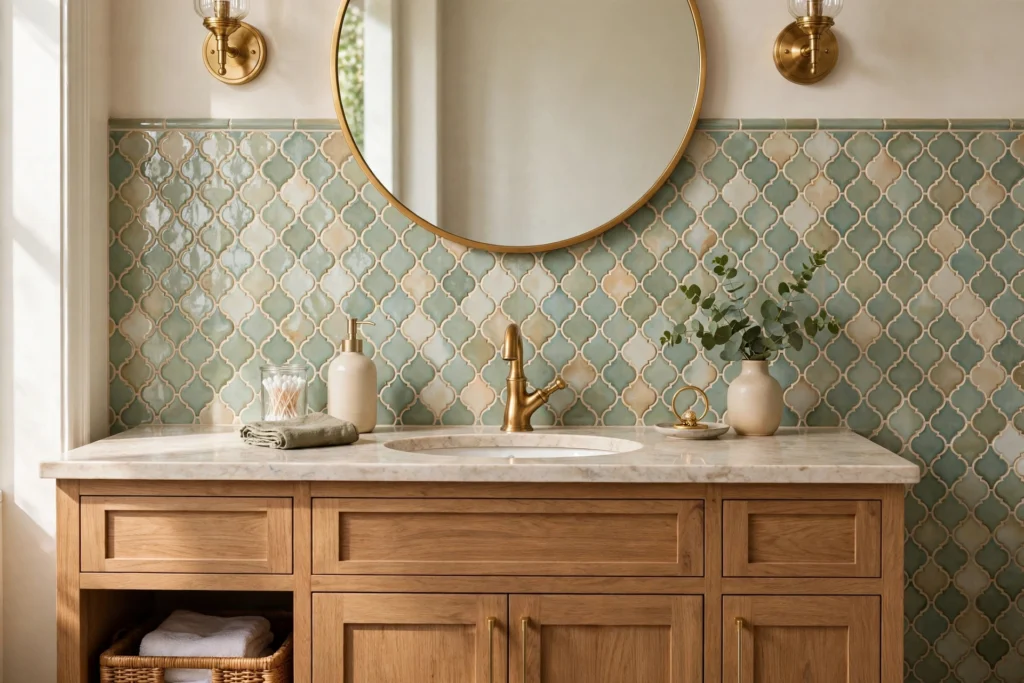
Zellige — hand-cut Moroccan tile with a glassy, uneven glaze — turns a small backsplash into the most interesting surface in the room. Each tile varies slightly in tone and texture, so the finished wall shimmers with handmade character that machine-made tile cannot imitate. The classic square format in white or sea-glass green suits spa-like and coastal bathrooms beautifully. Zellige costs more than subway tile and needs an experienced installer (the uneven edges forgive nothing), but for a small vanity wall the square footage stays modest. Seal the grout well, since the rustic edges create more grout surface.
3. Choose Marble for Timeless Luxury
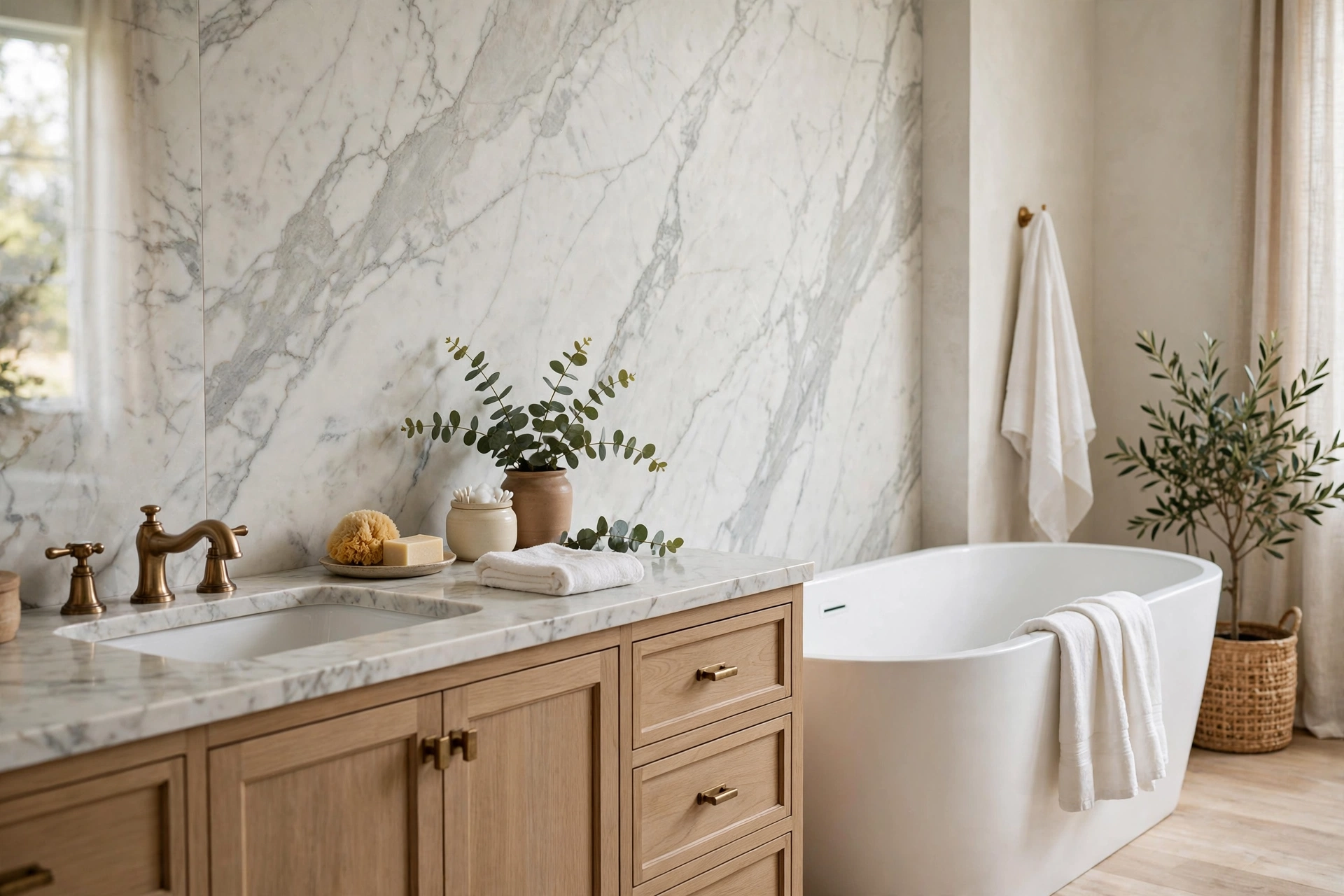
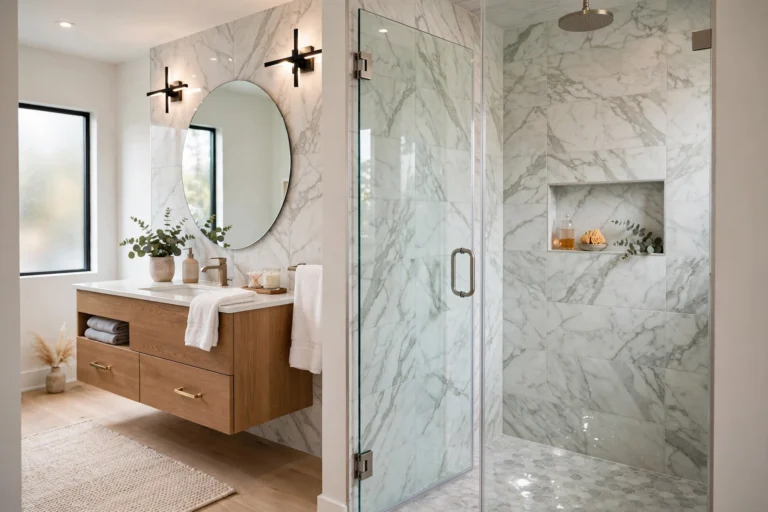
A marble backsplash — whether honed Carrara, dramatic Calacatta, or warm Crema Marfil — brings instant luxury to the vanity wall. The natural veining makes every installation one of a kind, and marble pairs with brass fixtures and white cabinetry like they were made for each other. Use a honed finish rather than polished for a backsplash; it hides etch marks better in a zone that meets toothpaste, perfume, and hard water daily. Marble needs sealing and a pH-neutral cleaner, so it suits owners who do not mind a little maintenance. For the look at lower cost, large-format marble-look porcelain is remarkably convincing.
4. Add a Mosaic Accent Strip
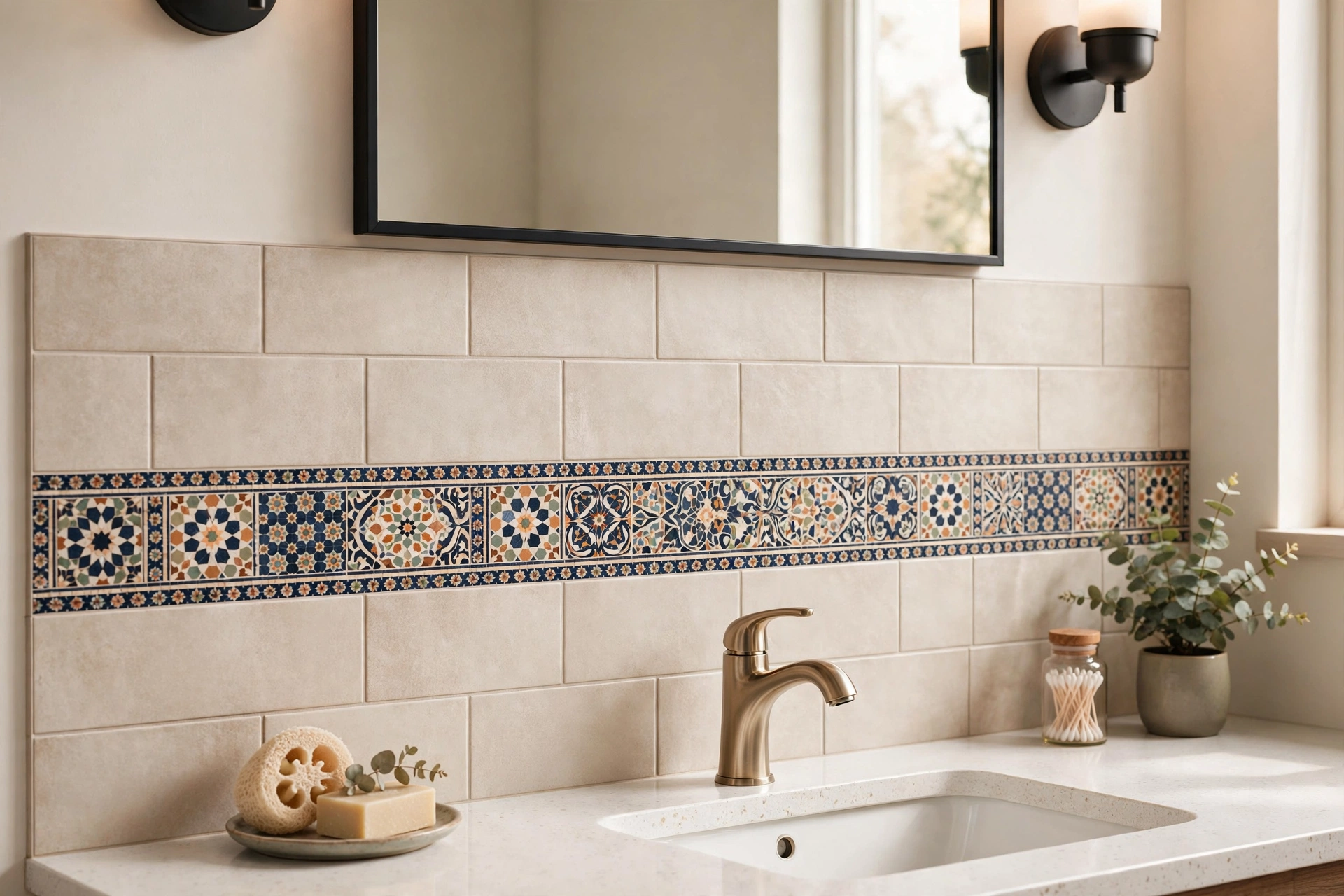
A mosaic accent strip — a horizontal band of small patterned or glass tiles running through a field of plain tile — adds jewelry to the backsplash without committing the whole wall to pattern. It works beautifully as a border at counter height or as a feature band behind the faucet. Keep the strip’s colors tied to the room’s palette so it reads as intentional rather than random. Mosaics come on mesh sheets that make installation straightforward, even around outlets. This is the ideal move when you love patterned tile but fear visual overload: a little goes a long way.
5. Go Bold With Patterned Cement Tile
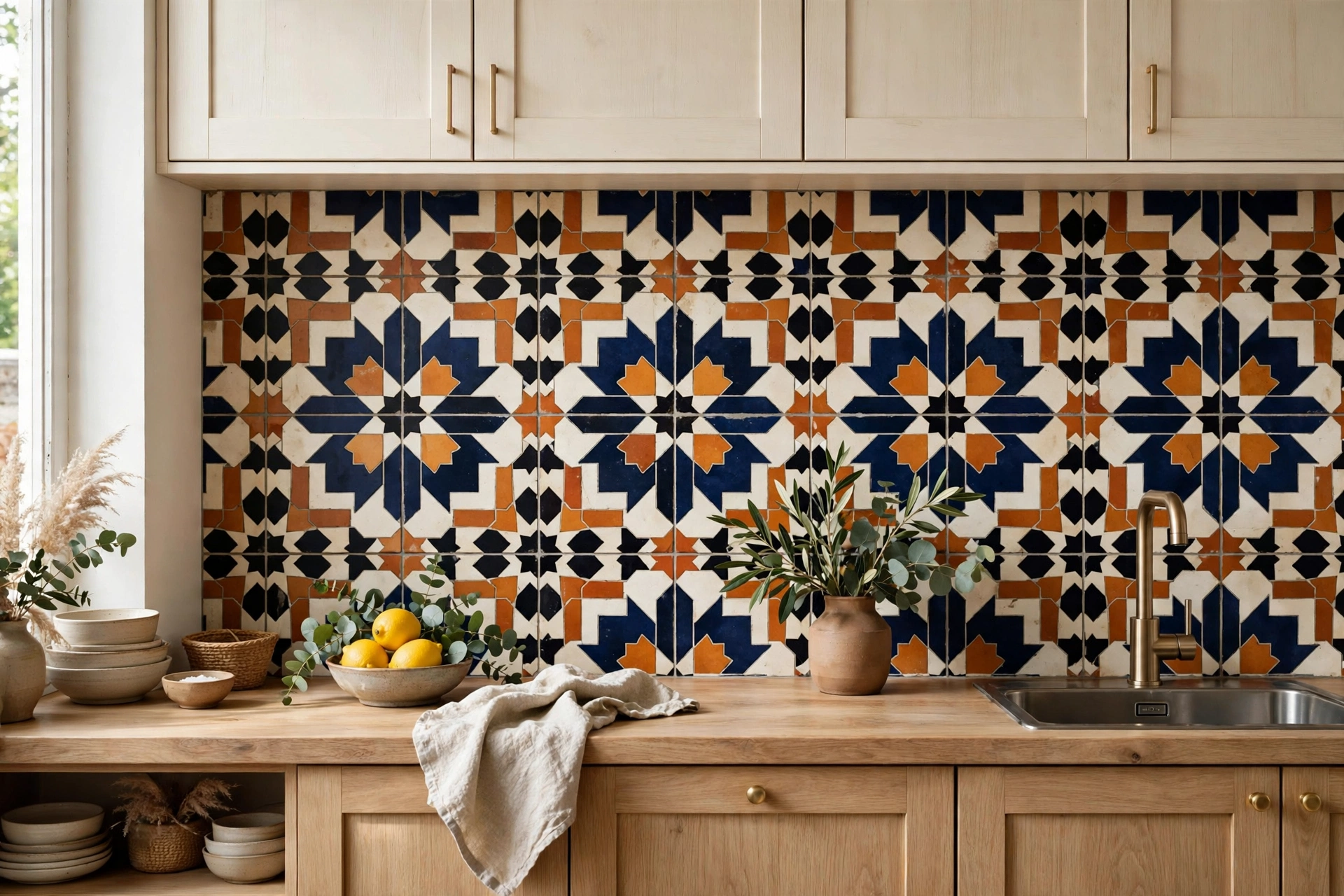
Patterned cement (encaustic-look) tile turns the vanity wall into a work of art — Moroccan stars, Mediterranean geometrics, or vintage florals in saturated color. Because the pattern is so strong, a little covers a lot: a four-inch strip or a single feature section behind the mirror is often enough. Cement tile is porous, so it must be sealed properly and maintained with gentle cleaners — or choose porcelain lookalikes that mimic the pattern with zero upkeep. Balance a bold backsplash with quiet surroundings: plain counters, simple mirrors, and solid-color walls let the pattern be the star.
6. Try Large-Format Tile for Fewer Grout Lines
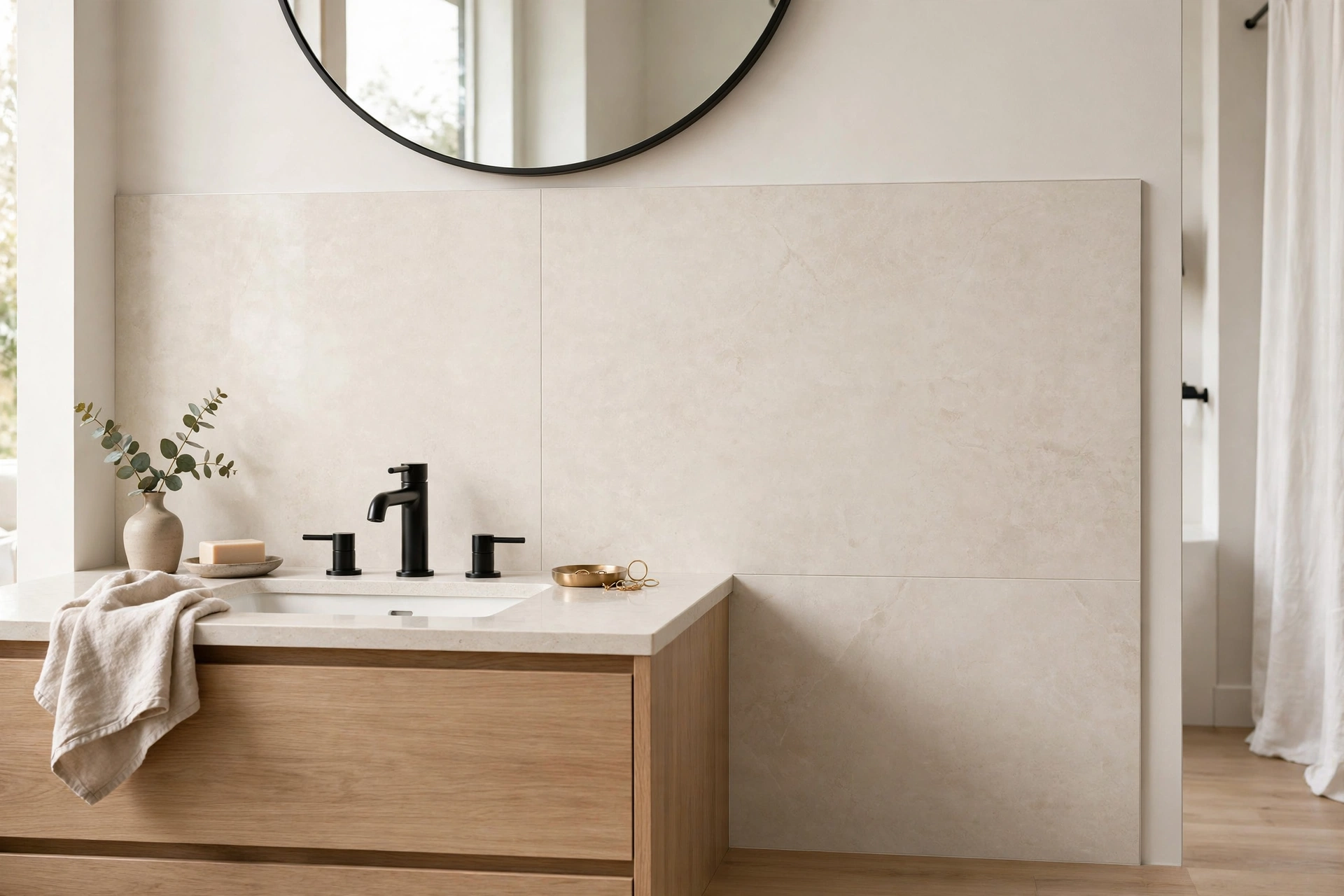
Large-format tile — twelve-by-twenty-four inches and up — means fewer grout lines, which means a calmer look and far less scrubbing. A single dramatic slab-look porcelain panel behind the vanity reads almost like stone, with none of stone’s maintenance. Large tiles need flat walls and a skilled installer (lippage shows mercilessly at this scale), so prep matters more than with small tile. The modern, seamless effect suits minimalist and contemporary bathrooms perfectly. In a small bathroom, large-format tile has a bonus trick: fewer grout lines make the wall — and the room — feel bigger.
7. Pick Penny Rounds for Vintage Charm
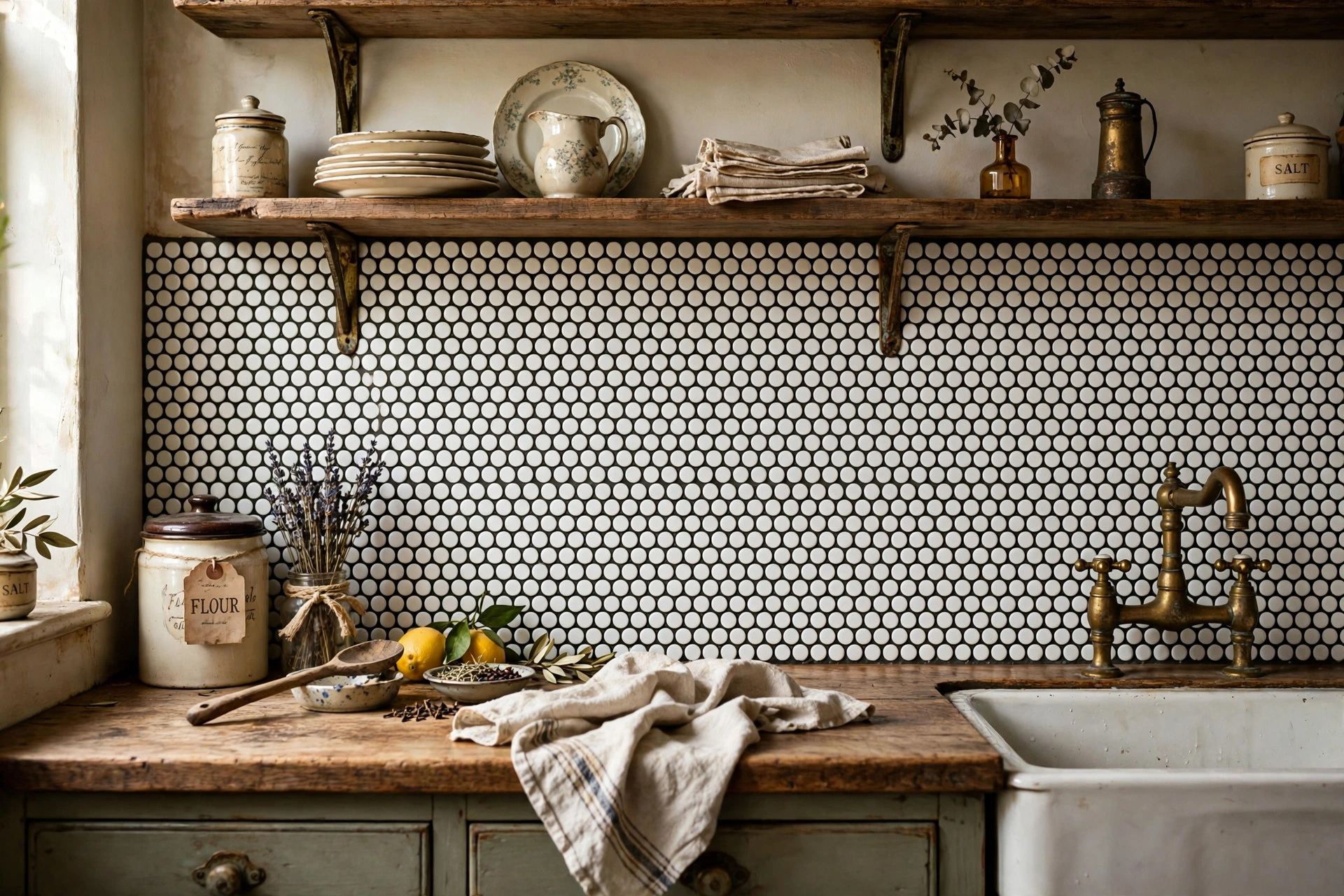
Penny-round mosaics — small circles on mesh sheets — bring vintage soda-fountain charm to the vanity wall. The classic white-with-dark-grout combination is timeless, but modern versions come in marble, glass, and metallic finishes that feel current. The small scale suits curved or awkward areas and adds delightful texture at close range. The honest trade-off is grout: penny rounds have more grout per square foot than almost any other tile, so sealing is non-negotiable and dark grout hides a multitude of sins. Use them as a full backsplash in a vintage bathroom or as an accent niche in a modern one.
8. Use Peel-and-Stick Tile for a Renter-Friendly Refresh
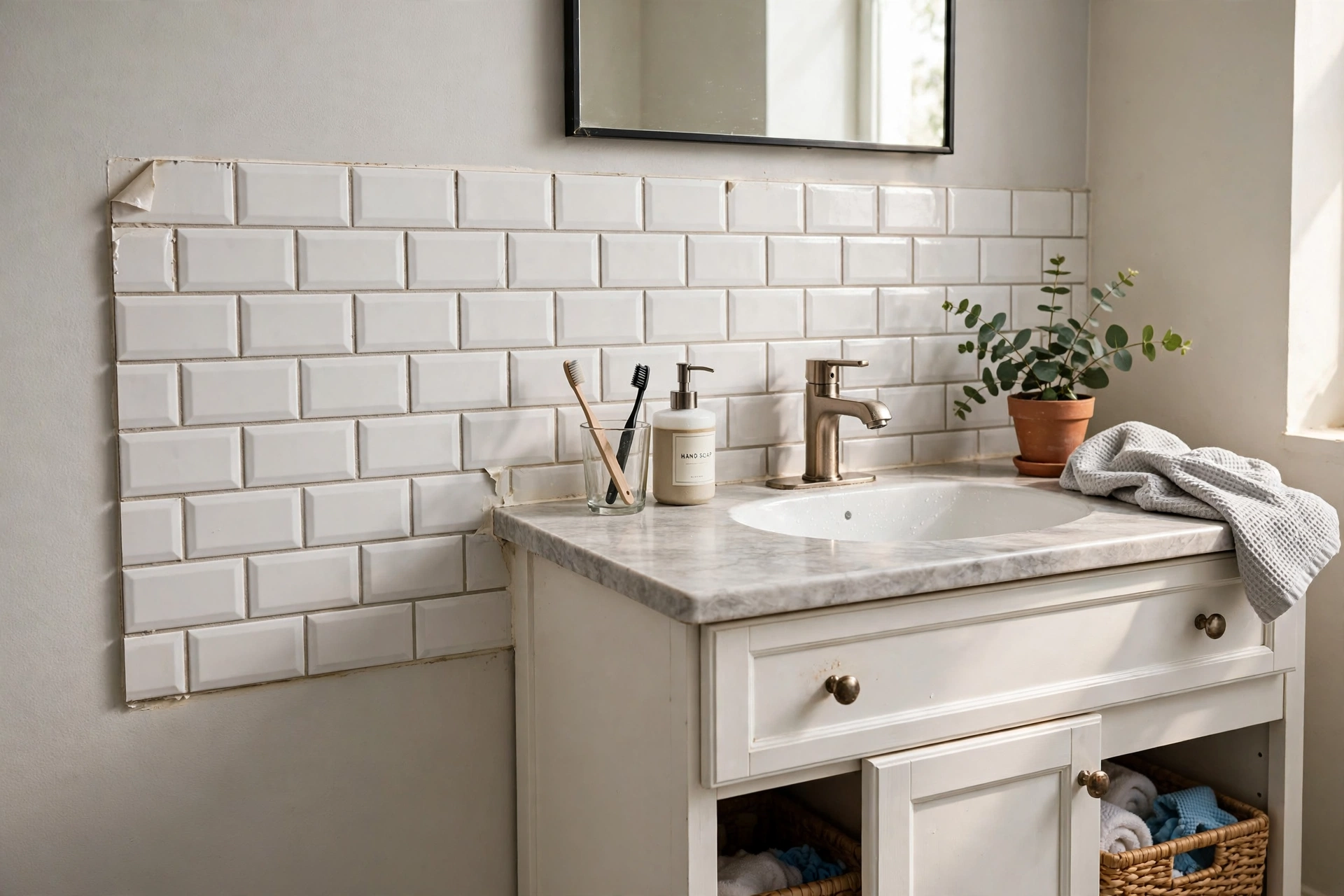
Peel-and-stick tile has grown up: modern versions convincingly mimic subway tile, marble, and even zellige, with real texture and grout-line depth. For renters or commitment-phobes, it is the only backsplash that goes up in an afternoon and comes down without a trace. The key is surface prep — clean, dry, smooth walls — and realistic expectations: it looks great at vanity distance but will not fool anyone up close. Keep it away from direct, constant water (behind the faucet is fine; inside the shower is not). It is the fastest, cheapest way to test-drive a backsplash look before committing to the real thing.
9. Go Moody With Dark Tile
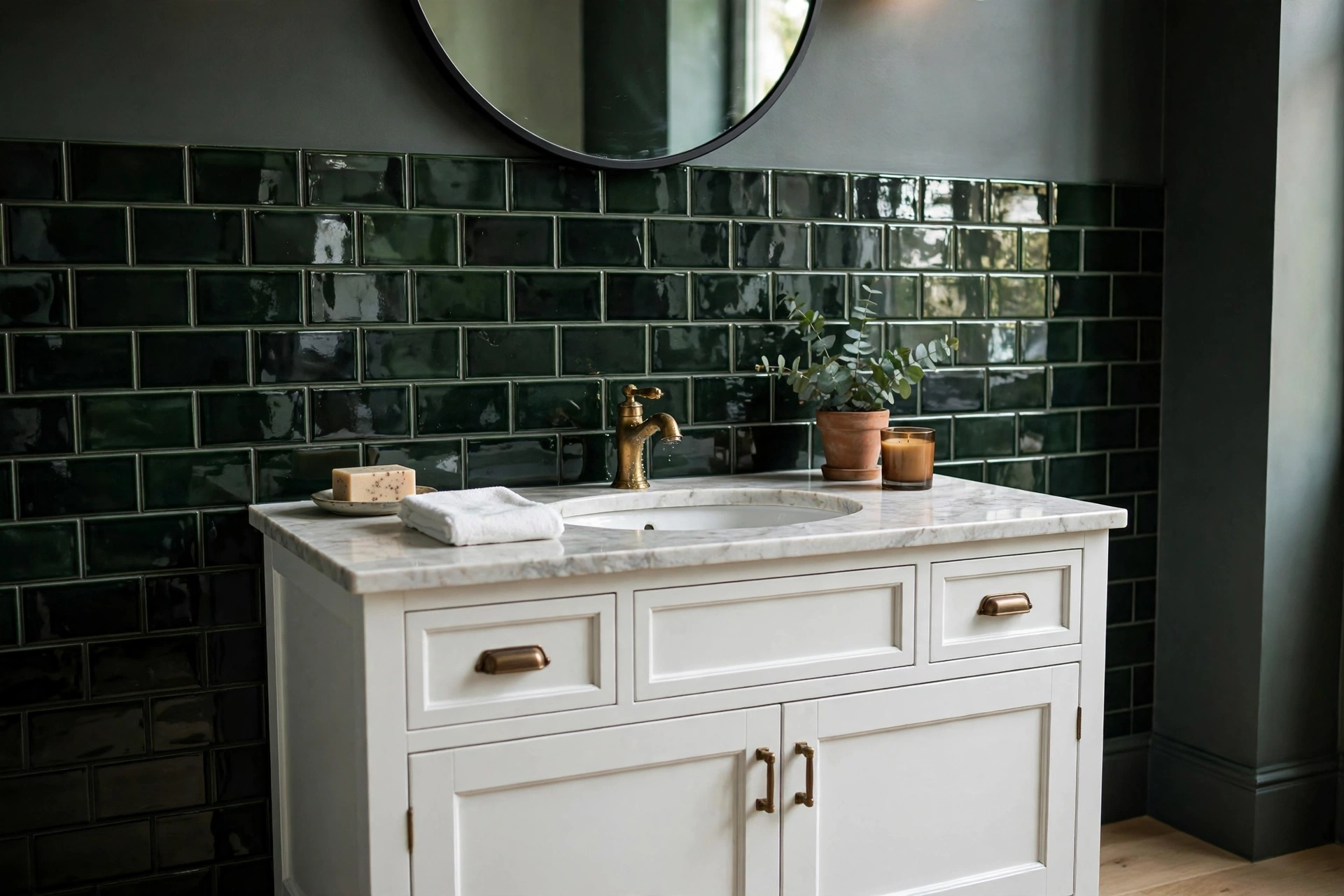
A dark backsplash — charcoal, navy, forest green, or black — turns the vanity wall into a dramatic focal point, especially against light counters and white fixtures. Dark glossy tile reflects light beautifully and hides water spots better than you would expect, while matte dark tile adds brooding sophistication. The trick is lighting: make sure the vanity area gets good task light, since dark surfaces absorb it. Pair with warm metals like brass or bronze to keep the mood rich rather than cold. A dark backsplash is the fastest way to make a builder-basic bathroom feel designed.
10. Try a Mirrored or Metallic Backsplash
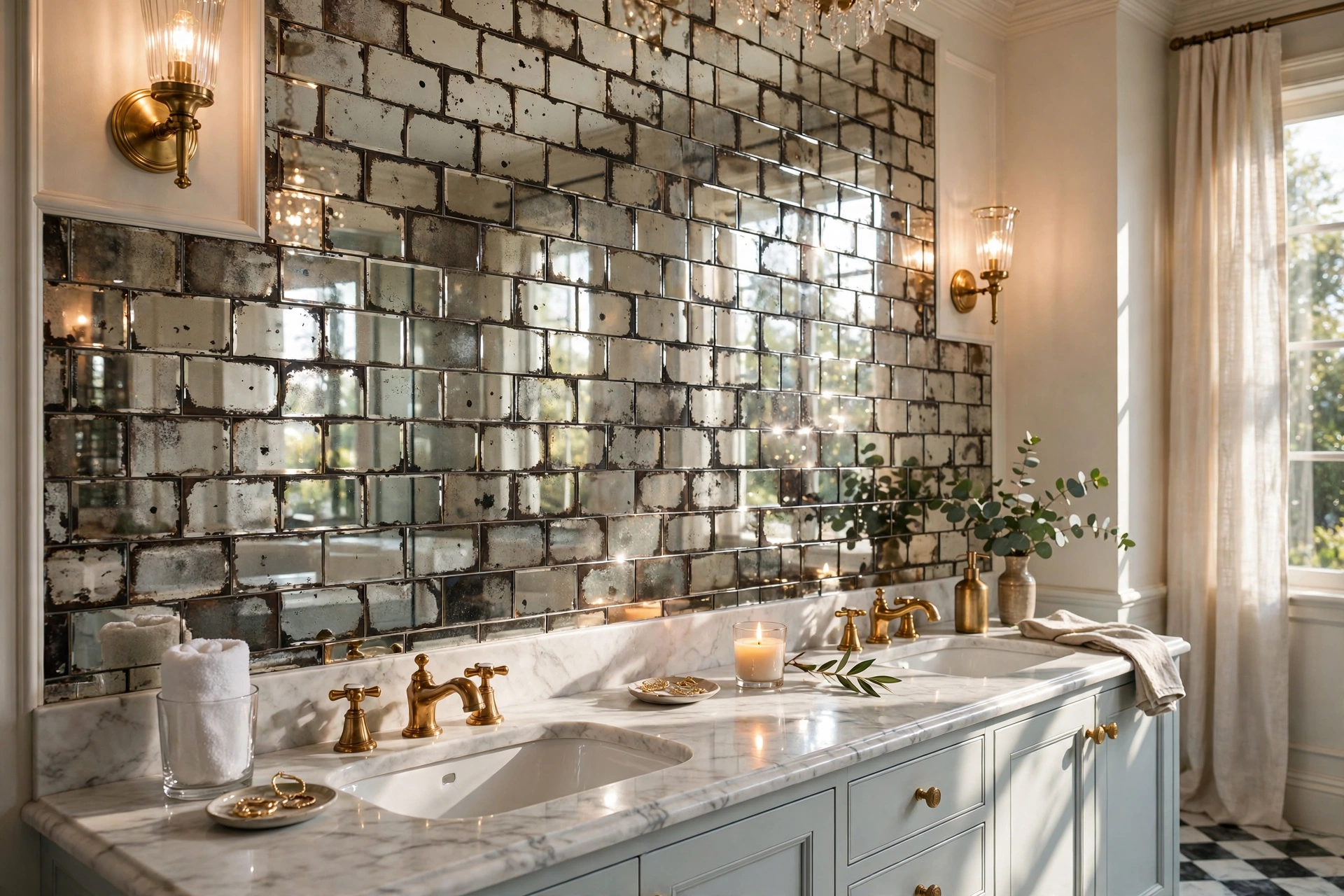
Mirrored or metallic-finish tile bounces light around the bathroom and makes small vanity areas feel twice as large. Antiqued mirror tile adds glamour with a vintage edge, while brushed metal mosaics suit modern and industrial bathrooms. Use mirrored tile thoughtfully — a full wall of mirror can feel disorienting — and consider it as an accent section flanked by plainer tile. Metallic tiles need gentle, non-abrasive cleaners to protect their finish. This is a statement choice: it will dominate the vanity wall, so keep everything else in the zone quiet and let the shimmer do the talking.
11. Extend the Countertop Material Up the Wall
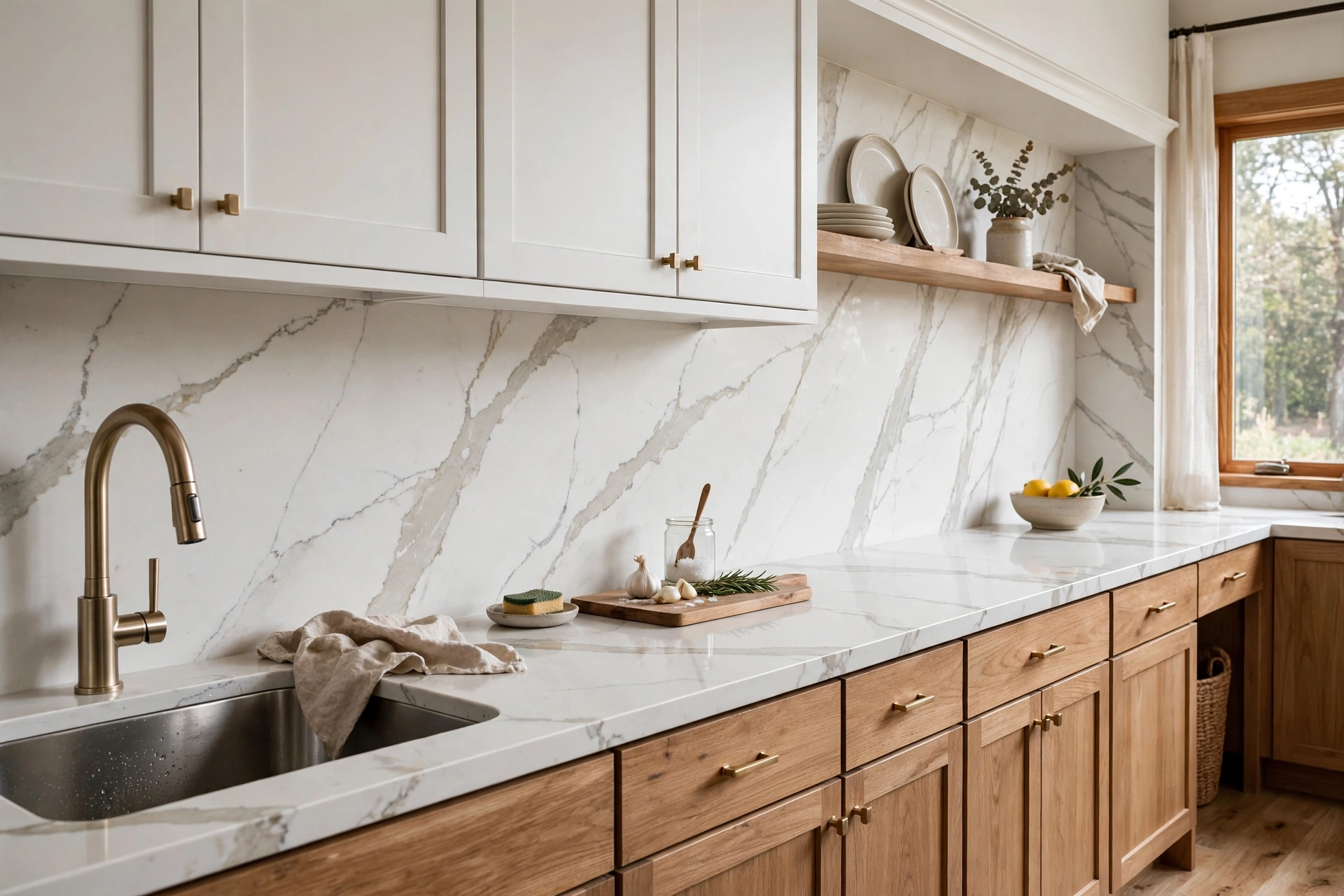
Running your countertop material — quartz, granite, or solid surface — up the wall as the backsplash creates the most seamless, custom look possible. With no grout lines at all, it is the easiest backsplash to clean and the most watertight option on this list. The continuous surface makes small vanities feel larger and more expensive, like a detail from a high-end hotel. It costs more than tile since you are buying slab, but for the small area behind a vanity the upcharge is often modest. Kitchen backsplash ideas for a stunning focal point show the same slab-up-the-wall trick working beautifully in kitchens too.
12. Add Vertical Stacked Tile for Height
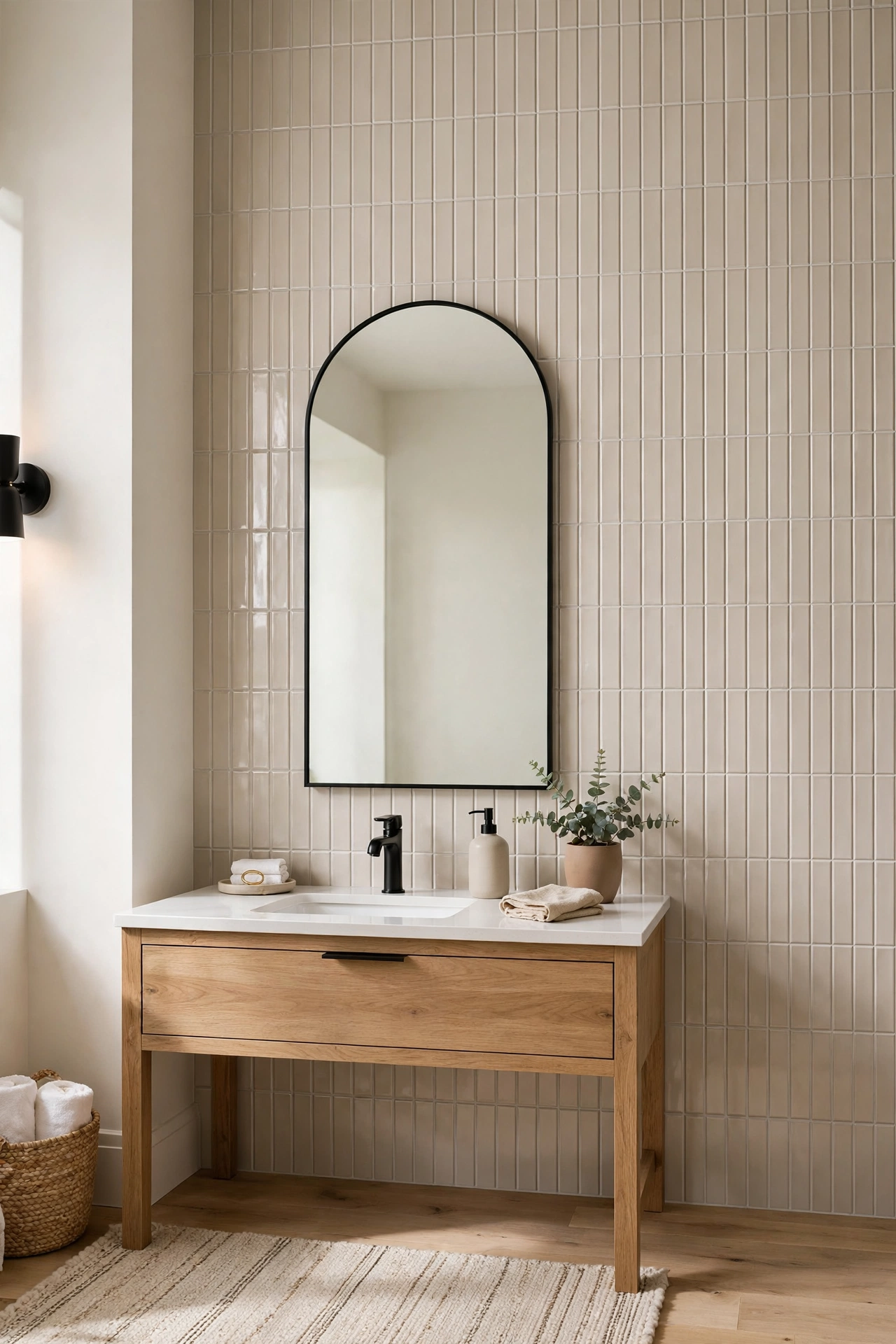
Stacking rectangular tile vertically instead of horizontally draws the eye upward and makes standard eight-foot bathroom walls feel taller. The vertical lines add a tailored, modern rhythm that suits contemporary and Japandi bathrooms, and the format works with subway tile, handmade-look tile, and slim finger mosaics. Vertical stack shows lippage more than offset patterns, so a flat substrate and careful installer matter. Try it in a soft handmade-look white for subtle texture, or a deep green for drama. It is a simple layout change — same tile, different direction — with an outsized visual payoff.
13. Choose Terrazzo for Playful Speckle
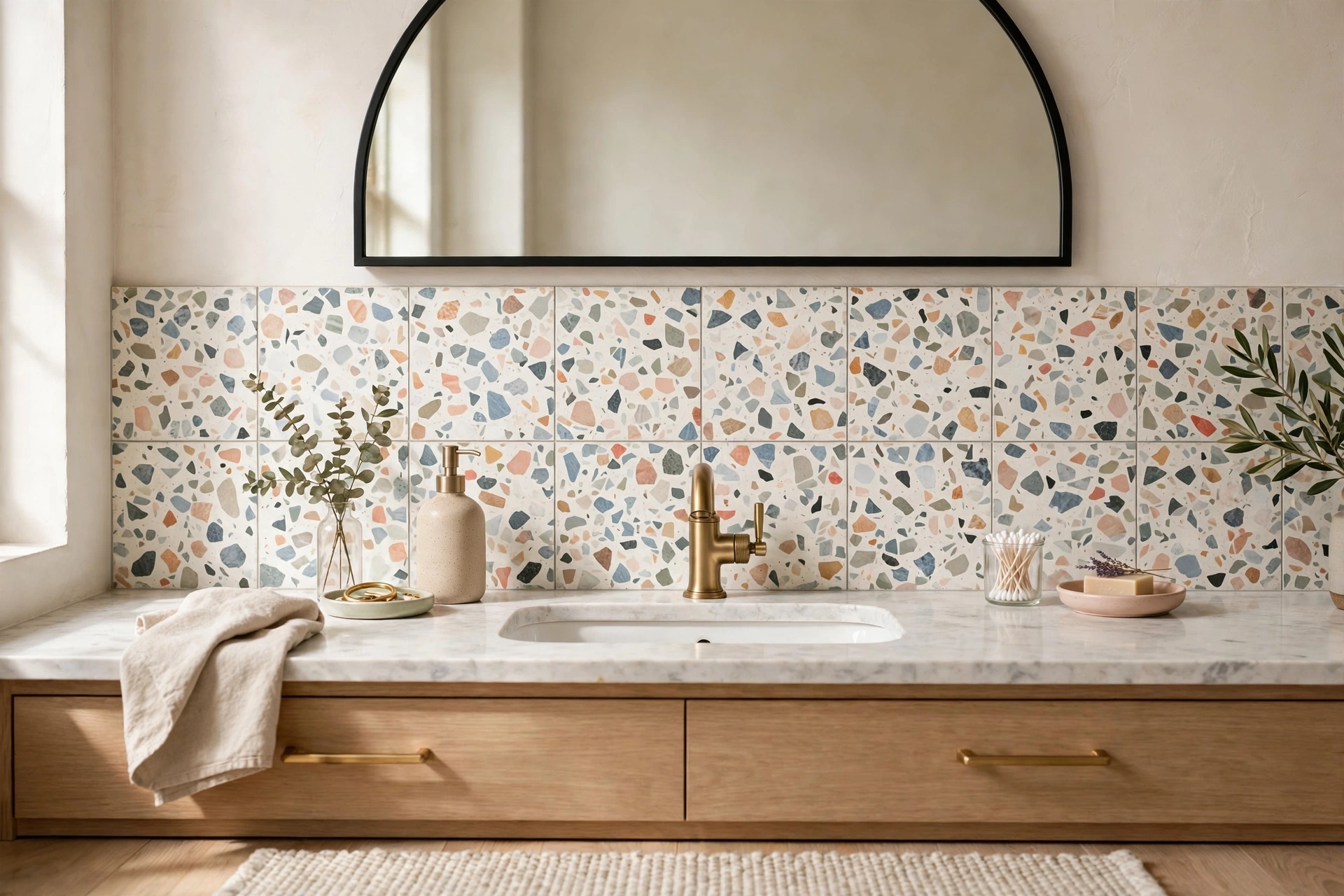
Terrazzo-look tile — chips of marble and stone scattered through a cement or porcelain base — brings playful, confetti-like energy to the vanity wall. Real terrazzo is a luxury material; porcelain lookalikes deliver the same cheerful speckle at a fraction of the cost and with easier maintenance. The busy pattern hides splashes and spots brilliantly, making it one of the most practical pretty options. Terrazzo pairs wonderfully with warm wood vanities and matte black fixtures. Keep the surrounding palette simple — the speckle is the pattern — and let one terrazzo surface carry the room’s personality.
14. Seal It Right for a Wet Zone
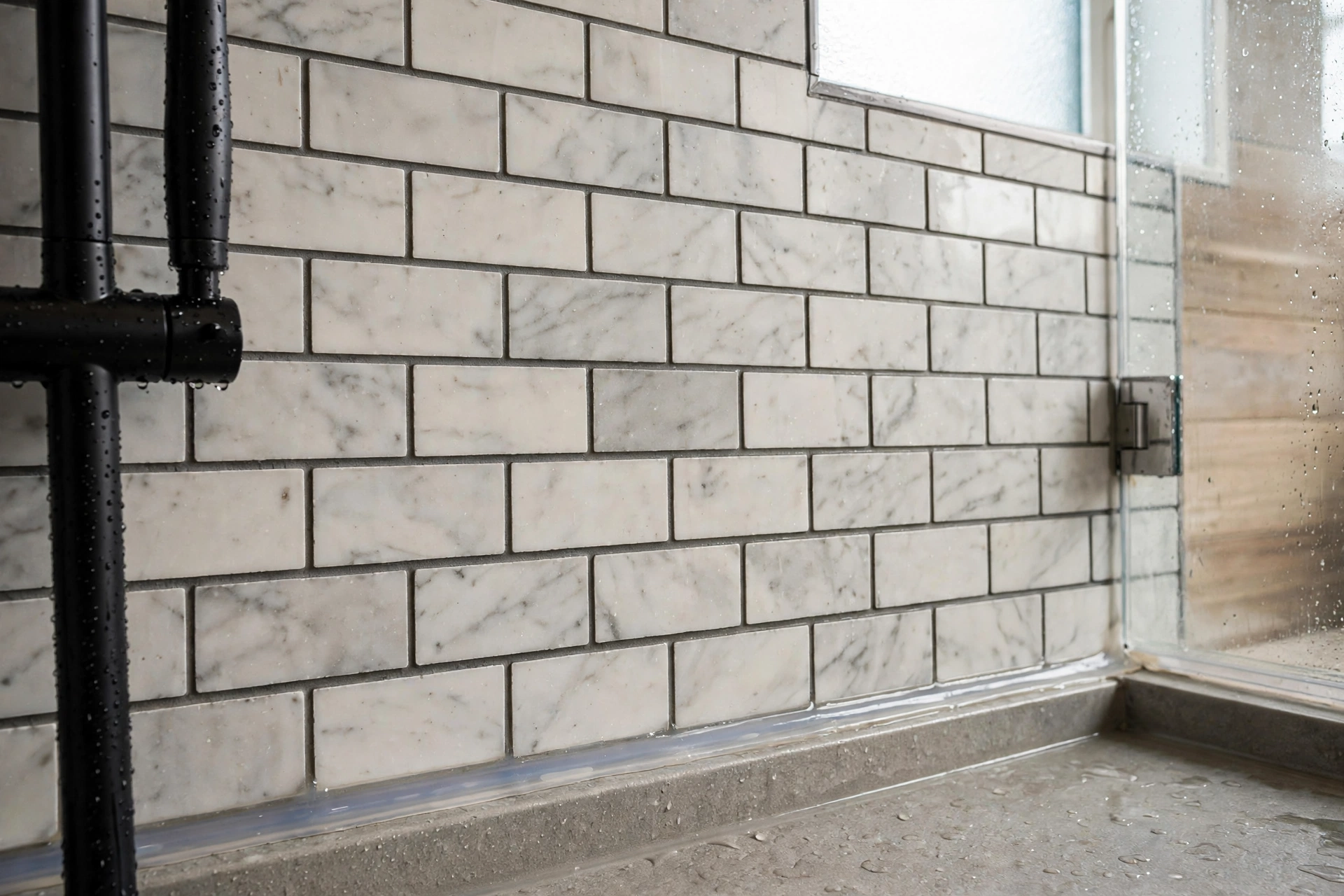
Whatever beautiful material you choose, the backsplash fails without proper waterproofing behind it. Use a cement backer board or waterproof membrane rather than plain drywall in the splash zone, choose grout rated for wet areas, and seal both grout and any porous tile after installation. Silicone — not grout — belongs in the joint where the backsplash meets the countertop, since that seam moves. These unglamorous steps are what separate a backsplash that looks great in year ten from one that mildews in year two. Spend the extra afternoon on prep; the pretty tile deserves a proper foundation.
15. Keep the Grout Color Working for You
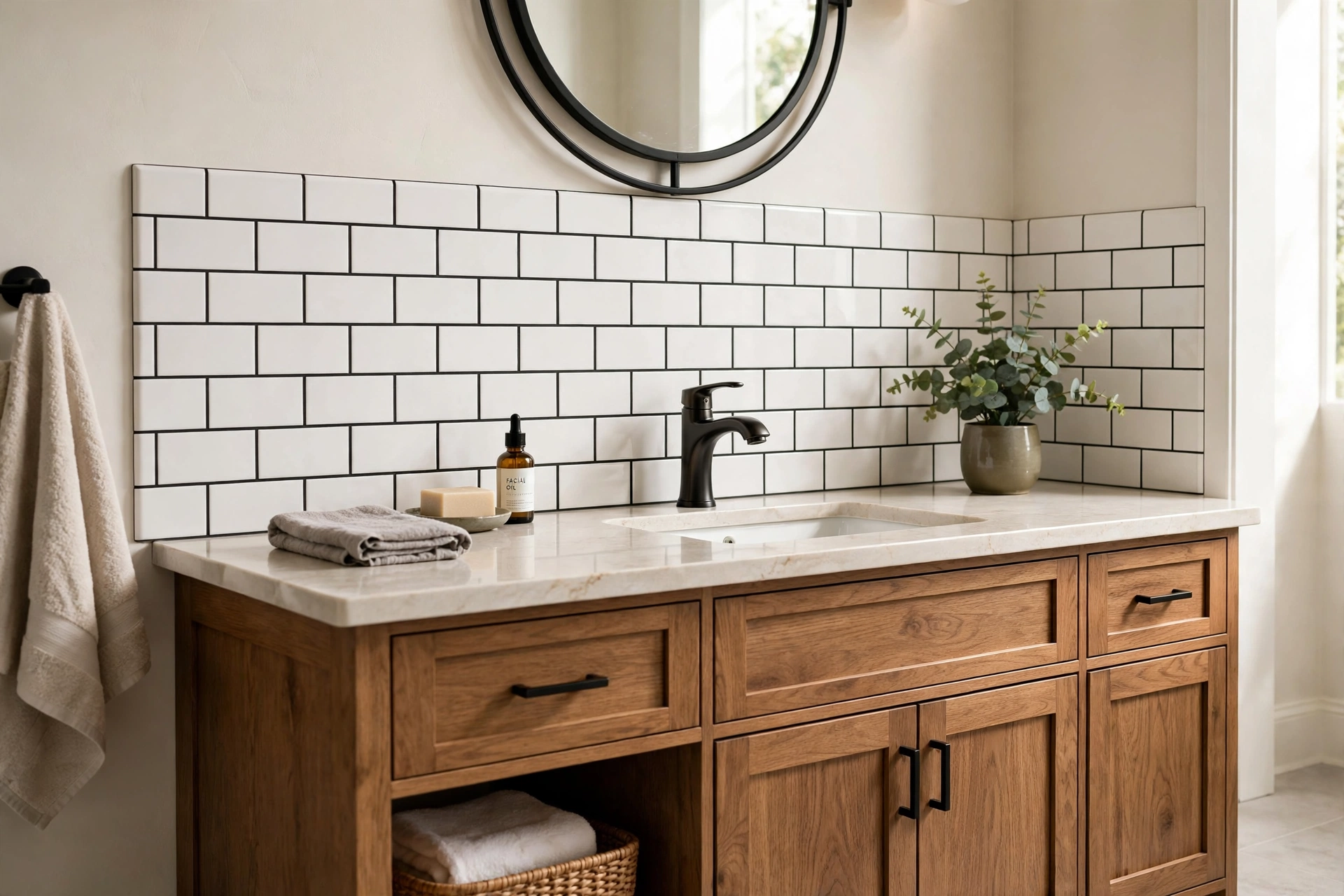
Grout color is the quiet decision that transforms any backsplash: dark grout outlines each tile for graphic, high-contrast definition, while matching grout lets the tile blend into one calm surface. Light grout brightens but shows stains near a sink; dark grout hides everything but can overwhelm delicate tile. Consider epoxy grout for the vanity backsplash — it resists stains and never needs sealing, which matters in a zone that meets makeup, toothpaste, and hard water daily. Whatever color you choose, seal cement-based grout and re-seal yearly. The tile gets the compliments, but the grout does the daily work — treat it accordingly. The Spruce’s tile guides offer helpful visual comparisons of grout colors against popular backsplash tiles.
FAQ
How high should a bathroom backsplash go?
The standard is four inches above the counter, but full-height backsplashes — running to the mirror, the cabinet bottom, or the ceiling — look far more custom and protect more wall. Full height is especially smart behind vessel sinks, which splash more than undermounts. There is no rule against going all the way up; it is mostly a budget decision.
What is the best backsplash material for a bathroom?
Glazed ceramic and porcelain tile are the best all-rounders: waterproof, easy to clean, affordable, and available in endless styles. Natural stone like marble is gorgeous but needs sealing and gentle cleaners. Avoid untreated wood, standard wallpaper, and anything porous unless it is properly sealed for wet areas.
Can I install a bathroom backsplash myself?
Yes — a vanity backsplash is one of the most DIY-friendly tile projects because the area is small and mostly straight cuts. You will need a tile saw or snap cutter, thinset, spacers, grout, and patience. Peel-and-stick tile needs no special tools at all. Hire out only if you are working with expensive handmade tile or large-format panels.
Should the bathroom backsplash match the floor tile?
It does not have to match, but it should coordinate. A common formula: keep the floor and backsplash in the same color family but vary the scale or finish — large matte floor tiles with small glossy backsplash tiles, for example. Exact matching can look flat; thoughtful contrast looks designed.
How do I clean a tile backsplash?
Wipe weekly with a damp microfiber cloth and a pH-neutral cleaner; avoid abrasive scrubbers on glossy or metallic tiles. Re-seal cement-based grout yearly, and address mold in grout lines promptly with a dedicated grout cleaner. A daily squeegee habit is overkill for a backsplash — a quick wipe while the mirror is still steamy is plenty.
Keep Exploring
The vanity backsplash is a small canvas with a big job: protect the wall, frame the mirror, and give the sink area its personality. Choose your material for the wet zone first and your style second, and the result will look as good in year ten as on installation day. Continue the vanity upgrade with our bathroom vanity ideas for style and storage, where the cabinetry below your new backsplash gets the same thoughtful treatment.