Bathrooms full of cold tile and gleaming chrome can feel clinical, no matter how spotless they are. Adding wood changes the equation instantly: these bathroom wood accent ideas bring organic warmth, rich texture, and a lived-in softness that hard surfaces simply cannot deliver. Whether your style leans rustic farmhouse, calm Scandinavian, or clean-lined modern, wood adapts beautifully — a walnut vanity anchors a contemporary space as easily as reclaimed shelves warm a cottage bath.
The secret is pairing the right wood with the right spot. Moisture is the enemy, but modern sealants and naturally resistant species like teak and cedar make wood a practical choice almost anywhere in the room. Start with one accent that solves a real need — storage, seating, a warmer floor — and let the palette grow from there. Every idea below is designed to be both beautiful and bathroom-proof.
1. Install a Wooden Vanity
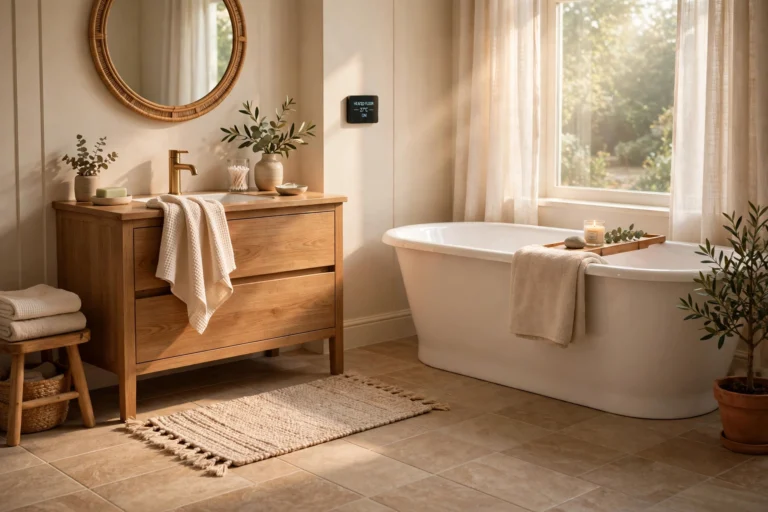
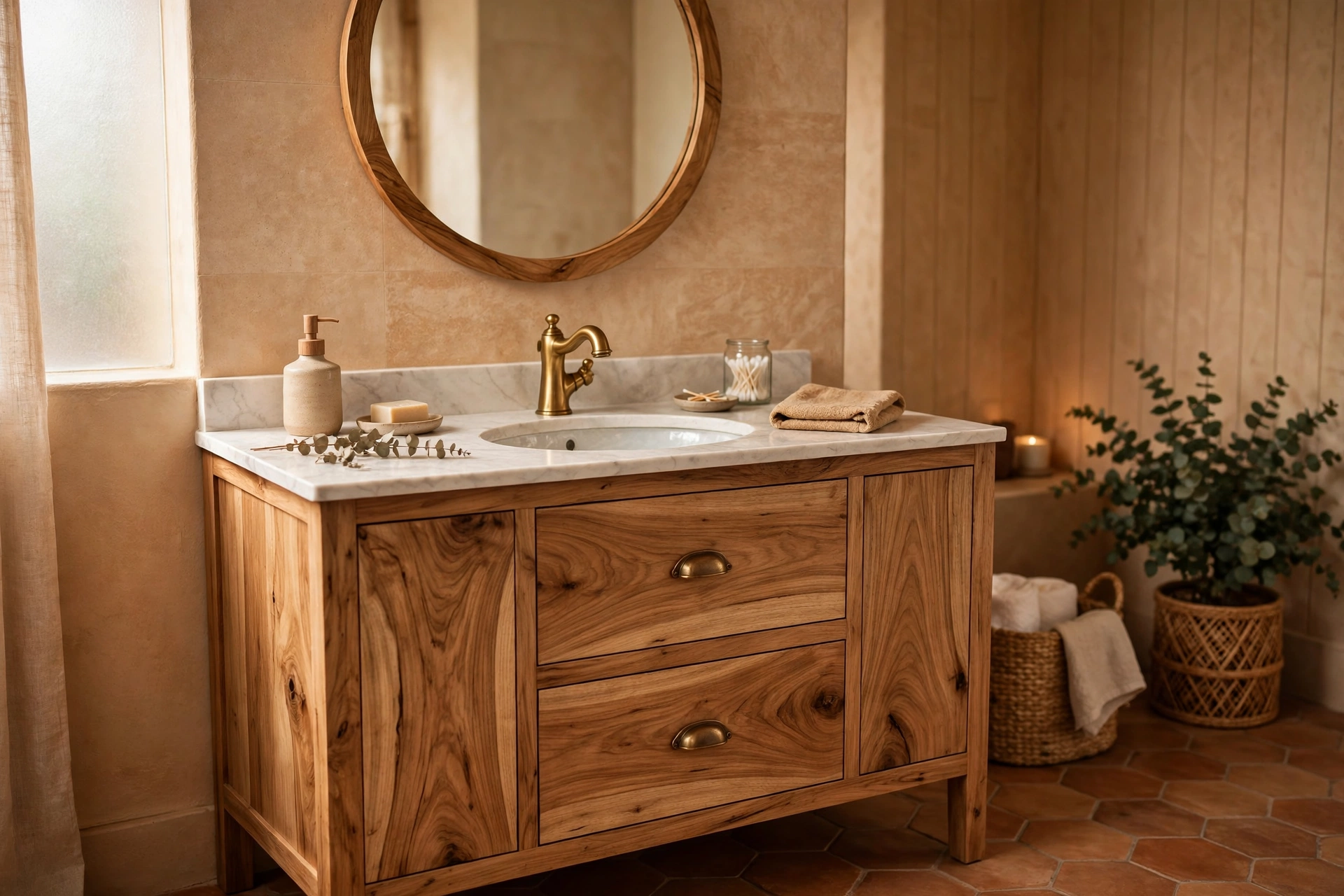
A wooden vanity is the fastest way to commit to warmth — it is the largest furniture piece in the room, so its material sets the tone. Choose white oak or walnut for a modern look, or a reclaimed pine piece for farmhouse character. Floating vanities feel airier in small bathrooms, while a furniture-style vanity with turned legs brings vintage charm. Make sure the finish is rated for humid environments, or apply a marine-grade sealant yourself. Finish the look with new pulls — these bathroom vanity hardware ideas for style and charm prove small hardware swaps make a big visual difference.
2. Choose a Wood-Framed Mirror
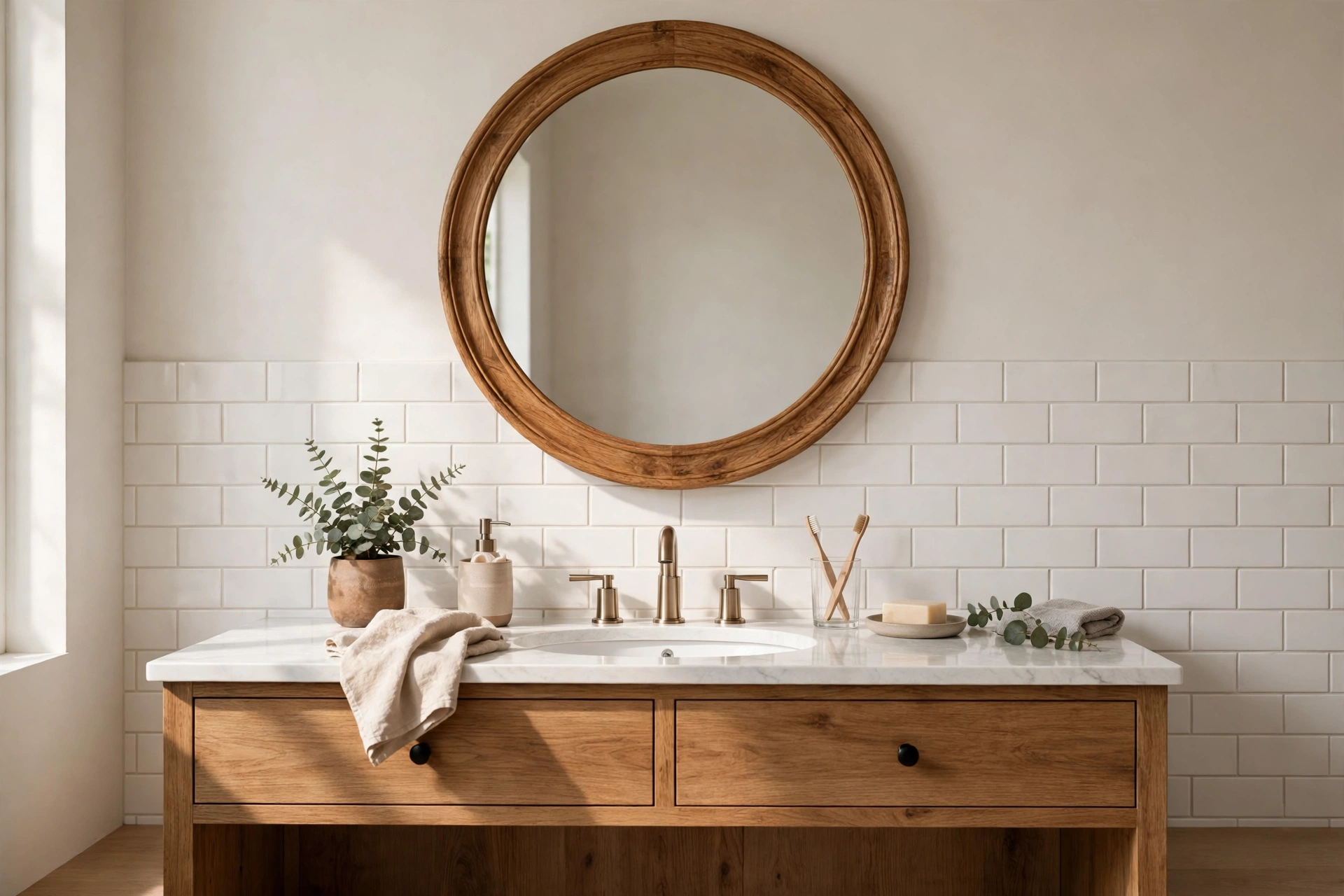
Mirrors are non-negotiable in a bathroom, so let the frame do decorative work. A thick oak or teak frame turns a plain rectangle into a statement piece, while a rounded rattan or bamboo edge leans coastal and relaxed. In powder rooms, an oversized wood-framed mirror bounces light and doubles the visual size of the room. Match the wood tone to your vanity for a built-in feel, or deliberately contrast — pale ash against dark-stained cabinets, for instance. Seal the back of the frame, where trapped humidity causes warping first. Warm wood flatters bathroom mirror light.
3. Lay Wood-Look Tile
Love wood but fear moisture? Wood-look porcelain tile delivers the grain and warmth of timber with zero rot risk. Modern printing is so convincing that even oak and walnut tones fool the eye — and your feet, since the textured surface reads like real plank underfoot. Use it across the floor for continuity, or run it up one shower wall as a spa-like feature. Choose planks with slight color variation between tiles so the pattern does not repeat obviously. Wide formats with minimal grout lines look most like genuine hardwood flooring. Pairs beautifully with warm underfloor heating systems.

4. Style Open Wood Shelves
Open wooden shelving is both storage and decor, perfect for towels, plants, and pretty bath products. Thick floating oak or maple shelves beside the vanity keep essentials within reach without the bulk of a cabinet. Style them in layers: rolled towels below, a trailing pothos above, and a small candle or apothecary jar for texture. In a humid bathroom, mount shelves away from direct shower spray. For more smart ways to stack function and style, these bathroom shelving ideas for storage and style show how to make every shelf earn its place.

5. Use a Wooden Bath Mat
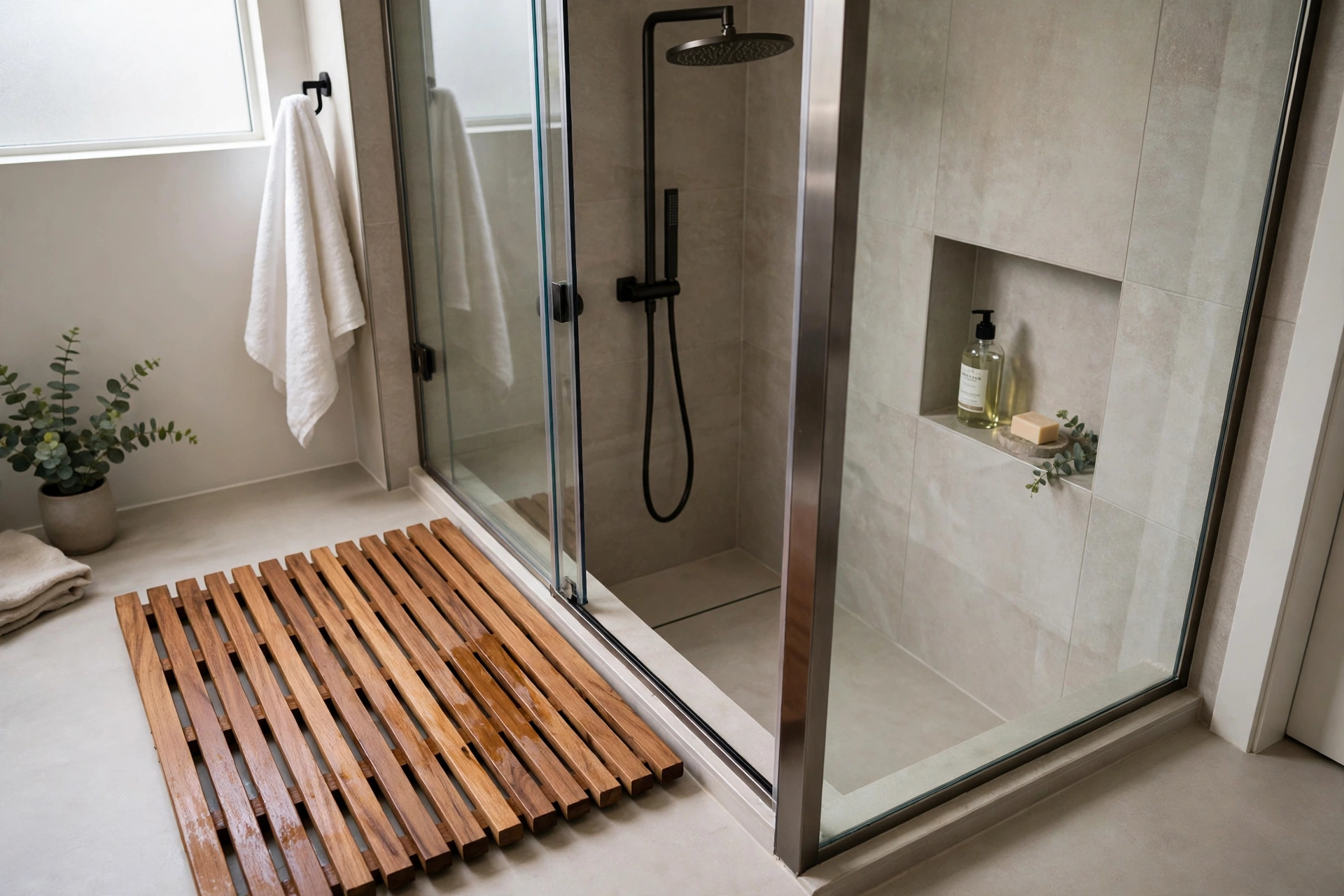
Swap your tired fabric mat for a wooden bath mat — teak slats feel like a spa deck underfoot and never get soggy like cloth. Water drains straight through the gaps, so the mat dries fast and resists mildew far better than cotton. Teak and bamboo naturally resist moisture, making them the best picks. Place one in front of the vanity or just outside the shower, and pair it with a soft cotton runner nearby for contrast. Rinse and oil it occasionally, and a good teak mat will serve you for years.
6. Add a Teak Shower Bench
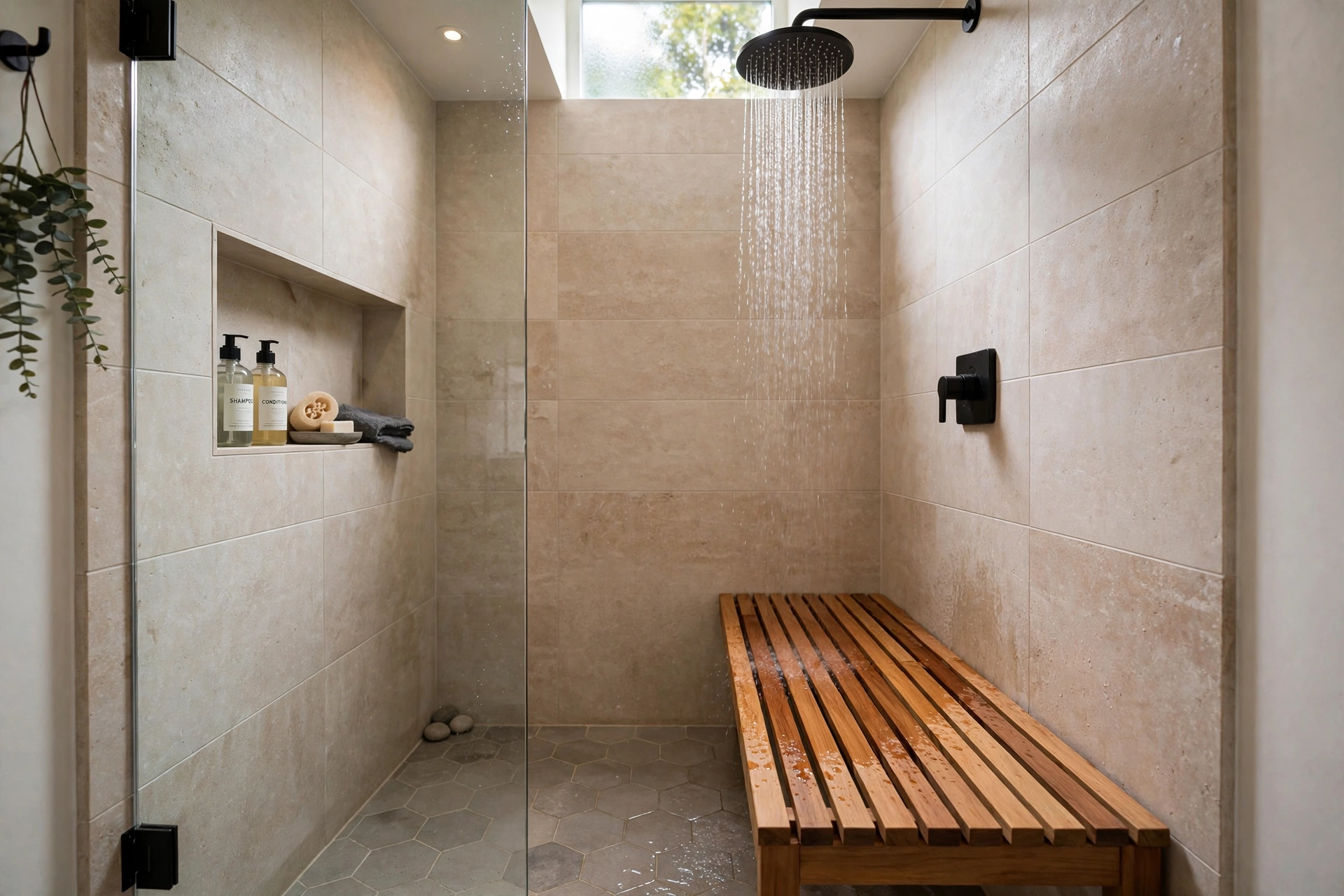
A teak bench inside the shower is equal parts practical and luxurious — a place to sit, prop a foot for shaving, or keep shampoo within easy reach. Teak’s natural oils make it the gold standard for wet environments: it shrugs off constant moisture without warping. Choose a corner or fold-down model for a compact shower, or a full bench for a walk-in. Seal the feet with rubber pads to protect the tile, and leave the wood unfinished to weather into a silvery gray — or oil it yearly to keep the honey tone rich.
7. Expose or Add Wood Beams
If your ceiling hides old beams, expose them; if it does not, add faux ones. Exposed wood beams give a bathroom instant architectural character, drawing the eye upward and adding farmhouse or lodge-style warmth. Lightweight box beams are easy to install and look convincingly real once stained. In a tall bathroom, stain beams dark for contrast against a white ceiling; in a low one, keep them light so they do not press the ceiling down visually. Seal them well, since rising steam settles on overhead wood first. A coat of clear sealant keeps dust and steam from dulling the grain over time.

8. Create a Wood Accent Wall
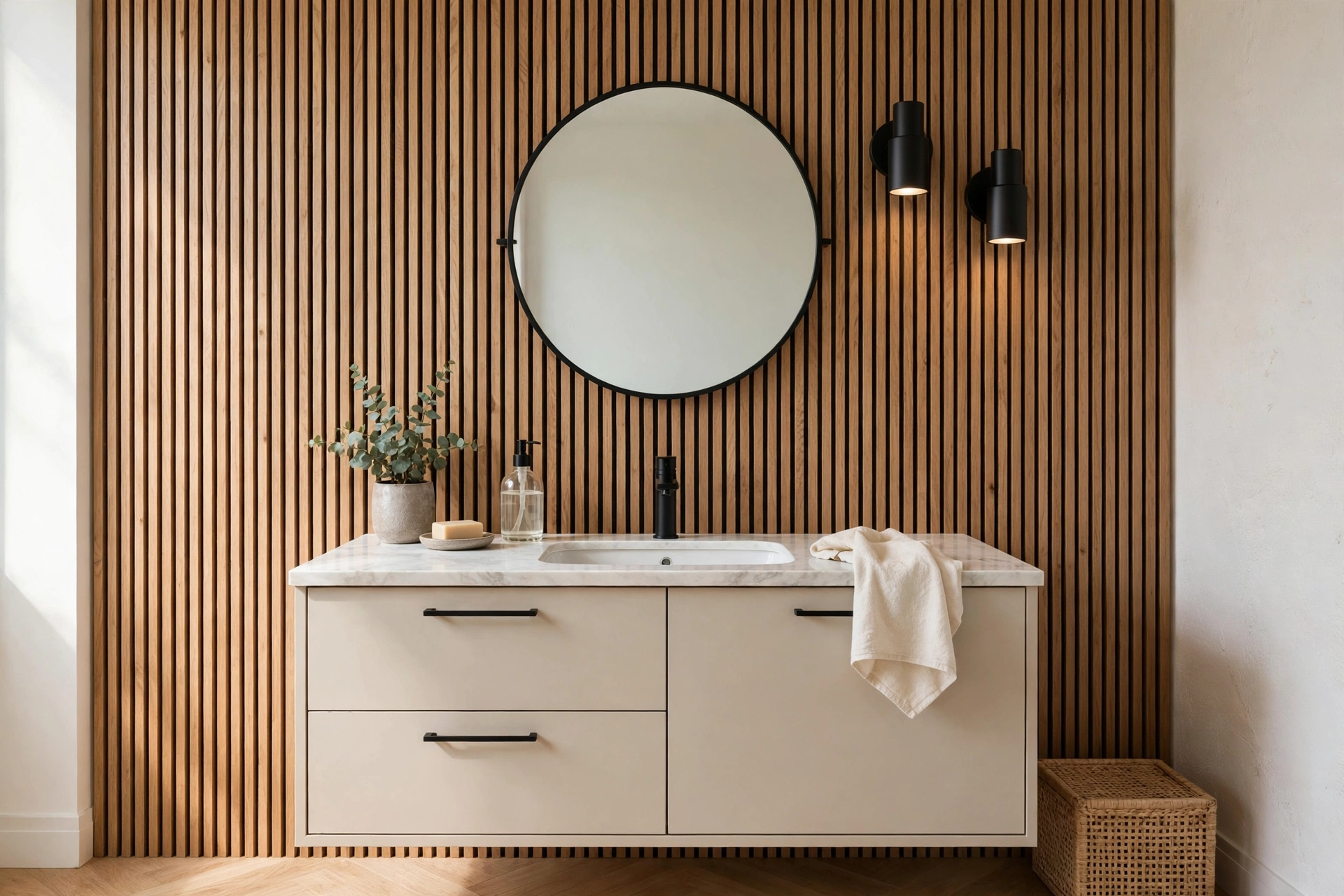
One wood-covered wall turns a flat bathroom into a design moment — behind the vanity, inside a walk-in shower with rated materials, or framing the tub. Horizontal shiplap or tongue-and-groove boards in a natural stain add rhythm and texture, while vertical slats feel modern and elongating. For shower-adjacent walls, choose teak or thermally modified wood that handles steam gracefully. If you love painted paneling too, these bathroom shiplap ideas for rustic charm and warmth show how boards can shape a whole room’s mood. Run boards vertically behind the vanity to stretch a low ceiling, or horizontally to widen a narrow bath.
9. Hang Wooden Wall Hooks
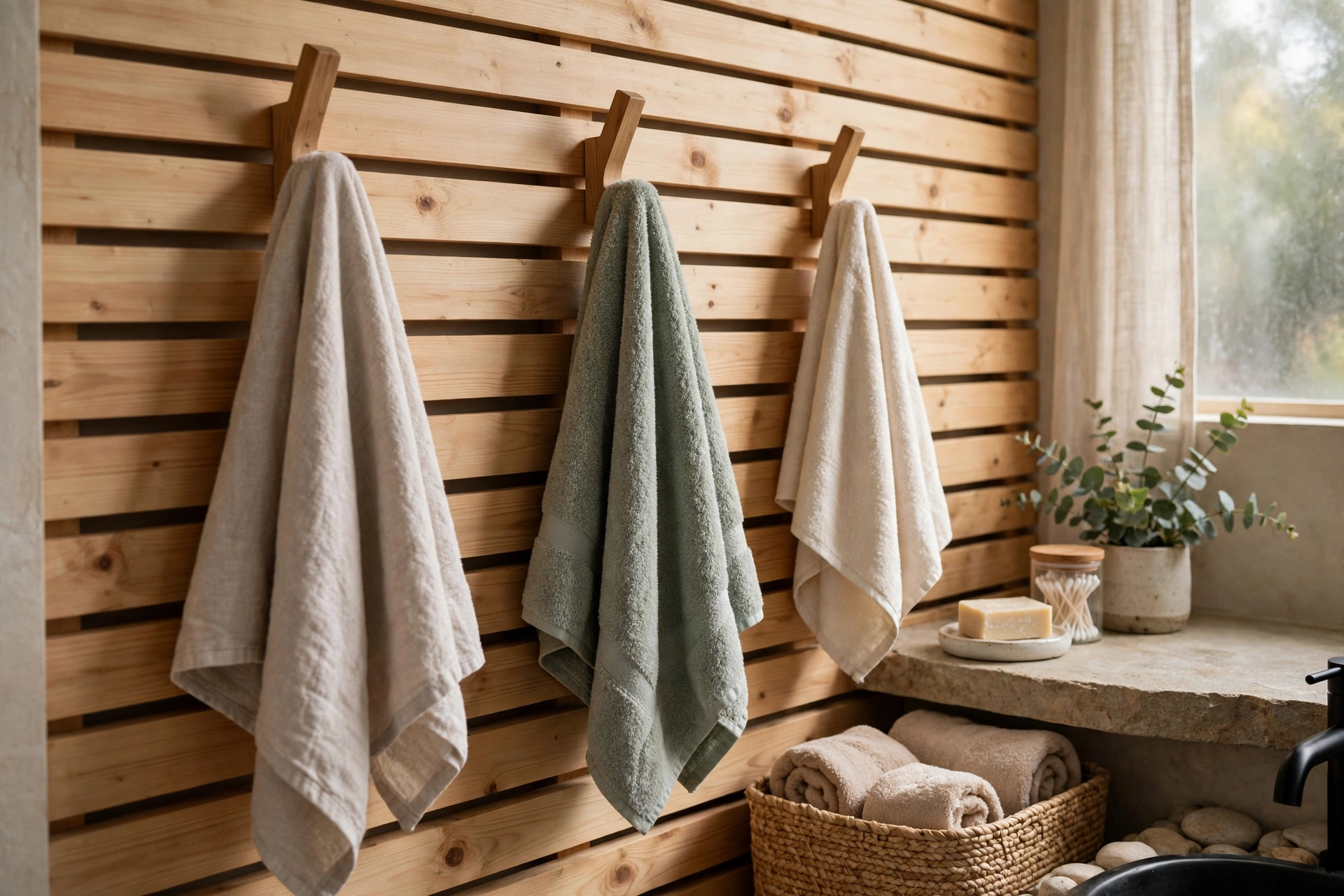
A row of wooden hooks beside the shower or vanity is the simplest wood accent of all — and endlessly useful. Hang robes, towels, or a trailing planter from chunky oak pegs or turned wood knobs on a backplate. Mixed with black metal brackets, wood hooks bring a handmade warmth that plain chrome hooks lack. Install them into studs or use sturdy anchors so they hold wet, heavy towels. Space them about eight inches apart so robes do not crowd each other, and let the wood’s natural grain be the decoration. Matte sealant prevents steam from dulling finishes.
10. Use a Wooden Ladder Shelf
A leaning wooden ladder does double duty: it fills an empty wall with vertical interest and gives you five or six rungs for towels. It is a favorite trick in Scandinavian bathrooms — as these soothing Scandinavian bathroom ideas show, a simple wood ladder spruces up a blank wall, adds warmth, and holds multiple towels beautifully. Choose a bamboo or oak ladder with wide, flat rungs so folded towels sit securely. Lean it at a safe angle against a wall away from the splash zone, and style the top rung with a small plant.

11. Add Reclaimed Wood Touches
Reclaimed wood brings history into a bathroom — weathered barn boards, salvaged planks, or an old shutter repurposed as wall decor. Because each piece carries unique knots and patina, no two bathrooms ever look alike. Use reclaimed boards for a small shelf, a mirror frame, or a sliding barn-style door to hide a closet. Source pieces labeled safe for indoor use, and seal every surface since old wood is extra thirsty. Pair reclaimed pieces with clean white tile so the rustic texture reads as intentional design. Leave some breathing room around each piece so the patina gets the attention it deserves.

12. Style Wooden Trays and Decor
You do not need construction to add wood — small accessories deliver warmth instantly. A wooden tray on the vanity corrals soap dispensers and perfume bottles into one tidy vignette; a carved wooden bowl holds cotton pads or bath salts by the tub. Woven baskets tucked under a floating vanity hide clutter in natural texture. Stick to one or two wood tones across your accessories so the look feels curated, not random. These low-commitment pieces are perfect for renters who cannot change a fixture but still crave warmth. Restyle seasonally for zero-cost fresh looks.

13. Try Warm Wood Ceiling Panels
Most bathrooms ignore the ceiling, but cladding it in warm wood panels makes the whole room feel finished — like a cabin retreat or a high-end spa. Tongue-and-groove pine, cedar, or pale ash boards reflect light downward and soften harsh overheads. Keep the walls simple so the ceiling becomes the star, and choose light stains in small bathrooms to avoid a closing-in effect. Ventilation matters here: run the exhaust fan during and after every shower so steam does not linger against the wood overhead. Recessed can lights mounted in the paneling wash the ceiling with a warm, even glow at night.

14. Mix Wood With Stone Finishes
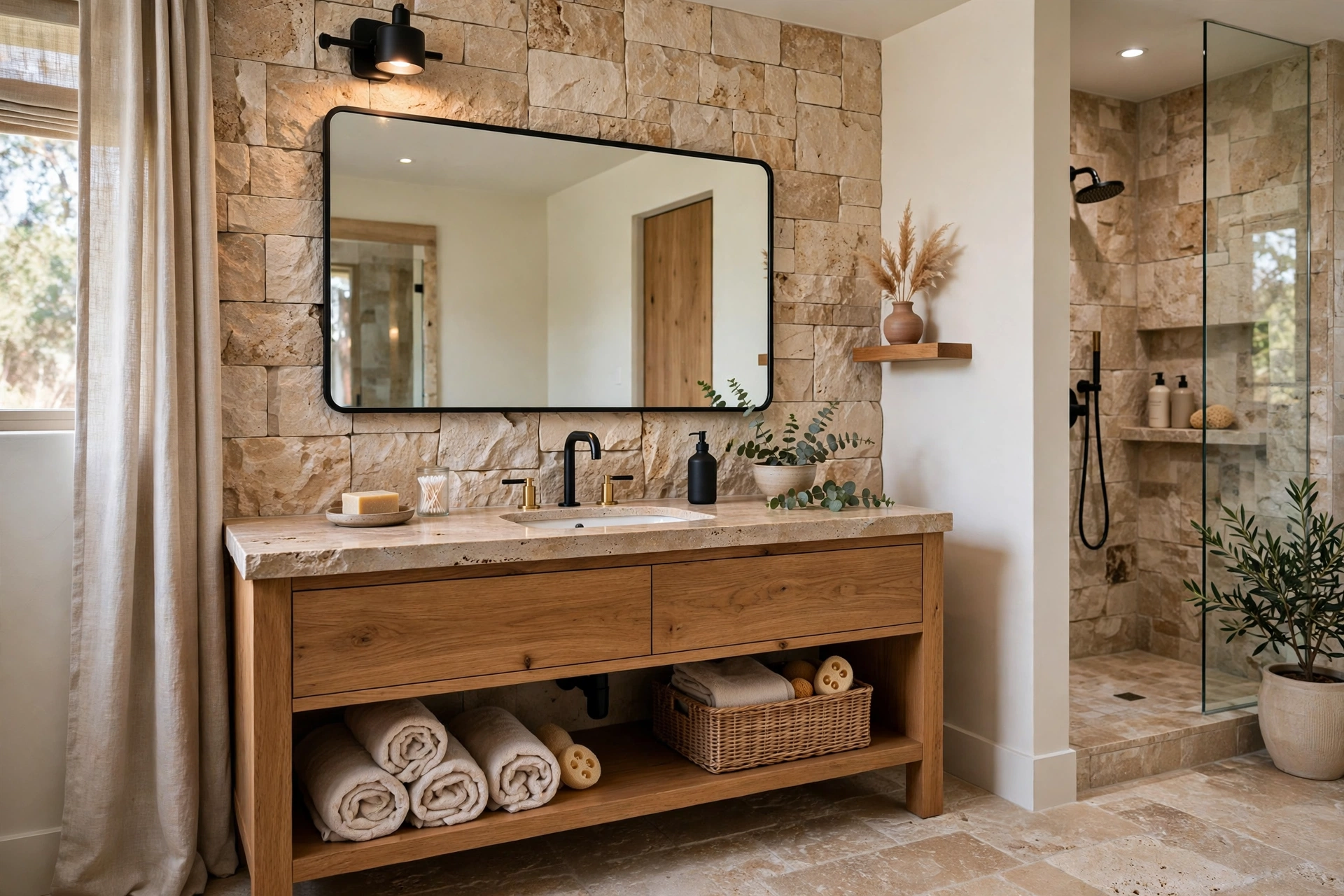
Wood and stone are a classic pairing — one warm, one cool, each making the other look better. Try a walnut vanity against honed marble counters, oak shelving over a travertine backsplash, or a teak bench in a slate-tiled shower. The contrast adds depth that an all-one-material bathroom cannot achieve. These modern bathroom design ideas show how designers layer natural wood with stone and tile for a modern rustic feel. Keep grout and metal finishes consistent so the material mix feels deliberate and calm. Finish with greenery: a fern or eucalyptus sprig softens the hard edges beautifully.
15. Seal Wood Against Moisture
Every wood accent in a bathroom lives or dies by its seal — skip this step and even beautiful pieces warp, swell, or spot. Use a marine-grade polyurethane or penetrating oil rated for wet environments on vanities, shelves, and benches, recoating yearly or when water stops beading. For shower-adjacent wood, choose teak or thermally treated boards that resist moisture from the inside out. Ventilation is your second defense: run the exhaust fan during showers and leave the door ajar afterward. A little maintenance keeps wood looking rich for decades. Yearly sealing becomes a satisfying maintenance ritual.

Frequently Asked Questions
Can I use real wood in a bathroom?
Yes, as long as you seal it properly and ventilate well. Teak, cedar, and white oak handle humidity better than softer woods. Keep wood out of constant direct water contact, use a marine-grade sealant or penetrating oil, and run the exhaust fan during showers. With those basics covered, real wood accents thrive in bathrooms for years.
How do I protect wood from bathroom moisture?
Seal every surface with a moisture-rated finish like marine polyurethane or tung oil, and recoat when water stops beading on the surface. Choose naturally resistant species — teak, bamboo, or thermally modified wood — for shower areas. Good ventilation matters most: an exhaust fan that runs during and after showers dramatically extends the life of any wood finish.
What wood looks best in a bathroom?
White oak and walnut suit modern bathrooms, while reclaimed pine or barn wood fits farmhouse and rustic styles. Teak is ideal for wet zones like showers and bath mats because its natural oils resist water. For a light Scandinavian feel, choose pale ash or birch. Match the wood tone to your fixtures so the whole palette feels intentional.
Is wood-look tile better than real wood flooring in a bathroom?
For floors, wood-look porcelain wins: it is waterproof, low-maintenance, and nearly indistinguishable from real planks now. Real wood flooring can work in half-baths with excellent ventilation, but in full baths the steam and splashes make porcelain the safer long-term choice. Use real wood higher up — on shelves, frames, and vanities — where it stays drier.
How do I keep wood bathroom accents from molding?
Ventilation is the answer. Run the exhaust fan during every shower and for twenty minutes after, wipe standing water off wood surfaces, and choose quick-drying species like teak or bamboo. Re-oil or reseal pieces yearly, and avoid tucking wood tightly into corners where air cannot circulate. With airflow and maintenance, mold never gets a foothold.
Keep Exploring
Wood accents reward small doses: a framed mirror here, a teak bench there, and suddenly the whole bathroom breathes warmer air. Start with one piece that solves a real need — storage, a seat, a warmer floor — then let the palette grow around it. Revisit your sealants once a year, keep the fan running, and these warm, textured touches will serve you beautifully for years. Once the first piece is in place, layer in a second texture — a woven basket, a stone soap dish — to build the relaxed, collected feel that makes a bathroom truly inviting.