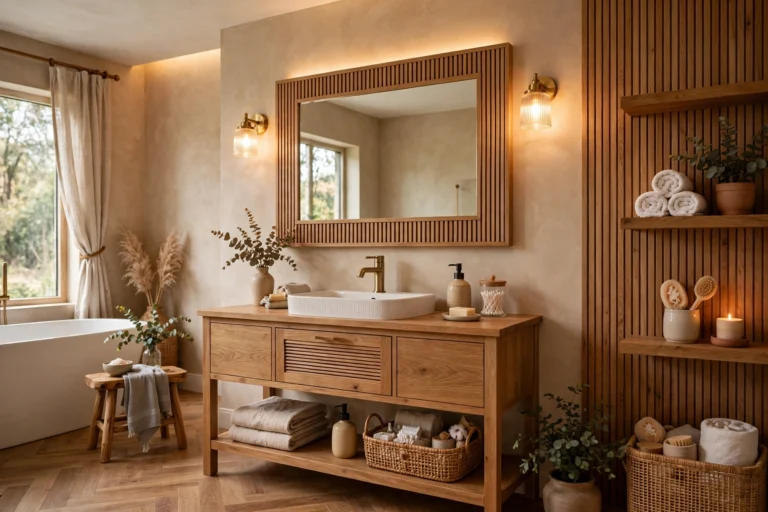
There is no ruder wake-up call than stepping barefoot onto an icy bathroom floor on a cold morning. These bathroom heated floor ideas fix that shock for good, turning your bathroom into the warmest, most welcoming room in the house. These bathroom heated floor ideas work silently beneath your tile or stone, warming the surface you actually touch, and they pair beautifully with any decor style from spa-serene to farmhouse cozy. The best bathroom heated floor ideas suit any renovation budget, and these bathroom heated floor ideas deliver comfort you will feel every day. Start with these bathroom heated floor ideas and step onto warmth tomorrow.
Beyond pure comfort, these bathroom heated floor ideas are a smart renovation upgrade. These bathroom heated floor ideas heat evenly without blowing dust around like forced-air vents, free you from bulky radiators eating wall space, and dry the floor faster after steamy showers. Whether you are gutting a bathroom or just planning ahead, these bathroom heated floor ideas cover systems, surfaces, controls, and costs — everything you need to choose a setup that keeps your toes toasty year-round. From budget-friendly mat layouts to full hydronic systems, these bathroom heated floor ideas suit every bathroom size and budget. Once you try these bathroom heated floor ideas, cold floors become a distant memory.
1. Install Electric Radiant Heating Mats
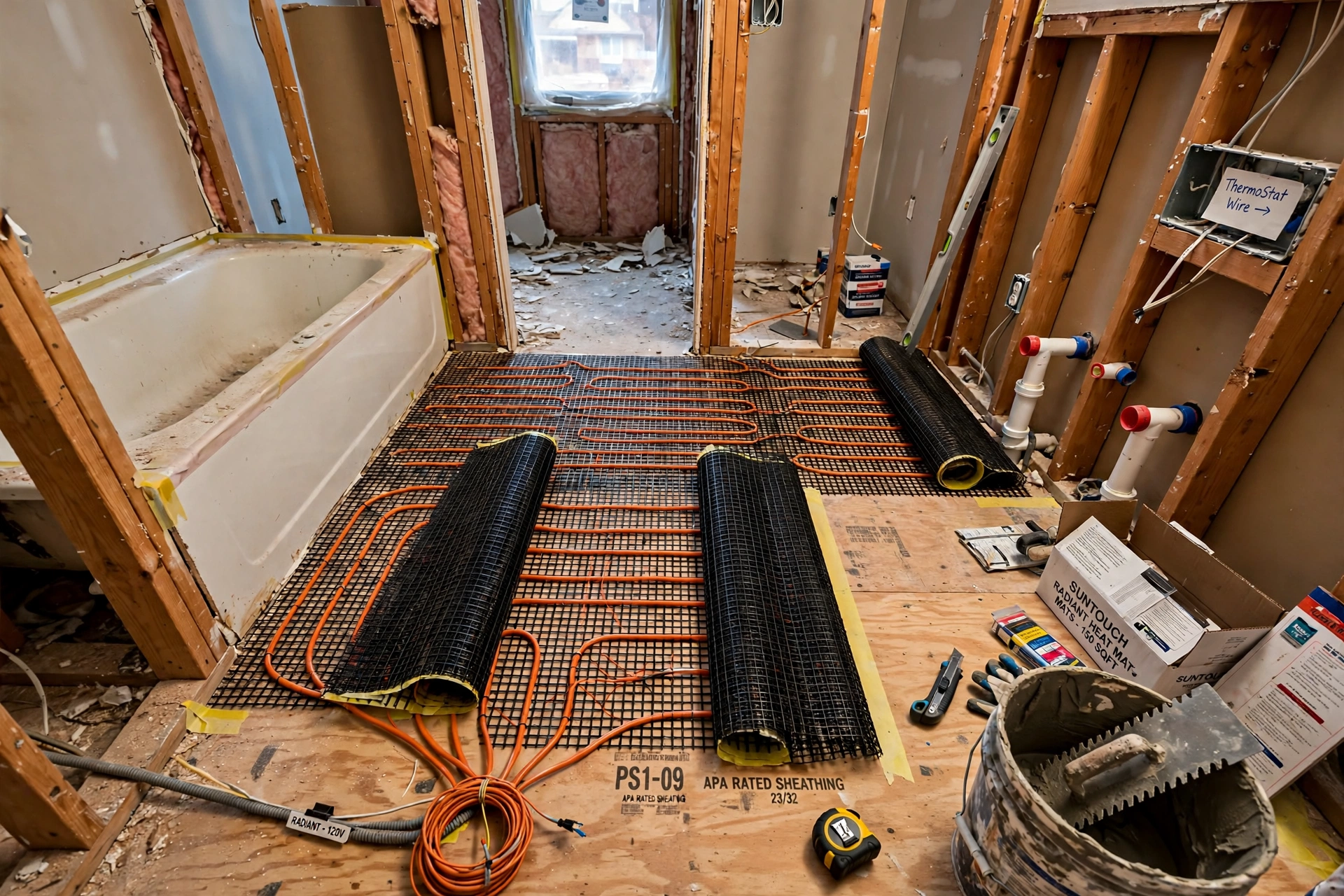
Electric radiant heating mats are the simplest way to get warm bathroom floors, and they suit most renovation projects. A thin mesh mat comes pre-spaced with heating cable: roll it out over the subfloor and cover with thinset before tiling. They add almost no height, which matters in bathrooms where door clearances are tight. Electric systems work best as comfort heat in small to medium bathrooms rather than as the home’s primary heat source. Because each mat connects to its own thermostat, you control the bathroom independently from the rest of the house — warm floors exactly when your routine needs them.

2. Try Hydronic Heated Floors
Hydronic systems circulate warm water through PEX tubing beneath the floor, and they shine in larger bathrooms or whole-house projects. Upfront costs exceed electric mats because you need a boiler and manifold, but running costs stay lower — especially over big areas. Water holds temperature steadily, so the heat feels wonderfully even. If you already heat multiple rooms, ask your contractor about adding a bathroom loop. For a clear breakdown of both system types, this guide to radiant floor heating systems walks through hydronic and electric options side by side.

3. Warm Up Under Tile Floors
Tile is the classic partner for heated bathroom floors because ceramic and porcelain conduct heat beautifully and shrug off moisture. Porcelain tiles transfer warmth quickly to bare feet and release it evenly, so the floor feels luxurious within minutes of the thermostat kicking on. Choose a tile you love living with, since the heating system lasts decades beneath it — and check that your tile’s slip rating suits a wet bathroom. If you are still picking finishes, browse these bathroom tile design ideas for patterns and layouts that look stunning over a warm, glowing floor.

4. Heat Beneath Natural Stone
Natural stone like marble, travertine, and slate turns into pure luxury over radiant heat. Stone stores warmth exceptionally well, so it stays comfortably warm long after the system cycles off — that lingering heat is exactly what makes high-end hotel bathrooms feel so indulgent. Keep in mind that thicker slabs take longer to warm up, so give the thermostat a head start on cold mornings. Seal the stone properly to protect it from moisture, and choose honed or textured finishes for better grip. The result is a floor that looks timeless and feels like a warm embrace.

5. Use Luxury Vinyl Over Heating
Luxury vinyl plank and tile have become a budget-friendly favorite for heated bathrooms, and most quality products are rated for use over radiant heat. Vinyl warms up fast because it is thin, and it feels softer and warmer underfoot than tile even before the system switches on. Stick to manufacturer temperature limits — usually around 80 to 85 degrees Fahrenheit — to protect the planks from warping. The huge range of wood-look and stone-look designs means you get the cozy aesthetic without the cold reality. It is a practical pick for family bathrooms and rentals.

6. Add a Programmable Floor Thermostat
A programmable thermostat with a floor sensor is the brain of your heated floor, and it is worth every penny. Instead of heating the floor all day, you program warm-up times around your routine — toasty at 6:30 a.m., off while you are at work, warm again for the evening bath. The floor sensor measures the actual surface temperature rather than the air, so the heat feels exactly right underfoot. Many models now offer Wi-Fi control, letting you boost the floor from your phone before you get home. Smart scheduling also trims running costs noticeably.

7. Zone Heat Around the Shower
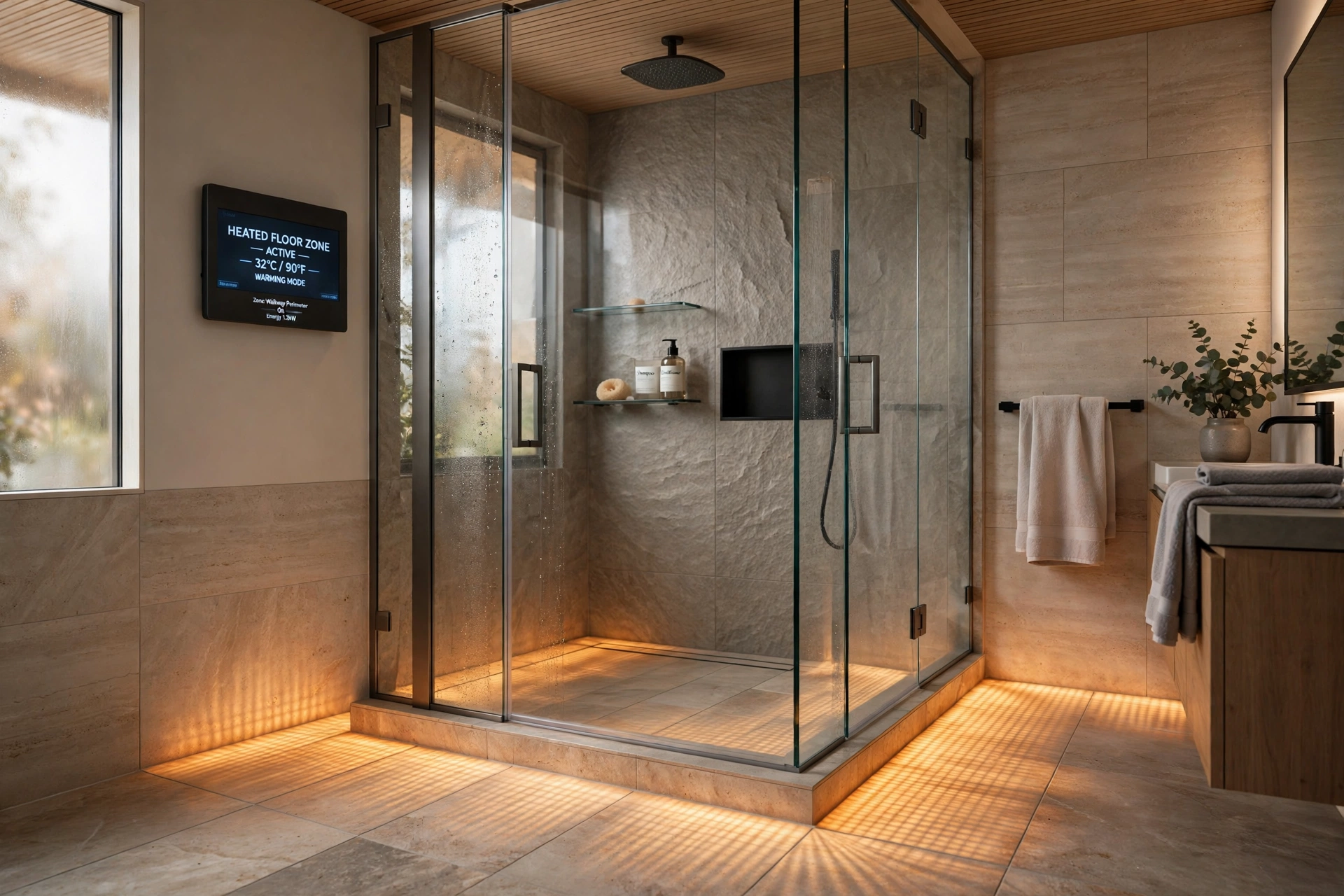
Zoning lets you heat the bathroom floor exactly where your feet land most. The classic move is a dedicated heated zone in front of the vanity and around the shower entrance — the two spots where cold tile feels worst. By concentrating the heating mats in high-traffic areas, you buy a smaller, cheaper system while still getting the full comfort effect. Separate zones with their own thermostats also mean you can keep the main floor warm while leaving a little-used water closet zone off. Plan the layout before installation day, since mat placement is permanent.
8. Keep Costs Down With Mat-Only Systems
If a full bathroom heating system stretches the budget, a mat-only setup delivers most of the luxury for less. Instead of covering every square inch, install heating mats only in the open floor areas you actually walk on — in front of the sink, toilet, and shower — and skip the space under the vanity and tub. This shrinks both the material cost and the electricity bill. You still get that glorious warm-floor feeling where it counts. It is the sweet spot for small powder rooms and guest baths where full coverage would be overkill.

9. Retrofit During a Remodel
The golden rule of heated floors: install them when the floor is already coming up. A bathroom remodel is the perfect moment because the old flooring is being removed anyway, adding the heating layer costs far less in labor than a standalone project. Coordinate with your tiler so the mats or cables go down at the right stage, and have an electrician run the dedicated circuit before the walls close up. If your remodel is still in the planning phase, get the heating quote now — retrofitting later means tearing up a finished floor, which nobody wants.
10. Pair Warm Floors With a Towel Warmer
Warm floors and a heated towel rail are the ultimate comfort duo, turning every bathroom visit into a spa ritual. While the floor warms your feet, the towel warmer keeps your bath towel dry, fluffy, and toasty for when you step out of the shower. Run both on simple timers so they are ready exactly when you need them. Finish the look with soft neutral towels, a wooden bath mat, and calming scents for the full spa effect. For more serene styling, these small spa bathroom design ideas show how warm floors anchor a truly relaxing space.
11. Insulate Under the Heating System
Insulation boards under the heating layer are the unsung hero of an efficient warm floor. Without them, a surprising amount of heat escapes downward into the subfloor or concrete slab instead of rising to your feet. Rigid thermal insulation boards create a barrier that pushes warmth upward, cutting heat-up time dramatically and lowering running costs. This step matters most over unheated spaces like garages or crawl spaces, and over concrete slabs on grade. It adds modest cost and a little floor height, but the efficiency payoff lasts for the life of the system.
12. Choose a Low-Voltage System
Low-voltage radiant systems are a clever option for smaller bathrooms and DIY-friendly installs. They run on lower voltage than standard 120-volt mats, which can simplify the electrical requirements and add a layer of safety in wet bathroom environments. These systems deliver the same even, gentle warmth underfoot, and they pair well with the programmable thermostats mentioned earlier. Always confirm the product is rated for wet locations and bathroom use before buying. To understand how electric systems work, what they cost to run, and where they make sense, this overview of electric radiant floor heating covers the essentials in plain language.
13. Warm the Path to the Shower
Think about your morning route: bed to bathroom, sink to shower, shower back to the vanity. Heating that exact walking path delivers maximum comfort for minimum cost. Extend the mat layout in a generous strip from the bathroom door to the shower entrance so every step lands on warmth. This is especially lovely in master suites where the bathroom sits at the end of a cold hallway. You do not need wall-to-wall coverage — just follow your feet. Guests notice it too: nothing says thoughtful hosting like a warm path on a frosty morning.

14. Keep Grout Lines Comfortable
Grout lines are the forgotten detail of heated floors — narrow strips your feet definitely notice. Choosing smaller grout joints, around one-sixteenth of an inch, minimizes unheated gaps between tiles so warmth feels continuous. Epoxy grout resists stains and moisture better than cement grout and handles gentle temperature cycling well. Seal cement grout yearly. For spots where tile still feels cool, like outside the shower, add one of these bathroom rug ideas to make your floors cozy and stylish — a plush rug over a warm floor is pure indulgence.
15. Maintain the System With Ease
One of the best things about radiant floor heating is how little maintenance it needs. There are no filters to change, no vents to dust, and no moving parts to wear out — electric systems in particular can run for decades with zero servicing. Keep the thermostat’s floor sensor accurate by avoiding heavy rugs directly over the sensor spot if your manual warns against it. If a section ever feels cool, check the thermostat settings and breaker before assuming a fault; most issues are simple electrical ones. With a professional installation and sensible use, your warm floor should outlast the tile above it.
Frequently Asked Questions
How much does it cost to install a heated bathroom floor?
For a typical small bathroom, electric mat materials run a few hundred dollars, plus an electrician’s fee for the dedicated circuit and thermostat. Professional installation usually totals between one and two thousand dollars, depending on size and local labor. Hydronic systems cost more upfront, so they suit larger bathrooms or multi-room projects best.
Can heated floors go under any bathroom flooring?
Tile, porcelain, and natural stone are ideal because they conduct heat efficiently and handle moisture. Luxury vinyl and engineered flooring also work if rated for radiant heat and kept within temperature limits. Skip thick carpet, which insulates against the heat, and solid hardwood — humidity makes it risky in bathrooms regardless of heating.
Are electric heated bathroom floors expensive to run?
Usually just a few dollars a month. A small bathroom mat draws about as much power as a few light bulbs, and a programmable thermostat limits heating to an hour or two around your routine. Insulation boards underneath push warmth upward instead of losing it to the subfloor, which keeps bills low.
Do heated bathroom floors need special maintenance?
Almost none. Electric systems have no moving parts — just keep the thermostat working and never drive nails or screws into the heated area. Hydronic systems need only the occasional boiler check. The key care step happens at installation: testing the mat with a meter before, during, and after tiling catches damage while it is easy to fix.
Will a heated floor warm the whole bathroom?
A heated floor mainly warms your feet and takes the chill off, raising air temperature by a few degrees. In a well-insulated small bathroom it can serve as the main heat source, but most owners treat it as supplemental comfort alongside central heating — silent, even, dust-free warmth exactly where you stand.
Keep Exploring
A heated bathroom floor is one of those upgrades you feel every single day — the quiet luxury of warm tile on a winter morning never gets old. Start by matching the system to your project: electric mats for remodels and small baths, hydronic for big spaces and new builds. Then layer in the comforts that multiply the effect, from a smart thermostat schedule to a heated towel rail. Your future self, padding barefoot across a toasty floor at dawn, will thank you for every thoughtful choice.