
Bathroom floors do not have to be cold, bare, and forgettable. The right rug turns hard tile into something warm underfoot and gives the whole room a finished, intentional look. These bathroom rug ideas cover every style and budget, from plush high-pile mats that feel like a hotel spa to washable runners that handle daily splashes with ease. The best part is how affordable the upgrade can be, since one well-chosen rug changes how the entire room feels. Whether your bathroom is large or tiny, modern or traditional, there is a rug idea here that will make your floors cozy, stylish, and so much more inviting.
1. Plush High-Pile Bath Mat
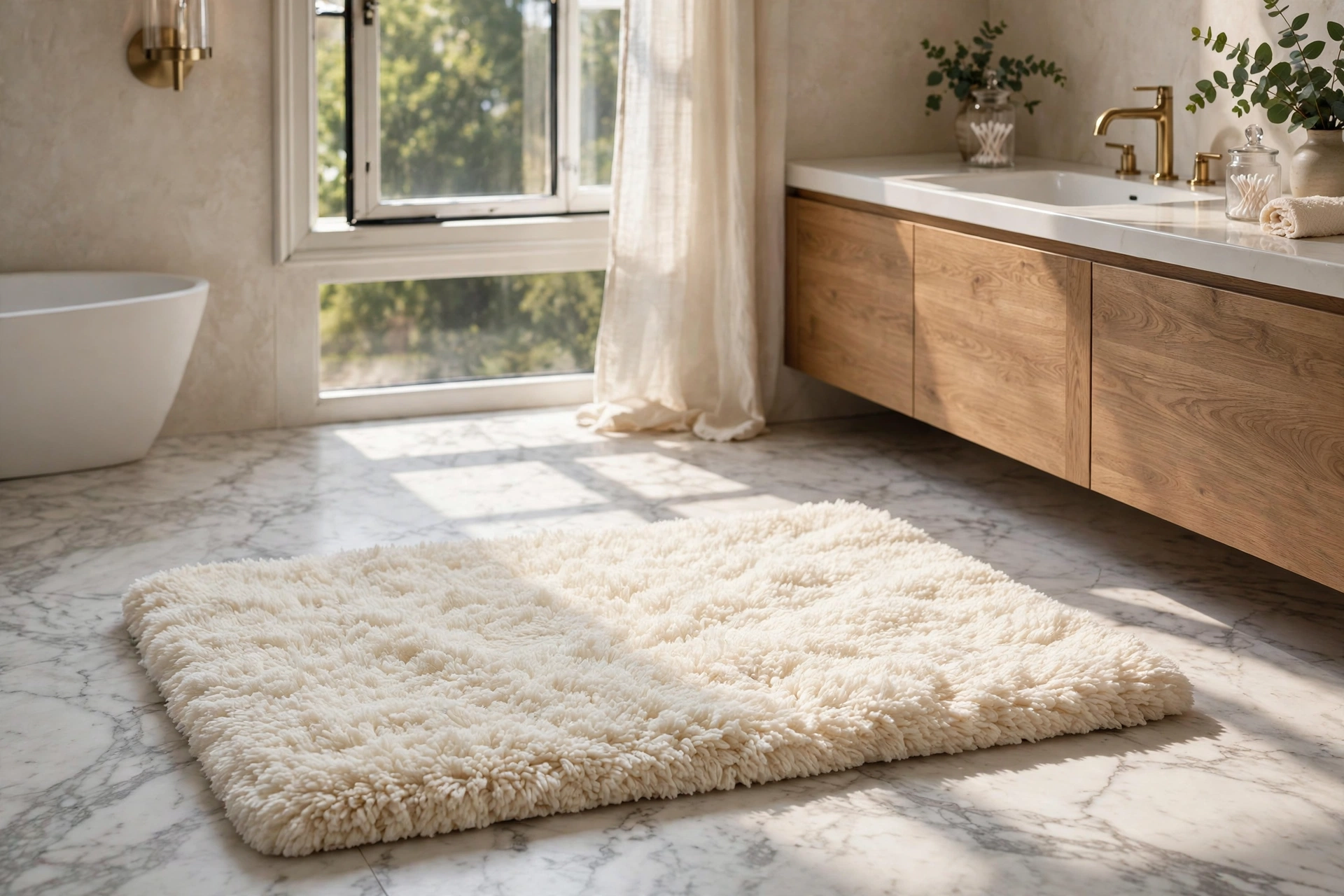
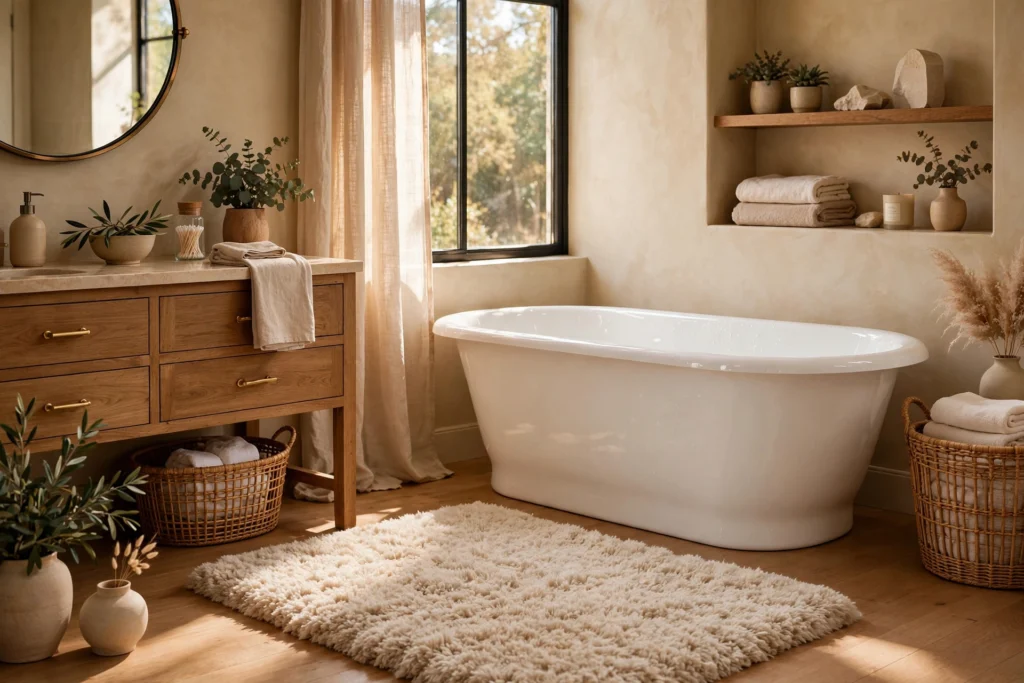
Nothing says comfort like a deep, cushioned mat after a hot shower. A plush high-pile bath mat adds instant luxury to any bathroom, making the floor feel soft and welcoming on cold mornings. Choose a thick cotton or microfiber option in white, cream, or a soft neutral to pair with any decor. These mats absorb water quickly and feel amazing under bare feet. There is a real debate about why bath rugs beat bath mats, and thicker rugs often win for comfort and style. Place one in front of the shower and another at the vanity for balance.
2. Washable Bathroom Runner
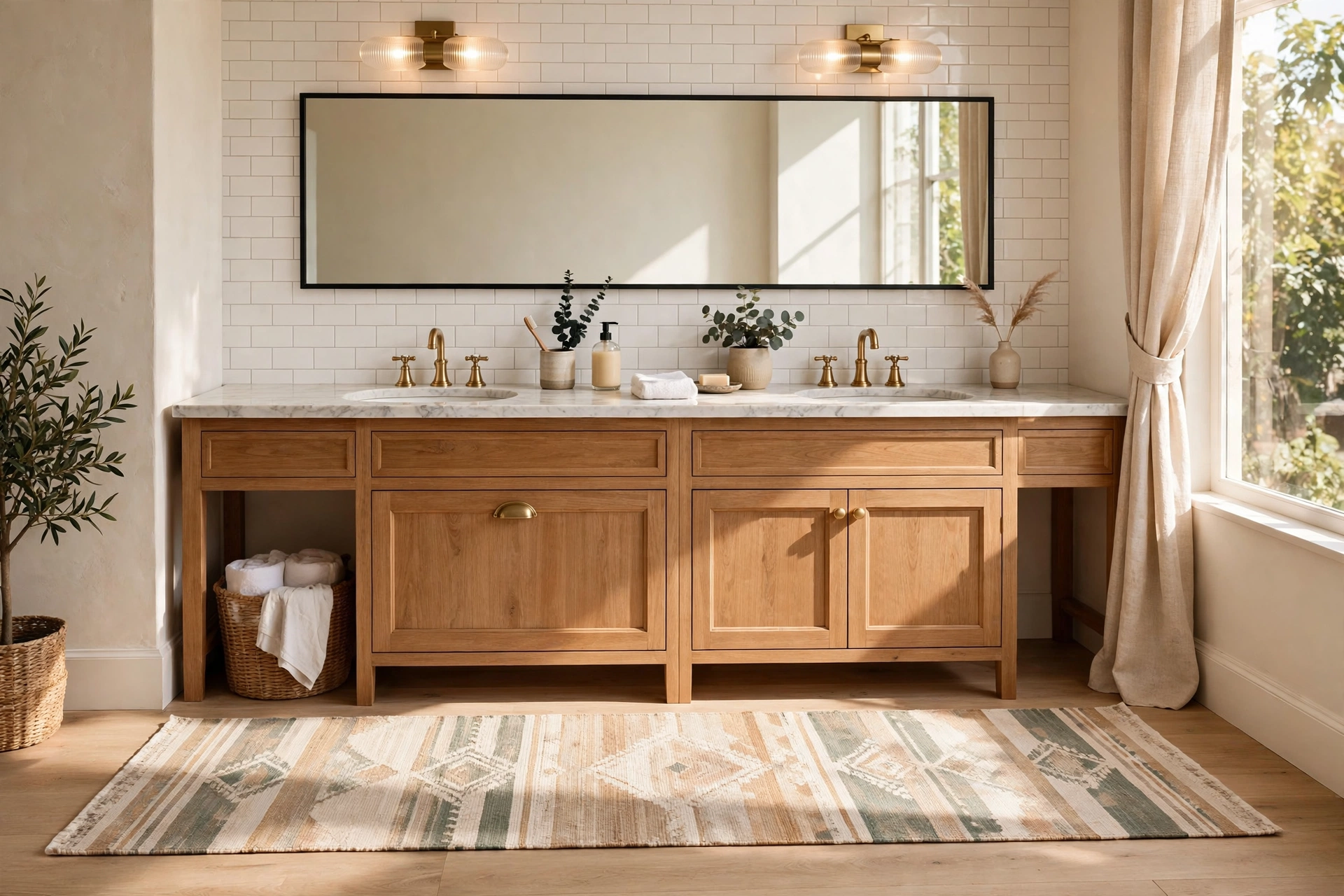
A washable runner is the practical hero of bathroom flooring. Laid along a double vanity or beside a long counter, it protects the floor, adds color, and can be tossed in the washing machine whenever it needs refreshing. Choose a low-profile design with rubber or latex backing so it stays put on tile. Cotton and microfiber versions dry fast and survive repeated washes. Guide to washable rugs for bathrooms will convince you they belong in more rooms than the kitchen. Pick a pattern that hides wear.
3. Vintage-Look Rug
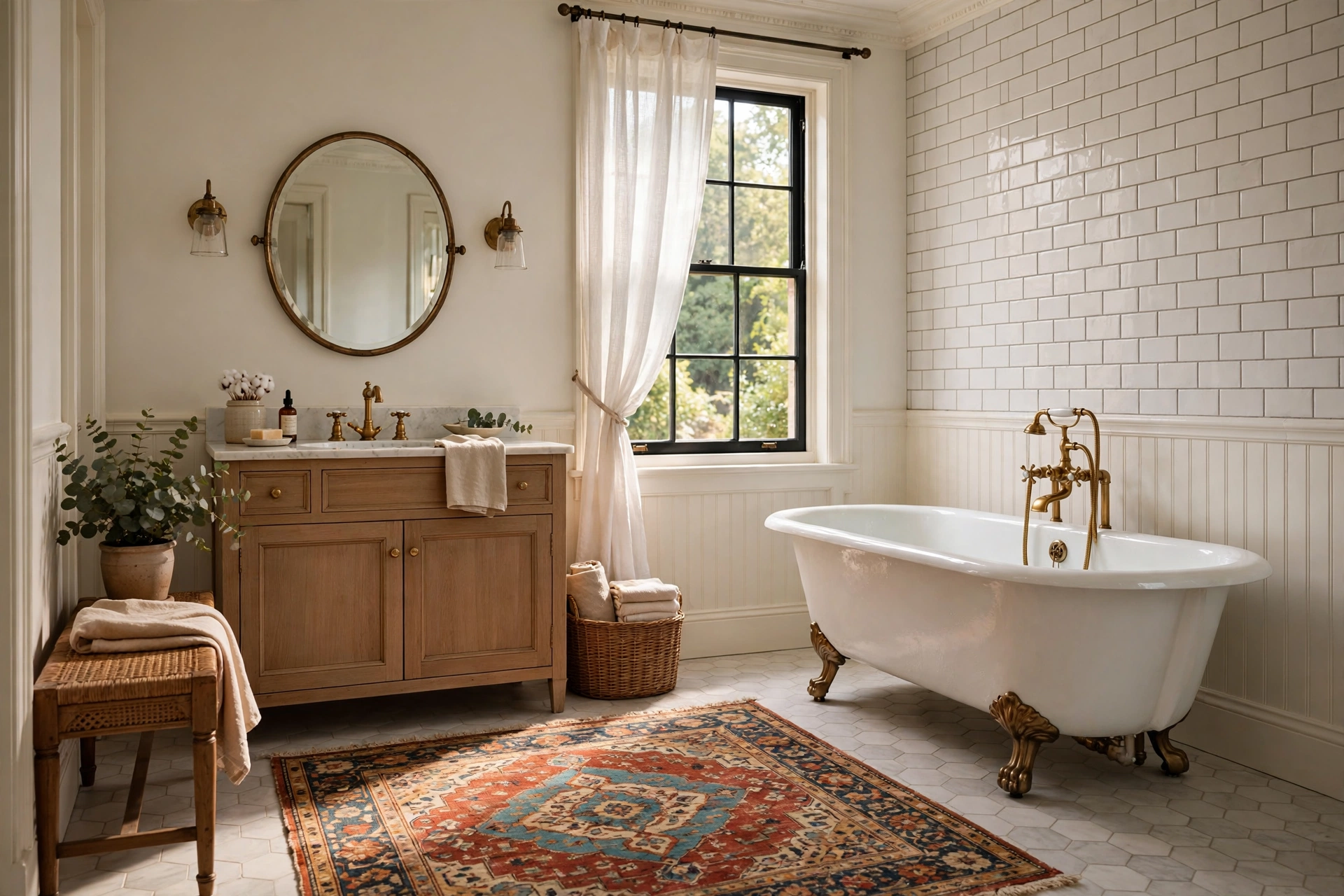
A vintage-look rug brings character and history into a space that can otherwise feel sterile. Faded Persian or Turkish-style patterns in muted blues, rusts, and creams look stunning against white subway tile or a classic clawfoot tub. These rugs add instant warmth and make the bathroom feel collected rather than decorated in an afternoon. Many vintage-look options use quick-drying materials designed for damp rooms, so you get antique charm without maintenance fears. Choose a size that fills the open floor, and let the rug become the focal point with simpler fixtures around it.
4. Layered Rugs
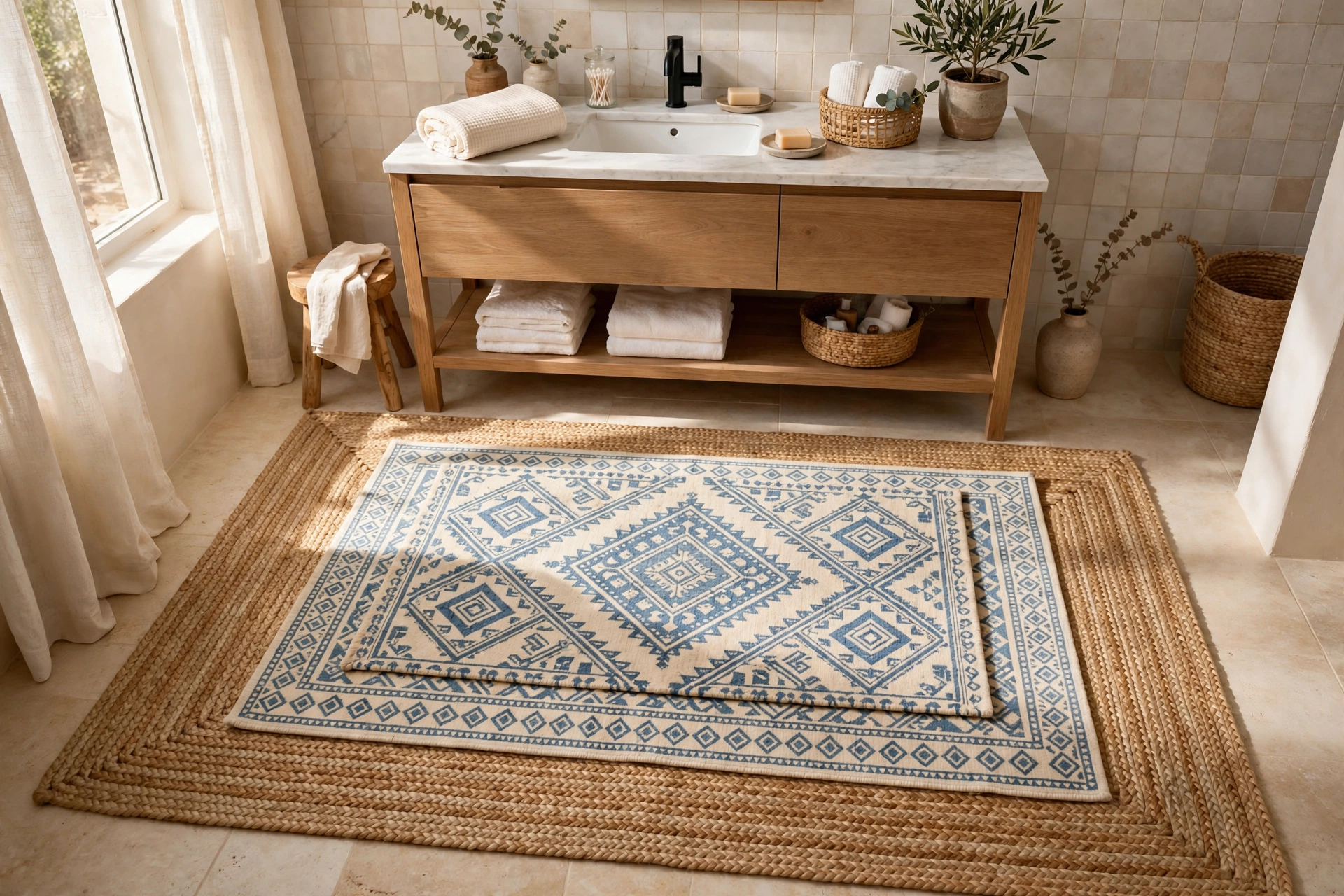
Layering rugs is a designer trick that works beautifully in bathrooms too. Start with a larger natural-fiber base rug, like flatweave jute, then place a smaller patterned rug or plush mat on top where your feet land. This creates depth, texture, and visual interest while keeping the softest layer where you need it. Layering also lets you mix patterns and materials without committing to one expensive piece. Keep the base layer neutral and let the top layer carry the color. Make sure both layers have grippy backing or a rug pad so nothing slides on wet tile.
5. Round Rug Beside The Tub
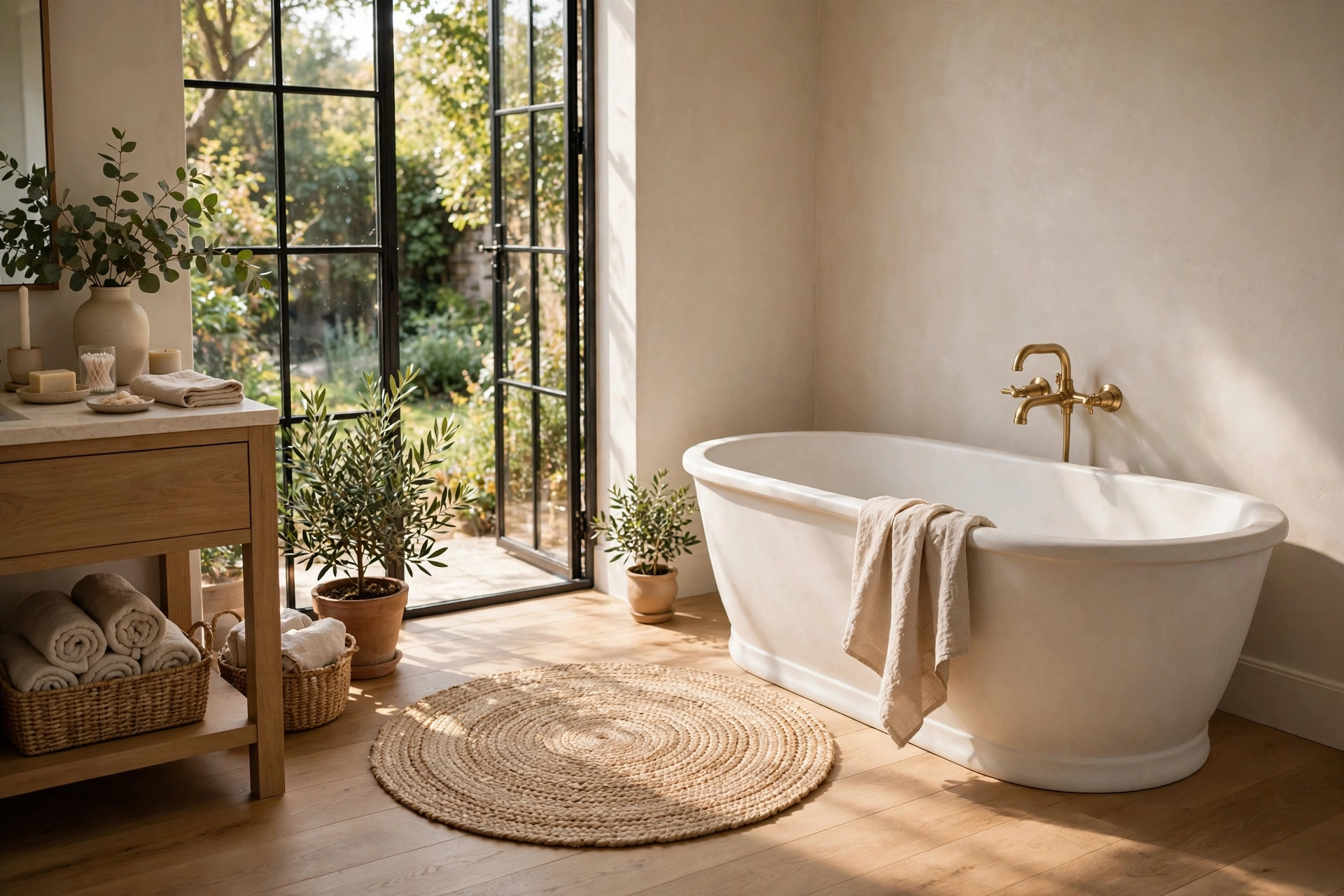
A round rug beside the bathtub softens the hard rectangles of a typical bathroom. The curved shape draws the eye and creates a cozy landing spot for stepping out of a soak. Round rugs work especially well next to freestanding tubs, echoing the tub’s sculptural shape. Choose a bath-safe material with good absorbency, and size it so both feet land comfortably on it. A round rug in natural weave or soft cotton adds spa-like calm, while a patterned one can introduce a playful accent. It is a small change that makes bath time feel like a ritual.
6. Jute And Natural Fiber Rug
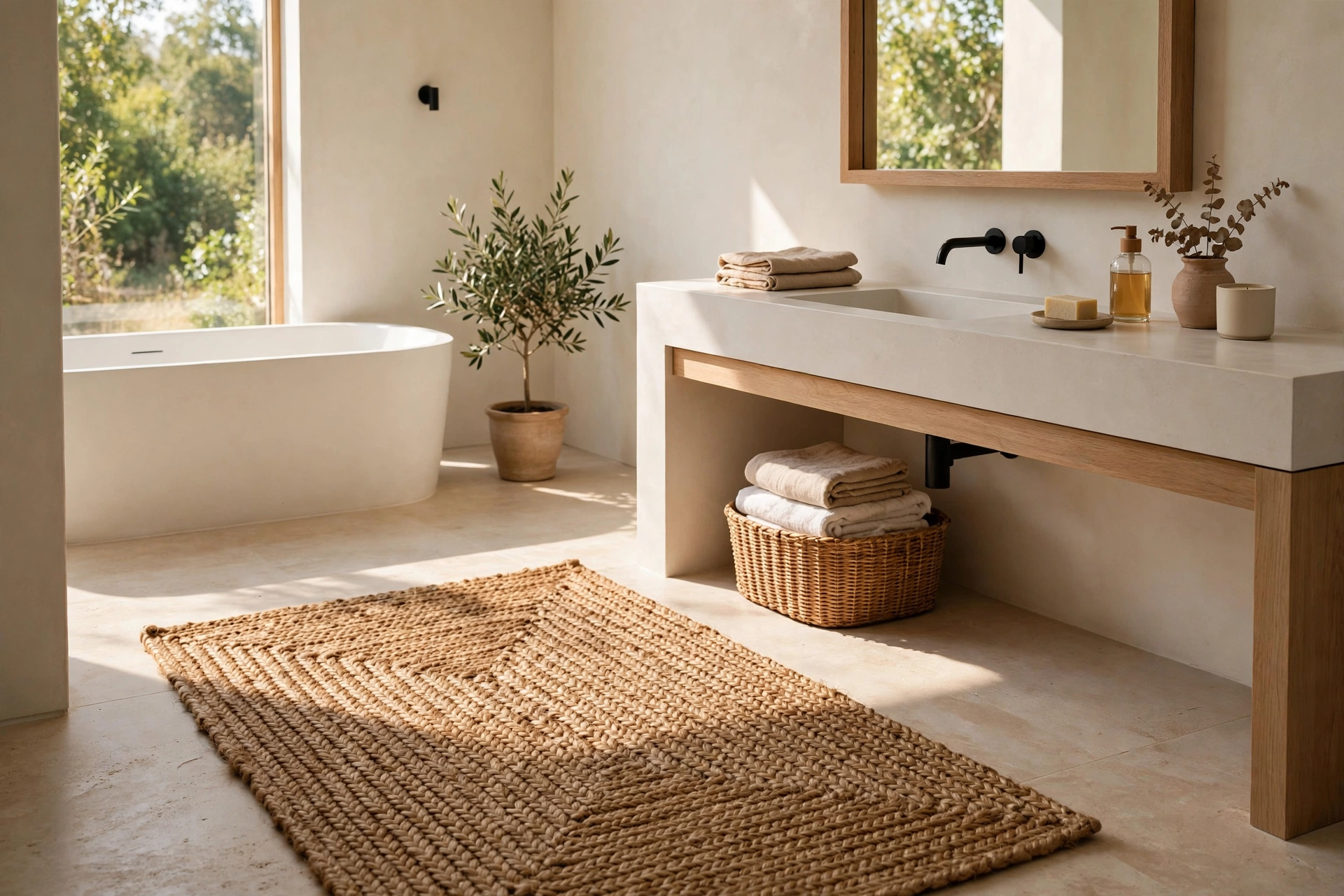
Jute and other natural-fiber rugs bring earthy texture to relaxed, organic bathrooms. The warm, woven tones pair well with white fixtures, wood vanities, and leafy plants for a calm, spa-inspired look. Jute rugs are durable and resist some moisture, though they do best in well-ventilated bathrooms rather than inside a splash zone. Place one in the center of the room or under a bench. The nubby texture massages bare feet and adds a warm, casual coastal vibe. Keep a spare mat for the wettest spots.
7. Patterned Runner In A Long Bathroom
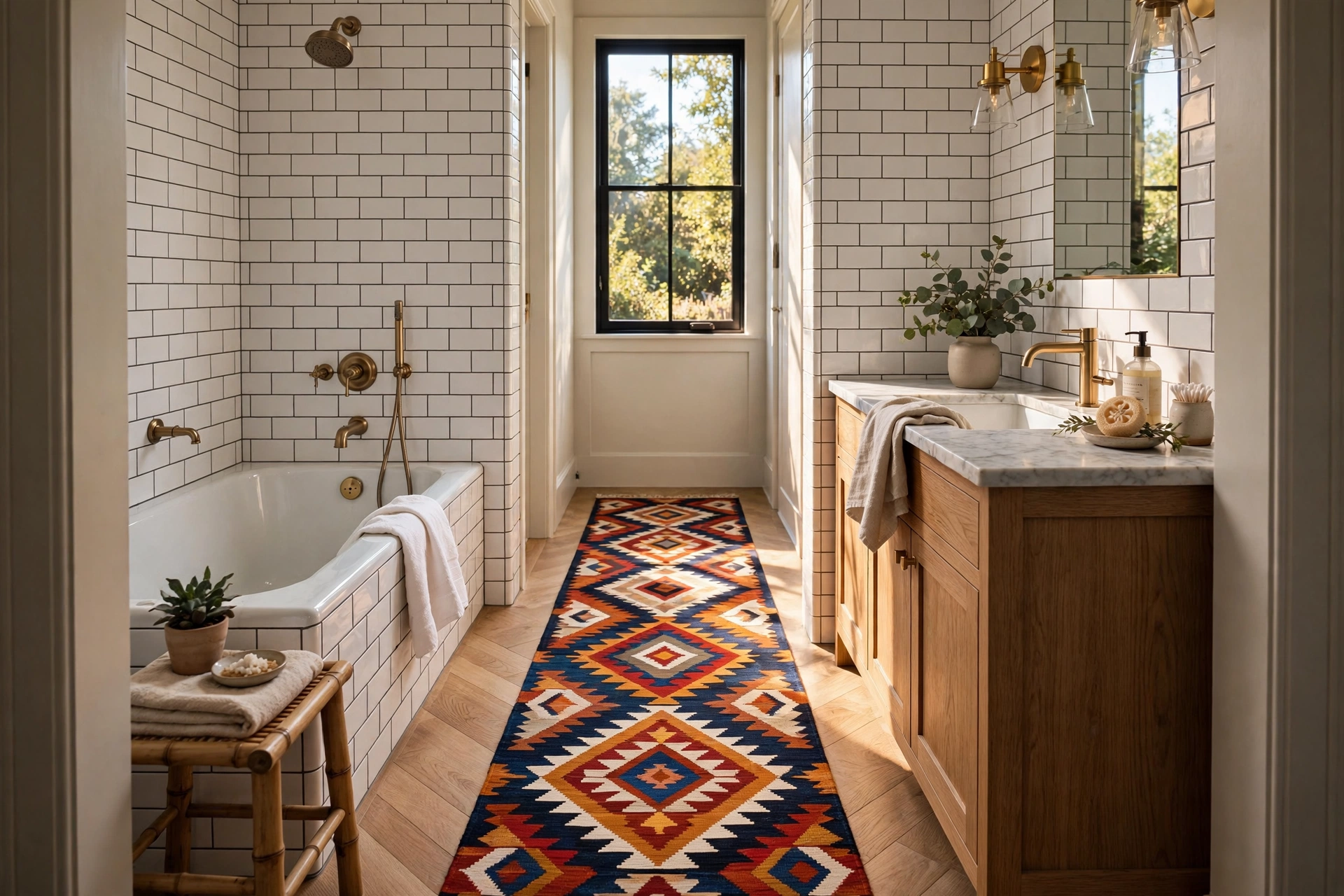
Long, narrow bathrooms are perfect for a patterned runner. A bold geometric, floral, or striped runner stretches the eye down the room and turns an awkward layout into a feature. The pattern adds energy and personality, especially with plain white walls and simple fixtures. Borrowing tricks from hallway runner rug ideas helps, since long baths and hallways share the same proportions. Choose a washable, quick-drying runner with non-slip backing, sized to leave a few inches of floor visible on each side for a tailored finish.
8. Memory-Foam Bath Mat
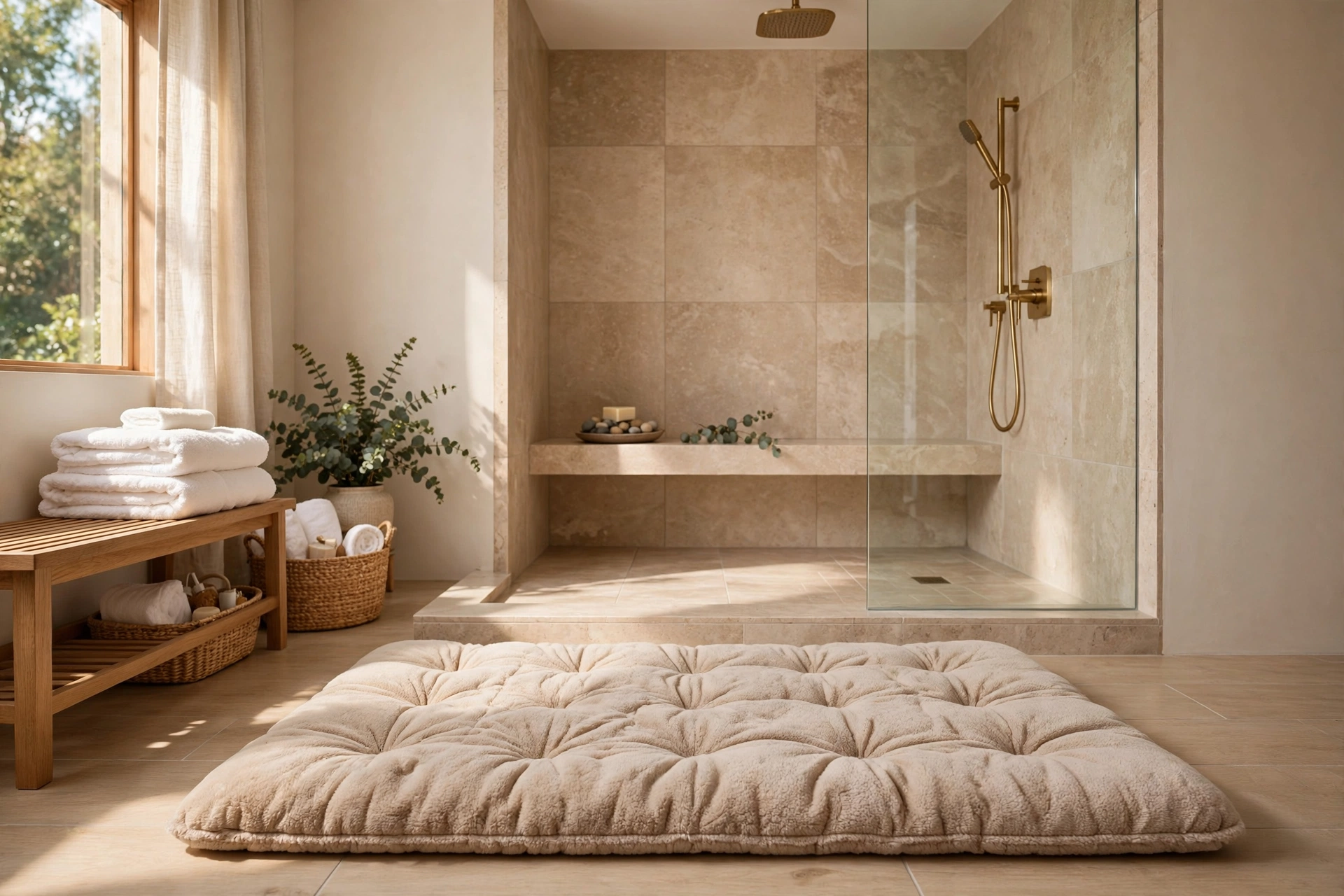
Memory-foam bath mats feel like standing on a cloud. The dense foam core cushions tired feet and joints, making them a favorite for anyone who spends time at the vanity or has hard tile floors. Most memory-foam mats have a soft velvety top layer that absorbs water and a non-slip bottom that grips securely. They come in many colors, from calming neutrals to cheerful brights, to match any decor. The extra thickness also insulates against cold floors. Wash them gently and air-dry to keep the foam springy for years.
9. Striped Cotton Rug
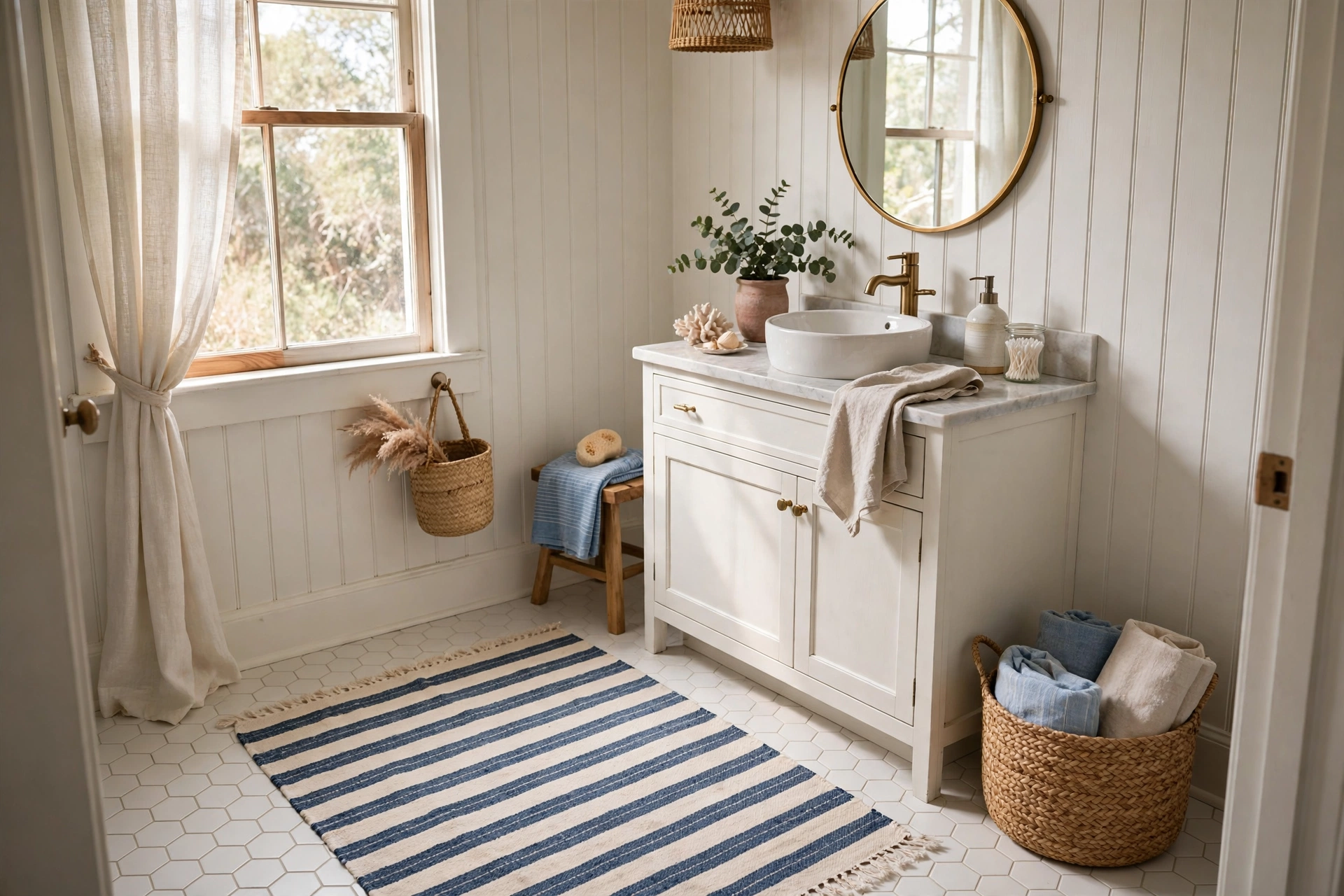
A striped cotton rug is a timeless choice that suits almost any bathroom style. Classic stripes in navy and white feel coastal, black and white reads modern, and soft pastels suit a relaxed, airy space. Cotton rugs are absorbent, machine-washable, and affordable, so replacing them is painless. Lay a striped runner beside the vanity or a smaller mat in front of the shower to add rhythm to the floor. The linear pattern can also make a small bathroom feel longer. Choose a low-pile weave so the rug dries quickly between uses.
10. Spa-Inspired Teak Bath Mat
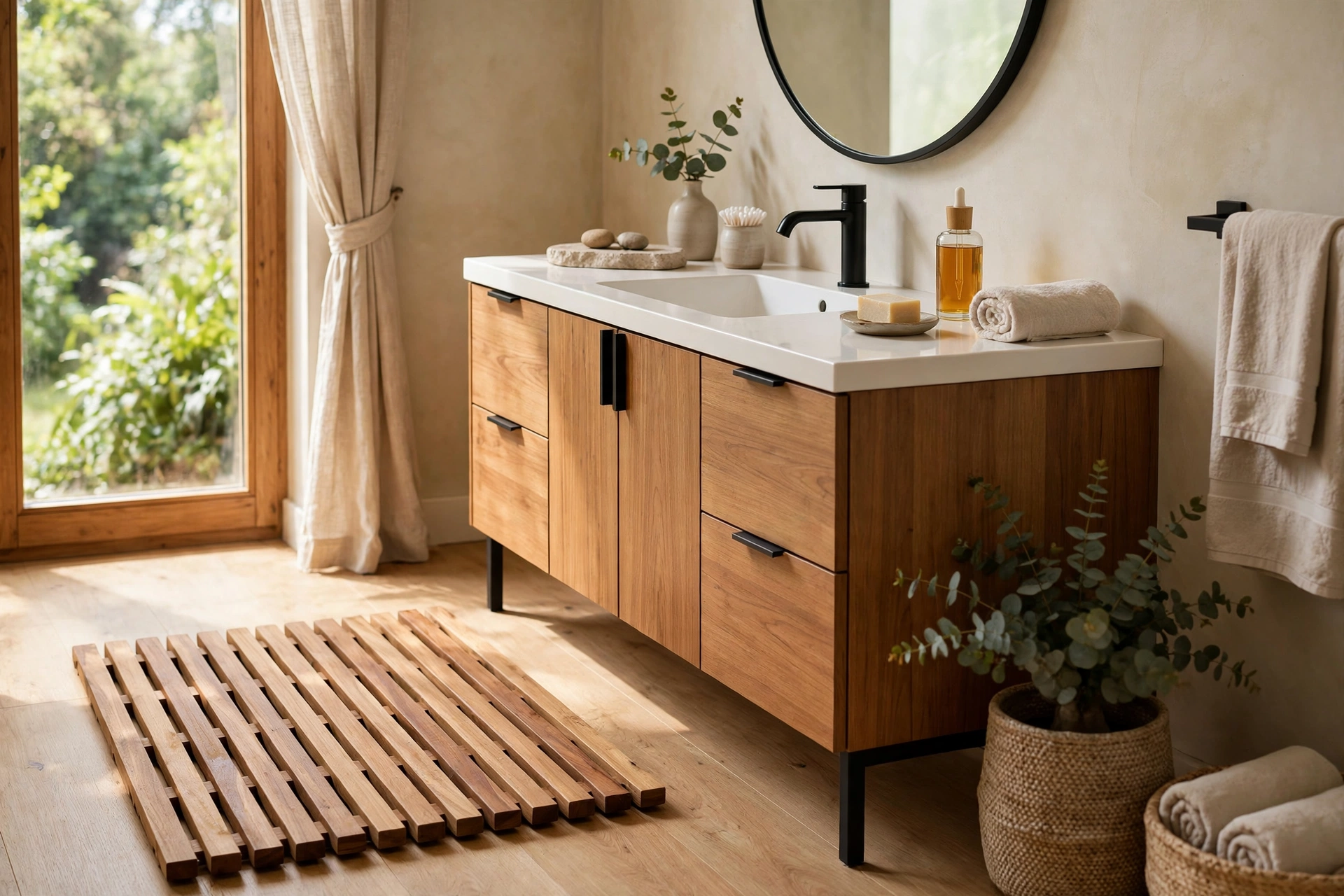
For a true spa feeling, a teak bath mat is hard to beat. Teak is naturally water-resistant and resists mold and mildew, making it ideal for a wet bathroom floor. The warm wood tones add an organic, high-end look that pairs beautifully with stone tile, white porcelain, and greenery. A slatted teak mat inside the shower or beside the tub gives a sturdy, quick-drying surface that feels wonderful underfoot. Unlike fabric rugs it never needs laundering, just an occasional rinse. It brings the luxury hotel experience home every day.
11. Bold Color Accent Rug
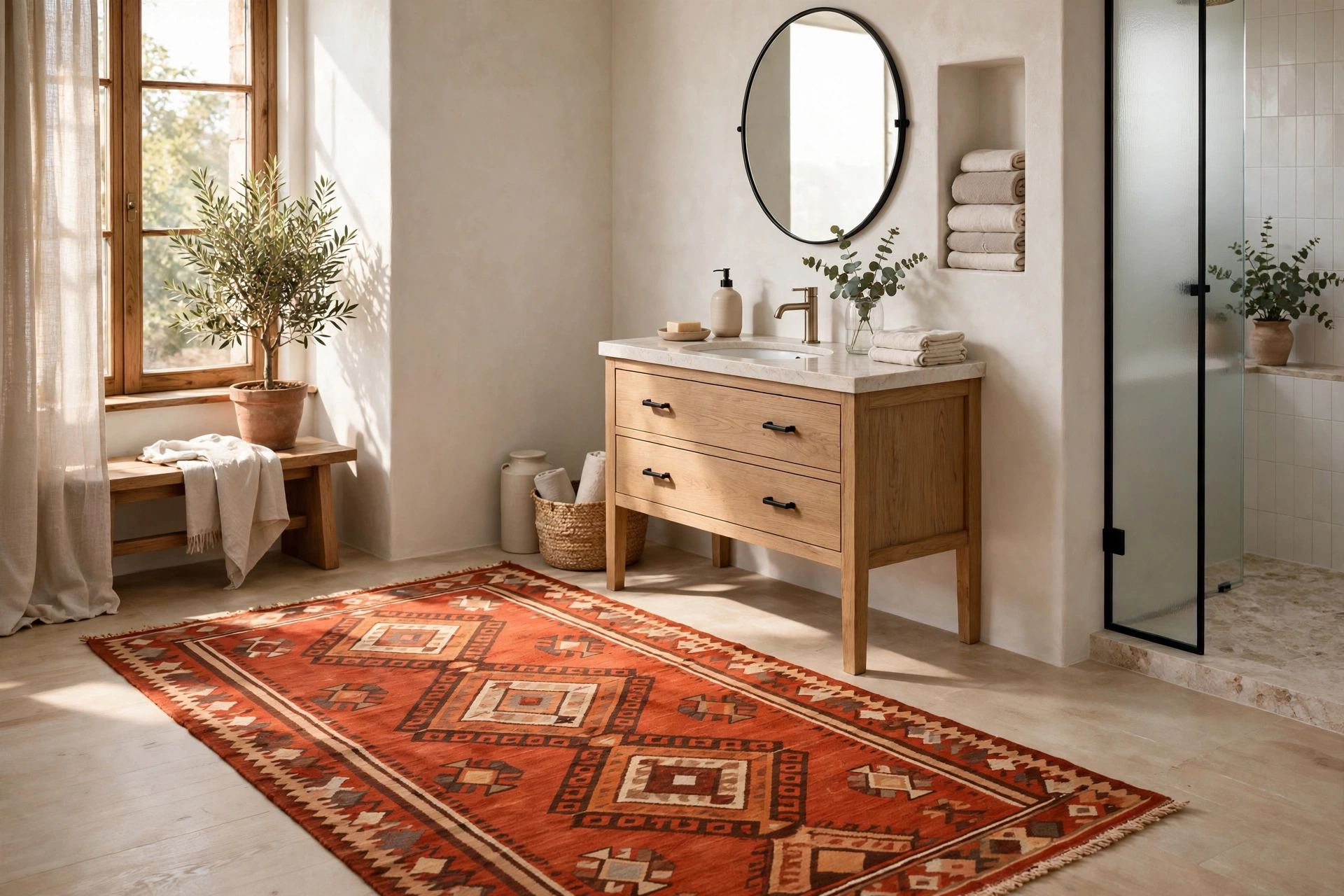
A bold color accent rug is the fastest way to wake up a neutral bathroom. Think terracotta, deep teal, mustard, or rich emerald — one vibrant rug can carry the whole color scheme. This works especially well in all-white or gray bathrooms that need a focal point without a full renovation. Keep other accessories simple so the rug shines, or echo its color in a towel or art for a pulled-together look. Choose a washable fabric so the color stays fresh through regular cleaning. A bold rug proves bathrooms deserve personality too.
12. Neutral Layered Look
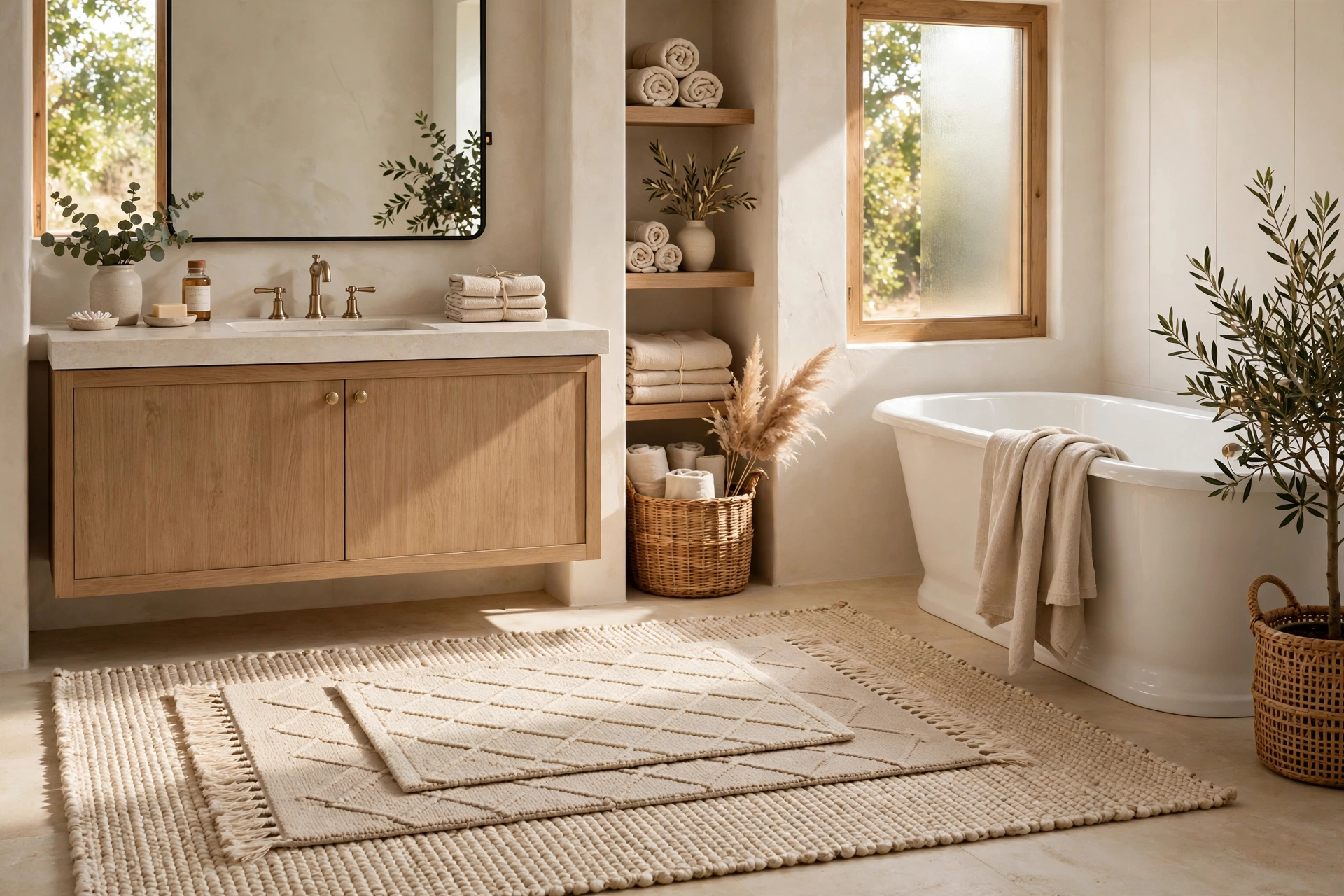
If bold is not your style, a neutral layered look delivers quiet luxury. Combine rugs in cream, beige, oatmeal, and soft gray for a calm, cocooning bathroom retreat. Layering different textures — a flatweave base with a fluffy top mat, for example — keeps neutrals from feeling flat. This palette works with marble, wood, and matte black fixtures alike, and never goes out of style. Same layering principles behind cozy living room rug ideas translate to the bath at a smaller scale. Stick to washable fibers for easy care.
13. Small Rug In A Powder Room
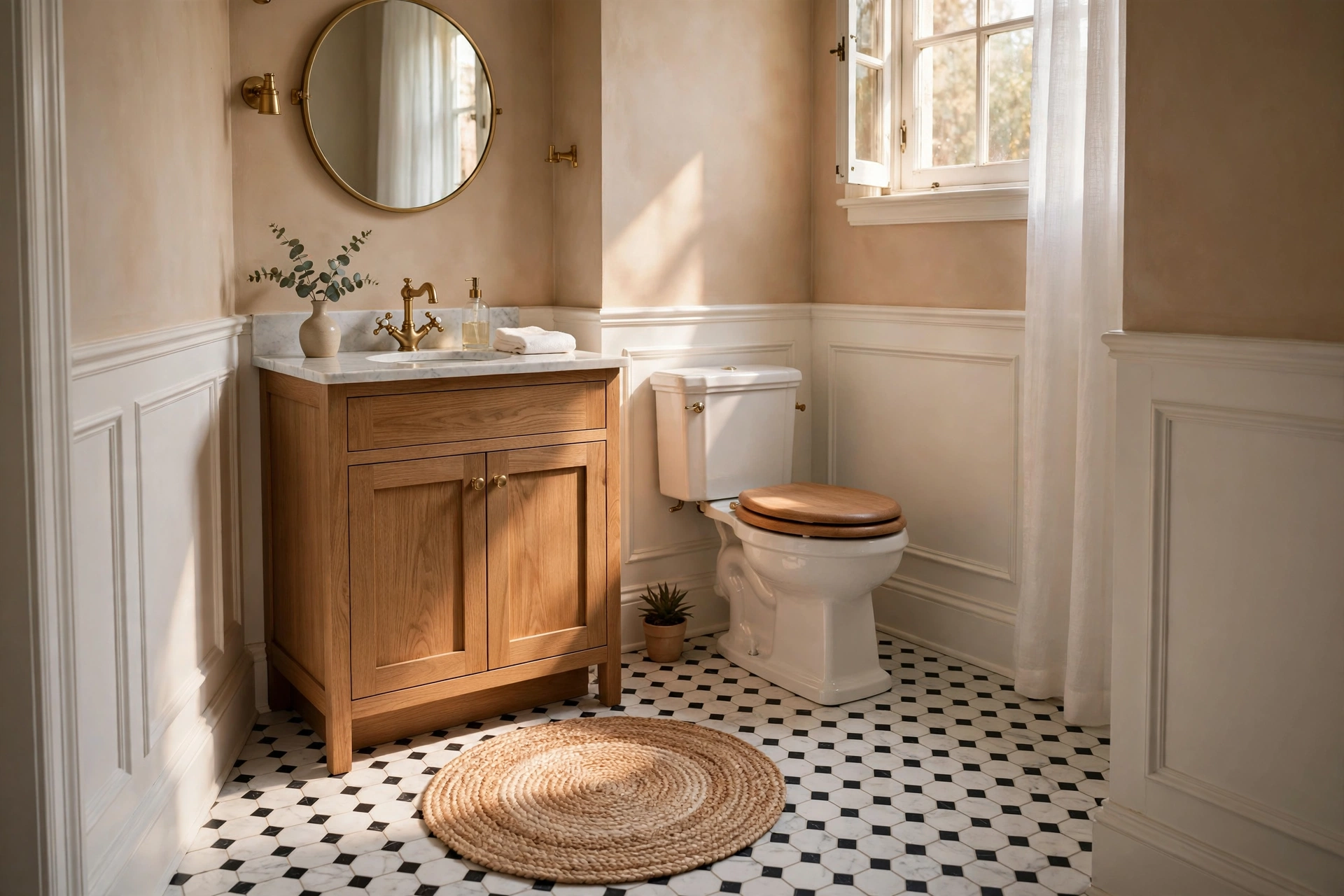
Powder rooms are small, but they deserve great rugs too. A small rug in a powder room adds polish and makes the tiniest bathroom feel considered. Because guests use this room, it is the perfect spot for a dressier choice — a small patterned rug, a round accent, or a vintage-style piece too delicate for a main bath. The rug sees less water here, so you have more freedom with materials. Center it in the open floor space or in front of the vanity. A thoughtful rug turns a utilitarian stop into a memorable moment.
14. Anti-Slip Layered Rug Pad
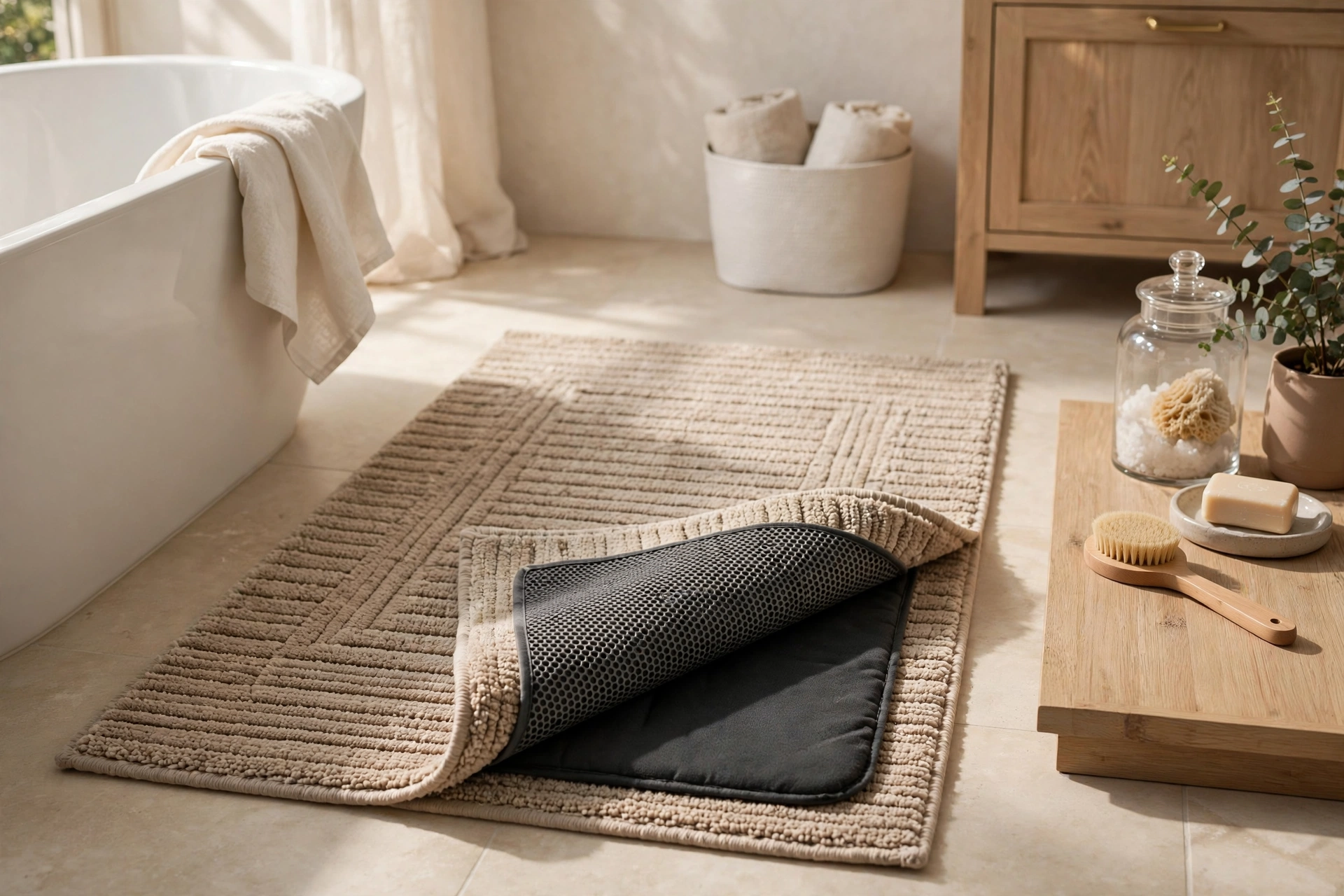
Safety and comfort go together with an anti-slip layered rug pad. Even the prettiest bath rug is a hazard if it slides on wet tile, so a quality non-slip pad underneath is essential. Rug pads add cushioning, extend rug life by reducing friction, and keep everything firmly in place. Look for pads made for damp environments — ventilated or moisture-resistant designs prevent mildew underneath. This trick lets you use any beautiful rug you love, even ones without built-in backing, because the pad does the gripping work. Cut the pad slightly smaller than the rug so it stays hidden.
15. Seasonal Rug Swap
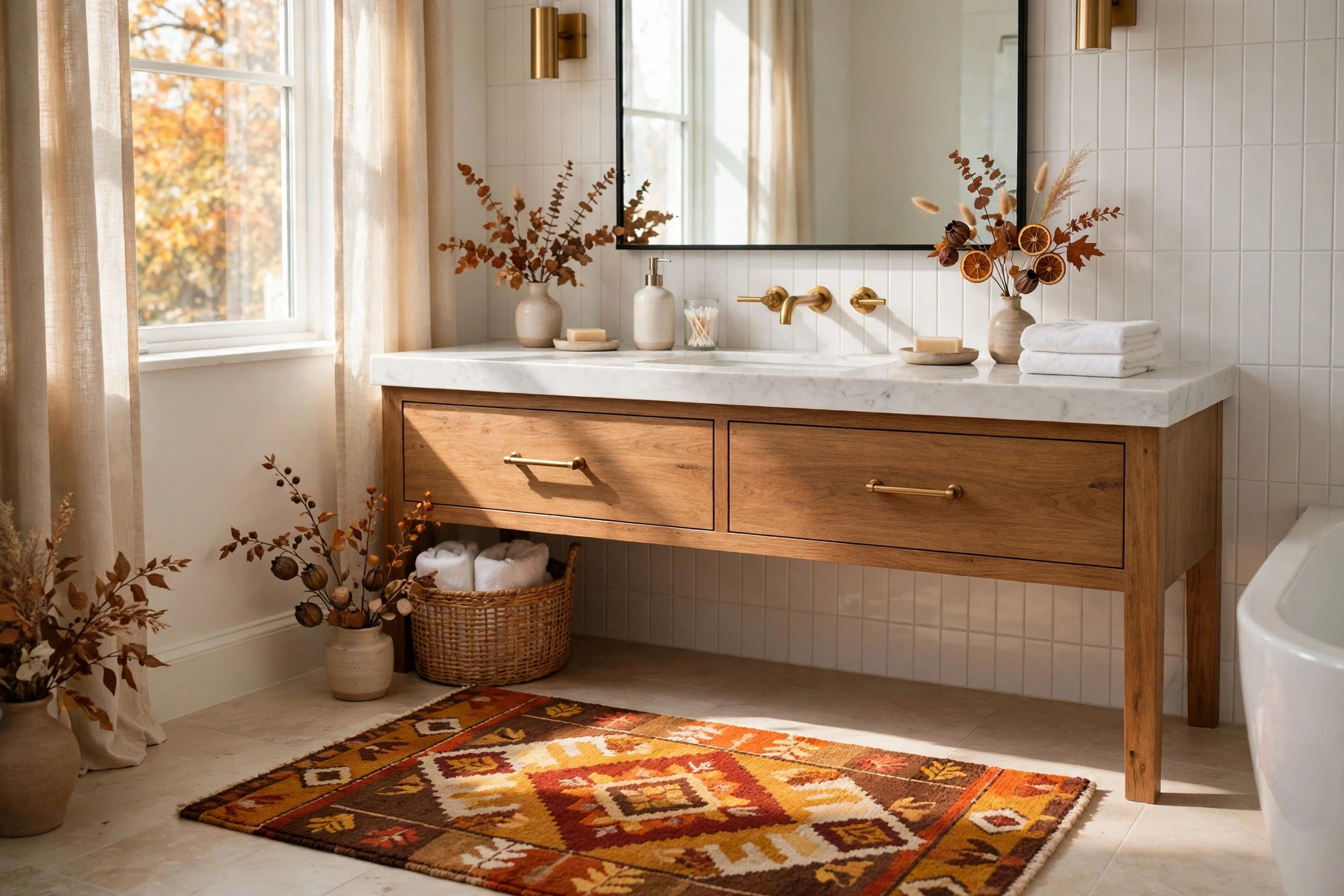
A seasonal rug swap keeps your bathroom feeling fresh all year. Switch to light, airy cotton or linen rugs in spring and summer, then bring out thicker, warmer mats in rich autumn or winter tones when the weather cools. This simple rotation refreshes the room’s mood without redecorating and extends each rug’s life since they rest between seasons. Store off-season rugs clean and dry. Much like rotating kitchen rug ideas through the year, a seasonal approach to bath rugs keeps the whole home feeling thoughtfully maintained and in step with the season.
Frequently Asked Questions
What type of rug is best for a bathroom?
The best bathroom rug balances absorbency, quick drying, and safety. Cotton, microfiber, and chenille are top choices because they soak up water and wash easily. Look for a non-slip backing or pair the rug with an anti-slip pad, especially on tile. Avoid thick rugs with no backing near showers, and skip delicate materials like silk or wool in splash zones. For most bathrooms, a washable low-to-medium pile rug that fits the space will perform beautifully and look great.
Can you put a regular rug in a bathroom?
You can, with a few precautions. A regular area rug works best in a powder room or a low-moisture bathroom where it will not sit in standing water. Add a waterproof, non-slip rug pad underneath to protect the rug and floor, and choose rugs that handle humidity. Avoid placing regular rugs inside the shower splash zone. With good ventilation and occasional washing, a regular rug can look fantastic and opens up far more style options than standard bath mats.
How often should you wash bathroom rugs?
Wash bathroom rugs every one to two weeks in a regularly used bathroom, more often with heavy use or a rug that stays damp. Rugs near showers and tubs collect moisture, soap residue, and bacteria, so frequent washing keeps them fresh and hygienic. Shake rugs out between washes and hang them to dry fully after baths. Rotating two rugs makes the routine effortless — one on the floor while the other is in the wash.
Should bathroom rugs match the towels?
Matching exactly is not necessary, but coordinating looks intentional and polished. Simply pick rugs and towels in the same color family or with one shared accent color. For example, a neutral rug pairs with any towel color, while a patterned rug can inspire the towel palette. Many designers suggest choosing the rug first, then towels that echo one of its tones. The goal is harmony, not a perfect match — slight variation adds depth and keeps the bathroom from feeling flat.
What size rug should I put in front of the bathtub?
Choose a rug at least as wide as the tub’s most-used side, typically 24 to 36 inches wide and 36 to 60 inches long for a standard tub. Both feet should land comfortably on the rug when you step out, with extra margin. For freestanding tubs, a large round rug or oversized rectangular mat centered on the long side works beautifully. Always leave a small border of floor around the rug so it looks placed rather than wall-to-wall.
Keep Exploring
Bathroom rugs prove that the smallest details make the biggest difference. A thoughtful rug warms cold tile, adds color and texture, and turns an everyday routine into something a little more luxurious. Start with one idea that fits your space — a plush mat, a washable runner, or a bold accent — and build from there as you discover what you love underfoot.
Once your bathroom floors feel cozy, carry that warmth through the rest of your home. Layering rugs room by room creates a cohesive, comfortable house where every step feels intentional, from the entryway to the bedroom. Try one change this weekend and notice how different the whole space feels.