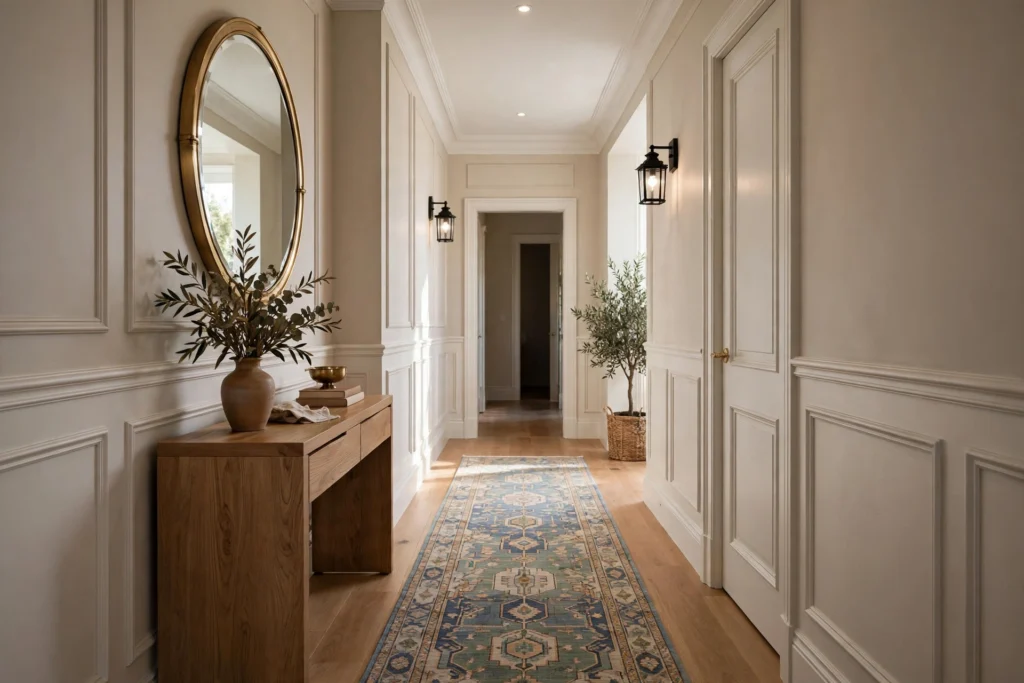

A hallway is the first thing guests see and the most-traveled stretch of flooring in your home, yet it is often the last space to get decorating love. These hallway runner rug ideas turn narrow corridors into warm, intentional parts of your home. The right runner protects your floors, quiets footsteps, guides the eye down the hall, and sets the tone for every room beyond it.
Before you shop, measure your hallway’s length and width, note door swings and vents, and decide on a color story that connects with the rooms on either side. For broader corridor styling, our hallway design guide pairs perfectly with the rug ideas below.
1. Measure Twice Before You Buy
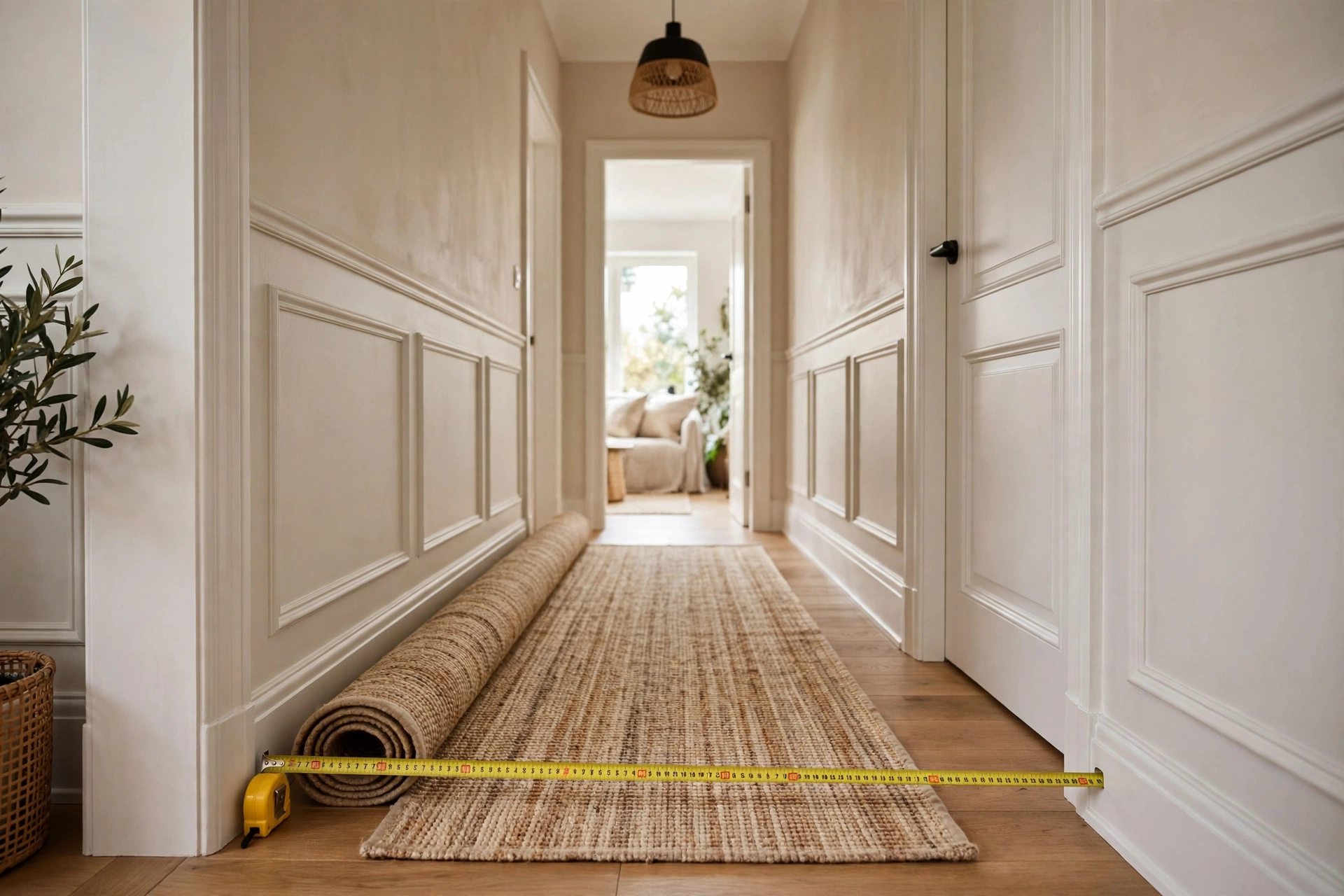
The number one runner mistake is guessing the size. Measure your hallway wall to wall, then subtract 4 to 6 inches on each side — that exposed floor border is what makes a runner look custom rather than cramped. Note every door swing, floor vent, and threshold so your rug never bunches or blocks anything. Measure twice and write the numbers down before you browse, because “close enough” runners are the ones that end up rolled in a closet. A tape measure is the cheapest decorating tool you will ever own.
2. Choose the Right Runner Length
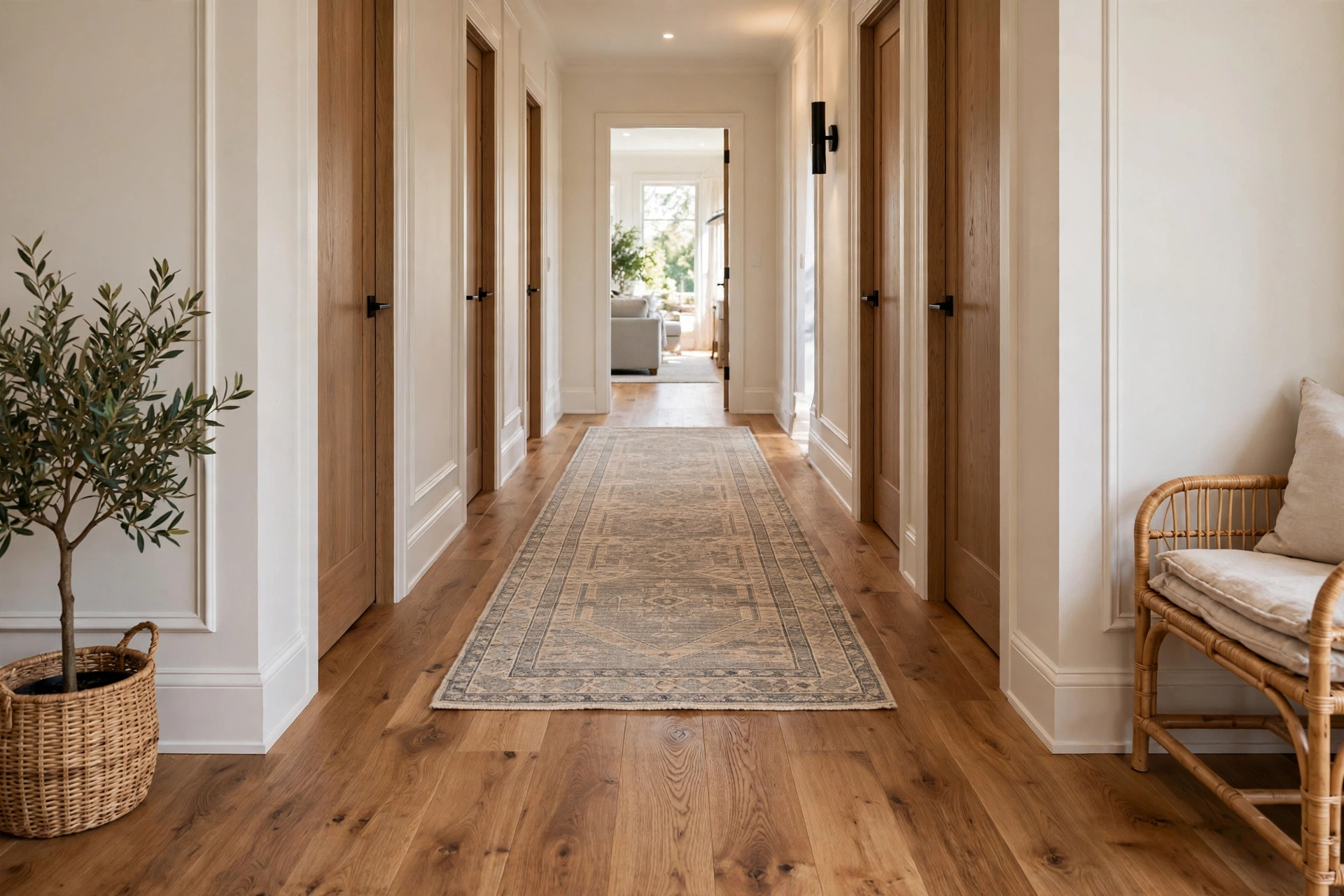
A runner should cover roughly half to three-quarters of your hallway’s length, never wall to wall. Leave bare floor at both ends for a polished, intentional look, and center the rug in the corridor’s longest uninterrupted stretch. For very long halls, two identical runners with a small gap at a doorway read as one thoughtful design. Standard runners run 2 to 3 feet wide and 6 to 14 feet long, so match the width to your hallway first, then pick the length that fits your layout. If your hall has a jog or an L-turn, treat each straight run as its own mini hallway and size a runner for the longest uninterrupted stretch.
3. Go Bold With Pattern in a Neutral Hall
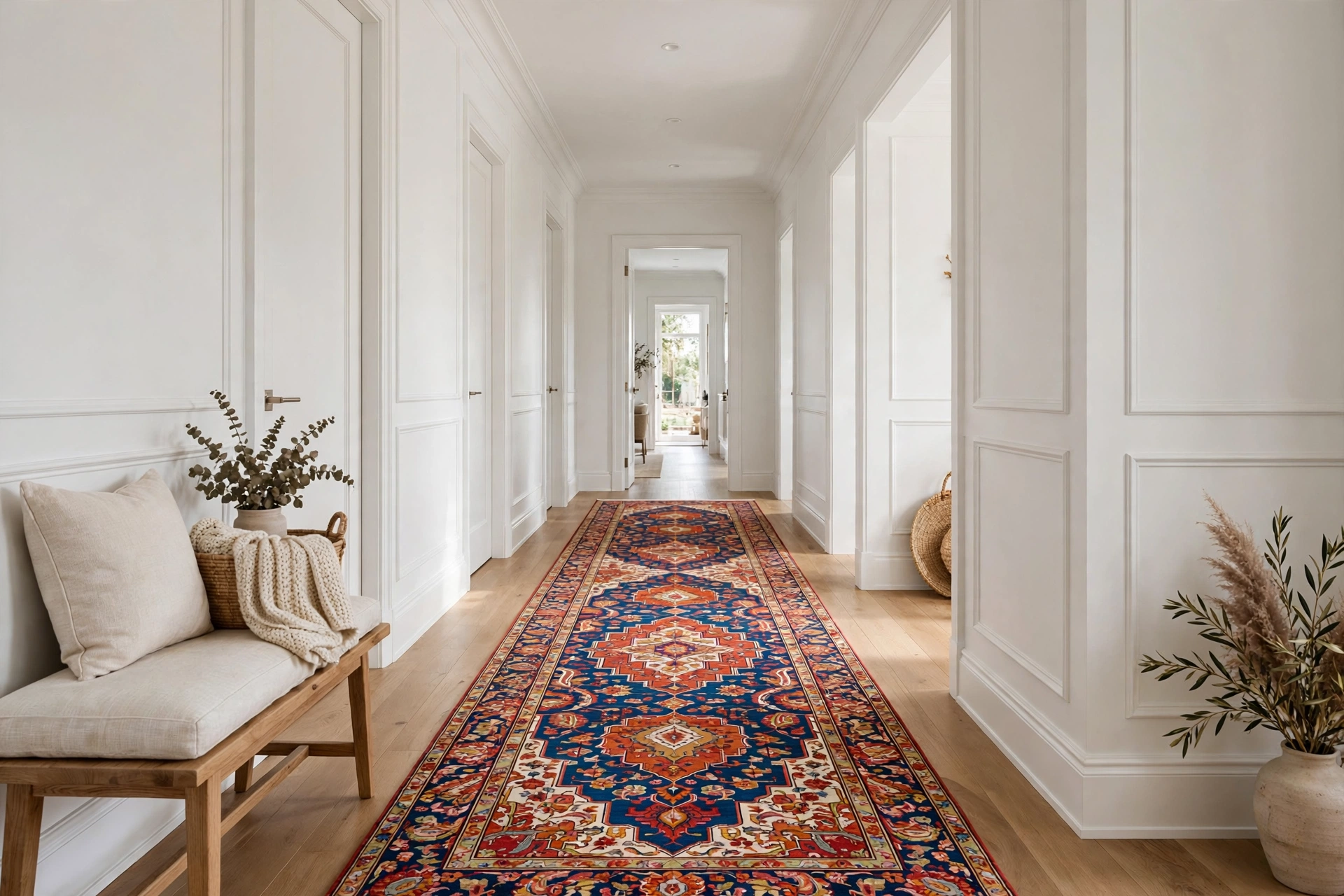
If your hallway walls are white or neutral, a patterned runner is your chance to add personality. Persian-inspired motifs, geometric prints, and vintage florals all bring energy to a plain corridor without a single drop of paint. Busy patterns have a practical bonus: they hide dirt and footprints far better than solids, which is gold in a high-traffic zone. Keep the palette tied to nearby rooms so the boldness feels connected. Entryway rug ideas for pattern inspiration that welcomes guests beautifully.
4. Try a Classic Stripe to Elongate
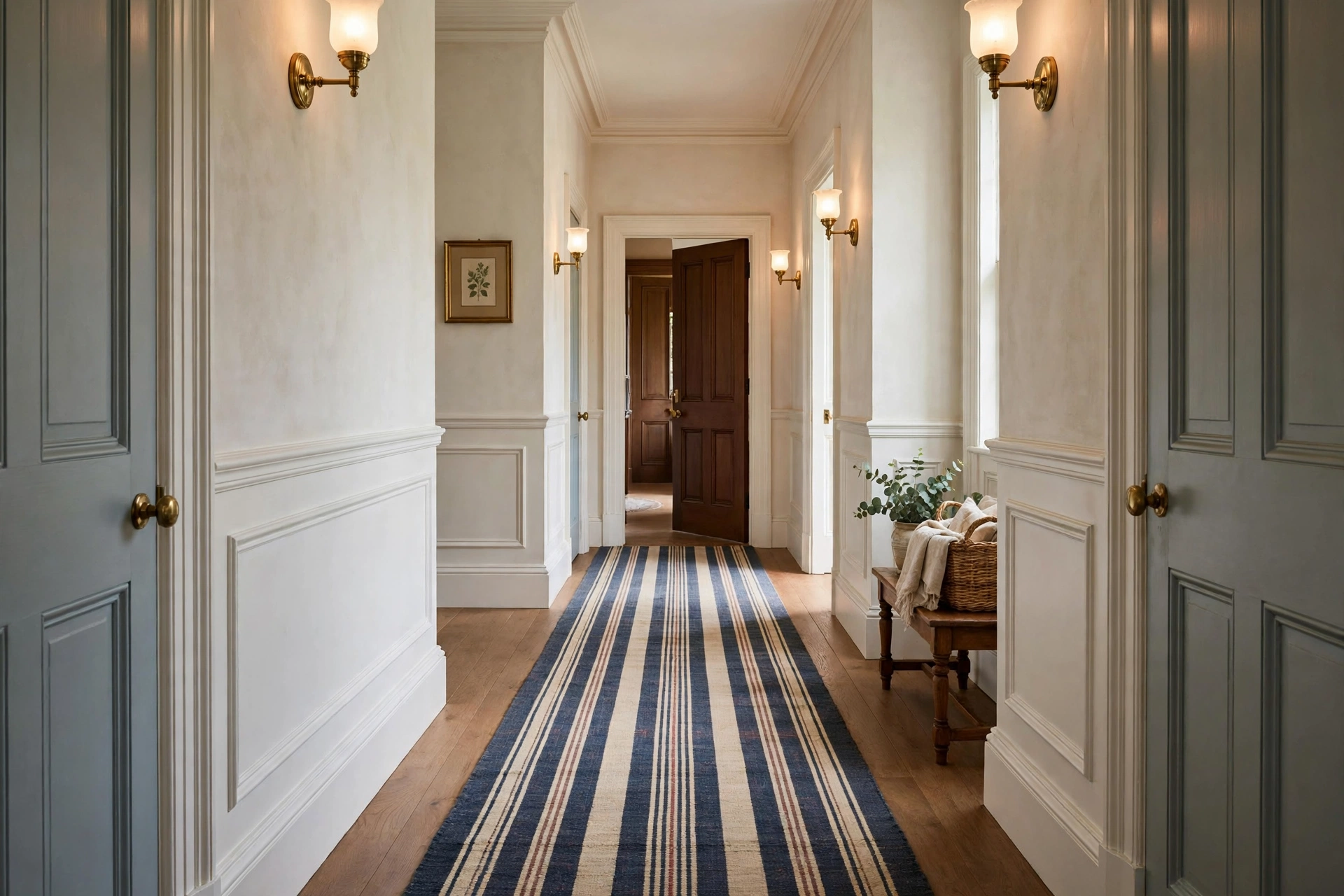
Stripes are the oldest hallway trick in the book because they genuinely work: stripes running along the hall’s length draw the eye forward and make the corridor feel longer. Choose fine pinstripes for a tailored look or wide, modern bands for drama. In a truly narrow hall, keep the stripe colors close in tone so the effect stays subtle rather than dizzying. A striped runner in natural fibers like cotton or jute adds texture too, giving you pattern and warmth in one piece. For an extra width illusion, hang a long mirror where it catches light so the stripes and reflections stretch the space together.
5. Layer Small Rugs for a Custom Runner
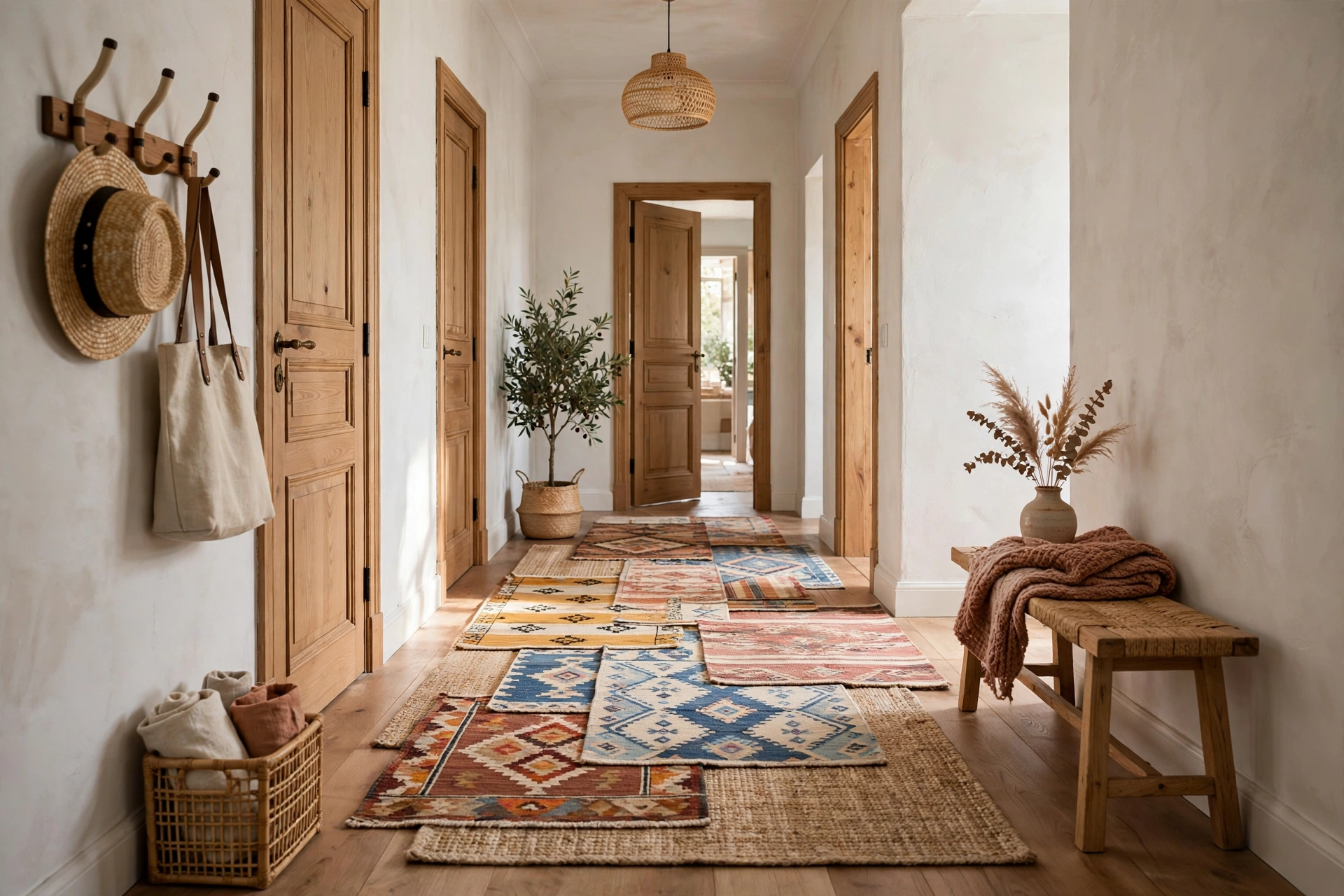
Can’t find a runner in exactly your size? Layer two or three smaller rugs end to end for a custom look with zero compromise. Overlapping flat-weave rugs in complementary patterns creates a collected, bohemian feel that a single store-bought runner can’t match. This trick is perfect for oddly shaped halls and landings where standard sizes fall short. How layering smaller rugs creates a makeshift runner — it is one of the most renter-friendly ideas on this list.
6. Pick Low-Pile, High-Traffic Materials
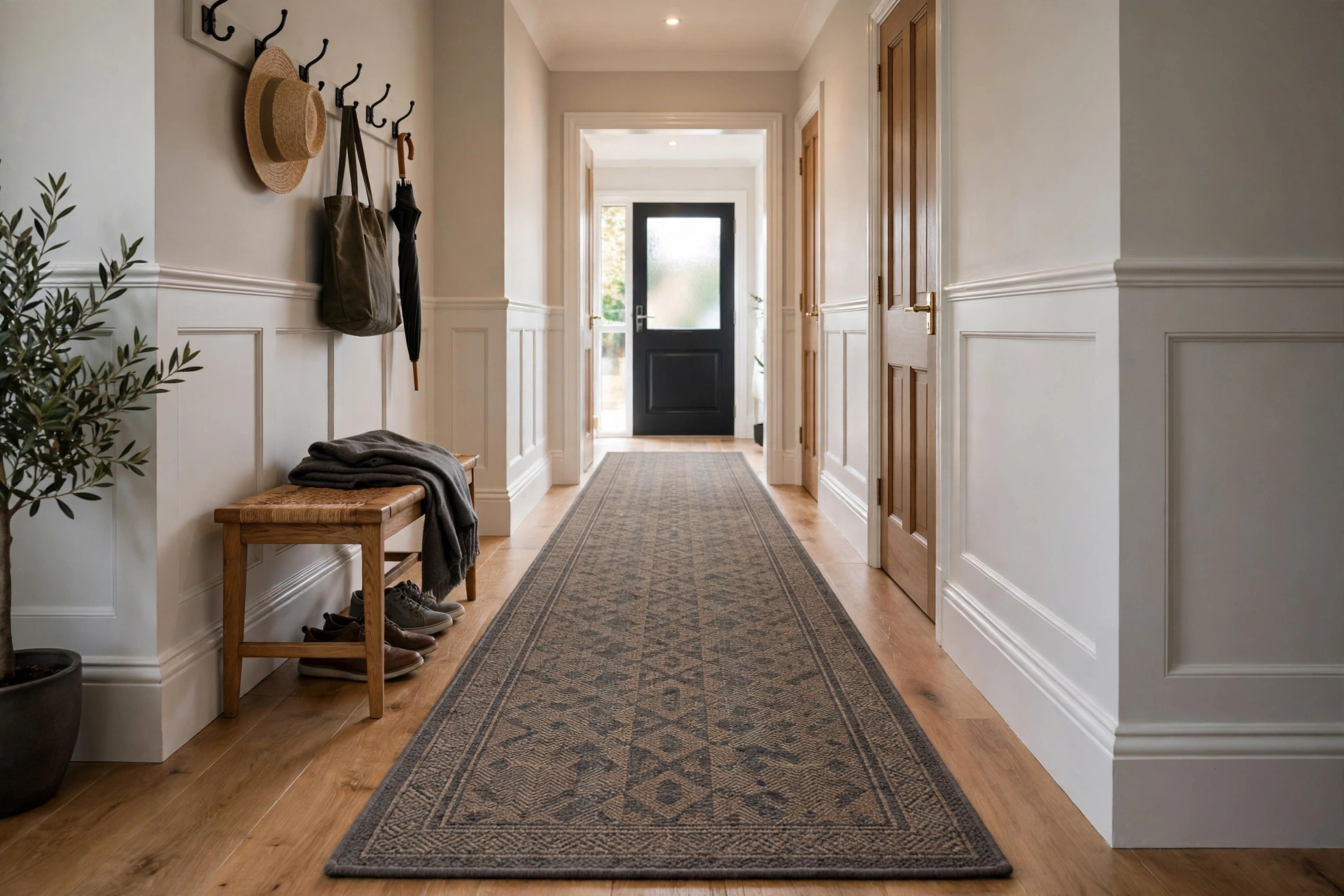
Hallways take a beating, so choose materials built for it: wool, polypropylene, and cotton flatweaves resist crushing and clean up easily. Avoid high-pile and shag rugs — they trap dirt, catch on door bottoms, and wear unevenly in traffic lanes. Wool is naturally stain-resistant and bounces back from footprints, while polypropylene handles muddy shoes and pet paws without complaint. A tight, low weave also fits under low-clearance doors, which matters in older homes with charmingly uneven floors.
7. Add a Rug Pad to Stop Slipping
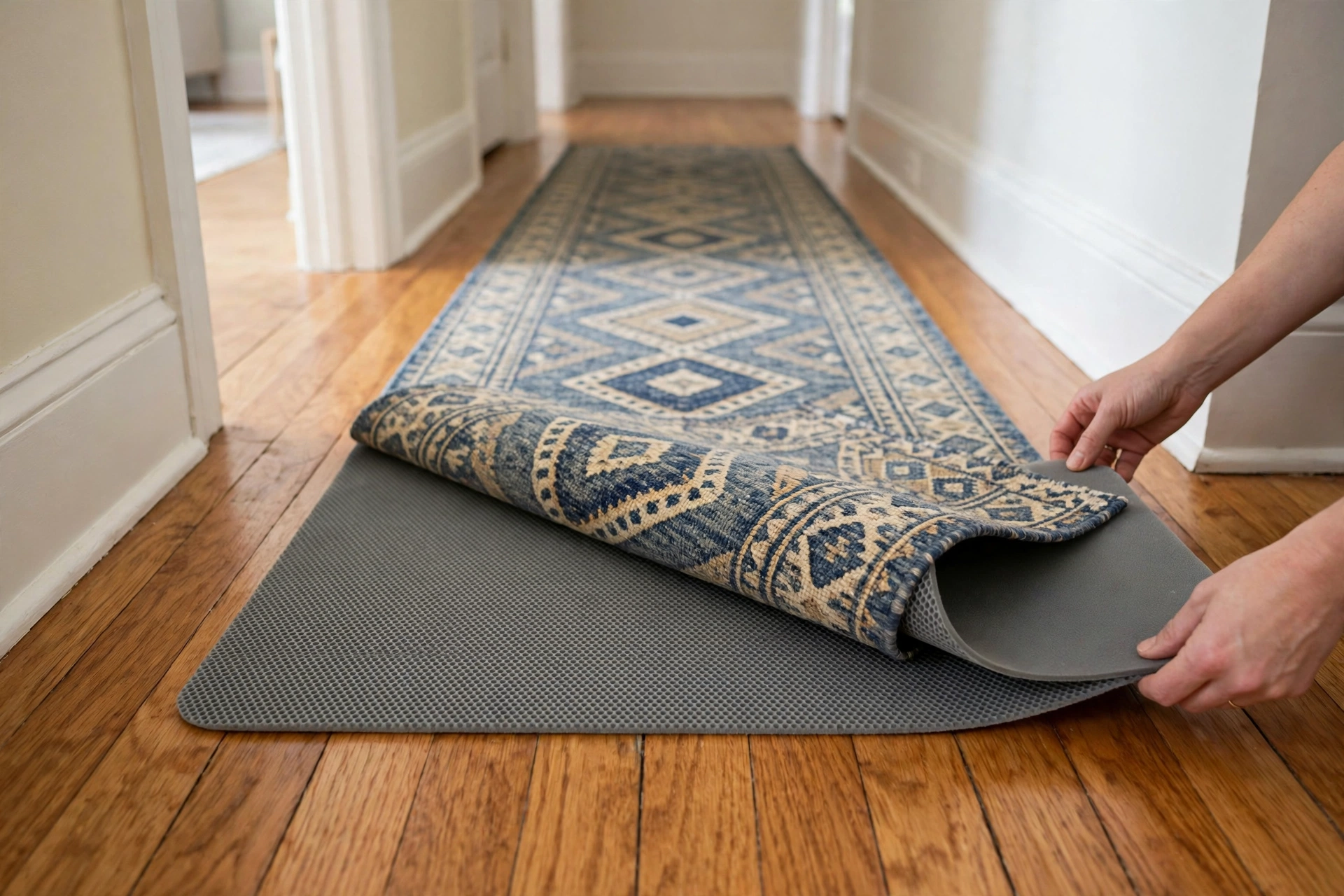
A runner without a pad is a slipping hazard waiting to happen, especially on hardwood or tile. Choose a thin, non-slip pad cut about an inch smaller than the rug on all sides so it stays invisible. Felt-rubber combo pads add cushioning and grip while protecting floors from dye transfer. Skip cheap PVC pads, which can discolor finishes over time. The right pad also extends your runner’s life by absorbing the daily pounding of footsteps, making it the smartest ten dollars in hallway decorating.
8. Brighten Dark Halls With Light Colors
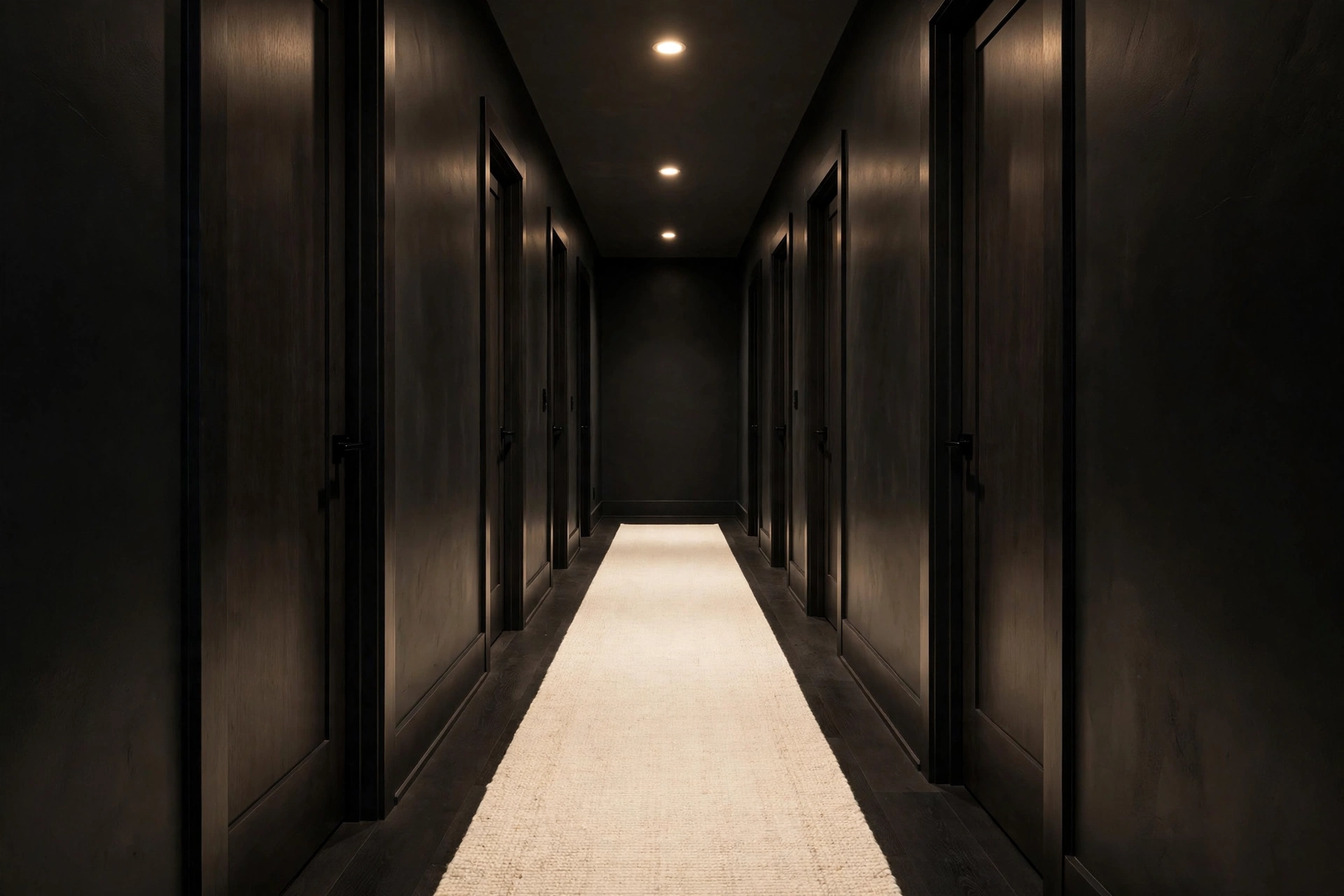
Windowless hallways swallow light, but a pale runner can bounce it back. Creams, soft grays, and warm beiges visually widen a dark corridor and make it feel airier. If you love pattern, choose designs with a light background so the brightening effect stays intact. Pair the runner with a mirror and light wall paint to multiply the effect. Entryway decorating ideas show how light textiles and reflective surfaces transform dim passages into welcoming ones.
9. Coordinate With Nearby Rooms
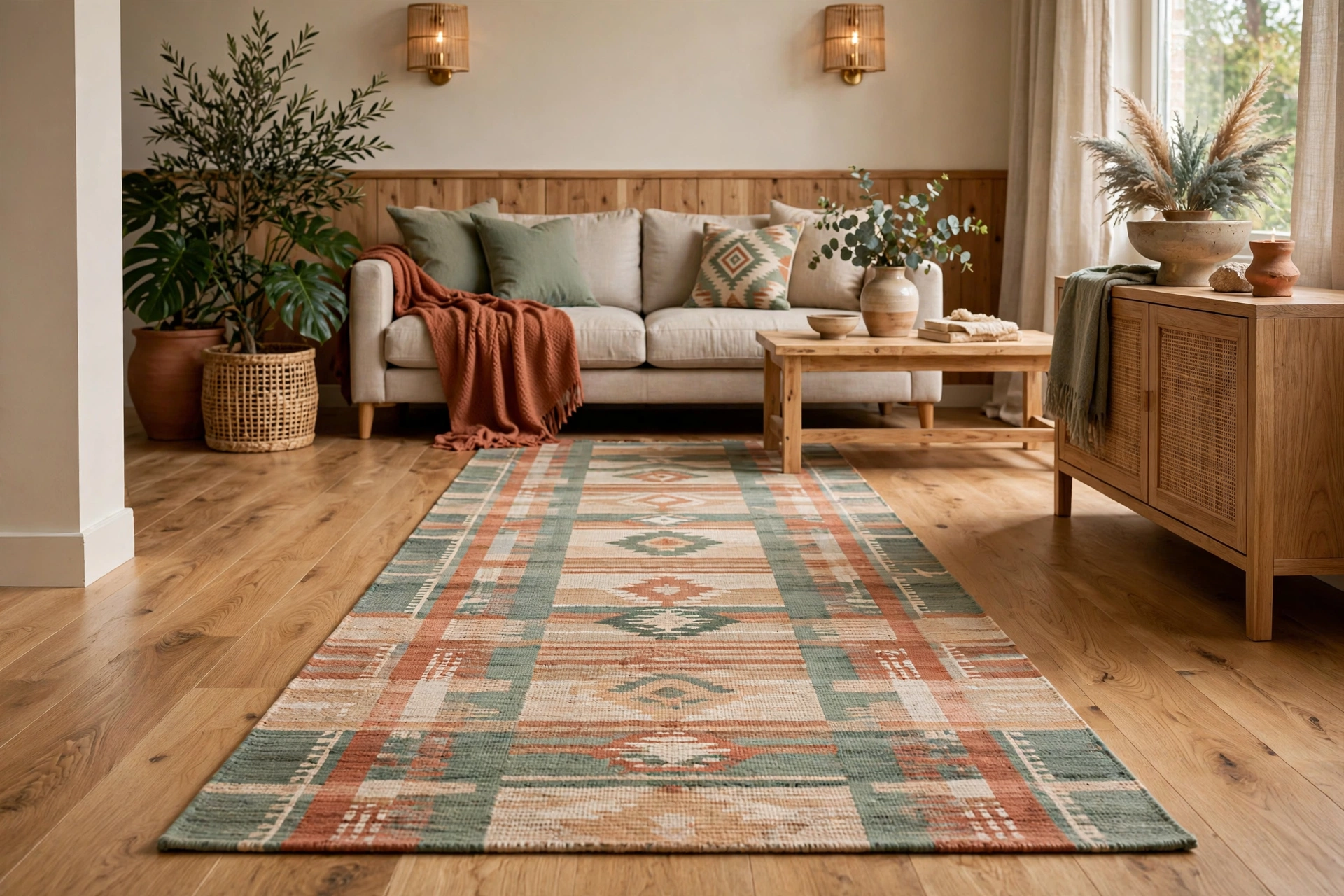
A hallway connects rooms, so let the runner be the thread that ties them together. Pull one or two colors from the living room rug or the kitchen palette into your runner’s pattern for a whole-home flow. This doesn’t mean matching exactly — a shared accent color is enough to make the transition feel intentional. In open-plan homes, this coordination is what separates a designed look from a random one. This trick also works vertically: echo the runner’s accent color in a piece of hallway art or a painted interior door for a fully connected look. Step back and view the hall from each adjoining room to check the connection.
10. Use Washable Runners for Busy Homes
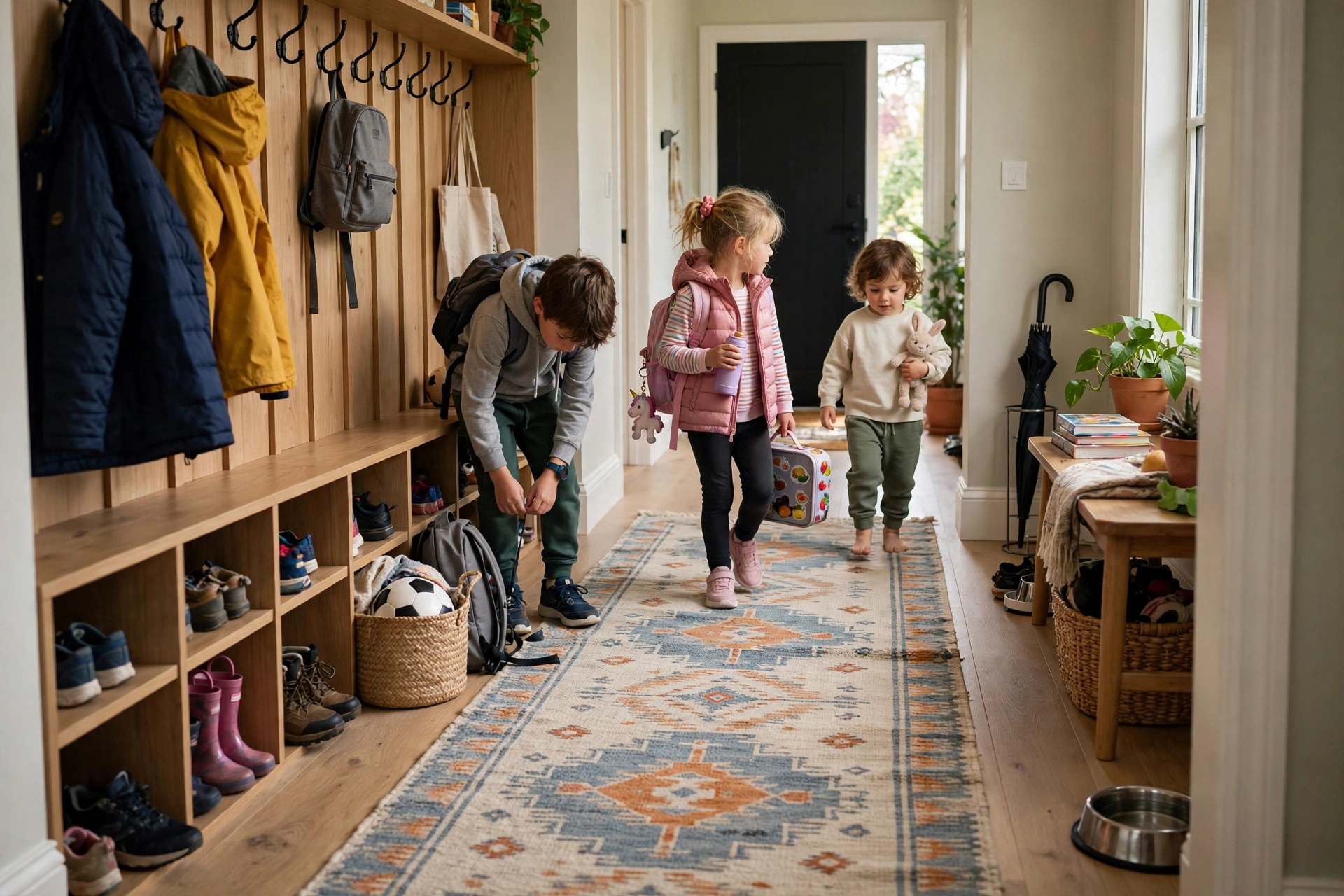
Kids, dogs, and daily commutes demand a runner that can take a spin in the washing machine. Modern washable runners look nothing like their flimsy predecessors — many mimic wool Persian designs so convincingly guests won’t guess. Choose machine-washable options for entry-adjacent halls where mud and rain are facts of life. Air-dry them to protect the backing, and keep a spare so the hall never looks bare on laundry day. Practical doesn’t have to mean boring.
11. Style With a Console and Mirror
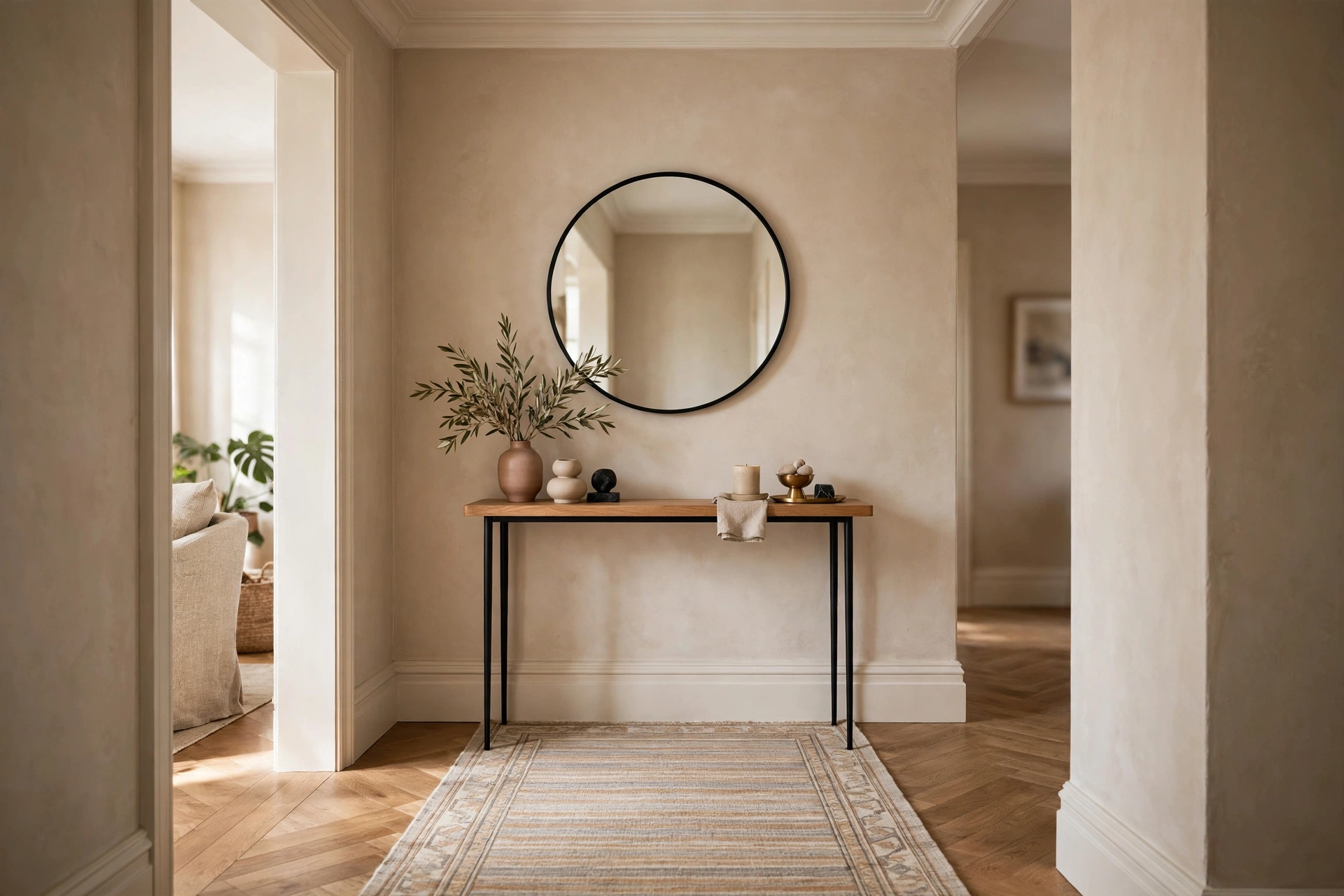
A runner looks its best with a little company: a slim console table, a round mirror, and a small lamp or vase turn a corridor into a styled vignette. Keep furniture narrow — under 12 inches deep — so the walkway stays clear. The mirror doubles light and makes the hall feel wider, while the console gives you a landing spot for keys and mail. Anchor the arrangement by centering the runner under the console so the whole composition reads as one designed moment.
12. Try Vintage and Distressed Looks
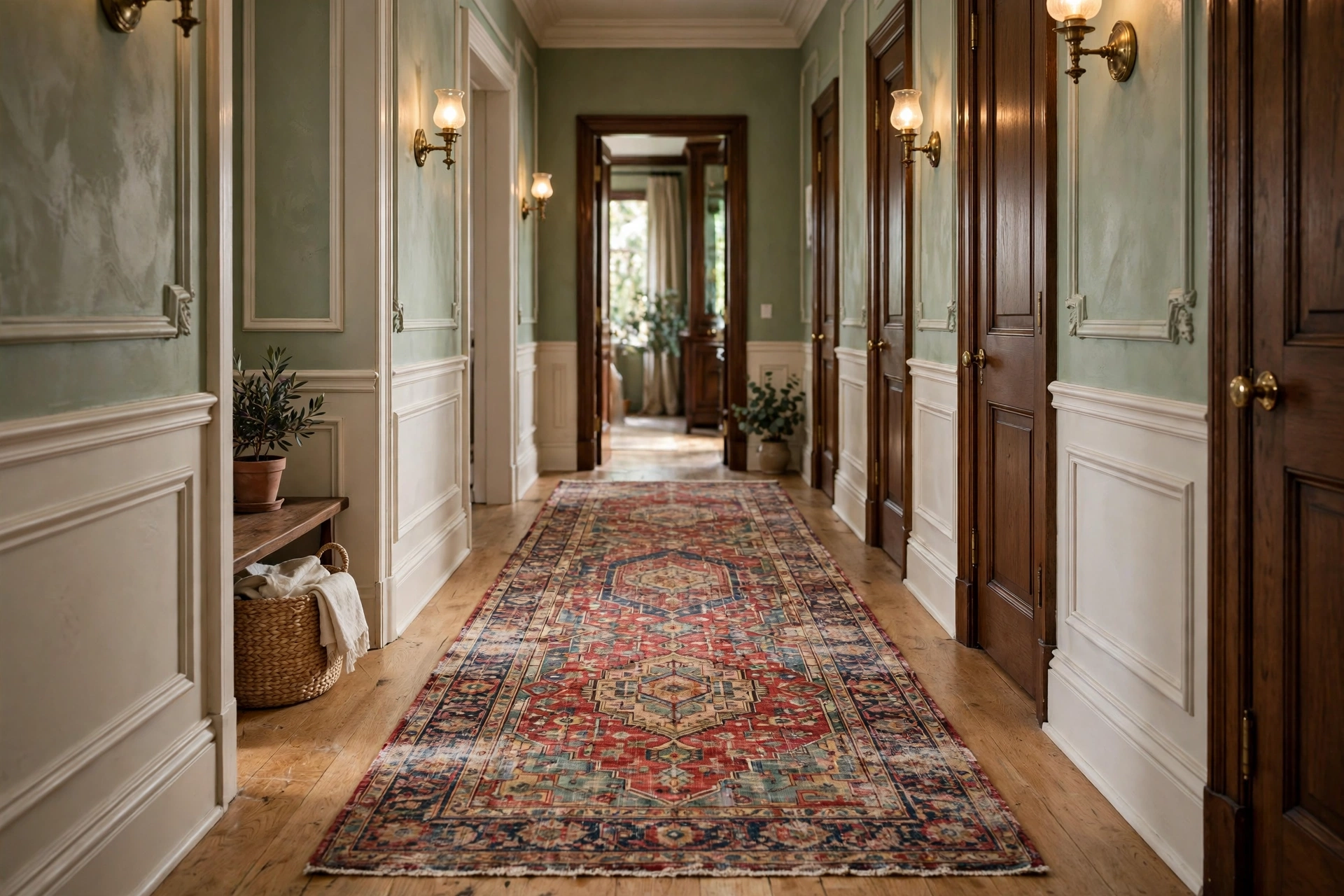
Vintage and vintage-look runners bring instant character with their faded patterns and rich, timeworn colors. Distressed finishes are forgiving by nature — existing wear hides new wear, which is ideal for hallways. Authentic vintage pieces in wool are surprisingly durable and often one of a kind. If you buy vintage, check the backing and edges for damage, and have it professionally cleaned before laying it down. The patina tells a story no new rug can.
13. Keep It Simple on Patterned Floors
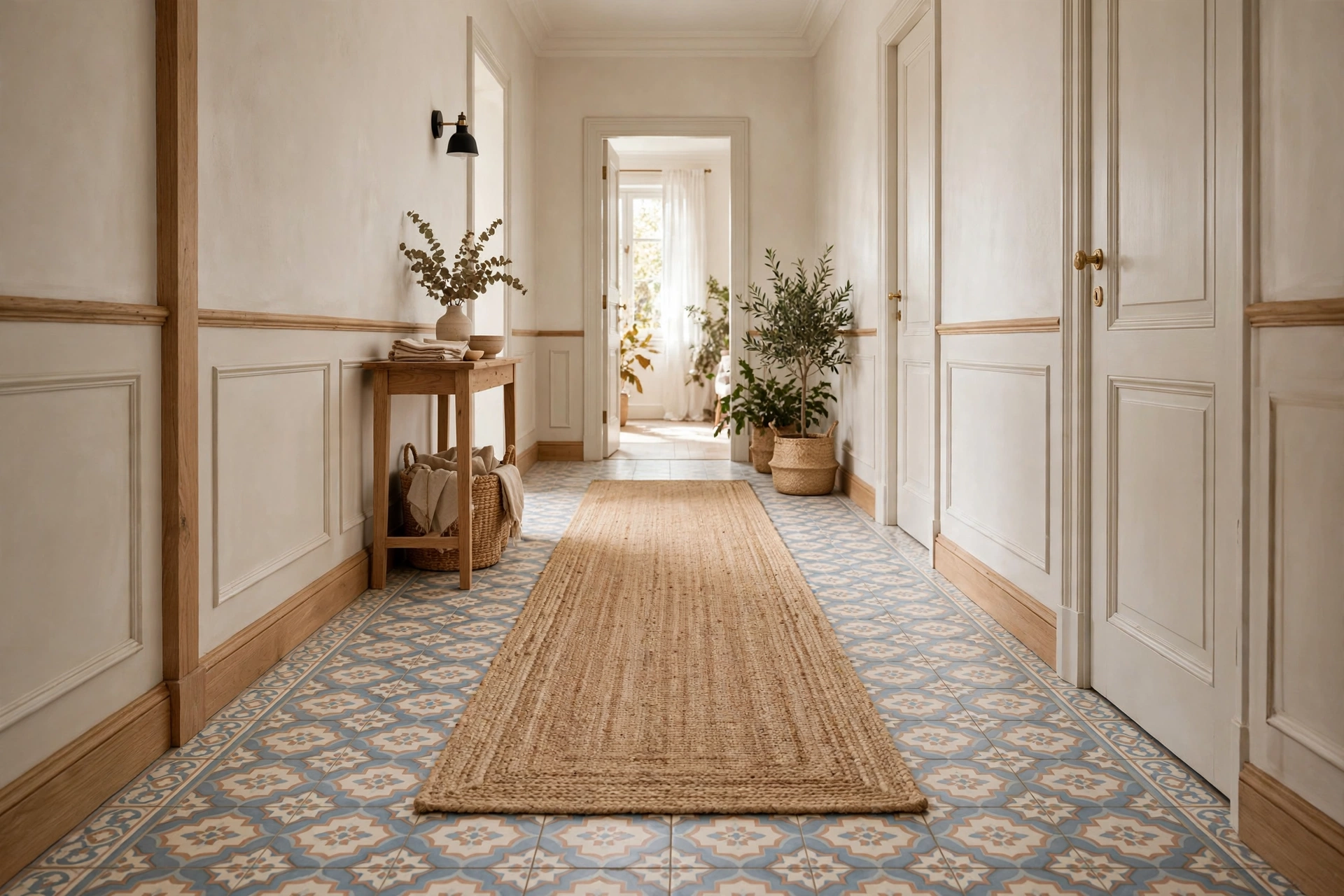
If your hallway already has patterned tile, encaustic cement, or bold wood floors, let the floor be the star. Choose a simple solid or subtly textured runner in a tone pulled from the flooring — jute and sisal are perfect here. The runner still protects the floor and softens sound without competing visually. This restraint is what makes beautiful floors look intentional rather than accidental. A rug pad still matters here — patterned floors are often hard tile or stone, and the pad keeps the runner from sliding on the smooth surface. When in doubt, texture beats pattern in a floor that is already busy.
14. Anchor an Entry Hallway With a Runner
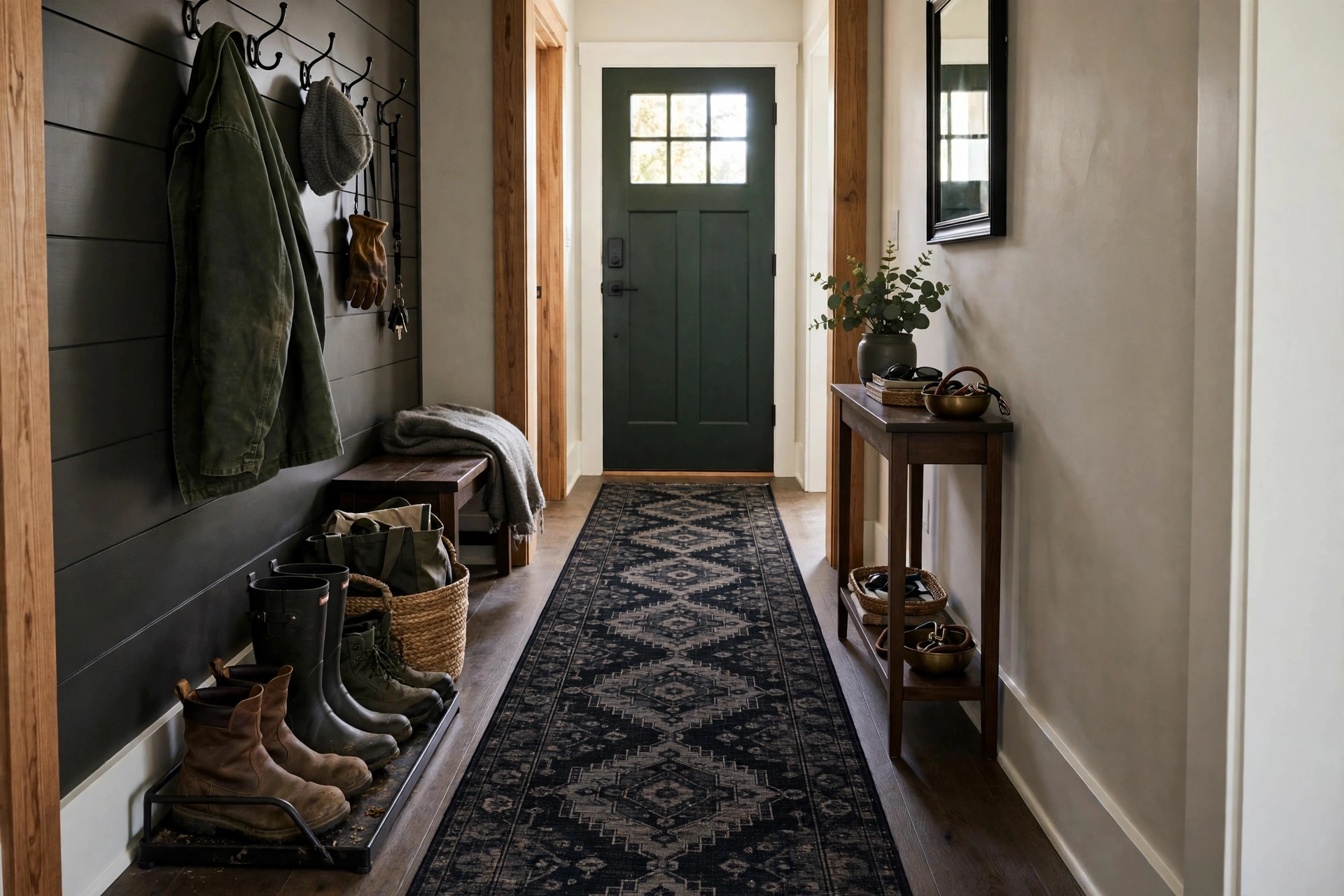
Entry halls work hardest of all, so dress them accordingly: a darker or busier runner hides the dirt tracked in before you can clean it. Place a washable, low-pile runner from the door inward, sized to catch the first several steps of every visitor. Pair it with a boot tray and wall hooks so the whole entry functions as a system. A well-chosen entry runner is the difference between a mudroom vibe and a grand-entrance vibe in the same square footage, so choose one that can handle real life beautifully every day.
15. Care for Your Runner to Make It Last
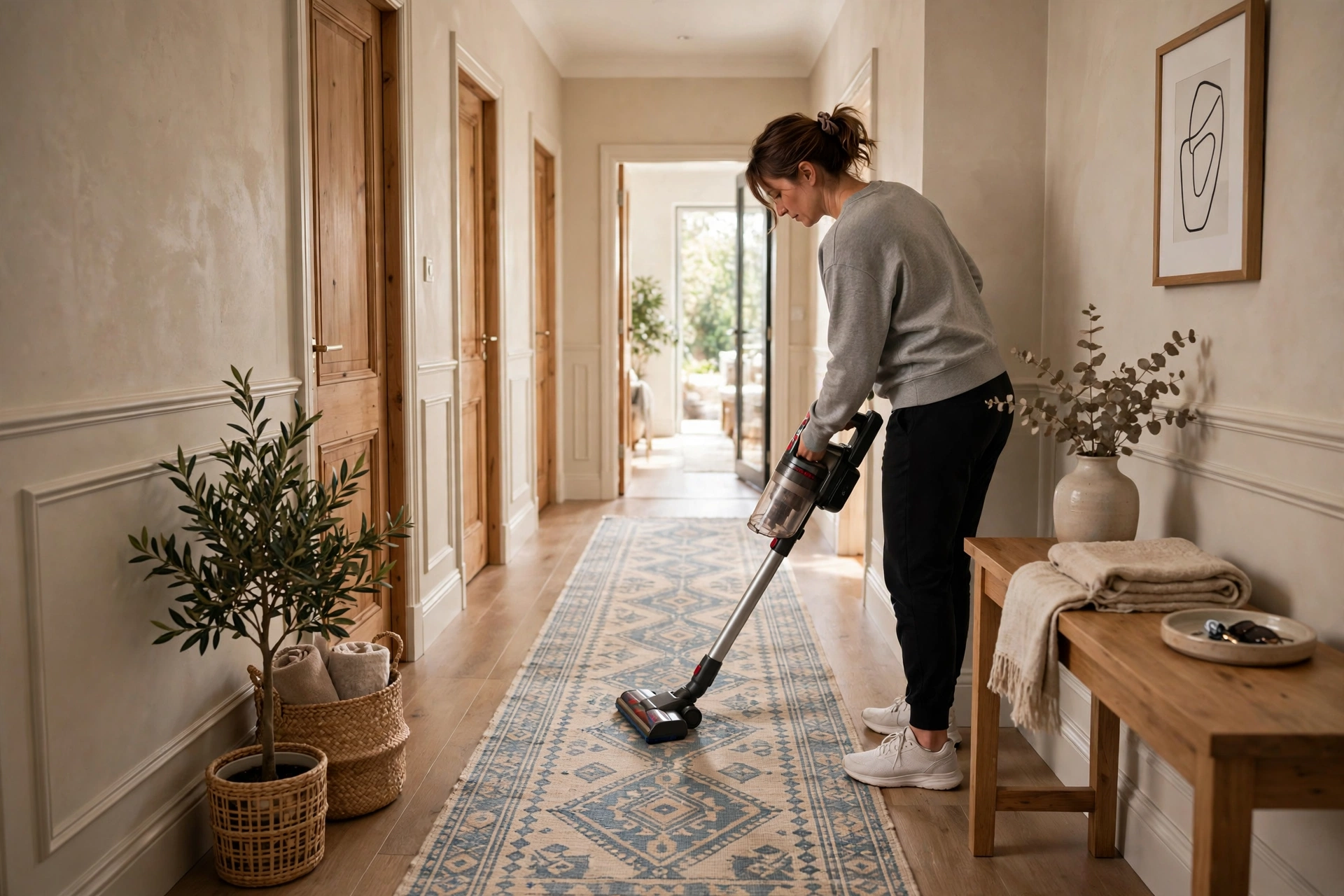
A little maintenance keeps your runner looking new for years: vacuum weekly without the beater bar, rotate it end to end every few months for even wear, and blot spills immediately instead of scrubbing. For wool runners, a yearly professional clean refreshes the fibers. Kitchen rug guide shares more care tips that apply to any high-traffic rug. Treat your runner well and it will carry your hallway in style for a decade or more.
Frequently Asked Questions
What size runner rug do I need for a hallway?
Choose a runner 2 to 3 feet wide, leaving 4 to 6 inches of bare floor visible on each side. The length should cover about half to three-quarters of the hallway — never wall to wall — with bare floor left at both ends for a balanced look.
Should a runner cover the entire hallway?
No. Covering the full length looks institutional and traps dirt at the edges. Leaving bare floor at the ends and a consistent border on the sides makes the runner look like a deliberate design choice rather than wall-to-wall carpet.
What is the best material for a hallway runner?
Wool and low-pile synthetics like polypropylene are the best performers: they resist stains, handle heavy foot traffic, and clean easily. Avoid high-pile or shag rugs, which trap dirt, catch on doors, and wear unevenly in traffic lanes.
How do I stop my hallway runner from slipping?
Use a thin non-slip rug pad cut slightly smaller than the runner, or apply double-sided rug tape at the ends. Felt-rubber pads offer the best grip plus cushioning, and they protect hardwood floors from dye transfer.
Can I use a runner rug on stairs?
Yes, but use a proper stair runner installation with tack strips or a professional installer — loose rugs on stairs are dangerous. Stair runners should be narrower than the tread, centered, and firmly secured at every step.
Keep Exploring
The right runner does quiet, hardworking magic: it protects floors, softens sound, and turns a pass-through corridor into a designed space. Pick your size, choose a pattern you love, and don’t skip the rug pad — those three decisions cover ninety percent of hallway runner success. Once the runner is down, live with it for a week before adding art or furniture; you will see the hallway with fresh eyes and style it better.
Hallway design ideas for complete styling guidance from floors to ceilings. Your hallway deserves better than bare floors.








[…] The pattern adds energy and personality, especially with plain white walls and simple fixtures. Borrowing tricks from hallway runner rug ideas helps, since long baths and hallways share the same proportions. Choose a washable, quick-drying […]