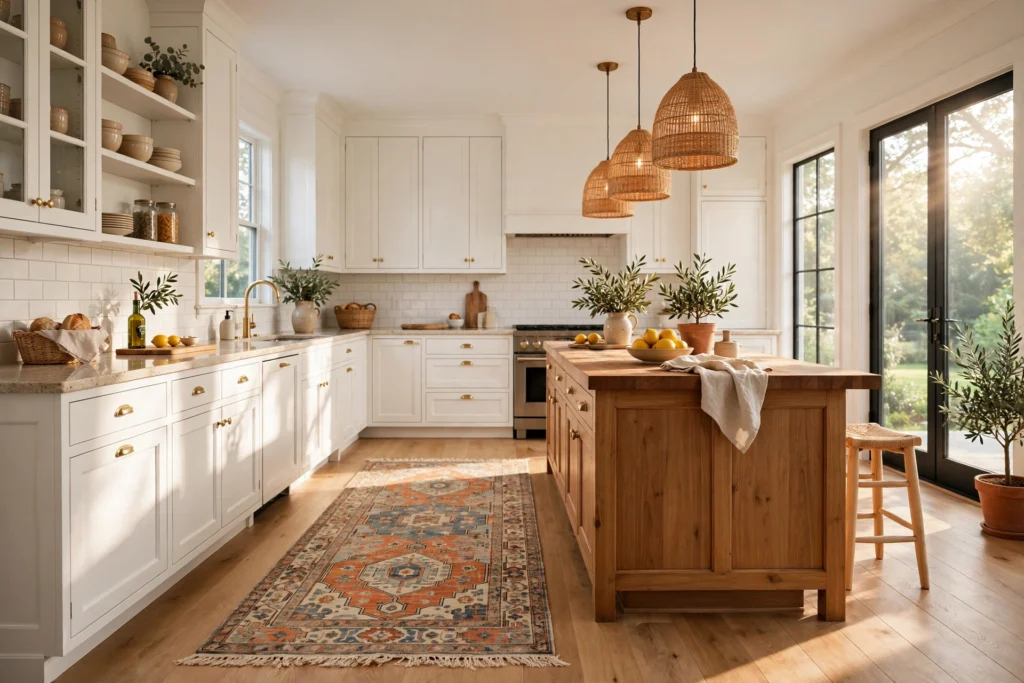

Kitchens are hardworking rooms — tile, stone, and wood floors that are cold underfoot and brutal on your back during long cooking sessions. A rug changes all of that in an afternoon. These kitchen rug ideas for warmth and practical comfort prove that rugs belong in kitchens, as long as you choose the right materials, sizes, and placements for a room built around spills and traffic.
The golden rules are simple: low pile, easy to clean, and a non-slip base. Every idea below balances style with those practical realities, so your rug looks great on day one and still looks great after a year of real cooking.
1. Washable Runner in Front of the Sink
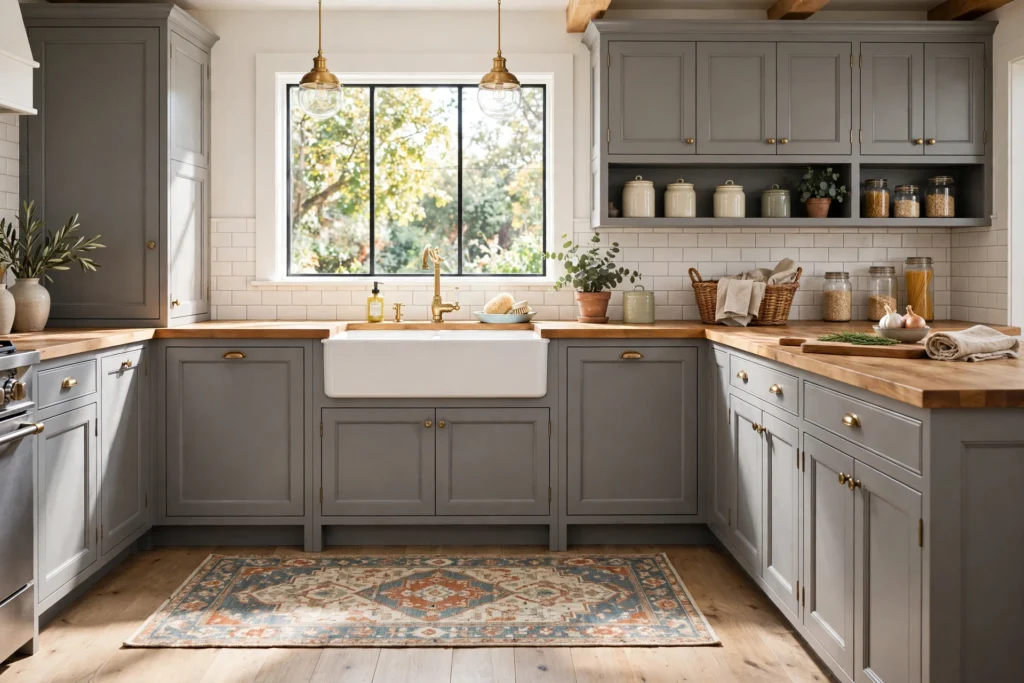
The sink is where you stand longest — washing vegetables, doing dishes, filling pots — so it’s the highest-impact spot for a rug. A washable runner here cushions your feet and back while catching the drips and splatters that are inevitable around water. Machine-washable rugs have come a long way: many now look like vintage Persian or modern flatweaves.
Size it to your space: a 2×3-foot rug suits a single sink, while a 2.5×7-foot runner fits a double-bowl setup with dishwasher clearance. Always use a non-slip rug pad underneath — wet kitchen floors and sliding rugs are a dangerous combination. The Spruce’s rug size guide includes a kitchen section with exact runner dimensions for common layouts.
2. Vintage-Look Persian Rug
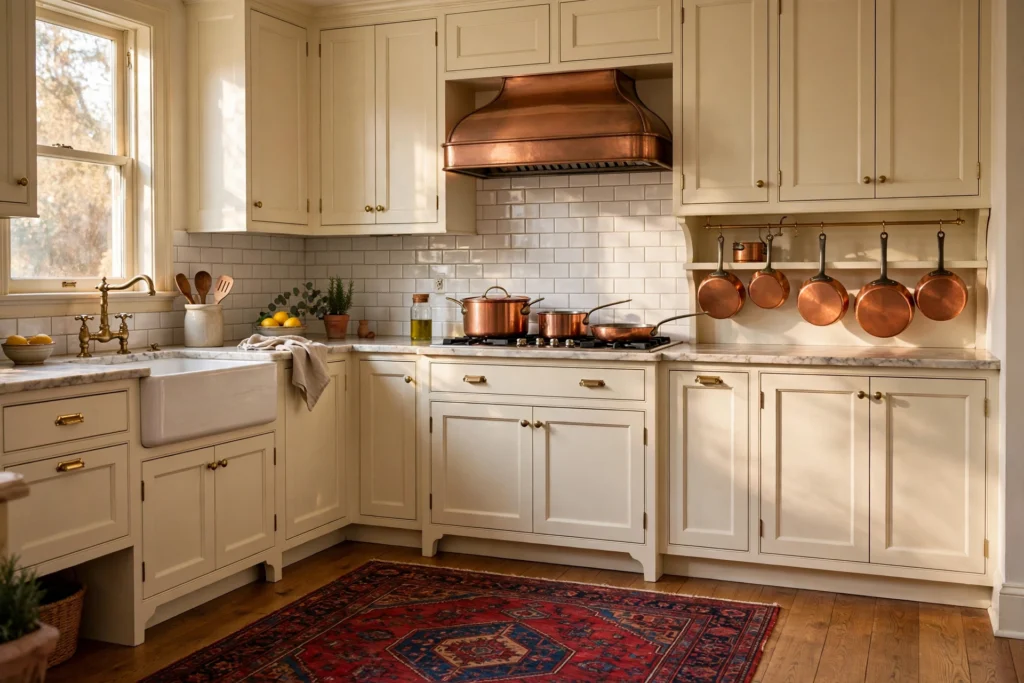
Nothing warms up a kitchen like a Persian-style rug — the rich patterns hide crumbs and stains better than any solid color, and the classic motifs work with every cabinet style from farmhouse to modern. Genuine vintage wool rugs are surprisingly practical in kitchens: they’re low-pile, durable, and the patina only improves with age.
If an authentic vintage piece feels too precious, high-quality reproductions in polypropylene offer the look with machine-washable convenience. Choose a pattern with plenty of color variation — busy designs disguise daily wear. Our vintage kitchen design ideas show how to build a whole kitchen around this kind of collected character.
3. Long Runner for Galley Kitchens
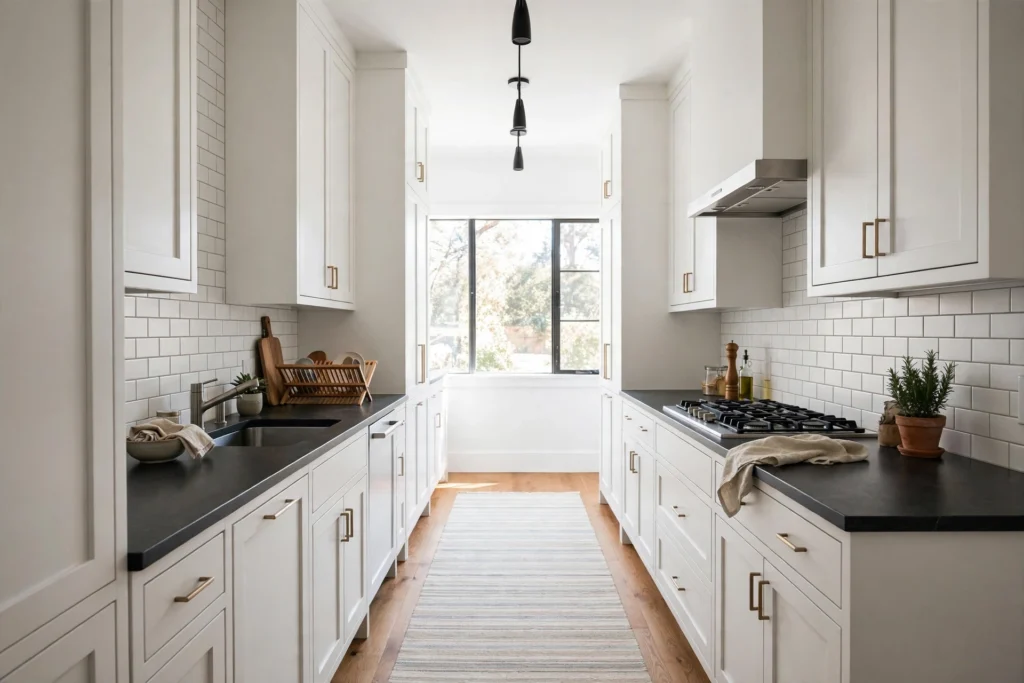
A galley kitchen’s long, narrow footprint is practically begging for a runner. One long runner down the center visually elongates the space, softens the hard flooring, and gives you a comfortable path between counters. Choose a subtle pattern or stripe — busy designs can make a narrow space feel chaotic.
Leave 3 to 6 inches of bare floor on each side so the runner reads as intentional rather than wall-to-wall carpeting. Measure carefully around appliance doors: the runner shouldn’t bunch under the oven or dishwasher. A low-profile flatweave is essential here — anything with pile will catch on toe kicks and door swings.
4. Layered Jute Plus Patterned Rug
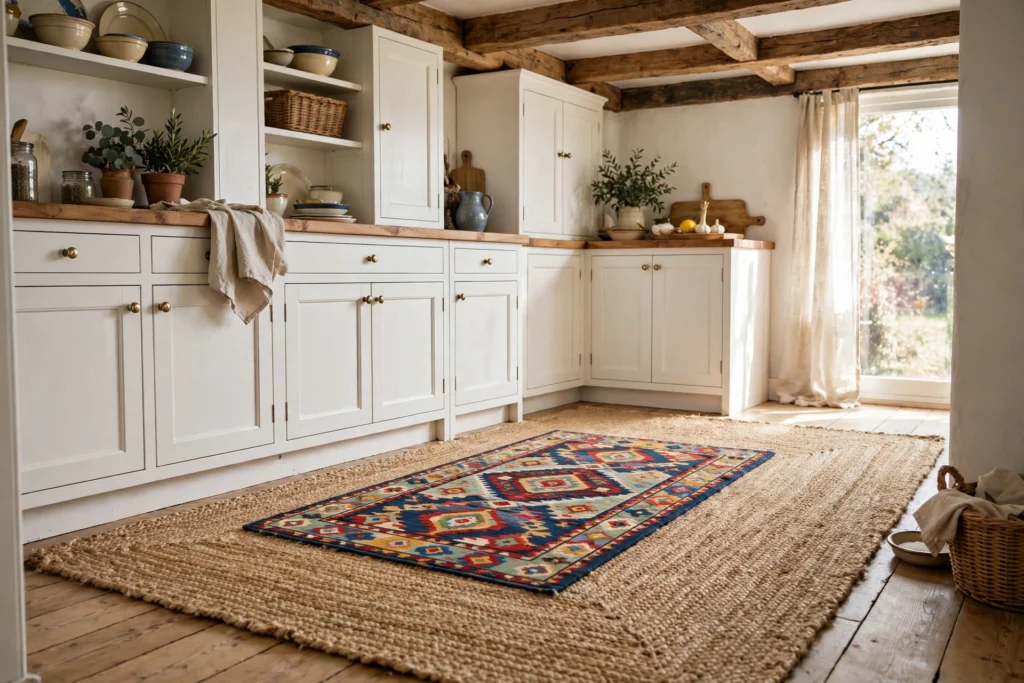
Layering a smaller patterned rug over a larger natural jute base gives you texture, pattern, and practicality in one move. The jute provides a durable, neutral foundation that hides dirt, while the top rug delivers the color and personality. It’s a designer trick that works especially well in farmhouse and boho kitchens.
Keep both layers low-profile and use rug tape or a pad between them to prevent slipping and bunching. The top rug should be washable or inexpensive enough to replace, since it takes the brunt of kitchen spills. This layered look adds the cozy, collected feeling that makes a kitchen feel like the heart of the home.
5. Round Rug Under a Breakfast Table
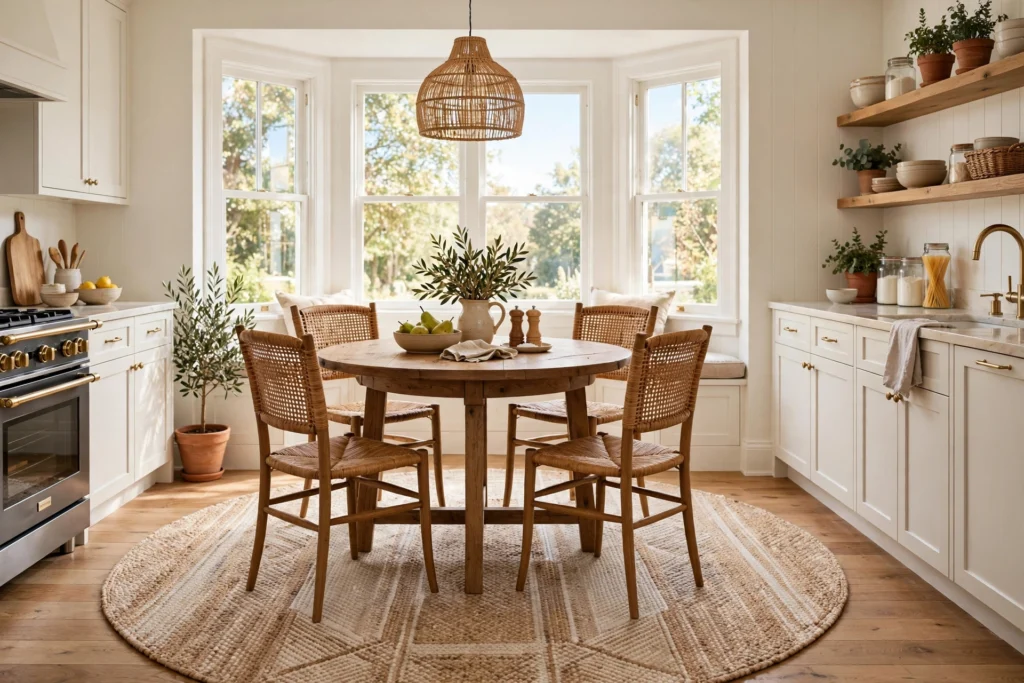
In an eat-in kitchen, a round rug under a round table creates a perfect little dining zone. The circular shape echoes the table, softens chair noise on hard floors, and protects the flooring from scraping chair legs. It’s one of the simplest ways to make a kitchen-diner feel intentional and finished.
Size it generously: the rug should extend at least 24 inches beyond the table edge on all sides so chairs stay on the rug when pulled out. A 6-foot round works for a 36-inch table; an 8-foot round suits a 48-inch table. Choose a flatweave or low-pile rug — high pile makes chairs wobble and traps food crumbs.
6. Cushioned Anti-Fatigue Runner
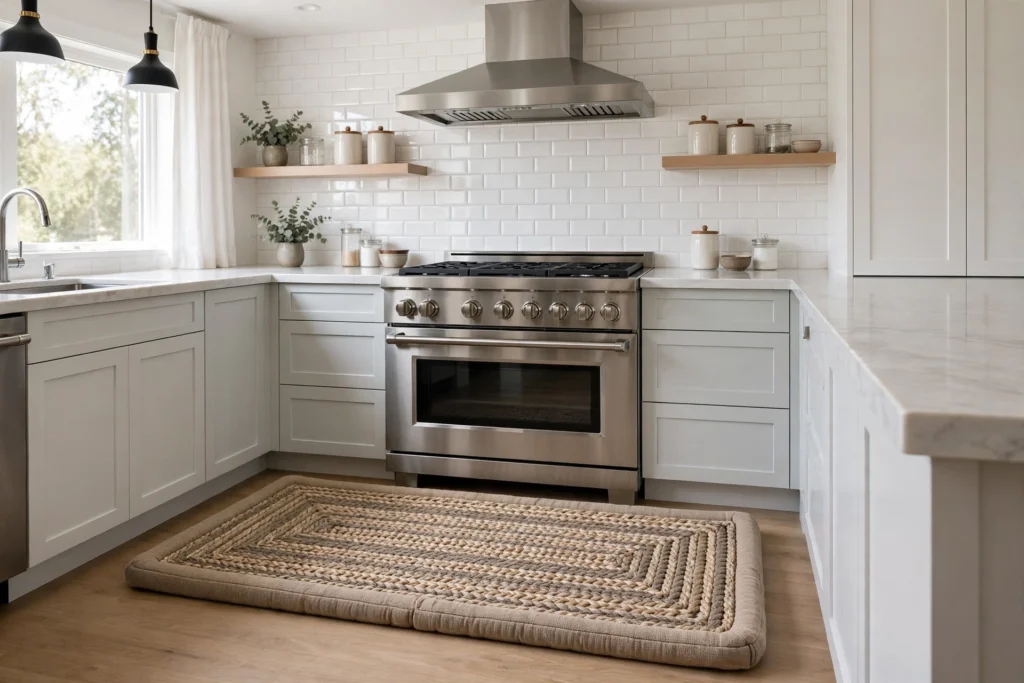
If you cook for hours at a time, comfort matters more than pattern. Cushioned anti-fatigue runners — the kind designed for commercial kitchens — reduce leg and back strain dramatically. The good news: they now come in attractive designs that mimic woven rugs, wood-look patterns, and modern geometrics.
Place one wherever you stand longest: in front of the range, the sink, or the main prep counter. Look for beveled edges that won’t trip you and a waterproof, wipeable surface. Our modern farmhouse kitchen design ideas include hardworking kitchens where comfort-first choices like this fit right in.
7. Natural Jute Runner
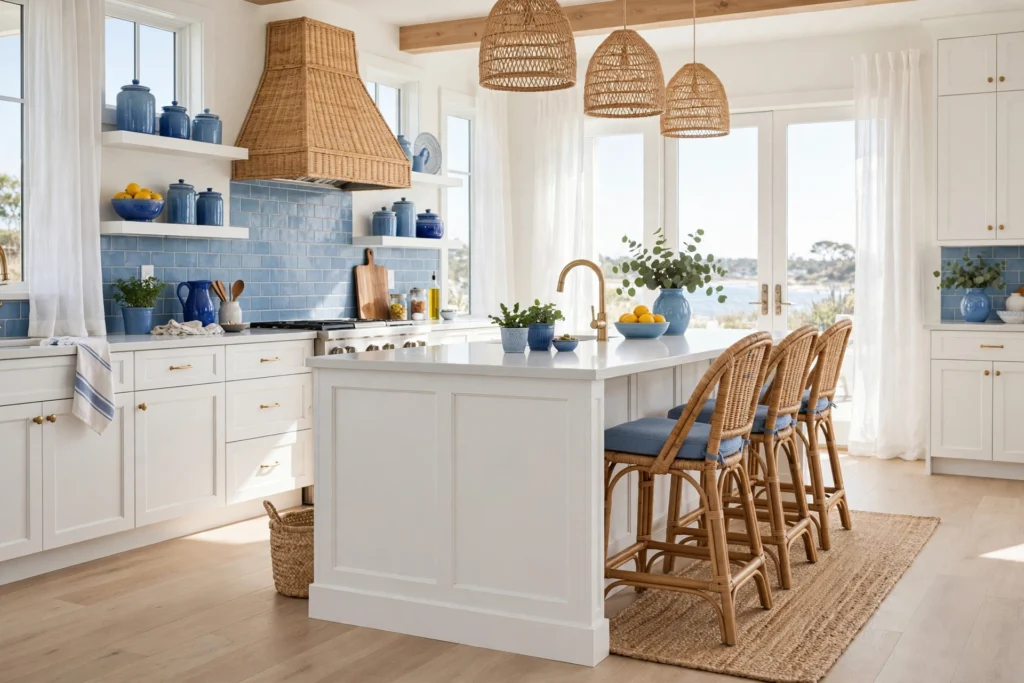
Jute brings unbeatable natural texture to a kitchen — warm, earthy, and effortlessly casual. A jute runner suits Scandinavian, coastal, farmhouse, and boho kitchens, and its nubby weave hides crumbs and dirt remarkably well. It’s also one of the most affordable natural-fiber options.
Jute’s weakness is moisture: it stains with water and doesn’t love the splash zone directly in front of the sink. Place jute runners in drier traffic paths — alongside the island or in the kitchen entry — and choose a rug with a latex or rubber backing for grip. Shake it out regularly, since the open weave collects grit.
8. Bold Geometric Flatweave
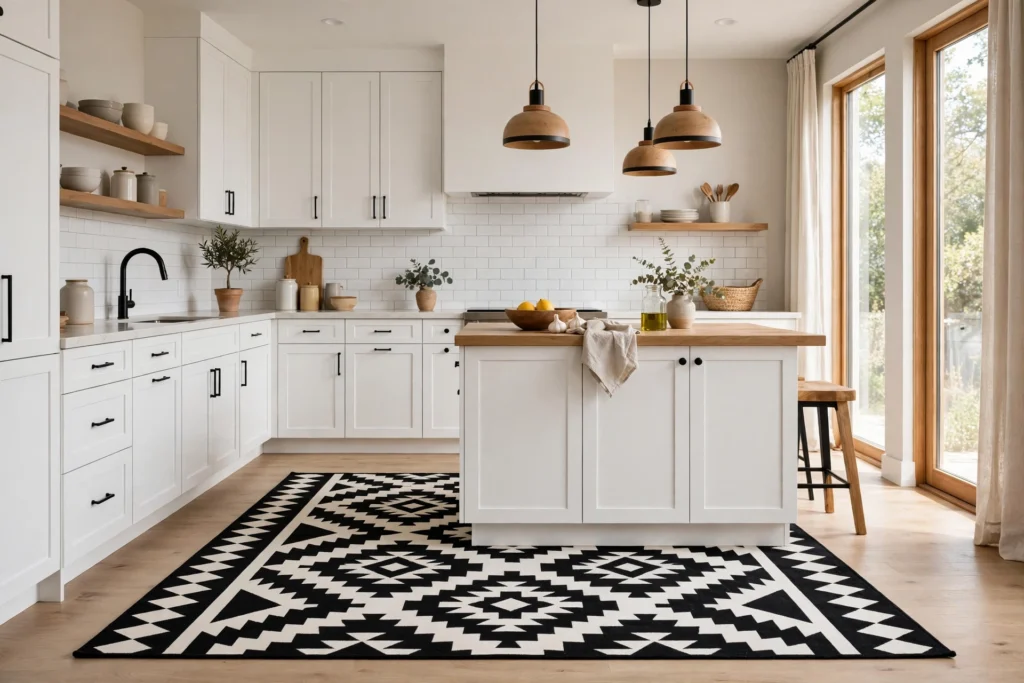
A bold geometric flatweave is the fastest way to inject energy into a neutral kitchen. Black-and-white diamonds, colorful stripes, or graphic kilim patterns turn the floor into a design feature. Flatweaves are ideal for kitchens: thin enough for doors to clear, easy to vacuum, and many are reversible for double the lifespan.
Balance is key — if the rug is loud, keep the rest of the kitchen quiet. This works best in kitchens with simple white or wood cabinetry where the floor can be the star. Darker geometric patterns are the most forgiving choice, hiding stains while delivering maximum style impact.
9. Runner Along the Kitchen Island
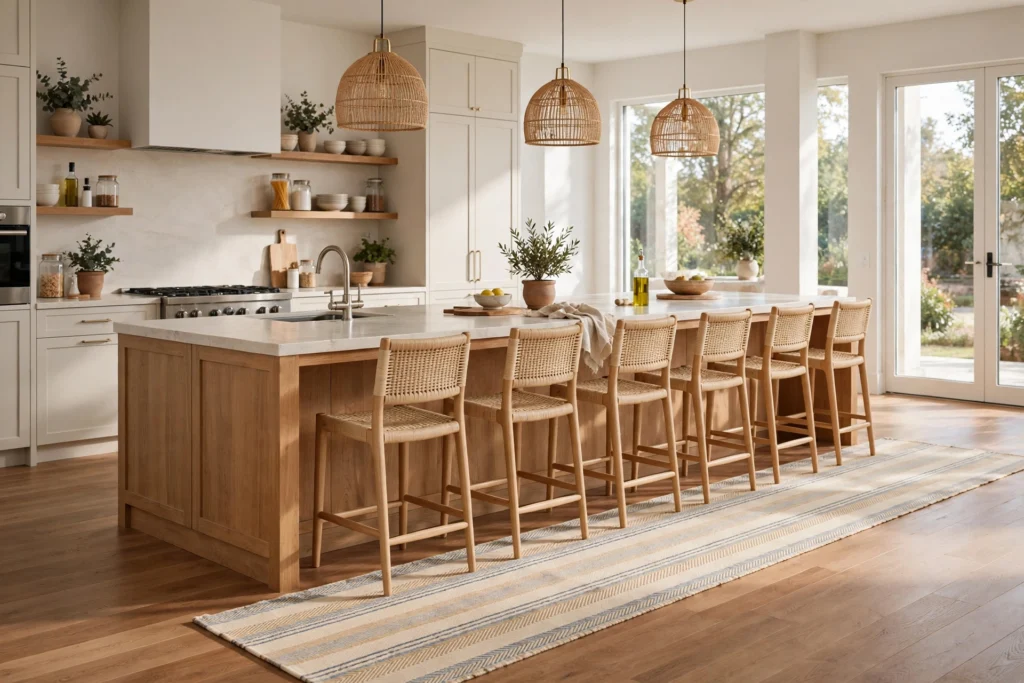
The long stretch of floor alongside a kitchen island is prime rug territory. A runner here cushions the spot where you stand to chop, mix, and serve, and it visually anchors the island as the room’s centerpiece. In open-plan kitchens, it also helps define the kitchen zone within the larger space.
Match the runner’s length to the island — roughly the same length, or slightly shorter — and leave equal floor margins at both ends. If your island has seating on one side, make sure the runner sits clear of stool legs to avoid bunching. A washable runner is the smart choice here, since island zones see the heaviest food traffic.
10. Indoor-Outdoor Rug
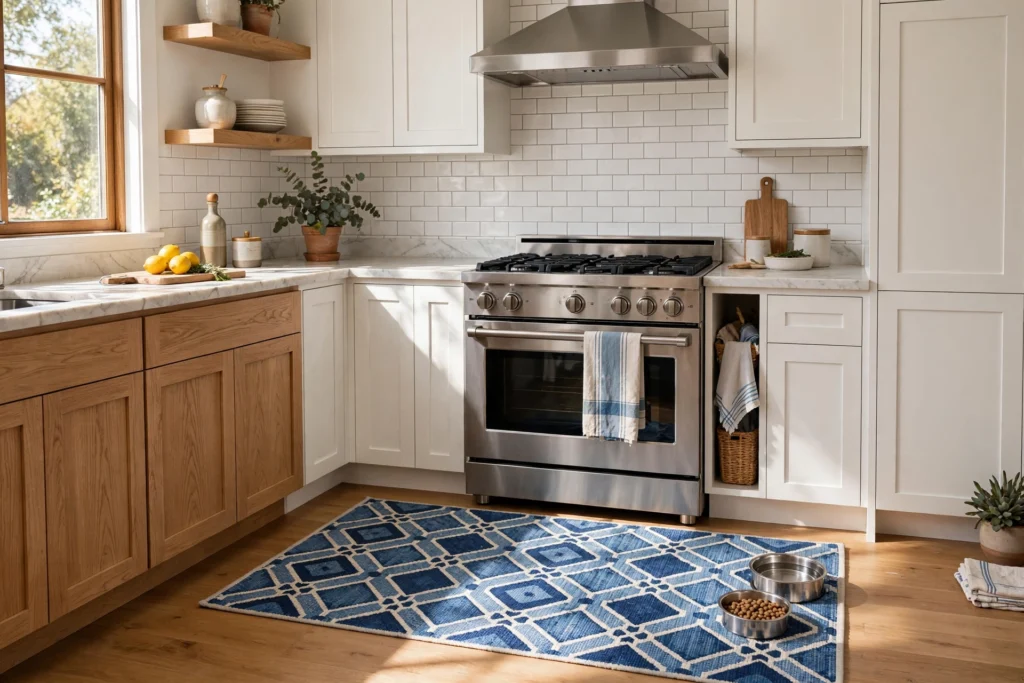
Indoor-outdoor rugs are the kitchen’s secret weapon: designed to survive rain and sun, they laugh at kitchen spills. Made from polypropylene or recycled PET, they hose off or wipe clean, resist staining, and come in genuinely attractive patterns — far from the scratchy patio mats of the past.
Use them anywhere a regular rug would struggle: in front of the range, under a pet’s feeding station, or in a kitchen that opens directly to a patio. They’re typically thin and lie flat, so doors clear easily. The Spruce’s guide to styling vintage rugs notes that low-pile, durable weaves are exactly what high-traffic kitchen floors need.
11. Half-Moon Mat at the Farmhouse Sink
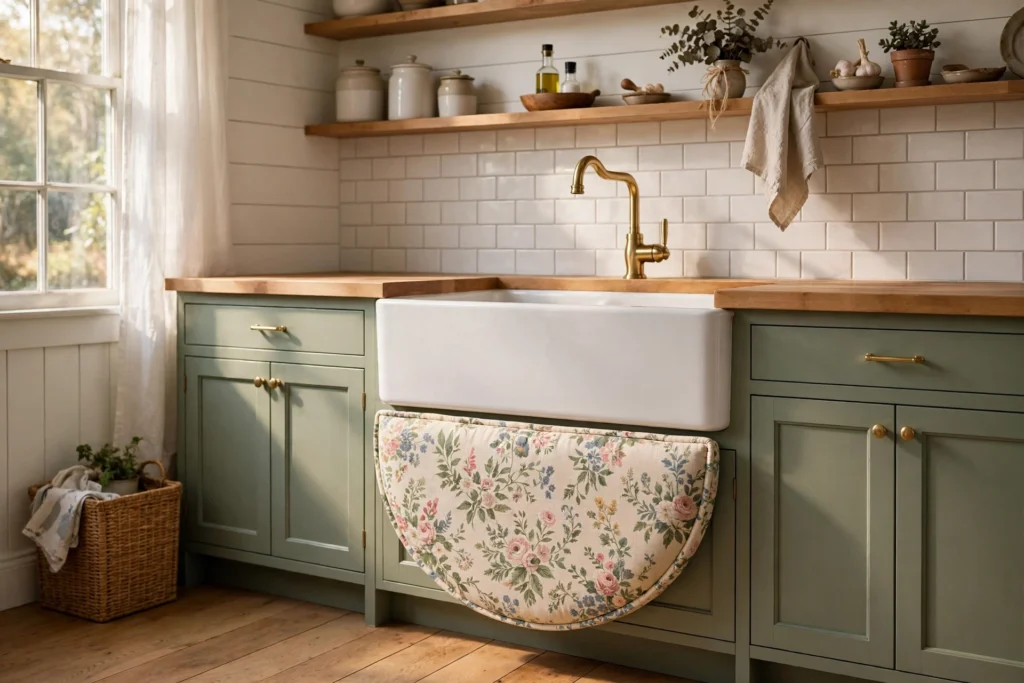
A half-moon or crescent-shaped mat tucked against a farmhouse sink is both charming and practical. The curved shape follows the sink’s apron front, catching drips right where they fall while adding a soft, welcoming touch. It’s a small detail that makes a big difference in daily comfort.
Look for memory-foam mats with a washable, removable cover in a pretty fabric — they combine anti-fatigue cushioning with real style. Since this spot sees constant water, choose quick-drying materials and wash the cover weekly. It’s a tiny investment that you’ll appreciate every single time you do the dishes.
12. Runner Zoning an Open-Plan Kitchen-Diner
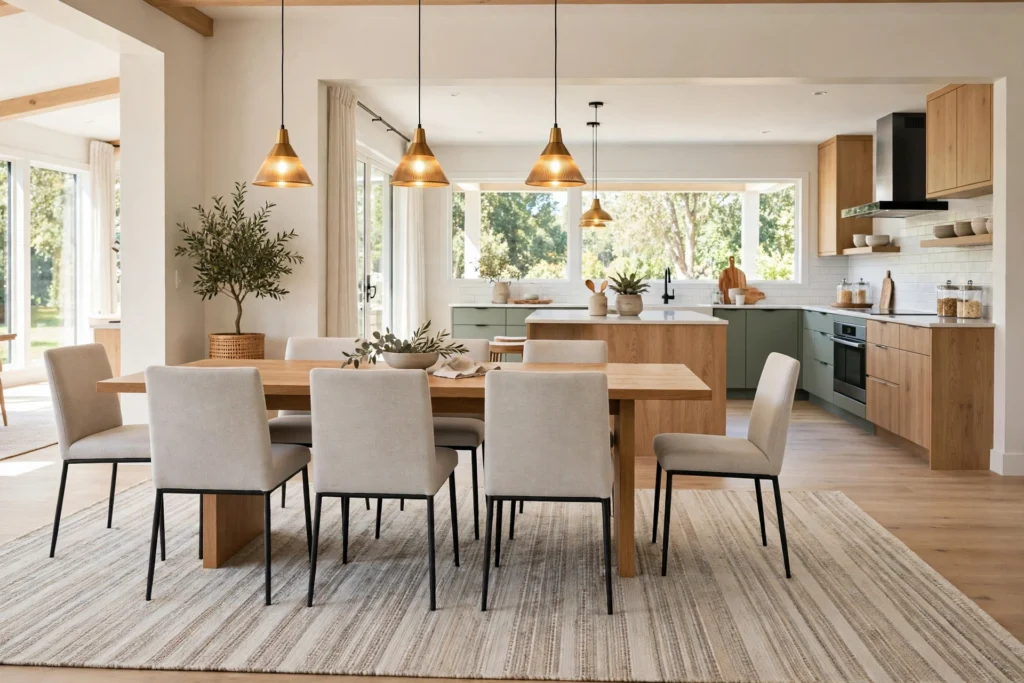
In open-plan spaces, a rug is the easiest way to say “the kitchen ends here and dining begins.” A large flatweave or low-pile area rug under the dining table defines the eating zone, adds warmth, and absorbs the echo that plagues open plans with hard floors everywhere.
Choose a rug large enough for the whole dining set plus chair pull-out room — typically 8×10 feet for a six-seat table. Stick to patterns that forgive crumbs: small-scale geometrics, tone-on-tone textures, or busy vintage looks. Keep the kitchen work zone rug-free or use a separate small runner there, so each area has the right rug for its job.
13. Neutral Striped Runner
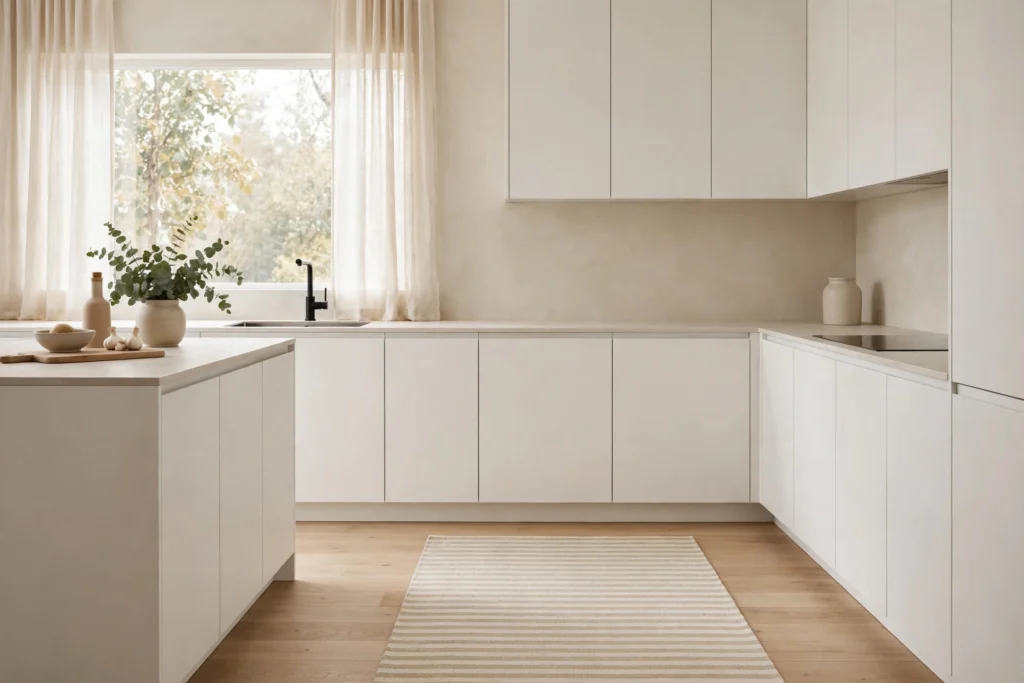
When you want warmth without commitment, a neutral striped runner is the answer. Cream and beige, gray and white, or natural jute stripes add texture and softness while blending into any color scheme. Stripes also have a subtle space-stretching effect, making narrow kitchens feel a touch wider.
This is the safest rug choice for resale or rental kitchens — it offends no one and complements everything. Layer in personality elsewhere: colorful dish towels, a patterned roman shade, or open shelves with pretty dishes. The neutral runner does the quiet work of comfort while the accessories do the talking.
14. Colorful Kilim Rug
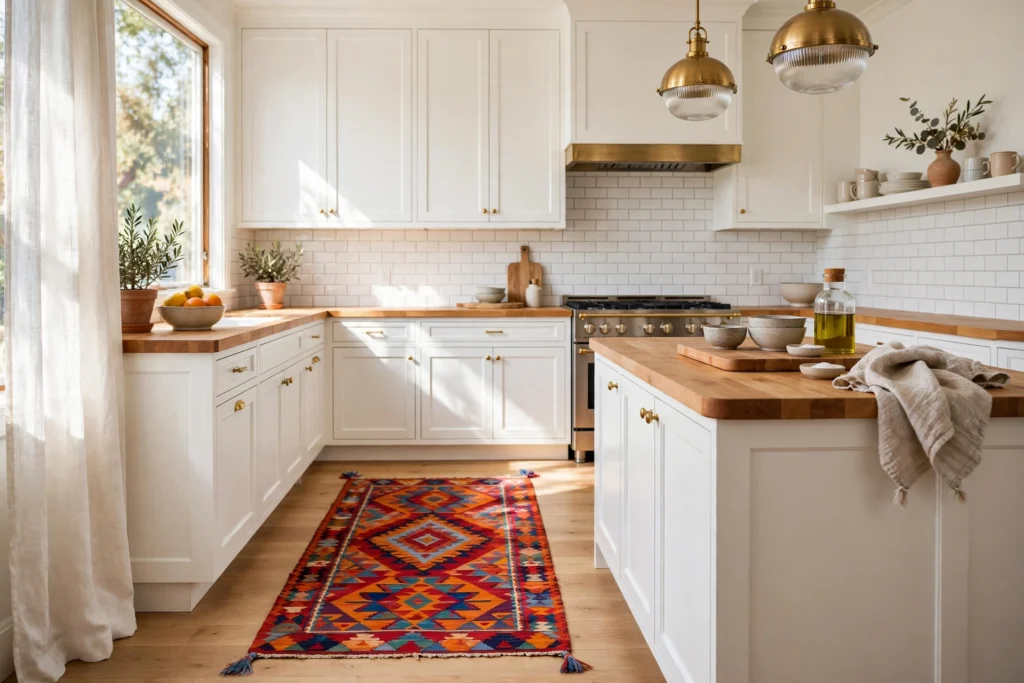
Kilim rugs — flatwoven with bold geometric patterns in saturated colors — bring instant soul to a kitchen. Their vivid reds, oranges, and blues hide stains heroically, and the graphic patterns energize white or wood kitchens. A kilim runner alongside the counter or in front of the island is a guaranteed conversation piece.
Authentic kilims are wool and quite durable, though they need professional cleaning for serious stains. High-quality kilim-look rugs in synthetic fibers offer washability with the same visual punch. For kitchens with bohemian spirit, our boho kitchen design ideas show how to layer color and pattern with confidence.
15. Two Matching Runners in an L-Shaped Kitchen
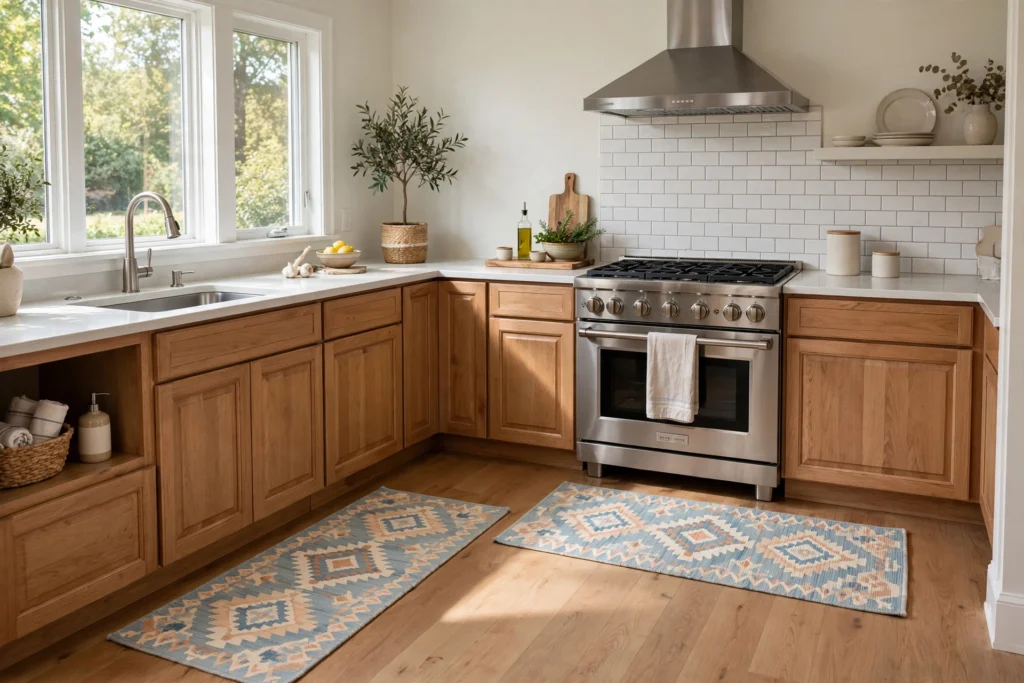
L-shaped kitchens have two work zones, so give each one its own runner. Two matching runners — one in front of the sink run, one in front of the range run — create rhythm and comfort throughout the kitchen’s busiest areas. Matching designs keep the look cohesive rather than choppy.
Choose runners in the same pattern but sized to each run, leaving consistent floor margins. Washable is non-negotiable here since both zones see heavy use. This symmetrical approach makes an L-shaped kitchen feel designed and deliberate, turning an awkward layout into one of the most comfortable kitchens to actually cook in.
Frequently Asked Questions
What type of rug is best for a kitchen?
Low-pile, washable rugs with non-slip backing are best for kitchens. Machine-washable flatweaves, indoor-outdoor rugs, and low-pile synthetics handle spills and traffic gracefully. Avoid high-pile, shag, wool, and silk rugs — they trap crumbs, stain easily, and are difficult to clean in a cooking environment.
Where should you place a rug in the kitchen?
The highest-impact spots are in front of the sink, in front of the range, and alongside the island — wherever you stand longest. In galley kitchens, one long runner down the center works beautifully. In eat-in kitchens, add a larger rug under the dining table, sized so chairs stay on it when pulled out.
Are kitchen rugs a tripping hazard?
They can be without proper precautions. Always use a non-slip rug pad or choose rugs with rubber backing, keep edges flat (no curling), and select low-profile weaves that doors and appliance drawers clear easily. Tape down the edges of lightweight rugs in high-traffic paths.
How do you clean a kitchen rug?
Washable rugs go straight in the washing machine — check the manufacturer’s instructions for temperature and drying. For non-washable rugs, vacuum weekly, blot spills immediately with a damp cloth, and deep-clean with a carpet cleaner every few months. Rotate the rug occasionally for even wear.
Should a kitchen rug go under the table?
Yes, in eat-in kitchens a rug under the table defines the dining zone and protects floors from chair scrapes. Size it so all chair legs stay on the rug even when chairs are pulled out — about 24 inches of rug beyond the table edge on every side. Choose flatweave or low-pile so chairs slide easily and crumbs vacuum up.
Keep Exploring
A kitchen rug is one of the smallest investments with the biggest daily payoff — softer mornings, easier cooking sessions, and a room that feels finished instead of merely functional. Start with the spot where you stand most, live with it for a week, and you’ll wonder why you waited.
Choose washable, keep it low-profile, and don’t be afraid of pattern — the right rug doesn’t just survive kitchen life, it makes kitchen life better.





[…] instead of scrubbing. For wool runners, a yearly professional clean refreshes the fibers. Kitchen rug guide shares more care tips that apply to any high-traffic rug. Treat your runner well and it will carry […]
[…] than skimpy. Add a matching cafe curtain at the window above for a coordinated vintage moment. Kitchen rug ideas layer softness underfoot to […]