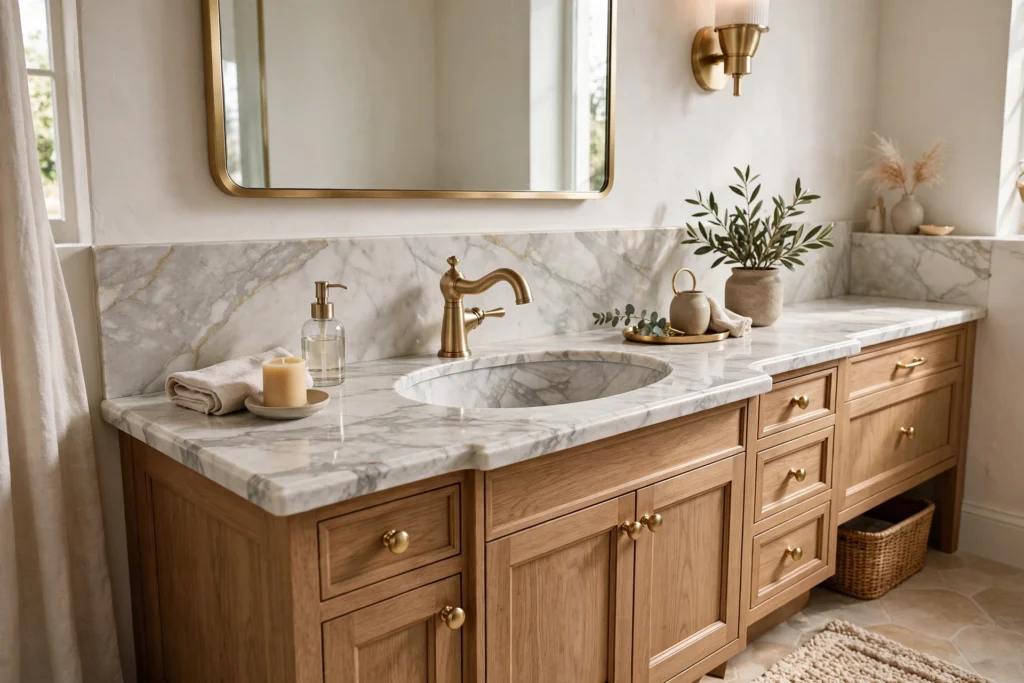

The faucet is the jewelry of the bathroom — small, hardworking, and disproportionately responsible for the room’s style. Swap a dated faucet for the right one and the whole vanity area feels renewed, often for less than the cost of a nice dinner out. These bathroom faucet ideas walk through mount types, finishes, and pairing logic so you choose a faucet that suits your sink, your style, and your water. If you are styling the whole sink zone, our bathroom sink decor ideas for a styled sink area build on the faucet as the starting point.
Before falling in love with a look, check the practical side: your sink’s hole configuration (single-hole, centerset, or widespread), your water pressure, and whether you need a tall spout for a vessel sink. A faucet is tap hardware first and decor second — the prettiest finish in the world will not compensate for a spout that splashes everywhere. Measure twice, then shop for style.
1. Go Matte Black for Modern Contrast
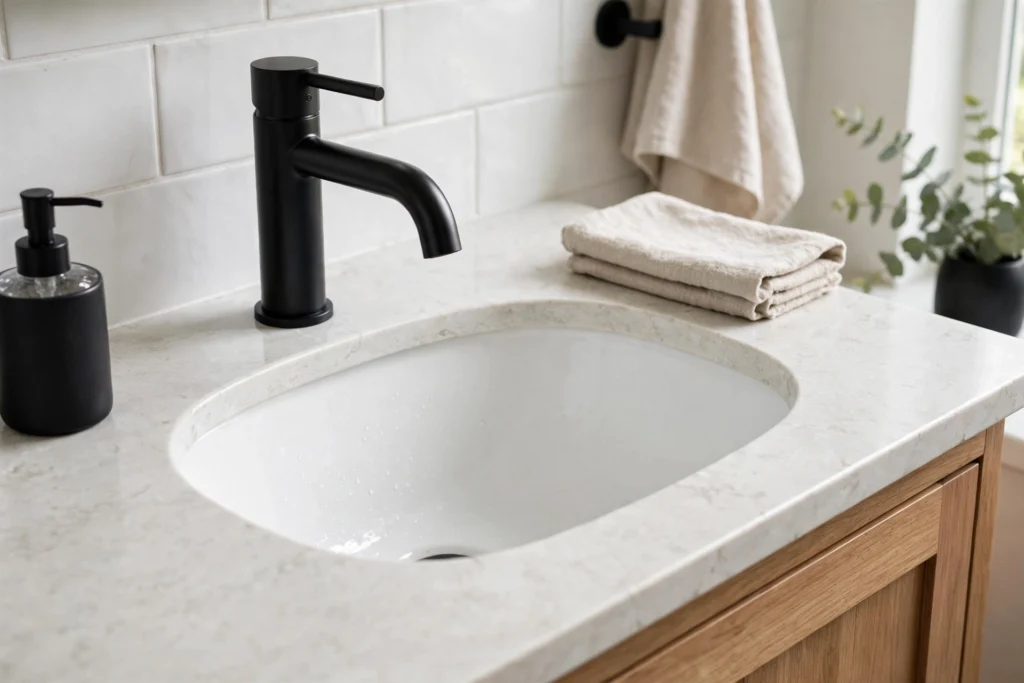
Matte black faucets are the fastest way to give a bathroom a current, graphic edge. Against white porcelain and pale tile, black hardware reads like ink lines in a sketch — crisp, deliberate, modern. The finish hides water spots better than polished chrome and pairs with everything from minimalist floating vanities to moody green walls. Look for a quality powder-coat or PVD finish rather than cheap paint, since black shows chips mercilessly. Keep the rest of the black accents restrained — mirror frame, a towel hook or two — so the faucet stays the star rather than part of a black-everything uniform.
2. Try Unlacquered Brass for Living Patina
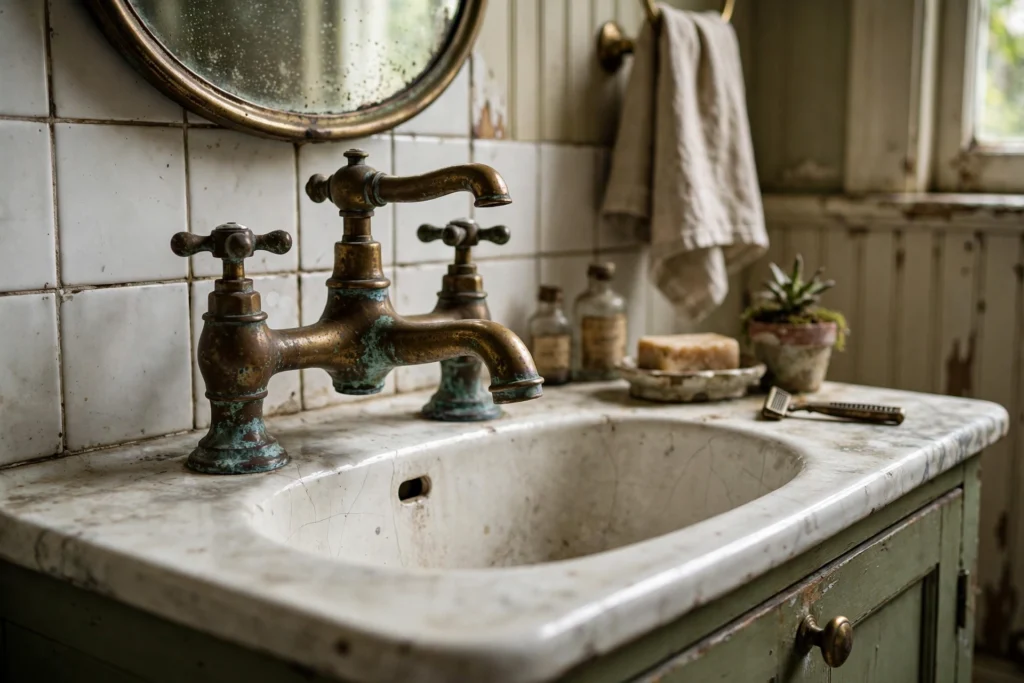
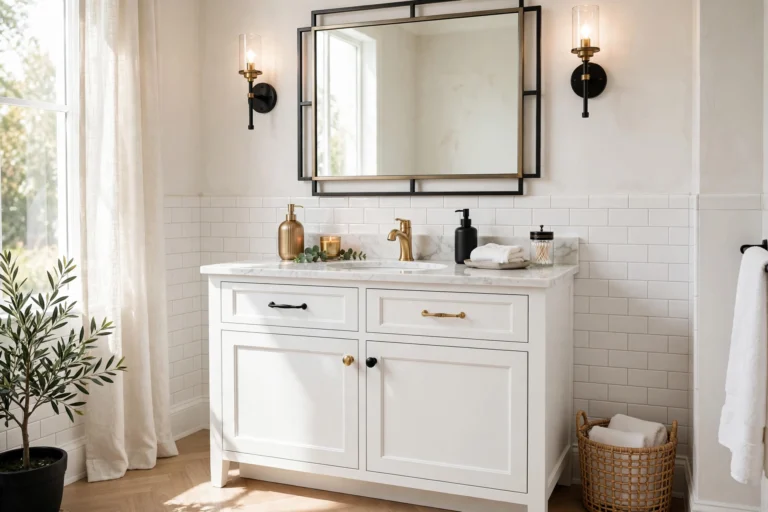
Unlacquered brass is the finish for people who love things that age gracefully. Unlike sealed finishes, it develops a rich, uneven patina over months of touch and water — darker in the crevices, glowing on the high spots — that makes every faucet one of a kind. It suits traditional, vintage, and organic-modern bathrooms beautifully. Know going in that the patina is the point: if you want forever-shiny, choose lacquered or brushed brass instead. A quick polish restores brightness whenever you want it, so you control the aging. Pair with marble, warm whites, and natural wood for a bathroom that feels collected rather than decorated.
3. Choose Brushed Nickel for Easy Maintenance
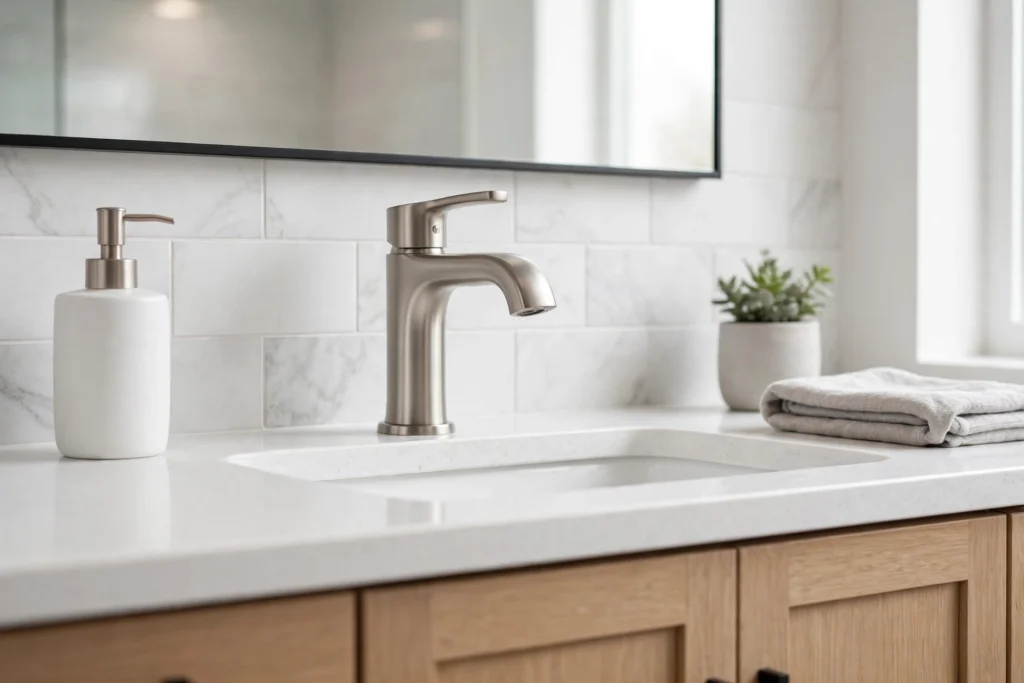
Brushed nickel remains the workhorse finish for a reason: it hides fingerprints and water spots, matches stainless appliances and most shower trims, and never looks dated. The soft, warm-gray tone flatters both cool and warm palettes, which makes it the safest choice when you are not redoing the whole bathroom. It is also the finish most manufacturers offer across full collections, so matching your shower trim, towel bars, and cabinet pulls is easy. If decision fatigue is real, brushed nickel is the finish that lets you stop worrying and enjoy the room. It will not thrill anyone, but it will never embarrass you either.
4. Pick a Wall-Mount Faucet for Drama
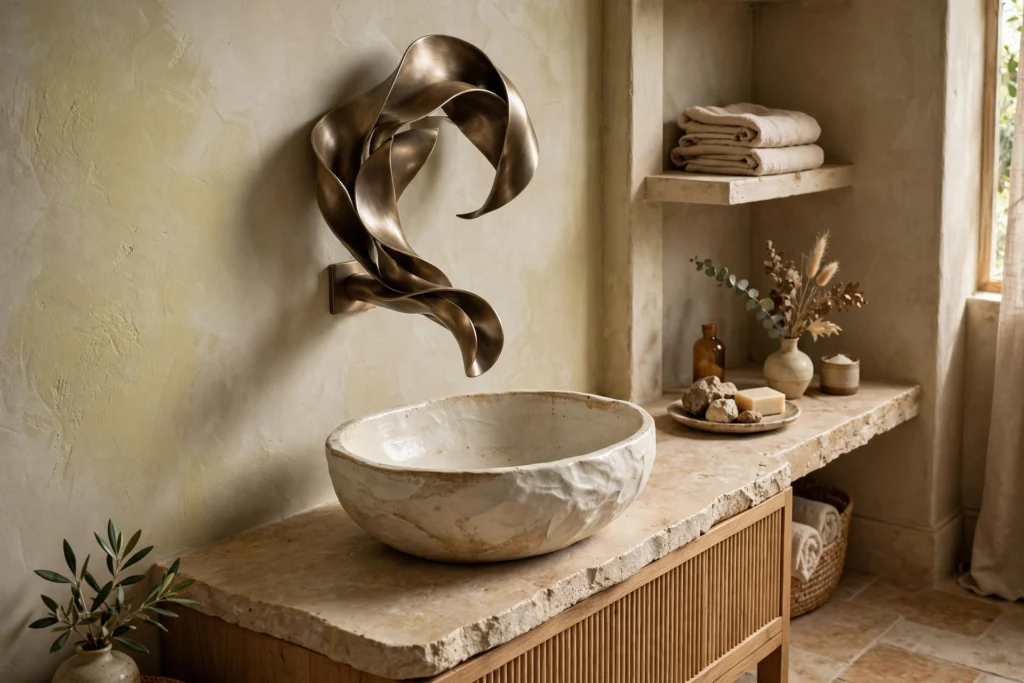
Wall-mounted faucets free the countertop entirely — no base, no deck plate, just a sculptural spout emerging from the wall. The look is pure boutique hotel: clean, architectural, and slightly daring. Wall-mounts demand in-wall plumbing and a sturdy backing, so they are a remodel-stage decision, not a weekend swap. They pair best with vessel or trough sinks where the spout can arc over the basin with proper clearance (about 6 to 8 inches above the rim). Keep the wall finish simple behind the spout — large-format tile or plaster — so the faucet reads as sculpture. The daily payoff is a counter with nothing to clean around.
5. Match the Faucet Height to a Vessel Sink
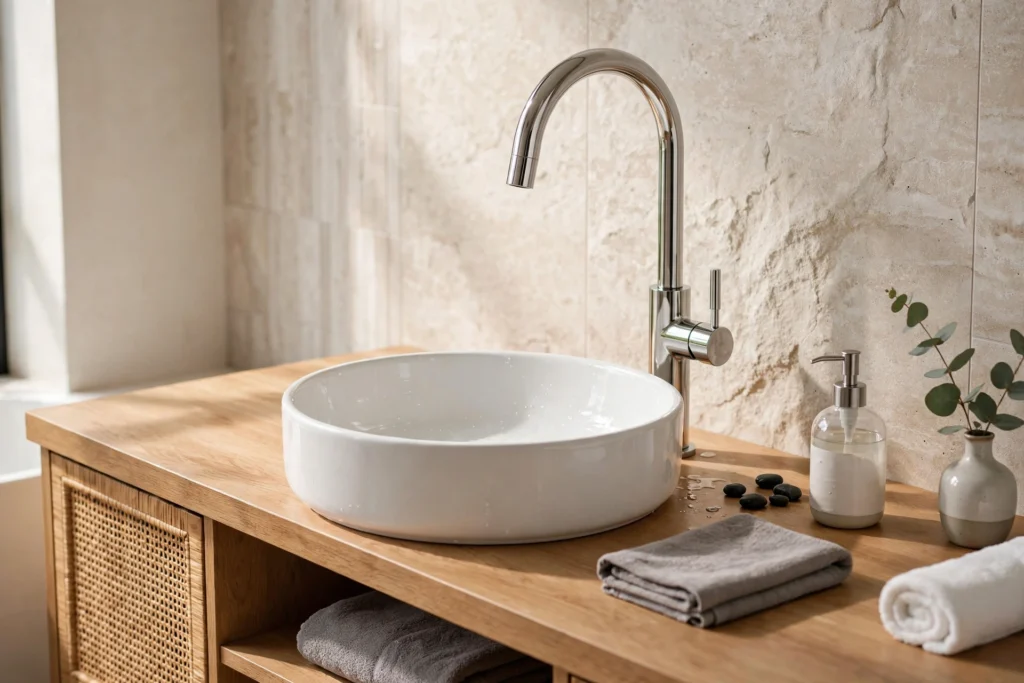
Vessel sinks sit on top of the counter, so they need a tall faucet — and getting the proportions right is everything. The spout should clear the vessel rim by roughly 5 to 7 inches: too low and hands bump the bowl, too high and water splashes everywhere. Vessel-specific faucets come in the right height, or choose a tall widespread set designed for the purpose. The faucet and vessel should feel like a pair — a chunky stone vessel wants a faucet with some visual weight, while a thin glass bowl suits a slim, minimal spout. Test the reach too: the water stream should land near the drain, not against the back of the bowl.
6. Go Widespread for a Classic Vanity
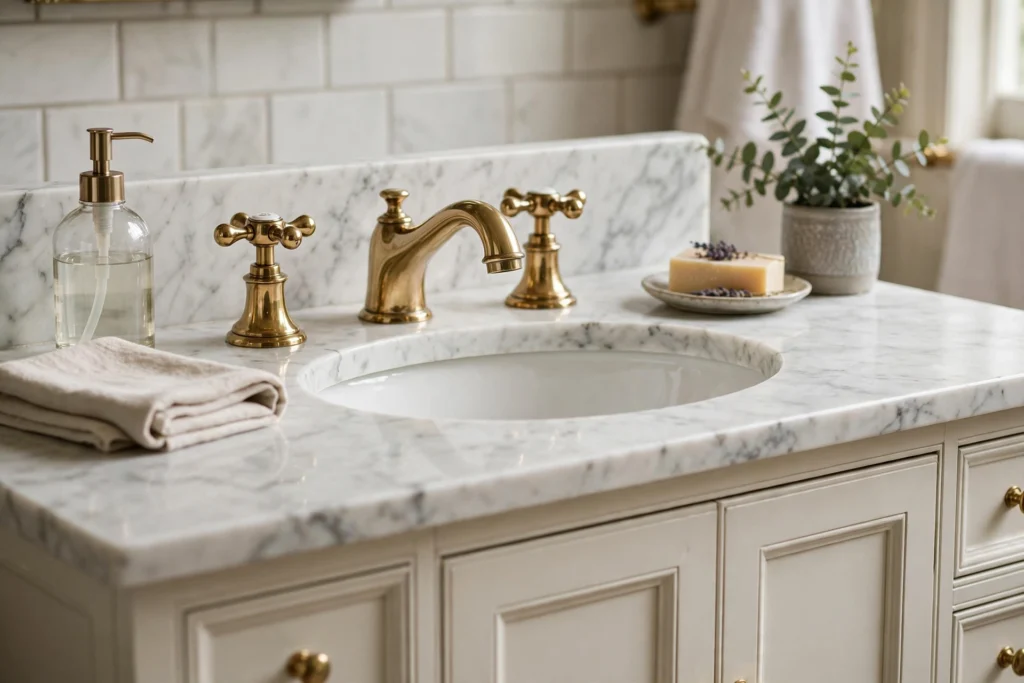
The widespread faucet — separate hot and cold handles flanking a central spout — is the tailored suit of bathroom faucets. The three-piece layout fills a wide vanity deck gracefully and suits traditional, transitional, and classic-modern bathrooms. Widespread sets come in 8-inch standard spreads, with some offering adjustable 6-to-16-inch configurations for unusual hole spacing. The separate handles give you finer temperature control than a single lever and look substantial on stone countertops. This is the configuration to choose when the vanity is the room’s centerpiece and the faucet should hold its own visually.
7. Try a Single-Hole Faucet for Small Vanities
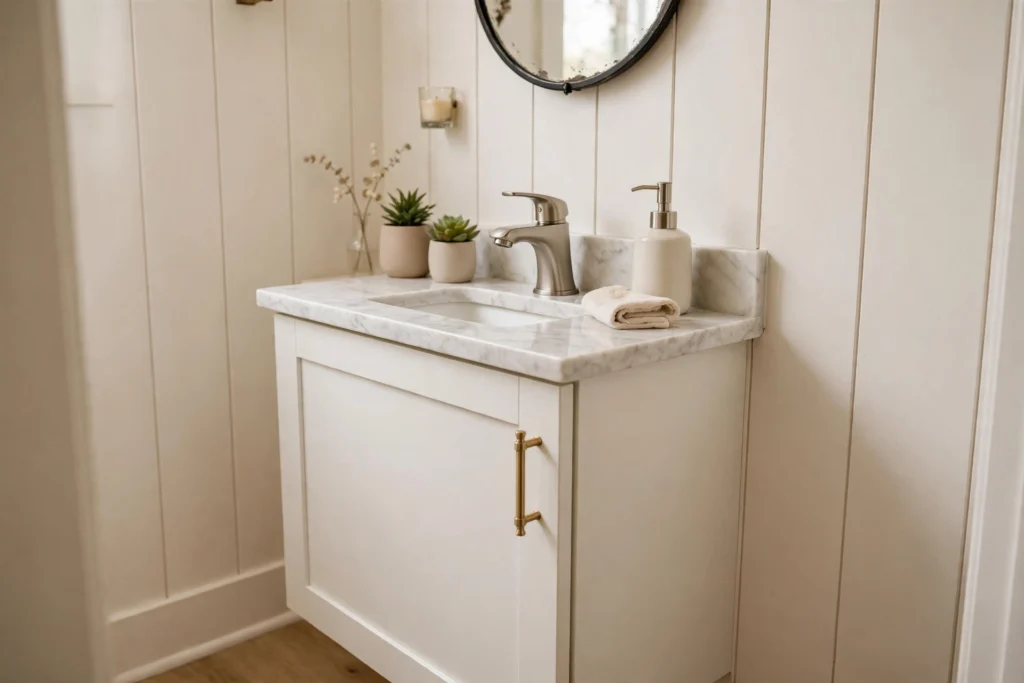
Small vanities and pedestal sinks call for a single-hole faucet: one compact unit with an integrated lever that keeps the deck clean and uncluttered. The single-hole format maximizes usable counter space around the sink — precious inches in a powder room — and its simplicity suits modern and minimalist styles. Many single-hole faucets include an optional deck plate to cover unused holes if you are replacing a centerset, so you are not locked into your sink’s current drilling. Choose a lever that operates smoothly with wet hands, and keep the overall height modest so the faucet does not overwhelm a petite basin.
8. Add a Bridge Faucet for Vintage Charm
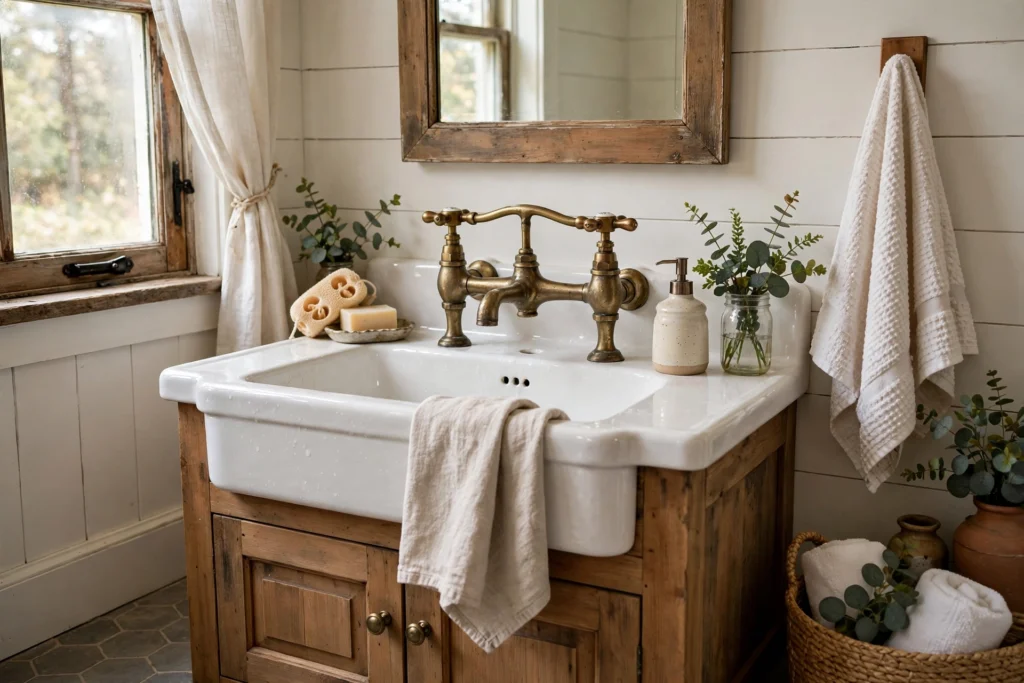
Bridge faucets, with their exposed horizontal pipe connecting the two handles to the spout, are pure vintage romance. They recall early-20th-century plumbing and suit farmhouse, Victorian, and classic bathrooms perfectly. The exposed bridge shows off the finish — this is the style to buy in unlacquered brass or polished nickel — and the cross or lever handles invite a satisfying, deliberate turn. Bridge faucets need a widespread hole configuration and generous deck depth, so verify your sink before committing. Pair with a porcelain or fireclay sink and subway tile, and the whole vanity area reads like a lovingly restored original.
9. Choose Polished Chrome for Timeless Shine
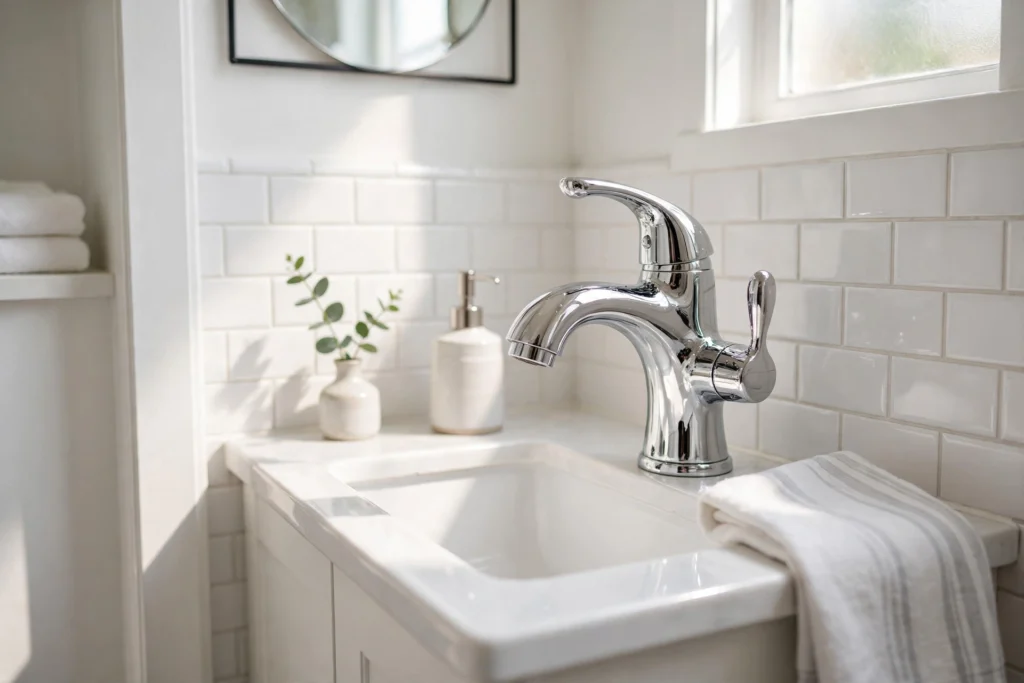
Polished chrome is the little black dress of faucet finishes: always appropriate, endlessly reflective, and the easiest to match across brands. It suits every style from ultra-modern to traditional, brightens small bathrooms by bouncing light, and is typically the most affordable finish in any collection. The trade-off is maintenance — chrome shows every water spot and fingerprint, so it rewards a quick daily wipe. In hard-water areas, keep a squeegee or microfiber cloth handy. If your bathroom already has chrome shower trim or accessories, a chrome faucet keeps the story consistent with zero guesswork. Our bathroom vanity ideas for style and storage show how classic chrome anchors both modern and traditional vanity designs.
10. Try Oil-Rubbed Bronze for Warmth
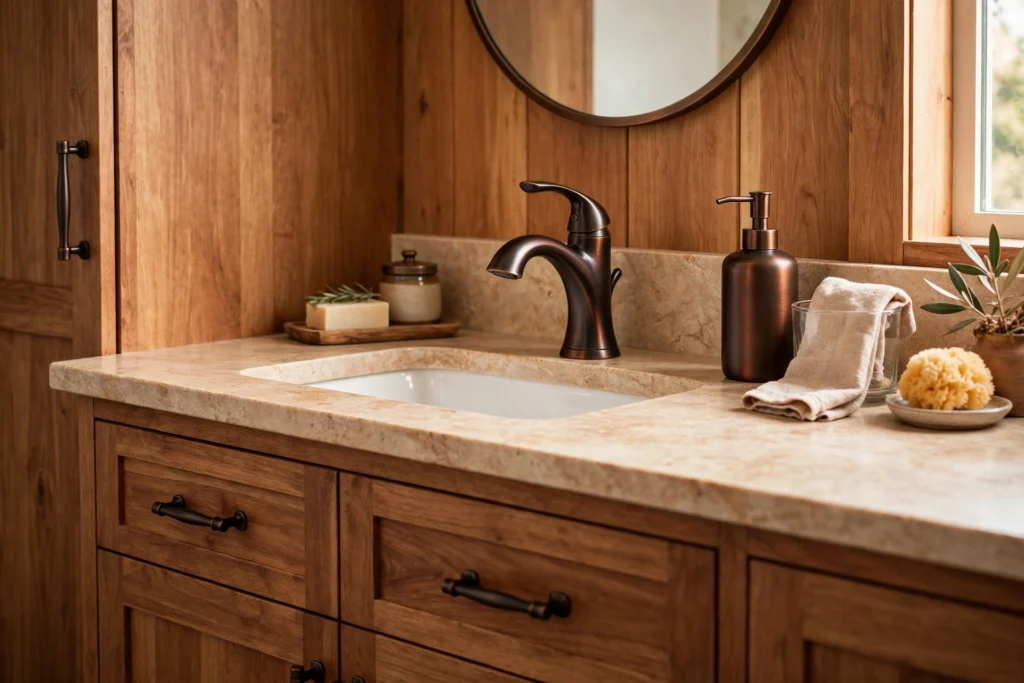
Oil-rubbed bronze brings a deep, warm darkness that feels richer and more traditional than matte black. The finish has subtle coppery undertones that glow against cream tile, warm wood vanities, and Tuscan or rustic palettes. It is more forgiving of water spots than polished finishes and develops character rather than just wearing. Use it where you want contrast without the starkness of black — a bronze faucet softens modern farmhouse and Mediterranean bathrooms beautifully. Match it thoughtfully: bronze pairs best with warm metals and woods, and can clash with cool chrome or stainless nearby, so commit to the warm family across the room’s hardware.
11. Consider a Touchless Faucet for Hygiene
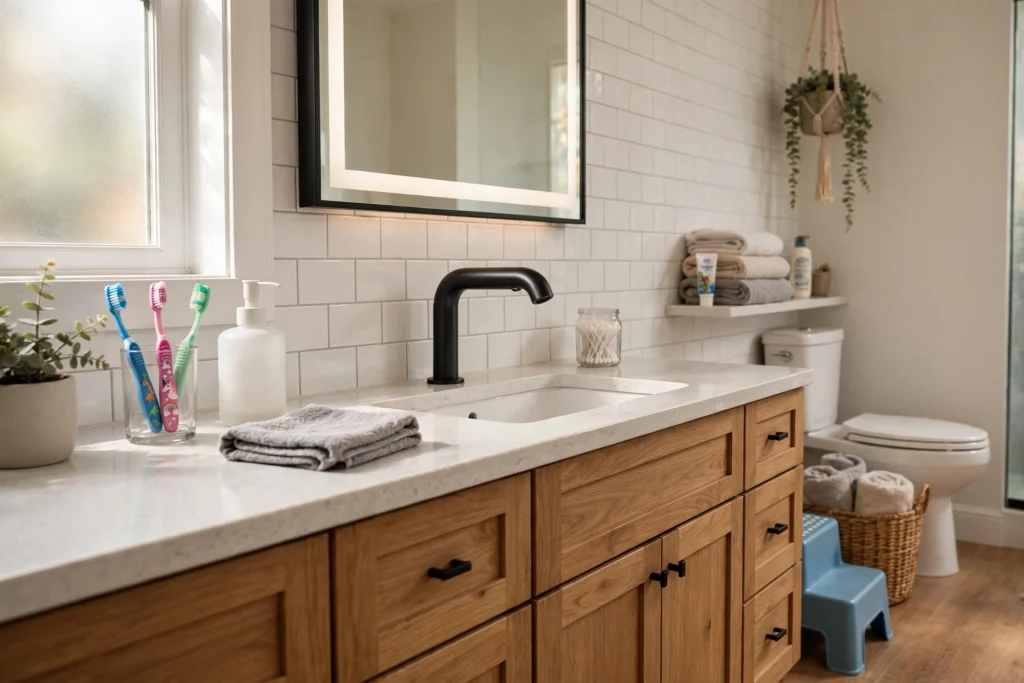
Touchless faucets have moved from airports into homes, and the case for them is strong: no handles to grab with soapy hands, less grime buildup, and water that shuts off automatically. Modern residential models look nothing like commercial ones — slim, stylish spouts with discreet sensors and manual override handles. They are genuinely useful in kids’ bathrooms and powder rooms, where little hands leave big messes. The considerations are power (battery or plug-in) and sensor reliability, so buy from an established brand with a good warranty. Set the sensor range carefully during installation to avoid the faucet triggering every time someone walks past.
12. Match Metals Across the Whole Bathroom
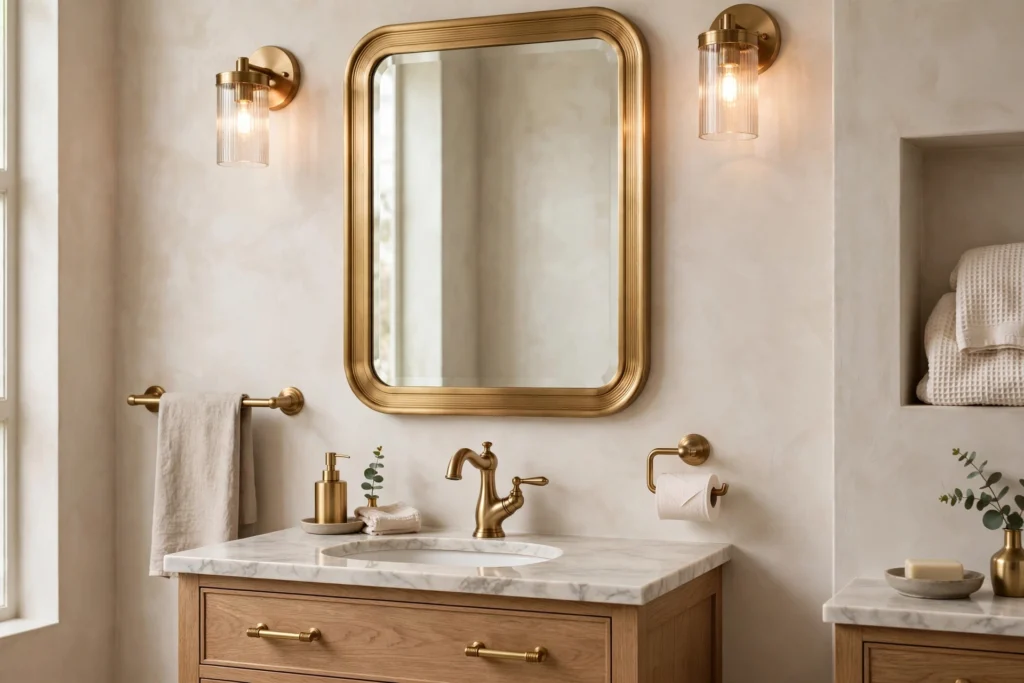
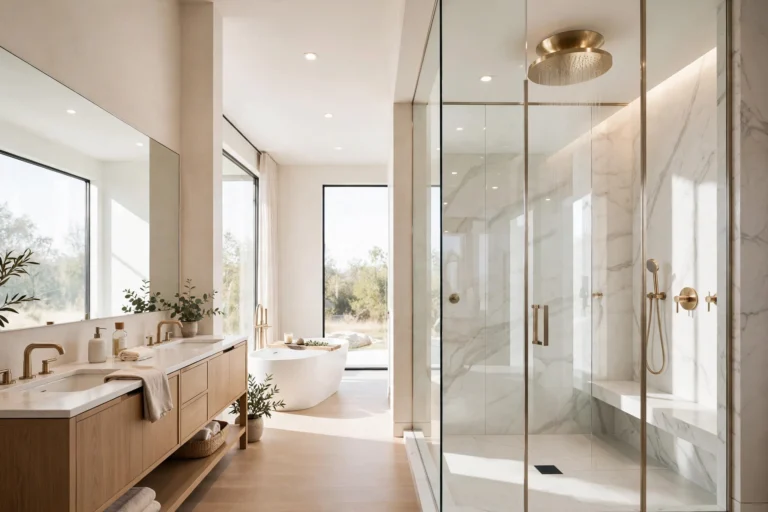
A faucet never lives alone — it shares the room with shower trim, towel bars, the mirror frame, cabinet pulls, and the light fixtures. The most polished bathrooms commit to one metal family (all warm or all cool) across every visible fitting. This does not mean every piece must be the identical finish: brushed brass faucet, satin brass mirror, and champagne bronze pulls can coexist if they share warm undertones. What to avoid is mixing cool chrome with warm brass without intention — it reads as leftover rather than layered. When in doubt, buy the faucet as part of a manufacturer’s full collection so the match is guaranteed.
13. Don’t Forget the Drain Assembly
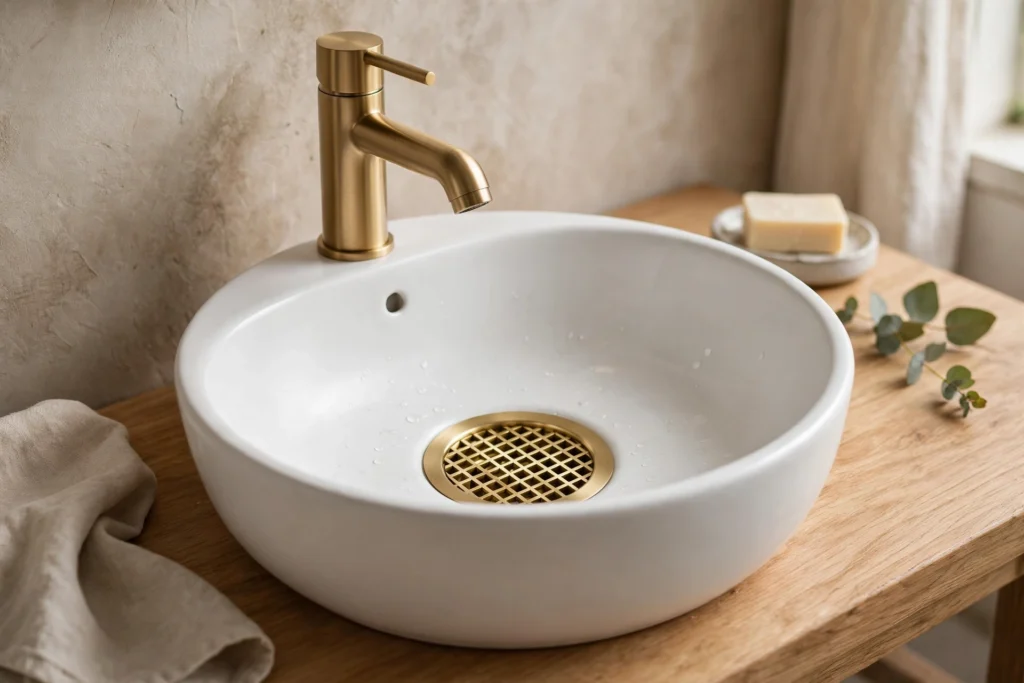
The drain assembly — the pop-up or grid drain in the sink — is part of the faucet’s visual story, and mismatched drains are a common oversight. Most faucets include a matching drain, but vessel sinks need a drain without an overflow, and some stone vessels need special non-staining assemblies. Order the drain in the same finish as the faucet, and confirm whether your sink has an overflow hole before buying. A grid drain suits vessel sinks beautifully and never clogs with a pop-up mechanism. This tiny detail is invisible when right and oddly noticeable when wrong, so include it in the original purchase rather than as an afterthought.
14. Check Water Pressure Compatibility
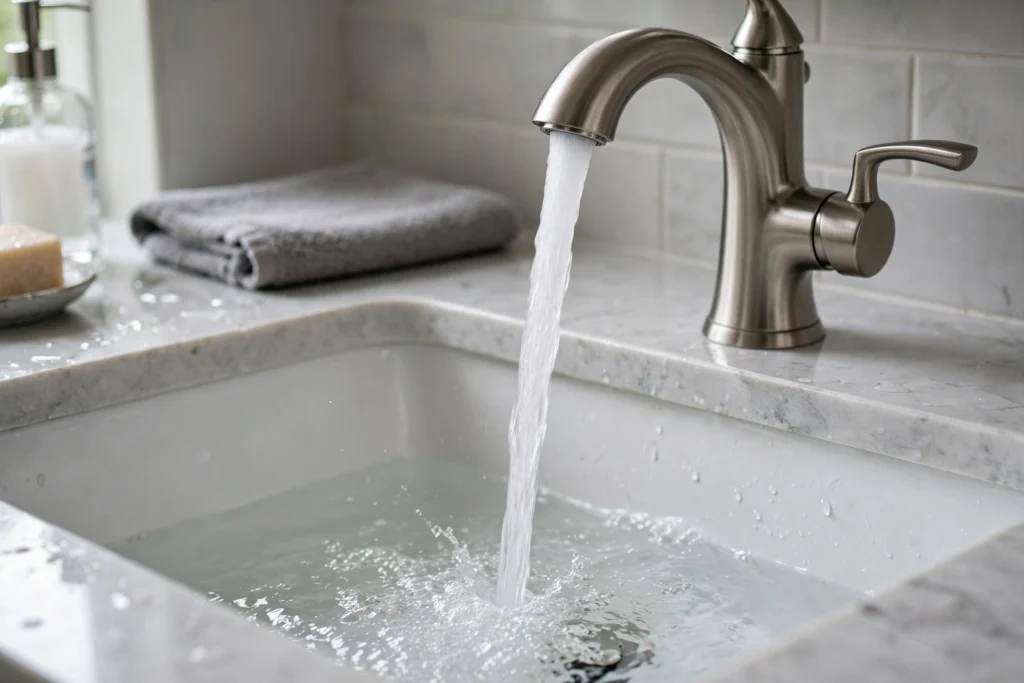
A gorgeous faucet that trickles is a daily frustration. Before buying, know your home’s water pressure — low-flow faucets designed for water conservation can feel anemic on already-low-pressure systems, while high-arc designs need decent pressure to fill the stream properly. Look for the faucet’s flow rate (measured in gallons per minute) and any minimum pressure requirements in the specs. In low-pressure homes, choose faucets with aerators designed for the condition, or consider a pressure-boosting solution first. This is also the moment to confirm your shutoff valves and supply lines are in good shape; a faucet swap is the perfect time to replace tired valves.
15. Splurge on the Faucet, Save Elsewhere
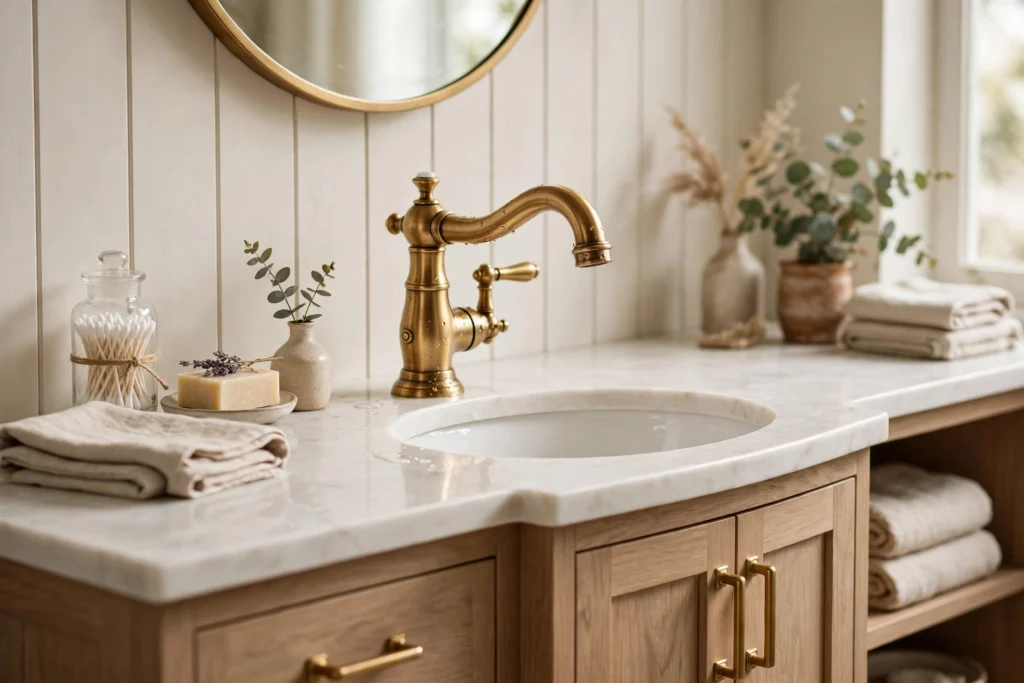
If the budget is tight, the faucet is the last place to cheap out. It is the most-touched object in the bathroom, the closest thing to you at arm’s length, and the detail your eye lands on every time you wash your hands. A solid-brass faucet from a reputable brand operates smoothly for decades; a bargain-bin faucet drips, pits, and loosens within a couple of years. Save money instead on the mirror, the art, or the accessories — things that are easy to upgrade later. Manufacturer finish guides, like Delta Faucet’s finish guide, are worth browsing to understand what separates a durable PVD finish from a pretty-but-fragile coating before you buy.
FAQ
What is the most popular bathroom faucet finish right now?
Matte black and brushed brass (in both brushed and unlacquered forms) lead current trends, with brushed nickel holding steady as the timeless safe choice. Polished chrome never truly leaves. The best finish is the one that coordinates with your existing shower trim and accessories — a trendy faucet in a clashing metal looks worse than a classic finish that matches.
Can you mix faucet finishes in a bathroom?
You can, but do it deliberately. The safest mix is keeping the faucet and shower trim in the same finish while letting secondary accents — mirror frame, cabinet pulls — introduce a second metal. Unintentional mixing (chrome faucet, brass mirror, nickel pulls with no logic) reads as accidental. If you love mixed metals, repeat each finish at least twice so the combination looks planned.
How do I know what size faucet my sink needs?
Check your sink’s hole configuration first: single-hole, 4-inch centerset, or 8-inch widespread. For vessel sinks, measure the vessel height and choose a faucet with 5 to 7 inches of clearance above the rim. Also confirm the spout reach — the water stream should land near the drain, roughly centered in the bowl, to minimize splashing.
Are expensive bathroom faucets worth it?
Generally, yes. Higher-priced faucets use solid brass bodies, ceramic disc cartridges, and durable PVD finishes that operate smoothly and resist corrosion for decades. Budget faucets often use plastic internals and thin plating that deteriorate quickly in daily use. The faucet is the hardest-working fixture in the bathroom, so durability per dollar favors buying quality once.
How often should you replace a bathroom faucet?
A quality faucet lasts 15 to 20 years or more with basic care. Replace it when the finish is pitted or peeling, the cartridge leaks despite repair, the handles loosen repeatedly, or the style badly dates the room. If the faucet works perfectly but looks tired, sometimes a deep clean and new aerator are all it needs.
Keep Exploring
The right faucet does quiet, daily work — it feels good in the hand, matches the room’s metals, and makes the sink area look considered rather than assembled. Choose your mount type for the sink you have, your finish for the room you want, and buy the best quality the budget allows. Then give the whole counter the same attention with our bathroom counter decor ideas for a tidy stylish sink area, where the faucet you just chose becomes the anchor for everything around it.

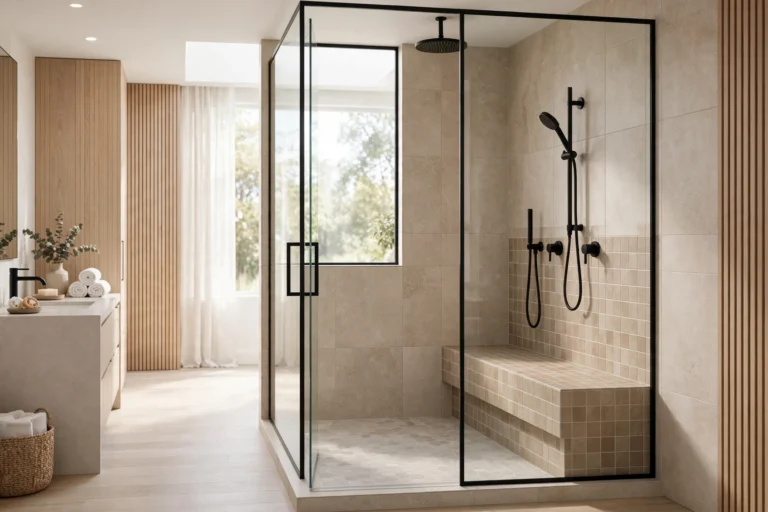




[…] rainfall heads to renter-friendly handheld wands. If you are coordinating the whole wet zone, our bathroom faucet ideas pair perfectly with everything on this […]
[…] Few finishes flatter a bathroom like brushed brass. Warm but not flashy, it softens white vanities and makes marble look richer. Unlike polished gold, brushed brass has a soft sheen that reads timeless rather than trendy, and it mixes beautifully with white, green, navy, and wood tones. Look for solid brass or a brass-finish PVD coating so the warmth does not fade in humid air. Brushed brass pulls paired with a matching faucet and mirror frame create the kind of cohesive bathroom that looks designed rather than assembled — more finish-pairing ideas in our bathroom faucet ideas. […]