
The medicine cabinet is the hardest-working fixture in most bathrooms: a mirror you use every morning plus hidden storage for everything you don’t want on the counter. Yet most people default to whatever the builder installed. These bathroom medicine cabinet ideas show how the right cabinet — recessed, surface-mount, or lighted — can add both style and serious storage above your sink.
One key distinction: a medicine cabinet is the mirrored above-sink fixture, not the vanity cabinet below it. Vanity cabinets hold towels and cleaning supplies; medicine cabinets hold the daily-use items — medications, contact lens supplies, toothbrushes — at eye level where you actually reach for them. Getting this fixture right declutters your entire sink area.
1. Classic Recessed Medicine Cabinet
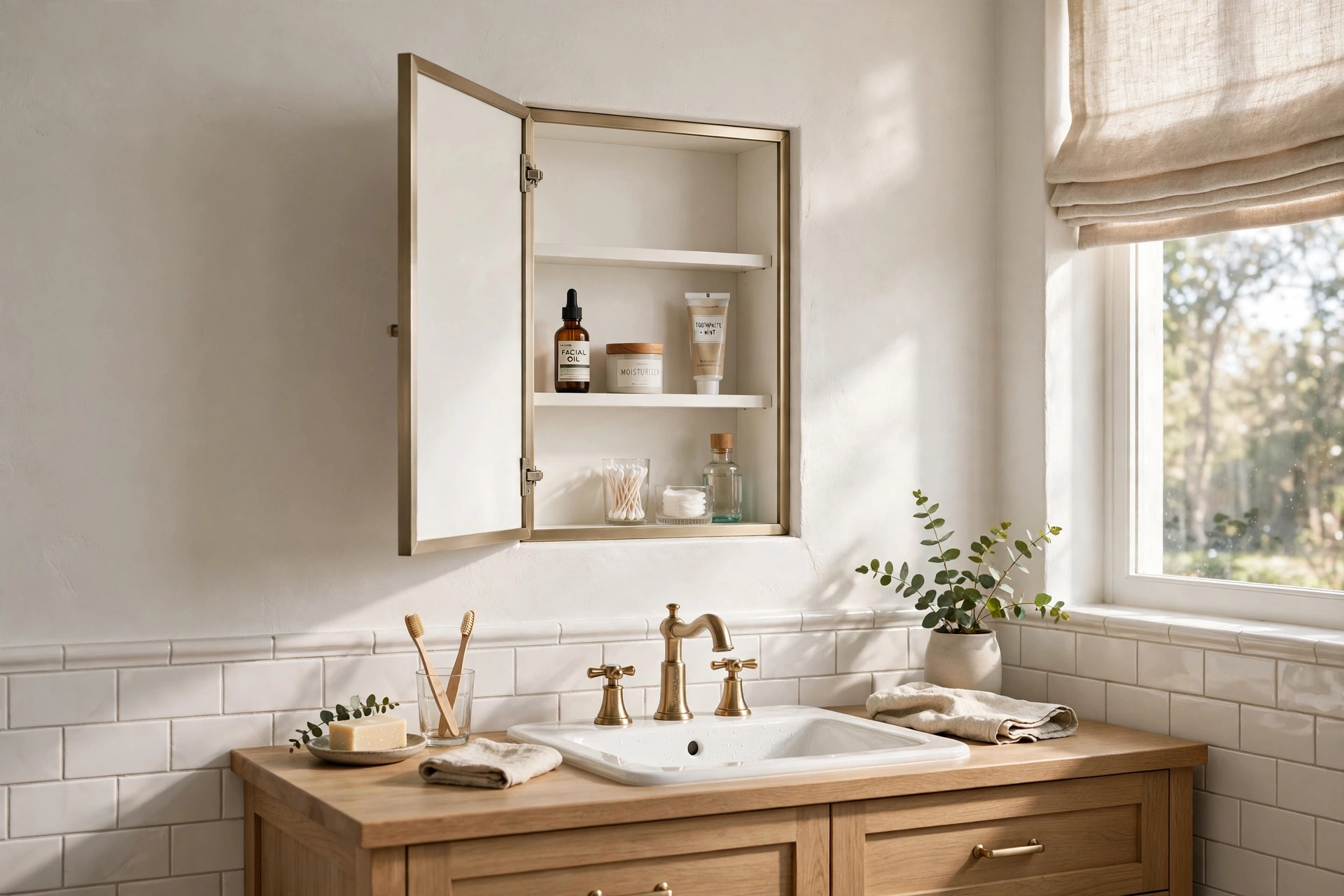
A recessed medicine cabinet sits flush inside the wall cavity, so it takes up zero room depth — ideal for small bathrooms where a surface-mount cabinet would crowd the sink. Standard recessed cabinets are 16 inches wide to fit between studs, with depths of 3.5 to 4 inches, though wider models (20–30 inches) exist for walls where you can cut a stud and add a header.
Installation means cutting drywall, framing the opening, and checking for plumbing or wiring first — use a stud finder with AC detection and cut a small inspection hole before committing. If the wall is load-bearing or packed with pipes, choose surface-mount instead. Recessed cabinets typically come with mirrored doors, and many include adjustable glass shelves.
The flush look suits modern and minimalist bathrooms best. For maximum function, choose a model with a mirrored interior back — it doubles the usable reflection when the door is open. For more small-space storage strategies, see these bathroom storage ideas for small spaces.
2. Surface-Mount Cabinet With Beveled Mirror
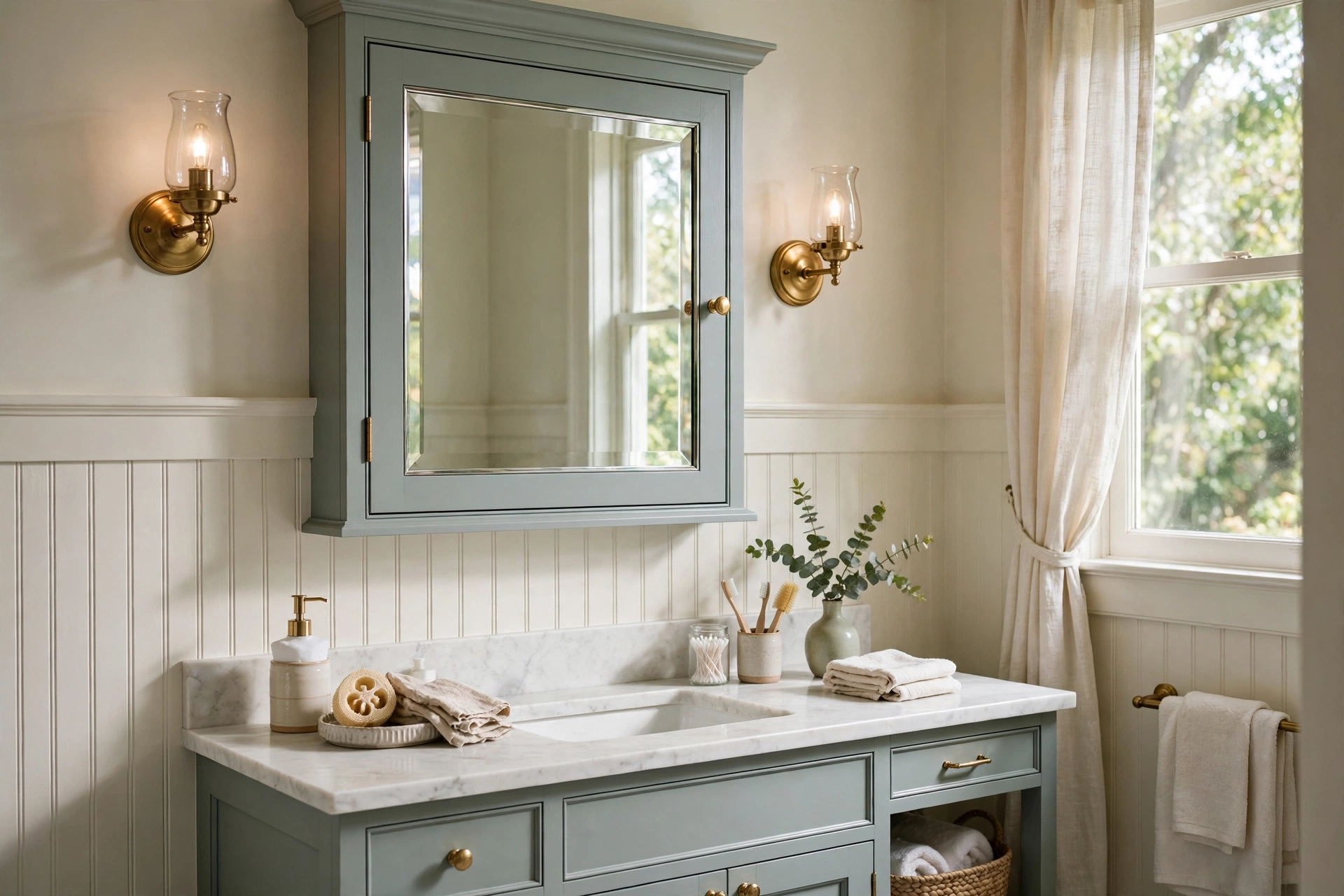
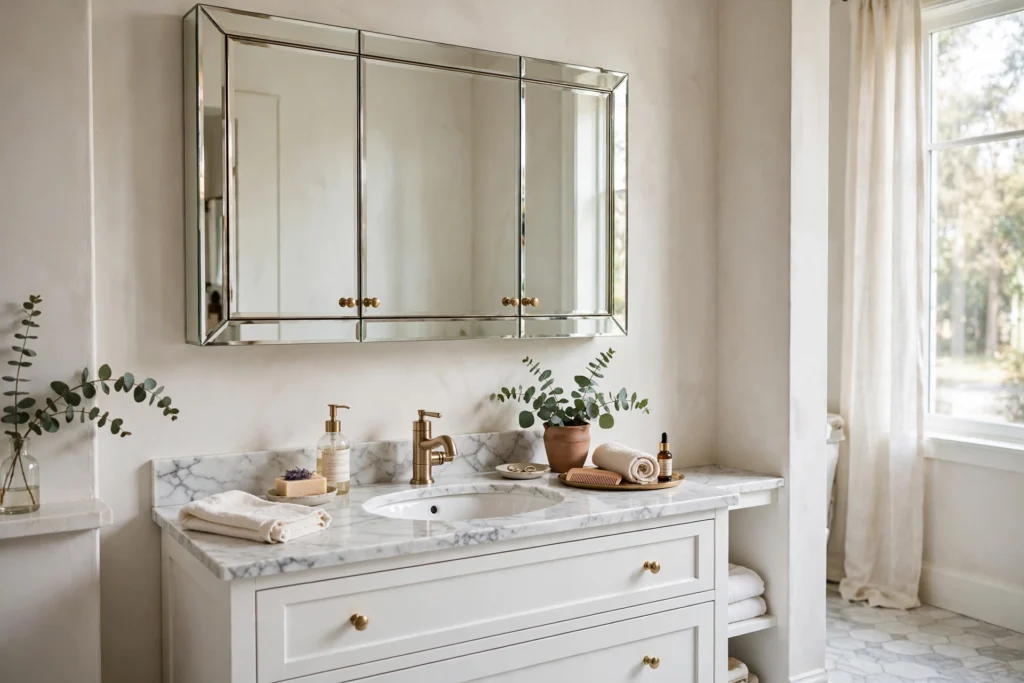
Surface-mount cabinets install directly on the wall with no cutting, making them the renter-friendly and DIY-friendly option. A beveled-edge mirror door elevates the look from builder-grade to custom — the angled edge catches light and reads as a framed mirror rather than a flat slab.
Depth is the main consideration: surface-mount cabinets project 4–6 inches from the wall, so mount the bottom of the cabinet at least 4 inches above the faucet to avoid head bumps, and keep the total projection under 6 inches over a standard 21-inch-deep vanity. Most mount with a French cleat or keyhole brackets rated for 30–50 pounds.
Beveled-mirror surface cabinets work in any style, from traditional to transitional. Choose one with soft-close hinges — the daily slam of a medicine cabinet door gets old fast, and soft-close hardware costs manufacturers only a few dollars more.
3. LED-Lit Medicine Cabinet
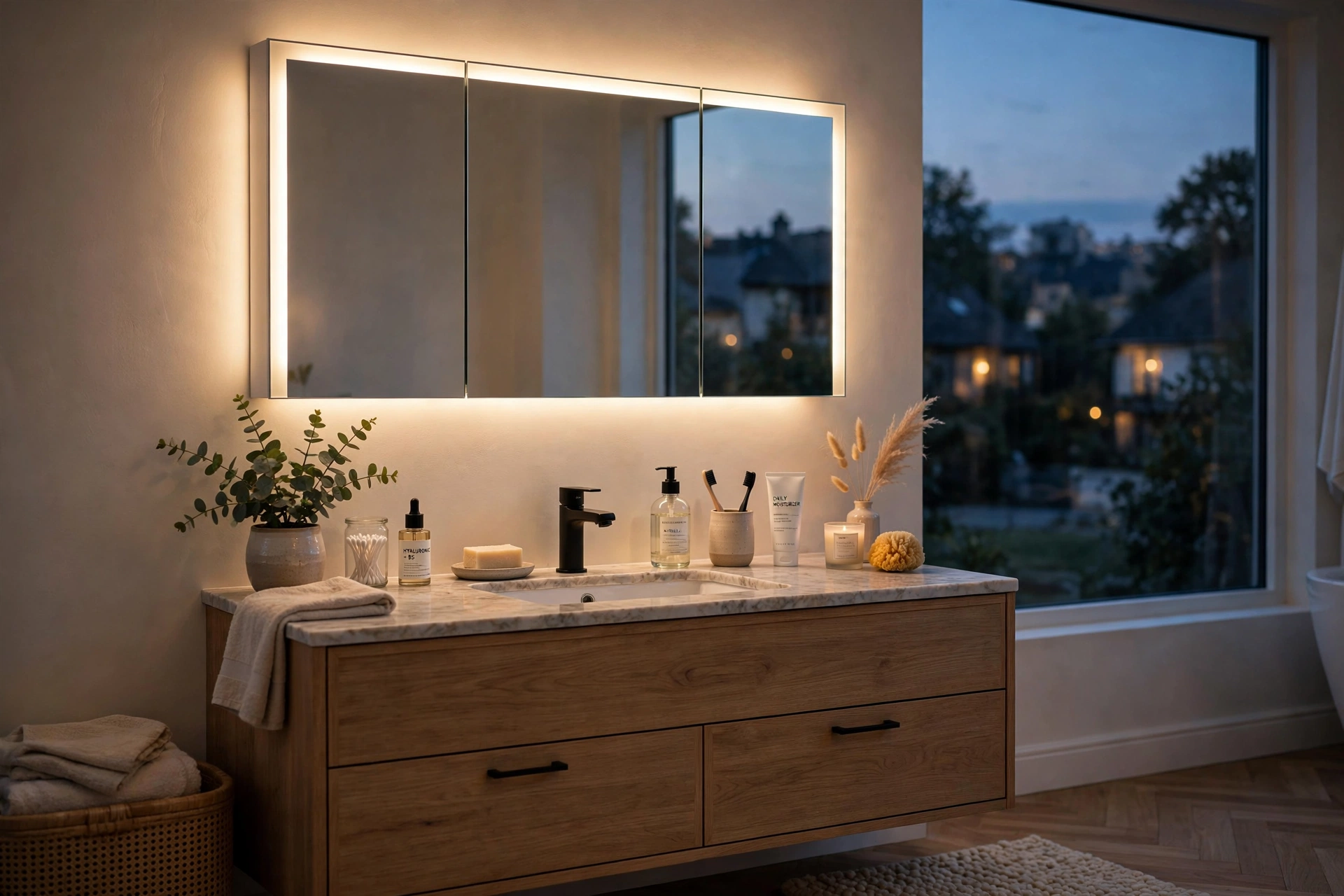
Built-in LED lighting around or behind the mirror eliminates the shadows that overhead lights cast on your face — the single biggest functional upgrade a medicine cabinet can offer. Look for cabinets with 3000K–4000K LEDs (warm to neutral white), a CRI of 90+ for accurate color rendering, and a built-in defogger pad if your bathroom steams up.
Most LED cabinets need a hardwired electrical connection, so plan for an electrician unless there is already a switched outlet in the wall cavity. Battery-powered LED models exist but the light is weaker and batteries need regular changes. Expect to pay $200–$600 for a quality lighted cabinet versus $80–$200 for unlit.
Install the cabinet so the light sits at face height — the center of the mirror should be roughly 60 inches from the floor for average-height users. The even, shadowless light is transformative for makeup application and shaving, and the soft glow doubles as a nightlight.
4. Double-Door Wide Cabinet
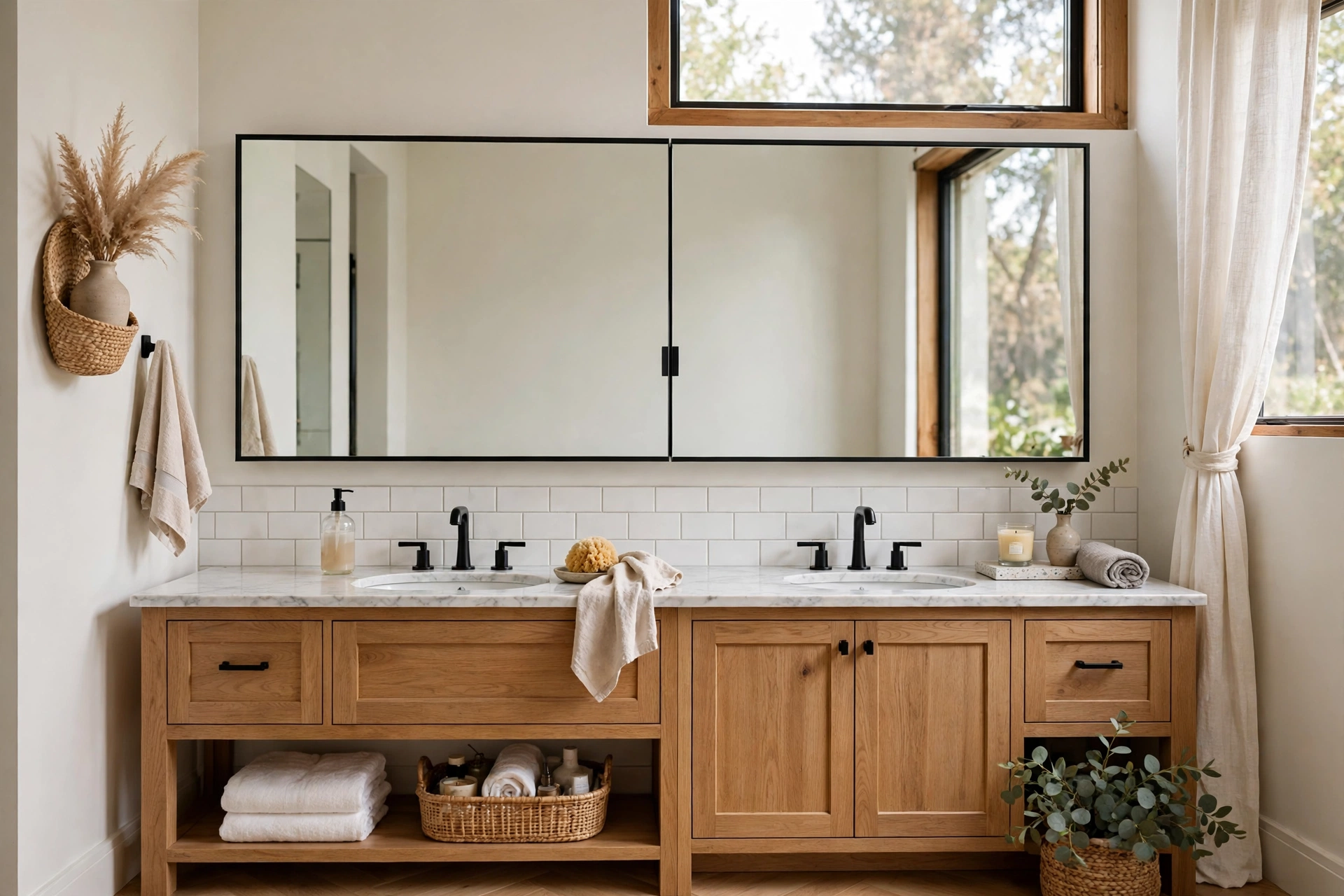
A double-door medicine cabinet (30–40 inches wide) spans the full width of a double vanity or a wide single sink, giving each user their own side. This is the practical answer to the shared-bathroom countertop war: his-and-hers storage behind a single mirrored surface.
Wide cabinets almost always need surface mounting or a reframed wall opening, since they exceed the 16-inch stud bay. If recessing, have a carpenter add a header and jack studs — cutting a stud without reframing is a structural no-no. Surface-mount wide cabinets typically use two French cleats for secure hanging.
Inside, look for models with at least three adjustable shelves per side and door-mounted racks for small items. The wide mirror also makes a small bathroom feel twice as big — a genuine visual bonus beyond the storage.
5. Arched Medicine Cabinet
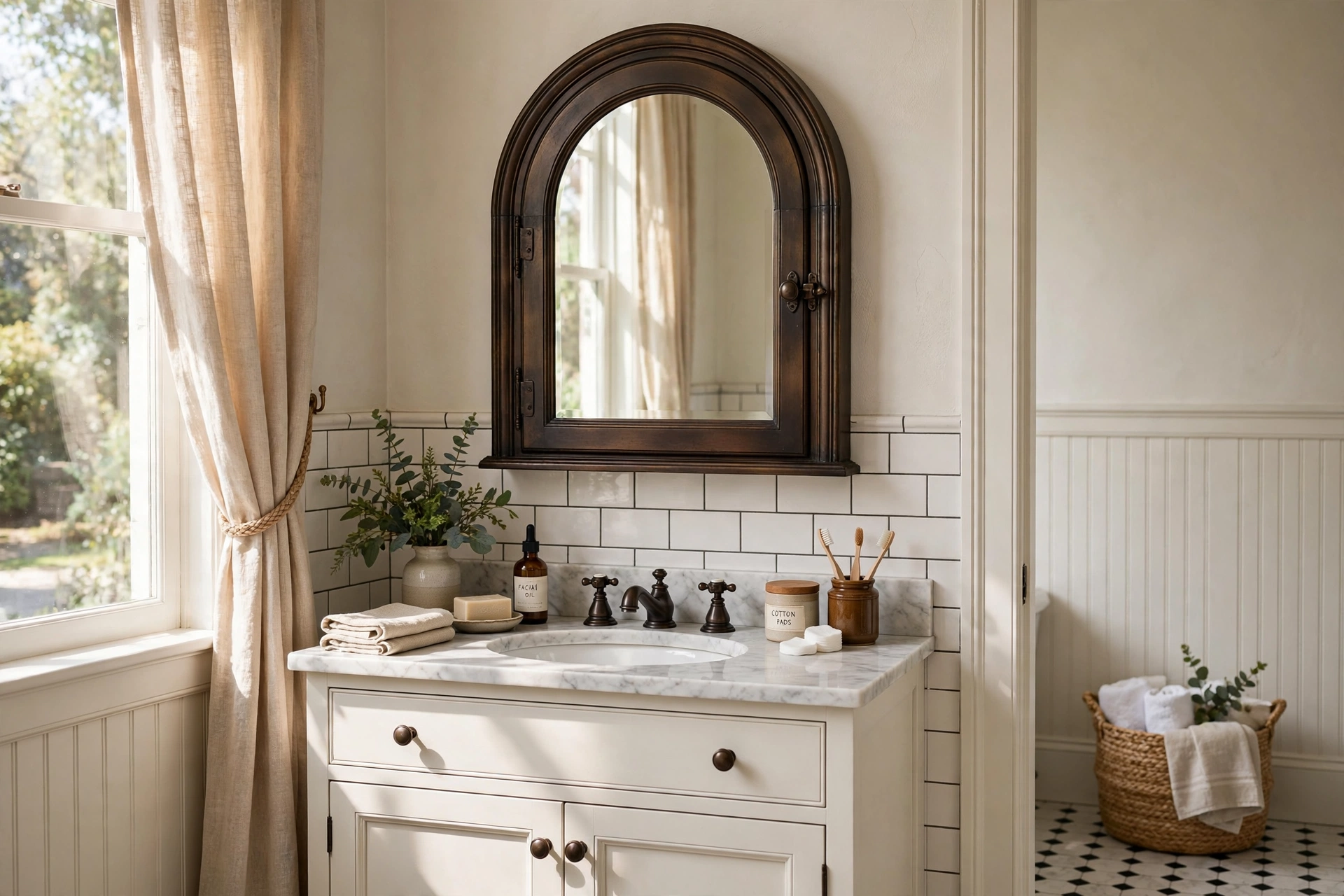
An arched-top medicine cabinet brings soft, traditional curves to the hard lines of a bathroom. The arch can be a true radius top or a gentle cathedral shape; either way, it echoes arched mirrors and doorways for a cohesive look. Most arched cabinets are surface-mount, since cutting an arched recess is a job for a skilled carpenter.
Sizing matters more with arches: the cabinet should be 2–4 inches narrower than the vanity on each side, and the arch peak should clear any light fixture above by at least 3 inches. A 24-inch-wide arched cabinet over a 30-inch vanity is a classic proportion.
Style it with traditional or transitional fixtures — oil-rubbed bronze or polished nickel, a furniture-style vanity, classic subway tile. The arch does the decorative work, so keep the rest of the wall simple. For more mirror shapes that pair well, browse these bathroom mirror ideas from round to arched.
6. Framed Cabinet That Looks Like a Mirror
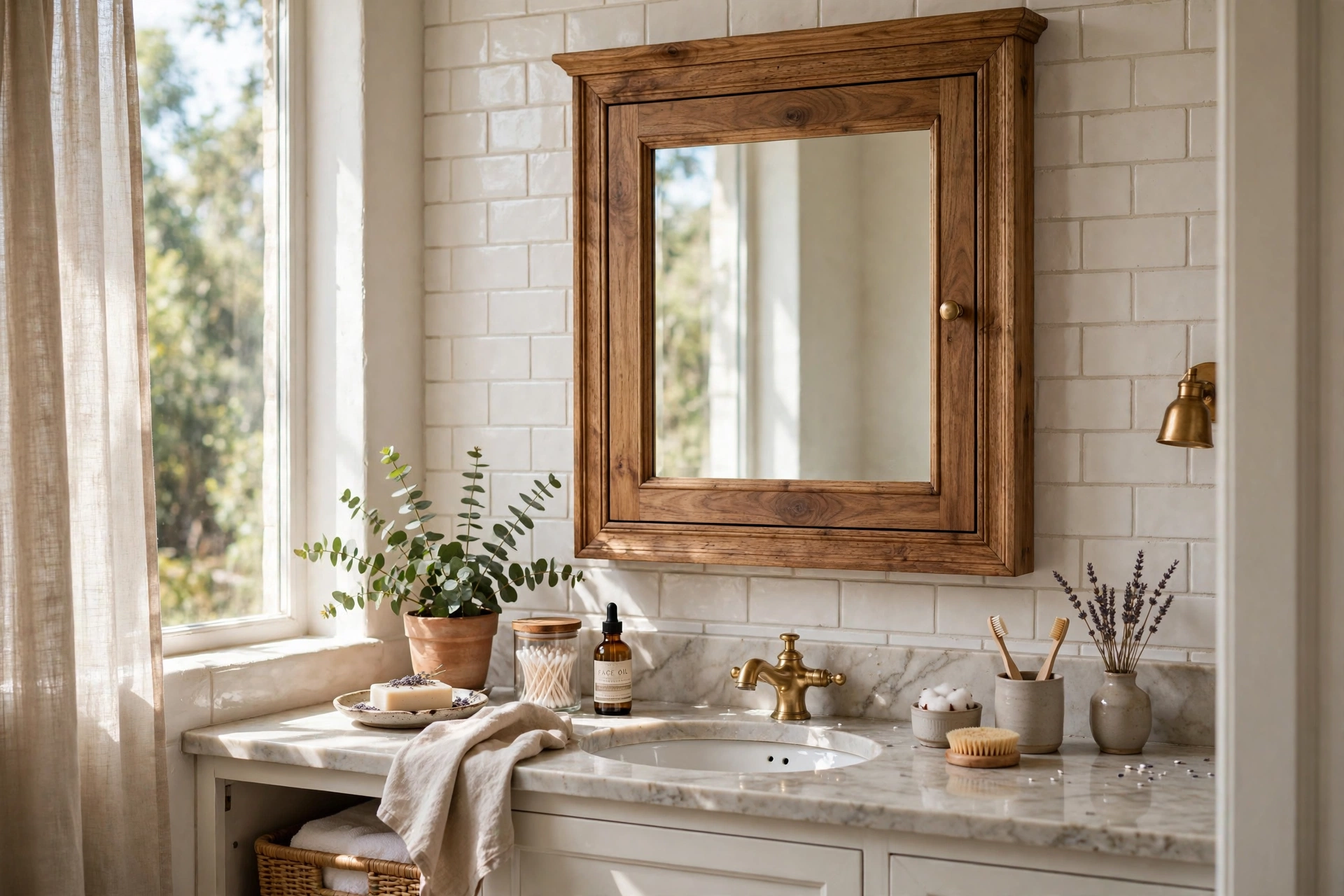
A medicine cabinet with a decorative frame — wood, metal, or painted — disguises the storage so completely that guests never know it opens. The frame adds 2–3 inches of visual width, so size down slightly: a 20-inch framed cabinet reads like a 24-inch mirror.
Wood frames suit farmhouse and traditional bathrooms; slim black or brass metal frames suit modern ones. If you are handy, you can frame an existing frameless cabinet: build a simple mitered frame from 1×3 stock, attach it with construction adhesive and small brads, and caulk the edges. Just make sure the frame does not block the door swing.
This is the best of both worlds for style-focused bathrooms — the storage of a cabinet with the look of a designer mirror. Keep the frame finish consistent with your other metals: brass frame with brass faucets, black frame with matte black hardware.
7. Corner Medicine Cabinet
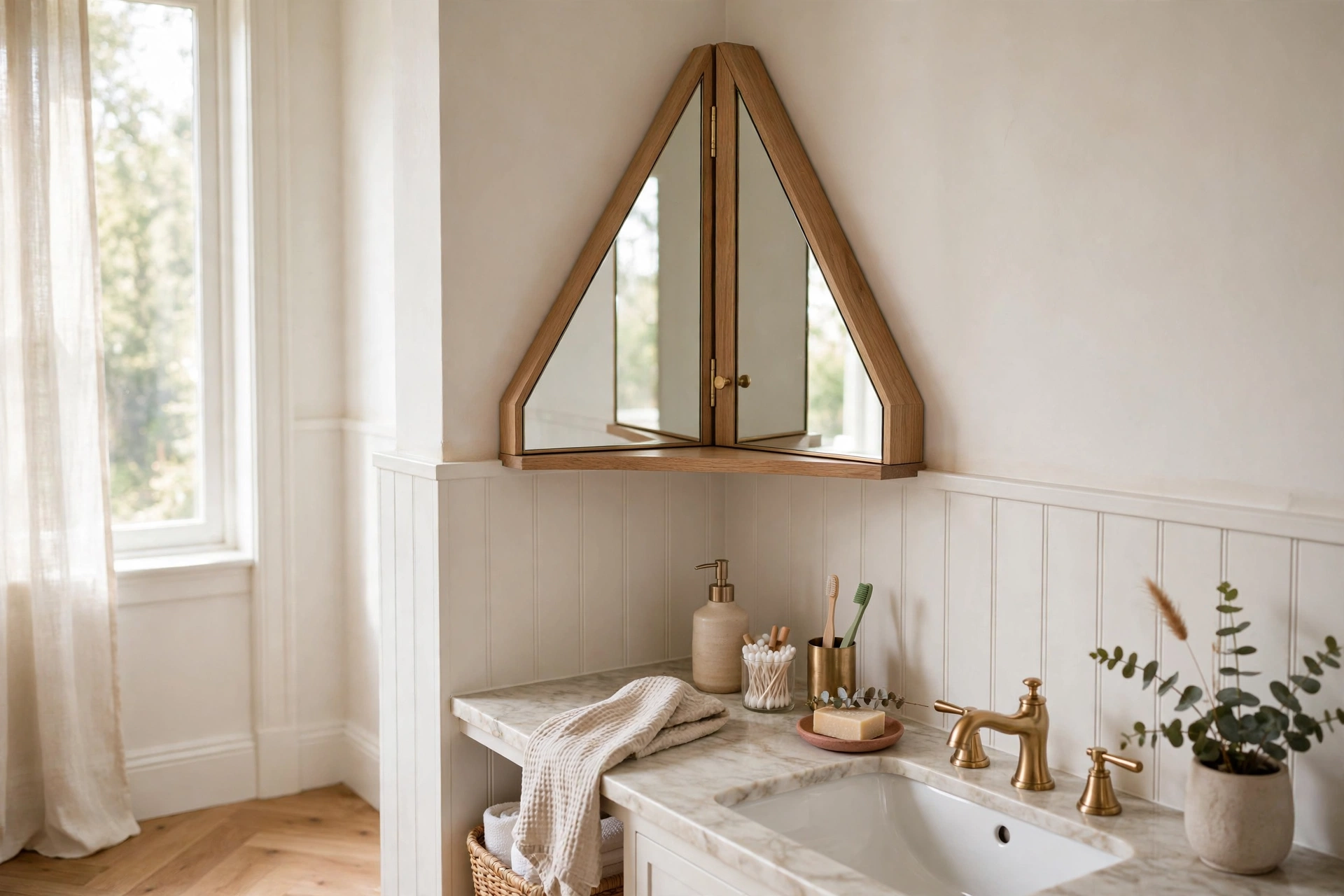
Corner-mounted medicine cabinets use the dead space where two walls meet, a lifesaver in tiny bathrooms where the sink sits in a corner or the wall above it is narrow. Triangular or angled-front cabinets fit into 90-degree corners and typically offer 12–16 inches of mirrored front.
Mounting requires solid anchoring into both walls’ studs or heavy-duty toggle bolts into drywall — a loaded corner cabinet puts asymmetric stress on its mounts. Position it at the same 60-inch center height as a standard cabinet. The angled mirror actually improves visibility, catching light from two directions.
Corner cabinets suit powder rooms and small hall baths best. Pair with a corner sink or a narrow wall-mount vanity to keep the whole arrangement compact. It is a niche product, so expect fewer style options — but in the right layout, nothing else works as well.
8. Cabinet With Side Kit Storage
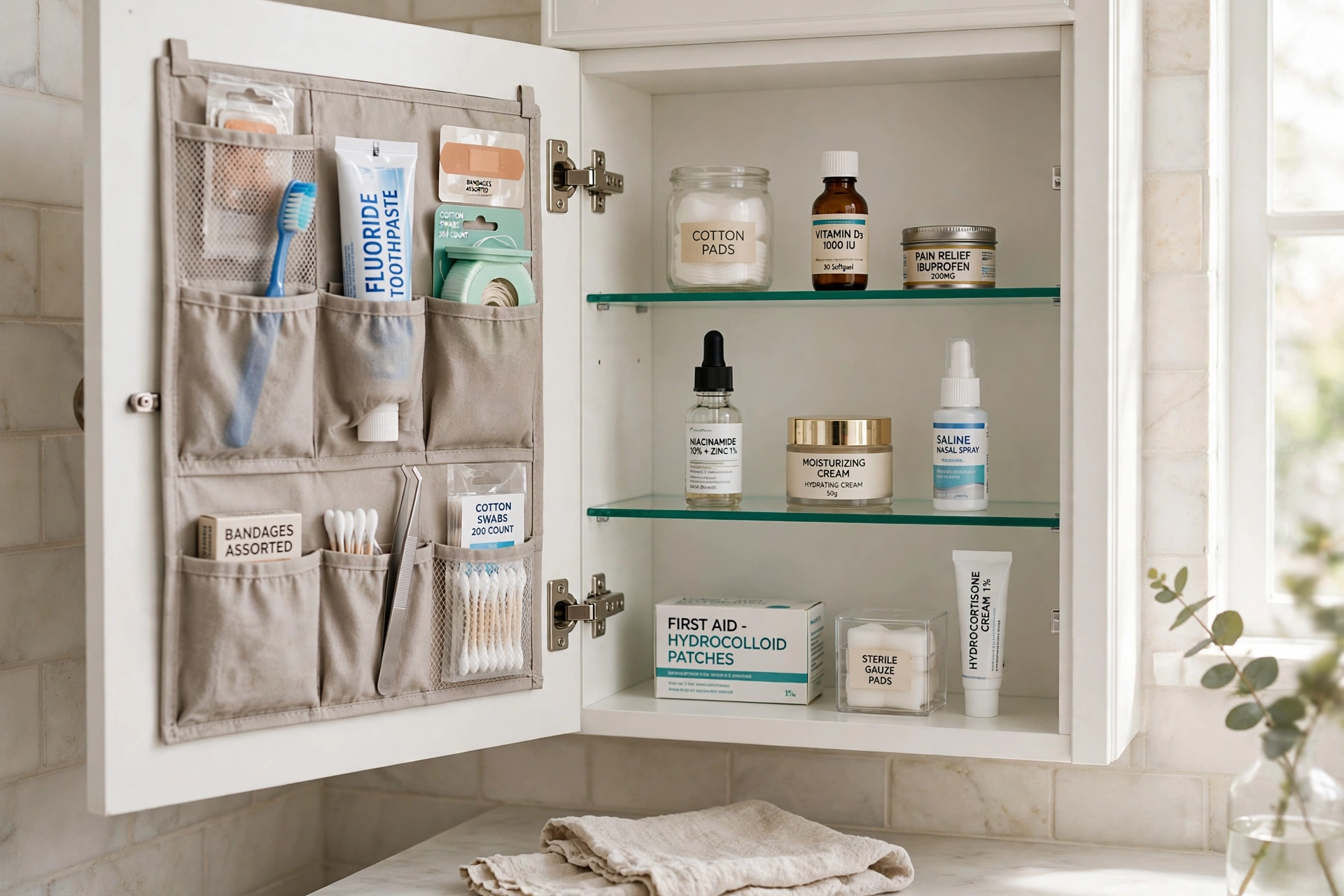
Some medicine cabinets include fold-out side compartments or door-mounted organizers — narrow racks on the inside of the door for toothbrushes, razors, and small bottles. These use the 1–2 inches of door depth that standard cabinets waste, effectively adding 20–30% more usable storage without a bigger box.
When shopping, open the door and check the organizer depth: shallow wire racks hold travel-size items; deeper molded trays hold full-size bottles. Magnetic strips inside the door are a bonus for tweezers and nail clippers. Avoid organizers that block the main shelves when the door closes — measure twice.
This style is ideal for minimalists who want every item hidden. The clean mirrored front gives nothing away, while the interior works as hard as a kitchen organizer. It is also the best medicine cabinet format for contact lens wearers, with dedicated spots for cases and solution bottles.
9. Vintage-Style Cabinet With Character
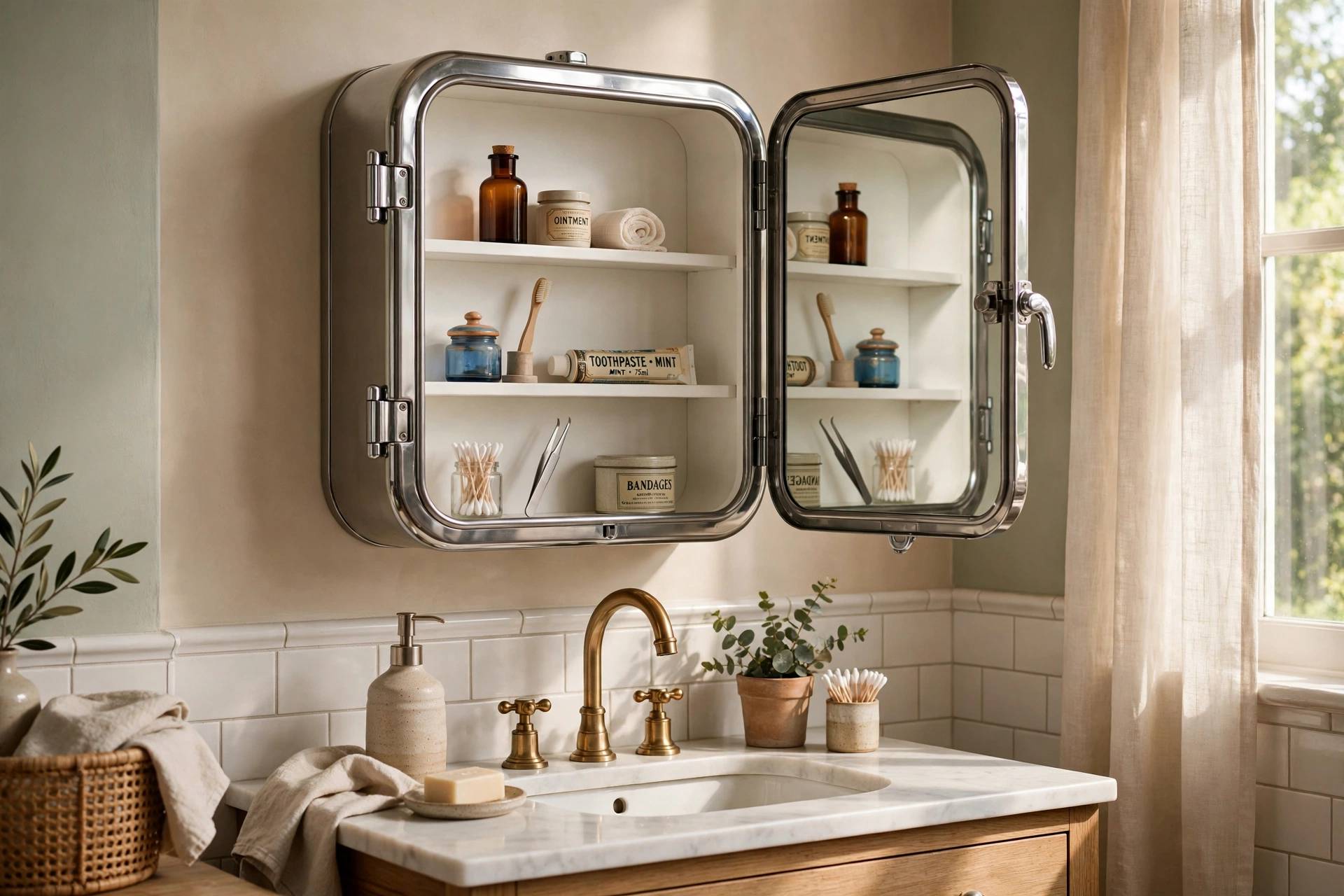
A vintage or vintage-look medicine cabinet — think rounded steel corners, a chrome frame, or a scalloped top — brings authentic retro charm to a period bathroom. True vintage cabinets from the 1930s–1950s show up at salvage shops for $30–$80; check that the mirror is intact and the interior rust is surface-only (naval jelly removes it).
Reproduction vintage cabinets from companies like Restoration Hardware or Signature Hardware offer the look with modern interiors and soft-close hinges, at $200–$500. Either way, pair with period-appropriate fixtures: cross-handle faucets, a pedestal sink, hex floor tile.
If you salvage a real vintage cabinet, replace the mirror if it is desilvering — a glass shop can cut a replacement for $20–$40. Seal any bare metal inside with rust-inhibiting paint. The patina is the point, but active rust is not.
10. Minimalist Frameless Cabinet
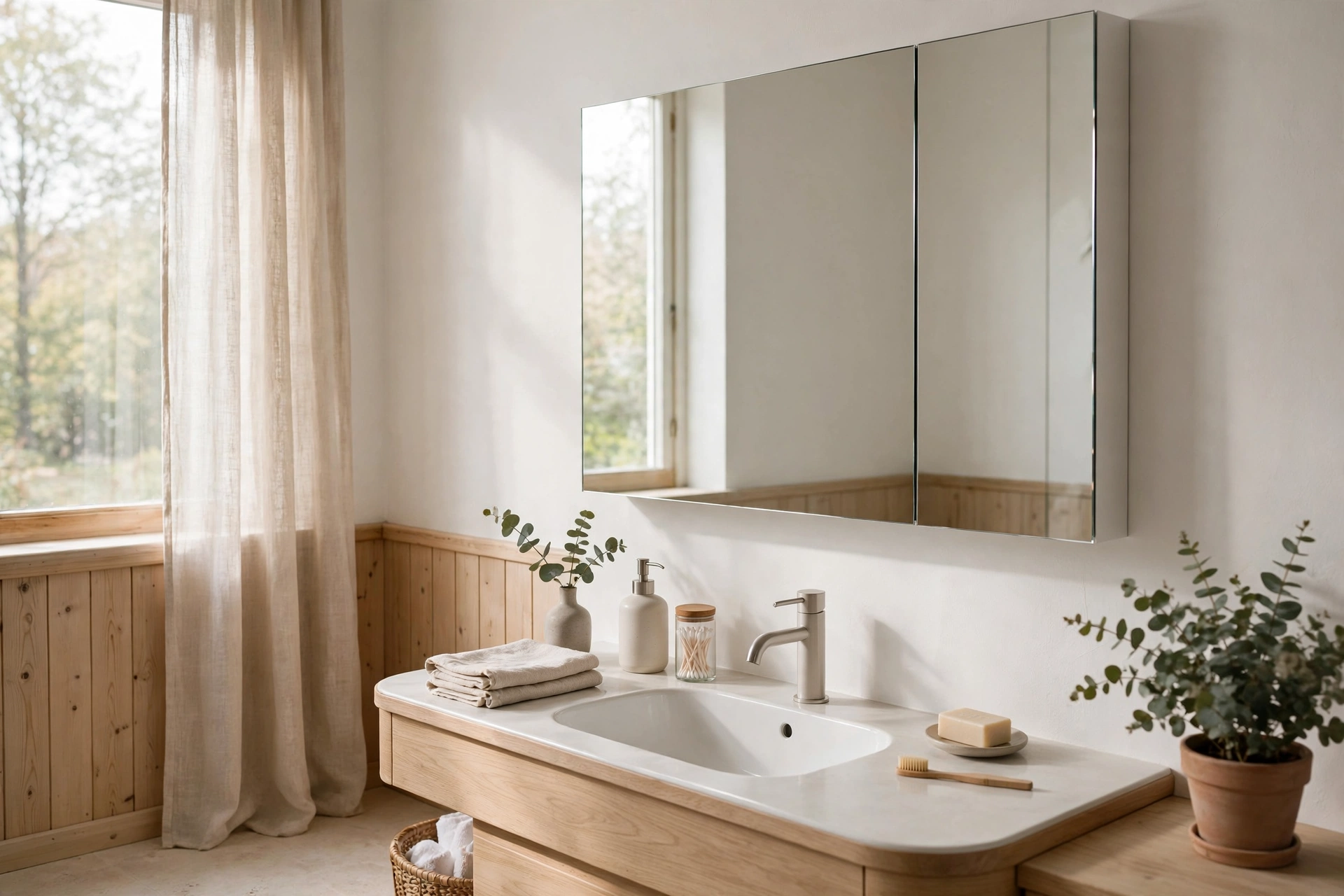
A frameless mirrored cabinet with polished edges is the quietest option — it reads as a plain mirror until you open it. This suits modern, Scandinavian, and minimalist bathrooms where visual clutter is the enemy. Without a frame, sizing is flexible: go wall-to-wall above the vanity for maximum mirror and storage.
Frameless cabinets show fingerprints and water spots more than framed ones, so keep a microfiber cloth handy. Choose a model with push-to-open or tab pulls rather than knobs to preserve the clean lines. Interior lighting (a small LED strip) prevents the deep box from going dark inside.
For the ultimate seamless look, recess a frameless cabinet and tile right up to its edges. The mirror becomes part of the wall plane — storage that is genuinely invisible. For vanity pairings that match this aesthetic, see these bathroom vanity ideas for style and storage.
11. Medicine Cabinet With Built-In Outlet
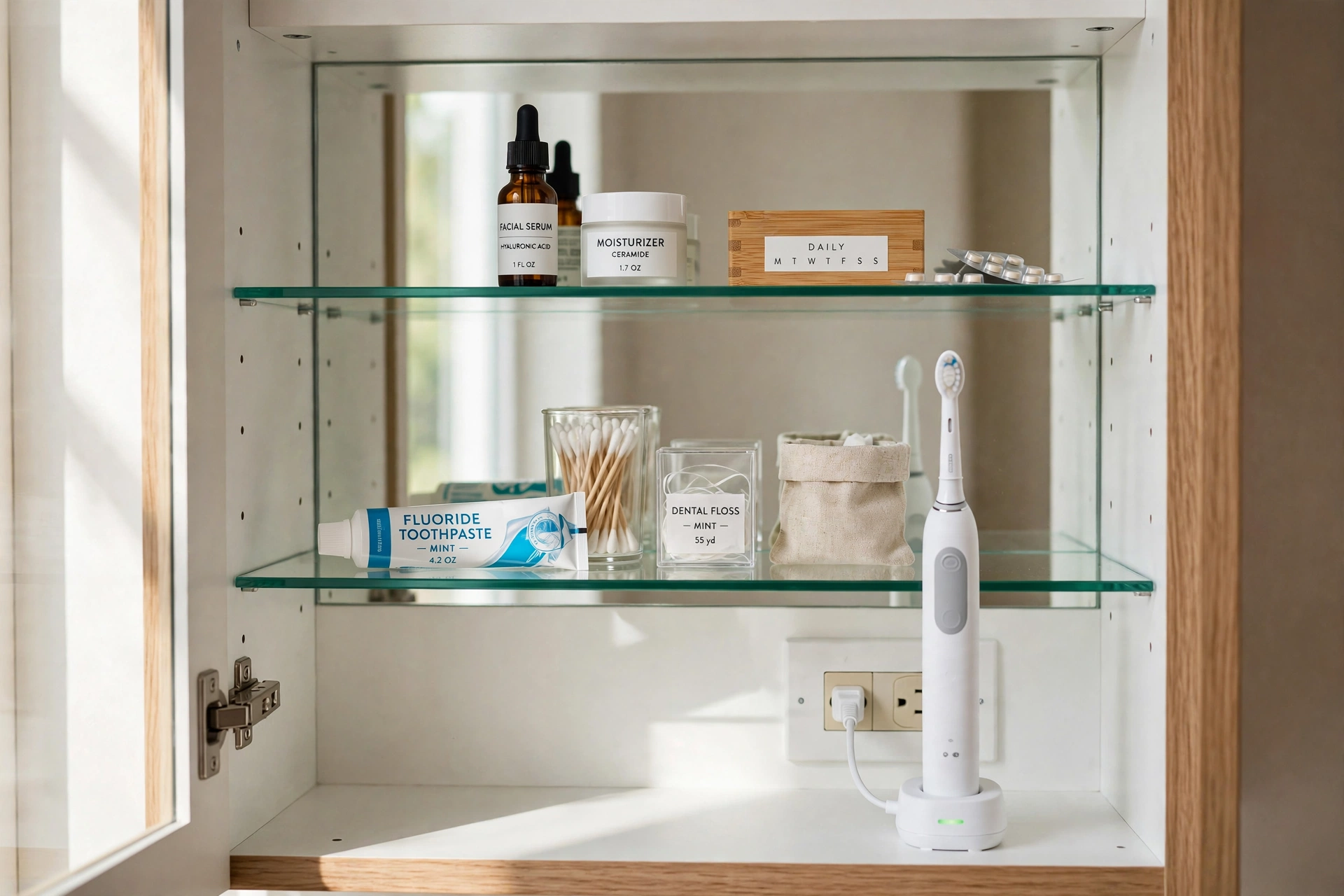
An interior electrical outlet turns the medicine cabinet into a charging and grooming station: electric toothbrushes charge hidden inside, and you can plug in a shaver without cords draping across the counter. Look for cabinets with UL-listed interior outlets — never DIY an outlet into a cabinet not designed for one.
These cabinets must be hardwired by an electrician, and the outlet should be GFCI-protected per bathroom electrical code. Expect a $150–$250 premium over the same cabinet without an outlet, plus electrician costs. The convenience is worth it in a primary bathroom where two people charge devices nightly.
Keep the outlet’s circuit in mind: most interior outlets are rated for low-draw devices (toothbrushes, shavers), not hair dryers. Check the manufacturer’s specs before plugging in anything heat-producing.
12. Oak and Wood-Finish Cabinets
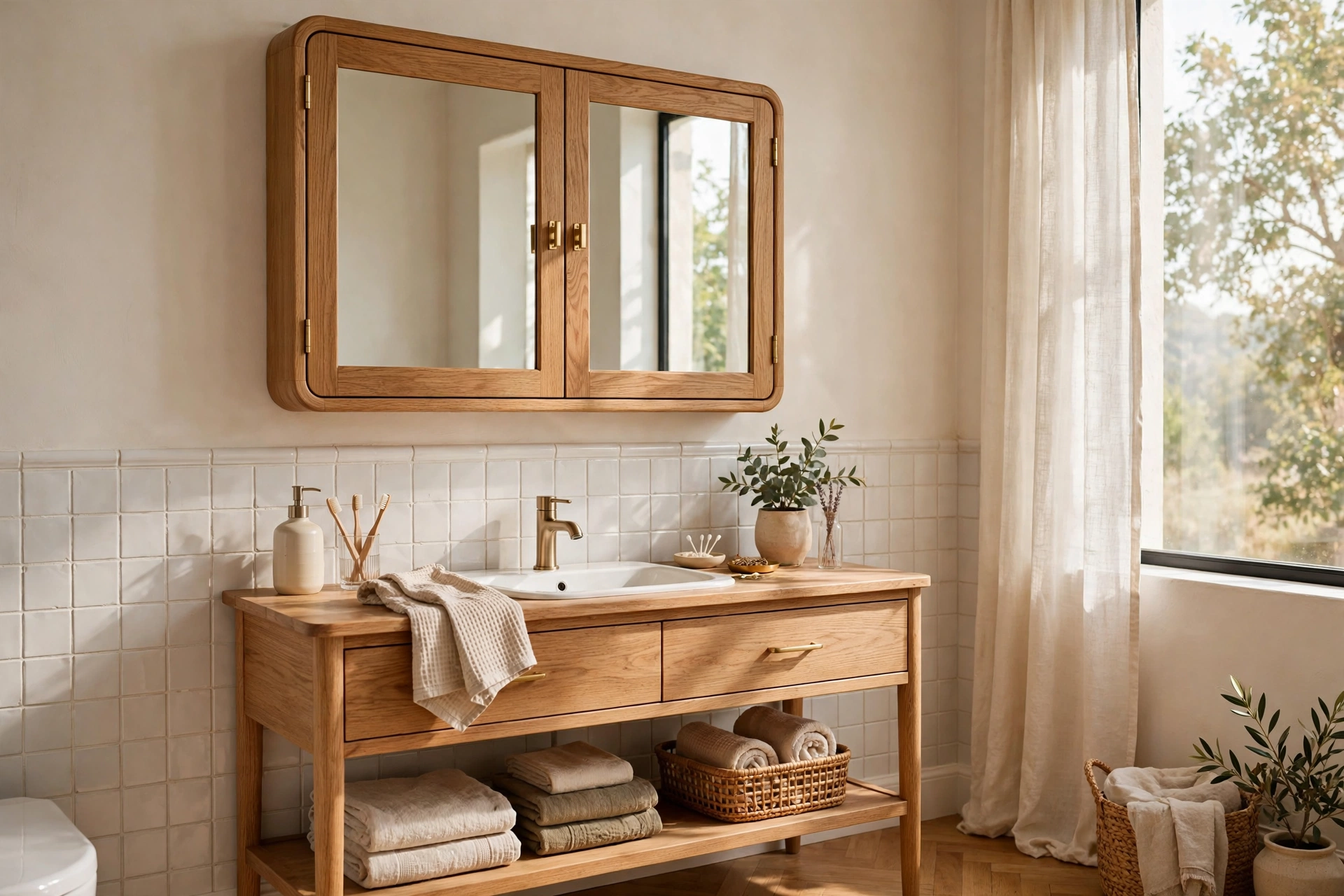
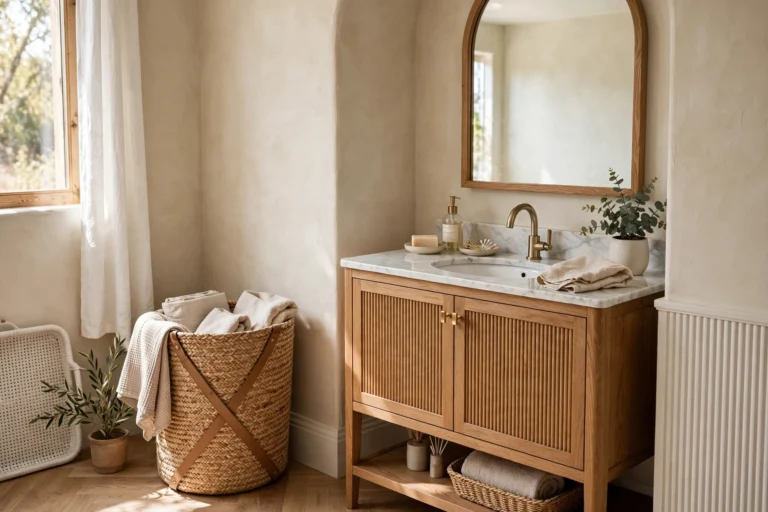
A medicine cabinet in warm oak, walnut, or white oak brings furniture warmth to the bathroom wall. Wood-finish cabinets bridge the gap between the vanity below and the mirror above, especially when the wood tone matches or complements the vanity. White oak with a clear matte finish is the current designer favorite.
In a steamy bathroom, choose cabinets with a catalyzed or marine-grade finish — standard lacquer can cloud with moisture over time. Keep the cabinet out of direct shower spray, and run the vent fan religiously. Solid wood frames handle humidity better than MDF with wood veneer, which can bubble at edges.
Pair a wood cabinet with a wood vanity or wood open shelving for a cohesive warm-modern look. The combination reads custom and high-end, even when the cabinet itself cost under $300.
13. Tilt-Out and Pivot Mirror Cabinets
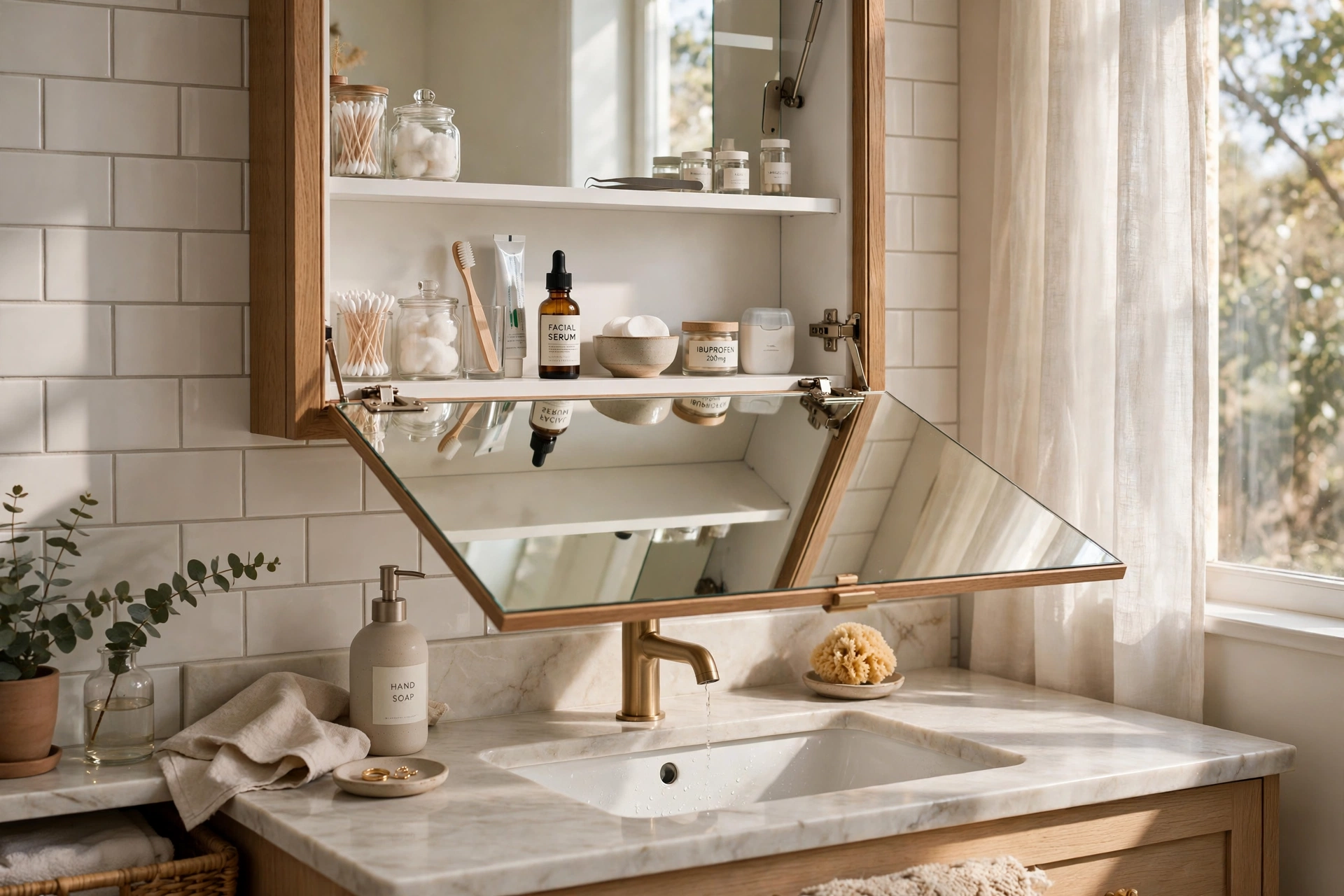
Some medicine cabinets feature tilting or pivoting mirror doors that angle down for close-up tasks — a small luxury that contact lens wearers and makeup appliers appreciate. The tilt mechanism is usually a friction hinge that holds the mirror at any angle up to about 15 degrees.
These are specialty items ($250–$500), mostly from European manufacturers like Keuco or Duravit. Installation is standard surface or recessed mounting; the mechanism needs no extra depth. Check the weight rating — tilting doors are heavier, and the mounting hardware must be correspondingly robust.
This is a splurge pick for a primary bathroom renovation, not a budget powder room update. But if you have ever crouched to see into a fixed mirror, you know exactly why the tilt matters.
14. Cabinet With Magnifying Mirror Panel
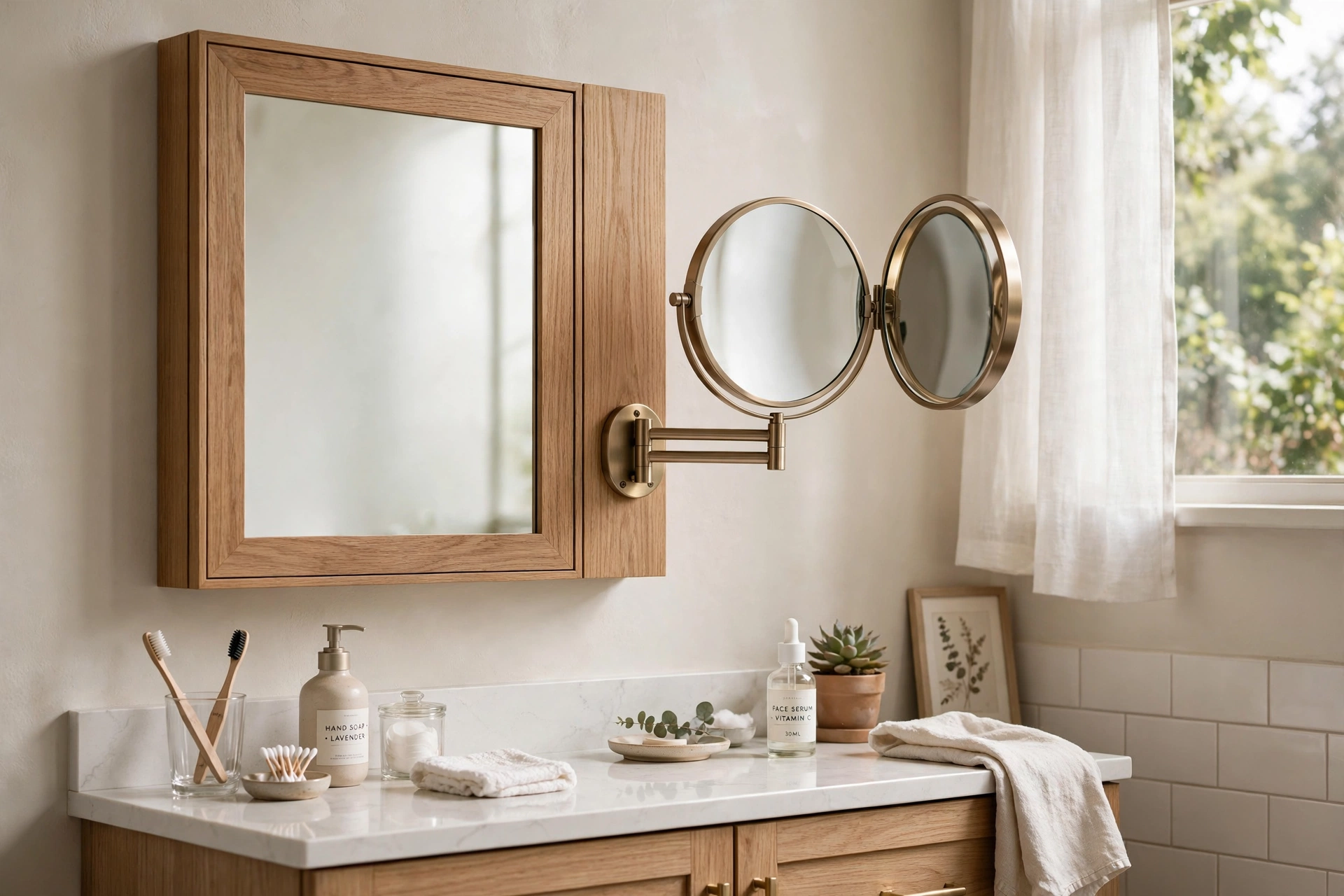
A swing-out magnifying mirror mounted inside or beside the medicine cabinet gives you 5x–10x magnification for detail work without a separate countertop mirror cluttering the sink. Some cabinets integrate the magnifier into the door; others include a pull-out arm on the side.
Magnification above 7x requires your face to be very close to the mirror, which takes getting used to — 5x is the sweet spot for most people. Look for models with the magnifier on a stay-put arm rather than a floppy hinge. Lighted magnifiers (surrounding LEDs) are worth the premium since close-up work needs bright, even light.
This addition costs $50–$150 over a standard cabinet and eliminates the standalone magnifying mirror that eats counter space. It is one of the most genuinely useful upgrades among all bathroom medicine cabinet ideas.
15. DIY Cabinet From a Vintage Mirror
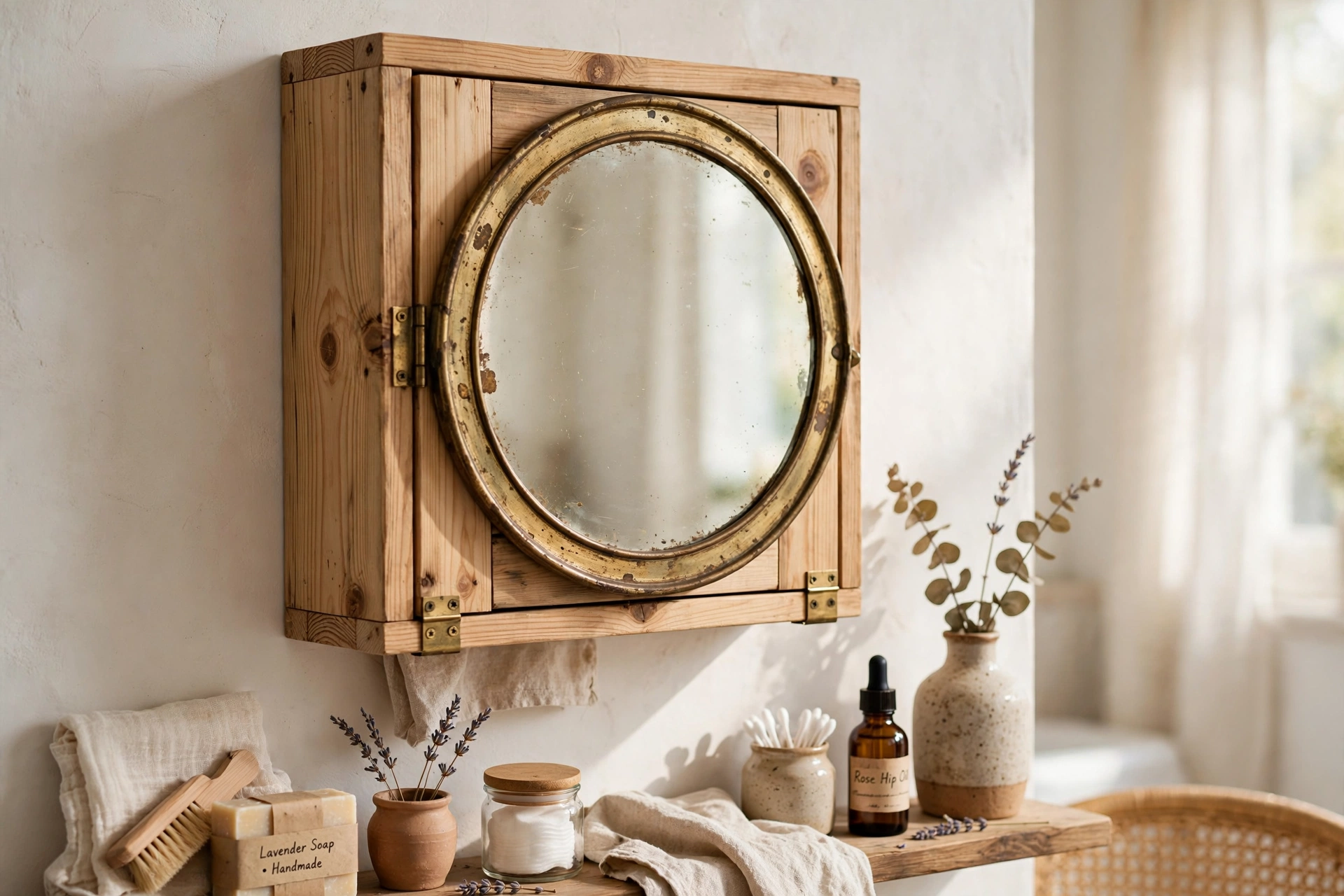
If you love a specific vintage mirror, convert it into a medicine cabinet: build a shallow 4-inch-deep box from 1×4 pine, mount the mirror on a piano hinge as the door, and hang the box on a French cleat. Total cost is often under $60 plus the mirror.
The box interior can be lined with beadboard or painted a fun color for a surprise when opened. Add a magnetic catch and small adjustable shelves cut from 1/4-inch plywood. Seal all interior wood with polyurethane since it will see humidity every time the door opens.
This is the most personal option — no one else has your cabinet. It works best with mirrors that have some depth to their frame (at least 1 inch) to hide the hinge. A round vintage mirror on a square box is a particularly charming combination, as design editors at House Beautiful’s bathroom section have often showcased in vintage-inspired renovations.
Frequently Asked Questions
What is the standard size for a bathroom medicine cabinet?
The most common single medicine cabinet is 16 inches wide by 26 inches tall by 4 inches deep — sized to fit between standard 16-inch-on-center wall studs when recessed. For a single 30-inch vanity, a 20–24 inch wide cabinet is the typical proportion; for double vanities, 30–40 inch wide double-door models are standard. Mount the cabinet so the mirror’s center sits about 60 inches from the floor, and keep the bottom edge 4–6 inches above the faucet.
Can you install a recessed medicine cabinet in any wall?
No. Recessed cabinets need a wall cavity free of plumbing, wiring, and HVAC, and the wall must not be load-bearing unless you reframe the opening with a header. Exterior walls with insulation and vapor barriers are poor candidates. Always cut a small inspection hole and check with a stud finder (with AC detection) before cutting the full opening. When in doubt, choose a surface-mount cabinet — it needs no wall surgery at all.
Are lighted medicine cabinets worth it?
For most people, yes. Built-in LEDs at 3000K–4000K with 90+ CRI eliminate the face shadows caused by overhead lighting, which makes a real difference for shaving, makeup, and contact lenses. They also double as nightlights. The main costs are the cabinet premium ($200–$600) and electrician fees for hardwiring. If your bathroom has only a single overhead light, a lighted cabinet is the highest-impact upgrade you can make above the sink.
How do you keep a medicine cabinet organized?
Decant daily items into small trays or bins so nothing migrates: one tray for dental, one for skincare, one for medications. Use the door-mounted racks for slim items like toothbrushes and razors, keep the middle shelf at eye level for the five things you grab daily, and store backups and rarely used items on the top shelf. Purge expired medications twice a year — the FDA recommends checking dates each spring and fall. A Mayo Clinic guide to home medicine storage offers useful safety tips on keeping medications organized and out of children’s reach.
Surface-mount or recessed: which is better?
Recessed is better for small bathrooms because it adds storage without projecting into the room, and the flush look suits modern styles. Surface-mount is better for DIYers, renters, and walls with plumbing or wiring, since it installs in minutes with no cutting. Storage capacity is similar — the difference is purely installation complexity and aesthetics. If your wall allows recessing and you plan to stay, recessed is the cleaner long-term choice.
Keep Exploring
The right medicine cabinet does double duty as your bathroom’s mirror and its most-used storage, so it deserves more thought than a builder-grade default. Whether you recess a frameless minimalist box or surface-mount a vintage-look charmer, match the cabinet to your wall, your wiring, and your daily routine — and enjoy a countertop that finally stays clear.